

Business
Figma Shares Surge Over 8 Percent Amid AI Features and Strong User Adoption in Design Software Sector


NEW YORK — Shares of Figma Inc. climbed more than 8 percent Tuesday morning, reaching around $19.58 as investors bet on the collaborative design platform’s continued momentum from artificial intelligence integrations and expanding enterprise use.
The San Francisco-based company, which made its public debut last year, has carved a significant niche in digital design tools. Its real-time collaboration features have become essential for product teams, agencies and large organizations seeking efficient creative workflows.
Tuesday’s gain highlighted renewed enthusiasm for software providers demonstrating clear paths to monetization through AI enhancements. Figma has introduced generative tools that streamline design processes, from auto-layout suggestions to content generation, appealing to users looking to boost productivity.
The platform’s web-first architecture allows seamless access across devices, differentiating it from legacy desktop applications. Teams can iterate designs together regardless of location, a capability that gained prominence during remote work shifts and remains relevant in hybrid environments.
Figma’s growth trajectory reflects broader trends in digital transformation. Companies across industries rely on sophisticated design systems for user interfaces, marketing assets and product prototyping. Its user base spans startups to Fortune 500 corporations, providing diversified revenue streams.
Recent financial performance has shown accelerating revenue and improving metrics. Strong net retention rates indicate existing customers are expanding usage, while new enterprise wins contribute to top-line growth.
Analysts point to Figma’s ability to integrate AI without disrupting core user experiences as a competitive advantage. Features that assist rather than replace designers have been well-received, helping maintain platform stickiness.
The stock’s movement Tuesday occurred amid selective buying in technology names. While some segments faced pressure, creative and productivity software attracted interest from growth-oriented investors.
Figma’s leadership has focused on community building and product innovation since inception. Regular updates and plugin ecosystems foster engagement, turning users into advocates and contributors.
International expansion efforts target Europe, Asia and other regions where design talent pools are growing. Localization and compliance features support adoption in regulated industries.
Competitive pressures exist from established players and niche tools, yet Figma’s collaborative DNA and network effects provide moats. Its acquisition of several startups has bolstered capabilities in areas like prototyping and analytics.
Tuesday’s trading reflected positive sentiment around execution. The percentage gain outpaced many peers, suggesting company-specific catalysts resonated with the market.
Longer-term outlook depends on sustaining innovation cycles and prudent capital allocation. Figma’s cash position supports research investments while pursuing strategic opportunities.
The design software market benefits from secular tailwinds in digital experiences. As brands prioritize user-centric development, tools like Figma become integral to workflows.
Investor attention has also focused on potential expansion into adjacent areas such as no-code development and team management suites. Such moves could broaden the addressable market significantly.
Tuesday’s session saw elevated volume as participants repositioned around technology themes. Figma’s advance contributed to a constructive tone in select growth stocks.
Broader economic considerations, including interest rates and corporate spending, influence software valuations. Figma’s subscription model provides visibility and recurring revenue characteristics favored in uncertain environments.
Company culture emphasizes creativity and employee input, aiding talent retention in a competitive technology labor market. This approach supports consistent product improvements.
As Figma matures as a public company, focus intensifies on profitability metrics alongside growth. Balancing investments with returns remains key to sustaining market confidence.
The stock’s post-IPO journey has included volatility typical for high-growth names. Periods of consolidation often precede moves driven by fundamental progress.
Analysts maintain constructive views citing Figma’s market leadership and innovation pipeline. Price targets reflect expectations for sustained expansion in core and emerging segments.
Tuesday’s price action around $19.58 marked a notable intraday move. Whether momentum continues depends on upcoming catalysts and macroeconomic developments.
Figma’s story exemplifies technology’s role in empowering creativity. Its platform democratizes design capabilities, enabling smaller teams to compete with larger organizations.
Global design community engagement through events and resources strengthens brand loyalty. User conferences and online forums foster idea exchange and feature requests.
As artificial intelligence reshapes industries, Figma’s measured integration positions it as a thoughtful innovator rather than a disruptor of creative processes.
The session’s gain underscores investor appetite for companies demonstrating tangible AI value. Figma’s updates have translated into user adoption and revenue contribution.
Market participants will monitor quarterly results for confirmation of trends. Guidance parameters often set expectations for software growth stocks.
Figma’s path reflects successful navigation from startup to public entity. Continued execution could support further valuation expansion over time.
Tuesday’s trading contributed to positive sentiment around collaborative tools. As work evolves, platforms facilitating teamwork gain strategic importance.
In summary, Figma’s share price increase highlighted market recognition of its strengths in design software and AI-enhanced productivity. The company’s focus on user needs and innovation supports its competitive standing.


Check out what’s clicking on FoxBusiness.com.
More than 13,000 air conditioning units were recalled for posing fire and burn hazards, as Americans attempt to stay cool during a heatwave for the Fourth of July weekend.
Texas-based Daikin Comfort Technologies Manufacturing, Inc. issued the recall last week for about 13,514 Amana Window-Room-Air-Conditioners and Through the Wall air conditioners or heat pumps sold nationwide, as well as about 53 that were sold in Canada.
“The heating element can remain energized during a ground fault, despite being turned off, posing a risk of fire or burn injury to consumers,” the U.S. Consumer Product Safety Commission said.
FORD RECALLS 741,195 SUVS AND PICKUPS AFTER TRANSMISSION DEFECT RAISES ROLLAWAY RISK: NHTSA

More than 13,000 air conditioning units were recalled for posing fire and burn hazards. (U.S. Consumer Product Safety Commission)
No injuries have been reported thus far in connection with the products, but the company received one report of plastic on the unit melting.
The products are white, with the brand name printed on most of the units’ control covers. The model number is located on a white sticker on the front edge of the units’ base plate.
Recalled units have a model number beginning with PB, AH or AE.

No injuries have been reported thus far in connection with the products, but the company received one report of plastic on the unit melting. (U.S. Consumer Product Safety Commission)
The units were sold through direct sales and heating and cooling dealers nationwide from April 2025 through December 2025 for between $850 and $1,500.
They are typically installed at hotels, apartment buildings and commercial spaces.
Consumers are urged to stop using the recalled products immediately and contact Daikin Comfort Technologies Manufacturing, Inc. for a full refund.
CHICKEN CAESAR WRAPS SOLD IN 2 STATES MAY CONTAIN DEADLY LISTERIA, USDA WARNS

The units are typically installed at hotels, apartment buildings and commercial spaces. (Getty Images / Getty Images)
CLICK HERE TO GET FOX BUSINESS ON THE GO
The recall was announced ahead of a dangerous heatwave that began to intensify through much of the central and eastern parts of the U.S.
About two-thirds of the country is expected to be exposed to the extreme heat during the Fourth of July weekend, according to The Weather Channel.

South Korea’s Kospi — home to many companies involved in AI infrastructure buildout — fell almost 6%, pulling the MSCI Asia Pacific Index down 1.2%. SK Hynix Inc. and Samsung Electronics Co. each fell more than 8% in Seoul, while Kioxia Holdings Corp. tumbled 14% in Japan after a blistering rally that had sent the stock up more than 650% this year. Also hurting Korean chipmakers is news that Apple Inc. is in negotiations to purchase chips from two Chinese semiconductor makers.
The moves came after Wall Street benchmarks dropped on Wednesday and a gauge of semiconductor stocks sank 6.3%. US equity-index futures fell 0.2%, indicating more losses are in store for the S&P 500 and the Nasdaq 100 indexes.
Markets found some stability as crude oil extended its decline, with Brent falling 0.8% to $71 a barrel, the lowest level since Feb. 26, as flows through the vital Strait of Hormuz climbed. Treasuries held their losses, while gold rose for a second day after Federal Reserve Chairman Kevin Warsh said price risks have come down in recent weeks.
Warsh repeated his determination to bring inflation back to the US central bank’s 2% target. Speaking at the European Central Bank’s annual forum in Sintra, Portugal, Warsh said inflation expectations had moderated over the past month. He also reiterated the Fed’s commitment to restoring price stability, reinforcing expectations policymakers are in no rush to raise interest rates.

Several new developments weighed on the technology sector.
News that Meta Platforms Inc. is developing plans for a cloud infrastructure business that would sell access to AI computing power and models fueled concerns the company may have overbuilt its capacity.Also, Apple’s negotiations to purchase chips from two Chinese semiconductor makers raised concerns that the competitive edge enjoyed by Samsung Electronics and SK Hynix may be eroding.
While the selloff in semiconductor stocks continued to drive sentiment in the equities market, investors took some comfort from Warsh’s comments and other central bankers suggesting inflation risks have become more balanced. Attention now shifts to the US jobs report on Thursday for fresh signals on the policy outlook after Warsh’s remarks damped expectations of a July rate increase.
“At a minimum, his comments provided no fuel for speculation on a near-term July rate hike, and in our view suggest the new Fed chair – while keeping all options open meeting by meeting – does not currently see cause for an immediate hike,” said Krishna Guha at Evercore.
Meanwhile, US manufacturing expanded for a sixth straight month in June as the war-driven surge in input costs eased, adding to signs the economy remains resilient. Printing, electrical equipment and textiles led gains, while paper products, furniture and wood products contracted.
“Overall, the report points to continued resilience in the manufacturing sector and supports our view that the US economy is reaccelerating, with growth remaining on track to reach approximately 2.4% this year,” said Eugenio Aleman, chief economist at Raymond James.
Elsewhere, US negotiators Steve Witkoff and Jared Kushner held positive discussions in Qatar and progress is being made on technical talks with Iran, according to a senior administration official, as the countries seek to turn an interim peace deal into a permanent end to the war.
Working groups have been formed by Tehran to discuss the implementation of the current agreement and negotiate a final peace deal, though no talks have taken place yet, the state-run Islamic Republic News Agency reported, citing Deputy Foreign Minister Kazem Gharibabadi.
“We are on the optimistic front on geopolitics,” said Mohit Kumar of Jefferies. “It is not that we feel that we will have a comprehensive deal. It’s likely to be more of a fudge. But as long as the Strait remains open and oil keeps flowing, market is likely to get de-sensitized around geopolitics.”
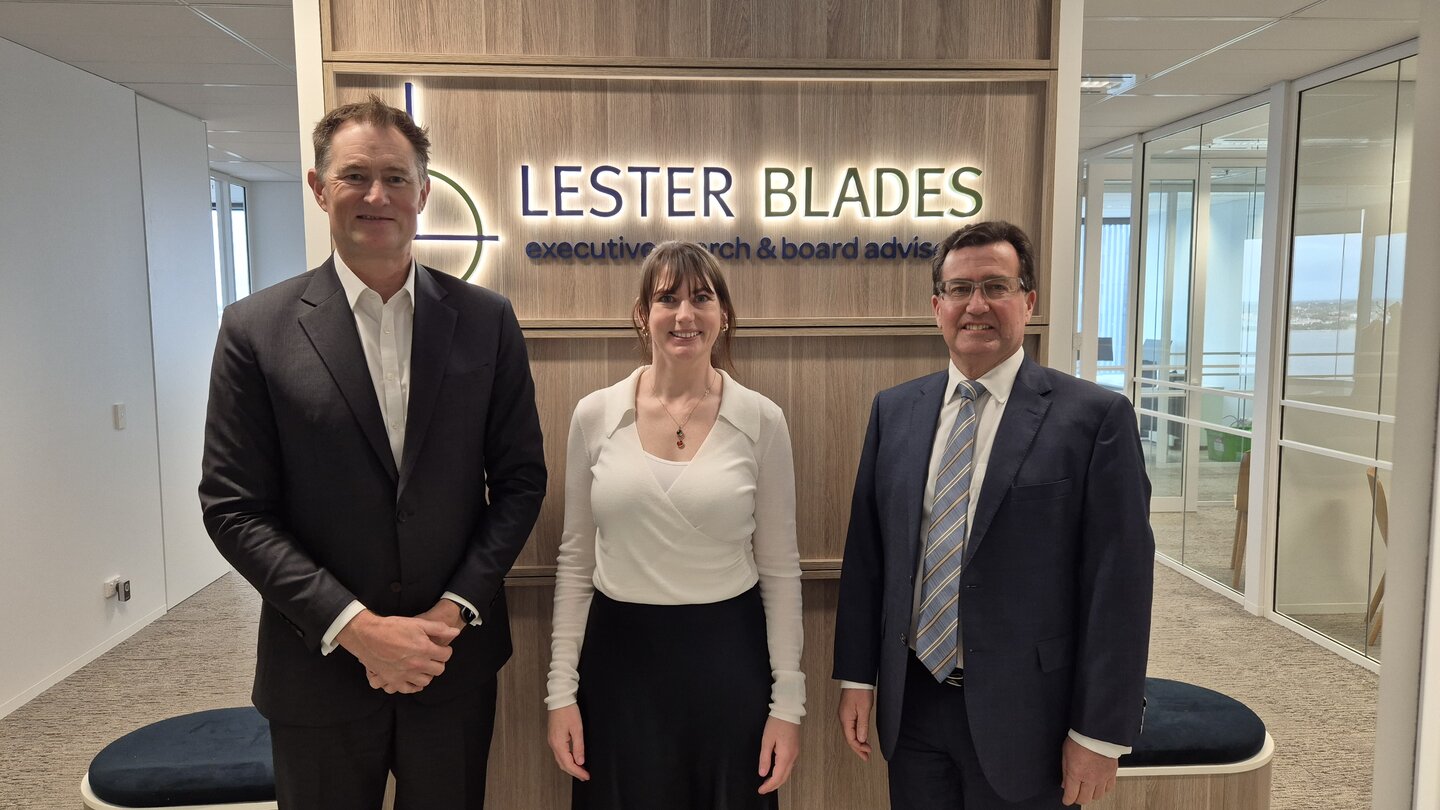
The founders of local executive search firm Lester Blades have sold their 24-year-old business via a management buyout by two current partners.

Brent futures were down 73 cents, or 1.02%, to $70.84 a barrel by 0102 GMT, while U.S. West Texas Intermediate crude fell 83 cents, or 1.21%, to $67.75 a barrel.
In the previous session, both benchmarks fell more than 1% to their lowest levels in four months.
Sources said negotiators for the U.S. and Iran spent two days in Doha discussing maritime traffic in the Strait of Hormuz and unfreezing Iran’s funds.
Though traffic has partially resumed, the two countries exchanged strikes last weekend following an Iranian attack on a cargo ship.
Iran is determined to win international recognition of its control over the strait even if it has to do so by force, two senior Iranian sources said. Tehran has repeatedly said it will impose tolls on shipping starting in mid-August, after a toll-free period specified by the initial agreement expires.
Tanker traffic through the strait has started to recover, with U.S. Vice President JD Vance saying oil flows through the waterway had returned to pre-war levels, without citing figures. As the strait stays open and crude oil flows out, competition for market share keeps pushing oil prices down, and there are growing expectations of oversupply, Haitong Futures said in a note.
Adding to supply at a time of falling oil prices amid the gradual reopening of the strait, sources said on Wednesday that OPEC+ oil-producing countries will likely agree to a further hike in their output targets from August when they meet on Sunday.
The target will increase by about 188,000 barrels per day for August, the same as for June and July, the sources said.
In the U.S., crude inventories fell by 3.8 million barrels to 408.4 million barrels last week, the lowest level since September 2018, the Energy Information Administration said on Wednesday.
The draw, however, was smaller than analysts’ expectations in a Reuters poll for a drop of 4.5 million barrels.

Wednesday’s New York Times Connections puzzle leaned heavily on geography, asking players to untangle four distinct categories hidden within a grid of 16 place names and location-derived words, creating a board where nearly every entry could plausibly belong to multiple groups before the correct sorting logic revealed itself.
Puzzle number 1,116 centered on a shared geographic theme, but the four categories used that theme in radically different ways, blending trivia about cocktails, cinema and etymology into what puzzle observers described as a satisfying, moderately difficult challenge that rewarded both cultural knowledge and careful word analysis. Here is a full breakdown of every category and every answer.
Yellow: Things Named After Places
The yellow category, traditionally reserved for the most accessible grouping in each day’s puzzle, gathered four words that originated as place names but have since entered everyday English as common nouns or concepts entirely separate from their geographic origins. Wednesday’s yellow group was: Champagne, China, Cologne and Limerick.
China refers to fine ceramic tableware, a usage derived from the country that originally produced and exported such goods to Europe centuries ago. The word became so synonymous with the product that it eventually detached from its geographic meaning in everyday speech. Champagne refers to the sparkling wine produced using the méthode champenoise, originally named for the Champagne region of northeastern France, where the production method was developed and where protected designation rules historically governed its use. Cologne refers to eau de cologne, the light, citrus-based fragrance that takes its name from the German city of Cologne, where it was first commercially produced in the early eighteenth century. Limerick refers to the five-line, AABBA-rhyme-scheme comic verse form, whose origin is disputed but commonly linked to the Irish city of Limerick, either through folk songs or through a parlor game popular in the nineteenth century.
Green: Best Picture Winners and Nominees
Wednesday’s green group required a mixture of film history knowledge and geographic pattern recognition, gathering four words that are simultaneously real city names and the titles of Academy Award-recognized films. The green answers were: Casablanca, Chicago, Fargo and Munich.
Casablanca, the 1942 Warner Bros. classic starring Humphrey Bogart and Ingrid Bergman, won three Academy Awards including Best Picture at the 1944 ceremony. It remains one of the most celebrated and widely quoted films in American cinema history. Chicago, the 2002 Rob Marshall-directed musical adaptation of the Broadway stage show, won six Academy Awards at the 2003 ceremony including Best Picture, ending a decades-long drought for movie musicals at Hollywood’s highest honor. Fargo, the 1996 Coen Brothers crime film set largely in the frozen upper Midwest, received seven Academy Award nominations and won two, for Best Original Screenplay and Best Actress for Frances McDormand, along with a Best Picture nomination. Munich, Steven Spielberg’s 2005 historical thriller depicting the Israeli intelligence response to the 1972 Olympics massacre, received five Academy Award nominations including Best Picture and Best Director, though it did not win in either of those categories.
Blue: Places in Cocktail Names
The blue category proved highly accessible for anyone with a working knowledge of classic bar culture, grouping four words whose primary Connections identity is as the geographic component of a named mixed drink. Wednesday’s blue answers were: Cuba, Long Island, Moscow and Singapore.
The Cuba Libre is a straightforward mix of rum, cola and lime, with the name translating roughly to “Free Cuba” and believed to have been coined by American soldiers in Havana around 1900 following the Spanish-American War. Long Island Iced Tea is a deceptively named mixed drink containing vodka, rum, tequila, gin and triple sec alongside cola and lemon juice, known for its high alcohol content relative to its relatively innocuous appearance. The Moscow Mule is a vodka-and-ginger-beer cocktail served over ice in a distinctive copper mug, created in the 1940s by a vodka distributor and a ginger beer maker in a collaboration intended to promote both products simultaneously in the American market. The Singapore Sling is a gin-based cocktail created at the Long Bar of the Raffles Hotel in Singapore around 1915, combining gin with cherry liqueur, Cointreau, Bénédictine, pineapple juice and lime juice, and is one of the signature cocktails of Southeast Asian hospitality culture.
Purple: Starting With Countries
The purple category, which the New York Times’ Connections format traditionally reserves for the trickiest, most conceptually unconventional grouping, required players to identify four place names whose first component is itself the name of a sovereign nation. This is a different relationship than the yellow category, which gathered words that have become entirely detached from their geographic origins. Wednesday’s purple group asked players to recognize the country hiding in plain sight at the start of a compound geographic name. The purple answers were: Dominican Republic, Guinea-Bissau, Indianapolis and Nigeria.
Dominican Republic begins with Dominican, which as an adjective derives from Dominica, a separate island nation in the Eastern Caribbean. Guinea-Bissau begins with Guinea, which is the name of a standalone country in West Africa. Indianapolis, the capital city of Indiana, begins with India, one of the world’s most populous nations. Nigeria, the most populous country in Africa, begins with Niger, a separate landlocked nation to Nigeria’s northwest. The category is a textbook example of the kind of wordplay that Connections editor Wyna Liu has built her reputation around, since it requires solvers to mentally strip away the familiar, proper-noun framing of each entry and look instead at what is hiding at the beginning of each word.
The New York Times credits associate puzzle editor Wyna Liu with developing and maintaining Connections since its launch in 2023. The game challenges players to sort 16 words into four groups of four, with up to four incorrect guesses allowed before the puzzle ends. Like Wordle, it resets at midnight in each player’s local time zone, and players worldwide receive the same grid each day. Results can be shared in emoji grid format on social media, continuing the sharing culture that has made the broader suite of New York Times daily word games a fixture in millions of daily routines.
Business
FBI Confirms All Three Nancy Guthrie Ransom Notes Are Fake, Upending the Case’s Central Kidnapping Narrative


TUCSON, Ariz. — The FBI has determined that all three ransom notes circulated in connection with the disappearance of Nancy Guthrie, the 84-year-old mother of “Today” show co-anchor Savannah Guthrie, are fraudulent, a bombshell development first reported Tuesday by Reuters that strips away the central kidnapping-for-ransom narrative that has dominated five months of public coverage and family appeals.
An anonymous FBI official told Reuters the FBI assessed the authenticity of two ransom notes reported in early February, just days after Guthrie vanished, and a third, more recent ransom note that claimed to know the identities of her kidnappers.
“None of the ransom notes are believed to be genuine,” the FBI source told the publication.
A second law enforcement source familiar with the matter confirmed the FBI’s assessment that the ransom notes were not genuine. The official spoke on the condition of anonymity because of the ongoing nature of the investigation, and the FBI did not elaborate publicly on the specific methods used to reach its conclusions.
The revelation fundamentally reshapes the publicly understood picture of what happened to Nancy Guthrie after she was last seen at her Tucson, Arizona, home on the night of Jan. 31. The Guthrie family, responding to what they believed were genuine communications from kidnappers, made repeated public pleas to the alleged abductors in the weeks following her disappearance, with Savannah Guthrie telling them in one video message posted to social media, “we will pay.” Those appeals, posted alongside her siblings Camron and Annie Guthrie, were premised on the assumption that the ransom demands were real and that Nancy Guthrie was alive in the custody of those who had taken her. The FBI’s determination that all three notes were fabricated removes that premise entirely.
The first note, reported by TMZ, demanded a sum of cryptocurrency in the millions, setting two deadlines for payment on Feb. 5 and Feb. 9. TMZ also reported receiving nearly a dozen emails from the same man, with the first email sent just days after the abduction, saying he would divulge information in exchange for one bitcoin. The following day, the same sender wrote again saying time was “no longer of the essence,” suggesting Nancy had died after being taken to Mexico.
According to the FBI official who spoke to Reuters, investigators determined that the first two notes originated from the same sender, though the methods used to establish that connection were not disclosed. To test the authenticity of the first note and potentially identify those responsible, the FBI deposited a small amount of cryptocurrency into the account specified in the message. Those funds remained untouched and were never withdrawn, a finding that became a key piece of evidence supporting the conclusion that the sender had no actual connection to Guthrie’s disappearance.
The second note claimed Guthrie had died and was “buried in nature,” sources close to the investigation told NewsNation’s Brian Entin. That note, which was sent to KOLD, the NBC News affiliate in Arizona, had previously been described by NBC News as potentially credible, citing three people familiar with the situation. The FBI’s determination that it too was a fabrication represents a significant reversal from how the correspondence had been characterized in media coverage over the preceding weeks.
The third and most recent note was an email sent to TMZ claiming the sender possessed video evidence of the alleged abductor and of Guthrie on the day of her death, along with information that could identify the kidnappers. Pima County Sheriff Chris Nanos had publicly expressed skepticism about that communication before Tuesday’s FBI determination, voicing doubt about its authenticity on a local radio station shortly after it surfaced.
“People who call in fake ransom notes, people who claim for the sake of media and the family, they get out and disturb, in this case, an entire neighborhood,” Nanos said.
The Pima County Sheriff’s Department, which is leading the overall investigation in coordination with the FBI, declined to comment directly on Tuesday’s findings. Sheriff’s spokesperson Angelica Carrillo referred all questions about the ransom notes to federal authorities and confirmed only that the investigation remains active.
“We don’t have any updates, other than this is still an active investigation,” Carrillo said. She added that DNA samples and video evidence collected during the investigation remain under forensic examination.
With the ransom note narrative now formally closed by the FBI’s determination, the case returns its focus entirely to the physical evidence collected at the scene of Guthrie’s disappearance. Authorities have confirmed that blood found on the front porch of her Tucson home belonged to her based on DNA testing. Surveillance footage recovered from a doorbell camera, retrieved from corrupted backend server data after the camera itself was tampered with, showed a masked individual approaching the property in the early morning hours of Feb. 1, shortly before Guthrie’s pacemaker app recorded a disconnection from her phone at 2:28 a.m. A separate piece of DNA evidence, recovered from a glove found near the home that resembled the one worn by the masked figure in the footage, failed to match any profile in the FBI’s national CODIS database, prompting investigators to pursue genetic genealogy testing as an alternative path toward identification.
No suspects have been publicly named or arrested in the case. The FBI has offered a reward of up to $100,000 for information leading to Guthrie’s location or to the arrest and conviction of those responsible. The Guthrie family separately offered an additional $1 million reward, bringing the total to $1.1 million. Neither the FBI nor the Pima County Sheriff’s Department has publicly confirmed whether Guthrie is believed to be alive, and Savannah Guthrie herself has acknowledged the possibility that “she may already be gone” while continuing to hold onto hope publicly.
The case has drawn national attention for months, driven in large part by Savannah Guthrie’s visible public role as a sitting anchor at one of American television’s most watched morning programs. Her repeated on-air appeals for information, continued even as she maintained her professional duties at the “Today” show, kept the case in the public eye throughout the investigation’s most active stretch, including during Tuesday’s broadcast when she again referenced the family’s $1 million reward and described the ongoing ordeal as one of “agony.”
With all three ransom notes now formally dismissed as fabrications, investigators face the sobering challenge of pursuing a case that has produced significant physical evidence, including blood, video footage and a DNA sample, but has yet to yield a named suspect or confirmed account of what happened to an 84-year-old woman nearly five months after she vanished from her home in the early hours of a February morning.

Polished Marble Floor Tile is a timeless choice for elevating the aesthetics of any interior space. Its luxurious appearance and natural shine make it a popular choice in home improvement and interior design.
However, maintaining the beauty of marble requires specific knowledge and care to ensure its longevity. This article will guide you through the essential practices to keep your marble floors looking stunning for years. From cleaning techniques to restoration strategies, we’ll cover everything you need to know about preserving the elegance of polished marble.
How to Care for Polished Marble Floor Tile
Caring for polished marble begins with understanding its unique characteristics. Marble is a porous natural stone, meaning it can absorb liquids and stains if not properly sealed. Regular sealing is a critical step in maintaining its appearance and preventing long-term damage. The Polished Marble Floor Tile from Zia Tile is an excellent choice for those seeking both beauty and durability in their flooring.
Incorporating a finishes schedule, which is a detailed plan of how often surfaces need maintenance, can help keep track of when your marble tile needs resealing. Typically, marble should be resealed every 6 to 12 months, depending on the foot traffic in the area.
Daily care involves sweeping with a soft-bristle broom to remove debris that can cause scratches. For more thorough cleaning, a pH-neutral cleaner specifically designed for marble is recommended to avoid any acidic reactions that can damage the stone.
Essential Cleaning Techniques for Marble Surfaces
To maintain the pristine look of your marble floors, employing the right cleaning techniques is essential. Use a microfiber cloth or mop for dusting, as these materials are gentle yet effective in capturing dust particles without scratching the surface. When mopping, ensure the mop is damp, not soaking wet, to avoid water seeping into the grout lines.
Marble surfaces can benefit from the use of a mood board during the design phase, which is a visual tool that helps in selecting complementary colors and materials. Consider using gentle cleaning agents that do not contain harsh chemicals or abrasives, as these can strip the marble of its natural sheen.
For stubborn stains, a paste made from baking soda and water can act as a poultice to draw out the stain. Apply the paste to the stain, cover it with plastic wrap, and let it sit for 24 hours before wiping clean. This technique can help maintain the color rendering of the marble, preserving its natural beauty.
Preventing Scratches and Damage on Marble Floors
Preventing scratches and damage is crucial for maintaining the allure of marble floors. One effective strategy is to use furniture pads or FF&E (furniture, fixtures, and equipment) solutions to minimize the impact of heavy objects on the floor. Additionally, placing rugs or runners in high-traffic areas can reduce wear and tear.
Another consideration is the use of sustainable design practices, which incorporate environmentally friendly materials and methods into your home. Choosing eco-friendly mats and rugs can protect your marble floor while aligning with greener building practices.
To further safeguard your marble, avoid dragging heavy objects across the floor. Instead, lift and carry items or use a dolly with inflatable tires that can easily roll over the surface without causing damage.
Restoration and Maintenance for Longevity of Marble Tiles
For marble floors showing signs of wear, restoration can rejuvenate their appearance. This process often involves professional polishing, which uses specialized equipment to buff out scratches and restore the tile’s shine. Engaging professionals who understand the intricacies of marble restoration ensures the best results.
Periodic maintenance should also include a site plan review, which assesses the current condition of the flooring and identifies areas that may require attention. A comprehensive spec book can guide you through the necessary steps for ongoing care, outlining everything from cleaning products to restoration procedures.
Considering acoustic treatment in rooms with marble floors can enhance the overall environment by reducing noise, creating a more pleasant living space. This is particularly beneficial in open-plan designs where sound can travel more freely.
Conclusion
Maintaining the beauty of Polished Marble Floor Tile requires consistent care and attention to detail. By following proper cleaning techniques, preventing damage, and engaging in regular maintenance, you can ensure that your marble floors remain a stunning feature of your home. Embrace these strategies to enjoy the timeless elegance of marble for years to come.

Its terms require that within 18 months of the issue, either Tata Sons announces an initial public offering (IPO), or SP Group reaches a settlement with the Tata holding company on its ownership.
“The bond’s terms themselves acknowledge that monetisation of the Tata Sons stake is central to repayment,” said a banking industry official. “Central bank clarifications on indirect public funds and asset-based classification of NBFCs increase the likelihood of a Tata Sons listing, which, while not guaranteed, provides incremental comfort on SP Group’s ability to monetise its biggest asset over time.”
Indian government bonds are on the cusp of inclusion in Bloomberg’s Global Aggregate Index, with a decision anticipated mid-July. Tax exemptions and recent policy reforms have fueled market optimism, driving a bond rally. Foreign investors have already poured record sums into Indian debt, anticipating this significant development. While a deferral could cause yields to rise, most experts foresee a positive outcome, potentially attracting billions in passive inflows.
Last Wednesday, the central bank implemented a new definition for systemically important non-banking financial companies, called upper-layer NBFCs, bringing such entities with assets exceeding ₹1 lakh crore under the umbrella that requires mandatory public listing of shares. The move appears to have all but shut the door for the parent of the country’s largest business group to remain privately held.
Tata Sons, with an asset base of more than ₹1.75 lakh crore, was classified as an NBFC-UL on the asset-based framework that replaced a complex metric. The company’s majority owner, Tata Trusts, earlier passed a resolution saying Tata Sons should remain unlisted. Two of its vice chairmen-Venu Srinivasan and Vijay Singh-have subsequently said in public statements that a listing would be a positive outcome.
 Agencies
Repayment based on either Tata Sons listing, or settlement between both groups
Clarity on ‘Public’ Funds
Their public comments have become a source of discord among trustees, including chairman Noel Tata, who has firmly opposed a listing. In the revised NBFC-UL framework, RBI has clarified that indirect public funds include money received through associates and group entities that themselves have access to public funds.
The clarification removes the scope for companies to argue they are outside the definition of public funds merely because group companies who invested in them did not borrow debt for such investment. The clarification comes a week after RBI briefly omitted the definition from its June 24 revised NBFC-UL framework before restoring it in the updated circular effective July 1.“RBI had also clarified this issue in FAQs dated April 29 that if a group company has invested in an NBFC and it has access to public funds, then such an NBFC will be considered to have access to public funds,” said an investor in the existing series of SP Group bonds.
Tata Sons meets this criterion as group companies have access to public funds invested in Tata Sons rights issue, said this investor. SP Group will likely pay 18.95% for the series of bonds to primarily refinance existing debt. “The bond issue will be launched on Monday, with settlement likely in the following week,” said a person familiar with the development. A spokesperson at SP Group did not respond to ET’s mailed requests for a comment.
‘DELEVERAGING’ TARGETS
The zero coupon, unlisted and unrated non-convertible debentures (NCDs) will be issued by Eqvizen Investment, while Cyrus Investments will pledge Tata Sons shares as collateral.
The financing also includes a deleveraging covenant requiring repayment of at least Rs 13,500 crore within 24 months of issuance. Failure to meet the repayment obligation would constitute an event of default, providing investors with additional safeguards.
The issue is part of SP Group’s refinancing exercise against its Tata Sons stake, including borrowings raised by Goswami Infratech. The refinancing, originally targeted for completion by the end of April, was delayed to July after market volatility triggered by the US-Iran conflict disrupted execution, prompting the group to seek additional time from creditors as debt maturities approached.

Central banks rarely mention silver in their official communications. Their press conferences focus on inflation, employment, and the policy rate, with the occasional nod to financial stability and currency markets.
Yet anyone who has watched the silver price move through a full rate-hiking and rate-cutting cycle at SD Bullion or any other reputable chart knows that monetary policy is doing more of the work than the headline numbers suggest. The relationship is indirect, sometimes delayed, and always eventually unmistakable.
The Real Interest Rate Channel
The cleanest link between central bank policy and silver runs through real interest rates, which are simply nominal rates minus expected inflation. When a central bank holds nominal rates below the rate at which prices are rising, the real rate is negative, and holding cash becomes a slow loss of purchasing power. Non-yielding assets, including silver, benefit because the opportunity cost of owning them has collapsed. When the central bank then cuts nominal rates further, as has happened repeatedly since mid-2025, the silver price tends to respond by grinding higher.
The Federal Reserve publishes its policy statements, minutes, and economic projections on a schedule that markets watch intensely. Precious metals investors who take the time to read those documents rather than skim headlines about them develop a meaningfully better sense of where the silver price is headed in the months following each meeting.
The Credibility Question
Central banks trade on credibility. When markets believe the central bank will do what it says, long-term inflation expectations stay anchored and precious metals remain a niche holding. When credibility wobbles, whether because of political interference, fiscal dominance, or a messy policy reversal, expectations drift higher and metals tend to benefit. The recent surge in the silver price is partly a story about industrial demand, but it is also a story about gradually eroding confidence in the ability of monetary authorities to keep a lid on inflation across multiple economies.
Currency Effects That Amplify the Move
When a major central bank eases policy while others hold firm, the corresponding currency tends to weaken on the foreign exchange market. A weaker dollar has historically been one of the most reliable tailwinds for the silver price, because silver is priced globally in dollars and a cheaper dollar makes the metal more affordable for buyers paying in euros, yen, or renminbi. The resulting foreign demand boost is often underestimated by investors who focus only on domestic buying behavior.
The Sovereign Gold Buying Spillover
Central banks themselves do not typically buy silver in meaningful quantities, but their gold purchases have indirect effects that eventually reach the silver market. The sustained accumulation of gold reserves by emerging market central banks over the past several years has supported the gold price and, through the gold-to-silver ratio, eventually drawn silver higher. More recently, Russia’s formal inclusion of silver in its state reserve framework marked the first meaningful break from the gold-only precedent and hints at a potential shift that other countries may eventually follow.
Why the Silver Price Reacts More Than Gold
Silver is a smaller, more volatile market than gold. When the same monetary policy news hits both metals, silver typically moves further in either direction. Investors who understand this relationship can use the gold-to-silver ratio as an early warning indicator. A sharp compression in the ratio after a central bank meeting suggests investors are rotating into the higher-beta metal and anticipating further easing. A widening ratio suggests the opposite. Neither signal is infallible, but both add information.
What to Watch on the Calendar
The Federal Reserve’s scheduled meetings set the tempo, but the European Central Bank, the Bank of England, the Bank of Japan, and the People’s Bank of China all matter. A synchronized dovish turn across multiple majors produces the strongest moves in the silver price, because the corresponding currency effects reinforce rather than offset each other. Isolated dovish shifts at a single central bank produce more muted reactions, particularly when other majors are holding firm.
The Long View Across Cycles
Across multi-year horizons, the silver price has tended to rise during periods of easy monetary policy and weaker currencies, and to struggle during periods of tight policy and strong currencies. The 1970s, the 2000s, and the current decade all fit the pattern. The 1980s and much of the 1990s do not. An investor with the patience to sit through a full monetary cycle and the discipline to accumulate when real yields are deeply positive and silver is unloved has historically been rewarded for the waiting. That is a harder habit to build than watching the daily move, but it is the one that actually produces returns that matter.
A Realistic Framing
The silver price is not a puppet on a central bank string. Industrial demand, physical inventories, and investor sentiment all push and pull at the number every day. But the broad direction across quarters and years is closely tied to what central banks are doing, and to what markets believe they will do next. Investors who follow monetary policy with even moderate attention pick up on shifts months before most retail participants notice, and the returns that flow from that early awareness are exactly the returns that active silver allocation is supposed to generate.

ARLINGTON, Texas — Australia and Egypt will write a new chapter in World Cup history Friday when they meet in the Round of 32 at AT&T Stadium, with the Socceroos seeking their first-ever knockout-stage victory and the Pharaohs aiming to extend their breakthrough run in the tournament.
The match, scheduled for 1 p.m. local time (6 p.m. BST), pits two teams that advanced from the group stage with contrasting styles and storylines. Australia finished second in Group D with a workmanlike campaign, while Egypt claimed a spot in the knockout rounds for the first time in their history after securing second place in Group G.
Both sides carry historic weight into the fixture. The Socceroos have never won a World Cup knockout match, falling short in previous appearances. Egypt, making their debut beyond the group stage, showed resilience with a mix of draws and a notable victory.
Tony Popovic’s Australia side opened with a 2-0 win over Turkiye but followed with a 0-2 loss to the United States and a scoreless draw against Paraguay. The team conceded twice across three matches while managing just two goals, underscoring a defensive approach that has carried them this far.
Egypt, under Hossam Hassan, drew with Belgium, beat New Zealand 3-1 and drew with Iran. The Pharaohs displayed attacking variety, with five different players finding the net in the group phase, reducing reliance on any single star.
The fixture offers intrigue in midfield control and attacking transitions. Australia’s compact shape may limit space, but Egypt’s creative options, led by Mohamed Salah, could prove decisive on the counter. Salah, with extensive international experience, remains a constant threat.
Australia relies on goalkeeper Mathew Ryan and midfield leadership from Jackson Irvine. Younger talents like Nestory Irankunda, who has already scored at the tournament, add dynamism. The Socceroos will need greater final-third output than shown in groups to advance.
Egypt’s lineup features Salah alongside Omar Marmoush and others providing depth. Goalkeeper Mohamed El Shenawy brings experience, while the defense kept clean sheets in qualifying.
Head-to-head history is limited, with Egypt winning a 2010 friendly 3-0 and a 1987 draw. Recent form favors neither decisively, though Egypt’s attacking depth gives them an edge in many previews.
Tactical battles will center on containing Salah while Australia seeks to exploit transitions. Both teams are expected to start cautiously in their first knockout meeting.
The venue, AT&T Stadium, provides a neutral, high-capacity stage for the occasion. Fans from both nations are anticipated to create an electric atmosphere in Texas.
Advancing to the Round of 16 would mark a milestone for either side. For Australia, it would break knockout barriers. For Egypt, it would validate their group-stage progress.
The match underscores the World Cup’s global appeal, featuring teams from different confederations with distinct footballing traditions. Australia brings physicality and organization, while Egypt offers flair and clinical finishing potential.
Coaches Popovic and Hassan have prepared meticulously. Australia’s resilience was evident in the Paraguay draw, while Egypt’s Belgium result highlighted their competitiveness.
Injuries appear minimal for both, allowing near-full-strength lineups. Predicted formations include Australia in a 4-3-3 and Egypt in a 4-2-3-1, setting up a balanced contest.
Beyond the pitch, the game highlights football’s unifying power. National pride is high, with supporters traveling far for the occasion.
Broadcast coverage will reach global audiences, with free-to-air options in several markets. The fixture offers drama typical of knockout football, where one moment can define a campaign.
As teams finalize preparations, focus remains on execution under pressure. Australia must improve attacking threat, while Egypt seeks to convert possession into goals.
The Round of 32 stage tests depth and adaptability. Both squads blend experience with emerging talent, promising an engaging encounter.
World Cup progression carries significant sporting and cultural importance. A victory propels one nation forward while ending the other’s run.
Analysts anticipate a tight affair, potentially decided by individual brilliance or defensive lapses. Set pieces and transitions could prove pivotal.
The winner advances to face stiffer competition, raising the stakes. Both teams recognize the opportunity to create lasting memories.
Friday’s clash at AT&T Stadium embodies the tournament’s spirit. Australia and Egypt, separated by geography and history, meet with shared ambition on football’s biggest stage.
As kickoff approaches, anticipation builds for a match rich in narrative and potential for history. One

Air conditioner recall issued for fire hazard ahead of July 4 heatwave

Robinhood Launches Robinhood Chain Mainnet, Adds Stock Tokens, Onchain Lending, and Agentic Crypto Trading

Nara Smith Reveals Her 2YO Daughter’s Cancer Diagnosis


-

 Fashion5 days ago
Weekend Open Thread: Staud – Corporette.com
-

 Politics6 days ago
The House | Manchesterism won’t survive the painful trade-offs unless it gets citizens on board
-

 Crypto World2 days ago
Strategy authorizes up to $1.25B in Bitcoin sales under new capital plan
-

 Politics6 days ago
Potential 2028er World Cup attendee leaderboard
-

 Business6 days ago
Asia stock markets slide as tech shares slump
-

 News Videos3 days ago
MAJOR BITCOIN & MARKET UPDATE!!!! (MUST WATCH ASAP!!!)
-

 Tech6 days ago
A Look At A Gaggle Of Transputer Boards
-
 Crypto World6 days ago
Dell (DELL) Shares Tumble Over 5% Following Analyst Downgrade to Hold
-

 Crypto World4 days ago
Coinbase, Circle Deepen Crypto Stock Losses Despite Resilient S&P 500
-

 Business2 days ago
Australia treasurer says alleged access of prime minister’s bank data ’incredibly concerning’
-

 Crypto World5 days ago
Kraken's xStocks Opens Bending Spoons IPO Registration to EEA Retail
-

 Sports5 days ago
FIH Pro League: India defeat Pakistan 7-1, register biggest win of campaign | Other Sports News
-

 Crypto World6 days ago
Bitcoin Sparks $600M Hourly Liquidations With $65,000 Set To Become Resistance
-

 Tech4 days ago
Bluekit phishing kit adopts browser-in-the-middle for login theft
-

 Tech5 days ago
Russian hackers now target Signal backup recovery keys
-
 Crypto World5 days ago
Hyperliquid Named on Singapore MAS Investor Alert Register
-

 Crypto World5 days ago
RTX holders must register wallets before token distribution begins
-

 Crypto World7 days ago
Ripple and SBI launch RLUSD in Japan after JFSA approval
-

 Tech2 days ago
Anonymous researcher drops 0-day ‘exploitarium’ repo
-

 Sports13 hours ago
Broncos roster: OL Ben Powers (No. 74) entering final year of contract
You must be logged in to post a comment Login