

Business
Dave Portnoy slams Zohran Mamdani over New York City economic vision


Barstool Sports founder and President Dave Portnoy blasted New York City Mayor Zohran Mamdani’s socialist agenda, warning the city is headed in a dangerous direction and saying some progressive politicians ‘hate America.’
Barstool Sports founder Dave Portnoy is keeping the door open to a potential run for New York City mayor as he ramps up criticism of Mayor Zohran Mamdani, arguing the candidate’s economic message and political alliances are cause for concern.
He joined FOX Business’ Stuart Varney on “Varney & Co.” to discuss New York City politics, the state of the Democratic Party and why he believes voters should pay close attention to the views of candidates seeking public office.

Barstool founder and CEO Dave Portnoy (Michael Hickey / Getty Images)
After Varney asked if he would challenge Mamdani in a run for NYC Mayor, Portnoy responded, “It depends what day you wake me up.”
“You show me a clip like that, Stuart, my blood starts to boil.” Portnoy said responding to a clip of Mamdani defending his economic agenda, arguing that raising taxes on wealthy New Yorkers and embracing socialist principles would help address the city’s financial challenges.
Rep. Mike Lawler, R-N.Y., joins ‘Varney & Co.’ to warn Zohran Mamdani’s rent freeze and socialist agenda are worsening New York City’s housing crisis while defending free-market solutions.
Portnoy went on to criticize Mamdani’s comments about balancing the city’ finances.
“This guys’ unbelievable. You didn’t balance anything. You just took money, you robbed Peter to pay Paul. Like what are we doing here?” Portnoy said.
Portnoy also left the door open to a potential political run in a recent interview with Fox News Digital. When asked whether he would consider running against Mamdani, Portnoy said, “maybe I’m the guy to do it.”
Rep. Nicole Malliotakis, R-N.Y., joins ‘Varney & Co.’ to discuss Speaker Mike Johnson’s warning on rising socialism, Democrats’ leftward shift and concerns over anti-Semitism in New York City.
In addition, he pointed to several progressive political figures and argued voters should take candidates at their word when evaluating past statements and policy positions before Election Day.
KEN GRIFFIN FIRES BACK AT MAMDANI, SAYS BUSINESS LEADERS MUST ‘FIGHT FOR THEIR CITY’
“These are anti-American, they hate America,” Portnoy said. “I trust what people say a lot before they’re elected. When they get elected, a lot of these people are deleting their tweets… It’s garbage, and it’s scary.”
‘The Big Money Show’ panel reacts to President Donald Trump’s warning about Democratic Socialists, debating the movement’s growing influence, appeal to younger voters and what it means for the Democratic Party.
Although Portnoy acknowledged he has floated the idea of entering politics himself, he said he understands the personal costs that come with seeking office.
“I’d hate to get into politics because it’s the worst people, it’s the worst life, you can’t enjoy your life,” he said. “I don’t know what’s going on in this country and if somebody isn’t gonna step up… It’s a very scary place where we’re going.”


Commenting on the market reaction, Kunal Bajaj from Choice Institutional Equities said, “The price reaction has been pretty aggressive today. This is on the back of the guidance for Q1 FY27, and the company has also indicated that Q2 FY27 is expected to be on similar lines as Q1.”
European OEMs Delay Spending
According to Bajaj, the slowdown stems from reduced spending by major European automakers, which are becoming more cautious after making significant investments in electric vehicles. Profitability pressures, particularly from rising Chinese competition, have led customers to delay project approvals and capital allocation.He said, “European OEMs have invested aggressively in the EV space, but profitability pressures have made them more selective in capital allocation. Order books remain healthy, but deal-to-revenue conversion is slowing as project approvals and ramp-ups get deferred.”

Growth Recovery Now Expected to Be Gradual
The weaker guidance has forced analysts to trim their revenue expectations. Bajaj noted that while the Street had anticipated a sequential decline, the company’s outlook suggests an even steeper slowdown, making a strong recovery in the second half less likely.
He said, “The company’s guidance implies around a 4.5% to 4.8% quarter-on-quarter decline, which is much lower than our estimates. We now expect FY27 to be much more gradual than we had anticipated earlier.”Margins Also Face Pressure
The slower revenue trajectory is also expected to impact profitability. Analysts have revised both revenue and EBITDA margin estimates lower, reflecting weaker operating leverage.
Bajaj said, “We have lowered our FY27 revenue estimates by around 6% and cut EBITDA margin estimates by nearly 150 basis points.”
Pressure May Extend Across the ER&D Sector
The cautious demand environment is expected to affect other engineering R&D companies with automotive exposure, including Tata Elxsi, Tata Technologies and LTTS. Although margins could remain supported by cost discipline and favourable currency movements, growth is likely to stay subdued.
According to Bajaj, “Companies with automotive exposure are expected to have subdued performance going forward. We expect FY27 to be a gradual and moderate year for the ER&D sector.”
AI Is a Positive, But Not Enough to Offset Weak Demand
While artificial intelligence is helping companies improve implementation and move towards solution-led offerings, Bajaj believes it cannot fully offset weak client spending in the near term. He expects meaningful growth to shift into the next financial year.
He said, “AI is helping in terms of implementation, but there is also a deflationary impact. Overall, we expect FY27 to remain a pressured year, with growth now deferred to FY28.”
Near-Term Recovery Remains Uncertain
Although KPIT management has expressed confidence about stronger sequential growth by the fourth quarter of FY27, Bajaj remains cautious, citing macroeconomic uncertainty and restrained customer spending.
He concluded, “Clients are still in wait-and-watch mode. We expect gradual spending rather than strong incremental spending, so H2 FY27 may not be as strong as we had expected earlier.”
Business
Harry Kane Scores Twice in Final 15 Minutes to Rescue England Over Congo DR in World Cup Thriller

ATLANTA — Harry Kane delivered one of the most dramatic rescues of his international career Wednesday, scoring twice in the final 15 minutes to give England a 2-1 comeback victory over Congo DR at Mercedes-Benz Stadium and book a round of 16 berth against Mexico in Mexico City.
A Brian Cipenga goal in the seventh minute had put Congo DR ahead in what appeared to be one of the tournament’s biggest potential upsets, and for long stretches of the match it seemed England might fall short as Congolese goalkeeper Lionel Mpasi produced a string of remarkable stops. But Kane headed home a 75th-minute cross from substitute Anthony Gordon before smashing in a brilliant 86th-minute winner from the edge of the box, sparking celebrations on the England bench and from thousands of fans inside the stadium.
The winning goal was Kane’s 84th for the England national team and his fifth of this World Cup, a tally bettered at the tournament only by Kylian Mbappé and Lionel Messi, both of whom have six. Kane now has 13 career World Cup goals, one more than Pelé managed across three tournaments.
England will now travel to the Estadio Azteca in Mexico City for Sunday’s round of 16 matchup against Mexico, who defeated Ecuador 2-0 on Tuesday to end their own four-decade wait for a World Cup knockout victory. The prospect of facing Mexico on their own turf, in a stadium where El Tri have lost just twice in 89 competitive matches, loomed large in the immediate aftermath of Wednesday’s escape.
England coach Thomas Tuchel will have significant work to do between now and Sunday. Wednesday’s performance exposed defensive vulnerabilities and attacking inconsistencies that were barely papered over by Kane’s match-winning brilliance. The opening goal came far too easily, with Cipenga arriving completely unmarked at the back post to receive a simple ball over the top and finish past Jordan Pickford at his near post. Right back Djed Spence was exposed in a two-on-one situation, with center back Ezri Konsa out of position and powerless to intervene.
England were a shambles in the opening exchanges after the goal, losing their defensive shape and on three separate occasions passing the ball directly out of play under minimal pressure. Their first shot of any description did not arrive until the 30th minute, the longest they have had to wait to register a shot in a World Cup match since 1996.
The hydration breaks that are customarily booed by supporters proved unexpectedly significant in shifting the match’s momentum. On both occasions they were taken, England visibly improved after Tuchel used the pause in play to gather and reorganize his group. The first break helped England steady themselves and create five major chances before halftime, ending the first half with an expected goals figure of 1.3 after their dismal opening phase. The second produced a similar effect in the second half as England were beginning to drift again, with the fear of a historic embarrassment growing with every passing minute.
Congo DR should have put the match beyond England before the turnaround. Yoane Wissa was left completely unmarked inside the penalty area before the interval but somehow found the post from just a couple of yards out, a miss that ultimately proved decisive. Mpasi also denied Jude Bellingham with an excellent reaction save as the midfielder attempted to find the equalizer.
England felt they were denied a penalty just before halftime when Mpasi collided with Kane as the striker burst through on goal. Referee Adham Makhadmeh waved away the strong appeals from Tuchel and the English players, and post-match VAR review analysis suggested the non-award was incorrect, with independent analysts widely agreeing England deserved the spot kick.
The breakthrough eventually came when Tuchel’s substitutions changed the game’s dynamics. Gordon and Bukayo Saka were introduced in the 60th minute, and it was Gordon’s precisely weighted cross from the right that Kane met with a clever header to equalize, the striker’s movement across his marker showcasing the intelligent positional instincts that have defined his best moments for both club and country throughout his career.
The winning goal was even more impressive. Kane worked space at the edge of the penalty area through sharp footwork, created a shooting lane and finished with devastating power, giving Mpasi no chance and sending England through despite themselves.
The winger positions created concern throughout the match. Both Noni Madueke and Marcus Rashford worked industriously but produced little in the way of end product. Rashford had a two-minute spell in the second half where he forced a save and struck the side netting, but he grew visibly frustrated as the match progressed and England remained goalless. Madueke struggled to find any way past Congo DR’s well-organized defensive block. Saka, whose minutes are being carefully managed as he deals with an Achilles problem, and Gordon made more of an impact after coming on, but Tuchel will need more from his wide players against Mexico, who were outstanding in their own round of 32 victory.
The fitness of both Reece James and Jarell Quansah ahead of Sunday’s match adds to Tuchel’s defensive headaches. Both players are in fitness races to be available for the Azteca, leaving England’s already fragile backline in uncertain shape heading into what shapes up as the tournament’s most daunting away-ground assignment.
Mexico ended a 40-year World Cup knockout drought with their win over Ecuador and are unbeaten in 10 World Cup games played at the Azteca. Their first half against Ecuador on Tuesday was close to perfect, and England will have taken note of how thoroughly Julián Quiñones and Raúl Jiménez dismantled the South Americans before they had any foothold in the match. A repeat slow start of the kind England produced against Congo DR would likely end their tournament well before the final whistle in Mexico City.
Wednesday’s escape bought England another chance, and with Kane in this form the country will retain belief in whatever situation presents itself on Sunday. But Kane cannot continue to single-handedly rescue England from their own defensive deficiencies every time they face a team with pace and organization, and Mexico represent a considerably greater test than anything England have faced so far at this tournament.

But experts say the platforms cannot hide behind software glitches.
“I blame StubHub 100%,” said Scott Friedman, co-founder of the Ticket Talk Network, who has already compiled more than 600 consumer complaints from this tournament alone.
“Fifa is no angel. Their ticket tech is absolutely terrible. It’s like software out of 1999,” he added.
While StubHub maintains that it strictly prohibits speculative ticketing on its platform, industry watchdogs and frustrated users widely believe the practice remains rampant.
Some sellers are also feeling the crunch. One seller in Austin told the BBC he lost $2,600 after listing a legally purchased Fifa Marketplace ticket on StubHub. Though he sold it for $1,200 and sent it to the platform’s auto-generated e-mail address, StubHub cancelled the sale for “non-fulfilment” – withholding his payout and charging him a $1,400 penalty fee.
For the average consumer, fighting back against a big corporation can seem like an impossible uphill battle.
Bradford Clements, an attorney who currently represents clients with over $2.4m in claims against StubHub, the majority of which are not related to the World Cup, notes that the company’s complex dispute process often forces regular fans seeking redress to give up entirely.
“People don’t understand that StubHub’s name of their game is to intimidate you, defer you, and deny you,” Clements told the BBC, also citing legal dispute notices that were mailed to the company but returned.
StubHub declined to comment on Clements’ accusation.
It remains unclear how many people have had problems with tickets bought on StubHub or other ticket resale sites. Hundreds of fans have been complaining online, while one report suggested thousands have had their tickets cancelled.
A StubHub spokesperson said it was increasing its capacity to source replacement tickets for affected customers and that every order was backed by its FanProtect Guarantee, meaning that if customers don’t get the tickets they ordered, or comparable or better replacement ones, they will get a refund.
However, the fine print means little to fans who are out thousands in non-refundable travel.
As the World Cup moves into the high-stakes rounds, industry watchdogs warn the cancellation crisis may intensify, leaving more families stranded outside stadium gates with little to show for an experience meant to last a lifetime.
Additional reporting by Osmond Chia

Speaking to ET Now, Aditya Kondawar from Complete Circle Consultants, said the IT sector has endured an extended period of valuation correction, driven by weak sentiment and conflicting narratives around AI.
“Like we have a chef’s special every week in a restaurant, we have a casualty every week in the IT sector. Unfortunately, the whole sector has gone through a very bad phase of derating, negative news, and a lot of positive and negative commentary coming out,” he said.
He noted that while some AI companies claim automation could significantly reduce human involvement, others are now acknowledging that such expectations may have been overly optimistic.
“On one end, we have a lot of AI companies saying that they can completely make processes obsolete and, on the other hand, we also have some AI companies saying that the initial presumptions that one AI model can actually replace five humans are completely false,” he said.
According to Kondawar, the increasing costs of computing power, memory chips, and energy are also changing the economics of AI deployment.
“In fact, we have heard from many leaders that AI is becoming more costly and costly as the power of compute, the cost of compute, the cost of memory chips, and the cost of power keeps going up,” he said.KPIT‘s Valuation Reflects Weak Sentiment
Kondawar believes the market may have already priced in much of the near-term weakness for automotive software major KPIT Technologies. He pointed out that KPIT’s valuation has compressed sharply from its long-term historical average despite only a modest decline in revenue guidance.
“KPIT’s seven-year, eight-year average PE is closer to 50 and today, the stock trades at a PE of 22,” he said.
While the company has guided for around a 1% decline in dollar revenue, Kondawar said investors should also consider the sharp depreciation of the rupee over the past year, which supports earnings in rupee terms. He expects earnings to improve significantly over the medium term.
“As per a few good brokerage estimates, KPIT can actually report a 50% jump in its net profit from the 600 crores that they did last year to almost 900 crores in the next two-three years,” he said.
Based on those projections, he believes the stock’s forward valuation appears considerably more attractive.
Growth Recovery Expected From Second Half of FY27
Kondawar cited brokerage estimates, including those from JPMorgan, which project KPIT’s profit after tax to reach around ₹920-930 crore by FY29. He explained that these forecasts assume the first half of FY27 remains challenging before business momentum gradually improves.
“The report basically presumes that growth will basically start coming back from H2 FY27,” he said.
He attributed the current weakness primarily to slower demand from two key automotive clients, BMW and Volkswagen, both of which have been facing operational challenges in Europe.
According to Kondawar, the expectation is that projects concluding at present will eventually be replaced by new programmes, supporting a recovery in growth over the coming years.
India’s Macro Picture Remains Supportive
Despite concerns surrounding IT earnings, Kondawar believes India’s broader macroeconomic environment has become considerably more favourable.
Lower crude oil prices, currency stability, improving debt inflows, and easing FII selling have created conditions that could support corporate earnings across sectors.
“When crude is below 70, all the stars align for India,” he said.
However, he stressed that the upcoming June quarter earnings season will ultimately determine whether companies are able to translate these macro tailwinds into stronger profitability after reporting robust results in the March quarter.
Auto and Consumer Themes Continue to Stand Out
Beyond IT, Kondawar remains constructive on India’s consumption story, particularly automobiles, auto ancillary companies, and agile consumer businesses.
He highlighted strong vehicle sales growth across leading manufacturers, including Mahindra & Mahindra and Maruti Suzuki, alongside robust guidance from component makers.
“Auto, auto ancillaries are the top of the pack for us in consumption,” he said.
He also pointed to structural improvements within India’s fast-moving consumer goods (FMCG) industry, where established companies are expanding into newer product categories while acquiring digital-first brands to remain competitive.
“The fact that a lot of legacy FMCG companies are now getting more agile,” he added.
Electric Vehicle Adoption Strengthens Long-Term Outlook
Kondawar also sees India’s automobile industry benefiting from a multi-year structural growth cycle driven by rising passenger vehicle demand and increasing electric vehicle (EV) penetration.
Passenger vehicle sales are expected to rise further this year, while EV adoption has accelerated steadily over the past few years.
“The penetration now stands at 7% as of June end and we may even end up reaching some 10% by the end of this year,” he said.
He believes these trends create opportunities across original equipment manufacturers (OEMs), component suppliers, and related industries, although stock selection remains critical.
Changing Consumer Behaviour Creates New Opportunities
Kondawar also highlighted organised retail as a long-term beneficiary of rising disposable incomes and increasing formalisation of consumption.
Using Trent’s value-fashion brand Zudio as an example, he said organised retailers are attracting millions of first-time shoppers entering malls across India.
He added that companies catering to this expanding consumer base are well positioned to benefit from India’s evolving consumption landscape.
A Structural Consumption Story
While acknowledging that investors need to remain selective, Kondawar believes India’s consumption-driven sectors continue to enjoy strong structural tailwinds even as the IT sector navigates a difficult transition.
“Right from clothing to your consumer staples to even automobiles trends are quite strong in India,” he said.
Summing up his long-term outlook, he added: “We used to say that sectors like automobile are tactical in nature but as we have seen over the past five, six, seven years they are quite secular in nature. This is a mega cycle of sorts.”

Andrew Bailey has told business leaders that cutting interest rates is “off the table at the moment”, a clear signal that the Bank of England will keep the cost of borrowing on hold when its rate-setters meet at the end of the month.
The Governor said that while financial markets had spent the early part of the year betting on further reductions, the war in Iran had forced policymakers to press pause. Speaking at the European Central Bank’s annual forum in Sintra, Portugal, Mr Bailey put it bluntly: “There was an expectation that we would cut rates this year. That was off the table in March, and it’s off the table at the moment.”
For the millions of small and medium-sized firms that have spent the past 18 months waiting for cheaper credit, it is an unwelcome message. Markets now expect the Bank to sit tight on Bank Rate at 3.75 per cent for the remainder of the year, leaving overdrafts, asset finance and commercial mortgages pricier for longer.
Mr Bailey was at pains to stress that the pause is not a hawkish turn. He confirmed he had chosen not to back any increase so far this year, pointing to mounting evidence that both the economy and the jobs market are losing momentum.
“We’ve got a softening economy, so we’re seeing a softening labour market, we’re seeing some softening of activity,” he said. “We had that before the hostility broke out in the Gulf.”
That is the awkward bind facing Threadneedle Street. On the domestic evidence alone, the case for loosening policy is building. But the surge in oil and gas prices triggered by the conflict threatens to push inflation higher, and the Bank is unwilling to add fuel to that fire. By holding in March, Mr Bailey noted, the Bank had already taken “that loosening off the table”, with mortgage rates climbing by a full percentage point as a result.
The stance echoes the caution the Bank flagged earlier in the summer, when it warned of “elevated” global uncertainty after leaving rates on hold. It also chimes with the mood among firms themselves, with business confidence weakening as the Middle East conflict drags on.
The members of the Bank’s Monetary Policy Committee, who set rates, “will be looking at all the evidence again” when they convene on July 30, the Governor said. At their last meeting on June 18, they voted 7-2 in favour of holding at 3.75 per cent, a decision confirmed in the Bank’s own June monetary policy summary.
What is keeping policymakers awake is not the headline number but what economists call the second-round effects, the risk that a one-off energy spike becomes baked into wages and everyday prices. “We’re very focused on the risks of pass-through of the energy prices to indirect effects, and things like food prices and the second round effects,” Mr Bailey said. “We obviously don’t want inflation to become embedded.”
Inflation stood at 2.8 per cent in May, comfortably within touching distance of the 2 per cent target. But it is now forecast to climb back towards 4 per cent later this year as the Iran war feeds through to the cost of energy for households and firms alike. That trajectory would have been all but unthinkable in the spring, when markets were pricing in a steady procession of cuts. The shift has been dramatic enough that some analysts have gone as far as to suggest the Bank could raise rates as the oil shock from the Middle East war drives inflation fears.
There is a peculiarly British wrinkle in all this. Because the UK’s energy price cap resets only every three months, the impact of soaring wholesale gas prices on the inflation figures is delayed rather than immediate, a lag that makes the Bank’s job of reading the runes even harder.
In May, the regulator Ofgem raised the cap on annual household energy bills by £221 to £1,862 following the surge in oil and gas prices. That new price cap took effect on July 1 and runs until September 30, meaning the full inflationary hit is still working its way through the system.
For SME owners, the practical takeaway is a hard one: the cheaper borrowing many had penciled into their 2026 cash-flow plans is not coming any time soon, and rising energy costs will squeeze margins on both sides of the ledger. The 30 July decision is unlikely to bring relief. On current form, the best businesses can hope for is that the Bank does not blink the other way.

Jamie Young
Jamie is Senior Reporter at Business Matters, bringing over a decade of experience in UK SME business reporting.
Jamie holds a degree in Business Administration and regularly participates in industry conferences and workshops.
When not reporting on the latest business developments, Jamie is passionate about mentoring up-and-coming journalists and entrepreneurs to inspire the next generation of business leaders.
Business
ASX 200 Hovers Near Flat in Thin Trade as RBA Hawkish Signal and Weak U.S. Futures Weigh on Sentiment

SYDNEY — Australia’s benchmark S&P/ASX 200 was barely changed in afternoon trade Thursday, hovering just below the flatline as a hawkish signal from the Reserve Bank of Australia’s latest policy minutes, a sharp pullback in U.S. stock futures and ongoing weakness in the country’s building sector combined to keep investor appetite subdued heading into the long weekend.
The ASX 200 was trading around breakeven despite only three sectors trading in positive territory. The large end of town was holding up relatively well, but the smaller stocks were showing more weakness.
The index was at 8,719.1, down just 3.8 points, or 0.04%, as of 3:21 p.m. AEST, recovering modestly from a session low of 8,711.40 reached earlier in the afternoon. The tightly rangebound session came after Wednesday’s more significant decline, when the benchmark fell 56 points, or 0.6%, to close at 8,723 on the first day of the new financial year, extending a two-day losing streak that began Tuesday when the index slipped 45 points, or 0.5%, to 8,779.
Australia’s ASX 200 dipped 56 points or 0.6% to finish at 8,723 on Wednesday, the first day of the new financial year. Markets extended declines from the day before amid a sharp drop in U.S. stock futures following strong gains on Wall Street during H1 of 2026, supported by a continued surge in chip stocks. Caution lingered ahead of May trade data, due Thursday, after April exports outpaced imports to deliver a modest surplus. Meanwhile, building permits dropped for a third month in May, marking the fourth contraction this year.
The building permits data released Wednesday added to a picture of a domestic economy under the strain of elevated borrowing costs. The Reserve Bank of Australia raised its cash rate three times in 2026, in February, March and May, lifting it to 4.35% before pausing in June. The minutes from that June meeting, released Tuesday, rattled markets by signaling further tightening remains on the table.
In its June meeting minutes, the central bank signalled further tightening remains possible after three hikes since January, citing rising Q2 cost pressures. Most sectors fell, led by commercial services, financials, logistics, and consumer names. The big four banks lost 1.5%–2.5%, while Greatland Resources (-4.7%), Coles Group (-4.2%), and Xero (-2.8%) slipped.
Thursday’s session has been comparatively calmer, with only marginal moves across most major index constituents as investors awaited May trade data due during the session, the next concrete data point that could influence expectations about the RBA’s path on interest rates.
Among individual market movers Thursday, gold miner Northern Star attracted attention after the company posted June-quarter results and announced a significant leadership change. The market responded positively to the dual news of a new chief executive and a June quarter that lifted full-year gold sales above revised guidance. Shares were up 4.2% to $19.59, but still down roughly 2% in the past week amid soft gold prices. Northern Star appointed Glencore’s Suresh Vadnagra as Managing Director and CEO from October 5, with the KCGM Mill Expansion Stage I on track for commissioning in early FY27, lifting throughput from 13 million tonnes per annum to 27 million tonnes per annum.
In a separate, high-profile corporate disclosure, Ventia Services Group CEO Dean Banks disclosed the sale of 2.0 million shares, reducing his beneficial holding by 40% to 3.0 million shares. Last month, Ventia appointed Mark Ralston as new CEO from September 1, 2026. Ventia shares have dipped 10% from their June 23 record highs, but are still up 2% year-to-date.
Security technology company Integrated Managed Group was another notable Thursday mover. The company struck a binding agreement to acquire ADT’s UK residential security business for £180 million, comprising £155 million cash and £25 million in IMG shares issued to Johnson Controls International. The deal adds $12.5 million per month in recurring revenue, up 205%, from more than 160,000 direct customers, and is expected to lift pro forma annualised EBITDA by around 300% to $130 million, against FY26 guidance of $43 million to $47 million.
Offshore, an eye-catching development in Korean currency markets added to the broader financial backdrop for Thursday’s Australian trading session. South Korea’s top finance official flagged a clear shift in overseas investor interest as the Korean won prepares to move to round-the-clock trading from July 6. Second Vice Finance Minister Huh Chang said 2026 investor roadshows in Hong Kong and Singapore pointed to significant growth in overseas interest, with Korea’s capital markets now seen as far more attractive. The government said it has sufficient capacity to steady the currency and will act if the won swings sharply from fundamentals, with the currency near its weakest since 2009.
Global commodity markets have also been a source of mixed signals for the Australian bourse. Oil fell 1.83% to $68.23 per barrel, while gold climbed 1.15% to $4,085.00. The divergence between a softening oil price and a rebounding gold price has created crosscurrents within the ASX’s large resources sector, supporting gold miners like Northern Star on one hand while applying modest pressure on energy names including Ampol and Whitehaven Coal.
The broader context of Thursday’s near-flat session is a market digesting an unusually eventful new financial year opening. The 2024-25 and 2025-26 Australian financial years produced sharply contrasting performance, with the recent year returning roughly 6.3% on a total return basis including dividends despite the late-year rate hike headwinds. Despite the pullback in recent sessions, the market logged a third straight monthly gain in June, up 0.5%, and around 3.5% for the quarter, underpinned by resilient spending, stronger jobs, and continued factory growth.
The ASX website itself flagged scheduled maintenance disruptions in a notice posted Thursday, with the Investor Portal set to be unavailable due to scheduled maintenance on Friday, July 3, from 7:30 p.m. to Saturday, July 4, at 6 p.m. AEST.
With U.S. markets closing early ahead of the Fourth of July holiday weekend and the critical June nonfarm payrolls report due from Washington on Thursday evening Australian time, traders appear content to keep positions light rather than make directional bets ahead of data that could meaningfully shift expectations around the U.S. Federal Reserve’s rate trajectory and, by extension, the Australian dollar and broader risk appetite across Asia-Pacific markets heading into the new week.
Business
Commonwealth Bank Shares Edge Higher as Australia’s Largest Lender Maintains Steady Course Amid Uncertainty
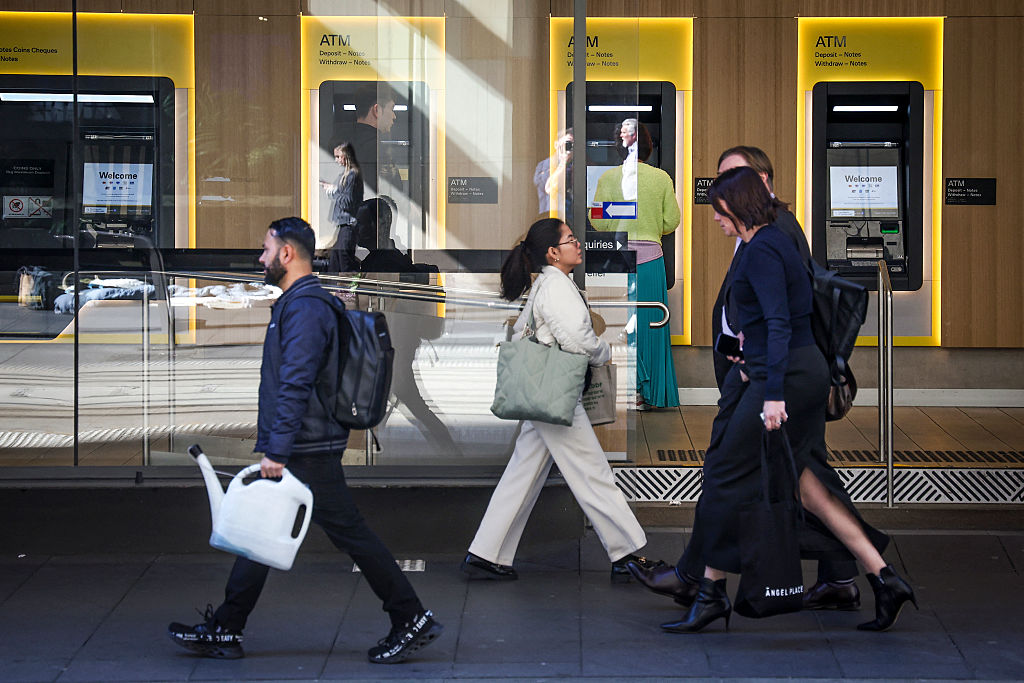
SYDNEY — Commonwealth Bank of Australia shares rose modestly Tuesday, trading around $160.97 as the country’s biggest lender continued to demonstrate resilience in a challenging economic environment marked by moderating growth and persistent inflation pressures.
The modest 0.15 percent gain reflected steady investor confidence in the bank’s diversified business model and strong capital position. Commonwealth Bank, a cornerstone of the Australian financial system, reported solid performance in recent periods despite headwinds from higher interest rates and cost-of-living challenges affecting customers.
The bank has navigated a complex operating landscape with disciplined cost management and focus on core lending activities. Home loans remain a significant contributor, though lending growth has moderated in line with broader market trends as the Reserve Bank of Australia maintained a cautious stance on monetary policy.
Commonwealth Bank’s wealth management and institutional banking arms have provided diversification benefits. Fee income from funds management and advisory services has helped offset pressure in traditional net interest margins.
Analysts note the bank’s conservative provisioning and strong balance sheet as key strengths. Capital ratios exceed regulatory requirements, providing flexibility for dividends, share buybacks and potential acquisitions.
Tuesday’s trading occurred amid broader market attention on Australian banks. While some peers faced specific challenges, Commonwealth Bank benefited from its market leadership and operational scale.
The Australian economy has shown mixed signals. Employment remains relatively robust, but consumer spending has softened amid high interest rates and inflation. Commonwealth Bank economists have highlighted risks from global uncertainties, including trade tensions and commodity price volatility.
The bank’s digital transformation initiatives continue to drive efficiency. Mobile banking usage and self-service tools have reduced branch traffic while improving customer satisfaction metrics.
Commonwealth Bank maintains a significant presence in New Zealand through its ASB subsidiary. Cross-border operations provide additional revenue streams and geographic diversification.
Sustainability efforts have gained prominence. The bank has outlined targets for emissions reduction in lending portfolios and increased financing for renewable energy projects.
Investor returns include consistent dividends, a hallmark of Australian bank stocks. Franked dividends provide tax advantages for domestic shareholders, supporting demand.
Tuesday’s modest advance contributed to a stable session for financial stocks. Broader market indices showed limited movement as traders assessed economic data releases.
Commonwealth Bank’s size and systemic importance subject it to heightened regulatory scrutiny. Compliance with evolving capital and conduct standards remains a priority for management.
Competition in the banking sector has intensified with digital challengers and fintech entrants. Commonwealth Bank counters with its scale advantages and comprehensive product offerings.
Recent results highlighted resilience in mortgage books despite rate pressures. Arrears rates remain manageable, supported by conservative lending standards.
The bank’s institutional division benefits from Australia’s resource exports. Financing for mining and energy projects provides stable revenue, though transition risks are monitored closely.
Wealth management operations face industry-wide margin compression but benefit from superannuation growth in Australia. Funds under management have expanded with market recovery.
Tuesday’s price action around $160.97 reflected balanced trading. Volume was in line with averages as institutional investors adjusted positions.
Longer-term, analysts project modest earnings growth for Commonwealth Bank. Dividend sustainability and capital returns support valuation in a low-growth environment.
Economic forecasts from the bank itself point to gradual easing of inflation and potential rate cuts later in the year. Such developments could support lending volumes and asset quality.
Commonwealth Bank plays a vital role in the Australian economy, providing credit to households and businesses. Its stability contributes to overall financial system confidence.
Corporate governance practices at the bank align with best standards. Board oversight and executive compensation structures emphasize long-term performance.
Community initiatives include financial literacy programs and support for small businesses. These efforts enhance brand reputation beyond commercial activities.
As one of the “Big Four” Australian banks, Commonwealth Bank influences lending standards and market dynamics. Its decisions often set benchmarks for the sector.
Tuesday’s trading contributed to a constructive tone for bank stocks. Sector performance remains tied to interest rate expectations and economic indicators.
Investors continue monitoring housing market trends. Property prices and construction activity impact mortgage demand and credit quality.
Commonwealth Bank’s technology investments position it for efficiency gains. Cloud migration and data analytics enhance risk management and customer personalization.
The bank’s international operations, while smaller, provide exposure to growth markets. Strategic partnerships expand capabilities without excessive capital commitment.
Tuesday’s modest gain underscored steady investor appetite for defensive financial names. Commonwealth Bank offers yield and stability in uncertain times.
Broader Australian market context includes commodity prices and trade relations. China remains a key partner, with implications for resource sectors and bank exposures.
Commonwealth Bank maintains conservative guidance, prioritizing risk management over aggressive expansion. This approach has served shareholders well through economic cycles.
As the fiscal year progresses, attention turns to half-year results and dividend announcements. Consistent payouts remain a core attraction for income investors.
The bank’s role in the payments ecosystem grows with digital adoption. Commonwealth Bank processes significant transaction volumes daily, generating fee income.
Sustainability reporting highlights progress on climate commitments. Financed emissions reduction targets align with international standards.
Tuesday’s session reflected typical midweek dynamics with limited volatility. Commonwealth Bank’s performance aligned with sector peers.
Market participants will await further economic data for directional cues. Inflation readings and employment figures influence rate expectations.
Commonwealth Bank exemplifies stability in Australian finance. Its scale, brand and execution provide a foundation for sustained performance.
The bank’s customer-centric approach supports deposit gathering and cross-selling opportunities. Digital channels enhance accessibility while maintaining service quality.
As Australia navigates economic normalization, Commonwealth Bank is well-positioned to support recovery through prudent lending.
Tuesday’s advance to around $160.97 added to year-to-date gains. The stock offers a blend of income and modest growth potential.
Investor sentiment remains constructive on major banks despite regulatory and competitive pressures. Commonwealth Bank’s leadership position reinforces confidence.
The Australian banking sector contributes significantly to GDP and employment. Commonwealth Bank’s success benefits stakeholders across the economy.
As trading concluded, shares held modest gains. The session highlighted resilience amid broader market considerations.
Commonwealth Bank continues focusing on core strengths while adapting to evolving customer needs and regulatory requirements. Its trajectory supports long-term value creation.
(Word count: approximately 1,015)
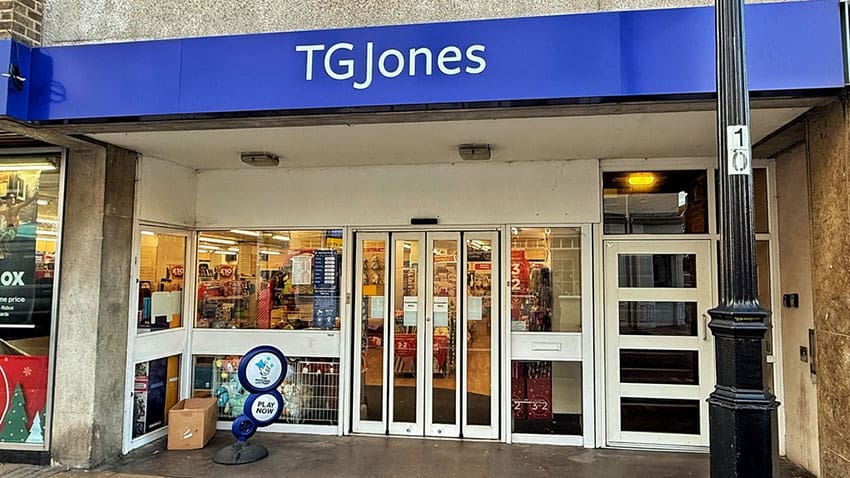
The owner of TG Jones, the business carved out of WH Smith’s old high street estate, has secured High Court approval for a sweeping restructuring that will close up to 150 shops and impose steep rent cuts across most of the stores that remain.
Modella Capital acquired the chain last year and rebranded it as TG Jones, stripped of the name it had traded under for more than two centuries after WH Smith sold its loss-making bricks-and-mortar arm to focus on travel retail. The chain currently runs 451 shops and employs 4,700 people. WH Smith’s travel outlets in railway stations and airports were not part of the deal, and the group retained the rights to the historic brand.
Less than a year on, Modella has pushed through a radical rescue plan, blaming “challenging retail conditions”. Alongside the closures, roughly 120 landlords will receive no rent for up to three years, while rents on hundreds of other shops will be cut by between 15 per cent and 75 per cent. Modella says the plan is essential to the survival of the business and that some of the savings will be reinvested in stores as part of a wider turnaround.
The High Court heard this week that the retailer was on the brink of insolvency, facing a cash shortfall of nearly £8m by the end of the week unless the deal was waved through. Tom Smith KC, for TG Jones, told the hearing the business was “highly distressed” and “running on fumes at the moment”. He said it would have run out of cash in April but for a £10m loan from Modella and the deferral of liabilities, including a large tax bill owed to HMRC.
Modella laid part of the blame on years of underinvestment by the chain’s previous owners, arguing that long-term sales had been in decline. It also pointed to current trading pressures and the loss of the WH Smith name, echoing the strains the business flagged earlier this year when TG Jones faced a bailiff threat over unpaid tax and business rates.
The proposals drew considerable opposition, led by property group British Land, which branded them “fundamentally unfair”. Modella sweetened the terms with a series of concessions, persuading British Land to drop its challenge. Many suppliers are also absorbing a significant financial hit.
The plan forecasts that TG Jones will end up with around 302 shops, depending on how many landlords choose to terminate their leases rather than accept reduced rents.
The judge, Mr Justice Hildyard, had to weigh whether the restructuring was fair, and in particular whether creditors would be no worse off under the plan than in an administration, the central test for a restructuring plan of this kind under the Companies Act. He gave the plan the green light this morning, describing it in a summary of his judgment as “complex in their terms and far-reaching in their effect”.
He said he had been most troubled by the potential impact on landlords, but was ultimately persuaded that the deal was “objectively, the lesser of two evils” flowing from the company’s “trading failures and financial predicaments”.
Alex Willson, chief executive of TG Jones, welcomed the ruling. “This decision allows us to move ahead with our turnaround strategy,” he said. “The plan protects the substantial core of the store estate and makes TG Jones a stronger, more sustainable business. We are incredibly grateful to all the colleagues, partners and stakeholders who engaged constructively throughout the process, and to Modella Capital for its continued financial commitment.”
The ruling lands against a punishing backdrop for physical retail. The Centre for Retail Research, which tracks the scale of store closures and job losses across the UK high street, has warned that closures are running at their highest level in years as rising costs, higher business rates and weak footfall continue to erode the case for large store estates. The pressure has been building across the sector, with business rates repeatedly cited as a driver of accelerating high street closures.

Amy Ingham
Amy is a newly qualified journalist specialising in business journalism at Business Matters with responsibility for news content for what is now the UK’s largest print and online source of current business news.

Mystery traders used advance knowledge of a Chinese brokerage crackdown to make more than $100 million in profit from well-timed options trades, one of the world’s biggest electronic-trading firms alleged in a lawsuit.
Two units of Susquehanna International Group filed the lawsuit in federal court in New York on Monday, naming up to 100 “John Does” as the defendants.
Copyright ©2026 Dow Jones & Company, Inc. All Rights Reserved. 87990cbe856818d5eddac44c7b1cdeb8

Franklin Resources, Inc. [NYSE:BEN] is a global investment management organization with subsidiaries operating as Franklin Templeton and serving clients in over 150 countries. Franklin Templeton’s mission is to help clients achieve better outcomes through investment management expertise, wealth management and technology solutions. Through its specialist investment managers, the company offers specialization on a global scale, bringing extensive capabilities in fixed income, equity, alternatives and multi-asset solutions. With more than 1,300 investment professionals, and offices in major financial markets around the world, the California-based company has over 75 years of investment experience and over $1.4 trillion in assets under management as of June 30, 2023. For more information, please visit franklintempleton.com and follow us on LinkedIn, Twitter and Facebook.

Robinhood Backs New DEX Arcus in Partnership With dYdX

FIFA World Cup Golden Boot race: Harry Kane draws level with Erling Haaland, closes in on Lionel Messi and Kylian Mbappé | Football News

Hostinger Promo Code: 79% Off for July 2026

No Jackpot Winner as $257 Million Prize Rolls Over to $269 Million Monday Draw

Renter of Home in Anne Heche Crash Denies Settlement With Son

Weekend Open Thread: Staud – Corporette.com

Successful day of spending no money #nospend #budget #financial #nospendchallenge

yo bailando en vez de estudiar #money #onlineshop #memes

WHICH MONEY? (Official Video) NITIN CHHANIAALA | LAMBA | New Haryanvi Song 2026 |Haryanvi Songs 2026
-
 Fashion6 days ago
Weekend Open Thread: Staud – Corporette.com
-

 Politics6 days ago
The House | Manchesterism won’t survive the painful trade-offs unless it gets citizens on board
-

 Crypto World2 days ago
Strategy authorizes up to $1.25B in Bitcoin sales under new capital plan
-

 Politics6 days ago
Potential 2028er World Cup attendee leaderboard
-

 Business6 days ago
Asia stock markets slide as tech shares slump
-

 News Videos3 days ago
MAJOR BITCOIN & MARKET UPDATE!!!! (MUST WATCH ASAP!!!)
-

 Tech6 days ago
A Look At A Gaggle Of Transputer Boards
-
 Crypto World7 days ago
Dell (DELL) Shares Tumble Over 5% Following Analyst Downgrade to Hold
-

 Crypto World5 days ago
Coinbase, Circle Deepen Crypto Stock Losses Despite Resilient S&P 500
-

 Business2 days ago
Australia treasurer says alleged access of prime minister’s bank data ’incredibly concerning’
-

 Crypto World5 days ago
Kraken's xStocks Opens Bending Spoons IPO Registration to EEA Retail
-

 Sports5 days ago
FIH Pro League: India defeat Pakistan 7-1, register biggest win of campaign | Other Sports News
-

 Crypto World6 days ago
Bitcoin Sparks $600M Hourly Liquidations With $65,000 Set To Become Resistance
-

 Tech4 days ago
Bluekit phishing kit adopts browser-in-the-middle for login theft
-

 Tech2 days ago
Anonymous researcher drops 0-day ‘exploitarium’ repo
-

 Tech5 days ago
Russian hackers now target Signal backup recovery keys
-
 Crypto World6 days ago
Hyperliquid Named on Singapore MAS Investor Alert Register
-

 Crypto World6 days ago
RTX holders must register wallets before token distribution begins
-

 Sports17 hours ago
Broncos roster: OL Ben Powers (No. 74) entering final year of contract
-
 Business3 days ago
The AI boom won’t burst all at once. It will pop in ‘rolling bubbles’: Macquarie
You must be logged in to post a comment Login