





Connect with us
DAPA Banner
DAPA Coin
DAPA
COIN PAYMENT ASSET
PRIVACY · BLOCKDAG · HOMOMORPHIC ENCRYPTION · RUST
ElGamal Encrypted MINE DAPA
🚫 GENESIS SOLD OUT
DAPAPAY COMING

Sports

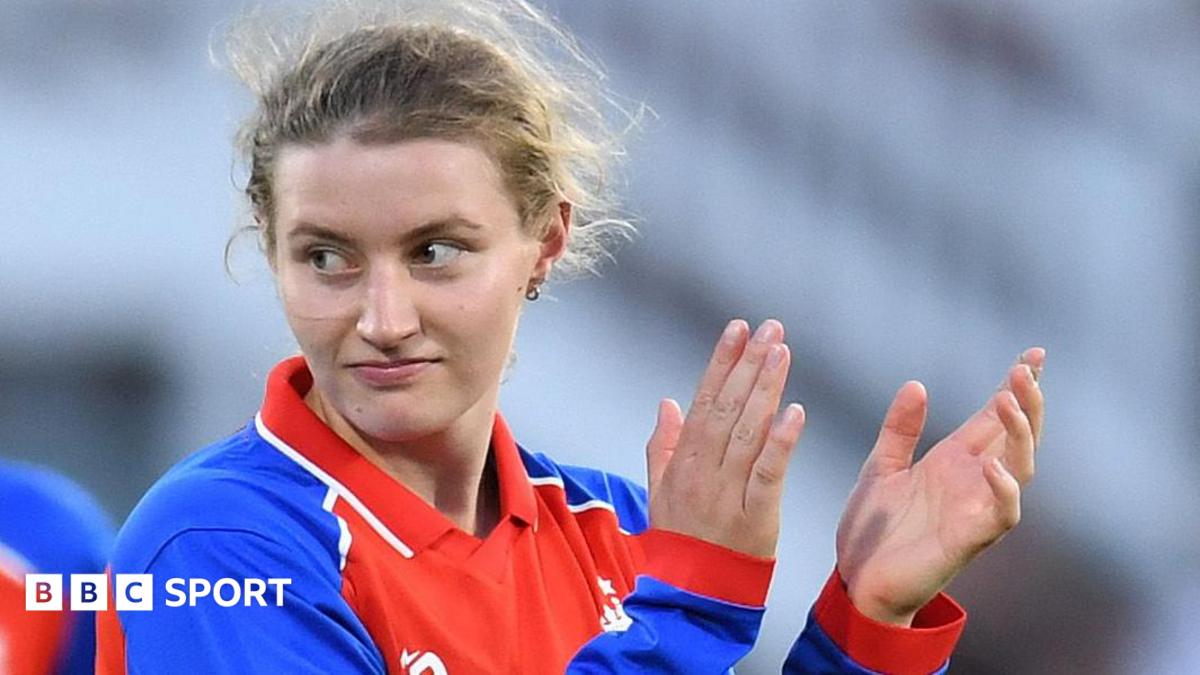
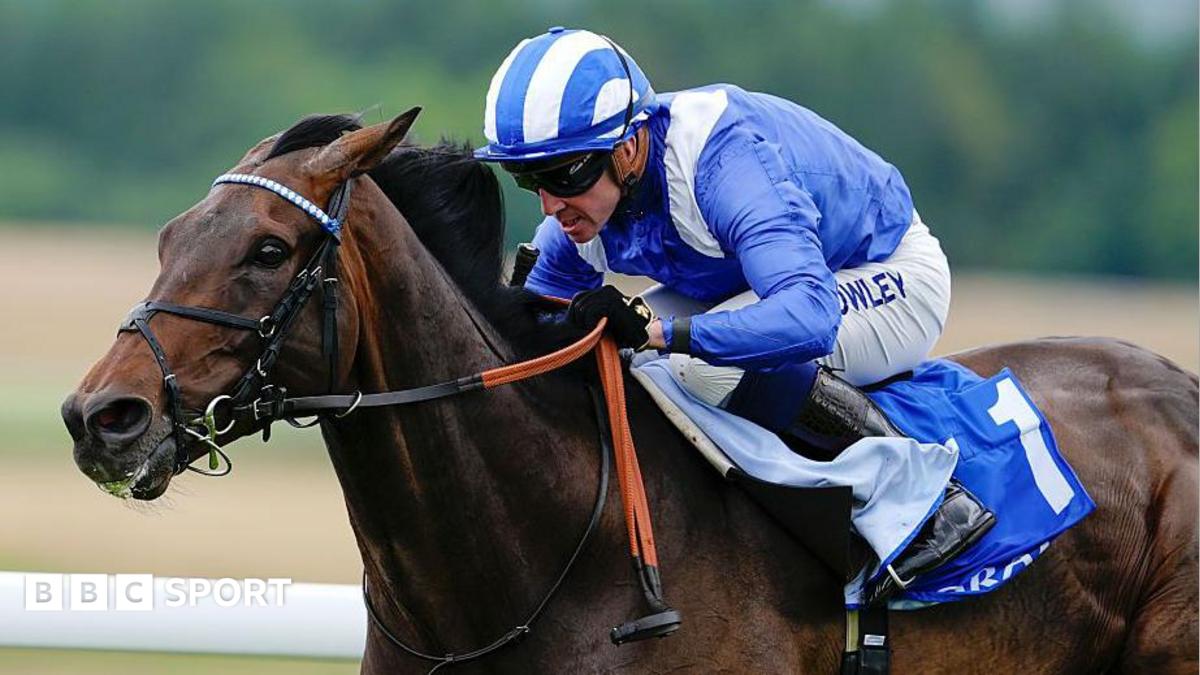
T20 World Cup: Charlie Dean’s journey from Lord’s tears to England’s stand-in captain

Published

on

Born in the Midlands – her football team is Derby County – Dean learned cricket at Havant Cricket Club in Hampshire, where her father Steven played after a fine Minor Counties career through the 1980s and 90s.

Windsor, three years older, coached Dean in junior cricket before they progressed through the Havant boys’ sides and into the Hampshire and Southern Vipers first XIs.

“There are cricket badgers that love watching the game who vocalise about it. She is a silent badger,” Windsor says. “She watches a lot of cricket but not in your face.”

An England age-group regular, Dean made her county debut for Hampshire aged 15, where her first seasons crossed over with the final years of England coach Charlotte Edwards’ illustrious playing career.

Advertisement

“The thing that stands her in such good stead is she reads cricket really well,” added Windsor.

“That is why we see her as a leader now. She always seemed to be cricket-smart.”

Dean and Edwards first met when Dean was a “very shy” 10-year-old but when she made her England debut in 2021, it was Edwards, by then Vipers coach, who was invited to present the 20-year-old with her first cap.

Such a quick ascent denied Dean, now the youngster of the teams, the chance to captain sides, as she had done coming through the Hampshire and England academy ranks.

Advertisement

Before this summer her only real experience in charge was two seasons in The Hundred with London Spirit, when an injury ruled out former England captain Heather Knight. She was preferred over Australia’s Beth Mooney and current New Zealand skipper Melie Kerr – two far more experienced players.

“My sense was Charlie was well respected within the group,” says Trevor Griffin, then Spirit’s coach. “She had a connection.

“It was always going to be a step up but the main thing for me was the curiosity she has around the game, she understood how to play it, she understood the format and the connection within the playing group.”

Source link

Advertisement
Continue Reading
Click to comment

You must be logged in to post a comment Login

Leave a Reply

Sports

Pirates’ Paul Skenes allows season-high 7 earned runs to Phillies

Published

on

PHILADELPHIA — Struggling Pittsburgh Pirates ace Paul Skenes isn’t pretending to know the answers to his sudden slipups on the mound, from where he’s dominated for two seasons.

At least he wasn’t offering any on Wednesday night after his worst outing of the year. Skenes (6-8) lasted only four innings against the Philadelphia Phillies and allowed a season-high seven earned runs in a 10-6 loss.

Since beating Colorado 3-1 on May 12 to improve to 6-2 with a 1.98 ERA, the defending NL Cy Young Award winner has not won over his last nine starts, his record falling to 6-8 and his ERA climbing to 3.62. His puzzlement is growing, too.

“I didn’t execute very well,” Skenes said. “That’s really what it comes down to. I fell behind on some counts and left some balls over the plate.”

Advertisement

He also took his time doing it. Skenes threw 35 pitches during a five-run Phillies second inning, highlighted by Trea Turner’s three-run homer.

“I think we’ve got a good team,” Turner said. “I think sometimes there’s no explanation, but I feel like we’ve got a good lineup and we battle. We know he’s really good, and he’s always going to give us a fight, and you kind of tip your cap when he gets you and move on, and try to have the next guy pick you up. I thought we did a good job keeping it moving against him.”

In an anticipated duel of aces and a rematch between Skenes and Philadelphia’s Zack Wheeler, played on a humid night with temperatures in the 90s, neither pitcher worked to his standard.

Skenes’ first loss in this slide came at PNC Park on May 17 at the hands of Wheeler and the Phillies, 6-0. In that game, he didn’t allow a run until the fifth inning.

Advertisement

On Wednesday night, the Phillies didn’t wait that long.

Pirates third baseman Nick Gonzales fielded Justin Crawford’s bases loaded grounder in the second inning and seemingly had a routine force play at the plate, but he fired the ball off runner Alec Bohm’s hand and allowed two runs to score.

Said Pirates manager Don Kelly: “The baserunner did a good job getting in the way.”

Next batter Turner hit a pitch from Skenes into the seats for his third homer in as many games to make it 5-0.

Advertisement

Skenes gave up a home run to Brandon Marsh in the third. And before he bowed out, he watched Bryce Harper’s liner get misjudged by Pirates left fielder Tyler Callihan for a two-run double.

It seemed Skenes’ luck was off just as much as his command.

“They’re a good lineup, but I haven’t made it easy on myself,” Skenes said. “I just have to execute a few pitches a little better, and I think it’s probably a different story.

“I don’t know … it happens. We’ll figure out what it is and we’ll just keep attacking it.”

Advertisement

Source link

Continue Reading

Sports

This crucial sequencing move will improve your ball striking

Published

on

If you want to hit the ball like the pros do, you need to move your body like the pros do. When I say that, I’m not suggesting you need to rotate your hips like Rory McIlroy or shuffle your feet like Scottie Scheffler. Rather, what you need to strive for is to sequence your body the same way they do.

Here’s how it works.

Sequencing is a popular buzzword in golf instruction, but all it means is the order in which each body part moves. Sequence your swing correctly and you’ll create crisp contact and effortless power. Do it incorrectly and you’ll introduce a variety of flaws and inconsistencies.

Advertisement

“>

So, how does the way pros move their body differ from how amateurs do? It all starts with how they shift and turn. When you watch a pro swing the club, take note of the order in which they do so. During the backswing, they shift their weight back and then turn their body to the top. On the downswing, they do the same sequence. Shift forward, then turn. This “shift then turn” sequence is the secret sauce that produces power, controls low point and breeds consistency.

Recreational players tend to get in trouble — particularly during the downswing — when they reverse this order. At the top, their first move to initiate the downswing is a turn. But when you turn before you shift, it throws the clubhead outside the hands and creates an over-the-top swing, often resulting in a weak slice. If your first move is a shift instead, you’ll create more space for your hands and naturally shallow the club on the downswing.

If you struggle to create power and tend to lose the ball to the right, take a look at how you are sequencing your body to start the downswing. There’s a good chance the reason you’re struggling is incorrect sequencing. To correct it, remember to feel a shift and then a turn. You’ll be amazed at how much easier hitting the ball becomes.

Advertisement

3 things I’m thinking

1. Winning is hard: The top five in SG: Total on Tour this season (Scottie Scheffler, Matt Fitzpatrick, Tommy Fleetwood, Ludvig Aberg and Collin Morikawa) have just four combined wins this season. Consistency is king in golf, but sometimes even that isn’t enough to rack up trophies.

2. Nelly’s biggest challenger: Nelly Korda has dominated the headlines in women’s golf this season, but Haeran Ryu is also putting together one heck of a 2026 campaign. In 11 starts thus far in 2026, she has nine top 15s, seven top 10s and a win at the KPMG Women’s PGA. Don’t overlook the south Korean with two more majors still to play.

3. Summer heater: Wyndham Clark is the hottest player in the world at the moment. Over the last month, he’s won twice (including at the U.S. Open), finished top 5 two other times and added a T11 in Canada. He picked a great time to showcase his best stuff.

Source link

Advertisement
Continue Reading

Sports

Oilers finally have premier goalie in McDavid era with Andersen

Published

on

Call the kids, Martha. They’ve gotta see this too.

On the day that Connor McDavid began what could be his final contract as an Edmonton Oiler, general manager Stan Bowman finally found the pedigree of a goalie that McDavid has never had as a teammate.

Frederik Andersen, fresh off a Stanley Cup run with the Carolina Hurricanes in which he started 16 of the Hurricanes’ 19 games, signed a bonus-laden one-year deal to try to get the Oilers that elusive Stanley Cup they seek, with the end of the McDavid window possibly drawing near.