
Connect with us
DAPA Banner
DAPA Coin
DAPA
COIN PAYMENT ASSET
PRIVACY · BLOCKDAG · HOMOMORPHIC ENCRYPTION · RUST
ElGamal Encrypted MINE DAPA
🚫 GENESIS SOLD OUT
DAPAPAY COMING

NewsBeat

Concern for rough sleepers next to Foss Fairy Trail in York

Published

on

Concern for rough sleepers next to Foss Fairy Trail in York

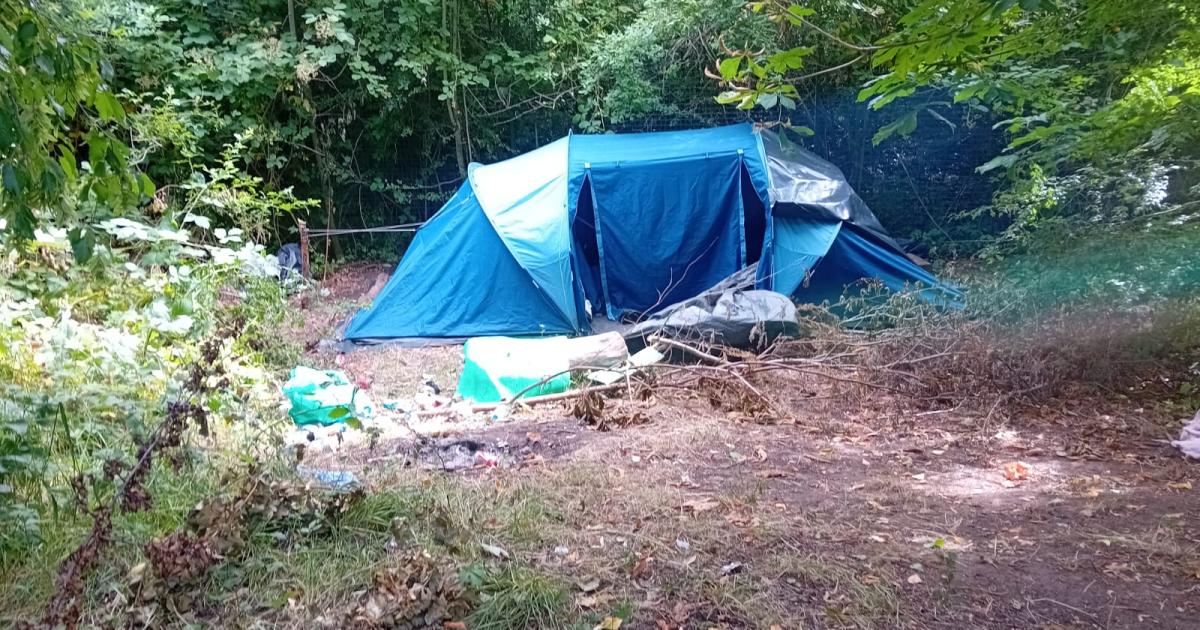
Tracy Ostle, chair of the Foss Fairy Trail, a free trail for families along the banks of the River Foss across from Huntington Road, said she reported at least two people sleeping rough in a tent on the path to the council’s Navigators on May 19.

However, she said no one replied to her email – and the tent remained next to the river on Monday (June 29).

Tracy Ostle maintaining the Foss Fairy Trail (Image: Dylan Connell)

City of York Council said its teams visited the site several times over the last two months.

A team also attended on Monday to clear the site and found that the rough sleepers were no longer staying in the tent, the council said.

Advertisement

The council’s assistant director of housing, Katherine Proctor, said the local authority’s Housing Navigators work with rough sleepers in York “but our offer of help is not always accepted”.

She said the council teams “always act on all reports” about rough sleepers, and offer help ranging from helping someone returning home or into a hostel and support where necessary.

But Ms Ostle questioned the support that the rough sleepers at the Foss Fairy Trail had received, adding that the lack of communication from the council had left her concerned for their welfare.

Ms Ostle also said delays in officers attending the trail meant she had to spend two hours cleaning the site.

Advertisement

Items left by rough sleepers on the Foss Fairy Trail in York (Image: Supplied)

She said two mattresses and mess – including human waste – had been left at the site, describing it as a “mini-Glastonbury”.

The chair of the trail, who maintains the site alongside her full-time job, said the mess had resulted in people avoiding the area.

But Ms Ostle said she was ultimately concerned for the welfare of the rough sleepers, adding: “It’s just shocking.”

Mattresses left by rough sleepers on the Foss Fairy Trail in York (Image: Supplied)

She felt the rough sleepers would have been seen sooner by the Salvation Army, which previously supported York’s rough sleepers’ early intervention programme through the charity’s £95,000-a-year contract with City of York Council.

Advertisement

Ms Ostle added that Charlie Malarkey, who ran the Salvation Army’s York Early Intervention and Prevention Team before the council moved the service in house in 2023, had been to check on the rough sleepers on the Foss Fairy Trail – even though it is no longer his job.

She claimed the Salvation Army would have ensured the rough sleepers were supported quicker.


Recommended reading:


Recalling previous cases with rough sleepers on the Foss Fairy Trail while the Salvation Army carried out the service, Ms Ostle said: “I’d email Charlie Malarkey and he’d be down there first thing – 4am/5am.

Advertisement

“He knew what had to be done and would do whatever he could to find them somewhere. They would be gone the next day.”

Major Andrew Vertigan, from the York Salvation Army, said: “Salvation Army continues to work with rough sleepers across the city, as a voluntary provider of social care but no longer receives funding to do so from City of York Council.”

Mr Vertigan said he has been “surprised by the number of requests and inquiries his team receives”, adding: “We seek to respond and support as best we can with limited resources.”

‘We always act on all reports,’ says council boss

Ms Proctor said City of York Council’s Housing Navigators “work with everyone sleeping rough in the city, including those in the centre and the outlying areas, but our offer of help is not always accepted”. “We offer and give help discreetly, while honouring our duty to protect individuals’ privacy.

Advertisement

“This could range from helping someone to return home or, where appropriate, into a hostel and support. Depending on a person’s circumstances, we cannot always offer a place at a hostel. When in our hostels, everyone must follow a clear set of rules to keep residents and staff safe. If this is breached, we will take action.

“All support is tailored to each person’s needs. It is provided sensitively to maintain a dialogue and encourage the offer of help to be taken up. We work with people to discuss options at times that best suit them.

“When a rough sleeper location is vacated and waste is left behind, our Neighbourhood Enforcement Officers will investigate and clean the site. Any waste left in public spaces should be reported via (www.york.gov.uk/ReportFlyTipping, email ycc@york.gov.uk and will be removed as soon as possible.

“We welcome alerts about people sleeping outdoors and we always act on all reports. This includes help to manage during periods of extreme heat or cold.”

Advertisement

Source link

Continue Reading
Click to comment

You must be logged in to post a comment Login

Leave a Reply

NewsBeat

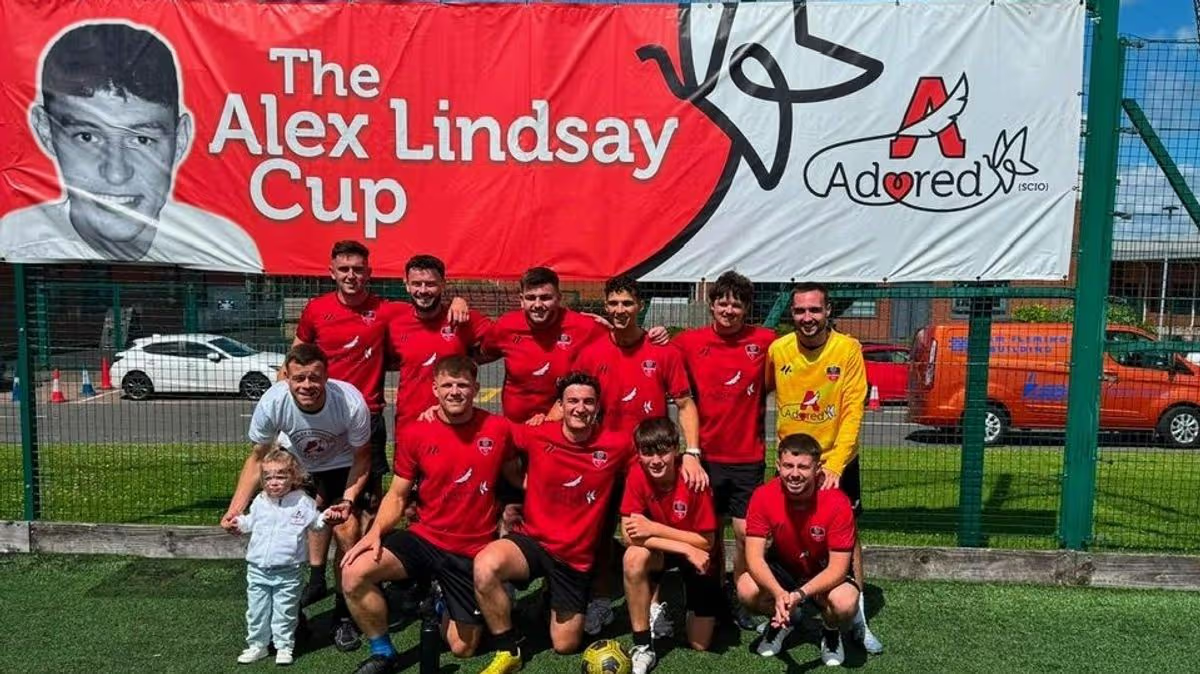
The annual Alex Lindsay Cup raises thousands for mental health charity

Published

on

Daily Record

A dozen teams turned out to honour the youngster in a knock-out tournament at Alex’s former school, Calderglen High.

The annual Alex Lindsay Cup pulled in an incredible £3500 at the weekend for a charity set up in memory of the much-loved 18-year-old.

Advertisement

Adored aims to raise vital awareness of mental ill-health in young men following the tragic death of the popular St Leonards teen in 2018.

Sunday’s event saw a dozen teams turning out to honour the youngster in a knock-out tournament at Alex’s former school, Calderglen High.

And Alex’s mum Jill said: “The weather in terms of the football players was probably perfect, because it wasn’t too hot and there was a bit of a wind.”

And she joked: “However for those of us with a stall and a gazebo up, the wind was not exactly ideal, there was a couple of moments where a couple of the gazebos went off to Oz, but it was all fine, it stayed dry. The important thing was to try and bring people out, and it went well.”

Advertisement

The Alex Lindsay Cup is held each year in memory of Alexander Iain Bonomy-Lindsay and raises funds for the family’s dedicated mental health charity Adored.

It has raised tens of thousands of pounds for mental health charities and remembers Motherwell FC fan Alex who tragically took his own life in July 2018.

As well as Adored being there on the day, grassroots mental health initiative Men with Issues was also present along with fitness, mindset and life coaching organisation No Limits Coaching, and Jill said it was potentially helpful for the crowds to link in with them, adding: “It was good for them to see that they were there, see that those agencies are out there.

“You just never know, one person noticing and thinking ‘Oh wait a wee minute, that might be useful for me’, that could be as simple as saving a life.”

Advertisement

The tournament was won for the second year in a row by The Other Team, who defeated Muirend in the final.

After the action on the pitch, everyone went along to a fund-raising after-party in the Village Inn.

Jill said: “We had less teams playing this year, we were down to 12 teams. I think the fact there was another football tournament going on at the same time and just other circumstances like the boys who have traditionally always played in the cup were generally people that Alex was friendly with and at school with, and these boys are now men of 28 years old, people’s lives move on, a lot of Alex’s friends have moved abroad and live away and all the rest of it.

Advertisement

“So I think what we need to do is try and bring fresh blood in, but it was very successful, the 12 teams played well, the runners-up were the team from Muirend, called ‘Muirend’ and the winners were the team called ‘The Other Team’, they won last year so that’s their second year winning.”

She added: “After the tournament we have our traditional after-party and it was down at the Village Inn, courtesy of Paul Jardine who gave us that venue for free, and Ross Martin, one of Alex’s friends who always does the live music, so he played his guitar and sang down at the Village Inn and that’s where we did the raffle draw.

“We had lots of good prizes, lots of local businesses like Ruby’s, Bond’s, Pergola, Once Upon a Table, Arigo all gave vouchers, lots of the barbers in the village gave vouchers.”

Advertisement

And looking forward to next year, Jill said: “I think one decision that we have made is that doing it up at the school is a good venue; we’ve tried different venues in East Kilbride but the school have never let us down, and it’s a good space for both the football and setting up any other vendors.

“And Mr Bell, one of the teachers from the school,he has been pivotal in all of the cups, that we’ve run. Every one, whether it’s been at Calderglen or not, he’s been there to help out and do whatever he can, he’s an absolute star.

“You get great teachers who go above and beyond, and he’s one of those people that go above and beyond, and I can’t thank him enough, his dedication to the tournament has been phenomenal.”

She continued: “I think what we’re going to try and do is get some younger teams involved, we’re going to start looking at the youth teams in East Kilbride to see if we could perhaps split the tournament and maybe have youth teams playing the morning and maybe eight teams have a mini-tournament, and then have another mini-tournament with the more mature players afterwards.

“But I think it’s really important that we keep the young people in East Kilbride involved in it, because really what the charity is doing is supporting young people in East Kilbride, so we want to try and link all of that together just so that more families, more young people in the community really begin to recognise Adored for the work they’re doing and recognise the link between the Alex Lindsay Cup and Adored, and the support for mental health within the community.”

And a special thank you went to event organiser Jack Smith, with Jill saying: “Jack was one of Alex’s closest friends and he was the person who set up the very first football tournament which was really a memorial tournament and what it’s turned out to be now is a supportive tournament for the charity which developed from it.

Advertisement

“Jack is the person who every year runs the tournament, he’s the one that seeks out all the football teams, he’s works tirelessly trying to make sure that it’s a really, really exciting event every year, making sure that the trophies are right, that the medals are right, organising all the prizes for the after-party as well, so it’s a massive thank you to Jack Smith because without his enthusiasm for the tournament it would probably have dwindled away and I know how dedicated he is in making sure it stays alive in Alex’s memory.”

And the Adored charity will be continuing its work in schools next term, with Jill saying: “We are excited to be working alongside South Lanarkshire Council in their new venture, their outreach venture, and I think what this is going to enable Adored to do is to help more people than if I was just accessing the schools myself.

“So I just feel that we’ll be able to broaden the horizon in terms of how many pupils we’ll be able to actually reach.”

*Don’t miss the latest headlines from around Lanarkshire. Sign up to our newsletters here.

Advertisement

And did you know Lanarkshire Live had its own app? Download yours for free here.
Source link

Continue Reading

NewsBeat

‘Two weeks after her death I got a call’: Thousands of Gaza patients still waiting for evacuation

Published

on

A woman with shoulder-length blonde hair talks into a microphone

The desperation of patients haunts Gaza’s hospitals – their exterior walls eaten away by gunfire and Israeli strikes, the health-care system inside them still unrepaired.

Eight months after the ceasefire deal instructed that “full aid” be sent into the Gaza Strip, aid workers say the continued lack of essential medicines and equipment has meant doctors are rationing or loaning each other essential life-saving drugs, or turning patients away from chemotherapy or dialysis appointments.

“The fact that the medical evacuation list is thousands long is a sign that people in Gaza don’t have access to what they should have – which Israel, as the occupying power under international humanitarian law, has an obligation to allow them access to,” said Pat Griffiths, spokesman for the International Committee of the Red Cross (ICRC) in Jerusalem.

Shortages, he said, run from basic consumables like gauze dressings and painkillers, all the way up to advanced medical equipment.

Advertisement

“There is no doubt in my mind that people in Gaza are dying because they can’t receive the care they need – and that there are preventable deaths happening because of the limits on what can be brought in, in terms of healthcare.”

Asked about the reports of critical shortages, Cogat said in a statement that 17,000 tons of medicines and medical aid had entered Gaza since the ceasefire, including wheelchairs, cancer medications, insulin pens, anaesthetics, X-ray machines, CT scanners, dialysis machines and medical consumables.

“Despite claims to the contrary,” it said, “Israel has approved every request for medicines submitted by international aid organisations.”

In response, one humanitarian official involved, speaking to me anonymously, said that Israeli authorities often used anecdotal examples to mask shortages of key medicines and equipment, and that aid supplies continued to be restricted.

Advertisement

“You don’t count medical aid in terms of trucks and pallets; that’s not a denominator we use,” said the WHO’s Reinhilde Van de Weerdt. “We talk about the needs patients have, and the needs that are met.”

“If medical supply is unrestricted, you don’t have these discussions about what is given versus what is needed,” she said. “We need certain buffer stock levels of medical supplies, [and] you can’t run a hospital hoping the generator doesn’t break down.”

Source link

Advertisement
Continue Reading

NewsBeat

People smuggler convicted in France now seeking asylum in UK, BBC discovers

Published

on

A woman with shoulder-length blonde hair talks into a microphone

Jamal’s case is not isolated. Law enforcement officers in Europe have told us they know of 15 people smugglers with convictions from courts in France, Germany and Belgium, who they believe are now living in the UK and claiming asylum under false names.

We learned about one man convicted in France, who is now living in Manchester selling used cars and thought to be still involved in people smuggling.

Another man, also with a French conviction, is based in Blackpool. He has claimed asylum under a false name and boasts on social media of being given leave to remain.

Since Brexit, the UK no longer has a data-sharing agreement with many countries in the EU, making it more difficult to check criminal and immigration records of asylum seekers, according to Lucy Morton of the Immigration Services Union.

Advertisement

“If we were able to share databases, even if just with our nearest neighbours, with Germany, with Belgium, with Holland and France, say – then, yes, we’d know that they had a conviction for people smuggling,” she said.

Asylum seekers are fingerprinted on arrival in the UK and checked against UK police databases, but these would not necessarily show a conviction from another country.

The Home Office told us: “All asylum claimants are subject to mandatory security checks to confirm their identity for the purpose of immigration, security and criminality checks.”

This point was also made last November, external by the Minister for Border Security, Alex Norris, who added that to protect the integrity of the checking processes, details about the checks “are not disclosed publicly”.

Advertisement

The Home Office went on to say that the UK has “a number of agreements with countries which enable the sharing of criminal record information”, and that immigration enforcement action is currently at its highest level in history, with arrests for illegal working up 83%.

Source link

Continue Reading

NewsBeat

Russia launches deadly large-scale missile strikes on Kyiv

Published

on

A woman with shoulder-length blonde hair talks into a microphone

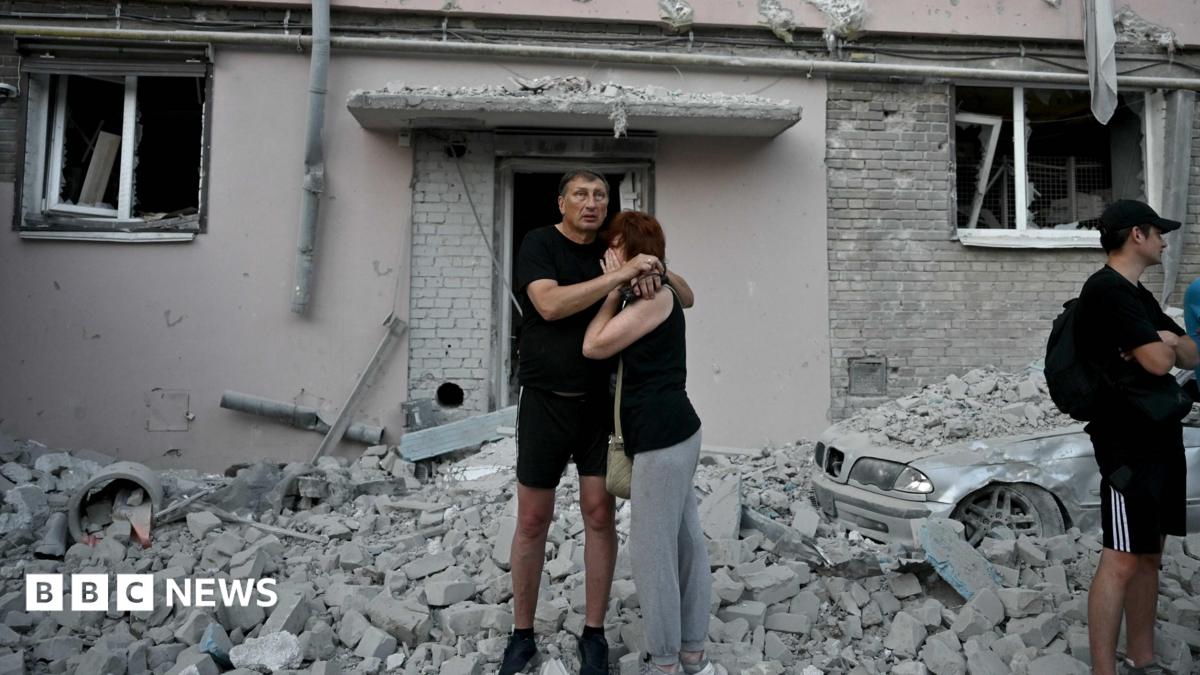
Russia also hit military bases in central and eastern Ukraine, according to the Ministry of Defence, quoted in Russian media.

It claimed to have targeted Ukrainian defence and energy infrastructure in response to recent attacks on Russian power stations from Moscow to the Black Sea.

The attacks led to a rare concession by Russian President Vladimir Putin that his country was facing fuel shortages.

On Wednesday, Zelensky cut short his visit to Dublin after he said fresh intelligence had emerged suggesting that Moscow was planning to strike Ukraine.

Advertisement

“I urge our people to be especially careful, to protect themselves, their children, and, of course, their families,” he said.

He added that Russian President Vladimir Putin “has been preparing this massive strike against Ukraine for some time now”.

Poland has also activated fighter jets to protect its airspace, describing it as a “preventative” measure. There are no reports of attacks on Polish territory.

“These actions are of a preventive nature and are aimed at securing and protecting the airspace, especially in areas adjacent to the threatened regions,” Poland’s military wrote on X., external

Advertisement

Poland is a member of Nato, a signatory to the military alliance’s Article 5 provision that states “an armed attack against one Nato member shall be considered an attack against them all”.

Russian troops recently advanced into the city of Kostyantynivka, one of Ukraine’s last key bulwarks in the east. If Moscow secures the city, it would provide a gateway to the entire Donbas region.

Meanwhile, Ukrainian commanders say they have recaptured more territory this year than they have lost, disrupting Moscow’s crucial supply lines between the Russian border and occupied Crimea.

The war has otherwise stalled for months with each side’s troops largely entrenched in their positions.

Advertisement

Russia controls approximately one-fifth of Ukrainian territory, mostly seized in the first few months of its full-scale invasion in February, 2022.

Source link

Continue Reading

NewsBeat

Watch: People smuggler tracked down and confronted by BBC

Published

on

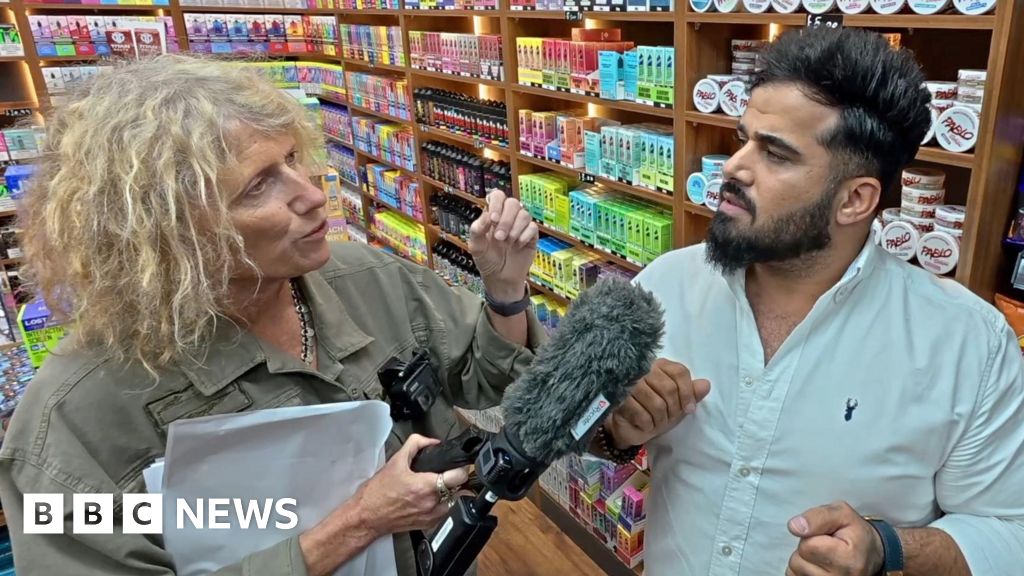
Sue Mitchell (L) holds microphone to Twana Jamal (R)

Convicted people smuggler Twana Jamal, once described as “the godfather” of the French migrant camps, is living and working in Leicestershire, and believed to be seeking asylum, a BBC investigation can reveal.

Jamal was given a five-year jail sentence in France in 2016. Following a tip-off this year, the BBC traced Jamal to Blaby in Leicestershire, where we witnessed him working illegally, driving a car without a licence and apparently using a false name.

We have also been told by law enforcement officials in mainland Europe that 15 other convicted people smugglers are now living in the UK under false names, raising serious concerns about whether existing border controls are effective in checking asylum seekers who have committed serious crimes overseas.

The Home Office told the BBC: “All asylum claimants are subject to mandatory security checks to confirm their identity for the purpose of immigration, security and criminality checks”, and that the UK has “a number of agreements with countries which enable the sharing of criminal record information”, adding that immigration enforcement action is currently at its highest level in history.

Advertisement

You can hear the full story now: Search for ‘To Catch a King’ on BBC Sounds

Source link

Continue Reading

NewsBeat

AP reporter recounts a month covering Ebola in Congo’s outbreak

Published

on

AP reporter recounts a month covering Ebola in Congo's outbreak

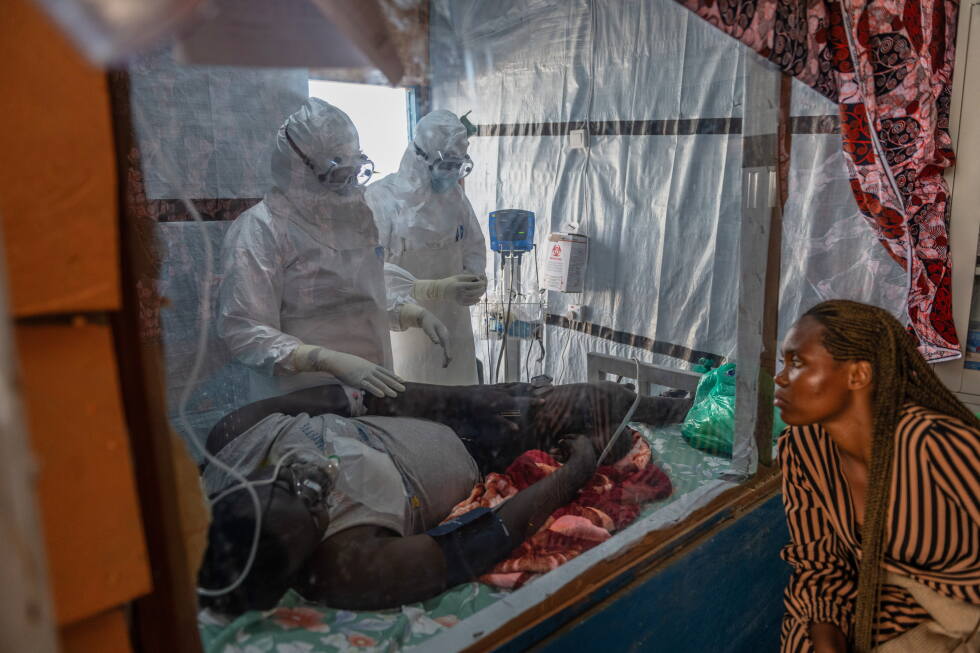
BUNIA, Congo (AP) — Mourners stood at a distance as a small coffin was lowered into the grave. Health workers wearing masks and gloves joined a priest who prayed.

A 6-month-old girl was the latest victim of the Ebola outbreak sweeping through eastern Congo. She was the third child in her orphanage to die.

After a month reporting from the outbreak’s epicenter with AP photographer Moses Sawasawa, this quiet scene has stayed with me the most.

From afar, the epidemic is often measured in numbers: over 1,300 confirmed cases, hundreds of deaths, tens of thousands of people who may have had contact with them.

Advertisement

The funeral is when we truly realized the gravity of the outbreak. Ebola does not distinguish between young and old, educated and uneducated, rich and the poor, civilians and health professionals.

And of course it’s not over. Experts say the peak of infections hasn’t been reached. There are no approved treatments for this type of Ebola, Bundibugyo, and the arrival of any vaccine is said to be months away.

Another death that stayed with us was that of a medical student a few months from graduation. She had been the hope of her family and a badly needed health professional in a remote region where outbreaks, like this one, can go undetected for weeks.

At her funeral, her mother was inconsolable.

Advertisement

Reporting on this outbreak means multiple dangers

It is hard to imagine a more challenging place for a deadly outbreak to unfold.

Every day of reporting began and ended with a careful process of protection and disinfection. Ebola is highly contagious and can be contracted via bodily fluids such as vomit, blood or semen. That meant putting on gloves, masks and hair nets in 80-degree Fahrenheit heat (26 Celsius) and 80% humidity.

Our driver’s vehicle, our microphones and other equipment had to be disinfected after entering outbreak-affected areas. The routine became second nature.

As we reported at struggling health centers, the sound of crying families followed us. The air was thick and humid, and people were slick with sweat. Health workers moved between crowded wards, washing their hands again and again.

Advertisement

Seeing the grief and lives cut short reminded me of covering the previous crisis in this region, the capture of Goma city, a humanitarian hub, last year by M23 rebels. Wounded babies, children and adults were rushed to hospitals to the sounds of weeping loved ones.

The Ebola outbreak is centered in neighboring Ituri province, scarred by years of such conflict. Armed groups control some areas and nearly a million people have been displaced. Economic hardships have now deepened.

Advertisement

We found some people trying to keep their hands clean with oatmeal and sand.

In the first three weeks after this outbreak was declared in mid-May, at least 520 security incidents, including attacks on health workers, impacted the work of responders, the World Health Organization said.

Attacks continue to be reported. We saw hospital beds left charred, the patients having fled.

Other people with confirmed or suspected Ebola infections have been abducted, disappearing into a world of poor mobile phone signal and bone-shaking unpaved roads.

Advertisement

In these surroundings, local people like Husein Twaibu are coordinating the community response.

Twaibu told me at least four health zones in Ituri, encompassing thousands of people, remain inaccessible because they are under rebel control. Unable to enter, response teams are relying in part on rebel leaders to pass on Ebola prevention messages and encourage participation in measures meant to slow the spread of the virus.

But that brings up another problem.

Misinformation and fear are the biggest challenges

I repeatedly heard the concern from doctors and aid workers: Many residents do not trust the Ebola response. Some believe the disease is not real.

Advertisement

In a region long traumatized by attacks and exploitation of rich natural resources, people are wary of outsiders. A lack of understanding of Ebola, whose symptoms like fever can be mistaken for others like malaria, means the strict prevention measures can be jarring.

There has been anger especially around burials, with people told not to do what comes naturally: bathe and prepare a loved one for the grave.

The distrust is one reason health officials don’t know the outbreak’s true size. Authorities still haven’t identified the first person who became ill.

Some residents avoid health centers. At times, community health workers who survived an Ebola infection find it difficult to persuade people to take the disease seriously.

Advertisement

One is Étienne Ezo, a nurse who contracted Ebola earlier this year.

He told me that many people ask why he survived and others didn’t.

“Some say that health workers have been paid off, which is why so many people are dying. Others claim that medical staff are actually killing people,” Ezo said. This is the kind of misinformation that he and others battle.

Journalists are not spared. At times, people accused us of being part of a conspiracy to invent the disease. Once, an angry crowd gathered outside a health center where we planned to report. Its director told us to come back another day.

Advertisement

And yet, life goes on

People are learning to adjust to the outbreak even as it grows.

At bars, face masks, temperature checks and socially distanced dancing are now part of a night out. Weddings have continued, with veils replacing face masks. At churches, attendants in nurse-like white gowns marked with red crosses hand out Communion wafers.

And during a World Cup match between Congo and Portugal, hundreds of fans embraced and cheered on the team at bars and roadside viewing areas, overjoyed at Congo’s first World Cup showing in over half a century.

For a few hours, for all of us, social distancing gave way to celebration.

Advertisement

___

Justin Kabumba is a journalist based in Goma, eastern Congo. He and Sawasawa are isolating after returning from Ituri.

___

For more on Africa and development: https://apnews.com/hub/africa-pulse

Advertisement

The Associated Press receives financial support for global health and development coverage in Africa from the Gates Foundation. The AP is solely responsible for all content. Find AP’s standards for working with philanthropies, a list of supporters and funded coverage areas at AP.org.

Source link

Advertisement
Continue Reading

NewsBeat

Mutant bed bugs surge in the UK after building resistance to insecticides | News UK

Published

on

Mutant bed bugs surge in the UK after building resistance to insecticides | News UK
New bedbug infestations – such as this one – are popping up all over the UK (Picture: James Rhoades)

Bedbug infestations are soaring in the UK as the critters are becoming more resistant to the chemicals used to kill them, Metro can reveal.

One London borough alone has had to tackle 40% more bedbug infestations this year, compared to the same period in 2025, data shows.

Pest controllers say they are being flooded with cases and that the parasites are now resistant to most major insecticides.

The cost-of-living crisis has also meant that more people are turning to ineffective DIY treatments that cause infestations to spread out of control.

Advertisement

Bedbugs are small insects that feed on human blood and typically shelter in mattresses, bed frames other cracks or crevices close to where people sleep.

Data gathered by Metro from across the pest industry has revealed a spike in bedbug infestations in 2026.

0207metro - bed bugs
Bedbugs are no longer being struck down by the crucial insecticides needed to eradicate them

One London borough – which we have agreed not to name – has already been called in to fight 155 infestations in the first half of this year.

That number is 40% higher than in first six months of 2024, and 50% larger than the same period in 2024.

The 52 infestations the council dealt with in June 2026 is their largest monthly total since before the Covid pandemic.

Advertisement

The bedbug spike is not isolated to London.

James Rhoades, whose company ThermoPest covers the whole of the UK, said he was dealing with double the number of calls out for bedbugs this year.

Chemical sprays using insecticide are one the most common methods used to kill bedbugs.

Latest London news

To get the latest news from the capital, visit Metro’s London news hub.

Advertisement

However there is growing evidence that the insects are becoming increasingly resistant to the toxic treatment.

Rhoades, who employs more offers high-heat treatment rather than chemicals, said his company has recorded a 30% increase in customers turning to them after a failed professional pest control treatment.

Advertisement
0207metro - bed bugs
James business has soared this year as more people come to him with unresolved infestations (Picture: James Rhoades)

He told Metro: ‘Year on year, we are seeing more cases where people are coming to us.

‘The data definitely suggests that there is a lot more resistance to chemicals than there ever has been.’

Rhoades said he had heard stories from other pest controllers of bedbugs being sprayed with chemicals and ‘just running around like nothing’s happened.’

World-renowned bedbug expert Chow-Yang Lee that insecticide resistance was ‘probably the single most important reason’ infestations have ‘increased dramatically over the year’.

He told Metro: ‘The insecticides used to kill bedbugs increasingly fail to do so, and insecticide resistance is now a leading cause of control failures.’

Advertisement

He said that the pyrethroid class of chemicals were particularly ineffective.

Prof Lee continued: ‘This pushes up infestation numbers in two ways. First, when a treatment doesn’t fully work, the infestation isn’t cleared.

‘Bedbugs survive, keep breeding, and can spread into other rooms or neighboring homes.

‘Second, and more insidiously, every time a population is hit with a chemical it can withstand, the few weakest bugs die, and the toughest survive to reproduce.

Advertisement

‘Repeat that over many treatments and you’re left with a population that’s almost entirely resistant.’

Some bedbug infestations, such as this one, can spiral out of control(Picture: Sarah Spratt)

While bedbug resistance has always been a problem, the challenge is that resistance ‘has deepened, broadened across chemical types and become much harder to overcome’.

London is at the heart of the global resurgence of bed bugs due to the capital’s housing density, international tourism and large rental market.

Since the return of worldwide travel after the Covid pandemic, some London boroughs have faced more than double the number of bedbug infestations, data provided to Metro shows.

One local authority had only 84 infestations in 2021, but as many as 441 in 2023.

Advertisement

Dr Matthew Davies, an advisor to the Greater London Pest Liaison Group, told Metro that this rise in infestations has continued into 2026.

The expert, who is Head of the Technical Department at Killgerm Chemicals blamed the problem in part on a drop in insecticides on the market, making it harder to tackle resistance.

Dr Davies also stressed that resistance is not a ‘doomsday scenario where there are no available options’.

Instead the key route to success in tackling bedbugs is an ‘integrated’ treatment solution where different strategies are used at once.

Advertisement

He explained that alongside chemicals ‘this includes steam treatments, heat treatments, and monitoring for problems with lures.’

Bedbugs in a Matress seam - close up photo; Shutterstock ID 2644077805; purchase_order: -; job: -; client: -; other:
Bedbugs like to hide in the seams of mattresses and other hard to reach crevices (Picture: Shutterstock / Mehes Daniel)

There are also fears that the cost of living crisis is pushing more families to swerve professional bed bug treatments.

Many are then turning to DIY methods which can often make the problem worse.

Prof Lee said people are ‘fall[ing] back on cheaper sprays, including shop-bought foggers and aerosols that barely work.

‘Every one of those partial treatments does two unhelpful things: it leaves enough insects alive to keep the infestation going, and it kills only the susceptible individuals, leaving the resistant ones to survive and breed.

Advertisement

‘In other words, over-relying on insecticides that no longer fully work is actively making the resistance problem worse.’

Get in touch with our news team by emailing us at webnews@metro.co.uk.

For more stories like this, check our news page.

Advertisement

Source link

Advertisement
Continue Reading

NewsBeat

Cadbury confirms it has shrunk Heroes and Roses tubs

Published

on

Cadbury confirms it has shrunk Heroes and Roses tubs

Heroes and Roses tubs, popular with buyers particularly at Christmas time, have been reduced in size after “careful consideration” from the business.

The move comes after Cadbury says it has experienced “significantly higher input costs across our supply chain”.

But it will be a blow to shoppers, as the price of the tubs remains the same.

Cadbury confirms it has shrunk Heroes and Roses tubs

Both Heroes and Roses tubs now weigh 475g, which is 14% less than last year’s 550g versions.

It will mean about seven fewer chocolates per tub, with options including Dairy Milk, Twirl and Fudge in Heroes and Hazel Whirl and Creamy Orange in Roses.

Advertisement

Despite the shrinkage, prices remain the same, which are typically about £4.50.

A spokesperson for Cadbury confirmed the change to Newsquest.

A statement reads: “We understand the economic pressures that consumers continue to face and raising prices is a last resort for our business.

“However, as a food producer, we are continuing to experience significantly higher input costs across our supply chain.

Advertisement

“This means that our products continue to be much more expensive to make and while we have absorbed these costs where possible, we still face considerable challenges.

“As a result, we made the carefully considered decision to reduce the weight of our Cadbury Heroes and Roses tubs (475g), so that we can continue to provide consumers with the brands they love, without compromising on the great taste and quality they expect.”

Tubs of Quality Street, Roses, Heroes, Celebrations and Lindt on a marble coffee table with Christmas tree in the backgroundCadbury’s Heroes and Roses tubs are among the popular options during festive periods (Image: Newsquest)

Reacting to the news, one shopper said: “Won’t buy anymore.

“Shrinkflation is unacceptable and trying to recycle those plastic tubs responsibly is a problem.”

Advertisement

Another, however, had a different view, saying: “Dont care will still [buy] them at Christmas!”

Cadbury to launch new twist on classic Dairy Milk bars

In other Cadbury news, the business has recently rolled out three new Dairy Milk bars designed for on-the-go snacking.

The Cadbury Dairy Milk Grab & Go bars will be available from July, offering consumers a resealable 56g option in three flavours: Dairy Milk, Dairy Milk Marvellous Creations, and Dairy Milk Chopped Fruit & Nut.

Intended for portability, the bars are designed to be portioned and enjoyed throughout the day rather than eaten all at once.

Advertisement

Phoebe Morris, junior brand manager at Cadbury’s parent company Mondelez International, said: “We’re seeing a clear shift in consumer behaviour, particularly among younger shoppers, towards more frequent, on-the-go snacking throughout the day.

“Shoppers are looking for options that fit seamlessly into their routines, creating a strong opportunity for formats that deliver convenience without compromising on taste.”

Phoebe added: “Our Grab & Go bars bring the trusted Cadbury Dairy Milk chunk taste into a format designed specifically for these high-frequency snacking moments.”


Recommended reading:

Advertisement

The Grab & Go range follows another recent launch from Cadbury aimed at younger consumers.

Earlier this month, the confectionery giant introduced the limited-edition Dairy Milk Strawberries & Creme Frappe bar, inspired by chilled summer drinks.

The bar combines classic Dairy Milk chocolate with a strawberries-and-cream-frappe-inspired filling and is designed to be eaten chilled.

What’s your favourite Cadbury bar? Tell us in the comments below.

Advertisement

Source link

Continue Reading

NewsBeat

‘I loved charity shops but no longer go thrifting due to 1 sad change’

Published

on

Wales Online

A second-hand reseller says he has stopped visiting charity shops due to several ‘sad’ changes they claim have been made in recent years that makes them ‘not worth visiting’

Purchasing pre-owned clothes is a brilliant way to help reduce waste, while simultaneously allowing you to uncover some unique budget-friendly finds. However, countless second-hand enthusiasts have noticed charity retailers selling donated goods have steadily started increasing prices on their stock.

Advertisement

Charity retailers have experienced a boom in recent years, especially among devoted vintage hunters who love browsing rails for potential treasures to then flip for profit. But the main objective of these charity shops is to raise money for their respective causes.

However, numerous people have accused charity retailers of supposedly capitalising on the expanding resale trend by pushing up the costs of goods they are offering. Jordan Lee, a pre-loved re-seller who regularly posts videos on social media as @thecarbootguy, documenting his assorted finds while out browsing, is one person who has called out these pricing changes.

In an Instagram post, Jordan revealed he rarely enters charity shops nowadays due to the evident cost hikes that many charity shops are implementing.

“I honestly don’t go into charity shops as much anymore – especially the big, well-known chains – simply because of the prices,” he stated in his post.

Advertisement
Content cannot be displayed without consent

He added: “Whether you’re popping in to try and resell items online or just hoping to find yourself a bargain, it sometimes feels like the whole point has been lost.”

Jordan went on to argue that via resale platforms such as Vinted, consumers can often find identical brands in superb condition across different sizes, all for significantly less than they’d spend in a charity shop.

“I’ve even seen things in charity shops priced higher than they would be brand new in the actual high street store!” Jordan declared.

“I completely understand charities need to raise funds, but surely out pricing your customers isn’t the way?” he questioned.

Advertisement

Yet, his supporters didn’t unanimously share his opinion, with several offering their own viewpoints on the matter.

“I think you’re missing the point of charity shops tbh mate,” one user responded. “I really like your content, but they have simply clocked onto resellers and started to learn the worth of what they are selling.

“More money to charity and less resellers buying means people who actually might need it get it for a cheaper price.”

Another individual observed: “I will never get mad at the price of something in a charity shop. If it’s not in my budget I simply just don’t buy it.”

Advertisement

A third contributed: “£24 for an Ha&M jacket is robbery, although I would pay, seeing that the money goes to an Hospice.”

Nevertheless, some backed Jordan’s position, contending that charity shops broadly were pricing merchandise too steeply. One user stated: “They are definitely more expensive. I use to buy a lot from charity shops for myself but now I don’t really get anything from them.”

Source link

Advertisement
Continue Reading

NewsBeat

Furious USA boss Mauricio Pochettino’s immediate reaction to World Cup red card

Published

on

Daily Mirror

Folarin Balogun was shown a red card in the United States’ 2-0 win over Bosnia and Herzegovina in the World Cup, and Mauricio Pochettino was left fuming on the sidelines

United States boss Mauricio Pochettino could not contain his astonishment as Folarin Balogun was sent off during their World Cup win over Bosnia & Herzegovina. On Wednesday evening in Seattle, the USA secured their first knockout victory since 2002 with an exciting 2-0 triumph over Bosnia and Herzegovina.

Advertisement

Balogun broke the deadlock with an excellent finish late in the opening half to claim his third goal of the World Cup, while Malik Tillman wrapped up the USMNT’s Round of 32 success with a spectacular free kick.

Yet one incident will dominate the headlines, with Balogun received a straight red card for violent conduct after a challenge on Bosnia defender Tarik Muharemovic in the second half.

The flashpoint came in the 64th minute, with Balogun looking shocked as the severity of the looming verdict became clear. VAR directed referee Raphael Claus to review the pitchside monitor and, shortly afterwards, brandished the striker a red card.

Get the latest World Cup news straight to your inbox by signing up to our Make Football Great Again newsletter now!

Advertisement

As Claus described the challenge as a “serious foul” and issued a red card to Balogun, Pochettino stood on the touchline with his arms outstretched in disbelief. The former Tottenham Hotspur manager then threw his hands skyward and, wearing a wry smile, approached the fourth official attempting to comprehend the reasoning behind the decision.

Balogun trudged dejectedly back to the dressing room, leaving the US to battle through the remainder of the match with 10 men. The ruling made him the fifth American to be shown a red card at a World Cup, following Eric Wynalda against Czechoslovakia in 1990, Fernando Clavijo against Brazil in 1994, and Pablo Mastroeni and Eddie Pope against Italy in 2006.

Balogun also becomes the first player to both score and be sent off in a World Cup knockout fixture since French legend Zinedine Zidane was sent off in the 2006 World Cup final.

Advertisement

To compound matters further, FIFA’s Disciplinary Committee holds the authority to extend Folarin Balogun’s ban beyond the Round of 16 clash against Belgium, though the body is powerless to overturn or reduce any suspension. This leaves Pochettino with a headache up front ahead of Monday’s crucial encounter in Seattle.

JOIN US ON FACEBOOK! Latest news, analysis and much more on Mirror Football’s Facebook page

Speaking after the final whistle, Pochettino hit back at the decision to dismiss Balogun, saying: “For me, it’s never a red card. I looked at it on TV, there never was intention, and to step on the player was a normal action in football that happened by accident. It was never intentional. For me, this was never intentional.”

Advertisement

US men’s national team star Christian Pulisic spoke out after the match, admitting he “didn’t see” the red card incident but expressed his pride in his side’s fighting spirit. Speaking after the final whistle, he said: “We had to dig deep for that one. Obviously, I felt like we put on such a good performance and didn’t deserve the red card. I didn’t see it, but it’s unfortunate.

“For us to dig in deep like that, and just to get another goal and defend the way we did, it took a real team effort. We’re proud of that.”

Tillman, who netted a stunning second goal, added: “I think this shows our character. We’ve said it before a lot of times, we’re always there for each other, no matter what. I think today showed that.”

Advertisement

The US side will now face Belgium, who secured a 3-2 victory over Senegal, in Seattle on Monday, July 6.

Join our new WhatsApp community and receive your daily dose of Mirror Football content. We also treat our community members to special offers, promotions, and adverts from us and our partners. If you don’t like our community, you can check out any time you like. If you’re curious, you can read our Privacy Notice.

Source link

Advertisement
Continue Reading

Trending

Copyright © 2025