


Connect with us
DAPA Banner
DAPA Coin
DAPA
COIN PAYMENT ASSET
PRIVACY · BLOCKDAG · HOMOMORPHIC ENCRYPTION · RUST
ElGamal Encrypted MINE DAPA
🚫 GENESIS SOLD OUT
DAPAPAY COMING

Business

Infosys, TCS and other IT stocks jump up to 5% on dip buying. Is the worst over?

Published

on

Infosys, TCS and other IT stocks jump up to 5% on dip buying. Is the worst over?
Shares of IT companies, including Infosys, Tata Consultancy Services (TCS), HCL Technologies and other tech majors, rallied on Thursday, lifting the Nifty IT index nearly 4% after a four-session slump that had dragged the sectoral gauge to a fresh 52-week low.

Coforge shares surged around 5%, while Infosys, Mphasis, HCL Tech and Persistent Systems gained about 4% each. LTI Mindtree and TCS advanced nearly 3% apiece, while Tech Mahindra and Oracle Financial Services rose around 2%. Wipro added nearly 1% in early trade.

The Nifty IT index climbed nearly 940 points, or about 4%, to 26,710. The rebound follows a nearly 7% decline over the previous four sessions, during which the index had fallen to a fresh 52-week low of 25,699 on Wednesday.

Why are IT stocks rising today?

US Federal Reserve Chair Kevin Warsh said inflation expectations and risks have eased in recent weeks. He added that he would stick firmly to the US central bank’s 2% inflation target and disappoint anyone expecting a looser monetary policy stance.”If people thought this central bank was going to be comfortable with an inflation objective above 2%, they would be disappointed,” Warsh told a European Central Bank panel in Sintra, Portugal. “We have been an independent central bank for a long time. We are going to be an independent central bank at this moment, and you will see no changes on that.”

Advertisement

His comments come as global investors remain concerned about the possibility of multiple rate hikes by the US central bank following its hawkish tone at the last policy meeting. In the first FOMC meeting under Warsh’s tenure, the Fed acknowledged that inflation remained “elevated relative to the Committee’s 2% goal”, attributing it in part to supply shocks that had driven price increases in certain sectors, including energy.

Also read:
US Federal Reserve chair Kevin Warsh says he will stick by 2% inflation target, vows to bring in real-time economic data for making interest rate decisions
IT companies derive a significant portion of their revenue from the North American market. Rate hikes or a spike in inflation in the US can weigh on discretionary spending, which, in turn, may affect the sector’s growth prospects.Today’s rally in IT stocks came after Warsh’s comments offered some relief to investors. Traders are now pricing in roughly a 64% probability of a rate hike in September, according to the CME FedWatch Tool.

Nomura expects IT firms to see ‘anaemic’ growth in FY27

While Nomura believes the long-term addressable market for Indian IT companies will continue to expand, it expects near-term growth to remain anaemic. In its latest note, the brokerage said Indian IT services firms, especially large-cap players, are facing a “perfect storm of two key headwinds”.

The first is macro uncertainty stemming from geopolitical tensions in the Middle East and the outlook for interest rates, particularly in the US, which is keeping client spending subdued at the margin.

Nomura also noted that when clients’ technology spending is not growing, competition among IT services companies intensifies, with the economic gains from AI being passed on to customers. With firms such as Accenture indicating that the impact of the conflict on growth could persist in the near term, the brokerage expects FY27 to remain another subdued year for the sector.

Also read: Nomura expects IT firms to see ‘anaemic’ growth in FY27. Here are latest target prices for Infosys, TCS, and others

Advertisement

The international brokerage expects the upcoming earnings season to be subdued for IT companies, with most large-cap players likely to report weak quarterly growth. It expects Wipro to post the weakest performance, with revenue declining 1.3%, while Tech Mahindra is projected to lead the pack with 1% growth.

“We expect mid-caps, in general, to continue posting stronger growth than large caps. We do not expect any changes to the annual guidance from Infosys and HCL Tech, and expect Wipro to guide for -1% to +1% revenue growth in Q2 FY27,” it added.

Nomura has lowered its revenue growth estimates by 100-200 basis points for FY27 and FY28.

(With inputs from agencies)

Advertisement

(Disclaimer: Recommendations, suggestions, views and opinions expressed by experts are their own and do not represent the views of The Economic Times)

Continue Reading
Click to comment

You must be logged in to post a comment Login

Leave a Reply

Business

Rates Spark: Resumed Steepening Impulse

Published

on

Rates Spark: Resumed Steepening Impulse

Rates Spark: Resumed Steepening Impulse

Continue Reading

Business

Welsh Goverment needs to talk more to entrepreneurs and not just business organisations

Published

on

Business Live

For too long, Welsh economic policy has been dominated by the politics of representation rather than the discipline of delivery

The musical Hamilton.(Image: Danny Kaan)

In the musical Hamilton, Lin-Manuel Miranda gives Aaron Burr a whole song built on a single frustration: that the bargains that shape a nation are struck not in public but behind closed doors, and among a handful of people who have been granted a seat at the table.

Burr’s complaint is being left outside, desperate to be in the “room where it happens” and it is one of the oldest truths in politics, namely that influence flows to whoever is in that room, and that everyone else can only guess at what was decided on their behalf. But the more interesting question is rarely who is in the room but whether the right people are in it at all.

Advertisement

For 27 years, Wales has had devolution, its own economic strategies, advisory groups, and endless consultations. Yet throughout that period, one remarkably consistent feature of Welsh economic policy has been that the same familiar business organisations have been invited into the same rooms as ministers to offer broadly similar views on the same persistent problems.

A range of business membership bodies, employer groups and professional networks have all played a part in that process, and it would be unfair to suggest that they have not done useful work, because many of them represent genuine concerns, and act as a bridge between ministers, officials and the business community at times when government needs to hear directly from those operating in the real economy.

But after more than a quarter of a century of devolved economic policy, and after repeated strategies promising stronger growth, better productivity and a more resilient private sector, we have a right to ask some uncomfortable questions about the system that has been created and the voices we have allowed to dominate it.

This is not a criticism of any one organisation, nor is it an argument that representative bodies have no place in policymaking, as they clearly do. The issue is more fundamental, as representation is not the same as leadership and being present in the machinery of government is not the same as changing the economy’s performance outside it.

Advertisement

The danger for Wales is that we have spent too long assuming that, because business organisations have been invited to sit on a panel to comment on economic policy, business itself has therefore been properly involved in reshaping the country’s future.

The truth is far more complicated, and many representative organisations are, by their nature, cautious institutions as they must reflect a wide range of interests, avoid alienating too many of their members, and usually gravitate towards the lowest common denominator rather than the sharpest edge of economic change.

Indeed, the very characteristics that make these organisations acceptable to government can also make them insufficient for the task now facing Wales.

They are respectable, familiar, structured and consultative, but those are not always the qualities needed to challenge the economic challenges facing Wales, and it is likely that most of the same bodies that have supported the Labour Government for more than a quarter of a century will be sitting down with the new Plaid Cymru Enterprise Minister over the next few weeks to say much of the same things they did to his predecessor.

Advertisement

Some will argue that this is the realpolitik of doing business in Wales, but what has it achieved? Where are the organisations prepared to push harder, speak more directly, and challenge the comfortable assumptions that have underpinned economic policy for too long?

Where are those who, after decades of public investment in skills, infrastructure, innovation and enterprise support, question why we still do not have enough firms capable of competing seriously in the UK and global markets?

Indeed, the question is not whether business should continue to have a voice – of course it should – but it is less likely to represent the founders still outside the system, especially the disruptive entrepreneurs who should be at the heart of any serious economic development strategy.

And yet it is precisely those people and those businesses that Wales needs far more of, and the next phase of Welsh economic development cannot be built solely around organisations whose primary function is to explain the business concerns of a small number of firms to government.

Advertisement

For too long, Welsh economic policy has been dominated by the politics of representation rather than the discipline of delivery, and it seems very few people have been asking serious questions about why Wales still produces too few high-growth firms, why ambitious founders often look outside Wales for finance and networks, and why public investment still too often fails to generate lasting private-sector momentum.

This is not an argument for excluding existing organisations from the debate but one for rebalancing it, because whilst the established representative bodies have knowledge, members and experience, Wales also needs those business voices that are constructive but uncomfortable, collaborative but demanding, practical but ambitious.

So here is a simple test of whether anything has genuinely changed under a new government. Rather than just having talks with the usual bodies, the minister could, within his first hundred days, bring together the founders and chief executives of Wales’s most 100 innovative and entrepreneurial companies for a summit built around one question: what would it take to double the number of Welsh businesses scaling past £10m over the next four years? Not a consultation but a working session of the people building real growth, many of whom have never once been invited into the room.

Given the way that the civil service in Wales seems terrified of anyone with a radical idea, I expect the comfortable consensus to continue as it always has, with the same familiar faces sitting around the same table, but I would be delighted to be proved wrong, and it would be a truly new start for devolution in Wales if those in power were willing to fill the room where it happens with the incredible businesses that are building the country’s future.


Advertisement
Continue Reading

Business

Kymera: Building Toward A Defining 2H26 Moment

Published

on

Kymera: Building Toward A Defining 2H26 Moment

Kymera: Building Toward A Defining 2H26 Moment

Continue Reading

Business

Iran’s slain leader Khamenei laid in state in Tehran for week of mass funeral events

Published

on

Iran’s slain leader Khamenei laid in state in Tehran for week of mass funeral events


Iran’s slain leader Khamenei laid in state in Tehran for week of mass funeral events

Continue Reading

Business

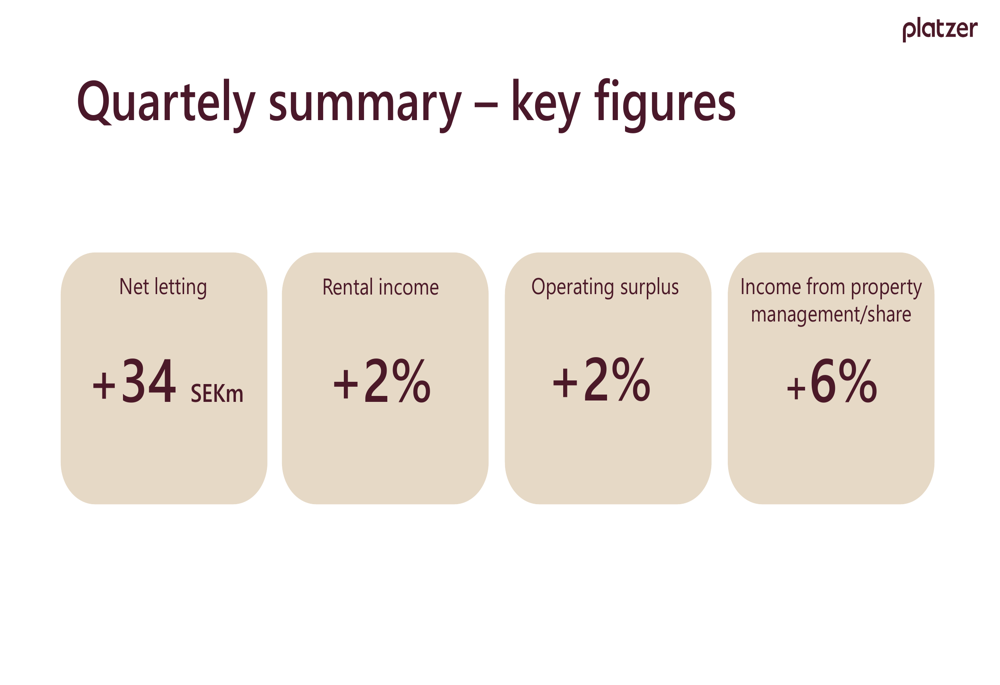
Platzer Q2 2026 slides: net letting hits record, occupancy climbs

Published

on

Platzer Q2 2026 slides: net letting hits record, occupancy climbs


Platzer Q2 2026 slides: net letting hits record, occupancy climbs

Continue Reading

Business

Toronto home sales rise in June for fourth straight month

Published

on

Toronto home sales rise in June for fourth straight month


Toronto home sales rise in June for fourth straight month

Continue Reading

Business

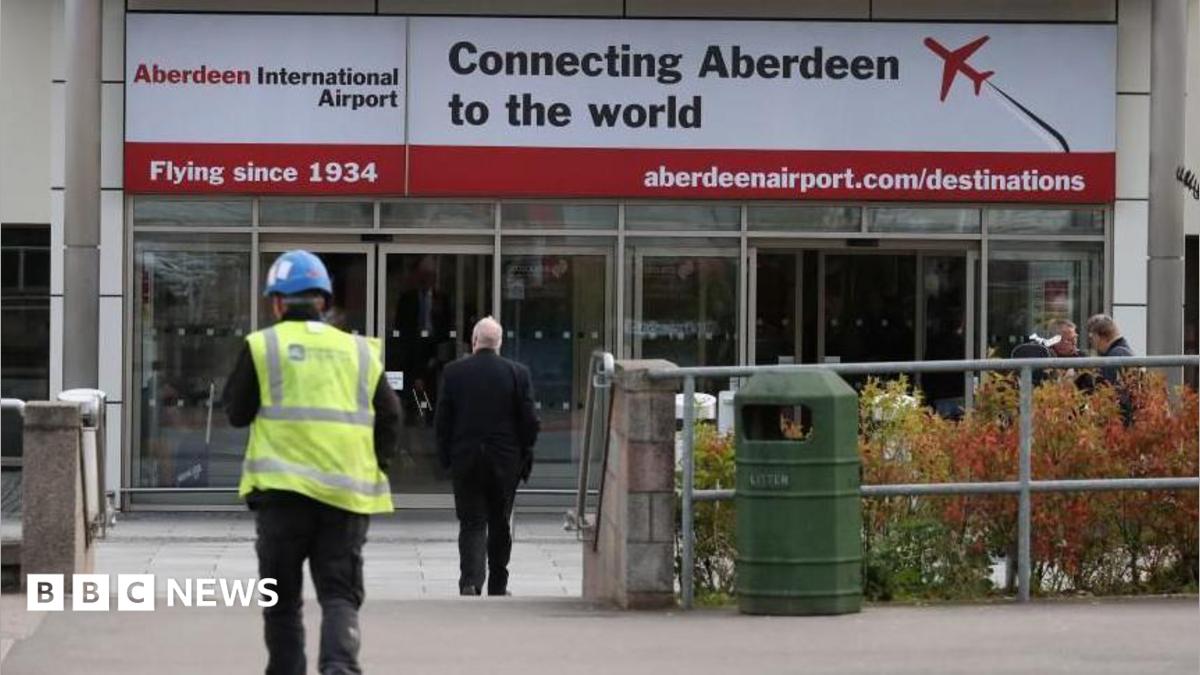
Security staff to go on strike at Aberdeen Airport

Published

on

Georgia Finch and her husband on their wedding day

Security staff at Aberdeen Airport have announced 14 days of strike action in a row over pay.

The union said it was left with no option as negotiations with ICTS HBS Security, through the conciliation service Acas, failed to produce a breakthrough.

The strikes, involving baggage screening staff, are set to begin on Monday.

The Unite union is warning of significant delays if the strikes go ahead and is urging the company to return to the negotiating table.

Advertisement

The development comes after summer strikes at Glasgow and Edinburgh airports were averted after new deals were struck.

Unite members unanimously supported industrial action at Aberdeen.

Union officials said there would be significant delays as its members in ICTS make up the majority of the baggage screening team at the airport.

Advertisement
Continue Reading

Business

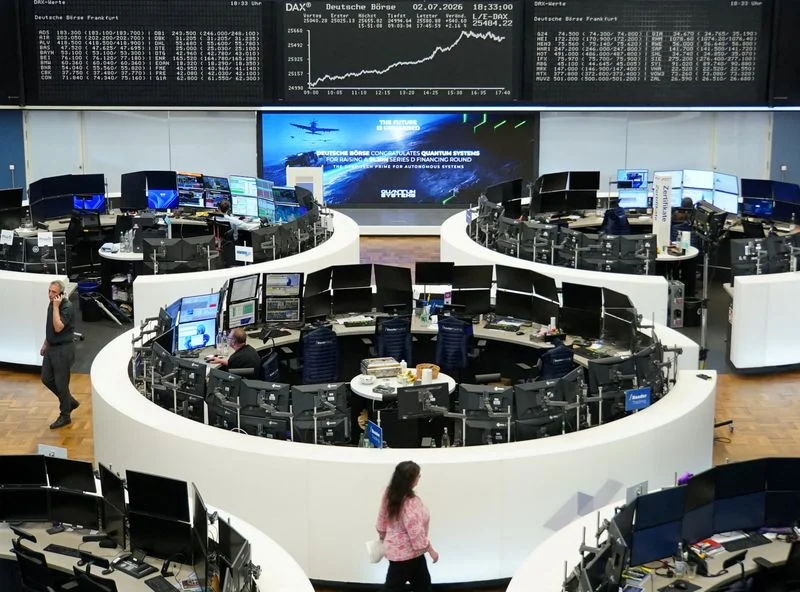
Europe’s STOXX 600 set for best week in over a month as rally broadens

Published

on

Europe’s STOXX 600 set for best week in over a month as rally broadens


Europe’s STOXX 600 set for best week in over a month as rally broadens

Continue Reading

Business

Thailand Ranks Among Asia Pacific’s Top 5 Travel Destinations in Visa 2026 Study

Published

on

Cabinet Acknowledges Visa Measures to Boost Thailand’s Tourism and Economy

The Tourism Authority of Thailand (TAT) celebrates Visa’s 2026 study, ranking Thailand among top Asian-Pacific destinations. Emphasizing familiarity and unique experiences, TAT supports quality tourism, digital payments, and flexible travel.

Thailand’s Popularity Among Asia Pacific Travelers

Bangkok, 2 July 2026 – The Tourism Authority of Thailand (TAT) is celebrating Thailand’s recognition in Visa’s 2026 Global Travel Intentions study. This study highlights Thailand as one of the top five destinations for Asia Pacific travellers, showcasing a strong demand for convenient and enriching experiences. With over 47,000 respondents, including more than 17,000 from the Asia Pacific region, the study reveals a shift towards intentional travel planning, emphasizing familiarity and practical choices.

Shifts in Travel Planning and Payment Trends

The study shows 63% of Asia-Pacific respondents prefer regional travel, ranking Thailand alongside popular destinations like Japan and Australia. Notably, 37% of travelers prioritize local experiences such as food and culture, surpassing the global average. The use of AI in planning is growing, with travelers seeking detailed information on accommodations and travel requirements. Digital payments are pivotal, with 73% of respondents carrying cards or mobile wallets, aligning with Thailand’s “Pay Like a Local” initiative for seamless tourist experiences.

Enhancing Thailand’s Travel Experience

Visa’s findings support TAT’s vision of quality-led tourism, focusing on providing meaningful and culturally rich experiences. The emphasis is on wellness, gastronomy, and local connections, aligning with the “Healing is the New Luxury” concept. TAT is enhancing its approach through targeted communication, digital convenience, and promoting lesser-known destinations. As travelers value flexibility, opportunities abound for inspiring spending on local dining and unique experiences, reinforcing Thailand’s appeal as a trusted, well-rounded travel destination.

Advertisement

Source : Thailand ranks among Asia Pacific travellers’ top five destinations in Visa study

Continue Reading

Business

Winmar statue to be removed from Optus Stadium

Published

on

Winmar statue to be removed from Optus Stadium

EXCLUSIVE: The Premier has directed VenuesWest to remove the statue of Nicky Winmar at Optus Stadium.

Continue Reading

Trending

Copyright © 2025