Connect with us
DAPA Banner
DAPA Coin
DAPA
COIN PAYMENT ASSET
PRIVACY · BLOCKDAG · HOMOMORPHIC ENCRYPTION · RUST
ElGamal Encrypted MINE DAPA
🚫 GENESIS SOLD OUT
DAPAPAY COMING

NewsBeat

Maternity care needs more than answers: it needs change

Published

on

Another statutory inquiry into maternity care would be a mistake – here’s why

The Ockenden Review into maternity and neonatal services at Nottingham University Hospitals NHS Trust was damning. It confirmed what families, staff and previous reviews have been saying for years: the failures in maternity care are serious, repeated and systemic.

The Nottingham review examined more than 2,500 family cases and engaged with more than 830 current and former staff. It found long-standing failures, including women and families not being listened to, poor responses when things went wrong and missed opportunities to act on concerns that were raised consistently by staff.

Within days, a second review by Baroness Amos – the National Maternity and Neonatal Investigation – widened the lens by reviewing care across 12 NHS trusts. It found consistent national patterns: staffing did not match demand, services were under pressure from rising complexity and capacity problems, leadership was lacking, responses to harm were often slow or defensive and inequalities affected women’s experiences and outcomes. Families affected by the Nottingham scandal are now calling for a statutory public inquiry into maternity and neonatal care across England, arguing that “safe care can only be consistently delivered when the full truth is known”. That call deserves to be taken seriously. Accountability cannot be treated as optional.

But a decision to hold another inquiry must take into account the fact that public inquiries do not, in themselves, deliver change. They make findings and recommendations to inform change made by others.

Advertisement

A statutory inquiry has powers to compel witnesses to give evidence. A non-statutory inquiry does not have these powers. However, it does not follow that statutory inquiries are inherently superior. Each type of inquiry has its own strengths. Statutory status alone does not guarantee greater learning, better implementation or safer care. Patients don’t necessarily benefit when healthcare staff are subjected to prolonged scrutiny through overlapping investigations and inquiries, litigation, regulation, media coverage and internal reviews over many years.

A study found that medical professionals changed their practice in response to fear of litigation, inquiries, complaints or professional regulation. Researchers call this “defensive practice”: when doctors, nurses or midwives make decisions partly to avoid blame or complaints, rather than simply because they believe those decisions are best for the patient.

In maternity care, that might mean ordering extra tests, asking senior colleagues to approve decisions the doctors, nurses and midwives would usually make themselves, recommending an intervention earlier than needed, or writing longer records because they fear being criticised later.

A midwife or doctor may spend more time recording why they made a decision than explaining that decision to a woman in labour. They may ask someone senior to take over, not because the situation has changed, but because they feel exposed. They may recommend the option that looks safest on paper, even when the woman’s circumstances are more complex.

Advertisement

Those actions are not automatically wrong. In some cases, they may be exactly what safe care requires. The problem arises when fear starts to shape clinical judgment.

An international literature review tells us serious failures must always be investigated. But investigations that drag on for years without leading to change can make staff more cautious and less confident, without making care safer. It can encourage staff to protect themselves rather than use their judgment confidently, communicate openly and focus on what women and babies need.

Amos supports this concern. Across the trusts reviewed, staff described burnout, stress and heavy workloads. The report says staff were working under intense scrutiny, fearful of making mistakes and operating in what they experienced as a blame culture. It also found that structural and systemic problems can make compassionate care harder to deliver. Staff wellbeing is therefore a patient safety issue.

Our own ongoing research, carried out with maternity and newborn care staff working under years of scrutiny by multiple bodies, found a similar pattern. Staff described losing confidence in their clinical judgment, doubting whether their employer would support them if something unavoidably went wrong, and seeing public trust in the service collapse. Experienced clinicians left, or considered leaving, the profession altogether, because the distance between delivering high standards of care and the care they were able to provide was too great. The impact on mental and physical health was significant, showing how poor staff wellbeing should be considered a patient safety issue.

Advertisement

The case for caution is stronger because the central problems are already extensively documented. Reviews into maternity failures at Morecambe Bay, Shrewsbury and Telford, East Kent and Nottingham have all identified recurring failures in listening, leadership, staffing, governance, safety culture and organisational learning.

Amos makes the implementation problem impossible to ignore. Its report found a maternity and neonatal system that is fragmented, overly complex and too slow to learn. It also examined why avoidable harm continues despite repeated reviews and recommendations.

The issue is no longer a lack of evidence about the main failures. Recommendations have not been translated into reliable change. The government has responded to Amos by announcing a Maternity and Neonatal Commissioner, a National Action Plan due in December 2026, new national maternity triage standards and additional investment in maternity and neonatal facilities. These steps will only improve care if they have authority, funding, transparency and clear accountability attached to them. Most importantly, a concerted effort to address the cultural issues that have created the conditions for poor psychological safety and impeded the delivery of compassionate care.

Advertisement

Families are entitled to ask why so many warnings were missed, ignored or minimised. But the government should not allow calls for another large statutory inquiry to defer changes that are already evidenced.

Statutory inquiries are slow and resource-intensive. The government’s response to the House of Lords Statutory Inquiries Committee noted that statutory inquiries completed in the previous five years took nearly five years on average, with insufficient transparency and accountability around the implementation of accepted recommendations.

Where people may have acted dishonestly, unlawfully or in breach of professional standards, that should be pursued through professional regulation, disciplinary processes, inquests (where deaths are involved) and, where the evidence warrants it, prosecutions.

Individual accountability should not delay organisational and cultural changes already recognised as urgent. The question is whether another statutory inquiry is an effective route to safer maternity and neonatal care, or whether the most urgent need is implementation with transparent accountability.

Advertisement

Acting on Ockenden and Amos’s recommendations will mean funding the workforce and infrastructure needed to make change real, measuring progress publicly, and giving services enough stability to rebuild trust.

Appropriate scrutiny should continue. But it should be designed to enable learning and delivery of safe, compassionate care.


Source link

Advertisement
Continue Reading
Click to comment

You must be logged in to post a comment Login

Leave a Reply

NewsBeat

Students’ employment boost from Newcastle Airport scheme

Published

on

Students' employment boost from Newcastle Airport scheme

Thirty students from Newcastle College secured roles through the Ambassador Programme, a partnership initiative between the airport and the college’s Aviation Academy.

Erin Hope Thirlaway, 18, who has joined the airport’s security team, said: “The Ambassador Programme was fantastic.

“Getting to work with the different teams and see first-hand what it’s like to work at the Airport really helped me develop my skills and stand out when it came to applying for the job.”

Advertisement

The scheme offers students practical experience in airport operations while they study, with placements across departments such as security and passenger services.

This year, more than 40 per cent of participants secured employment at Newcastle Airport or with business partners such as Swissport and Jet2.

Aidan Calder, 17, now working in passenger services, also praised the scheme.

He said: “The programme was brilliant for developing my skills, especially in customer service.

Advertisement

“I love talking to passengers and meeting new people and I’m really enjoying working in the team.”

The success of the programme has been described as a strong example of collaboration between education and industry.

Alice Andreasen, chief corporate affairs officer at Newcastle Airport and a member of the Newcastle College Skills Board, said: “We’re proud of our long-standing partnership with Newcastle College and are delighted to welcome so many students into our teams.

“The Ambassador Programme is a fantastic example of how education institutions and major employers can work together to create real opportunities for young people.

Advertisement

“It’s inspiring to see the students grow in confidence and develop their skills while working alongside our teams.

“The programme creates a clear pathway into the industry and we look forward to supporting them as they progress in their careers.”

Karen Trenerry, assistant head of curriculum for aviation at Newcastle College, said the scheme is making a real difference for students and the sector.

She said: “We are incredibly proud of the continued success of our Ambassador Programme this year.

Advertisement

“With over 40 per cent of our current cohort progressing straight into employment with Newcastle Airport and key stakeholders such as Swissport and Jet2, the impact speaks for itself.

“This unique initiative, developed here at Newcastle College, is actively helping to close the aviation skills gap across the North East.

“It’s a programme that not only supports our students into meaningful careers but also strengthens the future of the region’s aviation industry – and that is something we are truly proud of.”

Advertisement

Source link

Continue Reading

NewsBeat

At least four dead after Mexico City World Cup celebrations turn to chaos

Published

on

At least four people died on Wednesday during massive celebrations in Mexico City

Advertisement

At least four people have died after massive World Cup celebrations held in Mexico City on Wednesday descended into chaos. 

Over a million people gathered in crowds to celebrate the country’s national team advancing to the next round at the World Cup after their victory against Ecuador on Tuesday in the city’s Azteca Stadium – sending them through to play against England on Sunday, in the same stadium. 

Advertisement

Three people suffocated to death at the heart of the huge crowds, including a 19-year-old woman, a 44-year-old man and a 48-year-old woman, city health authorities said. 

A 30-year-old man also died in an epileptic crisis, officials said. 

Mexican President Claudia Sheinbaum expressed ‘our solidarity and support’ for the victims’ families. 

The celebrations came after Mexico beat Ecuador to record their first World Cup knockout win since 1986, sending the co-hosts into the round of 16.

Advertisement

Crowds gathered in the streets of Mexico City, mainly around the Angel of Independence monument, according to estimates by the city government.

After the final whistle, celebrations erupted alongside the city’s Reforma avenue, where thousands of Mexicans gathered for the festivities.

At least four people died on Wednesday during massive celebrations in Mexico City

Advertisement
Mexican football fans react during the Round of 32 match of the 2026 FIFA World Cup between Mexico and Ecuador in Mexico City

Mexican football fans react during the Round of 32 match of the 2026 FIFA World Cup between Mexico and Ecuador in Mexico City

The health ministry said three people suffocated to death at the heart of massive crowds and a 30-year-old man also died in an epileptic crisis

The health ministry said three people suffocated to death at the heart of massive crowds and a 30-year-old man also died in an epileptic crisis

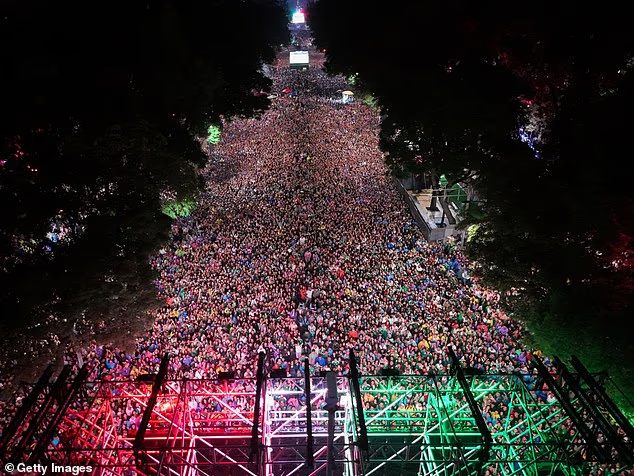
An aerial view of Mexican fans gathered along Reforma Avenue to watch the round of 32 match between Mexico and Ecuador on large screens, in Mexico City, Mexico on June 30, 2026

An aerial view of Mexican fans gathered along Reforma Avenue to watch the round of 32 match between Mexico and Ecuador on large screens, in Mexico City, Mexico on June 30, 2026

Families and groups of friends erupted in cheers, while some fans tossed others into the air amidst the roar of the crowd. 

Advertisement

The scene played out across dozens of neighbourhoods, bars, and parking lots transformed into fan zones to honour an undefeated national team. 

Footage showed thousands of people gathering in the streets of Mexico’s capital, cheering, jumping and waving their country’s flag as fireworks illuminated the sky. 

Tuesday’s victory comes as a massive win for Mexico, which has lost seven consecutive times at the same stage from 1994 to 2018 and didn’t advance past the group stage in 2022.

Mexico will play another home match on Sunday against the winner of Wednesday’s match between England and Congo.

Advertisement

Playing at the iconic Azteca Stadium, the Mexican squad boasts an undefeated record across 10 World Cup matches. Mexico has just two official losses at the venue – the last being a World Cup qualifying defeat to Honduras on September 6, 2013.

With the win, Mexico extended its unbeaten run to 12 games, dating back to a friendly loss against Paraguay in November.

Mexico also became the first CONCACAF side to eliminate a team from CONMEBOL in a World Cup knockout match. Teams from South America won the previous five meetings.

Advertisement

Advertisement

Source link

Continue Reading

NewsBeat

Travellers ordered to demolish huge illegal site built on protected green belt fields during weekend ‘land grab’

Published

on

The site near Romford in Essex was built illegally by travellers within hours of council staff leaving for the weekend

A sprawling traveller site built on protected green belt in a lightning-fast weekend ‘land grab’ must be demolished – with families handed four months to leave.

The fields near Romford, Essex, had been untouched until council officials prepared to clock off on Friday, November 28 last year.

Barely two-and-a-half hours later, the once peaceful grassland in Noak Hill had been transformed into a vast construction site.

Eight diggers were tearing across the pasture beneath blazing floodlights as teams of workers carried out a huge earth-moving operation.

Advertisement

By Saturday morning, convoys of eight-wheel lorries were blocking surrounding roads as they queued to deliver huge quantities of hardcore and other building materials.

Within hours, the countryside was being carved into residential plots and smothered with hardstanding.

Fences and concrete posts were erected, electricity and lighting installed and connections prepared for gas, drainage and water.

The entire operation was intended to have the caravan site ready for occupation before Havering Council could secure stop notices or court injunctions.

Advertisement

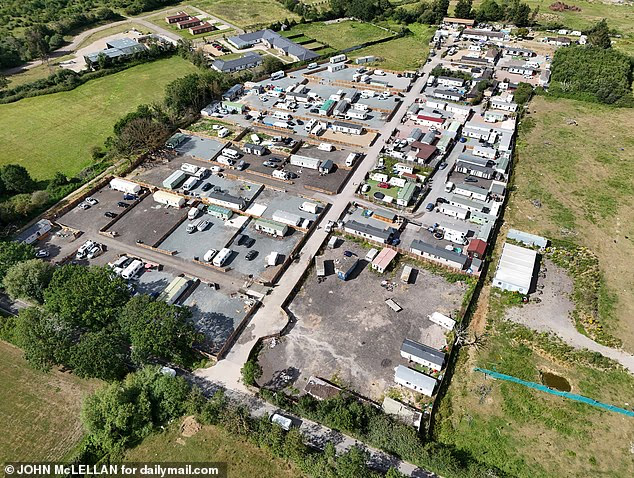
The site near Romford in Essex was built illegally by travellers within hours of council staff leaving for the weekend 

Planning inspector Grahame Kean described the extraordinary project as a 'disciplined rapid unauthorised development'

Planning inspector Grahame Kean described the extraordinary project as a ‘disciplined rapid unauthorised development’

Full details of the ‘carefully planned operation’ were laid bare this month in an appeal against enforcement action ordering traveller families to leave the land.

Advertisement

Planning inspector Grahame Kean described the extraordinary project as a ‘disciplined rapid unauthorised development’ intended to confront council staff with effectively a ‘done deal’ when they returned to work on the Monday.

He said: ‘The development was clearly intended to be ready for occupation by the end of the weekend in question and presented a fait accompli for the council.’

The tactic of building at speed after council offices have closed and then seeking permission retrospectively has become increasingly familiar to planning enforcement teams – and highlighted a number of times by the Daily Mail.

Over the Easter weekend, diggers and caravans moved on to green belt land near Flamstead, Hertfordshire, while other unauthorised sites prompted legal action in Surrey and Kent.

Advertisement

During the May bank holiday, workers descended on countryside in Essex and Kent after local authority offices closed for the long weekend.

At Willows Green, near Felsted, Essex, work began within hours of Uttlesford District Council closing.

Although the circumstances differ between sites, the planning tactic is broadly the same: build quickly, move caravans on and then seek retrospective permission after the landscape has already been altered.

At Noak Hill, the inspector found that the development had been ‘long in the planning’ and that retrospective planning applications to lawfully use the land were submitted ‘almost as an afterthought’.

Advertisement

The land was bought by a company called High Top Roofs and Gutters Limited in May 2025 and then later subdivided among several Irish Traveller families.

Frank Mongan, whose family roots are from Galway, acquired one parcel of 14 pitches. Thomas Mongan took another plot of land, while the third parcel was sold to James and Joseph McDonagh.

The site is situated just outside London's urban sprawl (pictured in a drone photo)

The site is situated just outside London’s urban sprawl (pictured in a drone photo) 

A large queue of trucks arriving at the site on November 28 last year

A large queue of trucks arriving at the site on November 28 last year

Advertisement

Four days after the weekend operation began, Havering Council issued enforcement and stop notices to halt work. 

Ray Morgon, the leader of Havering Council, said at the time that the authority was ‘disappointed and shocked’ that work had begun without planning permission, particularly because the field was protected green belt.

He said on December 2 last year: ‘The council has a court injunction for unlawful encampments on Havering land, but this does not apply to this site. We will look at cleaning up any mess on our roads.

‘The council’s planning enforcement team is currently carrying out an investigation and once we’ve looked into the matter we can then decide how best to respond.

Advertisement

‘It is very likely that a planning enforcement notice and stop notice will be served.’

But the orders, which were served in the presence of Metropolitan Police officers, failed to halt the development.

When the Planning Inspectorate visited the former paddock in May, he found that it had been ‘unlawfully and deliberately’ transformed beyond recognition.

Traveller families had constructed 29 separate pitches containing static vans and tourers, including several with ‘large metal decorative entrance gates’, and surrounded ‘comprehensively by hardstanding throughout the developed area of the site’.

Advertisement

Mr Kean added: ‘Although it seems that some people have taken up residence, the site is very much a development that is still in progress.

‘There are significant hazards on site, common access areas included large mounds of earth waiting to be removed or redistributed, uneven surfaces, general rubble and detritus in several areas, pooling of water in sunken areas of hardstanding, and pipework and loose cables sticking out of the ground.’

Havering Council later rejected two applications seeking permission to retain the land as a traveller site.

The Planning Inspectorate has now dismissed appeals against the council’s enforcement notices and ordered the compound to be removed.

Advertisement

A plan of the unauthorised site in a council planning document

A plan of the unauthorised site in a council planning document 

Advertisement

Those responsible have been given four months to dismantle the development and restore the green belt.

Mr Kean concluded: ‘The scale of the unauthorised development is considerable and in stark contrast to the pre-existing condition of the site.

‘The development causes substantial harm to the openness of the green belt.’

The inspector said the field had previously been open countryside used for grazing, with public footpaths running through and around the area.

Advertisement

The site was initially bought by a man called Jack Thursting through a company that he controls, High Top Roofs and Gutters Limited, on May 2, 2025. 

Although it lies close to Harold Hill and the edge of London’s urban sprawl, it forms part of the green belt separating the capital from built-up areas in Essex.

Council officials also warned that the land could have provided habitat for protected species, including great crested newts.

Because the field was excavated and covered at such speed, no full ecological survey could be carried out before the damage was done.

Advertisement

‘The evidence before me suggests that it is possible that the unauthorised development could have had a significant impact on protected species or their supporting habitat,’ Mr Kean said.

The removal of grassland and installation of hardstanding had also damaged the landscape, including trees and hedgerows.

Government policy requires planning inspectors to treat intentional unauthorised development as an important consideration.

The measure was introduced to discourage developers from building first and applying for permission afterwards.

Advertisement

Mr Kean said the Noak Hill case illustrated ‘precisely’ the conduct the policy was intended to address.

‘The appellants only sought to obtain planning permission at the last moment after most of the planning and implementation of the works had been carried out.

‘The works were committed in a co-ordinated way and flagrantly, timed over a weekend, and continued despite refusal of the applications and service of a stop notice.’

Source link

Advertisement
Continue Reading

NewsBeat

Popular Cambridgeshire Lido closed for second day due to ‘issue’

Published

on

Cambridgeshire Live

The Lido was closed on Wednesday for ‘essential maintenance’

A Cambridgeshire Lido will remain closed for a second day due to an “issue”. The Peterborough Lido was closed on Wednesday (July 1) so staff could carry out “essential maintenance”.

However, the pool will remain closed today (Thursday, July 2). In a social media post, a Vivacity spokesperson said: “Unfortunately we will not be reopening this morning and have turned off bookings for the rest of today while we continue to try to rectify the issue with the pool.

“As soon as we have an update, we will post again. Thank you for your patience.”

Advertisement

Do you want more of the latest Cambridgeshire news as it comes in from across the county? Sign up to our dedicated newsletter to make sure you never miss a big story from Cambridge or anywhere else in the county. You can also sign up to our dedicated Traffic and Crime newsletters for the latest updates on the topics you are most interested in .

Source link

Continue Reading

NewsBeat

New exhibition reflects five decades of movement between island of Ireland and GB

Published

on

Belfast Live

Several well-known faces have contributed to the exhibition, including actors Adrian Dunbar and Siobhán McSweeney

A major exhibition exploring five decades of movement between people from the island of Ireland and Britain, and their enduring connection to both places, is coming to Belfast for the first time this summer.

Advertisement

Look Back to Look Forward celebrates the lives, resilience, and legacies of people from across the island of Ireland who moved to live in Britain over the last five decades, as well as the experiences of second-generation Irish families.

It has been created by Irish in Britain, the national membership body for Irish community organisations in Britain, as part of its 50th anniversary celebrations.

The acclaimed exhibition was seen by over 120,000 visitors while in Dublin and has toured in cities across Britain.

It is being hosted in Belfast by Queen’s University as part of its Fleadh Cheoil na héireann Fringe programme. Running from 28th July to 16th August in the Elmwood Hall, viewing is available between 11 am and 4 pm each day, and admission is free.

Advertisement

Drawing on emotive oral histories, archival material, photography, film, and audio recordings, it documents people’s different experiences of leaving home behind, of setting up life in a new place, community activism, work, and cultural identity.

Several well-known faces have contributed to the exhibition, including actors Adrian Dunbar, Ardal O’Hanlon, and Jamie Beamish, who read moving excerpts from transcripts of interviews with Irish labourers who lived in Arlington House in London in the 90s.

Other well-known names featured include actors and presenters Siobhán McSweeney from Derry Girls and Aisling Bea, broadcaster Terry Christian, Siobhan Fahy from Bananarama and Shakespears Sister, musician Jah Wobble, and poet Laurie Bolger, who wrote a specially commissioned poem inspired by the project.

Advertisement

Of the more than 50 personal testimonies featured in the exhibition, several are from people from Northern Ireland or with a strong connection to it.

They include Bangor -born William Foote, now director of the Irish Cultural Centre in Hammersmith, London; Portstewart-born actor Claire Hagan, who reflects on growing up as a lesbian in a Protestant community in Portstewart before moving in 1989 to build a new life in Leicester, where she trained as a nurse before pursuing a successful acting career.

Also included are Castlewellan native Fr Gerry McFlynn, who speaks about his decades supporting Irish prisoners in England and Wales through the Irish Chaplaincy; Geoff Bell, the Belfast-born, now London-based, writer and socialist political activist; Nadine Finch, former barrister, Upper Tribunal Judge, and now academic; and Alice Delahunty from Roslea, Co Fermanagh, who recalls how finding a new community in Dance Halls across England was so important for her and her friends.

Also featuring are two women from Derry City – Dr Maev McDaid, a harpist and researcher at the University of Sheffield, who speaks about her community activism and how central Irish music is to her identity and Hilda McCafferty, who moved to London in the 1970s and worked in education and championed Irish studies in schools when elected to the Inner London Education Authority (ILEA).

Advertisement

Brian Dalton, CEO of Irish in Britain, said: “Irish in Britain is really pleased to be bringing our exhibition to Belfast for the first time, as the stories that feature belong to everyone from our island who’s stepped off a boat, train or plane to Britain, and to their children and grandchildren.

“Many of the stories featured have connections to Northern Ireland, and so we’re delighted that Queen’s is hosting the exhibition and enabling us to bring it to Belfast at a time when so many visitors are coming to the city for the Fleadh and will have an opportunity to experience it.

“Movement between our island and Britain has connected families, communities, the arts, and workplaces for generations, and this exhibition brings those connections to life in a way that powerfully reflects the many different reasons for those journeys, the experiences behind them, and the significant contribution they have made, and continue to make, in Britain today.

Advertisement

“This project is a window through which others can see us and understand us. It is inspired by our work with member organisations right across Britain over the last five decades. We want to acknowledge the stories of resilience, innovation, activism and kinship that our member organisations bear witness to every day.

“We live in a very different world today than that of the past five decades, and so it has been a privilege to enable so many people to tell their very personal stories and to safeguard them, as otherwise they may have been lost to us all.”

Look Back to Look Forward was developed using testimony gathered by more than 50 volunteers from communities across Britain and funded by The National Lottery Heritage Fund. Irish in Britain is also building an inclusive archive reflecting the experiences of groups whose voices have often been underrepresented, including LGBTQ+ people, Travellers, people affected by the legacy of Irish residential institutions and those from mixed-heritage Irish backgrounds.

All of the oral histories collected through the project are now deposited for permanent public access in the Archive of the Irish in Britain at London Metropolitan University. For those who cannot make it to the exhibition in person, Irish in Britain has created an online version of the exhibition which can be viewed at www.irishinbritain.org .

Advertisement

For all the latest news, visit the Belfast Live homepage here and sign up to our daily newsletter here.

Advertisement

Source link

Continue Reading

NewsBeat

M60 LIVE as all traffic held on motorway with huge queues building

Published

on

Manchester Evening News

Delays are building on a stretch of the M60 motorway this morning amid reports of a broken down lorry.

All traffic is currently being held on the anticlockwise side of the motorway, according to traffic alert service Inrix.

It is being held from junction 16 for Pendlebury to junction 15 for the Swinton Interchange.

Advertisement

Click here to get the biggest stories straight to your inbox in our Daily Newsletter

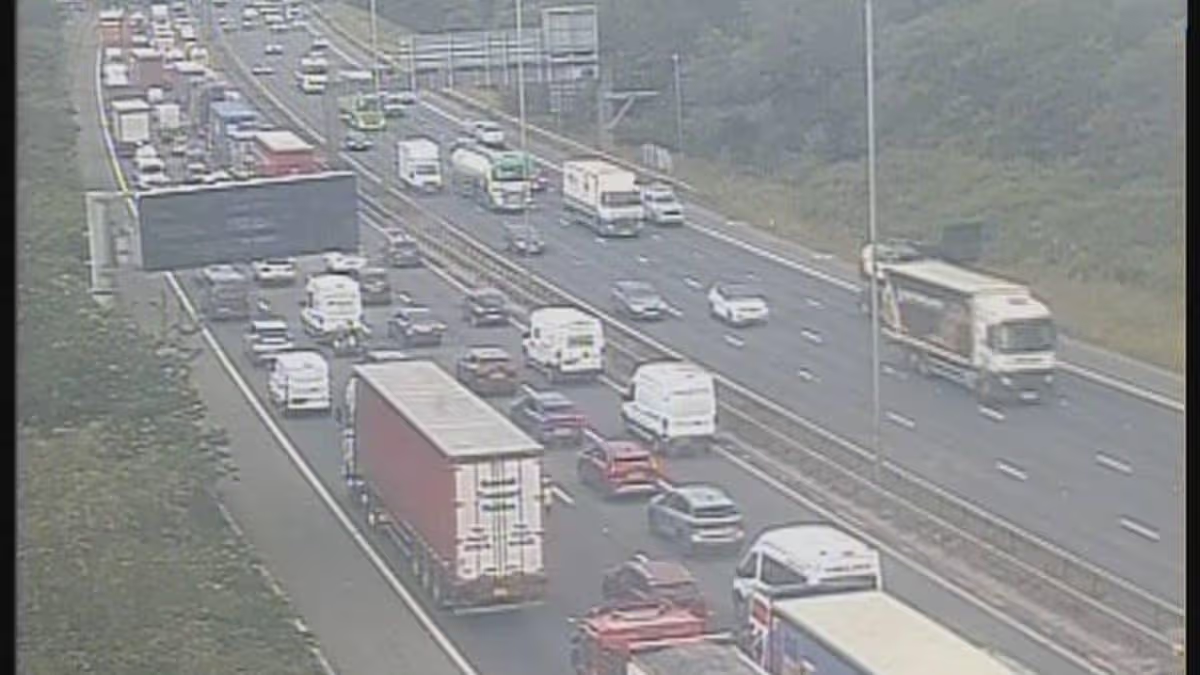
Motorway cameras show long queues up to the incident.

Follow our live blog below for the latest traffic updates.

Source link

Advertisement
Continue Reading

NewsBeat

World Cup pitchside mics catch Thomas Tuchel hammering England star for playing backwards as they struggled against DR Congo – and his dismissive reaction to his boss

Published

on

World Cup pitchside mics catch Thomas Tuchel hammering England star for playing backwards as they struggled against DR Congo - and his dismissive reaction to his boss

Advertisement

Thomas Tuchel once again ripped into Djed Spence from the touchline as England laboured against DR Congo.

The Three Lions boss has been known to give an earful to whichever player is nearest and has done the same to Spence against Ghana and in training. 

Advertisement

England booked their place in the last 16 against Mexico thanks to two late goals from Harry Kane, who is now on five goals for the tournament. 

But it had taken repeated shouts from Tuchel, and multiple substitutions, to wake his side up after they went down 1-0 just seven minutes in to Congo winger Brian Cipenga’s goal.

At one juncture, when Spence took a throw and sent it backwards, pitchside mics betrayed Tuchel shouting: ‘Djed! There [forward] is one on one! Play up front!’

The 25-year-old appeared to have a dismissive reaction, shrugging his shoulders and holding out his hands as he looked back half-heartedly and ambled away. 

Advertisement

Thomas Tuchel laid into Djed Spence on the touchline again for a throw he didn’t like 

The Tottenham left-back was filling in on the opposite side of the defence after injuries to Reece James, Jarell Quansah, and Tino Livramento, who was sent home before the tournament. 

Spence struggled throughout the match and appeared particularly troubled by the direct dribbling of Cipenga.

Advertisement

He and his nearest centre-back, Ezri Konsa, never looked comfortable and England were fortunate to go into the break only 1-0 down after Newcastle forward Yoane Wissa hit the post. 

When Spence lost the ball in the final third later in the match, Tuchel immediately called for Eberechi Eze in a move which suggested he had lost patience with Spence. 

In mitigation, Spence’s preparation for the World Cup was less than ideal as he sustained a serious fratcure to his jaw while playing against Chelsea in May.

He has been playing with a face mask and said: ‘ It’s a little bit uncomfortable, but it is what it is.

Advertisement

‘It’s something I will have to get used to. It’ll be three months until it’s fully healed, so it’s a long time.’

England are optimistic that James and Quansah will be available for England’s clash against Mexico in the early hours of Monday morning at the Estadio Azteca. 

Spence struggled throughout the match and was substituted off in the second half

Spence struggled throughout the match and was substituted off in the second half 

Spence has been the target of Tuchel’s frustrations throughout the World Cup. One training trip where he gave him a rollicking went viral.

Advertisement

‘Djed, Djed, Djed wake up! Wake up!’ Tuchel shouted as Spence hesitated in a passing drill.

Spence later told talkSPORT: ‘It’s normal. He’s a great manager. He wants the best from his players.

‘He demands high standards and for this tournament, we need to be ready, we need to be on it.

‘Every session needs to be of the highest quality. That’s what he demands. It’s good.

Advertisement

‘I wouldn’t be the only one he says it too. It’s part of the game.

‘I think he’s a great manager, he’s a great guy. Very detailed in what he wants to do. I’ve got great respect for him.

‘It’s like what he always says, we’re building a family, we’ve built a brotherhood within the team, everyone has one dream, one brain.

‘I think everyone is on the same path. We can do special things. I think he’s built that environment with this squad.’

Advertisement

How much is David Beckham set to pocket from his World Cup brand deals? Take on our quiz in our newsletter HERE 

Advertisement

Source link

Advertisement
Continue Reading

NewsBeat

What the World Cup hydration breaks reveal about who governs men’s football

Published

on

What the World Cup hydration breaks reveal about who governs men’s football

Twenty-two minutes into Canada’s group match against Qatar on June 18, the home crowd began to boo. They weren’t questioning a referee decision, nor a move by the opposition, but the mandatory three-minute player break for water. Canada was already cruising to a 6-0 win; the irritation was aimed squarely at the interruption.

Fifa introduced the 2026 World Cup’s mandatory hydration breaks under the auspices of a “player-welfare measure”. Fifa president Gianni Infantino has insisted the decision is purely sporting, not commercial⁠, arguing that there is “no additional revenue for Fifa” because its commercial agreements were signed in advance.

The scientific basis of these breaks is genuine. Researchers have warned that around a quarter of matches at this World Cup could be played in heat exceeding the safety limits recommended by the players’ union, Fifpro. As such these breaks, when required, are a welcomed measure from a player welfare point of view.

Crucially, however, they have become mandatory across all 104 matches of the World Cup, standardised and scheduled to the minute and applied regardless of temperature or setting. They are being enforced on a moderate 20°C evening or even inside an air-conditioned stadium.

Advertisement

England manager Thomas Tuchel criticises the mandated hydration breaks.

This uniformity has united critics rarely found on the same side. Uruguay’s coach Marcelo Bielsa said hydration breaks add nothing to the game. England manager Thomas Tuchel said they change the identity of a match and break its momentum. The Guardian called them “ad breaks” that nudge football towards a four-quarter, American rhythm.

The critics have a point. A measure introduced for safety has now evolved into a permanent feature that alters how the beautiful game is played, while conveniently creating additional predictable advertising slots in every match.

The hydration breaks have been predicted to bring in more than US$250 million (£189m) in the US alone, and an estimated $1 billion worldwide.

Advertisement

Infantino is technically right that Fifa earns nothing from them directly, but the extra value these hydration breaks offer could make the broadcasting rights more lucrative to sell next time around.

What control does Fifa have over its own event?

The unease runs deeper than loss of match momentum or tactics. At a pre-tournament press conference in Mexico City on June 10, BBC journalist Dan Roan asked Infantino directly whether he had “lost control of his own tournament”. Infantino responded by telling reporters to “chill and relax”.

The hydration break is emblematic of a wider pattern: Fifa is assertive over its product, but increasingly restricted over the conditions around it.

In the tournament’s opening days, the Somali referee Omar Artan was refused entry to the US despite holding a valid visa. Fifa responded by stating that it is not involved in host country immigration processes.

Advertisement

Similarly, Iran’s squad was forced to sleep in Mexico and crossed the border only on match days. Meanwhile, fans from Haiti, Iran, Côte d’Ivoire and Senegal, all qualified nations – were kept out by stringent travel bans that exempted players but not supporters.

Fifa, it seems, cannot guarantee universal access. It largely chooses not to challenge the sovereign powers on which the tournament depends.

Pundits question the value of mandated hydration breaks.

These governing issues have also been seen in the ticket pricing. For the first time, Fifa has used dynamic, demand-led pricing, paired with its own official resale platform. Ordinary group matches have carried four-figure price tags. Some fans have reported that some tickets were selling for as much as $10,990 for the final, and the attorneys general for New York and New Jersey have subpoenaed Fifa over the complaints that fans were misled and prices inflated.

Advertisement

The global game is at risk of being unaffordable and inaccessible for many. Fifa appears to be tightening its grip on what it can monetise, even as the event threatens to slips from its control in other aspects.

The environmental impact of the tournament makes this limit plainest. Fifa can choose venues, schedule matches and add cooling protocols, but it cannot shrink a continent. Researchers expect most of the tournament’s emissions to come from travel, chiefly flights, with one estimate near 7.8 million tonnes of CO₂e. Reusing existing stadiums helps, but a 48-team, 104-match tournament across 16 cities and three countries still runs on aviation.

To say Fifa is simply greedy ignores how authority is distributed; to say football is merely being “Americanised” – premium-priced, broadcast-friendly, cut into quarters – describes the symptom, not the mechanism. Fifa’s authority seems to have become selective. It is expansive over the match-day product, ticketing and global attention but absent, or unwilling, over borders, affordability and climate.

These tensions are likely to intensify. The 2030 World Cup will be co-hosted across six countries and three continents; the 2034 edition has been awarded, effectively uncontested, to Saudi Arabia – a state with both the capital to stage a tournament and the sovereign power to set every condition around it.

Advertisement

The world’s game is now hosted globally and increasingly handed to governments able to fund and provide political guarantees. The question for the next decade is not whether Fifa governs the World Cup, but which parts of it Fifa still governs — and which now belong to the states and markets it depends on.

Source link

Advertisement
Continue Reading

NewsBeat

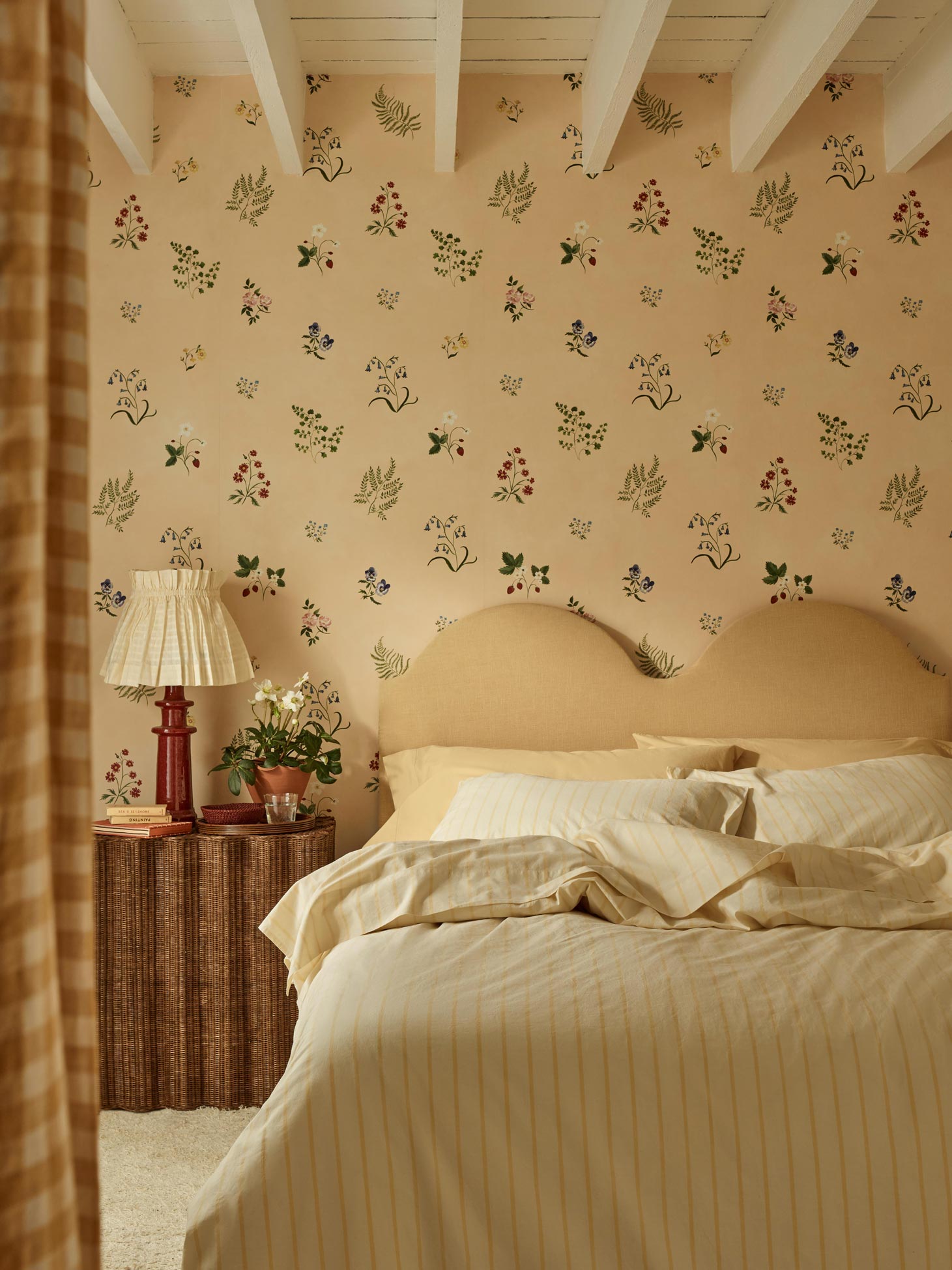

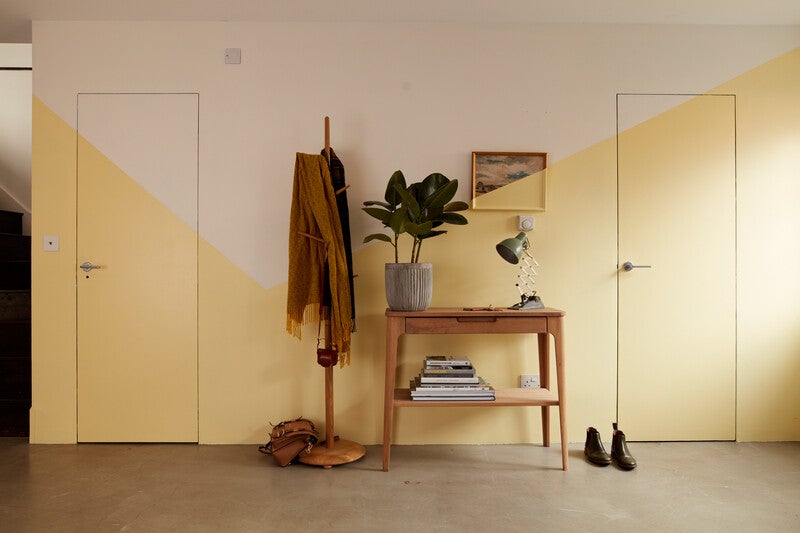
Why everyone is going for pops of butter yellow in their homes this season

Published

on

Why everyone is going for pops of butter yellow in their homes this season

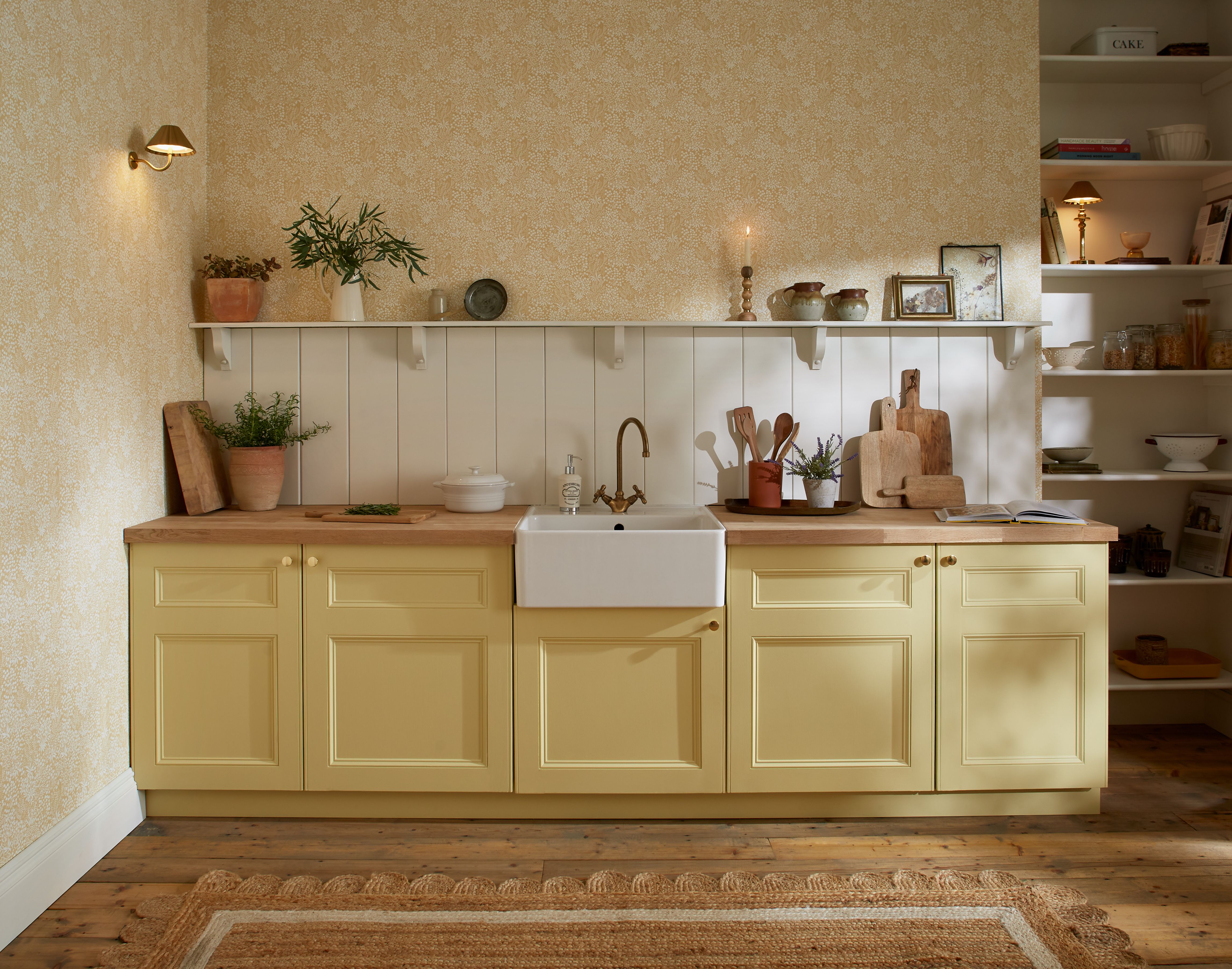
If you have an eye for interiors and caught episode one of Paapa Essiedu and Keeley Hawes’ new Channel 4 drama Falling, you may have spotted the delectably soft-yellow convent kitchen they have their first ‘moment’ in. We won’t say those buttery cabinets were a total scene stealer, but spiked with a hint of saffron, we did swoon over more than just the actors’ performances.

However, “kitchens are tricky ones. You want them to blend in, don’t you? You don’t want them to shout,” says Lara Clarke from Lara Clarke Interiors. “I’m not sure I would do a full kitchen in yellow, unless it was a small kitchen, because it could potentially date.” That said, “it can be beautiful in a pantry or utility room; it can really lift the room.”

In recent decades, yellows have been blandly held hostage in nurseries and school classrooms (yellow is thought to help boost learning and memory skills), but primrose tints are now thoroughly escaping into the rest of our homes, and even into the garden.

Advertisement

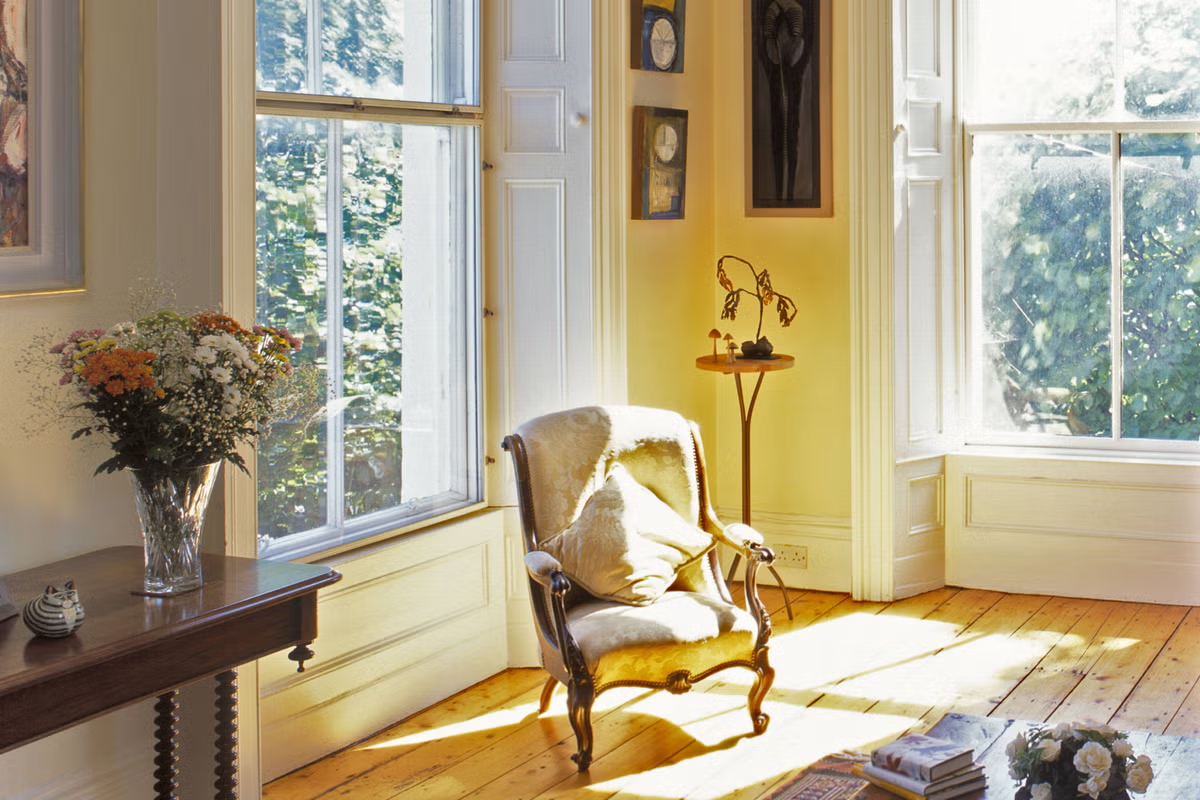
“Traditionally, if you look back at the history of interiors, yellow has been quite a prominent colour in drawing rooms,” notes Clarke. “People are coming back to those historical colours.”

“A lot of things trickle down from fashion in interiors, and I think it’s come from there,” she says of the trend. Butter yellow was all over the spring catwalks at Chanel, Louis Vuitton, Loewe and Chloé. “The reason people are loving it is because it’s a happy colour. People are moving away from cool colours and towards anything with a warm undertone that gives you that sense of joy in a space.”

A pop of yellow also has the ability to really perk you up. “If you have a yellow sofa, it puts a smile on your face, and people are craving that more in their interiors. They want it to be an expression of them, they walk into a room and it makes them feel happy,” says Clarke.

So where should you start if you’re hesitant about going full-on yellow? “Fabrics, because you can add and take away cushions and accessories,” says Clarke. “You could put a yellow trim on a curtain or a blind, which is a subtle way to introduce colour. For people that are a bit more brave, try it on woodwork.”

Advertisement

For those unafraid of going a little canary, and are keen to paint walls, Clarke is a particular fan of the “creamy buttery yellows, so Farrow & Ball Dorset Cream or Yellow Ground, really pretty colours. I’m actually doing a utility room in Madeleine by Little Greene, which is a really lovely colour. It’s that warm, not too-in-your-face yellow.”

Clarke says it is possible to take things “too far” if you’re not careful. “There’s obviously a huge trend on colour drenching at the minute, and I probably wouldn’t colour drench a room in yellow. That’s a step too far,” she notes. Instead, try pairing a buttery yellow with “a really nice white” or “blues look really lovely with yellow,” rather than going all-out banana.

This will help keep it looking fresh for years to come. “If it’s overused in a room, yellow won’t look right, but subtle nods, or pairing with other colours, I don’t think that will ever date,” says Clarke.

Advertisement

Shop the look

Bring a little bit of extra sunshine into your home and garden with these honey-toned items, from jugs to bed linen, lamps to chairs…


(Oliver Bonas/PA)
(Oliver Bonas/PA)

Vadella Yellow Gingham Paper Lamp Shade, £35, Oliver Bonas

(Oliver Bonas/PA)
(Oliver Bonas/PA)

 Shrimps x Oliver Bonas Striped Jug, £24.50 (was £49.50)

(Marks & Spencer/PA)

Milk Glass Pleated Shade Table Lamp in ochre, £49.50, M&S

(Marks & Spencer/PA)

Cotton with Linen Striped Tablecloth in ochre, £22.40 (was £28), M&S

(Olive & Barr/PA)
(Olive & Barr/PA)

Olive & Barr Skinny Shaker Kitchen Cabinetry, from £12k

(Piglet in bed/PA)
(Piglet in bed/PA)

Butter Yellow Slumber Stripe Cotton Duvet Cover, from £85, Piglet in Bed

(Peppermill Interiors/PA)

Maldives Outdoor Stacking Carver Chair in butter yellow, £45, Peppermill Interiors

(Marlborough Tiles/PA)

Saffron Square, Halcyon Collection, £3.26 per tile, Marlborough Tiles

(Cox&Cox/PA)
(Cox&Cox/PA)

Cotton Tea Towel – Meadow, £9.50, Cox & Cox

(Graham & Brown/PA)
(Graham & Brown/PA)

Daisyfield Creme Brulee Wallpaper, £95 per roll, Graham & Brown


Advertisement
(Argos/PA)
(Argos/PA)

Habitat Eve 2 Seater Folding Metal Garden Bistro Set – Yellow, £70, Argos

(Dobbies/PA)
(Dobbies/PA)

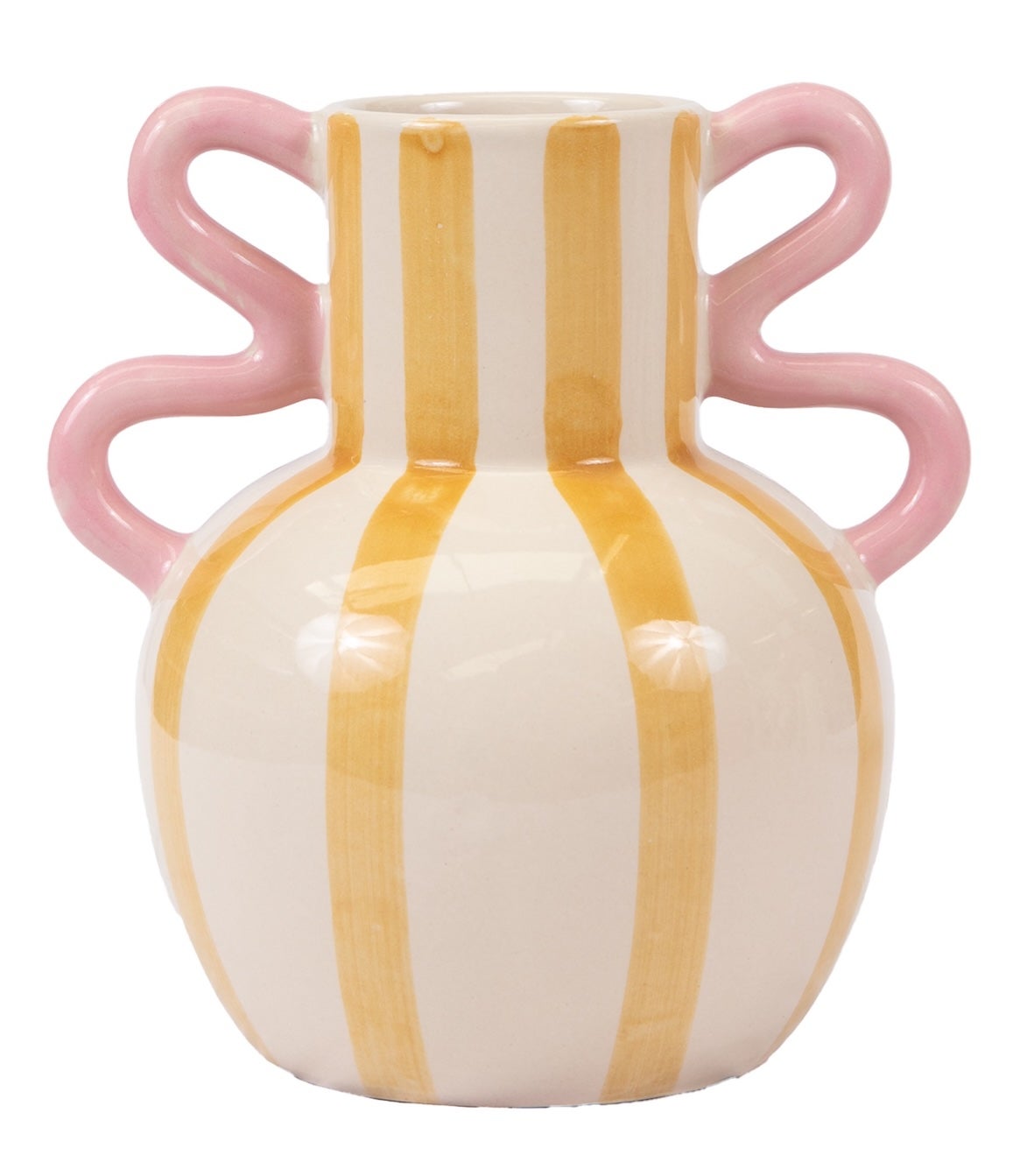
Yellow Striped Ceramic Vase 21cm, £24.99, Dobbies

(Dulux/PA)
(Dulux/PA)

Vanilla Sundae, £2.90 per tester pot, Dulux

* Prices correct at time of going to press


Source link

Advertisement
Continue Reading

NewsBeat

Durham High School staff member’s message as site to close

Published

on

Durham High School staff member's message as site to close

The school, which has stood in Durham for 142 years, confirmed to families on Wednesday (July 1) that its owners had decided to close the site, leaving pupils, parents and staff facing an uncertain future.

The announcement brought an end to weeks of concern among families, some of whom had already begun looking for alternative school places amid fears Durham High would not reopen after the summer holidays.

Now, Mike Parker, director of marketing and admissions at Durham High School, has shared a heartfelt message following the closure announcement.

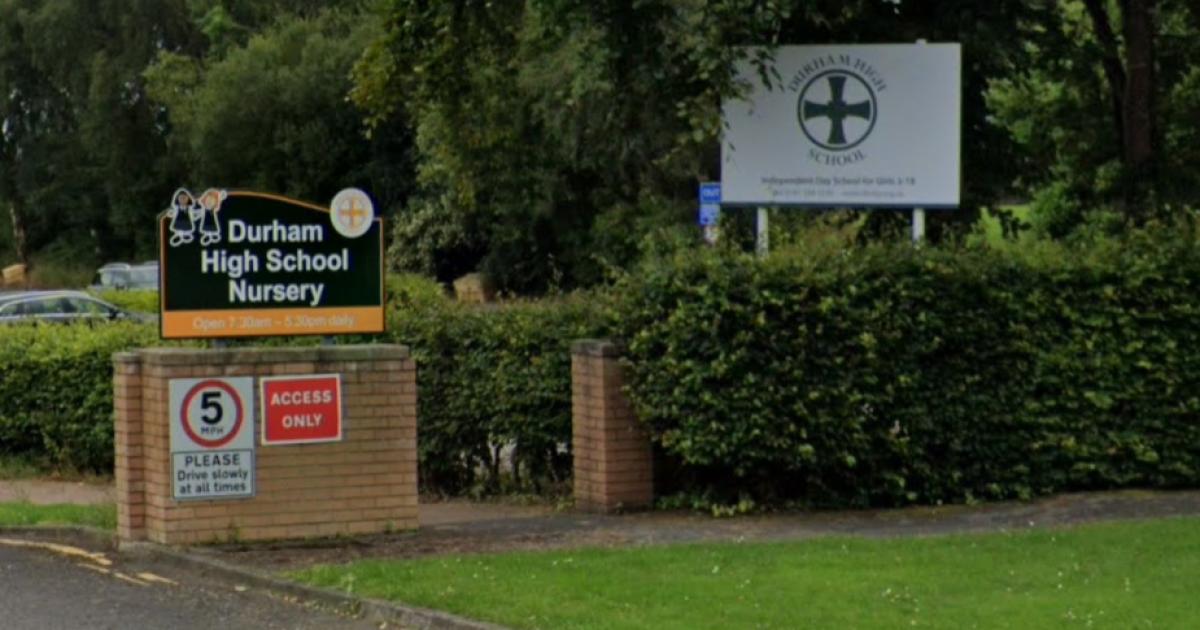
Durham High School (Image: GOOGLE)

Writing in an online post, Mr Parker said the day had marked his first anniversary at the school.

Advertisement

He said it had been his “privilege” to work in three “fantastic independent schools”, each with its own individual character and focus.

Reflecting on Durham High School, he wrote: “Of the three, this one is the kindest, happiest and most gentle. It’s a lovely school for lovely children.”

Mr Parker said staff and pupils had been told the school would be closing its doors after 142 years, including the final two years as part of Galaxy Global Education Group.

He added: “Whatever you read, this isn’t a VAT story. It isn’t a ‘falling rolls, unstoppable decline’ story.

Advertisement

“The truth is deeper and more complex and, eventually, the truth will out.”

Paying tribute to his colleagues, he described them as “lions led by the proverbial”, in a pointed and emotional comment following the announcement.

Durham High School’s own statement to parents described the closure as a “terribly sad chapter” in the school’s history.

The school said: “Today, we write the last chapter in this incredible history.

Advertisement

“It is a terribly sad chapter as our owners are closing the school at the end of this term.”

Addressing pupils, they said: “To the 281 current pupils, we are deeply sorry you will not have the chance to reach the end of your journey in this truly special school.

“Go with strength and the values you embody to make a difference in your next chapter.”

Advertisement

The school also thanked staff for their commitment, saying the time they had invested in sharing their “joy of learning” with pupils had given them “the greatest foundation for life”.

Parents were also praised for their “caring and compassionate” engagement with the school community.

Durham High School, founded in 1884, has long been regarded as one of the region’s leading independent schools.

It had recently begun admitting boys as part of plans to expand and was named the Sunday Times Independent Secondary School of the Year for the North East in 2024.

Advertisement

The school is owned by Durham Education Limited, part of Galaxy Global Education Group, which has also been linked to the recent closure of other independent schools.

Further details about transition arrangements for pupils and staff have not yet been confirmed.

Source link

Advertisement
Continue Reading

Trending

Copyright © 2025