

Connect with us
DAPA Banner
DAPA Coin
DAPA
COIN PAYMENT ASSET
PRIVACY · BLOCKDAG · HOMOMORPHIC ENCRYPTION · RUST
ElGamal Encrypted MINE DAPA
🚫 GENESIS SOLD OUT
DAPAPAY COMING

NewsBeat

German Chancellor Friedrich Merz unveils comprehensive reform package to boost economy

Published

on

German Chancellor Friedrich Merz unveils comprehensive reform package to boost economy

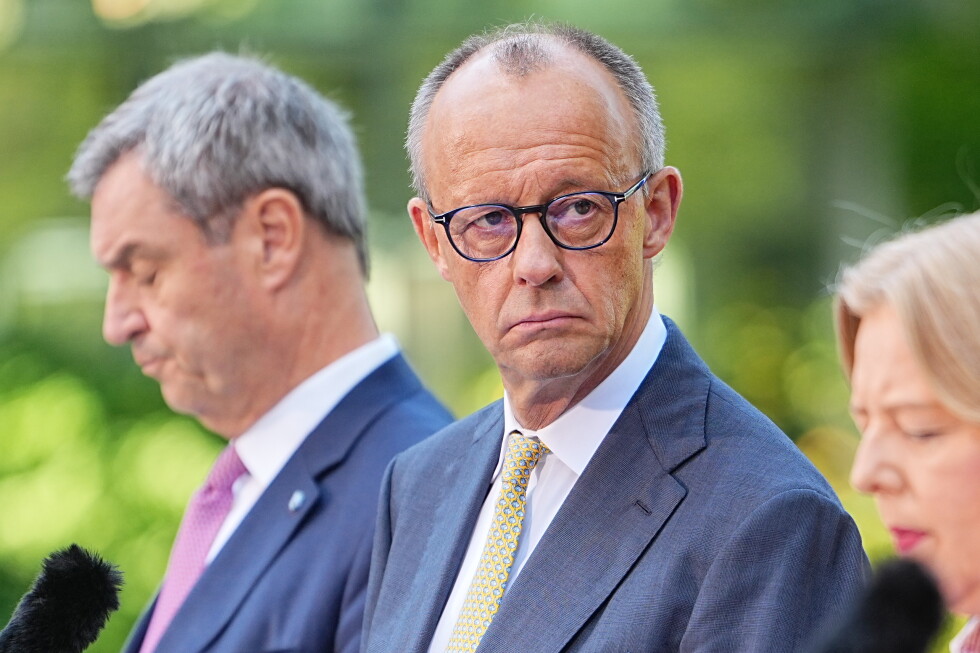
BERLIN (AP) — German Chancellor Friedrich Merz and his government coalition partners presented a comprehensive reform package Thursday with the goal of getting the country’s sluggish economy back on track.

The 34 reform measures include an income tax reform with tax cuts for low- and middle income families, an overhaul of the creaking pension system, tougher rules for employees’ sick leave and a reduction of the country’s stifling bureaucracy.

“These reforms all have one goal: We’re setting out into the future,” Merz said Thursday. “We’re strengthening ourselves so that we can live well in these new times.”

Merz’s coalition of center-right and center-left parties took office just over a year ago with pledges to reform and turn around Germany’s sluggish economy, Europe’s biggest. It has since become deeply unpopular, in part because of perceptions that it has squabbled but so far achieved little.

Advertisement

Merz is trying to cut his government coalition free from that negative reputation.

“From the very beginning, we set an agenda with a single goal in mind: We want to get Germany back on track. It is now clear that this is possible,” the conservative chancellor said.

Germany’s economy returned to modest growth last year after shrinking for two years in a row. The government expects underwhelming growth of 0.5% this year, a figure that has been pushed down by the fallout from the war in Iran.

The country of 83.5 million people already faced increasing competition from Chinese companies, higher energy costs following Russia’s full-scale invasion of Ukraine and issues including U.S. President Donald Trump ’s tariffs and trade threats. On top of that, it has deeper problems such as high production costs, lagging private investment and increasingly costly health and pension systems caused by an aging population.

Advertisement

On Thursday, the government coalition leaders said that the tax cuts, once fully implemented in 2028, would give an annual tax break for a family with two working parents, two children and a total taxable income of 60,000 euros ($64,416) of up to more than 600 euros. The total tax relief provided by the reform amounts to approximately 10 billion euros per year.

The pension system reform would include raising the retirement age gradually in line with life expectancy. The coalition leaders said they would implement the recommendations presented by a government-mandated panel of experts and politicians last month to stabilize the pension system. The aim is to prevent the level of pensions from falling and ward off the need for a big, long-term increase of the levy employees pay into the pension system.

The tougher rules for sick leave would no longer allow employees to call in sick to work for up to three days without seeing a doctor or call up the doctor and ask for a sick leave letter of one week without actually seeing the doctor. Instead, employers would be able to ask for a doctor’s certificate from the first day a person is on sick leave.

Merz had repeatedly complained that the rate of sick leave is too high in Germany and harming the country’s productivity.

When it comes to Germany’s runaway bureaucracy, various reporting and documentation requirements are to be eliminated, and data protection is to be reduced to the European minimum, the government said, adding that there would also be less red tape when it comes to filing tax returns.

Merz appealed to all Germans to support the reform package.

Advertisement

“We know that you, ladies and gentlemen — the citizens of our country — want decisions, and you don’t want conflict. And that is exactly what we have delivered,” he said at the chancellery’s garden in Berlin as the reforms were presented to the public.

“Join us; support us in carrying out the reforms that are now necessary.”

Advertisement

Source link

Continue Reading
Click to comment

You must be logged in to post a comment Login

Leave a Reply

NewsBeat

England vs Mexico pub opening Thursday update as Govt sends letter to councils

Published

on

Cambridgeshire Live

Communities Secretary Steve Reed has written to councils explaining what they should do with rules in place

Pubs are in a race against time to get permission to open for England’s last 16 World Cup game after the government failed to grant blanket permission. The game is at 1am on Monday – meaning that if the pub wants to open they must secure the necessary permission from their local council first.

Advertisement

Last night the national team got past the Democratic Republic of Congo with two late goals from Harry Kane. The pub industry has been struggling, with it put down to changes in employment tax which has made it more difficult for the hospitality industry.

However, the World Cup has proven to be a fillip, with, during the group stage alone, UK pubs pouring an estimated 6.8 million extra pints of draught beer and cider. England’s fixtures accounted for 5.5 million of those, while Scotland’s group-stage run added a further 1.3 million.

Now they are hoping to open for the Mexico game, which could well be the last of the tournament as England will face one of the host nations in their home stadium, which is also at altitude, with the players having no time to acclimate.

During the tournament, the Home Office granted a national licensing hours relaxation covering matches at more conventional kick-off times: pubs in England and Wales can open until 1am for games starting between 5pm and 9pm, and until 2am for those kicking off between 9pm and 10pm, Caterer Licensee reported.

Advertisement

However, this dispensation does not extend to fixtures beginning after 10pm, meaning the England v Mexico match falls outside the automatic relaxation.

As a result, individual pubs wishing to stay open must apply to their local authority for a Temporary Event Notice (TEN), potentially permitting trading until 3.30am should the match go to extra time and penalties.

Communities Secretary Steve Reed has written to councils urging them to approve such applications wherever possible. However, the final decision rests with individual licensing authorities, and operators have been warned that approval is not guaranteed.

Publicans are being urged to check the statutory notice requirements before applying, after at least one operator reportedly had a TEN application refused because it fell short of the required five working days’ notice ahead of the event – a reminder that councils have no discretion to waive the statutory timeframe, even where a request is otherwise supported.

Advertisement

Venues without a TEN already in place are advised to contact their local licensing team as a matter of urgency if they intend to serve alcohol beyond their standard licensed hours for the match.

Pressure is growing on the government to give England fans a bank holiday on Monday – as the Mexico crunch last 16 game at the World Cup kicks off at 10am. Fans are bombarding outgoing Prime Minister Sir Keir Starmer with pleas.

It comes as only one in five employers are planning to give fans flexibile working hours to cope with the middle-of-the night fixture. Last night England came from behind to beat the Democratic Republic of Congo 2-1 after two late goals from captain Harry Kane.

Officials have currently said there are no plans for a new bank holiday – claiming ‘the current pattern of bank and public holidays is well established’. However it follows the descision in Scotland to give fans the Monday June 15 off after thwe game against Haiti in Boston with a 2am kick-off time.

Advertisement

Only one in five employers is planning to offer flexible working hours during the World Cup despite the timing of some of the games, new research suggests. England’s next match, against Mexico, kicks off at 1am on Monday, so fans will have had little sleep before going to work.

England manager Thomas Tuchel jokingly had a message for parents after last night’s win “Write an excuse for school and let them watch the game…”

A survey of 1,100 managers by the Chartered Management Institute (CMI) found that only one in five employers plan to offer flexible working hours, such as adjusted start or finish times, to help staff watch World Cup matches.

A minority of firms are offering extended breaks, workplace screenings or additional leave options, according to the study.

Advertisement

Petra Wilton, director of policy at the CMI, said: “We’re not saying every England win deserves a bank holiday, but if millions of people have stayed up until 3am supporting their team, asking employers to let them start a little later the next morning is simply common sense.

“We’re saying to employers across the country: ‘let them start late’.

“The World Cup is a reminder of why flexible working matters. Great managers recognise that people have lives outside work, and when they offer sensible flexibility, whether that’s around caring responsibilities, medical appointments or even the occasional late-night sporting event, organisations benefit too through higher engagement, improved wellbeing, stronger retention and, ultimately, better performance.”

On X fans were taking to social media to demand the day off. JT said: “Got to pressure those in number 10 for a Bank Holiday Monday for that England vs Mexico game. Or as a nation we call in sick. “

Advertisement

David said: “Why are we not getting a Bank Holiday for the #England game? Scotland were granted one for their early morning games. Are we being made mugs of? #hcafc”

Formula said: “Surely it’s gotta be a bank holiday on Monday, England are playing in a World Cup round of 16 game against Mexico at the Estadio Azteca in a match that starts at 1am UK time, everybody should be able to watch it so let the nation have a break the next day”
Source link

Advertisement
Continue Reading

NewsBeat

Trump ‘smart wall’ uses steel fencing and advanced border surveillance

Published

on

Trump 'smart wall' uses steel fencing and advanced border surveillance

PHOENIX (AP) — For decades, all that separated the U.S. from Mexico was barbed wire.

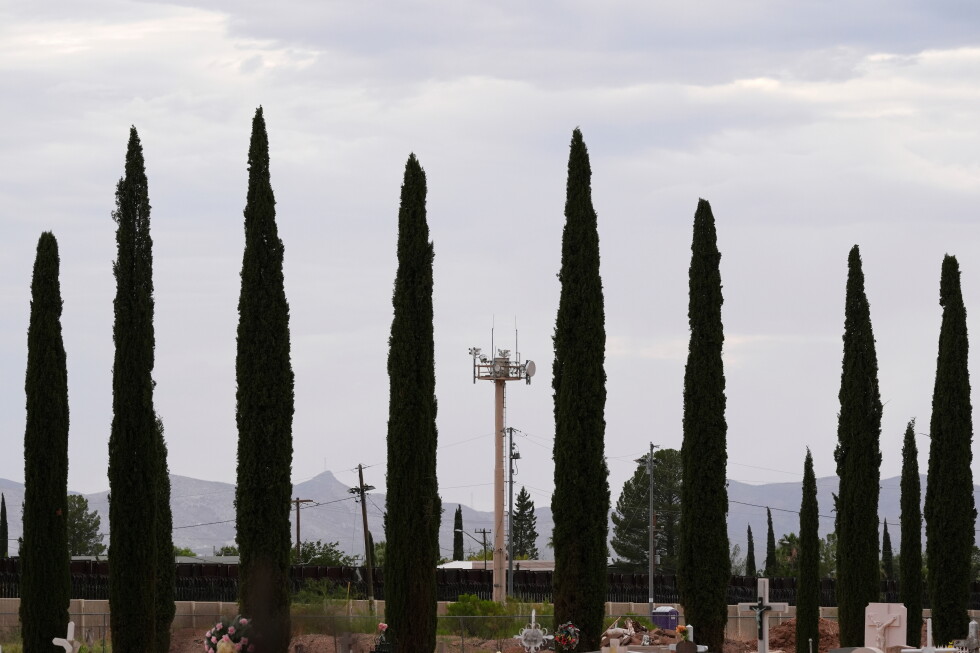
Now, after a massive infusion of cash from Congress, President Donald Trump’s administration is swiftly building what it has dubbed a “smart wall,” a combination of 30-foot-tall (9-meter-tall) steel fencing and an array of sophisticated technology like sensors, cameras and towers allowing Border Patrol to surveil the territory.

The wall is under heavy scrutiny for the billions of dollars being dedicated to it when border crossings are at their lowest in decades. Critics say the U.S. is militarizing the border as it increasingly deploys sophisticated surveillance technology to the area, impacting local communities.

“We are seeing a massive expansion of surveillance and surveillance technology across the borderlands,” said Ricky Garza, border policy counsel at the Southern Border Communities Coalition, an advocacy group. “The wall in all its forms is harmful to communities.”

Advertisement

Officials say the technology is complementary to the physical wall and frees up agents for other tasks.

“It’s a smart wall. It’s not just a barrier,” Customs and Border Protection Commissioner Rodney Scott said during recent congressional testimony. “It maximizes the use of our most valuable resource, which is our agents.”

Contracts for hundreds of miles of wall already inked

The wall has been a top priority for Trump, a Republican, since he first ran for president.

During the administration of President Joe Biden, a Democrat, the border emerged as a flashpoint, with thousands of people seeking to cross into the country each day. Those numbers started to taper off shortly before Trump returned to office last year and then slowed to a trickle, with his broader immigration crackdown serving as a deterrent for would-be migrants.

Advertisement

Flush with $46 billion to finish the wall after an infusion by Congress for immigration enforcement, CBP is inking tens of billions of dollars in contracts to build the wall and push along the president’s signature project.

Homeland Security Secretary Markwayne Mullin said recently that a preliminary part of the wall will be finished by “this time next year.” Scott said his agency is putting up 6 miles (10 kilometers) of wall a week.

Hundreds of miles had already been built before Trump returned to office. As of mid-June 2026, CBP has erected another 74 miles (119 kilometers) and aims to build hundreds more. There is no wall planned for roughly 535 miles (861 kilometers) of the roughly 2,000-mile-long (3,200-kilometer-long) border, because rugged terrain already serves as a barrier. Ground sensors and towers will be used instead.

CBP is also going back to hundreds of miles of already built wall and adding more technology, lights and roads. Along the long stretches of river in Texas that mark the border with Mexico, they’re deploying 12- to 15-foot-long (3.7- to 4.5-meter-long) cylinder-shaped buoys meant to keep migrants or smugglers from crossing the border.

Advertisement

More technology being deployed on the border

Technology is playing a greater role in the Trump administration’s effort to make illegal crossings along the border more difficult, part of a broader transformation of CBP in the years since Sept. 11, 2001, into an intelligence operation with a mass surveillance network whose reach extends far beyond the nation’s frontiers, according to reporting by The Associated Press.

And critics say the border technology poses a threat.

The Southern Border Communities Coalition says surveillance technologies can push migrants into more dangerous routes to avoid being detected.

Garza, the group’s policy counsel, warned that surveillance technology infringes on the privacy rights of border residents and that locals have found ground sensors used to detect smuggler or migrant traffic placed on their property without their consent.

Advertisement

Nayda Alvarez and her relatives own land along the Rio Grande roughly 125 miles (200 kilometers) inland from the Gulf of Mexico. She has found cameras placed on her family’s land, and just last week she spotted a surveillance tower about a quarter of a mile (almost half a kilometer) down the river from her house.

“Are we expecting a war or something?” she said. “It doesn’t make me feel safer.”

Dave Maass, director of investigations for the Electronic Frontier Foundation, a nonprofit that focuses on civil liberties related to digital technology, said the technology has made the border area “a hostile environment” for locals and would-be migrants.

The foundation has published a guide on the various types of surveillance towers in use along the southern border designed to help local residents.

Advertisement

These can range from fixed towers with video, infrared and radar technologies that have a range of roughly 8 miles (13 kilometers) to remote video surveillance systems that have cameras and a spotlight fixed on top. Some are mounted on the backs of trucks so agents can drive them to different parts of the border.

Increasingly, these towers are autonomous. They can scan an area, analyze what they’re seeing using artificial intelligence and alert Border Patrol agents to something suspicious. Proponents say this helps keep Border Patrol agents out in the field instead of sitting in front of computer screens watching for activity. But it also increases AI decision-making along the border when experts have warned about the technology’s potential for bias or other problems.

The big GOP tax cuts and spending bill passed by Congress last summer requires that CBP buys only the autonomous towers, and the department is deploying an additional 95.

Underground, buried fiberoptic cables can sense movement, capturing data that is also then analyzed by AI.

Advertisement

“We follow the contour of the land. We go through trees. We go down into the river banks. We can go absolutely everywhere,” said Magnus McEwen-King, CEO of Sintela, which has a contract with CBP to install the cables. He spoke at a recent border security expo in Phoenix, where some of the technology was on display.

CBP also uses ground sensors and trail cameras to detect smuggling routes.

Concerns over cost and future plans

The nonpartisan watchdog group Taxpayers for Common Sense has questioned both the huge amounts of money for the wall-building and whether taxpayers are getting their money’s worth.

In 2011, under Democratic President Barack Obama, Homeland Security Secretary Janet Napolitano pulled the plug on a project to build a “virtual wall” of integrated technology like radars, sensors and cameras across the entire border after it ran over budget, faced technological glitches and was behind schedule.

Advertisement

Josh Sewell, director of research and policy at Taxpayers for Common Sense, said the organization would like to see more “robust evaluation” of the technologies being used to avoid similar scenarios. And he criticized the Trump administration for lack of oversight on how the money is being spent, a charge CBP has denied, citing “oversight mechanism.”

In the Big Bend area of southern Texas, opposition to the department’s wall-building plans gathered strong bipartisan support especially in the most sensitive areas that run through a state and national park and a wildlife area.

CBP now says it is not planning to build a 30-foot-high (9-meter-high) bollard wall in those areas. Its recently announced plans include installing patrol roads and some barriers designed to stop cars and using detection technologies.

Clara Benson, who is one of the founders of the No Big Bend Wall coalition, says bright lights in the area designed to illuminate the border could pollute the skies in an area renowned for having some of the best views of the stars. Even without a 30-foot-tall (9-meter-tall) steel wall running through the land, there is concern about CBP’s plans.

Advertisement

“There’s still a lot of fear and dread that the plan is still going to be quite damaging,” she said.

Source link

Advertisement
Continue Reading

NewsBeat

North East TG Jones stores at risk of closing as 150 to be axed

Published

on

North East TG Jones stores at risk of closing as 150 to be axed

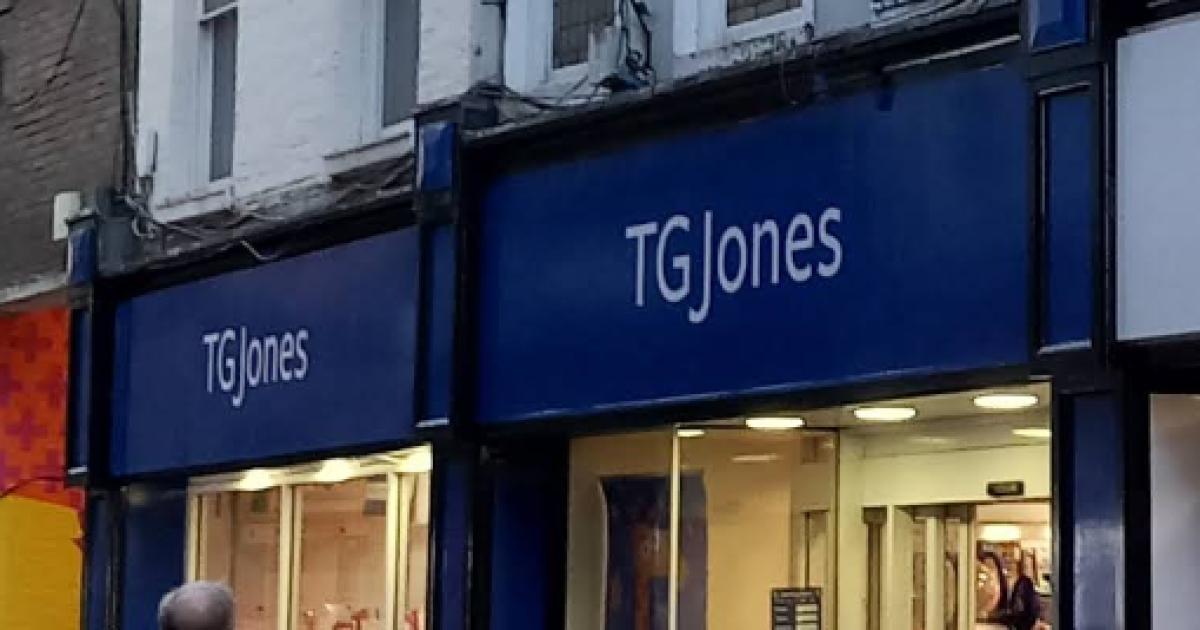
TG Jones sites across the UK are under threat following the company’s approval of a restructuring plan by the High Court on Wednesday.

Branches in Darlington, Durham, Northallerton, Middlesbrough, the Metrocentre and more could be at risk, though the company has not yet confirmed which locations will be affected.

The closures are part of plans to prevent the business from collapsing into insolvency.

Advertisement

Alex Willson, chief executive of TG Jones, said: “We welcome the court’s approval of our restructuring plan.

“This decision allows us to move ahead with our turnaround strategy.

“The plan protects the substantial core of the store estate and makes TG Jones a stronger, more sustainable business.

“We are incredibly grateful to all the colleagues, partners and stakeholders who engaged constructively throughout the process, and to Modella Capital for its continued financial commitment.”

Advertisement

TG Jones was formerly known as WH Smith until a rebrand last year, following its acquisition by Modella.

The WH Smith brand remains in use at airport and train stations.

The retailer warned previously that a major overhaul would be required to save the business, putting stores and jobs at risk.

During the court hearing, lawyers for TG Jones told the judge the company was “highly distressed” and could face an £8 million funding shortfall without immediate approval of its restructuring plan.

Advertisement

The court-approved plan secures a further £15 million loan from Modella Capital, adding to the £10 million already provided in April.

The scheme will also see reduced rent payments for landlords.

Mr Justice Hildyard said: “I am persuaded that it is the jurisdiction of the court to sanction both plans and it is my decision to do so.

“I did not find this to be an easy matter.”

Advertisement

The retailer operates around 450 stores and employs 4,700 staff, mostly in the UK.

The company has not confirmed how many workers will be affected by the closures.


Tom Smith KC, representing TG Jones, said an estimated 150 stores could close under the new plan, depending on landlord agreements.

He said the business had suffered from “long-term sales decline” as a result of high inflation, reduced consumer spending, the rise of online shopping and increased operating costs.

Advertisement

Mr Smith said TG Jones had also experienced a drop in sales since rebranding from WH Smith.

Source link

Advertisement
Continue Reading

NewsBeat

This luxury men’s grooming brand is offering 25% off for the World Cup

Published

on

This luxury men’s grooming brand is offering 25% off for the World Cup

For many dads out there, grooming simply consists of three tasks: wash, shave, and repeat. But this is changing.

According to research from Mintel, while the men’s grooming product market is still dominated by more functional personal care products, there has been an increase in skincare launches and hair treatments for men (15 per cent and 12 per cent respectively), proving there is an uptick of interest in the space.

If you’re looking to add a touch of luxury to your everyday routine – or find a gift that impresses – the grooming brand Cremo needs to be on your radar. Already a cult-favourite in the US, the men’s self-care brand has now launched on this side of the Atlantic with a range of body washes, fragrances, and shaving essentials.

Beloved for its premium formulas, sleek design, and luxurious scent – all without the extortionate price tag – Cremo is celebrating the World Cup by offering 25 per cent off with the code “WORLDCUP25”.

Advertisement

From shaving to shower gels, Cremo’s products are designed for style-conscious men who like to be fuss-free. The collection is all about easy, feel-good luxury – with products designed to smell great, feel great, and slot effortlessly into his routine.

Cremo

It’s something Cremo itself calls “unpretentious luxury”. Hence, its products are made to perform and really work, with long-lasting fragrances that stand out from the crowd.

Every order over £30 automatically gets free shipping, and there’s a generous 25 per cent off until 22 July in celebration of the World Cup (on all ranges except haircare).

So, whether you want to upgrade your father’s daily routine or you’re looking for something as stylish as he is, Cremo has something for you.

Advertisement
Cremo Italian bergamot gift set

Cremo

The latest scent to join the collection, Italian bergamot, is a bright, fresh fragrance inspired by the elegance of the Italian Riviera, and designed for the man who wants to make an impression without trying too hard. It opens with crisp Italian bergamot, has a soft neroli blossom at its heart, and finishes on a clean base of fresh vetiver.

If your dad, stepdad or grandfather is always at the sink shaving or trimming, a barber grade tool for home use is an easy upgrade. Cremo’s tortoise shell razor is designed to meet professional standards, helping to reduce irritation and razor burn while delivering a close, comfortable shave that feels as good as it looks.

Cremo original shave cream

Cremo

Then there’s the product that made Cremo a staple in any man’s self care routine: its original shave cream. The secret? A super smooth formula that allows blades to glide effortlessly while protecting against irritation, razor burn, and any annoying nicks. The fresh citrus scent leaves your face feeling fresh and ready for the day ahead.

Best Cremo grooming products

Advertisement

Source link

Continue Reading

NewsBeat

‘The shame is not yours… the shame is ours’: Starmer issues formal apology for forced adoption scandal as PM condemns ‘bullying’ of unwed mothers – but they won’t get payouts

Published

on

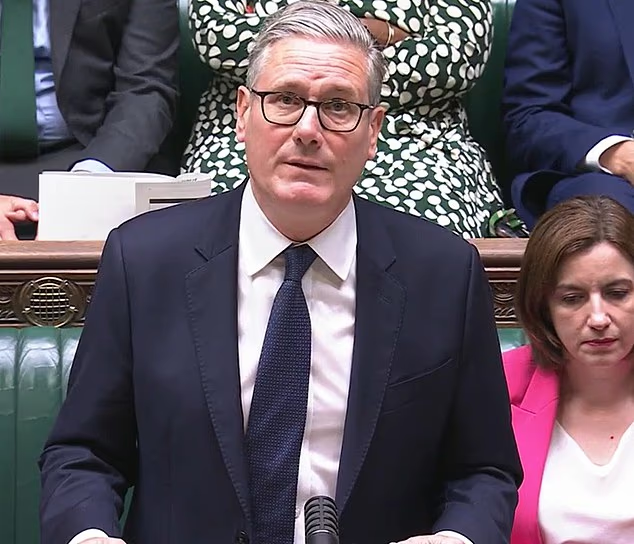
Keir Starmer issued a formal apology to survivors of the forced adoption scandal, as he told them: 'The shame is not yours, the shame was never yours, the shame is ours.'

Keir Starmer today issued a formal apology to survivors of the forced adoption scandal, as he told them: ‘The shame is not yours, the shame was never yours, the shame is ours.’

The Prime Minister used a statement in the House of Commons on Thursday morning to say sorry on behalf of the nation.

He acknowledged the harm caused when an estimated 185,000 babies of unmarried mothers were adopted in England and Wales between 1949 and 1976, as a result of a culture of shame surrounding pregnancy outside marriage at the time.

‘It should never have happened and you should have not have had to fight so hard for this day to come,’ Sir Keir told survivors, including those who were watching in the Commons gallery.

Advertisement

‘But today, finally, I do say on behalf of the state and of behalf of the nation as a whole: We see you, we hear you and we are truly sorry.’

Sir Keir, who earlier met some of those mothers and adoptees impacted by the scandal in Downing Street, described the events as a ‘a stain on our history’.

The PM – who is due to hand over power to Andy Burnham as soon as 20 July – said he ‘found it hard to read the testimonies’ of those impacted, particularly as a father.

‘Mothers, many young, vulnerable, and without support were coerced, bullied, or misled into feeling that they had no choice but to have their children taken away from them. What a thing to do,’ he added.

Advertisement

But while Sir Keir set out new support services, he did not set out a financial redress scheme for mothers and their children – as Ireland and Australia did after their own formal apologies for the coerced removal of children from unmarried mothers.

Keir Starmer issued a formal apology to survivors of the forced adoption scandal, as he told them: ‘The shame is not yours, the shame was never yours, the shame is ours.’ 

The PM, who earlier met some of those mothers and adoptees impacted by the scandal in Downing Street , described the events as a 'a stain on our history'.

The PM, who earlier met some of those mothers and adoptees impacted by the scandal in Downing Street , described the events as a ‘a stain on our history’.

Advertisement

Sir Keir said the forced adoption of babies was not ‘isolated or accidental acts’ but were ‘practices embedded within systems across local authorities, across voluntary and faith-based institutions, and in health and social care services, including parts of what is now the NHS’.

‘All institutions that operated with power over people’s lives, yet they did so without compassion, without consent, and without dignity or proper safeguards,’ he added. 

The PM said the harms caused by historical forced adoption were ‘compounded by the actions and failures of the state’.

‘Governments funded, enabled and relied on systems that were not consistently or effectively overseen,’ he continued.

Advertisement

‘The state did not prevent harm from continuing. The state bears responsibility for the systems it funded and legitimised, which enabled these practices to occur.

‘The state did not do enough to protect mothers, children, and families from harm, and for this systemic failure, I am truly sorry.’

Sir Keir said many of those affected by forced adoptions ‘suffered a further injustice’ in that they had to ‘fight for the basic human right to know their own story’.

He described how records were ‘lost, altered, or not made fully accessible to those seeking answers, and the whole process is painfully slow, traumatic, and dehumanising all over again’.

Advertisement

The PM promised a national online resource to create a single access point to locate records wherever they may be held across the country.

He also outlined how Bridget Phillipson, the Education Secretary, is writing to to local authorities, regional adoption agencies, and voluntary adoption agencies to set out the expectation that requests for records should be responded to swiftly and with compassion and consistency.

‘We will establish national virtual peer-led support groups for mothers and adopted adults to improve access to ongoing trauma-informed support across the country, and we will work with NHS England to ensure those affected are taken seriously when they seek help,’ Sir Keir added.

‘This includes new support for clinicians to better understand the impact of forced adoption and respond appropriately in their care. NHS England will also explore how those who wish to do so can have their experience of forced adoption appropriately recorded in their health record.

Advertisement

‘And finally, to further recognise those affected and ensure we learn the lessons of the past, we will commission a testimonials project to capture the stories of those with experience of historic forced adoption practices.’

Diana Defries, who was among those to meet the PM in No10, said the apology was tinged with sadness as some who 'worked tirelessly' in their calls for one will not be around to hear it

Diana Defries, who was among those to meet the PM in No10, said the apology was tinged with sadness as some who ‘worked tirelessly’ in their calls for one will not be around to hear it

Ann Keen, a former Labour health minister, was sent to a Swansea mother and baby home in 1966, when she was 17

Ann Keen, a former Labour health minister, was sent to a Swansea mother and baby home in 1966, when she was 17

Campaigners posed for a photograph after their meeting with Sir Keir in No10 to discuss historical forced adoption

Campaigners posed for a photograph after their meeting with Sir Keir in No10 to discuss historical forced adoption

Advertisement

Labour MP Tracy Gilbert held back tears in the Commons, as she spoke of her own experience of being adopted.

The MP for Edinburgh North and Leith said: ‘As an adopted person born in 1972 I welcome today’s statement from the PM.

‘I have no idea if my birth mother felt forced to have me adopted. I do know that prior to the birth she was in a Church of Scotland mother and baby home.

‘My adopted parents have since died, but I am sure they would not want to have adopted any child who had been forcibly removed from their mother.’

Advertisement

The Westminster apology comes three years after devolved administrations in Cardiff and Holyrood said sorry to people impacted across Wales and Scotland.

In Northern Ireland, an apology is also expected but not until after a public inquiry has been carried out, following a recommendation from a 2021 report on mother and baby institutions, Magdalene laundries and workhouses.

The UK Parliament’s Joint Committee on Human Rights (JCHR) called for a state apology in 2022, saying ‘the Government bears ultimate responsibility for the pain and suffering caused by public institutions and state employees that railroaded mothers into unwanted adoptions’. 

Mothers forced to give up their babies have previously described the harrowing experiences of having them taken away and the lingering feelings of shame, while adults who were removed as children from their mothers have spoken of a ‘harmful narrative’ which long persisted that adoption had saved them.

Advertisement

Despite the JCHR report recommending ministers apologise, the then-Conservative government in 2023 said while it was sorry ‘on behalf of society’ for the way the women had been treated, it did not think a formal apology appropriate ‘since the state did not actively support these practices’.

Two weeks ago, the Church of England apologised for its role in forced adoptions, telling survivors the ‘shame is ours’.

Archbishop of Canterbury Dame Sarah Mullally said the impact on families had been ‘lifelong’ for many and noted survivors having spoken of the ‘indignity’ they faced.

She apologised for the ‘pain, trauma and stigma’ caused to those affected, adding that there was a deep shame that the practice had happened to people ‘in the care of Christian communities’.

Advertisement

Thursday’s state apology comes almost exactly two years after a key campaigner, whose daughter was taken from her as a baby in the 1960s, died.

Veronica Smith, who died on June 29 2024, co-founded the Movement for an Adoption Apology (MAA), in 2010 to seek justice for all those who had suffered.

Current MAA chairwoman Diana Defries, who was among those to meet the PM in Downing Street, said the state apology would be tinged with sadness as some mothers who ‘worked tirelessly’ in their calls for one will not be around to hear it.

Ms Defries – who had not long turned 17 when her own baby daughter was forcibly adopted in the 1970s – said it is ‘so sad’ Ms Smith did not live to see the Westminster Government finally issue an apology.

Advertisement

She added that some other long-time campaigners are now too frail to be part of the day.

Ms Defries said: ‘Campaigners have been working for decades, long before me.

‘And the worst part is that I stepped into a dead woman’s shoes to keep it going and it’s a tragedy for me personally and obviously for her family that she’s not here.

‘It’s hugely poignant. It’s great that they (the Government) are actually doing something and that they’re acknowledging this injustice but it’s so sad that these people who worked tirelessly for a very long time won’t be part of it.’

Advertisement

Meanwhile, a former Labour health minister and forced adoption survivor has said she is looking forward to ‘being released from my shame’ when she and other campaigners get a state apology.

Ann Keen was sent to a Swansea mother and baby home in 1966, when she was 17.

Asked if she would accept the Government apology, Ms Keen told BBC Radio 4’s Today programme: ‘Oh, absolutely, we all need this apology because we have always been accused of giving up our babies and we didn’t give them up.

‘In particular, so many were taken without our knowledge and in my own instance, I went to see my baby on the eighth day because I was told I could have him for 10 and they said: ‘Oh no, he’s gone now. You were getting far too close’.’

Advertisement

Ms Keen, who was the MP for Brentford and Isleworth for 13 years, said she thinks the Government has ‘done the best they could, because it’s so complex’.

‘I understand why the Prime Minister’s team wanted to get this right, because we’ve now got the opportunity to really put this wrong right, we’ve been waiting a long time, and so today I’m just looking forward to today and being released from my shame,’ she added.

Campaigners from the Adult Adoptee Movement (AAM) said: ‘This apology is for the adoptees who were taken at their most vulnerable and sent to strangers.

‘For those who lost their wider family, medical history, culture, language or nationality. For those who suffered abuse, neglect or racism in their adoptive homes; who grew up hearing they were from ‘bad blood’, should be ‘grateful’, or had been ‘saved’.

Advertisement

‘For those subjected to the brutal, systemic racism of the adoption system who were judged ‘less than’ because of race.

‘For those who, due to disability or medical conditions, were judged less worthy of love and care. For those who were deceived about their origins.

‘For those who live with the long-term physical and mental health consequences of adoption. For those who have died.

‘It marks a fundamental correction of the narrative on historic adoption practices. What happened to you was wrong.’

Advertisement

The AAM added: ‘The measure of this apology will not be the words spoken today, but the actions taken tomorrow.’

Source link

Continue Reading

NewsBeat

UK Government urged to fix NI funding ‘faultline’ as budget discussions begin

Published

on

Belfast Live

The Hillsborough talks are being attended by Sinn Féin, the DUP, the Alliance Party and the Ulster Unionists

The UK Government has been urged to fix the “faultline” in how Northern Ireland is funded as ministers meet with Stormont leaders over the budget crisis.

Advertisement

First Minister Michelle O’Neill said she believed the financial discussions were “scene-setting” for when Andy Burnham becomes the next prime minister.

Northern Ireland Secretary Hilary Benn has invited the leaders of the devolved parties to talks at Hillsborough Castle on Thursday.

The chief secretary to the Treasury, Lucy Rigby MP, is also attending.

Stormont ministers have failed to agree a budget for the current financial year, with departments operating on contingency budgets since April.

Advertisement

Ministers have consistently made the point that they need more funding from the Treasury to address a funding crisis facing public services in Northern Ireland.

The Hillsborough talks are being attended by Sinn Féin, the DUP, the Alliance Party and the Ulster Unionists.

Sinn Féin leader Mary Lou McDonald and vice president Ms O’Neill were among their party’s delegation.

Ms McDonald said there was a “very, very significant deficit” in how Northern Ireland was funded compared to Scotland or Wales.

Advertisement

She said: “We are on common ground with all of the parties of the Executive, and we are here to make the case for proper funding.

“The failure of the British government and the British state to fund this place correctly isn’t a phase. It’s not just a moment in time. This is a permanent fixture.

“I think it is a matter of huge frustration for everybody around the Executive table, for all of the political parties, that we are constantly in this position, that we are constantly in a position where we have to just ask for the basic level of funding to ensure that the level of service provision and opportunity is provided to people here.”

Referring to the likelihood Mr Burnham becoming the next prime minister, Ms O’Neill said “the face might change, but the policy never does”.

Advertisement

She added: “Since I came into my leadership role, this is my seventh British prime minister in 10 years.

“That underlines the chaos of Westminster.”

She added: “I think today’s budget discussion is very much scene-setting for Andy Burnham, the incoming prime minister.

“I have a real sense of déjà vu this morning, a real sense that we come here, we make our case, we’ll actually all be making our case for the funding model that our people deserve.

Advertisement

“And then, potentially, what happens at the end of these processes that we get some sort of cash injection that’s a one off, that does not fix the problem that we have.

“Do they want to fix the faultline?

“And fixing the faultline means addressing the unfairness, it means making sure they have a proper funded model that allows us to invest in our public services, that allows us to invest in people, that allows us the levers in which to grow our economy.”

Ms O’Neill said: “There’s a choice to be made, do more of the same and throw a few pound at a problem, hopefully it goes away, and then revert back to this conversation again next year.

Advertisement

“Or actually fix the fundamentals and fix the faultine and actually invest properly.”

Alliance Party leader Naomi Long said it was an “important day” for Northern Ireland’s finances.

She said: “We’ve been very clear now for a long time that we still believe, despite recent changes to the funding formula in Northern Ireland, we remain funded below need.

“That is a real challenge. It’s not just an opinion, it is something that has been raised now by a number of independent assessments that recognise that Scotland and Wales are both funded above need and Northern Ireland below need.

Advertisement

“That has to be dealt with because it has serious issues and consequences for our public services.”

Ms Long added: “We also have to talk about how we get out of the mess of current again, because so far what we have had is every time there’s a crisis, people ride in like a white knight with a chequebook and fill the gap in order to allow the Assembly to continue and to stabilise things, but that isn’t that isn’t a formula for sustainability.

“All that leads to is short term gain with no long term sustainability and stability in our finances.

“What we need now is a properly funded programme that will last over a number of years into the term of the future Executive.”

Advertisement

Ulster Unionist leader Jon Burrows said calls for more funding had to be accompanied with a recognition that better government was needed at Stormont.

He said: “We need to be credible and responsible, negotiate hard for more money, spend it more wisely, cut waste.

“We’ll also be making the case to help Northern Ireland grow by getting things like cuts in corporation tax, in VAT and hospitality and tourism that allows us to compete better with the Irish Republic.”

He added: “We will be arguing very hard for the best interests of the people of Northern Ireland to get a better settlement for the people of Northern Ireland, but we will be honest with the Secretary of State that we also think politicians here can do better in spending that money more wisely.”

Advertisement

For all the latest news, visit the Belfast Live homepage here and sign up to our daily newsletter here.

Source link

Advertisement
Continue Reading

NewsBeat

Rochdale grooming gang leader released from prison

Published

on

A woman in a pink bikini lies on a deck chair covered in pink blankets, reads a magazine. there are pink towels, a tote bag and a radio next to her.

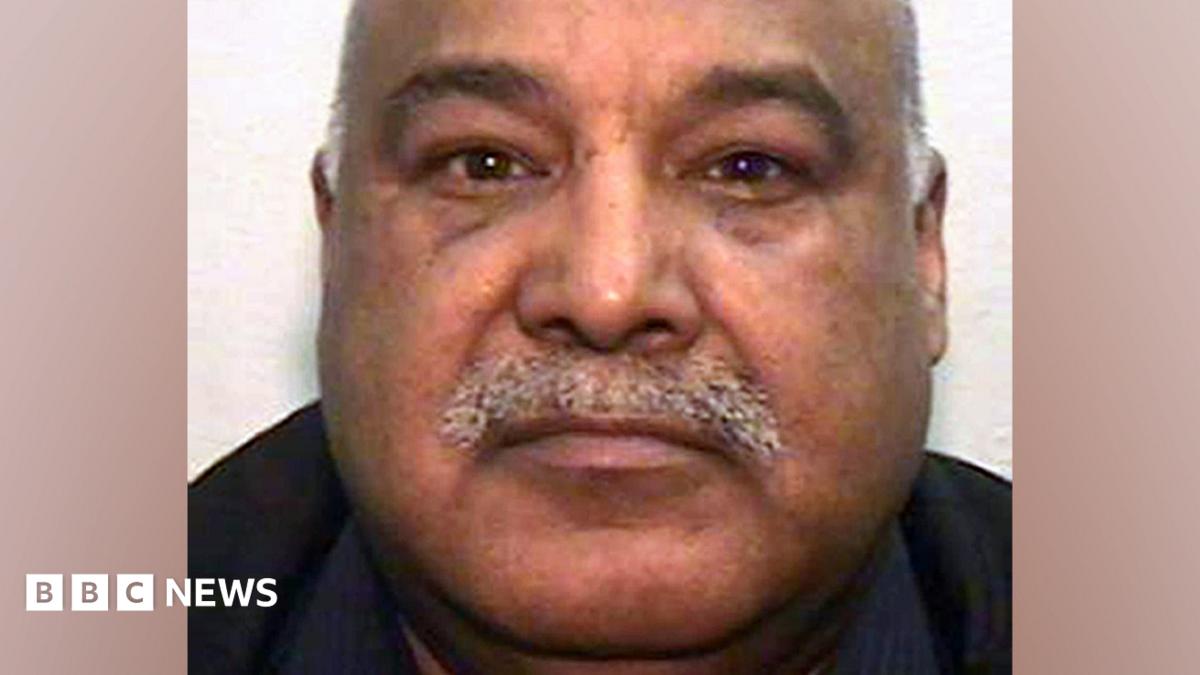
The ringleader of a Rochdale grooming gang that targeted girls as young as 12 has been released from prison.

Shabir Ahmed, who was known as ‘Daddy’ by his victims, was jailed for 22 years in August 2012 for a raft of child sexual offences including rape.

This week his victims were told he would be released on licence and despite earlier promises, could not be deported due to a 55-year-old law.

The BBC understands the now 73-year-old left prison earlier and is now in secure accommodation, wearing a GPS electronically monitored tag.

Advertisement

Source link

Continue Reading

NewsBeat

Live at York Museum Gardens returns – all the info

Published

on

Live at York Museum Gardens returns - all the info

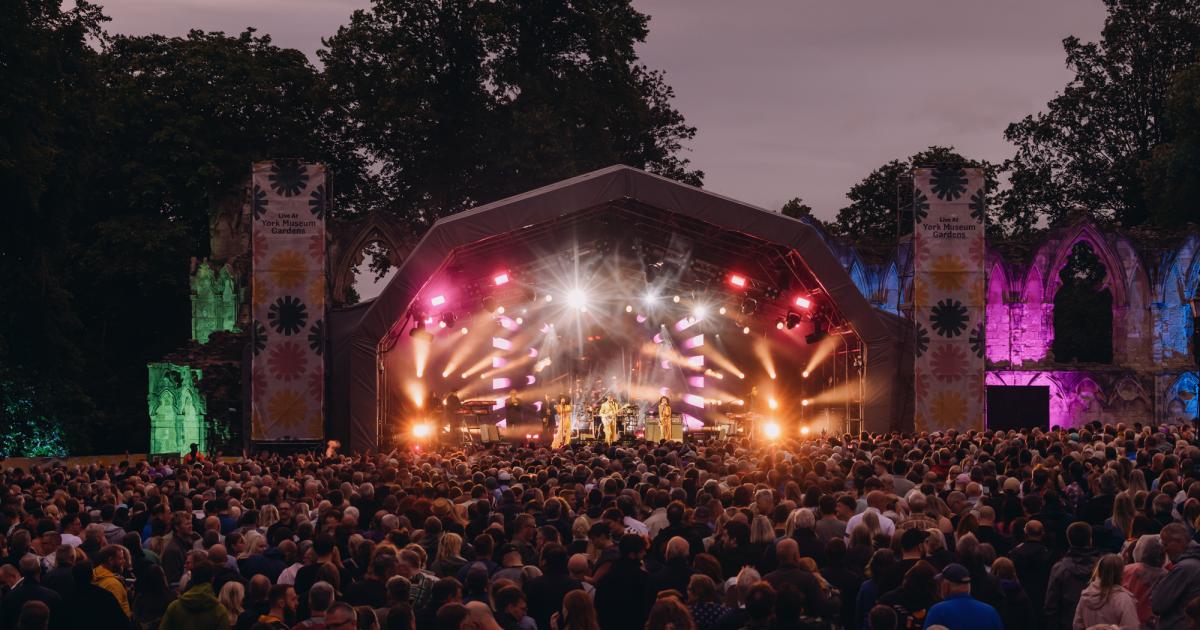
Live at York Museum Gardens returns from Thursday, July 9, to Saturday, July 11, followed by the York Comedy Festival at the venue on Sunday, July 12.

Orchestral Manoeuvres in the Dark (Image: Supplied)

Orchestral Manoeuvres in the Dark will start this year’s festival, organised by the Leeds-based Futuresound group and York Museums Trust, with a sold-out headline performance on the Thursday.

The synth-pop duo from Wirral will be joined by Heaven 17 and China Crisis as well as rising star singer-songwriter Andrew Cushin.

Self Esteem (Image: Supplied)

Self Esteem will headline the gardens on the Friday.

Advertisement

The Mercy Prize nominated artist will be joined by London-based indie group the Big Moon, South African “future ghetto funk” pioneer Moonchild Sanelly and Nigeria-born now Sweden-based spoken word artist and musician Joshua Idehen.

Super Furry Animals will close the music festival on the Saturday.

The Welsh rock band will be joined by indie musician Baxter Dury, indie-pop’s Los Campesinos!, Nottingham-based alt-country band Divorce and Welsh Music Prize nominees Pys Melyn.

Super Fury Animals (Image: Supplied)

Gates open at 5pm for Orchestral Manoeuvres in the Dark and Self Esteem, and at 4pm for Super Furry Animals.

Advertisement

Last entry is 8.30pm for all three days of the music festival with 10.30pm the event curfew for each show.

Set times for each act will vary per event, with attendees asked to check Live at York Museum Gardens’ social media channels on the day for the timings.

Attendees have also been told there is no readmittance to Live at York Museum Gardens after leaving the venue.

York Comedy Festival line up

Meanwhile, York Comedy Festival will see performances from Russell Howard, Ross Noble, Joanne McNally and more.

Advertisement

Gates open at 3pm for the comedy festival with last entry at 8.15pm.

Stage times for the comedy festival are:

  • Russell Howard: 9.30pm – 10pm
  • Ross Noble: 8.35pm – 9.05pm
  • Joanne McNally: 7.40pm – 8.05pm
  • Russell Kane: 7.10pm – 7.35pm  
  • Suzi Ruffell: 6.15pm – 6.40pm
  • Barry from Watford: 5.45pm – 6.10pm
  • Jeff Innocent: 4.50pm – 5.15pm
  • Nabil Abdulrashid: 4.20pm – 4.45pm

The box office at the festival will be located adjacent to the general admission entrance via Museum Street, while the newly situated premium ticket entrance is via Exhibition Square.

Russell Howard (Image: Supplied)

Live at York Museum Gardens’ premium area has been moved to a new location closer to the stage, with a ‘hang out area’ featuring seating, premium facilities and exclusive food vendors.

The premium area also has a first come first serve, free flowing ‘premium standing platform’ with a better view of the stage.

Advertisement

There is no allocated parking for Live at Museum Gardens, with attendees travelling by car recommended to park at nearby council car parks.

The site is half a mile to York railway station and also served by several bus stops.

York’s park and ride service is also adding an extra bus for Route No 2 for each event day, which travels from Museum Street to Grimston Bar. The last bus will depart from Museum Street at 22.45pm. The car park will be locked at midnight.

Third festival of its kind at historic venue

Live at Museum Gardens 2026 will be the third festival of its kind in at the historic venue, after York’s Shed Seven topped the bill for the first event in 2024.

Advertisement

The 2024 event marked the first time Museum Gardens had hosted live music since bands such as Roxy Music performed there in the 1970s.


Recommended reading:


Shed Seven, who rose to fame during Britpop, paved the way for future events at Museum Gardens that have been headlined by internationally renowned artists including Nile Rodgers and Chic.

Rachel Hill, project manager at Futuresound, said the group is “so proud of how Live at York Museum Gardens has grown”.

Advertisement

“We’re looking forward to seeing the changes we’ve made to the site this year, ensuring that everyone enjoys their time in such a beautiful space,” she said.

Rachel Hill, from the Futuresound group, with Jocelyn Palmer, from York Museums Trust, in Museum GardensRachel Hill, from the Futuresound group, with Jocelyn Palmer, from York Museums Trust, in Museum Gardens (Image: Dylan Connell)

“None of this would have been possible without the continued collaboration, trust and support of the team at York Museums Trust; the opportunity to put together such an incredible bill for the summer makes us excited for the future of our partnership.”

Tickets remain available for Self Esteem, Super Furry Animals and the York Comedy Festival. For more information about the festival and tickets, visit: https://www.futuresoundgroup.com/york-museum-gardens-events

Advertisement

Source link

Continue Reading

NewsBeat

Schools should teach children more about how money works

Published

on

Schools should teach children more about how money works

I recently volunteered to teach some lessons in finance to pupils at a primary school. Over six sessions, I spoke to a group of ten and eleven-year-olds about things like value, savings, cost and risk.

The talks were not meant to turn the children into investors, or to teach them to price derivatives or read corporate accounts. They were simply designed to start discussions about everyday financial choices – what it means to spend and borrow money, to compare prices and plan ahead.

I told them that money involves choices and consequences. That if we spend today, we may have less tomorrow. That if we borrow money, there are rules about paying it back. Or that if prices rise, the same amount of money buys less stuff.

These are not advanced financial concepts. They are everyday occurrences.

Advertisement

The children were curious and often more financially alert than I expected them to be. They asked practical questions and responded especially strongly to examples involving everyday choices, such as saving for something they wanted or comparing prices when costs rise.

And the experience left me asking whether children should be being taught more about financial literacy at school as a vital life skill.

After all, rent, mortgages, loans, tax, pensions, savings, inflation, insurance and debt shape the lives of almost every household. A better understanding of how it all works can only be a good thing.

The issue is not that schools do nothing. Financial education already appears in parts of the curriculum in many countries, particularly through mathematics and citizenship lessons. But is this enough?

Advertisement

And there is plenty of evidence to suggest that improving financial literacy should be part of any education system which hopes to prepare young people for life and work in a changing society.

A study in Brazil for example, shows that school-based financial education can improve economic proficiency. And an experiment in Peru suggests that mandatory school-based financial education is highly effective.

By contrast, if financial literacy is left mainly to families, there is evidence that inequality gets passed on. This concern is consistent with “financial socialisation theory”, which shows that children usually get their financial attitudes and habits from their parents.

Financial fix

Of course, financially literate children do not always become financially secure adults. They may still suffer from low wages, high housing costs, insecure work or regional inequality.

Advertisement

But financial literacy can reduce vulnerability. Evidence from US high school education policies links exposure to personal finance education with better economic results for young adults, including fewer debt defaults and higher credit scores.

What’s it worth?
New Africa/Shutterstock

So a focus on financial education makes sense. It can help young people understand credit, compare prices, question online financial advice, recognise scams, plan savings and make more informed decisions when they start work.

Technology adds another dimension. The financial world that young people encounter is no longer limited to a bank branch or a family conversation at the kitchen table. It is embedded in platforms, apps and algorithms.

Children may be using online banking, contactless payments, subscriptions, buy-now-pay-later products and AI-generated content before they fully understand financial risk.

Advertisement

Teaching young pupils about finance and accounting reminded me that children are often more capable than adults assume. They may not know the terminology, but they understand fairness, choices, value and consequence. These are the foundations of financial reasoning.

If we want more financially resilient societies, we should not wait until young people are opening their first bank account, signing their first rental contract or taking on student debt to give them a decent grounding in understanding the financial world.

It should start much earlier, and governments should be ambitious enough to make financial literacy a core part of every child’s education.

Advertisement

Source link

Continue Reading

NewsBeat

One of the ‘world’s healthiest vegetables’ lowers cholesterol and only costs 85p from Aldi

Published

on

Daily Mirror

Different vegetables contain their own unique set of vitamins that nourish the body, warding off everything from high blood pressure to the risk of cancer

Vegetables are extraordinarily good for you, supplying the essential nutrients our bodies require to remain healthy throughout our lives. Each vegetable boasts its own distinctive range of vitamins that nourish the body, helping to protect against everything from high blood pressure to the risk of cancer.

Advertisement

Certain vegetables are regarded as superfoods, meaning they are packed with compounds considered beneficial to health, such as antioxidants, fibre, fatty acids, vitamins, minerals, and phytochemicals. According to a ranking of the world’s healthiest foods, the top-placed vegetable is Swiss chard, coming in seventh overall.

Also featuring prominently on the list is green beans. Green beans are a popular side dish accompanying many meals across the UK, from pies to meat and fish.

The BBC list notes that green beans, also known as string, snap or French beans, “are rich in saponins, thought to reduce cholesterol levels,” reports Surrey Live.

Awarded a nutritional score of 54 out of 100, green beans come in at number 73 on the list.

According to WebMD, green beans are also packed with fibre, which may help boost heart health by reducing your LDL cholesterol (bad cholesterol) levels.

They are additionally loaded with antioxidants, including vitamin C, flavonols, quercetin, and kaempferol.

Furthermore, a single cup of fresh green beans contains approximately 25% of your recommended daily intake of vitamin C, around 15% of your recommended daily intake of vitamin A, as well as 33% of your recommended daily intake of folate.

Advertisement

Shoppers can pick up a bag of green beans from Tesco or Aldi for just 85p.

The BBC’s list also features three different species of fish in its top 10.

The highest-ranking fish, coming in third place overall, is the ocean perch, a deep-water species sometimes referred to as rockfish, which is rich in protein and low in saturated fats.

The second healthiest fish on the list is flat fish.

Advertisement

Source link

Continue Reading

Trending

Copyright © 2025