

Crypto World
Private-Equity Firms Sell Care Bears to Authentic Brands Group


Private-equity firms IVEST Consumer Partners and Cloverlay have sold the Care Bears brand of plush toys and related rights to Authentic Brands Group.
Authentic Brands, a company focused on entertainment, sports and media, owns intellectual property that generates more than $36 billion in annual retail sales. The Care Bears operation, run under IVEST by Cloudco Entertainment, is on track to exceed $750 million in retail sales by the end of this year.
Copyright ©2026 Dow Jones & Company, Inc. All Rights Reserved. 87990cbe856818d5eddac44c7b1cdeb8

Crypto World
Crypto News, July 2: Circle USDC Hit by Blackrock and Ripple XRP Backed OUSD, Bitcoin and Ethereum Price Recovering

Market do what market does, crypto is looking slightly better after taking a few beatings last month. Price is grinding higher despites few unsupporting metrics, institutions are still panic-selling while whales and corporations quietly feast at the lows. The Bitcoin price just reclaimed $60,000 after a 21-month low of $58K, and the Ethereum price tagged $1,600 in the bounce.
Meanwhile, Blackrock is leading another ETF exodus, and a fresh OUSD stablecoin is hammering Circle USDC. Trump’s $1.4 billion crypto windfall is still in the news as regulators reshuffle the deck.
The catalyst was Fed Chair Kevin Warsh. His take that inflation risks had eased flipped crypto and most risk assets higher and gave both majors the lift they needed after June’s bloodbath. Bitcoin price had dipped below $59K on heavy outflows before recovering, while Ethereum held $1,500 support and moved green alongside SOL and DOGE. Fear & Greed sits at Extreme Fear, but but market is looking better.
BREAKING: — Crypto Rover (@cryptorover) July 1, 2026
 Fed Chair Kevin Warsh just spoke on a shared panel.
Here's what he said:
• U.S. is likely to be a big winner in AI
• New AI task forces coming
• AI jobs impact still uncertain
• Inflation still above target, risks have eased
• still have scars from 2008,… pic.twitter.com/VfiLUqIif2
Discover: The Best Token Presales
Bitcoin Price Reclaims $60K While Institutions Keep Selling
Bitcoin price recovery is unexpected as spot ETF outflows still printing in hundreds of million. Yesterday, Bitcoin ETFs posted a net $296 million outflow with Blackrock’s IBIT led with $219.4 million redeemed, Fidelity’s FBTC shed $51 million, and Grayscale’s GBTC lost $62.8 million.

Why this month might be better? June closed as the worst month ever with $4.5 billion exiting the products. Institutions are de-risking hard even as BTC climbs. But on-chain data sees whales accumulated 270,000 BTC st $59K zone. It’s the largest single spike ever recorded, bigger than COVID or FTX bottoms. Long-term holders remain in strong accumulation mode.
Corporate buyers are also stepping up, besides Strategy, Metaplanet has added another 2,823 BTC worth $170 million, bringing its treasury to 43,000 BTC valued at north of $2.5 billion.
Discover: The Best Crypto to Diversify Your Portfolio
Ethereum Price Reclaims $1,600 as Glamsterdam Approaches

Ethereum price followed BTC higher and reclaimed the $1,600 level after touching multi-month lows $1,505 to start July. ETH has now suffered its first stretch of three consecutive red quarters but is holding the $1,500 support zone. Whale wallets in the 1K–10K ETH range are accumulating, even as active addresses have dropped sharply. It could be a sign retail has exited while bigger players position, which usually marks bottom.
Ethereum’s bigger catalyst still sits ahead as Glamsterdam remains in active development with Devnet-5 testing underway. Public testnet is targeted for July or August, with mainnet eyed for Q3 2026.
Key upgrades include EIP-7732 for Enshrined Proposer-Builder Separation to improve MEV fairness and EIP-7928 for Block-Level Access Lists that enable better parallel processing. Glamsterdam’s goals are higher L1 scalability, lower gas fees, and groundwork for higher throughput.
Don’t Miss Out on Our $1,000 USDT Airdrop on ByBit
Blackrock Fuels Outflow Frenzy as OUSD Hits Circle
Blackrock isn’t just selling Bitcoin exposure, it’s also backing the new OUSD stablecoin consortium alongside Visa, Mastercard, Coinbase, Stripe and over 140 other firms. Following it, Circle’s stock cratered 17% as the rival gains traction. As of now, Circle’s CEO is pushing back hard on network effects while yield experiments like MetaMask’s new yield-paying accounts heat up.
Also today, SCOTUS cleared Trump to fire SEC and CFTC chiefs, opening the door to major oversight changes. In Europe, MiCA’s grace period has ended, leaving Tether to abandon parts of the region. Not just USDT delistings, Binance is still reassuring users as Venga secured a MiCA license. For America, tt present, the CLARITY Act odds are sliding, but Trump is publicly pushing back against banks while the SEC keeps its comment window open on novel ETFs.
The gap between scared institutions and aggressive whales plus corporates is the clearest bull signal in months. As Blackrock and ETF players keep selling, on-chain data shows the largest accumulation spike in history and treasury companies keep buying.
Bitcoin and Ethereum price looks increasingly constructive as Glamsterdam coming. Regulatory clarity is moving forward despite few tackles from banks, as whales positioning.
Discover: The Best Crypto to Diversify Your Portfolio
Don’t Miss Out on Our $1,000 USDT Airdrop on ByBit
The post Crypto News, July 2: Circle USDC Hit by Blackrock and Ripple XRP Backed OUSD, Bitcoin and Ethereum Price Recovering appeared first on Cryptonews.

For centuries, finance has been constrained by national borders, banking hours, currency conversions, and intermediaries. Sending money across countries often meant paying high fees, waiting several business days, and trusting multiple financial institutions to process transactions.
Today, that paradigm is rapidly changing.
Powered by blockchain technology, decentralized finance (DeFi), stablecoins, and tokenized assets, borderless finance is transforming how people move, store, invest, and earn money. It removes geographical barriers and creates a global financial system where anyone with an internet connection can participate.
As digital economies continue to expand, borderless finance is becoming more than an innovation—it’s becoming the foundation of tomorrow’s financial infrastructure.
Borderless finance refers to a financial ecosystem in which money, assets, and financial services flow freely across countries without relying on traditional banking networks or geographic limitations.
Instead of requiring multiple intermediaries, blockchain networks enable peer-to-peer transactions that settle within minutes or even seconds.
This means users can:
- Send payments globally 24/7
- Access lending and borrowing platforms
- Invest in tokenized assets
- Earn yield on digital assets
- Trade cryptocurrencies instantly
- Participate in global markets regardless of location
Unlike conventional finance, access is determined by internet connectivity rather than nationality or banking relationships.
The Technology Driving Borderless Finance
Several innovations are making this financial future possible.
Blockchain Networks
Public blockchains provide transparent, secure, and decentralized infrastructure for transferring value worldwide.
Every transaction is recorded on a distributed ledger, reducing dependence on centralized institutions.
Stablecoins
Stablecoins have become one of the biggest catalysts for global payments.
Because they maintain relatively stable values by being pegged to fiat currencies, they combine blockchain speed with predictable purchasing power.
Businesses increasingly use stablecoins for:
- International payroll
- Supplier payments
- Cross-border settlements
- Treasury management
Decentralized Finance (DeFi)
DeFi applications recreate traditional financial services without centralized banks.
Users can:
- Borrow assets
- Lend capital
- Provide liquidity
- Earn interest
- Trade digital assets
- Purchase synthetic financial products
All through, smart contracts operate continuously.
Tokenization of Real-World Assets
Real estate, government bonds, commodities, equities, and private credit are increasingly being represented as digital tokens.
Tokenization offers:
- Fractional ownership
- Increased liquidity
- Faster settlement
- Global accessibility
- Reduced administrative costs
This allows investors worldwide to access markets that were previously restricted.
Why Borderless Finance Matters
Financial Inclusion
More than a billion people remain underbanked or unbanked.
Many have smartphones but lack access to reliable banking services.
Blockchain wallets allow these individuals to:
- Store digital assets
- Receive payments
- Access lending
- Save money securely
- Participate in global commerce
Without opening traditional bank accounts.
Lower Transaction Costs
International bank transfers often involve multiple intermediaries.
Borderless finance significantly reduces:
- Processing fees
- Exchange costs
- Settlement delays
This creates substantial savings for businesses and individuals alike.
Faster Settlement
Traditional international transfers can require several business days.
Blockchain transactions often settle within minutes.
For global businesses, this means:
- Better cash flow
- Reduced counterparty risk
- Improved operational efficiency
Always Open
Traditional financial institutions operate during business hours.
Blockchain networks never close.
Users can send payments, trade assets, or interact with decentralized applications 24 hours a day, seven days a week.
The Rise of Digital Global Commerce
Freelancers, creators, remote workers, and online businesses increasingly serve international clients.
Borderless finance enables them to:
- Accept payments worldwide
- Avoid excessive banking fees
- Convert assets efficiently
- Access global liquidity
This is particularly important as remote work and digital entrepreneurship continue expanding.
Institutional Adoption Is Accelerating
Large financial institutions are no longer ignoring blockchain.
Many are actively exploring:
- Tokenized deposits
- Digital securities
- Blockchain settlement
- Stablecoin payments
- Tokenized money market funds
- On-chain treasury management
Institutional participation brings greater liquidity, improved infrastructure, and increased confidence in digital financial markets.
Challenges That Still Need Solving
While the future looks promising, several obstacles remain.
Regulatory Clarity
Governments continue developing frameworks for digital assets.
Clear regulations will help encourage innovation while protecting consumers.
Scalability
Although blockchain performance has improved dramatically, networks must continue handling larger transaction volumes efficiently.
Security
Smart contract vulnerabilities and cyberattacks remain important concerns.
Regular audits, better development practices, and user education will strengthen ecosystem security.
User Experience
Many decentralized applications remain difficult for newcomers.
Simpler wallets, better interfaces, and easier onboarding will be essential for mainstream adoption.
Artificial Intelligence Meets Borderless Finance
Artificial intelligence is expected to play a major role in the next generation of financial services.
AI-powered systems may soon:
- Optimize investment portfolios
- Detect fraud instantly
- Automate treasury management
- Execute decentralized trading strategies
- Personalize financial advice
- Improve risk management
Combined with blockchain infrastructure, AI could create autonomous financial systems capable of operating around the clock.
What the Next Decade Could Look Like
The financial landscape may undergo a dramatic transformation over the next ten years.
Consumers may routinely:
- Hold multiple digital currencies
- Invest globally through tokenized assets
- Receive salaries in stablecoins
- Borrow from decentralized protocols
- Move money internationally within seconds
Businesses may rely on blockchain for supply chain payments, payroll, settlements, and capital formation.
The distinction between local and international finance could become increasingly irrelevant.
Conclusion
Borderless finance represents one of the most significant shifts in modern financial history. By removing geographical barriers, reducing transaction costs, increasing accessibility, and enabling continuous global markets, blockchain technology is redefining how value moves across the world.
Although regulatory and technical challenges remain, the momentum behind decentralized infrastructure, stablecoins, tokenization, and digital assets continues to grow. As adoption accelerates among individuals, businesses, and institutions, borderless finance has the potential to create a more open, efficient, and inclusive global economy.
Borders no longer limit the future of finance—it is connected, decentralized, and accessible to anyone with an internet connection.
REQUEST AN ARTICLE

Key Takeaways
- LHAI shares exploded more than 130% during Wednesday’s trading session following the finalization of the Mortgage One Group purchase
- The acquired Mortgage One entity contributes approximately $28 million in warehouse lending infrastructure and operational licenses spanning 18 states
- The company unveiled a new AI Infrastructure Financing division targeting GPU server financing and AI computing hardware
- Plans include developing a decentralized marketplace for GPU resources to enable on-demand computing accessibility
- Management indicated additional strategic partnerships, product rollouts, and technology announcements are forthcoming
Shares of Linkhome Holdings (LHAI) rocketed more than 130% higher on Wednesday, climbing to $1.53, following the company’s announcement that it had finalized its purchase of Mortgage One Group and unveiled a strategic shift toward AI infrastructure financing.
Prior to the news, the stock had been languishing below the $1 threshold.
The acquisition brings Mortgage One Group’s roughly $28 million warehouse lending operation, a workforce of 39 employees, and mortgage lending authorization across 18 states into Linkhome’s portfolio. The company has expressed ambitions to secure licensing nationwide across all 50 states.
However, the mortgage operations represent only one component of Linkhome’s evolving strategy.
According to the announcement, Linkhome plans to leverage Mortgage One’s established lending framework to establish a dedicated AI Infrastructure Financing division. This new segment will concentrate on delivering capital solutions specifically for GPU servers and related AI computing equipment.
The move represents a dramatic strategic transformation for an organization originally positioned within real estate and financial technology.
CEO Bill Qin articulated the strategic rationale directly: “AI infrastructure is rapidly becoming one of the fastest-growing asset classes in the global technology economy.”
“By combining financing with AI infrastructure, we aim to lower the barriers to GPU ownership while creating new opportunities for investors, enterprises, and AI innovators,” Qin stated.
Company Eyes Decentralized GPU Platform
In addition to financing services, Linkhome outlined intentions to establish a decentralized GPU marketplace. The platform would enable GPU asset holders to generate revenue from underutilized computing capacity while simultaneously providing AI developers, emerging companies, and established enterprises with flexible, on-demand access via a consumption-based pricing structure.
While still in conceptual stages, the initiative addresses the expanding market need for accessible AI compute.
The organization has not disclosed specific partners or clients for either the financing operations or the planned marketplace platform.
Linkhome indicated that further partnership announcements, technology developments, and product introductions would be revealed in subsequent months.
Financial Snapshot
Prior to Wednesday’s dramatic surge, LHAI was changing hands near $0.66 per share, reflecting a market capitalization of approximately $10.71 million — decidedly micro-cap territory.
InvestingPro had previously identified the stock as trading beneath its Fair Value assessment, while highlighting that the company maintains a cash position exceeding its debt obligations.
The Mortgage One transaction was initially structured as an $18 million warehouse credit facility in exchange for complete equity ownership of Constant Investments, Inc., the parent entity of Mortgage One Group.
The transaction reached completion on July 1, 2026, consistent with the projected schedule.
At publication time, LHAI was trading at $1.671, representing an approximate 153% gain for the trading day.

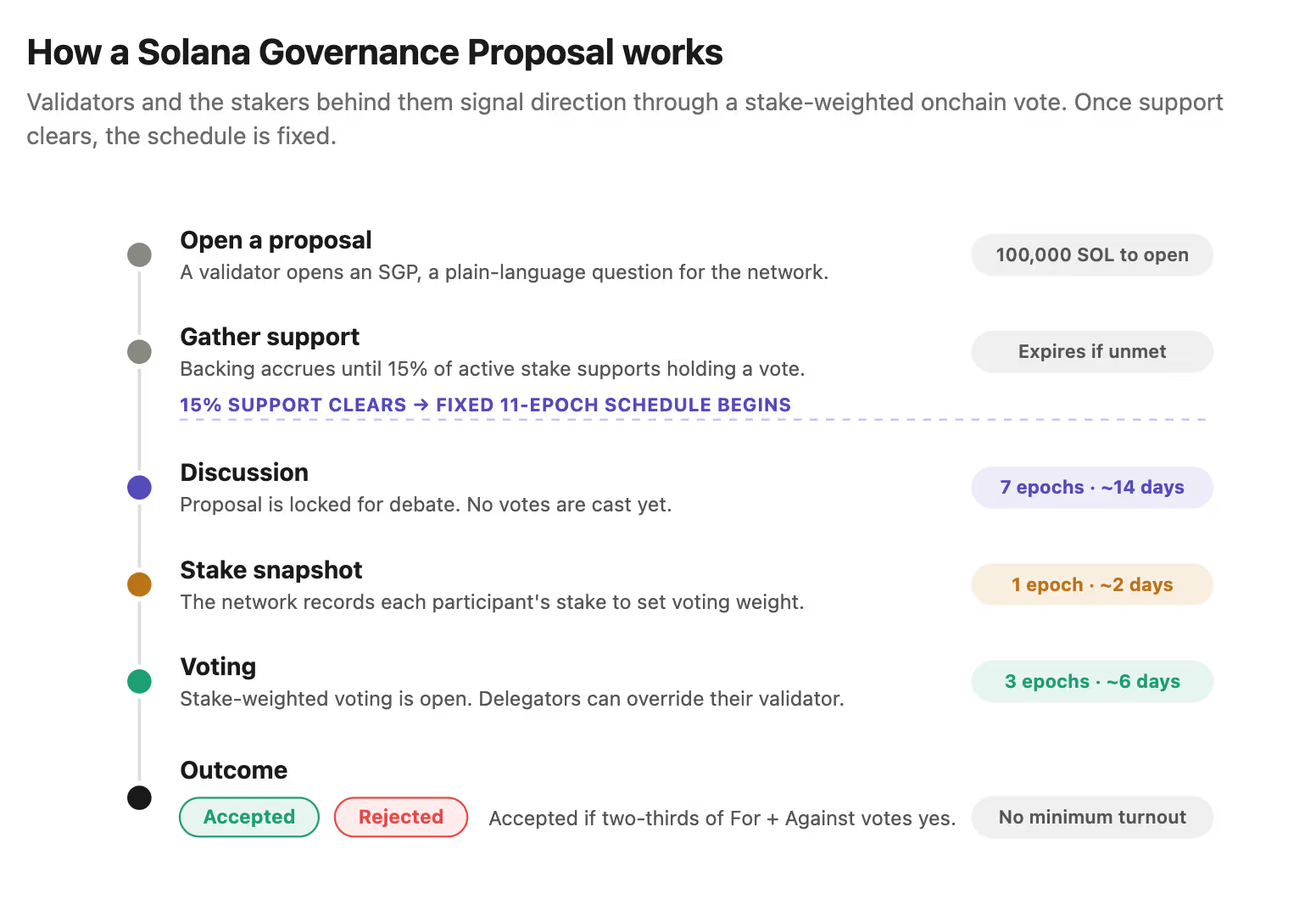
A separate, older track called a Solana Improvement Document, or SIMD, handles the follow-up: “Okay, how exactly do we do it?” – the technical details reviewed by the network’s core developers.
A yes on an SGP is a clear signal to proceed, with the engineering work that follows written up as one or more SIMDs.
The vote does not open automatically, however. A proposal has to first clear a support threshold of 15% of active stake before it moves to a ballot, a gate meant to keep the network from voting on matters few actually care about while letting core developers keep shipping routine changes without a referendum on each one.
Once that threshold is met, the process runs on a fixed schedule measured in epochs, the roughly two-day periods Solana uses to organize its operations.
To pass, a proposal needs a supermajority, at least two-thirds of the stake voting for or against it, with abstentions left out of the math. There is no minimum turnout requirement.

What really stands out is that the system gives more power directly to delegators – the everyday users who stake their SOL with validators rather than running nodes themselves and collect staking rewards.
Crypto World
Ethereum Price Prediction: Lubin, Bitmine, and Sharplink Launch Independent Non-Profit Institution to Bring Institutional Wealth Onchain

Ethereum price is trading near $1,650, remaining below its major moving averages and preserving a bearish prediction. However, the biggest story this week is not the chart. Instead, Bitmine and SharpLink are betting that institutional Ethereum adoption could accelerate well before the price reflects it.
Ethereum Institutional has launched as an independent non-profit focused on institutional engagement. Backed by Bitmine, SharpLink, and Ethereum co-founder Joe Lubin, it formalizes outreach previously handled within the Ethereum Foundation. The organization will focus on institutional education, market intelligence, ETH marketing, standards, and global events.
Its leadership includes Thomas Lee as chairman, Joseph Chalom, and Executive Director David Walsh, and the operations have already spanned to New York, London, Hong Kong, Singapore, Zurich, Frankfurt, Tokyo, and Abu Dhabi, giving the organization an international presence from launch.
The timing reflects Ethereum’s growing role in institutional finance. The network secures roughly 60% of the stablecoin supply and about two-thirds of tokenized real-world assets. Ethereum Institutional aims to strengthen relationships with financial firms before competing blockchain networks gain market share.
Discover: The Best Crypto to Diversify Your Portfolio
Ethereum Price Prediction: $1,750 or $2,000
ETH is recovering at $1,650, trading below its 20-, 50-, and 100-day EMAs. That setup keeps the near-term trend bearish. Meanwhile, the RSI sits around 43, while the Stochastic oscillator remains neutral, suggesting selling pressure has eased without confirming a reversal.
At the same time, spot Ether ETFs have recorded persistent outflows since mid-June, limiting buying momentum. As a result, recent rallies have faded near resistance. Institutional interest remains intact, but it has yet to translate into sustained price strength.
Don’t Miss Out on Our $1,000 USDT Airdrop on ByBit
The first resistance sits near the 20-day EMA around $1,670, followed by the $1,750 level that traders continue to monitor. Above that, the 50-day EMA near $1,870 becomes the next key hurdle. On the downside, support rests around $1,520, followed by $1,400 and $1,150 if selling pressure intensifies.
A bullish scenario requires ETH to reclaim the 20-day EMA and break above $1,750 with strong volume. Otherwise, the base case remains range-bound trading between $1,520 and $1,670. If support near $1,500 fails, ETH could revisit lower levels before establishing a stronger recovery.
Discover: The Best Token Presales
LiquidChain Targets Early-Mover Upside as Ethereum Tests Key Levels
ETH at $1,650 with stacked resistance overhead and ETF outflows still unresolved means the upside for spot holders is capped in the near term, even with the institutional narrative firmly in place. Traders looking for asymmetric exposure to the same Ethereum-adjacent infrastructure thesis are eyeing early-stage infrastructure plays where the entry math still works.
LiquidChain ($LIQUID) is a Layer 3 infrastructure project positioning itself as the cross-chain liquidity layer, fusing Bitcoin, Ethereum, and Solana liquidity into a single execution environment.
That moment when you see the LiquidChain utility for the first time.
⟁https://t.co/vqvBcdSQYC pic.twitter.com/KboySb8c4X
— LiquidChain (@getliquidchain) July 2, 2026
The architecture centers on a Unified Liquidity Layer, Single-Step Execution, Verifiable Settlement, and a Deploy-Once structure that lets developers build once and access all three ecosystems simultaneously. The project has already drawn attention as a direct infrastructure beneficiary of the multi-chain institutional expansion that entities like Ethereum Institutional are accelerating.
As of now, its presale is currently priced at $0.01475, with $880K raised to date.
Don’t Miss Out on Our $1,000 USDT Airdrop on ByBit
The post Ethereum Price Prediction: Lubin, Bitmine, and Sharplink Launch Independent Non-Profit Institution to Bring Institutional Wealth Onchain appeared first on Cryptonews.
Standard Chartered and USDC issuer Circle have developed a system that lets institutional clients mint and redeem the USDC stablecoin through a bank-led onboarding process.
Standard Chartered said Thursday it is the first Global Systemically Important Bank (G-SIB) to offer such services for USDC, bringing stablecoin access into the same risk, compliance and governance frameworks used in traditional banking. Clients will be able to mint and redeem the US dollar-backed stablecoin directly through StanChart’s platform instead of opening separate accounts with Circle.
“By embedding USDC access directly within Standard Chartered’s institutional offering, Standard Chartered will bring together banking, custody, and digital asset services within one integrated offering,” the announcement said. The initial rollout will be through the Dubai International Financial Centre (DIFC).
The collaboration comes as stablecoin infrastructure is increasingly integrated into traditional banking systems, as issuers and financial institutions compete to control how digital assets such as USDC are distributed and accessed.
Source: Circle on X.com
The capability supports institutional use cases such as on-chain settlement, treasury, and liquidity management, while also providing the infrastructure to support payment-related use cases in the future.
Initial rollout via Dubai International Financial Centre
While the service is initially rolling out through Standard Chartered’s operations in the DIFC, the bank said it intends to expand the capability to other markets, depending on regulatory approval and demand from clients.
Source: Standard Chartered
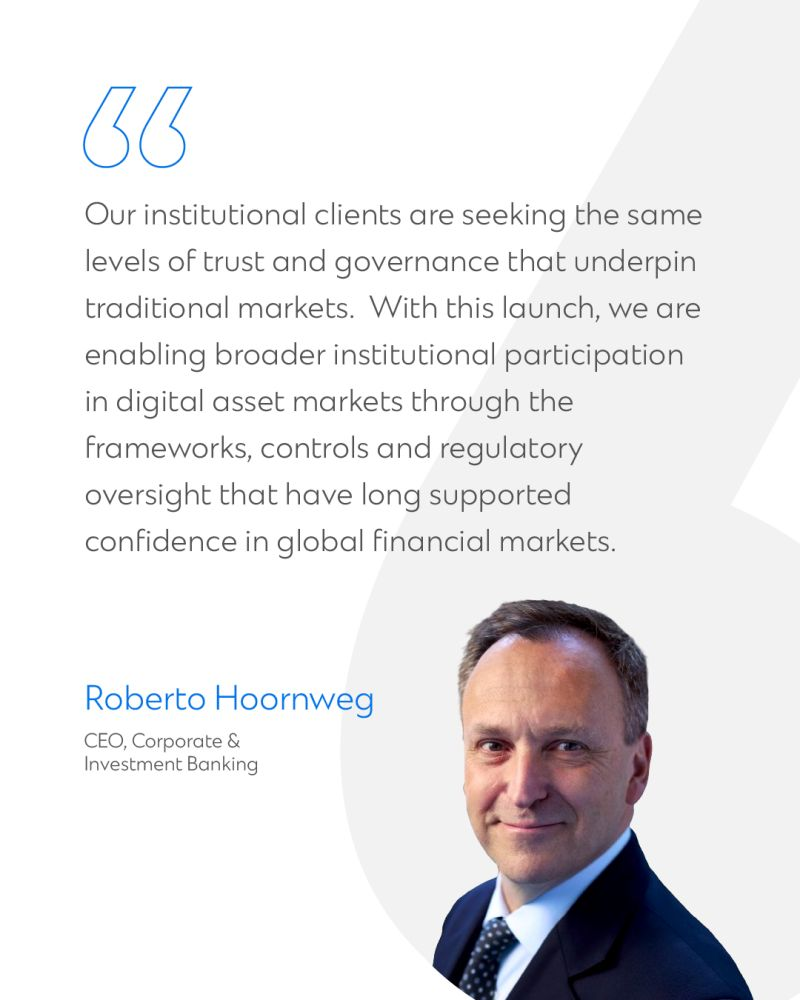
Roberto Hoornweg, CEO of corporate and investment banking at StanChart, said the goal is to bring traditional banking standards into crypto markets as demand for regulated infrastructure increases.
“Ultimately, this is about enabling broader institutional participation in digital asset markets through the frameworks, controls and regulatory oversight that have long supported confidence in global financial markets,” he said.
Related: French banking giant Crédit Agricole launches EURXT euro stablecoin
The news came in the wake of Circle CEO Jeremy Allaire’s statement defending USDC’s network effects against new stablecoin entrants like Open USD (OUSD), pointing to growing competition over distribution, liquidity and revenue models in the stablecoin market.
“With OUSD, we work closely with many of the founding members, and we expect that those same members will remain large USDC partners and customers,” he said on Wednesday.
Magazine: Crypto wanted to overthrow banks, now it’s becoming them in stablecoin fight
Crypto World
Smaller tokens Memecore’s M, Auderia’s beat lead as bitcoin, sol rally in ‘first real bounce of the selloff’
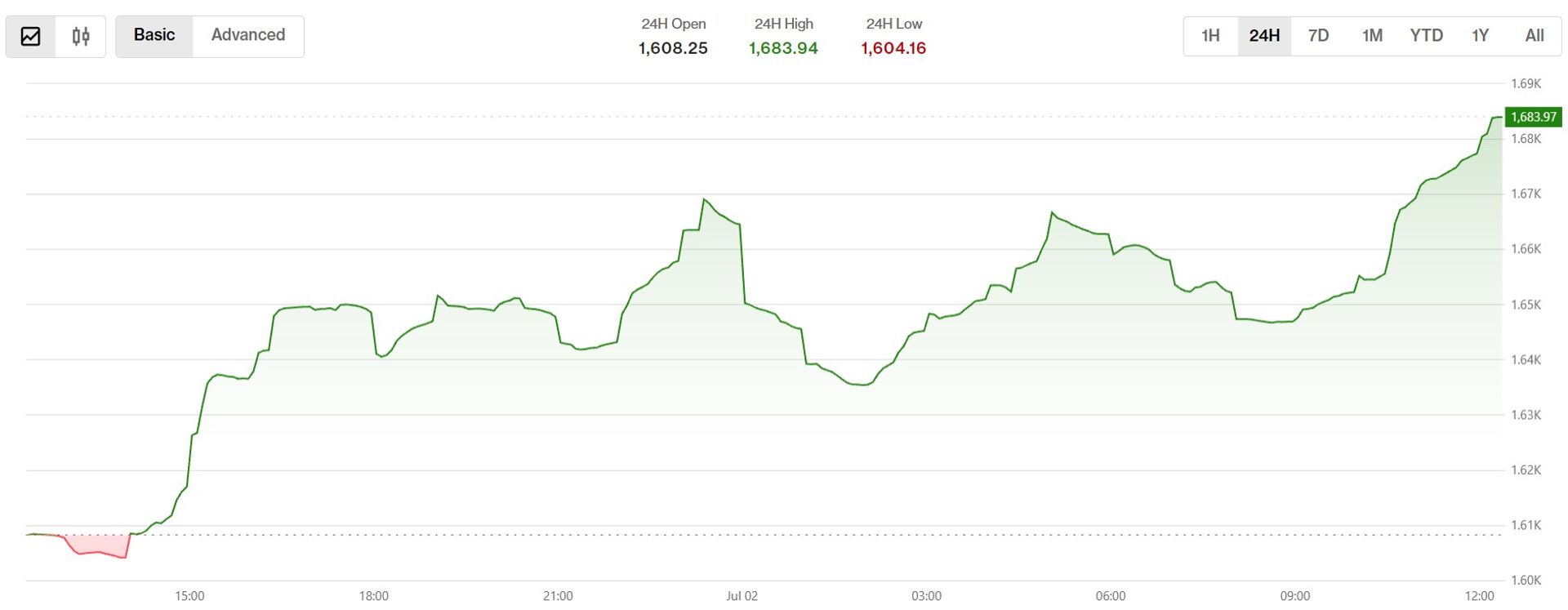
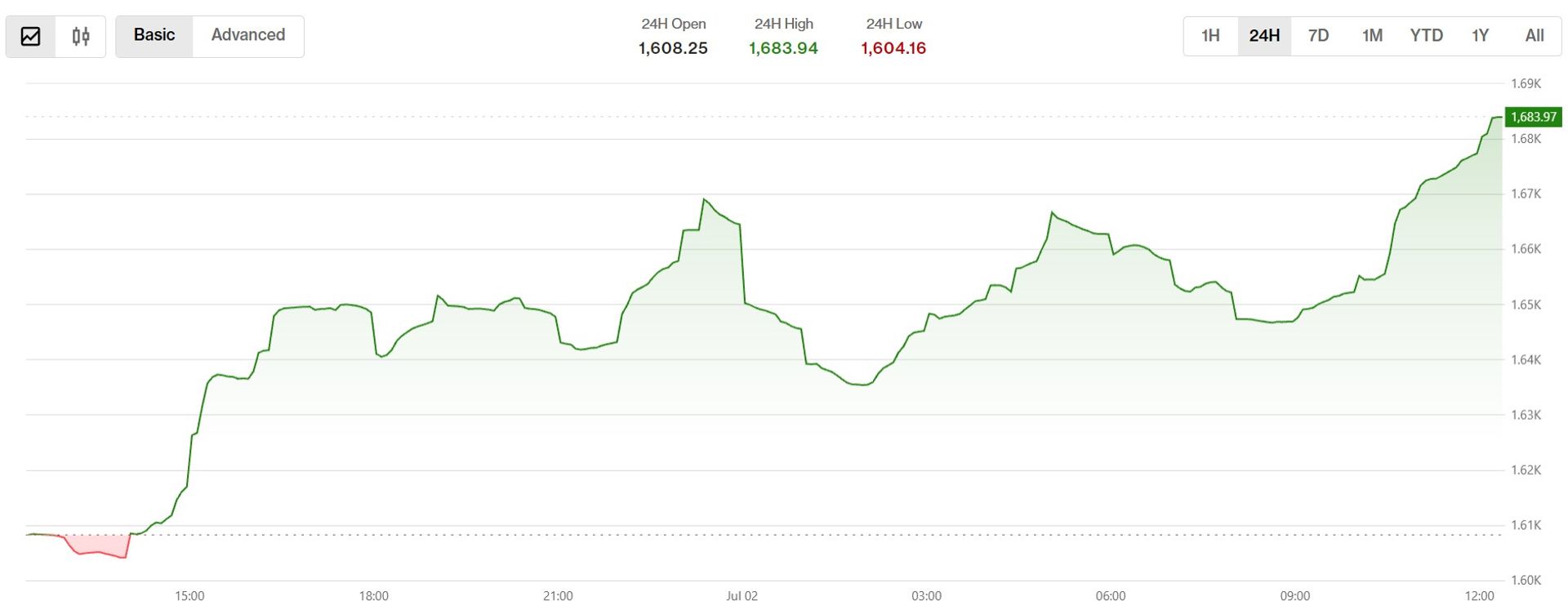
Smaller speculative tokens are surging as bitcoin and other major tokens extend Wednesday’s advance. The CoinDesk 20 Index rose almost 5% in 24 hours to its highest in a week, with all members in the green.
Memecore’s M and Audiera’s BEAT have gained 81% and 12%, respectively, making them the best performers among the top 100 coins by market value. At No. 3, Venice Token (VVV) is up 9%.
Bitcoin, the largest cryptocurrency, added more than 4% to $61,200, and ether (ETH), the second-largest, rose 5%. Solana’s SOL gained 9% as the network unveiled an onchain governance system that requires staking at least 100,000 tokens to submit proposals. XRP is up almost 4%.
“First real bounce of the whole selloff, and it has something behind it,” analysts at Marex said in an email. “[Federal Reserve Chairman Kevin] Warsh told Sintra that inflation risks have come down, the July hike bet got walked back, and BTC ripped back over $60k for the first time in a week. SOL is the star, up roughly 16% on the week and leading everything.”


European authorities are also debating how to treat multi-issuance stablecoins, such as Circle Internet’s (CRCL) USDC, which can be minted by multiple distinct legal entities across different jurisdictions, yet presented to users as a single, fungible token.
When MiCA was designed, it was definitely the European Commission’s intention to support multi-issuance models, according to Catarina Veloso, director, regulatory and compliance at Notabene, a protocol designed to bring crypto transactions into the everyday economy. But during the implementation stage, different stakeholders within the EU, including the ECB, pushed back because they have their own views on the resulting risks.
The real value of stablecoins is that they are natively global, said Veloso. To impose geographic limits would create a scenario where Circle Europe, now licensed under MiCA, would need to build its own fragmented version of USDC for European markets, she said.
“One of stablecoin’s main value-adds is that it’s not a payment system built within a specific jurisdiction,” Veloso said in an interview. “So that value is diluted by the fact it’s now being captured by regulatory frameworks that do exist within borders.”
Taking control
Unrelated to stablecoins, another key area of discussion is the possibility of more centralized control of MiCA, under the auspices of the European Securities and Markets Authority (ESMA).
Crypto World
Kevin Warsh comments set the stage for nonfarm payrolls data to ignite BTC, gold rally: Crypto Daily
The debasement trade, where investors move money out of fiat currencies like the dollar and into “hard assets” with limited supply, such as bitcoin and gold, could be back in vogue if Thursday’s U.S. nonfarm payrolls data backs up Fed Chair Kevin Warsh’s latest take on inflation.
On Wednesday, Warsh said inflation risks have come down. That comment sparked a quick reassessment of Fed interest-rate increase prospects and triggered a bounce in both the largest cryptocurrency and the precious metal. Bitcoin has already pushed above $61,000, while gold has stabilized above $4,050 after dipping to $3,942 earlier this week.
These budding recovery rallies could really accelerate if the jobs data due at 8:30 a.m. ET shows clear labor-market weakness. Economists expect a 110,000 increase in jobs for June, down from 172,000 in May, with the unemployment rate holding steady at 4.3%. Average hourly earnings are forecast to edge up to 3.5% from 3.4%.
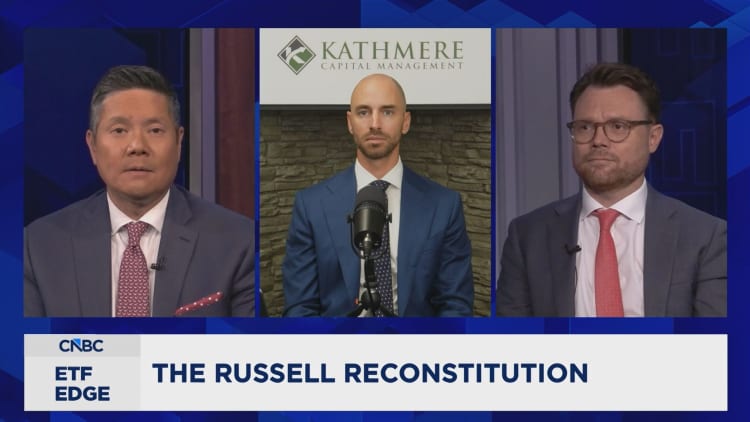

SpaceX may put other mega-cap IPOs on the fast track.
According to Kathmere Capital Management’s chief investment officer, it could emerge as the ultimate blueprint for Silicon Valley — especially when it comes to the expected Anthropic and OpenAI public debuts.
“It would not surprise me at all to see a similar dynamic play out with some of these [IPOs] set to come in the months ahead,” Nick Ryder told CNBC’s “ETF Edge” this week.
Ryder, whose firm provides financial advice to individuals and businesses, contends market conditions will determine whether upcoming mega-cap IPOs will rip a page from SpaceX’s playbook.
“We’ve been in… a pretty historic two- [or] three-month rally for the equity market [which] was feeding into [SpaceX],” added Ryder. “When these other mega IPOs eventually come to market the environment might be different, and so it’s really hard to predict how it will be.”

SpaceX since public debut
SpaceX, which went public on June 12 with a historic $2 trillion-plus market cap, soared 53% above its $150 opening price in just three trading days. But the big gain didn’t last. As of Wednesday’s close, shares of the aerospace and satellite company are up nearly 17% since the debut.
Index inclusion
Also notable: SpaceX is one of the fastest stocks to get added to major indexes. It’s already in the Russell 1000. Now, it’s set to be added to the Nasdaq-100 on July 6 after the market close.
Arne Noack is the FTSE Russell head of equity & multi-asset indices for the Americas. He sees the indexes themselves, rather than SpaceX, as the true blueprint for upcoming IPOs.
“As index providers, [we] have put in place a blueprint that is clearly visible for anyone… meaning there is a fast-track eligibility. If you meet certain thresholds, you’re potentially eligible for index inclusion,” Noack said.

Bitcoin’s 5 Greatest Crashes, What Always Happened Next?

Comet from another star has a composition unlike anything else in our solar system

CoreWeave: Meta Compute Scare Is A Long-Term Buying Opportunity (CRWV)


-

 Fashion6 days ago
Weekend Open Thread: Staud – Corporette.com
-

 Politics6 days ago
The House | Manchesterism won’t survive the painful trade-offs unless it gets citizens on board
-

 Crypto World2 days ago
Strategy authorizes up to $1.25B in Bitcoin sales under new capital plan
-

 Politics6 days ago
Potential 2028er World Cup attendee leaderboard
-

 Business6 days ago
Asia stock markets slide as tech shares slump
-

 News Videos4 days ago
MAJOR BITCOIN & MARKET UPDATE!!!! (MUST WATCH ASAP!!!)
-

 Tech7 days ago
A Look At A Gaggle Of Transputer Boards
-
 Crypto World7 days ago
Dell (DELL) Shares Tumble Over 5% Following Analyst Downgrade to Hold
-

 Crypto World5 days ago
Coinbase, Circle Deepen Crypto Stock Losses Despite Resilient S&P 500
-

 Business2 days ago
Australia treasurer says alleged access of prime minister’s bank data ’incredibly concerning’
-

 Crypto World5 days ago
Kraken's xStocks Opens Bending Spoons IPO Registration to EEA Retail
-

 Sports6 days ago
FIH Pro League: India defeat Pakistan 7-1, register biggest win of campaign | Other Sports News
-

 Tech2 days ago
Anonymous researcher drops 0-day ‘exploitarium’ repo
-

 Crypto World6 days ago
Bitcoin Sparks $600M Hourly Liquidations With $65,000 Set To Become Resistance
-

 Tech4 days ago
Bluekit phishing kit adopts browser-in-the-middle for login theft
-

 Tech5 days ago
Russian hackers now target Signal backup recovery keys
-
 Crypto World6 days ago
Hyperliquid Named on Singapore MAS Investor Alert Register
-

 Crypto World6 days ago
RTX holders must register wallets before token distribution begins
-

 Sports24 hours ago
Broncos roster: OL Ben Powers (No. 74) entering final year of contract
-
 Business3 days ago
The AI boom won’t burst all at once. It will pop in ‘rolling bubbles’: Macquarie
You must be logged in to post a comment Login