

Business
Keurig Dr Pepper Disappointed Me (Rating Downgrade)



Business
SpaceX Stock Edges Higher Today Just Days Before Historic Nasdaq-100 Entry as Musk Denies AI Phone Report

SpaceX shares stabilized Thursday after recovering from a sharp intraday drop Wednesday, with the stock edging higher as investors focused on the company’s imminent entry into the Nasdaq-100 index on Monday rather than dwelling on the whipsaw created when founder and chief executive Elon Musk denied a Wall Street Journal report suggesting SpaceX had built a prototype artificial intelligence device using Qualcomm’s Snapdragon chips.
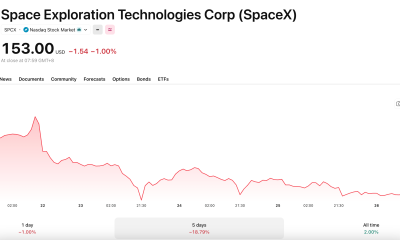
Shares of Space Exploration Technologies Corp., trading under the ticker SPCX, were at $159.23 as of 10:39 a.m. EDT, up $1.69, or 1.07%, on the day. The gain follows a wild Wednesday session during which the stock initially surged on the WSJ report that SpaceX was developing a smartphone-like AI device featuring Snapdragon chips before Musk flatly denied the story on his social media platform X, calling it “utterly false” and sending the stock down roughly 7% to close at $157.54. Thursday’s tentative recovery reflects investors refocusing on the company’s Nasdaq-100 inclusion, now just three business days away.
Nasdaq officially confirmed that SpaceX will be added to the Nasdaq-100 index before the market opens on Monday, July 7, just 25 days after the company completed its initial public offering on June 12. That timeline makes SpaceX one of the fastest companies ever added to the benchmark index following a public market debut, a distinction made possible by a Nasdaq rule change implemented in May that shortened the waiting period for newly listed companies from several months to just 15 days, provided the company ranks among the top 40 Nasdaq-100 constituents by market capitalization. Given SpaceX’s market capitalization of approximately $2.25 trillion as of Thursday, it qualified easily.
Analysts at BNP Paribas have estimated that the Nasdaq-100 inclusion alone could generate approximately $4.3 billion in passive buying from index funds and exchange-traded products that are legally required to hold SpaceX shares in proportion to its index weighting once it enters the benchmark. The QQQ fund, the most heavily traded ETF tracking the Nasdaq-100, will be among the vehicles required to purchase SPCX shares, and the forced mechanical buying associated with index inclusion events has historically provided meaningful short-term price support for newly added companies regardless of their immediate fundamental performance.
In a separate development that could add additional forced demand, SpaceX may also eventually enter Russell 1000 and other FTSE Russell benchmark indexes, a separate process from the Nasdaq inclusion that would trigger another round of index-tracking purchases. That potential additional demand has been cited by some analysts as a further tailwind for the stock’s post-inclusion trading dynamics.
The Wedbush analyst team, which has been among the most prominently bullish voices on SpaceX since the IPO, maintained an Outperform rating and a $190 price target on the stock this week, framing the company as an AI-driven infrastructure play rather than simply a rocket and satellite company. The firm’s analysis emphasized SpaceX’s position at the intersection of three major structural technology trends, including satellite connectivity, launch vehicle economics and artificial intelligence, and described the stock as one of the most compelling long-term holdings available to investors seeking exposure to all three simultaneously.
Daiwa Securities initiated coverage of SpaceX Thursday morning with a Neutral rating, adding a relatively cautious voice to the analyst community even as the broader consensus remains skewed toward Buy. According to data from Investing.com, seven of the eight analysts currently covering SpaceX recommend buying the stock, with one recommending selling, and the average 12-month price target sits at $188.17 per share, implying upside of roughly 18% from Thursday’s trading levels. The high estimate of $310 and the low of $62 reflect the extraordinary spread of opinion surrounding a company that went public just three weeks ago and whose valuation remains deeply unsettled across the professional investor community.
Much of that valuation debate centers on three distinct business segments that SpaceX has consolidated under a single public entity. The Connectivity segment, built around Starlink’s satellite broadband network, is the most immediately visible and financially productive of the three, generating $11.4 billion in revenue and roughly $4.4 billion in operating profit in 2025, with approximately 10.3 million subscribers as of the end of March. The Space segment encompasses the company’s rocket launch operations, including Falcon 9, Falcon Heavy and the still-developing Starship system, while the AI segment, formed around the early 2026 acquisition of xAI from Musk himself, brings the Grok large language model, the Colossus gigawatt-scale data center and the social platform X under the SpaceX corporate umbrella.
SpaceX also announced this week that it is offering discounts to Starlink customers in the Memphis, Tennessee, area, according to a Bloomberg report, a move consistent with a broader strategy of using pricing flexibility to accelerate subscriber growth in markets where internet service provider competition is particularly intense. Analysts following the company have pointed to the U.S. consumer and enterprise subscriber market as an underappreciated growth vector given how much of the current Starlink narrative centers on international and rural deployment.
On the litigation front, Musk and OpenAI chief Sam Altman were reported Thursday to be heading toward mediation in their ongoing legal dispute, a development that could eventually clarify a complicated set of legal relationships involving Musk, xAI, SpaceX and OpenAI that have raised governance questions about potential conflicts of interest among the various technology ventures Musk oversees.
The stock’s current position, roughly 29% below its all-time intraday high of $225.64 reached on June 16 but still above its IPO price of $135 and meaningfully above its all-time closing low of $147.11 hit on June 23, reflects an ongoing process of price discovery for a company that has attracted both extraordinary enthusiasm and substantial skepticism from market participants attempting to determine what one of the most complex and ambitious technology businesses ever taken public is actually worth at this stage of its development.
Business
Oil Price Today (July 3): Crude oil heads for 4th weekly loss on Hormuz traffic, US-Iran talks. Where is liquid gold headed?

Crude oil price on July 3
Brent crude hovered near the $71-a-barrel mark after briefly dipping below that level in the previous session, while US benchmark West Texas Intermediate (WTI) traded around $68 a barrel.
The commodity has retreated sharply from the $125-a-barrel highs touched during the peak of the Gulf conflict, as higher output from regional producers and improved supply expectations followed the preliminary memorandum of understanding (MoU) signed by the US and Iran in mid-June.
Saudi Arabia, the region’s largest oil producer, has restored exports to roughly 90 percent of pre-conflict levels for most of this week. A significant share of the kingdom’s crude shipments passes through the Strait of Hormuz.
Speaking to CNBC, US President Donald Trump said negotiations with Iran were still underway and claimed that Tehran “has agreed to just about everything we need.” However, the Wall Street Journal reported that Iran remains unwilling to abandon its demand for control over the Strait of Hormuz and intends to continue charging transit tolls after the 60-day deadline expires.

Supply has increased not only from Saudi Arabia but also from the United Arab Emirates, which is no longer an OPEC member, and from Iran after it secured sanctions relief under the terms of the preliminary MoU.
Read more: Crude oil correction could be India’s next big market trigger: Rohit Seksaria
Worst over?
Macquarie Group has sharply lowered its oil price forecasts for 2026 and 2027, citing expectations of a quicker-than-anticipated normalization of crude flows from the Middle East. Following the interim peace agreement between the United States and Iran, which has allowed oil shipments to resume from the Persian Gulf, the bank now expects brent crude, the global benchmark, to average $77 a barrel in 2026, down from its earlier forecast of $89. It also cut its 2027 Brent outlook to $64 a barrel from $74 previously.
Despite several challenges that could slow the recovery in regional oil production, producers in the Middle East are likely to restore output faster than markets currently anticipate, strategists Peter Taylor, Vikas Dwivedi and others said in a research note.
Tanker movement through the strait has started improving, with U.S. Vice President JD Vance said oil flows had returned to pre-war levels, although he did not provide any figures.
Others argue that despite the improvement, a complete reopening of the Strait of Hormuz is expected to take time, say experts. It will require coordination of vessel movements, restarting oil wells, repairing damaged infrastructure and agreements on de-mining operations. Some shipowners also remain cautious about operating in the strait and the wider Persian Gulf.
Analysts said global oil inventories were depleted during the prolonged disruption to shipping through the Strait of Hormuz and will take time to rebuild. They added that stockpiles could continue to decline before additional supplies from the Gulf start reaching international markets.
Last month, Saudi Aramco Chief Executive Officer Amin Nasser warned that disruptions in the Strait of Hormuz could delay the return of stability to global oil markets until 2027. He said prolonged interruptions could affect nearly 100 million barrels of oil supply every week. Saudi Aramco is the world’s largest oil producer.
Also read: India’s next stock market headache isn’t oil but a bigger storm brewing in the skies
(Disclaimer: Recommendations, suggestions, views and opinions given by the experts are their own. These do not represent the views of The Economic Times)

Operator
Good morning, and welcome to the Focusrite plc investor presentation. [Operator Instructions].
Before we begin, I’d like to submit the following poll. I’d now like to play a short video on behalf of the company.
[Presentation]
Operator
I’d now like to hand you over to Tim Carroll, CEO. Good morning, sir.
Timothy Carroll
CEO & Executive Director
Hello, everyone. Thank you for joining us. I hope you enjoyed that intro video. It’s just a little snapshot of a lot of the amazing products and some of the big installations that we’ve done over this period of time. Sally and myself are here, and we’re very excited to be sharing with you our results for this full 18 months. So we know there’s a lot to unpack on here, so we’re going to jump right in on here.
Here’s a little bit about what we’re going to be going over today on here. And as we go through this, you’re going to see some reoccurring themes that I want to take you through at the very top of this. There’s a lot of information, obviously to go through on here. But I’m hoping that if anything, if you walk away with sort of these 3 bullet points that we’re going to talk about in just a moment here, and we have a lot of to kind of back this up and talk about how these really relate to our performance and how we’re going, if you will.
So again, the big takeaways on here is a resilient performance in line with expectations. So I think this is a really important one
Business
Bitcoin Climbs Above $61,000 as Markets Eye Recovery Amid ETF Flows and Institutional Interest
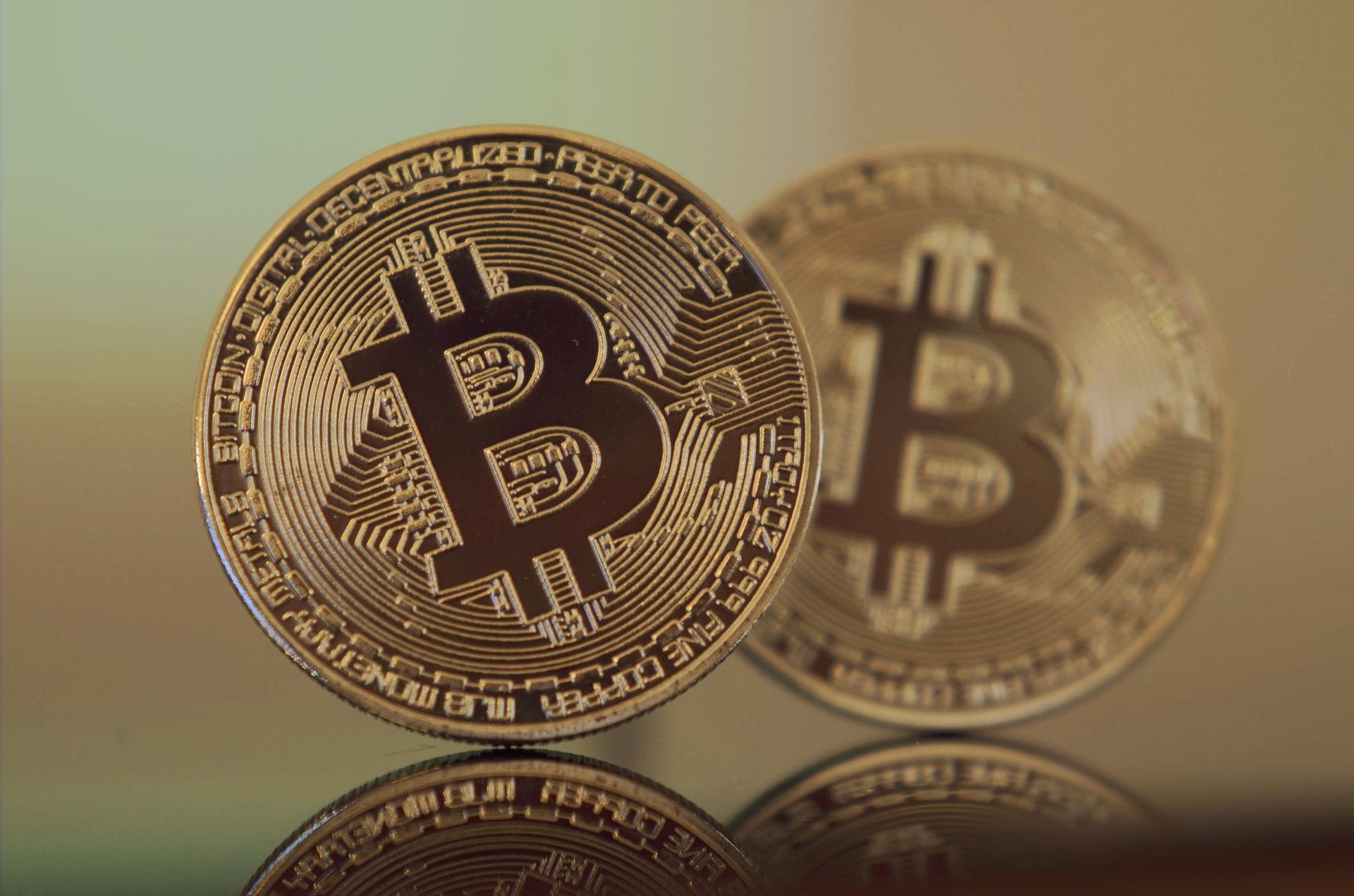
Bitcoin rose more than 2.8% to trade around $61,658 on Thursday, extending a tentative recovery as cryptocurrency investors weighed mixed signals from institutional flows and broader market sentiment heading into the second half of 2026.
The world’s largest digital asset has experienced significant volatility this year, pulling back from earlier highs near $90,000 and testing lower supports amid periodic outflows from U.S. spot Bitcoin exchange-traded funds. Thursday’s gains helped lift the cryptocurrency off recent lows, reflecting renewed buying interest as some traders bet on stabilization.
Spot Bitcoin ETFs have seen substantial activity throughout 2026, with periods of strong inflows followed by notable outflows. BlackRock’s iShares Bitcoin Trust and other major funds have attracted billions in assets since their launch, marking a structural shift toward greater institutional participation even as net flows turned negative in recent months.
Analysts note that ETF outflows in June reached record levels for some periods, contributing to downward pressure on prices. However, longer-term observers point to growing corporate and institutional adoption as a counterbalance, with companies and funds continuing to allocate to Bitcoin as a store of value.
Post-Halving Dynamics and Market Cycle
The April 2024 halving, which reduced the reward for Bitcoin miners by half, continues to influence supply dynamics. Historically, such events have preceded bull runs, though the impact appears more muted this cycle due to larger overall market capitalization and institutional involvement.
Bitcoin’s price action in 2026 has deviated from strict adherence to the traditional four-year cycle, with macroeconomic factors, regulatory developments and ETF mechanics playing larger roles. After reaching peaks above $90,000 earlier in the year, the asset corrected amid broader risk-off sentiment in global markets before showing signs of bottoming.
Technical analysts have highlighted support levels near $58,000, with recent trading testing these zones. A sustained move above key resistance could signal further upside, while failure to hold supports might invite additional selling.
Institutional demand remains a key theme. Spot Bitcoin ETFs have accumulated tens of billions in assets, providing easier access for traditional investors. While outflows have dominated headlines at times, inflows during stronger periods underscore persistent interest from asset managers.
Corporate treasuries, led by examples like MicroStrategy, have also bolstered holdings, treating Bitcoin as a treasury reserve asset. This behavior has added a layer of demand less sensitive to short-term price swings.
Regulatory and Macro Influences
The regulatory environment for cryptocurrencies has evolved, with clearer frameworks in some jurisdictions supporting innovation while others maintain caution. U.S. policy shifts, including potential changes in taxation and oversight, continue to influence investor sentiment.
Broader macroeconomic conditions, including interest rate expectations and inflation trends, have weighed on risk assets. Bitcoin’s correlation with technology stocks and growth-oriented investments has increased, tying its performance more closely to traditional markets at times.
Geopolitical developments and global liquidity conditions also factor into price movements. As central banks navigate policy decisions, Bitcoin’s narrative as “digital gold” — a hedge against fiat currency debasement — has resonated with some long-term holders.
Market participants anticipate potential catalysts in the coming months, including further ETF product developments, potential corporate announcements and advancements in blockchain technology. The upcoming U.S. political cycle could introduce additional variables around crypto-friendly policies.
Technical Outlook and Volatility
Bitcoin’s price has demonstrated resilience, bouncing from multi-month lows. Trading volume and open interest in futures markets provide mixed signals, with some metrics indicating capitulation among weaker hands and positioning for a potential rebound.
Options markets reflect uncertainty, pricing in possibilities of both sharp declines and rallies. Volatility remains elevated compared to traditional assets, consistent with Bitcoin’s history as a high-beta investment.
Analysts offer a wide range of forecasts for the remainder of 2026 and beyond. Conservative estimates see consolidation around current levels or modest gains, while bullish projections point toward new highs driven by adoption and scarcity. Average predictions often cluster in the $70,000 to $100,000 range by year-end, though outcomes depend on multiple variables.
Short-term traders focus on immediate supports and resistances, while long-term investors emphasize network fundamentals such as hash rate, active addresses and developer activity. Bitcoin’s underlying blockchain has maintained high security and uptime, reinforcing confidence in its decentralized architecture.
Adoption Trends and Ecosystem Growth
Beyond price speculation, Bitcoin’s utility and adoption continue to expand. Lightning Network developments aim to improve transaction speeds and reduce costs for everyday use. Institutional custody solutions and payment integrations have grown, facilitating greater real-world application.
The ecosystem around Bitcoin, including decentralized finance protocols and non-fungible token activity on related layers, adds to overall interest. While Bitcoin itself primarily serves as a store of value, its dominance influences the broader cryptocurrency market.
Environmental considerations around mining have prompted shifts toward sustainable energy sources, with many operations reporting increased use of renewables. This evolution addresses criticism and aligns with broader ESG trends among investors.
Challenges persist, including scalability debates, regulatory uncertainty and competition from alternative cryptocurrencies. Bitcoin’s first-mover advantage and network effects have helped it maintain market leadership, with over 50% dominance in total crypto market capitalization during many periods.
Investor Sentiment and Risks
Sentiment indicators have fluctuated, with fear and greed indexes moving between extremes. Social media discussion and search trends often amplify price movements, creating feedback loops characteristic of the asset class.
Risks for Bitcoin investors include sharp drawdowns, regulatory crackdowns, technological disruptions and macroeconomic shocks. Diversification, long-term horizons and risk management remain standard advice from market observers.
Despite volatility, Bitcoin has delivered substantial returns over multi-year periods for early adopters. Its fixed supply cap of 21 million coins underpins scarcity arguments, particularly as more coins become effectively lost or illiquid over time.
As global adoption grows, with more countries and institutions exploring digital assets, Bitcoin’s role in the financial system may evolve further. Central bank digital currencies and blockchain pilots by traditional finance players could either complement or compete with decentralized alternatives.
Thursday’s price increase comes as markets digest recent economic data and anticipate corporate earnings seasons that could influence risk appetite. With Bitcoin’s correlation to equities remaining relevant, positive developments in technology and growth sectors may provide tailwinds.
Longer-term, the interplay between supply halvings, demand from new investor cohorts and technological maturation will shape Bitcoin’s trajectory. While short-term trading remains unpredictable, the asset’s underlying properties continue to attract a dedicated base of supporters who view it as a transformative innovation in money and finance.
Bitcoin’s journey reflects both the opportunities and pitfalls of emerging asset classes. As it matures, balancing innovation with stability will be crucial for broader acceptance. For now, participants remain focused on the next catalysts that could drive the market into its next phase.
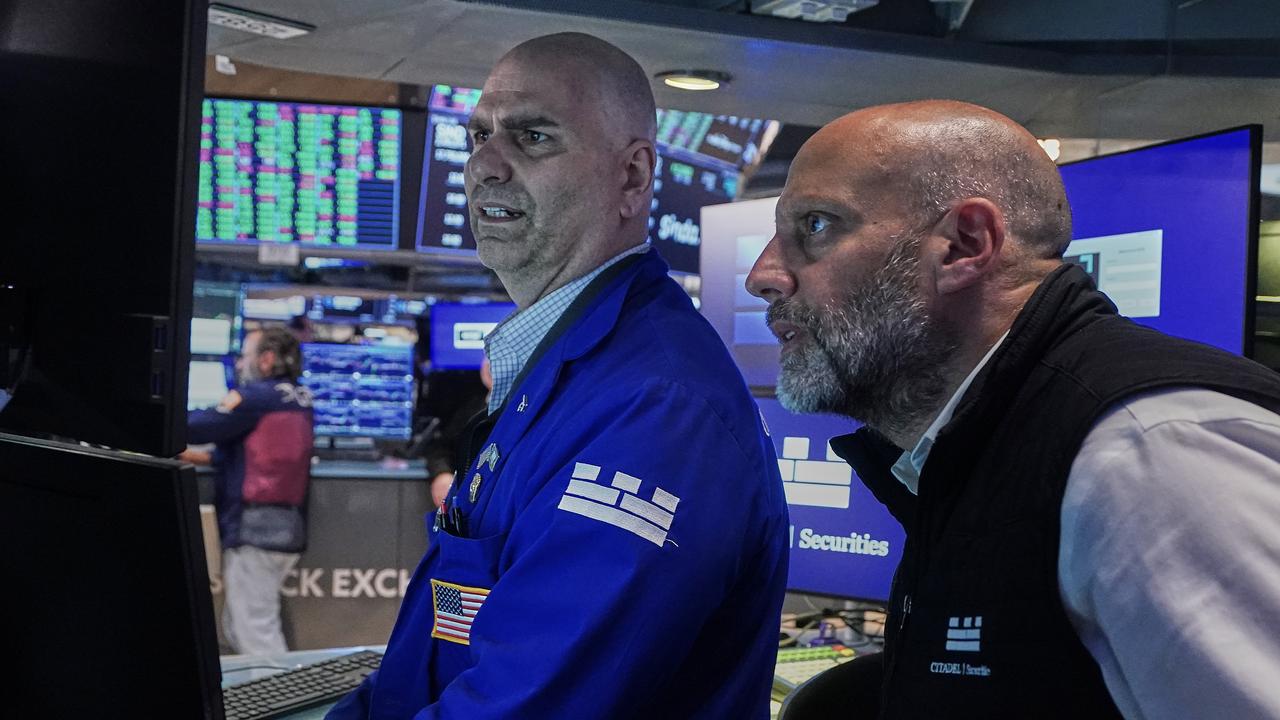
The Dow Jones has lifted more than one per cent, posting a record closing high and a fourth straight week of gains ahead of the long holiday weekend, as a softer-than-expected US jobs report eased worries about interest rate hikes.
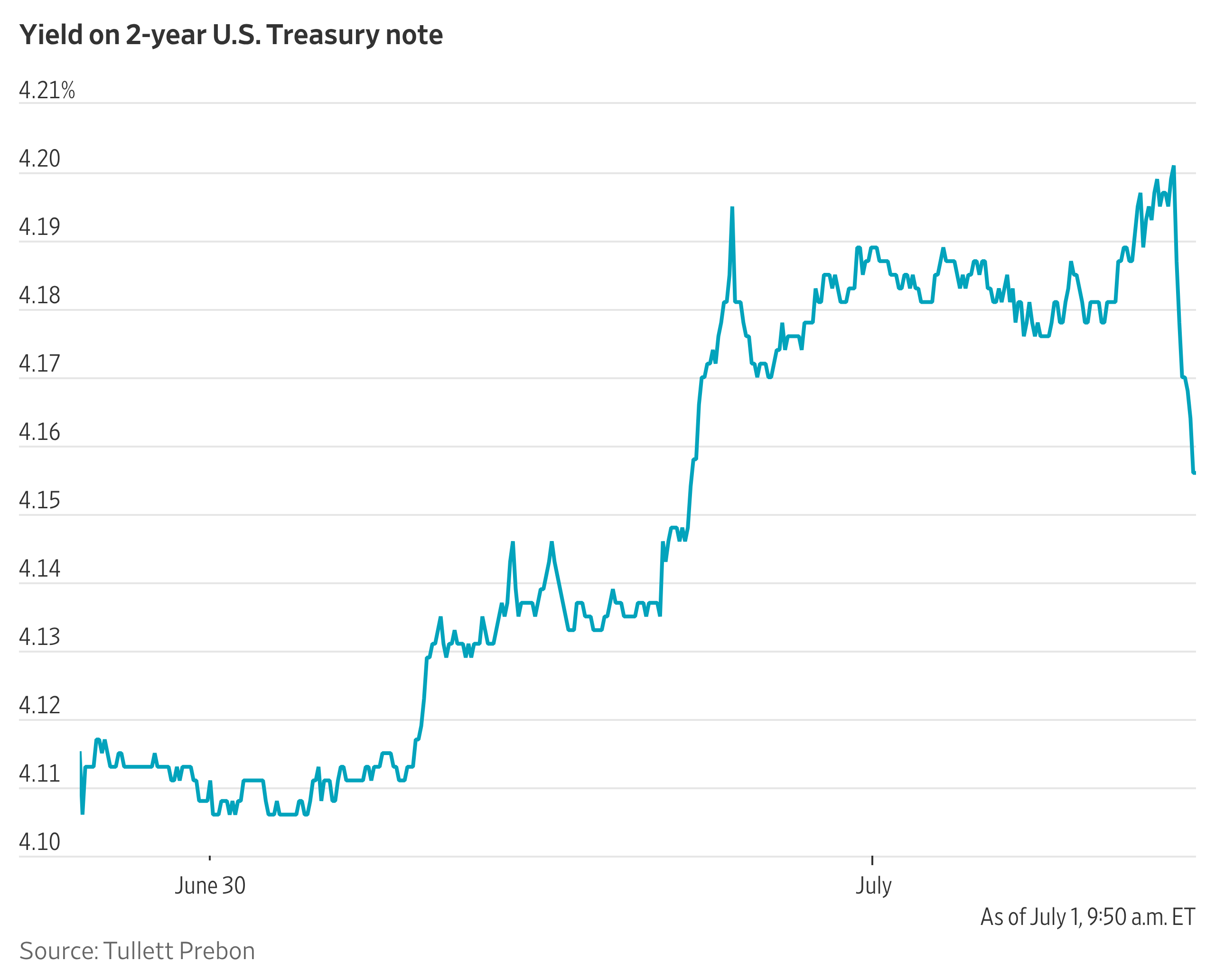
Treasury yields have pared overnight gains after Fed Chairman Kevin Warsh suggested that business investment in artificial intelligence could expand the productive capacity of the economy, which in turn could have “huge implications for monetary policy.”
In recent trading, the yield on the 2-year Treasury note, which is particularly sensitive to shifts in interest-rate expectations, was 4.150%, according to Tradeweb, up from 4.138% Tuesday but down from 4.195% before Warsh’s comments.
Speaking at a central bank symposium in Portugal, Warsh dodged questions about whether the Fed could raise rates at its next meeting. But his comments on AI still provided some hints about his thinking to investors hungry for any clues they can get.

Australia’s competition watchdog will take a merger between two subsea services rivals to a phase-two review after finding the move could significantly impact competition in the market.
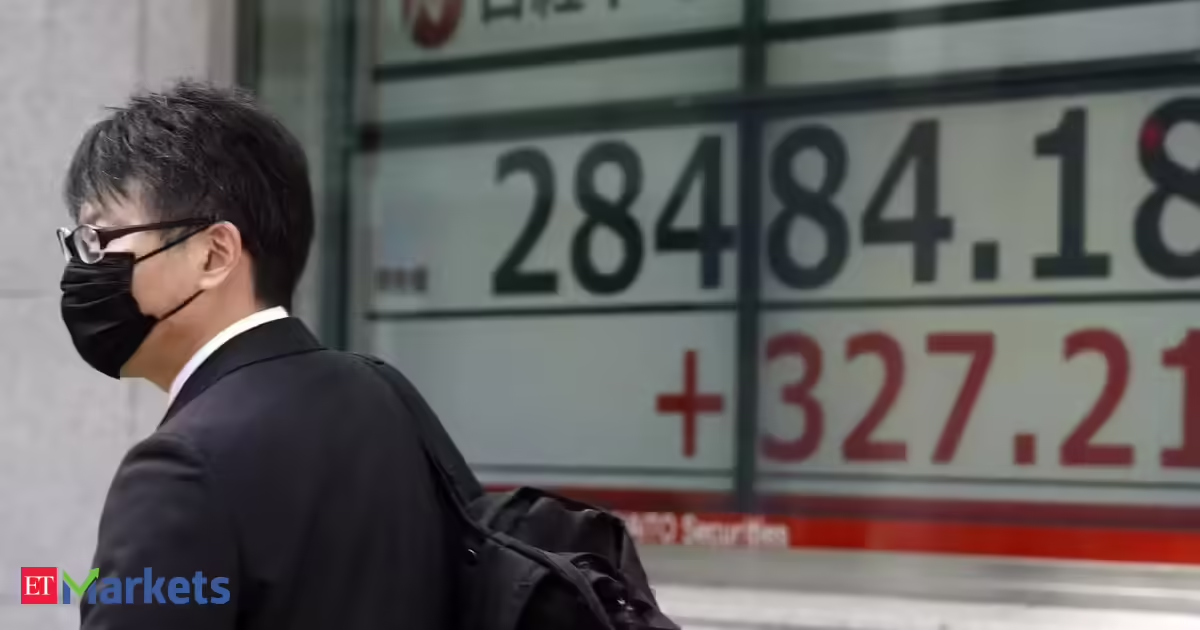
Gauges in Japan and South Korea retreated, sending the broader MSCI Asia Pacific Index down 0.4%. The moves came after the tech-heavy Nasdaq 100 Index fell 1.6%, and a gauge of US chip stocks tumbled over 5%.
South Korea’s Kospi Index, the world’s best-performing major benchmark this year, dropped 0.8%, with SK Hynix Inc among the losers.
Elsewhere, Treasuries ended the holiday-shortened week with lower short-term yields after June employment data and lower oil prices challenged expectations for Federal Reserve rate hikes this year. There will be no cash trading in Treasuries on Friday due to a US holiday. The dollar edged higher in early Asian trading, recouping some of its losses from the New York session.
Technology shares extended their decline, with chipmakers leading losses as concerns grew that the AI-driven rally may have gone too far, too fast. While confidence in the technology’s long-term potential remains strong, investors are increasingly questioning whether sky-high valuations can keep pace with rising spending and a more crowded market.
“There are concerns that the high memory prices will bring AI solutions that need less memory, and that the data center build-out may not all get built in the end,” said Louis Navellier of Navellier & Associates. “And that token pricing of AI software will push users to lower-cost versions, especially Chinese offerings, and is bringing increased caution regarding the enthusiasm for all things AI.”
In other corners of the market, American crude slipped early Friday as tanker traffic through the Strait of Hormuz increased further, adding to a gush of near-term supply while talks between the US and Iran continue. The commodity traded just under $68.50 a barrel.Gold held its gains from the New York session as the weak US jobs numbers eased rate-hike bets. The non-yielding metal, which is less attractive when rates are increased, traded around $4,125 an ounce.
The yen gave up some of its gains from the previous session to trade near 161.40 to the greenback.
Earlier, the S&P 500 and Nasdaq 100 received a boost after data showed the labor market cooled in June, reinforcing expectations the Fed can afford to be patient on interest rates.
Nonfarm payrolls increased 57,000 last month after downward revisions to the prior two months took some of the shine off recent blockbuster reports, Bureau of Labor Statistics data Thursday showed. The unemployment rate fell to 4.2% as labor force participation plunged.
Traders pared back expectations for additional Fed rate hikes, though they continued to price in at least one increase this year.
“A labor market that is still expanding, but no longer overheating, allows the Fed to remain patient while assessing price pressures,” said Andrew Dubinsky at UBS Chief Investment Office. “If disinflation continues as expected, policymakers will have little reason to move away from a holding pattern in the second half of the year.”

The historic Eldverton copper mine was abandoned in 1992. Its tailings have been used as a valuable fertiliser product by a local company

Form 4 CoreWeave Inc For: 2 July

Powerful general in Iran seen as Tehran readies for Khamenei’s funeral

SpaceX Stock Edges Higher Today Just Days Before Historic Nasdaq-100 Entry as Musk Denies AI Phone Report

SBI Crypto ends Bitcoin mining pool after five years


-

 Fashion6 days ago
Weekend Open Thread: Staud – Corporette.com
-

 Politics7 days ago
The House | Manchesterism won’t survive the painful trade-offs unless it gets citizens on board
-

 Crypto World3 days ago
Strategy authorizes up to $1.25B in Bitcoin sales under new capital plan
-

 Business7 days ago
Asia stock markets slide as tech shares slump
-

 News Videos4 days ago
MAJOR BITCOIN & MARKET UPDATE!!!! (MUST WATCH ASAP!!!)
-

 Tech3 days ago
Anonymous researcher drops 0-day ‘exploitarium’ repo
-

 Crypto World5 days ago
Coinbase, Circle Deepen Crypto Stock Losses Despite Resilient S&P 500
-

 Business3 days ago
Australia treasurer says alleged access of prime minister’s bank data ’incredibly concerning’
-

 Crypto World6 days ago
Kraken's xStocks Opens Bending Spoons IPO Registration to EEA Retail
-

 Sports6 days ago
FIH Pro League: India defeat Pakistan 7-1, register biggest win of campaign | Other Sports News
-

 Tech5 days ago
Bluekit phishing kit adopts browser-in-the-middle for login theft
-

 Crypto World7 days ago
Tether (USDT) Passes Ether in Market Cap as ETH Drops Toward $1.5K
-
 Crypto World7 days ago
Hyperliquid Named on Singapore MAS Investor Alert Register
-

 Tech6 days ago
Russian hackers now target Signal backup recovery keys
-

 Crypto World6 days ago
RTX holders must register wallets before token distribution begins
-

 Sports2 days ago
Broncos roster: OL Ben Powers (No. 74) entering final year of contract
-
 Business3 days ago
The AI boom won’t burst all at once. It will pop in ‘rolling bubbles’: Macquarie
-

 Tech5 days ago
Claude Code turned every engineer into three. Now companies need more product thinkers
-

 Tech5 days ago
Silicon Valley paid to kill AI regulation, now it wants the rules back
-
 Crypto World7 days ago
SpaceX Called a Market Top Signal Just 2 Weeks After Its $86 Billion IPO
You must be logged in to post a comment Login