






Connect with us
DAPA Banner
DAPA Coin
DAPA
COIN PAYMENT ASSET
PRIVACY · BLOCKDAG · HOMOMORPHIC ENCRYPTION · RUST
ElGamal Encrypted MINE DAPA
🚫 GENESIS SOLD OUT
DAPAPAY COMING

Business

Amass Brand Group unveils electrolyte beverage powder

Published

on

Amass Brand Group unveils electrolyte beverage powder
Continue Reading
Click to comment

You must be logged in to post a comment Login

Leave a Reply

Business

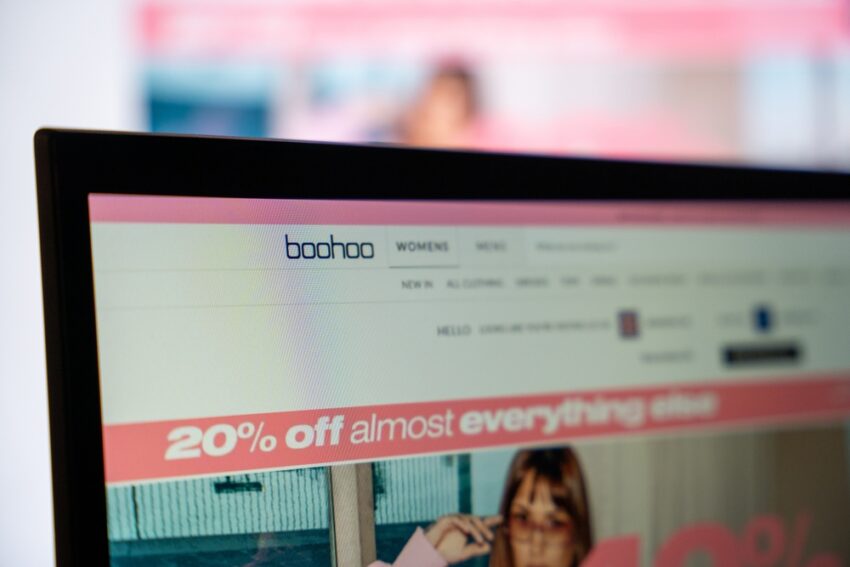
Boohoo orders staff back to the office five days a week

Published

on

Boohoo is set to be renamed as Debenhams Group, marking a pivotal step in new chief executive Dan Finley’s plans to revive the troubled online retailer.

Boohoo staff have been told to swap the grey tracksuit bottoms for the office wardrobe, as chief executive Dan Finley defends his decision to bring the online fashion group’s entire corporate workforce back in five days a week.

Finley, who has led a turnaround at the Manchester-based retailer since 2024, said its 1,500 head office employees should not be “sat in bed with grey tracksuit bottoms on” but in the workplace, wearing and testing the clothes the business produces and collaborating face to face with colleagues.

For a fashion company, he argued, physical presence carries a particular weight: products need to be tried on, trends need to be observed, and that simply cannot happen from the sofa. Finley, who claims to wear only clothing made or sold by the group, added that working in Manchester should be “celebrated”, with staff out and about “living and breathing” the city, attending events, meeting people and socialising after work.

The chief executive believes younger employees, who make up a significant share of both Boohoo’s workforce and its customer base, stand to gain most from being physically present, learning from senior colleagues and building the professional relationships that are difficult to replicate over a video call.

Founded in Manchester in 2006 by Mahmud Kamani and Carol Kane, Boohoo built its name on trend-led fast fashion, accessories and beauty, and now counts Karen Millen and Debenhams among its brands. The group, which has moved to rebrand as Debenhams Group as part of a wider marketplace push, is in the middle of a major restructuring to cut debt and recover from falling sales, driven by fierce competition from ultra-fast fashion rivals Shein and Temu.

Advertisement

Boohoo’s move places it firmly on one side of a debate that continues to divide British business. Before 2020, working from home was often treated as a rare perk or a “Friday luxury”, but the pandemic turned hybrid arrangements into the norm for millions. According to the Office for National Statistics, more than a quarter of working adults in Great Britain now split their week between home and the workplace.

Many employers have since rowed back, arguing that physical presence is essential for collaboration, mentoring junior staff and overseeing output, while others are keen to justify expensive, long-term real estate leases. Amazon demanded a full five-day return for its corporate workforce, and major UK employers including Boots, Morrisons and the engineering firm Laing O’Rourke have followed suit for head office staff. Others, such as Santander, have tightened hybrid rules without abandoning flexibility altogether, wary of resignations and keen to bank the savings from smaller offices.

The tide, though, appears to be turning slowly in the employers’ favour. Average office attendance in the UK has been above 40 per cent every week since early January, reaching 44.2 per cent in the week to 12 February, according to Remit Consulting’s ReTurn report.

For Finley, the calculation is simpler still: a fashion business that cannot see its own clothes on its own people is flying blind. The tracksuit bottoms, it seems, will have to wait for the weekend.

Advertisement

Jamie Young

Jamie Young

Jamie is Senior Reporter at Business Matters, bringing over a decade of experience in UK SME business reporting.
Jamie holds a degree in Business Administration and regularly participates in industry conferences and workshops.

When not reporting on the latest business developments, Jamie is passionate about mentoring up-and-coming journalists and entrepreneurs to inspire the next generation of business leaders.

Advertisement
Continue Reading

Business

Banks Closed, Many Retailers Open as July 4 Holiday Weekend Begins Friday, Target Plan Standard Friday Hours

Published

on

Commonwealth Bank of Australia

Banks and government offices across much of the United States will be closed Friday in observance of the Independence Day holiday weekend, while major retailers including Walmart, Target, Costco and Publix plan to maintain normal or adjusted hours to accommodate shoppers preparing for celebrations.

The federal holiday falls on Saturday, July 4, prompting many institutions to observe the closure on the preceding Friday. Financial markets will also shut down, with trading resuming Monday. Post offices, federal courthouses and many state government facilities are expected to follow suit.

Major banks including Chase, Bank of America, Wells Fargo and Citibank have confirmed they will not conduct regular branch operations Friday. ATM access and online banking services will remain available, but in-person transactions and customer service at physical locations will be limited.

Retail giants are taking a different approach to capitalize on holiday spending. Walmart stores are scheduled to operate regular hours, offering groceries, household goods and last-minute barbecue supplies. Target locations similarly plan standard operations, with some adjusting pharmacy hours.

Advertisement

Costco warehouses will be open Friday according to normal schedules in most regions, though members should check local listings as select locations may vary. The membership retailer typically maintains consistent hours during holidays to serve its customer base.

Publix supermarkets in the Southeast will operate on modified schedules, with many stores closing earlier than usual to allow employees time with family. Customers are advised to verify specific store hours through the company’s website or app.

Holiday Shopping and Travel Patterns

The lead-up to Independence Day traditionally drives strong consumer spending on food, beverages, outdoor equipment and patriotic merchandise. Retailers stock up on popular items such as grills, fireworks and summer apparel in anticipation of increased foot traffic.

E-commerce platforms including Amazon and Walmart’s online services will process orders throughout the weekend, with delivery times potentially affected by holiday staffing. Same-day and next-day options may be limited in some areas.

Advertisement

Travel is expected to reach near-record levels as Americans take advantage of the long weekend. AAA forecasts millions of trips by car, plane and other modes, with gas prices and airport security lines under close watch.

Roadside restaurants, convenience stores and service stations will largely remain open to support travelers. National parks and recreational areas are preparing for heavy visitation, with some implementing reservation systems to manage crowds.

Banking and Financial Services

For those needing in-person banking services, credit unions and smaller community banks may maintain limited hours, though most will follow the federal holiday schedule. Financial markets closure means no trading on major exchanges Friday.

Bill payments, transfers and other digital transactions will process normally through online platforms. Customers with urgent needs are encouraged to use mobile apps or contact customer service lines, which often operate with reduced staffing.

Advertisement

Mortgage, loan and investment offices will generally be closed, potentially delaying closings or account maintenance. Individuals should plan accordingly for any time-sensitive financial matters.

Government benefits, tax refunds and other payments scheduled for Friday may be issued earlier or delayed until Monday depending on processing systems. Social Security and other federal payments typically follow holiday-adjusted calendars.

Retailer-Specific Plans

Walmart has confirmed that the vast majority of its stores will operate regular hours Friday, with some supercenters extending evening operations for holiday shoppers. Pharmacy and vision center hours may be reduced at select locations.

Target stores plan standard Friday hours, with many locations featuring extended evening availability. The retailer has promoted holiday deals online and in stores to attract customers stocking up for weekend gatherings.

Advertisement

Costco members can expect normal warehouse access, though food courts and other services may close earlier. The retailer advises checking specific location schedules through its website, as regional variations occur.

Publix, a staple in southern states, typically shortens hours on holiday eves. Many stores will close by early evening, allowing employees to prepare for personal celebrations while still serving customers throughout the day.

Other major chains including Kroger, Albertsons and regional grocers are expected to maintain similar patterns, balancing customer convenience with employee needs. Convenience stores and gas stations will largely remain open 24 hours where applicable.

Travel and Public Services

Airports will operate with full staffing to handle increased passenger volumes, though some airlines may adjust schedules. Travelers are advised to arrive earlier than usual and check for potential delays.

Advertisement

Public transportation systems in major cities will run on holiday or weekend schedules. Commuter rail and bus services may have reduced frequency, particularly during off-peak hours.

National parks, beaches and recreational areas anticipate heavy crowds. Park rangers and local authorities urge visitors to follow safety guidelines and practice leave-no-trace principles.

Fireworks displays and community events are scheduled across the country, with many municipalities adjusting public transit to accommodate attendees. Safety reminders regarding fireworks handling and crowd management have been widely issued.

Preparation Advice for Consumers

Financial experts recommend completing necessary banking transactions by Thursday to avoid weekend delays. Online bill pay and mobile deposits can help manage finances during closures.

Advertisement

Shoppers should verify store hours through retailer websites or apps before heading out, particularly for specialized services like pharmacies or customer service desks. Stocking up early can help avoid last-minute crowds.

Travelers are encouraged to fill gas tanks, check vehicle maintenance and monitor weather forecasts. Packing snacks, water and entertainment can ease potential delays on busy highways.

For those celebrating at home, grocery lists should account for potential store closures on Saturday. Many retailers extend holiday hours or offer online ordering with curbside pickup as convenient alternatives.

The July 4 holiday weekend provides an opportunity for rest and celebration while reminding Americans of the interconnected nature of modern services. As institutions observe the holiday, digital alternatives help maintain continuity for essential needs.

Advertisement
Continue Reading

Business

Sony to end physical PlayStation game discs from January 2028

Published

on

Sony is to stop producing physical copies of PlayStation games from January 2028, becoming the first of the major console makers to abandon the disc entirely and drawing the curtain on more than half a century of boxed video games.

Sony is to stop producing physical copies of PlayStation games from January 2028, becoming the first of the major console makers to abandon the disc entirely and drawing the curtain on more than half a century of boxed video games.

The Japanese entertainment giant confirmed that all new titles for its PlayStation consoles, whether published by Sony itself or by third-party studios, will be released exclusively in digital format from that date, downloaded directly to consoles over the internet. Games already on shelves, or scheduled for release before the cut-off, are unaffected.

The decision puts clear water between Sony and its two great rivals, Microsoft and Nintendo, whose Xbox Series X and Switch 2 consoles continue to support physical media. Neither has yet signalled a similar move, though few in the industry expect the disc to survive the decade.

In truth, the announcement formalises a shift consumers made some time ago. Around 80 per cent of Sony’s PlayStation game sales are already digital, purchased through the online PlayStation Store or as boxed download codes sold on the high street. In the UK, the picture is starker still: Ukie’s latest market valuation put consumer spending at a record £8.76 billion in 2025, with physical boxed games accounting for barely five per cent of the total.

“This is a natural direction for Sony Interactive Entertainment to adapt to consumer trends as the general preference for digital media significantly outpaces physical discs,” the company said in a statement on its PlayStation Blog. “This transition will enable us to align more closely with how most of our community prefers to access and play games today.”

Advertisement

Sony was at pains to stress that bricks-and-mortar retailers will not be cut out altogether. “We’ll continue to prioritise our resources to drive innovation in how players can access games and provide choices as to where players prefer to purchase new games, whether that’s at retailers or PlayStation Store,” it added. Quite what form those retail sales will take, boxed codes, redemption cards or something else, remains to be seen, and it is a question that matters enormously to specialist chains whose margins already run thin.

For an industry that has migrated from cartridges to cassette tapes, floppy disks, CDs and Blu-ray over five decades, the moment carries genuine symbolic weight. The first commercial games cartridge, a four-game bundle including tic-tac-toe and a shooting gallery, arrived in 1976 for the Fairchild Channel F. Fifty-two years later, the physical format will be gone from the market leader’s shelves entirely, a trajectory that mirrors the rise of cloud gaming and streaming across the wider entertainment sector.

The timing is also notable for Sony’s hardware roadmap. As Business Matters reported recently, the company has raised PlayStation 5 prices on both sides of the Atlantic amid soaring memory costs, and its next-generation console may not arrive until 2028 or beyond, meaning the digital-only era could dawn alongside entirely new hardware.

Separately, Sony confirmed it will begin closing the PlayStation Store on its legacy PS3 and PS Vita devices, starting with Mexico, Honduras and Nicaragua in August before expanding through Latin America and the Middle East later this year. All remaining markets, including the UK, will follow in July 2027. The 20-year-old consoles can no longer support the secure payment systems used by the modern PlayStation Network, the company said, though previously purchased games will remain available to download for the foreseeable future.

Advertisement

For British retailers, publishers and the country’s more than 2,000 games businesses, a sector that has consistently defied wider market gloom, the direction of travel is now beyond dispute. The disc had a remarkable run. Its final level has a release date.

Advertisement
Continue Reading

Business

Trump Freedom 250 sponsors include companies with federal business

Published

on

Trump Freedom 250 sponsors include companies with federal business
Who is funding Trump’s Freedom 250 celebrations?

WASHINGTON — On the National Mall this week, Freedom 250 signs pointed visitors toward temporary state pavilions, a Ferris wheel and mobile, transitory history exhibits. Sponsor names appeared beside Trump-aligned programming. Some states were represented by official delegations. Others had opted out, leaving replacement displays or stripped-down booths in their place.

As the country prepares to mark its semiquincentennial, or 250th birthday, the splashiest celebrations in Washington are being shaped by corporate money.

A CNBC analysis found 14 companies backing both America250, the nonprofit supporting the congressionally created U.S. Semiquincentennial Commission, and Freedom 250, the Trump-backed public-private partnership behind some of the administration’s most visible anniversary events.

The companies listed online as backing both are: Boeing, Deloitte, Exiger, John Deere, Lockheed Martin, Northrop Grumman, Oracle, Palantir, Phorm Energy, RTX SAP, Scotts Miracle-Gro, UFC and United Airlines.

Advertisement

Of those companies, only John Deere responded to a CNBC request for comment, but it did not address specific questions about its sponsorship of both organizations. John Deere said it was eager to celebrate the people whose work helped “build power, feed and sustain” the U.S.

Several of those companies have major business before the federal government, including defense contracts, technology contracts, regulatory interests, merger considerations, tax issues and other policy matters shaped by the Trump administration.

CNBC did not find any evidence of a connection between the Freedom 250 sponsorships and the companies’ dealings with the administration.

But it’s another example of the complex intersection of corporate America and politics under a president who’s been increasingly close with companies.

Advertisement

Watchdogs and ethics experts have said the structure gives companies with business before the administration a new way to seek access to President Donald Trump, with much of the money hidden from public view.

“The concern is not that companies are sponsoring a national celebration. The concern is that this celebration appears to offer access to the president while some of those companies have business before his administration,” said Bruce Freed, the president and co-founder of the Center for Political Accountability that advises companies on political spending.

Democrats on the House Natural Resources Committee released a report this week criticizing the president and Freedom 250, accusing it of diverting funds and misleading sponsors.

Freedom 250 fundraising materials, first reported by The New York Times, described tiered sponsorship: Donors giving at least $500,000 were offered VIP access, invitations and preferred seating at events, according to the New York Times. A $1 million contribution came with an invitation to a private “thank you” reception hosted by Trump and a photo opportunity, the Times reported, and donors giving $2.5 million or more were offered speaking roles at a July 4 event in Washington.

Advertisement

For $10 million or more, companies got VIP access to all Freedom 250 events, logo rights, a tailored press release, a July 4 speaking role and a private Trump-hosted reception with a photo opportunity, according to the Times report.

Those kinds of tiered benefits are common in major event sponsorships. Watchdogs said Freedom 250 is different because some sponsors have business before the administration, the donor structure is opaque and the perks were attached to events built around Trump.

“For a million bucks, you get a meet and greet with the president, and what we’ve seen is when you get in the room with Donald Trump, it tends to be very beneficial for your business,” Matt Dallek, a political historian at George Washington University, told CNBC.

Freedom 250, America250 and the White House did not respond to multiple requests for comment.

Advertisement

A visitor takes a photo of a replica of the planned Triumphal Arch on the first day of the “Great American State Fair” on the National Mall on June 25, 2026 in Washington, DC.

Al Drago | Getty Images

Dual celebrations

Two separate groups have been planning celebrations for the big July 4 holiday.

The first, America250, grew out of a bipartisan commission Congress created in 2016 to plan the country’s 250th anniversary. Its work has focused on civic programming, including student contests, volunteer initiatives and events around the country.

Advertisement

Freedom 250 emerged after Trump returned to office and sought to put his own stamp on the anniversary. When Trump announced the effort on social media in December, he promised “the most spectacular birthday party you’ve ever seen.”

Freedom 250 and associated events have become the vehicle for some of Trump’s most touted anniversary events: the Great American State Fair on the National Mall, a model of a planned arch overlooking Washington, an IndyCar race through the capital, a UFC fight at the White House and more.

Congress set aside $150 million for the anniversary, but America250 had received only $25 million as of early June, according to a report obtained by Washington, D.C., based digital news outlet NOTUS. The Trump-aligned effort has received far more: nearly $80 million in 250th-related grants to the National Park Foundation, NOTUS first reported.

One possible explanation for why companies would back both groups, Freed and other experts said, is that America250 offered traditional patriotic branding, while Freedom 250 put sponsors closer to Trump’s preferred version of the celebration.

Advertisement

“If you’re a company with federal contracts, regulatory issues or merger interests, being in the room with the president can be worth far more than the sponsorship itself,” Freed told CNBC.

UFC may be the clearest example of how Freedom 250 blurred corporate money, Trump’s personal network and policy interests.

The company helped stage a Freedom 250 mixed martial arts event at the White House during Trump’s birthday weekend. UFC President Dana White, a longtime Trump ally, also sent Trump a May 11 letter asking him to reverse a provision in the “Big Beautiful Bill Act” that capped gambling-loss deductions at 90%, ESPN reported. That provision is still in effect.

UFC declined to comment on its listing on the Freedom 250 and America250 sites. CNBC did not find any evidence that UFC’s corporate sponsorship affected the government’s decisions.

Advertisement

Fireworks during the UFC Freedom250 fight on the South Lawn of the White House in Washington, DC, US, early on Monday, June 15, 2026.

Saul Loab | Bloomberg | Getty Images

Business rationale

Corporate money has long been part of national anniversaries.

The 1976 Bicentennial drew so much corporate sponsorship that critics derided it as the “buy-centennial.” Former President Richard Nixon, too, was accused of trying to steer the commemoration through the executive branch during the run-up to celebrations before resigning in 1974.

Advertisement

One high-profile Bicentennial project, the American Freedom Train was funded by five companies — Pepsi-Cola, Atlantic Richfield, General Motors, Prudential and Kraft Foods — that contributed around $5 million each in initial grants to the project, according to Ford Library records. Adjusted for inflation, that would be worth roughly $20 million.

But historians and watchdogs said Freedom 250 raises a different set of concerns because of the access-style sponsorships, opaque funding structure and the degree to which the anniversary has been built around Trump.

“There’s the America250 for everyone else, and then there’s this small shadowy organization [Freedom 250] doing essentially Trump rallies and things for Trump supporters,” Dallek said. The structure, he added, “doesn’t really play to the idea of unity very much.”

America250 publicly lists dozens of sponsors. Freedom 250 has referred to some backers as “strategic partners.” And the National Park Foundation’s president has told Congress that donors who request anonymity will not be disclosed, according to congressional Democrats.

Advertisement

That opacity is another part of the appeal, corporate political consultants said.

“Companies are hedging,” Freed said. “They want the safe patriotic branding of America250, but they also don’t want to be absent from the president’s preferred celebration.”

The blurred lines extend beyond corporate sponsorship.

According to NASA employee sources and materials reviewed by CNBC, a department-wide NASA email sent in June encouraged employees to shop the Freedom 250 store. The link resolved to the Trump campaign website, according to those materials.

Advertisement

U.S. President Donald Trump arrives to speak during a rally to kick off the Great American State Fair on the National Mall on June 24, 2026 in Washington, DC.

Andrew Harnik | Getty Images

A rocky start

Choose CNBC as your preferred source on Google and never miss a moment from the most trusted name in business news.

Advertisement
Continue Reading

Business

Ternium Looks Like A Bargain Despite Ongoing Economic Uncertainties

Published

on

Ternium Looks Like A Bargain Despite Ongoing Economic Uncertainties

Ternium Looks Like A Bargain Despite Ongoing Economic Uncertainties

Continue Reading

Business

Business improvement districts in Swansea and Cardiff win ballots for five more years

Published

on

Business Live

The BIDs secured overwhelming mandates for a further five years in their respective ballots

The FOR Cardiff team celebrating the overwhelming ballot vote in favour of another five years.

Businesses in Swansea and Cardiff have voted overwhelmingly in favour of continuing their respective business improvement districts (BIDs) for a further five years.

A ballot of firms within the Cardiff BID voted 92% in favour of continuing with a 97% approval by rateable value. The new mandate also extends the borders of the BID beyond the city centre to cover Cardiff Bay – which will bring an additional £1m of levy funding for projects and services aimed at bolstering the city’s standing as a place to work, live and visit.

Advertisement

Its geographical extension aligns with efforts to improve connectivity between the two areas of the capital with the first phase of Cardiff Crossrail under way which will see a new tram network from Cardiff Central Station to the Bay, with plans for the next phase then reaching Atlantic Wharf with its new indoor arena at the heart of a wider mixed use regeneration project.

The new five-year term will begin in December and will continue until November 2031.

Since its establishment, FOR Cardiff has delivered a wide range of initiatives focused on improving the city environment, supporting business growth, enhancing safety and promoting Cardiff as a leading destination.

Carolyn Brownell, executive director at FOR Cardiff said: “We are delighted that businesses have once again placed their trust in FOR Cardiff and have voted in a landmark result which is testament to the hard work of the team.

Advertisement

“This result reflects the value businesses see in a strong, collaborative voice for Cardiff and comes at a pivotal moment as we prepare to welcome Cardiff Bay into the BID area from December. This expansion presents a unique and fantastic opportunity to bring together the city centre and waterfront, creating an even stronger and more connected business community.

“We look forward to working with businesses across the capital to deliver ambitious projects and ensure Cardiff continues to thrive.”

Manager of the Swansea BID Andrew Douglas.

Of the 955 firms in the Swansea BID ballot, 84.1% voted in fair of another five year term. Andrew Douglas, Swansea BID manager, said; “To be re-elected for a fifth consecutive term is an incredible achievement and one that everyone involved with Swansea BID is immensely proud of.

“The fact that our business community has once again placed its trust in us is a real vote of confidence in everything we’ve achieved together over the past 20 years. I’d like to thank every business that took part in the ballot and everyone who has supported Swansea BID over the years. We never take that support for granted.

Advertisement

“We’re excited about what lies ahead. Swansea is a city with huge ambition and enormous potential, and over the next five years we’ll continue working with businesses, Swansea Council and our partners to make the city centre an even more vibrant, welcoming and successful destination. Our focus remains on delivering real value for our levy payers while helping ensure Swansea is a brilliant place to visit, work, shop and invest.”

Over the next five years, Swansea BID said it will continue to deliver a programme of business support, city centre promotion, events, marketing, safety initiatives and environmental improvements, ensuring the city centre “remains competitive, attractive and resilient.”

Continue Reading

Business

Slideshow: Flavor experimentation driving foodservice innovation

Published

on

Slideshow: Flavor experimentation driving foodservice innovation

Trending flavors include global, “swicy” flavors.

Continue Reading

Business

The Week The AI Trade Broke, And Why The Data Says 'Rotation,' Not 'Recession'

Published

on

The Week The AI Trade Broke, And Why The Data Says 'Rotation,' Not 'Recession'

The Week The AI Trade Broke, And Why The Data Says 'Rotation,' Not 'Recession'

Continue Reading

Business

Southeast Asia Eyes Eightfold CORSIA Carbon Credit Growth Amid Policy Gaps

Published

on

Southeast Asia Eyes Eightfold CORSIA Carbon Credit Growth Amid Policy Gaps

CORSIA requires airlines to offset emissions growth via carbon credits. Southeast Asia could nearly triple its CEEU supply if governments authorize 54 pending projects across Vietnam, Thailand, and Myanmar. However, uneven Article 6 readiness and institutional capacity across ASEAN nations pose challenges to scaling high-quality carbon credit supply for CORSIA compliance.

Key Points

  • CORSIA requires airlines to offset CO2 emissions above 85% of 2019 baseline by purchasing carbon credits (CEEUs); Asean supplies ~7% globally, mainly clean cookstoves in Cambodia and Laos, with potential to grow eightfold to 20.8 million units if governments authorize 54 pending projects across Vietnam, Thailand, and Myanmar.
  • Boeing-backed report says Asean could strengthen CORSIA by expanding access to high-quality, lower-cost credits, easing rising compliance costs airlines face as credit prices tighten, while channeling climate finance regionally.
  • Challenges remain: uneven Article 6 readiness and institutional capacity across Asean states, with governments cautious about overselling credits and jeopardizing their own NDC targets, limiting how quickly new supply can be authorized.

CORSIA’s Emissions Offsetting Mandate

CORSIA aims to keep international aviation’s net emissions flat by requiring airlines to offset any carbon dioxide growth above 85% of 2019 baseline levels. Airlines achieve this by purchasing and cancelling CORSIA-Eligible Emissions Units (CEEUs), each representing one tonne of CO2 reduced or removed elsewhere.

More than 130 countries participate, including seven Southeast Asian nations—Cambodia, Indonesia, Malaysia, the Philippines, Singapore, Thailand, and Vietnam. This creates mandatory demand for verified carbon credits, positioning the compliance market as a critical mechanism for balancing aviation’s growing environmental footprint against measurable climate action elsewhere.

Southeast Asia’s Emerging Supply Potential

Asean could become a major supplier of high-integrity carbon offsets, according to a report backed by Boeing, GenZero, and Abatable. The region already contributes roughly 7% of global CEEU supply, with 2.6 million credits issued from four clean cookstove projects in Cambodia and Laos.

This supply could grow nearly eightfold—to 20.8 million units—if governments swiftly issue Letters of Authorization (LoAs) for 54 additional qualifying projects, including 24 in Vietnam, 11 in Thailand, and 8 in Myanmar. Boeing’s Allison Melia emphasized that clear policy guidance and government-industry collaboration are essential to unlocking this potential, especially as tightening credit markets threaten to raise airlines’ compliance costs by billions of dollars in coming decades.

Advertisement

Institutional Gaps and Article 6 Readiness

Despite this opportunity, CORSIA implementation poses significant challenges for Asean governments. Environment ministries face the risk of “overselling” credits, potentially undermining their own Nationally Determined Contributions (NDCs) if too many units are authorized for export through corresponding adjustments under the Paris Agreement’s Article 6 framework.

Institutional readiness varies widely across the region. Singapore, Indonesia, Thailand, Vietnam, and Cambodia have adopted Article 6 frameworks, while Malaysia’s is still developing. Laos hosts CORSIA-eligible projects without a formal framework, and the Philippines and Singapore have completed a bilateral carbon deal absent a comprehensive rulebook. Brunei, Myanmar, and Timor-Leste remain in early stages, underscoring the need for stronger regional coordination and capacity-building to fully capitalize on CORSIA-driven demand.

Source : Asean poised for US$8.5bn windfall from UN-backed airline carbon scheme

Advertisement
Continue Reading

Business

Polibeli Group Shares Surge 18% on Nasdaq as AI Infrastructure Pivot Gains Momentum

Published

on

Polibeli Group Shares Surge 13% on AI Infrastructure Pivot as

Polibeli Group Ltd. shares jumped more than 18% to close at $10.26 Thursday, extending gains as the digital supply chain company advances its strategic expansion into artificial intelligence computing infrastructure, attracting investor interest in the competitive technology sector.

The recent rally reflects growing enthusiasm around Polibeli’s pivot from its core B2B procurement platform to high-growth AI opportunities in Southeast Asia. The company, which listed on Nasdaq earlier this year, has announced several initiatives aimed at capitalizing on regional data center demand.

Polibeli’s core business provides digital supply chain services connecting small and medium-sized retailers with suppliers across Indonesia, Japan and other markets. The company offers procurement, logistics, warehousing and digital marketing solutions while dealing in consumer electronics, household goods and beauty products.

Recent strategic moves have shifted focus toward AI infrastructure. In June, Polibeli launched a review of opportunities in AI computing services, citing the global technology trend and its regional presence as key advantages for potential projects.

Advertisement

The company signed a non-binding memorandum of understanding to explore development of a large-scale AI computing center in Thailand, marking a concrete step toward infrastructure ambitions. While early-stage, the initiative signals commitment to diversification beyond traditional supply chain operations.

Leadership and Operational Updates

Polibeli has undergone leadership transitions in recent months, appointing Meijun Liang as chief financial officer following the resignation of a previous executive. Such changes often accompany strategic refocus in small public companies seeking to execute ambitious growth plans.

The company reported full-year 2025 financial results showing revenue of approximately $26.42 million with ongoing losses typical of growth-stage firms investing in platform development and new initiatives. Management has emphasized long-term value creation through technology expansion.

As a newly public entity, Polibeli is navigating reporting requirements and market expectations while building its AI strategy. The Nasdaq listing provides access to capital markets essential for funding infrastructure projects that require substantial investment.

Advertisement

AI Infrastructure Opportunity in Southeast Asia

Southeast Asia has emerged as an attractive region for data center development due to improving infrastructure, government incentives and growing digital economy demands. Countries including Thailand, Indonesia and Malaysia are actively courting technology investments.

Polibeli’s existing customer networks and regional expertise provide potential advantages in identifying and executing AI-related projects. The company aims to complement its supply chain operations with computing infrastructure services targeting enterprise clients.

Competition in the data center space is intensifying, with major players and regional operators vying for market share. Success will depend on securing partnerships, financing and technical capabilities to compete effectively.

Analysts note that while AI infrastructure offers substantial growth potential, execution risks remain high for smaller companies entering the capital-intensive sector. Polibeli’s track record in logistics and digital platforms may provide operational synergies.

Advertisement

Market Reaction and Volatility

The stock’s strong performance Thursday reflects momentum trading and positive sentiment around AI themes. Trading volume was elevated as retail and institutional investors repositioned around the company’s strategic announcements.

Polibeli shares have shown significant volatility since listing, typical of small-cap technology companies with evolving business models. The recent surge has pushed the market capitalization into mid-cap territory, though valuation metrics remain elevated given current financials.

Investors are betting on successful execution of the AI pivot while acknowledging near-term challenges including integration costs and competition. Short-term price action may continue reflecting news flow and market sentiment.

Broader Context for Small-Cap Tech Stocks

Small technology companies pursuing AI opportunities have captured significant investor attention amid broader sector enthusiasm. SPAC mergers and direct listings have provided pathways to public markets for many emerging firms.

Advertisement

Polibeli’s transition demonstrates how established regional businesses can reposition for growth in high-potential technologies. Similar stories have played out across various sectors as companies seek to capitalize on artificial intelligence trends.

Regulatory considerations for data centers include energy consumption, environmental impact and data sovereignty requirements. Southeast Asian governments are balancing development incentives with sustainability goals.

The company’s cosmetic and wellness products, including milk-derived exosome essences and plant extracts, provide some revenue diversification while research services in cell technologies support longer-term innovation.

Outlook and Strategic Priorities

Management has outlined plans to leverage existing strengths in technology and regional presence to build AI capabilities. Capital raised through the public listing will support project development and potential acquisitions.

Advertisement

Upcoming financial reports will provide updates on integration progress and early AI initiative performance. Investors will scrutinize cash burn rates, partnership announcements and regulatory milestones.

The biotechnology and regenerative medicine aspects of Polibeli’s portfolio, including research into armed T-cells and exosomes, offer additional growth avenues complementing the AI infrastructure focus.

As a Cayman Islands holding company with operations in Taiwan and Southeast Asia, Polibeli navigates cross-border regulatory environments. Compliance with Nasdaq listing standards and U.S. reporting requirements adds operational complexity.

Long-term success will depend on translating strategic vision into revenue-generating projects while managing execution risks inherent in capital-intensive technology deployments. The company’s diversified approach may provide resilience across economic cycles.

Advertisement

Polibeli’s Nasdaq performance highlights continued market appetite for innovative technology stories in emerging markets. As the company advances its initiatives, stakeholder attention will focus on milestones demonstrating progress toward sustainable growth and profitability.

Continue Reading

Trending

Copyright © 2025