WASHINGTON — On the National Mall this week, Freedom 250 signs pointed visitors toward temporary state pavilions, a Ferris wheel and mobile, transitory history exhibits. Sponsor names appeared beside Trump-aligned programming. Some states were represented by official delegations. Others had opted out, leaving replacement displays or stripped-down booths in their place.
As the country prepares to mark its semiquincentennial, or 250th birthday, the splashiest celebrations in Washington are being shaped by corporate money.
A CNBC analysis found 14 companies backing both America250, the nonprofit supporting the congressionally created U.S. Semiquincentennial Commission, and Freedom 250, the Trump-backed public-private partnership behind some of the administration’s most visible anniversary events.
Of those companies, only John Deere responded to a CNBC request for comment, but it did not address specific questions about its sponsorship of both organizations. John Deere said it was eager to celebrate the people whose work helped “build power, feed and sustain” the U.S.
Several of those companies have major business before the federal government, including defense contracts, technology contracts, regulatory interests, merger considerations, tax issues and other policy matters shaped by the Trump administration.
CNBC did not find any evidence of a connection between the Freedom 250 sponsorships and the companies’ dealings with the administration.
But it’s another example of the complex intersection of corporate America and politics under a president who’s been increasingly close with companies.
Advertisement
Watchdogs and ethics experts have said the structure gives companies with business before the administration a new way to seek access to President Donald Trump, with much of the money hidden from public view.
“The concern is not that companies are sponsoring a national celebration. The concern is that this celebration appears to offer access to the president while some of those companies have business before his administration,” said Bruce Freed, the president and co-founder of the Center for Political Accountability that advises companies on political spending.
Democrats on the House Natural Resources Committee released a report this week criticizing the president and Freedom 250, accusing it of diverting funds and misleading sponsors.
Freedom 250 fundraising materials, first reported by The New York Times, described tiered sponsorship: Donors giving at least $500,000 were offered VIP access, invitations and preferred seating at events, according to the New York Times. A $1 million contribution came with an invitation to a private “thank you” reception hosted by Trump and a photo opportunity, the Times reported, and donors giving $2.5 million or more were offered speaking roles at a July 4 event in Washington.
Advertisement
For $10 million or more, companies got VIP access to all Freedom 250 events, logo rights, a tailored press release, a July 4 speaking role and a private Trump-hosted reception with a photo opportunity, according to the Times report.
Those kinds of tiered benefits are common in major event sponsorships. Watchdogs said Freedom 250 is different because some sponsors have business before the administration, the donor structure is opaque and the perks were attached to events built around Trump.
“For a million bucks, you get a meet and greet with the president, and what we’ve seen is when you get in the room with Donald Trump, it tends to be very beneficial for your business,” Matt Dallek, a political historian at George Washington University, told CNBC.
Freedom 250, America250 and the White House did not respond to multiple requests for comment.
Advertisement
A visitor takes a photo of a replica of the planned Triumphal Arch on the first day of the “Great American State Fair” on the National Mall on June 25, 2026 in Washington, DC.
Al Drago | Getty Images
Dual celebrations
Two separate groups have been planning celebrations for the big July 4 holiday.
The first, America250, grew out of a bipartisan commission Congress created in 2016 to plan the country’s 250th anniversary. Its work has focused on civic programming, including student contests, volunteer initiatives and events around the country.
Advertisement
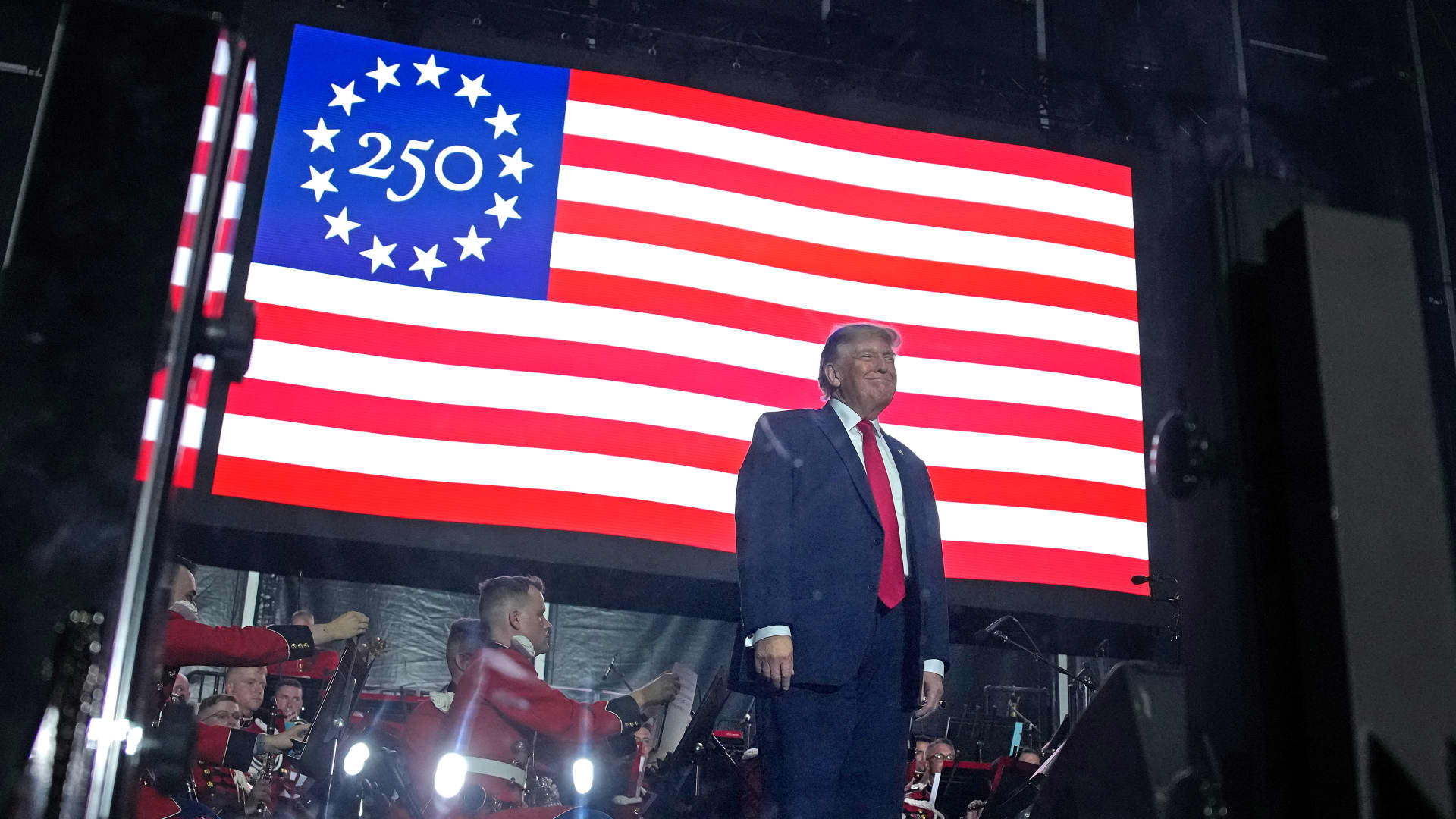
Freedom 250 emerged after Trump returned to office and sought to put his own stamp on the anniversary. When Trump announced the effort on social media in December, he promised “the most spectacular birthday party you’ve ever seen.”
Congress set aside $150 million for the anniversary, but America250 had received only $25 million as of early June, according to a report obtained by Washington, D.C., based digital news outlet NOTUS. The Trump-aligned effort has received far more: nearly $80 million in 250th-related grants to the National Park Foundation, NOTUS first reported.
One possible explanation for why companies would back both groups, Freed and other experts said, is that America250 offered traditional patriotic branding, while Freedom 250 put sponsors closer to Trump’s preferred version of the celebration.
Advertisement
“If you’re a company with federal contracts, regulatory issues or merger interests, being in the room with the president can be worth far more than the sponsorship itself,” Freed told CNBC.
UFC may be the clearest example of how Freedom 250 blurred corporate money, Trump’s personal network and policy interests.
The company helped stage a Freedom 250 mixed martial arts event at the White House during Trump’s birthday weekend. UFC President Dana White, a longtime Trump ally, also sent Trump a May 11 letter asking him to reverse a provision in the “Big Beautiful Bill Act” that capped gambling-loss deductions at 90%, ESPN reported. That provision is still in effect.
UFC declined to comment on its listing on the Freedom 250 and America250 sites. CNBC did not find any evidence that UFC’s corporate sponsorship affected the government’s decisions.
Advertisement
Fireworks during the UFC Freedom250 fight on the South Lawn of the White House in Washington, DC, US, early on Monday, June 15, 2026.
The 1976 Bicentennial drew so much corporate sponsorship that critics derided it as the “buy-centennial.” Former President Richard Nixon, too, was accused of trying to steer the commemoration through the executive branch during the run-up to celebrations before resigning in 1974.
Advertisement
One high-profile Bicentennial project, the American Freedom Train was funded by five companies — Pepsi-Cola, Atlantic Richfield, General Motors, Prudential and Kraft Foods — that contributed around $5 million each in initial grants to the project, according to Ford Library records. Adjusted for inflation, that would be worth roughly $20 million.
But historians and watchdogs said Freedom 250 raises a different set of concerns because of the access-style sponsorships, opaque funding structure and the degree to which the anniversary has been built around Trump.
“There’s the America250 for everyone else, and then there’s this small shadowy organization [Freedom 250] doing essentially Trump rallies and things for Trump supporters,” Dallek said. The structure, he added, “doesn’t really play to the idea of unity very much.”
America250 publicly lists dozens of sponsors. Freedom 250 has referred to some backers as “strategic partners.” And the National Park Foundation’s president has told Congress that donors who request anonymity will not be disclosed, according to congressional Democrats.
Advertisement
That opacity is another part of the appeal, corporate political consultants said.
“Companies are hedging,” Freed said. “They want the safe patriotic branding of America250, but they also don’t want to be absent from the president’s preferred celebration.”
The blurred lines extend beyond corporate sponsorship.
According to NASA employee sources and materials reviewed by CNBC, a department-wide NASA email sent in June encouraged employees to shop the Freedom 250 store. The link resolved to the Trump campaign website, according to those materials.
Advertisement
U.S. President Donald Trump arrives to speak during a rally to kick off the Great American State Fair on the National Mall on June 24, 2026 in Washington, DC.
Andrew Harnik | Getty Images
A rocky start
The anniversary rollout has also been plagued by problems on the ground.
The Great American State Fair on the National Mall was billed as a 16-day centerpiece of the celebration. But at least eight states, most led by Democratic governors, declined to participate officially, citing exhibit costs ranging from $100,000 to $1 million and concerns about the event’s partisan tone.
Advertisement
The fair has also faced sparse crowds, power outages, an intermittently broken Ferris wheel and a model triumphal arch whose covering had begun to buckle, according to media reports.
Several artists, including Martina McBride, Young MC, the Commodores and Bret Michaels, pulled out after being announced or associated with Freedom 250 events. Some said they had been misled about the partisan nature of the celebration.
Trump responded by suggesting in a Truth Social post the concerts be replaced with a “MAKE AMERICA GREAT AGAIN RALLY” and later moved to headline the fair’s opening himself.
Pima County Sheriff Chris Nanos said he believes meaningful progress is being made in the investigation into the disappearance of Nancy Guthrie, speaking as the case reached the six-month mark since the 84-year-old mother of “Today” show co-anchor Savannah Guthrie was abducted from her Tucson home.
Saturday marked six months since Guthrie’s abduction. Nanos sat down with KOLD anchor Mary Coleman to discuss the state of the investigation, emphasizing that progress continues even without a publicly named suspect. “I believe we are. I think that based on what we’ve learned from the scene and all the evidence we’ve removed from there, to include the DNA, the video analysis, all that work and all the tips. Yes, I think we continue to work further and further along,” Nanos said. “We’re not where we need to be or want to be, but progress is being made.”
Nanos also acknowledged the frustration many in the public have expressed over the pace of the investigation and the limited details authorities have released. “We have gathered a lot of evidence in this case, and I wish you knew it. I wish the community could know all of the evidence, but that’s just not how investigations work,” Nanos said. “Whether it’s this case or any case. We have an obligation, we have a duty and a responsibility, to protect that case and its integrity.”
The sheriff’s comments came two days after the Pima County Sheriff’s Office publicly released two ransom notes that Guthrie’s family received following her abduction. According to KOLD, the station received both letters through an anonymous email news tip line and immediately forwarded them to the Pima County Sheriff’s Office, which in turn shared the documents with the FBI.
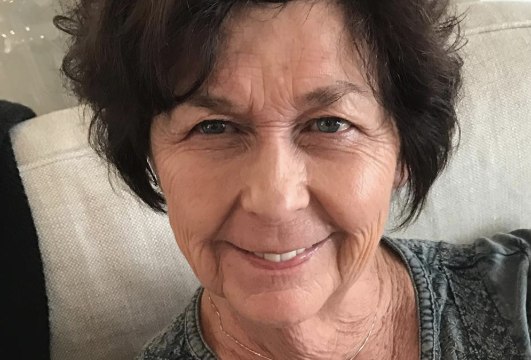
Savannah Guthrie shared another emotional public appeal for information on Saturday, directly asking anyone with knowledge of her mother’s disappearance to come forward. “We are begging for help. We are desperate. We need someone to come forward. Someone knows something. Someone suspects something. Someone recognizes the writing in the ransom demand notes,” Guthrie wrote on Instagram, alongside a photo of her mother.
Guthrie’s appeal specifically addressed anyone who might be protecting information out of fear, loyalty or personal conflict. “Someone has noticed something different, strange, troubling or just unusual — perhaps with someone they deeply love,” she wrote. “Perhaps they are afraid to come forward. Perhaps they are conflicted. Perhaps they are angry or upset for being in this situation. There is a way out — to tell what you know.” Guthrie said her family’s goal remains learning what happened to her mother so they can properly honor her life. She said the family “wanted to find out what happened to her, so that we can give her the dignity of a proper goodbye — a celebration of her remarkable life that she so deserves.”
The case has remained an active joint investigation involving both the Pima County Sheriff’s Department and the FBI since Guthrie’s disappearance was first reported on Feb. 1. Authorities have said they believe Guthrie was forcibly taken from her home in the Catalina Foothills neighborhood in the early morning hours, after she failed to appear for a scheduled Sunday church livestream. The investigation has involved extensive forensic work, including DNA analysis collected from the scene and review of surveillance footage, alongside the recently released ransom notes, which investigators believe may have been sent from the same source based on shared characteristics between the two letters.
Advertisement
Authorities continue to ask members of the public to closely review the wording, handwriting style and other distinctive characteristics of the released ransom notes in hopes that someone might recognize details that could help identify the sender or senders. Investigators have not confirmed whether the individual or individuals who wrote the notes were directly responsible for Guthrie’s abduction, leaving open questions about the notes’ ultimate significance to the broader case even as authorities continue treating them as important evidence.
Anyone with information related to Guthrie’s disappearance is asked to contact the FBI directly at 1-800-CALL-FBI, or 1-800-225-5324, or to call the separate tip line at 88-CRIME. Tipsters may remain anonymous, and a reward remains available for information leading to a resolution in the case. As the investigation moves past the six-month mark without a named suspect, both law enforcement officials and Guthrie’s family have continued publicly emphasizing that the case remains a top priority, with Nanos reiterating that investigators have no intention of slowing their efforts as the search for answers continues.
Jordan Brand is bringing back the Air Jordan 17 in a glossy new “Black Patent” colorway, marking the sneaker’s first appearance in a patent leather finish and adding to a broader wave of renewed attention for the brand’s often-overlooked post-Air Jordan 13 silhouettes.
The Air Jordan 1 through 14 have historically been Jordan Brand’s most popular and most frequently reissued models, but the company appears to be shifting some of its focus toward later silhouettes in its catalog, including an upcoming “Black Pack” collection and this new spin on the Air Jordan 17 Low.
The Air Jordan 17 Low was first released in 2002 in a smooth black leather build. The new “Black Patent” version retains that original model’s blacked-out color blocking and chrome hardware details, but swaps the standard leather construction for a sleek patent leather finish across most of the upper. The tongue area is the one notable exception, featuring perforated leather rather than the croc-embossed patent material that appeared on the original 2002 release.
A similar version of the Air Jordan 17 Low is also set to appear as part of Jordan Brand’s upcoming Black Pack collection, scheduled for release this holiday season. That broader collection will include the Air Jordan 17 Low alongside the Air Jordan 14 Low, Air Jordan 15 and Air Jordan 16, with each sneaker in the pack featuring premium materials, including a stingray leather treatment specifically on the Air Jordan 17 Low included in that release.
Advertisement
Beyond the Black Patent colorway and the Black Pack collection, Jordan Brand has additional plans in place for the Air Jordan 17 model in the coming months. The silhouette is expected to receive its first-ever reissue in its original College Blue colorway in February, timed to coincide with NBA All-Star Weekend, a launch window Jordan Brand has frequently used in the past to release notable retro colorways tied to the league’s midseason showcase event.
The Air Jordan 17 is not the only previously overlooked model receiving renewed attention from Jordan Brand this year. The Air Jordan 16 is separately set for release this month through a collaboration with Ghanaian streetwear brand Free the Youth, part of a broader pattern of the company revisiting and reworking silhouettes from later in Michael Jordan’s playing career that have historically received less retro attention than the more widely reissued earlier models in the line.
The Air Jordan 17 Retro Low SP Black Patent will launch in Europe on Aug. 8, priced at $245 under style code IV7640-001. A broader global release for the sneaker, arriving in the same Black/Black/Metallic Silver colorway, is expected to follow in the near future, though Jordan Brand has not confirmed an exact date for that wider rollout.
The Air Jordan 17 originally debuted during the 2002-03 NBA season as part of the signature line built around Michael Jordan, who wore versions of the sneaker during the final stretch of his playing career with the Washington Wizards. The model was notable at the time of its original release for its distinctive design, which departed from the more traditional silhouettes of earlier Air Jordan models in favor of a sleeker, more minimalist aesthetic that drew comparisons to luxury dress shoes, a design choice that made the model a somewhat divisive release among sneaker enthusiasts when it first launched.
Advertisement
Jordan Brand’s continued interest in reissuing and reworking the Air Jordan 17, alongside similar recent attention paid to the Air Jordan 14, 15 and 16, reflects a broader trend within the sneaker industry of brands mining deeper into their historical catalogs for new release opportunities, as widely reissued earlier models increasingly saturate the market and collectors and consumers look for fresher takes on less commonly seen silhouettes from a brand’s back catalog.
With the Black Patent colorway confirmed for its European debut on Aug. 8 and additional Air Jordan 17 releases, including the Black Pack version and the College Blue retro, already planned for later this year and into early 2026, sneaker collectors are likely to have multiple opportunities over the coming months to add fresh interpretations of the once-overlooked silhouette to their collections, as Jordan Brand continues expanding its retro release calendar beyond its historically dominant early-numbered models.
The edge-of-town development is said to have attracted a lot of interest since planning permission was secured in 2022
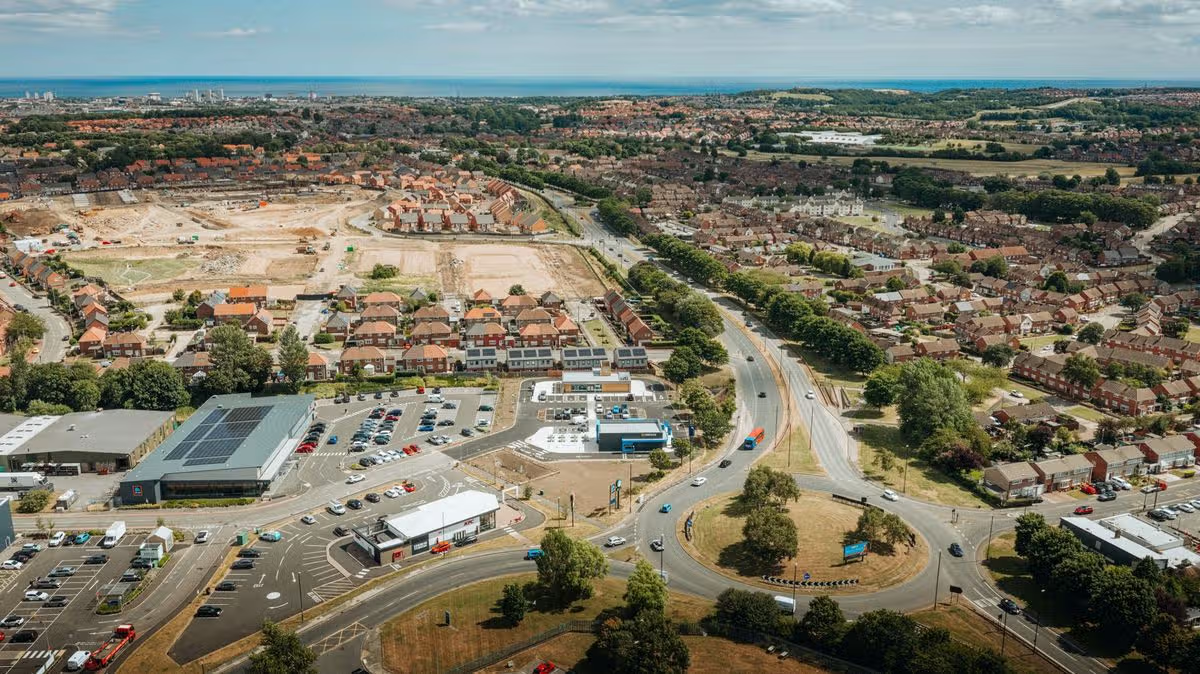
UK Land Estates has redeveloped the former Dewhirst factory site in Sunderland.(Image: UK Land Estates)
Work has finished on the regeneration of a key former factory site in Sunderland.
The final two retail units have opened to the public at the former Dewhirst site in Pennywell, which has been transformed by North East developer and landlord UK Land Estates. The two drive-thru units for Greggs and Starbucks at Pennywell Industrial Estate are now open to the public.
Standing adjacent to the already completed Wickes, Aldi and KFC, the two units mark the completion of the final phase of the edge-of-city retail scheme. It comes more than two decades after the closure of the clothing manufacturer’s site, which was a household name through the 20th century and had roots in the city dating back to the 19th century.
Dewhirst employed hundreds of people at its peak, before its Leechmere site closed in 2002 and its Pennywell factory ceased production a year later. The site then stood largely vacant until 2022 when UK Land Estates was granted planning permission to develop a new retail park on the edge of the city.
Advertisement
Tim Witty, development director at UK Land Estates, said: “We’ve seen a real surge in demand for well-connected, out-of-town retail parks over recent years and the redevelopment of the former Dewhirst site is a prime example of this. As soon as we were granted planning permission in 2022, we were inundated with queries from parties looking to capitalise on the site’s prime location, so it is fantastic to finally see it complete and bearing fruit.
“In Wickes, KFC, Aldi, Starbucks and Greggs we have been able to attract five national and global brands to the site, creating dozens of jobs for local people while providing a major lift to the city’s economy. It has been a fantastic project to be involved in and I’m sure as we look ahead to 2026, there will be yet more sites to follow as we seek to capitalise on the seemingly increasing popularity of the North East as a great place to invest and do business.”
The Pennywell Dewhirst factory once made menswear jackets, trousers, waistcoats and top coats for M&S. At the time of its closure, Dewhirst relied on M&S for around 90% of its sales and bosses said it was not ‘sufficiently profitable’ to keep the Pennywell factories open.
UK Land Estates was granted planning permission in 2022 to develop the seven-acre site, with investment there thought to have exceeded £10m. UK Land Estates is one of the largest owners of commercial property in the North East of England and has three main estates including Team Valley, Teesside Industrial Estate and Tyne Tunnel Industrial Estate, alongside a portfolio of other assets.
JR Research is an opportunistic investor. I was recognized by TipRanks as a Top Analyst, and also by Seeking Alpha as a “Top Analyst To Follow” for Technology, Software, and Internet, as well as for Growth and GARP. I identify attractive risk/reward opportunities supported by robust price action to potentially generate alpha well above the S&P 500. My picks have consistently demonstrated market outperformance over time. My approach combines timely and sharp price action analysis with fundamentals as my foundation. I also tend to avoid overhyped and overvalued stocks while capitalizing on battered stocks with significant upside recovery possibilities. I run the investing group Ultimate Growth Investing which specializes in identifying high-potential opportunities across various sectors. My main ideas revolve around stocks with strong growth potential, and also well-beaten contrarian plays. I designed the group for investors seeking to capitalize on growth stocks with solid fundamentals, robust buying momentum, and appealing turnaround plays to generate alpha consistently. Learn more
Analyst’s Disclosure: I/we have a beneficial long position in the shares of MSFT, META, AMZN, GOOGL either through stock ownership, options, or other derivatives. I wrote this article myself, and it expresses my own opinions. I am not receiving compensation for it (other than from Seeking Alpha). I have no business relationship with any company whose stock is mentioned in this article.
Seeking Alpha’s Disclosure: Past performance is no guarantee of future results. No recommendation or advice is being given as to whether any investment is suitable for a particular investor. Any views or opinions expressed above may not reflect those of Seeking Alpha as a whole. Seeking Alpha is not a licensed securities dealer, broker or US investment adviser or investment bank. Our analysts are third party authors that include both professional investors and individual investors who may not be licensed or certified by any institute or regulatory body.
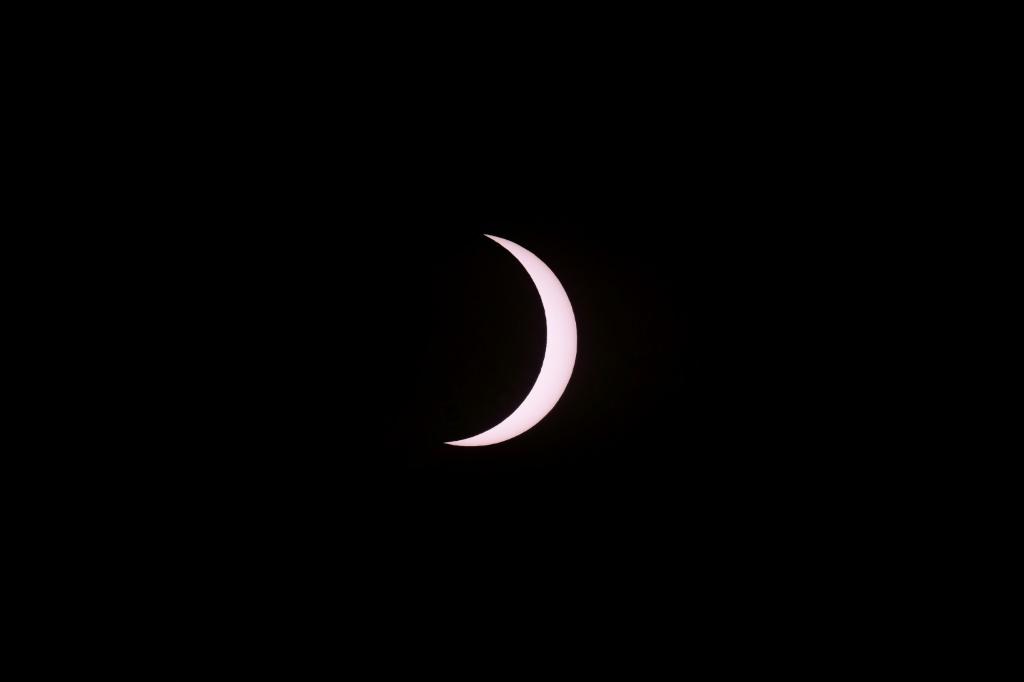
Skywatchers across North America and Europe are set to experience two distinct celestial events within a single day on Wednesday, Aug. 12, as a partial solar eclipse crosses much of the region before darkness brings the annual peak of the Perseid meteor shower under an especially dark, moonless sky.
The solar eclipse will unfold first, during daylight hours. A partial solar eclipse will be visible from Alaska, eastern Canada, 26 U.S. states, and most of Europe, though the moon’s darkest umbral shadow, the portion of the eclipse that produces total darkness, will miss North America entirely. A narrow path of total solar eclipse will instead pass through eastern Greenland, western Iceland and northern Spain, where the moon will completely block the sun for up to 2 minutes and 18 seconds.
Within North America, the deepest partial eclipse will occur in far northern Canada, while Alaska and the northeastern United States will offer the best viewing opportunities within the country. Fairbanks, Alaska, will see approximately 37% of the sun covered by the moon at around 8:27 a.m. Alaska Daylight Time. Within the contiguous United States, Presque Isle, Maine, will experience the largest partial eclipse, reaching roughly 28% coverage at approximately 1:50 p.m. Eastern time. Boston will see about 16% of the sun covered around 1:53 p.m., while New York City will experience approximately 10% coverage at roughly 1:54 p.m. Eastern time. Because the sun will be positioned high in the sky during the eclipse, viewers will not need to seek out any particular vantage point, with even an ordinary city sidewalk offering adequate viewing conditions.
The eclipse will be considerably more dramatic across the Atlantic. Beyond the narrow path of totality crossing Greenland, Iceland and Spain, much of the rest of Europe will experience a deep partial eclipse. London will see approximately 91% of the sun covered, while Paris will see roughly 92% coverage. Madrid and Barcelona both fall outside the path of totality, but will still experience a partial eclipse covering approximately 99% of the sun.
Advertisement
Proper eye protection remains essential throughout any stage of a partial solar eclipse, since it is never safe to view the sun directly without protection during a partial phase. Certified eclipse glasses meeting the ISO 12312-2 international safety standard are required for safe direct viewing, while any binoculars, cameras or telescopes used to observe the event need securely mounted solar filters attached to the front of their optics. Eclipse glasses saved from the total solar eclipse that crossed North America on April 8, 2024, remain usable, provided they show no scratches, pinpricks or other damage. Skywatchers are advised to check their glasses for damage by shining a flashlight through the lenses to confirm no light passes through, and to replace any glasses in question, purchasing only from reputable manufacturers listed on the American Astronomical Society’s official directory of safe solar viewers and filters.
Once the eclipse concludes, skywatchers willing to stay outside after sunset will be rewarded with the second major celestial event of the day. The same new moon responsible for the eclipse will also leave the night sky free of moonlight as the Perseid meteor shower reaches its annual peak overnight between Aug. 12 and 13. That combination of a dark, moonless sky and the meteor shower’s peak activity has generated particular excitement among astronomers this year, since bright moonlight typically washes out fainter meteors during peak viewing periods in other years.
Under exceptionally dark, rural conditions, observers could see as many as 60 to 100 meteors per hour during the Perseids’ peak, though a more typical rate under good conditions generally falls between 30 and 50 meteors per hour. Even observers in suburban areas with moderate light pollution should still enjoy a steady, visible stream of shooting stars throughout the night. The best viewing window for the Perseids generally falls after midnight, when Earth’s rotation carries observers directly into the densest part of the debris stream left behind by Comet 109P/Swift-Tuttle, the parent comet responsible for the annual meteor shower.
Location plays the single biggest role in determining how many meteors a given observer will ultimately see. Traveling away from the light pollution of towns and cities significantly improves visibility, with national parks, designated Dark Sky Places, DarkSky Preserves and rural coastlines all offering considerably darker skies capable of revealing far more faint meteors than typical suburban neighborhoods. Locations of that kind tend to become crowded during the Perseids’ peak each year, so anyone planning to camp overnight at a dark-sky location is advised to book accommodations well in advance. Once situated at a viewing location, allowing at least 20 minutes for eyes to fully adjust to the darkness, and avoiding phone screens during that adjustment period, significantly improves an observer’s ability to spot fainter meteors. While Perseid meteors appear to radiate outward from the constellation Perseus, individual meteors can actually appear anywhere across the night sky.
Advertisement
Beyond the eclipse and the meteor shower itself, Aug. 12 offers additional celestial sights for those willing to spend the full day and night observing the sky. The Milky Way will arch prominently across the southern sky from sufficiently dark viewing locations, offering one of the year’s best opportunities to observe the galaxy’s structure with the naked eye. Venus will also reach a point in its orbit known as dichotomy, appearing extremely bright to the naked eye while showing only half-illumination when viewed through a small telescope, as the planet continues moving closer to Earth in its orbital path.
Scott Eastwood, the actor and son of legendary filmmaker Clint Eastwood, criticized an unnamed fellow actor for abruptly leaving a film production, describing the incident during an appearance on Joe Rogan’s podcast, “The Joe Rogan Experience.”
Eastwood, 40, did not identify the actor by name during the conversation, but described a situation in which the person departed a project during pre-production after the film’s team had already invested significant resources. “Without saying any names … you know, people get too famous for too long. They think the world owes them something,” Eastwood said, according to PEOPLE. “And when it comes to doing the right thing, you’re like, ‘Dude … Do the right thing, don’t be a piece of s—.’ They’re like, ‘F— that. I can do whatever.’”
Eastwood elaborated on the specific circumstances that led to the actor’s exit, describing how the production had already begun moving forward with a director before the situation unraveled. “We started working on a film with a director and they decided, after we spent a bunch of money, that they just didn’t feel like they wanted to work with this other person and didn’t want to do the job,” Eastwood said.
According to Eastwood’s account, the actor’s role in the project had been significant, making their sudden departure especially disruptive to the production. Eastwood said he confronted the situation directly, urging the actor to make things right with those who had financially backed the project. “I was like, ‘You need to pay that money back to that person who invested in you,’” Eastwood said. “And they [said], ‘I’m not going to do that.’”
Advertisement
Eastwood’s comments prompted a striking response in the article’s comment section, where a user identifying themselves as “Kevin A.” wrote, “It was me. I left the film. And I’m not sorry.” The identity and authenticity of that commenter could not be independently verified.
Beyond the specific incident, Eastwood used the podcast appearance to reflect more broadly on patterns of behavior he has witnessed throughout his career in Hollywood, a industry he has direct, lifelong familiarity with given his father’s decades-long career as both an actor and director. “I’ve seen some behavior in this business that is shocking,” Eastwood said. “That would not go in other industries, but for some reason because we idolize [actors] … you’re like, ‘What dude?’”
Eastwood also offered a broader critique of the pursuit of fame itself, distinguishing it from the pursuit of financial success within the entertainment industry. “People think they want to be famous — you don’t want to be famous,” he said. “Rich, sure. But to be famous, that goal is so twisted … the whole other side of that is really ugly.”
Clint Eastwood, 96, built his career beginning in the 1960s, first rising to stardom in a series of Italian-produced Western films often referred to as spaghetti Westerns, before taking on the “Dirty Harry” franchise throughout the 1970s and 1980s. He later transitioned into directing, earning widespread critical acclaim for films including “Mystic River” and “American Sniper.” Scott Eastwood has followed a related but distinct path in the industry, appearing in several of his father’s films early in his career before building a broader résumé that includes roles in major studio productions such as “Suicide Squad” and “The Fate of the Furious.”
Advertisement
Scott Eastwood’s physical resemblance to his father has drawn frequent comment throughout his career, with many observers noting the strong similarity between the two actors’ appearances despite the generational and stylistic differences in the types of roles each has pursued on screen.
Eastwood’s remarks add to a broader, ongoing conversation within entertainment media about accountability and professional conduct within the film industry, particularly regarding how established stars handle disputes with directors, producers and financial backers during active productions. While Eastwood declined to name the actor at the center of his story, his comments reflect a level of frustration with what he characterized as a broader pattern of entitled behavior among some of his peers who have achieved significant fame within the industry.
As of the podcast’s release, neither Eastwood nor representatives for any specific actor have publicly confirmed the identity of the individual referenced in his comments, leaving the specific production and actor involved unconfirmed beyond Eastwood’s own account shared during the podcast conversation.
William Standish, a 28-year-old hiker from Melbourne, has been found dead on a remote section of the Continental Divide Trail in Wyoming, after a weeklong search effort launched when he stopped sending regular updates to his family in Australia.
Standish had built his life around hiking, traveling to destinations including Sweden, Nepal, Papua New Guinea, Canada and the United States to pursue his passion. At the time of his death, he had been attempting a second try at the Continental Divide Trail, a demanding route stretching from Canada to Mexico, after an earlier attempt in 2024 ended when he injured his foot and returned home early. This time, Standish was hiking the trail southbound.
Standish had been sending his family regular updates through a Garmin satellite communication device throughout his hike, with his most recent detailed update, outlining his planned next movements, sent on July 19. On July 23, his family received a check-in without coordinates or a written message, but a video sent through Facebook Messenger that they believed placed him somewhere in the Teton mountain range. When they had not heard anything further by July 27, they contacted national park officials to raise concerns.
Advertisement
Teton County Search and Rescue, based in Jackson, Wyoming, launched a search for Standish after he was reported missing on a remote portion of the trail located between Yellowstone and Grand Teton National Parks. On Wednesday morning, nearly a week after he was first reported missing, a search and rescue helicopter crew flew to his last presumed location and spotted a bright orange backpack from the air. The team then located Standish’s body.
In a statement, the rescue group said Standish appeared to have died following a fall in an area known as “the Wigwams,” on the west slope of the Tetons. “Evidence suggests that he may have fallen from a steep, high-altitude ridgeline that separates Grand Teton National Park and the Jedediah Smith Wilderness,” the rescue group’s statement said. Standish’s body was recovered and transported to Teton County Search and Rescue headquarters in Jackson, before being transferred to the Teton County Coroner’s Office. “TCSAR sends its sincere condolences to the family and friends of the deceased, and wishes to express its gratitude to the partnering federal agencies who assisted in the investigation,” the group said.
Standish’s family described him in a statement as a deeply loved and vibrant presence in their lives. “Our beautiful Will was a treasure,” the family said. “He was funny, cheeky, adorable, smart and kind. Unapologetically himself. He felt deeply, loved genuinely and always, always made people feel seen.” The family said Standish had a strong passion for social justice and a deep connection to the natural world, having studied environmental sciences and spent a semester abroad in the Czech Republic during his studies. They thanked the search and rescue teams and authorities involved in locating and caring for him. “We want to thank the tireless efforts of the Search and Rescue teams who found him and the authorities who are caring for him until we can bring him home,” they said, adding a direct message to Standish himself. “We love you. We will carry you with us forever. Thank you for filling our lives with a love so deep, so full of colour and warmth. Rest in eternal sunshine. Dance with the stars.”
Katie Jackson, a friend Standish had met on the trail, shared her own tribute on social media, describing the significance of the connections made while hiking. “Struck this week by the enormity of the choices we make: where we go, what we do, and especially who we go with,” she wrote. “Incredibly grateful to have known Will so well and experienced how his life touched and changed mine. Will had a uniquely large heart that was filled to the brim with love from and for his family, friends, adventures, tiny foster puppies, music, snowboarding, and comically large burritos. To know him was to spend most of your day laughing.”
Advertisement
The Continental Divide Trail Coalition also paid tribute to Standish following his death, describing the broader hiking community’s response to news that he had gone missing. “The CDT community lost a bit of light this week,” the group said in a statement. “Though he began his 2026 hike stronger than ever, Will was reported overdue on July 26. Concerned hikers immediately rallied to spread the word and join the search, which was a bit of comfort to his worried family in Australia. At CDTC, like so many others, we are deeply saddened by the news of Will’s passing.”
Following Standish’s death, friends he had met along the trail launched a fundraiser to help cover the cost of his funeral and the expense of returning his body to Australia. A spokesperson for Australia’s Department of Foreign Affairs and Trade confirmed the department is providing consular assistance to Standish’s family. “We send our deepest condolences to the family at this difficult time,” the spokesperson said.
Given the nature of this story, readers who may be personally affected by news of a loved one lost while hiking, traveling or pursuing outdoor adventure are encouraged to reach out to trusted friends, family or grief support resources during what can be an especially difficult time to process this kind of loss.




















































You must be logged in to post a comment Login