
Business
Polibeli Group Shares Surge 18% on Nasdaq as AI Infrastructure Pivot Gains Momentum


Polibeli Group Ltd. shares jumped more than 18% to close at $10.26 Thursday, extending gains as the digital supply chain company advances its strategic expansion into artificial intelligence computing infrastructure, attracting investor interest in the competitive technology sector.
The recent rally reflects growing enthusiasm around Polibeli’s pivot from its core B2B procurement platform to high-growth AI opportunities in Southeast Asia. The company, which listed on Nasdaq earlier this year, has announced several initiatives aimed at capitalizing on regional data center demand.
Polibeli’s core business provides digital supply chain services connecting small and medium-sized retailers with suppliers across Indonesia, Japan and other markets. The company offers procurement, logistics, warehousing and digital marketing solutions while dealing in consumer electronics, household goods and beauty products.
Recent strategic moves have shifted focus toward AI infrastructure. In June, Polibeli launched a review of opportunities in AI computing services, citing the global technology trend and its regional presence as key advantages for potential projects.
The company signed a non-binding memorandum of understanding to explore development of a large-scale AI computing center in Thailand, marking a concrete step toward infrastructure ambitions. While early-stage, the initiative signals commitment to diversification beyond traditional supply chain operations.
Leadership and Operational Updates
Polibeli has undergone leadership transitions in recent months, appointing Meijun Liang as chief financial officer following the resignation of a previous executive. Such changes often accompany strategic refocus in small public companies seeking to execute ambitious growth plans.
The company reported full-year 2025 financial results showing revenue of approximately $26.42 million with ongoing losses typical of growth-stage firms investing in platform development and new initiatives. Management has emphasized long-term value creation through technology expansion.
As a newly public entity, Polibeli is navigating reporting requirements and market expectations while building its AI strategy. The Nasdaq listing provides access to capital markets essential for funding infrastructure projects that require substantial investment.
AI Infrastructure Opportunity in Southeast Asia
Southeast Asia has emerged as an attractive region for data center development due to improving infrastructure, government incentives and growing digital economy demands. Countries including Thailand, Indonesia and Malaysia are actively courting technology investments.
Polibeli’s existing customer networks and regional expertise provide potential advantages in identifying and executing AI-related projects. The company aims to complement its supply chain operations with computing infrastructure services targeting enterprise clients.
Competition in the data center space is intensifying, with major players and regional operators vying for market share. Success will depend on securing partnerships, financing and technical capabilities to compete effectively.
Analysts note that while AI infrastructure offers substantial growth potential, execution risks remain high for smaller companies entering the capital-intensive sector. Polibeli’s track record in logistics and digital platforms may provide operational synergies.
Market Reaction and Volatility
The stock’s strong performance Thursday reflects momentum trading and positive sentiment around AI themes. Trading volume was elevated as retail and institutional investors repositioned around the company’s strategic announcements.
Polibeli shares have shown significant volatility since listing, typical of small-cap technology companies with evolving business models. The recent surge has pushed the market capitalization into mid-cap territory, though valuation metrics remain elevated given current financials.
Investors are betting on successful execution of the AI pivot while acknowledging near-term challenges including integration costs and competition. Short-term price action may continue reflecting news flow and market sentiment.
Broader Context for Small-Cap Tech Stocks
Small technology companies pursuing AI opportunities have captured significant investor attention amid broader sector enthusiasm. SPAC mergers and direct listings have provided pathways to public markets for many emerging firms.
Polibeli’s transition demonstrates how established regional businesses can reposition for growth in high-potential technologies. Similar stories have played out across various sectors as companies seek to capitalize on artificial intelligence trends.
Regulatory considerations for data centers include energy consumption, environmental impact and data sovereignty requirements. Southeast Asian governments are balancing development incentives with sustainability goals.
The company’s cosmetic and wellness products, including milk-derived exosome essences and plant extracts, provide some revenue diversification while research services in cell technologies support longer-term innovation.
Outlook and Strategic Priorities
Management has outlined plans to leverage existing strengths in technology and regional presence to build AI capabilities. Capital raised through the public listing will support project development and potential acquisitions.
Upcoming financial reports will provide updates on integration progress and early AI initiative performance. Investors will scrutinize cash burn rates, partnership announcements and regulatory milestones.
The biotechnology and regenerative medicine aspects of Polibeli’s portfolio, including research into armed T-cells and exosomes, offer additional growth avenues complementing the AI infrastructure focus.
As a Cayman Islands holding company with operations in Taiwan and Southeast Asia, Polibeli navigates cross-border regulatory environments. Compliance with Nasdaq listing standards and U.S. reporting requirements adds operational complexity.
Long-term success will depend on translating strategic vision into revenue-generating projects while managing execution risks inherent in capital-intensive technology deployments. The company’s diversified approach may provide resilience across economic cycles.
Polibeli’s Nasdaq performance highlights continued market appetite for innovative technology stories in emerging markets. As the company advances its initiatives, stakeholder attention will focus on milestones demonstrating progress toward sustainable growth and profitability.



“AWS Certified AI Practitioner Early Adopter”I am a DevOps Engineer for a major, wholly owned subsidiary of a large-cap Fortune 500. I have been the primary driver of Anthropic-based tooling in our company’s division, and have successfully pushed for the division-wide integration of tools like Claude Code via AWS Bedrock. I am currently spearheading the implementation of AI-infrastructure in our division.I am a true subject-matter expert on the actual buildout, deployment, and maintenance of AI tools and applications. I have increasingly deep knowledge on the science behind generative AI systems as a result of first-hand experience with machine learning algorithms, model training, and model deployment.I contribute to Seeking Alpha as an outlet to share my AI and machine learning insights through an investment-focused lens.Closely associated with LL InsightsPer TipRanks (6/26/25) – 2 Year Timeframe#716 out of 31,463 Financial Bloggers #1,222 out of 41,143 experts
Analyst’s Disclosure: I/we have no stock, option or similar derivative position in any of the companies mentioned, and no plans to initiate any such positions within the next 72 hours. I wrote this article myself, and it expresses my own opinions. I am not receiving compensation for it (other than from Seeking Alpha). I have no business relationship with any company whose stock is mentioned in this article.
Seeking Alpha’s Disclosure: Past performance is no guarantee of future results. No recommendation or advice is being given as to whether any investment is suitable for a particular investor. Any views or opinions expressed above may not reflect those of Seeking Alpha as a whole. Seeking Alpha is not a licensed securities dealer, broker or US investment adviser or investment bank. Our analysts are third party authors that include both professional investors and individual investors who may not be licensed or certified by any institute or regulatory body.
Business
Federal Realty Trust: Still Offering Attractive Total Returns, But Don't Aggressively Chase Here

Federal Realty Trust: Still Offering Attractive Total Returns, But Don't Aggressively Chase Here
Business
Celtics Have Explored a Blockbuster Trade for Stephen Curry, Ending His Long Warriors Tenure
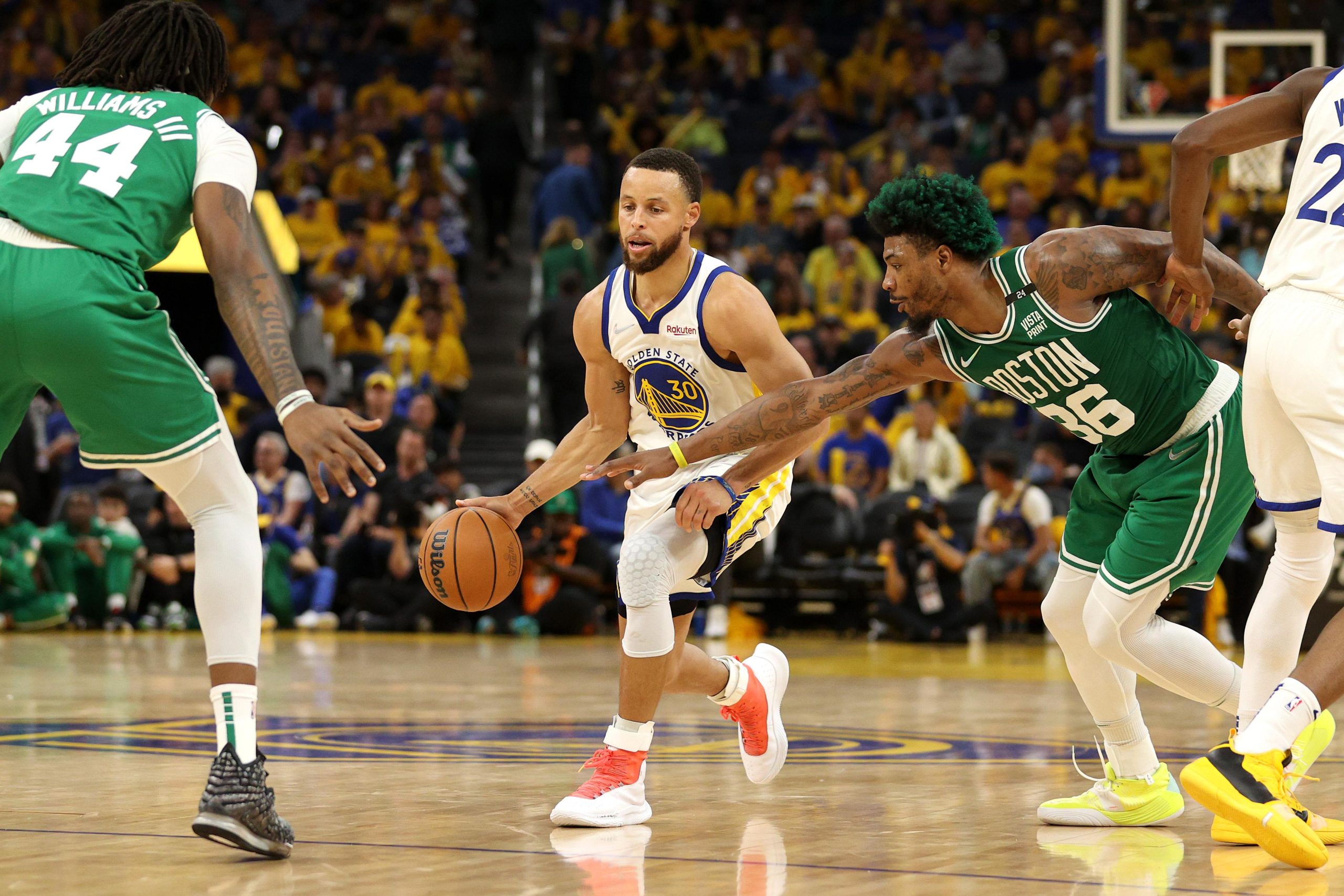
Boston Celtics President Brad Stevens has explored a blockbuster trade for Golden State Warriors star Stephen Curry, according to a report from Sports Illustrated insider John Karalis, a potential move that would end the four-time NBA champion’s 17-year run with the only franchise he has ever played for.
Curry, 38, has spent his entire career with Golden State since entering the league, but according to Karalis’s reporting, Stevens has reached out to the Warriors about a potential deal involving the veteran point guard. The reported outreach comes just months after Boston traded Jaylen Brown to the Philadelphia 76ers in exchange for Paul George and draft capital, a swap that left much of the Celtics’ fan base unimpressed at the time and left the team searching for another marquee addition to pair with star forward Jayson Tatum.
According to Karalis, no deal is close to completion, and any trade remains, in his characterization, a long shot at this stage. Even so, the report indicates that trade conversations between the two franchises have already begun in some capacity.
Golden State’s struggles this past season have fueled the speculation. The Warriors finished 10th in the Western Conference standings, a steep decline for a franchise that has been built around Curry for the better part of two decades. Forward Jimmy Butler is still working his way back from a torn ACL, and the team leaned heavily on aging veterans throughout the season, a strategy that Karalis suggested contributed directly to Golden State’s disappointing finish. Karalis described the current situation as representing “a crack in the foundation of the Curry-era Warriors,” which he characterized as the first real sign of instability of its kind since Curry first arrived in the Bay Area.
Despite Golden State’s roster struggles, Curry himself remains one of the league’s most productive guards. He averaged 26.6 points, 3.6 rebounds and 4.7 assists per game last season, while shooting 46.8% from the field and 39.3% from three-point range. Curry currently earns more than $62 million annually, and the Warriors are reportedly preparing to offer him a max contract extension as soon as this August, a move that would suggest the franchise’s own stated intention is to keep him in Golden State rather than facilitate a trade.
Under the hypothetical trade structure described in the report, the Celtics would send Paul George, Sam Hauser and multiple future first-round draft picks to Golden State in exchange for Curry. For Boston, acquiring Curry would immediately give Stevens a second bona fide superstar to pair alongside Tatum, a move that could help restore the Celtics as a legitimate championship threat in the Eastern Conference following an offseason that had otherwise left some fans questioning the front office’s direction after the Jaylen Brown trade. Boston would still retain multiple future first-round picks even after including several in a potential Curry package, according to the report, giving Stevens continued flexibility to keep building around his two stars going forward.
For Golden State, the hypothetical return centers primarily on the draft capital rather than George or Hauser individually. George would give the Warriors a proven wing scorer, though his long-term fit with the roster remains uncertain given his age and recent injury history, while Hauser would add shooting depth off the bench. The more significant value for Golden State, according to the report’s framing, would come from the draft picks themselves, offering a team that finished 10th in the West a path to rebuild through the draft rather than continuing to patch its roster with aging veteran additions.
Even acknowledging the report’s framing that the star power in any such deal would clearly tilt toward Boston, Curry’s greater individual impact relative to the proposed package underscores why Golden State would need significant draft capital to make a trade worthwhile from its own competitive rebuilding perspective, even at age 38.
Curry’s situation stands in contrast to other recent star movement across the league this offseason, including LeBron James’s decision to sign with the Philadelphia 76ers and the earlier trade that sent Jaylen Brown from Boston to Philadelphia. That broader wave of roster shakeups across multiple contending franchises has continued fueling speculation about further star movement as teams reassess their championship windows heading into the 2026-27 season.
As of the report’s publication, neither the Warriors nor the Celtics have publicly confirmed any trade discussions involving Curry, and league sources cited in Karalis’s reporting characterized the idea as still far from becoming an actual completed transaction. Whether the speculation ultimately develops into a formal trade proposal is likely to depend heavily on how both Golden State’s front office and Curry himself view the franchise’s competitive outlook in the coming weeks, particularly as the Warriors weigh whether to proceed with the reported max extension offer that would signal their intention to keep Curry in the Bay Area for the remainder of his career.
Business
Capital One Says It Closed Trump Organization Accounts Over Anti-Money Laundering Concerns in Court Filing
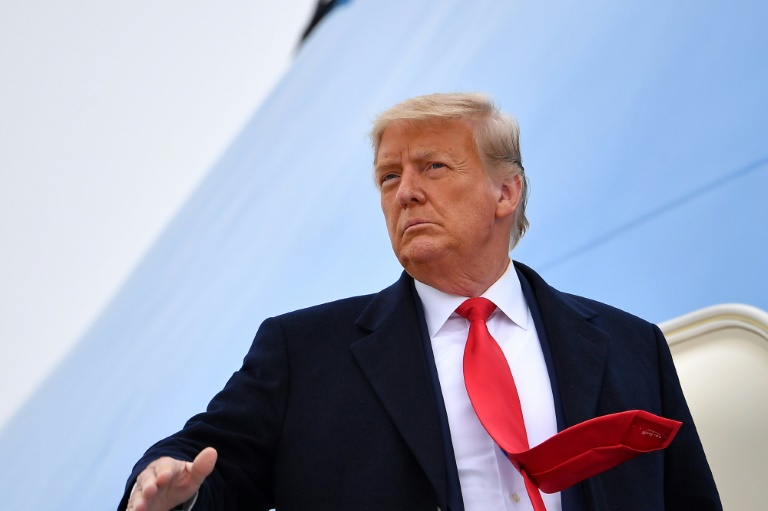
Capital One Financial pushed back Friday against a lawsuit challenging its decision to close the Trump Organization’s bank accounts years ago, stating in a new court filing that the closures followed a formal review by the bank’s anti-money laundering experts.
The disclosure marks the first time a bank has formally tied money laundering concerns to a business closure involving President Donald Trump’s family company. Capital One is seeking to have the lawsuit dismissed by casting doubt on claims that it illegally debanked the Trump Organization, a term referring to the denial of banking services on religious or political grounds.
Capital One has not accused the Trump Organization of engaging in illegal money laundering. Instead, Friday’s filing argues that the underlying documents and the plaintiffs’ own allegations demonstrate the accounts were closed for legitimate anti-money laundering reasons. “Documents and Plaintiffs’ own allegations make clear that Capital One closed Plaintiffs’ accounts for anti-money laundering (‘AML’) reasons,” the filing said. “The closures were the result of months of analysis and a careful review by Capital One’s AML team in accordance with bank policies and regulatory guidance.”
Capital One first notified the Trump Organization of its plan to close more than 300 Trump-affiliated bank accounts in March 2021. The Trump Organization and Eric Trump, the president’s son, filed a lawsuit in a Florida federal court in March 2025, alleging that Capital One closed the accounts because of what they characterized as the bank’s “woke” beliefs and a desire to capitalize on the political climate following the Jan. 6, 2021, riot at the U.S. Capitol.
The federal court in Miami has twice dismissed complaints filed in the case, though the presiding court gave the plaintiffs an opportunity to submit an amended complaint after each dismissal. Capital One argued in its Friday filing that the most recent version, submitted in July, “suffers from the same fundamental flaws as their prior two pleadings.” The bank characterized the Trump Organization’s allegations of political motivation as “misguided” and said they were “based on cherry-picked quotations unsupported by the full context” of the documents submitted to the court. Capital One added that “the transaction patterns identified by Capital One are among the types of activity flagged by federal banking guidance,” pointing to established regulatory standards as the basis for its account-closure decisions.
Neither the Trump Organization nor Capital One immediately responded to requests for comment on the filing.
The case unfolds against a broader backdrop of tension between the Trump administration and major U.S. financial institutions since the start of the president’s second term. The administration has put pressure on several large banks, echoing longstanding conservative complaints that financial institutions have deliberately targeted customers and businesses associated with the political right. Trump signed an executive order in August 2025 barring what the administration described as discriminatory debanking practices. In January, Trump filed a separate lawsuit against JPMorgan Chase on similar grounds, further illustrating the fraught relationship between the administration and Wall Street during his current term.
Trump’s history of legal disputes with Capital One predates the current lawsuit. During his first term, in 2019, Trump sued both Capital One and Deutsche Bank in an effort to prevent the institutions from sharing his financial records with Congress as part of a probe led by Democratic lawmakers. Anti-money laundering professionals at Deutsche Bank reportedly flagged a set of transactions connected to Trump at the time, though bank executives ultimately did not act on those flags; Deutsche Bank denied that characterization of events when the report first surfaced.
The current dispute represents a significant escalation in the broader debanking controversy, given that Capital One’s court filing marks the first instance of a major bank formally and publicly linking anti-money laundering concerns specifically to its decision to sever ties with the Trump Organization. Previous public disputes over debanking allegations involving Trump-affiliated entities and other conservative-aligned individuals and businesses have generally centered on claims of political or ideological discrimination, rather than explicit acknowledgment by a bank that its own internal compliance review identified transaction patterns warranting scrutiny under federal anti-money laundering guidance.
With the Miami federal court having already dismissed two prior versions of the complaint and Capital One now arguing that the latest amended filing suffers from the same underlying deficiencies, the case’s future will likely hinge on how the court evaluates Capital One’s characterization of the closures as a routine, compliance-driven business decision against the Trump Organization’s continued allegations that the closures were instead politically motivated. No trial date or further hearing schedule was disclosed in the reporting on Friday’s filing.

Wherever volatile fuel prices head this year, don’t expect bargain flights.
Airfare in the U.S. in June was up 26.5% compared with a year earlier, according to the latest federal data.
Airline leaders say customers continue to book even after carriers hiked fares. They told Wall Street analysts this month that they’re expecting to hold onto that pricing power at least through the rest of the year, if not longer.
Traveler Marjorie Aran said she and her husband paid a combined $800 to go from New York to Chicago in economy on United Airlines this week to visit their daughter.
“We used to go to Chicago for a couple of hundred dollars,” she said. Asked if she would skip a trip because of the fares she said no. “We can afford it.”
Airlines are betting that stays true for millions of consumers.
The average Southwest one-way fare, for example, was $225.61 in the second quarter, up from $186.65 during the same span of 2025.
“Despite high fuel and high prices, we’re seeing really strong demand,” Southwest Airlines CEO Bob Jordan told CNBC’s “Squawk on the Street” in late July.
United said it expects to pay about $6 billion more for fuel this year than it expected at the start of 2026. American Airlines forecast a $6 billion increase in fuel costs compared with last year, each a jump of a more than 50% from 2025. Both carriers said demand is still strong, even as they’re passing costs on to customers with higher fares.
“We observed minimal to no negative impact on demand from higher price points, a trend we see continuing,” United Chief Commercial Officer Andrew Nocella told Wall Street analysts on the company’s July 16 earnings call. The carrier expects unit revenue year over year for the rest of 2026 to rise and even exceed the second quarter’s increase, he said.
Airlines are eager to make up not just the billions of dollars more they’ve paid for fuel this year, but also to cover higher costs of labor, maintenance and basic operating expenses like increased airport fees.
“Labor costs have escalated dramatically. Maintenance is off the charts in terms of escalation. And those are all costs that every single airline pays the same,” United CEO Scott Kirby said on the call.
Volatility continues
The surprise surge in fuel costs — airlines’ biggest expense after payroll — was a shock to the industry. Airlines pruned schedules this year, which can mean fewer flights per day or week on a certain route. That leaves customers with a lower number of flights to choose from and can lift fares.
According to S&P Global Energy Platts data, jet fuel prices have eased from four-year highs in April, but are still up about 50% since Feb. 28, when the U.S. and Israel’s strikes on Iran kicked off the monthslong military conflict that has choked off a main shipping channel for months.
United said its fuel costs rose $575 million from the start of July until mid-month as it was reporting results, knocking $1.12 off of third-quarter adjusted earnings.
In a sign of how seriously airlines were taking the turmoil in fuel markets this year, Southwest — fearing a supply crunch on the import-reliant West Coast — sent a boat filled with more than 12 million gallons of jet fuel, about a week’s supply for the airline, through the Panama Canal from Houston to Los Angeles in May. It was the first time the airline had sent fuel from Texas to another U.S. destination by sea.
U.S. Gulf Coast jet fuel was going for about $3.60 a gallon, as of Monday, according to S&P Global Energy Platts. While that’s off from $4.78 a gallon in April, prices vary depending on geography and on local supply.
The volatility that’s come along with on-again, off-again ceasefires with Iran has also made it harder for airlines to schedule and price flights.
Tightening grip on consumers
As fares and fuel rise, the four biggest U.S. airlines — American, Delta Air Lines, United and Southwest — have been gaining share of the U.S. market.
According to Cirium data, those carriers have 82.1% share of the seats flown by U.S. airlines this year, up from 80.7% last year and 79.7% in 2022. That increase comes even as Southwest, which carries more passengers domestically than any other, is barely growing this year.
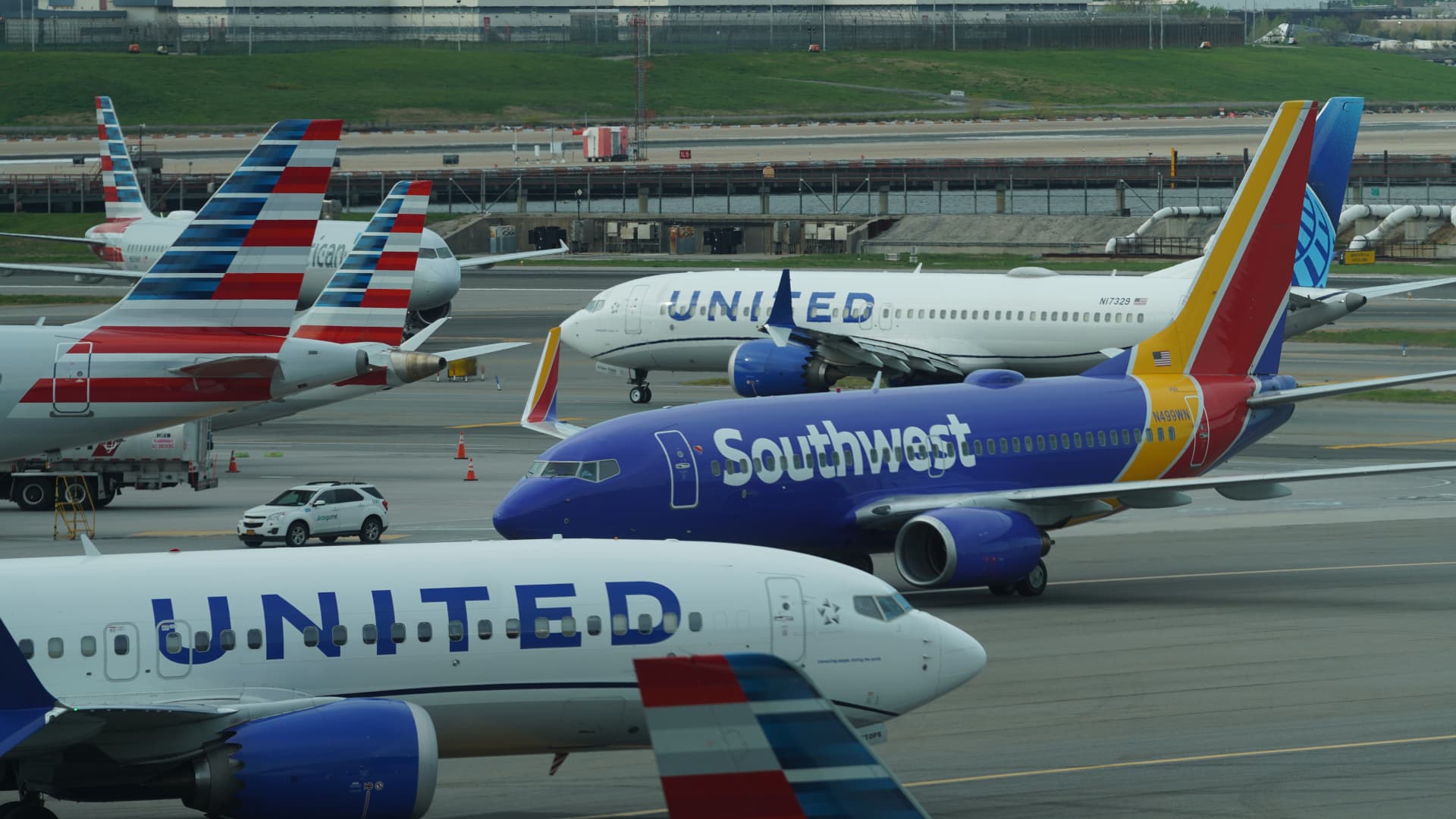
Planes of United Airlines, Southwest Airlines and American Airlines are seen at LaGuardia Airport in New York, the United States, on April 23, 2026.
Zhang Fengguo | Xinhua News Agency | Getty Images
That increasing share for big airlines is in part because there’s less competition from some smaller rivals.
Spirit Airlines, the iconic U.S. discounter, collapsed in May, taking tens of millions of seats off the market overnight.
Spirit’s problems were bubbling for years: Costs were on the rise for labor and other expenses, many of its Airbus jets were grounded by a Pratt & Whitney engine manufacturer defect, and upmarket travel was outshining economy class. Last summer, it filed for bankruptcy protection for the second time in a less than a year, with some analysts criticizing the carrier for not doing enough in its first Chapter 11 to cut costs. The carrier shut down before dawn May 2, failing to reach a deal with bondholders, including for a potential government bailout.
Some smaller low-cost airlines are moderating their growth, if not shrinking altogether, to save money as fuel prices remain high. According to Cirium, Avelo is shrinking and so is a combined Allegiant and Sun Country, which completed their merger in May.
Still, JetBlue Airways, Frontier Airlines and Breeze Airways, a startup launched by JetBlue founder David Neeleman are planning to grow.
“Despite this second-half earnings improvement, we plan to continue to maintain a conservative capacity profile given that the geopolitical backdrop remains fluid and fuel remains volatile,” JetBlue CEO Joanna Geraghty said on an earnings call on Tuesday.
JetBlue forecast an increase in unit revenue of as much as 16.5% in the current quarter.
Frontier, which is now the largest U.S. discounter, is also enjoying increased pricing power. Its average fare revenue in the second quarter was $63.04, up from $40.94 the year before, thouh its non-fare revenue, which includes seating fees and other add-ons, was down 1% from the year-earlier period.
The Denver-based airline is planning to grow capacity as much as 18% this quarter and forecast unit revenue growth of 20%. It plans to expand about 7% in the fourth quarter.
The increase in revenue has helped offset higher fuel prices, Frontier CEO Jimmy Dempsey said in an interview Thursday. That’s key to stabilizing the carrier, which lost money in five of the past six years.
“There’s a lot of energy in the airline about bringing us back to profitability,” Dempsey said.
Frontier, JetBlue and Allegiant are planning to introduce first-class seats in the coming months, roomier, more expensive options that executives say will cater to customers looking to pay up for more space.
Post-summer test
The next few months, when the big summer travel rush ends, will determine just how much airlines can pass along to customers. And the summer season is ending earlier and earlier, with August not as strong of a demand month as it used to be. However, carriers also say that for international travel, customers are booking more often in the fall and other traditionally off-peak periods, to avoid crowds, high prices and oppressive heat.
Airport checkpoint screenings are down 0.5% from last year through July 24, and down 2.6% from the four weeks that ended that day, David Vernon, airline analyst at Bernstein, said in a Monday note.
Justin Wittekind, 27, a podcast writer and researcher, who was on his way back to Ontario, California, from New York said he paid about $340 on United. He said he would likely think about drawing the line at $400 for a round trip.
“But if I have to go home … I’ll pay $400, but I wouldn’t like it,” he said.
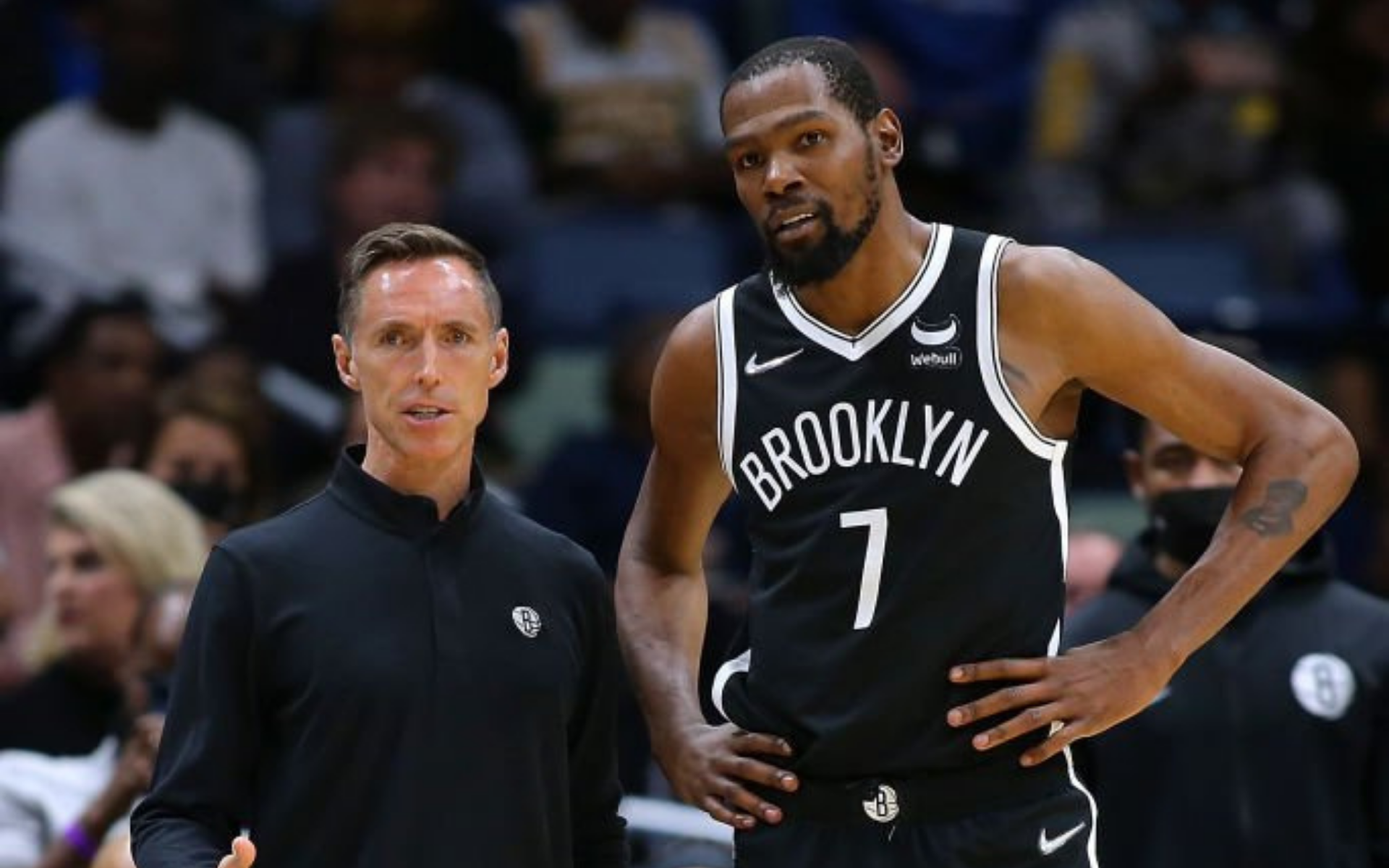
Houston Rockets forward Kevin Durant said Saturday that LeBron James and the new-look Philadelphia 76ers have the offensive firepower to compete for the 2027 NBA championship, comparing the team’s combined scoring power to the championship Golden State Warriors squads he once played on.
Speaking at a USA Basketball Foundation charity event in Ladera Ranch, California, Durant evoked his two Golden State Warriors title teams, which also featured Stephen Curry and Klay Thompson, when discussing the scoring potential of Philadelphia’s newly assembled core of James, Jaylen Brown, Joel Embiid and Tyrese Maxey. “The last time they put three 20-point scorers on a team, they said it was unfair, which was the [Warriors] team I was on,” Durant said. “[The 76ers] have got four 25-point scorers on this team. So, hell yeah, I think they’re going to be a contender. They’re going to be a fun team to watch. It’s going to be League Pass-worthy.”
Brown, Embiid and Maxey each averaged at least 25 points per game last season, giving the 76ers a level of combined scoring depth that Durant suggested exceeds even the star power he experienced during his own championship years in Golden State, when the Warriors’ trio of 20-point scorers drew criticism from around the league for creating an uneven competitive landscape.
Philadelphia’s roster transformation this offseason has been significant. The 76ers acquired Brown from the Boston Celtics in a trade before adding James on a two-year, $8 million contract following a lengthy free agency process that saw James ultimately choose Philadelphia over several other prominent suitors. Oddsmakers have responded to the moves by ranking the 76ers among the league’s leading championship contenders for next season, trailing only the Oklahoma City Thunder and San Antonio Spurs in current title odds.
The stakes carry significant historical weight for both the franchise and its newest star. Philadelphia is seeking its first NBA championship since 1983, a drought spanning more than four decades. James, meanwhile, is pursuing a milestone that would be unprecedented in league history: becoming the first player ever to win an NBA championship with four different franchises, following his previous titles with the Cleveland Cavaliers, Miami Heat and Los Angeles Lakers.
Beyond his comments on the 76ers, Durant used the same charity event to address his own future with the U.S. national basketball team, reiterating his desire to compete at the 2028 Los Angeles Olympics. Durant would turn 40 shortly before those Games begin, but he has previously said he does not want to simply age out of consideration for the roster. “I didn’t want to just take my name out of consideration just because of the simple fact that I’m older and I did it before,” Durant said in earlier comments regarding his Olympic ambitions. “Grant understands my love for Team USA. That’s my family. The level of love I have for Team USA and the whole organization over there is unmatched, so I’d love to be part of it until I’m done playing.”
Durant has played in the past four Olympics and became the career scoring leader for USA men’s basketball in the process, but he has said he wants to earn any potential spot on the 2028 roster rather than receive automatic consideration based on his past accomplishments. Speaking about how that decision would ultimately be made, Durant deferred to USA Basketball’s leadership. “It’s really on [USA Basketball managing director] Grant Hill and what Team USA wants to do,” Durant said. “I stay on top of my game and hopefully I get that call, but there’s so many great players who deserve to be on the team.”
If selected for the 2028 roster, Durant would have the opportunity to become the first men’s basketball player in Olympic history to win five gold medals, provided the United States wins the men’s tournament for a sixth consecutive time. Durant, James and Curry famously played together for the first time at the 2024 Paris Olympics, leading Team USA to gold with victories over Nikola Jokic and Serbia in the semifinals and Victor Wembanyama and host-nation France in the championship game, a run that many assumed at the time would mark the trio’s final Olympic appearance together given their ages.
In his first season with Houston after being traded from Phoenix, the 37-year-old Durant has continued performing at an elite level, averaging 26.1 points, 5.4 rebounds and 4.4 assists per game while shooting 50.6% from the field, 40.4% from three-point range and 88.1% from the free-throw line, numbers that underscore why he remains in serious consideration for a spot on the national team roster despite his age.
Durant’s remarks add to the wave of reaction across the league since James’s decision to sign with Philadelphia became official, with players, executives and analysts continuing to weigh in on how the addition reshapes both the 76ers’ immediate championship outlook and the broader competitive landscape heading into the 2026-27 NBA season.

One of the most closely followed stories involves the disappearance and death of two Russian siblings in Thailand. Thai police have made significant progress, with suspects confessing to the killings after investigators discovered the siblings’ buried motorcycle, providing crucial physical evidence in the case. The investigation captured international attention as authorities raced against time following the initial disappearance, with local media detailing the complex sequence of events leading to the arrests.
In another high-profile case, Thailand awaits the outcome of a Georgian investigation into the death of Thai YouTuber “Hlun Solo,” a travel content creator whose passing has highlighted hidden risks faced by solo content creators operating in the region. The case has sparked broader conversations about safety protocols for digital creators working independently, with Thailand’s growing creator economy facing scrutiny over inadequate safeguards. The family has since authorized repatriation of the vlogger’s remains, though Georgia’s delayed reporting of the death has drawn criticism and calls for answers from Thai officials.
Tragedy also struck with a Bangkok bar fire that left dozens dead, marking one of the more devastating incidents in recent memory. Additionally, security concerns persist in southern Thailand, where five soldiers were killed in a checkpoint attack, underscoring the region’s ongoing insurgency challenges that show no signs of abating despite years of conflict.
Economic and Financial Developments
Thailand’s economic landscape shows mixed signals. The country recorded a current account deficit of $3.5 billion, while private investment eased in June and retail sales fell at a softer pace, according to TradingView data. However, personal spending rose at a faster pace, suggesting resilient consumer demand despite broader economic headwinds.
In a notable financial development, Thailand’s 2-billion-baht Savings Plus bond tranche sold out in just 21 seconds, demonstrating strong investor appetite for government securities. Meanwhile, the Bank of Thailand is developing a baht-backed stablecoin to enhance payment systems and financial efficiency, signaling the country’s push toward digital currency innovation.
On the regulatory front, Thailand is cracking down on USDT transactions as part of broader efforts to combat China-linked criminal networks, while also moving closer to removal from a financial watchlist—a positive signal for the country’s international financial standing, as detailed in Bangkok Post’s coverage of the development.
Trade relations remain complex, with Thailand detailing US tariff exemptions and duties across key export categories, even as questions persist about whether Thailand has sufficient leverage to negotiate favorable terms with Washington.
Infrastructure and Technology Investment
Thailand is positioning itself as a regional technology and infrastructure hub. True Internet Data Center is seeking a $2 billion loan to build new AI-focused data center capacity, reflecting the global AI investment surge flowing into the country. This growth, however, raises sustainability concerns as energy-intensive data centers challenge the nation’s environmental goals.
The government has unveiled an ambitious “Siam Silica” plan to drive a regional semiconductor hub, complemented by a broader semiconductor roadmap aimed at building domestic high-tech manufacturing capacity. Thailand is also targeting advanced green manufacturing hub status, aligning technology growth with environmental commitments.
Transportation infrastructure is expanding significantly, with eight high-speed rail contracts due for tender in December and a 27-billion-baht rail link project connecting the Gulf coast to the Andaman coast. Additionally, Thailand’s first megawatt-level EV charging station has launched, supporting the country’s electric vehicle transition.
Regional Relations and Humanitarian Concerns
Tensions along the Thai-Cambodian border continue to generate humanitarian concern, with over 20,000 Cambodians remaining displaced following border clashes, according to UN experts. Additionally, Cambodian jobseekers fear falling into debt traps amid Thailand’s border reinforcement measures, highlighting the human cost of heightened security postures.
Thailand’s approach to Myanmar has also drawn criticism, with human rights organizations urging the government to end legitimization of Myanmar’s military regime and instead expand engagement with democratic alternatives.
Sports, Tourism, and Cultural Highlights
Thailand scored a major sporting win as MotoGP confirmed Thailand will host the 2027 season opener, marking the series’ first 850cc race of the new era. This announcement generated coverage across multiple international motorsport outlets, cementing Thailand’s growing status as a motorsport destination.
In tourism, Thailand continues deploying culinary “soft power” to boost exports and global cultural influence, while also planning “wellness sandboxes” to drive economic growth through health-focused tourism initiatives. The country’s online travel boom is being reshaped by AI technology amid an increasingly crowded digital marketplace.
Cultural recognition arrived with southern Thailand landing its first UNESCO heritage site, while the historic “Death Railway” prepares to apply for World Heritage status, honoring a significant but somber chapter in the nation’s history.
Governance and Regulatory Reform
Thailand is overhauling more than 100 laws to boost national competitiveness, alongside efforts to set stricter business registration checks aimed at curbing nominee arrangements. The government is also moving to limit cannabis strictly to medical use, reversing earlier liberalization policies, and reviewing export control regimes to ensure compliance readiness for businesses navigating international trade requirements.
Source : Google News – Search
Other People are Reading
OPEC+ members agree to September quota hike
Business
King Charles Reunites With Prince Harry, Meghan and Their Two Children at Highgrove After Four Years
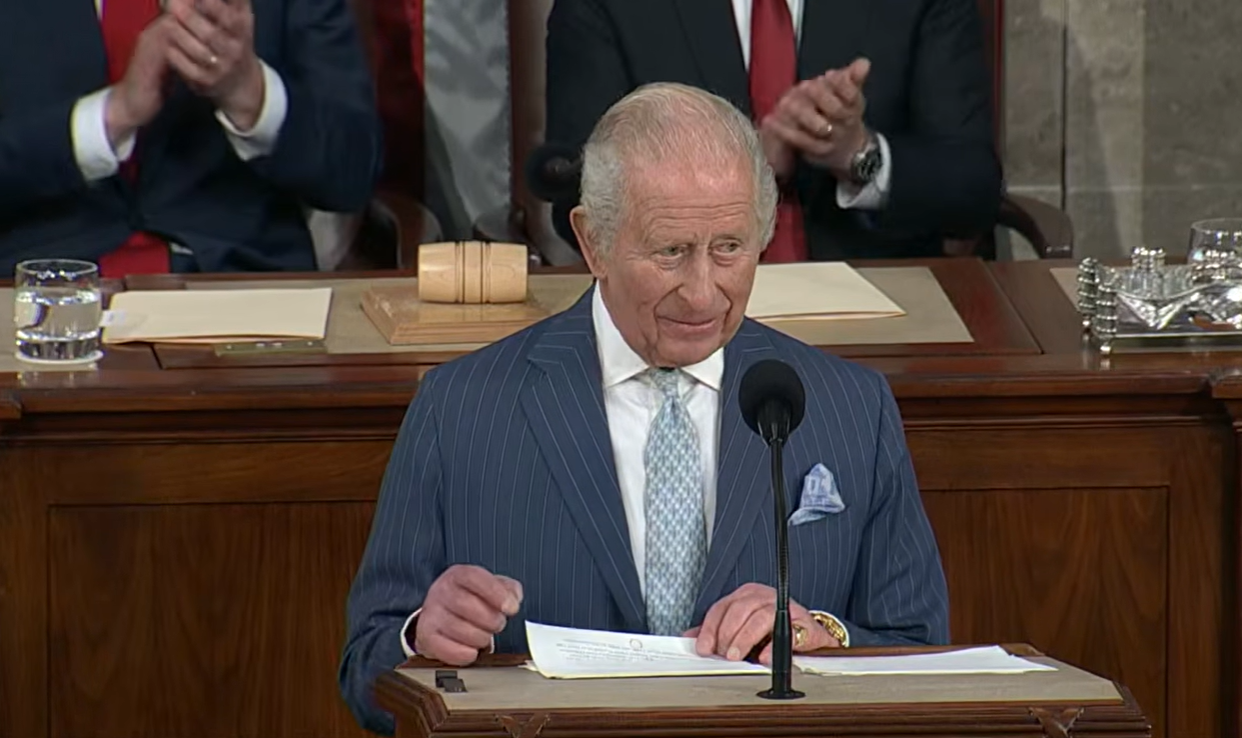
King Charles III met privately with Prince Harry, Meghan Markle and their two children, Prince Archie and Princess Lilibet, on July 10, marking the first time the king had seen his younger son’s family together in more than four years, Buckingham Palace confirmed.
The king and Queen Camilla hosted Harry, Meghan and their children at Highgrove House, the monarch’s private estate in Gloucestershire, west of London. It was the first time Charles had seen his two grandchildren in person in more than four years, and the first time Harry and Meghan had been in the United Kingdom together since 2022, when they attended Queen Elizabeth II’s funeral. Buckingham Palace described the gathering as a private family visit and said no photographs or additional details would be released.
The meeting followed days of uncertainty over the Sussexes’ travel plans. Harry had arrived in London the previous week for a series of charity engagements, including an Invictus Games Foundation event in Birmingham, and there had been widespread media reports beforehand about whether Meghan and the children would join him. According to BBC News, Harry had been reassessing whether it would be safe for his wife and children to travel amid an unresolved dispute over his security arrangements while in the UK, after his request for taxpayer-funded protection during the visit was denied.
Notably absent from the Highgrove reunion were Prince William and Catherine, Princess of Wales, who instead appeared together at a separate public event in Windsor the same day. Buckingham Palace has not commented on the reason for their absence.
Roya Nikkhah, royal editor of The Sunday Times, reported that William and Harry have not seen each other or spoken since Queen Elizabeth II’s funeral in 2022. Writing about the Highgrove meeting, Nikkhah said, “What will the Prince of Wales make of his father’s olive branch to the Sussexes? He won’t like it, that’s for sure.” She added that while William has largely stopped discussing his brother publicly, “his feelings of betrayal by his brother’s departure from the monarchy and subsequent outbursts still sting.”
The Highgrove meeting was not the first sign of a gradual thaw between Harry and his father specifically. In September 2025, Harry and Charles held a private tea at Clarence House, their first in-person meeting in 19 months, which Buckingham Palace also confirmed at the time. That meeting followed Harry telling the BBC in May 2025 that his father would not speak to him “because of this security stuff,” and that he was eager to reconcile with the royal family, saying, “I would love reconciliation with my family. There’s no point in continuing to fight anymore. Life is precious.”
The relationship between Harry and the rest of the royal family has remained strained since he and Meghan stepped back from official royal duties in 2020 and relocated to California. That strain deepened following the 2023 publication of Harry’s memoir, “Spare,” in which he wrote that William had physically pushed him to the ground during an argument about Meghan, whom William had reportedly described as “difficult,” “rude” and “abrasive.” Harry said in the book that he did not retaliate and that William later apologized. Asked last year whether he regretted making those claims public, Harry told the Guardian, “My conscience is clear.”
Harry’s UK security arrangements have remained a central and unresolved point of tension. After he stepped back from royal duties, his taxpayer-funded protection was downgraded from full-time coverage to case-by-case review. He challenged that change in court and lost his appeal earlier this year.
Following the Highgrove meeting, neither Buckingham Palace nor representatives for the Sussexes released further public comment beyond confirming that the visit had taken place. No date has been announced for any future meeting between the two branches of the family.


Leo Nelissen is a macro-focused equity strategist and long-term investor with more than a decade of experience on Seeking Alpha, where he has built a following of over 50,000 readers. His work combines big-picture macro analysis, geopolitical insight, and bottom-up research to identify high-quality businesses and long-term investment opportunities. He is the founder of Main Street Alpha, a Seeking Alpha Investing Group focused on macro strategy, real portfolios, dividend investing, and disciplined capital allocation for long-term investors.
Analyst’s Disclosure: I/we have no stock, option or similar derivative position in any of the companies mentioned, and no plans to initiate any such positions within the next 72 hours. I wrote this article myself, and it expresses my own opinions. I am not receiving compensation for it (other than from Seeking Alpha). I have no business relationship with any company whose stock is mentioned in this article.
Seeking Alpha’s Disclosure: Past performance is no guarantee of future results. No recommendation or advice is being given as to whether any investment is suitable for a particular investor. Any views or opinions expressed above may not reflect those of Seeking Alpha as a whole. Seeking Alpha is not a licensed securities dealer, broker or US investment adviser or investment bank. Our analysts are third party authors that include both professional investors and individual investors who may not be licensed or certified by any institute or regulatory body.

Chase Bank money glitch #chasebank #moneyglitch #comedy

Mysterious character’s gothic market at York Castle Museum

Apple’s Selloff Looks More Like An Opportunity Than A Warning (NASDAQ:AAPL)


-
 Sports7 days ago
Commonwealth Games boxing: Jadumani Singh seals dominant 5-0 win over Pakistan’s Sumama Rehman to enter quarter-finals | Commonwealth Games News
-

 Business4 days ago
Why Trees Belong on the Risk Register
-

 Fashion2 days ago
Weekend Open Thread: Wit & Wisdom
-

 Tech7 days ago
Intel is reversing course and bringing hyper-threading back to its server chips
-

 Politics2 days ago
Meta enters AI-training agreement with far-right ‘propaganda rag’ Newsmax
-

 Politics6 days ago
Luke Littler dismantles Gerwyn Price to retain title in Blackpool
-

 Crypto World22 hours ago
MicroStrategy Post-Earnings CLARITY Act Push Could Add New Catalyst for Its Stock
-

 Politics5 days ago
The Part of the Electric Transition Nobody Wants to Discuss
-
 Entertainment5 days ago
‘Stargate’ Creator’s New Sci-Fi Series Returns for Season 3 Tomorrow
-

 News Videos7 days ago
BITCOIN JUST ENTERED THIS CRITICAL ZONE…
-

 Business4 days ago
Major shareholder moves on Canyon
-

 Politics7 days ago
Spain sweeps the board at 2026 World Cup with individual awards
-

 News Videos3 days ago
Bitcoin Enters the 3rd Stage of the Bear Market
-

 Crypto World1 day ago
XRP Ledger v3.3.0 brings five institutional features
-

 Crypto World5 days ago
Kraken Enables Retail Access to Jersey Mike’s IPO via Tokenized Shares
-

 Tech5 days ago
New macOS Sequoia & Sonoma security updates for older Macs
-

 News Videos5 days ago
Claude: Build Financial Dashboards in Minutes (2026)
-

 Politics3 days ago
Luke Littler’s dominance sparks GOAT debate
-

 Sports3 days ago
Seema Kaliramna Wins Discus Throw Bronze, Takes India’s CWG Medals Tally To 17
-

 Business5 days ago
Johnson & Johnson agrees to $5.5B settlement over talc cancer claims
You must be logged in to post a comment Login