

Politics
What Might Mount Etna’s Eruptions Mean For Visitors?


Recently, Mount Etna – Europe’s most active volcano – saw a spectacular burst of lava, which the BBC reported could be seen from “miles away”.
It followed reports of lava flowing down the volcano days before and raised the alert level in the area.
Mount Etna’s eruptions are pretty frequent, with 11 reported bursts in three weeks taking place in 2021. These can sometimes lead to ash plumes.
So what might that mean for those travelling to the area?
Ash clouds may not disrupt airlines as much as they used to
While the ash clouds typical of Mt Etna’s eruptions can affect flights, the Civil Aviation Authority (CAA) told HuffPost UK that these disruptions are less severe than they used to be.
Spokesperson Jonathan Nicholson said: “Following the 2010 volcanic eruption in Iceland and the lessons learned since, volcanic eruptions now cause less disruption to aviation.
“The whole sector learned a lot about the impact that volcanic ash can have, while new technology and understanding means the impact can be better handled to minimise any disruption to passengers.”
Still, Italy’s Civil Protection Department said on its site that ash clouds can affect the Catania Fontanarossa, Sigonella, and Reggio Calabria airports and may “cause significant disruption to the transport sector”.
Keep an eye on your airline and airports’ updates if you’re travelling to the area.
Though Mt Etna’s eruptions are frequent, they don’t usually affect locals
“The lava flows of Etna, due to their viscosity and consequent low… speed, [usually don’t] constitute a danger to the safety of people.
“In [cases where] leakage occurs from [areas of] high altitude, the flows would rarely reach the towns,” Italy’s Civil Protection Department shared on their site.
In the rare case that an eruption might threaten a town, they added, it “is usually possible to implement measures aimed at altering their path”.
The most dangerous type of eruption, they continued, comes from “vents placed at low altitude: in such case the time to carry out any cooling flows would clearly be reduced, and most probably it would be useful to resort to the evacuation of the population from threatened areas”.
In 1983, 1992, 2001 and 2002, some canals were excavated, others had their banks reinforced, and barriers were laid down to change the direction of the lava flow.
“It should be noted that in the last two cases, interventions were designed to protect tourist infrastructures located at high altitudes,” the government body added.
Multiple monitoring systems, including thermal cameras, constantly track the mountain’s status.
You can check on the volcano’s status via INGV.
It’s crucially important to keep up-to-date with the volcano’s status if you’re visiting. Follow all local weather advice.

Did you know that Tesco had an own-brand product before the supermarket had even been named?
Yup ― Tesco was given its moniker long after it first went to Tesco Tea.
The TES came from supplier TE Stockwell’s name, and the Co came from founder Jack Cohen’s surname.
I had a vague idea Tesco, Lidl, and Aldi were all clever portmanteaus or acronyms.
But for some reason, I had no idea the letters in ASDA contained little Easter eggs about the company’s past too ― until today.
What does ASDA stand for?
According to the company’s site, the Asquith family whose sons created ASDA were originally butchers. Peter and Fred Asquith went on to open some supermarket stores.
Meanwhile (in the 1920s) a group of dairy farmers united to form Hindell’s Dairy Farmers Ltd ― this included the Stockdale family.
By 1949 Arthur Stockdale turned that dairy collective into a single company called Associated Dairies & Farm Stores Ltd.
Noel Stockdale, Arthur’s son, met with the Asquith brothers and liked their work. So, in 1965, they officially joined together to form ASDA.
Per ASDA’s site, the name therefore stands for “ASquith + DAiries.”
The more I think about it, the wilder it seems that I never questioned the brand name…
The company is now part-owned by Walmart
Most of the company (67.5%) now belongs to private equity giant TDR Capital, City AM reports.
Mohsin Issa has 22.5%, while Walmart still has a 10% stake.
The American superstore had previously owned ASDA, the publication explains.
And according to Reader’s Digest, Walmart’s name has its own history ― it “was likely an abbreviation for Walton’s Market”.

Do you sometimes feel like your feelings need to stay on the back burner while you attend to everyone else’s, or find yourself saying “Don’t worry about me!” far too often?
This, BACP member therapist Joanne Strong said, could be a sign of “emotional over-functioning”.
Emotional over-functioning is “is where one person takes on responsibility for
another person’s feelings, emotional processing and regulation,” she explained.
“This is usually a habit rooted in childhood and isn’t usually a conscious decision, more a way of being that the individual has learnt to inhabit.”
Here, HuffPost UK asked Strong how to spot the signs of emotional over-functioning, as well as how it can affect your relationship and what to do if you notice it.
What are the signs of emotional over-functioning?
“If one person is emotionally over-functioning in a relationship, they will be attempting to process the feelings of the other person, or to keep the other person emotionally regulated,” the therapist said.
That can take a lot of different forms, she added.
But some common manifestations may include:
- Minimising, and feeling somewhat out of touch with, your own feelings,
- Feeling that the experiences, emotions, and needs of the ‘recipient’ of the emotional over-functioning take up more space or ‘air time’,
- Avoiding, redirecting, and/or shutting down some emotions, like anger,
- Resentment on both sides “and a reduction in intimacy, as the dynamic can interfere with the natural flow of feelings and communication between partners,”
- An emerging parent-child dynamic as responsibilities feel unequally shared.
How can emotional over-functioning affect relationships?
Strong said the dynamic often creates distance and resentment between couples.
“For the person who is emotionally over-functioning, they might start to feel they are ‘doing all of the work’, that their feelings ‘don’t matter.’”
Loneliness may creep in for this person, who could be left to feel that they’re dealing with their emotions alone.
“For the recipient, there is often frustration, a feeling of being unheard, as their feelings are expressed or soothed by their partner without them getting the chance to explore and express what is going on in their internal world themselves,” she added.
“The parent-child dynamic inherent in this pattern can lead to a power imbalance which will often show up in other ways.”
What should I do if I think I’m emotionally over-functioning?
Strong pointed out that many people who emotionally over-function learned the bahaviour as a child, when they may have felt the pressure to regulate others’ emotions to help control their environment.
“It is a pattern of looking after what is ‘on the outside’, so that what is
‘on the inside’ can feel some safety and security. What gets left out is the internal world of the child, and this persists into adulthood,” she said.
To address this, the therapist added, we need to turn our attention inwards – “To tend to, explore, express and regulate the feelings that belong to self rather than other.
“Anything that fosters internal awareness and connection can help: meditation, journaling, creativity, yoga, self-expression. Therapy can be incredibly helpful because the focus is on cultivating this self-contact and care,” she ended.

!function(n){if(!window.cnx){window.cnx={},window.cnx.cmd=[];var t=n.createElement(‘iframe’);t.display=’none’,t.onload=function(){var n=t.contentWindow.document,c=n.createElement(‘script’);c.src=”//cd.connatix.com/connatix.player.js”,c.setAttribute(‘async’,’1′),c.setAttribute(‘type’,’text/javascript’),n.body.appendChild(c)},n.head.appendChild(t)}}(document);(new Image()).src=”https://capi.connatix.com/tr/si?token=19654b65-409c-4b38-90db-80cbdea02cf4″;cnx.cmd.push(function(){cnx({“playerId”:”19654b65-409c-4b38-90db-80cbdea02cf4″,”mediaId”:”8e8e8929-3ab9-4b60-aa31-5ffa365e4919″}).render(“6a46c5b5e4b001e08fc58ef8”);});

There are two ways to lie about President Donald Trump’s immigration policies, and JD Vance has mastered both of them.
The first: muddy the waters, refuse to acknowledge reality and dismiss facts as inaccurate.
The second: dehumanize people targeted by the US government, and describe them as inherently criminal and un-American to justify a policy of mass detention and deportation.
Now on his third week of promotion for “Communion,” his memoir about converting to Catholicism, Vance is using his faith to sanitize the worst aspects of Trump’s second term — and possibly previewing how he’ll campaign on immigration during a likely presidential run of his own.
Trump’s agenda relies on cruelty. The administration set a new record for people in immigration detention earlier this year, though the vast majority of detained people have no criminal convictions at all. Only a tiny percentage of immigration detainees have convictions for violent crimes. Many people in detention don’t even have a final deportation order, but rather are in the middle of applying for asylum. The administration has asserted the authority to jail millions of people indefinitely, and recently asked the Supreme Court to bless that unprecedented “mandatory detention” policy. Trump officials have admitted to using the misery of detention to pressure people to give up their legal cases and “self-deport.”
Vance can’t run from that record. Instead, he’s doing what he’s done for years — talking his way beyond the pale.
Muddying The Waters
“Communion” lays out the debate over immigration policy in the most general terms possible — presumably because anything else would be damning for Vance.
“Law enforcement is an inherently difficult business,” Vance writes. “If you arrest a person illegally in the United States, that person will sometimes resist arrest. Even if they don’t, and even if everyone agrees their deportation is lawful and moral, there will still be some measure of separation and heartache.”
These lines are all about the art of the straw man: The issue at hand isn’t the “heartache” of a lawful, moral deportation — it is the question of whether the vast majority of this administration’s immigration arrests and deportations are lawful or moral in the first place.
And despite the book being about why he aligned with Catholicism as an adult, Vance is evasive about the fact that two popes in a row have criticized Trump’s immigration agenda at length. He doesn’t engage on the substance of the policies that have been criticized and instead somewhat ironically wishes for “an institutional faith less focused on platitudes and more focused on reality.”
The comment about how “inherently difficult” law enforcement is, for example, comes just after Vance describes how, in late 2025, the U.S. Conference on Catholic Bishops approved a “special pastoral message on immigration” that critiqued the administration. Vance writes that the document was “almost too measured,” then moves on without actually addressing the letter’s contents.
But the conference’s statement was detailed, expressing concern about mass deportation, racial profiling, “the vilification of immigrants,” horrific conditions inside detention centers, “the lack of access to pastoral care” in the facilities, the fact that “some immigrants in the United States have arbitrarily lost their legal status,” and the administration’s efforts to arrest immigrants in sensitive zones including churches. Vance did not address any of the specifics.
Vance has now taken the sleight-of-hand strategy on tour. Rather than defending the worst parts of Trump’s immigration enforcement agenda when faced with legitimate criticisms, he creates a new reality: disputing straightforward facts and cherry-picking hypotheticals.
On “The View” a couple of weeks ago, Vance faced questions about in-custody Immigration and Customs Enforcement deaths, children being held in “sub-human” detention centers, and the administration’s racist language.
“Law enforcement is always inherently not a very pretty process,” he deflected, especially with “violent people” and those who are “resisting arrest.”
He went on to essentially accuse Joe Biden’s administration of running, or at least tolerating, a child trafficking ring, saying there were “tens of thousands of children that were sex-trafficked by the cartels” in the last administration — a number that no one else in the Trump administration has used and for which HuffPost found no evidence. (The administration has repeatedly made broad-brush false claims about the prevalence of child sex trafficking, all while it arrests parents, threatens youth with “prolonged detention,” and targets migrant kids’ legal service providers.)
“You think that our immigration policies are inhumane based on the reporting of one person with a political bias,” Vance said, not indicating which “one person” he was calling out, despite there being millions of words written about the specifics of the administration’s policies. “What I’m telling you is that it’s inhumane to allow cartels to sex-traffic people across our borders.”
Later, Vance dismissed an accurate criticism about the administration’s agenda. “Since October of last year, there’s been something like 6,668 refugees let into the country. All but three were white South Africans,” co-host Ana Navarro said.
Vance suggested the statistic was wrong, though it’s actually a well-known, damning testament to the white supremacist attitudes that pervade the Trump administration.
“I’m very skeptical of that number because we have a lot of different immigration pathways in the United States of America,” he said.
The Dehumanization Campaign
In his book, Vance writes that it’s possible to support “strict migration policy without dehumanizing anyone” — but his career in the Trump administration is predicated on dehumanizing immigrants.
There’s no clearer example of the impact of that strategy than what Vance did to Haitian immigrants in Springfield, Ohio.
In 2024, Vance was the first major elected official to push the lie that Haitian immigrants in Springfield were eating pets in the area. Local officials told Vance’s staff the claims weren’t true, and no evidence ever supported them.
Vance was unapologetic. “If I have to create stories so that the American media actually pays attention to the suffering of the American people, then that’s what I’m going to do,” he said at the time. Vance acknowledged that the rumors he was spreading could be lies, and he kept spreading them anyway, saying he was merely amplifying (unverified and politically convenient) reports his office received. He also falsely claimed that, as a result of Haitian migrants, communicable diseases like tuberculosis and HIV had “skyrocketed” in Springfield.
Within days, Trump had pledged to revoke temporary protected status — or TPS, a deportation protection for people whose birth countries are in severe turmoil — for Haitians, saying Springfield had been “overrun.”
The Supreme Court just signed off on that move, meaning that, with the help of Vance’s propaganda, Trump has a list of more than 300,000 people who are now newly deportable and at risk of being sent to their extremely dangerous home country. As the historian Timothy Snyder observed Monday, “If there is a Springfield pogrom, JD Vance will have his first namesake policy.”
Just this week, Vance warned against allowing “low-wage third-world immigrants” and said European countries risked “committing civilizational suicide” through immigration.
He dresses up his casual racism in his book, referring to “the social instability inherent in assimilating one population into another.”
“Too much immigration,” he writes, “actually destroys the social cohesion necessary to form labor unions.”
That’s pretty rich coming from Vance, who as a U.S. senator opposed the Protecting the Right to Organize Act — the U.S. labor movement’s top legislative priority — because, as he told Politico in 2024, “I think it’s dumb to hand over a lot of power to a union leadership that is aggressively anti-Republican.”
Vance also takes pains to suggest that immigrants make America less Christian — even though the facts are more complicated.
“Churchgoing kept declining just as Biden-era immigration policy caused a skyrocketing increase in the foreign-born share of the population,” he writes. “That makes assimilating newcomers even harder.”
Toward the end of the book, in a discussion of racism, Vance again suggests that migration is associated with decreasing religiosity.
“From the intermarriage of the Spanish and native populations in Mexico to the American melting pot of the nineteenth century to the Civil Rights Movement, Christianity has long brought people together,” he writes. “And yet, as our leaders have ushered in an unprecedented increase in demographic diversity through immigration, they have simultaneously discarded the most powerful force for cultural cohesion: Christianity. It is hardly any surprise that the fruits of their labor are rising racial conflict and gender division. Secularism has produced social strife despite its promises of enlightenment.”
The data tell a different story.
Pew Research Center’s 2025 Religious Landscape Study shows that immigrants to the United States said the Bible is extremely or very important to them at rates higher than people born in the United States to U.S.-born parents. The same group also attended religious services more frequently and were more likely to say religion was very or somewhat important to them. While, overall, the study found that immigrants were a few percentage points less Christian than people born in the United States, a separate 2024 Pew report using different data found that 70% of migrants to the United States were Christian, compared with 64% of the U.S. population that was Christian as of 2020.
It’s true that religiosity in America has trended downward in recent years, but that’s regardless of immigration status. It’s also true that most undocumented migrants are from the Americas, and that Trump administration policies — including turning away asylum-seekers at the southern border and ending certain deportation protections — disproportionately affect migrants from Latin America and the Caribbean, which are far more Christian than the United States.
“Catholic immigrants are being differentially impacted by these policies,” Stephanie Kramer, a senior researcher on religion and public life at Pew, told HuffPost.
If Vance has any regrets about backing up Trump’s anti-immigrant crusade, he hasn’t said so. In his book, he walks back a snide remark about “childless cat ladies,” calling it “boneheaded.”
As far as the Haitian community he slandered as disease-spreading pet-eaters — or anyone else he’s allowed Trump to set his sights on — Vance lets the administration’s actions do the talking.

President Donald Trump is playing the blame game yet again for the ongoing issues with his exorbitant renovations to the Lincoln Memorial Reflecting Pool — this time for its algae outbreak.
“They put in algae! Who the hell put in algae?” Trump asked while delivering remarks in Medora, North Dakota, on Wednesday.
The president went on to accuse former Presidents Barack Obama and Joe Biden of not fixing the pool despite spending millions of dollars “trying” to do so.
Trump, who potentially has spent more than $1 billion on a slew of Washington, DC renovations, alleged he only spent “a very small amount of money” on the Reflecting Pool in comparison.
“What they don’t say is Barack Hussein Obama ― Have you heard of him? ― Barack Hussein Obama spent tens of millions of dollars trying to fix it, and it was a disaster,” he continued. “Sleepy Joe Biden spent millions of dollars trying to fix it, and he was unable to do it.”
“But we did it, and it works beautifully,” he added.
“We got rid of the algae, which they put in,” Trump claimed. “They had a couple of people with signs [that said] ‘Protect the algae.’ Can you believe this? This world has gone crazy.”
Trump was referring to the protesters who have celebrated the algae that has bloomed in the Reflecting Pool following the president’s ongoing controversial renovations. White House press secretary Karoline Leavitt slammed the same protesters late last month, calling them “deranged leftist[s].”
It is unclear if Trump was accusing the protesters or Obama and Biden of adding the algae.
Trump first announced his plans to spruce up Washington in April ahead of the country’s 250th anniversary, claiming the Reflecting Pool revamp would only cost $1.5 million. The pool renovations have since exceeded $16 million.
Obama oversaw a multimillion-dollar renovation of the pool, but the final bill didn’t come anywhere close to Trump’s renovations price tag. FactCheck.Org also debunked Trump’s claims that the Biden administration conducted major work on the pool.
Biden called Trump a “loser” last week over Reflecting Pool drama.
Elsewhere in his remarks Wednesday, Trump also repeated unproven and likely false claims that the pool was vandalized with a knife.
Watch Trump’s remarks below. Skip to the 49:37 mark to hear his comments about the Reflecting Pool.
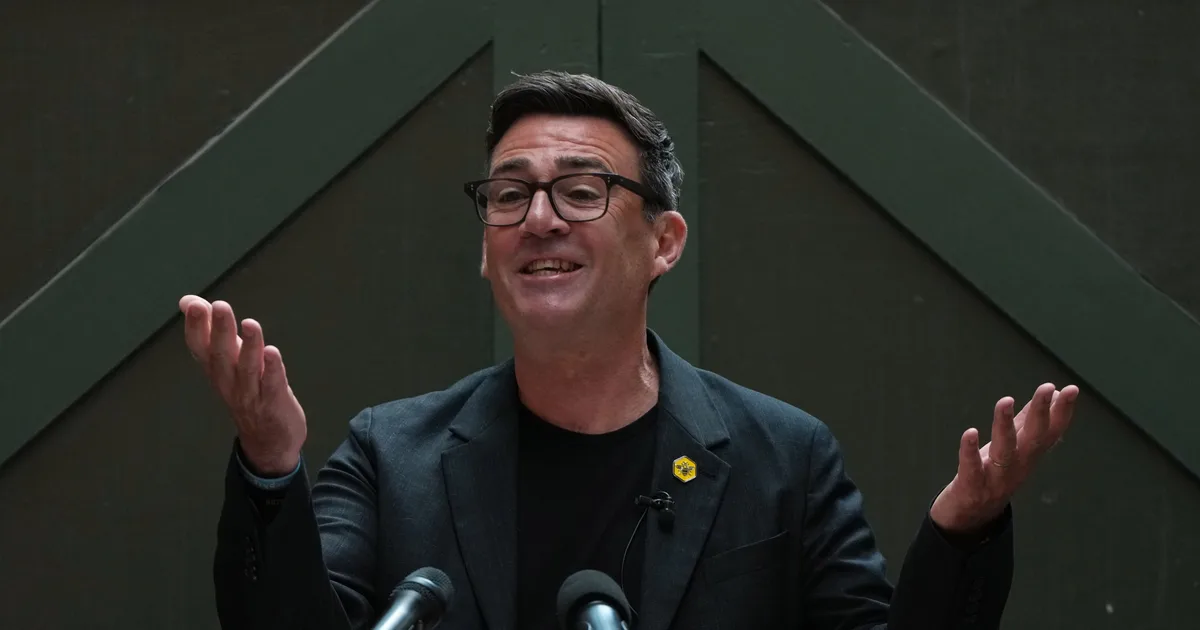
Andy Burnham has vowed not to make “crude cuts” to Britain’s welfare bill when he becomes prime minister later this month.
The former mayor of Greater Manchester said he would take a “different approach” to help get young people not in employment, education or training (NEETS) into work.
Keir Starmer was thwarted by a Labour backbench rebellion when he tried to cut the benefits bill by £5 billion a year ago.
But speaking to LBC, Burnham – who is on course to take over from Starmer on July 20 – said: “I’m not going to go with the crude cuts to benefit levels that then just put people who are struggling in even worse poverty, and that often creates the backlash, and understandably so.
“There’s a different approach, which is looking at two things that can be done differently to get the overall benefits bill down.
“One of those is how we support young people. I will not defend an education system that is overly focused on the university route and does not lay out paths to technical qualifications for our young people.”
He added: “What I’ve done in Greater Manchester is something that might be looked at more broadly, free bus travel for 16 to 18-year-olds, so that they can access those opportunities.
“In my view, if we did that, and we changed the way we provide mental health support to young people – I believe we can substantially reduce the number of NEETS.
“If you build more council homes, you can bring down the housing benefit bill. You do it over a longer term, in a more sustainable way.”
Burnham also hinted at increasing business rates on firms like Amazon, which build huge warehouses outside towns and cities, and using that money to help struggling high streets.
He said he stuck by Labour’s election manifesto pledge not to increase income tax, VAT or national insurance.
But he said “there is some room within that manifesto for movement on tax”.
“So, if you take business rates, for instance, I believe there is a case for higher business rates on warehouses and the major developments we see on the outskirts of our cities so that we can cut business rates for pubs,” he said.
“And I proposed a 20% cut and lift some high street businesses out of business rates altogether.”
Shadow chancellor Mel Stride said: “Instead of raising taxes Labour should be getting a grip of spending, but Andy Burnham won’t touch the ballooning benefits bill. He will double down on all the mistakes Labour have already made.”
Listen to Commons People, the podcast that makes politics easy. Every week, Kevin Schofield and Kate Nicholson unpack the week’s biggest stories to keep you informed. Join us for straightforward analysis of what’s going on at Westminster.
A cabinet minister and her department have dramatically quit X over the “abuse and misinformation” now widespread on the platform.
Culture secretary Lisa Nandy said “it isn’t healthy for our democracy or our communities and I don’t want to support it”.
Nandy said X – formerly Twitter – was originally “a platform originally designed for free speech and expression” but had changed over time.
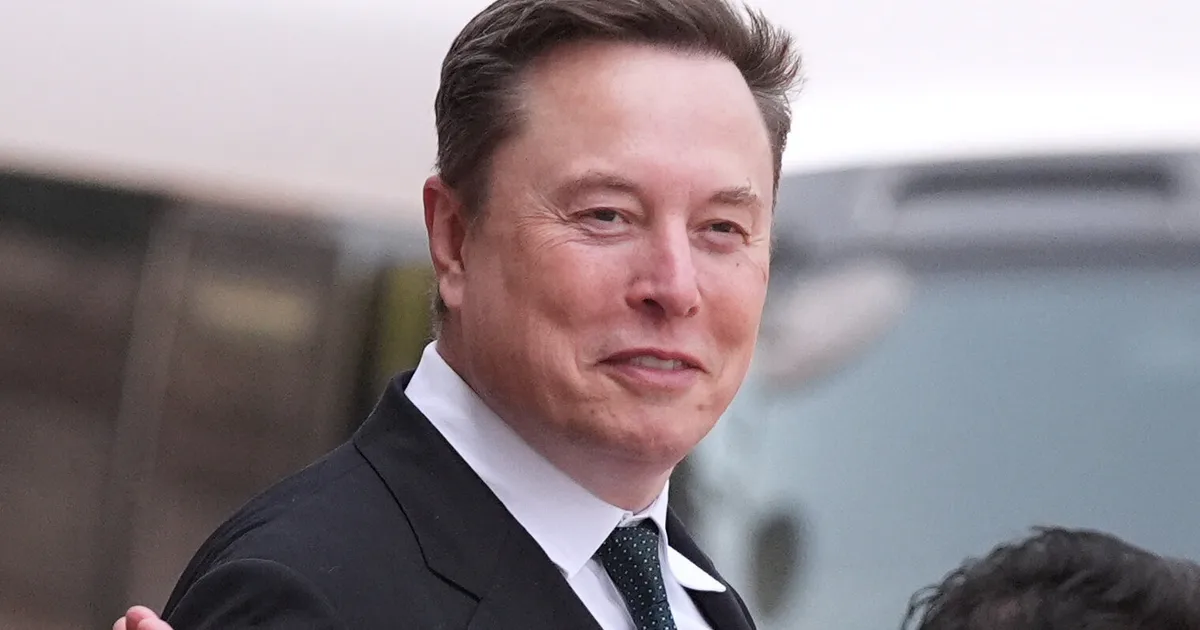
Her comments were a clear swipe at tech billionaire Elon Musk, who introduced a raft of changes after he bought the platform in 2022.
Nandy announced her shock decision just seconds after Keir Starmer posted a video on X announcing that pubs can stay open until 5am on Monday to show England’s World Cup clash with Mexico.
A No.10 source said they had no plans to follow Nandy by leaving X.
Announcing her decision on Thursday, Nandy said: “I’ve decided to leave this platform and my department will too.
“A platform originally designed for free speech and expression now favours abuse and misinformation over meaningful debate. It isn’t healthy for our democracy or our communities and I don’t want to support it.”
She said she would still post content on Instagram, Facebook and LinkedIn.
However, her decision drew criticism from some X users, with some people saying she should use her powers to crack down on abuse rather than leave the site altogether.
Listen to Commons People, the podcast that makes politics easy. Every week, Kevin Schofield and Kate Nicholson unpack the week’s biggest stories to keep you informed. Join us for straightforward analysis of what’s going on at Westminster.
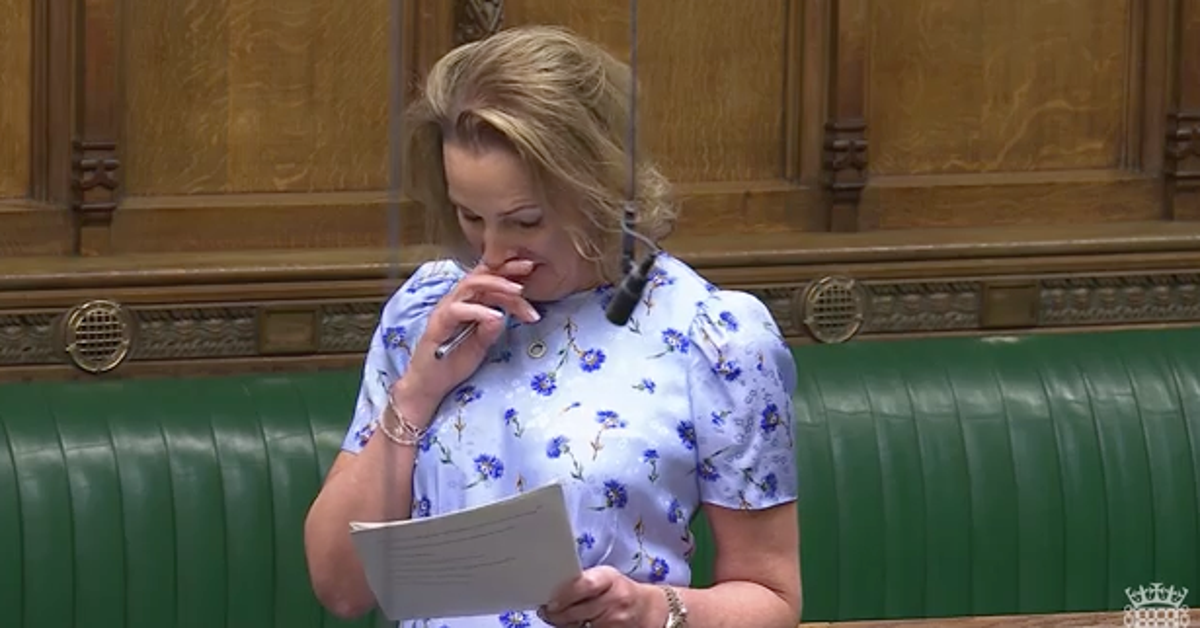
A Reform UK MP broke down in tears in the Commons on Thursday while sharing her personal story of forced adoption.
Sarah Pochin revealed her own mother was pressured into giving up a child.
The Runcorn and Helsby MP said she only discovered she had a sibling after her mother’s death.
It came as the prime minister offered an official apology for the role the state played in forcing mothers to give up babies born out of wedlock between 1949 and 1976.
Pochin said: “My own mother was pressurised into giving up a baby for adoption and this was handled by the church.
“I only found out after her death. She carried her secret to her grave. When I found out, I tried to find my sibling, but drew a blank.
“I had to pay privately to find him and we’ve now been united.”
Struggling to carry on, she said: “Can the prime minister assure those affected that the new systems and resources will be given the funding they need to reunite families?”
MPs around her extended a sympathetic hand when she sat down.
Keir Starmer replied: “Can I thank her for sharing that personal story? And we can all see how difficult that must have been.
“She’s shown huge courage in saying that in the chamber today. The way she described her mother taking her secret to the grave is very powerful.”
As he looks to cement his legacy just three weeks before leaving office, Starmer told the Commons on Thursday: “We are deeply and profoundly sorry to the mothers who were told they were unfit, who were prevented from caring for the children they desperately wanted to help and to keep, and who have carried this loss for decades.
“To those who were not given the information they needed to provide informed consent, who faced pressure or coercion, and who experienced practices that were unethical.
“To the sons and daughters, the children who are now adults, who, through pressure and coercion within these systems, were taken from their families, denied their identity, their history, and sometimes their safety. To those who grew up believing that they were unwanted.”
The government has also created a peer-led support group for mothers and adopted adults and make it easier for them to access records.
Pochin was not the only MP who grew emotional during the Commons discussion on Starmer’s apology.
Labour MP Tracy Gilbert welled up as she told her colleagues: “As an adopted person born in 1972, I welcome today’s statement from the prime minister.
“I have no idea if my birth mother felt forced to have me adopted.
“I do know that prior to the birth she was in a Church of Scotland mother and baby home.
“My adopted parents have since died, but I am sure they would not want to have adopted any child who had been forcibly removed from their mother.”
The PM said he saluted “her courage and resilience”.
He added: “To have to speak out about something which is so intensely difficult, over and over again, is incredibly, incredibly demanding, but the comfort I hope is not only that because of that you have been seen and heard, but that others will have the courage to speak out about what happened to them, and I thank her in that regard as well.”
Listen to Commons People, the podcast that makes politics easy. Every week, Kevin Schofield and Kate Nicholson unpack the week’s biggest stories to keep you informed. Join us for straightforward analysis of what’s going on at Westminster.

Generally, I’m not a fan of any “self-optimisation” project that involves an excess of suffering.
For instance, I’m still not convinced the benefits of ice baths are worth the pain (science seems to be with me on that one). I’m profoundly at peace with my choice to avoid the Berkeley Marathon, too – especially considering that the health benefits of running seem to be about the same at 10km a week as at longer distances.
So, I hope you’ll forgive me for being sceptical about the benefits of cold showers. For a while, it felt like unnecessary discomfort, be it from fasting or freezing plunges, was being pushed as the only way to boost our mood, health, and lifespan. And frankly, I have enough friction in my life already.
But recently, our boiler broke down, meaning I had no choice but to endure cold showers for several mornings in a row while waiting for it to be fixed. To my surprise, I have actually noticed a better mood and slightly less post-run pain.
Was that in my heatwave-addled head, or did I judge cold showers too quickly?
Here, we spoke to Dr Donald Grant, GP and senior clinical advisor at The Independent Pharmacy, to sort the fact from the fiction.
Are cold showers actually good for you?
“Cold water showers have attracted a lot of attention in recent years, and while some of the claims surrounding them are certainly exaggerated, there is some science to suggest they can offer genuine benefits for certain people,” Dr Grant said.
“The sudden exposure to cold water triggers the body’s stress response, increasing alertness and releasing hormones such as adrenaline and noradrenaline, which can leave people feeling more energised” and in a better mood, he added.
One paper suggested exposure to cold water could make you feel less anxious, though it said we’re not exactly sure how.
As for my muscle recovery, Dr Grant said: “There is evidence that cold exposure can help reduce inflammation and temporarily ease discomfort by narrowing blood vessels and limiting swelling,” though he stressed it’s no substitiute for science-backed staples like “adequate sleep, good nutrition and staying hydrated”.
Overall, the doctor told us, “Many of the broader claims that cold showers dramatically boost immunity, accelerate weight loss or significantly improve overall health are currently supported by limited or mixed evidence.
“While regular cold exposure may have some positive effects, the benefits are unlikely to be as dramatic as they’re often portrayed online.”
Good news, because I’m still very much looking forward to the return of hot water.
Is cold showering safe?
Not always, and not for everyone.
“Cold showers may be worth considering for generally healthy adults who enjoy them, particularly those looking for a natural way to feel more alert in the morning or support recovery after exercise.
“However, they aren’t essential for good health, and there’s no need for people to force themselves to endure them if they find the experience unpleasant,” Dr Grant stated.
And for people with cardiovascular conditions, uncontrolled high blood pressure or certain respiratory conditions, sudden freezing water can “temporarily raise blood pressure and place additional strain on the heart”.
Older adults and people who experience dizziness or feeling faint should also speak to a medical professional before making cold showers a habit, the GP added.
How can I begin taking cold showers?
If you want to give it a go, the key is to start slowly.
“If you’re interested in trying cold showers, it’s best to ease into them gradually rather than jumping straight into freezing water,” Dr Grant ended.
“Finishing a warm shower with 30 to 60 seconds of cool water and slowly increasing the duration over time is often a more comfortable and sustainable approach, while still allowing you to experience any potential benefits.”

Rumours that Taylor Swift and fiancé Travis Kelce are going to marry this weekend have been hitting headlines all week.
Some think they’re going to get hitched on either Friday 3 July or Saturday 4 July, at New York’s iconic Madison Square Garden arena.
In fact, it’s even been speculated that the celebrations are already underway.
But if you clock all those uncertain terms – “rumour”, “speculation” – you might get an idea of how secretive the whole affair has been so far.
As of the time of writing, there has been no official confirmation as to when and where the highly anticipated knot will be tied.
Which means Swifties have resorted to some, er, unorthodox techniques in order to find out more details.
Their most recent source? BBC Radio 1 presenter Greg James sure has been getting a lot of prying questions recently.
In a reposted clip of a months-old interview, Greg asked Taylor: “Where’s [the wedding] gonna be? Do we know?”
In response, Taylor, who confirmed she was getting married in 2025, said: “I will let you kn– I’m gonna let you know at a different time”.
The singer then appeared to reference Greg’s appearance at the wedding. The radio host said he’d love to “play catch” with professional athlete Travis Kelce, to which Taylor responded: “The way that [Travis] is going to do that as soon as he sees you at our wedding”.
“Woah – am I coming?” Greg responded.
“Obviously,” Taylor smiled.
Though the moment uploaded onto BBC Radio 1′s Instagram yesterday – just as speculation about the stars’ nuptials hit fever pitch – was actually filmed on October 3, 2025, its resurfacing has led some fans to what they see as a potential source of precious info.
″@greg_james are you in Sheffield or NY?” one commenter asked.
The presenter’s most recent Instagram stories included pictures taken in the South Yorkshire town.

Another comment showed just how closely some Swifties are watching the presenter’s every move this week: “Greg being off so many breakfast shows this week has really messed with my head. Tuesday I was convinced it was a sign, but [it] turned out he was at Wimbledon… can’t handle this suspense”.
On Tuesday, Greg was seen in the iconic tennis championships’ Royal Box.
However, other fans pointed out that the presenter’s father has been unwell recently.
Greg’s dad, who suffered a stroke before the presenter’s Comic Relief challenge earlier this year, has since undergone surgery.
In June, Greg shared: “Real talk, surgery went ok but he’s far from out of the woods so I’m gonna take it easy tomorrow and hopefully back on Friday. Plus, I’m in no fit state to be on the radio. I mean, look at me, I’m posting photos from intensive care ffs. Thanks for your lovely messages” in his Instagram story.

Wimbledon 2026: Serena Williams and Venus Williams added to Saturday’s order of play but not allocated a court

Today’s NYT Wordle Hints, Answer and Help for July 4 #1841

Death toll of Venezuela earthquakes rises to 2,645


-

 Tech6 days ago
Claude Code turned every engineer into three. Now companies need more product thinkers
-

 Crypto World4 days ago
Strategy authorizes up to $1.25B in Bitcoin sales under new capital plan
-

 Politics9 hours ago
The House | “Reframing the debate from a binary discussion of winners and losers”: Yuan Yang reviews ‘We Are Not Machines’
-

 News Videos5 days ago
MAJOR BITCOIN & MARKET UPDATE!!!! (MUST WATCH ASAP!!!)
-

 Tech4 days ago
Anonymous researcher drops 0-day ‘exploitarium’ repo
-

 Crypto World6 days ago
Coinbase, Circle Deepen Crypto Stock Losses Despite Resilient S&P 500
-

 Tech6 days ago
Bluekit phishing kit adopts browser-in-the-middle for login theft
-

 Business4 days ago
Australia treasurer says alleged access of prime minister’s bank data ’incredibly concerning’
-

 Crypto World7 days ago
Kraken's xStocks Opens Bending Spoons IPO Registration to EEA Retail
-

 Tech6 days ago
Russian hackers now target Signal backup recovery keys
-
 Business4 days ago
The AI boom won’t burst all at once. It will pop in ‘rolling bubbles’: Macquarie
-

 Sports2 days ago
Broncos roster: OL Ben Powers (No. 74) entering final year of contract
-

 Tech6 days ago
Silicon Valley paid to kill AI regulation, now it wants the rules back
-

 NewsBeat3 days ago
Presenter Caroline Flack’s brother Paul Flack dies aged 55
-

 Crypto World2 days ago
Binance stock trading tops $1B in first month after launch
-

 Tech6 days ago
OpenAI mulls delaying IPO over valuation concerns
-
 NewsBeat2 days ago
New exhibition reflects five decades of movement between island of Ireland and GB
-

 Fashion3 hours ago
Weekend Open Thread: High Hopes
-

 Crypto World2 days ago
Alibaba-affiliate Ant Group enters the humanoid robot market with 12 deals
-

 News Videos3 days ago
How to Build INSANE Live Financial Dashboards With Claude
You must be logged in to post a comment Login