

Crypto World
ESMA Warns Prediction Market Event Contracts May Breach EU Retail Ban


Europe’s financial watchdog is warning that many prediction market “event contracts” may already be subject to existing binary options rules, regardless of how they are described or marketed. The European Securities and Markets Authority (ESMA) says companies cannot sidestep retail investor protections simply by rebranding certain derivatives-like payouts as “event contracts.”
At the same time, the United States is witnessing its own escalation: state gaming regulators and the Commodity Futures Trading Commission (CFTC) are fighting over whether prediction markets should be treated as gambling or federally regulated derivatives. Together, the two stories underline a central fault line for the sector—what matters legally is the contract’s structure, not its branding.
Key takeaways
- ESMA says event contracts can fall under binary options restrictions based on their characteristics, especially binary outcomes and fixed payouts.
- Even if retail investors are excluded, ESMA warns that offering qualifying event contracts to professional or institutional clients may still require MiFID II authorization.
- ESMA notes the reminder is not new regulation, but a response to increased offerings as prediction markets grow.
- In the U.S., state actions against platforms such as Kalshi and Polymarket continue alongside the CFTC’s position that it has “exclusive jurisdiction” over event contracts.
- Litigation in multiple jurisdictions has intensified speculation that the dispute could eventually reach the U.S. Supreme Court.
ESMA’s reminder: “event contracts” can still be binary options
In a public statement released on Friday, ESMA reminded firms that contracts meeting the definition of financial instruments are already prohibited from being marketed, distributed, or sold to retail investors under national measures implementing ESMA’s 2018 binary options restrictions.
The regulator emphasized that the legal assessment hinges on the contract’s features rather than on marketing language. In particular, ESMA highlighted that event contracts with binary outcomes and fixed payouts are likely to qualify as financial instruments subject to the restrictions.
ESMA also focused on authorization requirements for firms selling into more sophisticated client categories. According to the statement, providing qualifying event contracts to professional or institutional clients still requires authorization under MiFID II, even if retail investors are not directly targeted.
ESMA framed its intervention as enforcement clarity rather than policy change. The regulator said it issued the reminder after observing more event contract offerings and rapid growth in prediction markets, noting that qualifying binary options have been under national restrictions across the EU since 2018.
For readers and market participants, the key implication is that the industry’s current naming conventions may not provide regulatory shelter. ESMA’s approach suggests that product designers and legal teams must evaluate payout mechanics and outcome structures early—before launching—because regulators may treat certain prediction constructs as financial instruments from the outset.
ESMA’s public statement on the application of national binary options measures to event contracts
What ESMA’s approach could mean for European platforms
While ESMA did not claim to introduce new restrictions, the message still carries practical consequences for platforms operating in or distributing into EU markets. ESMA’s insistence on contract-based assessment—binary outcomes and fixed payouts—creates a straightforward but unforgiving compliance test for many prediction-market formats.
In practice, this means firms may face pressure to restructure offerings that resemble fixed-payoff binary options. Alternatively, companies may need to ensure they remain within the boundaries of allowed products and client categories, including meeting MiFID II authorization requirements where applicable.
ESMA also appears to be pushing back against a common industry tactic: presenting payouts as “event-based” rather than as option-like financial instruments. The regulator’s reminder suggests that, from an enforcement standpoint, the distinction may not hold when the economic effect is functionally similar to a prohibited binary option for retail clients.
Builders and investors watching the space should treat ESMA’s statement as a signal about regulatory risk management. In a sector that often iterates quickly, compliance reviews that focus on contract architecture—not UI wording or product naming—may become a gating factor for expansion into regulated markets.
Meanwhile in the U.S., states and the CFTC keep clashing
Across the Atlantic, prediction markets are caught in a jurisdictional fight. The conflict pits state gaming regulators against the CFTC over whether event contracts should be treated as gambling under state law or as federally regulated derivatives under the CFTC’s oversight.
By March, action had already been taken by authorities in 11 states against platforms including Kalshi and Polymarket. Nevada became the first state to temporarily block Kalshi’s operations, while Arizona brought criminal charges alleging the company was running an illegal gambling business.
The following month, the CFTC argued for “exclusive jurisdiction” over prediction markets, saying Congress entrusted the agency with sole authority to regulate commodity derivatives markets, including event contracts. The agency also said it sued several states and filed court briefs supporting platforms such as Kalshi.
The litigation has continued to escalate. On June 30, a Massachusetts judge allowed state authorities to file an amended complaint against Kalshi in an ongoing case alleging the company’s sports-event contracts constitute illegal gambling under state law.
These battles have also driven calls for congressional clarification. Last month, the Indian Gaming Association and the American Gaming Association—joined by tribal and labor groups—urged lawmakers to amend the CLARITY Act to explicitly prohibit sports-related event contracts on prediction market platforms, arguing these products should fall outside the CFTC’s authority and remain governed by state gambling laws.
Legal experts cited in earlier coverage believe the deepening disagreement between federal and state regulators could ultimately be resolved by the U.S. Supreme Court.
CFTC press release asserting its authority over prediction markets
Why both regions are converging on the same legal question
Despite differing regulatory frameworks, the EU and U.S. stories share a similar center of gravity: regulators are focusing on how event contracts work economically, not on the label operators choose. In Europe, ESMA points to binary outcomes and fixed payouts as key triggers for binary options treatment. In the U.S., the dispute turns on whether event contracts are properly categorized as gambling or as derivatives subject to federal oversight.
For operators, the stakes are immediate. In Europe, ESMA’s reminder highlights that retail-facing marketing can quickly trigger product intervention rules, while institutional sales may still require MiFID II authorization depending on contract characteristics. In the U.S., state enforcement and federal claims of exclusive jurisdiction have pushed prediction market firms into a patchwork of legal outcomes.
The practical takeaway for market participants is to treat legal categorization as product design input. The compliance and litigation burden can increase sharply when a platform’s core contract mechanics resemble the category regulators are already prepared to police.
As ESMA’s guidance circulates and U.S. court battles continue—possibly moving toward higher-level review—watch for two things: whether prediction platforms adjust contract structures to better fit regulatory definitions in the EU, and whether the U.S. dispute narrows around a definitive jurisdictional ruling rather than expanding across states and claims.

Crypto World
Defendant Files to Dismiss New York Lawsuit Seeking Ownership of 39,069 Bitcoin Wallets
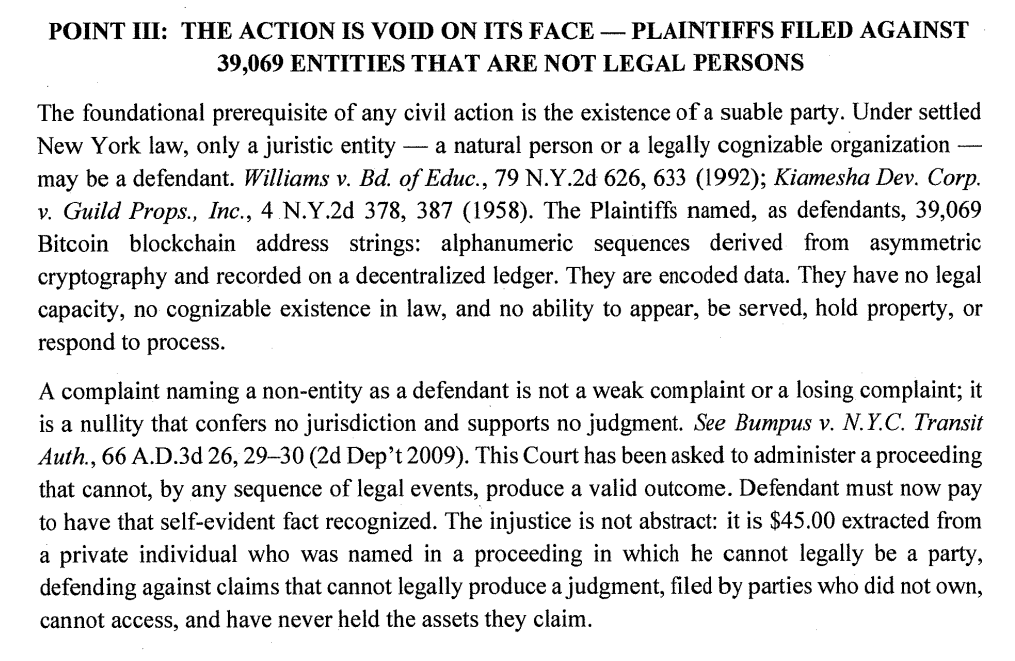
A pseudonymous defendant has moved to dismiss a New York lawsuit seeking ownership of 39,069 dormant Bitcoin addresses, arguing that Bitcoin addresses are merely data strings that cannot be sued.
The defendant, identifying themselves as “John Doe 33,” filed a notice of appearance and motion to dismiss on Thursday, claiming they control one of the dormant wallets named in the lawsuit.
According to the motion, the lawsuit is legally defective because Bitcoin address strings are neither persons nor legal entities subject to the court’s jurisdiction. The filing argues that a public Bitcoin address cannot itself be “found” under New York’s lost-property law because it has always been publicly visible on the blockchain.
The filing challenges the lawsuit filed in May by plaintiff “Noah Doe” and two Wyoming-based LLCs, ABC Company and XYZ Company. The plaintiffs claim the Bitcoin tied to the listed addresses constitutes abandoned property that they reported to the New York Police Department and claimed under New York lost-property law.
Regardless of how the court rules on ownership, it remains unclear how the plaintiffs could recover any Bitcoin without possessing the private keys needed to access the wallets.
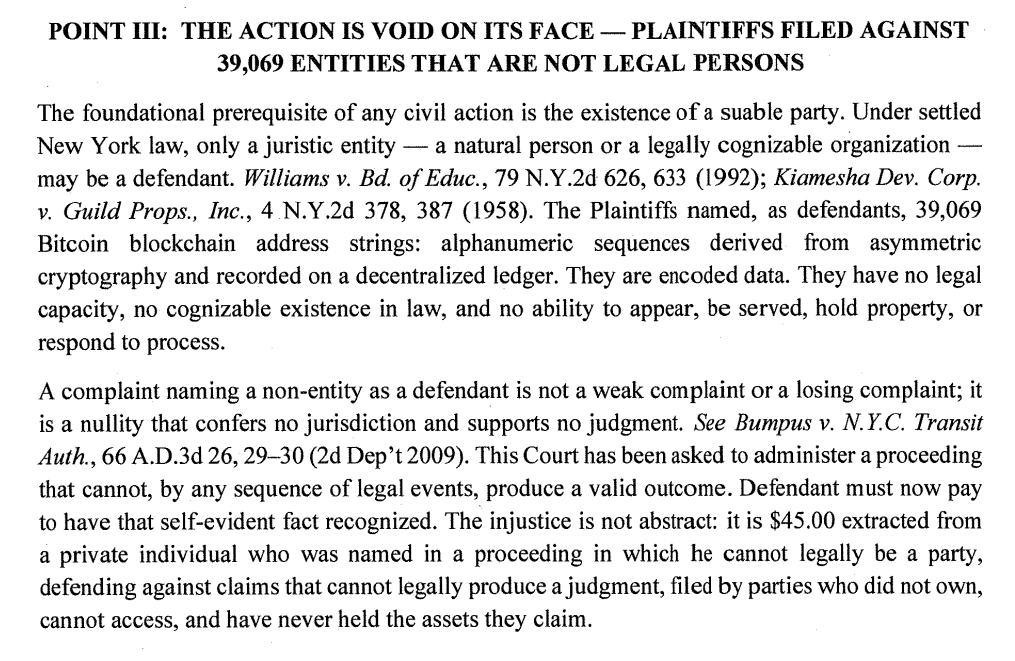
Defendant files a motion to dismiss the case seeking ownership of 39,069 Bitcoin wallets. Source: iapps.court.state.ny.us
The complaint lists 39,069 Bitcoin addresses, including wallet addresses widely associated with Bitcoin creator Satoshi Nakamoto and the Mt. Gox hacker. The listed wallets collectively hold an estimated 3.7 million BTC (worth about $234 billion), according to Sani, founder of Bitcoin analytics platform Timechain Index.
Related: Bitcoin miner MARA spent $4.3M on CEO security in 2025 as crypto attacks rise
Defendant appears to control $300 million Bitcoin wallet
Blockchain data suggests that “John Doe 33” controls a wallet holding 5,000 BTC received in April 2014 that has remained untouched for more than 12 years, making it worth more than $300 million at current prices, according to a Friday X post from Galaxy Digital head of research Alex Thorn.
“That’s ~100x the median defendant address. This is a real holder with real standing choosing to fight, not a bystander.”
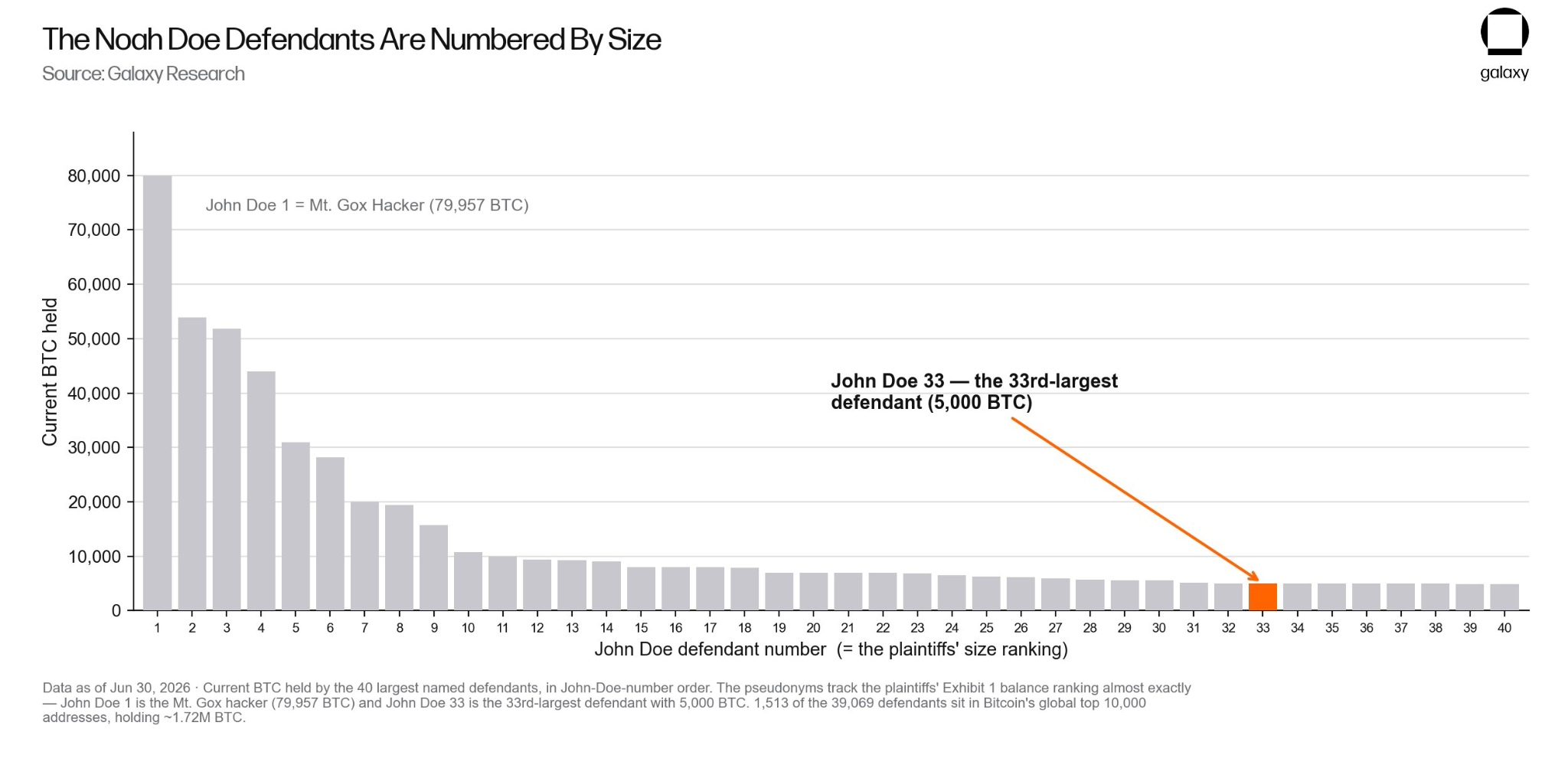
Source: Alex Thorn
Thorn added that the filing prevented what had been a “near-certain” default judgment and challenged jurisdictional and statutory defects in the plaintiffs’ case.
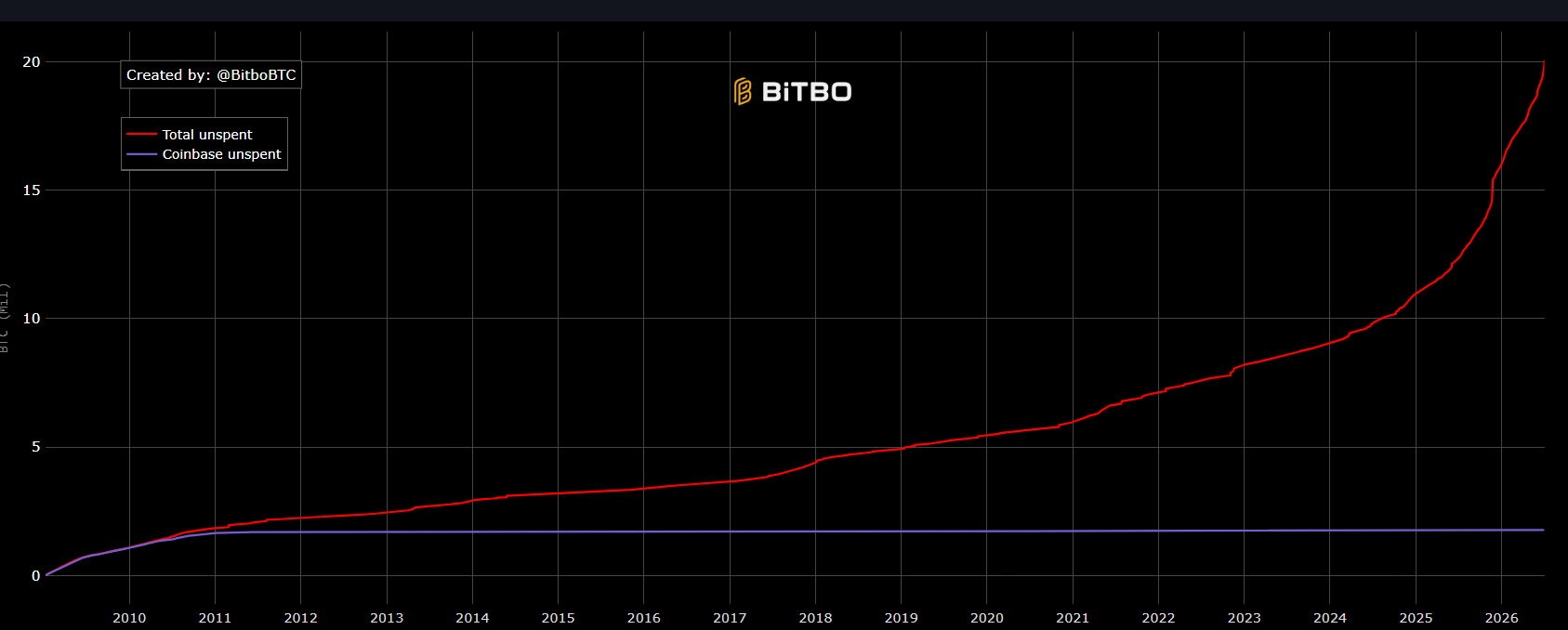
The supply of Bitcoin has been dormant for the past five and 10 years. Source: Bitbo
There are currently 3.5 million BTC, worth about $215 billion, that have been dormant for the past 10 years and another 6.6 million coins, worth around $406 billion, that have been dormant for over five years, Bitbo data shows.
Magazine: How crypto laws changed in 2025 — and how they’ll change in 2026

TLDR
- European regulator expands MiCA registry with 37 additional crypto service providers.
- Major financial institution Standard Chartered receives EU crypto authorization.
- Total licensed crypto asset service providers in EU reaches 280.
- Cyprus emerges as top contributor with six newly approved CASPs.
- EU regulatory framework transitions from development to active enforcement phase.
Europe’s securities watchdog has expanded its MiCA-compliant crypto registry with 37 additional firms following the conclusion of the transition window. This expansion brings the total number of authorized providers to 280. The development marks a pivotal shift from regulatory development to active market oversight.
European Crypto Registry Receives Significant Update
ESMA released its initial registry revision following the conclusion of MiCA’s transitional window on Wednesday. The Friday announcement included companies that successfully obtained crypto-asset service provider authorization. Consequently, the registry now offers enhanced transparency regarding licensed European Union operators.
ESMA’s previous registry update, issued on June 26, documented 243 crypto-asset service providers. The current revision increased this figure to 280. This expansion means 37 additional companies have entered the European Union’s structured crypto regulatory framework.
Notable additions to the registry include Standard Chartered, FalconX, Sygnum Europe, and Ronin EM. Furthermore, the electronic money token section welcomed Crédit Agricole’s CACEIS division. Notably, ESMA did not document any new asset-referenced token issuers during this update cycle.
Major Bank Secures European Crypto Authorization
Standard Chartered emerged as one of the most prominent additions in ESMA’s recent registry expansion. Luxembourg’s financial authorities granted the banking institution MiCA authorization on June 25. This approval establishes a compliant pathway for the bank’s cryptocurrency operations throughout Europe.
The financial institution simultaneously obtained an Electronic Money Institution license from Luxembourg authorities. This credential enables electronic money issuance and payment processing services. Combined, these authorizations facilitate custody operations, token-related services, and payment-integrated digital asset activities.
Standard Chartered indicated these licenses align with its broader European digital asset strategy. The institution has previously expanded digital asset custody capabilities across Asian and Middle Eastern markets. MiCA provides a unified regulatory structure for comprehensive EU market participation.
Mediterranean Nation Dominates Recent Authorization Cycle
Cyprus emerged as the frontrunner in the latest ESMA registry expansion, contributing six newly authorized crypto-asset service providers. France, Italy, and Malta each contributed five companies. The Czech Republic and Spain registered four providers respectively.
Luxembourg contributed three new registrations, while the Netherlands added two companies. Germany, Liechtenstein, and Latvia each registered one licensed provider. This geographic distribution demonstrates how individual national authorities contribute approvals to the centralized ESMA registry.
Cyprus has now issued 21 MiCA authorizations through its securities regulatory body. Germany maintains the overall leadership position with 58 authorizations under BaFin supervision. Nevertheless, smaller jurisdictions remain competitive by offering streamlined and transparent licensing procedures.
Regulatory Framework Transitions to Enhanced Oversight
The most recent ESMA registry update reveals inconsistent advancement across MiCA’s different categories. The asset-referenced token registry remains without any approved issuers. The non-compliant entities roster stayed static at 162 companies.
This disparity indicates that service provider licensing is advancing more rapidly than certain token issuance approvals. Exchanges, brokers, custodial services, and financial institutions now have established pathways. However, token issuers continue facing more stringent requirements and extended approval processes.
The registry now functions beyond a simple compliance database. It influences market access decisions, counterparty verification processes, and institutional risk assessment procedures. ESMA has transformed MiCA into an operational gateway for European Union crypto market participation.

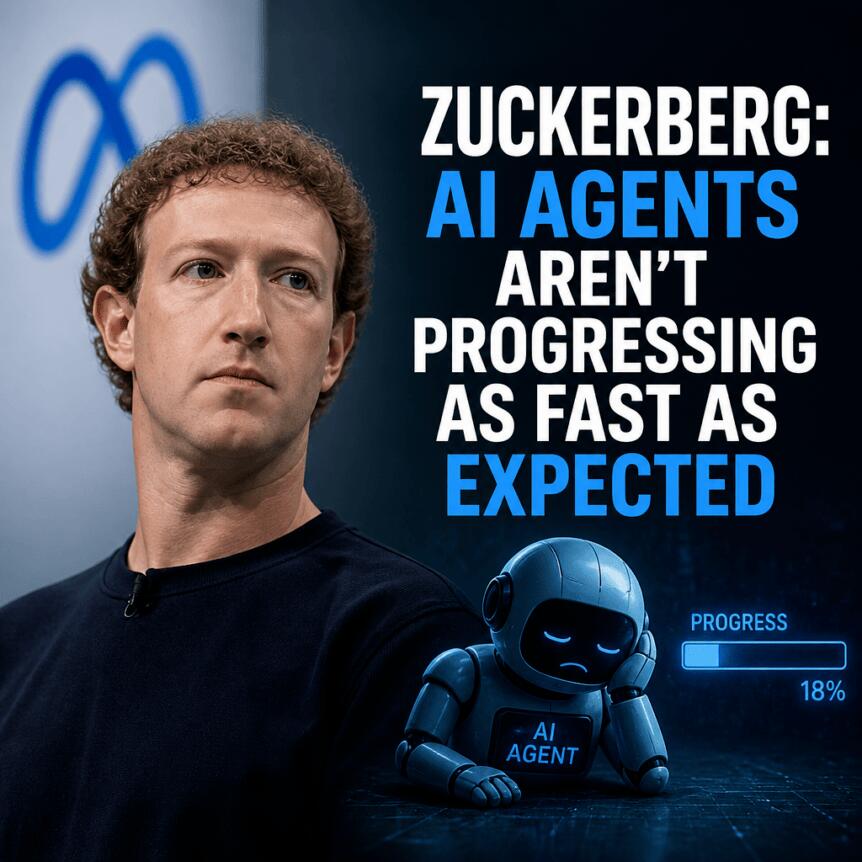
Meta CEO Mark Zuckerberg has sounded a note of caution on the pace of “agentic” AI development, telling employees that progress on autonomous agents has not accelerated as quickly as expected despite heavy investment by major technology and crypto firms.
Speaking during a company meeting on Thursday, Zuckerberg said the “trajectory of the agentic development over at least the last four months hasn’t really accelerated in the way that we expected,” Reuters reported after reviewing a recording of the call. He added that the broader bet on agent adoption “hasn’t come to fruition yet,” even as leadership pushed harder into agent-focused infrastructure earlier this year.
Key takeaways
- Zuckerberg said Meta’s agentic AI progress has not matched expectations over the past four months, according to Reuters.
- Meta executives accelerated agent-focused infrastructure plans in January due to concerns they were moving too slowly.
- Meta still expects returns from its AI spending within three to six months, Zuckerberg said.
- Meta expanded its Meta Business Agent globally for businesses across Instagram, Messenger, and WhatsApp.
- Blockchain data suggests AI-agent transaction activity remains limited, including only about $2 million in x402-facilitated volume over the last 30 days, per Artemis.
Meta’s AI agents: expectations versus delivery
Zuckerberg’s remarks highlight a growing mismatch between the industry’s timeline for autonomous AI agents and how quickly real-world systems can scale and deliver value. While agentic AI has captured attention from both software giants and crypto-adjacent companies, Zuckerberg indicated that even within a company widely positioned for rapid experimentation, momentum has been slower than planned.
Reuters reported that Zuckerberg pointed to a lack of acceleration in the “last four months,” despite a push intended to close perceived speed gaps. He acknowledged that an aggressive January push into agentic infrastructure was driven by fears that Meta wasn’t advancing “fast enough,” while also framing the current state as not yet reaching the level of adoption leadership expected.
At the same time, Zuckerberg said he believes Meta’s AI investments will start paying off within the next three to six months. That timeframe matters for investors and teams because it signals management still expects near-term results—even if the broader agent ecosystem remains behind schedule.
Business Agent rollout across Meta’s messaging and social apps
Meta’s comments came alongside new product deployment. On Thursday, the company expanded its Meta Business Agent globally, aiming to bring agent capabilities to businesses operating across Instagram, Messenger, and WhatsApp.
According to Meta, the Business Agent is designed to handle customer inquiries, make product recommendations, and close sales without requiring human intervention. For businesses, the appeal is straightforward: agent systems can reduce response times and staffing pressure while enabling commerce flows inside channels where customers already interact.
Zuckerberg also previously said in March that he was building a personal AI agent to support CEO decision-making, reinforcing Meta’s view that agent tooling can move beyond customer-facing automation into internal workflows.
Crypto’s agent payments thesis faces measured on-chain activity
Zuckerberg’s reality check lands amid a crypto industry that has largely embraced the idea that AI agents could become major users of blockchain payments. Executives including Coinbase CEO Brian Armstrong and Circle CEO Jeremy Allaire have previously predicted that AI agents may become dominant users of blockchain-based payment rails in the coming years, as noted in coverage referenced by Cointelegraph.
In support of that narrative, several integrations have been announced in recent months. Cointelegraph previously reported that Amazon Web Services integrated Coinbase’s x402 payments protocol into Amazon Bedrock AgentCore in May, enabling agents to transact using the USDC stablecoin. Other examples cited include a Visa-supported virtual card for AI agents from Oobit launched in April for purchases in USDt (USDT).
However, the gap between “capability” and “usage” is showing up in on-chain volume. Artemis data cited by Cointelegraph suggests that AI-agent transaction activity facilitated through the x402 protocol remains comparatively small: only $2 million in trading volume over the past 30 days.
This matters because the crypto payments story around autonomous agents depends not just on integrations being possible, but on consistent demand emerging from actual agent behavior. Low volume can indicate early-stage adoption, experimentation without sustained deployment, or limitations in how agents currently interact with payment endpoints.
What to watch next for agentic AI and stablecoin payments
Zuckerberg’s comments suggest the industry may need to plan for a slower-than-hoped transition period as agentic systems mature and as businesses learn where automation genuinely outperforms human-led workflows. At the same time, Meta’s investment outlook—expecting payback within three to six months—signals continued pressure to convert AI spending into operational results.
For the blockchain segment, the next checkpoint should be whether on-chain payment volume tied to agent infrastructure increases materially from current levels, and whether new business-facing deployments like Meta Business Agent lead to measurable downstream demand for stablecoin payment rails.
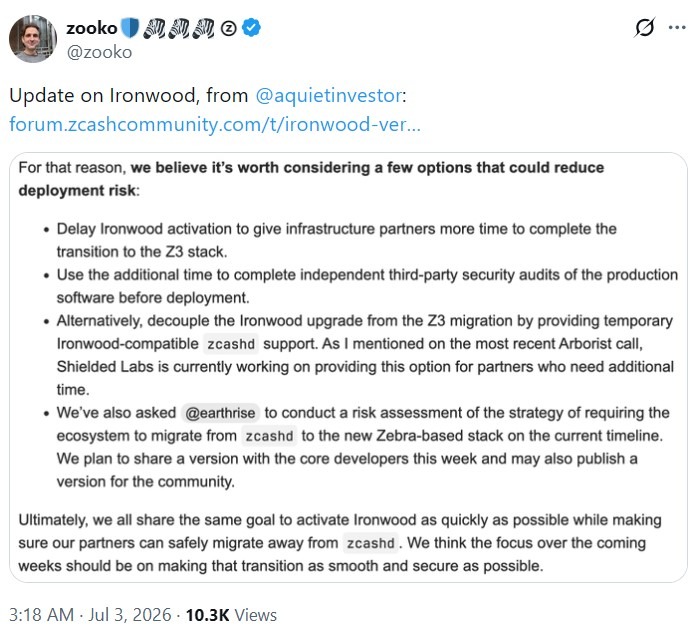
Shielded Labs has raised the possibility of delaying Zcash’s Ironwood network upgrade, warning that ecosystem participants like exchanges, mining pools and wallets may not have enough time to prepare their systems for the planned activation in late July.
Jason McGee, executive director of Shielded Labs, said in a Zcash community forum post that two major projects are moving forward at the same time. Alongside Ironwood, infrastructure providers are being asked to replace Zcash’s longstanding node and wallet software, zcashd, with a new collection of tools known as the Z3 stack.
The concerns highlight the trade-off between quickly restoring confidence in Zcash’s shielded supply and giving ecosystem participants enough time to deploy and audit the new infrastructure safely.
Ironwood was proposed after researchers discovered an “infinity” bug in Orchard, Zcash’s main private transaction pool. The flaw could theoretically have allowed an attacker to create an unlimited amount of counterfeit ZEC tokens inside the pool without detection. Developers said there was no evidence that the pool had been exploited. However, Orchard’s privacy features make it impossible to prove that no fake coins were created.
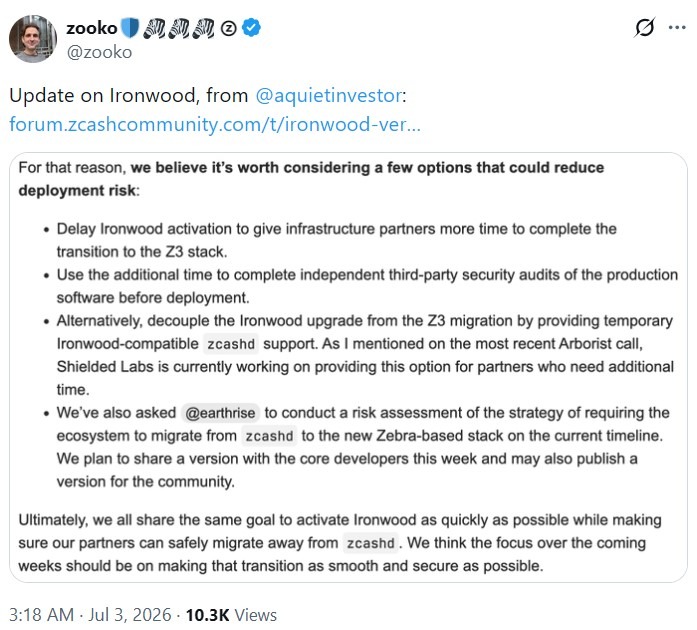
Source: Zooko Wilcox
Ironwood rollout collides with Zcash software migration
Ironwood would open a replacement private pool and prevent new activity inside the existing Orchard pool. Funds leaving Orchard would have to pass through an accounting checkpoint that prevents more ZEC from exiting than what originally entered. This would allow users to verify that the circulating supply remains within Zcash’s intended limits.
At the same time, Zcash is retiring zcashd, the software used by many ecosystem participants to connect to the network and process transactions. Its replacement stack includes Zebra for operating a network node, Zaino for supplying blockchain data to applications and Zallet for wallet functions.
The network’s official guidance documents said operators may need to modify their systems as some zcashd functions will not have direct replacements.
Related: Why ZEC fell 40% even after Zcash patched a shielded pool bug
McGee said Zallet and Zaino were still under development and not ready for production use. Feedback gathered from infrastructure providers suggested that some expect to be ready by late July, while others need more time, he added.
McGee said no delay has been finalized.
Zcash founder Zooko Wilcox said security reviews had found no additional serious bugs so far and that developers are also working to verify the new system before Ironwood activates.
Magazine: Bitcoin decouples from tech stocks, Ether eyes ‘selling wave’: Market Moves

Senator Kirsten Gillibrand has renewed her push for tighter ethics rules around digital assets, proposing that elected officials—and the president and their spouse—be barred from issuing or sponsoring their own tokens. Her latest remarks explicitly referenced President Donald Trump and First Lady Melania Trump’s memecoin activity.
Gillibrand, a New York Democrat involved in negotiations over US digital asset legislation, said in a Friday announcement that Congress should consider measures preventing public officials from using their position to promote or benefit from token launches. The proposal focuses on “issuing or sponsoring” digital assets, and would apply to a president and their spouse; it did not spell out whether similar restrictions should cover the vice president’s office or other relatives.
Key takeaways
- Senator Kirsten Gillibrand proposed banning presidents and elected officials from issuing or sponsoring their own tokens, including memecoins.
- The restriction would clearly cover the president and their spouse, but the scope for vice presidents or other family members was not specified.
- Gillibrand links the idea to concerns about self-dealing, consumer protection, and efforts to curb illicit finance.
- Her comments come amid broader Senate work on digital asset market-structure and stablecoin legislation that has faced ethics-related scrutiny.
- The proposal follows shifting approaches in earlier legislation consideration around Trump-related crypto involvement.
Why Gillibrand is targeting token sponsorship by officials
In her Friday statement, Gillibrand argued that “public officials and their spouses should not be issuing memecoins,” framing the move as basic conflict-of-interest prevention rather than a partisan effort. She said the goal is to stop self-dealing from undermining consumer protections and complicating efforts against illicit finance.
The senator’s remarks emphasize the potential for elected officials to benefit from token-related projects that could be influenced by their access to policymakers, regulators, and legislative timelines. In her view, such concerns are especially urgent in markets that are still developing guardrails for disclosure, investor protections, and anti-manipulation enforcement.
Connection to the CLARITY Act and ethics as a gating issue
Gillibrand is also one of the lawmakers involved in negotiations on the Digital Asset Market Clarity (CLARITY) Act in the Senate. According to prior reporting, progress on the bill has been slowed by worries that extend beyond token rules themselves—particularly concerns about ethics, tokenization practices, and stablecoin reward structures.
Gillibrand previously indicated that the chamber could not move forward without addressing ethics questions, pointing to the risk that elected officials could “get rich” from insider access. In that context, the token-sponsorship proposal aligns with her broader stance that ethics constraints should be treated as foundational, not optional.
The senator’s framing also highlights a recurring legislative tension in the US crypto policy debate: how to extend oversight to new financial products while limiting opportunities for lawmakers to profit from the very markets they help shape.
How stablecoin and memecoin provisions were handled in earlier legislation
During consideration of the Guiding and Establishing National Innovation for US Stablecoins Act (GENIUS Act), Gillibrand said senators had removed provisions that specifically targeted Trump’s ties to the crypto industry, including his memecoin Official Trump. In her account at the time, the memecoin was likely “illegal based on current law,” but she suggested that trying to fully cover Trump-related ethics issues would require a “very long and detailed bill.”
Eventually, Trump signed the GENIUS Act into law in July 2025. Gillibrand’s new proposal suggests that even after that outcome—when lawmakers reportedly narrowed focus on Trump-specific provisions—ethics concerns have not gone away. Instead, she appears to be seeking a more general rule that would constrain future token issuance by officials and their spouses.
Notably, Gillibrand’s proposed memecoin restriction did not appear to be designed as a blanket ban covering all family members. The difference matters politically and legally: it shapes how broadly the rule could reach beyond a president’s spouse, while still addressing the most direct relationship that can be tightly linked to official influence.
Trump’s response and the wider conflict-of-interest debate
Gillibrand’s renewed comments arrive as Trump has continued to dismiss perceived conflicts of interest involving his crypto investments. This week, he reported that he earned about $1.4 billion from crypto ventures in the year he took office, while also holding the power to influence legislation that affects digital assets, including both the GENIUS Act and the CLARITY Act.
According to Trump, there was “nothing illegal” and “nothing wrong” with profiting from investments while serving as president, and he did not directly answer questions about the perceived conflicts. The contrast with Gillibrand’s position is stark: she argues that legality alone does not resolve the underlying ethical risk when public officials’ influence intersects with markets where their own token or sponsorship interests could be monetized.
The broader backdrop also includes criticism of involvement by Trump’s sons in crypto-adjacent ventures, including their connection to World Liberty Financial and a Bitcoin mining company described as American Bitcoin. While Gillibrand’s new proposal does not explicitly extend to those broader family circumstances, it reinforces that lawmakers and watchdog voices remain focused on whether personal ties to crypto create unfair advantages or distort policy incentives.
For investors and builders, the practical significance of Gillibrand’s proposal is straightforward: if adopted, a ban on token issuance or sponsorship by officials (and a president’s spouse) could reduce expectations of politically driven token promotion. It may also shape how exchanges, issuers, and intermediaries approach compliance and disclosure when influential figures are involved.
Still, much remains uncertain. Key questions include how “sponsoring” would be defined in law, whether enforcement would rely on existing securities and commodities frameworks, and—if a rule passes—how much legislative time it would take to harmonize it with the ongoing CLARITY Act process. Readers should watch how ethics language evolves in both the market-structure and stablecoin bills, and whether lawmakers treat conflict-of-interest guardrails as a prerequisite rather than an afterthought.

Several major South Korean companies have said they have not formally joined the newly announced Open USD (OUSD) consortium, despite being listed among its participating organizations.
Open Standard, the independent entity behind the stablecoin, previously said it had assembled over 140 businesses to launch OUSD, a dollar-pegged stablecoin, later this year.
Korean Companies Push Back
The lineup featured some of the world’s largest companies across multiple industries, such as Visa, Mastercard, BlackRock, Google, Ripple, and Standard Chartered, among the high-profile names. The list of South Korean participants included Samsung Electronics, Dunamu, Shinhan Financial Group, KakaoBank, K Bank, Hyundai Card, KB Kookmin Card, BC Card, Hana Card, Samsung Card, Woori Card, NH Nonghyup Card, and Hanwha.
However, several of those companies have now disputed the nature of their involvement.
According to a report by Chosun Biz, a Samsung Electronics representative told the publication that there had been no official discussions with the OUSD issuer and that the company did not know what role it would play in the consortium. Meanwhile, Shinhan Financial Group, Dunamu, and K Bank similarly said Open Standard had only asked whether they were interested in participating in OUSD and that they had simply responded that they would review the proposal.
Their names were reportedly later included in the consortium list despite no formal commitment.
One company representative also said the firm only discovered it had been identified as an alliance member after reading domestic media reports. The representative added that the company had merely indicated it would consider participation if circumstances aligned and was puzzled to find itself listed as a member.
No Contracts, Only Discussions
The report was later echoed by the founder of digital asset firm Pointsville, Gabor Gurbacs, who said he spoke with several companies listed in the OUSD consortium, and they told him they had never signed or agreed to participate. He added that either the media had significantly distorted the situation or the published participant list was misleading.
The claims also prompted debate across X. One user described listing companies before deals are finalized as a “classic legitimacy-borrowing” move, while another said the situation represents a major credibility risk.
The post Open USD Membership Claims Challenged After Samsung, Others Dispute Participation appeared first on CryptoPotato.
Crypto World
Morpho Secures $175M Funding from Paradigm and a16z to Scale Blockchain Credit Infrastructure
Key Highlights
- Morpho secured $175M in funding to scale its blockchain-based credit infrastructure worldwide.
- Paradigm, a16z crypto, and Ribbit Capital spearheaded the investment round.
- Deel integrated Morpho to deliver stablecoin yield to international contractors.
- Zama introduced confidential USDC deposits to Morpho Vaults shortly after going live.
- Coinbase, BitGo, Juno, HashKey and Huma are expanding Morpho’s ecosystem reach.
Morpho completed a $175 million fundraising round designed to accelerate its open credit infrastructure as blockchain technology penetrates deeper into mainstream finance. The round was spearheaded by Paradigm, a16z crypto, and Ribbit Capital. This capital injection empowers Morpho to construct a comprehensive credit layer serving fintech companies, institutional players, and blockchain-native platforms.
Morpho eyes expansion into broader credit markets
The funding round attracted participation from Apollo Funds, Circle Ventures, VanEck, Ledger, Cathay Innovation, and additional strategic investors. This investment arrives during a period when financial institutions are actively exploring blockchain infrastructure. Importantly, many organizations have shifted from experimental pilots toward implementing real-world applications.
Morpho has developed lending infrastructure that facilitates connections between capital providers and borrowers via open marketplace mechanisms. While the platform currently serves crypto-native lending markets, its ultimate ambition extends to global credit systems. Consequently, the technology aims to eliminate inefficiencies throughout lending, yield generation, and capital deployment.
Coinbase, Robinhood, and Kraken have already integrated Morpho infrastructure to power cryptocurrency-focused financial offerings. These implementations demonstrate how consumer-facing platforms can incorporate credit and yield capabilities directly into their existing applications. Users benefit by accessing blockchain-based financial instruments without departing from familiar platforms.
Deel launches stablecoin yield for global workforce
Deel partnered with the Morpho Network to provide stablecoin-based rewards on contractor account balances. The initial deployment begins in Argentina, with Deel targeting worldwide expansion subsequently. This product enables users to earn dollar-denominated returns within the same application they use for receiving work payments.
This collaboration illustrates how workforce management and payroll platforms can transform into comprehensive financial service providers. Contractors gain the ability to receive compensation, maintain balances, and generate returns without adopting new systems. As such, Morpho obtains another distribution channel through a prominent business-oriented fintech platform.
This approach also represents a broader transformation throughout the financial technology sector. Applications with established user bases now incorporate embedded yield generation, credit facilities, and stablecoin functionalities. Within this framework, Morpho operates as underlying infrastructure while fintech brands control customer relationships and user experience.
Financial institutions advance toward blockchain-based credit offerings
Morpho strengthened its institutional engagement through Vault Summit NYC, co-organized with S&P Global at the New York Stock Exchange. The conference emphasized blockchain-based asset management and enterprise-grade financial products. It also revealed heightened interest from institutions assessing blockchain infrastructure for credit market applications.
Institutional participants require enhanced privacy capabilities before widespread adoption can accelerate. Zama responded to this demand by introducing confidential tokens within Morpho Vaults. This solution allows users to generate yield while protecting wallet information, position sizes, and investment strategies.
Within just four days, users contributed over $10 million in Confidential USDC through Zama-connected vaults. Coinbase’s High Yield DeFi earn product exceeded $100 million in total deposits. Morpho plans further expansion through partnerships with BitGo, Juno by Bitso, HashKey, Huma Finance, and policy initiatives with the Crypto Council.

ESMA has published the first post-transitional update to its EU crypto register under MiCA, adding 37 newly licensed crypto-asset service providers (CASPs) after the regulation’s transition period ended on Wednesday.
In Friday’s update, the EU supervisory body listed 37 additional CASPs—bringing the interim total to 280. Among the additions is Standard Chartered, which received MiCA authorization from Luxembourg regulators on June 25.
Key takeaways
- ESMA’s interim MiCA register now lists 280 CASPs, up from 243 in the previous update dated June 26.
- 37 new CASPs were added after MiCA’s transitional period ended Wednesday, including major banking and digital-asset firms.
- Cyprus led the latest wave of authorizations by jurisdiction, with six of the newly listed CASPs.
- The asset-referenced token (ART) register remains unchanged, with no approved issuers shown.
- The non-compliant entities list continues to stand at 162, according to the update.
ESMA adds 37 CASPs to the MiCA register
ESMA’s update to its register of crypto companies reflects the regulator’s ongoing effort to make MiCA authorizations visible in a single public list. The latest posting was released after the transitional period concluded, which is intended to bridge activity until firms either obtain MiCA permissions or adjust their operations to comply with the new framework.
According to ESMA, the interim MiCA register now totals 280 CASPs. This follows the previous update published on June 26, which listed 243 CASPs—an increase of 37 entries in this first post-transition step.
The newly added CASPs include a range of business models. ESMA’s list now features names such as FalconX (a digital asset prime brokerage), Sygnum Europe, and Ronin EM, alongside financial institutions that can perform MiCA-regulated crypto activities.
Standard Chartered’s MiCA authorization expands—alongside an EMI license
Standard Chartered stands out among the headline additions. In addition to securing MiCA authorization from Luxembourg regulators, the bank also received an Electronic Money Institution (EMI) license, enabling it to issue electronic money and provide payment services.
Standard Chartered said in a Monday announcement that the approvals represent a “key step” in advancing its European digital-asset strategy. The bank also framed its decision as responsive to client demand for regulated access to digital assets in Europe, referencing prior progress including the launch of digital asset custody services in Asia and the Middle East.
ESMA’s register update matters for investors and counterparties because CASP listings provide a visible checkpoint for regulated market access. For banks, prime brokers, and other service providers, MiCA permissions can also be a practical prerequisite for operating under a standardized EU framework rather than relying solely on member-state approaches.
Standard Chartered’s approvals were announced on the bank’s website: https://www.sc.com/uk/2026/06/29/standard-chartered-granted-mica-and-emi-licence-advancing-its-digital-asset-strategy-in-europe/.
New CASPs also include EMT token activity via CACEIS
ESMA’s update was not limited to MiCA’s broader CASP categories. The register of electronic money tokens (EMTs) added Crédit Agricole’s CACEIS, according to the Friday update.
Separately, earlier coverage from Cointelegraph noted Crédit Agricole and CACEIS in the context of EMT-related developments ahead of the updated register entries. That earlier reporting is linked here: https://cointelegraph.com/news/credit-agricole-eurxt-euro-stablecoin-caceis.
Jurisdictional picture: Cyprus leads; Germany still on top
While the ESMA register is EU-wide, authorizations are issued by national authorities. In the latest wave, Cyprus accounted for six of the newly listed CASPs, the largest share among jurisdictions.
France recorded five new entries, as did Italy and Malta. The Czech Republic and Spain each added four new CASPs. Luxembourg listed three and the Netherlands added two. Germany, Liechtenstein, and Latvia each contributed one new entry.
ESMA’s update also provides perspective on the broader accumulation of authorizations. It states that CySEC has now granted 21 MiCA authorizations in total, while BaFin remains the national regulator with the most authorizations at 58.
For market participants, this distribution can be relevant: it highlights where regulatory capacity and licensing pipelines may be moving faster, which in turn can influence where firms choose to apply first.
What did not change: no ART issuers and no movement on non-compliance
ESMA’s post-transition update included no changes to two other register components.
The asset-referenced token (ART) register continued to show no approved issuers. In parallel, the list of non-compliant entities remained at 162, according to the update.
That lack of ART issuer approvals contrasts with the steady progress in CASP licensing and underscores a point many market participants are watching: different parts of MiCA’s ecosystem are moving at different speeds. CASPs can begin positioning under MiCA permissions while token issuers—particularly for categories such as ARTs—may face a longer path to approvals.
Going forward, the next register updates will be important not only for how quickly the CASP count rises, but also for whether the ART register finally changes; until then, investors and counterparties may want to treat MiCA’s service-provider authorizations as a clearer near-term indicator of regulatory readiness than token-issuer approvals.
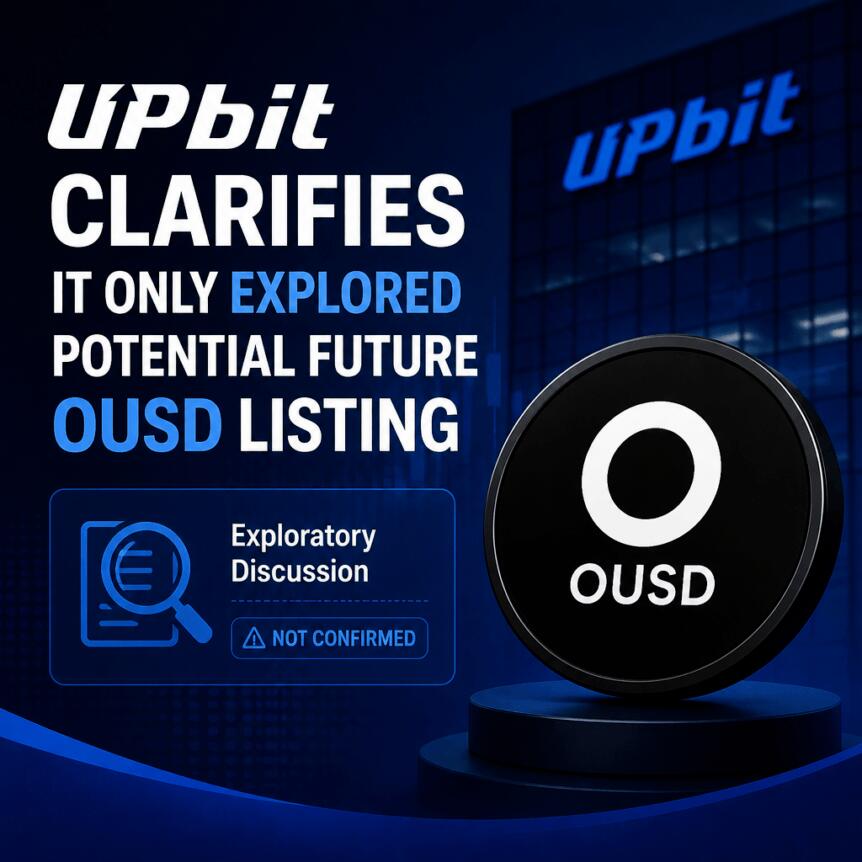
South Korean crypto exchange Upbit says it will not take part in the issuance of Open USD (OUSD), despite an operator-level connection to the stablecoin project. The clarification comes after Open Standard named Dunamu among more than 140 businesses associated with its new dollar-backed initiative.
In a statement to Cointelegraph, an Upbit spokesperson said the exchange has only “indicated our potential willingness to consider taking part in the future expansion of the OpenStandard ecosystem.” The company’s position follows similar pushback from other South Korean firms that were included in Open Standard’s broader business list.
Key takeaways
- Upbit denies participation in OUSD issuance, limiting its stance to possible future involvement in the OpenStandard ecosystem.
- Open Standard’s public roster includes major South Korean companies, but several say they have not agreed to specific roles.
- Regulatory uncertainty in South Korea persists because the Digital Asset Basic Act has not yet been finalized.
- Open Standard’s “no fees / no volume limits” mint-and-redeem model remains a subject of debate among industry observers.
Upbit’s clarification reshapes how Open Standard’s list is read
Open Standard announced Open USD on Tuesday, describing a framework under which participating businesses would be able to mint and redeem the stablecoin without fees or volume limits. The project also said it plans to distribute earnings generated from its reserves to participating companies.
Open Standard’s announcement listed a broad group of firms—reportedly more than 140—stating they had “signed up to use” the stablecoin. Among those named were global payments and finance brands including Visa and Mastercard, as well as asset management and tech firms such as BlackRock and Google. In South Korea, Dunamu was included, which is the operator behind Upbit.
That inclusion prompted follow-up clarification from Upbit. The exchange said it is not participating in OUSD issuance, and only signaled openness to potentially joining “future expansion” of the OpenStandard ecosystem. Cointelegraph also reported that it reached out to Open Standard for comment but did not receive a response before publication.
The broader implication is that the public business list may represent interest or preliminary alignment rather than committed operational roles. That distinction matters for users and market participants watching whether large incumbents are truly underwriting, distributing, or managing parts of the stablecoin’s reserve and governance.
Other South Korean companies reportedly echo “no formal role” concerns
According to a Friday report by ChosunBiz, Samsung Electronics said it had not held formal discussions with Open Standard and did not know what role it was expected to play. The same reporting also indicated Shinhan Financial Group and KBank had only signaled they would consider the initiative.
These responses highlight a recurring pattern in early-stage stablecoin announcements: companies may be mentioned in promotional materials or participation lists before regulatory processes, commercial terms, and internal approvals are locked down. For investors and builders, the practical question becomes whether these entities will move from “consideration” to concrete deliverables such as issuance participation, redemption access, or reserve-related responsibilities.
It also raises the likelihood that Open Standard’s roster could change as plans are translated into compliance-ready operating structures—especially given South Korea’s still-evolving legal landscape for digital assets.
Why South Korea’s pending stablecoin law complicates commitments
Stablecoin issuance and ecosystem participation in South Korea remain constrained by policy uncertainty. The country has not yet passed the Digital Asset Basic Act, leaving open questions about who can issue stablecoins and what roles non-issuers and participating firms may perform.
Cointelegraph has previously reported that lawmakers are debating whether stablecoin issuance should be limited to banks or opened to qualified non-bank issuers, with the broader regulatory framework still under discussion. As long as that process remains unresolved, companies may hesitate to commit to initiatives that depend on licensing, reserve management rules, and the permitted scope of activities for different types of institutions.
That uncertainty can delay integrations and reduce the reliability of public participation lists. Even when major names are mentioned, compliance timelines and approval hurdles can force a slower, more cautious path—particularly for projects that connect traditional finance and payments infrastructure to on-chain settlement.
Open Standard’s mint-and-redeem model still faces skepticism
Alongside corporate clarifications, industry figures have questioned whether Open Standard’s economics are sustainable. Open Standard previously said participating businesses would be able to mint and redeem OUSD without fees or volume limits, and it also described plans to share earnings generated from reserves with participants.
Cointelegraph noted earlier that Circle CEO Jeremy Allaire challenged the model’s durability, specifically questioning the logic of free, unlimited minting and redemption. Lorenzo Valente, director of research at ARK Invest, also characterized the announcement as a “giant” letter of intent.
While such critiques do not necessarily disprove the project, they underscore that stablecoin economics—especially those involving reserve yields, operational costs, redemption incentives, and governance—are often the deciding factor in whether participation scales beyond initial pilots. The tension here is straightforward: an approach designed to reduce friction for users may shift financial responsibilities elsewhere, requiring careful reserve and risk management to stay viable.
For market participants, Upbit’s position is another reminder to separate marketing claims from operational reality. Even if a project advertises broad participation, the sustainability of the underlying business model and the readiness of the legal framework will likely determine who can actually play active roles.
What to watch next is whether South Korea’s Digital Asset Basic Act—and the specific stablecoin issuance rules it implies—moves from debate toward implementation. In parallel, observe whether Open Standard converts “signed up to use” lists into clearly defined, compliant roles for identified entities, including in South Korea.


Europe’s securities regulator has warned that prediction market contracts offered in the European Union could already fall under existing financial rules, potentially triggering a long-standing retail ban on binary options.
Summary
- ESMA says some prediction market contracts may already fall under MiFID II financial rules.
- Existing EU binary options restrictions could apply automatically if contracts qualify as financial instruments.
- The guidance follows mounting regulatory scrutiny of Polymarket and other prediction market platforms across Europe.
According to the European Securities and Markets Authority (ESMA), firms offering event-based contracts in the European Union must assess whether those products qualify as financial instruments under the Markets in Financial Instruments Directive II (MiFID II). If they do, the regulator said, the EU’s retail restrictions on binary options introduced in 2018 would automatically apply.
The July 3 statement does not introduce new legislation. Instead, ESMA clarified that the existing regulatory framework may already cover some prediction market products currently being marketed in Europe. The guidance is directed both at firms and national regulators responsible for supervising financial markets across the bloc.
Existing MiFID II rules could already apply
Under ESMA’s interpretation, companies cannot simply describe contracts as prediction markets or event contracts without considering whether they meet the legal definition of a financial instrument under MiFID II. Where that threshold is met, the binary options restrictions adopted by the regulator in 2018 would take effect without any additional rulemaking.
The clarification arrives as offshore prediction market operators continue drawing regulatory attention across multiple jurisdictions. Among the largest providers, Polymarket operates from offshore markets, while Kalshi and Crypto.com are regulated by the U.S. Commodity Futures Trading Commission (CFTC) in the United States. None of the major platforms currently operates a licensed prediction market business within the European Union.
The regulatory update also follows recent scrutiny surrounding Polymarket. The platform was recently accused of using deceptive advertising that targeted U.S. users, adding to regulatory pressure already facing prediction market operators in several countries.
European scrutiny has intensified across multiple countries
Before ESMA issued its clarification, several European authorities had already taken action against prediction market platforms.
Spain’s Ministry of Consumer Affairs temporarily blocked Kalshi and Polymarket on May 26 after determining that the platforms did not hold the gambling licenses required under Spanish law.
A few weeks later, on June 19, gambling regulators from nine European countries, including Belgium, France, Germany and Spain, issued a joint statement warning consumers about unlicensed gambling websites operating across Europe. According to the participating authorities, those platforms raised consumer protection concerns ahead of the FIFA World Cup.
Outside Europe, legal challenges have also continued. Last month, the Kentucky government filed a lawsuit against Polymarket and Kalshi, alleging the platforms were facilitating illegal sports betting within the state.
Against that backdrop, ESMA’s latest statement places fresh responsibility on firms considering expansion into the European market. According to the regulator, companies must determine not only whether their contracts qualify as financial instruments under MiFID II, but also whether national laws classify those products as gambling activities.
Because no major prediction market operator currently runs a licensed European business, ESMA’s clarification comes before any large-scale launch rather than after one.
Firms that fail to address both financial market rules and national gambling requirements could face enforcement action similar to the measures already taken by Spanish authorities, based on the regulator’s guidance and recent actions by national authorities.

Gosport lifeboat volunteers to support Mum’s abseil in memory of the son they tried to save 15 years ago

A Cable Scion’s Hardest Deal Yet: Comcast Co-CEO Brian Roberts’ Plan to Break Up His Family’s Company

Defendant Files to Dismiss New York Lawsuit Seeking Ownership of 39,069 Bitcoin Wallets


-

 Tech6 days ago
Claude Code turned every engineer into three. Now companies need more product thinkers
-

 Crypto World4 days ago
Strategy authorizes up to $1.25B in Bitcoin sales under new capital plan
-

 Politics9 hours ago
The House | “Reframing the debate from a binary discussion of winners and losers”: Yuan Yang reviews ‘We Are Not Machines’
-

 News Videos5 days ago
MAJOR BITCOIN & MARKET UPDATE!!!! (MUST WATCH ASAP!!!)
-

 Tech4 days ago
Anonymous researcher drops 0-day ‘exploitarium’ repo
-

 Tech6 days ago
Bluekit phishing kit adopts browser-in-the-middle for login theft
-

 Crypto World6 days ago
Coinbase, Circle Deepen Crypto Stock Losses Despite Resilient S&P 500
-

 Business4 days ago
Australia treasurer says alleged access of prime minister’s bank data ’incredibly concerning’
-

 Crypto World7 days ago
Kraken's xStocks Opens Bending Spoons IPO Registration to EEA Retail
-

 Tech6 days ago
Russian hackers now target Signal backup recovery keys
-
 Business4 days ago
The AI boom won’t burst all at once. It will pop in ‘rolling bubbles’: Macquarie
-

 Sports2 days ago
Broncos roster: OL Ben Powers (No. 74) entering final year of contract
-

 Fashion3 hours ago
Weekend Open Thread: High Hopes
-

 NewsBeat3 days ago
Presenter Caroline Flack’s brother Paul Flack dies aged 55
-

 Tech6 days ago
Silicon Valley paid to kill AI regulation, now it wants the rules back
-

 Crypto World2 days ago
Binance stock trading tops $1B in first month after launch
-

 Tech6 days ago
OpenAI mulls delaying IPO over valuation concerns
-
 NewsBeat2 days ago
New exhibition reflects five decades of movement between island of Ireland and GB
-

 Crypto World2 days ago
Alibaba-affiliate Ant Group enters the humanoid robot market with 12 deals
-

 News Videos3 days ago
How to Build INSANE Live Financial Dashboards With Claude
You must be logged in to post a comment Login