

Crypto World
Open USD Membership Claims Challenged After Samsung, Others Dispute Participation


Several major South Korean companies have said they have not formally joined the newly announced Open USD (OUSD) consortium, despite being listed among its participating organizations.
Open Standard, the independent entity behind the stablecoin, previously said it had assembled over 140 businesses to launch OUSD, a dollar-pegged stablecoin, later this year.
Korean Companies Push Back
The lineup featured some of the world’s largest companies across multiple industries, such as Visa, Mastercard, BlackRock, Google, Ripple, and Standard Chartered, among the high-profile names. The list of South Korean participants included Samsung Electronics, Dunamu, Shinhan Financial Group, KakaoBank, K Bank, Hyundai Card, KB Kookmin Card, BC Card, Hana Card, Samsung Card, Woori Card, NH Nonghyup Card, and Hanwha.
However, several of those companies have now disputed the nature of their involvement.
According to a report by Chosun Biz, a Samsung Electronics representative told the publication that there had been no official discussions with the OUSD issuer and that the company did not know what role it would play in the consortium. Meanwhile, Shinhan Financial Group, Dunamu, and K Bank similarly said Open Standard had only asked whether they were interested in participating in OUSD and that they had simply responded that they would review the proposal.
Their names were reportedly later included in the consortium list despite no formal commitment.
One company representative also said the firm only discovered it had been identified as an alliance member after reading domestic media reports. The representative added that the company had merely indicated it would consider participation if circumstances aligned and was puzzled to find itself listed as a member.
No Contracts, Only Discussions
The report was later echoed by the founder of digital asset firm Pointsville, Gabor Gurbacs, who said he spoke with several companies listed in the OUSD consortium, and they told him they had never signed or agreed to participate. He added that either the media had significantly distorted the situation or the published participant list was misleading.
The claims also prompted debate across X. One user described listing companies before deals are finalized as a “classic legitimacy-borrowing” move, while another said the situation represents a major credibility risk.
The post Open USD Membership Claims Challenged After Samsung, Others Dispute Participation appeared first on CryptoPotato.

President Donald Trump has denied knowing about the at least $1.4 billion in crypto income disclosed in his latest financial filing, while defending both his personal gains and his family’s involvement in the digital asset industry.
Summary
- Donald Trump said he was unaware of the at least $1.4 billion in crypto income disclosed in his latest financial filing.
- The disclosure attributes most of the earnings to licensing deals tied to the TRUMP meme coin and WLFI token sales.
- Trump renewed his call for U.S. crypto leadership as the CLARITY Act faces political and ethics-related hurdles in Congress.
According to a CNBC interview, Trump said he was unaware of the amount of money generated from his crypto ventures, adding that he could know if he wanted to and insisting there was nothing illegal about such earnings. His comments came after the release of his 2025 financial disclosure, which has renewed scrutiny over potential conflicts of interest tied to his family’s crypto businesses.
The financial disclosure, released earlier this week, showed that Trump earned at least $1.4 billion from cryptocurrency-related activities during the reporting period. The filing attributed most of the income to licensing agreements connected to the Official Trump (TRUMP) meme coin and token sales conducted by Trump-backed World Liberty Financial (WLFI).
Earlier, as reported by crypto.news, Trump responded to questions about the disclosure by pointing to gains from the stock market rally but did not address the crypto-related income. His latest remarks are the first direct comments on the digital asset earnings disclosed in the filing.
Financial disclosure renews scrutiny of Trump’s crypto interests
The disclosure has again drawn attention to the Trump family’s expanding presence in the cryptocurrency sector. Critics have previously argued that the family’s business interests could create conflicts while Trump serves as president, particularly as his administration continues to shape U.S. digital asset policy.
Separate criticism has also focused on the launch of the TRUMP and MELANIA meme coins, with opponents alleging the projects extracted liquidity from retail investors. Meanwhile, WLFI, the native token of World Liberty Financial, was also introduced last year. All three tokens remain well below their respective all-time highs following strong declines after launch.
Despite the criticism, Trump maintained in the CNBC interview that there was nothing improper about benefiting from crypto investments. He did not indicate that he planned to distance himself or his family from their digital asset ventures.
Trump continues to push for U.S. crypto leadership
Alongside his comments on the disclosure, Trump repeated his view that the U.S. must remain the global leader in cryptocurrency development. During the interview, he argued that failing to take the lead could allow countries such as China or Japan to dominate what he described as a very large industry.
The president has repeatedly linked that position to his administration’s plan to make the United States the global center for digital assets. As part of that effort, he has urged lawmakers to approve the CLARITY Act, legislation designed to establish a clearer regulatory framework for the crypto industry.
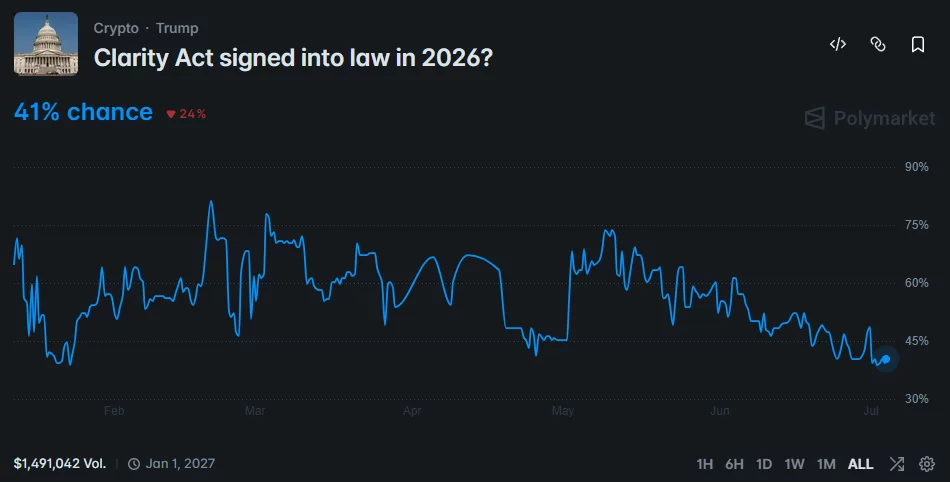
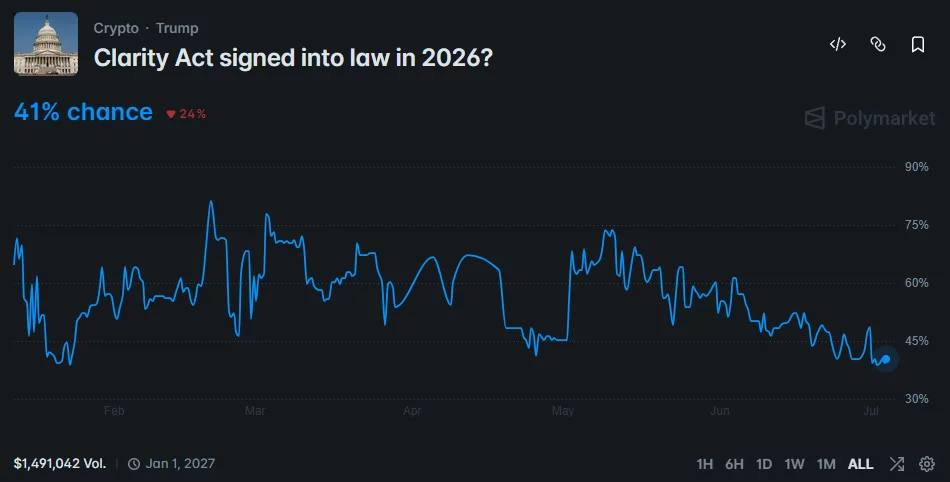
Even so, the bill faces growing political uncertainty. According to prediction market platform Polymarket, traders currently assign a 41% probability that Trump will sign the CLARITY Act into law before the end of the year.
Ethics concerns surrounding Trump’s financial interests in cryptocurrency remain one of the main obstacles cited by Democratic lawmakers. With the Senate expected to begin its August recess in the coming weeks, the legislation now faces a narrowing window to advance through Congress before lawmakers leave Washington.


The CLARITY Act has regained momentum after Senator Bill Hagerty outlined a revised Senate timeline that points to floor action after lawmakers return from the July recess.
Summary
- Bill Hagerty said the Senate could release the final CLARITY Act text this weekend before a post-recess vote.
- Bloomberg Intelligence now estimates the bill has about a 60% chance of passing this month.
- NOBLE backed the legislation, while the DOJ disputed claims that it would weaken crypto crime enforcement.
According to reports citing Senator Bill Hagerty, the U.S. Senate is expected to publish the final text of the CLARITY Act this weekend, giving lawmakers and the digital asset industry their clearest look yet at the legislation before debate resumes.
The updated schedule has replaced earlier expectations of a July 4 signing, with Hagerty indicating that a Senate vote is more likely after Congress reconvenes on July 13.
Although the timetable has slipped, political support for the bill has continued to grow. Bloomberg Intelligence recently estimated that the probability of the CLARITY Act passing this month has risen to about 60%, adding to optimism among crypto market participants awaiting a federal market structure framework.
Senate schedule now points to a post-recess vote
Hagerty’s latest comments have shifted attention from an immediate vote to the legislative process expected later this month. Before the Senate can consider the measure, lawmakers are expected to review the final legislative text, which could clarify several provisions that have attracted debate in recent weeks.
Passing the bill will still require at least 60 votes in the Senate. Republicans currently hold 53 seats, meaning the legislation cannot advance without support from several Democrats. During committee consideration, Democratic Senators Angela Alsobrooks and Ruben Gallego voted in favor of the bill, although both later said their committee votes should not be interpreted as commitments to support the legislation on the Senate floor.
Time also remains a factor. As previously reported by crypto.news, the Senate has limited floor time before its August recess, making the period after lawmakers return on July 13 particularly important. If the bill fails to advance during that window, its next realistic opportunity could slip into 2027.
Support from NOBLE strengthens the bill’s position
Alongside the revised timeline, the legislation has gained support from new constituencies. Senator Tim Scott recently argued that businesses innovate more effectively when operating under predictable regulatory rules.
Scott said the CLARITY Act would establish clear standards for digital assets, improve consumer protections, and help keep financial innovation in the U.S.
Another notable endorsement came from the National Organization of Black Law Enforcement Executives (NOBLE), which became the first major law enforcement organization to publicly back the CLARITY Act, including the Blockchain Regulatory Certainty Act provisions contained in Section 604.
NOBLE’s position differs from concerns previously raised by four U.S. law enforcement organizations, which argued that Section 604 could make investigations into crypto-related financial crime more difficult by preventing certain non-custodial developers and software providers from automatically being treated as money transmitters. Supporters of the provision have maintained that developers who never control customer assets should not be regulated like financial intermediaries.
The debate expanded after the U.S. Department of Justice disputed claims that the legislation would create major enforcement gaps. As previously reported by crypto.news, the DOJ said criticism of the bill’s law enforcement provisions was inaccurate.
In its endorsement letter, NOBLE similarly argued that the legislation would not weaken existing federal criminal authorities covering money laundering, unlicensed money transmission, sanctions violations, conspiracy, and related offenses.
Industry groups have also continued lobbying lawmakers ahead of the Senate’s return. Stand With Crypto recently urged supporters to contact senators and push for a vote once Congress reconvenes.
The organization argued that prolonged delays could encourage crypto companies, investment, and jobs to move outside the U.S. while the country waits for clearer digital asset regulations.


Standard Chartered has secured a MiCA passport as the European Securities and Markets Authority has added 57 newly authorized crypto firms to its register following the end of the EU’s transition period.
Summary
- ESMA has expanded its MiCA register to 300 authorized crypto firms after approving 57 new providers.
- Standard Chartered and FalconX have secured MiCA licenses, gaining passporting rights across all 27 EU member states.
- The July 1 MiCA deadline has reshaped the EU crypto market, with only licensed firms allowed to serve new customers.
According to the European Securities and Markets Authority (ESMA), its latest interim register now lists 300 authorized crypto-asset service providers, up from 243 on June 26, after a wave of approvals arrived around the July 1 Markets in Crypto-Assets deadline.
The updated list includes major banks, institutional trading firms, and digital asset companies that can now offer regulated services across the European Union under a single authorization.
Standard Chartered joins expanding MiCA register
Among the biggest additions is Standard Chartered, which received MiCA authorization from Luxembourg’s financial regulator, the Commission de Surveillance du Secteur Financier (CSSF), on June 25.
The bank also obtained an Electronic Money Institution license, allowing it to use MiCA’s passporting system to provide crypto services throughout all 27 EU member states without seeking separate approvals in each country.
Institutional crypto trading firm FalconX also entered the register after receiving authorization from Malta’s Financial Services Authority shortly before the July 1 deadline.
ESMA’s latest update further added digital asset bank Sygnum Europe, Ronin EM, and CACEIS, the asset servicing business owned by Crédit Agricole and Santander.
Separately, crypto.news recently reported that CACEIS is in exclusive talks to acquire French crypto investment platform Meria, a deal that would add a retail crypto business with about 150,000 users and roughly €350 million in assets under management. The reported discussions followed Meria’s own MiCA CASP authorization in France.
Recent approvals have also extended beyond traditional financial institutions. As crypto.news previously reported, Stripe-owned Bridge secured both MiCA CASP authorization and an Electronic Money Institution license in Luxembourg, enabling the company to provide regulated crypto services across the European Union under the same passporting framework.
MiCA deadline has reshaped Europe’s regulated crypto market
The surge in approvals followed the end of MiCA’s transitional period on July 1, 2026. During that grace period, crypto companies already operating in individual EU countries could continue serving customers while applying for full authorization.
With the transition now complete, firms that failed to obtain a MiCA license must stop onboarding new customers and begin winding down regulated operations within the bloc. ESMA’s updated register provides public confirmation of which providers have completed the authorization process.
MiCA establishes a single regulatory framework covering crypto exchanges, custody providers, portfolio managers, and crypto-asset issuers across the European Union. Under its passporting rules, authorization from one national regulator, such as Luxembourg’s CSSF or Malta’s MFSA, gives firms access to customers across the entire bloc.
The new regulatory environment has already produced visible market changes. As crypto.news reported, Tether’s $186 billion USDT no longer has a MiCA-compliant route to remain on regulated EU exchanges following the July 1 deadline.
Consequently, MiCA-authorized exchanges including Coinbase, Kraken, and Crypto.com have removed USDT trading for European users, ending the stablecoin’s presence on regulated order books despite remaining the world’s largest stablecoin by market capitalization.
For institutional investors and asset managers, ESMA’s expanding register now offers a verified reference point for identifying regulated counterparties operating under the European Union’s unified crypto framework, while passporting continues to reduce the need for firms to secure separate licenses in each member state.
Speculation about another Bitcoin sale from MicroStrategy intensified after an unconfirmed on-chain transfer showed 491 BTC leaving a company-linked wallet on July 1. Neither MicroStrategy nor its Executive Chairman, Michael Saylor, has confirmed any sale.
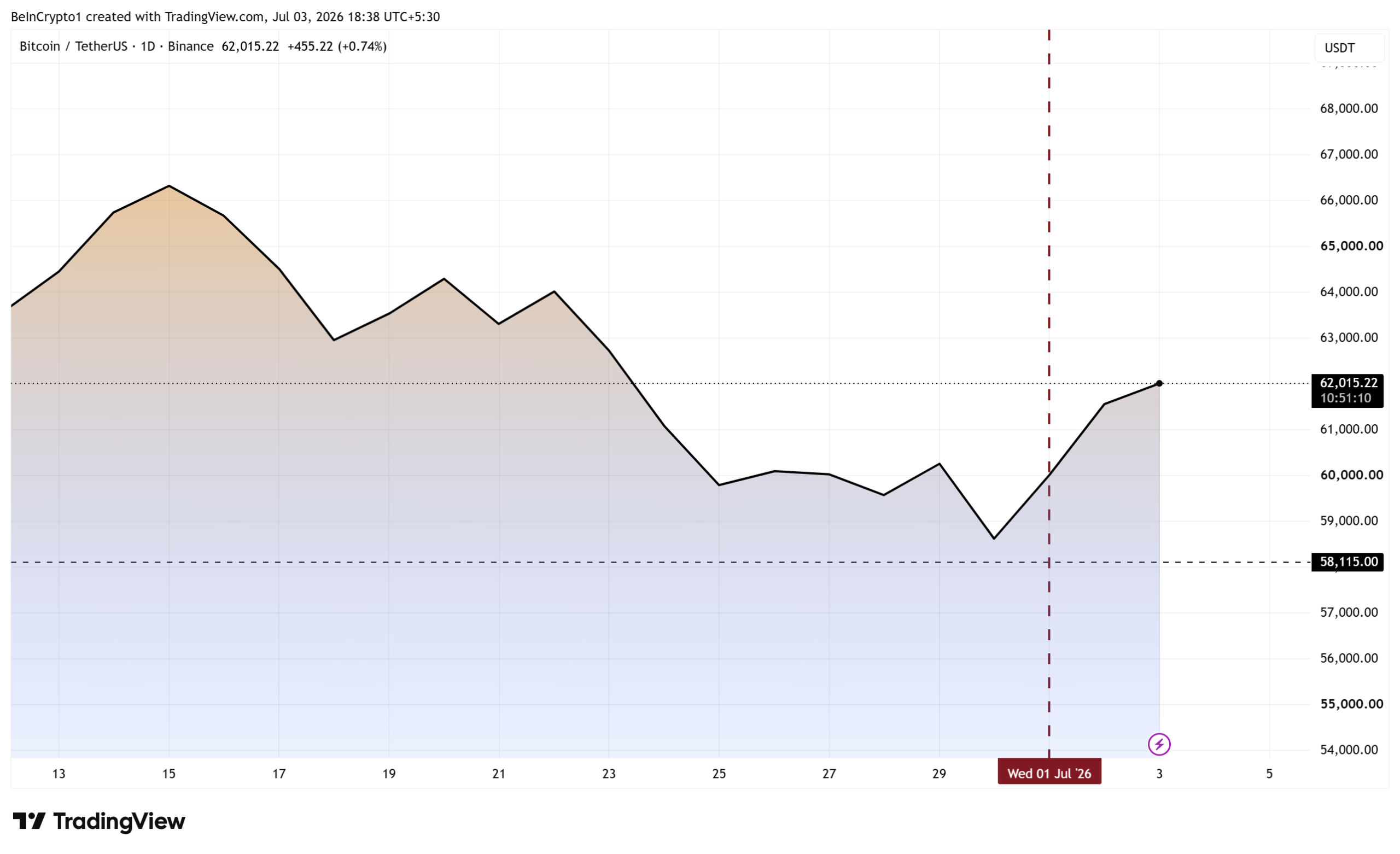
The rumor spread across X (Twitter) on Friday. Meanwhile, Bitcoin (BTC) traded higher after July 1, suggesting the market easily absorbed the alleged transaction.

Did Saylor Sell More Bitcoin?
Pseudonymous trader Light flagged the transfer, worth roughly $30 million at current prices. That equals just 0.058% of the 847,363 BTC Strategy reported in its latest SEC disclosure. The stack covers about 4% of bitcoin’s 21 million coin supply.
The timing explains the attention. Strategy adopted a Bitcoin monetization framework plan on June 29, authorizing up to $1.25 billion in tactical sales to fund dividends and buybacks. Its raised 12% STRC preferred dividend took effect on July 1, the same day as the alleged transfer.
The company also completed its first Bitcoin sale since 2022 in late May, offloading 32 BTC to cover preferred stock dividends. Its only earlier sale came in December 2022.
Back then, it sold 704 BTC for $11.8 million to harvest tax losses, then repurchased 810 BTC within days. It had already been rebuilding its cash reserves this year while slowing new purchases.
“Michael Saylor’s Strategy may have just sold 491 BTC on July 1st. The transaction hasn’t been confirmed yet, but if true, this would be one of the first signs of Strategy reducing its Bitcoin position after years of “never sell” narratives…” analyst Crypto Rover amplified the claim in a post.
Follow us on X to get the latest news as it happens
Bitcoin Shrugs Off the Sale Speculation
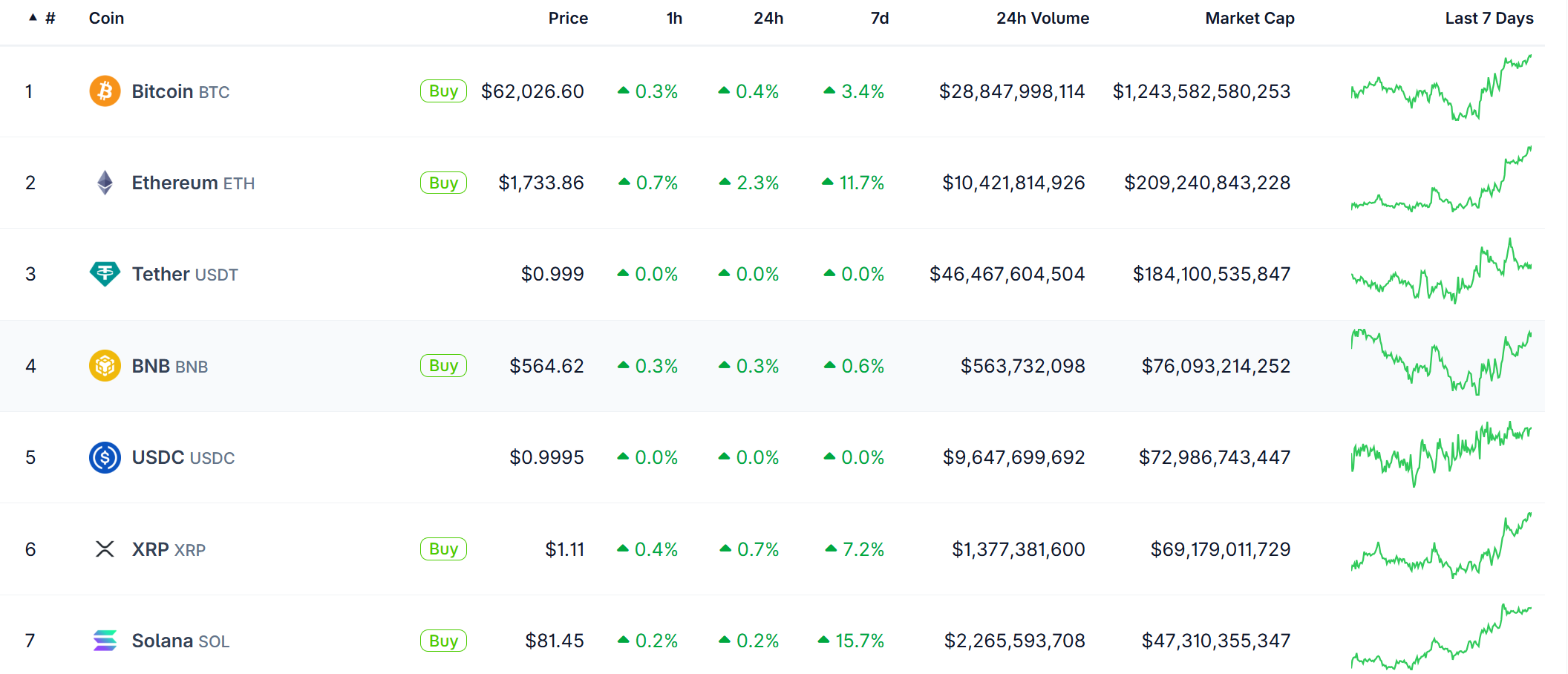
Bitcoin showed little stress. The coin opened at $61,492 on Friday, up 2.5% from Thursday, and traded for $62,016 as of this writing, up by 1.35% in the last 24 hours. With this, the pioneer crypto is up by over 7% from the July 1 low of $57,800.

The strength tracked a weak June jobs report rather than treasury headlines. It extends a fragile Bitcoin price recovery after the worst month for prices in four years.
Reactions on X (Twitter) split between traders calling the amount a rounding error and others warning repeated sales could sour sentiment.
The calm contrasts with JPMorgan’s recent warning that the new sales policy adds risk to the crypto market. Even so, a fully absorbed $30 million transfer suggests demand currently outweighs those concerns.
Confirmation now rests with Strategy’s own disclosures. The firm reported its May sale within days, so a filing this week would show whether the transfer was a sale, a custody move, or an internal shuffle.
The post MicroStrategy Reportedly Sold More Bitcoin, But Market Didn’t React appeared first on BeInCrypto.


Robinhood has emerged as a key platform in the rollout of the Trump Accounts program, with U.S. Treasury-backed child investment accounts scheduled to begin transfers ahead of the initiative’s July 4 launch.
Summary
- Robinhood is expected to help roll out the Trump Accounts program ahead of its July 4 launch.
- Eligible children will receive a $1,000 government contribution, with annual private contributions capped at $5,000.
- Trump also floated a possible SpaceX stock donation, though neither Elon Musk nor SpaceX has confirmed any plans.
According to information surrounding the program, Robinhood is expected to help facilitate the new accounts, which are designed to give eligible children access to long-term investment portfolios through federally supported savings accounts.
The transfer process is expected to open through the U.S. Treasury before the official launch, bringing brokerage firms into one of the administration’s newest financial initiatives.
Robinhood is expected to handle access to the new accounts
Under the program, children under 18 whose parents have a valid Social Security number will qualify for an account. The federal government will contribute an initial $1,000, while families and other approved contributors may add up to $5,000 per child each year through IRS Form 4547.
The framework brings together the U.S. Treasury, the Internal Revenue Service, brokerage firms responsible for custody, and retail investment companies that will offer account access. Although officials have not formally named Robinhood as the exclusive provider, the company is widely expected to play a central role in making the accounts available to eligible users.
Because Robinhood already combines stock investing with cryptocurrency trading in a single application, the arrangement could eventually allow users to manage government-backed investment accounts alongside their existing brokerage portfolios if regulators permit such functionality. The current Trump Accounts structure, however, does not include cryptocurrency investments or blockchain technology.
Speaking in an interview with CNBC’s Joe Kernen on Thursday, President Donald Trump also said he believes Elon Musk could contribute SpaceX stock to the Trump Accounts initiative, although he acknowledged he had not recently spoken with the billionaire.
Trump added that business leaders including Michael Dell and Micron have shown support for the children’s investment program. Neither Musk nor SpaceX has announced any plan to donate shares, leaving Trump’s comments as his expectation rather than a confirmed commitment.
Following those remarks, SpaceX ticker SPCX recovered from an intraday low near $155 to close about 3% higher at roughly $162 on July 3 as buyers returned after early selling pressure, as previously reported by crypto.news.
Regulators continue separating traditional investments from digital assets
While the accounts focus on conventional investment products, their launch comes as U.S. regulators continue defining the legal boundaries between securities and digital assets. The program adds another example of regulated custodial investment products becoming part of mainstream financial services, even though cryptocurrencies are not included in the current design.
Research previously published by Messari has identified retail investment applications as an important entry point for individuals investing in risk assets. If brokerages integrate the new accounts into existing investing platforms, regulated long-term investing could become more accessible to younger users through familiar financial apps.
The political backdrop surrounding the initiative remains active. As previously reported by crypto.news, President Trump’s 2025 financial disclosures showed at least $1.4 billion in crypto-related income tied to ventures including his memecoin and World Liberty Financial, prompting continued ethics discussions while lawmakers negotiate the CLARITY Act. Trump later denied knowledge of those earnings and said there was “nothing illegal” about them.
Although the Trump Accounts program currently excludes digital assets, brokerage participation and ongoing regulatory work could influence future discussions about how government-backed investment products and regulated digital asset offerings coexist within the U.S. financial system.

Solana’s SOL token climbed to a level not seen in more than 30 days, briefly trading around $83, and the move is drawing attention because it doesn’t look like a simple altcoin sympathy rally. Instead, market data points to a mix of rising tokenized-asset activity on Solana, renewed memecoin momentum, and improving flows tied to stablecoin liquidity.
The question now for traders is whether this renewed bid can push SOL back through the $90 area—or whether the market is already cooling off as leverage comes off the table. Recent derivative and on-chain indicators suggest enthusiasm may be more selective than it was earlier in the week.
Key takeaways
- SOL hit a 30-day high near $83, showing signs of decoupling from the broader altcoin market’s weakness.
- Tokenized trading activity on Solana accelerated as cumulative tokenized stock transfers surpassed $10 billion around June 23.
- Memecoins and prediction-market activity boosted short-term attention, but leveraged positioning cooled quickly.
- Futures annualized funding fell to about 3% on Friday from an 11% peak earlier, implying less appetite for chasing gains to $90.
Tokenized assets bring a new tailwind to Solana
One of the clearest narratives behind SOL’s strength is the renewed growth in tokenized asset activity on the Solana network. According to data referenced from RWA.xyz, Solana’s tokenized assets rose to a record-high $3.5 billion on Wednesday—up from $2.7 billion about one month earlier.
The same dataset also points to what’s driving that expansion. The article cites tokenization products related to corporate credit and market indexes such as the S&P 500 and the Nasdaq-100. In addition, RWA.xyz data shows Solana leading the tokenized industry by active addresses, with 294,274, compared with Ethereum’s 204,955.
On the “why it matters” side for investors and builders: when tokenized assets expand, it generally increases demand for on-chain infrastructure—settlement, custody, trading venues, and related DeFi rails. Even if tokenized flows don’t translate immediately into SOL spot buying, they can reinforce the perception that Solana is capturing practical usage, not only speculative demand.
Memecoin revival and ecosystem features support short-term momentum
Beyond tokenization, the rally also appears to have been helped by a memecoin resurgence. The article highlights the Sunday airdrop of The Black Bull (ANSEM), which launched on Pump.fun. ANSEM reportedly reached a market capitalization of $60 million by Tuesday, with the developer directing roughly 65% of the supply to Ansem’s public wallet; the launch rollout reportedly involved about 74,000 addresses over the initial three days. The distribution is described as lacking full transparency.
That kind of attention can matter because memecoin activity often spurs retail trading and related network usage—especially on ecosystems where token launches and trading are tightly integrated. In this case, multiple Solana memecoins gained, but the article notes that the biggest winner was the Pump.fun platform token (PUMP). PUMP added about 27% on the week, returning to the top 100 by market capitalization and reaching an estimated $630 million valuation. ANSEM itself reportedly extended gains on Friday, reaching an all-time high market capitalization of $112 million.
Alongside memecoins, the article also ties SOL’s renewed interest to prediction-market functionality. It cites the integration of a “World prediction markets” experience into the Phantom wallet, reporting nearly $890,000 in total value locked over two days, framed as an effort to compete with Polymarket during the World Cup betting cycle. It also mentions that Jupiter has prediction markets under beta testing, with a reference to a June 29 launch.
Leverage cools: derivatives signal traders are less willing to chase
If tokenized-asset growth and memecoins helped ignite the move, derivatives data suggests the market is no longer as eager to press higher prices. The article points to a sharp decline in bullish leveraged appetite after Wednesday, when SOL rose above $75 for the first time in 30 days.
Specifically, the SOL perpetual futures annualized funding rate fell to 3% on Friday from an 11% peak just two days earlier. The piece references Laevitas for those funding figures, and notes that under “neutral conditions,” the funding rate should typically sit in a range from 6% to 12% to balance the capital cost.
That shift is important for traders because funding rates often reflect whether longs are crowding the trade. A cooling funding environment can mean new longs are less willing to pay up for exposure to SOL, which can reduce the momentum needed to sustain a breakout attempt—especially if spot demand doesn’t keep pace.
In other words, the market may be congratulating itself on earlier gains while becoming more cautious about a further push toward $90. The article’s framing emphasizes that investors may not want to bet on SOL widening its performance gap over other altcoins based solely on temporary memecoin-driven attention. Without sustained blockchain activity that converts into durable demand—rather than short-lived hype—there may be fewer reasons for leverage to build again quickly.
What to watch next for SOL and Solana activity
For SOL to realistically challenge the $90 zone, the next signal to track is whether the tokenized-asset expansion and broader on-chain usage can offset any fading retail-driven flows. If tokenized trading volume continues to grow and prediction-market participation sustains, the narrative supporting SOL may broaden beyond memes. Conversely, if leveraged sentiment stays subdued and funding remains below the levels typically associated with healthy upside positioning, SOL may consolidate even if it remains resilient versus the rest of the altcoin market.
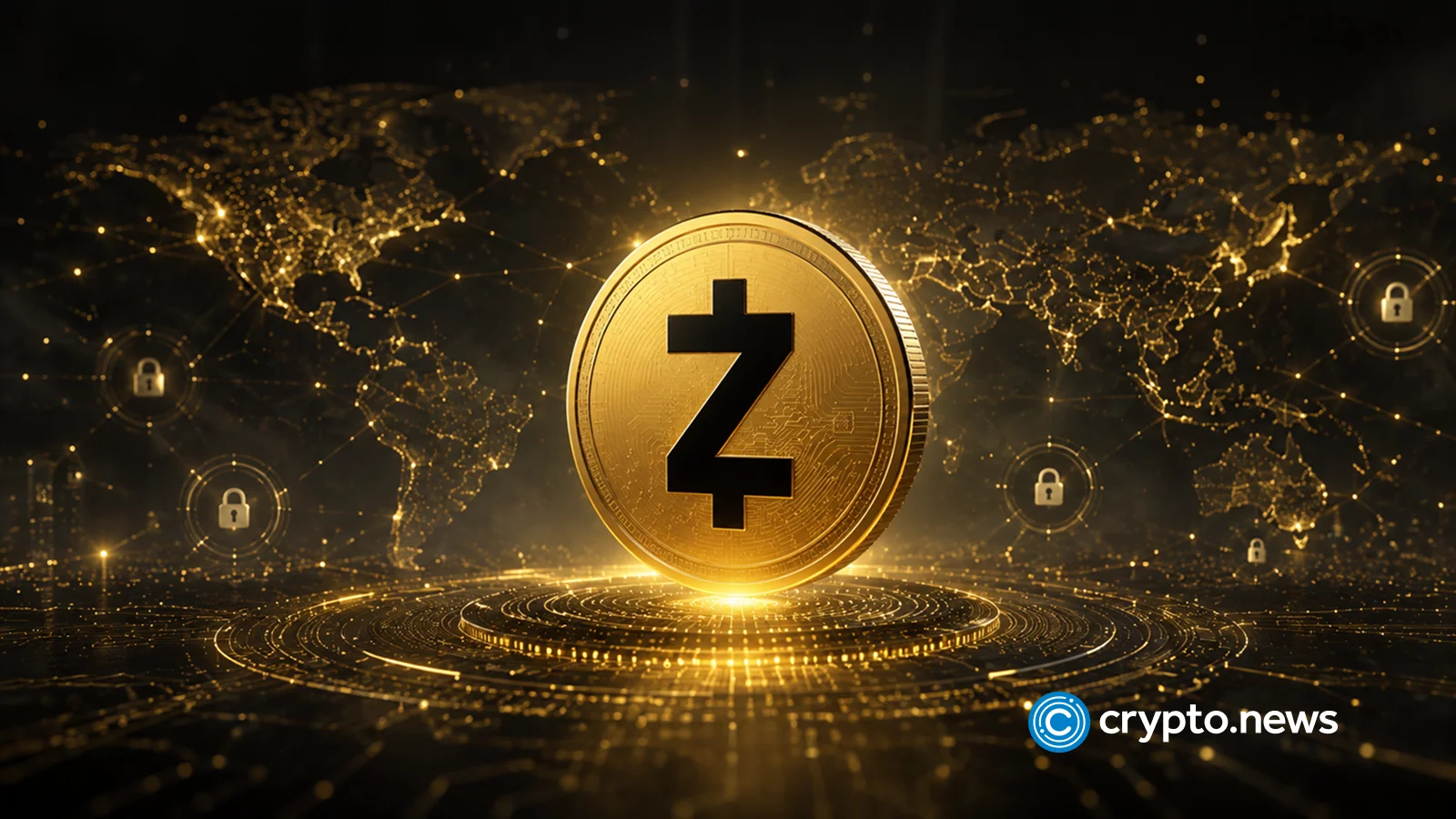
Shielded Labs has raised the possibility of delaying Zcash’s Ironwood network upgrade, citing readiness concerns among exchanges, mining pools and wallet providers ahead of the planned late July activation.
Summary
- Shielded Labs says Zcash’s Ironwood upgrade may be delayed as ecosystem participants need more preparation time.
- Exchanges, wallets and mining pools are simultaneously migrating from zcashd to the new Z3 software stack.
- Ironwood is designed to secure Zcash’s shielded supply after the Orchard “infinity” bug was disclosed.
According to a July 3 X post on the Zcash community forum by Shielded Labs executive director Jason McGee, the network is attempting to complete two major changes at the same time. Alongside Ironwood, infrastructure providers are also expected to replace Zcash’s long-running node and wallet software, zcashd, with a new software suite known as the Z3 stack.
McGee said feedback from ecosystem participants showed mixed levels of preparedness. While some operators believe they can complete the migration before the planned activation window, others have indicated they will require additional time to deploy and test the new software. He added that no decision has been made to postpone Ironwood.
Infrastructure migration remains the biggest hurdle
As part of the transition, Zcash is retiring zcashd, which has long been used by exchanges, wallets and other network operators to connect to the blockchain and process transactions. Its replacement consists of Zebra for running network nodes, Zaino for blockchain data services and Zallet for wallet functionality.
According to Zcash’s official migration guidance, some features available in zcashd will not have direct replacements, meaning operators may need to modify their own infrastructure before switching to the new stack. McGee also said both Zallet and Zaino remain under development and are not yet considered production-ready, making deployment timelines uncertain for some ecosystem participants.
The overlap between the software migration and Ironwood activation has created a practical challenge. Delaying Ironwood could extend uncertainty around Zcash’s shielded supply, while proceeding without sufficient preparation could leave exchanges, mining pools, and wallet providers struggling to complete the migration safely.
Ironwood is designed to secure Zcash’s shielded supply
Ironwood was proposed after researchers identified an “infinity” bug in Orchard, Zcash’s primary shielded transaction pool. According to the development team, the vulnerability could theoretically have allowed an attacker to create an unlimited amount of counterfeit ZEC inside Orchard without immediate detection. Developers also said they found no evidence that the flaw had ever been exploited.
Because Orchard’s privacy protections prevent anyone from proving that no counterfeit coins were created, Ironwood introduces a replacement shielded pool and closes Orchard to new activity. Funds leaving Orchard would pass through an accounting checkpoint that prevents more ZEC from exiting than originally entered, allowing users to verify that the circulating supply stays within the protocol’s intended limits.
Earlier this year, developers temporarily disabled Orchard transactions through an emergency network update after disclosing the vulnerability while work on Ironwood continued. The upcoming upgrade forms the permanent solution intended to restore confidence in the network’s shielded supply.
Meanwhile, Zcash founder Zooko Wilcox said recent security reviews have not uncovered any additional serious vulnerabilities in the new implementation. He added that developers are continuing to verify the upgraded system before Ironwood is activated, while discussions remain ongoing over whether additional preparation time is needed for ecosystem participants before the network upgrade proceeds.
A formal complaint has asked Parliament’s standards watchdog to examine whether Reform UK leader Nigel Farage breached lobbying rules. This comes after Farage received donations from billionaire Christopher Harborne, who reportedly holds a 12% stake in Tether’s USDT stablecoin.
Labour MP Phil Brickell filed the complaint on July 2. He asked Parliamentary Commissioner for Standards Daniel Greenberg to review Farage’s private meeting with Bank of England Governor Andrew Bailey in September 2025.
The Rule Behind the Farage Crypto Lobbying Complaint
Official UK parliamentary guidance prohibits MPs from approaching ministers or officials on behalf of recent benefactors.
“Paid lobbying is prohibited. An MP who has received a benefit such as hospitality, a gift or payment must not for 12 months after receipt engage in … any approach to a minister, other MP or public official which would provide (or seek to provide) a financial or material benefit for the person or organisation which provided them with that … payment.”
The restriction is younger than it looks. The British Parliament doubled the ban from 6 to 12 months in March 2023, after Owen Paterson resigned in 2021. The standards committee found he lobbied for two firms paying him more than £100,000 ($133,500) a year.
Brickell, chair of Parliament’s anti-corruption group, reported Farage to Commissioner Daniel Greenberg. This is according to a report by The Guardian,
“This is not simply a debate about cryptocurrency. It is about whether an MP who has received millions from one individual should be lobbying for policies that could increase the value and profitability of that donor’s investments.”
Follow us on X to get the latest news as it happens
How the Timeline Tests the Rule
Farage reportedly accepted a £5 million gift from Harborne before the July 2024 general election. Greenberg is already examining whether that gift should have been declared, according to the BBC.
Farage also received two £25,000 donations from Harborne in January 2025 and February 2026. Reform UK received a further £15 million from the same donor.
The January 2025 donation is central to the lobbying complaint. Around eight months later, in September 2025, Farage met Bailey privately.
During that meeting, Farage reportedly urged the Bank of England to scrap its digital pound plans.
Nine months later, the Bank dropped stablecoin holding caps in favor of a £40 billion ($53.4 billion) issuance ceiling. Industry voices had warned the £20,000 ($26,700) cap could make businesses unworkable.
Farage has since claimed credit for the softer approach, the Telegraph reported.
That meeting fell inside the 12-month restriction period following the January donation. Brickell’s complaint asks whether Farage’s approach to the Bank could have provided a financial or material benefit to Harborne, given his reported Tether stake.

A second Labour MP, Joe Powell, has asked Bailey for details of the meeting.
Denials and No Findings Yet
Reform UK dismissed the claims entirely. Farage and Harborne maintain the gift was unconditional, and the Bank of England called the September meeting a routine engagement.
Greenberg is separately investigating whether Farage should have declared the £5 million gift, per the BBC. He has not yet said whether the lobbying complaint will trigger a formal inquiry. No wrongdoing has been established.
If a breach were found, sanctions range from an apology to suspension. Paterson faced a recommended 30 sitting-day suspension before quitting Parliament.
Farage’s own crypto exposure is growing. He made a £2 million Bitcoin (BTC) purchase in April. Meanwhile, the UK now bans crypto political donations outright.
Greenberg opening a formal inquiry could decide how firmly Parliament polices the 12-month rule in the crypto era.
The post A 12-Month Rule Could Put Nigel Farage’s Crypto Lobbying in Trouble appeared first on BeInCrypto.
Key takeaways:
- Solana’s tokenized assets and memecoin revival drove SOL to a 30-day high at $83.
- Bullish leveraged appetite cooled sharply, suggesting traders are hesitant to bet on further gains to $90.
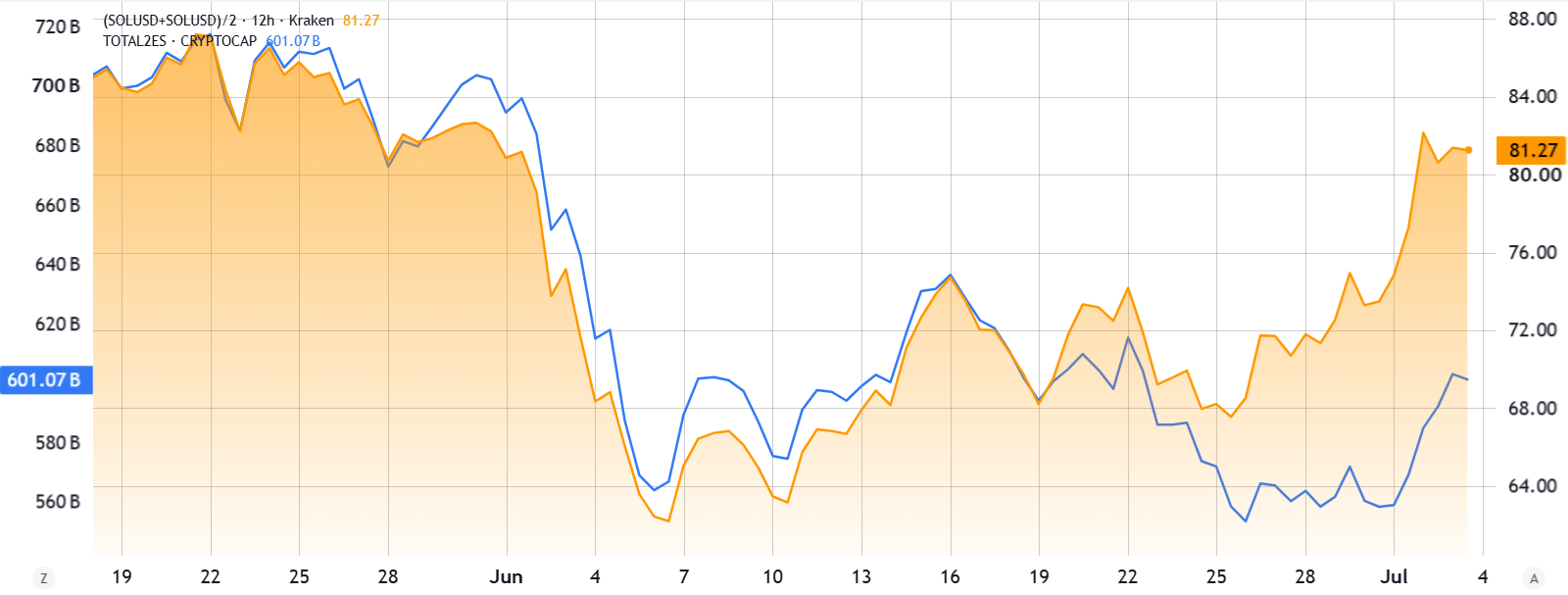
Solana’s SOL token jumped to its highest mark in over 30 days on Friday at $83, marking a decoupling from the altcoin market. SOL’s rally gained steam from a surge in tokenized trading volume on Solana, inflows of stablecoin liquidity, and an unexpected comeback in memecoin activity. Can SOL reclaim the $90 level?
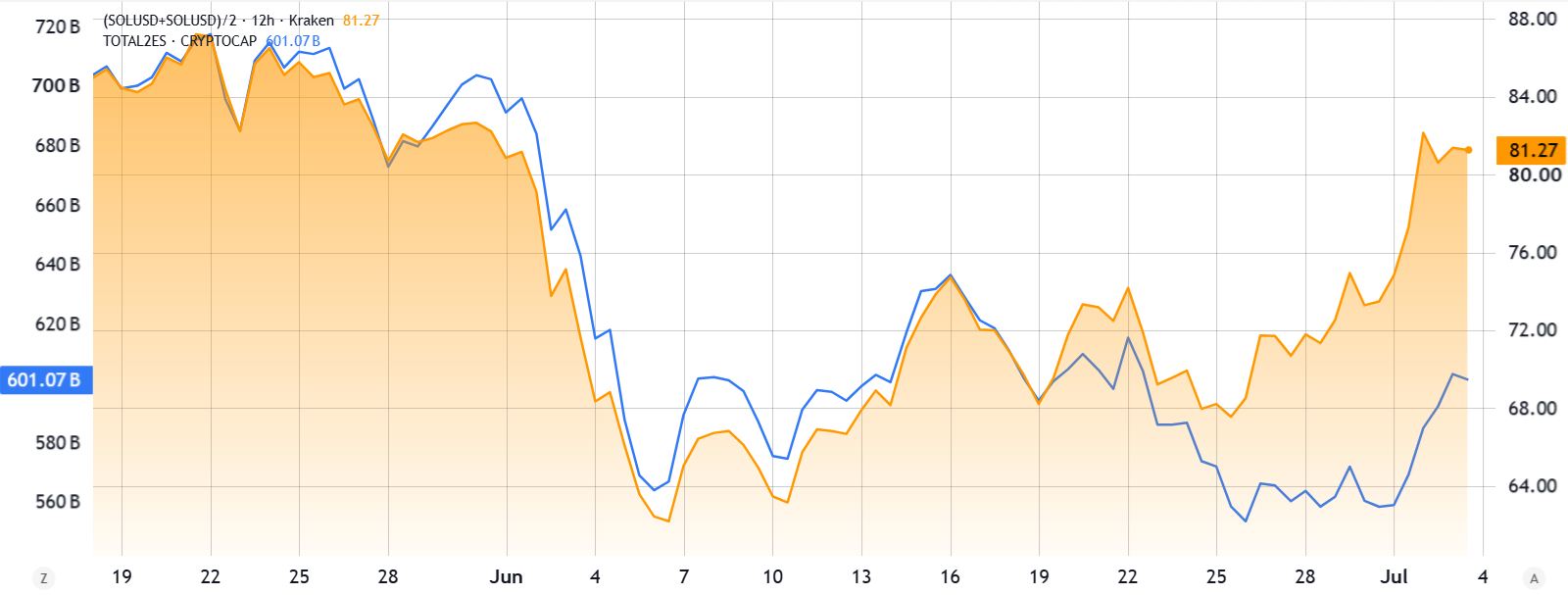
Total altcoin market capitalization, USD (left) vs. SOL/USD (right). Source: TradingView
SOL’s bullish momentum ignited on June 23, coinciding with cumulative tokenized stock transfers on Solana surpassing $10 billion. The launch of SpaceX shares trading by Backpack propelled Solana’s decentralized finance (DeFi) utilization. In contrast, the broader altcoin market extended its downtrend, hitting the lowest level since December 2023.
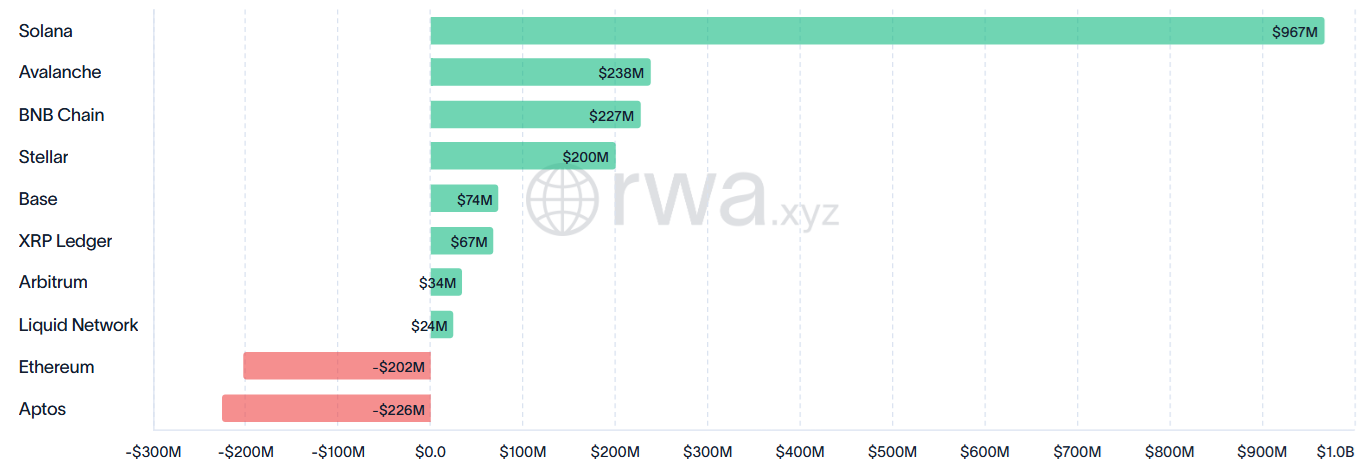
30-day tokenized assets net flows ex-stablecoins, USD. Source: RWA.xyz
Tokenized assets on the Solana network surged to a record-high $3.5 billion on Wednesday, up from $2.7 billion one month prior. The recent boost came from corporate credit tokens and stock market indexes, such as the S&P 500 and the Nasdaq-100. According to RWA.xyz data, Solana leads with 294,274 active addresses in the tokenized industry, followed by Ethereum with 204,955.
Memecoins, prediction markets surge may push SOL toward $90
The airdrop of The Black Bull (ANSEM) memecoin on Sunday re-ignited interest in the sector. The token, launched on Pump.fun, reached a $60 million market capitalization on Tuesday. The anonymous developer directed some 65% of the supply to the crypto influencer Ansem’s public wallet. The distribution lacked transparency, but involved 74,000 addresses over the initial 3 days.
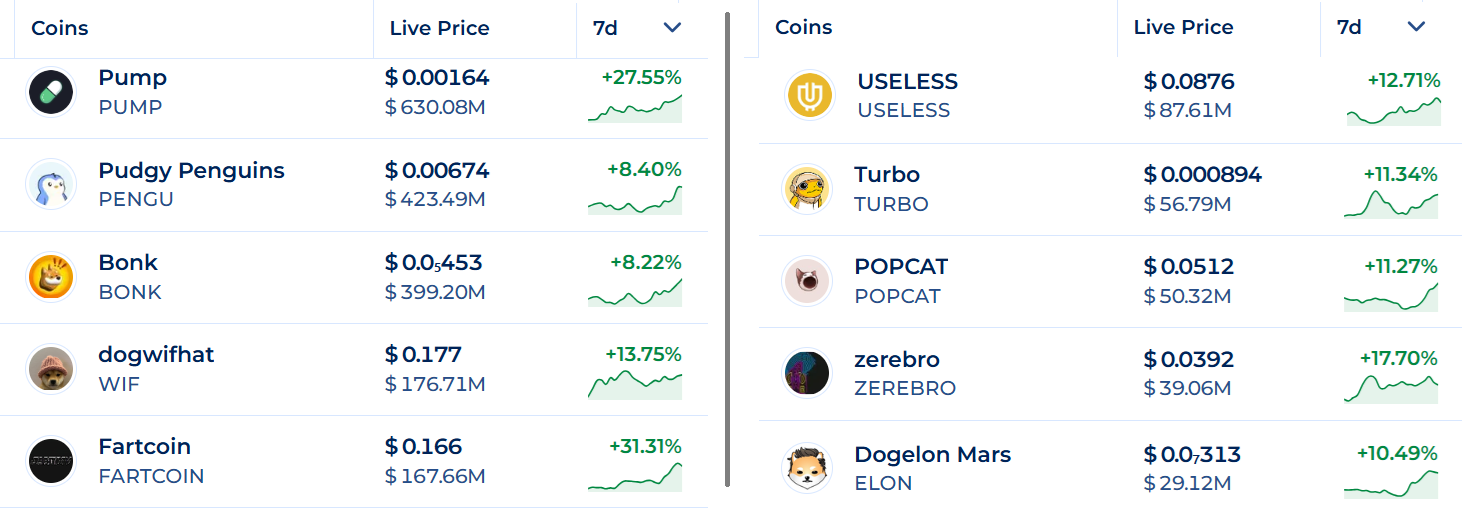
Top 7-day performances of Solana tokens. Source: CoinRanking
Multiple memecoins on Solana surged on the back of the memecoin airdrop, but the biggest winner was the Pump.fun platform token (PUMP). The 27% weekly gains were enough to send PUMP back into the top-100 crypto rankings, with a $630 million market capitalization. ANSEM memecoin extended its gains on Friday, reaching an all-time high market capitalization of $112 million.
The launch of World prediction markets integrated on Phantom wallet has created expectations for increased Solana activity. The project gathered nearly $890,000 in total value locked in two days and aims to compete with the extremely successful Polymarket amid the World Cup betting frenzy. Jupiter has also unveiled its prediction markets under beta test on June 29.
Related: US dominates Polymarket political bets despite geoblock–Report
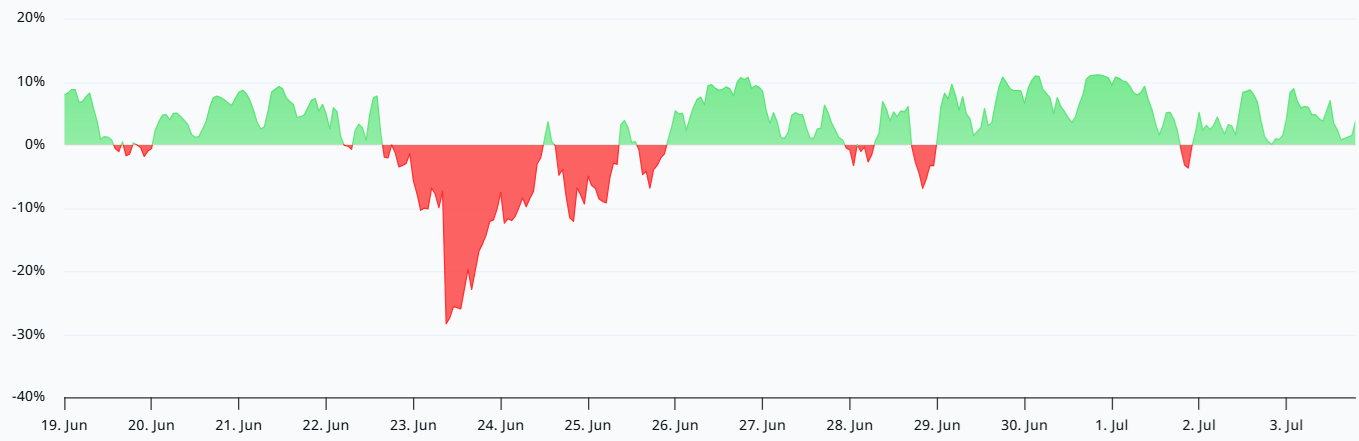
SOL perpetual futures annualized funding rate. Source: Laevitas
The appetite for bullish leveraged positions has vastly declined since Wednesday, when SOL’s price crossed above $75 for the first time in 30 days. SOL futures annualized funding rate dropped to 3% on Friday from an 11% peak two days prior. Under neutral conditions, the indicator should range from 6% to 12% to offset the capital cost.
Investors are not comfortable betting on a SOL rally to $90 merely on the back of a temporary memecoin demand surge. Unless there is sustainable demand for blockchain activity, there are no apparent drivers for SOL to further widen its performance gap relative to the remaining altcoins.
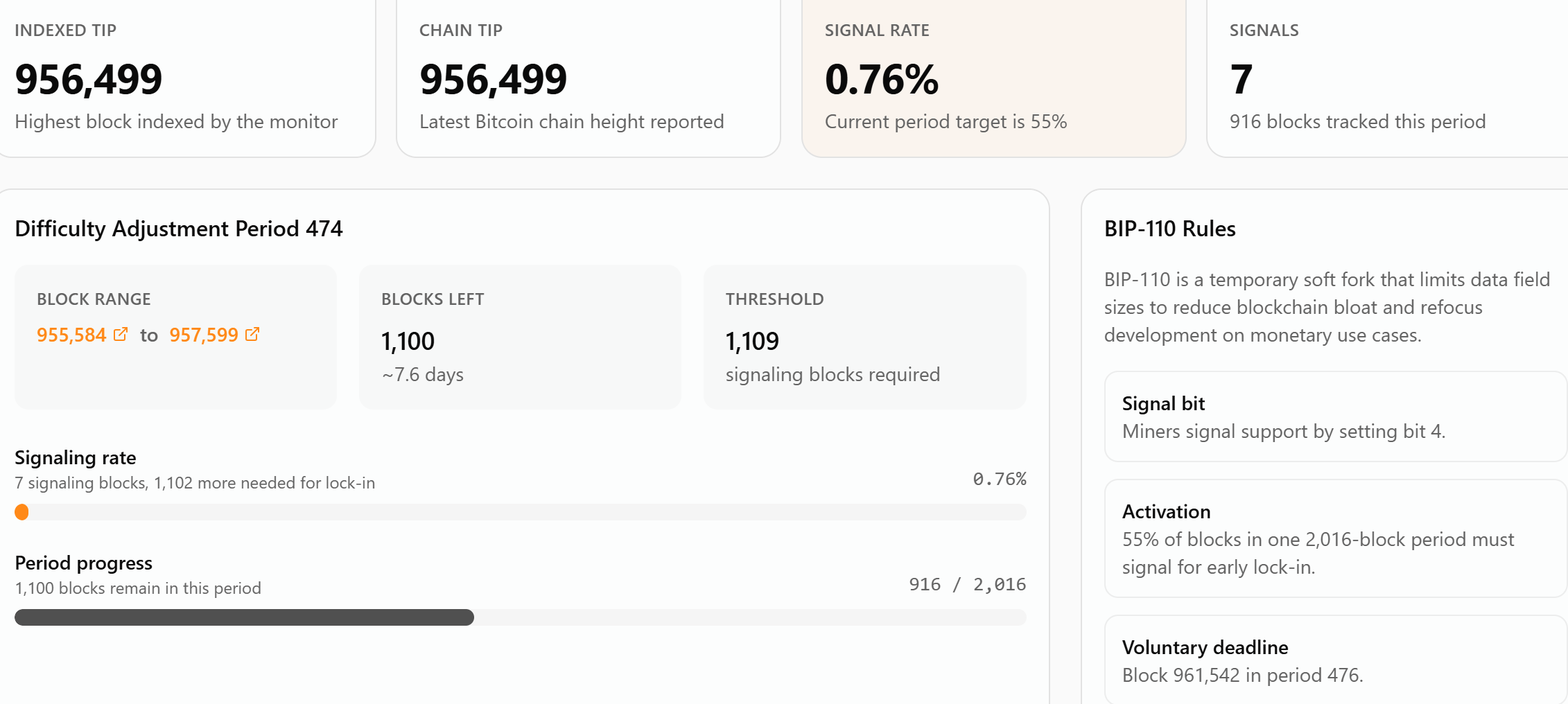
Ordinals developers say their technology will survive BIP-110, a proposed rule change that aims to stop people from storing files on Bitcoin. The fight comes down to one question. Should Bitcoin (BTC) handle only money, or anything users pay for?
Inscriptions let people store images and text on the Bitcoin blockchain, similar to NFTs. BIP-110 would block most of that data for one year. Supporters call it spam, while critics say Bitcoin should stay open to everyone.
What Would BIP-110 Change for Bitcoin?
Every Bitcoin transaction can carry a little extra data, and inscriptions use that space to store pictures and messages forever. The proposal would shrink the allowed space to 256 bytes per piece, about one short paragraph of text.
That limit would break the storage method inscriptions use today. The rule would last for one year, then switch off automatically, and old coins would not be affected.
Its author, who writes under the pen name Dathon Ohm, credits Bitcoin Knots maintainer Luke Dashjr for the first draft.
Miners vote by adding a small flag to the blocks they mine. The plan needs 1,109 flagged blocks out of 2,016 in a two-week window. However, the public monitor counted just three flagged blocks as of June 30, under 1%.

Support has never passed 1% since voting opened in December 2025. The best two-week stretch reached 0.79% in mid-June.
Here is the twist. The plan does not need a majority to activate. From around early August, computers running the BIP-110 software will reject blocks that do not carry the flag.
Blockstream CEO Adam Back has warned of fork risk, meaning Bitcoin could split into two competing versions. MicroStrategy’s Michael Saylor called the plan a self-inflicted risk.
Dashjr, for his part, framed the stakes as existential on Thursday.
“If BIP110 fails, Bitcoin fails with it. I am not interested in any CBDC, much less an unregulated CBDC pretending to be decentralised,” he wrote.
Follow us on X to get the latest news as it happens
A CBDC is a government-issued digital currency. In his view, a Bitcoin that cannot reject spam loses what makes it different.
Ordinals Developers Say They Are Ready
On July 2, Ordinals developer lifofifoX published a fix that stores data in a new way. It cuts files into small, allowed pieces instead of using the method that BIP-110 bans. In short, inscriptions would keep working even if the rule passes.
Ordinals creator Casey Rodarmor approved the fix the same day.
“Looks good to me! Let’s wait until BIP-110 activates to merge this,” Rodarmor wrote on GitHub.
The other side has already hit back, filing a counter-update to Bitcoin Knots, the software most BIP-110 supporters run. He argues the software simply does not notice the new format, letting it slip past the size checks.
The back-and-forth echoes an earlier inscription debate that also split the community.
Money sits at the center of the fight. In October 2024, Runes, a similar data-based format, drove a 32% fee increase that paid miners.
In contrast, supporters say the volunteers who run Bitcoin’s network computers must store all that data forever and get nothing for it.
The forced voting phase is about five weeks away. Back has already dismissed the August deadline as a path to a minority altcoin, a spinoff coin few would follow.
The coming weeks will show whether the miner’s silence means opposition or indifference.
The post Bitcoin Developers are Fighting Over What the Blockchain is For appeared first on BeInCrypto.

Elton John’s Past Hologram Comments Resurface Amid Vegas Reports

Donald Trump denies knowing about $1.4B crypto windfall

New York girds for a weekend of Taylor Swift, salutes and soccer


-

 Tech6 days ago
Claude Code turned every engineer into three. Now companies need more product thinkers
-

 Crypto World4 days ago
Strategy authorizes up to $1.25B in Bitcoin sales under new capital plan
-

 Politics11 hours ago
The House | “Reframing the debate from a binary discussion of winners and losers”: Yuan Yang reviews ‘We Are Not Machines’
-

 Tech6 days ago
Bluekit phishing kit adopts browser-in-the-middle for login theft
-

 Fashion5 hours ago
Weekend Open Thread: High Hopes
-

 News Videos5 days ago
MAJOR BITCOIN & MARKET UPDATE!!!! (MUST WATCH ASAP!!!)
-

 Tech4 days ago
Anonymous researcher drops 0-day ‘exploitarium’ repo
-

 Crypto World6 days ago
Coinbase, Circle Deepen Crypto Stock Losses Despite Resilient S&P 500
-

 Business4 days ago
Australia treasurer says alleged access of prime minister’s bank data ’incredibly concerning’
-

 Crypto World7 days ago
Kraken's xStocks Opens Bending Spoons IPO Registration to EEA Retail
-

 Tech6 days ago
Russian hackers now target Signal backup recovery keys
-
 Business4 days ago
The AI boom won’t burst all at once. It will pop in ‘rolling bubbles’: Macquarie
-

 Sports2 days ago
Broncos roster: OL Ben Powers (No. 74) entering final year of contract
-

 Tech6 days ago
Silicon Valley paid to kill AI regulation, now it wants the rules back
-

 NewsBeat3 days ago
Presenter Caroline Flack’s brother Paul Flack dies aged 55
-

 Crypto World2 days ago
Binance stock trading tops $1B in first month after launch
-

 Tech6 days ago
OpenAI mulls delaying IPO over valuation concerns
-
 NewsBeat2 days ago
New exhibition reflects five decades of movement between island of Ireland and GB
-

 Crypto World2 days ago
Alibaba-affiliate Ant Group enters the humanoid robot market with 12 deals
-

 News Videos4 days ago
How to Build INSANE Live Financial Dashboards With Claude
You must be logged in to post a comment Login