

Politics
Government Issues ‘Do Not Touch’ Warning Over Toxic Caterpillar


The Government has issued a warning on oak processionary moth caterpillars “ahead of peak season”.
They have said it’s important for the public to “stay vigilant” as the “pest” begins to make its hairy way onto oak trees.
Not only can they harm the iconic trees, which The Tree Council has described as being “under threat” in the UK, but they can also cause irritation “and should not be touched under any circumstances”, the Government said.
What are oak processionary moth caterpillars?
They’re the caterpillar, or the younger stage, of the oak processionary moth.
The Forestry Commission’s Oak Processionary Moth Programme Manager, Dr Edward Straw, said we might see more of these than usual as “The warm weather in spring has led to oak processionary moth growing quicker than in previous years and we may see higher infestation levels”.
How can I spot an oak processionary moth caterpillar?
They’re about 2-3cm-long caterpillars with a grey body and a dark head with lengthy, white hairs. They usually form a nose-to-tail formation in groups as they travel down oak trees.
They have nests which the Government has said are usually teardrop-shaped or dome-shaped and can range from the size of a 50p coin to that of a melon. These look white at first, but can turn brown later on.
Forest Research said that while the invasive oak processionary caterpillar looks like harmless native species – including the lackey moth and brown tail moth caterpillars – there are ways to distinguish the “pest” from the rest.
They said, ”(The) oak processionary moth feeds only on oak and produces large nests on oak trunks and large branches from May onwards. Hairy caterpillars which are not on oak or are not associated with a silk nest are almost certainly not (oak processionary moths)”.
Where are oak processionary moths found in the UK?
They’re usually found in the South-East of the UK.
Professor Nicola Spence, Defra Chief Plant Health Officer, said: “I would advise that members of the public living in the South East, Derbyshire and Dorset, avoid any contact with the caterpillar and its nests, as this can cause irritation”.
Why are oak processionary moths bad?
Firstly, they feed on the leaves of oak trees, which means they can hamper the trees’ growth. This can leave them more vulnerable to disease.
Secondly, the tiny hairs on the caterpillars’ bodies can “cause itchy rashes, eye and throat irritation and should not be touched under any circumstances,” said the Government.
What should I do if I see an oak processionary moth caterpillar?
Firstly, don’t touch them. Don’t even touch the nest, the government warned, as this could contain the irritating hairs.
Secondly, report any sightings so experts can keep track of the caterpillars.
“If you spot the pest, report the sighting via our TreeAlert portal. Alternatively, you can email opm@forestrycommission.gov.uk,” Dr Straw said.
The Royal Horticultural Society (RHS) also said that “Due to the irritant hairs, control of this insect should only be carried out by professional contractors”.
What if I touch an oak processionary moth?
The government previously said, “if you or someone in your care has a serious allergic reaction, get medical help. For less severe reactions, a pharmacist can provide advice on relief from skin or eye irritations.”
They also say that “if an animal in your care is seriously affected, get advice from a vet”, and warn to “Tell the medical person or vet you suspect it is due to OPM [oak processionary moth] contact.“

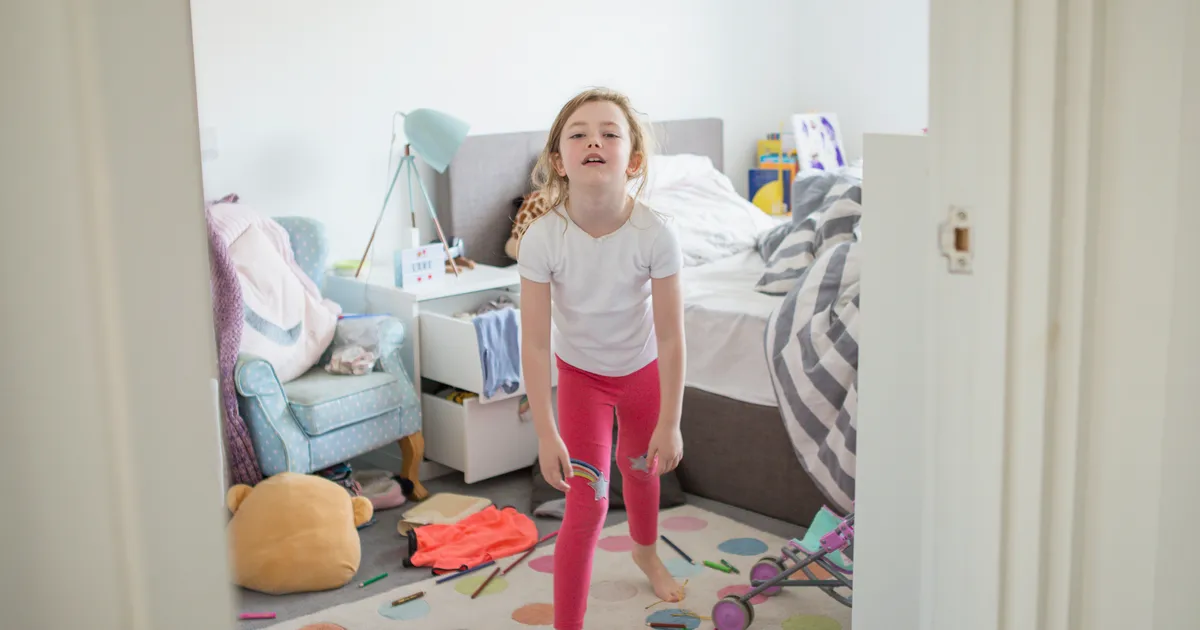
There comes a point in every parent’s life when their sprogs discover the art of whining – and boy, can it grate.
While the odd whine is fine (who doesn’t need a good moan now and then?), when whining becomes the default, or children seem to constantly complain, it can be exhausting – especially when you’re trying to work, look after them, juggle endless amounts of life admin (yours and theirs), and everything else in between.
Such is the case for one parent of two young girls aged six and nine, who shared that their children’s complaints are “constant” – and it’s starting to really get to them.
“I reached the point that when I am working alone from home and I hear the main door opening (meaning they are back) I pre-stress and I start to have palpitations,” said the parent on Reddit’s r/Parenting forum. “It should not be like this.”
Why do kids whine?
Abigail Finnegan, a psychotherapist and member of Counselling Directory, said: “For many of us who have worked in the field of child development we know only too well that if a child feels that they can’t get the attention they need through being delightful, they will instead resort to less ‘delightful’ ways to be noticed – because, after all, any attention is better than no attention at all!”
Plenty of parents are increasingly stretched to capacity (a survey from this year found nine in 10 mums have experienced burnout) and unless you’ve got a village nearby, or have a lot of money to throw at childcare, you’re very much on your own.
Add this to the fact we’re increasingly living in fast-paced environments where, as Finnegan says, parents have to meet the competing demands of employers, schools, other children, ageing parents and then kids are coming home from school “past the point of exhaustion”.
Mix it all up and you’ve got a recipe for whiny behaviour.
When we’re stressed and bustling about like headless chickens (which I’ll be the first to admit is my default setting) it’s easy to forget that underneath all that whining and complaining is a need to communicate something.
Psychotherapist Pei-I Yang, also a Counselling Directory member, said: “Children often don’t have the words to say ‘I feel overwhelmed’ or ‘nobody’s really listening to me’, so it can leak out as moaning instead.
“The whining isn’t the problem. It’s a communication for parents from their children telling them that something underneath needs attention.”
The worst way to respond to whining
When your kid whines, your instinct is probably to say something along the lines of: “stop complaining”, “try to be more positive” or “some kids would love what you’ve got”.
However Yang highlights that more often than not, this can leave children feeling “brushed off”. And a child who feels brushed off “tends to complain more, not less”. Eek.
The best way to respond to whining
If whining is your child’s way of communicating something, therapists suggest the best way to nip it in the bud is to get to the bottom of why they’re whining. Or at least try to.
“It’s important to verbally acknowledge to both yourself and your child that there is obviously something making them unhappy – otherwise they wouldn’t be whining!” said Finnegan. “The questions is: what to do about it?”
Her advice for parents is to slow down and check no one is hungry or thirsty. (“Healthy snacks in a bag can make a huge difference to mood at the end of a long day,” she added.)
“As hard as it can be when you’re tired as a parent, maybe ask yourself when the last time was that you were able to slow down enough to play or talk with your child without distractions?” added the therapist. “Is it possible to create some time, on a regular basis, just to be with your child?”
If they get plenty of time with you but still complain a lot, sometimes it can help to simply validate their emotions. Yang noted that even a simple “that does sound annoying” can take the heat out of the moment, because they feel heard.
If your teenager has taken to complaining a lot of late, instead of trying to fix or lecture, Yang encourages parents to be curious. You could ask something along the lines of: “You’ve seemed really fed up lately, what’s going on?”
“Often the small complaints are hiding something bigger, and it’s the space to talk, without you rushing to solve it, that helps them open up,” she explained.
“Whatever their age, it comes down to the same thing: connection and being curious before correction. A child who feels genuinely heard rarely needs to complain to be noticed.”
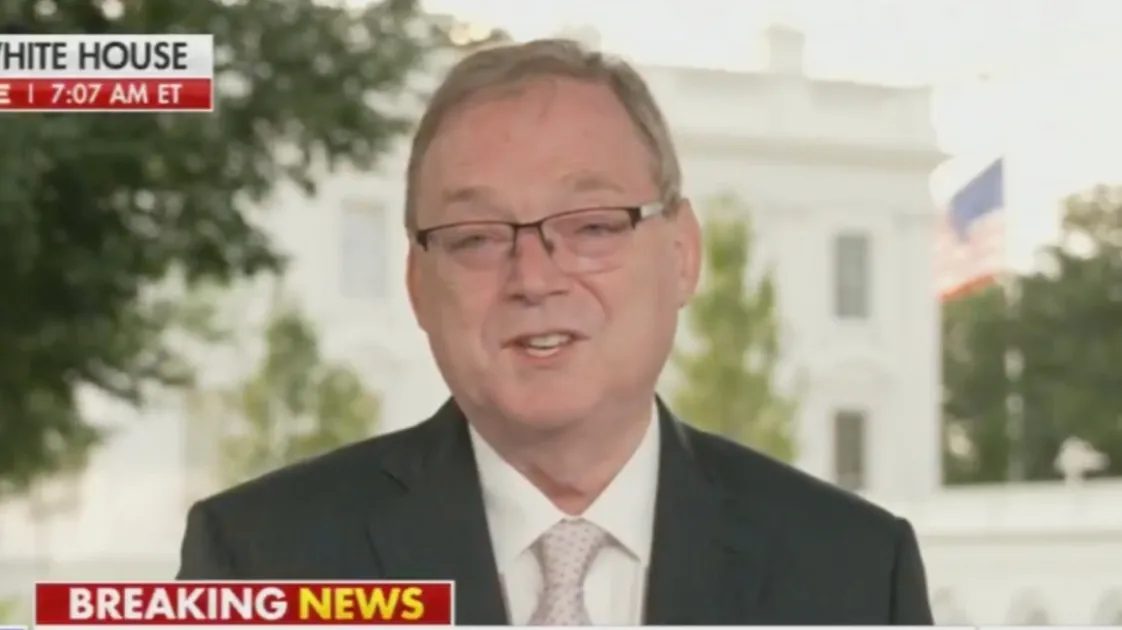
National Economic Council Director Kevin Hassett gave an eyebrow-raising explanation for the ongoing issues with the Strait of Hormuz while speaking Wednesday with Fox Business’ Maria Bartiromo.
The conversation kicked off after Bartiromo asked Hassett for an update on the strait after oil prices recently dropped since the conflict with Iran began in February. The war caused the closure of the strait, a crucial shipping chokepoint for global oil.
“Today’s national average gasoline [is] now at $3.84 a gallon, that’s down from $4.32 a month ago, Kevin. Is there anything you could tell us in terms of the update in the strait this morning?” Bartiromo questioned in a clip obtained by Mediaite.
“Right. Well, the president gets an update on the movement every day and a lot of that update is classified so one has to speak carefully and gently about it. The bottom line is the traffic went way up basically after the deal was made ― way, way up, heading up close to what you would expect,” Hassett began.
Noting “there were a couple of hiccup days,” he then blamed “guys living in caves” for the debacle.
“One of the ways to think about the straits is that there are a bunch of guys living in caves that live in the straits that may or may not be in steady communication with the people that we’re negotiating with who have stuff, you know, like, little better than a rubber band that they can shoot at a boat.”
Hassett continued, “Whether there will be a few more of those or not is something that nobody knows, but the bottom line is, there are very good faith negotiations going on with leaders. … We expect very much that this is going to be something that cruises to normalcy sometime really, really soon.”
Hassett’s remarks came after mixed messaging over the last few weeks from the Trump administration and Iran about the state of the Strait of Hormuz, including nuclear inspections and shipping.
Listen to Commons People, the podcast that makes politics easy. Every week, Kevin Schofield and Kate Nicholson unpack the week’s biggest stories to keep you informed. Join us for straightforward analysis of what’s going on at Westminster.
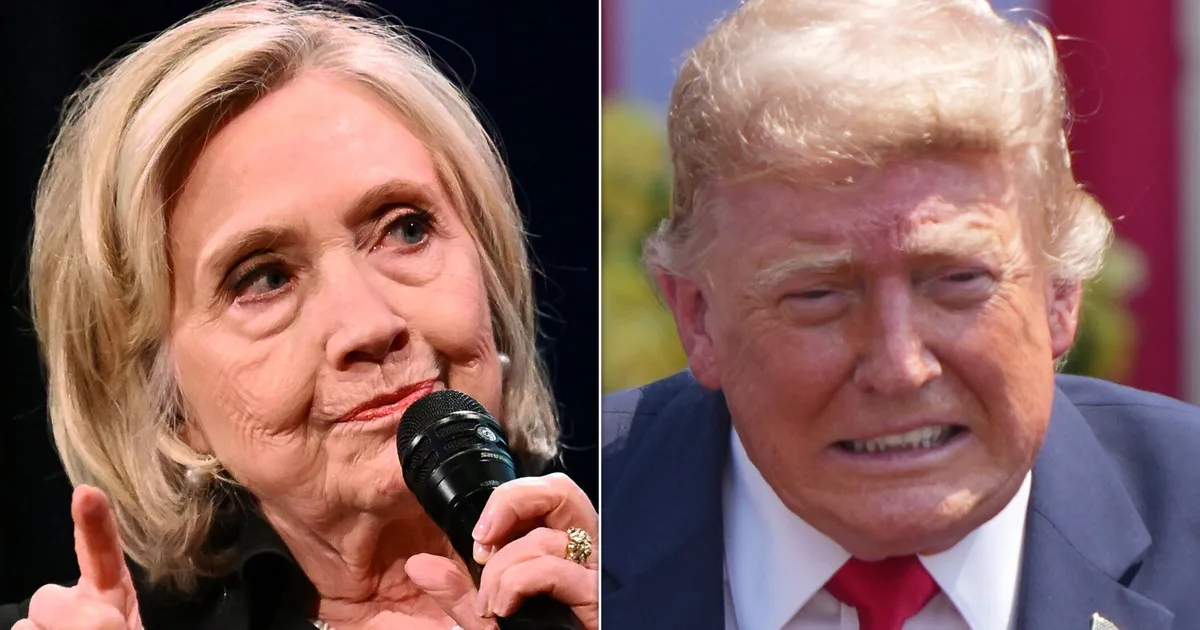
Hillary Clinton thinks it’s obvious why President Donald Trump and the Republican Party are so eager to make it harder for Americans to vote.
In an interview with Democracy Docket released on Wednesday, the former presidential candidate applauded the Supreme Court’s decision to uphold a Mississippi law granting a grace period for late arriving mail-in ballots, and told host Marc Elias that the Republican Party knows curbing ballot access is “the only way they can win.”
“They can’t win a fair fight, which is why Trump is so obsessed with stealing voter rolls and purging voters and making up ridiculous claims about people not eligible as citizens for voting,” she said, calling his claims about rampant election fraud “so vanishingly non-existent, it’s laughable.”
Clinton continued, “But that’s his game because he can’t win a fair fight, and his Republican Party, which has become a cult answering only to him, can’t win a fair fight.”
While the Trump administration’s attack on mail-in voting was snuffed out by the Supreme Court, the president and his party are still working on other ways to upend the election process.
In early 2025, Texas Republican Representative Chip Roy introduced a bill for the Safeguard American Voter Eligibility Act, also known as the SAVE Act.
The highly contentious legislation would require people to provide in-person proof of citizenship to register to vote, largely eliminating online and mail-in registration, in addition to imposing photo ID requirements at the polls.
Though the SAVE Act got House approval, it stalled out in the Senate, forcing Trump to get creative about how to pressure lawmakers into voting for his pet project.
Late last month, he announced he was refusing to sign a bipartisan-backed housing affordability bill until the SAVE Act got passed.


NEW YORK — New York City has begun one of the busiest weekends in its history — Taylor Swift’s wedding celebration at Madison Square Garden today, a series of air, land and water celebrations for America’s 250th birthday tomorrow and a World Cup match in northern New Jersey on Sunday.
Mayor Zohran Mamdani, NYPD Commissioner Jessica Tisch and a top Coast Guard official outlined their weekend plans Tuesday by sharing heat advisories, noise warnings, road closures and security precautions for land, air and sea.
“We have a comprehensive security plan in place for each of these events to ensure that everyone can enjoy the festivities safely,” Mamdani said.
Mamdani and Tisch, standing side by side, said that there are no specific or credible threats against the city but that they’re operating in a “heightened threat environment.” The comments came shortly before a couple scaled the top of the Empire State Building and unfurled a banner.
Police will be out in force and on 12-hour shifts. They’ll be deploying bomb-sniffing dogs, conducting security screenings at designated viewing areas and continuing to use anti-drone technology, which has so far intercepted nearly 100 drones that have flown into restricted air space since the World Cup’s outset.
The NYPD expects to spend about $92 million in overtime and other expenses for major events this summer. During the press conference at police headquarters, Mamdani ducked a question about whether Swift should be picking up the security tab for her wedding. Tisch described it as “an event that we are tracking” and said the “NYPD will, of course, have a detail in place.” Swift canceled a series of concerts in Austria in 2024 because of a terrorist plot.
It will be unusually noisy. A naval review Saturday morning, which Vice President JD Vance is expected to attend, will include a series of warships that will each conduct a 21-gun salute. The Macy’s fireworks show will be the biggest ever, with 85,000 fireworks shells, Tisch said.
It will also be hot. Mamdani has separately announced a plan to help cope with record temperatures expected to hit the city in coming days — officials have warned it may feel as hot as 112 degrees. The city plans to open cooling shelters across the five boroughs, along with a first-ever fleet of vans to help people get to them.
The weekend will be capped by Sunday’s knockout match between Brazil and Norway at MetLife Stadium, although the attendant celebrations by the winning team’s fans will probably cross the Hudson River. Some may even try to row.
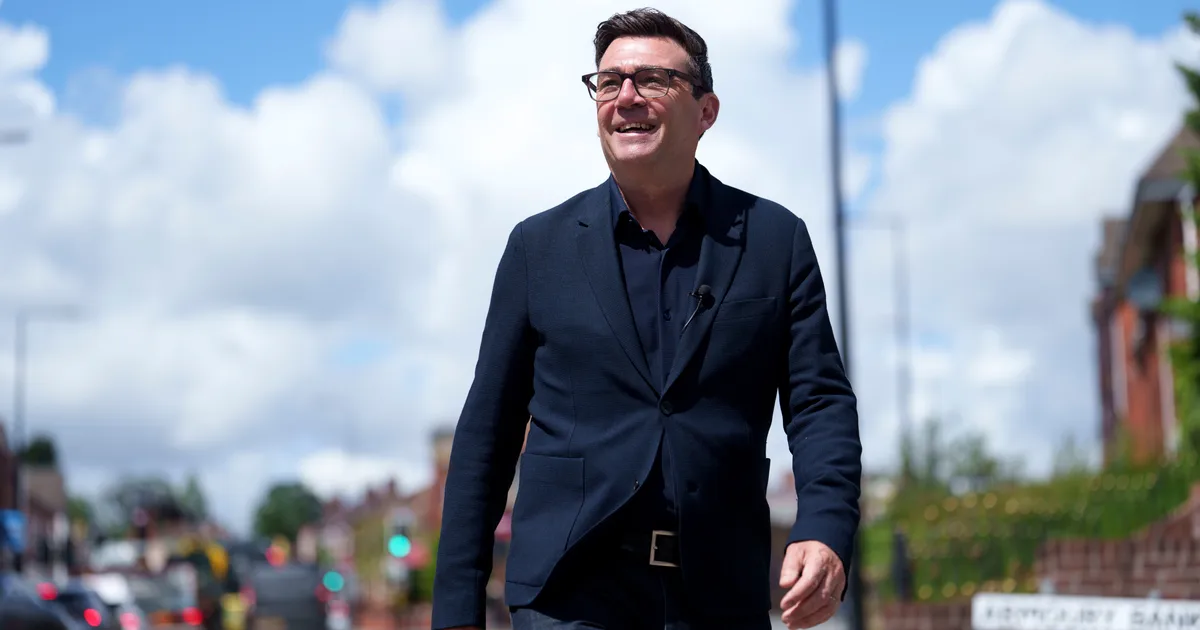
What would it mean to have the first Labour and Co-operative prime minister?
It’s a question I have been asked several times over the last few weeks, as General Secretary of a Co-operative Party about to hit one hundred years of electoral agreement with Labour.
My answer is simple: it would be a landmark moment, not just for the Co-operative Party, but for the wider co-operative movement and for British politics.
We are living through a remarkable period of firsts, with co-operative politics on the cusp of unprecedented opportunity.
In just the last two years we have seen the first ever government elected with a clear and ambitious programme to grow the co-operative and mutual economy, the first ever Labour and Co-operative secretary of state for business and trade in Jonathan Reynolds, the first significant programme of support for community-owned energy, the introduction of England’s first Community Right to Buy, and more Labour and Co-operative members sitting around the cabinet table than the Party had across the previous seven decades combined.
For the first time, growing the co-operative economy has become part of the chancellor’s economic narrative, featuring in Budgets and Mansion House speeches.
We have begun the long overdue task of correcting the way government, regulation and public policy have too often overlooked or disadvantaged co-operatives and mutuals.
None of these changes happened by accident.
They represent years of campaigning finally finding political expression.
Each of these milestones matters in its own right, but together they do something even more important.
They give confidence to our movement and demonstrate that co-operative ideas are practical rather than theoretical.
They increase the visibility of our politics and show that ownership, democracy and mutuality are not relics of the past but answers to some of today’s biggest challenges.
Andy Burnham is someone who I believe feels these values deeply.
“Co-operation is not simply another business model but a different way of thinking about power, ownership and community.”
His association with co-operative values stretches back many years.
Throughout his political career he has consistently engaged with co-operative organisations and championed mutual approaches.
As a minister, he played an important role in supporting the development of Supporters Direct, helping to grow the supporter ownership movement that has transformed football trusts and enabled communities to take a greater stake in their clubs.
As Mayor of Greater Manchester he has continued that commitment.
He established the Greater Manchester Co-operative Commission to examine how co-operative enterprise could play a larger role in the region’s economy.
His administration has worked with credit unions to help people spread the cost of Bee Network travel through affordable finance provided by member-owned institutions rather than high-cost lenders.
He has supported work with Co-operatives UK on initiatives such as the Middleton Regeneration Co-op and consistently argued that community ownership, mutuality and co-operation should play a bigger part in economic development.
None of these examples, taken individually, would define a political career.
“As we approach the centenary of the electoral agreement between the Labour Party and the Co-operative Party, we should recognise how far we have come.”
Together, however, they reveal a politician who understands that co-operation is not simply another business model but a different way of thinking about power, ownership and community.
That matters because the challenges Britain faces cannot be solved by government acting alone or by markets acting alone.
They require stronger communities, broader ownership of wealth, greater economic democracy and institutions that give people a genuine stake in the places where they live.
Those are ideas the co-operative movement has championed for more than 180 years.
If Britain were to have its first Labour & Co-operative prime minister, it would send a powerful message that co-operative politics is no longer an interesting footnote in Labour’s history but an integral part of its future.
It would tell every co-operative member, every mutual, every community business, every credit union and every supporter-owned football club that their way of organising society belongs at the centre of national life.
As we approach the centenary of the electoral agreement between the Labour Party and the Co-operative Party, we should recognise how far we have come.
But we should be even more excited by how far we can still go.
There is a symbolic connection that I have always enjoyed.
More than once I have found myself in good-natured debate at Party events about whether he was wearing the Manchester Bee or the Co-operative Party Bee.
Whichever badge came first almost becomes beside the point, it’s the shared symbolism matters.
The Bee was carved into the frontage of the Rochdale Pioneers’ first co-operative store in 1844.
It represents industry, collective endeavour and the simple but powerful idea that people achieve more when they work together than when they compete alone.
It’s why Andy was right to reference the Pioneers in his first major intervention this week.
As Andy said, these were people who looked at their lot and decided to fight for something better.
And I believe we can do that again.
Listen to Commons People, the podcast that makes politics easy. Every week, Kevin Schofield and Kate Nicholson unpack the week’s biggest stories to keep you informed. Join us for straightforward analysis of what’s going on at Westminster.
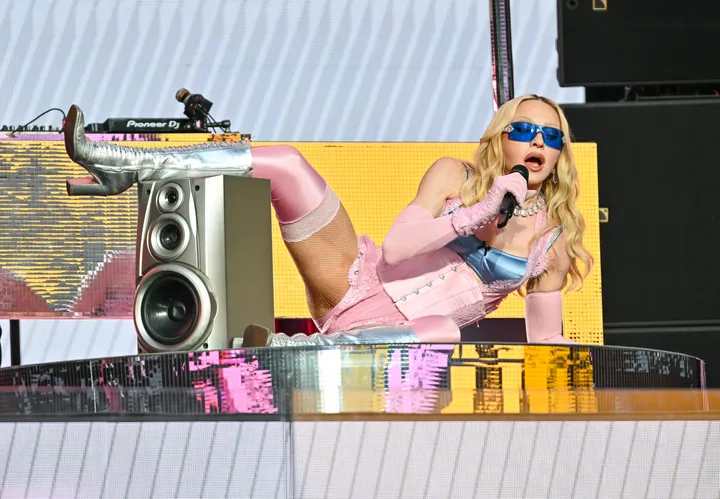
The Queen of Pop has major cause for “celebration” now the reviews for Madonna’s latest album are out.
Released on Friday, Confessions II serves as a spiritual sequel to the Grammy winner’s 2005 release Confessions On A Dance Floor, still considered by many fans to be among the high-points of her career.
On her new collection, Madonna has reunited with Confessions producer Stuart Price, with critics hailing the pair’s latest collaboration as the Like A Prayer singer’s best album in decades.
While most concede that Confessions II doesn’t quite live up to its predecessor, early reviews have still heaped praise on Madonna’s latest music, with many pointing out that it’s among the most personal and revealing material she’s ever released.
Here’s a quick run-through of what critics are saying about Confessions II so far…
“It goes to the heart of who Madonna is, and the legacy she carved out through graft, determination and being in the right club at the right time. Confessions II is not a perfect album [but] the high points are fantastic – and surprisingly profound.”
“The throughline is catharsis, release, and the freedom that comes with that.
“Whether she’s airing out previously unspoken grievances with her daughter Lourdes on The Test, or accepting that the gorgeous guitar player in St Mark’s Place who ‘had a Marlon Brando face’ wasn’t meant for her, the Lower East Side girl, Madonna is letting go. And it makes for her best music in 20 years.”

“This is the closest we’ve come to hearing the real Madonna since Ray Of Light, almost 30 years ago. As a great lyricist once observed: Only when she’s dancing can she feel this free.”
“Most of Confessions II succeeds because it’s the careful handiwork of an uncommonly talented club kid who still feels the power of dance music in her bones and in her soul.
“After 40-odd minutes of pounding house-pop and trippy trance, the album becomes more reflective in its closing stretch […] By drawing from her past, both personally and musically, Madonna has made her most vital album in over two decades. This grande dame still knows how to make us move.”
“[Madonna is] 68 now, and, as she releases her new album, Confessions II (a follow-up to 2005’s Confessions On A Dancefloor), her refusal to do what people think she should do feels, genuinely, more radical than ever. I don’t say that to be sycophantic.
“This album, with its pounding bass, darkly sexual rhythms and calls for freedom challenges our deeply entrenched expectations of women in music, and women in general.”
“It lacks an undeniable, solid-gold pop banger along the lines of Hung Up, although Danceteria’s bright-hued disco house – one of two tracks co-written and produced by Andrew Watt and Cirkut – comes close.
“But if it’s not quite as good as Confessions On A Dance Floor, it’s unequivocally Madonna’s best album since Confessions On A Dance Floor, which you suspect will be more than enough for her fans, and might even beckon back some apostates: an accommodation with her past that bodes well for her future.”
“The sequel may not be quite the equal of the original, but it is certainly good enough to keep the franchise rolling. When the beats drop and the metaphorical dawn breaks, the album becomes genuinely affecting.
“Its five closing tracks offer surprisingly intimate reflections on personal relationships in expansive settings that feel like another album altogether […] the sweaty body of Confessions II makes it clear the long-reigning dancing queen is not about to abdicate of her own free will.”
“Nothing matches the heights of Hung Up, the ABBA-sampling standout from the first Confessions, although Danceteria comes close, with a brilliantly imagined tribute to the New York club scene from which Madonna emerged in the 1980s […] there’s an overall sense of purpose that has been absent from her music since 2005.”
Madonna’s Confessions II album is released on Friday 3 July.

Harry Styles pretty much summed up the mood of the nation as he was spotted celebrating England’s World Cup victory ahead of his concert at Wembley Stadium.
On Wednesday night, the chart-topping musician delivered his 10th of 12 shows at the iconic London venue, but before the gig got underway, he put on a special screening of England’s World Cup match against DR Congo, so that his fans (and, indeed, he) didn’t have to miss out on watching the action live.
At the end of the match, the former One Direction star was seen jubilantly celebrating England’s win, holding nothing back as he leaped around in celebration with his friends and members of his crew.
There are now just two shows left of the London leg of the Together Together tour, taking place on Friday and Saturday night, with music legend Shania Twain as his support act.
Harry’s Together, Together tour comes off the back of his latest album Kiss All The Time. Disco, Occasionally.
Released in March, the British star’s fourth studio album was met with mostly positive reviews and spawned two chart-topping hits in lead single Aperture and its follow-up American Girls.
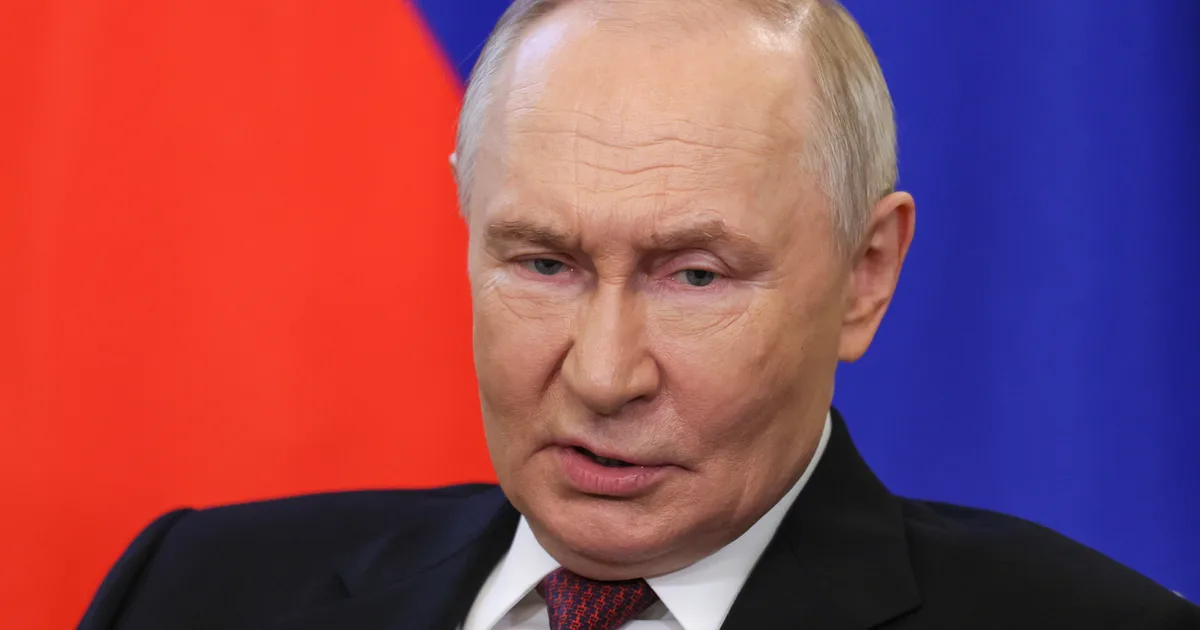
Vladimir Putin is expected to cancel Russia’s annual holiday parade at the end of July amid growing security concerns caused by Ukrainian drones, according to the UK.
In its latest update on social media, the Ministry of Defence (MoD) predicted that Putin would once again cancel celebrations around the “Day of the Russian Navy”, which is meant to take place on the last weekend of July.
It comes after Ukraine launched a series of successful long-range missile campaigns which have been causing havoc within Russia.
Putin marked the Day of the Russian Navy every year between 2017 and 2024 with a personal review of warships in the Baltic Sea off St Petersburg.
Ships from other fleets around the country would attend along with representatives from other nations.
But the main celebration was reduced in scale in 2024 and the 2025 parade was cancelled altogether, “almost certainly due to force protection concerns”, according to the MoD.
“This year, Russia’s main naval parade has highly likely been cancelled again due to continued security concerns,” the UK intelligence experts said.
It pointed out that a Ukrainian successfully attacked the Baltic Fleet near St Petersburg on June 3, which could have increased wider worries about safety.
The MoD said: “In the absence of the main naval parade, it is likely that Russia will hold a maritime exercise similar to its 2025 Exercise ‘July Storm’.”
The Kremlin ordered its navy to hold a series of drills last year in place of the usual grand display.
Putin also scaled back his annual Victory Day parade in May over fears about Ukrainian long-range strikes and battlefield challenges, in an apparent admission that the war is not going well for Russia.
The Russian president admitted in June that there are “problems” on the Ukrainian frontline, as his army fails to seize any more land.
Putin currently holds just a fifth of Ukraine’s sovereign territory, four and a half years after he first launched his illegal invasion.
A report from policy research organisation CSIS (Centre for Strategic and International Studies) also suggested this week that Russian losses now outnumber Ukrainian losses by a ratio of eight to one.
It comes after Putin ordered a “night of horror” on Russia’s European neighbour last night, according to Ukraine’s foreign minister Andrii Sybiha.
Russian strikes killed at least 17 people and injured dozens by launching 74 missiles and almost 500 drones across Ukraine.
Sybiha urged allies not to delay punishing Russia, adding: “War criminal Putin can only wage a vile and terroristic war against civilians, women and children. Because in his war against Ukraine’s Defence Forces, he cannot achieve a single result.
“Such strikes are grave war crimes and we are informing all partners and international organisations about them, calling for accountability and strong responses.”
Listen to Commons People, the podcast that makes politics easy. Every week, Kevin Schofield and Kate Nicholson unpack the week’s biggest stories to keep you informed. Join us for straightforward analysis of what’s going on at Westminster.
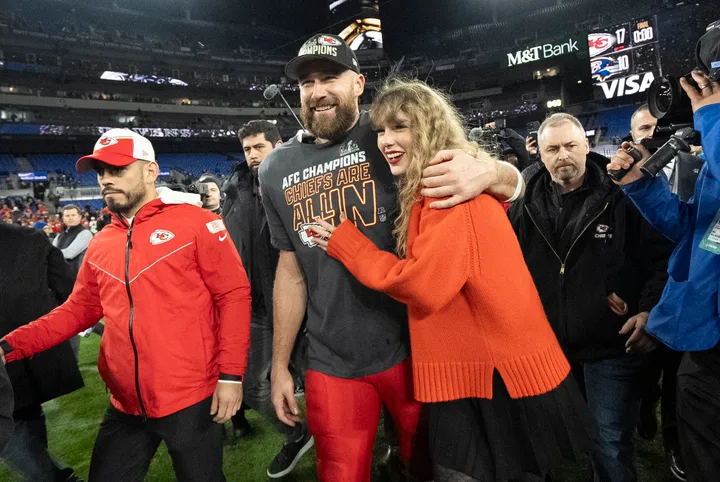
While chart-topping musicians like Charli XCX and Dua Lipa have sparked a lot of conversation about the benefits of a low-key wedding ceremony in the last year, it seems their pop peer Taylor Swift is taking an altogether more elaborate approach when it comes to her big day.
For the last few weeks, rumours have been rampant that Taylor and her fiancé Travis Kelce are planning on tying the knot this weekend, shutting down an iconic New York landmark for the occasion.
But where have the rumours come from? And how likely are they to be true?
Well, here’s a quick run-through of all the questions you might have about what may well be the celebrity wedding of the decade…
First of all – who are Taylor Swift and Travis Kelce?
Oh, come on. Really? Really?! OK…
She is a pop mega-star with 14 Grammys, seven UK number one singles and the highest-grossing concert tour of all time to her name.
He is one of the biggest names in American football, having played for the Kansas City Chiefs since 2013, winning the Super Bowl with them on three occasions.

Taylor and Travis got the whole world talking in 2024 when they began dating, and while the chart-topping singer is widely known for keeping her romantic life to herself (at least outside of her songwriting, that is) this is the most demonstrative and vocal she’s ever been about a relationship since her ascent to global fame.
In the summer of 2025, they confirmed they were getting married, with their engagement announcement becoming one of the most-liked Instagram posts in the site’s history.
Where are Taylor and Travis rumoured to be getting married?
Obviously, for the past year, there’s been plenty of speculation about exactly how the A-list couple plan on saying “I do”, but in the last couple of weeks, there’s been one theory that’s really taken shape.
While Taylor and Travis have both remained tight-lipped on the speculation, rumours have pointed to them getting hitched on either Friday 3 July or Saturday 4 July at New York’s iconic Madison Square Garden arena.
New York City officials have confirmed to the BBC that someone successfully applied to have the streets surrounding Madison Square Garden shut down around the weekend of Independence Day, between Thursday 1 and Saturday 4 July – although crucially, they did not specify who was behind the request.
Fuelling the rumours that Taylor and Travis were behind this was a report in the New York Times, indicating that a number of the NFL star’s teammates and colleagues had booked themselves into a hotel around the venue for that weekend.
During a news conference at the end of June, NYC mayor Zohran Mamdani poked fun at the rumours while addressing a heatwave forecast for the city over the holiday weekend.
“My recommendation to all New Yorkers is to stay inside and stay cool,” he said, before joking: “And if you happen to be getting married at Madison Square Garden, you will be staying inside and you will be staying cool.”
Per ITV News, public records show that a permit to load and unload “theatrical materials” outside the arena between 29 June and 4 July was also successfully acquired.
On those dates, trucks emblazoned with “Garden Party” and “GP” have been spotted near the venue unloading a red carpet (which was promptly removed once pictures of it had been snapped), as well as a large white staircase, which we could easily imagine being part of a lavish wedding set-up for an event with a rumoured guest list of around 1,000 attendees, including family members, friends and celebrities from both the music and sports world.
TMZ has also claimed invitees have been required to sign electronic NDAs, with every invite being individually watermarked so any leaks can clearly be pin-pointed.
In the same article, the US outlet also alleged that Taylor and Travis were going all out, to the extent that they’re constructing a castle inside MSG as part of their wedding celebrations.

According to CBS News, a smaller rehearsal dinner for around 100 guests is planned for Thursday evening, with the bigger wedding taking place the following day, and the ensuing reception expected to carry on until around two in the morning.
It’s worth pointing out that Taylor and Travis wouldn’t be the first to marry at the site, with Sly Stone and Kathy Silva holding their wedding there in the 1970s.
A mass wedding in the early 80s also saw more than 2,000 couples simultaneously saying “I do” at Madison Square Garden, at an event sponsored by The Unification Church.
Have there been Easter eggs to back up these rumours about Taylor Swift and Travis Kelce’s wedding?

You know it. In fact, in the weeks leading up to her rumoured wedding day, Taylor made an appearance at Madison Square Garden, where she and her friends, actor Mariska Hargitay and Este and Alana Haim, were all seen wearing matching t-shirts emblazoned with the names of different famous women.
Taylor’s top featured the name “Stevie Knicks”, which naturally led some to jump to the conclusions that the former Fleetwood Mac star could be in some way involved in the bash.
Swifties will know that Independence Day is always a big moment in Taylor’s calendar, as she usually throws huge parties to celebrate the event.
Could it be that the whole thing is actually just a decoy?
Taylor is nothing if not meticulous, and if she really wanted privacy on her big day, requesting easily accessible permits that are a matter of public record would definitely not be the way to go about that.
As a result, many are speculating that Taylor and Travis’ supposed Madison Square Garden is actually a ruse intended to distract from their real wedding, either taking place on the same day or on a completely different date entirely.
Before the Madison Square Garden rumour became the dominant theory among fans, it was previously suspected that she and Travis’ wedding would take place in Rhode Island in June, which is perhaps worth keeping in mind, too.
What has Taylor Swift actually said about her wedding?
True to form, precious little, although she was put on the spot about it during an interview on The Graham Norton Show last year, while promoting her most recent album The Life Of A Showgirl.
When Graham grilled Taylor about whether she was planning a “big” wedding, she said that she intended to invite him, to which the host quipped: “If you’re inviting me, it’s very big.”
“I’m doing the album [promo] now, and I think the wedding is what happens after that, in the scheme of the planning,” she said in October. “But really, I’m so excited about it. I know it’s going to be fun to plan – because I think the only stressful weddings are the ones where you have a small amount, and people are in ‘the bubble’. And you have to evaluate or assess your relationship with them, to see if they should be there.”
She added: “I’m not going to do that. Anyone I’ve ever talked to [is getting invited].”
HuffPost UK has contacted Taylor Swift’s representatives for comment.

Everyone – and I mean, everyone – I’ve spoken to this week has remarked on how tired they’ve felt.
I’ve felt it too. That level of bone-deep exhaustion that makes you feel like you could simply drop to the floor and drift off to sleep, even thought it’s 1pm.
And it turns out there’s a relatively simple explanation as to why there’s been this level of collective fatigue, especially in areas impacted by last week’s extreme heatwave.
In Japan – where the summers tend to be hot but also very humid (a bit like last week’s heatwave) – they call it ‘natsubate’, which Tokyo Weekender said translates as ‘summer exhaustion’.
Many of us are feeling the effects of summer exhaustion
The heatwave has had more of an impact on your body than you might think.
There are a few factors at play here. Dr Ginni Mansberg, a GP and co-founder of ESK, said our bodies work overtime when the weather’s super hot.
“Summer fatigue is a real phenomenon, although it’s not a formal medical diagnosis,” she told HuffPost UK.
“During a heatwave, your body has to work much harder to keep your core temperature in a safe range. That means diverting blood to the skin, increasing sweating and making your heart work a little harder.”
All of that uses energy, which can result in that tired, sluggish feeling. On top of that, you’re also sweating a lot to cool yourself down, which results in water and electrolytes being lost in the process.
“Even mild dehydration can leave you feeling tired, foggy and less able to concentrate,” added the expert.
“Add a few nights of poor sleep because it’s too hot, and it’s no surprise you’re running on empty.”
There’s also another factor that’s often overlooked, but will play a crucial part in tiredness levels.
Dr Asiya Maula, private GP at The Health Suite, highlighted that we tend to change our routines during a heatwave: “We often spend more time outdoors, walk more, travel more, exercise in warmer conditions or drink more alcohol at barbecues and social events.
“All of those place additional demands on the body and can contribute to that lingering feeling of fatigue.”
So, after a full week of disrupted sleep, dehydration, your body working overtime and shifted routines (potentially with a hefty dose of sunshine-fuelled socialising and booze), it’s going to take your body some time to feel refreshed again. And this is where your current ‘heatwave hangover’ comes in.
Dr Maula said: “Many people notice they feel unusually tired after a spell of very hot weather, even once temperatures have started to cool down. It’s sometimes referred to as a ‘heatwave hangover’, and it’s a very real response to the extra strain heat places on the body.”
Even people who have been mildly dehydrated can feel drained for several days afterwards, she added.
What can we do about it?
Recovery is usually straightforward. “The best approach is to continue drinking fluids regularly over the days that follow, eat balanced meals, replace electrolytes if you’ve been sweating heavily, and prioritise good-quality sleep,” said Dr Maula.
“Gentle movement, rather than intense exercise, can also help people feel more energised as they recover.”
With another bout of hot weather predicted for London this weekend and running into next week, it’s important to stay well hydrated, stick to early morning or later exercise sessions, and keep your home cool by shutting curtains and windows during the day.
And if your extreme tiredness doesn’t improve after a couple of weeks, becomes progressively worse, or is accompanied by symptoms such as chest pain, severe breathlessness, unexplained weight loss or persistent fevers, it’s important to seek medical advice, added Dr Maula, as fatigue can have many different causes beyond hot weather.

CarMax’s Turnaround Is a Work in Progress, but Insiders Are Buying Anyway

Several Korean firms dispute Open USD alliance membership
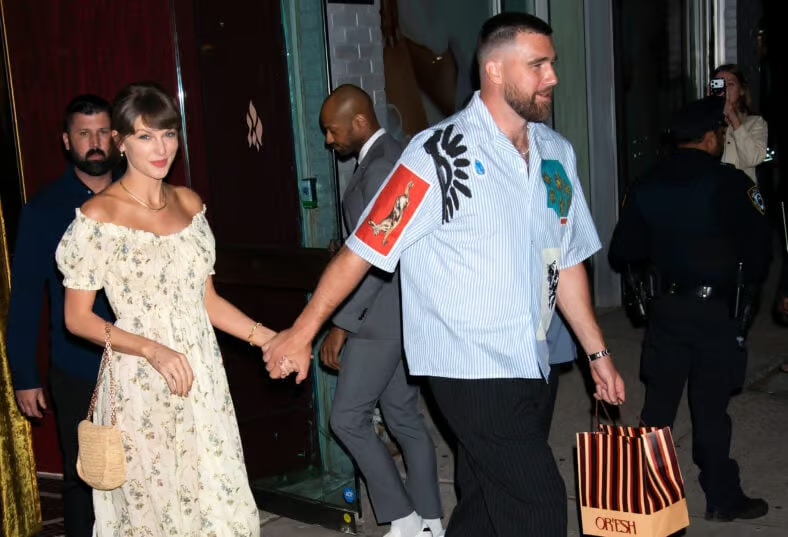
What Taylor Swift And Travis Kelce Gifted Their Wedding Guests


-

 Tech6 days ago
Claude Code turned every engineer into three. Now companies need more product thinkers
-

 Crypto World4 days ago
Strategy authorizes up to $1.25B in Bitcoin sales under new capital plan
-

 Politics12 hours ago
The House | “Reframing the debate from a binary discussion of winners and losers”: Yuan Yang reviews ‘We Are Not Machines’
-

 Tech6 days ago
Bluekit phishing kit adopts browser-in-the-middle for login theft
-

 Fashion6 hours ago
Weekend Open Thread: High Hopes
-

 News Videos5 days ago
MAJOR BITCOIN & MARKET UPDATE!!!! (MUST WATCH ASAP!!!)
-

 Tech4 days ago
Anonymous researcher drops 0-day ‘exploitarium’ repo
-

 Crypto World6 days ago
Coinbase, Circle Deepen Crypto Stock Losses Despite Resilient S&P 500
-

 Business4 days ago
Australia treasurer says alleged access of prime minister’s bank data ’incredibly concerning’
-

 Crypto World7 days ago
Kraken's xStocks Opens Bending Spoons IPO Registration to EEA Retail
-

 Tech6 days ago
Russian hackers now target Signal backup recovery keys
-
 Business4 days ago
The AI boom won’t burst all at once. It will pop in ‘rolling bubbles’: Macquarie
-

 Sports2 days ago
Broncos roster: OL Ben Powers (No. 74) entering final year of contract
-

 Tech6 days ago
Silicon Valley paid to kill AI regulation, now it wants the rules back
-

 NewsBeat3 days ago
Presenter Caroline Flack’s brother Paul Flack dies aged 55
-

 Crypto World2 days ago
Binance stock trading tops $1B in first month after launch
-

 Tech6 days ago
OpenAI mulls delaying IPO over valuation concerns
-
 NewsBeat2 days ago
New exhibition reflects five decades of movement between island of Ireland and GB
-

 Crypto World2 days ago
Alibaba-affiliate Ant Group enters the humanoid robot market with 12 deals
-

 News Videos4 days ago
How to Build INSANE Live Financial Dashboards With Claude
You must be logged in to post a comment Login