

Crypto World
DZ Bank brings crypto trading to millions through German banks



Germany’s cooperative banking network has begun offering cryptocurrency trading through DZ Bank, opening digital asset access to millions of retail customers across the country.
Summary
- DZ Bank has started rolling out crypto trading through Germany’s cooperative banking network.
- DekaBank plans a phased crypto trading launch for the country’s savings banks later this year.
- Germany is also considering new crypto tax rules that could end long-term tax exemptions from 2027.
According to a Bloomberg report, the rollout gives customers of participating cooperative banks the ability to buy and sell cryptocurrencies directly through their existing banking relationships rather than using dedicated crypto exchanges.
The service is already being introduced through a platform developed by DZ Bank and currently supports cryptocurrencies including Bitcoin, Ethereum, Litecoin, and Cardano.
The expansion comes as Germany’s banking sector gradually changes its stance on digital assets after years of avoiding retail crypto services because of concerns over market volatility and investor protection. Instead of remaining on the sidelines, cooperative banks are now integrating crypto trading into their existing banking platforms, with each member institution deciding independently whether to make the service available.
Why are German banks expanding crypto services?
Representatives from DZ Bank told Bloomberg that interest from member institutions has been strong, with hundreds of cooperative banks expected to introduce cryptocurrency trading over time. While participation remains optional, the report said the level of demand suggests the service could become available across a large part of Germany’s cooperative banking network.
Elsewhere in the sector, DekaBank is preparing a comparable crypto trading platform for Germany’s savings banks. According to Bloomberg, the launch is scheduled for later this year and will be introduced in stages as individual savings banks choose whether to participate.
Supporters of the banking-led approach argue that customers may feel more comfortable buying digital assets through financial institutions they already use for everyday banking. Bloomberg cited survey data showing German consumers trust their primary bank more than twice as much as dedicated cryptocurrency trading platforms.
Banks also see digital assets as a way to appeal to younger customers who increasingly expect investment products to be available through digital banking applications. Offering crypto trading alongside traditional financial services could help lenders compete as cryptocurrencies become more common in mainstream finance, according to the report.
What challenges still face Germany’s crypto market?
Despite the growing availability of crypto trading through banks, critics continue to warn about the risks associated with digital assets. Bloomberg reported that academics and banking industry groups have maintained that cryptocurrencies remain highly speculative investments capable of generating substantial losses.
Germany’s savings banks association has also emphasized that crypto trading is intended only for self-directed customers who understand the risks involved and can make their own investment decisions without advisory services.
The banking expansion comes as Germany considers changes to its tax treatment of digital assets. As crypto.news reported earlier, Finance Minister Lars Klingbeil said during the presentation of Germany’s 2027 federal budget on April 29 that the government plans to “tax cryptocurrencies differently” as part of measures expected to raise an additional €2 billion, or about $2.3 billion, while strengthening efforts against financial and tax crime.
Under Germany’s current tax rules, profits from private cryptocurrency sales are generally taxed when assets are sold within one year of purchase. Crypto.news previously reported that digital assets held for more than 12 months are usually exempt from capital gains tax, a policy that has long made Germany one of Europe’s more attractive jurisdictions for long-term cryptocurrency investors.

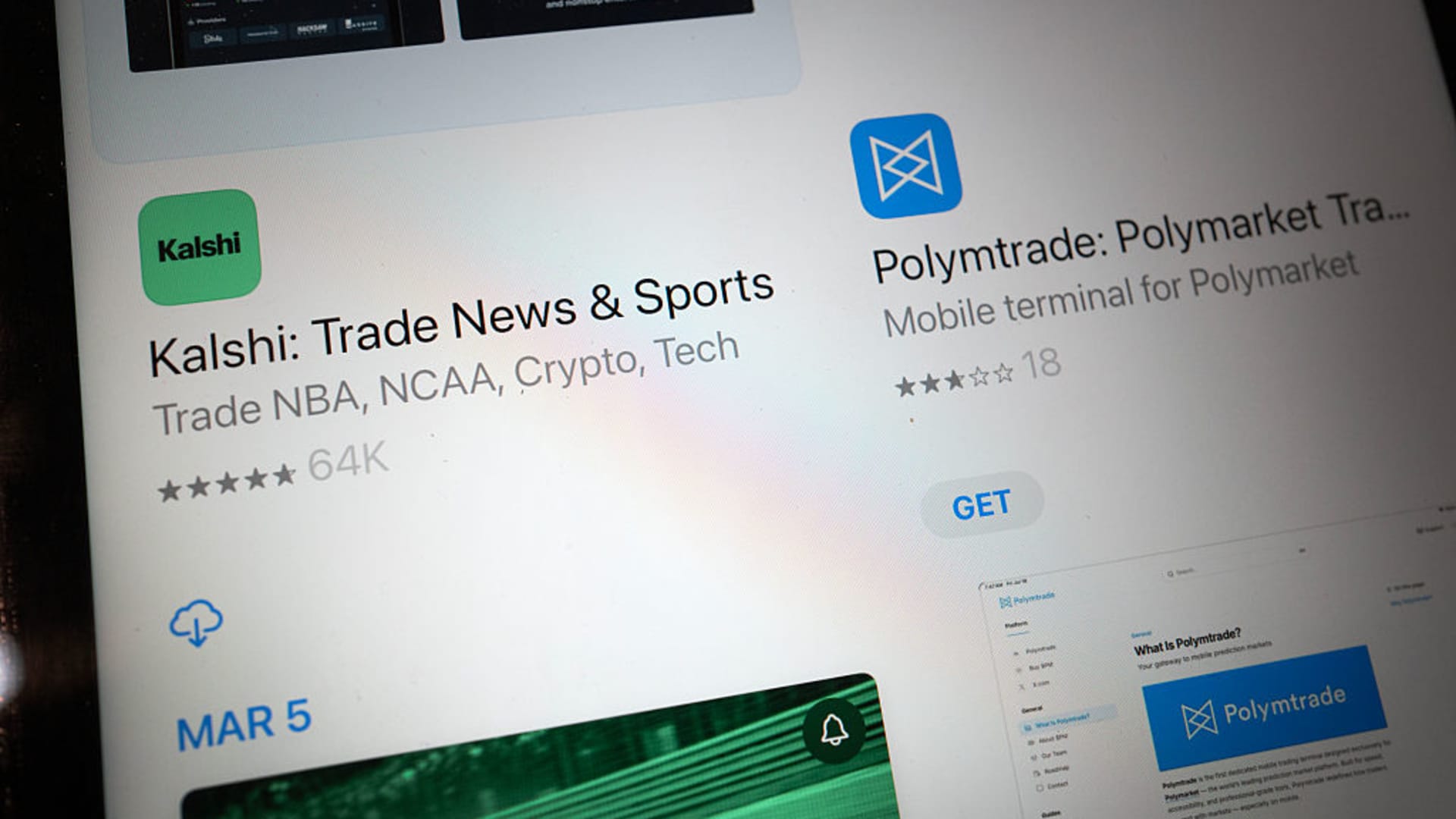
In this photo illustration, Apps for online prediction market sites are shown on an electronic device on Feb. 25, 2026 in Chicago, Illinois.
Scott Olson | Getty Images
The 2026 FIFA World Cup was forecast to be the biggest gambling event in history. For prediction market platforms, that’s led to soaring trading volumes in June.
Kalshi saw more than $31 billion in notional volume during the month, a more than 70% increase from May’s total of $17.9 billion, according to user collected data on Dune Analytics. The platform has consistently managed volume over $1 billion daily since the soccer tournament began on June 11.
Polymarket’s international event contract exchange set a new record high in monthly volume, with notional trading exceeding $10.8 billion in June. That reverses a downtrend in April and May, when volume fell.
Meanwhile, Polymarket’s U.S. platform did north of $3.5 billion in notional volume during the month, up from $1.77 billion in May.
Team USA Monday
Team USA is set to play Belgium in the round of 16 on Monday night. More than $64 million on Kalshi and $122 million on Polymarket has been traded on whether the U.S. will win the tournament, though odds of that happening are just 4.3% and 3%, respectively, on each platform.
World Cup enthusiasm has given a jolt to prediction market platform Rothera, a joint venture between Susquehanna International Group and Robinhood. Rothera debuted in June, when Robinhood began routing certain World Cup contracts on its brokerage to the platform.
Rothera saw $2 billion in notional trading volume during the month, and now accounts for 7% of U.S. prediction market volume, according to Bank of America.
All platforms leaned into the World Cup to boost traffic. Polymarket launched a competition to reward up to $2 million to whoever can craft a perfect World Cup knockout round bracket. On the Apple app store, Kalshi boasted that users can “Trade the World Cup” in the title of its mobile platform.
Heightened open interest — the total number of active, unsettled contracts on the platforms — may also reflect World Cup excitement. Kalshi open interest is now above $1 billion. Polymarket open interest is just under $400 million — elevated, but about where its international platform has been for the last few months.
Sports were the focus last month for event contract exchanges, but how the platforms handled the surge in volume may be a sign of how they manage other contract topics in the future.
Asaf Meir, CEO at Solidus Labs — a market integrity company that has a partnership with Kalshi — said the World Cup is a key moment for platforms as both regulators and institutions are eying how they perform.
Outside observers are asking, “Is it safe enough? Is it mature enough? Does it have enough volume?,” Meir said. “The World Cup is such a huge pressure test to see whether indeed prediction markets are able to deliver their word on maintaining a level playing field for all investors for a long period of time in a sustained high-volume environment.”
Disclosure: CNBC and Kalshi have a commercial relationship that includes customer acquisition and a minority investment.

Key Takeaways
- HSBC upgraded Intel’s price target from $100 to $200 — the highest on Wall Street — maintaining a Buy rating
- Analyst Frank Lee boosted 2026 server CPU shipment projections to 25% YoY growth and 2027 to 30%
- Intel’s EMIB packaging tech could deliver significant advantages as TSMC faces capacity constraints until late 2027
- Apple and Terafab confirmed as foundry partners; negotiations underway with Google and NVIDIA
- INTC shares opened Friday at $120.35; trading range over past year spans $18.97 to $142.35
Intel (INTC) received a significant endorsement this week when HSBC analyst Frank Lee established a new Wall Street high price target of $200 for the semiconductor giant, effectively doubling the firm’s prior $100 target while maintaining its Buy recommendation.
Shares of INTC began Friday’s trading session at $120.35. The chipmaker’s stock has fluctuated between a 52-week low of $18.97 and a high of $142.35, with the 50-day moving average currently positioned at $115.64.
According to HSBC’s Lee, Intel stands “well positioned to deliver upside” to its 2026 and 2027 server CPU shipment forecasts, primarily fueled by strategic internal foundry capacity realignment.
The analyst revised his 2026 server CPU shipment growth projection upward from 20% to 25% on a year-over-year basis. This adjustment places his DCAI revenue forecast at $24.1 billion, representing approximately 4% above the current Wall Street consensus.
Lee’s optimism extends even further into 2027, where he elevated his shipment growth projection from 20% to 30% year-over-year, contending that market analysts continue to undervalue Intel’s expansion trajectory for that timeframe.
Foundry Business Gains Traction
Lee emphasized that Intel’s foundry story is showing meaningful improvement. The company’s EMIB — Advanced Embedded Multi-die Interconnect Bridge — technology represents a potential catalyst for “material upside” within the foundry division.
Given that TSMC’s expanded 3nm production capacity won’t be available until the latter half of 2027, Lee observes that customers are actively seeking alternative foundry solutions. Intel is positioning itself as a leading contender.
Apple and Terafab have already committed as Intel foundry clients. Active discussions are underway with Google and NVIDIA. Lee highlighted that Intel’s EMIB technology can accommodate up to 12x reticle size, substantially exceeding CoWoS-S which maxes out at 3.3x — positioning it as a compelling alternative while TSMC CoWoS capacity remains constrained.
Institutional Ownership Remains Robust
Institutional investors currently control 64.53% of INTC shares. QRG Capital Management increased its stake by 29.2% during Q1, concluding the quarter with 485,549 Intel shares worth approximately $21.4 million.
Norges Bank established a fresh position valued at more than $2.2 billion in Q4. Vanguard maintains ownership of over 404 million Intel shares worth nearly $14.9 billion. Capital Research Global Investors expanded its holdings by 285.9% during Q4.
Intel’s Q1 2026 financial results significantly exceeded Wall Street projections — delivering $0.29 earnings per share versus the consensus forecast of $0.01. Revenue reached $13.58 billion, surpassing the $12.32 billion estimate and representing 7.4% year-over-year growth.
Jim Cramer recently identified Intel as his top stock pick, highlighting CEO Lip-Bu Tan’s transformation strategy and identifying three key growth drivers for the corporation.
The current consensus analyst rating for INTC stands at “Hold” with an average price target of $96.69 — significantly below the stock’s current trading level. The rating breakdown includes two Strong Buy recommendations, 15 Buy ratings, 28 Hold ratings, and four Sell ratings.
Intel has issued Q2 2026 EPS guidance of $0.20, while the full-year analyst consensus projects $0.63 EPS.

Crypto World
Himax Technologies (HIMX) Stock: Could Apple and Nvidia Be Secret Partners Behind AI Glasses Push?

Key Takeaways
- Himax Technologies currently trades at $13.16, approximately 45% under the analyst consensus price target of $23.70
- Shares plummeted more than 45% over the last month following a nearly 66% surge in the preceding 90-day period
- Company forecasts “substantial” revenue expansion from AI and augmented reality glasses in coming years
- A major brand partner has integrated Himax’s WiseEye technology into smart glasses, with volume manufacturing slated for late 2026
- Industry research points to Apple and Nvidia as potential unnamed anchor clients
Himax Technologies ($HIMX) currently sits at $13.16 per share, representing a decline exceeding 45% throughout the previous month. This retreat follows an impressive rally that pushed shares up nearly 66% during the prior three-month window.
Himax Technologies, Inc., HIMX
The recent selloff hasn’t deterred Wall Street analysts, whose consensus fair value estimate stands at $23.70 — implying roughly 45% upside from current levels. However, a contrasting discounted cash flow analysis from Simply Wall St suggests intrinsic value could be as low as $2.32 per share.
This dramatic valuation discrepancy keeps the investment debate very much in play.
Bullish investors focus primarily on one catalyst: AI-powered smart glasses. Himax produces ultra-low-power artificial intelligence chips and micro display technology — specialized components that remain difficult to source and essential for battery-efficient smart eyewear functionality.
During the company’s Q1 2025 earnings discussion, CEO Jordan Wu revealed that “a leading brand has adopted our WiseEye for its smart glasses,” noting that high-volume production should commence later this year. Wu added that additional major brands are anticipated to join the ecosystem.
Research analysis from Hunterbrook Media and Citrini Research, examining patent filings, supply chain patterns, and capital allocation trends, indicates these undisclosed partners may include Apple and Nvidia. Neither technology giant has publicly acknowledged such arrangements.
Current Financial Performance
Revenue has contracted on a year-over-year basis for multiple consecutive quarters, while net profit margins hover around 4%. These metrics don’t paint the picture of a traditional growth story.
Yet management has provided guidance calling for 10% to 13% sequential revenue expansion in Q2, which would simultaneously represent a return to positive year-over-year comparisons. The company also anticipates improved gross margin performance, potentially flowing through to enhanced bottom-line profitability.
Himax recently introduced its HE Series indirect Time-of-Flight depth decoder integrated circuits — a novel 3D sensing solution that OFILM has already incorporated into robotics applications.
The firm’s co-package optics (CPO) development represents another strategic initiative, focused on enabling ultra-fast data transmission for AI-driven data centers and advanced computing environments.
Industry Competition and Positioning
Meta Platforms currently dominates the commercial smart glasses market. The social media giant unveiled a fresh product range in June with entry-level pricing at $224. Meanwhile, Apple, Alphabet, and Amazon are each developing proprietary versions incorporating augmented reality capabilities.
The investment case for Himax rests on its position as a cross-platform component provider, supplying multiple competitors rather than depending on a single platform winner.
The company’s market capitalization currently registers at $2.3 billion. Its 52-week trading range spans from $6.85 to $25.09, underscoring significant price volatility.
Himax confronts genuine operational risks. Geopolitical trade friction, tariff implementation, and inconsistent customer ordering patterns could pressure profit margins and earnings projections. The substantial gap between cash flow-based valuations and earnings-based models creates analytical uncertainty — both frameworks cannot simultaneously prove accurate.
According to its latest quarterly disclosure, Himax anticipates revenues from AI and AR glasses applications will expand substantially throughout the coming years, with mass manufacturing from at least one significant brand partner launching in late 2026.
Crypto World
Credo Technology (CRDO) Stock Surges Nearly 19% Post-Earnings: Should You Still Invest?

Quick Summary
- CRDO shares have rallied 18.8% following its latest quarterly earnings, significantly outpacing the S&P 500
- Fourth-quarter fiscal 2026 revenue jumped 157% year-over-year to $437 million, surpassing analyst forecasts
- Non-GAAP earnings per share of $1.16 exceeded the Street’s $1.03 estimate by 12.6%
- Company projects revenue growth exceeding 80% for fiscal 2027, anticipating optical segment sales above $600 million
- Wall Street consensus reflects a Buy rating with a mean price target of $263.11
Credo Technology Group (CRDO) has gained 18.8% following its most recent quarterly report, trading at $241.91 as of Friday’s market open. The performance significantly outpaced the broader S&P 500 during the comparable period.
Credo Technology Group Holding Ltd, CRDO
The company’s fourth-quarter fiscal 2026 performance drove the rally. Revenue reached $437 million, representing a 157% year-over-year increase and exceeding the Street’s $430.1 million expectation. Non-GAAP diluted earnings per share registered at $1.16, topping the $1.03 consensus by 12.6%.
Executives highlighted a notable milestone: fourth-quarter revenue by itself surpassed the company’s complete fiscal 2025 annual revenue. This demonstrates the velocity at which AI infrastructure expansion is flowing through CRDO’s pipeline.
Full fiscal 2026 revenues exceeded $1.3 billion, representing more than a tripling from the prior year. Four hyperscale customers individually represented at least 10% of overall revenue, with the leading three accounting for 34%, 27%, and 16% respectively.
Non-GAAP gross margin registered at 68.3% during the quarter, improving from 67.4% in the year-ago period. Net margin climbed to 51.9%, while free cash flow achieved a company record of $177.5 million. The quarter concluded with $1.4 billion in cash and short-term investments on the balance sheet.
For first-quarter fiscal 2027, management provided revenue guidance of $465–$475 million. Looking at the full year, the company projects revenue expansion exceeding 80%, with optical segment revenues anticipated to cross $600 million.
Optical Segment Emerges as Key Growth Driver
The company’s optical business expansion is being accelerated by its Dust Photonics acquisition. This transaction introduces silicon photonics PIC capabilities and expands the product lineup with 800G and 1.6T offerings, while 3.2T solutions remain under development.
Executives anticipate ZeroFlap optics, silicon photonics PICs, and optical DSPs will each generate revenue exceeding $100 million during fiscal 2027.
Analyst projections have experienced significant upward revisions over the past month. The consensus earnings per share forecast has increased 18.12% since the earnings announcement. Zacks assigns CRDO a Rank #1 (Strong Buy) rating.
Institutional Holdings and Insider Transactions
Regarding institutional positioning, Vanguard, State Street, and Geode each expanded their holdings during the fourth quarter. Alliancebernstein increased its position by 66% in the second quarter. Institutional ownership currently represents 80.46% of shares outstanding.
Insider transactions have attracted some market attention. CFO Daniel W. Fleming divested 40,000 units on June 11 at an average price of $249.48, generating approximately $9.98 million. The transaction occurred through a pre-established Rule 10b5-1 trading plan designed to satisfy tax liabilities related to equity compensation vesting. CTO Chi Fung Cheng sold 27,500 units during April through a comparable arrangement.
Representative Gilbert Ray Cisneros, Jr. also reported a disposition valued between $1,001 and $15,000 in CRDO on June 30.
The Street maintains a predominantly bullish stance. Evercore launched coverage with an Outperform rating and $325 price target on June 22. JPMorgan elevated its target to $250 while maintaining an Overweight rating.
The consensus price target stands at $263.11 across 19 covering analysts, with 17 carrying Buy or Strong Buy recommendations and two at Hold.
CRDO’s 52-week range spans from $86.49 to $308.67.

Key Highlights
- Shares of Vertiv have rallied 86% year-to-date, powered by AI data center expansion and its collaboration with Nvidia.
- Bernstein maintains a Buy rating with a $416 target, observing cautious sentiment before the company’s Q2 report.
- Bank of America stays bullish, emphasizing Vertiv’s 800 VDC sidecar product slated for delivery in 2027.
- First-quarter earnings showed $1.17 per share, topping forecasts of $1.00, while sales jumped 30.1% annually to $2.65 billion.
- Analyst consensus stands at Strong Buy with 16 Buy ratings and 3 Hold ratings, targeting $388.67 on average—roughly 29% above current pricing.
Vertiv (VRT) shares have skyrocketed approximately 86% since the start of the year, hovering near $300.49 as of the most recent trading session. The stock’s 52-week trading band spans from $110.06 to $379.93.
The impressive advance stems from robust appetite for Vertiv’s thermal management and electrical infrastructure products designed for data centers, combined with its strategic ties to Nvidia.
During the first quarter of 2026, Vertiv delivered earnings of $1.17 per share, surpassing Street expectations of $1.00 by $0.17. Total revenue reached $2.65 billion, marking a 30.1% year-over-year increase and slightly exceeding the $2.63 billion analyst forecast.
Management issued guidance for the second quarter calling for earnings between $1.37 and $1.43 per share, with full-year projections ranging from $6.30 to $6.40 per share.
Despite the stock’s remarkable performance, some market participants have adopted a wait-and-see approach heading into the next quarterly report. Bernstein’s Varun Govindaraj observed that recent price swings and a subdued market response to Vertiv’s Investor Day indicate uncertainty about whether conservative projections signal genuine business deceleration or simply prudent management forecasting.
Govindaraj leans toward the latter interpretation. On June 30, he maintained his Buy recommendation while setting a $416 price objective.
He also weighed in on the emerging 800 VDC technology discussion—a subject attracting attention because it might lower “content per MW” and invite additional competitive pressure. Govindaraj remains unconcerned, citing Vertiv’s proven execution capabilities and his view that significant 800 VDC deployment won’t materialize until 2028 at the earliest.
Bank of America Spotlights 800 VDC Collaboration
Bank of America’s Andrew Obin likewise upheld his Buy stance following discussions with company leadership. His main conclusion: Vertiv has developed an 800 VDC sidecar product expected to enter the market in 2027.
Obin named Vertiv, Eaton, and Schneider Electric as the three primary “power systems” collaborators for Nvidia’s 800 VDC platform. He anticipates Vertiv will experience accelerated order momentum in late 2026 compared to competitors lacking 800 VDC capabilities.
QRG Capital Management expanded its Vertiv holdings by 21.2% during the first quarter, acquiring an additional 16,172 shares to reach a total position of 92,499 shares worth approximately $23.2 million.
Institutional Ownership Continues Growing
Numerous other institutional shareholders expanded their stakes in the opening quarter. Webster Bank increased its position by 6.9%, while Onyx Bridge Wealth Group raised its allocation by 2.1%.
Citigroup elevated its price objective to $414 in May, while TD Cowen adjusted its target upward from $347 to $387. Oppenheimer similarly lifted its forecast from $330 to $353.
In total, institutional investors control 89.92% of VRT’s outstanding shares.
The Street’s prevailing view is Strong Buy—comprising 16 Buy recommendations and three Hold ratings—with a mean price target of $388.67, suggesting potential appreciation of approximately 29.3% from present levels.
Vertiv distributed a quarterly dividend of $0.0625 per share on June 25, translating to an annualized dividend yield of roughly 0.1%.

Key Highlights
- Warren Buffett’s Berkshire Hathaway maintains an unchanged 400 million share position in Coca-Cola established in the early 1990s, generating approximately $848 million in annual dividend income
- The beverage giant distributes a quarterly dividend of $0.53 per share with a 2.5% yield and boasts an unbroken 64-year record of dividend increases, earning Dividend King status
- Shares traded at $83.93 Friday morning, approaching the 52-week peak of $84.14, with the company commanding a $361 billion market capitalization
- Institutional investors control 70.26% of outstanding shares; QRG Capital Management expanded its holdings by 20.2% in Q1 with the addition of 76,998 shares
- Analyst consensus points to Moderate Buy with an $86.88 mean price objective, suggesting limited upside potential from present trading levels
For more than thirty years, Coca-Cola (KO) has functioned as one of Warren Buffett’s most dependable cash flow engines, and the trajectory continues unchanged in 2026.
Buffett’s Berkshire Hathaway maintains ownership of 400 million shares in the beverage giant — a position completed in 1994, when Coca-Cola’s dividends contributed $75 million annually to Berkshire’s coffers. Fast forward to 2026, and that identical stake is projected to generate approximately $848 million in dividend payments. Remarkably, the annual dividend income now surpasses Berkshire’s entire original investment in the company.
Shares of KO began Friday’s session at $83.93, mere cents below the 52-week high of $84.14. The stock currently carries a price-to-earnings ratio of 26.39, with the 50-day simple moving average positioned at $80.18 and the 200-day average at $76.72.
The company’s latest quarterly performance exceeded Wall Street’s expectations. For Q1, Coca-Cola delivered earnings per share of $0.86, surpassing the analyst consensus estimate of $0.81 by five cents. Quarterly revenue registered at $12.47 billion, beating the anticipated $12.24 billion and representing an 11.4% year-over-year increase. Management has provided full-year 2026 EPS guidance ranging from $3.24 to $3.27.
The company distributed its quarterly dividend of $0.53 per share on July 1st, translating to an annualized distribution of $2.12 and yielding approximately 2.5%. The current payout ratio stands at 66.67%.
Six Decades of Uninterrupted Dividend Increases
Coca-Cola has achieved 64 consecutive years of dividend growth, establishing its credentials as a distinguished Dividend King. Buffett has frequently highlighted this reliability in his annual letters to shareholders.
“Growth occurred every year, just as certain as birthdays,” he noted in his 2022 letter. “All Charlie and I were required to do was cash Coke’s quarterly dividend checks.”
This unwavering consistency explains why institutional capital continues gravitating toward the stock. Institutions collectively hold 70.26% of outstanding shares. During the first quarter, QRG Capital Management expanded its position by 20.2%, purchasing 76,998 additional shares to reach a total stake valued at approximately $34.8 million. Jump Financial dramatically increased its holding by 450.5% in Q2. Meanwhile, Osterweis Capital Management boosted its position by an impressive 548.2% during the same quarter.
Wall Street Outlook and Corporate Insider Transactions
Analyst sentiment remains predominantly optimistic. TD Cowen maintains a Buy recommendation with a $90.00 price objective. Morgan Stanley established an $89.00 target in June. JPMorgan upgraded its price target from $83 to $85 alongside an Overweight rating, while Deutsche Bank lifted its forecast from $83 to $86. Across 16 analysts providing coverage, the average price target settles at $86.88.
The analyst community features fifteen Buy ratings and one Hold recommendation. Zero Sell ratings are currently active.
Regarding insider activity, Chairman James Quincey divested 436,296 shares on June 5th at an average price of $80.13, totaling approximately $35 million. EVP Jennifer Mann sold 100,000 shares on June 8th at $79.46. Both sales were executed through pre-established Rule 10b5-1 trading plans and connected to tax obligations on vesting equity compensation.
Corporate insiders maintain ownership of 0.90% of the company’s total shares.


French police have arrested two suspected fraudsters accused of stealing about $1.8 million in cryptoassets from a wealthy couple during a fake villa sale after a year-long investigation.
Summary
- French police arrested a mother and son accused of stealing €1.5 million in crypto during a fake villa sale.
- Investigators allege the suspects used hidden camera glasses to capture wallet credentials and drain the victims’ funds.
- The case comes as France reports a continued rise in crypto-related crimes, including kidnappings and extortion.
According to French newspaper Var-Matin, French police from the Gassin–Saint-Tropez gendarmerie arrested a mother and her son on June 25 at a rented villa in Cavalaire-sur-Mer. The pair are accused of orchestrating a sophisticated “rip deal” that targeted a couple from Ramatuelle who had placed their villa, valued at around €10 million (about $12 million), on the market in the spring of 2025.
According to the report, the suspects presented themselves as intermediaries acting for a wealthy Italian buyer and invited the sellers to Milan for negotiations. There, the supposed buyer allegedly offered to pay more than the asking price but required proof that the sellers could cover €1.5 million ($1.8 million) in transaction-related costs through cryptoassets before completing the purchase.
How the alleged crypto theft was carried out
French investigators said the second meeting in Milan became the turning point in the scheme. According to the Gassin–Saint-Tropez gendarmerie, the suspects asked to verify that the required cryptoassets existed before the transaction proceeded.
Investigators believe the pair secretly obtained the victims’ wallet information by distracting them while using hidden cameras integrated into a pair of glasses to capture sensitive wallet credentials. Authorities alleged the suspects gained access to the account details and private security keys before immediately draining the crypto holdings.
Following what the gendarmerie described as a long and complex investigation, officers identified the suspects despite their use of false identities and their frequent travel across France. The defendants, who reportedly live in the Paris region and have prior criminal records for similar offenses, denied the allegations during police questioning.
The suspects have been placed under judicial supervision and are scheduled to appear before the Draguignan Criminal Court on Sept. 1. They face charges including organized fraud and failure to justify financial resources.
Meanwhile, French courts have ordered the seizure of three Côte d’Azur properties linked to the suspects with an estimated combined value of €1.9 million pending the outcome of the case.
France faces continued rise in crypto-related crime
Although investigators classified the incident as a classic “rip deal” rather than a violent crypto extortion case, the alleged theft comes as France continues to record a growing number of crimes targeting digital asset holders.
Earlier this week, as reported by crypto.news, French Interior Minister Laurent Nuñez said authorities had recorded 77 cases involving kidnapping, unlawful detention, extortion or attempted offenses connected to the crypto sector in 2026, up from 45 cases in 2025.
Nuñez told industry representatives that the incidents were “serious matters” while saying emergency security measures introduced over the past year had started to produce results. He also said roughly 200 people had been arrested following attacks or preventive operations, while 724 industry participants had enrolled in France’s immediate identification platform, an 11% increase.
Separately, crypto journalist Joe Nakamoto previously said, as reported by crypto.news, that France accounts for about 70% of reported physical attacks against crypto holders and their families.
Nakamoto also reported 41 crypto-linked kidnappings in the country so far in 2026, averaging roughly one incident every two and a half days. His figures describe so-called “crypto wrench attacks,” in which criminals use violence, threats, kidnapping, or home invasions to force victims or their relatives to surrender access to digital assets.
While the Ramatuelle case relied on deception instead of physical coercion, investigators say it demonstrates how criminals are adapting traditional real estate fraud schemes to target cryptocurrency owners.

Key Takeaways
- President Trump revealed $1.4 billion in cryptocurrency-related income during 2025 while serving in office
- Revenue sources included his Official Trump memecoin ($636M), World Liberty Financial ($594M), and stablecoin projects ($197M)
- In a CNBC interview, Trump maintained the earnings were entirely lawful and without impropriety
- Ethics watchdogs contend he’s monetizing the presidency while his government shapes cryptocurrency regulations
- Digital asset companies have poured $189 million into 2026 campaign financing to date
President Donald Trump stood by his cryptocurrency earnings following federal filings that revealed he generated no less than $1.4 billion from blockchain-based ventures throughout 2025. His remarks came during a Thursday White House conversation with CNBC reporters.
During the interview, Trump asserted there was “nothing wrong” or “nothing illegal” regarding the compensation. He further claimed incomplete knowledge of his portfolio’s full scope, stating to CNBC: “I could know about it. I didn’t.”
The financial disclosure originated from the US Office of Government Ethics. The figures positioned Trump as the highest-earning cryptocurrency participant in American governmental circles.
Revenue Stream Analysis
The financial breakdown revealed approximately $636 million connected to his Official Trump memecoin, which debuted one day prior to his inauguration. Nearly $594 million originated from World Liberty Financial, a digital currency enterprise he established alongside his sons. An additional stablecoin operation contributed almost $197 million to the total.
Trump transferred operational management of his commercial interests to his two adult sons upon assuming presidential duties. However, he retained ownership of these assets.
Altogether, Trump documented exceeding $2 billion in earnings from various business activities and investment portfolios in 2025. Cryptocurrency ventures represented the lion’s share of that amount.
Ethical Concerns Emerge
Watchdog organizations have characterized the income as exploitative profiteering. Their argument centers on Trump simultaneously influencing cryptocurrency policy frameworks while collecting substantial industry profits.
His current administration participates actively in deliberations surrounding the Digital Asset Market Clarity Act. Proposed legislation prohibiting central bank digital currencies also awaits his executive approval.
Mary Trump, the president’s family member, remarked during a CNN appearance: “Donald is once again pushing the envelope and nobody is putting the brakes on it.”
She expressed concern that individuals who invested in Trump-affiliated projects may have experienced genuine monetary losses.
These revelations surface as Bitcoin has plummeted approximately 50% from its peak valuation exceeding $126,000 reached in October. The wider cryptocurrency marketplace experienced significant downward pressure during the initial months of 2026.
Industry’s Escalating Campaign Contributions
The cryptocurrency sector has significantly amplified its political expenditures. Following an estimated $170 million directed toward 2024 electoral contests, blockchain-affiliated organizations have donated $189 million toward 2026 races through June, based on Public Citizen consumer advocacy data.
That sum constitutes the majority of $294 million deployed by cryptocurrency, artificial intelligence, technology corporations, and digital gambling enterprises during this electoral period.
The entire 435-member House of Representatives and 35 Senate positions face voters in 2026. Trump’s presidential tenure extends through January 2029.
Trump previously labeled Bitcoin a “scam” following his initial presidential term. He subsequently reversed this stance before the 2024 election, cultivating relationships with prominent cryptocurrency industry leaders.
Crypto World
UK’s bold new crypto rules promise to unlock global trading, but huge compliance hurdles still threaten the rollout


“The existing AML registration process with the FCA, which is much narrower, is already incredibly demanding, with the FCA rejecting or forcing the withdrawal of over 85% of applications,” he said in an emailed comment. The new framework introduces substantially broader requirements covering Consumer Duty, prudential standards, operational resilience and senior management accountability.
Cattee also cautioned firms against delaying applications, pointing to MiCA’s rollout in Europe, where many firms waited until deadlines approached, creating licensing bottlenecks that left some businesses without authorization in time.
For institutional investors, however, the new framework represents more significant than just another crypto rulebook.
Sandy Jones, director of digital assets at Baillie Gifford, said regulation does not automatically make crypto safer but provides the legal certainty and standards of governance needed for traditional financial (TradFi) institutions to adopt blockchain-based infrastructure.
“The underlying technology is powerful, but it does not create a direct path into mainstream financial markets on its own,” Jones said. “You need legal clarity, operational resilience, proper governance and rules that investors and institutions can recognise.”
Jones also welcomed the FCA’s recent refinements to its stablecoin regime, arguing they create robust settlement infrastructure without imposing unnecessary operational friction.
The industry’s responses suggest the FCA has deliberately positioned the U.K. as a commercially pragmatic alternative to Europe’s MiCA regime. But whether that translates into firms choosing Britain over other jurisdictions will depend less on the framework’s ambition than on how predictably it is implemented over the coming months.
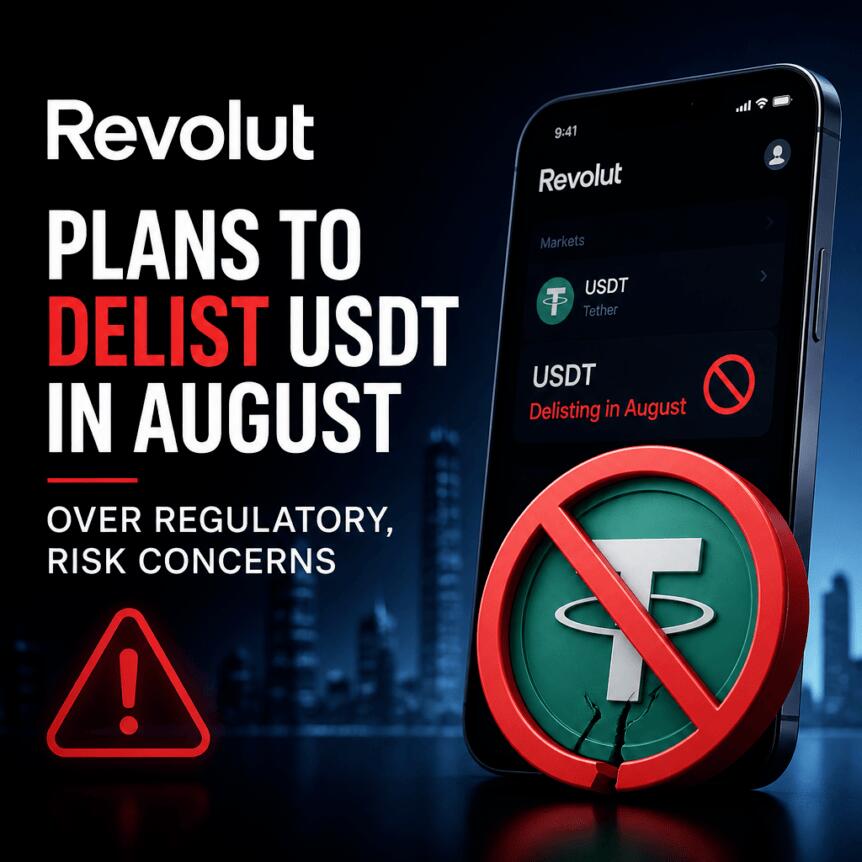
Revolut, the UK-headquartered digital banking platform, has informed some users that it will delist the Tether USDt (USDT) stablecoin starting in July, with the full removal scheduled for Aug. 31, 2026. The company says the decision is driven by “regulatory and risk considerations,” highlighting how stablecoin access is being reshaped across mainstream financial apps as rules tighten.
According to a customer notice reviewed by Cointelegraph, users will stop being able to buy USDT beginning July 6, 2026. Revolut will continue to support USDT until the end of August, but any USDT not sold or withdrawn by then will be automatically converted into the user’s base currency using that day’s exchange rate.
Key takeaways
- Revolut will block USDT purchases from July 6, 2026, followed by full delisting on Aug. 31, 2026.
- USDT deposits will no longer be supported after July 30, 2026, with incoming transfers rejected.
- Users who still hold USDT at the end of August will be converted into base currency at the applicable exchange rate.
- Revolut cited only broad “regulatory and risk considerations,” without specifying which framework applies.
- The move fits a wider European pattern of stablecoin delistings tied to the EU’s MiCA regime.
Timeline for Revolut users
Revolut’s notice lays out a phased exit for USDT within its platform. The first restriction comes earlier than the final delisting: users will no longer be able to buy USDT starting July 6, 2026. That effectively limits new exposure to USDT well ahead of the end date, giving holders time to decide whether to sell or withdraw.
Support for deposits ends later, on July 30, 2026. From that point, any attempted USDT transfer into Revolut’s system will be rejected, narrowing the options for users who might have planned to move stablecoins into their accounts after the purchase restriction begins.
If users do not act before the end of August, Revolut says it will automatically convert remaining USDT holdings into the user’s base currency on the day’s exchange rate. That detail matters for anyone using USDT as a temporary parking asset or settlement tool inside a broader workflow, because it removes the ability to hold stablecoins through the delisting date without triggering conversion.
Revolut’s regulatory rationale remains vague
While Revolut attributes the delisting to “regulatory and risk considerations,” it does not spell out which specific rules or jurisdictions are behind the decision. The notice also does not clarify whether the changes apply globally or only to certain markets where Revolut operates under particular regulatory constraints.
For readers trying to understand the practical impact, the lack of jurisdictional clarity leaves an open question: whether the delisting is limited to particular European locations, or whether the company is preparing a broader policy that could affect users beyond the EU. Cointelegraph reported that it contacted Revolut for comment on affected jurisdictions and the scope of its crypto offering but did not receive a response by publication.
What is clear from public regulatory records is that Revolut received a Markets in Crypto-Assets (MiCA) license as a crypto asset service provider (CASP in November 2025. The authorization was issued by the Cyprus Securities and Exchange Commission (CySEC), according to the European Securities and Markets Authority’s (ESMA) MiCA register. You can review ESMA’s MiCA information through its official page: ESMA’s MiCA overview.
Why Europe’s stablecoin delistings keep accelerating
Revolut’s decision follows a broader European trend in which exchanges and crypto service providers have reduced or removed access to USDT as they adjust to MiCA compliance expectations. Earlier coverage from Cointelegraph noted that exchanges began delisting USDT in Europe in 2024 to align with MiCA requirements, including Coinbase’s preparations to delist USDT in Europe: Cointelegraph report on Coinbase’s move.
The key tension is that MiCA does not only regulate how crypto services are delivered; it also imposes obligations on stablecoin issuers and the stablecoin ecosystem, which in turn affects whether specific products can continue being offered by regulated platforms. In practice, CASPs can decide that the compliance burden—or the perceived regulatory risk—does not justify continuing a stablecoin listing.
Cointelegraph’s reporting also describes the issuer side of this story: Tether has refused to comply with MiCA, and CASPs have gradually delisted USDT across Europe since late 2024. In earlier coverage, Cointelegraph pointed to Tether’s stance, including the issuer’s critique of aspects of the MiCA framework—such as reserve requirements for certain stablecoin issuers and the stipulation that part of reserves be held with EU credit institutions. See Cointelegraph’s related reporting: Tether’s refusal to comply with MiCA.
Tether CEO Paolo Ardoino has publicly argued that the legislation is poorly designed. Cointelegraph previously noted Ardoino’s comments to the outlet, including criticism of the EU rules, as well as his concerns about reserve-related provisions and how they apply. According to Cointelegraph, Ardoino told the publication that MiCA is “very not well thought legislation.”
Market stakes: USDT’s size vs. platform constraints
Even as USDT’s presence shrinks on some regulated platforms, it remains one of the largest stablecoins in the market. Cointelegraph reported that USDT is currently the third-largest crypto asset by market capitalization after Bitcoin and Ether, with a market value of $184 billion at the time of publication. It also cited CoinGecko data indicating that USDC—Circle’s stablecoin—has a $73 billion market cap and ranks as the fifth-largest crypto asset.
This mismatch—USDT’s scale versus the willingness (or ability) of platforms to keep listing it—illustrates how stablecoin distribution increasingly depends on regulatory alignment, not just liquidity or demand. For users, that can translate into operational friction: stablecoin rails that once felt “always available” can change under compliance reviews, leaving customers with forced exits or automated conversions like the one Revolut describes.
It also underlines an important practical point for traders and builders: stablecoin availability on on-ramps and app-based finance is becoming a policy issue. Even when a stablecoin remains liquid in broader markets, individual providers may reduce access based on issuer compliance positions, platform risk assessments, or specific interpretations of regulatory expectations.
For now, USDT’s delisting path on Revolut is scheduled in clear steps, but the broader question is still unsettled—whether Revolut’s actions will remain local to certain jurisdictions or expand across its entire user base. As more CASPs adapt their stablecoin listings to MiCA, market participants should watch for additional platform announcements, potential switches in preferred stablecoins, and whether issuer compliance disputes continue to narrow access on mainstream financial apps.

Lumentum Stock: The Market Is Finally Blinking, And It Could Get Worse (NASDAQ:LITE)

2026 FIFA World Cup boosts prediction market volumes

Forget ‘Fallout,’ Walton Goggins’ 6-Part Western Masterpiece Is a Monster Hit on Streaming

No Jackpot Winner as $257 Million Prize Rolls Over to $269 Million Monday Draw

Renter of Home in Anne Heche Crash Denies Settlement With Son

Weekend Open Thread: Staud – Corporette.com

Will Mojtaba Khamenei Attend His Father’s Alleged Funeral? Iranian Analyst Clarifies Speculation

Yahoo Finance Live: Jobs Report Coverage – July 2, 2026 8:25AM-8:45AM (ET)

Why Money Changes Everything | Harsh Reality Motivation #mindset #selfimprovement
-

 Tech7 days ago
Bluekit phishing kit adopts browser-in-the-middle for login theft
-

 Fashion19 hours ago
Weekend Open Thread: High Hopes
-

 Tech6 days ago
Claude Code turned every engineer into three. Now companies need more product thinkers
-

 Crypto World4 days ago
Strategy authorizes up to $1.25B in Bitcoin sales under new capital plan
-

 Politics1 day ago
The House | “Reframing the debate from a binary discussion of winners and losers”: Yuan Yang reviews ‘We Are Not Machines’
-

 News Videos6 days ago
MAJOR BITCOIN & MARKET UPDATE!!!! (MUST WATCH ASAP!!!)
-

 Tech4 days ago
Anonymous researcher drops 0-day ‘exploitarium’ repo
-

 Crypto World7 days ago
Coinbase, Circle Deepen Crypto Stock Losses Despite Resilient S&P 500
-

 Business4 days ago
Australia treasurer says alleged access of prime minister’s bank data ’incredibly concerning’
-
 Business5 days ago
The AI boom won’t burst all at once. It will pop in ‘rolling bubbles’: Macquarie
-

 Sports3 days ago
Broncos roster: OL Ben Powers (No. 74) entering final year of contract
-

 NewsBeat4 days ago
Presenter Caroline Flack’s brother Paul Flack dies aged 55
-

 Crypto World2 days ago
Binance stock trading tops $1B in first month after launch
-

 Tech7 days ago
Silicon Valley paid to kill AI regulation, now it wants the rules back
-

 Tech7 days ago
OpenAI mulls delaying IPO over valuation concerns
-

 Crypto World2 days ago
Alibaba-affiliate Ant Group enters the humanoid robot market with 12 deals
-

 News Videos4 days ago
How to Build INSANE Live Financial Dashboards With Claude
-
 NewsBeat2 days ago
New exhibition reflects five decades of movement between island of Ireland and GB
-

 Business1 day ago
What a 10 Percent Drop Means for Buyers, Sellers and Renters
-

 Business3 days ago
Meta Platforms Stock Jumps 7% Today as Bloomberg Reports Company Plans to Enter the Cloud Business
You must be logged in to post a comment Login