Connect with us
DAPA Banner
DAPA Coin
DAPA
COIN PAYMENT ASSET
PRIVACY · BLOCKDAG · HOMOMORPHIC ENCRYPTION · RUST
ElGamal Encrypted MINE DAPA
🚫 GENESIS SOLD OUT
DAPAPAY COMING

Tech

How To Remove Stains From Your Car’s Windshield Or Window Without Scratching The Glass

Published

on


Keeping your windshield clean and clear is quite important while driving, so it can be frustrating when there’s a stubborn stain blocking your vision and windshield wipers don’t seem to be enough to wipe it away. However, don’t act too hastily. There are a few things you should keep in mind if you don’t want to scratch your windshield and keep it as clear as can be. 

You’ll first need some essential tools, including microfiber towels, a soft-bristled brush, distilled water, white vinegar, glass cleaner, and rubbing alcohol. Some tougher stains may even call for a clay bar. If you’re cleaning a water stain, start by rinsing the windshield with plain water to remove loose debris that could scratch it. Spray your glass cleaner onto the stained area, then let it sit for a little while. Take out the microfiber towel and gently wipe the area in a circular motion. You may need to use the soft-bristled brush for tougher stains. After, rinse the windshield with the distilled water. If the stain is still there, try white vinegar instead of water and repeat the process.

Advertisement

Tougher windshield stains and avoiding new ones

While your car is parked outside, a bird may poop on your car, or tree sap can even start dripping onto the windshield. But even driving isn’t safe, since you may end up hitting some bugs that splatter onto the glass. For these kinds of situations, dampen a microfiber towel with rubbing alcohol and let it sit on the stain to soften the debris. Then, using a dedicated clay lubricant or soapy water as a glide, gently rub a clay bar over the area to remove the remaining debris. Even for these tougher stains, don’t use paper towels or sponges — they can leave behind tiny scratches on the glass.

It can be tough to fully avoid these kinds of windshield stains, but there are a few preventative measures you can take. Using a scratch-resistant car cover or windshield cover is always a great option, but even then, you should regularly clean your car to avoid debris turning into stubborn stains. Luckily, there are a lot of household items that are perfect for cleaning your car’s windshield. You may also want to consider a protective coating for your windshield.

Advertisement


Source link

Advertisement
Continue Reading
Click to comment

You must be logged in to post a comment Login

Leave a Reply

Tech

From a Pile of Dead 3D Printers, One Maker Built a Robot That Captures Detail No Single Shot Can Reach

Published

on

Dead 3D Printer Robot Focus Stacking
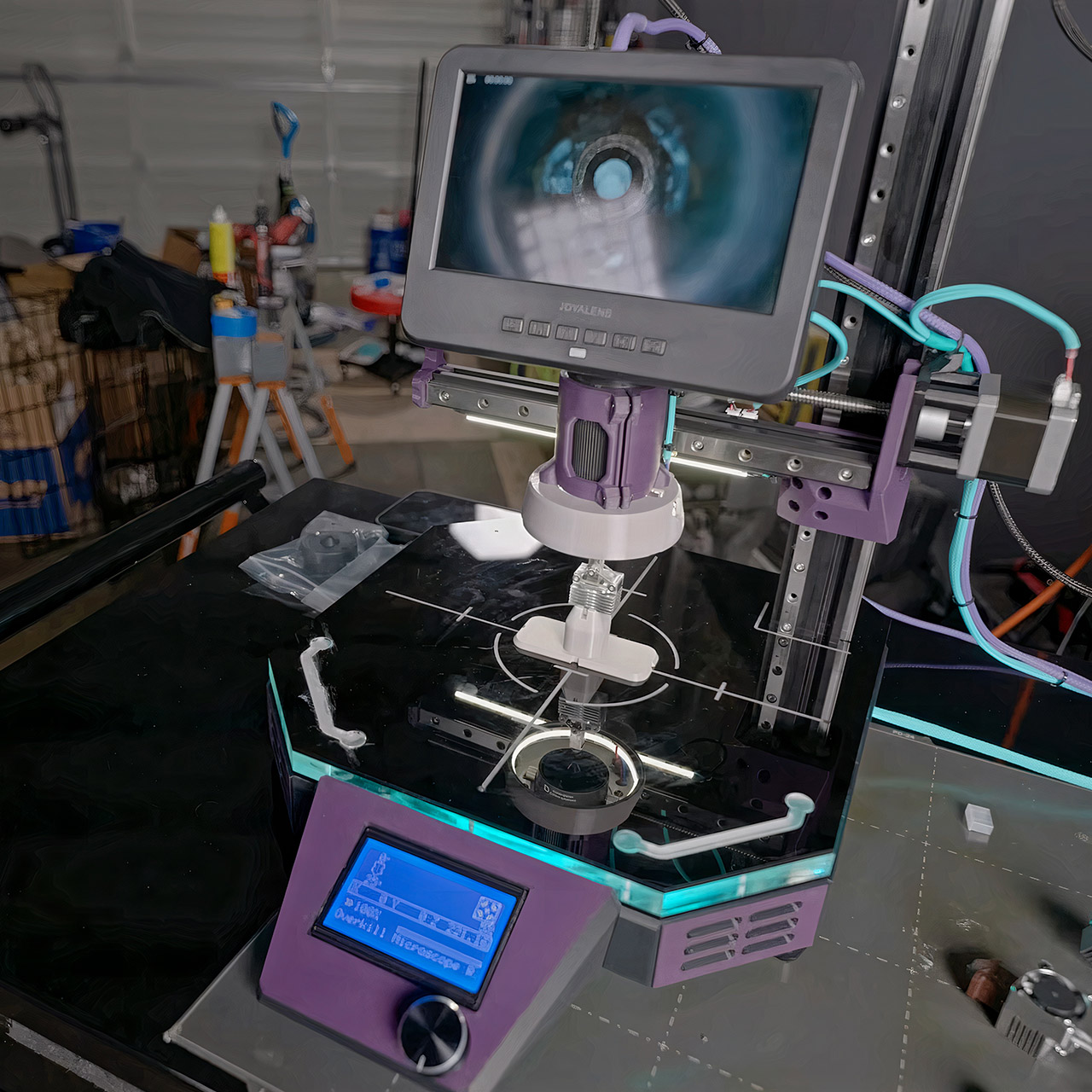
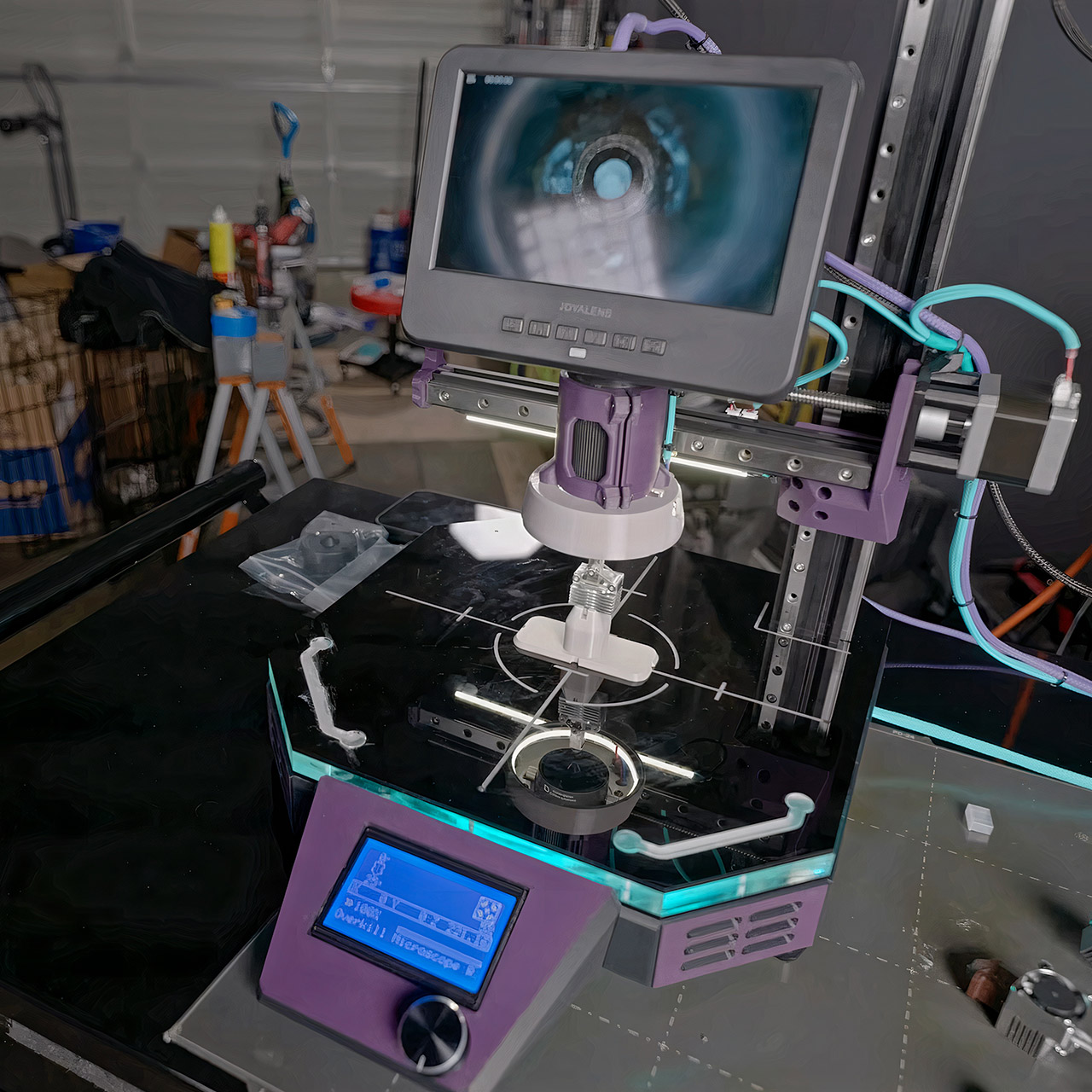
Alan of the MandicReally channel needed consistent, high-resolution close-ups of 3D printer nozzles and hot ends. Every tiny surface mark and wear pattern mattered for his Mandic Labs work, yet standard microscope shots left large portions blurred. Focus stacking solves that by shooting the same subject many times at different focus depths and merging the sharp areas later. Doing the job by hand quickly becomes impractical. The microscope’s own focus ring lacks the precision and repeatability required, and even small shifts in framing or angle ruin the stack.


He overcame the challenge by creating a unique motion platform based on a secondhand desktop microscope. The machine moves the entire microscope up and down in tiny increments while the subject stays anchored to a robust platform, and for horizontal adjustment, all he has to do is touch a small knob to center any tiny bit without disturbing the microscope itself. The end result is a succession of photographs that software can combine into a single outstanding sharp snapshot, even if each individual shot would be unsteady on its own.

Sale


Bambu Lab A1 3D Printer, Support Multi-Color 3D Printing, High Speed & Precision, Full-Auto Calibration…
  • High-Speed Precision: Experience unparalleled speed and precision with the Bambu Lab A1 3D Printer. With an impressive acceleration of 10,000 mm/s…
  • Multi-Color Printing with AMS lite: Unlock your creativity with vibrant and multi-colored 3D prints. The Bambu Lab A1 3D printers make multi-color…
  • Full-Auto Calibration: Say goodbye to manual calibration hassles. The A1 3D printer takes care of all the calibration processes automatically…

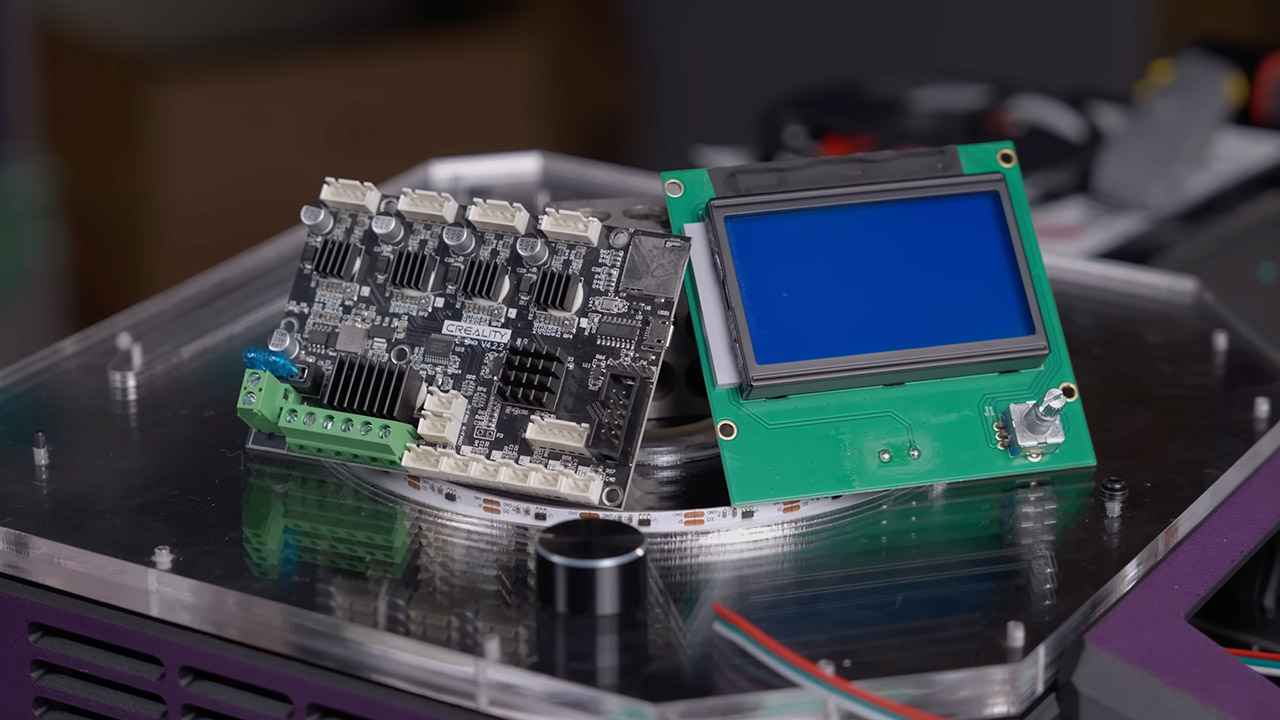
The majority of the components for the robot were items he already had on hand. An outdated, discontinued Creality Ender 3 donated its main brain and screen. He got lucky and picked up a few sets of linear rails from a previous machine he’d built, allowing the contraption to move smoothly. Some stepper motors and lead screws were just taking up space in his storage bins, and he’d printed the moving parts with stiff carbon-fiber filled filament to avoid flexing and blurring the photos. The foundation is made of a leftover laser-cut acrylic sheet recovered from neighbor’s trash, and some aluminum extrusion creates a strong frame that sits on rubber feet to prevent vibrations.

Advertisement

Dead 3D Printer Robot Focus Stacking
It’s a two-axis system, with the vertical bit using a TR8x4 leadscrew and a NEMA 17 motor to lift and lower the microscope in tiny chunks, as small as 0.02mm if you can believe it. That’s ideal for the extremely small depth of field achieved at high magnification. The X axis just pushes the object sideways for a moment, allowing him to properly center it. Both axes run Marlin firmware, which he placed into the old Ender 3 brain, and there’s a vintage RepRap screen with an encoder wheel, so all he needs to do is set the total trip distance and step size, then click start.

Dead 3D Printer Robot Focus Stacking
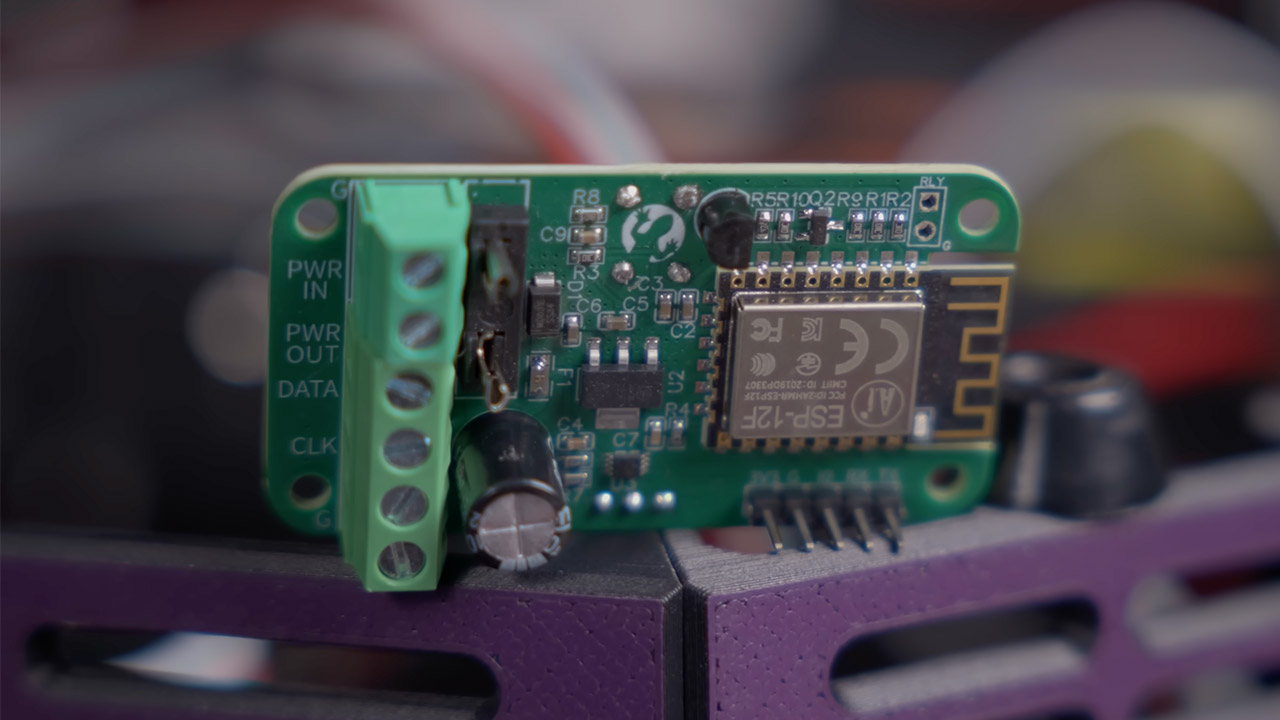
To ensure even illumination, the lighting is coordinated utilizing a pair of white LED strips. An extra ESP32 board running WLED firmware powers several addressable RGB LEDs, which not only offer a clean visual accent to the system but also provide useful backlighting via the acrylic base. A simple 24-volt supply powers the device, which is housed in a small, neat container. Once the firmware is in order, getting the thing to work is simple. So all he has to do is set the step distance and total range on the screen, place the microscope over the subject, and push go. Each time it stops, it takes another picture, and after a while, the stacking software can combine them all into a nice photo with sharp and clear details.
[Source]

Source link

Continue Reading

Tech

Router Brands Could Be Misleading You With That Wi-Fi 7 Label

Published

on

Wi-Fi standards remain as confusing as ever.

If you’ve thought at all about your home internet setup lately, you’ve surely come across Wi-Fi 7 in  your research. The label is slapped on routers of all kinds, from cheap $80 options to ones that cost as much as a laptop. Brands promise faster speeds, lower latency and a network built for the future — but the reality doesn’t always match the description. Most Wi-Fi 7-branded routers are actually missing one of the key features that defines the standard, while trademark loopholes allow some brands to bypass certification requirements entirely. Plus, there’s a federal bottleneck that has prevented newer Wi-Fi 7 routers from entering the US market. To make things even more confusing, most of your devices can’t even handle Wi-Fi 7.

None of this means that a router with the Wi-Fi 7 badge is necessarily a bad product. However, it does mean that we all need to better understand exactly what we’re paying for and that things are more complicated than what product marketing pushes our way.

Advertisement

What does Wi-Fi 7 actually mean?

Wi-Fi 7 is the name the world uses for the IEEE 802.11be wireless networking standard (something most of us will never, ever, have to remember). The standard brings several upgrades over Wi-Fi 6 and Wi-Fi 6E. First of all, it introduces 320 MHz channel widths (double than the 160 MHz available in Wi-Fi 6E), something that allows it to handle multi-gigabit internet plans, deliver ultra-fast local file transfers, and prevent congestion in smart homes. Then, it introduces 4K-QAM (Quadrature Amplitude Modulation), which encodes 12 bits of data per symbol instead of 10 to improve peak data rates. Finally, and perhaps most significantly, it adds Multi-Link Operation, or MLO as we’ll refer to it from here on out.

MLO is the thing that separates Wi-Fi 7 from all standards that came before it. There are two MLO modes. One’s STR (Simultaneous Transmit and Receive) that aggregates bandwidth across multiple bands simultaneously, and NSTR (Non-Simultaneous Transmit and receive) which alternates between bands so only one radio is active at a time. Instead of treating the 2.4 GHz, 5 GHz, and 6 GHz frequency bands as separate and mutually exclusive connections, MLO allows the router to use them all simultaneously. Therefore, traffic is distributed based on load, available spectrum, interference, and so on. That should translate into significantly lower latency for gaming, for instance. MLO is a requirement for brands to get the “Wi-Fi Certified 7” stamp from the Wi-Fi Alliance, even if it’s only the NSTR mode.

Advertisement

The WiFi 7 hyphen loophole and how that affects you

Keep your eyes peeled when shopping for routers, though: the difference between “Wi-Fi 7” and “WiFi 7” isn’t just a stylistic choice. The Wi-Fi Alliance owns the trademark for “Wi-Fi” with a hyphen. When a manufacturer drops that hyphen and labels a product “WiFi 7,” it’s technically not using the trademarked term and no longer bound by the certification requirements. Without naming names, there are plenty of products out there with the “WiFi 7” label that omit MLO entirely.

Therefore, a router marked as such can be sold without one of Wi-Fi 7’s most crucial features. And that’s how shoppers pay a premium for devices that aren’t really upgrades.

Does the Wi-Fi Certified 7 label guarantee MLO performance?

As per the Wi-Fi Alliance, MLO “allows devices to transmit and receive data simultaneously over multiple links for increased throughput, reduced latency, and improved reliability.” The catch, however, is that true simultaneous MLO isn’t really available in most routers, as RTINGS found after testing 25 of them in February 2026. True simultaneous MLO requires multiple physically independent radios syncing perfectly and transmitting and receiving on separate bands at the same time. What most of these routers do is alternate the bands they use, which can lead to fluctuating internet speeds. Their conclusion is that Wi-Fi 7 routers aren’t worth the price difference over older generation routers. At least not right now, when manufacturers make bold claims about what the products are capable of without actually delivering on them properly.

Does this all matter? In principle, of course it does. A Wi-Fi 7 router is an investment, not just from a financial standpoint. Ideally, you’ll get something that you can use for many years to come.

Advertisement

You do have to remember, however, that Wi-Fi 7 is a hardware standard, not a software configuration. To benefit from all those fancy specs like 320 MHz channels, 4K-QAM, or any form of MLO, you need more than the router. Your home internet plan plays an important role here. Wi-Fi 7 is capable of delivering local speeds between 2 Gbps and 3.5 Gbps. If you pay your ISP for a standard 500 Mbps internet plan, your Wi-Fi 7 router will not magically deliver internet faster than that. Another thing you have to consider at this time is that not a lot of hardware comes with a Wi-Fi 7 chip. Only the newest generation of smartphones, tablets, and laptops comes with such capabilities, and the pace of adoption has been rather slow. For example, Apple’s first Wi-Fi 7 laptops arrived earlier this year with the new M5 chip. The previous M4 MacBook Pro and MacBook Air (released in 2024 and 2025) shipped with Wi-Fi 6E chips.

How the FCC disrupted the Wi-Fi 7 market

On March 23, 2026, the Federal Communications Commission (FCC) blocked the certification of new wireless hardware built, designed, or assembled outside the United States. That basically blocked pretty much all new routers from being sold within the US. Slowly, the FCC started adding exemptions for router brands like Netgear and Eero that promised to onshore their manufacturing to the US. Other router brands, such as TP-Link, ASUS, and Linksys, are stuck in limbo, as they’re only legally allowed to sell whatever Wi-Fi 7 models were certified before the ban.

The timing isn’t ideal for the Wi-Fi 7 category, as new generations of routers with more capable designs are being released but aren’t widely available in the US. For consumers, the consequence is a frozen landscape where hardware improvements that could finally address some of the current Wi-Fi shortcomings are blocked.

Advertisement

What to actually care about when getting a new router

When buying a new router, you have to take into account multiple factors. One of those is your internet plan, another is the devices in your household. There are quite a few generations of routers you can grab right now. Wi-Fi 5 remains functional for basic browsing and streaming, but it’s not very efficient if you have gigabit internet and use more than a handful of devices. Wi-Fi 6 is a good pick for anyone on sub-gigabit internet, and it does a better job at handling multiple simultaneous connections.

Wi-Fi 6E adds the 6 GHz band which gives you an express lane that completely bypasses 2.4 GHz and 5 GHz bands that often get jammed up. Wi-Fi 6E routers provide great performance and are available for lower prices than Wi-Fi 7 models, while providing the performance most households need.

Wi-Fi 7 routers become worth the investment if you have multi-gigabit fiber plans, multiple Wi-Fi 7 devices, and actually require heavy local network transfers.

Advertisement

Currently, the Wi-Fi 7 router market faces multiple problems. There’s a certification standard that permits the cheapest possible MLO implementation to satisfy its requirements, a trademark structure that is fully exploited by some brands to bypass even that baseline, and a federal supply chain restriction that has blocked router brands from closing the gap between marketing claims and actual performance.

At the end of the day, if your speed test matches your internet plan, your router is doing its job. You shouldn’t pay a premium price for a dream that your devices don’t support, the certification process doesn’t enforce, and the FCC ban has stalled. 

Advertisement

Source link

Continue Reading

Tech

Hobbit-like Humans May Have Scavenged Komodo Dragons’ Leftovers to Survive

Published

on

CNN reports:


Prehistoric human relatives, nicknamed “hobbits” due to their short stature, may have been scavengers, rather than skilled hunters capable of taking down big game or building cooking fires, according to new research. The study adds to growing evidence that Homo floresiensis, which had a brain only slightly bigger than that of a chimpanzee, wasn’t as advanced as scientists previously believed….

The researchers believe that much like how Komodo dragons hunt water buffaloes today, they were using their venomous bite to take down Stegodons — and after the scene was clear, Homo floresiensis swept in to cleave meat from what remained… The new study reinforces a long-held suspicion that Homo floresiensis is not a dwarfed form of Homo erectus but a descendant of a more primitive Homo habilis-like or Australopithecus-like form that arrived on the island more than1 million years ago, said Dr. Chris Stringer, a research leader specializing in human origins and paleoanthropology at London’s Natural History Museum.

Advertisement

Source link

Continue Reading

Tech

There’s a Global Network of Fungi Under Your Feet. This Is the First Complete Map

Published

on

Beneath the Earth’s surface lies an extraordinary underground fungal network of almost unimaginable scale. An international team of researchers has, for the first time, produced a global map of this vast mycorrhizal network—the system of fungal filaments that forms mutually beneficial partnerships with plants across the planet. They estimate that the network stretches for roughly 110 quadrillion kilometers in total, nearly 1 billion times the distance between the Earth and the sun. The findings were published in Science.

Beneath Your Feet

Arbuscular mycorrhizal fungi (AM fungi) form underground networks that support plant life and help regulate the Earth’s climate. Through microscopic filaments known as hyphae, these fungi establish symbiotic relationships with plant roots, supplying water and nutrients in exchange for carbon produced through photosynthesis. The scale of this phenomenon is enormous: Current estimates suggest that about 70 percent of all plant species depend on these mycorrhizal partnerships for their survival.

Mapping the Global Network

Although a study published in Nature last year examined global patterns in the diversity of underground mycorrhizal fungal communities, no previous research had quantified the density and worldwide distribution of this subterranean network.

To create the first global map of this hidden system, the authors of the new study compiled data from 322 previous studies, along with 16,000 soil samples collected from a wide range of terrestrial ecosystems. Using machine learning techniques and advanced imaging technologies, the team estimated both the network’s total extent and its biomass.

Advertisement

“With the advent of new technologies in high-resolution imaging, machine learning, and robotics, we are beginning to reveal what has long remained hidden beneath our feet,” said coauthor Corentin Bisot. “We are discovering how the complex network-forming structures of fungi transport nutrients and help regulate the climate.”

An Immense Underground Network

The researchers estimate that the underground fungal network has a total length of approximately 110 quadrillion kilometers. They also calculate that it contains about 300 megatons of carbon in biomass—equivalent to roughly four to six times the total mass of all living humans.

According to the study, these fungal networks transport the equivalent of around 4 billion metric tons of carbon dioxide into the soil each year, representing approximately 11 percent of annual human-caused carbon dioxide emissions.

“It is difficult to overstate the importance and sheer scale of these fungi,” said lead author Justin Stewart of the Society for the Protection of Underground Networks. “A single teaspoon of soil can contain up to 10 meters of mycorrhizal network.”

Advertisement

A Planetary Circulatory System

The researchers also issued a warning. According to the study, the density of underground fungal networks in agricultural soils is only about half that found in natural ecosystems. Yet grasslands—which contain an estimated 40 percent of the world’s arbuscular mycorrhizal biomass—are among the least protected ecosystems and are being converted to agricultural land at a rate four times faster than forests.

The scientists warn that less dense fungal networks could reduce the soil’s capacity to store carbon and recycle nutrients.

“Mycorrhizal fungi have shaped life on Earth for hundreds of millions of years, yet we still know remarkably little about how the infrastructure of these living transport systems is distributed across the planet,” said coauthor Merlin Sheldrake. “This study marks an exciting step toward understanding how this planetary circulatory system functions, and it points to ways we can work more effectively with fungi to address many of the defining challenges of our time, from food security to climate change.”

Advertisement

This story originally appeared on WIRED Italia and has been translated from Italian.

Source link

Continue Reading

Tech

Sony’s PlayStation PUGA Prototype Crammed a PS1 Inside a DualShock Controller and They Almost Brought It to Market

Published

on

PlayStation PUGA DualShock Controller Prototype PS1 Hardware
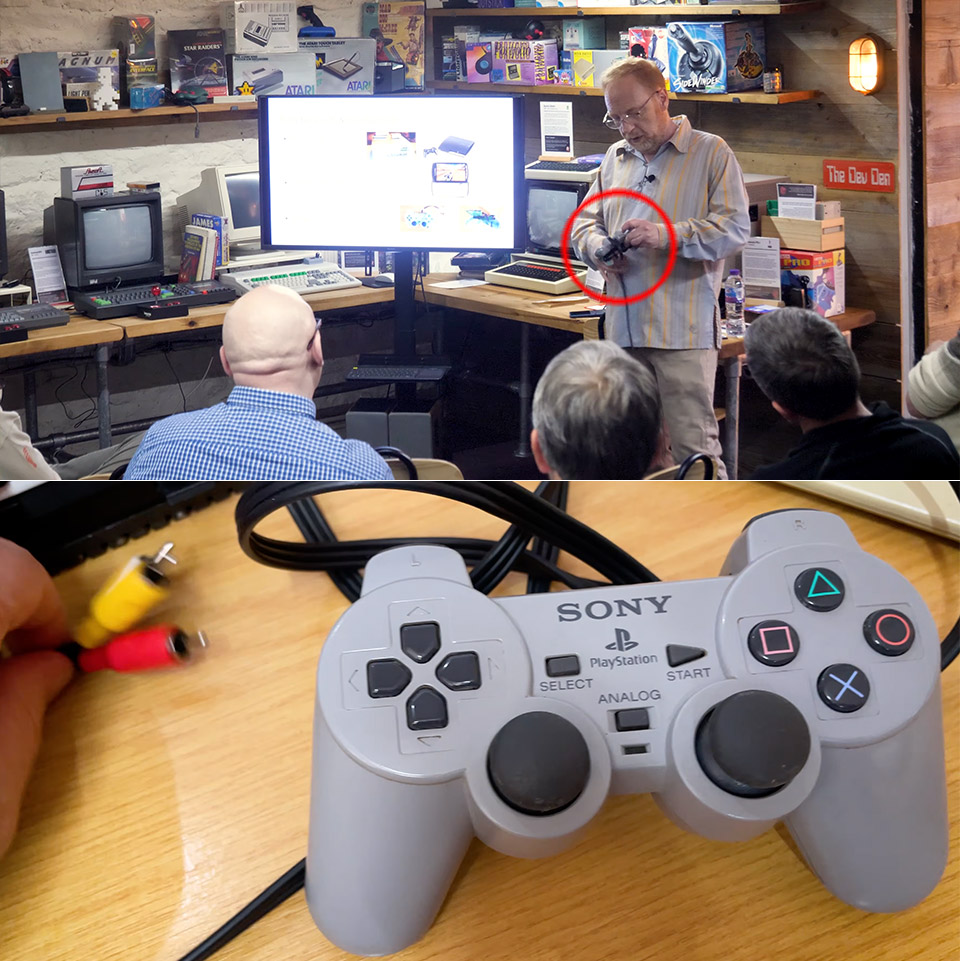
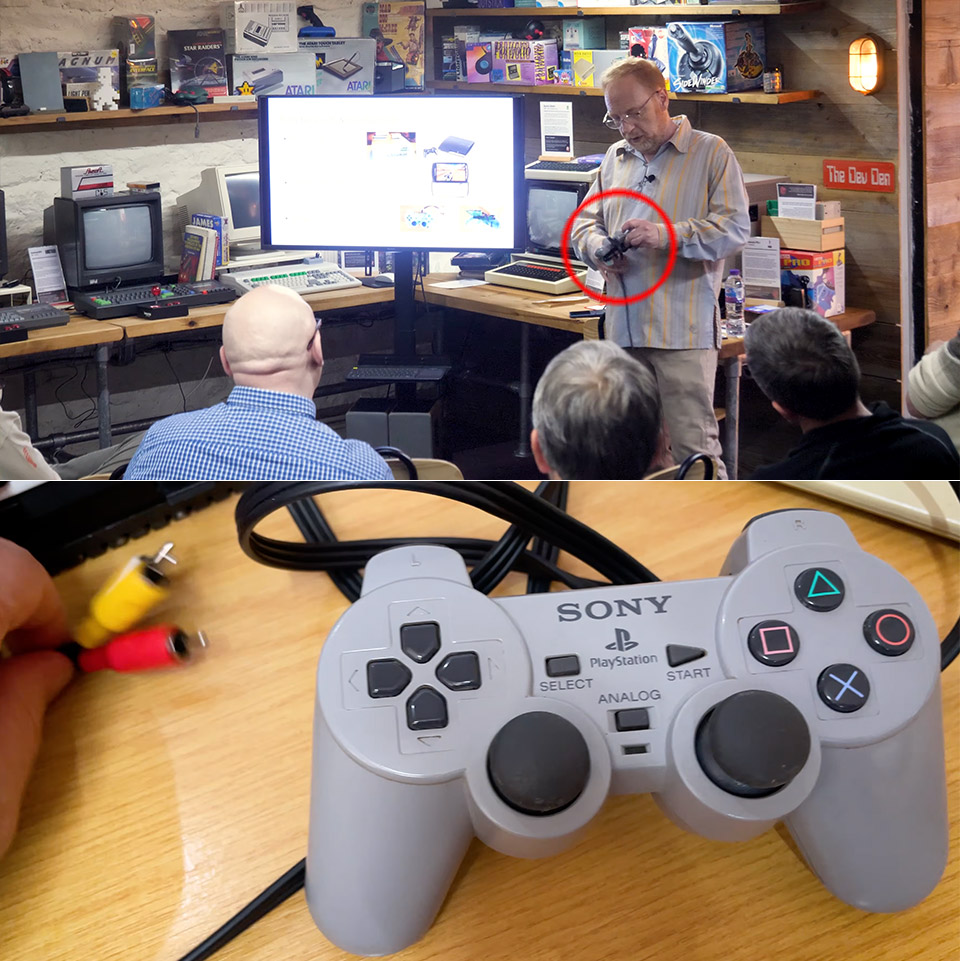
Brian Watson has worked in games for more than four decades. He started at DMA Design on classics like Lemmings and later spent time at Sony on projects that included emulation work. During a talk at The Retro Collective museum in the United Kingdom, he brought along a prototype controller most people had never heard of and showed it to the room.


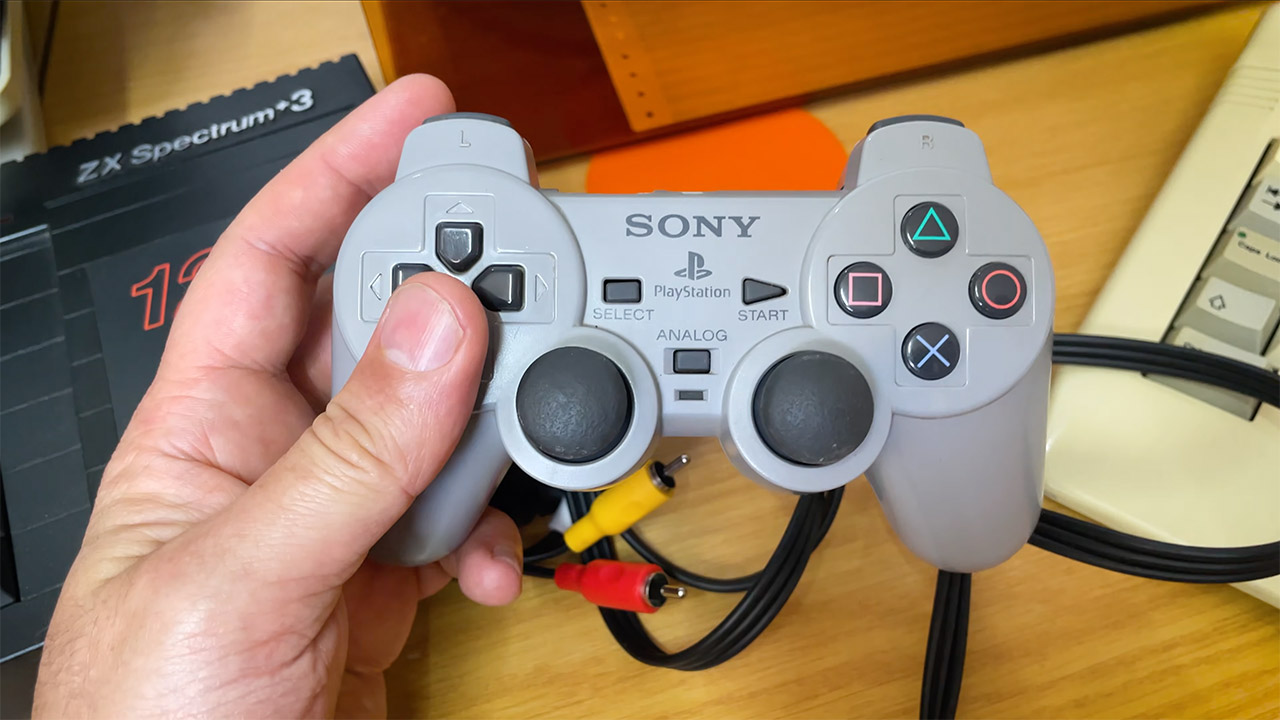
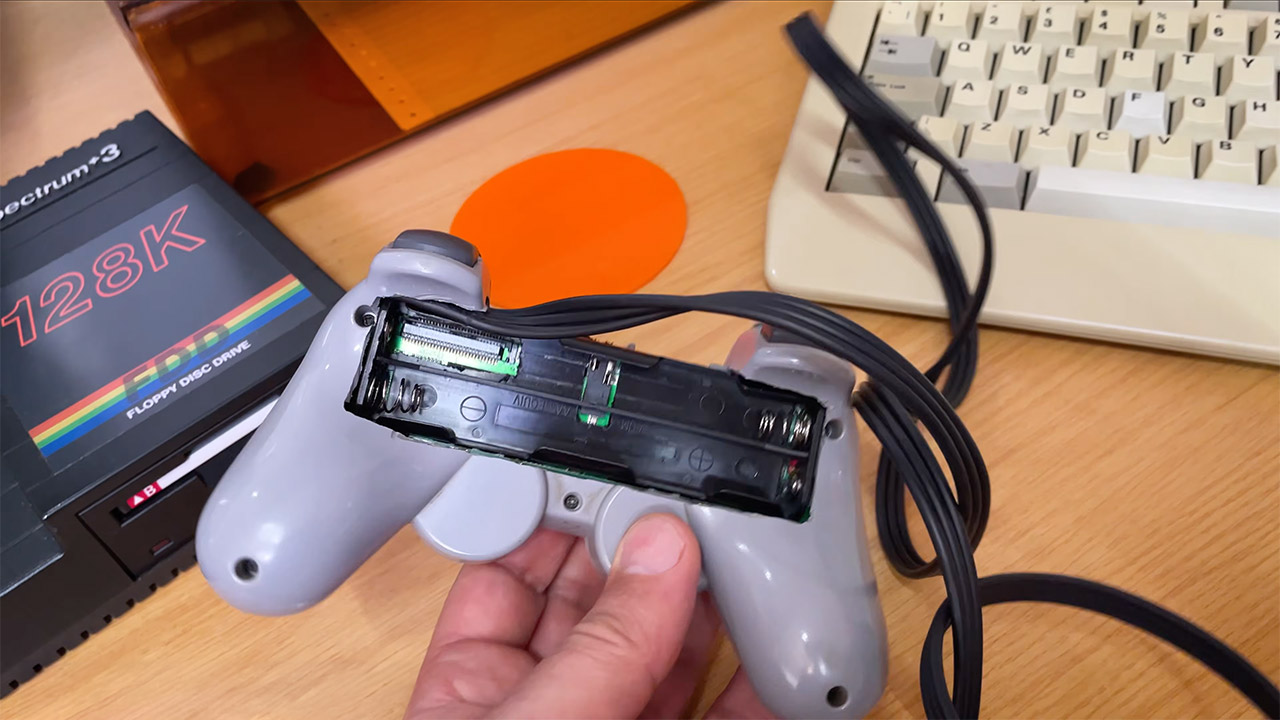
Watson lifted what appeared to be a regular gray DualShock controller. Composite video wires extended from the base. The design and buttons mirrored the popular PlayStation configuration, however this controller didn’t require a separate console to function. Sony assigned the project the internal name PlayStation PUGA. The gadget was aimed at Brazil, where import regulations and fees made official consoles difficult to obtain through traditional methods. Many units were only delivered to customers via backdoor channels. Local manufacturing within the country provided one way to change the situation.


PlayStation®5 console – 1TB
  • PlayStation 5 Console – 1TB, includes wireless controller, 1TBSSD, Disc Drive, 2 Horizontal Stand Feet, HDMI cable, AC power cord, USB cable, printed…
  • 1TB of Storage, keep your favorite games ready and waiting for you to jump in and play
  • Ultra-High Speed SSD, maximize you play sessions with near instant load times for installed PS5 games

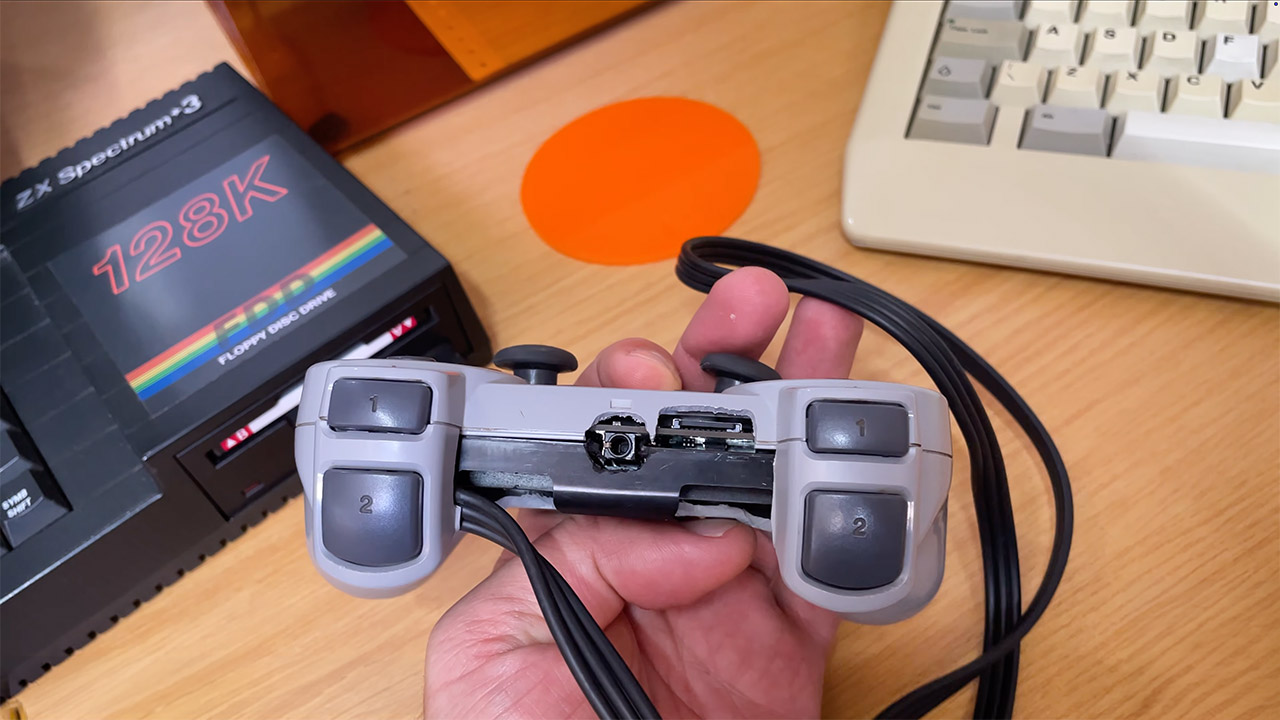
Engineers incorporated the necessary hardware into the controller shell itself. A TI OMAP 3530 system-on-a-chip with an ARM processor running at around 650 megahertz handled the work via software emulation. Four AA batteries provided up to twenty hours of gameplay in tests. A 4GB storage card held around ten games that were ready to launch. Users used a composite cable to connect the controller directly to the television. No extra box sat beneath the screen. The arrangement functioned as a self-contained machine that supplied original PlayStation games in a format that no one had seen from Sony previously.

PlayStation PUGA DualShock Controller Prototype PS1 Hardware
Watson characterized the prototype as working smoothly while development progressed. Because the entire software package is missing, the current example he showed remains in debug mode. Nevertheless, the hardware indicated that the notion was feasible. To avoid import constraints, plans were to produce within Brazil. The price point was kept low on purpose. That option influenced all subsequent content decisions.

PlayStation PUGA DualShock Controller Prototype PS1 Hardware
Licensing negotiations failed before the device could ship. During his presentation, Watson described the underlying issue in layman’s words: Sony licensing was unable to agree on game royalty conditions. Third-party publishers requested payments that did not match the planned selling price. Even internal Sony divisions found it difficult to reach an agreement on group separation. The offer to gaming studios was around 10 cents per copy sold. That figure proved too low to attract partners. Without a confirmed library of titles, the project was unable to continue.

PlayStation PUGA DualShock Controller Prototype PS1 Hardware
According to Watson, the cancellation hit him so hard that he nearly left Sony. The engineering side has overcome its challenges. The business side hadn’t. Some of the emulation work associated with the PUGA effort later supported other Sony products. The Xperia Play phone uses comparable technology to bring classic games on a device with physical controls.

Advertisement

Source link

Continue Reading

Tech

Homelab Gets Linksys Themed Aesthetic

Published

on

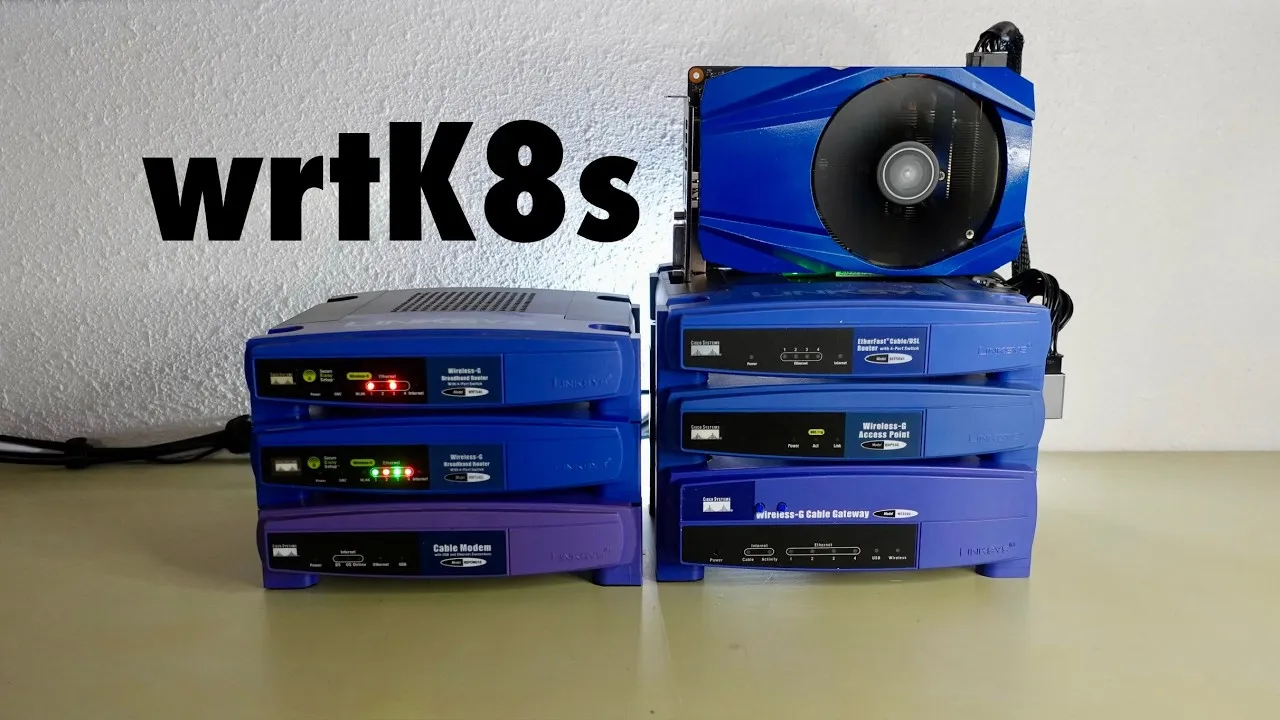
If you’re building a homelab rig, you could just use off-the-shelf hardware in standard cases and slap it all in a rack like the normies do. Or, you could follow the example of [Justin Garrison] and build a more oddball setup.

This particular homelab is, at its heart, built from familiar components. There are two Raspberry Pi 5s, two Raspberry Pi 4s, a GMKtec NucBox M6 Mini with an ASUS GeForce RT 2060 GPU, a LattePanda IOTA, an NVidia DGX Spark, and an HP Z4 G4 mini PC. These machines are all laced together with a TP-Link LS108GB PoE switch. [Justin] has the mini PC running the control plane components, with the rig as a whole running Talos and Kubernetes workloads. What makes this build particularly appealing, though, is the aesthetics of the rig. [Justin] documents how he hacked this hardware to fit into a bunch of old Linksys router cases, which provides a pleasant early 2000s look to the build. This included a bit of hackery to get status LEDs flickering as they should be. [Justin] also took the time to make the power buttons accessible.

If you want to stunt on your friends with a rad homelab, you either have to go for maximum power, or maximum style. This build would be the latter. Video after the break.

Advertisement

Source link

Advertisement
Continue Reading

Tech

Trump memecoin cost investors $3.8B as president earned $636M

Published

on

TL;DR

Blockchain analytics firm Nansen found that 988,905 buyers of Trump’s $TRUMP memecoin lost a combined $3.81 billion through the end of June. Trump’s financial disclosure lists $636 million in royalties from the coin and $1.4 billion in total crypto-related income for 2025.

Nearly a million people who bought President Donald Trump’s $TRUMP memecoin have collectively lost $3.81 billion, according to an analysis by blockchain analytics firm Nansen. The data, which covers all transactions through the end of June, found that 988,905 of the token’s buyers are underwater.

Advertisement

Trump earned $636 million from the same coin. His 927-page financial disclosure, released by the Office of Government Ethics on 30 June, lists the payout as royalties from CIC Digital LLC, a Trump Organisation affiliate, under a licensing agreement with an entity called Celebration Coins, for which no public digital footprint has been found.

How the money flows

Trump launched the $TRUMP token on the Solana blockchain on 17 January 2025, three days before his second inauguration. The coin surged to $75.26 within hours, briefly giving it a fully diluted market capitalisation above $75 billion.

The 💜 of EU tech

The latest rumblings from the EU tech scene, a story from our wise ol’ founder Boris, and some questionable AI art. It’s free, every week, in your inbox. Sign up now!

Advertisement

First Lady Melania Trump launched her own token, $MELANIA, on 19 January, adding a second Trump-branded coin to the market on the eve of the inauguration. Both coins have since collapsed.

$TRUMP now trades at roughly $1.78, a decline of more than 97% from its peak. A $10,000 investment made on inauguration day would be worth approximately $364 today.

The structure ensures the president profits regardless of what happens to the price. Trump earns royalties and transaction fees each time the token is bought or sold.

Of the one billion tokens created, 80% are held by two Trump-affiliated entities, CIC Digital and Fight Fight Fight LLC. They are being released on a three-year unlock schedule, with roughly 900,000 tokens entering circulation daily.

Advertisement

The regulatory vacuum

The $TRUMP coin launched into a regulatory environment the president was simultaneously reshaping. The SEC has dropped or paused nearly 60% of its crypto enforcement cases since Trump took office, including long-running actions against Binance, Coinbase, and Kraken.

Trump signed the GENIUS Act into law in July 2025, creating the first federal framework for stablecoins. The law gave institutional players the regulatory clarity to launch tokenised products, but it contained no provisions addressing memecoins or tokens issued by elected officials.

Europe’s MiCA regulation took the opposite approach, requiring any crypto asset sold to the public to meet disclosure and consumer protection standards regardless of what it calls itself. The American framework has no equivalent safeguard for the retail buyers who make up the vast majority of memecoin purchasers.

The dinner

On 22 May 2025, Trump hosted a black-tie gala at his Virginia golf club for the top 220 holders of the $TRUMP token, who had spent a combined $148 million. The guest list included Chinese-born crypto mogul Justin Sun, the coin’s largest holder, who at the time was facing SEC fraud charges that the agency has since paused.

Advertisement

A Bloomberg analysis found that 19 of the top 25 wallets were almost certainly controlled by individuals outside the United States. The event offered direct personal access to the sitting president in exchange for purchasing a financial product from which he profits.

The broader crypto empire

The memecoin is one piece of a larger operation. Trump’s financial disclosure lists total crypto-related income of at least $1.4 billion for 2025, including approximately $800 million from World Liberty Financial token sales and $197 million from an equity sale tied to a stablecoin holding company.

World Liberty Financial, a decentralised finance protocol in which a Trump business entity holds 60% and receives 75% of all coin sale revenue, has generated its own controversies. The venture pledged 5 billion of its own tokens to borrow $75 million from a lending platform co-founded by one of its advisers, trapping existing depositors.

Trump Media & Technology Group reported a $405.9 million loss in the first quarter of 2026, driven almost entirely by unrealised markdowns on the cryptocurrency it had accumulated. The company spent roughly $2 billion purchasing Bitcoin near market peaks the previous summer.

Advertisement

What happens next

Senator Kirsten Gillibrand has proposed banning elected officials and their spouses from issuing or promoting crypto tokens. She pushed for similar provisions during GENIUS Act negotiations, but the restrictions were stripped from the final bill.

The proposal faces long odds in a Congress that has largely embraced the industry. Visa, Mastercard, and 140 other firms recently launched a competing stablecoin built on the GENIUS Act framework, underscoring how quickly institutional crypto is maturing under the new rules.

The retail market tells a different story. More than $600 million was stolen from decentralised finance protocols in the first half of 2026, and the Nansen data suggests the president’s own token has cost ordinary buyers nearly four times what was lost to hackers.

Advertisement

Source link

Continue Reading

Tech

Meta's Pocket app lets you vibe-code games with zero coding knowledge

Published

on


The Play Store listing page for Pocket describes the app as a creative platform for making and sharing “gizmos,” which Meta defines as “small interactive thing(s)” that users can “tap and play with.” The company added that gizmos are essentially mini-games that can be controlled using touch and tilt gestures….
Read Entire Article
Source link

Continue Reading

Tech

Australia’s child social media ban is failing. The Senate delayed the fix.

Published

on

TL;DR

Australia’s Senate blocked amendments to strengthen the world-first child social media ban, sending the bill to an eight-week inquiry. Seven in 10 children who had accounts when the ban took effect in December are still on restricted platforms.

Australian Prime Minister Anthony Albanese on Friday condemned senators who blocked amendments to the country’s world-first social media ban for children, warning that the delay would give tech platforms time to destroy documents that could be used as evidence against them. The conservative Liberal Party and the minor Greens party referred the legislation to an eight-week Senate inquiry on Thursday.

Advertisement

The amendments would have expanded the powers of eSafety Commissioner Julie Inman Grant, Australia’s online safety watchdog, to enforce the ban that has prohibited children under 16 from holding accounts on platforms including Facebook, Instagram, and YouTube since December.

The enforcement gap

The ban looked effective on paper. The government initially reported that more than five million under-16 accounts had been removed, deactivated, or restricted after the law took effect on 10 December.

The reality proved different. The eSafety Commissioner reported in March that seven in 10 children who held accounts on restricted platforms when the ban began were still on Facebook, Instagram, Snapchat, and TikTok.

Most had simply declared an age over 16 or submitted a selfie that the platform’s verification system accepted.

Commissioner Inman Grant said in April she was considering court action against those four platforms and YouTube, alleging they were not taking reasonable steps to exclude children. She was satisfied with progress made by the remaining five restricted platforms: X, Kick, Reddit, Threads, and Twitch.

Advertisement

What the amendments would change

The current law gives the commissioner power to demand information from platforms, but not documents. The amendments would close that gap, allowing her to compel internal records, board minutes, and communications about how platforms have responded to the ban.

The bill would also let the commissioner demand information from third parties, including age assurance technology providers, to test whether platforms’ claims about underage circumvention are accurate. Maximum fines would double from A$49.5 million to A$99 million ($68 million).

“If it was passed yesterday, that would have been the date from which these demands could be made by the commissioner,” Albanese told the Australian Broadcasting Corp. “So then fines can be issued.”

Who blocked it and why

The centre-left Labor government does not hold a majority in the Senate. The Liberal opposition and the Greens, who have always opposed the ban, combined to send the bill to an inquiry despite having supported the original legislation with overwhelming support in 2024.

Advertisement

Opposition communications spokesperson Sarah Henderson said the amendments “need to be tougher,” calling the ban “a half-baked law which is poorly designed, which was rushed, which is badly implemented and which is not working.” Greens Senator David Shoebridge questioned why a fine that had never been issued needed to be doubled.

The global wave

Australia’s struggles have not discouraged other countries from following its lead. The UK announced in June that it would ban under-16s from social media apps including TikTok, Instagram, and YouTube, with restrictions expected to take effect in spring 2027.

France, Denmark, Spain, and several other European countries have announced or implemented similar age restrictions. What they will all confront is the same problem Australia has spent seven months discovering.

Passing the law is the straightforward part. Getting platforms to comply, proving they have not, and building age verification systems that actually work without compromising privacy is where every child safety regime runs into the wall.

Advertisement

Communications Minister Anika Wells said this week she had received monthly updates from the eSafety Commissioner since March. “We are not seeing improvements,” she said.

Source link

Advertisement
Continue Reading

Tech

HiFiMAN HE6 Remastered Launches With a Lighter Headband, But It Still Needs Serious Amplifier Power

Published

on

HiFiMAN is bringing back one of the true legends of the planar magnetic headphone world with the HE6 Remastered. The original HE6 earned its near-mythic reputation the old-fashioned way: by delivering exceptional speed, detail, dynamics, and an expansive open-back soundstage when paired with amplification capable of keeping up. It was a headphone prized for its sonic abilities, even if it also developed a reputation for treating underpowered headphone amps with a genuine level of contempt.

The new $1,899 HE6 Remastered retains the original HE6 driver design and open-back architecture, but replaces the older headband with a lighter composite design for greater long-session comfort. The trade-off, such as it is, remains unchanged: with 83.5dB sensitivity and a 50-ohm impedance, this is not a planar headphone for a feeble dongle DAC. Think again. The HE6 Remastered needs serious current and a genuinely capable headphone amplifier to reveal why the original became such an enduring favorite in the first place.

hifiman-he6-remastered-headphones-back

From trade shows to the sales floor and online forums, our customers continually cite the HE6 and its series successors as HIFIMAN favorites,” says Dr. Fang Bian, President and CEO, HIFIMAN Electronics. “The HE6 Remastered uses the original’s driver complement to maintain the sound signature that continues to set the bar for open-back planar models at its price point, but with greater comfort for hours of continuous listening.”

HE6 Legacy

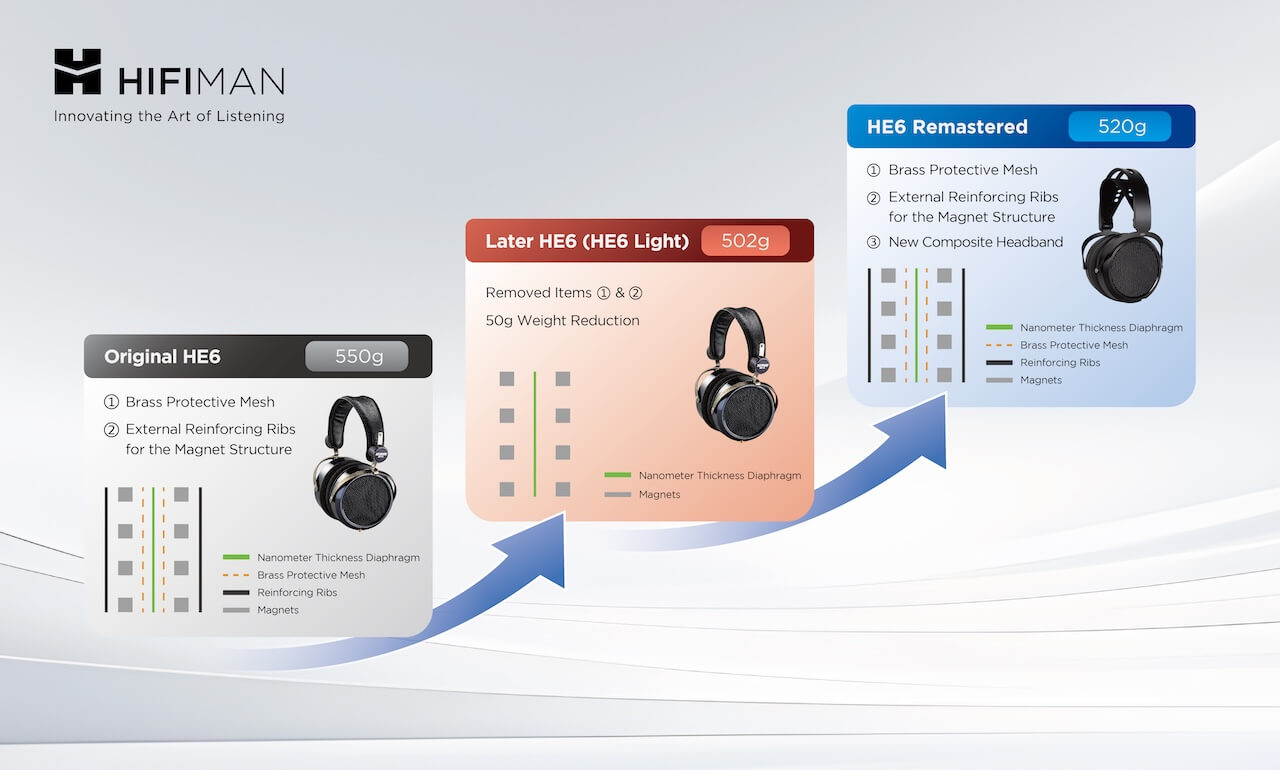
The original HE6 was introduced in 2010 and quickly became sought after by headphone enthusiasts, audiophiles, and music lovers, thanks to HIFIMAN’s approach to planar magnetic design, which incorporated a brass protective mesh and reinforcing ribs.

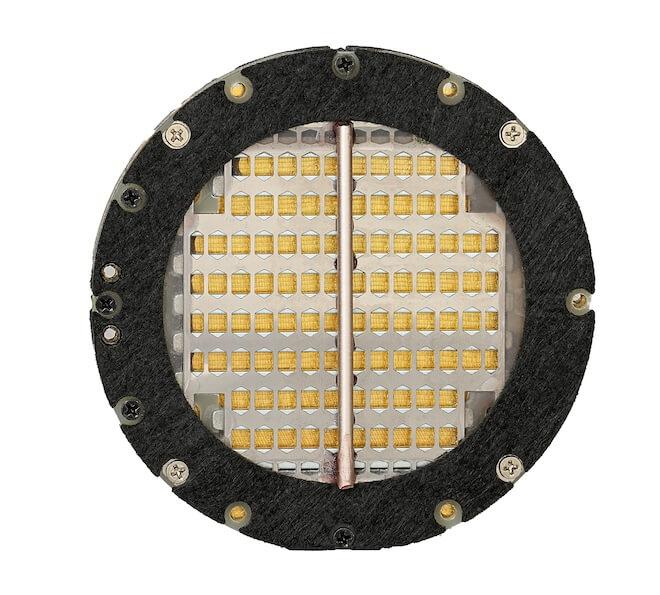
The HE6 was also the first headphone to feature an ultra-thin Nanometer Diaphragm, measuring less than one-millionth of a meter thick and extremely light. This gave the HE6 an extremely fast response, outstanding dynamic range and frequency characteristics, low distortion, high transient response, and comprehensive improvements in dynamics and detail.

Advertisement
hifiman-he6-remastered-planar-magnetic-driver

The brass protective mesh was implemented to protect the diaphragm from damage, while the reinforced ribs further enhanced the stability of the magnets and overall reliability.

However, as a result of further R&D, HIFIMAN’s engineers determined that the Nanometer Thickness Diaphragm and powerful magnetic system were safe from environmental exposure and mishandling without the need for protective elements. Removing them reduced weight without affecting performance. As a result, HIFIMAN released a later model variant called the HE6 Later, named for the fact that it is a “later” version of the HE6.

hifiman-he6-remastered-headphones-history

What’s New with HE6 Remastered

Sixteen years after the original HE6 was released, many audiophile headphone fans continue to embrace its sonic output, making it an often-requested sample at enthusiast audio shows. In response to this ongoing interest and support, HIFIMAN now offers the HE6 Remastered, which features the same driver design as the original but adds a new composite headband that reduces overall weight from the original’s 550 grams to 522 grams. That is an improvement, certainly, but 522 grams is not exactly light by modern headphone standards.

The HE6 Remastered’s sensitivity is 83.5dB, identical to the original HE6. Frequency response is rated at 8Hz–65kHz, and impedance is measured at 50 ohms. Those specifications make it clear that this is not a headphone for a modest dongle DAC or lightweight portable source. To get the most from the HE6 Remastered, owners should be thinking about a capable desktop headphone amplifier from Schiit, HIFIMAN, Burson, Auris, or one of the many other manufacturers building serious amplification for demanding planar magnetic headphones.

hifiman-he6-remastered-headphones-profile

Additional Specifications

HIFIMAN Model HE6 Remastered / HE6
Product Type Wired Open-Back Headphones
Price HE6 Remastered – $1,899

HE6 Light (aka HE6 Late) – $1,200 $1,500 (no longer available)

Advertisement

HE6 Original – $1,299

Driver Type Planar Magnetic
Frequency Response 8Hz -65 KHz
Sensitivity 83.5dB
Impedance 50 Ohms
Weight HE6 Remastered: 522 grams

HE6 Original:550 grams

Adds Dr. Bian: “We are very fortunate to have so many of our headphones considered industry standards. The HE6 is a longtime favorite, and I’m thrilled to bring an updated version to our most dedicated consumers and thousands of newcomers.

Advertisement
hifiman-he6-remastered-headphones-side

The Bottom Line 

The HIFIMAN HE6 Remastered is not an attempt to reinvent one of the company’s most iconic planar magnetic headphones. It is a deliberate return to the original HE6 formula, with the brass protective mesh and external reinforcing ribs restored after their removal on the HE6 Later, alongside a lighter composite headband and replaceable earpads. The new headband design, also used on HIFIMAN’s newer HE600 and Edition XV, should improve long-term comfort, but let’s not pretend that 522 grams is “very light.” It is lighter than the original by almost 30 grams, but it is still a substantial headphone.

Advertisement. Scroll to continue reading.

At $1,899, the HE6 Remastered is targeted squarely at longtime HE6 fans and listeners who want a demanding, open-back planar magnetic headphone built around serious desktop listening. The 83.5dB sensitivity and 50-ohm impedance remain unchanged, which means this is not a product for a phone, laptop jack, or feeble dongle DAC. A proper amplifier from Schiit, HIFIMAN, Burson, Auris, or another manufacturer with real power on tap will be required to make the HE6 Remastered sing.

The competition is not standing still. Audeze’s $1,199 LCD-X is heavier at 612 grams, but far easier to drive; Dan Clark Audio’s 455-gram E3 costs $2,299.99 and adds closed-back isolation; and HIFIMAN’s own $1,399 HE1000 V2 is a considerably lighter 420 grams. The HE6 Remastered is not the obvious value play, nor is it the most convenient choice in this price range. Its appeal is more specific: it brings back the distinct sound and amplifier-hungry personality that made the original HE6 a cult favorite in the first place.

Advertisement
hifiman-he6-remastered-headphones-angle

Price & Availability 

The HE6 Remastered is priced at $1,899 and is available at HIFIMAN 

The Original HE6 is still available at HIFIMAN for $1,299

Source link

Continue Reading

Trending

Copyright © 2025