




Connect with us
DAPA Banner
DAPA Coin
DAPA
COIN PAYMENT ASSET
PRIVACY · BLOCKDAG · HOMOMORPHIC ENCRYPTION · RUST
ElGamal Encrypted MINE DAPA
🚫 GENESIS SOLD OUT
DAPAPAY COMING

Tech

Amazon will stop accepting new customers for Mechanical Turk

Published

on

These may be the last days of Amazon’s Mechanical Turk.

An announcement on the Mechanical Turk website says that on July 30, 2026, the crowdsourcing service will close to new customers. Amazon Web Services says the decision was made after “careful consideration,” adding, “Existing customers can continue to use the service as normal. AWS continues to invest in security and availability improvements for Mechanical Turk, but we do not plan to introduce new features.”

In other words, Amazon isn’t completely pulling the plug, but the service is very much on life support.

First launched in 2005, Mechanical Turk was a marketplace where people were paid tiny amounts to perform simple tasks that resisted full automation — things like completing CAPTCHA challenges or identifying the basic sentiment in a sentence.

Advertisement

In its heyday, the service was at the center of debates around the ethics of crowdsourced labor, and it even played a small role in the early stages of the Facebook-Cambridge Analytica scandal. 

Beginning in 2018, Amazon also began billing it as a way for companies to annotate data to train neural networks as part of its SageMaker AI service.

Less overtly, Mechanical Turk has also been described as the hidden enabler for companies taking a fake-it-till-you-make-it approach to AI, where products marketed as Ai are actually being performed by the Mechanical Turk workforce — all the more fitting since the original Mechanical Turk was itself a hoax, with a hidden human chess player pretending to be a chess-playing machine

Over time, the relationship between Mechanical Turk and AI models grew even more complicated. In a snake-eating-its-own-tail irony, a 2023 analysis found that between 33% and 46% of workers on the platform were using large language models to complete their tasks, raising questions about the reliability of data annotated on the platform and also about whether humans needed to be in the loop at all.

Advertisement

This week, after Amazon’s decision became public, one Reddit user suggested the platform died “years ago,” with workers and researchers abandoning it due to bots and fraud. The user predicted, “Someone at Amazon is going to decide keeping the Mturk servers running is a waste of time and resources and pull the plug entirely.”

When you purchase through links in our articles, we may earn a small commission. This doesn’t affect our editorial independence.

Source link

Advertisement
Continue Reading
Click to comment

You must be logged in to post a comment Login

Leave a Reply

Tech

Microsoft and Amazon Commit Billions to New AI Implementation Units for Businesses

Published

on

Microsoft is investing $2.5 billion in a new group “assisting clients with AI implementations,” reports CNBC:

[Microsoft] said Thursday that 6,000 employees will be embedded with clients, in a practice that’s become known as forward deployed engineering [or FDE]… The announcement comes two days after cloud rival Amazon said it was putting $1 billion behind an FDE initiative to support fast-paced AI engagements. Leading AI labs Anthropic and OpenAI both established FDE groups in May, partnering with private equity firms, banks and consulting firms.

Alongside its technology peers, Microsoft has sunk tens of billions of dollars into building data centers that run generative AI models. Microsoft has also released a variety of AI services, with mixed results. The Microsoft 365 Copilot AI assistant has yet to gain anything approaching ubiquity in the business world, and the GitHub Copilot coding agent has ceded market share to newer players. Microsoft’s stock has slumped 21% this year, by far the worst performance among the mega-cap tech companies. One concern on Wall Street is that AI models that quickly compose code might threaten mature software companies…

Advertisement

Microsoft has for years provided support and implementation services to customers. The company generated about $2.1 billion in revenue from enterprise and partner services in the March quarter, up 2.5% from a year earlier.

Source link

Continue Reading

Tech

5 Handy Milwaukee Packout Products That Can Keep Your Tool Collection Organized

Published

on


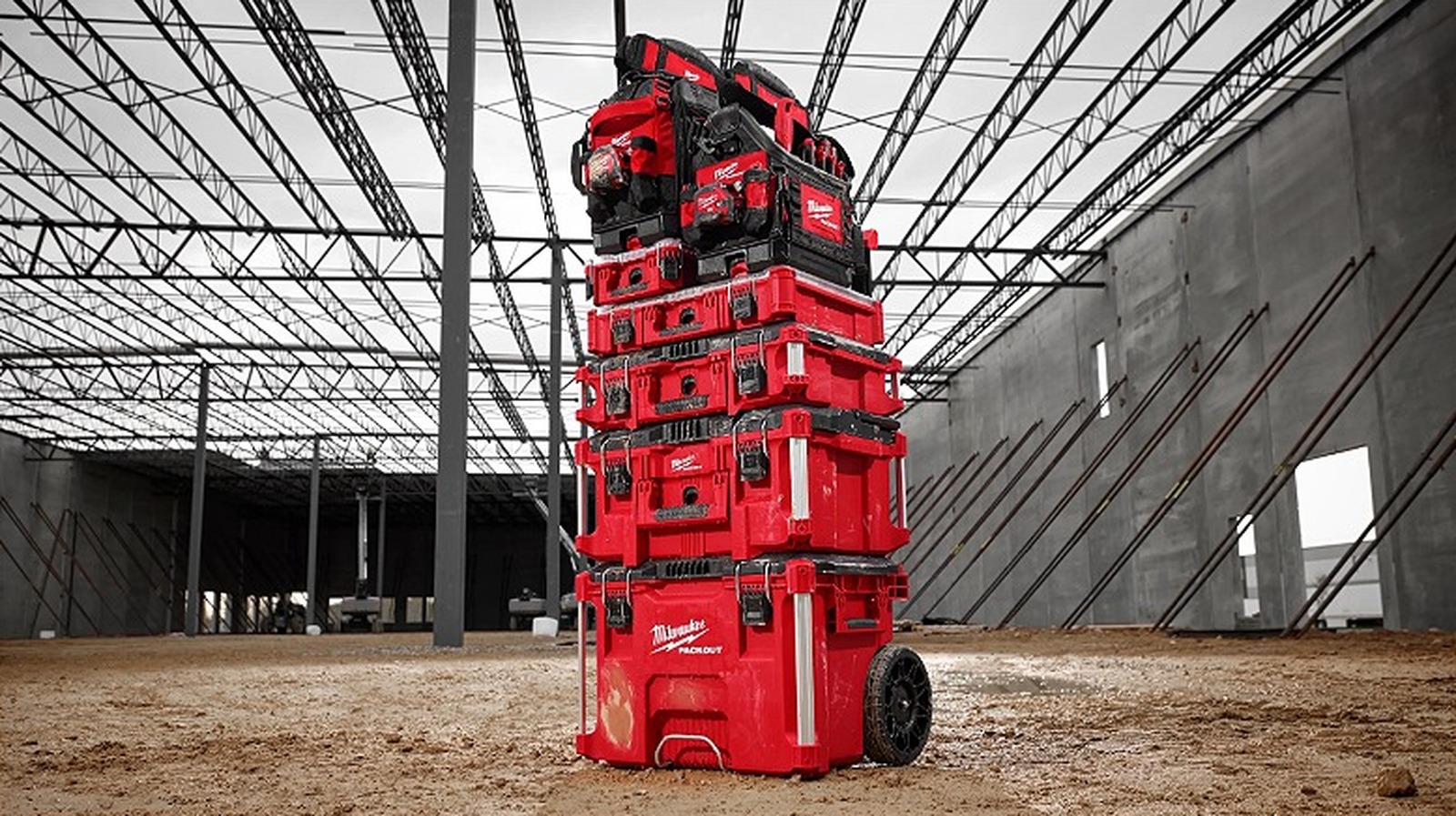
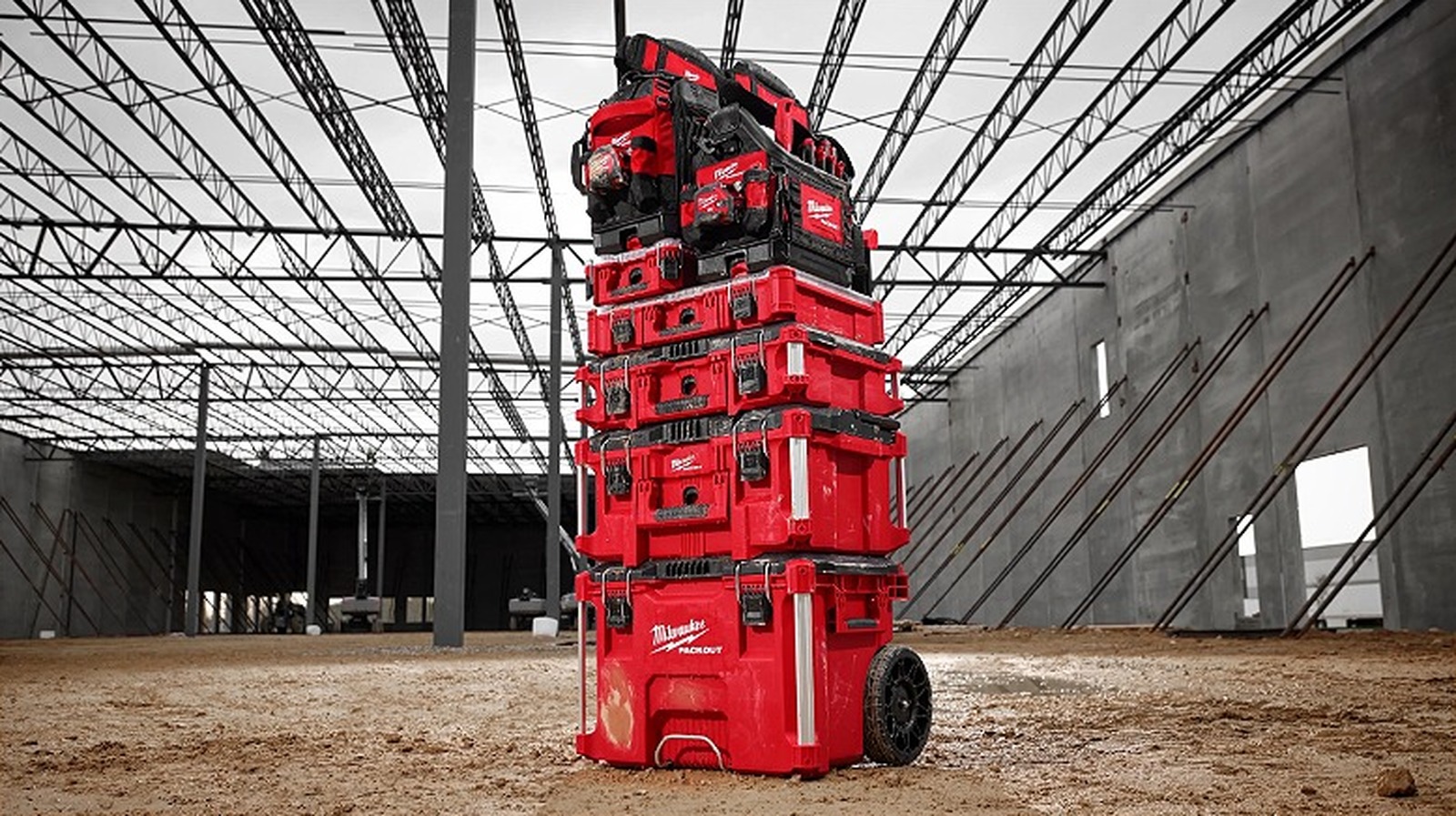
Milwaukee, one of the major tool brands offering a range of hand and power tools, is a go-to name for professionals and hobbyists alike when they want to build or upgrade their tool collection. The same brand offers a Packout collection, which is basically a range of interstackable toolboxes, organizers, and accessories that feature locking cleats on the bottom and slots on the top to bring you a full-fledged modular storage solution. These toolboxes and rolling tool chests also allow for efficient transportation of tools from one place to another via trucks and other transit vehicles.

While the Milwaukee Packout collection offers a wide variety of storage options, some can really keep your tools organized. Hence, we compiled a list of Milwaukee Packout tools you can use to maintain a tidy workspace by keeping them in their dedicated spaces. Most of these products are made of high-quality polymer to add durability and can be stacked with other toolboxes and chests in the range for better usage.

Advertisement

Packout Rack Kit

The Milwaukee Packout Rack Kit is an open-drawer-style standing rack with a durable steel body that holds all types of tools without damage. You can also install this rack inside transit vans, enclosed trailers, and more for when you want to transport bulky tools from one place to another. Each drawer can be set to a desired height, allowing you to adjust the space in each compartment to suit your requirements. 

Advertisement

You can use the rack to store multiple toolboxes and organizers from the Packout collection, serving as a haven for all your jobsite tools. All of these are easy to access by sliding the drawers out, rather than unstacking several toolboxes to grab the required tool. Being a great product for transporters and those with full-fledged automotive workspaces, this Packout Rack Kit includes four drawers, one upper rack, one lower rack, and a rack frame, allowing adjustments to leg height. 

Advertisement

Packout Rolling Tool Chest

Offering a 250-pound holding capacity, the Packout Rolling Tool Chest is made with impact-resistant polymers, along with an industrial-grade extension handle for durability. There are two nine-inch all-terrain wheels on the back, making it easy to transport to the job site while keeping all your work tools in one place. Plus, it can withstand rough outdoor conditions thanks to its water- and debris-resistant design. 

There’s an interior storage tray for keeping the smaller tools, like pliers, screwdrivers, and more, while the deeper compartment below can organize the bulkier power tools like impact drivers and saws. Everything stays securely inside the chest once you lock this organizer via metal-reinforced locking points, which won’t open even during transit. Moreover, there’s a locking lid support for the top lid so it stays firmly in place while you search for the desired tool inside the box. 

For neater organization of your tools in the garage or workshop, you can stack other toolboxes on top of this tool chest since it is compatible with the range to create an ultimate Packout setup.

Advertisement

Packout Tilt Bin Organizer

With the Packout Tilt Bin Organizer, you can say goodbye to the hassle of sorting through a mess of screws, nuts, and bolts to find the right part for the job. The organizer comes with two large and eight small bins where you can store all the small parts and accessories with proper labels for careful organization. Each bin can be removed from its compartment for easy access and can hold about 40 pounds of material. The bins lock in place via security bars so they stay in place even during transport. Plus, the impact-resistant polymer body ensures minimal vibration and movement inside the bins for absolute security.

You can either stack this tilt bin on top of other Packout toolboxes or hang it in your space using the handle on top of the design, which also enables smooth handling, by the way. The large bins also have dividers in case you wish to use them for two separate types of accessories. Consequently, it is one of the most useful Milwaukee Packout storage options available.

Advertisement

Packout XL Tool Box

If you are someone whose job includes working outdoors, for instance, a construction worker or an on-site automotive professional, the Packout XL Tool Box can be your go-to storage solution. Being the biggest toolbox in the line, this Milwaukee Packout toolbox will keep all your large and bulky tools in place, like circular saws and rotary hammers, in a deep chest built with a 100-pound holding capacity. Besides, there’s an organizational tray for storing small parts and accessories. The reason it can survive harsh jobsite conditions is the inclusion of an IP65 weather rating, which keeps the toolbox and its contents safe against rain and other weather elements.

Advertisement

Moreover, the impact-resistant polymer body paired with metal-reinforced corners can tolerate shocks and vibrations that occur during transit. You can secure the tools by locking the toolbox with heavy-duty latches and metal-reinforced locking points. The top handle allows for easy movement, and you can also stack other boxes on top.

Advertisement

Packout Structured Tote

The Packout Structured Tote features 39 pockets and can withstand a combined weight of 50 pounds while maintaining its structured shape, thanks to tear-resistant ballistic material in its construction. There’s an impact-resistant molded base that allows the tote to connect seamlessly with other products in the modular collection through locking cleats. Moreover, the all-metal hardwire also helps store larger hand and power tools in the half-open front pocket. Here, you can store the most commonly used tools to keep them within reach.

For comfortable carrying, the tote comes with a padded shoulder strap that goes easy against your shoulders, while the high-quality handle makes it easy to lift. Consequently, the tote can be best used by electricians and plumbers who need their tools visible and well-organized when working away from the shop, for instance, at a customer’s home.

Advertisement


Source link

Continue Reading

Tech

In a volatile world, a consistent sustainability policy is critical

Published

on

Sustainability demands progress on several fronts at once. For example, societies must reduce factory energy use, roll out EVs, and ensure that communications equipment can operate off-grid to extend educational opportunities to children in remote areas.

China-based telecoms giant ZTE pursues all of these. CDP, a non-profit that runs an environmental disclosure system, has included the company on its CDP A list for the last three years.

ZTE’s progress against ambitious goals for carbon emissions reduction and digital inclusion is detailed in its 2025 Sustainability Report.

ZTE’s Chief International Ecosystem Representative, CHEN Zhiping, says ZTE has always viewed sustainability as an essential part of its DNA rather than a temporary initiative, with the company reporting on its progress for the last 18 years. Even so, they add, the business has had to adjust its strategy “to keep pace with the evolving global landscape.”

Advertisement

The report shows how ESG runs through the corporation from board level down to the individual teams responsible for executing the strategy, and outward into the supplier and customer ecosystem. It takes a double materiality assessment approach to sustainability, weighing each topic on both its financial impact to the company and its broader social and environmental consequences.

ZTE’s Digital Green Path strategy underpins these efforts across four dimensions that target science-based sustainability goals: corporate operations, supply chain, digital infrastructure, and industry empowerment.

On the technology side, the telco’s Connectivity + Computing strategy ties AI and ICT together. It says that AI transformation depends on infrastructure that spans both connectivity and compute, and must do so as sustainably as possible.

That premise feeds into ZTE’s All in AI, AI in All strategy, which envisages AI transforming both industrial and consumer technology.

Advertisement

As CHEN Zhiping claims, “ZTE deploys AI aggressively to cut emissions and improve resource efficiency, while simultaneously reducing AI’s own footprint through energy-efficient design, green infrastructure, supplier engagement and governance, and beyond.”

That approach is essential, as AI itself poses a serious sustainability challenge. The buildout is already absorbing huge and rising amounts of energy. The International Energy Agency reported this year that electricity consumption from datacenters is set to double by 2030, with “power use from those focused on AI … poised to triple.”

AI risk and opportunity

ZTE’s own transition risk analysis acknowledges that the expansion of AI datacenters “poses serious challenges for most operators in achieving carbon neutrality by 2030.”

That makes power management and longer-term sustainability central to product design. An integrated approach to power efficiency across compute and communications infrastructure lets datacenter operators and telcos alike extract more value from their investments and meet their own ESG obligations.

Advertisement

At the same time, says CHEN Zhiping, “AI is a powerful enabler of sustainability – helping industries forecast renewable energy supply, optimized energy consumption, monitor emissions, and improve efficiency across the value chain.”

ZTE is bolstering this with a dedicated carbon-reduction program for its computing products, alongside work to refine AI algorithms and computing-networking products.

In 2025, the Sustainability Report shows, the corporation installed the first batch of immersion liquid-cooled datacenters in China, for China Telecom Intelligent Cloud Base Huailai Park. The installation will deliver in a PUE of 1.15 and save more than 1.1 million kWh of electricity per year. This site is expected to be a model for other datacenter developments in the country.

When it comes to its networking products, it said a combination of improved battery designs, dynamic energy saving technologies, and network search optimization for communication modules, means its latest flagship mobile phones achieved an approximately 30% improvement in overall battery life compared with the previous generation of flagships.

Advertisement

While ZTE’s sustainability strategy focuses on measurable science-based targets, it does not ignore the human dimension. The Sustainability Report shows that ZTE treats digital inclusion as inseparable from its engineering focus on green outcomes.

Wireless and communications technologies widen inclusion in their own right, particularly by extending educational opportunities into remote rural areas.

There’s plenty to play for. CHEN Zhiping points out that more than a quarter of the world remains unconnected, but raw connectivity alone isn’t enough. ZTE asks whether a solution is affordable, stable, and accessible, which means weighing how quickly and easily technology can be deployed and, increasingly, whether it can run off-grid on sustainable power.

In practice, that includes developing local telco talent in Vietnam through university collaborations and supporting schools in the country. More immediately, ZTE deployed communications hubs and emergency supplies in Myanmar after the country experienced a 7.9 magnitude earthquake.

Advertisement

Those human-focused efforts also deliver measurable outcomes. In 2025, with its registered volunteers surpassing 20,000, ZTE implemented 89 public welfare projects across 15 countries and regions, which directly benefited more than 100,000 people.

Supply side solutions

Sustainability depends on ecosystems, and businesses sit inside them. ZTE puts considerable effort into helping its suppliers improve their sustainability.

“We set clear ESG requirements for suppliers via contractual clauses and regular audits,” says CHEN Zhiping. The corporation also provides training and guidance on carbon accounting and emission reduction.

In 2025, ZTE completed ESG audits for 270 suppliers, while more than 450 supplier representatives attended ESG training sessions.

Advertisement

The results are measurable. The latest Sustainability Report shows that in 2025, ZTE’s electricity purchases fell 16.3 percent against 2021, for cost savings of almost CNY100 million. Overall energy efficiency, measured in tons of coal per CNY100 million of revenue, improved 28.39 percent. Operating carbon emissions fell 46 percent, with a compound annual reduction rate of 14.3 percent.

Reductions on this scale require attention to every part of the business. At the Shanghai R&D center, ZTE upgraded the chiller plant, swapped legacy chillers for high-efficiency magnetic levitation models, and installed matching cooling towers and pumps. The work boosted the plant’s energy efficiency ratio and delivered an overall energy saving rate of 46 percent. More broadly, carbon assessments on more than 240 products gave it full coverage across product categories.

At the other end of the scale, ZTE’s green factory approach cut energy consumption per unit of output by 22.1 percent across its five manufacturing bases. Green logistics means its Chinese warehouses rely on 100 percent electric forklifts, proof of delivery is 100 percent electronic in China, and 20 percent of domestic last-mile delivery uses “new energy” vehicles.

Other strategies are more prosaic, such as powering down R&D environments during idle periods. And “extreme energy-saving measures” during short holidays saved a cumulative 820,000 kWh in 2025.

Advertisement

The targets ahead are demanding. They include cutting scope one emissions (directly owned and controlled) and scope two emissions (indirect emissions from purchased energy) to under half their 2021 levels by 2030. ZTE also promises a matching reduction in scope three emissions (all other indirect emissions that it does not directly control) without raising the total. By 2050, it aims to reduce total emissions, including operations and the value chain, by 90 percent against 2021, with the remainder offset or removed.

So far, ZTE has cut scope one and two emissions by 46 percent. In 2025, absolute emissions across the full lifecycle of terminal products fell by 3.05 percent.

Every business will face sustainability challenges over the coming years. As CHEN Zhiping explains, ZTE intends to use advanced technologies, including AI, to accelerate the green transformation, build and upgrade digital infrastructure, and promote digital inclusion.

But one company can only do so much. To meet the global challenge, ZTE says collective action will be needed, spanning government, business and other stakeholders.

Advertisement

When it comes to AI, “Key priorities include establishing unified global standards to measure AI’s resource and carbon footprints, rolling out strict AI governance and ethical guardrails,” says she.

And there will have to be a broader scaling up of renewable energy and low-carbon tech for computing systems, and maturing circular models for AI hardware. ZTE’s sustainability strategy may have turned 18. But the hard work is just beginning.

Sponsored by ZTE.

Source link

Advertisement
Continue Reading

Tech

OXS Storm A2 review: a basic but impressive sounding budget gaming headset

Published

on

Why you can trust TechRadar


We spend hours testing every product or service we review, so you can be sure you’re buying the best. Find out more about how we test.

OXS Storm A2: Two-minute review

The OXS Storm A2 is a wireless gaming headset with support for multiple platforms, including the PS5, Nintendo Switch 2, PC, and mobile.

It has a basic design that verges on anodyne, especially in its dark grey colorway. The X-shaped indents on the sides of the drivers do little to add interest, instead making it look dated.

Advertisement

Source link

Advertisement
Continue Reading

Tech

How the U.S. Engineered Its Sovereignty

Published

on

In 1839, J.M.W. Turner painted The Fighting Temeraire. The old warship, once a hero of the Battle of Trafalgar in 1805, glides like a ghost across the canvas, towed by a small steam tug belching smoke on its final voyage to the ship-breakers. The image shows a clear moment of change: sail giving way to steam, and with it, a major shift in power. The ship relied on timber, rope, canvas, and Britain’s seafaring towns. The tug depended on coal mines and iron foundries that supplied machine shops in the Midlands. Turner showed the tension of this time, when new technology changed who held power.

By Turner’s time, the United States had already defeated Britain’s navy in two wars—one for liberty on land, another for freedom of the seas. The 13 colonies used new technology in creative ways to win their freedom, and by keeping up with innovation, they managed to defend their freedom. Now, as the U.S. celebrates its 250th anniversary, we can ask: What does it really mean for a country to be independent?

We tend to focus on how nations and individuals defend freedom but rarely turn that focus to the tools and systems that sustain freedom. Declaring independence is only the beginning: Independence must still be engineered.

Forging freedom

Long before the first shots were fired at Lexington and Concord in 1775, Britain had drawn the lines of conflict through technology. The Wool Act of 1699 choked colonial textile exports. The Hat Act of 1732 crushed local hat-making. The Iron Act of 1750 forbade finished iron goods. Each statute tightened the knot: Colonial capability existed only at Britain’s discretion. The Boston Tea Party may have been a loud response, but resistance also took subtler, more empowering forms. At a 1769 Virginia ball, more than a hundred women arrived in homespun gowns. Every thread was defiance.

Advertisement

When war came, everyday tradespeople pivoted to the fight. Farmers turned plowshares into gun barrels, while clockmakers turned their precision skills to making firing mechanisms. By 1777, two weapons production models had emerged—centralized sites like the Springfield Armory that could produce high-quality guns in large quantities, and household workshops that were more agile and could meet local needs. In parallel, the new nation developed an equally important source of supplies and support: France sent gunpowder and loans and eventually opened a second naval front in 1781, which proved as decisive as any weapon.

After the war, the young republic pursued industrial strength with the same resolve it had shown in battle. In 1789, Samuel Slater arrived from England with textile-spinning technology that he’d memorized, sowing the seeds of U.S. manufacturing, whose early growth rested on domestic cotton, slave labor, and copied techniques. By 1816, gun manufacturer Simeon North’s milling machines were producing interchangeable metal parts, allowing the armed forces to cannibalize parts. In 1822, Thomas Blanchard’s copying lathe automated the shaping of gunstocks. In the 1830s, the federal government imposed tariffs that shielded infant industries, fulfilling Alexander Hamilton’s vision for industrial policy: Build capacity first, then compete.

At the 1851 Great Exhibition in London, American revolvers and reapers with swappable parts stunned international observers. By the 1860s, land-grant colleges were spreading technical education across the nation. Engineering moved into the mainstream, from niche to national necessity, driving broad, though uneven, prosperity. As the Industrial Revolution bloomed, the early U.S. focus on industrial capacity via farms, factories, and formidable wealth positioned the country to compete with the most advanced industrial powers in the world.

The right and responsibility to repair

For nearly two centuries, that ethos endured, with government-guided infrastructure and markets deciding the details. But around the U.S. bicentennial, in 1976, a conviction took hold across party lines. Finance began to outrank fabrication, and Wall Street prioritized futures contracts over companies owning the factories that made up their supply chains. Domestic factories closed or moved offshore, and companies turned to just-in-time manufacturing and shipping, ostensibly as a way to save on costs. Shipbuilding felt this shift as much as any industry. Shipyards closed, and suppliers of specialized castings and components disappeared along with them, as did skilled technical workers who retired without replacement. Now the U.S. Navy struggles to build submarines fast enough to replace its aging fleet.

Advertisement

Other changes took hold, among them the idea that the company that builds your tractor or medical equipment could prevent you from fixing it yourself. Invasive “terms of service” prevented customers from reaching for a wrench, instead allowing companies to keep reaching into customers’ pockets. These changes are symptoms of both structural and infrastructural fragility. When we lose the ability to understand and sustain the systems we rely on, we lose control—bit by bit.

No nation can build everything alone, of course. From hand-forged muskets to finely printed microchips, the sovereignty etched into our tools demands a prudent calculus: what to make at home, what and with whom to trade. Engineering is how a nation keeps its independence alive. Independence requires both the courage to innovate and the stewardship to maintain what has been built. The American Revolution was itself an act of engineering—daring in vision and deliberate in pairing anvil and alliance. Generations later, can a nation that cannot see its own dependencies, build and maintain its critical tools, or repair what breaks still call itself free?

Turner’s Snow Storm—Steam-Boat off a Harbour’s Mouth, completed three years after The Fighting Temeraire, captures this part of the story. Sea and sky dissolve into a churning vortex around the ship. Turner claimed he had himself lashed to the ship’s mast for four hours so that he could paint the sensation of standing inside a system too vast and tangled to comprehend. A nation that loses sight of what it depends on stands there too: lashed to nothing except the churn.

Advertisement

From Your Site Articles

Related Articles Around the Web

Source link

Advertisement
Continue Reading

Tech

NSRAM: The Artificial Neuron on a Silicon Chip

Published

on

Today, you probably asked a question of a large language model, or accepted a connection suggestion on LinkedIn, or watched a recommended video on YouTube, or took a different route to work based on a traffic prediction from Google Maps. In other words, you probably used artificial intelligence. But what you might not know is how much energy that interaction consumed or why.

AI requires processing massive amounts of data, which is usually done in large data centers populated by thousands of GPUs capable of executing up to trillions of operations per second. But each of those GPUs achieves that by consuming as much as 1,000 watts apiece. For comparison, if you’ve got a newer smartphone, it probably uses less than 1 W. That kilowatt figure puts GPUs on the same level as vacuum cleaners, dishwashers, and stoves, but with the big difference that data-center processors are operating uninterrupted around the clock.

Fundamentally, a lot of this inefficiency is because GPUs are trying to simulate the workings of artificial neural networks using software and billions of transistors, which requires using energy to move massive amounts of data. What’s more, the simulated artificial neurons that make up these networks lack even a fraction of the complex computing behavior of the biological neurons that comprise the most energy-efficient computing system that we know, the human brain.

Advertisement
Gloved hand with tweezers holding a tiny swab over colorful striped background
Dan Page

The brain is roughly one million times as energy efficient at many of the comparable tasks we set for AI. To try to approach these efficiencies, a radically different way of computing called neuromorphic engineering is seeking to build electronic components and circuits that act more like the brain’s neurons and the synapses that connect them.

Huge amounts of work have gone into making electronics operate more like biological neurons and synapses. Some research has focused on developing new, experimental devices, but they aren’t yet reliable enough to be used in large systems. Other efforts aim to implement neurons and synapses by interconnecting many complementary metal-oxide-semiconductor (CMOS) transistors—the workhorses of digital logic—to simulate a single neuron and synapse. But this approach requires so many transistors (and a few bulky capacitors) that it greatly limits the size of the system that can be constructed, making it unclear how such brain-inspired hardware could ever scale up and compete with state-of-the-art GPUs.

But all along there was an artificial neuron and a synapse—each a single device—hiding in plain sight. We found them last year. They were each made possible by an ordinary CMOS transistor—and not even a very good one at that. This is the story of their accidental discovery and their great promise for lowering the environmental footprint of AI.

Biological and artificial neurons

Modern digital electronics is based on producing and manipulating the ones and zeros of the binary code through the operation of metal-oxide-semiconductor field-effect transistors. MOSFETs have evolved in recent years, but their classic form consists of a piece of silicon that has been doped to contain an excess of either positive (p-type) or negative (n-type) charge carriers. (CMOS logic contains transistors of both types.) The device has two terminals connected to the silicon through regions highly doped with the opposite polarity of the rest of the silicon—the source and the drain. Another terminal, the gate, sits atop the silicon that separates the source from the drain. The gate itself doesn’t connect directly to this silicon, instead resting above a thin layer of insulating dielectric.

Advertisement

Notably, there is a fourth terminal that attaches to the bulk of the silicon; think of this bulk terminal as connecting to the underside of the chip. It doesn’t typically get much attention, but it’s very important to our story.

When voltage is applied at the gate and the bulk terminal is grounded, charge carriers of the same polarity as the source and drain are attracted to the channel region. In the case of an n-type source and drain, that will be electrons; for p-type it will be holes. The presence of these charges forms a conductive channel that reduces the resistance between the source and the drain by several orders of magnitude, and the device switches on. As the voltage at the gate increases, this physical phenomenon produces a current signal that, when plotted against the gate voltage, rises steadily. This response is ideal for logic gates, converters, multiplexers, memories, and other digital circuits. But it is not a good fit for mimicking the behavior of a neuron.

In real neural tissue, brain cells, called neurons, consist of a cell body, a long projection called an axon, and short branching projections called dendrites. The suite of behaviors and computing this collection of components is capable of is rich and broad, but the portion that artificial neural networks hope to copy is this: When the cell body’s voltage is perturbed enough to reach a particular threshold, a self-propagating pulse of voltage, called an action potential, shoots down the axon. The axon terminates in a synapse, an electrochemical connection between the axon and another neuron’s dendrites. The action potential will then temporarily boost the voltage of this next neuron, by an amount that depends on the strength of the synaptic connection. If enough action potentials reach these dendrites in a given time—from this neuron or from others that might also form synapses there—the cell body’s voltage will surpass the threshold and trigger its own action potential.

To get closer to the behavior of real neurons, artificial neurons should produce a current spike when a critical voltage threshold is crossed and then quickly relax back to a resting state on their own. This spike needs to be sudden—nonlinear. It should also exhibit some hysteresis; that is, the activation and relaxation voltages should be different from each other to ensure that current flows only for a certain amount of time.

Advertisement

What’s wanted from an artificial synapse, the thing that connects two artificial neurons, is less complicated, but equally important. The main thing is that its conductance can be electronically adjustable. The device’s conductive states should increase and decrease in a linear pattern and remain stable over time.

No single MOSFET working under the standard operation mechanism can reproduce either of these neural properties. Instead, it’s been done by combining them into complex circuits. Until now, each neuron and each synapse has been implemented by interconnecting dozens and sometimes even hundreds of MOSFETs, which is highly inefficient in terms of area, performance, and cost. To limit the amount of space needed, chips can multiplex their signals, sending them to neurons and synapses serially, but such sequential processing introduces additional delays.

Despite these area-and-time penalties on tasks such as audio processing, computer vision, or health monitoring, state-of-the-art brain-inspired microchips have achieved power reductions up to a thousandfold compared with those of GPUs or CPUs on the same task. If we could create neurons and synapses from individual devices that are readily manufacturable instead, we might target more massive implementations while maintaining energy efficiency.

Reinventing the MOSFET for AI

Working in our laboratory in 2024, one of my students was measuring a memory circuit that consisted of one transistor and one memristor—a type of nonvolatile memory device first fabricated in 2008. The student’s memristor circuit was built from two-dimensional material atop a silicon microchip containing MOSFETs. The MOSFETs were created in a commercial foundry using fabrication technology called the 180-nanometer node, which was cutting-edge in the year 2000.

Advertisement

One day the student forgot to connect the bulk terminal of the transistor. What he observed was a sudden increase in current with high nonlinearity that self-relaxed when the voltage was ramped down (a phenomenon called a hysteresis loop). This was a very promising neuronlike behavior!

After a fruitless week of trying to think of an explanation for this behavior, I (Lanza) asked Pazos, then my postdoctoral fellow, to try to observe and control this phenomenon in chips without memristors. This time, we applied pulses of voltage—like the spikes a neuron would produce—instead of the ramped voltage that my student used when he first saw the peculiar behavior.

Pazos’s new data helped us understand what was going on. The key was that oft-ignored fourth, or bulk, terminal of a MOSFET. Under ordinary operation, many mobile charge carriers flitting through the channel collide with the silicon atoms, producing free pairs of electrons and holes—a process known as impact ionization. The electric field created by the potential difference between the source and the drain causes these new free electrons to drift toward the positively biased drain and the holes to move toward the bulk terminal, which is usually grounded, removing the charge without any drama.

However, when the bulk terminal of the transistor is floating—unconnected as it was in my student’s experiment—the holes produced by impact ionization cannot be driven to the ground. Instead, they accumulate in the bulk of the silicon, increasing its voltage. Then things start to get interesting.

Advertisement

It helps here to imagine a MOSFET as two different kinds of transistors occupying the same physical space—the intentionally constructed MOSFET and a hidden, bipolar junction transistor. A bipolar device transmits a current signal across two pn junctions, in this case the interfaces between the source and the channel region and the channel and the drain. This signal is in proportion to a smaller current at a third terminal in between, called the base. In our experiment, that third terminal is the bulk.

To get current flowing through a bipolar transistor, you need a big enough potential difference between the base and one of the other terminals, so that current can get across the pn junction. Let’s say this “threshold voltage” is 0.7 volts, although the real number depends on device geometry and silicon doping. In our device, that potential difference comes from those holes that were accumulating in the bulk, because it was not connected to ground. Once it reaches the threshold voltage, the device becomes sharply conductive, producing an abrupt increase of current. This sharp current increase eventually falls off once the drain voltage is lowered, because that lowering reduces the rate at which holes are generated in the bulk. The remaining excess holes recombine with stray electrons or leak away, and finally the bulk voltage falls. This cycle of hole accumulation, current spike, and hole removal gives rise to a hysteresis loop, very much like the electrical behavior of a biological neuron as it integrates ionic currents, fires a spike, and relaxes back to its resting voltage.

Initially, we observed this behavior only in a few transistors, and the relaxation time was very different for each of them. So, to try to control it better, we adjusted the resistance of the bulk terminal using a second MOSFET. Simply setting that resistance suddenly caused all the transistors to fire at the same voltage with hardly any variability. In other words, we found we could create perfect electronic neuron behavior in a single silicon transistor by controlling the bulk contact resistance. Setting the resistance can be done by doping the silicon during fabrication, but we think the two-transistor cell—where one acts as the bulk resistance—offers much greater versatility because it allows for electronic control.

We had to make sure the phenomenon would last, otherwise such a device would be useless. To our delight, every single one of the devices we tested worked over 10 million cycles. Not even one of them failed during our tests.

Advertisement

To be honest, we were amazed. Dozens of research groups and companies all around the world have spent many millions of U.S. dollars over the past 20 years trying to emulate these neural behaviors using experimental memristor-like devices and other things, with limited success, mainly due to reliability and cost issues. We managed it in the cheapest and most industry-standard device: the MOSFET. This result was so shocking that we decided to confirm it using microchips from a different foundry. It was successful: All the behaviors could be reproduced, and perfect yield was achieved once again.

We were happy with the results and had started the process of filing for a patent and writing up our findings for the journal Nature, when our lab made another astonishing discovery: The same kind of MOSFET could act as a synapse, too!

Recall that in ordinary operation some electrons crash into silicon atoms to create pairs of electrons and holes. We noticed that at specific values of bulk resistance a significant amount of the charge from this impact ionization would get trapped in the gate dielectric. This trapped charge interferes with the flow of current through the MOSFET, effectively changing the device’s conductance. Importantly, this new conductance is stable and adjustable at will. It was then that we realized the MOSFET could also be used as an electronic synapse.

As it was in the neuron transistor, the bulk terminal was the key. A negative bulk-source voltage drives electrons into the dielectric, decreasing conductance. A positive one pushes holes in, increasing it.

Advertisement

From neuromorphic device to circuit to system

Here’s how the MOSFET synapse and the MOSFET neuron, together called a neurosynaptic random-access memory, or NSRAM, could work together to achieve a simple neural circuit: Say you had a circuit consisting of three synapse MOSFETs and a neuron MOSFET. The synapses have already been programmed as we’ve described, so that each has a different conductance. Spikes of voltage with different patterns and frequencies are applied to the gate of each of these transistors. What emerges from their drains are spikes of current with amplitudes modulated by the synapses conductance values.

The spikes converge at the drain of the neuron MOSFET. With each spike, impact ionization causes charge to build in the bulk of the silicon. Some of it will drain away, but if enough spikes arrive in a short enough period of time, the bulk voltage will reach a value at which the “hidden” transistor triggers a spike of current through the MOSFET. This current would then go on to become the input to other MOSFET synapses, and so on. The behavior is exactly the kind of integrate-and-fire action real neural circuits deliver.

The competitive advantage of our single-MOSFET electronic neurons and synapses is straightforward: We can produce with only one or two transistors the electronic signals that today require, at an industrial level, dozens and sometimes even hundreds of components. And moreover, unlike other emerging technologies, our solution is fully compatible with today’s silicon manufacturing lines and exhibits a yield of 100 percent in key figures of merit with near-zero variability.

Building functional circuits for brain-inspired computing and AI based on this technology is as exciting as it is laborious. It will require us to improve our computer models to resemble the behavior of both devices more accurately and to do so with computational efficiency. We must also perform accurate circuit- and system-level simulations to validate computing architectures, design peripheral circuitry to drive and convert signals, and undergo multiple fabrication rounds to optimize performance.

Advertisement

But all that will be worthwhile, because it could result in brain-inspired microchips for AI with better energy efficiencies than what we have now. These chips will first be a fit for smaller-scale, “edge-AI” tasks, such as bringing greater intelligence to battery-powered systems. But if we can scale up such chips, maybe in the long run they can compete with state-of-the-art GPUs.

From Your Site Articles

Related Articles Around the Web

Advertisement

Source link

Continue Reading

Tech

Prediction Markets Let You Bet on Whether a Wildfire Will Burn Down Your Town

Published

on

Sylvie Andrews and her partner didn’t just lose the new house they’d helped build when the Eaton Fire ripped through Altadena, California, in January 2025. They lost an entire decade’s worth of sacrifices they’d made to put down roots in their hometown, and the community they’d created. “We put a lot of blood, sweat, and tears into it,” Andrews said. “That’s what we lost in the fire.”

That fire, along with the Palisades Fire to the west, destroyed more than 16,000 structures and killed 31 people. But while Andrews and thousands of Angelenos were racing to evacuate, other people saw a financial opportunity. Using Polymarket, the world’s largest prediction market platform, they made bets on the fires—how they would grow, how long they would last, and how much they would destroy.

Prediction markets are essentially gambling websites where people bet on the outcome of events, including elections, sports, the weather, and more. Anything is fair game, from oil prices and the spread of infectious diseases to international incidents. Markets usually frame questions in a “yes” or “no” fashion, with the price of a “contract” fluctuating between $0 and $1. A price of 50 cents on a “yes” contract means that the people doing the betting collectively believe the event has a 50 percent chance of happening. Market hosts make money by charging a fee on wagers.

In January 2025, Polymarket listed almost 20 questions, created by the platform’s “markets team,” related to the wildfires burning up Southern California. How many acres will the Palisades Fire burn by Friday, three days after it ignited on a Tuesday? Will the Palisades Fire reach Santa Monica by Sunday? When will the Palisades fire be 50 percent contained? Will the Palisades and Eaton fires be contained before February?

Advertisement

People spent $1.2 million betting on these queries, according to Aeon Magazine. “Wow,” Andrews said repeatedly when she learned the figure. “My first take is that it’s morally reprehensible,” she said. “The fact that someone would feel OK doing that flabbergasts me.”

“The prediction markets are just the wild, wild West,” said Susan Sherman, who grew up in Pacific Palisades. She lost her childhood home in the Palisades Fire; her late parents had owned it since 1963, and now it was gone. She sold the empty lot a few months ago. “I look at (betting on the fires) as just being very crass and heartless.”

As prediction markets boom and a new wildfire season begins, fire survivors and ethicists say that the betting encourages and rewards callous thinking—and dangerous behavior.

One major concern stemming from wildfire prediction markets is arson. “That’s what has me nervous,” Sherman said. Theoretically, making a bet could give someone the perverse incentive to start a fire or help one grow. Unlike other disasters, such as hurricanes, flooding, or extreme heat, a fire can be manipulated in minutes by just one person. “Systems that tie financial gain to wildfire outcomes risk encouraging misuse, including arson, and are not compatible with our mission,” a spokesperson for the US Forest Service said.

Advertisement

“Imagine what a bad actor might do,” said Ann Skeet, the senior director of leadership ethics at the Markkula Center for Applied Ethics at Santa Clara University. “A market that might support that kind of activity, I think, is a dangerous market.” Firefighters or land managers with exclusive information about a fire’s behavior or an agency’s firefighting plans could even be tempted to bet on a fire, which would be considered insider trading.

Source link

Continue Reading

Tech

The moral case for being less online

Published

on

Hi readers! Shayla Love here, science journalist and longtime fan of Your Mileage May Vary. I’m honored to be subbing for Sigal while she’s out on parental leave. I’m diving into your questions as a way to help understand human nature and our choices through multiple lenses: philosophical, psychological, and beyond. Please send in any emotional, body/brain, sociological, perceptual, or other kind of life quandaries you might have.

Being online is extremely stressful and unpleasant, and on days I don’t use Twitter, or Bluesky, or any other social media, I typically feel much better mentally — less stressed about the posts I see and less upset about the state of the world.

There’s two problems: The first is that I think it’s pretty irresponsible to put yourself and your emotional comfort above being informed and active in debates about the future. I have a non-insignificant following on both sites, and it would be a bit of a dereliction of duty to give up my influence over my followers for it. The other part is that this non-insignificant online presence has helped me in my non-professional writing career pretty significantly, and I wouldn’t have either source materials or similar opportunities if it wasn’t for my online presence.

So, all in all, there’s pretty strong reasons to not be there. There’s pretty strong reasons to be there. There’s pretty strong personal benefits from leaving and pretty strong personal benefits from staying. Should I stop being online?

Advertisement

Have a question you want answered in the next Your Mileage May Vary column?

Fill out this anonymous form! Newsletter subscribers will get my column before anyone else does and their questions will be prioritized for future editions. Sign up here!

Dear Wishfully-Off-the-Grid,

I feel you. In late June, throughout New York City, I started noticing posters appearing for the “Summer of Ludd” — a series of very offline events organized by a group trying to bring back the philosophy of the Luddites, the 19th-century movement against automated machinery. I attended one of their lectures recently in Manhattan, and I have a hunch that the Luddites could help you with your concerns about becoming detached from the world if you leave social media.

Advertisement

The word “Luddite” has, for the most part, become an insult (even if deployed for self-deprecation), used to describe a person who won’t keep up with the advancements of their time — rejecting innovation in favor of older, slower, and less effective products. There is a hint of this in your question: You’re worried that social media is the more potent way to be informed and to communicate with others. If you leave these platforms, will you lose that ability?

First, the real Luddites were more complex than how we refer to them colloquially. They were English clothmakers who saw how machines owned by wealthy merchants resulted in lower wages and worse working conditions. After trying to organize in support of workers’ rights failed, Luddites broke the looms that were automating their labor. “They would sneak in through the windows or hold up the overseer at gunpoint, and methodically smash just those machines that were de-skilling their work,” wrote journalist Brian Merchant, author of the excellent book Blood in the Machine: The Origins of the Rebellion Against Big Tech.

Luddites weren’t against all technology, Merchant notes, just the tech that took away resources from humans or gave too much power to those at the top. The British government retaliated against the Luddites, and laws were passed that made it punishable by death to break a machine.

The neo-Luddites that I saw and met at The Luddite Conference on Participatory Futures event were bound by a similar distrust and antagonism towards, in this case, big tech. But there was another question they grappled with that was even more closely aligned with your concerns. “This week is just sort of an experiment, right?” said one of the organizers during opening remarks. “Can we get a bunch of people together in a room without using any of these platforms?”

Advertisement

Based on the turnout, the answer was a resounding yes. The large auditorium was standing-room only. It was filled with young people in their 20s in cool outfits who I heard giving each other advice about switching to flip phones.

These neo-Luddites would say to you that learning about the world is an act that is better done offline. In fact, in-person meetings are not only the superior medium through which to express your politics — it is the politics. The act of organizing IRL creates deeper relationships unfettered by algorithms, which build stronger foundations for talking about or acting on any issues that you may care about. This applies to finding sources and opportunities for your writing career, too. The neo-Luddites would challenge you to imagine the rich and exciting people you might meet if you seek out and spend time in what they described as “social infrastructure”: public places where people meet face-to-face — not only for political solidarity, but also for learning, support, play, and rest.

This resonates with me; I only felt connected to my community once I spent a lot less time online and got involved in local organizing a few years ago. As part of my neighborhood’s mutual aid group, I help run our community garden, which teaches people about the area’s environmental history, food justice, and climate change and grows hundreds of pounds of produce for free fridges. I rarely post about this publicly, but I’ve met dozens of neighbors and local politicians and feel much more agentic as a result.

I also should mention the limitations of making a difference through online posting.

Advertisement

Many of us, of course, are trapped in echo chambers in our online communities. Even if you break through, the likelihood of online discourse being the most effective way to share your values is low. I think often about an experiment researchers from Princeton and Stanford did to see if people would change their minds if they saw posts on their Facebook or Instagram that differed from their own perspectives. In the end, they found very little effect on altering people’s opinions or political behaviors.

Not only that, but the more likely, and more disturbing, outcome of a lot of posting is the impact it can have on your own views. In the book The Chaos Machine: The Inside Story of How Social Media Rewired Our Minds and Our World, reporter Max Fisher explains that when you get feedback in the form of likes and replies, it provides powerful positive reinforcement that gives you the signal that your beliefs are good, and you should hold onto them even more tightly. If someone starts contradicting you or pushing back, you’re likely to double down to further emphasize your point. This means that you yourself may end up with even more extreme opinions than you started out with — all without swaying anyone else’s beliefs (potentially even pushing the other person further into more entrenched versions of their views). That doesn’t sound like a very effective technology, does it?

This might seem like I’m telling you to go off social media entirely and join the neo-Luddites. But, actually, I’m not. I do think there are compelling reasons to be on social media platforms, but they are human ones, not political.

Researchers have described our access to the internet and social media as a “mobile connectivity paradox.” Even though we are able to, in unprecedented ways, connect with anyone at any time, it can make us feel isolated. Yet, I haven’t been able to fully give up on the “connection” piece of the paradox; I like seeing pictures of my friend’s baby who lives far away from me! I got a lot out of posting pictures of my wedding party! I’ve tried to (lovingly) cull my followers to only people I really know, but whom I might not get to see as much as I’d like in person. Going on Instagram feels more joyful as a result.

Advertisement

You say that being on social media makes you feel terrible, and you should pay attention to that signal. People respond differently to social media, and it could be a reflection of other aspects of your life. For those who are already feeling vulnerable, lonely, or depressed, spending time on social media tends to make them feel worse.

Where and in what contexts you use social media can also affect how it makes you feel. People feel more lonely when they use social media while in transit, around people they have close relationships with, and when they are in nature. In contrast, when people use social media for shorter periods when they are alone at home or in study locations, it doesn’t have as much of a negative effect. And when people share big life events, like weddings or births, it can even increase their happiness.

Reclaiming social media for quieter and more intimate uses could make you feel lighter. At the same time, perhaps you can redirect some of your activism energy away from the digital sphere and see what happens if you take it offline.

That doesn’t mean, of course, that your IRL life should become unduly heavy either. During the Q&A at the Luddite talk, a person from San Francisco, who was part of a group organizing to get Mark Zuckerberg’s name removed from a local hospital, asked how best to reduce personal social media use. Bill Hartung, a political scientist there, didn’t suggest guilt or recrimination. “I think we just need to make real life more attractive,” he said.

Advertisement

Anyone dabbling in Luddism today is lucky; this is a more enjoyable call to action than meeting up to smash looms in the middle of the night. One of the best ways for you to be invested in the future is to make sure that at least part of yours takes place offline.

Bonus: What I’m reading

  • Now that summer is in full swing, I’m re-reading chapters of my copy of How to Be Idle, a book by Tom Hodgkinson, the founder of the similarly themed publication The Idler. Each of the book’s chapters documents an hour of the day and how to be as lazy as possible during that time. Fun to read as inspiration, even when you’re not able to loaf.
  • At the Folk Art Museum in midtown, I saw a group exhibition of American self-taught artists as part of the celebration of the country’s semiquincentennial. I was riveted by paintings of pastel, layered, topological landscapes by Joseph E. Yoakum, who was a Chicago-based artist. I recommend this 2021 New York Times profile of him, which explains how his drawings don’t represent real places but figurative terrains from his mind.
  • Not something to read, but a fun game called Anthropeum that gives you 10 objects to assess per day. Try to guess where and when they were made and see how you compare to other players. I’ve learned I’m much better at guessing where things are from than their time period!

Source link

Advertisement
Continue Reading

Tech

Poetry for Engineers: Nine Lives of Nikola Tesla

Published

on

He was born into a storm, lightning split the summer sky, in a
village the world had not yet heard of.
The midwife called it a bad omen, his mother called it a sign. Your first
life began in a storm, under open sky.

One winter night you ran your hand along a cat’s back, and the
darkness cracked open with sparks.
Your mother warned the house could burn.
You were already chasing what you learned: Light would return.

Your second life came underwater, in the current deep. No light,
no air, the river pulling you under,
the surface closing above you without a sound, and
something in you refused to sink or sleep.

Your third life came at the dam.
The water rose. The wall held you in place.
One flash, you turned your body and rose back into air, and left
the weight of water without a trace.

Advertisement

Your fourth life came in stone and dark. Entombed for a
night in a mountain chapel,
visited by no one. Only silence and the memory of a spark. You called
it an awful experience and left it there, untold.

Your fifth life came in fever,
nine months cholera held you down,
until your father said: Survive, and choose your own ground. You rose.
Not from the prayer, but from the promise he made.

Your sixth life came in silence, and it stayed.
Every sound cut through you, a clock three rooms away,
a ringing that would not leave, a noise you learned to bear, until you
lived inside that noise and made a home in there.

Your seventh life burned on Fifth Avenue, not your body, but your work. Not a thief
of fire, but one who stayed with the blaze.
A modern Prometheus, your life’s work turned to ash,
“I must begin again,” you said, and turned to new ways.

Advertisement

Your eighth life came in the street.
No storm. No warning. A taxi struck without a sign. A
sudden impact: ribs breaking, breath gone.
No diagram this time. Only the body, slow to keep up.

The ninth life came on quiet wings.
That dove found you in the dark, and your spirit rose. She did
not move. A beam of light fell from above.
The life you would not return from, the one you loved.

Your mother thought you had nine lives, nine close
brushes with death.
Each close call, a lesson. A hand that would lead you out of the
darkness and into the dynamo of eternal light. The world profits
from the mystery of your mind,
Upon your imagination we stand.

Source link

Advertisement
Continue Reading

Tech

Why 3D TVs Failed And The Trouble With 3D In Hollywood.

Published

on

While many TVs released between 2010 and 2015 supported 3D, using the feature required clearing a series of annoying hurdles. You had to buy 3D glasses, which ranged from $10 to $20 for passive frames, to upwards of $50 for active glasses that required constant charging. You had to make sure your Blu-ray player supported 3D discs. And you had to pay a premium for those 3D Blu-rays, assuming you could find them in stock.

For the niche media geeks who cleared those roadblocks, 3D Blu-rays did a decent job of replicating the theatrical 3D experience. But the results depended heavily on the size and viewing distance of your TV. If you’re too far away from a 42-inch or even 50-inch set, you won’t really be immersed by Avatar’s world of Pandora. It was also extra annoying if you wanted to have a 3D watch party with a crowd — you’d either have to buy a ton of extra glasses, or hope your nerdy friends had their own.

Worst of all, 3D TVs with passive glasses effectively halved the resolution of 1080p, since they had to deliver a separate image. 3D projectors and higher-end TVs avoided that issue since they relied on active glasses, but the expense and battery limitations of those frames made viewing parties all but impossible.

Outside of 3D Blu-rays, it was also tough to find much 3D content. Networks like the BBC and ESPN broadcast a handful of 3D shows and games, but they both gave up on the format in 2013. “I have never seen a very big appetite for 3D television in the UK,” Kim Shillinglaw, the BBC’s head of 3D, said in a 2013 interview with Radio Times (via The Independent). “Watching 3D is quite a hassly experience in the home. You have got to find your glasses before switching on the TV. I think when people watch TV they concentrate in a different way. When people go to the cinema they go and are used to doing one thing. I think that’s one of the reasons that take up of 3D TV has been disappointing.”

Advertisement

As the hype around 3D TVs waned, 4K sets with HDR started to crop up with more immediate benefits. They looked noticeably sharper and brighter than earlier HDTVs, and they were buoyed by a ton of 4K content from Netflix and other streaming services. There was no need to buy a Blu-ray player, no need to put on glasses and no need to look hard for special content. It’s no wonder 4K took off. (And even if you’re not viewing 4K content, those newer TVs still made your older SD and HD shows look better than ever.)

According to a recent study by Precision Reports, around 25 percent of households with 3D TVs actually used the technology during the peak period between 2010 and 2018. Less than 10 percent of households kept using the technology after three years. The same report also found that 65 percent of users stopped using 3D because of a lack of content, 50 percent noted discomfort for long viewing sessions and 42 percent gave up due to high equipment costs.

Despite the many issues, though, Precision Reports also predicts that the 3D TV category will grow by 15 percent by 2036 thanks to the rise of glasses-free 3D sets, commercial implementations and gaming. I’ve yet to be impressed by any glasses-free 3D TVs, personally, and they typically don’t support multiple viewers since they rely on sophisticated eye tracking to function.

Advertisement

Source link

Continue Reading

Trending

Copyright © 2025