









Station on mid-Cheshire line would have services to Manchester Piccadilly via Stockport

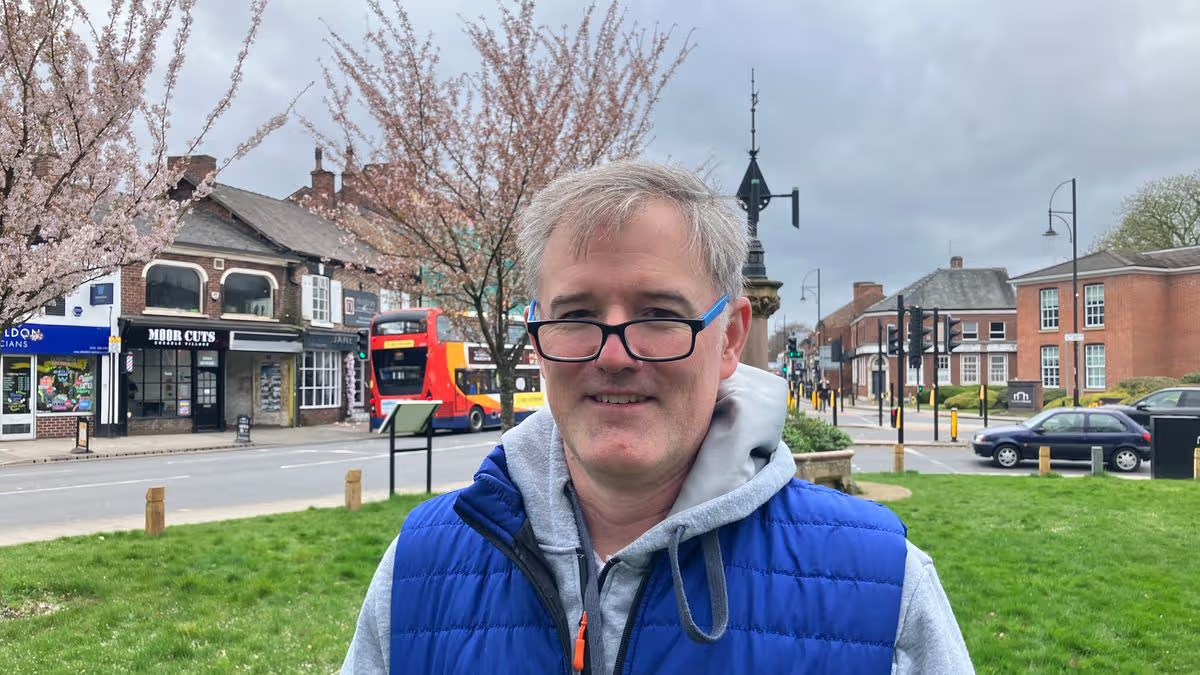
Stockport resident James Lumsden(Image: LDRS)
People in Cheadle are demanding that progress be made on plans to build a new train station in the village.
The scheme has been in the pipeline for years after nearly £14m was offered to Cheadle by the government’s Towns Fund in 2021, funding a series of local projects including a new train station.
Planning permission from Stockport council was granted in 2023, with the idea that the station would join the mid-Cheshire line with services to Manchester Piccadilly via Stockport.
The mid-Cheshire line is a Northern service which runs from Chester, stopping off at several stations along the way to Stockport, including Plumley and Ashley.
The proposed single platform in Cheadle would be located 100 metres north of High Street and accessed from Manchester Road.
But since then the scheme has stalled, with concerns raised about how the station could impact timetables elsewhere on the network.
The Local Democracy Reporting Service asked people in Cheadle about the plans for a new train station.
“We want it here, we wanted it yesterday,” said 49-year-old James Lumsden while tucking into his lunch.
“The closest transport routes here are Parrs Wood with the tram at East Didsbury, but it’s a long walk that’s not great at night or early morning.”
One of the issues that residents raised was the sheer amount of traffic on Cheadle High Street.
On a Tuesday afternoon there was rarely a moment without cars and buses whizzing along the road, with all the noise and congestion that brings.
James Lumsden added: “In the morning at half eight to nine quite often the traffic can back up through the village all the way to Parrs Wood, it makes it feel not as nice a place to be.
“Another thing is, if there was something else that got people into the city centre it would make it safer for the children going to school around here, because there would be less cars on the road.”
Steve McGann, 68, joined the calls for a new station to help reduce the stress on Cheadle’s roads.
He said: “It’s constantly busy here with the traffic, and having a station may help the restaurants because people don’t want to drink and drive, there are a lot of little places here for the evening trade.
“I’m sure it would benefit the area.”
Someone who has been campaigning for progress on Cheadle station is MP Tom Morrison.

Cheadle High Street in Stockport, Greater Manchester(Image: LDRS)
Mr Morrison raised the issue in Parliament earlier this month on March 18.
He said: “Cheadle is suffering from chronic congestion. Everyone in the area will know what I mean when I talk about the Manchester Road crawl.
“Between 8am and 9am, and then between 3pm and 6pm, the roads between Cheadle and Manchester stand at a halt as hundreds upon hundreds of cars, buses, lorries and other vehicles try to use the route between the two areas.
“This happens every day of the week and has become a source of real angst for my constituents.”
The MP added: “People are rightly encouraged to take the bus for public transport, but it takes an hour to get from Cheadle to Manchester Piccadilly, and from Cheadle to Stockport town centre, whereas it would take just 18 minutes and seven minutes respectively by train.
“It is clear that Cheadle train station is the antidote. The benefits of restoring Cheadle’s rail connection would be boundless, breathing extra life into the high street, connecting residents with work and family, reducing congestion and supporting clean growth, while opening up the region for my constituents.”
Keir Mather MP, parliamentary under-secretary of state in the Department for Transport, put delays at the station down to ‘several concerns’ around timetable feasibility and the potential effects on performance.
The MP explained in the debate: “The Rail North partnership board is the decision-making board for service considerations for Northern Trains Ltd and TransPennine trains, and is one part of the process that needs to be take place to enable the service change.
“It is now evident that service change, including reducing the frequency of services that stop at Ashley and Plumley, is the only way that an hourly stop at a new station at Cheadle could be accommodated. Officials are developing a paper for consideration by the Rail North partnership board at its next meeting on 15 April.”
He added: “After years of poor performance, it is more important than ever that passengers regain confidence in the rail services they rely on and that the risk to punctuality is fully understood and mitigated as far as possible.
“However, any timetable changes must be carefully considered to balance local benefits against wider network impacts.”
Lib Dem Councillor Grace Baynham is the cabinet member for highways and transport at Stockport council.
She said some of Cheadle’s roads are ‘constantly busy’ and that the station could help more people get around on public transport.
“Unfortunately, it means people have got limited options for public transport, but by having the station there it would give them a realistic option to use the train.

Stockport councillor Grace Baynham (Image: LDRS)
“The train can get them to Manchester Piccadilly to onward travel as well, so it opens up a whole new raft of options for residents here.
“It’s really frustrating, as soon as we get the go-ahead we’re going to get going as soon as possible, the money is there, the will is there, we have cross-party support, we just need the government now to give it the go-ahead and once we get that we’ll start work.”
A Department for Transport spokesperson said: “Stockport Metropolitan Borough Council is leading this project, and it is for them to bring forward proposals that meet the necessary requirements.
“We are committed to improving rail in the north and the rail minister recently met with the council to support this work.”
A Transport for Greater Manchester spokesperson said: “Cheadle’s new station will bring major benefits, improving connectivity, easing congestion on local roads, and supporting wider growth ambitions across the area.
“People understandably want to see the station delivered as soon as possible.
“The next step is for the rail industry to agree a timetable so construction can begin.
“We are working closely with Stockport council, who are responsible for delivering the scheme, as well as Northern and Network Rail and remain fully committed to the new station.”
A spokesperson for Northern said: “We continue to work with all relevant stakeholders, including Stockport council, Transport for Greater Manchester and Network Rail on proposals for the new station at Cheadle, including a review of the wider timetable implications along the line.”
To find all the planning applications, traffic diversions, road layout changes, alcohol licence applications and more in your community, visit the Public Notices Portal.










































You must be logged in to post a comment Login