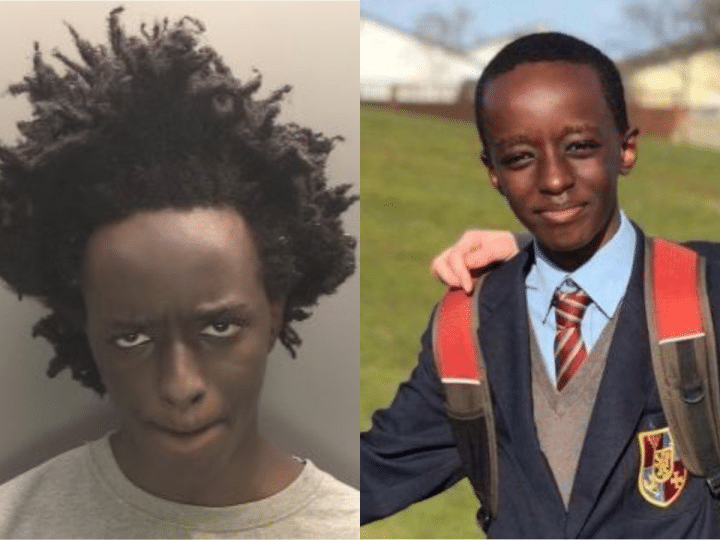
The Southport inquiry’s phase one report details failures across Prevent and multiple other organisations to stop teenage Axel Rudakubana from murdering three children when he attacked a dance hall in Southport in 2024.
You can read a more general introduction to the report’s findings here.
This article, however, deals more specifically with the role that Rudakubana’s lack of apparent ‘terrorist ideology’ played in the authorities’ mishandling of his case.
Prevent was one the programmes that failed
The Southport inquiry report detailed the woefully inadequate actions of authorities and stated:
There was a fundamental failure by any organisation, or multi-agency arrangement, to take ownership of the risk that [Rudakubana] posed.
It makes for particularly interesting reading alongside comments made earlier this month by the Prevent assistant commissioner, Laurence Taylor. He claimed the counter-terrorism scheme was being overwhelmed by a massive influx of referrals.
Trends indicate that Prevent will receive more than 10,000 referrals in 2026, representing a 33% increase compared to 2024. However, Taylor argued that this doesn’t necessarily represent an uptick in the radical ideologies that Prevent was (nominally) set up to combat.
In fact, the majority of these referrals are apparently unrelated to extremist ideologies. Instead, they’re issued over concerns about people becoming interested in violence. As such, Taylor claimed that Prevent’s time is being wasted, leaving it less able to deal with actual threats.
We at the Canary phrased this another way:
That is, the UK has invested so much in the very idea that (Muslim) terrorism is the greatest threat to our safety that we’ve actively started to damage the capacity to respond to non-terror threats.
The Southport inquiry report has only added weight to that assertion.

‘Referrals ought to have been made’
The report’s foreword notes that no single agency was willing to “accept that it had the lead role in managing the risk” Rudakubana, referred to as “AR”, posed.
One of several examples of this failure, was that:
Prevent declined to refer AR’s case to a Channel panel on three occasions when, based on the information that should have been known to Counter Terrorism Policing North West (CTPNW), referrals ought to have been made.
However, it also makes clear that Prevent was the most likely candidate to take the lead.
While Prevent, by the nature of the cases which it routinely deals with, would have been the most likely framework to be able to address AR’s risk, none of these three frameworks [Prevent, Working Together to Safeguard Children, Early Help] was by any means a perfect fit. The risk of harm posed by AR fell between their respective remits.
Rudakubana’s school referred him to Prevent no less than three times. However, Prevent never escalated his case to Channel. Channel’s aim is to provide support to stop extremist ideology from developing into criminal behavior.
The teen, 17, ‘had not displayed any extremist views’
Of the three referrals, the report acknowledges the failure to escalate the first as the most fundamental failure.
One of the main reasons for this was that, during a visit from Prevent:
AR had not displayed any extremist views, or counter-terrorism or domestic extremism ideology during the conversation. He failed to demonstrate any interest in politics or religion, and he had not revealed grievances against particular groups.
The report earlier states that officers had searched actively for evidence of ideological motivations.
It is to be stressed that the police searched for and were unable to find any evidence of AR having pursued an ideological cause, whether political, religious or racial.
Although he had downloaded an image of the Twin Towers and an academic paper containing the Al-Qaeda training manual, these two items were patently insufficient to support a suggestion that he was motivated by Islamic fundamentalism when balanced against the remainder of the material in his possession.
To the contrary, Rudakubana reportedly possessed materials mocking various religions. Among these, Islam, Judaism and Christianity, were particularly prominent. However, the report stresses that the “significant quantity” of “grossly offensive” anti-Islamic material was of particular note.

‘Mixed, unstable or unclear’
It would be easy to dismiss Prevent’s failure here as a one-off incident, but the report shows that this sidelining of non-ideological motivations is a pervasive issue.
In 2017-18, 8% [of] individuals referred to Prevent due to concerns around Islamist extremism or right-wing extremism ultimately received support via Channel.
The corresponding figure for individuals referred due to concerns about ‘mixed, unstable or unclear’ ideologies was less than 1%.
While there are likely to be many reasons for this, as we have seen in recent tragic attacks, the motivations of the terrorists responsible sometimes remain unclear even after the event, so we need to pay due regard to this complex issue in order to better protect the public.
After Rudakubana’s attack, Prevent referrals started to rise dramatically. However, more than 50% of the individuals concerned had no clear ideological motivation. In a Guardian interview, Prevent’s assistant commissioner reasoned that this was because there’s simply nowhere else to report these kinds of concerns.
On this subject, the Canary previously argued:
Prevent, despite ostensibly being set up to target all extremist ideology, has disproportionately targeted Muslims from its outset. In fact, hundreds of babies and toddlers have been referred to the scheme, overwhelmingly due to “Islamist concerns”.
In 2022, the Shawcross review even had the nerve to call for a renewed focus on Islamic extremism, calling the definition of neo-Nazism has “expanded too widely”.
And now, we’re being told that non-ideological motivations are falling through the cracks precisely because of the state’s obsession with terrorist ideology? And, in fact, we have no real mechanisms in place for concerns of non-terrorist violence?
The phase one Southport inquiry report has shown this to be true in tragic detail. Officers searched and questioned Rudakubana for evidence of ideological motives — Islamist or otherwise. Finding none, they failed to escalate his case further.
Beyond that, no agency was a “perfect fit” for Rudakubana, so none stepped forward to take the lead. Because he wasn’t an obvious terrorist or a case for social care, mental health services, or some other agency, he fell through the cracks. As a result, three young girls are now dead.
Featured image via Peter Powell/ AFP/ Getty Images





















































You must be logged in to post a comment Login