Connect with us

Business

Form 4 Barrel Energy Inc For: 6 July

Published

on

Continue Reading
Click to comment

You must be logged in to post a comment Login

Leave a Reply

Business

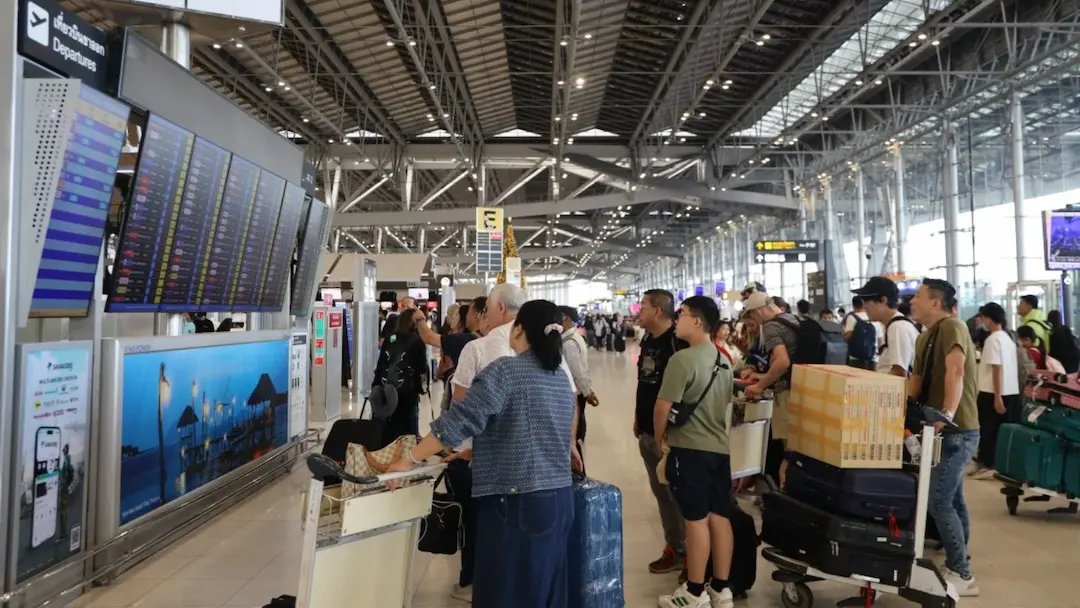
Southeast Asia’s Aviation Growth Hides a Widening Split Beneath the Surface

Published

on

Southeast Asia's Aviation Growth Hides a Widening Split Beneath the Surface
  • Southeast Asia’s aviation capacity rose 0.8% year-on-year in August to 51 million seats, but this modest headline masks significant divergence. Indonesia and Vietnam drove growth, with Vietnam Airlines expanding 8.2%, while Malaysia, Thailand, and the Philippines all lost capacity, suggesting structural rather than seasonal shifts across the region’s economies.
  • A notable trend is the retreat of low-cost carriers, with AirAsia and Thai AirAsia cutting capacity sharply while mainline airlines gained share, raising affordability concerns. Airport data mirrors this split: Hanoi, Jakarta, and Singapore grew, while Bangkok, Manila, and Kuala Lumpur contracted, indicating the region’s aviation market is reorganizing rather than uniformly expanding.

At first glance, the headline number out of Southeast Asia’s aviation market this August looks reassuring. 

Total scheduled seat capacity edged up to 51 million, a modest 0.8% gain over the same month last year. In an industry still shadowed by fuel volatility and geopolitical friction, “growth” of any size tends to be read as good news. 

But sit with the underlying figures for more than a moment, and a more interesting, and less comfortable, picture emerges. 

This is not a region firing on all cylinders. It is a region bifurcating, with a handful of national carriers and a couple of standout markets doing the heavy lifting while much of the rest tread water or slide backward.

A market of winners and laggards, not a rising tide

Break the 0.8% headline figure down by country, and the “growth” story becomes a story about two economies: Indonesia and Vietnam. Indonesia holds its position as the region’s largest market, with capacity climbing past 11 million seats. 

Advertisement

Vietnam is the standout performer, its seat count rising by roughly 10% year on year, the fastest expansion among the top five markets, driven in large part by Vietnam Airlines, which posted an 8.2% increase and comfortably retained its title as the region’s busiest carrier.

Contrast that with Malaysia, Thailand and the Philippines, all three of which lost seats compared with last August. It is tempting to write this off as noise. Airline capacity fluctuates seasonally, and route-by-route decisions rarely tell a coherent macro story on their own. 

But three of the region’s five largest economies contracting in the same month that two others expand sharply suggests something structural rather than incidental: diverging cost bases, diverging currency pressure, and diverging exposure to the knock on effects of turmoil further afield, notably the Middle East, where regional jet fuel costs and the broader cost of living appear to be denting appetite for travel and route economics alike.

The budget airline retreat deserves more attention than it’s getting

Perhaps the most consequential trend buried in this month’s numbers is the quiet retrenchment of the region’s low-cost carriers. Mainline airlines now control 56% of Southeast Asian capacity, having grown nearly 6% year on year, while low-cost carriers contracted by almost 5%, ceding market share that had taken the better part of two decades to build. AirAsia, long the poster child of Southeast Asian budget aviation, cut capacity by 17%. Thai AirAsia cut deeper still, down 23%. Between the two, well over 900,000 seats simply vanished from the schedule compared with a year ago.

Advertisement

This matters beyond the balance sheets of two airlines. Southeast Asia’s aviation boom of the past fifteen years was substantially a budget carrier story: cheap, high-frequency point-to-point flying that stitched together an archipelago of emerging middle-class economies and made intra-regional travel a routine affair rather than a luxury. 

A meaningful and sustained retreat by the LCC sector, even as one bright exception, Indonesia’s Citilink, up a startling 73%, proves the model can still work under the right ownership and cost structure, raises a genuine question about affordability. 

If budget capacity keeps shrinking while mainline carriers pick up the slack, average fares in the region are likely to drift upward, with consequences for tourism-dependent economies from the Mekong Delta to the Philippine archipelago that have built growth strategies around low-cost connectivity.

Airports are not immune to the split, either

The airport data tells a parallel story of unevenness. Singapore Changi remains comfortably the region’s busiest hub, growing a healthy 3.5%, and Jakarta and Ho Chi Minh City are close behind with solid gains. 

Advertisement

Hanoi is the standout, up over 12%, further evidence that Vietnam’s aviation sector is currently the region’s clearest growth engine. But Bangkok Don Mueang, Manila and Kuala Lumpur all shrank, echoing the national level contractions in Thailand, the Philippines and Malaysia.

Airport capacity, in other words, is simply following the money, and right now the money is concentrating in Jakarta, Hanoi, Ho Chi Minh City and Singapore rather than spreading evenly across the region’s traditional hub cities.

What this means going forward

None of this amounts to a crisis. A 0.8% expansion, however uneven its distribution, is still expansion, and international long-haul demand to Europe and North America, up 10.8% and 9% respectively, suggests confidence in Southeast Asia as an origin and destination market remains intact where it counts most for revenue. 

But the aggregate numbers are masking a market that is quietly reorganizing itself: budget carriers ceding ground to full-service airlines, growth concentrating in Vietnam and Indonesia while Thailand, Malaysia and the Philippines stall, and cost pressure from outside the region, particularly the Middle East, beginning to show up in route-level decisions. 

Advertisement

Anyone reading only the top-line seat count this month is reading half the story. The more consequential shifts are happening beneath it.

.

Continue Reading

Business

Samsung shares slide as record $80 bln shareholder return plan underwhelms

Published

on


Samsung shares slide as record $80 bln shareholder return plan underwhelms

Continue Reading

Business

Fed govt boosts Built, Wesfarmers JV by $120m

Published

on

Fed govt boosts Built, Wesfarmers JV by $120m

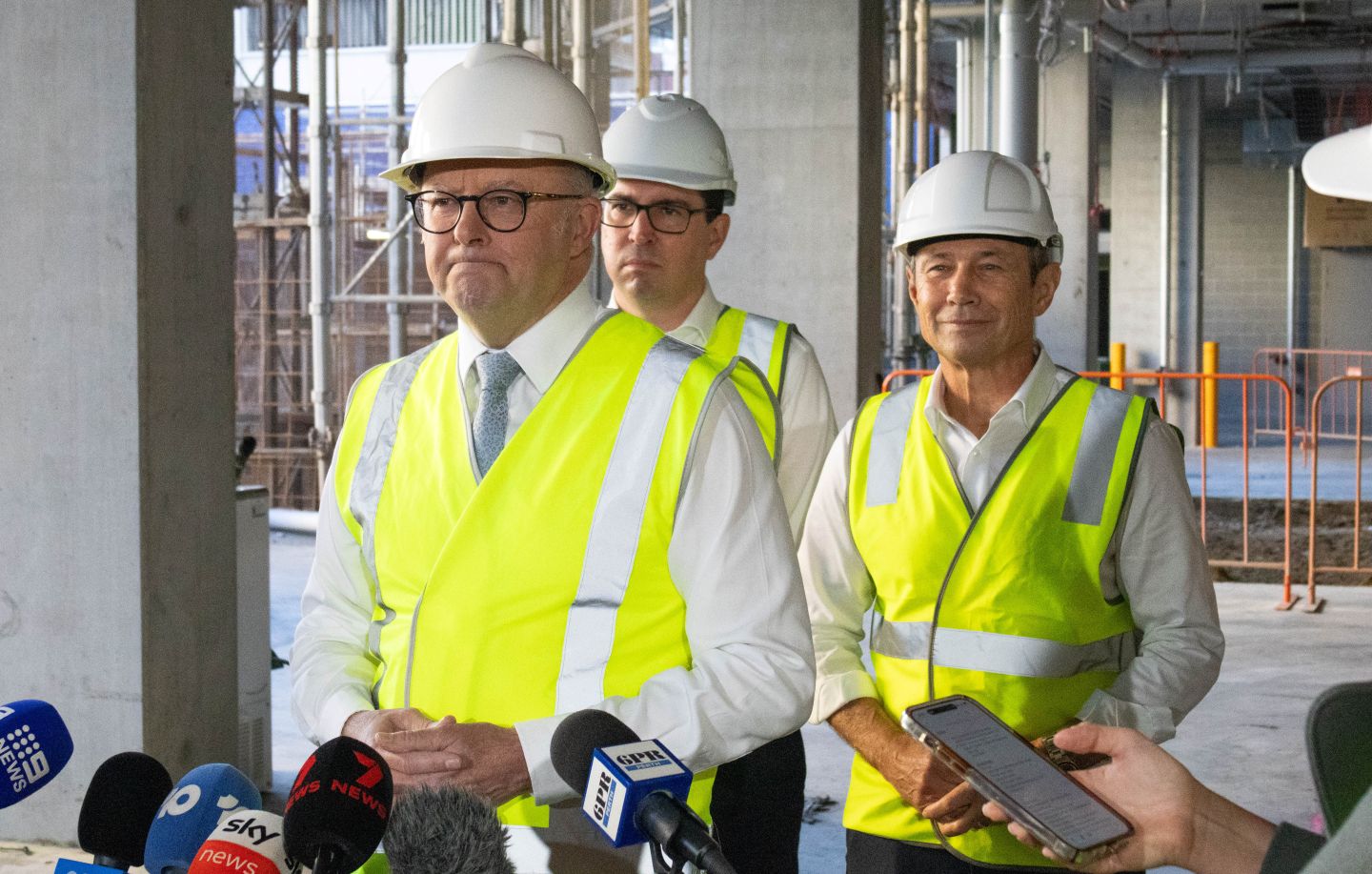
Built Living will receive a $120 million boost from the federal government, after the Wesfarmers and Built JV was created earlier this year to establish a precast concrete manufacturing plant in WA.

Continue Reading

Business

Alibaba shares plunge as Burry exits stake, shifts to JD.com

Published

on


Alibaba shares plunge as Burry exits stake, shifts to JD.com

Continue Reading

Business

PM insists there will be ‘no change to GST deal’

Published

on

PM insists there will be 'no change to GST deal'

Yes. Corporate subscriptions are available for teams and organisations, with discounted rates as user numbers increase. Pricing starts from $1,625 + GST per user.
Get in touch
to discuss the right option for your organisation.

Business News subscriptions are used by executives, investors, consultants and professionals who need to stay informed and make better decisions about the WA market. When you subscribe you’ll get

  • Unlimited access to WA’s most trusted business journalism
  • Data & Insights — detailed profiles of WA companies, people, projects and deals
  • MyBN — a personalised feed based on the companies, people and sectors you follow
  • Special publications and industry reports
  • Daily and weekly email newsletters

Data & Insights is a research tool built specifically for the WA market. It draws on more than 30 years of Business News reporting, updated regularly to reflect what’s happening now. Use it to:

  • Look up detailed profiles of WA companies, including financials, directors and ownership
  • Find decision-makers and track their career movements
  • Research live and completed projects across WA industries
  • Monitor deals, appointments and market activity
  • Access industry rankings and league tables

Data & Insights is updated daily by our dedicated research team, which uses the latest announcements, ASX filings and editorial coverage to keep our person, company, list and project records up to date.

Business News welcome all opportunities to make our dataset accurate, complete and current, so if you have an update request, please email the team at
general@businessnews.com.au, and we’d be happy to assist.

Advertisement

MyBN
is part of every subscription. It’s your personalised view of Business News. You can follow the companies, people, sectors and projects that matter to you, and get a news feed and alerts tailored to your interests. You can save articles to read later and retain only what you need.

Only subscribers have full access to all content on the Business News website.

Advertisement

If staying informed about the WA economy is part of your job, and/or you’re looking for networking opportunities in WA, Business News is built for you.

Business News subscribers are:

  • Executives and directors tracking competitors, clients and market movements
  • Investors and advisers researching companies, deals and industry trends
  • Consultants and professionals staying across sectors relevant to their clients
  • Business owners looking for leads, context and market intelligence

Most Business News publications cover national or global markets. Business News is focused entirely on Western Australia, which means the journalism, the data and the intelligence are all built around WA companies, people and projects — not adapted from a national feed. Data & Insights, included with every subscription, combines more than 30 years of WA-specific editorial research with live business data. There’s no comparable product for the WA market.

Advertisement

The Morning Digest Email provides a comprehensive wrap of the major headlines, relevant to WA business, and includes with a snapshot of the overnight news covering oil, gold and ASX-listed companies.

The Afternoon Wrap Email focuses on the news covered by our team of journalists during the course of the working day, including exclusive stories and analysis, all of which relates to WA business and the local economy.

The BN Weekender Email contains a wrap of the Business News from the week that was, highlighting the top stories in each area of WA business.
Sign up for free.

Advertisement

We’re happy to help.
Get in touch
and our team will come back to you.

Advertisement
Continue Reading

Business

Why nearly 3 million Teslas are being recalled in China

Published

on

A customer inspects the minimalistic hidden door handles on an electric car in a showroom.

Minimalist retractable door handles became a signature feature of electric vehicles (EVs), but the controversial designs are now at the centre of China’s biggest car recall, affecting more than 4 million vehicles.

The recall, which includes 2.98 million Chinese-made Teslas, follows safety concerns that the hidden door handles are difficult to locate and open in emergency situations.

Other brands affected by the recall include Chinese carmakers XPeng, Xiaomi and Geely.

Made popular by multi-billionaire Elon Musk’s Tesla, hidden door handles are designed to tuck seamlessly within the car’s door panel and only extend outwards approaches their vehicle.

Advertisement

The design came under scrutiny after two fatal crashes in China involving Xiaomi EVs, in which power failures were suspected to have prevented doors from being opened.

Tesla said in a statement on Friday that it was recalling some of its Model 3, Y, S and X vehicles due to door handles that are “difficult to identify and operate because their colour is similar to the interior trim”.

This could hinder occupants or rescuers from quickly opening the doors in an emergency, such as during a “severe collision causing the vehicle’s low-voltage system to fail.”

Tesla said it will place warning labels on the recalled vehicles and issue a software update to automatically lower a vehicle’s windows after a collision.

Advertisement

It is not clear if the affected firms plan to make a similar recall for the rest of the world.

The BBC has contacted Tesla, XPeng, Xiaomi and Geely for comment.

In February, Chinese authorities announced a ban on hidden door handles.

Under new rules due to take effect on 1 January 2027, cars will only be allowed to be sold in China if they have a mechanical release on both the inside and outside of their doors.

Advertisement

Tesla’s door handles were also involved in a probe by US safety regulators after reports that they suddenly stopped working, leaving children trapped in the cars.

In July, the US National Highway Traffic Safety Administration suggested creating a new formal safety standard for all carmakers.

The BBC has contacted the agency for comment.

Advertisement
Continue Reading

Business

Nuix Limited (NXLLF) Q4 2026 Earnings Call Transcript

Published

on

OneWater Marine Inc. (ONEW) Q1 2026 Earnings Call Transcript

Nuix Limited (NXLLF) Q4 2026 Earnings Call August 23, 2026 7:30 PM EDT

Company Participants

John Ruthven – CEO & Director
Peter McClelland – Chief Financial Officer

Advertisement

Conference Call Participants

Sinclair Currie – MA Moelis Australia Securities, Research Division
Andrew Johnston – MST Financial Services Pty Limited, Research Division
Evan Karatzas

Presentation

Advertisement

Operator

Thank you for standing by, and welcome to the Nuix Limited Full Year ’26 Results. [Operator Instructions] I would now like to hand the conference over to Mr. John Ruthven, CEO. Please go ahead.

John Ruthven
CEO & Director

Advertisement

Welcome, everyone, and thank you for joining us for Nuix’s Full Year 2026 Results Presentation. I’m John Ruthven, Nuix’s Chief Executive Officer; and with me today is our Chief Financial Officer, Peter McClelland. Today, I’ll start with our key messages and metrics for the year. Peter will then take you through our FY ’26 financial performance in detail. I’ll return to discuss how we’re scaling Nuix Neo and integrating Linkurious, before covering what we see as significant platform evolution and strategic reset, the structural changes we’ve made to position the business for its next phase of growth.

I’ll then close out with our outlook before we take questions. Let me start with the highlights from the year. FY ’26 was a year of profitable growth and decisive action. ACV finished at $260 million, well within our previously guided range. Nuix Neo ACV grew 179% to $78.5 million across 135 customers. We delivered strong growth in revenue on further success in selling multiyear deals. Adjusted management EBITDA saw a material expansion with revenue growth significantly outpacing cost growth, in line with our strategic objective. And we achieved a very strong lift in cash generation with underlying cash flow up 154% to $51 million.

And here are the metrics. ACV rose 13.9%. Excluding

Advertisement
Continue Reading

Business

Scandal-hit KPMG Australia to cut nearly 400 jobs, warns of difficult market

Published

on


Scandal-hit KPMG Australia to cut nearly 400 jobs, warns of difficult market

Continue Reading

Business

Prysmian Stock: AI’s Next Bottleneck Runs Through Power And Fiber (OTCMKTS:PRYMY)

Published

on

Prysmian Stock: AI's Next Bottleneck Runs Through Power And Fiber (OTCMKTS:PRYMY)

This article was written by

“AWS Certified AI Practitioner Early Adopter”I am a DevOps Engineer for a major, wholly owned subsidiary of a large-cap Fortune 500. I have been the primary driver of Anthropic-based tooling in our company’s division, and have successfully pushed for the division-wide integration of tools like Claude Code via AWS Bedrock. I am currently spearheading the implementation of AI-infrastructure in our division.I am a true subject-matter expert on the actual buildout, deployment, and maintenance of AI tools and applications. I have increasingly deep knowledge on the science behind generative AI systems as a result of first-hand experience with machine learning algorithms, model training, and model deployment.I contribute to Seeking Alpha as an outlet to share my AI and machine learning insights through an investment-focused lens.Closely associated with LL InsightsPer TipRanks (6/26/25) – 2 Year Timeframe#716 out of 31,463 Financial Bloggers #1,222 out of 41,143 experts

Analyst’s Disclosure: I/we have no stock, option or similar derivative position in any of the companies mentioned, and no plans to initiate any such positions within the next 72 hours. I wrote this article myself, and it expresses my own opinions. I am not receiving compensation for it (other than from Seeking Alpha). I have no business relationship with any company whose stock is mentioned in this article.

Seeking Alpha’s Disclosure: Past performance is no guarantee of future results. No recommendation or advice is being given as to whether any investment is suitable for a particular investor. Any views or opinions expressed above may not reflect those of Seeking Alpha as a whole. Seeking Alpha is not a licensed securities dealer, broker or US investment adviser or investment bank. Our analysts are third party authors that include both professional investors and individual investors who may not be licensed or certified by any institute or regulatory body.

Advertisement
Continue Reading

Business

Roper Technologies: A Cautious Buy Despite The Risks

Published

on

Roper Technologies: A Cautious Buy Despite The Risks

Roper Technologies: A Cautious Buy Despite The Risks

Continue Reading

Trending

Copyright © 2025