

Crypto World
Trump Says He Turned to Crypto Partly for Political Reasons

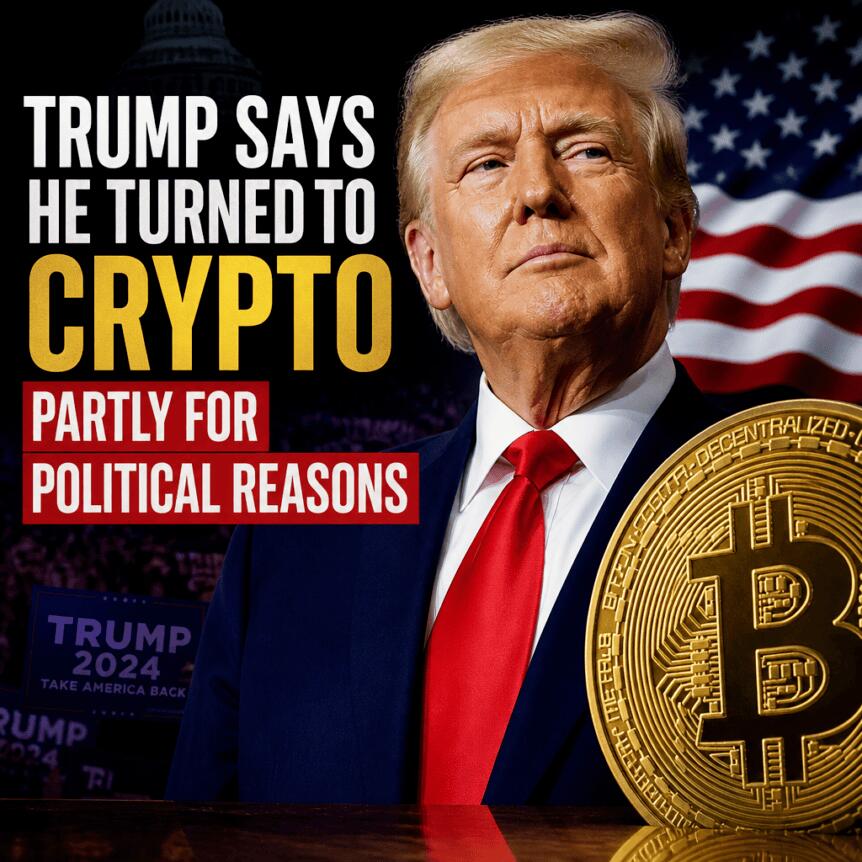
U.S. President Donald Trump said his pivot toward crypto was driven less by ideology than by geopolitics, arguing that if the United States did not embrace digital assets, China would. Speaking at a Monday press event at the White House to announce “Trump Accounts”—investment accounts for children under 18—Trump framed Bitcoin and crypto as a strategic industry the U.S. can’t afford to cede.
When asked whether the child-focused investment accounts would include Bitcoin, Trump responded that he became a “big crypto guy” because of competitive pressure from China. He also reiterated that he initially was not pro-crypto, but said he watched the sector grow into a “huge industry,” and later concluded that the U.S. needed to move first.
Key takeaways
- Trump said he turned pro-crypto because he believed China would advance first “if we don’t have it.”
- At the White House announcement of “Trump Accounts,” he addressed whether the new accounts would touch Bitcoin, without offering a detailed structure for crypto exposure.
- Trump described staying hands-off in discussions with his family about crypto investments.
- His remarks highlight ongoing scrutiny of crypto influence given reported family crypto-related earnings and political fundraising activity by the industry.
- He suggested investigations into crypto declined when he became more supportive, echoing criticism of enforcement shifts during his administration.
Why Trump says he shifted toward crypto
Trump’s comments added context to his changing rhetoric over the past few years. During his first term, he had said he was “not a fan” of crypto and referred to Bitcoin as “a scam.” In Monday’s exchange, he offered a different rationale: not personal conviction, but the belief that the U.S. needed to participate in a rapidly expanding market before a rival country did.
“I’ve become a big crypto guy only for one reason: If we don’t have it, China’s going to have it,” Trump said. He described watching crypto “grow” after taking less interest earlier on, and said he now sees it as a large and profitable industry.
Trump also said he got involved “a little bit for politics,” adding that he recognized “a lot of people that love crypto.” The framing matters for investors and users because it signals that, at least publicly, his administration’s stance may be justified through national competitiveness rather than consumer protection or technological neutrality.
“Trump Accounts” and the Bitcoin question
Trump delivered the remarks while unveiling “Trump Accounts,” an investment account program for children under 18 announced during a press event in the Oval Office. The question from reporters focused on whether the accounts would permit exposure to Bitcoin.
While Trump’s reply emphasized the broader importance of crypto—particularly Bitcoin’s geopolitical relevance—he did not provide specifics in the available remarks about how crypto, if any, would be implemented within the accounts. The gap between political endorsement and operational detail is important: parents, advisors, and compliance teams would need clarity on whether digital assets are directly included, held through other instruments, or excluded entirely.
For market participants, the key watch point is whether the administration follows through with concrete policy guidance that determines how, and to what extent, crypto could become part of mainstream, retail-oriented investment products for minors.
Trump’s family crypto interests: “I don’t talk to them”
Trump said he does not discuss his family’s crypto involvement. The question is especially sensitive given the financial disclosures and the public record around his household’s crypto exposure.
According to financial disclosures released June 30 by Cointelegraph, Trump made more than $1.4 billion last year from crypto-related activity. The disclosures cited Trump and his sons as co-founders of World Liberty Financial, a crypto platform that generated a large portion of his crypto-related income.
Despite those ties, Trump said his interest in crypto is “not a question of a personal thing.” He added, “I let my kids do whatever the hell they do. I don’t talk to them, ever, talk to them about it.”
The statement doesn’t remove the underlying concern for observers—namely whether political messaging and regulatory direction could benefit from family-linked interests. But it does show how the president is trying to separate public policy arguments from personal decision-making.
Enforcement investigations and regulatory scrutiny
Trump also addressed federal crypto enforcement, claiming that the Biden administration “dropped all investigations” after he “went very pro-crypto.” His remarks come amid a broader debate about how aggressively U.S. regulators have pursued crypto-related cases under different administrations.
In the material discussed, it is noted that under the Trump administration, the Securities and Exchange Commission stopped multiple investigations and withdrew or settled enforcement actions filed against crypto companies—some of which had donated to Trump. The president then used that alleged contrast to underscore his leverage as president.
“Every time I see a crypto guy where they dropped an investigation, I said: ‘You’re lucky I’m president,” Trump said.
For readers tracking regulatory risk, the implication is not a single policy promise but a pattern: Trump’s public support for crypto is intertwined with assertions about enforcement outcomes. That makes future developments—such as any formal guidance, legislation, or regulatory posture changes—central to understanding how U.S. compliance and litigation risks may evolve for exchanges, token issuers, and custody providers.
What to watch next
Beyond the political message, the practical question is whether “Trump Accounts” will offer transparent details on investment options and any crypto exposure. Investors and families should watch for follow-on policy documents that clarify implementation, because the difference between endorsement and enforceable product design will determine how quickly (or slowly) crypto could move into mainstream youth-facing financial tools.

Legal questions over which federal department can lawfully manage a national crypto trove have complicated President Donald Trump’s Strategic Bitcoin Reserve, more than a year after he ordered its creation.
Trump directed the reserve into existence last year as part of his pledge to make the United States “crypto capital of the world.” The plan has since run into a structural problem.
Which Agency Can Legally Hold America’s Bitcoin Remains Unresolved
The order intended the reserve to sit inside the Treasury Department. Bitcoin (BTC) would come from federal asset seizures. The order also empowered the Treasury and Commerce secretaries to design budget-neutral ways to buy more Bitcoin, provided the purchases cost American taxpayers nothing.
Concerns then surfaced over whether Treasury could legally manage the assets, Bloomberg reported, citing people familiar with the matter. Housing the reserve inside the Commerce Department is now one option.
Another open question is whether Bitcoin can be held indefinitely, as the order intended, given its price swings.
Follow us on X to get the latest news as it happens
The Justice Department’s Office of Legal Counsel is working with both departments to “determine legally available options to accomplish the president’s policy of establishing a strategic Bitcoin reserve.”
White House spokesperson Liz Huston addressed the matter in a statement shared with BeInCrypto. She said the administration was still working out the right setup for the reserve.
“President Trump campaigned on a vision of cementing America as the global capital of cryptocurrency and other cutting-edge technologies,” Huston said. “To deliver on the president’s vision, the Trump administration continues to evaluate the best structure for a Strategic Bitcoin Reserve and U.S. Digital Asset Stockpile.”
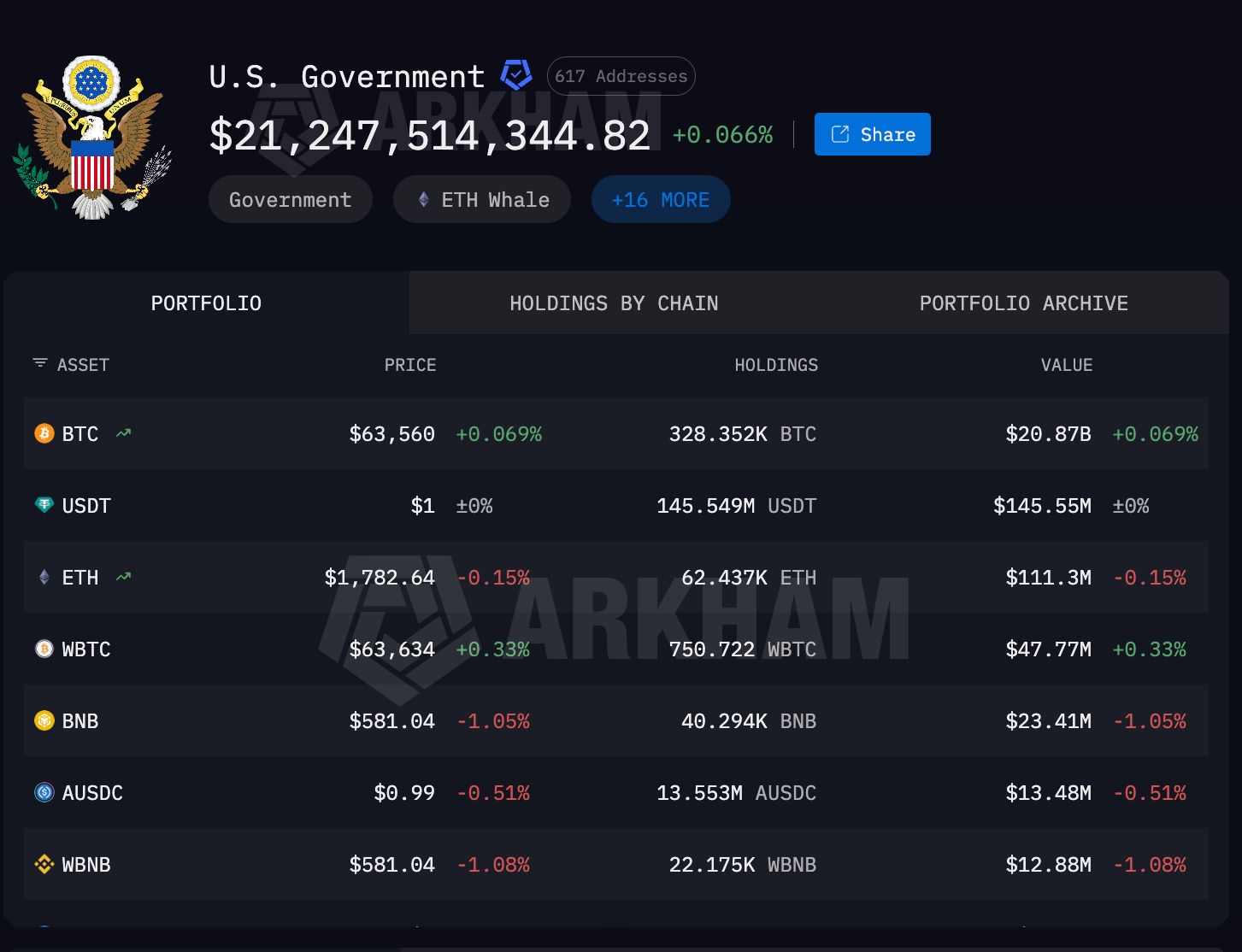
The US government ranks among the largest holders of Bitcoin worldwide. Its holdings exceed $20 billion at current prices, according to Arkham Intelligence.

How the administration resolves the authority question will determine whether one of its signature crypto commitments takes shape or stays on paper.
Subscribe to our YouTube channel to watch leaders and journalists provide expert insights
The post Whose Bitcoin Is It? The Legal Fight Stalling Trump’s $20 Billion Reserve appeared first on BeInCrypto.


Naver Financial has postponed the completion of its all-stock share swap with Dunamu for a second time, extending the closing date to Dec. 31 as regulatory approvals remain pending.
Summary
- Naver Financial and Dunamu have delayed their planned share swap for a second time, with completion now expected on Dec. 31.
- The deal remains subject to multiple regulatory approvals and could face further delays or cancellation if those processes are not completed.
- Dunamu said South Korea’s proposed Digital Asset Basic Act could still influence the structure or outcome of the transaction.
According to a regulatory filing disclosed by Dunamu, the planned comprehensive share exchange with Naver Financial has been rescheduled from Sept. 30 to Dec. 31, following an earlier postponement that moved the timeline from June 30 to September.
Share swap awaits regulatory approvals
The filing kept the exchange ratio unchanged at 2.5422618 Naver Financial shares for every one Dunamu share. It also repeated that completion of the transaction depends on approvals from South Korea’s Fair Trade Commission, clearance for changes in major shareholders under the Credit Information Act, and notifications required under the Act on Reporting and Use of Specific Financial Transaction Information.
Dunamu said in the filing that delays in those approval processes could push the schedule back further or even prevent the share exchange from being completed. The company also noted that ongoing discussions around South Korea’s proposed Digital Asset Basic Act could affect the transaction depending on the final form of the legislation once it is enacted and implemented.
The latest delay comes after Naver Financial previously postponed the transaction in March, when it moved the expected completion date from late June to Sept. 30 while citing regulatory approval procedures and legal developments.
At the time, the company said the deal remained subject to several government approvals and could face additional delays or cancellation depending on the outcome of those reviews.
Merger continues under regulatory scrutiny
Regulatory oversight has also intensified since the transaction was first announced. In April, South Korea’s Financial Supervisory Service ordered Dunamu to correct omissions in its disclosure related to the merger after identifying missing or inaccurate information concerning future corporate restructuring plans and other matters important to investors.
The regulator’s review came as lawmakers continued debating the Digital Asset Basic Act, with local reports indicating that proposed limits on major shareholders of virtual asset exchanges could affect Naver Financial’s plan to acquire full ownership of Dunamu. Dunamu has previously stated that it intends to proceed with the transaction despite the legislative uncertainty.
The all-stock deal, confirmed in late 2024, values Dunamu at around $10 billion and is expected to bring the operator of Upbit under Naver Financial. The companies have also outlined plans to cooperate on digital asset services, including the development of the Silk Pocket stablecoin wallet alongside blockchain investment firm Hashed and the Busan Digital Exchange.


U.S. spot bitcoin ETFs pulled in $265.69 million on Monday, the largest daily inflow in over a month and the second in three sessions after July 2 broke a long run of outflows, per SoSoValue data. Ether ETFs added $20.66 million the same day, led by BlackRock’s ETHA at $23.29 million.
BlackRock’s IBIT absorbed $209.40 million of the bitcoin total, with ARKB taking in $32.98 million and Grayscale’s mini BTC fund adding $42.25 million. GBTC shed $44.45 million, the only fund in the red.
The daily turn has not fixed the weekly picture yet. Spot bitcoin ETFs still lost a net $526.6 million over the shortened holiday week, an eighth straight week of negative flows. Ether ETFs lost $13.7 million on the week.
Total bitcoin ETF assets climbed back to $77.32 billion from a June 30 low of $70.95 billion, helped by both the price recovery and the returning bid. Bitcoin traded near $63,200 as the data landed, per CoinDesk data.
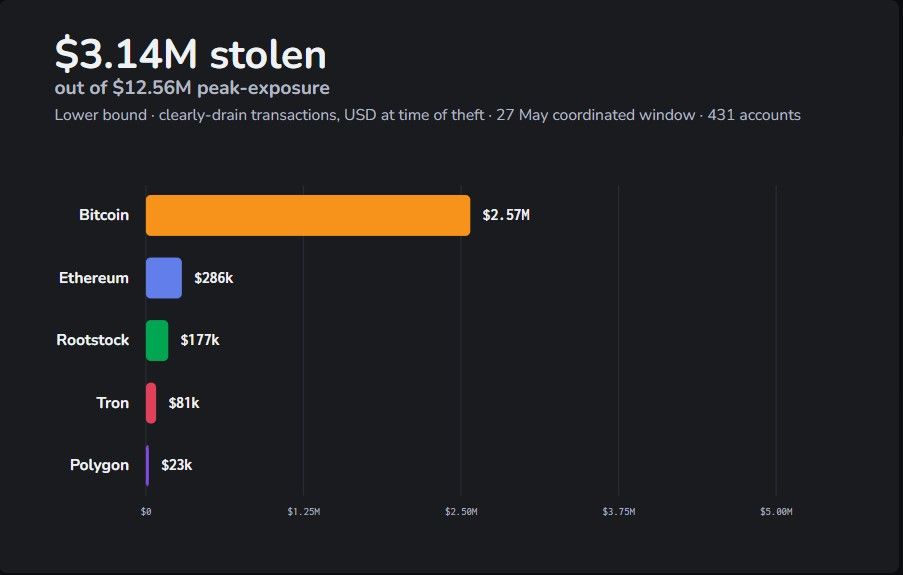
Coinspect has disclosed the Ill Bloom vulnerability, a crypto wallet flaw that created weak recovery phrases on multiple blockchains. Attackers exploited the weakness on May 27, draining 431 wallets for about $3.1 million.
Coinspect traced the flaw to an insecure pseudorandom number generator used during wallet creation. The weakness spans multiple chains, including Bitcoin (BTC), Ethereum (ETH), and Solana (SOL).
How the Ill Bloom Vulnerability Breaks Crypto Wallets
According to Coinspect, the faulty generator produced recovery phrases with far less cryptographic strength than intended. As a result, attackers can regenerate the whole range of possible phrases and sweep any funded address.
The researchers reproduced the attack end-to-end. They derived every address the weak phrases could produce and matched them against funded wallets on public blockchains. Affected addresses date back to 2018, and most trace to lesser-known mobile crypto wallets.
Users are asked to review their historical wallet addresses. Hardware wallet users remain unaffected. Earlier this year, Binance issued a critical iOS alert for mobile users.
Coordinated May 27 Sweep Drained 431 Wallets
According to Coinspect’s analysis, the monitored set contains 2,114 funded addresses across Bitcoin, Ethereum, Tron, Rootstock, and Polygon. On May 27, drained accounts sent their balances to a handful of shared collector addresses within hours.
Bitcoin absorbed the biggest hit at $2.57 million, and one account alone lost over $1.1 million. Historically, the exposed set held up to $12.56 million at its April 2022 peak.
The firm calls the $3.1 million figure a lower bound because new affected accounts keep surfacing. The sweep also adds to heavy crypto theft losses this year, which topped $400 million in January alone.
Compromised keys drain value fast, as the recent private key breach at Humanity Protocol showed. Notably, earlier incidents such as Milk Sad stemmed from the same class of weak randomness.

How Crypto Users Can Protect Their Funds
Coinspect published a checker that compares public addresses against the known vulnerable dataset. However, a negative result does not guarantee safety because the dataset remains incomplete.
Matched users should create a brand-new crypto wallet and migrate funds to its addresses. In contrast, importing the old phrase into another app leaves the money exposed.
Meanwhile, scammers exploit scares like this one, as a recent fake airdrop drain on Hyperliquid showed. Coinspect stressed it will never request secrets.
“We will never ask for seed phrases, private keys, signatures, or approvals, or ask users to send funds to ‘recover’ or protect a wallet”
Wallet vendors keep pushing safer defaults, including Ethereum’s new Clear Signing standard. Still, the coming days should reveal which apps generated the weak phrases. Until then, moving crypto off flagged addresses remains the only reliable fix.
The post Ill Bloom Vulnerability Drains $3.1 Million From Crypto Wallets: Are You Exposed? appeared first on BeInCrypto.
Strategy’s $216 million Bitcoin sale on Monday should be seen as a positive development for the price of Bitcoin and as a move that renews confidence in STRC, according to analysts.
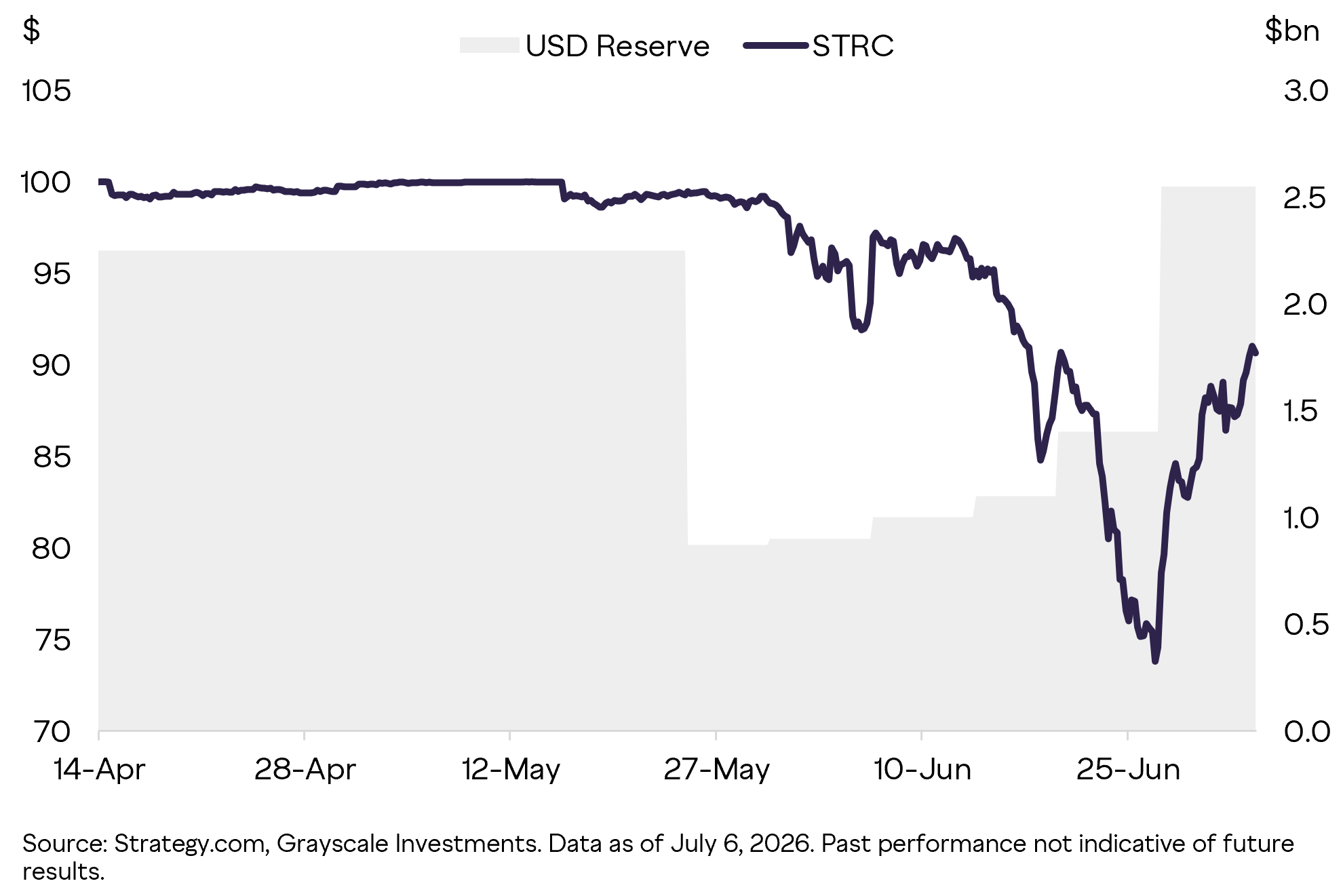
The sale of 3,588 BTC to fund preferred stock dividend payments and replenish cash has boosted Strategy’s dollar reserves to cover 17 months of dividend payments. “The rebound in STRC suggests investors are responding positively to this decision,” Grayscale Research said Monday.
Andri Fauzan Adziima, research lead at Bitrue Research Institute, told Cointelegraph that Strategy’s recent sale was a “smart, stabilizing move that actually strengthens the setup for Bitcoin.”
Zach Pandl, Grayscale’s head of research, said Strategy’s actions should “restore market confidence” in its financing structure, and may help Bitcoin’s price “find a more durable bottom,” as it relieves the pressure of further BTC sales from Saylor’s company.
Strategy’s announcement that it sold Bitcoin caused the asset to drop 2.4% in a matter of hours. However, both Bitcoin and Strategy’s yield-bearing STRC product rebounded soon after, suggesting that investor concern was short-lived.
Restoring market confidence
There is nothing wrong with Strategy’s balance sheet, and the company clearly has sufficient financial resources to service its debt and dividend obligations, Pandl said.
“Nevertheless, shifting market conditions created uncertainty about how Strategy would balance competing priorities.”
Related: Strategy will be ‘less important’ in Bitcoin after STRC incident: Bitwise
Strategy clarified in late June that it would issue shares and sell Bitcoin as needed to maintain sufficient US dollar reserves to cover its dividend obligations.
Strategy’s dollar reserves now total $2.55 billion, or the equivalent of about 17 months of dividend cover. Meanwhile, the rebound in the price of STRC — which topped $91 for the first time in three weeks on Monday — “suggests investors are now more confident about the instrument,” Pandl said.
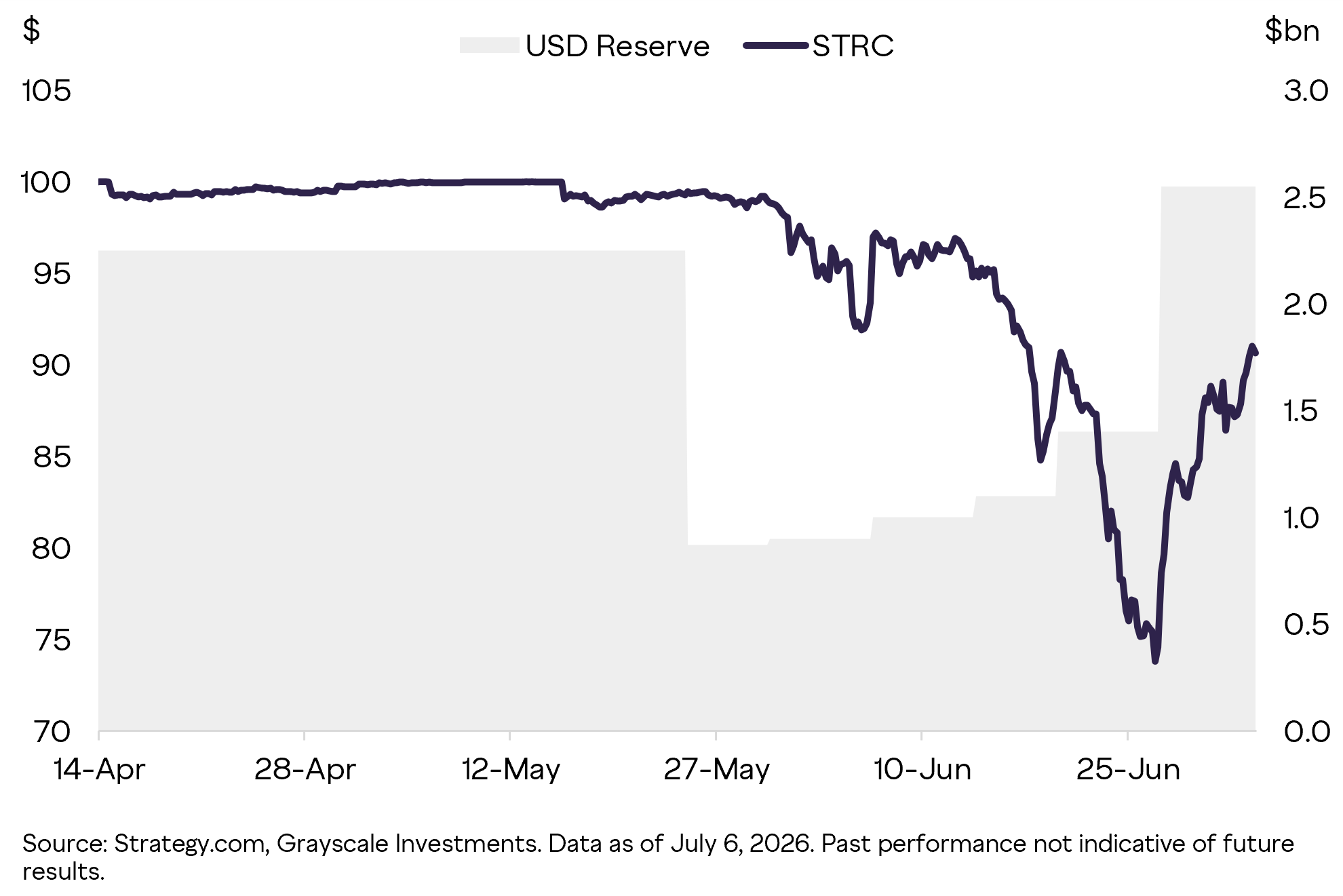
Bitcoin sales funded Strategy’s USD Reserve and bolstered investor confidence. Source: Grayscale
The sale reduces forced-selling risks
“By using the proceeds to pad cash reserves for roughly 17 months of STRC dividends, they’ve cut near-term financing pressure and overhang, which helped spark Bitcoin’s quick recovery above $64k while lifting STRC near $90,” Adziima said.
“In my view, this reduces forced-selling risks, rebuilds confidence in their structure and paves the way for a more durable bottom as other buyers step in, prudent balance-sheet management rather than any kind of capitulation.”
BTC recovered to reach $64,400 in late trading on Monday, but had dipped to $63,120 at the time of writing.
Magazine: AI is banking the unbanked in Africa… faster than crypto

Bitcoin’s dip from just under $64,000 to around $62,000 Monday was not a slow grind lower—it was a fast unwind driven by derivatives positioning, then amplified by a new catalyst from Strategy’s latest regulatory disclosure.
According to Cointelegraph’s coverage of the filing, the move was linked to Strategy’s largest reported Bitcoin sale of 3,588 BTC. While spot demand was only slightly negative during Sunday’s upswing, Monday’s turn showed how quickly leverage can shift when corporate treasury supply hits the tape.
Key takeaways
- Sunday’s rally was largely futures-led, with net futures buying of roughly $415 million, leaving price vulnerable to forced unwind.
- Strategy’s SEC disclosure appears to have triggered Monday’s unwind, with four-hour net futures selling jumping to about $456 million.
- Liquidations ran in both directions during the volatility, totaling roughly $42 million in long liquidations and $49 million in short liquidations.
- Spot buying returned on Monday afternoon—after days of limited spot participation—suggesting a more balanced push-pull between spot and derivatives.
- With open futures positions near $20.6 billion and funding staying positive, the market remains leveraged, but the setup is fragile if new macro headlines or selling pressure extend.
From futures momentum to leverage unwind
Sunday’s move toward $64,000 was dominated by derivatives flows. The session saw net futures buying of roughly $415 million, including a concentrated four-hour window of about $687 million. That burst reportedly force-closed around $33 million in bets against Bitcoin, highlighting how rapidly directional exposure built.
At the same time, spot flows were slightly negative. That matters because when price rises mainly on paper positions rather than cash demand, the move can reverse quickly if traders reduce risk—especially when leverage is crowded and stops or margin calls force synchronized selling.
Monday’s selloff accelerated once the Strategy story landed. The SEC disclosure described the company selling BTC to fund dividend payments, with additional sell capacity still available afterward. As that information reached traders, the derivatives market shifted from buying pressure to selling pressure within hours.
Strategy’s sale: what the filing implies for flow expectations
The filing referenced in Cointelegraph’s reporting described Strategy selling 3,588 BTC for $216 million to fund dividend payments. The disclosure also indicated that an additional $1.25 billion of sale capacity remained unused.
For traders, the near-term question is straightforward: was Monday’s move a one-off repricing of known corporate supply, or the start of a broader selling pattern? The market’s reaction suggests traders treated the disclosure as actionable, at least for positioning purposes.
Immediately after the news hit, futures flows swung to approximately $456 million of net selling in a four-hour window. Both sides were liquidated as price moved sharply, with around $42 million of bullish positions wiped out alongside about $49 million of bearish positions—an outcome consistent with choppy, momentum-driven trading rather than a clean trend.
Funding stays positive, but fragility is rising
Despite the whipsaw, Bitcoin’s funding rate reportedly remained in positive territory for more than a week, including during Monday’s decline. Positive funding typically indicates that leveraged longs are paying shorts—often interpreted as “optimism” in the derivatives market.
That said, the overall structure matters more than a single funding reading. With roughly $20.6 billion in open futures positions, the market still carries significant leverage. In this environment, even modest catalysts can produce outsized price swings if many traders are already crowded on the same side or if momentum traders are forced to exit quickly.
Open interest figures showed the scale of exposure did not disappear—meaning the market may still be susceptible to another round of repricing should catalysts stack up.
One notable difference between Sunday and Monday is the market’s later composition: Monday afternoon recovery included net futures buying of about $568 million paired with spot buying of roughly $143 million. That combination—spot participation joining derivatives—helps explain why the rebound looked less like a pure futures-led bounce and more like a market trying to find support with cash demand.
What to watch next: unused capacity and the Fed’s minutes
Beyond Strategy, the key uncertainty is whether the unused $1.25 billion authorization becomes a lingering overhang for rallies. If traders believe additional corporate sales are likely, rallies can struggle to sustain even when funding remains positive and spot buying appears to return.
On the macro side, attention turns to the Federal Reserve’s minutes from the June meeting. Cointelegraph notes markets are currently pricing a 75.6% chance that rates will remain at 3.50%-3.75% in July. Still, any hawkish language in the minutes could test crowded leveraged long positions.
The article highlights potential pressure zones around $62,300 to $62,800 above current price action, and downside levels around $61,000 and $59,500 if momentum shifts again. In a market where funding has stayed positive and open interest remains elevated, levels tied to forced unwind dynamics can matter as much as long-term valuation arguments.
For now, traders should focus on whether Monday’s spot reappearance persists and whether Strategy’s remaining sale authorization translates into further market-selling expectations. With leverage still embedded in open futures positions and upcoming macro catalysts in play, Bitcoin’s next move may depend less on narrative and more on whether cash buyers can consistently offset derivatives-induced volatility.
Key Highlights
- XRP gained approximately 8% over a seven-day period following a rebound from $1.03
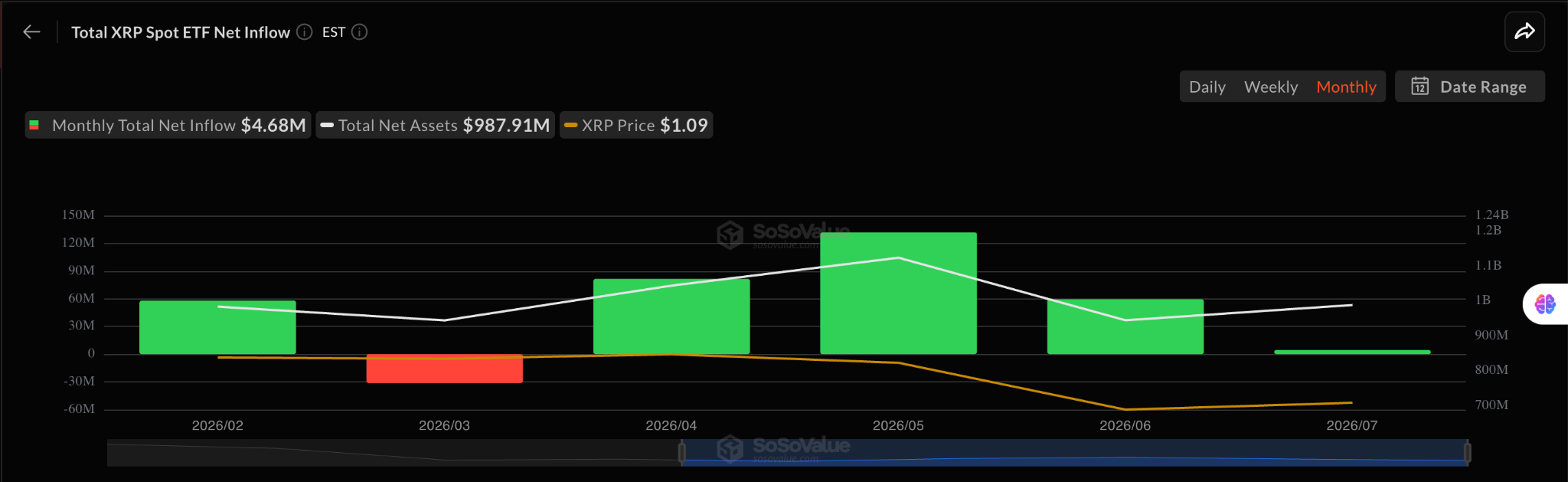
- Spot ETF net inflows decreased by 55% during June, falling from $132M to $59M
- The XRP Binance Scarcity Index reached 0.77, marking its highest reading in over 24 months
- Binance’s XRP holdings have declined 20% since November 2024, currently sitting at approximately 2.6 billion tokens
- Critical resistance level identified at $1.20, with upside target at $1.50 and downside risk at $0.80
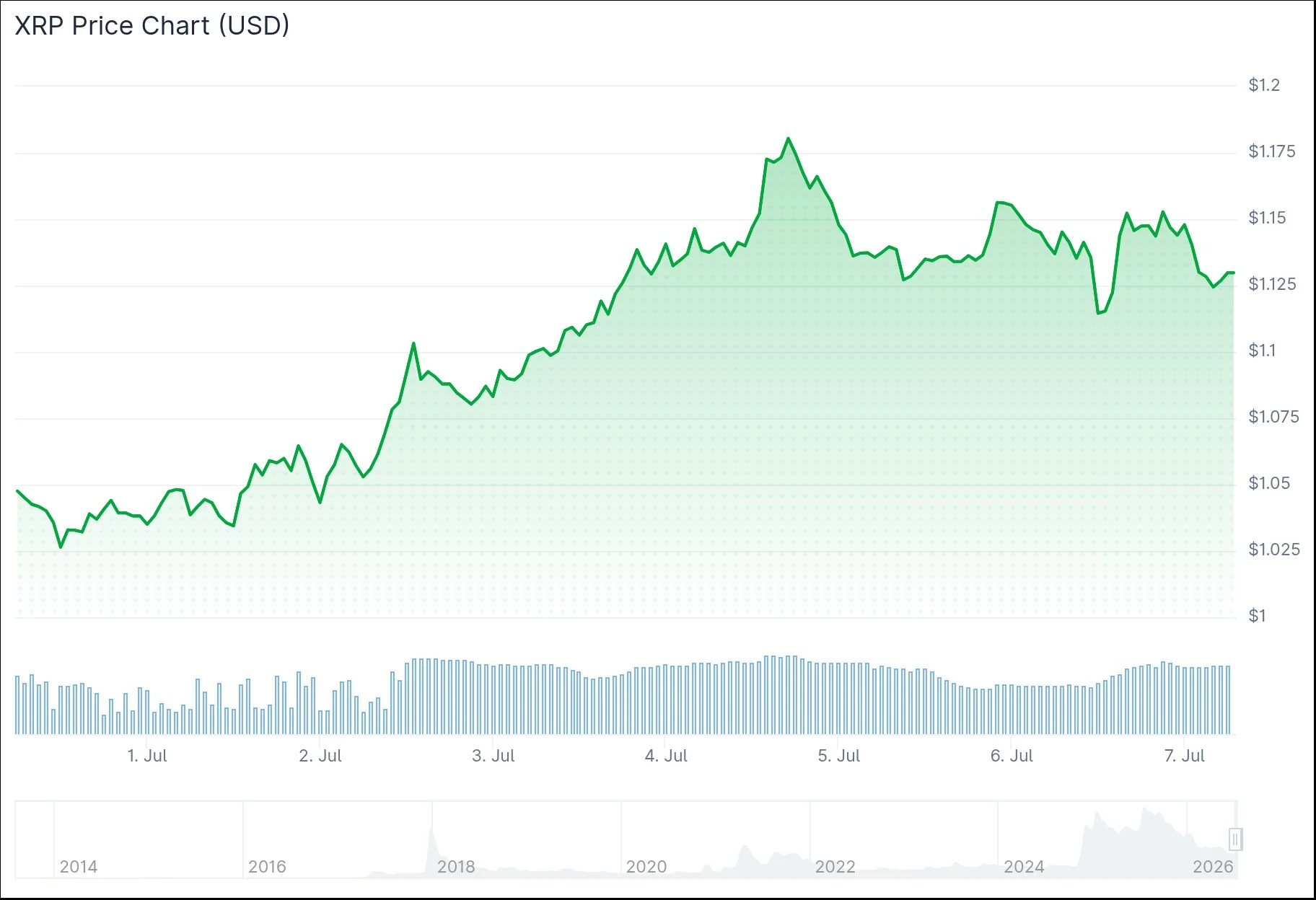
XRP has demonstrated a solid recovery over the past week, posting gains of nearly 8% after establishing support at the $1.03 level. The digital asset is currently changing hands above $1.15, successfully reclaiming a price point that served as a support threshold before the June downturn.
Market activity intensified significantly, with trading volume surging approximately 62% within a 24-hour window to reach $1.8 billion. Such dramatic volume increases typically indicate fresh market participation following periods of subdued trading activity.
This rebound follows a challenging June for XRP holders. The token experienced a significant decline from heights above $1.55 in February, ultimately bottoming out near the $1.00 to $1.04 range by late June—representing the most substantial holder drawdown in over a decade.
Institutional appetite, as measured through ETF flows, painted a cautious picture during this period. Net capital inflows to XRP-linked spot exchange-traded funds contracted from $132 million in May to just $59 million in June, representing a 55% month-over-month decline. Traditional finance interest appeared to wane despite the token’s price compression.
Large Holders Accumulate as Exchange Inventory Tightens
Blockchain metrics revealed a contrasting narrative within the cryptocurrency ecosystem. Daily active addresses on the XRP Ledger surged to levels not witnessed since February, as reported by Santiment. During that February timeframe, XRP traded within a $1.47 to $1.54 range.
Concurrently, the XRP Binance Scarcity Index climbed to 0.77 this week, representing its most elevated reading in more than two years, based on analysis from CryptoQuant researcher ArabxChain. This indicator quantifies XRP’s availability on Binance compared to historical benchmarks.

Binance’s XRP inventory has contracted by approximately 20% since November 2024, declining from roughly 3.27 billion tokens to around 2.6 billion currently. Holdings specifically dropped from about 2.8 billion in May to 2.6 billion by early July, coinciding precisely with the scarcity index’s breakout to new highs.
Market observers at ChartNerd highlighted this technical formation on X, describing XRP’s “3rd Retest” as a favorable entry point for position builders, characterizing it as “a gift” for chart-focused market participants.
Short Position Liquidations Contributed to Initial Rally
Futures market data from Coinglass reveals funding rates plunged into deeply negative territory between June 26 and 28, coinciding precisely with the price bottom. This concentration of short positions created conditions favorable for a squeeze.
The subsequent rally to $1.13 appears consistent with forced short covering rather than organic new demand. Funding rates have since normalized to slightly positive, suggesting a healthier positioning landscape.
Immediate resistance is located at $1.20, which previously contained the mid-June recovery attempt. A confirmed daily close above this threshold would expose the $1.35–$1.40 region, representing approximately 22% upside from current pricing.
The daily Relative Strength Index currently reads near 55, indicating additional headroom exists before overbought territory becomes a concern.
The 200-day Exponential Moving Average is positioned at $1.50, which technical analysts identify as the primary bullish objective if buying momentum persists. Conversely, a breakdown below $1.00 would negate the current recovery thesis.
XRP volume recently exceeded Bitcoin on South Korean platform Upbit, providing an interesting data point as market participants evaluate whether genuine demand is materializing.


The Bitcoin treasury company Strategy offloaded 3,588 BTC last week for approximately $216 million. The asset briefly plunged below $61,500 before recovering quickly.
While the sale initially drew attention, the decision to sell more of the cryptocurrency could be a positive step that strengthens confidence in the company’s financing structure, according to Grayscale Research Head of Research Zach Pandl.
A Bullish Outcome
In a recent market update, Pandl said that the move may help Bitcoin’s price find a more durable bottom. Although concerns had emerged over Strategy’s funding approach, the research head noted that the company’s overall financial position remained strong.
Strategy currently holds about $52 billion worth of BTC against roughly $7 billion in debt, while its annual preferred equity dividend obligations remain below $2 billion. This leaves it with sufficient resources to meet both debt repayments and dividend commitments. However, changing market conditions had raised questions about how the company would manage competing financial priorities.
By late May, Strategy’s US dollar reserves dropped to about $870 million, leaving enough cash to cover roughly six months of dividend payments. The decline sparked concerns over the company’s next move. Investors questioned whether it would sell discounted shares, part with some of its Bitcoin holdings, or make sacrifices that could affect preferred shareholders.
Those concerns were addressed in late June when Strategy introduced a new capital management framework. Under the updated approach, the company said it would issue shares and sell BTC whenever necessary to maintain sufficient US dollar reserves to cover its dividend obligations.
On July 6, Strategy confirmed it had sold another stash of Bitcoin the week before. Its dollar reserves remain at about $2.55 billion, providing roughly 17 months of dividend coverage. Pandl added that the recovery in STRC’s price is a sign that investors have become more confident in the company’s financing decisions following these changes.
Strategy FUD Fails to Derail BTC
Market sentiment remains heavily focused on fears surrounding Strategy’s sale, although Bitcoin has already recovered from the initial decline, according to Santiment. Even so, the analytics firm described it as an unexpected relief rally after the crypto asset once again defended the $60,000 level.
It added that the rebound followed an overly bearish mood at the end of June.
The post Why Strategy Selling More Bitcoin May Not Be Bearish After All appeared first on CryptoPotato.
TLDR:
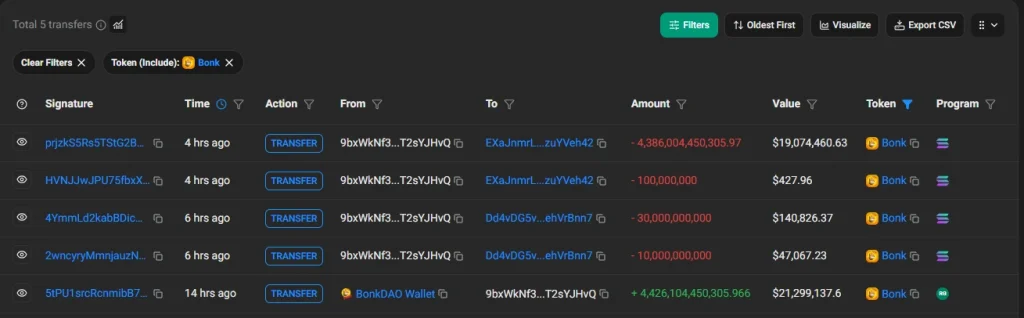
- BONK faces renewed scrutiny after BonkDAO confirmed a malicious governance proposal drained about $20 million from its treasury.
- The attacker reportedly spent about $4.4 million buying BONK tokens to gain enough voting power for the proposal.
- The vote passed through the DAO’s own governance process, meaning the attack did not rely on a smart contract exploit.
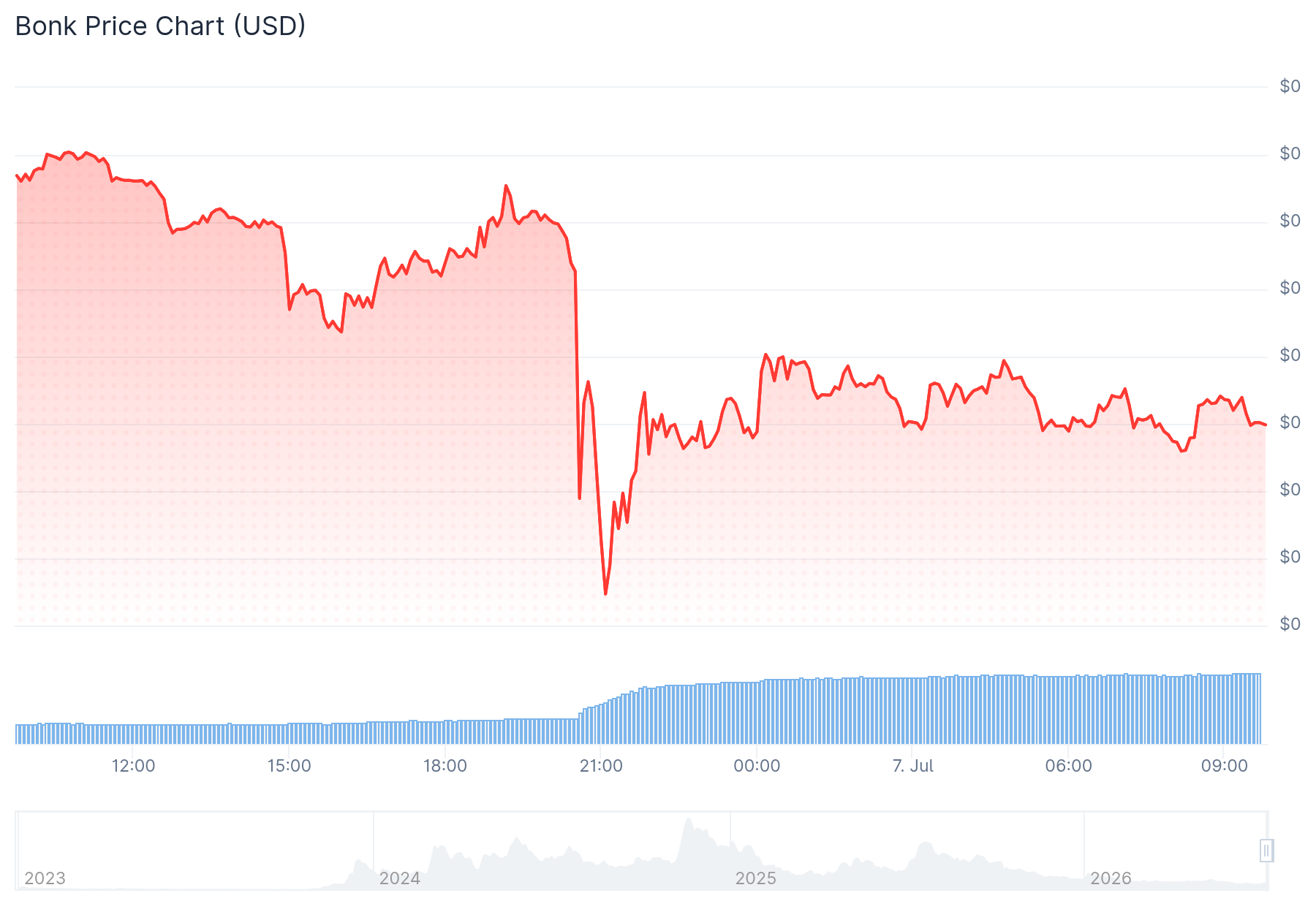
- BONK price action weakened after the drain, with the token trading below major moving averages and facing resistance near $0.00000445.
BONK faced fresh selling pressure after BonkDAO confirmed a malicious governance proposal drained about $20 million from its treasury. The incident took place on July 6, 2026, and exposed a weak point in token-weighted voting systems. BonkDAO said the attacker used a proposal to move treasury funds into a wallet they controlled.
The move did not involve a smart contract exploit. Instead, the attacker used the DAO’s own rules to pass the vote. BONK traded near $0.00000442 after the incident, with an intraday low near $0.00000414.
BONK Treasury Drain Shows DAO Voting Risk
BonkDAO described the incident as a malicious governance proposal that drained an estimated $20 million in BONK tokens. The project said it identified exchange wallets used to buy tokens before the proposal. It also said it was working with exchanges, bridges, the Solana Foundation, and law enforcement.
The attacker reportedly built voting power over several days. Onchain reports said the wallet spent about $4.4 million buying BONK before the vote. That stake gave the attacker enough influence to push the proposal past quorum.
The proposal then transferred about 4.43 trillion BONK from the treasury. The vote passed with only a small number of active wallets involved. Most DAO members did not take part, which left the treasury exposed to a concentrated vote.
The attack stands out as it used valid transactions. The buying, voting, and treasury transfer all moved through the governance system. That makes the case different from a front-end hack or direct wallet drainer.
In March 2026, Bonk.fun faced a separate website-related incident. Attackers used a fake signing flow to target users. This time, no individual user wallets were drained. The target was the DAO treasury itself.
BONK Price Weakens as Governance Attack Hits Confidence
BONK price action weakened after news of the treasury drain spread. The token’s market value fell below the $500 million area, while trading volume rose sharply. That mix pointed to heavy speculation and fading short-term confidence.
Technical pressure also stayed visible. BONK traded below its 20-day, 50-day, and 200-day moving averages. The token faced resistance near $0.00000445, while short-term forecasts pointed to a possible range between $0.00000352 and $0.00000548.
The governance attack also revived a wider debate across DAOs. Token-weighted voting can expose treasuries when quorum levels sit too low. A wealthy attacker can buy enough influence, pass a proposal, and exit after execution.
This risk is not new, but the BonkDAO case shows how fast it can hit a major memecoin treasury. Many DAO systems focus on smart contract safety. Governance settings now need the same level of review.
Projects may respond with longer timelocks, higher quorum rules, and emergency multisig controls. Time-weighted voting could also reduce the risk of last-minute token accumulation. For BONK, the next focus is fund tracing, exchange cooperation, and whether any treasury assets can be frozen or recovered.


BNB Chain has published a guide for moving assets from a centralized exchange to BNB Chain, as European crypto users adjust to new rules under the Markets in Crypto-Assets framework.
Summary
- MiCA has changed EU exchange access, pushing some users to compare licensed platforms and self-custody.
- BNB Chain’s guide frames wallets, test transfers, and recovery phrases as core safety steps.
- Stablecoin delistings and Binance limits have made European crypto users review custody options more carefully.
The guide explains how users can hold crypto in their own wallets and connect directly to decentralized apps.
Meanwhile, the timing follows the end of MiCA’s transition period on July 1. As previously reported, MiCA now requires crypto firms to hold CASP licenses to keep serving users under the EU rulebook. The change has pushed users to check whether their exchanges can still offer services in the bloc.
BNB Chain guide focuses on self-custody
BNB Chain’s guide presents self-custody as an alternative to keeping assets on a centralized exchange. It says users who move on-chain control their own private keys, while centralized platforms hold keys on behalf of customers.
The guide also warns that self-custody comes with responsibility. Users must protect their recovery phrases, send test transfers before moving larger sums, and keep a small amount of BNB for network fees. It also tells users to avoid fake wallet apps, fake bridge sites, and links sent through messages or ads.
BNB Chain says users can access swaps, stablecoins, staking, lending, borrowing, tokenized real-world assets, and perpetual trading from their wallets. It names apps such as PancakeSwap, Venus, Lista DAO, Aster, DappBay, and BscTrace as tools available across the ecosystem.
Exchange shifts put wallets in focus
The guide lands as several exchange services in Europe change under MiCA. As previously reported, Binance said it would suspend several EU services after failing to secure a MiCA license before the deadline. The pause covered new spot orders, new deposits, sign-ups, and some yield products, while withdrawals remained available.
Licensed rivals have also used the deadline to compete for users. As previously reported, Coinbase and OKX targeted Binance users with transfer offers before the rule change took full effect. The shift has made regulation, custody, and access central issues for EU users choosing where to hold crypto.
Stablecoins are also part of the change. As previously reported, USDT lost access to regulated EU exchange order books after Tether chose not to seek MiCA authorization. That has pushed compliant stablecoins such as USDC and EURC into a stronger position on licensed platforms.
Licensed firms gain ground
The EU market is not closing to crypto, but access now depends more on authorization. ESMA’s MiCA register rose to 300 authorized crypto firms after 57 new providers were added around the deadline.
The updated list includes banks, trading firms, and crypto companies that can serve users across the bloc through MiCA passporting. Ripple also joined the licensed market after securing approval in Luxembourg, as previously reported.
BNB Chain’s message is aimed at users who want direct control rather than a licensed exchange account. The guide does not remove the risks of DeFi or self-custody. It instead gives users a route to move assets, test transactions, check apps, and decide how much responsibility they want to hold themselves.

Racist German fan petition story is false

Small AI Models Gain Traction Around the World

Whose Bitcoin Is It? The Legal Fight Stalling Trump’s $20 Billion Reserve


-

 Fashion4 days ago
Weekend Open Thread: High Hopes
-

 Politics4 days ago
The House | “Reframing the debate from a binary discussion of winners and losers”: Yuan Yang reviews ‘We Are Not Machines’
-

 Fashion15 hours ago
Open Thread: What Great Books Have You Read Recently?
-
 NewsBeat2 days ago
Taylor Swift and Travis Kelce wedding staffer hilariously struggles to keep her cool while checking in megastars
-

 News Videos7 days ago
How to Build INSANE Live Financial Dashboards With Claude
-
 Crypto World6 days ago
Airdrop Registration Becomes Key Focus For Remittix As RTX Launch Updates Approach
-

 Sports6 days ago
Broncos roster: OL Ben Powers (No. 74) entering final year of contract
-

 Crypto World5 days ago
Binance stock trading tops $1B in first month after launch
-

 NewsBeat6 days ago
Presenter Caroline Flack’s brother Paul Flack dies aged 55
-

 Crypto World5 days ago
Alibaba-affiliate Ant Group enters the humanoid robot market with 12 deals
-

 Crypto World4 days ago
Standard Chartered Secures MiCA License as ESMA Adds 37 New Crypto Firms
-

 Crypto World2 days ago
South Africa proposes crypto tax guidance under existing rules
-

 News Videos16 hours ago
Best Time to Enter Small Caps Right Now? Another Bull Run? | Financially Free
-

 Business5 days ago
Meta Platforms Stock Jumps 7% Today as Bloomberg Reports Company Plans to Enter the Cloud Business
-
 NewsBeat5 days ago
New exhibition reflects five decades of movement between island of Ireland and GB
-

 Tech2 days ago
Lenovo laptops are now shipping with YMTC SSDs, a sign of Chinese NAND entering the mainstream
-

 Business4 days ago
What a 10 Percent Drop Means for Buyers, Sellers and Renters
-

 Crypto World4 days ago
Binance Re-Enters Philippines As EU MiCA Rules Restrict Access
-

 News Videos19 hours ago
Avoid entering in FOMO #bitcoin #cryptocurrency #trading #scalping
-

 News Videos4 hours ago
Whats Hidden Inside This Cash Register? #treasure #reselling #money
You must be logged in to post a comment Login