
Business
OpenAI’s Codex Coding Tool Reportedly Down for Some Users as Outage Reports Spike Overnight

OpenAI‘s Codex, the company’s AI-powered coding assistant, was reportedly experiencing connectivity and access issues for some users early Tuesday, with outage tracking services and user reports pointing to intermittent disruptions affecting the tool’s desktop application and related services.
According to outage tracking site StatusGator, 21 user-submitted reports of problems with Codex were logged over a 24-hour period ending Monday evening, with the platform describing OpenAI as experiencing a partial outage at the time. The social media account Status Is Down flagged the issue early Tuesday morning, asking followers whether they were affected and using the hashtags #OpenAI, #OpenAIDown, #Codex and #CodexDown as reports of the disruption circulated online.
Multiple users also reported problems directly on OpenAI’s GitHub issue tracker for the Codex project throughout the day Monday and into Tuesday. Several issues logged by developers described connectivity problems affecting the Codex desktop application, including disconnection errors related to networking and endpoint connectivity, as well as separate issues involving the tool’s integration with Model Context Protocol servers, a framework Codex uses to connect with external tools and data sources. Additional reports cited problems with tool-calling functionality and issues specific to the Codex application running on Windows systems.
OpenAI’s official status page acknowledged ongoing issues tied to its systems, though the company’s most recent public update focused specifically on disruptions affecting FedRAMP workspaces, a designation for cloud environments that meet federal government security compliance standards. According to that update, OpenAI said core functionality had been restored following an earlier disruption, but noted continuing issues affecting Codex, workspace analytics, conversation search, the ability to search for custom GPTs, ChatGPT user invites, and the Compliance Logs Platform download feature specifically within FedRAMP-designated environments. The company said it was continuing to work on resolving those remaining issues and would provide further updates as more information became available.
The disruption adds to what has been a bumpy stretch for Codex’s reliability in recent weeks. According to outage history compiled by StatusGator, OpenAI has logged a series of warning-level service disruptions on nearly a daily basis over the past several weeks, including periods of degraded service lasting anywhere from several hours to a full day at a time between late June and early July. One previously resolved incident specifically affecting Codex and related FedRAMP services lasted approximately five hours and 48 minutes, beginning in the early morning hours of July 1.
Codex has also experienced a range of other technical issues in recent months unrelated to Tuesday’s reported disruption. According to incident logs maintained by monitoring service IncidentHub, Codex has dealt with several previously resolved issues over the past few weeks, including a period in late June when usage limits within Codex appeared to deplete faster than expected, along with earlier incidents involving access token errors, a “Selected Model is at Capacity” error message, elevated error rates specifically affecting the GPT 5.5 model within Codex, and increased latency during a process the company refers to as Codex compaction.
OpenAI has periodically addressed broader Codex-related errors through its own developer community forum in the past, acknowledging increases in error rates and confirming that engineering teams were actively working to resolve underlying issues as quickly as possible. The company has generally directed users to its official status page for real-time updates during periods of degraded service, a practice that appeared to continue during Tuesday’s reported disruption.
Codex, first introduced by OpenAI as an AI coding tool designed to help developers write, debug and manage code through natural language prompts, has become an increasingly central part of the company’s broader product lineup as demand for AI-assisted software development tools has grown across the technology industry. The tool is available both through a web interface and as a downloadable desktop application, with additional integrations available through command-line interfaces used by many professional software developers.
Outage tracking services generally caution that reported issue counts reflect self-submitted user data and public signals such as social media activity, meaning the true scope of any given disruption can sometimes differ from the volume of individual reports logged at a particular time. Even so, the combination of user reports on GitHub, social media posts flagging the outage, and OpenAI’s own acknowledgment of ongoing technical issues within certain workspace environments suggested that at least some portion of Codex’s user base was experiencing meaningful disruption to the service as of early Tuesday.
For affected users, common troubleshooting steps recommended by technical support resources typically include checking OpenAI’s official status page for the most current information, verifying internet connectivity, restarting the Codex application, and, where relevant, checking whether an issue is isolated to a specific integration such as an MCP server connection rather than reflecting a broader outage of the underlying service. Developers experiencing persistent issues are generally encouraged to file detailed reports through OpenAI’s GitHub repository, where the company’s engineering team can track and triage individual bug reports alongside broader service-wide disruptions.
As of Tuesday morning, OpenAI had not issued a comprehensive public statement addressing the full scope, cause or expected resolution timeline for the reported Codex disruptions occurring outside the FedRAMP environment specifically referenced in its most recent status update. The company’s history of frequent, relatively short-duration service warnings over the preceding weeks suggests that intermittent disruptions of this kind have become a recurring, if generally short-lived, feature of Codex’s operation as OpenAI continues to scale the tool’s usage among a growing base of developers relying on it for day-to-day coding tasks.
Users experiencing ongoing problems with Codex are encouraged to monitor OpenAI’s official status page at status.openai.com for the most current information, as the company works through what appears to be a mix of both newly reported connectivity issues and previously acknowledged, more narrowly scoped disruptions affecting specific workspace configurations. Given the pattern of past incidents, similar disruptions affecting Codex have historically been resolved within a period ranging from several hours to roughly a day, though OpenAI has not provided a specific timeline for full resolution of Tuesday’s reported issues as of this report.


Blackstone Mortgage Trust: Unjustified 25% BV Discount

With August’s historical seasonality favouring Indian equities, analysts have identified stocks well placed to outperform based on derivatives build-up, though a few continue to attract bearish bets on weakening technicals.
BULLISH BETS
DELHIVERY
Change in OI in Aug Series: 16.99% Change in Price in Aug Series: 4.19%
RATIONALE: The stock has attracted fresh long positioning in the August derivatives series, said Dhupesh Dhameja, research analyst, Samco Securities. “The stock continues to trade above its 100-day EMA, highlighting a robust long-term bullish structure, while the recent decline appears to be a healthy retracement within the broader trend rather than a reversal,” he said. Dhameja said the stock has the potential to extend its up move towards Rs 530, while Rs 458 remains a critical stop loss, below which the technical structure would weaken.

Read more: AI trade unwind, FII inflows brighten August outlook for Indian stocks
JIO FINANCIAL
Change in OI in Aug Series: 1.83% Change in Price in Aug Series: 3.84%
RATIONALE: The stock has been consolidating in a symmetric triangle pattern for the past five months, said Vipin Kumar, AVP – Derivatives and Technical Research at Globe Capital Market. “On Friday, it witnessed a bullish breakout from the said formation with a significant rise in volume,” he said. He suggests adding long positions in its August futures around the Rs 255-250 levels, with a stop loss at Rs 240, for a price target of Rs 270-280.
ADITYA BIRLA CAPITAL
Change in OI in Aug Series: 5.46% Change in Price in Aug Series: 2.65%
RATIONALE: The rise in open interest alongside a gain in price indicates fresh long accumulation in the August series, said Dhameja. “On the technical front, the stock is undergoing a healthy consolidation after a strong uptrend while holding above its rising 20-DEMA, highlighting sustained buying interest,” he said. “The ongoing price action reflects strong acceptance near higher levels, with the broader higher highhigher low structure remaining intact.” Dhameja said the structure suggests potential towards `445, while `384 remains a critical stop loss, below which the bullish structure would weaken.
BAJAJ HOLDINGS & INVESTMENT
Change in OI in Aug Series: 44% Change in Price in Aug Series: 5.25%
RATIONALE: Following a multiquarter corrective phase, the stock has established a durable base around its four-year mean, said Amit Trivedi, SVP, Institutional Equities Research at Yes Securities. “A decisive hold above Rs 11,000 is expected to strengthen bullish momentum, opening the path towards the Rs 12,500 zone,” he said. Trivedi suggests buying for a target of Rs 12,500, with a stop loss at Rs 10,850.
MUTHOOT FINANCE
Change in OI in Aug Series: 2.20% Change in Price in Aug Series: 4.45%
RATIONALE: Dhameja said the stock is well positioned to extend gains to Rs 3,450, while Rs 2,950 remains a critical stop loss, below which the breakout would lose its bullish bias. “The breakout follows multiple higher lows near the Rs 2,900 support zone, highlighting strong accumulation and improving demand dynamics. Price has also reclaimed the Rs 3,000 psychological mark, reinforcing the shift in short-term sentiment,” he said.
BEARISH BETS
LIC HOUSING FINANCE
Change in OI in Aug Series: 14.92% Change in Price in Aug Series: -3.32%
RATIONALE: The stock witnessed a bearish breakdown from the past two-and-a-half-month consolidation range, backed by higher volumes, said Globe Capital’s Kumar. “The breakdown was further supported by a significant rise in short positions,” he said. Kumar suggests initiating short positions on rallies around Rs 525-535, with a stop loss at Rs 548 and a target of Rs 490.
UPL
Change in OI in Aug Series: 1% Change in Price in Aug Series: 0.66%
RATIONALE: Following June’s decline, recoveries in the recent past remained short-lived, said Trivedi. “In the July series, the stock remained under pressure and witnessed a short build-up, with futures open interest rising about 26% on an expiry-toexpiry basis, and rollover stood at 96%,” he said. Trivedi suggests traders sell for a target of Rs 555, with a stop loss at Rs 632.


Financial analyst by day and a seasoned investor by passion, I’ve been involved in the world of investing for over 15 years and honed my skills in analyzing lucrative opportunities within the market.I specialize in uncovering high quality dividend stocks and other assets that offer potential for long term-growth that pack a serious punch for bill-paying potential. I use myself as an example that with a solid base of classic dividend growth stocks, sprinkling in some Business Development Companies, REITs, and Closed End Funds can be a highly efficient way to boost your investment income while still capturing a total return that follows traditional index funds. I created a hybrid system between growth and income and manage to still capture a total return that is on par with the S&P.
Analyst’s Disclosure: I/we have no stock, option or similar derivative position in any of the companies mentioned, but may initiate a beneficial Long position through a purchase of the stock, or the purchase of call options or similar derivatives in VYMI over the next 72 hours. I wrote this article myself, and it expresses my own opinions. I am not receiving compensation for it (other than from Seeking Alpha). I have no business relationship with any company whose stock is mentioned in this article.
Seeking Alpha’s Disclosure: Past performance is no guarantee of future results. No recommendation or advice is being given as to whether any investment is suitable for a particular investor. Any views or opinions expressed above may not reflect those of Seeking Alpha as a whole. Seeking Alpha is not a licensed securities dealer, broker or US investment adviser or investment bank. Our analysts are third party authors that include both professional investors and individual investors who may not be licensed or certified by any institute or regulatory body.

Interface's Surge Doesn't Necessitate A Downgrade Yet

Spider-Man: Brand New Day brought in $927m (£687m) of global ticket sales to make it the second-biggest opening weekend ever as it shot past its estimated $225m production budget.
The superhero movie – starring real-life husband and wife Tom Holland and Zendaya – is only behind Avengers: Endgame, which took in more than $1.2bn in its opening weekend in 2019.
Brand New Day also set a second-best North American record, with box office takings of $335m.
The film’s strong performance gives a much-needed boost for Disney ahead of the highly-anticipated December release of Avengers: Doomsday, after a string of Marvel movies under-performed in recent years.
Brand New Day, which opened in cinemas last week, picks up a few years after 2021’s Spider-Man: No Way Home as Peter Parker continues to fight crime in a world that has forgotten he is the masked superhero.
The latest instalment of the hugely popular franchise received largely positive reviews, with some calling it Holland’s best Spider-Man performance yet.
The film is Marvel’s last big-screen outing before Doomsday, the long-awaited culmination of multiple superhero story arcs after Avengers: Endgame.
Marvel films released since Endgame have struggled to attract the same broad audiences as they did at their peak.
Big budget films like The Marvels and The Thunderbolts recouped their production costs but were among the studio’s lowest-grossing films.
Spider-Man remains one of Marvel’s most lucrative franchises, with No Way Home making nearly $2bn in ticket sales.
Cinema attendance has slowed since the Covid-19 pandemic, which accelerated the shift to home-streaming options like Netflix.
But the big screen has staged something of a comeback this year, with the North American box office takings on track to pass $10bn for the first time since 2019.
That was helped by blockbuster hits by including Toy Story 5, Michael, and The Super Mario Galaxy Movie – which have made more than $1bn each.
July releases Brand New Day and The Odyssey – director Christopher Nolan’s take on the epic Greek poem – are also on track to top the $1bn mark.
Indie horror flicks Obsession and Backrooms emerged as surprise successes, bringing in more than $390m each despite their modest budgets.

Meta cuts Wipro outsourcing work by at least 25%- Mint
Business
Oil Price Today (August 3): Crude oil crashes 5% below $84 as Trump delays attack on Iran. What are experts saying?

Crude oil price on August 3
Brent crude futures fell $4.37, or 5%, to $83.56 a barrel, while U.S. West Texas Intermediate crude declined $4.63, or 5.5%, to $80 a barrel.
The sharp decline followed a strong rally last month, when both contracts had gained more than 20% after fighting between the U.S. and Iran resumed. Concerns over attacks on several tankers near Oman also heightened security risks, discouraging shippers from entering the Gulf to load crude.
Also read: Trump’s closest Gulf allies are frustrated with his Iran war strategy: Report
In a possible sign of easing tensions, Trump said late on Saturday on his Truth Social platform that Iran and other Middle Eastern countries had sought time to finalise an agreement that would result in “the Immediate, Complete and Total” reopening of the crucial waterway and bring “an end to Iran’s nuclear threat”. Trump added that he had agreed to cancel the attack to allow for a rapid agreement, and said Israel had also committed to the effort.
On Sunday, OPEC+ approved an increase of around 188,000 barrels per day in its oil production quota for September, marking the completion of the rollback of one tranche of its voluntary output cuts.
However, the additional supply has had little effect on the market so far. Export disruptions from the Gulf, along with supply issues involving Russia and Kazakhstan amid the Iran and Ukraine wars, have meant that the group’s successive monthly production hikes for most of this year have largely remained on paper.
Analysts hopeful?
The trajectory of oil prices will largely depend on the duration of the supply disruption. JPMorgan estimates that every additional month of disruption could lift Brent prices by about $7 to $8 a barrel. If the disruption extends for three months, the bank expects the monthly average Brent price to reach around $114 a barrel.Goldman Sachs has also warned that Brent could rise to $120 a barrel if shipping disruptions through the Strait of Hormuz, the world’s most important oil transit route, continue. However, its base case remains that tensions in the Middle East will eventually ease.
Read more: Oil prices surge 20% in July as US-Iran war heightens Strait of Hormuz tensions
Based on that assumption, Goldman Sachs expects Brent to average $80 a barrel in the fourth quarter and $75 a barrel next year. Even so, the bank said the risks to its forecasts remain “tilted to the upside”, citing the possibility that shipping disruptions could continue in both the Strait of Hormuz and the Red Sea.
“The direction of our outlook is unchanged; the path and the timeline have shifted. We still expect oil to cool as we move into 2027, for three reasons: supply outside the conflict zone is expanding, with OPEC+ raising production targets, the UAE at record output and non-OPEC barrels responding to price, said Anindya Bannerjee, Head of Commodity Research at Kotak Securities.
(Disclaimer: Recommendations, suggestions, views and opinions given by the experts are their own. These do not represent the views of Economic Times)

Japan and the US have confirmed that they jointly intervened last week to halt a slide in the yen to a fresh 40-year low.
The joint intervention is the first since 2011, when both countries took coordinated action to weaken the yen after the devastating earthquake and tsunami that hit eastern Japan.
Both Japan’s finance ministry and US Treasury Secretary Scott Bessent have said that they will not hesitate to conduct joint interventions in the future.
It highlights both countries’ efforts to prevent a sell-off in the yen and Japanese government bonds from having an impact on the global economy, including potentially helping to push up borrowing costs for Washington.
“The United States agreed to participate in the coordinated intervention because it serves its national interests by offering the prospect of significant benefits at a low cost,” Shigeto Nagai, head of Japan economics at Oxford Economics told the BBC.
The two countries are expected to continue to intervene “intermittently in a coordinated manner for some time”, he added.
“Even if the actual amount of intervention is not particularly large, the prolonged sense of vigilance regarding intervention will be effective in deterring speculators.”
The yen is historically weak mainly due to Japan having much lower central bank interest rates than other major economies like the US. That makes the Japanese currency less attractive to international investors.
The Bank of Japan last raised interest rates in June, as it increased its main rate to 1% – the highest level since September 1995. In comparison, the US Federal Reserve’s benchmark rate is in a range of 3.50% to 3.75%.
Japan also faces a decades-long slide in its working-age population, low productivity and a heavy reliance on energy imports that are priced in US dollars.
On Monday, Japan’s finance ministry said Friday’s intervention with the US Treasury Department “countered excessive volatility and disorderly movements in the Japanese yen in recent months”.
The “coordinated foreign exchange actions countered disorderly yen movements,” Bessent said in a social media post.
“We strongly support Japan’s decisive market and monetary steps to correct the substantial undervaluation of the yen,” he added.
“They have a weakening yen, and they wanted a little bit of help. And we’re always there for Japan,” US President Donald Trump told reporters on Sunday.

Worley wins engineering contract for Missouri cobalt refinery
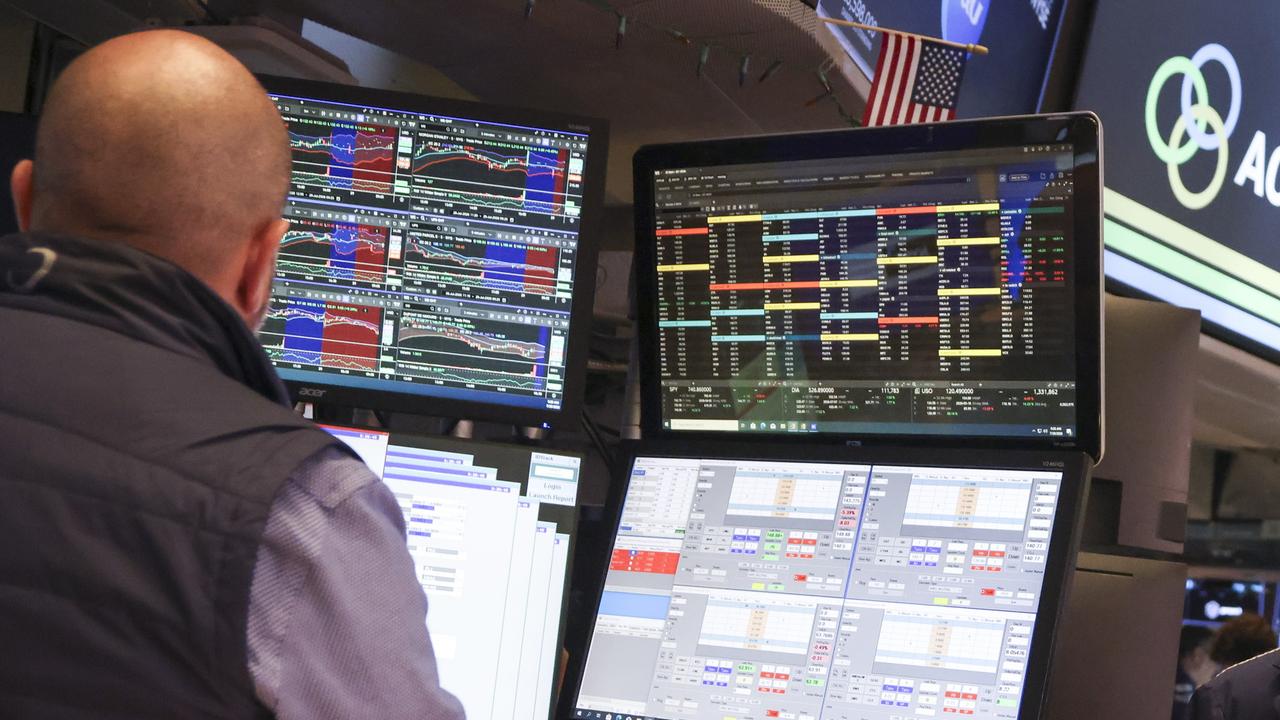
Wall Street has ended higher, lifted by Amazon as the tech heavyweight’s strong quarterly report bolstered investor confidence in AI-related stocks, while Apple dropped after its results disappointed investors.

LEARN ABOUT MONEY: Bills and Coins

Manchester United ‘explore shock deal for Arsenal FC defender’ as Lewis Hall alternative

Blackstone Mortgage Trust: Unjustified 25% BV Discount


-

 Business4 days ago
Why Trees Belong on the Risk Register
-

 Fashion2 days ago
Weekend Open Thread: Wit & Wisdom
-

 Politics2 days ago
Meta enters AI-training agreement with far-right ‘propaganda rag’ Newsmax
-
 Entertainment5 days ago
‘Stargate’ Creator’s New Sci-Fi Series Returns for Season 3 Tomorrow
-

 Politics7 days ago
Luke Littler dismantles Gerwyn Price to retain title in Blackpool
-

 Crypto World2 days ago
MicroStrategy Post-Earnings CLARITY Act Push Could Add New Catalyst for Its Stock
-

 Politics6 days ago
The Part of the Electric Transition Nobody Wants to Discuss
-

 Business5 days ago
Major shareholder moves on Canyon
-

 Crypto World2 days ago
XRP Ledger v3.3.0 brings five institutional features
-

 News Videos4 days ago
Bitcoin Enters the 3rd Stage of the Bear Market
-

 Crypto World5 days ago
Kraken Enables Retail Access to Jersey Mike’s IPO via Tokenized Shares
-

 Tech6 days ago
New macOS Sequoia & Sonoma security updates for older Macs
-

 News Videos5 days ago
Claude: Build Financial Dashboards in Minutes (2026)
-

 Politics3 days ago
Luke Littler’s dominance sparks GOAT debate
-

 Business5 days ago
Johnson & Johnson agrees to $5.5B settlement over talc cancer claims
-

 Sports3 days ago
Seema Kaliramna Wins Discus Throw Bronze, Takes India’s CWG Medals Tally To 17
-

 Crypto World18 hours ago
Crypto PAC spending tops $2M in Michigan House race
-

 Business3 days ago
Trump Announces Hamas Disarmament Agreement as Iran Strikes Kuwait Air Base and US Attacks Pause Overnight
-

 Tech5 days ago
Gemini can now summarize the messiest comment threads in Google Docs
-

 Tech22 hours ago
ESET tracks rise in malicious AI skills and adaptable malware
You must be logged in to post a comment Login