

Business
Samsung Dives After Huge Jump in Profit, Micron Rival Sinks Tech Stocks



Business
Planning investments in midcap mutual funds? Check these 5 funds with over 20% gain in 3 years

Five midcap mutual funds delivered over 20% annualised returns in the past three years, led by HSBC Midcap Fund at 26.3%, highlighting strong wealth creation despite market volatility.
Business
France and Argentina Have the Best Odds to Meet in the World Cup 2026 Final, Bookmakers Currently Say

With the World Cup’s quarterfinal picture now largely set, bookmakers and prediction models have identified France and Argentina as the two teams most likely to reach this year’s final, a projection based on both nations’ strong outright title odds and their positioning on opposite sides of the tournament bracket.
According to odds published via FanDuel Sportsbook as of July 6, France remains the outright favorite to win the tournament at +175, meaning a $10 bet would return $27.50 total. Spain sits second at +330, followed by Argentina at +450 and England at +500. Norway, Colombia, Belgium, Morocco, Switzerland and Egypt round out the field with considerably longer odds, ranging from +1800 for Norway up to +25000 for Egypt.
The reason France and Argentina stand out as the most likely finalists comes down to bracket structure rather than head-to-head odds alone. The tournament’s knockout bracket is split into two separate halves, with the winners of each half advancing to face one another in the final. France sits in the top half of the bracket alongside Spain, meaning the two European heavyweights, currently the tournament’s first and second favorites, are on a collision course to meet each other in the semifinal round rather than the final itself. That dynamic effectively makes France the strongest single team positioned to emerge from that half of the bracket, given its status as the tournament’s overall favorite heading into its quarterfinal matchup with Morocco.
Argentina, by contrast, sits in the bottom half of the bracket alongside England, Norway, Egypt, Switzerland and Colombia. With odds of +450, Argentina holds a narrow edge over England’s +500 as the most likely team to emerge from that half of the draw and reach the final. That positioning means Argentina and France, rather than Argentina and Spain or England and France, represent the most statistically probable pairing to meet in this year’s championship match, according to current bookmaker projections.
France’s path to the final begins with a quarterfinal matchup against Morocco on Thursday, July 9, in Boston. France reached this stage after posting an unbeaten group-stage campaign followed by knockout wins over Sweden and Paraguay, with Kylian Mbappe continuing to anchor the team’s attack as one of the tournament’s leading scorers. Morocco, meanwhile, advanced by eliminating co-host Canada 3-0, becoming the first African nation to reach back-to-back World Cup quarterfinals following its historic run to the semifinals in 2022. Should France advance as expected, the team would face the winner of Spain’s quarterfinal against Belgium in the semifinal round, a matchup that would pit the tournament’s top two favorites against one another before either could reach the final.
Argentina’s route runs through a different set of contests. The two-time defending champion faces Egypt on Tuesday in Atlanta, a highly anticipated matchup pairing Lionel Messi against Mohamed Salah. Argentina advanced to this stage after needing extra time to eliminate tournament debutant Cape Verde in the Round of 32, while Egypt reached the Round of 16 for the first time in 92 years on the strength of a penalty shootout win over Australia. Should Argentina advance past Egypt, the team would then face the winner of Tuesday’s other remaining fixture between Switzerland and Colombia in the quarterfinal round, before a potential semifinal matchup against the winner of Norway’s quarterfinal against England.
England’s path has also strengthened considerably in recent days. According to ESPN’s betting coverage, England’s outright title odds improved from 10-1 to +520 following the team’s dramatic 3-2 win over co-host Mexico, moving the Three Lions ahead of every team except France and Argentina in the outright market. Norway’s odds similarly surged from 45-1 to 17-1 after the team’s stunning 2-1 upset over five-time champion Brazil, reflecting the growing belief among bookmakers that Norway, led by tournament co-leading scorer Erling Haaland, could make a deeper run than initially expected.
Prediction market data has told a broadly similar story. Analysis from TNT Sports noted that France’s odds have solidified since the team’s knockout-stage wins over Sweden and Paraguay, reinforcing its position as the clearest favorite remaining in the tournament. Meanwhile, Spain’s odds improved further following its 1-0 win over Portugal in the Round of 16, a result that also marked the end of Cristiano Ronaldo’s storied World Cup career, though Spain’s position on the same half of the bracket as France means the two nations cannot both reach the final under the tournament’s current knockout structure.
It is worth noting that outright odds and bracket positioning, while useful indicators, do not guarantee any specific outcome, and the tournament has already produced several notable upsets through its group stage and Round of 16, including Norway’s win over Brazil and Belgium’s 4-1 rout of co-host United States. Colombia, Switzerland, Morocco, Belgium and Norway all remain alive with the potential to disrupt the projected France-Argentina final should any of them advance further than current odds suggest.
Beyond the outright betting markets, the ongoing race for the tournament’s Golden Boot adds another layer of intrigue to a potential France-Argentina final. Mbappe and Messi currently sit tied atop the tournament’s scoring charts with seven goals apiece, alongside Norway’s Haaland, marking the first time in World Cup history that three players have reached that tally in the same tournament. Should France and Argentina both advance to the final as bookmakers currently project, the match would not only represent a rematch of sorts between two of the tournament’s most successful recent programs, but also potentially set up a direct showdown between two of the game’s most prolific active goal-scorers on the sport’s biggest stage.
With the semifinal round still more than a week away and the final not scheduled until July 19, plenty of soccer remains to be played before any final matchup is determined. For now, though, bookmakers and bracket analysis alike point toward France and Argentina as the two nations best positioned to meet in this year’s championship match, a projection that will continue to be tested as the tournament moves through its remaining knockout rounds in the days ahead.

Nvidia Stock Falls Again as AI Chip Competition Fears Mount

The world’s largest arms manufacturer is to pay $3.45 billion for Ultra Maritime, the British undersea warfare specialist created from the 2022 merger of two of the UK’s best-known defence companies.
Lockheed Martin, the American defence giant, said the acquisition would strengthen its hand in “advanced undersea warfare” at a time when the wars in Ukraine and the Middle East continue to drive unprecedented demand for new weapons and military technology.
Ultra Maritime forms part of Cobham Ultra, the group assembled by Advent International, the American private equity firm, when it combined Cobham, the British aerospace pioneer, with domestic rival Ultra Electronics four years ago. Advent paid £4 billion for Cobham in 2019 and a further £2.6 billion for Ultra in 2022. Both deals proved contentious given the companies’ importance to national security, and each required government approval under the UK’s foreign investment screening regime. The transaction is the latest in a long line of foreign private equity swoops on British firms that have reshaped the UK’s industrial base over the past decade.
Ultra Maritime specialises in undersea military technologies, including sonobuoys, which detect submarines, and torpedo nose arrays that use sonar to track their targets. The company, which retains factories and offices in London, Buckinghamshire and Dorset, won a contract this year to supply its underwater acoustic decoys, designed to protect ships and submarines from torpedoes, to the US Navy. The Royal Navy is also among its principal customers.
Lockheed Martin will fold Ultra Maritime into its rotary and mission systems (RMS) business, which reported revenue of $17.3 billion last year and employs 35,000 people worldwide. Lockheed itself has 1,700 staff in the UK across roughly 20 sites, including operations in Bedfordshire, Hampshire and Glasgow.
“Undersea superiority belongs to those who move fastest and work together best,” said Stephanie Hill, president of Lockheed’s RMS division, announcing the deal. “By joining forces with Ultra Maritime, we’re accelerating our commitment to deliver the most advanced undersea and anti-submarine warfare capabilities to our US and allied partners across the globe.”
Shonnel Malani, managing partner at Advent, said Ultra had become a “stronger, more innovative partner to allied navies” under the private equity firm’s ownership, “with improved execution, greater industrial capacity and next-generation autonomous solutions that position it well for future warfare”.
Advent is understood to have invested about £127 million in Ultra Maritime over the past three years to accelerate production. The business turned over roughly £370 million in 2023 but is on track to deliver revenues closer to £587 million this year, the Financial Times reported last week.
The defence industry has been a clear beneficiary of the conflicts in Ukraine and the Middle East, as well as President Trump’s demands that Nato members, the UK included, dramatically increase their defence budgets, a shift that has prompted Britain to boost its own domestic weapons production. In response, contractors have raced to broaden their product offering, and industry analysts said Lockheed’s move for Ultra Maritime is firmly part of that trend. Whether the wave of consolidation delivers lasting economic benefit for the UK, however, remains an open question.

Jamie Young
Jamie is Senior Reporter at Business Matters, bringing over a decade of experience in UK SME business reporting.
Jamie holds a degree in Business Administration and regularly participates in industry conferences and workshops.
When not reporting on the latest business developments, Jamie is passionate about mentoring up-and-coming journalists and entrepreneurs to inspire the next generation of business leaders.

Available for over a year
At least once in a lifetime, everyone has a great business idea. They often come when life events force us to experience things from a different angle. This year, the city of Liverpool in north England set about finding these “hidden entrepreneurs” with the help of an organisation called Public Life. The entrepreneurs come from all walks of life and have been offered a year’s wage to develop their idea, alongside expert help and mentoring. From the hairdresser who is building a salon-on-wheels for her best friend to the travel agent who is making a “Trip Advisor for the senses”, Myra Anubi meets the people whose inspiration has come from their own life experiences.
People Fixing The World from the BBC is about brilliant solutions to the world’s problems. We release a new edition every Tuesday. We’d love you to let us know what you think and to hear about your own solutions. You can contact us on WhatsApp by messaging +44 8000 321721 or email peoplefixingtheworld@bbc.co.uk. And please leave us a review on your chosen podcast provider.
Presenter: Myra Anubi
Producer: William Kremer
Executive Producer: Richard Kenny
Editor: Jon Bithrey
Sound mix: Hal Haines
(Image: Myra Anubi with Frankii Panchoo in Liverpool, BBC)
Public Life website – www.publiclife.org.uk


A version of this article appeared in the CNBC Property Play newsletter with Diana Olick. Property Play covers new and evolving opportunities for the real estate investor, from individuals to venture capitalists, private equity funds, family offices, institutional investors and large public companies. Sign up to receive future editions, straight to your inbox.
After several years of a lean and pricey housing market, real estate agents are starting to see more balance.
In the second quarter of the year, 44% of real estate agents surveyed in CNBC’s Housing Market Survey said they were seeing a balanced market between buyer and seller. That share is up from 30% in the third quarter of last year, when CNBC began its quarterly survey.
“It certainly feels like, depending on the home, depending on the neighborhood, depending on the condition and the price point, that both the buyer and the seller do have a little bit of leverage,” said Jeremy Kane, a real estate agent with EXP Realty in Denver.
The CNBC Housing Market Survey is a national inquiry of real estate agents selected randomly across the United States. Responses for the second-quarter survey were collected between June 23 and June 30. This quarter, 53 agents shared their insights.
Home sales in May were up slightly, 3% higher than the same month last year, according to the National Association of Realtors. That was the result of more supply on the market and easing prices.
Sellers appear to be getting more realistic when pricing their homes, not expecting the huge jumps seen in the first two years of the pandemic.
“No one really seems to be fighting me much on price like they used to,” said Bruce Jones, an agent with Compass in Nashville, Tennessee. “We’re not really seeing huge decreases in prices. We’ve kind of plateaued, but I don’t see people arguing too much about that. If it’s priced correctly, it is moving.”
Agents who reported at least one price cut to active listings dropped dramatically in CNBC’s second-quarter survey, at 57% compared with 89% during the third quarter of 2025.
Home prices are still slightly higher than they were a year ago, up just under 1%, according to the S&P Cotality Case-Shiller national home price index. Sellers, however, seem to be pricing more to the market, resulting in fewer cuts.
Asking prices in June were down 2.5% year over year, according to Realtor.com. That is the largest annual drop since the company began tracking this in 2017 and the eighth straight month of declines.
“I always tell sellers that I’m in the business of selling homes, not storing them, and so you really need to put a property at the right price in order to get it sold,” said Martha Thorn, an agent with Coldwell Banker in Tampa, Florida.
With asking prices more in line with the current market, agents also reported fewer contract cancellations. Just 40% of respondents to CNBC’s survey said they had at least one contract fall through in the second quarter, compared with 51% in the first quarter of this year.
As for buyer worries, mortgage rates and prices have overtaken the economy as the biggest concerns reported by agents during the second quarter. Respondents said concerns over inventory have dramatically decreased. The Iran war sparked big worry in March, but that seems to have abated.
At the end of last year, 26% of agents said their buyers’ biggest concern was mortgage rates. That jumped to 37% in this quarter’s survey.
Mortgage rates had been falling after last summer, hitting a low of 5.99% on the 30-year fixed at the end of February, according to Mortgage News Daily. They then spiked higher at the start of March after the war began. The average rate on the 30-year fixed mortgage last peaked at 6.75% on May 19 and has since hovered right around the 6.6% range.
Inventory in June was up just under 2% from the year before, according to Realtor.com, and new listings rose 2.4%. The market is still considered quite lean, but not nearly as bad as it was just a few years ago. There are currently 1.1 million homes listed for sale, according to Realtor.com. At this time in 2023, just after the massive pandemic-driven housing boom, there were around 614,000.
Overall, however, agents have become much less optimistic about sales, according to CNBC’s survey.
In the second-quarter findings, just 19% of respondents said they expect sales to improve in the near future, down from 48% in the third quarter of last year. In Q2, the majority of agents, 67%, said they think sales will stay about the same.
Stagnantly high mortgage rates are largely to blame for that. While the market is shifting into balance nationally, there is wide divergence locally.
“The challenge isn’t a lack of buyers, it’s a psychology gap,” said Joel Eronko with Nicholas Joel Realty Group in Houston. “My focus this quarter is keeping clients focused on real-time, hyper-local data rather than national economic headlines.”

How Investors Maintained Order In The S&P 500

UBS managing director and senior portfolio manager Jason Katz joins ‘Varney & Co.’ to give his outlook on the markets in the second half of the year.
The average new car payment rose to an all-time high in the first quarter as American households continued to face affordability challenges in the economy.
A new report by LendingTree citing data from Experian for the first quarter of 2026 found that the average monthly payment for a new vehicle rose 2.9% from a year ago to a record of $770.
Lease payments on new vehicles rose at a faster rate, rising 3.2% over the last year to $619 on average in the first quarter.
Used car payments saw a smaller increase over the last year, rising 1.5% to an average monthly payment of $531.
Among borrowers with varying tiers of credit scores, the borrowers making the highest average monthly payments on new vehicles were nonprime borrowers with scores in the 601 to 660 range, who paid $811, followed by subprime borrowers with scores between 501 and 600 who paid $792.
NEW CAR DOWN PAYMENTS HIT 4-YEAR LOW AS BUYERS STRUGGLE WITH AFFORDABILITY CHALLENGES

Average monthly auto loan payments hit an all-time high in the first quarter of this year. (iStock)
Super-prime borrowers with scores between 781 and 850 had the lowest monthly payment at $753 for a new vehicle, the data showed.
The average auto loan amount in the first quarter was $43,925 for new vehicles and $27,070 for used vehicles, according to Exerpian’s data. The new vehicle loan average rose from $43,582 in the prior quarter, while the average used vehicle loan declined from $27,528 in that period.
Borrowers in the prime credit tier, with scores from 661 to 780, took out the largest loans for new vehicles at an average of $46,244. Among buyers of used vehicles, borrowers in the super-prime tier had the largest loan amount at $29,599, per Experian.
CAR INDUSTRY EXPERTS WARN PRICES CLIMBING FAST AS DISCOUNTS BECOME ‘INCREASINGLY HARD TO FIND’

Average used car payments grew at a slower pace than new cars in the first quarter. (David Paul Morris/Bloomberg via Getty Images)
Consumers’ loan balances have grown in part because of higher prices for vehicles. The most recent consumer price index (CPI) inflation data released by the Bureau of Labor Statistics (BLS) for the month of May showed new vehicle prices were up 0.2% year over year, whereas prices for used cars and trucks were down 2% from a year ago.
Nationwide, outstanding auto loan debt totaled $1.685 trillion in the first quarter of 2026 – which represented an increase of 57.3% from the first quarter of 2016 when the total was $1.071 trillion, according to the Federal Reserve Bank of New York.
While mortgages make up the largest share of U.S. consumer debt at 70.2%, auto loans accounted for 9% at a total of $1.685 trillion. Auto loans ranked as the second-largest category of consumer debt as they narrowly exceeded the $1.658 trillion in student loan debt.
FORD ROLLS OUT NATIONWIDE EMPLOYEE PRICING TO MARK AMERICA’S 250TH ANNIVERSARY

Borrowers with nonprime credit scores faced the highest auto loan payments in the first quarter. (Eric Lee/Bloomberg via Getty Images)
The amount of auto loan originations was $182.1 billion in the first quarter of 2026, up slightly from $180.8 billion in the fourth quarter of 2025 but below last year’s high of $187.9 billion in the second quarter.
The New York Fed’s data shows that the highest recorded total of auto loan originations was in the second quarter of 2021, which saw $201.9 billion in auto loans originated.
Americans in their 30s and 40s originated the most auto loan debt in the first quarter, totaling $38.6 billion and $40 billion respectively, narrowly topping borrowers in their 50s who originated $38.3 billion.
GET FOX BUSINESS ON THE GO BY CLICKING HERE
Consumers aged 18 to 29 originated $25.3 billion in auto loans, while those in their 60s also took out that amount of auto loans in the first quarter.
Business
New Nasdaq 100 ETF to launch soon, BlackRock fund to give investors exposure to AI-driven tech rally

The exchange-traded fund (ETF), which tracks the Nasdaq-100 Index, will begin trading on Thursday. Its launch comes just months after Nasdaq updated its index inclusion rules to speed up the entry of newly listed companies such as SpaceX.
The new fund will compete with Invesco’s well-established Nasdaq-100 ETF lineup, including the popular QQQ Trust Series 1, which has long dominated the segment. State Street also entered the space last month with its own Nasdaq-100 ETF.
“IQQ enhances our ability to provide investors with access to the Nasdaq-100 through iShares ETFs, offering complementary strategies that help align portfolios with individual investment objectives,” said Elise Terry, U.S. Head of iShares at BlackRock.
The launch follows a strong quarter for the Nasdaq-100, which posted its best quarterly performance since April 2020 in the three months ended June, driven by continued investor interest in large-cap technology companies benefiting from the AI boom. The index comprises the 100 largest non-financial companies listed on the Nasdaq exchange.

The iShares Nasdaq 100 ETF will debut with an initial net asset value (NAV) of $24 per share, compared with approximately $722 and $297 for Invesco’s comparable Nasdaq-100 ETFs.
BlackRock already manages more than $41 billion in assets across other Nasdaq-100-linked products, including the iShares Nasdaq Top 30 Stocks ETF and the iShares Nasdaq Premium Income Active ETF.
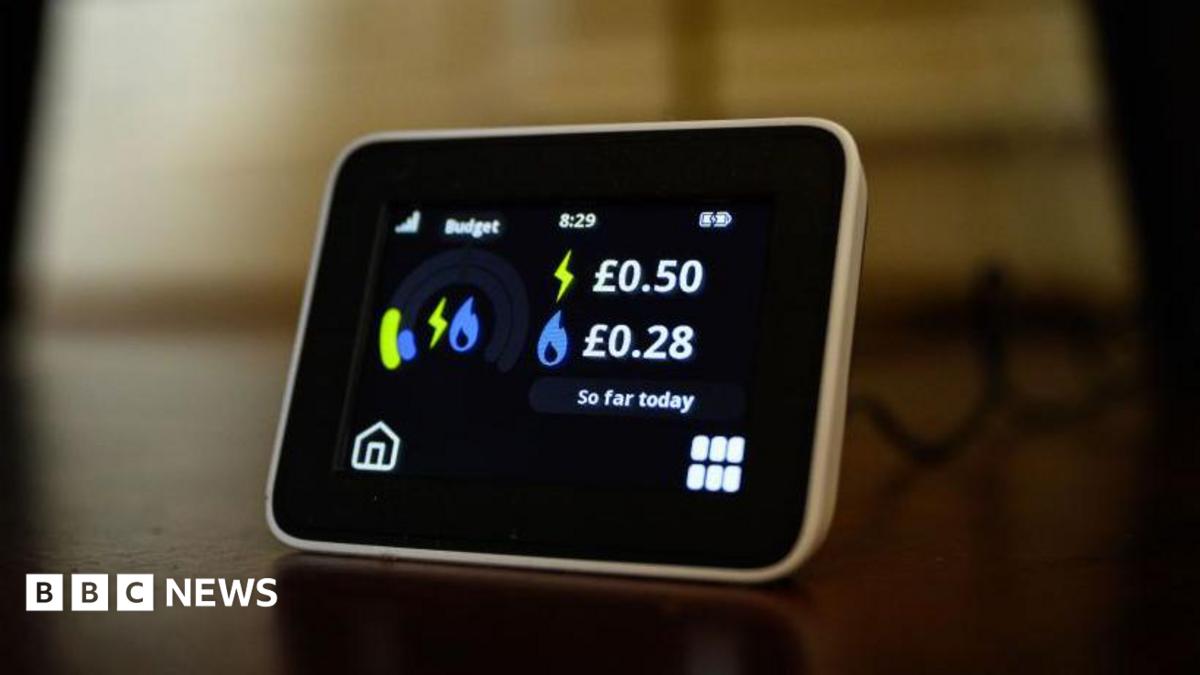
Budget Energy is the latest energy provider to increase its prices, with a 9.5% hike announced for some customers next month.
The increase will apply to to its residential electricity unit rates and standing charges for customers on variable tariffs, effective from 4 August.
Customers on fixed-price tariffs will not be affected.
The company said that the rise is due to the “continued volatility” in wholesale energy markets along with geopolitical tensions and sustained pressures across the energy market.
Budget Energy NI’s Managing Director Ken O’Byrne said they will monitor the market conditions closely.
“We understand this is unwelcome news, especially at a time when many households are facing pressure on everyday costs,” he said.
“We encourage our customers to review their tariff options to make sure they are on the plan best suited to their needs.”
Budget Energy said they will notify all affected customers directly in advance of the change, providing full details of the updated tariffs.
Last week, SSE Airtricity said household bills will increase by 6.2% from 1 August – about 20p a day, or £71.57 extra a year.
It follows an earlier increase by Power NI, whose electricity unit price increased by 6.2%, effective from 1 July.

Comment obtenir vos comptes rapidement

Nigel Farage Quits As MP To Trigger By-Election Amid Row Over His Finances
Planning investments in midcap mutual funds? Check these 5 funds with over 20% gain in 3 years


-

 Fashion4 days ago
Weekend Open Thread: High Hopes
-

 Fashion21 hours ago
Open Thread: What Great Books Have You Read Recently?
-

 Politics4 days ago
The House | “Reframing the debate from a binary discussion of winners and losers”: Yuan Yang reviews ‘We Are Not Machines’
-
 NewsBeat2 days ago
Taylor Swift and Travis Kelce wedding staffer hilariously struggles to keep her cool while checking in megastars
-
 Crypto World6 days ago
Airdrop Registration Becomes Key Focus For Remittix As RTX Launch Updates Approach
-

 Sports6 days ago
Broncos roster: OL Ben Powers (No. 74) entering final year of contract
-

 Crypto World5 days ago
Binance stock trading tops $1B in first month after launch
-

 Crypto World4 days ago
Standard Chartered Secures MiCA License as ESMA Adds 37 New Crypto Firms
-

 NewsBeat7 days ago
Presenter Caroline Flack’s brother Paul Flack dies aged 55
-

 Crypto World5 days ago
Alibaba-affiliate Ant Group enters the humanoid robot market with 12 deals
-

 Business19 hours ago
AXT Shares Jump Nearly 14% as Semiconductor Materials Maker Rebounds on AI-Linked Indium Phosphide Demand
-

 News Videos22 hours ago
Best Time to Enter Small Caps Right Now? Another Bull Run? | Financially Free
-

 Crypto World2 days ago
South Africa proposes crypto tax guidance under existing rules
-
Crypto World18 hours ago
SK hynix (000660.KS) Stock Dips as $28B Nasdaq ADR Offering Drives AI Memory Expansion
-

 Tech2 days ago
Lenovo laptops are now shipping with YMTC SSDs, a sign of Chinese NAND entering the mainstream
-

 Business6 days ago
Meta Platforms Stock Jumps 7% Today as Bloomberg Reports Company Plans to Enter the Cloud Business
-
 NewsBeat5 days ago
New exhibition reflects five decades of movement between island of Ireland and GB
-

 News Videos9 hours ago
Whats Hidden Inside This Cash Register? #treasure #reselling #money
-

 Business4 days ago
What a 10 Percent Drop Means for Buyers, Sellers and Renters
-

 Crypto World5 days ago
Binance Re-Enters Philippines As EU MiCA Rules Restrict Access
You must be logged in to post a comment Login