Connect with us
DAPA Banner
DAPA Coin
DAPA
COIN PAYMENT ASSET
PRIVACY · BLOCKDAG · HOMOMORPHIC ENCRYPTION · RUST
ElGamal Encrypted MINE DAPA
🚫 GENESIS SOLD OUT
DAPAPAY COMING

Business

Why Corporate Carpooling is the future of enterprise mobility

Published

on

Why Corporate Carpooling is the future of enterprise mobility

The modern daily commute is facing a critical inflection point. For decades, the image of a successful professional was tied to a solitary drive in a personal vehicle—a symbol of independence and status.

Today, that same image represents an operational bottleneck, an environmental liability, and a primary source of workplace stress. As urban centers become increasingly congested and commercial real estate costs for corporate parking spaces skyrocket, organizations can no longer treat employee transportation as a secondary concern. The infrastructure of yesterday is simply incapable of supporting the workforce of tomorrow.

To bridge the gap between sustainability mandates and operational reality, forward-thinking enterprises are shifting away from passive transportation policies and turning toward Corporate Carpooling as a core mobility strategy. Scope 3 emissions—which encompass indirect emissions throughout a company’s value chain, including employee commuting—frequently represent a significant portion of a business’s total carbon footprint. By converting a disjointed grid of single-occupancy vehicles into a synchronized, efficient network, organizations can actively optimize the daily journey to the office, simultaneously delivering on ambitious Environmental, Social, and Governance (ESG) targets while reducing overhead costs.

1. The multi-layered benefits of shared mobility solutions

When looking closely at the mathematics of the daily commute, the inefficiencies are staggering. Millions of vehicles hit the asphalt every morning carrying only a single passenger: the driver. This systemic underutilization of assets accelerates the wear and tear on urban infrastructure, severely degrades local air quality, and forces companies to dedicate vast swathes of expensive real estate to multi-story concrete parking structures. By introducing shared mobility frameworks, businesses can immediately tap into a wealth of hidden operational advantages that directly impact the bottom line.

From a purely financial perspective, the traditional model of individual commuting creates immense hidden overhead. Companies operating in metropolitan areas face premium lease rates for parking blocks, money that could otherwise be allocated to core research and development or workspace innovation. When employees embrace a culture of shared transportation, the demand for physical parking bays drops dramatically. This spatial reclamation allows corporate facilities managers to downsize their real estate footprint or repurpose concrete parking zones into green communal spaces, collaborative outdoor lounges, or additional office infrastructure.

Advertisement

Beyond the physical asset optimization, the human element of shared mobility is equally compelling. The psychological toll of navigating gridlock traffic alone is well-documented, often leading to elevated cortisol levels and cognitive fatigue before an employee even clocks in. By distributing the driving responsibility among colleagues, professionals can transform dead travel time into an opportunity for relaxation, casual reading, or low-stakes collaboration. Furthermore, shared commutes naturally break down corporate silos, allowing team members from entirely different departments to converse, network, and build interpersonal trust outside the structured pressures of meeting rooms and digital dashboards.

2. Driving change: The Hybo Corporate Carpooling service

To bridge the gap between corporate intent and seamless execution, Hybo has integrated a sophisticated, automated carpooling engine directly into its comprehensive workspace management ecosystem. Organizing a successful, sustained carpooling network across a large enterprise requires aligning an immense number of fluid variables, including varying shift schedules, disparate residential neighborhoods, personal comfort preferences, and sudden changes in daily itineraries. Hybo eliminates the administrative friction that has traditionally plagued shared transit programs by embedding route optimization directly into the daily workflow.

The strength of Hybo’s service lies in its algorithmic simplicity for the end-user. Rather than requiring employees to navigate a secondary, disconnected transportation app, Hybo synchronizes transit coordination with desk and space bookings. When an employee schedules a day to work from the physical headquarters, the platform cross-references their residential zone and shift hours with data from nearby colleagues. The system then automatically proposes optimized pairings, mapping out the most efficient routes to ensure minimal detours and maximum punctuality.

To actively incentivize adoption, Hybo connects carpooling directly to parking asset allocation. Shared vehicles can be automatically granted priority access to prime, front-row corporate parking bays, complete with automated license plate recognition and integrated EV charging scheduling. Simultaneously, the platform acts as a critical telemetry tool for executive leadership. Every shared trip is tracked and converted into verifiable environmental data, calculating the exact metrics of carbon reduction and fuel saved[cite: 3]. These insights are automatically aggregated into visual compliance dashboards, providing corporate sustainability officers with audit-ready, empirical proof of Scope 3 emission reductions to substantiate their annual ESG disclosures.

Advertisement

3. The ecological and cultural return on investment

Implementing a smart, software-driven carpooling architecture yields dividends that ripple far beyond basic fuel savings. On a macro environmental scale, the collective reduction of hundreds of individual vehicles commuting to a single corporate hub creates a measurable decrease in local gridlock and urban greenhouse gas concentration. When an enterprise scales this behavior across thousands of employees globally, the environmental impact transitions from a symbolic gesture to a powerful, systemic force for ecological preservation, aligning perfectly with international net-zero benchmarks.

The Structural Impact: True sustainability is achieved when green practices are woven directly into the operational software of a business. By automating the shared commute, enterprises transform eco-friendly choices from an individual chore into the default, friction-free corporate standard.

Culturally, the shared journey acts as an organic catalyst for employee engagement and well-being. The modern workplace can occasionally feel fragmented, particularly within hybrid frameworks where teams rarely interact face-to-face across different organizational layers. The shared space of a carpool creates a unique social environment where horizontal communication happens naturally. Junior associates gain invaluable mentorship insights from senior managers, cross-departmental alignment improves organically, and the sense of isolation often exacerbated by remote work models is replaced by a tangible, supportive corporate community.

Advertisement

Continue Reading
Click to comment

You must be logged in to post a comment Login

Leave a Reply

Business

Ring Energy: Taking Advantage Of The Situation

Published

on

Bonterra Energy: Charlie Lake Is The New Core Area

Ring Energy: Taking Advantage Of The Situation

Continue Reading

Business

Why This Bank of America Strategist Predicts the S&P 500 Will Drop During the Second Half of 2026

Published

on

Why This Bank of America Strategist Predicts the S&P 500 Will Drop During the Second Half of 2026

Why This Bank of America Strategist Predicts the S&P 500 Will Drop During the Second Half of 2026

Continue Reading

Business

SSI beneficiaries receive 2 direct deposit payments in July 2026

Published

on

SSI beneficiaries receive 2 direct deposit payments in July 2026

Some Social Security beneficiaries will receive two checks this July as a quirk in the calendar shifted the payment timeline for an adjacent month.

The Social Security Administration (SSA) ordinarily disburses payments for Supplemental Security Income (SSI) on the first day of a given month. The SSI program provides monthly payments to certain older adults who have little or no income, as well as to disabled individuals, which differentiates it from Social Security’s standard retirement benefits.

Advertisement

When the first of the month falls on a weekend or a federal holiday, SSI payments for that month are made on the last business day of the preceding month to ensure that beneficiaries have received their funds before the new month begins, and they face potential expenses.

Due to the way the 2026 calendar falls, two SSI payments will go out in July – one went out last week on July 1, while another will go out on Friday, July 31, for the month of August because Aug. 1 falls on a Saturday.

SOCIAL SECURITY RECIPIENTS COULD SEE A BIGGER COST-OF-LIVING ADJUSTMENT IN 2027 AS INFLATION RISES

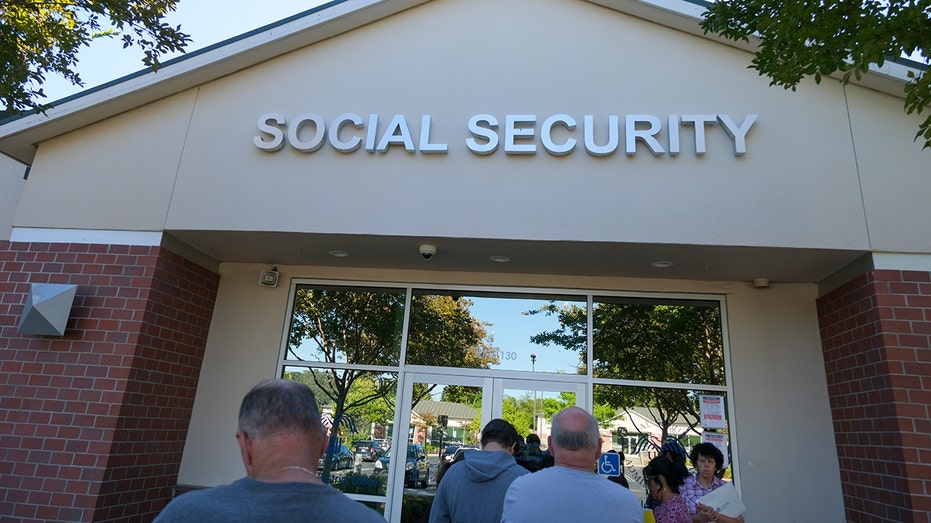
People wait in line for Social Security checks

Some Social Security beneficiaries will receive two months of benefit checks in July due to a calendar quirk. (Getty Images/stock)

The 2026 calendar will cause this dynamic to play out two more times this year for SSI payments.

Advertisement

Both October and December will see a pair of SSI payments go out to beneficiaries due to November 1 falling on a weekend and January 1 being a federal holiday on a Friday.

LARRY FINK CALLS FOR SOCIAL SECURITY REFORM, SAYS INVESTING A PORTION OF FUNDS COULD STRENGTHEN THE PROGRAM

Social Security Administration building

SSA adjusts payment dates for Supplemental Security Income (SSI) benefits based on the calendar and when the start of the month falls. (Stefani Reynolds/Bloomberg via Getty Images)

SSI payments are typically made via direct deposit, though beneficiaries without bank accounts or who want to receive the funds through a different mechanism can get them on Direct Express cards.

SSA moved to discontinue paper checks at the end of the federal government’s last fiscal year in September following a Trump administration order earlier in 2025 that mandated all federal payments transition to electronic transfers, such as direct deposit to bank accounts or transfers to debit cards.

Advertisement

HOW SOCIAL SECURITY RECIPIENTS CAN BOOST THEIR BENEFIT CHECKS

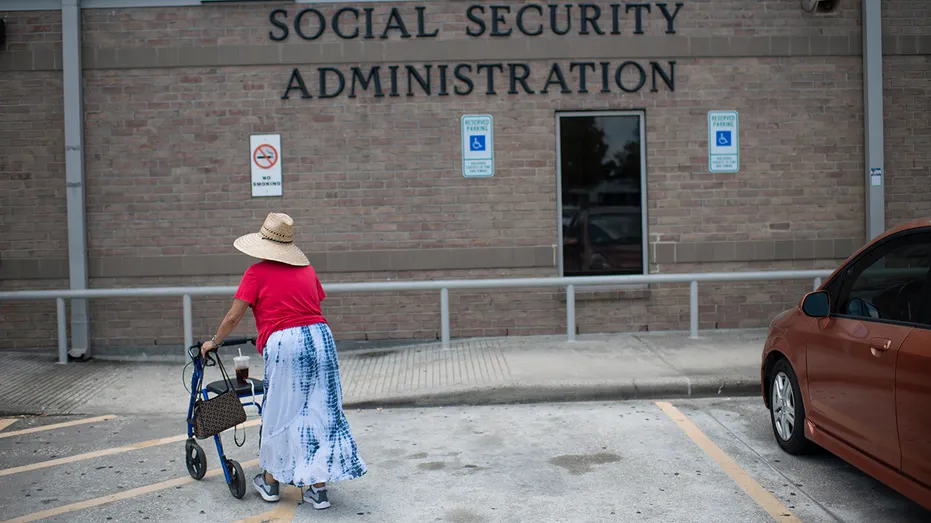
Woman with walker heads into Houston Social Security office

Most Social Security benefits are paid via direct deposit. (Mark Felix/The Washington Post)

Data from the SSA showed that as of last September, more than 68 million Americans were receiving Social Security benefits and of that figure, around 390,000 or 0.6% were receiving paper checks.

The SSA website offers methods by which beneficiaries can enroll in direct deposit through the My Social Security platform, or by phone through either the SSA or the Treasury Department’s electronic payment solution center.

GET FOX BUSINESS ON THE GO BY CLICKING HERE

Advertisement
Continue Reading

Business

SpaceX, SK Hynix, and 2 More Unknown Factors Threatening Markets This Week. Four Other Things to Know Today.

Published

on

SpaceX, SK Hynix, and 2 More Unknown Factors Threatening Markets This Week. Four Other Things to Know Today.

SpaceX, SK Hynix, and 2 More Unknown Factors Threatening Markets This Week. Four Other Things to Know Today.

Continue Reading

Business

Form 4 Arrive Ai Inc For: 7 July

Published

on


Form 4 Arrive Ai Inc For: 7 July

Continue Reading

Business

Perfect Snacks introduces oat-based protein bar

Published

on

Perfect Snacks introduces oat-based protein bar

Oaties deliver 8 grams of protein.

Continue Reading

Business

Form 4 Kodiak Gas Services Inc For: 7 July

Published

on


Form 4 Kodiak Gas Services Inc For: 7 July

Continue Reading

Business

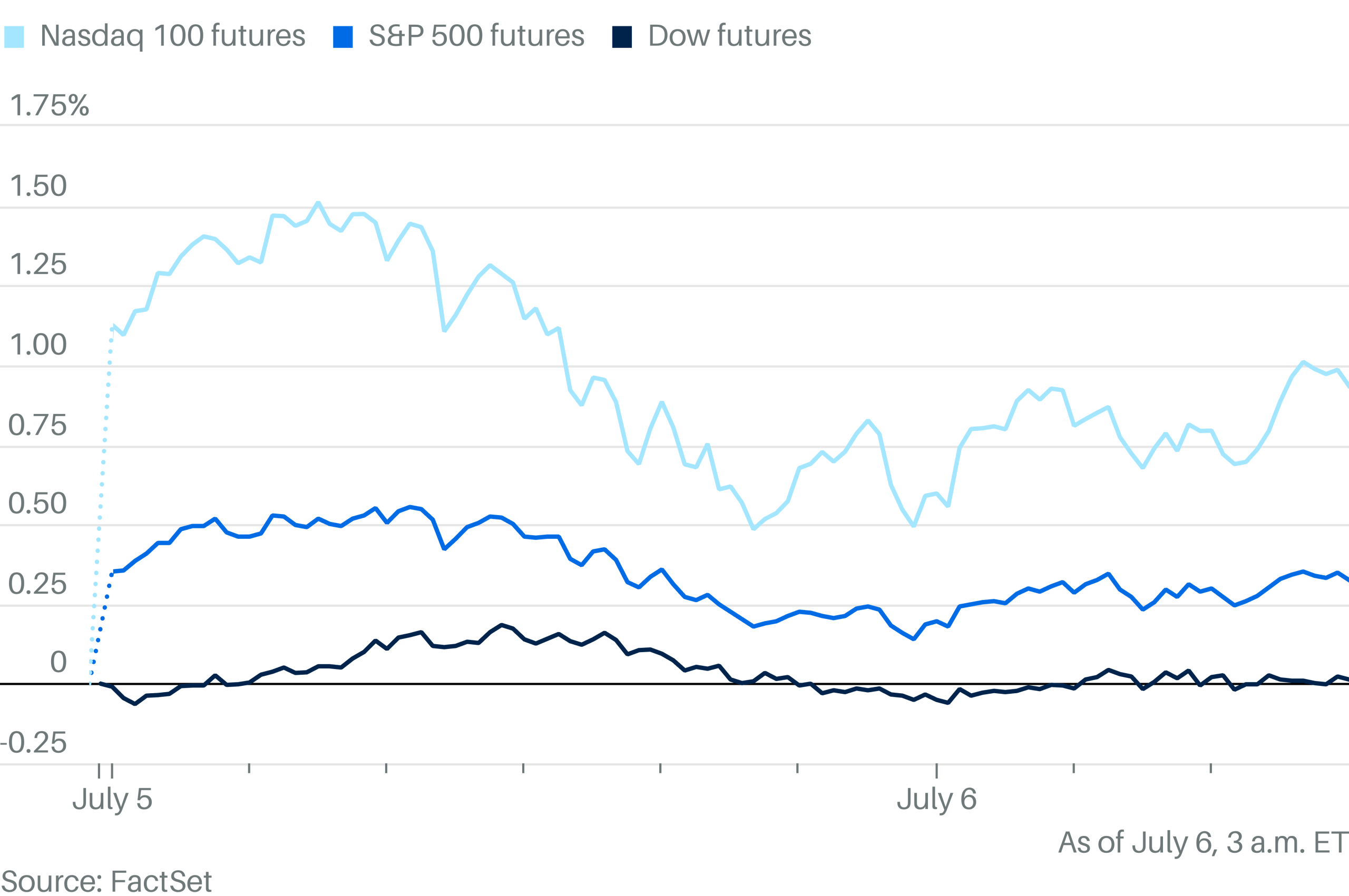
Chip Stocks Drive Market Rally as Nasdaq Futures Jump

Published

on

Barron's

U.S. stock futures looked set to open in the green early Monday, with the technology sector driving the gains.

Corporate news is set to dominate the headlines in a light week for economic data, with the exception of Wednesday’s release of the Federal Reserve’s minutes from its June monetary-policy meeting.

Nasdaq 100 futures were gaining 1.1%, S&P 500 futures were rising 0.5% and Dow Jones Industrial Average futures were slipping 28 points, or 0.1%.

Continue Reading

Business

Berkshire Hathaway: Poised To Reclaim $540 Record High (Rating Upgrade) (NYSE:BRK.B)

Published

on

Berkshire Hathaway: Poised To Reclaim $540 Record High (Rating Upgrade) (NYSE:BRK.B)

This article was written by

Envision Research, aka Lucas Ma, has over 20+ years of investment experience and holds a Masters with in Quantitative Investment and a PhD in Mechanical Engineering with a focus on renewable energy, both from Stanford University. He also has 30+ years of hands-on experience in high-tech R&D and consulting, housing sector, credit sector, and actual portfolio management.He leads the investing group Envision Early Retirement along with Sensor Unlimited where they offer proven solutions to generate both high income and high growth with isolated risks through dynamic asset allocation. Features include: two model portfolios – one for short-term survival/withdrawal and one for aggressive long-term growth, direct access via chat to discuss ideas, monthly updates on all holdings, tax discussions, and ticker critiques by request.

Analyst’s Disclosure: I/we have no stock, option or similar derivative position in any of the companies mentioned, and no plans to initiate any such positions within the next 72 hours. I wrote this article myself, and it expresses my own opinions. I am not receiving compensation for it (other than from Seeking Alpha). I have no business relationship with any company whose stock is mentioned in this article.

Seeking Alpha’s Disclosure: Past performance is no guarantee of future results. No recommendation or advice is being given as to whether any investment is suitable for a particular investor. Any views or opinions expressed above may not reflect those of Seeking Alpha as a whole. Seeking Alpha is not a licensed securities dealer, broker or US investment adviser or investment bank. Our analysts are third party authors that include both professional investors and individual investors who may not be licensed or certified by any institute or regulatory body.

Advertisement
Continue Reading

Business

Teva Pharmaceutical Industries Limited (TEVA) Discusses Anti-IL-15 Antibody Phase Ib 24-Week Efficacy Results in Vitiligo and Planned Advancement to Phase 2b Transcript

Published

on

OneWater Marine Inc. (ONEW) Q1 2026 Earnings Call Transcript

Teva Pharmaceutical Industries Limited (TEVA) Discusses Anti-IL-15 Antibody Phase Ib 24-Week Efficacy Results in Vitiligo and Planned Advancement to Phase 2b July 7, 2026 8:00 AM EDT

Company Participants

Christopher Stevo – Senior Vice President of Investor Relations & Competitive Intelligence
Richard Francis – President, CEO & Director
Eric Hughes – Executive VP of Global R&D and Chief Medical Officer

Conference Call Participants

Advertisement

Yuchen Ding – Jefferies LLC, Research Division
Matthew Dellatorre – Goldman Sachs Group, Inc., Research Division
Jason Gerberry – BofA Securities, Research Division
David Amsellem – Piper Sandler & Co., Research Division
Louise Chen – Scotiabank Global Banking and Markets, Research Division
Christopher Schott – JPMorgan Chase & Co, Research Division
Di Zhao – UBS Investment Bank, Research Division
Umer Raffat – Evercore ISI Institutional Equities, Research Division

Presentation

Operator

Advertisement

Hello, and welcome to the IL-15 vitiligo Phase Ib 24-week Efficacy Results Conference Call. My name is Alex, and I’ll be coordinating today’s call.[Operator Instructions] I’ll now hand it over to Chris Stevo, SVP, Investor Relations. Please go ahead.

Christopher Stevo
Senior Vice President of Investor Relations & Competitive Intelligence

Thanks, Alex. Good morning and good afternoon, everyone. Before I turn the call over to our CEO, Richard Francis, I want to remind everyone that we will be making forward-looking statements on this call. The company cautions investors that any forward-looking statement involves risks and uncertainties and is not a guarantee of future performance. Actual results may differ materially from those expressed or implied in the forward-looking statements due to a variety of factors.

Advertisement

These factors are described in our earnings press release and our most recent 10-Q and 10-K filed with the SEC. And any statements we make are only as of today, and we undertake no obligation to update these statements subsequently. And with that, Richard Francis.

Richard Francis
President, CEO & Director

Advertisement
Continue Reading

Trending

Copyright © 2025