Connect with us

Sports

Victor Wembanyama contract explainer: Is he taking discount? Does it help Spurs?

Published

on

San Antonio Spurs star Victor Wembanyama just had an enormously successful third season in the NBA end in Finals heartbreak against Jalen Brunson and the New York Knicks. Brunson famously elected to take a substantial discount on the contract extension he signed in 2024 in order to help the Knicks build the team that eventually took down Wembanyama and the Spurs. 

Now, at least to an extent, Wembanyama is following in Brunson’s footsteps.

On Friday, Wembanyama reportedly signed a five-year, $252 million contract extension to remain in San Antonio. In theory, he could have made up to around $303 million. That decision both does and does not represent a substantial discount on his contract. What do I mean by that? Let’s dive into the cap mechanics of the deal and its broader implications for both the Spurs and the NBA at large.

Advertisement

Victor Wembanyama reportedly agrees to five-year, $252M extension with Spurs while leaving money on the table

Brad Botkin

Victor Wembanyama reportedly agrees to five-year, $252M extension with Spurs while leaving money on the table
Advertisement

So… is it a discount or not?

The answer here is a resounding “maybe.” Not every player has the same max salary, and the issue at play here is what sort of max Wembanyama would have been eligible for.

Max contracts are divided into three tiers. Players with 4-6 years of experience like Wembanyama can start their new contracts at 25% of the cap. Those with between 7-9 years of experience can start at 30% of the cap. Finally, players with 10 or more years of experience can start at 35% of the cap. However, players who hit certain benchmarks can leap up into the next tier. If Wembanyama had won MVP or Defensive Player of the Year or made an All-NBA Team next season, he would have been eligible to jump from the 25% max tier to the 30% max tier.

Most players signing rookie extensions aren’t eligible for 30% after their third season. A single MVP award at any point in the three previous seasons automatically triggers eligibility, but if a player is attempting to do so through All-NBA or Defensive Player of the Year as most do, he needs to either get there in the season before the contract starts (the fourth season for rookie extension candidates, like Wembanyama) or in two of the previous three seasons (the second and third seasons for a rookie extension candidate). Luka Dončić is the last player to reach eligibility before the start of his fourth season. Therefore, most players who can negotiate that 30% max do so through escalators. The contract is guaranteed at the 25% max, but if the player hits any of those benchmarks in his fourth season, it jumps to the 30% max.

Advertisement

What Wembanyama is doing here is foregoing those escalators. He just took a 25% max, no questions asked. Even if he makes an All-NBA Team or wins Defensive Player of the Year or MVP, he will not get boosted up to 30%. So the answer to whether or not Wembanyama took a discount depends on what happens this season.

How does this discount compare to Jalen Brunson’s?

Wembanyama’s decision will inevitably be compared to Brunson’s, but they are structurally quite different. Wembanyama is a former first-round pick entering his fourth season, making him automatically eligible for a rookie extension. It was just a matter of what sort of extension he took.

Brunson’s case is a bit more unusual. He signed his deal coming off his sixth season. His circumstances would have required waiting a full year to get what he was actually worth. Had Brunson merely played out the 2024-25 season, he would have become a free agent eligible to re-sign with the Knicks on a new deal starting at 30% of the cap. However, he instead elected to take a standard veteran extension following his sixth season. Veteran extensions can give a player up to a 40% raise on their previous salary, and since Brunson was already on a team-friendly deal signed in free agency, that mechanism capped him below his max.

The exact amount that Brunson gave up is a bit overstated. The number you see thrown around frequently is $113 million, because Brunson ultimately signed for $156.5 million, whereas his projected max would have been around $269 million had he waited a year. However, this ignores how much faster the extension would have allowed Brunson to reach free agency again and sign a new deal to replace the discounted one. During the seasons when these contracts overlapped, the discount was closer to $37 million, or about $12 million per year.

Advertisement

That’s right around the $10 million or so that Wembanyama is potentially sacrificing annually. Wembanyama is starting his new deal at 25% of the cap rather than 30%. Brunson went slightly further, starting his extension at 22.6% of the cap rather than waiting an extra year to reach 30%. When you consider the extra risk Brunson would have had to have taken on by waiting a year to sign, the degree of favor that each of them did their teams suddenly starts to look comparable. The Knicks used that favor to build a championship team. Now, San Antonio hopes to do the same.

What does this mean for the Spurs?

Managing Wemby’s workload

The single most important element of this contract for San Antonio has less to do with roster-building than it does load management. You might look at those Rose Rule escalators and think, “We’re talking about Victor Wembanyama here. He was absolutely going to win Defensive Player of the Year and make an All-NBA Team.” Well, that might be the case if not for the 65-game rule. Wembanyama just barely skirted beyond the threshold last season, and he didn’t reach it in the 2024-25 campaign.

The 65-game rule incentivizes injured players to suit up early for the sake of possible contract escalators. This isn’t speculation. It has literally happened. Take Tyrese Haliburton. He played in 33 of the first 36 games for the Indiana Pacers in the 2023-24 season, averaging just under 24 points and 13 rebounds in those games. And then he hurt his hamstring, missing five games, before returning for one and then missing five more. He played every game the rest of the season, but wasn’t the same player. He averaged 16.8 points and 9.3 assists the rest of the way on far less efficient shooting than he’d previously mustered. 

He was so spectacular in the first half of the season that he still earned a Third-Team All-NBA selection and therefore received a 30% max contract rather than the 25% he otherwise would have received. But it seemed like he rushed back before he was ready. Haliburton himself essentially admitted that. In an interview with JJ Redick in which Redick alluded to Haliburton’s “$53 million incentive to come back,” Indiana’s superstar acknowledged he might have handled his recovery differently without the 65-game rule. 

Advertisement

“I thought I was ready to go for the Portland game. So did our medical staff. Everybody agreed,” he said. “But if this was never the case, I might have been like, ‘Give it another game or two. Maybe think more through this. Let’s try to be 100%.’”

Now apply this thinking to Wembanyama, whose size increases his injury risk every time he steps on the court. The last thing the Spurs want is to ever force him to play hurt. Remember, he averaged only 29.2 minutes per game last season. San Antonio is incredibly cautious with him. Now, he has no contractual incentive to risk aggravating an injury unnecessarily. The Spurs can continue to manage his workload aggressively. Nothing is more important to the Spurs moving forward than Wembanyama’s health.

Advertisement

Ducking the luxury tax

The Spurs would have happily paid Wembanyama any legal amount because, if healthy, he is almost certainly to outplay his next contract. But getting this discount does still potentially mean quite a bit. The most obvious immediate benefit here is that, with Wembanyama at 25% rather than 30%, it becomes far easier for the Spurs to avoid the luxury tax in the 2027-28 season. Right now, they’re looking at around $10 million in tax room with three roster spots to fill. If Wembanyama were making 30%, he’d essentially fill that gap himself, forcing the Spurs to dump a contract to duck the tax.

You might say that the Spurs are a championship-caliber team that should be willing to pay the tax, but remember, this is an exceedingly young team hoping for a very long window. The new repeater tax is almost comically punitive. The Denver Nuggets are staring down a $400 million payroll if they keep Peyton Watson at market value, for instance. The Spurs have a lot of tax years ahead of them and they play in a relatively small NBA market. 

Delaying the repeater clock for as long as possible absolutely matters. The Spurs likely would have done it one way or another. Now, doing so won’t have to mean, say, dumping Luke Kornet‘s partially guaranteed contract or trading Tobias Harris.

The weight of De’Aaron Fox’s contract

And then of course, there’s the De’Aaron Fox of it all. As has been widely discussed, the Spurs signed Fox to a four-year, $221.7 million max extension last offseason that is only now kicking in. With each passing year, that contract becomes cumbersome. This season, it’s fairly manageable. Wembanyama, Stephon Castle and Dylan Harper are all still on rookie deals. But Wembanyama’s new deal kicks in for the 2027-28 season, and then Castle follows a year after that, with Harper getting paid last in a deal that will start in the 2029-30 season. We can safely assume that Castle and Harper are getting something close to the max, barring a catastrophe. Therefore, the Spurs were staring down a nightmare scenario in 2030 in which Wembanyama and Fox were on 30% max deals while Castle and Harper were at least making 25%, if not 30%, themselves. That would have been untenable.

Advertisement

The one-year overlap between Fox’s deal and the rookie extensions signed by San Antonio’s star-studded core is still a concern, but Wembanyama taking 25% instead alleviates the year-to-year weight of overpaying Fox meaningfully. They might still eventually decide to trade Fox, but they’d be doing so from a slightly stronger position. Teams won’t be able to point at their payroll as easily and say, “You have to do this, so you’d better give us something great to get us to take on Fox’s contract.” The Fox situation remains potentially problematic. Wembanyama’s discount just makes it less so.

And to this point, we’ve only really talked about Wembanyama’s discount in a vacuum. The Spurs have a history of convincing their best players to take less. Tim Duncan, Tony Parker and Manu Ginobili all did so. Perhaps Castle and Harper cooperate as well and take slight haircuts for the sake of building a championship roster. That would make life far easier for the Spurs moving forward. Of course, there’s a catch: perhaps Wembanyama’s decision compels stars on other teams to take slightly less for the sake of the team, creating tougher competition for the Spurs moving forward. Yet most such cases will be much more complicated than Wembanyama’s. 

What does this mean for everybody else?

Pressure on other stars to take discounts?

When Brunson won the championship, there was plenty of debate about whether or not his decision would trigger a wave of similar discounts from stars. But Brunson’s situation is anomalous on so many levels that it is essentially irreplicable. Team president Leon Rose is a former power agent whose first client was Brunson’s father, Rick, who is now a coach on the team. Their relationship spans decades. The Knicks have gone out of their way to acquire three of Brunson’s college teammates. He hosts a podcast with one of them, Josh Hart, about their experience as former roommates. They paid five first-round picks to get another of them, Mikal Bridges.

The degree of trust between Brunson and the Knicks is unique in all of basketball. We will likely never see a situation as specifically conducive to a discount as Brunson’s ever again. He could always safely assume that the Knicks would make him whole down the line. Most players can’t make that assumption with their teams.

Advertisement

Wembanyama’s situation, though, is a bit more notable. Think back to LeBron James. When he joined the Miami Heat in 2010, he took a sizable enough discount for Pat Riley to bring back Udonis Haslem and sign Mike Miller. When he returned to the Cleveland Cavaliers in 2014, however, he made it clear he would accept only a max contract. He would not take less than the max again for a full decade. Soon after returning to Cleveland, he was elected vice president of the NBPA.

James was and remains the face of the NBA. At that point, he was at the absolute peak of his powers. By taking a discount, he was giving the owners and general managers of other teams ammunition to convince their own players to do the same. Essentially, they could say, “Do you really think you deserve more than LeBron James? How are we supposed to compete with him if you’re making more money than he is?” Taking the max in 2014 removed some of that pressure on his fellow stars to take less.

Advertisement

Now, especially in the ultra-restrictive apron era, teams have that ammunition once again. We just watched Jaylen Brown get traded in part because of his 35% max contract. Karl-Anthony Towns was moved for similar reasons. Teams will once again pitch their players on the idea that competing with Wembanyama might mean taking the sort of discount that he did. NBA salary numbers are so cartoonish now that some teams will probably get away with it. Remember, $250 million is the discounted version of Wembanyama’s contract. There is a very real chance that he earns $1 billion solely in NBA salary before it’s all said and done. Teams are inevitably going to try to sell their stars on the idea that they are going to retire with generational wealth either way, so they might as well prioritize winning in their contracts.

Some players will do so. Others won’t. This has always been true to an extent, but the divide will probably get starker. Ironically, the teams that get these discounts are usually the ones that need them least. James took less to play for the historically competent Heat. Chet Holmgren eschewed these same escalators for the Oklahoma City Thunder a year ago. Brunson plays for the exceptionally well-run Knicks. Wembanyama’s Spurs won five championships in the two-and-a-half decades before his arrival. They have all been among the NBA’s more expensive teams, of course, but they are also among the smartest. Fortune tends to favor the prepared.

Contract management has never been more important

Having a smart front office has always been an enormous advantage. That advantage is even more meaningful under the draconian reign of the 2023 CBA. If the smart teams have contractual advantages on top of their strategic ones, well, that’s going to make it that much harder for the teams paying their players at the top of the market to compete. The Knicks just won their championship, thanks in no small part to Brunson’s discount. Oklahoma City’s title came with many of its best players on cheap rookie deals. Contract management has never been more important than it is today, and one day soon, discounts like this might become a necessity to winning championships.

The more players who take these discounts, the less powerful each of them becomes. After all, there’s still only one trophy at the end of the season. No matter how it happens, 29 teams and the hundreds of players they employ won’t win it every year. In practice, this means these discounts will no longer be a superpower for the teams that get them. Instead, max contracts could become anchors dragging down those that don’t.

Advertisement

We’re halfway through the 2023 CBA, assuming either side exercises its opt-out after the 2028-29 season. Maybe the rules will change again in ways that avert all of this by then. But what Wembanyama did here could drastically alter the contractual landscape superstars face. At the very least, taking every last cent is likely to draw some criticism. At most, it’s going to make it substantially harder for such players to realistically win championships. 

The Spurs were already a terrifying opponent. Wembanyama just made them that much scarier.

Advertisement

Source link

Continue Reading
Click to comment

You must be logged in to post a comment Login

Leave a Reply

Sports

Alex Eala wins Mubadala DC Open title, stuns Jessica Pegula

Published

on

Alex Eala vs Jessica Pegula Alexandra Eala 2026 Mubadala DC Open vs Jessica Pegula final

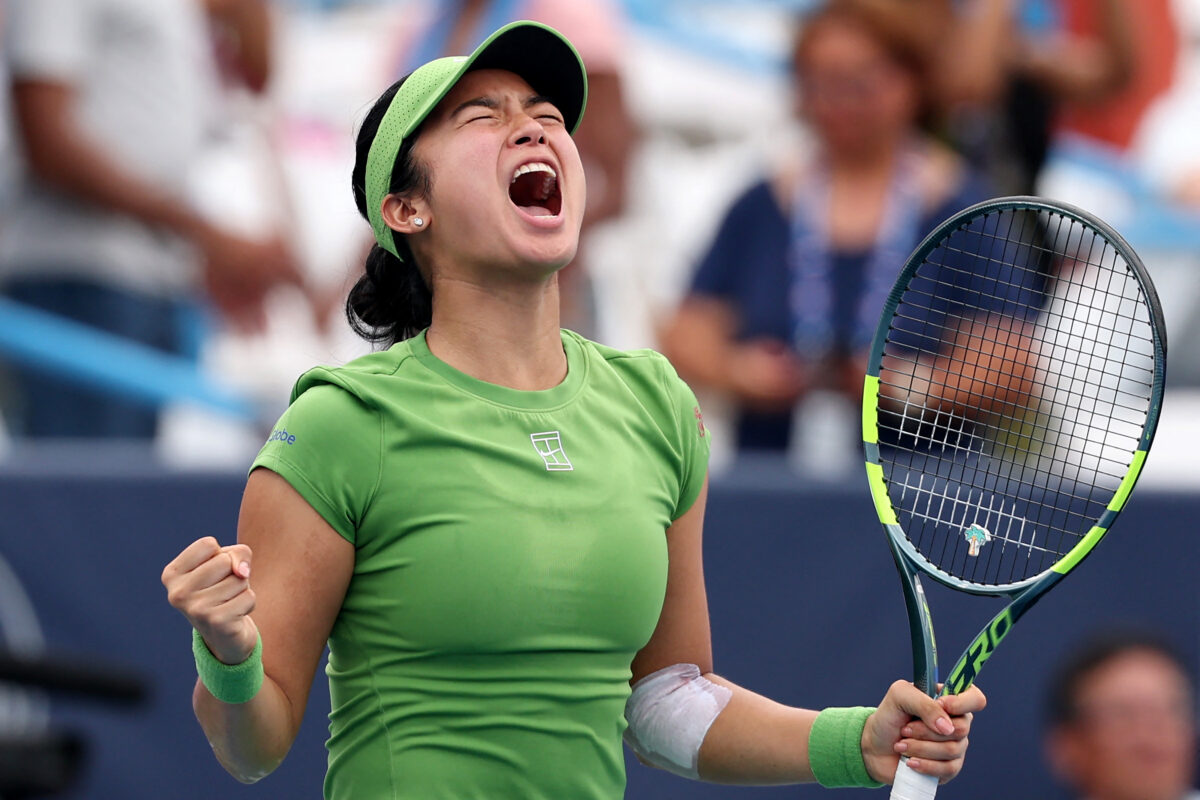
FILE–Alexandra Eala of the Philippines celebrates after winning a women’s singles match against Naomi Osaka of Japan on day six of the Mubadala DC Open 2026 at William H.G. FitzGerald Tennis Center on August 01, 2026 in Washington, DC. Emilee Chinn/Getty Images/AFP

LIVE: Alex Eala vs Jessica Pegula – Mubadala DC Open final

MANILA, Philippines–Alex Eala was trailing Jessica Pegula at the Mubadala DC Open Final when heavy downpour suspended play at William H.G. Tennis Center in Washington.

That turned out to be just the calm before the real storm that the top-seeded Pegula simply couldn’t weather.

Article continues after this advertisement
Advertisement

Back against the wall, Eala went on a ferocious fightback to overpower the American World No. 3 in the last two sets, 4-6, 6-4, 6-0, and capture the biggest win of her young career in front of a frenetic predominantly Filipino crowd at centre court on United States soil.

“It’s always a pleasure to share the court with you. I definitely learned so, so much, especially from your forehand lines and backhand crosses. So I’m really looking forward to many more finals with you,” said Eala, who chalked up her seventh win against a top 10 player this season.

Advertisement

The match, which was delayed for three hours due to the bad weather, was halted and pushed to another day when rain returned with Eala behind, 4-6, 2-1.

Article continues after this advertisement

But it was certainly worth the wait, especially for Filipino fans, who stayed up in the wee hours of the morning to witness Eala achieve another historic feat.

The Filipino trailblazer claimed her first WTA Tour-level and WTA 500 title after going on another giant-slaying run.

Advertisement

“First, I wanna congratulate Alex on an amazing week, amazing tournament. I don’t know how much more I can say, but you’re an amazing player and just to see how far you’ve come over the last couple of years when we first played, see the amazing fans that follow you every single place you go, it’s not fun to play against, but I really do appreciate the fun atmosphere,” said Pegula, known for her calm and methodical style but unraveled amid Eala’s relentless and aggressive play at the resumption.

Article continues after this advertisement

Eala opened her Washington campaign by rallying past Olympic champion Zheng Qinwen. She then dethroned defending champion Leylah Fernandez in another comeback win that saw her battle back from a 5-1 deficit in the second set.

The 21-year-old Eala also swept World No. 10 Elina Svitolina in the quarterfinal and dispatched four-time Grand Slam winner and former World No. 1 Naomi Osaka in the final four.

Advertisement


Your subscription could not be saved. Please try again.


Your subscription has been successful.

Eala, who is expected to crack the WTA top 20, looks to sustain her fine form at the WTA 1000 Canadian Open in Toronto, where she’s seeded 25th and drew a first-round bye.

Advertisement

Eala evened her head-to-head matchup with Pegula, who ended her dream run in Miami in March of last year. She also denied Pegula a second crown in Washington.

Source link

Advertisement
Continue Reading

Sports

BWF World C’ship 2026: The rare club of junior and senior world champions | Other Sports News

Published

on


The BWF Badminton World Championships 2026, to be held at the Indira Gandhi Indoor Stadium in New Delhi from August 17 to 23, will bring together the world’s finest shuttlers in pursuit of badminton’s most coveted individual title.


While Olympic champions, world No. 1 players and established stars will dominate the spotlight, a select group of players will arrive with an achievement that sets them apart from the rest. Long before conquering the senior circuit, they had already announced themselves as the best junior players in the world.


Advertisement


Making the transition from junior champion to senior world champion is one of the toughest feats in badminton, and only a handful of players have managed to complete that journey.


Akane Yamaguchi, Kunlavut Vitidsarn, Ratchanok Intanon, Liu Shengshu and Dechapol Puavaranukroh all turned early promise into World Championship glory. As they return to New Delhi, the five former junior champions will be chasing another world title while looking to further strengthen their legacies on badminton’s biggest stage.


Five players who won both junior and senior world championships:


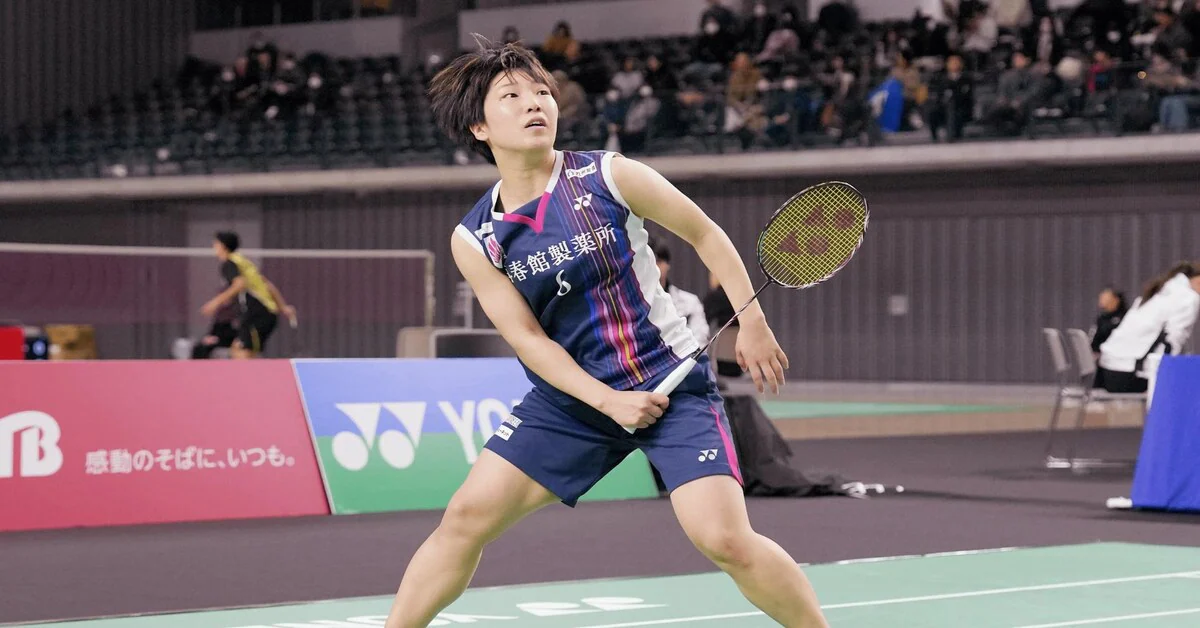
Akane Yamaguchi (Japan): From junior prodigy to three-time world champion

Advertisement

  • World Junior titles: 2013, 2014 (women’s singles)

  • Senior World titles: 2021, 2022, 2025


Akane Yamaguchi’s rise began with back-to-back women’s singles titles at the BWF World Junior Championships, making her the first Japanese player to achieve the feat. Soon after, she became the youngest-ever winner of a BWF Super Series title at the age of 16, signalling the arrival of one of Japan’s finest shuttlers.


She has since built one of the most decorated careers in women’s singles, winning three World Championship titles, two BWF World Tour Finals crowns and the Asian Championships. Yamaguchi has also played a key role in Japan’s Uber Cup triumph and remained among the world’s elite for nearly a decade. She heads to New Delhi as one of the favourites for another world title. 


Kunlavut Vitidsarn (Thailand): The junior king who conquered the senior stage

Advertisement

  • World Junior titles: 2017, 2018, 2019 (men’s singles)

  • Senior World titles: 2023


Kunlavut Vitidsarn rewrote the record books by becoming the only men’s singles player to win three consecutive BWF World Junior Championships titles, establishing himself as one of the brightest talents in the sport.


The Thai star has carried that promise into the senior ranks. He became Thailand’s first men’s singles world champion in 2023, claimed the silver medal at the Paris 2024 Olympics, won the 2025 Asian Championships title and became the first Thai men’s singles player to reach world No. 1. Still in his mid-20s, Kunlavut will be among the leading contenders in New Delhi.


Ratchanok Intanon (Thailand): The teenage sensation who fulfilled her promise

Advertisement

  • World Junior titles: 2009, 2010, 2011 (women’s singles)

  • Senior World titles: 2013


Before Kunlavut made history, Ratchanok Intanon had already shown Thailand the path to badminton greatness.


The Thai star won three successive World Junior Championships titles and earned a reputation as one of the sport’s brightest teenage talents, thanks to her effortless strokeplay and creative shot-making.


She made an equally seamless transition to the senior circuit, becoming the youngest-ever women’s singles world champion in 2013 at just 18 years of age. Intanon later climbed to world No. 1, won multiple BWF World Tour titles and represented Thailand at four Olympic Games, cementing her place among the game’s most accomplished players.

Advertisement


Liu Shengshu (China): Doubles specialist making a rapid rise


  • World Junior titles: 2022 (women’s doubles and mixed doubles)

  • Senior World titles: 2025 (women’s doubles)


Liu Shengshu enjoyed a memorable BWF World Junior Championships campaign in 2022, winning gold medals in both women’s doubles and mixed doubles to showcase her versatility.


Her rise at the senior level has been equally impressive. Partnering with Tan Ning, Liu won the silver medal at the Paris 2024 Olympic Games before capturing the women’s doubles title at the 2025 BWF World Championships. The pair have quickly established themselves among the world’s strongest combinations and will once again be among the favourites in New Delhi.

Advertisement


Dechapol Puavaranukroh (Thailand): Reinventing himself as a world champion


  • World Junior titles: 2014 (men’s doubles)

  • Senior World titles: 2021 (mixed doubles)


Dechapol Puavaranukroh’s journey to the top took an unconventional route.


After winning the World Junior title in men’s doubles, the Thai shuttler switched his focus to mixed doubles, where he found his greatest success. Partnering with Sapsiree Taerattanachai, he won the 2021 BWF World Championships, reached world No. 1 and collected several BWF World Tour titles.

Advertisement


At the BWF World Championships 2026, Dechapol returns with Supissara Paewsampran and will be aiming to add another world title to his impressive résumé.


From junior promise to badminton’s biggest stage


Winning a World Junior Championship is often seen as a glimpse of future greatness, but only a handful of players manage to translate that promise into senior World Championship success.


Advertisement


Akane Yamaguchi, Kunlavut Vitidsarn, Ratchanok Intanon, Liu Shengshu and Dechapol Puavaranukroh have all achieved that rare feat. As the BWF World Championships 2026 gets under way in New Delhi, the five former junior champions will once again be chasing badminton’s ultimate prize.

Source link

Continue Reading

Sports

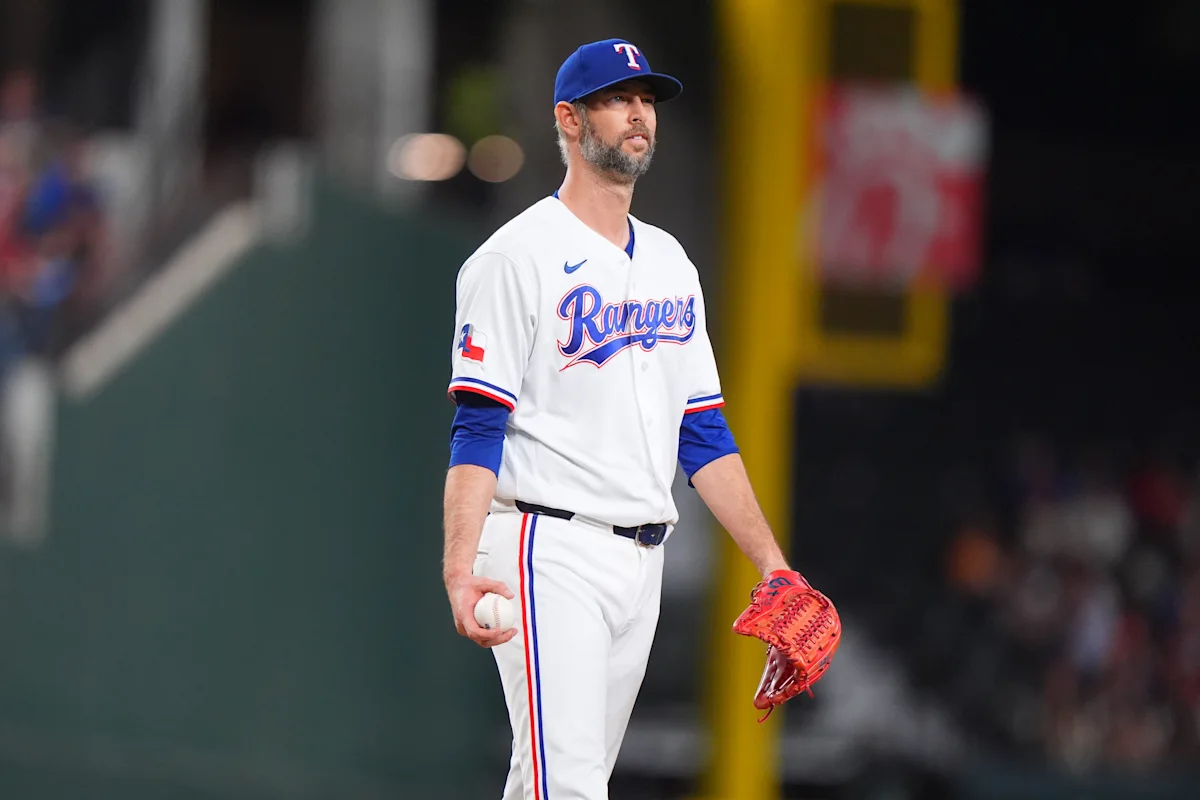
Veteran righty Chris Martin designated for assignment by Rangers after third IL stint

Published

on

ARLINGTON, Texas (AP) — Veteran right-handed reliever Chris Martin was designated for assignment by the Texas Rangers on Monday after being reinstated from his third injured list stint this season because of a right shoulder issue.

Martin, who turned 40 in June, is 1-1 with a 9.00 ERA in 16 games this season, allowing 25 hits and 14 earned runs in 14 innings. He missed 75 games during his three IL stints.

Advertisement

The 6-foot-8 Martin is an Arlington native who initially played for his hometown team in 2018 and 2019. He returned to the Rangers last season, when he had a 2.98 ERA over 49 relief appearances.

Advertisement

Martin is 19-25 with a 3.53 ERA in 434 relief appearances over 11 big league seasons with seven teams. His 149 games with the Rangers are the most with a single team, and he pitched 100 games for Boston in 2023 and 2024.

___

AP MLB: https://apnews.com/hub/mlb

Source link

Advertisement
Continue Reading

Sports

Explained: How Pakistan pacer’s British citizenship puts PSL 2027 contract in limbo | Cricket News

Published

on

Explained: How Pakistan pacer's British citizenship puts PSL 2027 contract in limbo
Pakistan’s Mohammad Amir, second left, celebrates with teammates after the dismissal (File photo)

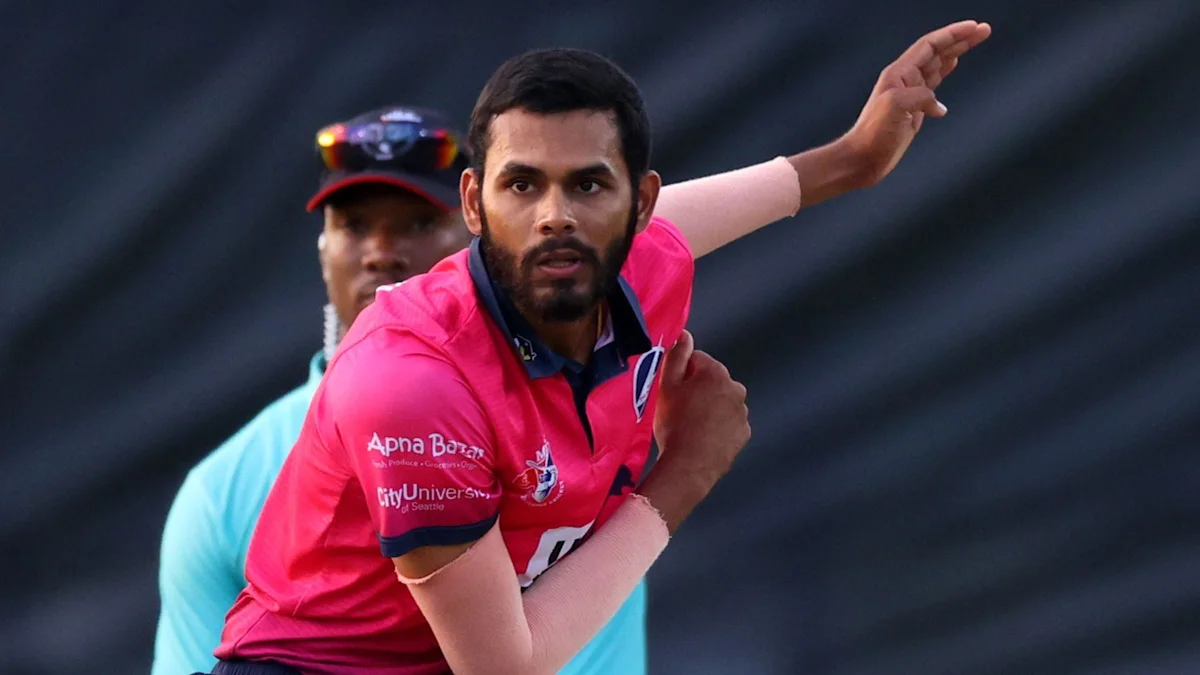
Mohammad Amir‘s new British citizenship could create a fresh complication for the Pakistan fast bowler ahead of the 2027 Pakistan Super League (PSL). Although Amir played as a domestic cricketer in the PSL until last season, he is now expected to be treated as an overseas player.Amir spoke about the change during an appearance on Wisden’s The Scoop Extended, revealing that his new citizenship status would affect how he is classified in the PSL. His British citizenship was confirmed in June after Nottinghamshire signed him for the 2026 Vitality Blast.The move has already allowed Amir to be treated as a domestic player in English competitions. He also played for Trent Rockets in the 2026 edition of The Hundred after replacing David Payne.

What does it mean for Amir’s PSL future?

The situation is different in Pakistan. Amir is expected to be classified as an overseas player in the PSL, meaning any team wanting him will have to use one of its foreign-player slots.Amir played for Rawalpindi in PSL 2026 after being bought for PKR 5.4 crore in the league’s first auction. He was among the team’s major signings alongside Naseem Shah and Daryl Mitchell.The change could create a problem because players retained or bought before PSL 2026 were given two-year contracts covering the 2026 and 2027 seasons. Under the PSL auction rules, teams can retain up to seven players for PSL 12, while released players return to the auction pool.The Pakistan Cricket Board (PCB) has not yet clarified whether Rawalpindi can keep Amir under his existing deal after his status changes. The team may have to release him, renegotiate his contract or use an overseas-player slot to retain him.Reports suggesting that PSL 2027 could be Amir’s final season have not been confirmed by the cricketer, PCB or Rawalpindi.For now, what is clear is that Amir holds a British passport, is treated as a domestic player in England and is expected to be an overseas player in the PSL. A formal PCB clarification on his Rawalpindi contract is still awaited.

Source link

Advertisement
Continue Reading

Sports

5 Simple keys to help you stop digging your wedges

Published

on

A high, soft pitch is one of the most satisfying shots in golf, and it’s easier to hit than you might think. Start by using a sand wedge or lob wedge. The loft of these clubs helps launch the ball, while the bounce allows the club to glide through the turf.

Many golfers struggle because the leading edge digs into the ground, causing fat or stubbed shots. Learn to use the bounce correctly, and you’ll start hitting crisp, consistent pitch shots around the green.

Here are five keys that will help you use the bounce of your club more effectively and improve your short game.

1. Set the clubface square

Lofted wedges are designed to appear open at address. Properly setting the club on its sole is critical because it allows the wedge’s full loft and bounce to work as intended.

Advertisement

Start with the clubface square to slightly open. Opening the face more can increase launch and bounce, which may benefit higher-speed players. But for most golfers, square to slightly open is an ideal starting point.

2. Keep the clubhead centered

Ball position is a key to consistent pitch shots. Ideally, the clubhead should be positioned near the center, or slightly forward, in your stance.

This helps reduce excessive forward shaft lean, which can expose the leading edge and cause the club to dig. If you prefer playing the ball farther back in your stance, opening the face slightly can add bounce and help offset the steeper shaft angle.

3. Start with a neutral shaft position

A neutral shaft position at address helps maintain the wedge’s natural loft and bounce. As a starting point, the grip should point toward the center of your body rather than significantly forward. This allows the sole of the wedge to rest on the turf as it was designed and gives the bounce a chance to work.

Advertisement

4. Proper release through impact

While your address position matters, the shaft angle at impact is even more important. Unlike a full swing shot, pitches do not require significant forward shaft lean at impact. With shorter swings and lower clubhead speeds, too much lean can expose the leading edge and cause the club to dig.

Instead, let the clubhead release naturally so it aligns more closely with the shaft through impact. This release pattern is different from a full swing and allows the bounce to interact with the turf first, creating cleaner contact and more consistent results.

5. Find a wedge that fits you

Even the best technique will only get you so far if you’ve got the wrong wedge setup. The right combination of loft, bounce, and sole design plays a major role in how the club interacts with the turf.

If your wedges consistently dig or feel harsh through impact, it may be an equipment issue rather than a technique issue. First, make sure your fundamentals are sound with a qualified golf instructor. Then, getting properly fit for your wedges can be a game changer.

Advertisement

Source link

Continue Reading

Sports

Pochettino agrees new USA deal until 2030

Published

on

Mauricio Pochettino has agreed a new deal to remain as manager of the United States men’s national team until 2030.

The former Tottenham Hotspur and Chelsea boss has been in charge since September 2024 and led the USA to the last 16 of the 2026 World Cup on home soil.

The co-hosts topped their group after wins over Paraguay and Australia before beating Bosnia-Herzegovina 2-0 in the last 32.

Advertisement

Their World Cup run ended with a heavy 4-1 defeat by Belgium.

Under the new agreement, Pochettino and his coaching staff will have a bigger role within US Soccer. They will also advise and support the organisation on areas including youth development, coaching education, professional league partnerships and the wider national team pathway.

“Working together with US Soccer over the past two years, it has become clear to us that there is tremendous potential to make the men’s national team programme even stronger,” Pochettino said.

Advertisement

“We are excited by the opportunity to bring all our experience and knowledge to even more areas of US Soccer while helping strengthen the pathways for players, coaches and teams across the federation.

“We want to try to have a lasting impact on the sport in the country that has welcomed us so warmly and for that impact to extend beyond results on the field.”

US Soccer president Cindy Parlow Cone praised the work done by Pochettino and his staff.

“Mauricio has built a culture where players trust the group, trust the process and trust each other,” she said.

Advertisement

“We saw the impact of that belief in the way the team grew, competed and performed on the world’s biggest stage.

“That culture, and the staff who helped build it, are exactly what we want to continue investing in for the men’s national team now and for the future.”

Source link

Advertisement
Continue Reading

Sports

5 players who are switching states ahead of India’s 2026-27 domestic season ft. Shashank Singh

Published

on

The annual pre-season transfer window in Indian domestic cricket allows players to switch state associations as outstation or guest recruits under the Board of Control for Cricket in India (BCCI) regulations.

State teams are permitted up to three guest players to strengthen their squads ahead of the Ranji Trophy, Vijay Hazare Trophy, and Syed Mushtaq Ali Trophy campaigns. These transfers are driven by players seeking more game time, specialized roles, or leadership opportunities, while developing state teams aim to recruit veteran talents to bolster their squad depth.

The upcoming 2026-27 season features several notable moves, with prominent domestic regulars and IPL players shifting allegiances. Let’s take a look at five such moves.

#1 Shashank Singh

The Punjab Kings (PBKS) all-rounder Shashank Singh will turn up for Puducherry in the 2026-27 season after shifting base from Chhattisgarh. The Chhattisgarh State Cricket Sangh (CSCS) has already issued an NOC to the player.

Singh alleged that the state association didn’t support him while he was recovering from an injury that he suffered last season. He further claimed that the association questioned his commitment, saying that the batter only wanted to play in the Indian Premier League (IPL).

The 27-year-old added that CSCS officials didn’t give him any clarity over why he was left out of the Chhattisgarh Premier League and the team’s pre-season camp.

Advertisement

Singh has played 21 first-class games for Chhattisgarh over the last seven years. He has also represented the state in 31 List A and 42 T20s.


#2 Yash Dayal

Royal Challengers Bengaluru fast bowler Yash Dayal will represent Chhattisgarh in the upcoming domestic season. He has already joined the team’s pre-season camp in Alur.

Dayal has not played any competitive cricket since the IPL 2025 final, after which he faced charges relating to sexual assault. The left-arm pacer was retained by Gorakhpur Lions for the upcoming UP T20 League. However, he didn’t feature in the 18-member squad the franchise announced following the auction.

The 28-year-old has represented Uttar Pradesh in 27 first-class, 23 List A, and 71 T20s, picking up 186 wickets across formats, including two five-wicket hauls.

Advertisement

Dayal will look to start fresh for Chhattisgarh in the upcoming season and make his way back to the scheme of things.


#3 Dharmendrasinh Jadeja

Chhattisgarh is looking to build a strong squad for the upcoming domestic season. As a result, they have roped in Saurashtra‘s veteran left-arm spinner Dharmendrasinh Jadeja.

The 35-year-old spinner has been a stalwart in the domestic circuit, picking up 423 wickets in 100 first-class matches, including seven 10-wicket hauls and 26 five-fors. Jadeja also has 121 List A and 65 T20 wickets under his belt.

Jadeja is also a very handy batter in the lower order, accumulating almost 2900 runs across formats. He also has 10 fifties under his belt.

Advertisement

Jadeja’s addition will certainly boost Chhattisgarh’s squad depth as they look to put in a spirited performance next season.


#4 Prasad Pawar

Mumbai wicketkeeper-batter Prasad Pawar has signed with Puducherry to play alongside Shashank Singh as a guest player in the upcoming domestic season.

Prasad has struggled for game time in the Mumbai squad, with Hardik Tamore playing as the first-choice wicketkeeper-batter. As a result, Prasad has decided to shift base to Puducherry in search of more playing time.

Prasad made his List A debut in 2021, while his first-class and T20 debuts came in 2023. Overall, he has represented Mumbai in 27 matches, scoring 591 runs, including one hundred and fifty each.

Advertisement

#5 Jayant Yadav

An offspinner from Haryana, Jayant Yadav, has decided to join Chhattisgarh for the 2026-27 domestic season. He brings truckloads of experience along with him, having represented India in six Tests and two ODIs while picking up 17 wickets in total.

Yadav has 96 first-class, 74 List A, and 95 T20s under his belt, picking up 272, 68, and 61 wickets, respectively, including two 10-wicket hauls and 15 five-fors. He is also very handy with the bat in the lower order, scoring 4781 runs, including three hundreds and 22 fifties. The 36-year-old cricketer also has one Test hundred and fifty each to his name.

Chhattisgarh will rely heavily on the spin duo of Yadav and Jadeja to bring laurels for the team in the upcoming season.