

Connect with us
DAPA Banner
DAPA Coin
DAPA
COIN PAYMENT ASSET
PRIVACY · BLOCKDAG · HOMOMORPHIC ENCRYPTION · RUST
ElGamal Encrypted MINE DAPA
🚫 GENESIS SOLD OUT
DAPAPAY COMING

Tech

Warframe’s Next Expansion Is the Epic Payoff to 13 Years of Storytelling

Published

on

Over the past few years, Warframe players have spent much of their time in-game exploring a broken timestream, jumping from one era to the next in their fight against an eldritch space god.

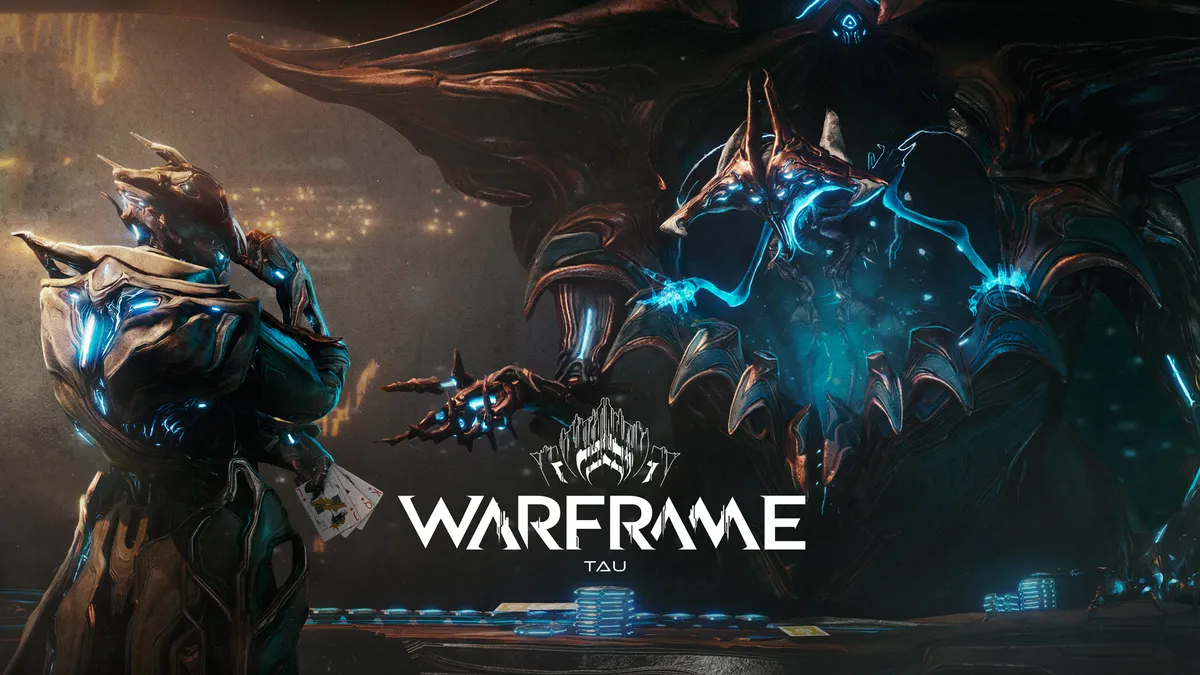
But at its TennoCon 2026 event, developer Digital Extremes revealed a bold new direction for the game: Instead of exploring time, players will soon enter an entirely new part of outer space. The Tau solar system teased in The Old Peace update will soon be accessible during regular gameplay, with multiple new celestial bodies for players to explore.

Live-service games that thrive for years get the rare chance to morph and evolve into something new. When Warframe launched in 2013, it was a simple third-person looter-shooter about deadly robotic ninjas. Now it features raid bosses, an endless roguelike mode, a semi-open-world fishing simulator and even some visual novel elements.

Advertisement

In an industry that seems increasingly reluctant to take risks on new ideas, Digital Extremes continues to reinvent its sci-fi brainchild. Each new update includes creative leaps leading to “out-there” ideas like a living guitar or a spider-themed robot, ensuring there’s no other game quite like Warframe.

Even so, all those zany ideas existed within a single solar system — disparate story threads connected by a common location. The boundaries of the world have always been well-defined by the in-game star chart. In the next expansion, that’s changing for the first time ever.

A Sentient spaceship explores the Ring City of Fornax.

Leaving behind the Origin System will introduce players to worlds that are more alien than they’ve ever seen before.

Advertisement

Digital Extremes

Warframe Tau feels like the game’s The Final Shape moment

Warframe players have been hacking, slashing and bullet-jumping across the Origin System — a starchart that mirrors our real-world solar system with some sci-fi alterations — for over 13 years. Soon it’ll be time to explore a new frontier: Tau.

It’s difficult to express how massive this change feels without pointing toward the other sci-fi looter-shooter cultural juggernaut, Bungie’s Destiny and Destiny 2.

The Destiny series — first released in 2014, just one year after Warframe — also took place largely within the boundaries of our very own solar system. For years, players battled the forces of darkness across the surface of Earth, Mars and other familiar planets.

But when Destiny 2’s decade-long narrative reached its climax in The Final Shape expansion, players plunged into the heart of the living planet-like Traveler in order to battle the villainous Witness. When the stakes were highest, players were transported to a completely alien locale within the deity-like sphere they’d followed for Destiny’s entire plot, a place where everyone was on equal footing and many long-standing questions were finally answered.

Advertisement
Warframe Tau demo picture of the Lotus, a longtime ally of Warframe players, examining her wounded arm.

Warframe Tau looks like it’ll provide answers to some longstanding questions — like what deal the Lotus struck with the eldritch Man in the Wall.

Digital Extremes

While Warframe’s narrative has flirted with the idea of sending players to Tau for years now, the reality of finally heading to a brand new star chart feels monumental.

This could be Warframe’s version of The Final Shape — and while players may not be putting the beatdown on this game’s eldritch god quite yet, this is Digital Extremes’ chance to build out an expansion to its sci-fi universe that is completely divorced from the imagery and cultural norms associated with our real world. Warframe is already wild, but the Tau system presents an opportunity to explore ideas unbound by the established conventions of the Origin System.

Advertisement

That’s not to say everything will be set in stone when Tau comes to the live build. The new star system will be slowly built out after this initial narrative adventure, which features a distinctly detective-noir vibe, naturally paired with a fedora-wearing, smooth-talking Warframe named Brysko.

When Warframe Tau launches later this year, you can expect to be able to explore Fornax, the Sentient Ring City of Tau, and “maybe one other secret thing,” according to Warframe’s creative director, Rebecca Ford. Then, in the many updates that follow this release, “there will be a whole [new star] system to expand on and explore.”

warframe-fortuna-workers.png

The player’s connection to common folk — like the day laborers of Fortuna — in the already established star system isn’t going away any time soon.

Advertisement

Digital Extremes

The Origin System isn’t being abandoned

New players and nostalgic veterans don’t have to worry about the original mission map becoming obsolete.

Though the Warframe Tau expansion launches toward the end of 2026, the development team won’t ignore the existing Origin System star chart once the update is live. Ford said that there are Origin System stories currently “planned and ready to go” for the future.

“It’s not as if you’ll be flying off to Tau and forgetting about some of the unique aspects of the Origin System,” Ford said. “We are going to be providing some deep story beats for the Origin System as well.”

New stories from the existing star chart will still be added in the lead-up to Tau, too. The Iceblade of Narin content update, which will be released this fall, will add a new chapter to the rich tapestry of history already woven through the long-standing solar system. That update’s associated quest will be available to every player who has completed the Angels of the Zariman story, and it’ll introduce a new ice-themed Warframe to the roster.

Advertisement

If you’re new to the game, it’s easy to feel like you might get left behind by a content update that looks as radically transformative as Warframe Tau. But Digital Extremes has recently redoubled its efforts to make the game more welcoming to everyone, reshaping important tutorials and early quests to better explain basic mechanics.

Early- and midgame players will still be able to explore new stories, discover new Warframes and experience new updates alongside a massive multiplayer community. It seems that no player will be left abandoned by the narrative change, which is perhaps the most fundamental factor in any MMO’s continued success.

nora-night-nightwave.png

Nora Night is the usual point of contact for any player engaging with the Nightwave battle pass — but that’s about to change.

Advertisement

Digital Extremes

Narrative Nightwave is coming back in a big way

Warframe’s free Nightwave battle passes are getting a welcome shakeup after so many volumes of Nora’s Mix. The next battle pass is themed around fan-favorite Warframe 1999 character Amir Beckett’s favorite tabletop game: Fables & Frontiers.

While newer players might keep returning weekly for the generous (and free) Nightwave rewards, these reward tracks used to be paired off with more substantial episodic narratives that helped build out the wider world of Warframe.

The first few Nightwave updates added new missions and fearsome foes, like the hulking prison escapee known as the Wolf of Saturn Six. These characters would grow increasingly active in the game world as weeks passed, eventually making incursions into players’ missions, culminating in epic miniboss fights.

Ford previously told CNET that this original iteration of Nightwave was “unsustainable” because it took too many development resources that needed to be allocated to the game’s major updates. Adding more mission and enemy types is a tall order when the live-service game needs new content and maintenance elsewhere.

Advertisement

The next pass, Amir’s Shockwave, feels like it just might be the perfect middle ground between a full-fledged classic Nightwave experience and a generic battle pass. While no new missions or minibosses will debut alongside this pass, the Hex’s personal Dungeons & Dragons-esque narrative will unfold with each weekly task reset as the gang gets together to play an in-universe tabletop RPG.

Players will get a chance to guide the fantasy adventure through the KIM visual novel system established in the Warframe 1999 update, exploring fan-favorite relationships in a low-stakes storytelling environment. Ford previously said that Nightwave could be “the key” to tying more lighthearted stories into the Warframe world, and it seems that’s exactly what we’re getting with this update.

I love Nora Night and her spunky pirate radio broadcasts as much as the next guy, but I’m glad other characters are getting a chance to mooch some of her spotlight. The episodic nature of Nightwave content is the perfect way to explore small-scale happenings and slice-of-life adventures that don’t fit into Warframe’s epic galaxy-spanning narrative players see in story missions, and I hope the feature might get more use as a vehicle to explore this sci-fi universe in the future.

Advertisement

Source link

Continue Reading
Click to comment

You must be logged in to post a comment Login

Leave a Reply

Tech

The AI job apocalypse is a myth. We need more human talent than ever before

Published

on

London Tech Week’s focus on AI – from a £12 million investment in AI for SMEs to AI bootcamps for graduates and more – has reflected the pressure to compete in an AI-era.

As this digital revolution progresses, the job economy is changing, but the mantra that AI is taking our jobs is simply not correct and potentially fueled by an undercurrent of classicism.

Vincent Huguet

CEO and co-founder of Malt.

Source link

Continue Reading

Tech

This Luddite Puppet Hopes You’re Not Reading This on Your Smartphone

Published

on

Keep yourself open to, “OK, I’m gonna look around. Is there a Luddite poster here? I’m at my local bookstore. OK, is there some information here?” It’s this idea of social infrastructure, switching people over from the idea of, “OK, I’ll look at an Instagram page, and here’s all the events” to the idea of, “I actually have to leave my house.” Be on the lookout. We’ll be out here. Tompkins Square Park, probably, other parks, privately owned public spaces. We have events all over this city. It’s amazing. Knicks in five. I love New York.

Gowanus, we like to play a little game on each show.

I love games.

We’re very proud of it. It’s called Control, Alt, Delete. So I wanna know what piece of tech you would love to control, what piece you would alter or change, and what you would delete, or vanquish from the earth.

Advertisement

Wow.

Are you ready?

Control, Alt, Delete. OK, great.

Let’s start with control.

Advertisement

This is so funny that you’re asking me this. I would say the servers for the internet.

The internet was billed as something that was, OK, we are going to have a free exchange of knowledge across the world. It’s going to help diversity and globalization and all this stuff, and then, boom. Military technology, right?

We saw this with Ed Snowden, essentially.

OK. And now alt.

Advertisement

I’m trying to think about which technologies do I feel have a real positive impact, but have a negative sort of profit incentive.

Let me give this one. I would alter the way that social media platforms have a centralized system instead of a federated system. I think that’s pretty solid, and this was almost in the creation of Twitter, they were about to do this. And then Jack Dorsey was like, “No, we should have it be more centralized.”

And finally, delete.

I can’t wait. This is my favorite one.

Advertisement

What would you delete?

AI. AI data centers. Done. Done. Immediately done. Boom. Gone. I mean, come on, guys.

Come on. Especially when they bill it as, “OK, we’re gonna make an AI to fix all of our climate catastrophe, all of our income inequality, but first, we have to absolutely drain the natural resources of the Earth.” I mean, it’s just ridiculous. It just makes me so frustrated. I think the data center is honestly one of the worst materializations of this Big Tech oligarch world that we live in.

Where like the whim of Mark Zuckerberg wanting a Meta Hyperion data center in Louisiana is legitimately going to use multiple times the amount of energy that New Orleans uses. We can’t sustain that as a planet, truly. It doesn’t matter how interesting the technology is or what it could do. These are resources that we need now for life to continue. We need fresh water. We need land to grow food. We need ecosystems where birds and bees and wildlife can coexist, and I’m not very interested in trading that for a chatbot, even if the chatbot tells me it loves me and we can kiss through the phone.

Advertisement

How to Listen

You can always listen to this week’s podcast through the audio player on this page, but if you want to subscribe for free to get every episode, here’s how:

If you’re on an iPhone or iPad, open the app called Podcasts, or just tap this link. You can also download an app like Overcast or Pocket Casts and search for “uncanny valley.” We’re on Spotify too.

Source link

Advertisement
Continue Reading

Tech

First iOS 27, macOS 27 public betas are out

Published

on

Apple has finally introduced its first public betas of iOS 27, iPadOS 27, macOS 27 Golden Gate, watchOS 27, visionOS 27, and tvOS 27.

Since the introduction of the 27-generation operating systems at WWDC in early June, Apple has been testing developer beta builds. A few rounds later, and it has started to do the same with the public beta.

The first public builds are:

  • iOS 27 public beta 1 is 24A5380h
  • iPadOS 27 public beta 1 is 24A5380l
  • macOS 27 public beta 1 is macOS 27.0 beta 3 v.2 is 26A5378n
  • tvOS 27 public beta 1 is 24J5315i
  • visionOS 27 public beta 1 is 24M5316k
  • watchOS 27 public beta 1 is 23U5062b

At your own risk

A public beta differs from a developer beta in that the software has been tested enough to be less of a risk to end users. While a developer beta has the potential to cause problems for testers, the public variant is from a later stage with the bigger potential issues out of the way.

While the public beta is generally safer to use than a developer version, it’s not entirely safe. There’s still the risk of data loss and other issues, just that the chance is smaller.

Advertisement

AppleInsider and Apple strongly advise against users installing test operating systems or beta software onto primary or “mission-critical” hardware. That warning stands for both developer betas and public beta builds.

Just like the developer counterparts, public beta users should really install the operating systems onto secondary, non-essential hardware. Also, they should maintain sufficient backups of their critical data at all times.

We don’t say this for fun. Every year, someone on our editorial team ends up suffering because of a problem with the developer betas. We have also heard countless stories of people going through the same issues, in varying degrees of magnitude.

Don’t be like us. If you must try out the new operating systems, do it on the public betas instead of the developer ones.

Advertisement

Find any changes in the new builds? Reach out to us on X at @AppleInsider or @Andrew_OSU, or send Andrew an email at [email protected].

Source link

Advertisement
Continue Reading

Tech

Economists and tech leaders sign statement warning of AI threats

Published

on

The open statement says that leaders in this space must act now to understand the economics of transformative AI and steer the tech in the right direction.

Almost 200 economists and technology leaders have signed a statement warning of the risks posed by AI if it is to be left ‘unchecked’ in the coming years. Many of the world’s experts are concerned that AI is reaching a stage where it is too powerful and needs to be guided in a more human-focused direction.

The statement, which is titled “We Must Act Now,” was organised by economists Erik Brynjolfsson, Ajay Agrawal, Anton Korinek and Tom Cunningham and was signed by a range of people close to the issue.

This includes several Nobel laureates, the chief economists of Open AI and Anthropic, Jack Clark, a co-founder of Anthropic, Eric Schmidt, the former CEO of Google and experts from Cambridge University, Stanford, Harvard and Oxford, among others. 

Advertisement

The statement said, “AI may become radically more powerful over the next 10 years. This could drive an unprecedented transformation of our economy, larger than the Industrial Revolution, but unfolding over a vastly shorter time frame. It could bring risks, including large-scale job displacement, as well as opportunities such as major gains in living standards.

“Economists, policymakers and technology leaders must act now to understand the economics of transformative AI and to build the incentives, guardrails, and institutions needed to steer AI in a direction that complements humans and benefits society.”

The statement is reflective of a landscape in which more and more people are becoming concerned about AI’s potential to eliminate employment, impact the economy and affect how we live our lives. 

In early July, Microsoft announced it is laying off 4,800 people, including 3,200 from its gaming division Xbox, as the company aims to cut costs and flatten its organisational structure in response to AI and a changing landscape.

Advertisement

In June, new research from Boston Consulting Group (BCG), found that for many organisations, AI is fundamentally reshaping the nature of work, leadership and how employees experience the workplace. While there were positive elements to the research, many contributors also found an increase in ‘cognitive load’, creating a paradox’ where AI is making work better and harder simultaneously. 

Don’t miss out on the knowledge you need to succeed. Sign up for the Daily Brief, Silicon Republic’s digest of need-to-know sci-tech news.

Source link

Advertisement
Continue Reading

Tech

Britain’s AI push is exposing a memory crisis inside business

Published

on

Somewhere right now, a customer is repeating themselves. They are explaining their problem for the third time, to the third person, because the organization on the other side has no shared memory of the previous two conversations. It is an infrastructure problem that AI is making harder to ignore.

Ahmed Bashir

It is also becoming impossible for policymakers to ignore. Just in April, the Mayor of London launched a new AI and Jobs Taskforce to examine how AI is changing work across the capital, signaling that the conversation has moved well beyond investment announcements and into the harder question of what AI does inside organizations.

Advertisement

Source link

Continue Reading

Tech

General Magic was the Company Apple Spun Off That Later Built Its Future

Published

on

General Magic Apple Spinoff iPhone iPad 90s
Marc Porat sat with a red notebook in 1989, drawing what no one else could see. A little rectangular piece of glass with a touch screen, phone, fax, messages, video, games, ticket purchases, and apps delivered over the air. He named it the Pocket Crystal. It would feel like a piece of jewelry you carried every day, something with the comfort of a seashell and the pull of a crystal. At Apple, where he worked, the idea landed with John Sculley. Resources stayed scarce. So in May 1990 the project left Cupertino and became its own company. Bill Atkinson and Andy Hertzfeld, two of the original Macintosh wizards, signed on. General Magic was born.


They called the location after a line from Arthur C. Clarke. The idea is that any sufficiently advanced technology appears magical. You had a bunch of veteran Mac users and some hungry new developers crowded into Mountain View offices. Joanna Hoffman was in charge of marketing because she was one of the first people on board. Susan Kare developed the icons for the new operating system, and Megan Smith joined shortly thereafter. Meanwhile, a young whippersnapper named Tony Fadell walked in from the street. There were even rabbits bouncing around on the floors, as well as a parrot or two, presumably released by its owners when they went for the day. Some folks were even sleeping off while resting their heads on their desks. You could bet that at any minute, someone would start a water battle. However, the energy was fantastic. Everyone was confident they were onto something major, specifically the next item after the Mac.


Apple iPad 11-inch: A16 chip, 11-inch Model, Liquid Retina Display, 128GB, Wi-Fi 6, 12MP Front/12MP Back…
  • WHY IPAD — The 11-inch iPad is now more capable than ever with the superfast A16 chip, a stunning Liquid Retina display, advanced cameras, fast…
  • PERFORMANCE AND STORAGE — The superfast A16 chip delivers a boost in performance for your favorite activities. And with all-day battery life, iPad…
  • 11-INCH LIQUID RETINA DISPLAY — The gorgeous Liquid Retina display is an amazing way to watch movies or draw your next masterpiece.* True Tone…

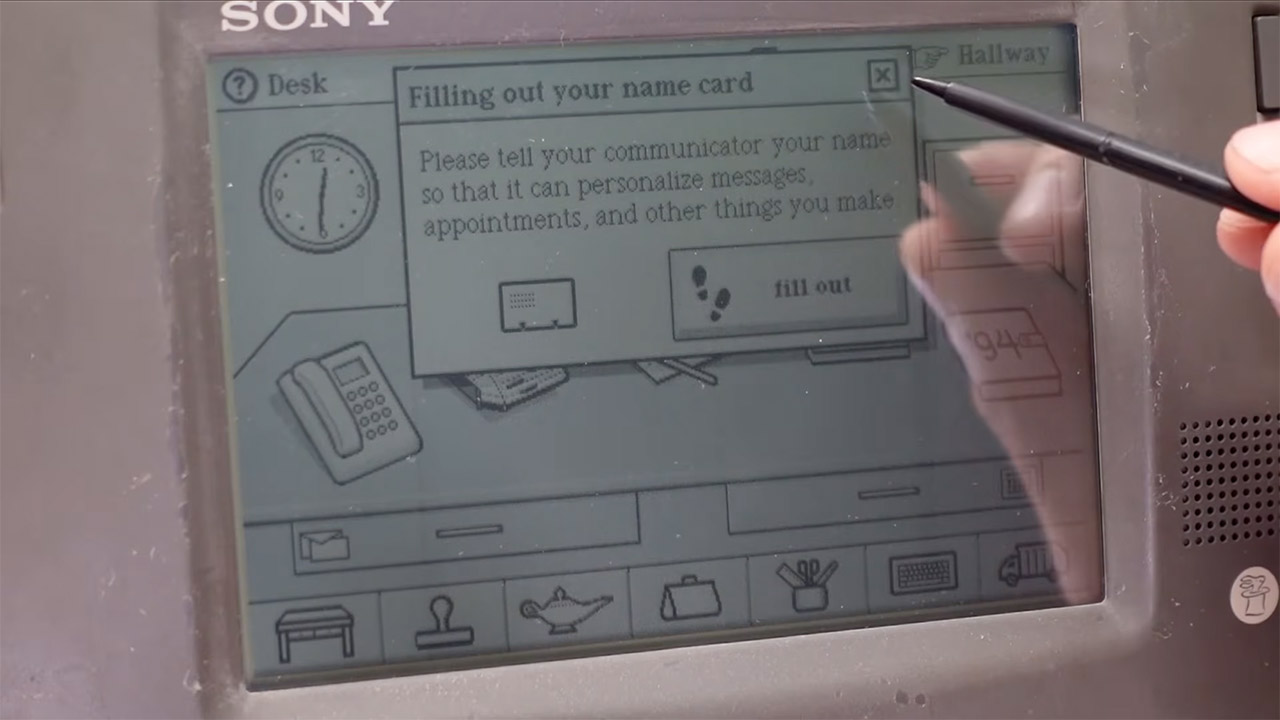
Magic Cap was the name of the operating system. When you first booted it up, you were in a virtual area that appeared to be a real office. There was your calendar in the corner, and your inbox was simply waiting for you. Walk down the virtual hallway and you’ll come across a variety of handy rooms, including a library, a game room, and even a downtown business center where you may purchase new software. Messages were decorated with stickers and animated characters, and those little faces evolved into the emojis we all know and love today. You could navigate with a stylus. Software modems handled connections without the need for additional hardware, and early versions of what we now know as USB connectors appeared. To keep things light, the hardware had to do significantly less work.


Telescript was the brainchild in charge of all the sophisticated elements. When you leave your smartphone, a digital “gentleman” will journey across networks and return with answers to your questions. Jim White and his team developed a language that enabled programs to move from one machine to another, just as humans go between cities. They discussed the “Telescript cloud” before anyone knew what it was. AT&T built PersonaLink on top of it because agents needed somewhere to go.

Advertisement


Before you knew it, some of the biggest players were lining up to participate in the action. Sony, Motorola, Matsushita, Philips, AT&T, and later NTT, Toshiba, and France Telecom also joined in. Each provided money and appointed their top executives to a special council. Sony’s John Sculley and Norio Ohga were among the best performers. The Alliance swiftly became the industry’s largest collection of business players, prompting antitrust specialists to establish new rules for the meetings. In 1993, the New York Times named General Magic Silicon Valley’s most-watched startup of the year.

General Magic Apple Spinoff iPhone iPad 90s Sony Magic Link
Finally, after all of the excitement, the hardware was released in 1994. Sony shipped the Magic Link for a cool $800. The device looked like a grey brick with a stylus, a small monochrome screen, and a built-in modem that required a phone connector. Motorola followed up with the Envoy, which added a wireless radio to the equation. Both used Magic Cap. You could email, fax, or even page somebody if that was your preference. Keep your contacts and calendars up to date. Play some games and send some files over with IR, as the device was essentially a magic wand. However, nothing like existed previously. Of course, sales were small, with the majority of the units going to friends and relatives. Battery life was a joke, and performance was sluggish. Had no internet (yet) and no cell data worth noticing. To make matters worse, Apple had recently released the Newton the year before, which had likely stolen some of General Magic’s thunder.

General Magic Apple Spinoff iPhone iPad 90s Sony Magic Link
An IPO in February 1995 nonetheless managed to raise 96 million dollars. But that was only the beginning; the stock had more than doubled on the first day, and it appeared like cash was flowing in. The engineers were practically unstoppable, and new gadgets popped up left and right. Later that year, Portico was introduced as a voice service that anyone could access using any old phone. An 800 number would then read out your email, calendar, and messages in a polite, calming voice, almost as if you had your own personal assistant. By the time they reached a peak of 2.5 million users, they had already created MyTalk, which has earned a permanent home in the Smithsonian. However, the initial notion of such ‘dream devices’ never really took off. AT&T chose to discontinue PersonaLink in 1996. By 1997, the hardware partners had essentially stopped producing. The stock fell precipitously, prompting layoffs. It all came to an end in September 2002, when activities ceased, and by 2004, they had been totally liquidated. Paul Allen ended up purchasing the majority of the patents.

Source link

Advertisement
Continue Reading

Tech

This Origami-Inspired Coffee Maker Is the Best Camping Brewer. Period.

Published

on

On more than one occasion, I’ve embarrassed myself by brewing coffee outdoors and spilling a freshly made cup onto an unsteady camping table. Not to mention, light packers would scoff at the weight of my coffee gear — a necessary sacrifice to avoid instant coffee. Savoring high-quality joe in the open air feels special, though, hence why I bring a coffee-making setup every time.

Finally, I’ve found the easiest option: The MiiR Pourigami. Put together, the pyramid-shaped dripper fits atop any trusty travel mug. Taken apart, this Miir Pourigami resembles a card holder, slim enough to fit into my pants pocket. It functions like other pour-over setups, meaning I can still dial in tasting notes. If you’re like me and think about coffee no matter the circumstances, this nifty setup lets you play barista in any environment.

A look at the Miir Pourigami 

Advertisement
hand holding folded pouragami coffee maker

Yup, that’s a coffee maker in my hand.

Nikita Ephanov/CNET

Right out of the box, the Pourigami looks sleek. Disassembled, the brewer consists of three thin stainless-steel trapezoids. I can’t imagine the pieces bending or chipping — crucial, as I’m prone to breaking camping equipment. Handily, the dripper stores flat, occupying a rectangular size smaller than 10 by 16 centimeters. Weighing just shy of 8 ounces, the brewer isn’t featherweight, but it offers great portability nevertheless. Contained in an unassuming synthetic case, the Pourigami seamlessly fits into any bag.

Honestly, I’m terrible at paper origami, but assembling this brewer into the pyramidal shape is a breeze. It only takes me about 20 seconds to slip the three indents into the respective slots — there’s no confusion to the construction. The completed dripper holds steady without a wobble and comes apart just as easily. 

Put together, the interior forms a triangular pyramid shape that can accommodate any #2 cone-shaped filters. I find that Miir’s own filters, available for purchase online function most reliably, creating steady streams without slipping. Not to mention, the brand’s paper-based filters are compostable, a small but satisfying environmental win. A compatible filter is easy to find, making the Miir Pourigami simple to set up and get to brewing.

Advertisement

Brewing with the Pourigami

hot water being poured over beans in pouragami

The Pouragami functions much like other pour-over coffee devices. 

Miir

If you’ve used pour-over vessels like a V60, Chemex or a Kalita Wave, the Miir Pourigami is familiar territory. The dripper requires a hot water source, the aforementioned paper filter, and a cup or carafe to catch the coffee. A kitchen scale and thermometer help brew with utmost accuracy, but I’ve produced solid cups while eyeballing proportions outdoors.

It’s best to follow a brewing ratio to extract the most out of the brewer, especially when familiarizing yourself with its flow. The Miir brand suggests 21 grams for single-origin beans and 23 grams for blends, each extracted with 300 milliliters of water. Using water heated to 90 degrees Celsius, I’ve found these proportions reliable, as long as extraction is completed by the three-and-a-half-minute mark.

Advertisement
chemex-coffee.png

The Pouragami functions similarly to a Chemex but with better portability.

Taylor Martin/CNET

Compared to my V60, the Miir Pourigami takes longer to drain, so a coarser grind helps keep water moving. As a result, the vessel is best suited for full-bodied cups of medium- and dark-roasted coffees. The grind quality is crucial: You’ll want a coarse yet uniform consistency. I’ve used both the portable MiiR Coffee Hand Grinder and the Baratza Encoreto great success; I would avoid utilizing a blade grinder for this setup, though. Away from home, I’ve asked coffee shops to grind beans — I request a consistency one click coarser than a V60. Pre-ground coffee is the most convenient way to brew on the move.

The Pourigami’s steep interior makes saturating coffee grounds easy – no need to carry a gooseneck kettle alongside. I’ve used jet-boil-powered camping kettles and even cooking pots to make excellent cups of coffee, making sure to use hot water that’s off the boil. As long as I’m timing the process, using the Miir Pourigami is undemanding.

Advertisement

What does Pourigami filter coffee taste like?

pouragami coffee maker on top of mug

The coffee I brew turns out light-bodied, but rarely weak or watery. 

Nikita Ephanov/CNET

As with all pour-over coffee, the beans strongly influence the flavor. I’ve produced the best-tasting MiiR Pourigami cups using medium-roast blends — think grocery-store beans like Stumptown’s Holler Mountain Blend. Such bags respond well to the requisite coarser grind and are forgiving in outdoor scenarios. The Miir Pourigami translates gentle notes of acidity and sweetness, seldom leaning into burnt flavors. The coffee turns out light-bodied, similar to other filter setups, but I’ve never brewed a cup that tastes weak or watery. 

If there’s one downside to this dripper, it’s that the coffee occasionally turns out too acidic, a sign of under-extraction. For this reason, I avoid brewing delicate light roasts with the Pourigami — not that I’m packing fancy beans for camping anyway. A bold, balanced medium roast cup hits the spot after a night in a tent.

Advertisement

Is the Pourigami worth it?

pouragami over cup shot from above

Coffee makers don’t get much simpler and more portable than the Pouragami.

Nikita Ephanov/CNET

At home, I’m not often assembling my Pourgami, instead settling on the trusty espresso machine or extracting delicate cups of V60. When I’m brewing outside of the house, though, the Pourigami is my top choice. In addition to camping, I’ll pack the brewer away in my suitcase for air travel, making the occasional cup on the go.

Before acquiring a model, I used to camp with a bulky plastic V60 dripper, which I inevitably fractured among camping equipment. The AeroPress certainly fares better in terms of durability, but it can be difficult to find a sturdy surface suitable for firm plunging. Compact and durable, the Miir Pourigami wins on logistical ease, making it easy to incorporate into a car-camping, backpacking, or even a bike-packing setup.

Advertisement

Sold for $35, it’s a thoughtfully designed coffee gadget that justifies the price point. The inventive design isn’t a trade-off for coffee quality. I’m happy to use the Pourigami several days in a row – the steel material is a breeze to clean. Whether at home or on the move, the brewer doesn’t occupy much space, making it a reliable favorite.

Source link

Advertisement
Continue Reading

Tech

Smartphone shipments down 11pc after sustained chip shortage

Published

on

Memory shortage now a ‘full-blown demand issue’ for the smartphone market, says Counterpoint analyst.

The memory crunch has dragged down global smartphone shipments to the lowest second-quarter levels in 13 years.

Manufacturers producing cheaper gadgets saw their shares take the steepest drop after passing price hikes over to consumers. Analysts expect further price increases and a harsher squeeze for memory components.

“The global memory crisis has now overtaken every other factor as the single biggest drag on the smartphone industry. What started as a components issue last year is now a full-blown demand issue,” said Counterpoint senior analyst Shilpi Jain.

Advertisement

According to Counterpoint research, smartphone shipments tumbled 11pc year-on-year this quarter globally, as memory suppliers prioritise DRAM and NAND for AI data centre needs over consumer electronics.

Entry-level and mid-tier devices faced repeated price hikes, forcing consumers to pivot to more expensive brands or pause device upgrades. Component shortages has rendered these cheaper devices “structurally unfeasible at previous price points”, Jain said. Smartphone prices are poised to jump by as much as 13pc this year.

According to the IDC, most Android vendors in China responded to the growing component costs by raising prices, which directly dampened consumers’ willingness to upgrade their devices.

Xiaomi, Oppo and Vivo, leading manufacturers for cheaper electronics, each saw their shipments decline in double digits this quarter. Though, the three of them together still captured more than 40pc of the global smartphone shipment this quarter.

Advertisement

“Alongside the memory shortage, geopolitical tensions in the Middle East bumped up oil and shipping costs, further inflating smartphone prices,” said the Counterpoint analyst.

“This coincided with a broader macro squeeze, slower global growth, higher inflation and record-low consumer sentiment which hit price-sensitive buyers the hardest.”

Samsung remains the global lead, making extra gains this quarter to capture 24pc of the smartphone shipment share. The South Korean manufacturer held up well in India and the Middle East, supported by better product availability, fewer price hikes and aggressive summer promotions, Counterpoint found.

Apple, meanwhile, took the second position globally, capturing 20pc of the market – up from 17pc in the same quarter last year. The iPhone-maker was the only one to avoid smartphone price hikes during this quarter. However, analysts expect that to change in the near future.

Advertisement

Apple also performed well in China, where it saw sales grow in double digits. Alongside Apple, Huawei was the only major Chinese manufacturer to see positive growth in smartphone shipments.

Overall, shipments in the country declined by around 4.3pc year-over-year, marking the fifth straight quarter of decline.

According to the IDC, Huawei and Apple kept prices steady while the rest of the Android producers in China raised them. Plus, Apple’s early signalling of upcoming price increases pulled in more customers purchasing the iPhone 17 series sooner than they might have otherwise, the report found.

“Huawei and Apple held their prices steady while competitors were raising theirs, and that gave hesitant buyers a reason to go ahead and purchase in a quarter when most of the market was giving them a reason to wait,” says Arthur Guo, a research analyst for client devices research at IDC China.

Advertisement

Don’t miss out on the knowledge you need to succeed. Sign up for the Daily Brief, Silicon Republic’s digest of need-to-know sci-tech news.

Source link

Advertisement
Continue Reading

Tech

Japan’s largest taxi operator Nihon Kotsu hit by cyberattack which forces systems to be shut down

Published

on


  • Japan’s largest taxi operator confirms July 11 malware attack forcing shutdowns of its IT systems and disrupted dispatch and reservation services
  • Nihon Kotsu isolated networks, notified authorities, and brought in third‑party experts; customers were advised to use alternative taxi apps during the outage
  • No data leaks have been confirmed, but Nihon Kotsu warned it may disclose and notify affected parties if evidence of personal information exposure emerges

Japan’s largest taxi operator, Nihon Kotsu, hasconfirmed suffering a cyberattack which forced it to temporarily shut down parts of its IT infrastructure.

In a statement published on the company’s Japanese website, Nihon Kotsu said the attack took place in the early morning of July 11 – on a Saturday, when unnamed threat actors infected its devices with malware.

Source link

Advertisement
Continue Reading

Tech

Paramount Warner Bros. Discovery Merger Faces 12-State Lawsuit Because Streaming Wasn’t Complicated Enough

Published

on

The Paramount Skydance takeover of Warner Bros. Discovery has finally landed in court, which raises the obvious question: where was this lawsuit months ago?

The Paramount Skydance takeover of Warner Bros. Discovery has already cleared a major federal hurdle, but 12 state attorneys general have now decided that combining Paramount, Warner Bros., HBO, CNN, CBS, Max, and Paramount+ under one corporate roof may not be great for competition. Imagine noticing the house is on fire after everyone has already picked paint colors.

On July 13, 2026, a coalition led by California Attorney General Rob Bonta filed an antitrust lawsuit seeking to block Paramount Skydance’s proposed acquisition of Warner Bros. Discovery. The complaint argues that the nearly $111 billion transaction, including debt, would reduce competition in theatrical film distribution, basic cable programming, streaming, and the broader entertainment market.

We have covered this story from the start, beginning with Netflix’s original agreement to acquire Warner Bros., HBO, and HBO Max, followed by Paramount’s hostile bid, the Ellison-backed bidding war, and Paramount eventually winning after Netflix stepped aside. Back in February, we noted that Paramount winning the bid was not the end of the story. Regulatory scrutiny, debt, politics, and the future of HBO, CNN, Warner Bros., Paramount+, and Max were always going to remain part of the plot. Nobody said Hollywood consolidation came with a clean third act.

Advertisement

What the Lawsuit Claims

The lawsuit was filed in the U.S. District Court for the Northern District of California by California, Arizona, Colorado, Connecticut, Massachusetts, Minnesota, Nevada, New Jersey, New Mexico, New York, Oregon, and Washington. The states are asking the court to prevent Paramount from acquiring Warner Bros. Discovery. If Paramount and Warner Bros. Discovery try to close the deal before the case is resolved, the states have warned they may seek a temporary restraining order.

The complaint argues that the merger would combine two of the nation’s five major film distributors and two of the five major owners of basic cable channels. According to the filing, the combined company would leave four companies controlling more than 85 percent of wide-release theatrical films in the United States, while the merged Paramount Warner Bros. entity and Disney would control 59 percent of U.S. basic cable.

The states also claim the merger would give the combined company control of more than 50 basic cable channels, creating greater leverage in carriage negotiations with cable and satellite distributors. In plain practical terms: fewer companies owning more essential content usually means distributors have less negotiating room, and consumers eventually get invited to pay for the party.

The lawsuit also focuses heavily on theaters. The states argue that with fewer film distributors competing for screens, theaters could face worse revenue splits, stricter limits on discounts and complimentary tickets, fewer new releases, and less incentive for studios to invest in a broad theatrical slate.

Advertisement

Paramount’s Response

Paramount Skydance Logo

Paramount has rejected the lawsuit and says the states are misreading the modern entertainment market. The company argues that the merger would create a stronger competitor against dominant streaming and technology platforms, especially Netflix, and that delaying the deal would hurt entertainment workers who have already been squeezed by changes in the business.

That is the core tension. The states are framing this as a competition problem. Paramount is framing it as a survival strategy.

Both arguments are not crazy. That is what makes this more interesting than the usual “company buys company, executives discover synergies, workers discover LinkedIn” story.

Advertisement. Scroll to continue reading.

Paramount and Warner Bros. Discovery are legacy entertainment companies trying to compete against Netflix, Amazon, Apple, YouTube, and Disney. But the way they propose to do that is by combining two historic studios, two major streaming platforms, CNN, CBS, HBO, Warner Bros., Paramount Pictures, Nickelodeon, Cartoon Network, TNT, MTV, HGTV, BET, Discovery Channel, Pluto TV, and more under one roof.

Advertisement

Netflix Is Still in the Room

Netflix may have stepped away from the Warner Bros. bidding war, but it remains central to the story. Paramount’s defense depends heavily on the idea that the combined company would be better equipped to challenge Netflix and the other tech-driven streaming giants. The states, meanwhile, argue that reducing the number of major film and cable owners is still harmful even if Netflix remains the biggest streaming target.

Netflix Word Logo

The timing is also interesting. Netflix reports Q2 2026 financial results on Thursday, July 16, 2026, at approximately 1:01 p.m. Pacific Time, with a live video interview scheduled afterward.

That earnings report lands after a rough stretch for Netflix’s stock. Recent market coverage has noted that NFLX has lost nearly 24 percent over the past three months ahead of its Q2 results. So while Paramount wants to paint Netflix as the untouchable giant, Wall Street has been reminding everyone that even the 800-pound gorilla occasionally slips on its own banana peel.

That does not weaken Paramount’s broader argument that Netflix is still the streaming benchmark. It does complicate the idea that every legacy media company must become enormous overnight to survive.

Is This About Antitrust or Politics?

The lawsuit is formally an antitrust case. The political pattern is still hard to ignore.

Advertisement

All 12 plaintiff attorneys general are Democrats: California, Arizona, Colorado, Connecticut, Massachusetts, Minnesota, Nevada, New Jersey, New Mexico, New York, Oregon, and Washington. No Republican attorney general joined the lawsuit.

The governor breakdown is slightly different. Eleven of the 12 plaintiff states currently have Democratic governors. Nevada is the exception, with Republican Gov. Joe Lombardo.

That does not automatically make the lawsuit partisan theater. State attorneys general often pursue antitrust cases for policy reasons, economic reasons, consumer protection reasons, and, yes, political reasons. Sometimes all of the above sit in the same conference room and pretend they came separately.

But the political backdrop matters. The Justice Department under President Donald Trump’s administration cleared the deal in June without requiring divestitures, while Bonta and other Democratic attorneys general continued to signal concern. Criticism over political influence has largely fallen along party lines, with Democratic officials questioning whether federal regulators gave the deal enough scrutiny.

Advertisement

Then there is CNN. Any deal that puts CNN under the same corporate structure as CBS and Paramount under David Ellison was always going to attract political attention. Pretending otherwise would require a level of innocence normally reserved for Hallmark movies and first-time streaming subscribers.

Paramount Has Cleared Some International Hurdles

Paramount also has a fair point when it argues that the deal is not being rejected everywhere. The company has received regulatory or competition clearances in several international markets, including Australia, China, Canada, Saudi Arabia, Ukraine, Serbia, and North Macedonia. It has also received foreign-direct-investment approvals in countries including Germany, Slovenia, Belgium, Czechia, New Zealand, Italy, France, and Romania.

Advertisement. Scroll to continue reading.

That does not mean the transaction is home free. Reviews remain active in major markets, including the European Union and the U.K., where regulators have been looking at competition, media plurality, foreign investment, and the potential impact of combining HBO Max, Paramount+, CNN International, Cartoon Network, Nickelodeon, and other services under one corporate roof.

Advertisement

So yes, Paramount can accurately say the deal has cleared some meaningful international hurdles. But the lawsuit from 12 U.S. states, along with continuing U.K. and European reviews, makes it clear that approval is still very much a moving target.

The California Exit Threat

One of the more aggressive subplots involves Paramount possibly leaving California.

Semafor reported on Monday that advisers close to David Ellison have urged him to consider moving Paramount’s corporate headquarters and reallocating some of the company’s planned spending outside California if Bonta sued to block the deal. The same report stressed that no decision has been made and that the idea may be brinkmanship.

Texas is the obvious political shorthand here because major companies including Chevron, Oracle, and Tesla have already moved headquarters out of California and toward Texas in recent years. But the more immediate production option mentioned in the reporting is New Jersey, where Paramount already signed a major lease at 1888 Studios in Bayonne.

Advertisement

That is where the story gets awkward. New Jersey is one of the 12 states suing to block the deal.

So if Paramount was hoping to use New Jersey as part of a “California is hostile, we are moving somewhere friendlier” argument, Trenton just walked into the room holding a legal complaint and gave studio developers, local contractors, and Monmouth County homeowners one more reason to check Zillow with mixed emotions.

What About Paramount’s Bayonne Studio Plans?

Paramount signed a minimum 10-year lease for more than 285,000 square feet at 1888 Studios in Bayonne in October 2025. The larger 1888 Studios project is planned as a 1.5 million to 1.6 million square foot production campus on the Bayonne waterfront, with 23 soundstages and major production support facilities.

There is no evidence right now that Paramount is walking away from that lease or that the lawsuit directly jeopardizes the Bayonne project. That needs to be stated clearly.

Advertisement

But future expansion is a fair question. If Paramount is rethinking where to place corporate offices, production spending, and future studio commitments, the lawsuit complicates New Jersey’s pitch. The state still has generous film and digital media tax incentives, and Bayonne remains a serious production play. But joining a lawsuit against Paramount’s biggest strategic deal is not exactly how one usually sends a fruit basket or box of Taylor Ham.

Netflix Fort Monmouth Keeps Moving

Netflix Studio Complex in Fort Monmouth New Jersey Artist Conception
Netflix Studio Complex in Fort Monmouth New Jersey (Artist Conception)

The New Jersey production story does not begin and end in Bayonne.

Netflix Studios Fort Monmouth is moving forward on the Jersey Shore. Officially, Netflix celebrated a construction milestone on June 23, 2026, with the installation of the final structural beam on Stages 3 and 4. The $1 billion project spans more than 292 acres across Oceanport and Eatontown and is planned to include 12 soundstages totaling nearly 500,000 square feet. Phase 1A remains on track for summer 2027, with Phase 1B targeted for fall 2028.

Advertisement. Scroll to continue reading.

From a local perspective, the project looks very real. I live about two miles away and drive through the area a few times a week as a shortcut home. Three of the soundstages on the eastern side of the property appear to be in an advanced stage of construction.

Advertisement

The broader point is that New Jersey has become a serious production battleground. Netflix is building at Fort Monmouth. Paramount has leased space in Bayonne. Lionsgate has been part of the Newark studio conversation. New Jersey has been openly trying to become a major East Coast production hub. This lawsuit may not stop any of that, but it does make the politics a lot messier.

What This Means for Viewers

For consumers, the biggest questions are not about corporate headquarters or which governor gets to cut a ribbon. The real concern is what this deal could mean for the services, studios, news divisions, theaters, and catalogs people actually watch.

If Paramount+ and HBO Max eventually combine, prices could rise, bundles could change, and another major entertainment library could end up under one corporate roof. Theatrical output is another major concern. Fewer major studios can mean fewer wide releases, less negotiating leverage for theaters, and less incentive to take risks on films that are not obvious franchise plays.

There is also the question of what happens to Warner Bros. catalog titles, HBO, CNN, CBS News, Paramount Pictures, and physical media. Will those assets be treated as distinct creative and editorial brands, or simply as inventory to be optimized? The lawsuit does not answer those questions, but it does slow the process and force Paramount to defend the deal in court after already clearing a major federal hurdle.

Advertisement

The Bottom Line

The 12-state lawsuit is the most serious legal threat yet to Paramount’s Warner Bros. Discovery takeover. It does not guarantee the deal will collapse, but it could delay closing, increase pressure on Paramount, and force more public scrutiny of how much media power one company should hold.

Paramount’s best argument is that legacy Hollywood needs scale to compete with Netflix, Amazon, Apple, YouTube, and Disney. The states’ best argument is that solving one competitive problem by creating a larger concentration problem does not magically become consumer-friendly because a streaming app is involved.

And then there is the politics. All 12 attorneys general suing are Democrats, the Trump Justice Department already cleared the deal, and CNN sits right in the middle of the transaction like a neon sign blinking “this will be normal.” Sure it will.

Advertisement

If Paramount really wants to move more production or corporate power out of California, New Jersey and Texas will both be part of the conversation. But New Jersey’s participation in the lawsuit makes that idea more complicated, especially with Paramount already attached to Bayonne and Netflix racing ahead at Fort Monmouth.

Hollywood consolidation was already messy. Now it has federal court filings, state politics, Netflix earnings week, and a possible headquarters fight.

Source link

Advertisement
Continue Reading

Trending

Copyright © 2025