

Business
White Sox Expected to Take Roch Cholowsky With First Overall Pick Today


The 2026 MLB draft begins Saturday at 1 p.m. Eastern time, with the Chicago White Sox still weighing three top prospects for the first overall pick just hours before selections get underway, according to ESPN’s final mock draft published Saturday morning.
The White Sox have narrowed their choice to a tier of three players: UCLA shortstop Roch Cholowsky, Texas prep shortstop Grady Emerson and Georgia Tech catcher Vahn Lackey. All three are expected to come off the board within the draft’s first three picks, though the order remained unsettled as of Saturday morning, according to ESPN draft analyst Kiley McDaniel, who noted that bonus discussions for the top picks had not been finalized as of Thursday.
McDaniel’s projection has the White Sox ultimately selecting Cholowsky, followed by the Tampa Bay Rays taking Emerson at No. 2 and the Minnesota Twins landing Lackey at No. 3. McDaniel wrote that the deciding factor between Cholowsky and Emerson likely comes down to a preference for proximity to the majors and reduced risk, an edge he gives to Cholowsky over the high school shortstop. Lackey, a catcher who started competitive baseball relatively late and carries added positional demands, is expected to fall just behind the other two despite drawing strong interest from Tampa Bay.
After the top three picks, McDaniel described the remainder of the first round as far more unpredictable, with talent evaluators across the league split on how a wide-open group of prospects will be sorted. Saturday morning brought a round of late changes to the top 13 picks based on fresh information gathered ahead of the draft, altering seven of the slots from McDaniel’s earlier Friday projection.
Those late shifts included the San Francisco Giants moving toward Oak Grove High School (Mississippi) outfielder Eric Booth Jr. at No. 4, UC Santa Barbara right-hander Jackson Flora sliding to the Baltimore Orioles at No. 7, and the Kansas City Royals now projected to take Huntington Beach High School (California) two-way player Jared Grindlinger at No. 6. The Colorado Rockies were moved into position to select Gulliver Prep (Florida) shortstop Jacob Lombard at No. 10, a name McDaniel described as carrying legitimate star potential that would represent a strong outcome for the Rockies’ new front-office regime if he actually falls that far.
Several teams face decisions shaped as much by bonus-pool strategy as by pure talent evaluation. McDaniel noted a real possibility that all of the draft’s first 10 picks, and potentially more, could come in below their assigned slot values, a dynamic that could ripple through the rest of the first two rounds as teams look to redirect savings toward later selections. The Pittsburgh Pirates, for instance, are projected to bypass Flora at No. 5 in favor of Georgia Tech outfielder Drew Burress, a college position player McDaniel said the Pirates prefer given their organizational depth in young pitching.
Catching prospect Daniel Jackson of Georgia, this year’s Golden Spikes Award-caliber talent by some evaluations, is expected to land somewhere in the 20s despite ranking 20th on McDaniel’s overall board, with the Houston Astros representing his most likely first real landing spot at No. 17. Georgia Tech’s Jacob Lombard, by contrast, carries some risk in evaluators’ eyes due to concerns about swing-and-miss tendencies that emerged over the summer, a factor that could push him lower than his talent level might otherwise suggest.
The second half of the first round is expected to feature a heavy run on college pitching, according to McDaniel’s reporting, with names such as Arkansas left-hander Hunter Dietz, Florida right-hander Liam Peterson, USC left-hander Mason Edwards and Coastal Carolina right-hander Cameron Flukey all in play across a stretch of picks in the middle and back of the round. Flukey, in particular, has slid somewhat in draft evaluations after missing much of the spring season with a strained rib, though McDaniel noted his traits could still appeal to a development-focused organization such as the Milwaukee Brewers, who are projected to select him at No. 25.
One notable subplot entering the draft’s back half involves the Pittsburgh Pirates’ second first-round selection, No. 34 overall, which was traded to the Chicago White Sox on Friday night. McDaniel reported that at least half a dozen teams had inquired about acquiring the pick over the past month, with the going asking price described as a good major league relief pitcher. Tennessee right-hander Tegan Kuhns was linked to that slot in McDaniel’s projection, with one evaluator comparing his ceiling to that of Seattle Mariners pitcher George Kirby if a team’s development staff can help him reach his potential.
Beyond the top of the draft, McDaniel’s rankings identified a group of top-graded prospects who may ultimately bypass professional baseball entirely in favor of college commitments due to difficult signability situations. That group includes Auburn commit and right-hander Coleman Borthwick, Tennessee-bound catcher Sean Dunlap, Duke commit and shortstop James Clark, and a cluster of Vanderbilt commitments including shortstop James Tronstein, right-hander Joseph Contreras and left-hander Bo Holloway, along with Stanford-bound right-hander Bryce Hill and LSU commit Jensen Hirschkorn.
A separate group of high school prospects were described as genuine tossups between turning professional and honoring college commitments, contingent largely on where they land and what bonus figures teams are willing to offer. That list includes Florida State commit and shortstop Landon Thome, son of Baseball Hall of Famer Jim Thome, along with Texas-bound left-hander Brody Bumila, who was recently revealed to be dealing with an injury, Florida State-committed right-hander Kaden Waechter, Auburn commit and shortstop Jace Mataczynski, and Mississippi State-bound outfielder Martin Shelar.
With bonus-pool strategy, medical questions and a historically unsettled top tier all still in flux hours before the draft, McDaniel cautioned that his projections reflect his best read of team intentions rather than certainty, noting specifically that the White Sox’s pick at No. 1 “isn’t finished” as of Saturday morning. The draft’s opening two rounds are scheduled to unfold Saturday afternoon, with the remaining rounds continuing over the following two days.


The pact could also be a tipping point for British alcohol and spirits companies.
The reduction of customs duties on Scotch whisky from 150% to 75% immediately and then gradually to 40% over 10 years is a “real shift, not a small tweak”, says Avneet Singh of Modern Drinks Pvt Ltd, an import house based in the capital Delhi.
How much this boosts imports will become clearer in the coming months, says Singh, though he sees momentum building ahead of the new terms of trade taking effect.
“The focus has been on getting the operational side ready. That means working closely with UK suppliers to ensure certificates of origin and other trade documentation are in place, reviewing customs and compliance requirements, and co-ordinating with logistics and clearing partners so shipments can benefit from the revised tariff structure from day one,” Singh said.
So far, it’s been a period of “careful preparation rather than rapid expansion”, he says. Bigger changes will come once businesses see the actual savings on imported goods.
Beyond these few pockets of the industry though, the overall impact of the deal could be “incremental rather than transformational”, according to trade experts.
Data from the Delhi-based Global Trade Research Initiative (GTRI) think-tank shows India exported $13.4bn worth of goods to the UK in the financial year 2025-2026, yet more than half of these exports entered the country duty-free under its most favoured nation regime.
On the import side, India imported $11.7bn from the UK, and over 45% consisted of silver, which remains on India’s exclusion list and is outside the agreement.
“The real test is whether products that previously faced UK tariffs of 4-16% – such as textiles, garments, footwear, carpets, cars, seafood, grapes and mangoes – see higher export orders, larger export volumes and better profit margins. Those indicators will provide the clearest evidence of the agreement’s success. The FTA’s impact should become visible over the next one to three years,” Ajay Srivastava of GTRI told the BBC.
But several unresolved challenges, such as the UK maintaining tariffs on steel imports above a specific quota to protect domestic producers, could prove to be impediments to utilising the full scope of the deal, according to Srivastava.
The UK’s proposed carbon tax (called CBAM, external) could also reduce some of the FTA gains, he adds, because even if tariffs “fall to zero under the FTA, carbon-related border charges could increase the effective cost of Indian exports in sectors covered by the CBAM, creating new trade frictions”.

Heating oil customers who had their orders cancelled and prices raised when the US-Israel war with Iran broke out will get compensation, the competition watchdog has said.
Some 1,700 households were forced to “re-order at significantly higher prices or go without fuel” costing them up to £350, the Competition Markets Authority (CMA) said.
Some suppliers have agreed to compensate customers and the regulator is planning legal action against those who have so far refused to do so, it added.
The UK and Ireland Fuel Distribution Association (UKIFDA), which represents heating oil suppliers, said “there were a small number of cases found which require redress”.
Wholesale oil prices jumped from around $70 a barrel at the start of Iran war in February to almost $120 a barrel by the end of March as the conflict disrupted the transportation and production of energy in the region.
UK heating oil prices also jumped around this time. The CMA said on Wednesday that “average retail prices were, at their peak, 92% higher”.
The CMA’s investigation into the heating oil market found the price increases after the Iran war largely reflected rising wholesale costs and suppliers have not profited materially from the crisis.
However, it concluded heating oil customers are not as well protected as those connected to the energy grid.
It has recommended new regulations over how prices are quoted and cancellations are handled as well as “better support for vulnerable consumers”.
Chancellor Rachel Reeves said: “It is reassuring to know it is a competitive market but the lack of protection for these households does concern me so we will look very seriously at what can be done.”
UKIFDA chief executive Ken Cronin said: “We will work with all government bodies on the recommendations set out in this report.”
Meanwhile, the CMA has not said how many suppliers have agreed to compensate customers for cancelled orders, how many customers will receive a pay out, or how much they will get.
“Those who paid more to replace their cancelled order will receive a payment covering the difference, while those who did not buy replacement oil will have their original orders honoured at the agreed price,” it said.
“[We are] preparing to take court-based enforcement action against firms that fail to compensate customers voluntarily,” it added.
The BBC understands more details will be provided once the scheme is up and running.
The CMA’s report on the heating oil sector follows a four-month investigation launched in March.
Those who use heating oil often store it in a tank outside their property and are among the first to feel the impact of rising prices.
Some 1.5 million households depend on heating oil, but do not have the same consumer protections as electricity and gas customers, according to the CMA.
Most of those are in Northern Ireland, where the watchdog says 60% of households rely on it.

Layoffs in the video game industry have been commonplace since 2022, with estimates suggesting nearly 58,000 roles have been cut , externalworldwide.
Much of this is down to over-hiring and aggressive expansion around 2020, when the Covid-19 pandemic sparked a massive boom in player numbers and spending.
During this period, Xbox bought up multiple studios and publishers.
Among its biggest purchases were ZeniMax/Bethesda, owner of the hugely popular The Elder Scrolls and Fallout series, and Call of Duty maker Activision Blizzard, which it purchased for $69bn (£56bn) in 2023.
Video games remain profitable, but the cost of producing them has skyrocketed.
Cost-of-living crises, customer habits and rising hardware costs blamed on massive investment in AI have all had an effect on the market.
When Sharma’s memo landed in early June, some staff, including Autumn Mitchell, started to worry.
“People are reading in between the lines’,” says the former senior quality assurance tester at ZeniMax.
“Does it mean me? Does it mean them? Does it mean my project? Does it mean my studio?”
Mitchell is one of four Xbox developers BBC Newsbeat spoke to who lost their jobs in the latest cuts.
All of them are members of studio unions affiliated with the Communication Workers of America union (CWA).
They say requests for information were met with a “deafening silence” in the weeks between Sharma’s original memo and the eventual layoffs.
“What we were left with was just a lot of uncertainty for about a month,” says Goin, who sits on ZOS’ bargaining committee – a panel of union members that represents workers at the studio.
Simon Prefontaine, a game designer at Bethesda Game Studios’ Montreal office, says his studio works on “core franchises” such as Fallout and The Elder Scrolls.
“We’re expecting maybe a few of us might get hit, we’re probably pretty safe,” he says.
“We did not expect the scale of layoffs that we have here.
“We’re stunned.”

Form 4 TransMedics Group Inc For: 14 July

Anthony Albanese will bring “national leadership” to the rollout of artificial intelligence, promising to establish an office of AI within his department.
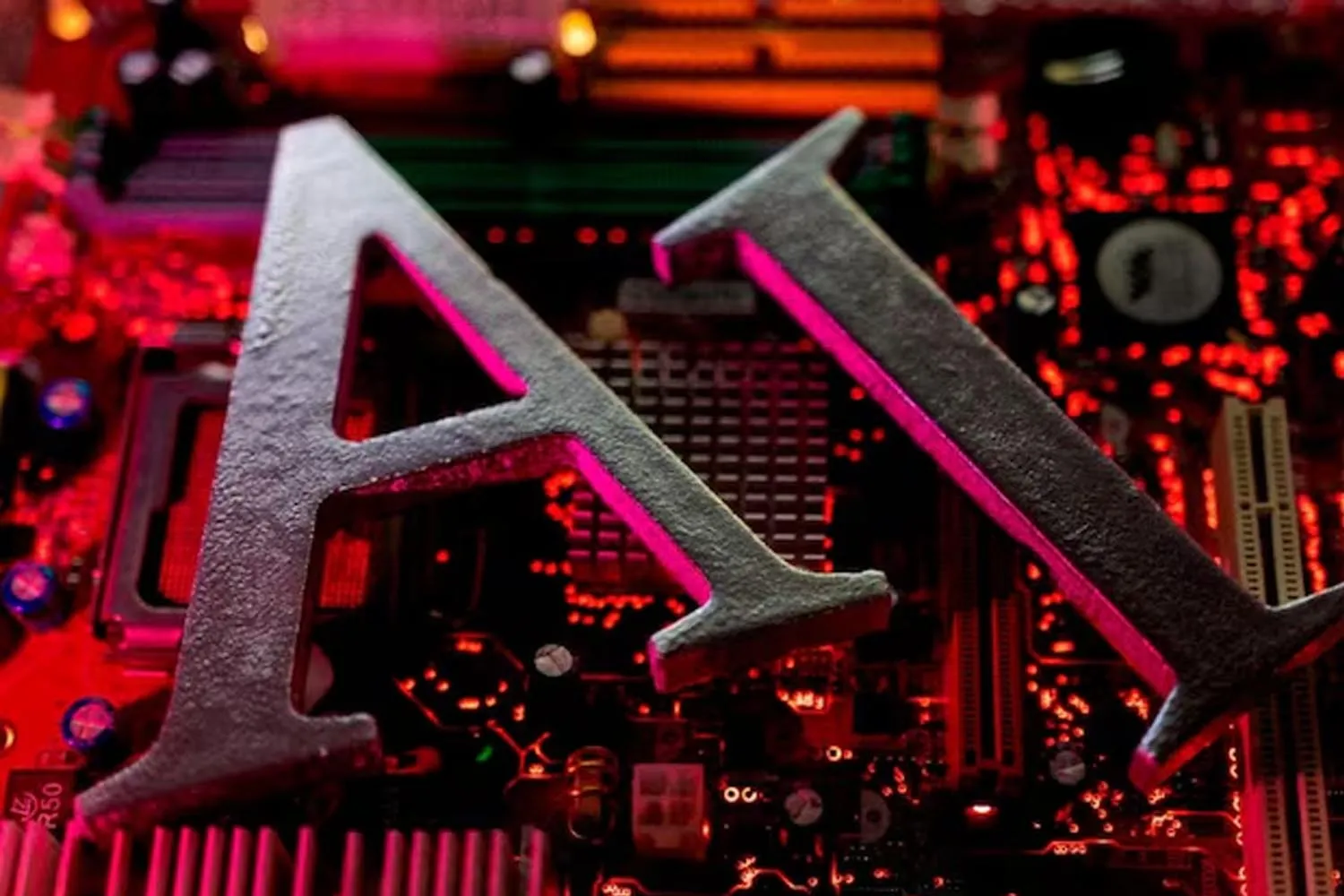
ASEAN nations like Malaysia, Singapore, and Thailand are racing to become AI hubs through semiconductor and data centre investment. However, risks include job displacement affecting 40 million gig workers, widening inequality, environmental strain, SME exclusion, and potential financial bubble concerns.
Key Points
• ASEAN nations, particularly Malaysia, Singapore, and Thailand, are aggressively investing in AI infrastructure, semiconductors, and data centres, with Malaysia generating US$117 billion in semiconductor exports and Singapore securing US$234 million in tech agreements.
• AI adoption threatens over 40 million gig workers and white-collar jobs, with major banks planning to cut tens of thousands of positions, potentially widening inequality while SMEs struggle to compete with large corporations.
• Environmental concerns, energy shortages, water stress, and warnings of an AI investment bubble comparable to the 2000 dot-com crash pose significant risks to the region’s rapid AI expansion.
ASEAN’s Race to Become an AI Hub
Regional governments are accelerating investment in artificial intelligence infrastructure, with Malaysia, Singapore, and Thailand leading the charge. Malaysia’s semiconductor exports reached US$117 billion in 2025, representing 25% of total exports, while over 140 data centre projects are underway. Singapore has secured US$234 million in agreements with Google and OpenAI, and Thailand approved a US$774 million AI integration budget. Companies like Malaysia’s Zetrix AI are developing intelligent agents targeting 1 million users by 2026, reflecting broader confidence that AI will become fully mainstream by 2031.
Environmental and Labour Risks Threaten Inclusive Growth
Data centres and chipmaking facilities consume enormous amounts of electricity and water, placing significant pressure on ASEAN’s already strained energy and environmental systems. Much of the required clean energy remains insufficient across the region, while water-intensive cooling systems risk worsening drought conditions. AI is simultaneously reshaping labour markets, with major corporations including Standard Chartered, HSBC, and Mizuho Bank collectively eliminating tens of thousands of jobs. ASEAN’s 40 million gig economy workers face particular vulnerability, lacking adequate welfare protections as automation accelerates across both low-skilled and white-collar sectors.
Inequality, SMEs, and the Threat of a Market Bubble
Economic gains from AI risk flowing disproportionately to capital owners rather than workers, as the ILO reports labour’s share of global income has already declined. Small and medium enterprises, which form the backbone of ASEAN economies, face significant barriers to AI adoption due to high infrastructure and talent costs, potentially widening the competitive gap with large corporations. Meanwhile, financial markets are raising alarms, with the Magnificent Seven technology giants surpassing US$23 trillion in combined valuation. Investor warnings comparing current conditions to the 1999-2000 dot-com bubble highlight the urgent need for ASEAN governments to balance opportunity with robust policy safeguards.
Other People are Reading
Check out what’s clicking on FoxBusiness.com.
Subaru is recalling more than half a million SUVs due to an incorrect weight limit label that could lead drivers to unintentionally overload their vehicles and increase the risk of a crash, federal safety regulators announced.
The recall impacts an estimated 541,237 vehicles that fail to meet federal motor vehicle safety standards, according to a July 13 notice from the National Highway Traffic Safety Administration (NHTSA).
The affected vehicles include certain 2019–2026 Ascent models, 2025–2026 Foresters, 2025–2026 Forester Hybrids and 2026 Crosstrek Hybrids.
HONDA RECALLS MORE THAN 880,000 VEHICLES OVER REAR SUSPENSION FAILURE RISK
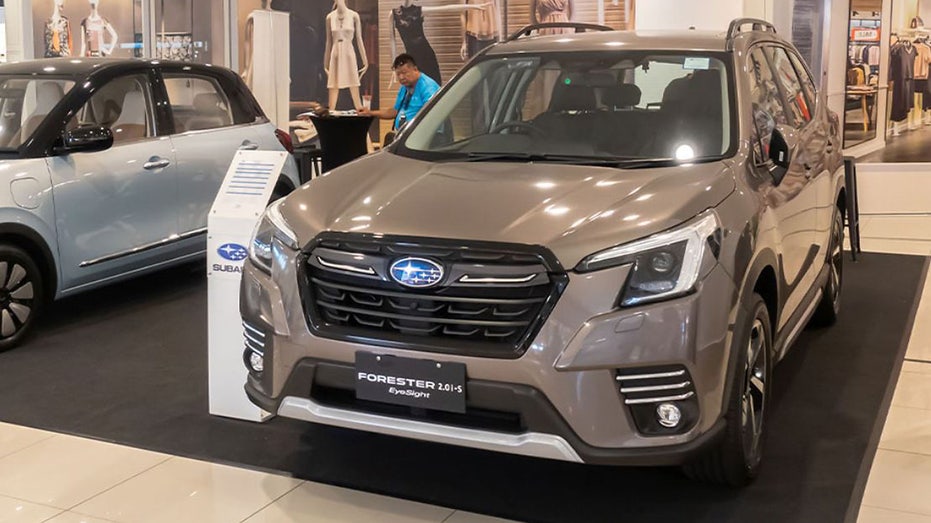
Subaru is recalling more than a half million SUVs, including the 2026 Forester. (UCG/Universal Images Group via Getty Images / Getty Images)
According to regulators, the safety certification sticker displays an incorrect gross axle weight rating (GAWR) for the rear axle.
“An incorrect GAWR label may lead to an overloaded vehicle, increasing the risk of a crash,” the NHTSA warning stated.
If drivers rely on the incorrect figures, they could unintentionally overload their vehicles with too much cargo or passengers, putting dangerous strain on the tires and suspension, officials said.
MORE THAN 550,000 KOBALT YARD TOOLS RECALLED OVER BATTERY FIRE HAZARD

Subaru was notified in May regarding the stated weight numbers on the rear axle label. (iStock / iStock)
The agency first alerted Subaru in May regarding the stated weight numbers on the rear axle label. After an internal review of its calculations, Subaru decided to conduct a safety recall in late June, officials said.
No crashes or injuries have been reported with respect to the labeling error.
Subaru is expected to mail notification letters to affected owners beginning Aug. 25.

Subaru Corp. Crosstrek vehicles bound for shipment at a port in Kawasaki, Japan. (Toru Hanai/Bloomberg via Getty Images, File)
Owners will receive a second letter containing a corrected weight sticker free of charge, along with instructions on how to easily paste it over the incorrect label.
Owners who prefer not to apply the sticker themselves can take their vehicle to an authorized Subaru dealer, where a technician will install it free of charge.
| Ticker | Security | Last | Change | Change % |
|---|---|---|---|---|
| FUJHY | SUBARU CORP. | 7.67 | +0.08 | +1.05% |
Customers seeking additional information can call Subaru Customer Service at 1-844-373-6614 and refer to recall code WRH-26.
GET FOX BUSINESS ON THE GO BY CLICKING HERE
People can also call the NHTSA vehicle safety hotline at 1-888-327-4236, or check their VIN online at nhtsa.gov.
Subaru of America did not immediately respond to FOX Business’ request for comment.

The ACCC says artificial intelligence could make insurance in the natural disaster-prone areas even more expensive as it wraps up its five-year reporting mission on premiums.

Live TV streaming services have officially overtaken traditional cable in subscriber count, with more than 18 million Americans now paying for a streaming alternative to a cable or satellite bundle, according to research firm Leichtman Research Group. As of this month, the field has grown crowded, with YouTube TV, Hulu + Live TV, Sling TV, Fubo, DirecTV Stream and Philo all competing for cord-cutters seeking access to live news, sports and entertainment channels without a traditional pay-TV contract.
YouTube TV remains the market leader by subscriber count, with more than 8 million subscribers as of earlier this year, according to Cord Cutters News. The service’s base plan now costs $82.99 per month for more than 100 channels, including local ABC, CBS, NBC and Fox affiliates in nearly all U.S. markets, along with full ESPN coverage spanning ESPN, ESPN2, ESPNU, the ACC Network, SEC Network and Big Ten Network. YouTube TV pairs that broad lineup with what several reviewers describe as the best-in-class DVR setup currently on the market: unlimited cloud storage with recordings kept for up to nine months, plus support for three simultaneous streams away from home and unlimited streaming on the home network. Regional sports networks remain available depending on market, with the strongest coverage in areas served by Bally Sports and MSG Networks.
Hulu + Live TV sits close behind YouTube TV on both price and channel count, also priced at $82.99 per month when bundled with Disney+ and ESPN+, for a lineup of more than 90 channels that closely mirrors YouTube TV’s core offering while adding access to Hulu’s on-demand streaming library. Hulu’s DVR matches YouTube TV’s nine-month retention window but caps simultaneous streams at two rather than three, requiring an additional $9.99 monthly upgrade to unlock unlimited screens for larger households. Reviewers generally describe YouTube TV and Hulu + Live TV as near-identical premium cable replacements, with the deciding factor for most households coming down to whether they place additional value on Hulu’s on-demand catalog and Disney-ESPN bundle.
Sling TV occupies the budget end of the market, undercutting its larger rivals by a wide margin. The service’s Orange plan runs $45.99 per month for roughly 30-plus sports, news and entertainment channels built primarily around ESPN, while the Blue plan, also $45.99, offers a broader roughly 40-channel lineup with some local coverage depending on market. Combining both tiers into the Orange & Blue plan costs $60.99 monthly for more than 50 channels, still the cheapest full-featured option among the major services. Sling’s biggest tradeoff is local channel coverage: NBC and Fox affiliates are available in only about 30 markets, while ABC and CBS require either an over-the-air antenna or a separate service entirely. Sling’s base DVR is also considerably more limited, offering just 50 hours of storage, expandable to 200 hours for an additional $5 to $9.99 per month depending on the current promotional pricing.
Fubo has carved out a distinct niche as the sports-focused option among the major streaming bundles, particularly for soccer and international programming, with a base plan priced around $79.99 to $82.99 per month for more than 100 channels. Fubo and DirecTV Stream remain the only two major streaming services that continue to carry regional sports networks, since both YouTube TV and Hulu dropped all RSN coverage between 2020 and 2021 due to high carriage fees, though some individual teams have since moved their broadcasts to over-the-air television or their own standalone streaming platforms. Fubo has also faced its own carriage disputes in recent periods, including a stretch earlier this year in which NBC-owned channels, including local NBC affiliates, were dropped from the service, complicating access to events including the Olympics and Super Bowl for Fubo subscribers during that window.
DirecTV Stream sits at the higher end of the pricing spectrum, with an Entertainment plan starting around $89.99 to $94.99 per month for roughly 90 to 95 channels, scaling up to a Choice plan priced near $114.99 to $124.99 monthly that adds regional sports networks and additional specialty channels. Reviewers note that DirecTV Stream’s advertised pricing often understates the real monthly cost once regional sports and broadcast fees are factored in, with the base Entertainment plan effectively running closer to $95 to $100 after those additional charges, and the Choice plan closer to $125 to $130. DirecTV Stream also offers the strongest local channel coverage among the major services in rural markets, according to PCWorld’s testing, followed by YouTube TV, with Sling TV described as largely unusable for local programming without a supplemental antenna.
For viewers seeking an even lighter, lower-cost option, Philo offers a stripped-down entertainment-focused package priced around $33 per month for more than 70 channels spanning entertainment, lifestyle and documentary programming, including access to HBO Max, Discovery+ and AMC+. Philo deliberately omits local channels, sports programming and major cable news networks, a tradeoff that keeps its price significantly below the other major services but limits its appeal for viewers who prioritize live news or sports.
Across all six major services, cross-platform compatibility remains broadly consistent, with each supporting Apple TV, Roku, Amazon Fire TV, Chromecast, Android TV, Samsung and LG smart TVs, along with iOS, Android and web browser access. Reviewers generally point to YouTube TV as offering the smoothest overall interface and the tightest integration with Google’s own hardware ecosystem, including Chromecast and Google Nest devices.
Ultimately, industry analysts covering the live TV streaming space say the right choice depends heavily on individual viewing priorities. Households that rely on live local news and network programming, along with a full DVR feature set, are generally steered toward YouTube TV or Hulu + Live TV despite their higher price points. Budget-conscious viewers willing to pair a service with a one-time antenna purchase for local coverage are more often pointed toward Sling TV. Sports fans specifically seeking regional team coverage are typically directed toward Fubo or DirecTV Stream, the only two remaining major streaming services carrying regional sports networks. And viewers whose habits skew toward general entertainment and documentary programming, with minimal need for live news or sports, may find Philo’s lower price point the most cost-effective option among the current field of live TV streaming alternatives.
Business
Colorado Man Says Switching From Ford F-150 to Tesla Cybertruck Felt Like Instantly Leaping Into Future

A Colorado man who traded in his Ford F-150 for a Tesla Cybertruck says the transition felt like jumping straight from the Victorian era into the future, becoming the latest in a growing string of traditional truck owners publicly documenting their switch to Tesla’s angular electric pickup.
The man shared his experience in a post on the Cybertruck Owners Club forum, describing an early adjustment period that quickly gave way to enthusiasm. “I’ve had a 2025 AWD truck for 3 weeks now,” the post began. “I’ve regretted purchasing FSD, but only because this truck is so much fun to drive.” He was referring to Tesla’s Full Self-Driving software package, an optional add-on he said he had come to view as almost unnecessary given how much he simply enjoyed being behind the wheel of the truck itself.
The owner singled out the Cybertruck’s steering system as the feature that most changed his perception of the vehicle relative to his previous gas-powered truck. “The steer-by-wire combined with rear wheel steering is mind-blowing. Seriously feels like driving the future,” he wrote. He drew a direct comparison to the vehicle he had traded in, along with a popular competitor. “Technically, an F150 or Tundra does the same basic things, but nowhere near with this capability and ease of use.” The owner also relayed a comparison his wife made about the difference between the two vehicles, likening the Cybertruck to a laptop and the F-150 to a typewriter.
Reflecting on the roughly $85,000 he spent on the truck, the owner said he considered it money well spent and encouraged skeptics to withhold judgment until they had experienced the vehicle firsthand. “Tesla would move a whole lot more of these if people could experience driving them. Don’t judge it til you drive it!” he concluded.
The Colorado man’s account adds to a broader pattern industry observers say has become increasingly common as more owners of internal combustion engine trucks make the switch to electric alternatives, including the Cybertruck specifically. John Higham, vice president of communications at the Electric Vehicles Association, said the phenomenon of skeptics converting to EV believers after actually driving one is familiar territory for his organization. “We hear this all the freaking time. We call it the butts in seats conversion,” Higham said. “It’s why we hold Arrive and Drive events in all of our 100+ chapters across the US twice a year,” he added, referring to hands-on demonstration events the association organizes specifically to give prospective buyers direct experience behind the wheel of electric vehicles before making a purchasing decision.
The comparison between the Ford F-150 and the Tesla Cybertruck has become something of a recurring flashpoint within the broader truck and EV enthusiast community, extending well beyond individual owner testimonials. The two vehicles have been pitted against each other in a series of highly publicized head-to-head contests, including drag races and tug-of-war competitions, each drawing significant online attention and often producing contested or debated results among viewers over which truck genuinely came out on top.
Sales figures have added another layer to the rivalry. According to 2025 sales data, Ford’s electric F-150 Lightning variant outsold the Cybertruck over the course of the year, giving traditional truck loyalists ammunition in the broader debate over which vehicle better represents the future of the pickup truck segment, even as Tesla’s more radically styled offering has continued to draw outsized media and public attention relative to its actual sales volume.
The Cybertruck itself has had an unusually long and turbulent path to market. Tesla first unveiled the vehicle’s prototype in November 2019, with production originally targeted to begin in late 2021. That timeline slipped repeatedly in the years that followed, with Tesla postponing its production target again in 2022 before confirming in January 2023 that manufacturing would finally begin later that year. The first Cybertruck was assembled at Tesla’s Gigafactory Texas in July 2023, with serial production beginning that November, followed shortly after by the vehicle’s first customer delivery event.
Despite finally reaching the market after years of delay, the Cybertruck has faced a mixed reception commercially, falling short of some of the ambitious sales expectations Tesla and its supporters had set for the vehicle in the years leading up to its release. Even so, the truck has continued to generate significant cultural attention, in part because of its unconventional angular design, which stands in stark visual contrast to the more traditional styling of established competitors like the F-150 and Toyota Tundra, and in part because of the kind of enthusiastic, sometimes evangelistic owner testimonials exemplified by the Colorado man’s recent forum post.
Stories like this one have become a recurring feature of automotive media coverage as the broader shift toward electric vehicles continues to unfold across the truck segment specifically, a category that has historically been viewed as more resistant to electrification than passenger cars given traditional truck buyers’ emphasis on towing capacity, range under heavy load and established brand loyalty built up over decades. Advocacy groups like the Electric Vehicles Association have leaned into that dynamic directly, framing hands-on driving experiences as the most effective tool for overcoming skepticism among longtime gas truck owners, a strategy Higham’s comments suggest has produced consistent results across the organization’s national network of chapters.
For now, the Colorado owner’s account stands as one of the more vivid recent examples of that conversion narrative playing out in real time, with his comparison of the shift to leaping from the Victorian era into the future offering a distinctly colorful entry into an increasingly well-documented genre of EV conversion stories circulating within online truck and Tesla enthusiast communities.
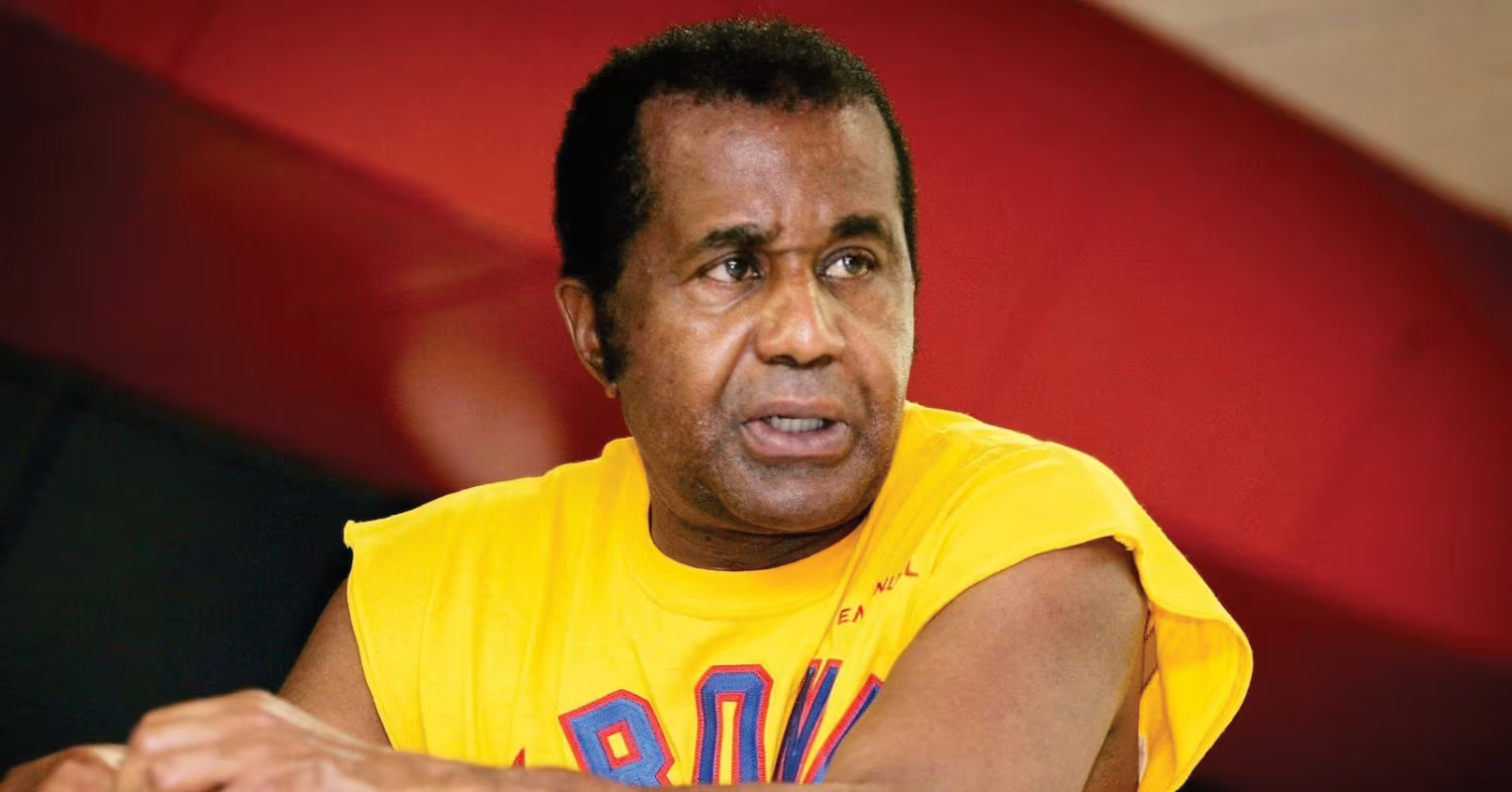
Emanuel Steward said welterweight champion was the ‘best and most exciting’ boxer he ever trained

Beyond the Galaxy Z Fold: Samsung’s Future Phone Concepts That Roll, Slide and Expand

Why Should I Save Money? | Save, Spend, Share | Financial Literacy For Kids | Piggy Bank | EMoMee

No Jackpot Winner as $257 Million Prize Rolls Over to $269 Million Monday Draw

Renter of Home in Anne Heche Crash Denies Settlement With Son

Weekend Open Thread: Staud – Corporette.com
Why Should I Save Money? | Save, Spend, Share | Financial Literacy For Kids | Piggy Bank | EMoMee

“The XRP Price Bottom Is In” Insane Ripple Price Prediction We Could See A Mega Rebound In Price

Finanzielle Ausbeutung! | Deutschland am Limit | Markus Krall
-

 Fashion6 days ago
Loro Piana Fall 2026 Enters Houston’s Art Scene
-

 Fashion4 days ago
Weekend Open Thread: Nutriplenish Leave-In Conditioner
-
 Sports5 days ago
2026 Genesis Scottish Open Thursday TV coverage: Round 1
-

 Tech7 days ago
Anthropic brings Claude Cowork to mobile and web as usage data shows most users aren’t coding
-

 Sports5 days ago
Super Eagles star Moses Simon opens up on Liverpool transfer regret
-

 Tech6 days ago
Character.AI enters the microdrama arena with its own productions, but there’s a twist
-

 News Videos6 hours ago
XRP BOMBSHELL… XRP OMBOARDED FOR TRANSACTIONS!!!
-

 Tech21 hours ago
Get Your ESP32 Sunny Side Up With This Solar Dev Board
-

 Tech6 hours ago
Dark Secrets Emerge When Jailbreaking LLMs
-

 News Videos6 days ago
Crypto Just Entered Its Most Important 6-Month Candle (Could Decide Everything!)
-

 Business7 days ago
ASX 200 Slides Over 0.6% as Rare Earths and Lithium Stocks Tumble Amid Global Semiconductor Sell-Off Today
-
 NewsBeat6 days ago
Major update after Huntingdon train attack as man enters plea
-
 Business7 days ago
Will Trent shares rebound after Q1 update triggers 13% crash? Here’s what technical charts indicate
-

 News Videos1 day ago
how to make coin bank box with cardboard #scienceproject #money #diy #shorts
-

 Business7 days ago
SpaceX Shares Slide Nearly 6% Amid Post-IPO Volatility and Starship Test Focus
-
 Sports6 days ago
39-year-old Djokovic wins five-hour thriller to enter Wimbledon semis | Other Sports News
-

 Tech6 days ago
Level Infinite Launches Gangstar Mirage City in India with Pre-Registrations
-
 Tech1 day ago
Cloudflare Precursor Watches Your Mouse and Keyboard To Decide If You Are Human
-

 Tech6 days ago
Entra passkey enrollment vishing targets Microsoft 365 users
-
 Crypto World6 days ago
DeFi Dashboard Zapper to Shut Down After 7 Years
You must be logged in to post a comment Login