Connect with us
DAPA Banner
DAPA Coin
DAPA
COIN PAYMENT ASSET
PRIVACY · BLOCKDAG · HOMOMORPHIC ENCRYPTION · RUST
ElGamal Encrypted MINE DAPA
🚫 GENESIS SOLD OUT
DAPAPAY COMING

NewsBeat

Timothee Chalamet seen chatting with David Beckham at France-Spain World Cup game in Texas… before meeting Dallas Cowboys Cheerleaders

Published

on

Timothee Chalamet chatted with David Beckham at France and Spain's World Cup semifinal

Advertisement

Timothee Chalamet crossed paths with David Beckham and the Dallas Cowboys Cheerleaders after attending France and Spain’s World Cup semifinal on Tuesday.

The Hollywood star, 30, headed to AT&T Stadium in Arlington, Texas, to watch France take on the reigning European champions for a place in Sunday’s final.

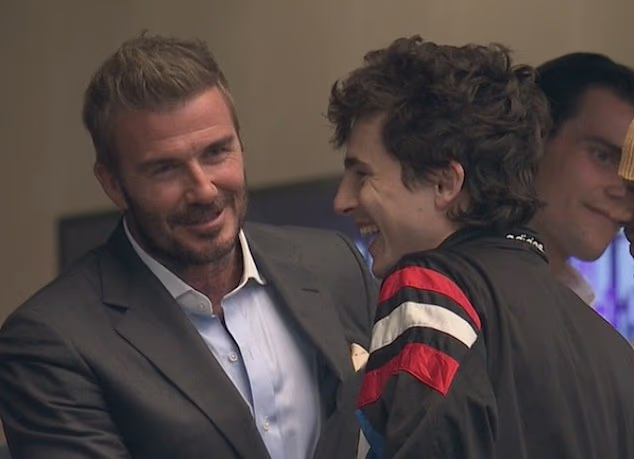
During the second half of the game, Fox Sports cameras spotted him locked in conversation with soccer legend Beckham, 51, and his son Romeo, 23, in the stands.

Chalamet, who is French-American, was wearing a France tracksuit top at the match while rooting for his father Marc’s birth country to get the better of Spain.

Advertisement

Unfortunately for him and his dad, Les Bleus were sent packing from the tournament after slumping to a surprise 2-0 defeat in Texas.

Mikel Oyarzabal opened the scoring for Spain from the penalty spot in the 22nd minute, before Pedro Porro added their second 13 minutes after halftime.

Timothee Chalamet chatted with David Beckham at France and Spain’s World Cup semifinal

Advertisement
Chalamet was locked in conversation with Beckham and his 23-year-old son Romeo in Texas

Chalamet was locked in conversation with Beckham and his 23-year-old son Romeo in Texas

France were favorites to go all the way and lift the trophy in New Jersey on Sunday, meaning their miserable performance and elimination therefore comes as a slight shock.

Nevertheless, Spain have proven themselves one of the best teams in the world in recent years, having also prevailed at the 2024 European Championships. 

At the halftime break in Arlington, Chalamet was also filmed meeting the famous Dallas Cowboys Cheerleaders backstage at AT&T Stadium. 

Advertisement

As he gave each of the cheerleaders a hug, the Marty Supreme actor could be heard saying that he was ‘starstruck.’

Chalamet was also spotted at Spain’s quarterfinal win over Belgium in Los Angeles last week alongside his father, though there was no sign of girlfriend Kylie Jenner.

Kylie joined her man at a number of New York Knicks games earlier in the summer, sitting courtside with him on multiple occasions as his beloved team became NBA champions for the first time since 1973.

As for Beckham, he has attended several World Cup matches over the past month, including his native England’s dramatic quarterfinal victory over Norway in Miami on Saturday.

Advertisement

The Inter Miami co-owner also hosted his country at the MLS team’s training facility ahead of that game last week, where he and two of his sons were seen chatting with Three Lions players and head coach Thomas Tuchel.

Chalamet was rooting for France, his father Marc's birth country, against Spain on Tuesday

Chalamet was rooting for France, his father Marc’s birth country, against Spain on Tuesday

But Les Bleus were sent packing from the tournament after suffering a surprise 2-0 defeat

But Les Bleus were sent packing from the tournament after suffering a surprise 2-0 defeat

Join the discussion

Advertisement

Do celebrity appearances at big sports events add excitement or distract from the game itself?

Beckham will likely be in Atlanta on Wednesday as England bid to reach their first World Cup final since 1966.

Standing in their way is none other than Lionel Messi and Argentina, who are looking to become the first team to retain the title since Brazil in 1962.

Whoever comes out on top will then lock horns with Spain in the all-important final at New Jersey’s MetLife Stadium on Sunday afternoon.

Advertisement

The loser, meanwhile, will be forced to play a deflating third-place playoff against France the night before. 

Advertisement

Source link

Advertisement
Continue Reading
Click to comment

You must be logged in to post a comment Login

Leave a Reply

NewsBeat

What Indonesia can learn from Thailand’s disease tracking

Published

on

What Indonesia can learn from Thailand’s disease tracking

The COVID‑19 pandemic accelerated investment in health infrastructure across Southeast Asia, including Indonesia and Thailand.

Indonesia built over 600 COVID-19 testing labs between 2020 and 2021, expanded telehealth services, and introduced digital platforms to monitor diseases. However, these improvements were concentrated in urban areas, while many remote regions remains underdeveloped.

Thailand took a different approach. Alongside establishing more than 10,000 COVID-19 labs, it developed an integrated healthcare system that monitors disease outbreaks nationwide, including among migrant workers.

Research suggests that Thailand’s integrated approach has successfully strengthened the country’s preparedness for future public health emergencies — something Indonesia should learn from to broaden its public health access across the archipelago.

Advertisement

Thai government’s fast response

Thailand successfully detected and tracked a new COVID‑19 wave in mid‑2025, which recorded around 374,000 cases and 84 deaths.

The country had already demonstrated its capacity during the first wave in 2020. Among the first nations to detect COVID-19, Thailand contained the outbreak in less than six months. Of 3,195 confirmed infections, 3,072 patients recovered, resulting in an impressive 96% recovery rate.

Two factors explain this success.

First, the Thai Ministry of Public Health quickly established the Centre for COVID-19 Situation Administration (CCSA), which coordinated responses across ministries and delivered consistent public communication.

Advertisement

Second, public compliance with health measures was exceptionally high, particularly compared to Indonesia.


À lire aussi :
How satellites have become Earth’s new health and nature watchdogs


A 2020 survey by Imperial College London found Thailand had the highest adherence to preventive measures in ASEAN, with 89–98% of respondents regularly wearing masks, washing hands, and following health guidelines.

This combination of good governance and public trust strengthened the country’s disease surveillance system.

Advertisement

Digital platforms to track disease

Thailand’s disease monitoring system links local and central governments through nationwide digital networkss.

Health data are collected in real time using everyday devices such as smartphones and computers. Two mobile applications play a central role.

MorChana uses GPS and Bluetooth to identify close contacts and people entering high-risk areas, allowing authorities to detect potential infections quickly.

Mohpromt manages digital vaccination records and electronic health records, enabling hospitals to access patients’ medical records instantly.

Advertisement

Together, the applications have around 36 million users, which is nearly half of Thailand’s population, including migrant workers, and are connected to Thailand’s broader digital disease surveillance system.

Test results from hospitals and clinics are uploaded within seconds, while residents can easily access their own health records.

Reaching remote communities

Indonesia illustrates the challenges of building an integrated health system across a vast archipelago.

During the pandemic, the Indonesian government developed at least seven health apps, including the national SatuSehat platform, which now integrates platforms such as e-HAC and SIRANAP.

Advertisement

However, many local governments also created their own apps — like Pikobar in West Java, Sawarna in Bandung, and PaPa Sulbar in West Sulawesi — which often cannot connect with the national platform.

This fragmentation, combined with geographical barriers and uneven internet access, limits nationwide disease surveillance and reduces the effectiveness of digital health services.


À lire aussi :
Tracking symptoms of respiratory diseases online can give a picture of community health


Thailand addressed these challenges by expanding digital connectivity. Through the Net Pracharat project, the government installed broadband networks and free Wi-Fi hotspots in thousands of villages, allowing low-income households to access digital public services, including healthcare.

Advertisement

Thailand also strengthened healthcare access through its tax-funded Universal Coverage Scheme, which provides basic health services for all Thai citizens and increasingly for migrant workers.

In remote villages, trained health workers and volunteers regularly visit households to conduct health checks and deliver basic medical care.

Lessons for Indonesia

Thailand’s actions highlight that building laboratories and digital platforms alone is not enough.

Indonesia still needs to strengthen internet connectivity, improve integration between national and regional health systems and expand healthcare access in underserved areas.

Advertisement

Most importantly, an effective disease surveillance system depends on public trust. Without confidence that the government can protect the health of all residents, even significant investments in health infrastructure and digital technology will not achieve their full potential.

Source link

Advertisement
Continue Reading

NewsBeat

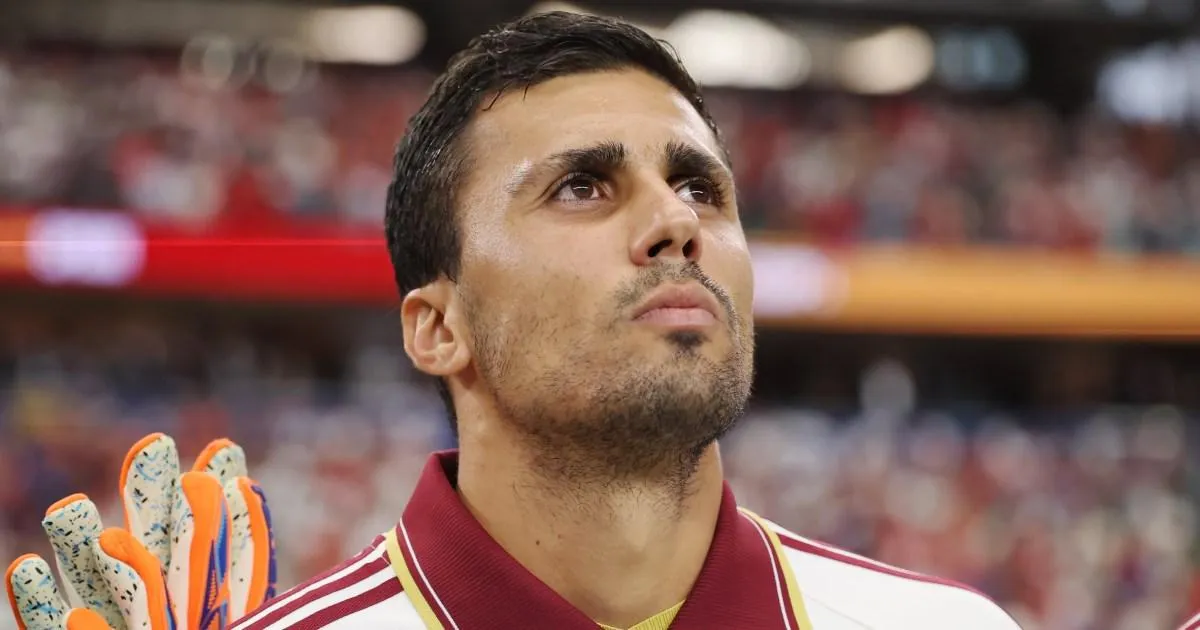
Rodri makes World Cup complaint to FIFA after Spain beat France | Football

Published

on

Rodri makes World Cup complaint to FIFA after Spain beat France | Football

Close Overlay

In The Mixer’s World Cup special

Everything you need to know about the World Cup – England updates, the games to watch and stories you missed – in five minutes, at 1pm, every day.

Source link

Advertisement
Continue Reading

NewsBeat

Larne book ‘free hit’ date with European giants after Inver Park victory

Published

on

Belfast Live

Boss Gary Haveron was beaming with pride afterwards, as his side prepare top host the Serbian giants in the next round

Larne booked a ‘free hit’ Champions League date with Red Star Belgrade after recovering from an awful start to see off Tre Fiori at Inver Park last night.

Boss Gary Haveron was beaming with pride afterwards, as his side prepare top host the Serbian giants in the next round.

“I’m beyond proud we can bring a club like that to these shores, to Northern Ireland and we can showcase what we’re about. It’s a huge draw, they’re a historical and massive football club,” Haveron told BBC Sport NI.

Advertisement

“It’s seen as a free hit for us because people won’t expect too much, we’ll go and try be as competitive as we possibly can.

“We’ll pay them the respect but we’ll try impose ourselves on the game and see what we can do. We’re maybe not shoulder to shoulder with them but while we’re on the pitch we’ll try our best to get a result.”

Their hard-earned advantage from the first leg in San Marino was wiped out as early as the 11th minute, with Rohan Ferguson at fault.

Tre Fiori captain Matteo Prandelli kept his cool to release Pietro Mengucci, whose low angled shot squirmed through the Larne keeper’s legs.

Advertisement

Gary Haveron’s men responded well to the setback, with Montel Gibson and Ronan Doherty denied before Matt Ridley showed them how it was done in the 25th minute.

After Conor McKendry was fouled on the right flank, Doherty whipped the resulting free-kick to the back post and centre-back Ridley rose to head home.

Soon afterwards, Matty Lusty came within inches of adding to his goal from the first leg when he cut in from the left and cracked a shot against the near post.

There was a real cut and thrust to the game as the visitors came back into it.

Advertisement

They thought they had scored a second when Romeo Bertani’s scrappy effort found the net, but it was disallowed for offside, while Nico Manara headed just wide from a Brando Sami corner on the stroke of half-time.

The pressure on the Larne defence continued after the break, with Prandelli going close with a left-footed shot.

Tension was building in the stands, but Larne received a major boost just after the hour mark when Tre Fiori defender Simone Rea dragged Lusty (inset) back and was shown a second yellow card.

Lusty was proving too hot to handle and another thrilling run from the striker was halted when Benedettini clipped his heels just inside the area.

Advertisement

Referee Sigurd Kringstad pointed to the spot and Dan Bent made no mistake, planting the ball high into the right side of the net.

Ahead on the night and with a man advantage, Larne began to display the nous and composure they have developed during this golden period in their history, making the ball do the work as Tre Fiori flagged.

The visitors squandered a golden opportunity to set up a grandstand finish when substitute Mohamed Ben Kacem somehow spooned the ball over from inside the six-yard box.

Their misery was complete when Tommaso Bernardi was shown two yellow cards in a matter of seconds, while Larne substitute Paul O’Neill had a goal chalked off after the referee spotted a foul on the keeper.

Advertisement

Sign up to our free sports newsletter to get the latest headlines to your inbox

Source link

Continue Reading

NewsBeat

The North Yorkshire ruins where Sam Neill shot ‘most chilling scene’

Published

on

The North Yorkshire ruins where Sam Neill shot 'most chilling scene'

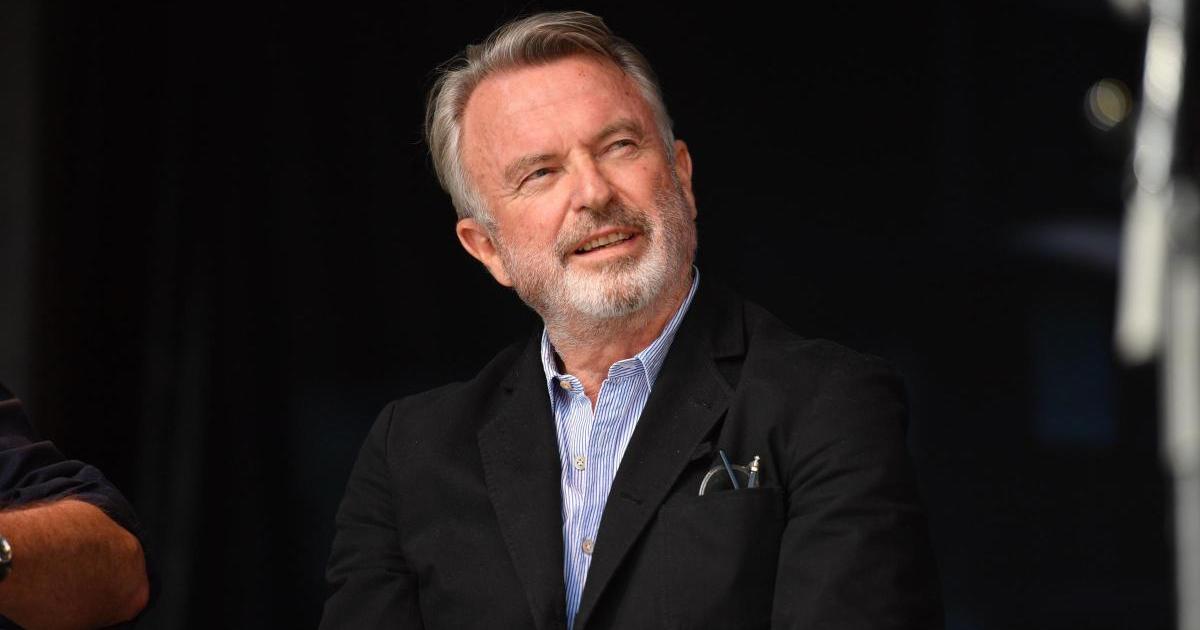
In 1981, the then-rising New Zealand actor travelled to the Skell Valley in North Yorkshire to shoot the apocalyptic finale of Omen III: The Final Conflict, playing Damien Thorn — the Antichrist at the height of his earthly power — in a landscape that director Graham Baker later said was perfectly suited to the story’s dark ambitions.

“Shooting here was very cold and very eerie,” Baker recalled in the DVD commentary for the film.

It is not difficult to see why he chose it.

(Image: Supplied)

A ruin built for the screen

Fountains Abbey, just three miles south-west of Ripon, is the largest set of monastic ruins in England.

Advertisement

Founded in 1132 by Cistercian monks under the direction of Thurstan, Archbishop of York, it grew over four centuries into one of the wealthiest religious houses in the country before Henry VIII’s Dissolution of the Monasteries reduced it to the haunting skeleton it remains today.

What the monks left behind — vaulted ceilings, grand columns, a soaring 160-foot tower — gave Baker and Neill a ready-made stage for the film’s climactic confrontation.

The finale was shot entirely on location at Fountains.

Neill was 33 at the time and relatively unknown outside his native New Zealand and Australia.

Advertisement

The Final Conflict was among the films that introduced him to mainstream international audiences — twelve years before he would become truly famous worldwide as Dr Alan Grant in Jurassic Park.

(Image: Sam Neill (Alamy/PA)

A World Heritage site with a Hollywood habit

Fountains Abbey was designated a UNESCO World Heritage Site in 1986 — just five years after Neill walked its nave.

It sits within Studley Royal Park, an 18th-century landscaped water garden that frames the ruins with formal pools, statues and sweeping parkland, and together the two form one of the most visited historic sites in the north of England.

The National Trust, which manages the site, recorded more than 400,000 visitors to the Fountains Abbey estate in a recent year.

Advertisement

Its atmospheric quality has drawn filmmakers back repeatedly: productions shot there include Anne Boleyn (2021), The Witcher (2021), All Creatures Great and Small (2021), The Secret Garden (1993 and 2020), and most recently Danny Boyle’s 28 Years Later (2025).

(Image: NORTHERN ECHO)


It is that last production which brings the connection full circle.

Like The Final Conflict four decades before it, 28 Years Later used Fountains Abbey’s 12th-century ruins to conjure a world after civilisation’s collapse.

Those who visit Fountains Abbey today — and more than 400,000 do each year — walk the same ruins where a young Sam Neill once filmed in the cold and the dark.

Advertisement

Source link

Continue Reading

NewsBeat

Rage It Out in Consett closing for renovations

Published

on

Rage It Out in Consett closing for renovations

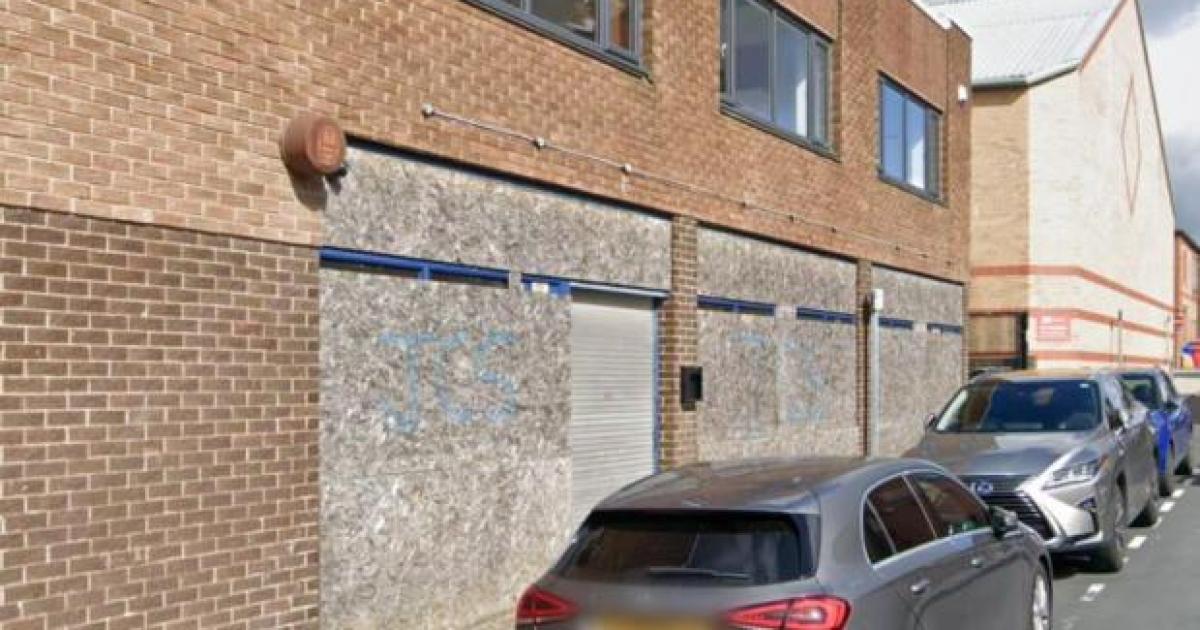
Rage It Out on Queen Street in Consett opened in March this year.

Now, the business will stop accepting new bookings to allow them time to upgrade the experience, but current bookings will still go ahead.

The announcement was made in a Facebook post: “After a mental first few months of smashing, throwing, eating, laughing and generally causing controlled chaos, we’ve decided to pause new bookings from July 20 until September 14 while we make Rage It Out even better.”

Advertisement

The company thanked its customers for the support they have received since opening: “The support from everyone in Consett and beyond has honestly blown us away.

“More importantly, after months of operating, you’ve shown us exactly what you love, what works, and what you want more of.”

They detailed what changes will be made: “During this time we’ll be giving Rage Room 1 a revamp, making Refuel the Chaos bigger and better and getting our bar area fully equipped and ready to go.”

Rage It Out added that there are some booking slots still available and they will be planning some discounts and special invites for previous customers.

Advertisement

A rage room is a controlled space where visitors can smash objects such as bottles, furniture, and electronics as a way to release stress and tension.

Rage It Out will reopen fully from September 19.

Source link

Advertisement
Continue Reading

NewsBeat

Bedford train crash driver died of ‘traumatic injuries’, inquest hears

Published

on

Cambridgeshire Live

A train driver, formerly a Cambridgeshire councillor, died of ‘traumatic injuries’ after a crash in June

A train driver who was killed in a 49mph crash in Bedfordshire is believed to have died from “traumatic injuries”, an inquest has heard.

Shaun Burton, 60, was driving an East Midlands Railway train (EMR) that hit the back of a stationary train run by the same operator in Elstow, near Bedford, on June 19. Mr Burton, a former Huntingdonshire councillor, died as a result of the crash.

The Rail Accident Investigation Branch (RAIB) published an interim report on June 24, which stated Mr Burton’s train had proceeded past a red signal near the scene of the crash. An inquest opened into Mr Burton’s death today (Tuesday, July 14) at Bedfordshire and Luton Coroners Court in Ampthill.

Advertisement

The coroner’s officer, Natalie Shirran, said: “On June 19, 2026, at approximately 17.14 hours, a collision occurred south of Bedford Rail station between train 1H46 and the rear of stationary train 1B67.

“Train 1B67 had stopped due to a fault and the driver was contacting the signaller and maintenance staff. The signalling system had placed following trains at red signals. Train 1H46 departed Bedford at 17.10 hours and subsequently passed a red signal.”

Some 162 people were injured, 102 of whom needed hospital treatment. As of when the RAIB was published around three weeks ago, 53 remained in hospital, including eight in a critical condition.

Images from a forward-facing CCTV camera on Mr Burton’s train show a signal near the scene of the crash “was displaying a red aspect as the train approached and then passed it”, the RAIB said.

Advertisement

Train data from the wreckage shows the brakes were applied while the train was travelling at 77mph, about 200 yards before the crash, the court heard.

Its speed had reduced to 49mph when the impact happened. Mr Burton’s train was fitted with automatic warning system (AWS) equipment triggered by magnets on tracks. This sounds a bell or chime in the driver’s cab when it is approaching a green signal, and a horn when coming up to a non-green signal.

In the case of the latter, drivers are required to acknowledge the warning by pressing a button. After this happens, a visual indicator appears in the driver’s cab as a reminder. The train’s emergency brake is applied if the warning is not responded to quickly enough.

The RAIB statement said the stopped train involved in the crash had come to a stop “unexpectedly” after a fault with its AWS equipment caused its brakes to apply. This resulted in the signal behind it automatically changing to red, investigators said. Approaching trains should stop at red signals.

Advertisement

A post-mortem examination was carried out by consultant pathologist Dr Virginia Fitzpatrick-Swallow on behalf of the coroner’s court.

Mr Burton’s cause of death was confirmed as “traumatic injuries to the brainstem and chest, pending further investigations.” His family had been informed that the inquest was set to open, but did not attend court.

Coroner Emma Whitting said: “I would like to take this opportunity to pass on my condolences to Mr Burton’s family, friends and colleagues for their loss.”

The inquest has been adjourned until the conclusion of the RAIB and British Transport Police investigations.

Advertisement

Source link

Continue Reading

NewsBeat

Teeside plant opens to reduce e-waste and cut reliance on metals

Published

on

Teeside plant opens to reduce e-waste and cut reliance on metals

The move aims to reduce Britain’s reliance on overseas processing.

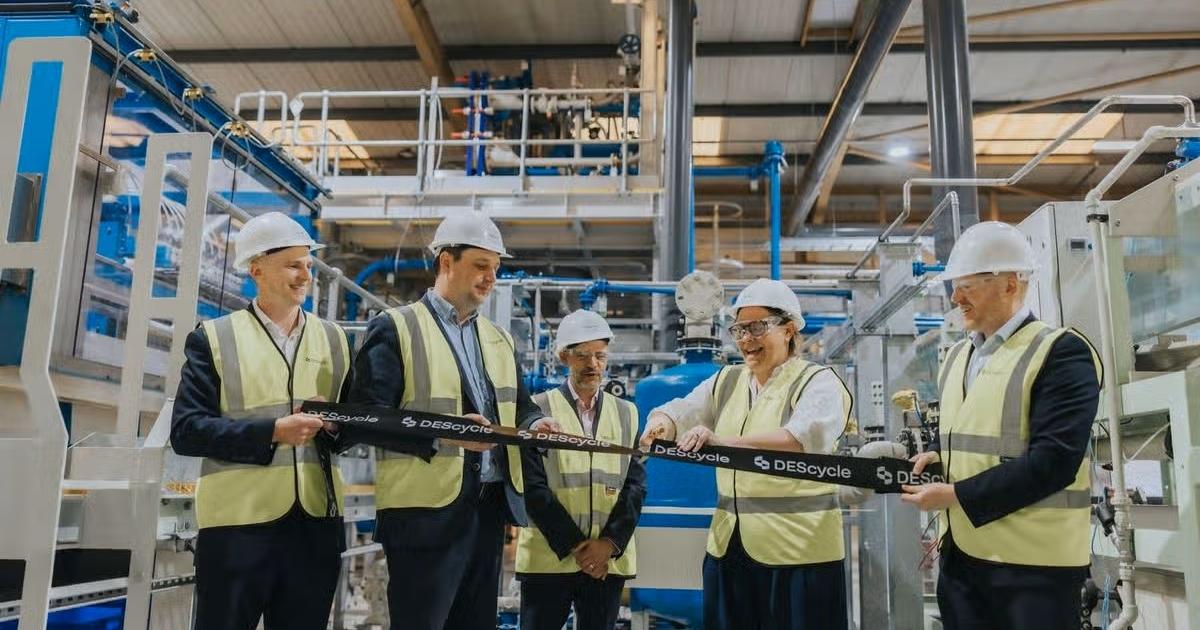
DEScycle opened its first demonstration facility at the Wilton Centre in Teesside on Thursday, 9 July, in what the company says is a significant step towards keeping critical minerals processing on home soil.

The plant will process electronic waste to recover metals such as gold, copper, silver and palladium, which are essential for manufacturing, clean energy, technology and national security.

Advertisement

The UK generates millions of tonnes of e-waste each year, most of which is currently sent abroad for recycling.

The facility was opened by Anna Turley, MP for Redcar, and Ben Houchen, Tees Valley Mayor, alongside investors and industry figures.

Anna Turley MP said: “Critical metals are essential to Britain’s manufacturing, energy, technology and national security, yet too much valuable metal-bearing waste is still exported for processing overseas.

“DEScycle’s plant in Redcar is an important step towards changing that.”

Advertisement

Ben Houchen said: “Teesside has always been at the forefront of industrial innovation, and it’s fantastic to see companies like DEScycle choosing our region to develop new technology that turns electronic waste into valuable critical minerals.”

Tech giant Cisco will supply materials to the facility, while Mitsubishi Corporation will explore commercial routes to market for the recovered metals.

Waste Minister Mary Creagh CBE MP said: “Recovering these critical metals and materials here in the UK is vital for our supply chain resilience, resource security and climate goals. I am delighted to see a British start-up like DEScycle showing how innovation strengthens the circular economy.”

CEO Leo Howden said the Teesside plant was designed as a blueprint that could be replicated at industrial sites across the UK and internationally.

Advertisement

The launch follows a government announcement last month of a £50m investment in domestic critical minerals production, setting an ambition for recycling to meet 20 per cent of annual UK critical mineral demand by 2035.

Source link

Advertisement
Continue Reading

NewsBeat

Andy Serkis says the Lord Of The Rings cast was ‘very white’ and admits there were ‘criticisms’ over the film series’ lack of diversity as he defends the casting of his new prequel

Published

on

Andy Serkis has admitted the Lord Of The Rings cast was 'very white' after a 25-year row over the lack of diversity in the films

Andy Serkis has admitted the Lord Of The Rings cast was ‘very white’ after a 25-year row over the lack of diversity in the films.

The iconic trilogy is considered one of the greatest in cinematic history, and its conclusion The Return Of The King, was awarded 11 Oscars.

However, fans have complained that there was little diversity in the stars who played its most iconic roles, and Andy himself has addressed the backlash in a new interview.

The actor, who provided the motion capture for Gollum, acknowledged that there were ‘criticisms’ aimed at the casting for the original films, and it was something he planned to ‘acknowledge’ in his new film The Hunt For Gollum.

Advertisement

He said: ‘Tolkien himself was influenced a lot by Norse mythology, there’s a lot of that feeling.

‘The Shire feels very, very much like a very, a very white, you know…’

Andy Serkis has admitted the Lord Of The Rings cast was ‘very white’ after a 25-year row over the lack of diversity in the films

Advertisement

Speaking to the BBC, Andy added: ‘They’re not very concerned about what goes on beyond the borders of The Shire, but they know they don’t want people coming in.

‘Yes, there have been criticisms.

‘This particular film is somewhat acknowledging that. But I don’t think we will be doing a politically correct just-casting-for-the sake-of-casting-and-ticking-boxes version of the film. So, it’s where relevant basically.’

Casting for The Hunt For Gollum is currently underway, and will see Andy reprise his role as Gollum, alongside Ian McKellen as Gandalf The Grey, with the film set to be released in December 2027.

Advertisement

Told from Gollum’s perspective, the film is set before the events of The Fellowship of The Ring, and sees Gandalf sending a ranger called Strider to find the former Hobbit.

Strider, also known as Aragorn, will be played by Jamie Dornan, replacing original star Viggo Mortensen in the role.

The casting received a mixed reception, with comments on Instagram including: ’50 shades of Gollum;’

‘Kate Winslet to Jamie Dornan in LOTR: “draw me like one of your Rivendell girls;”‘

Advertisement

‘From a looks wise Jamie is fantastic for Aragorn;’

The iconic trilogy is considered one of the greatest in cinematic history, but fans have previously criticised a lack of diversity among its actors

The iconic trilogy is considered one of the greatest in cinematic history, but fans have previously criticised a lack of diversity among its actors

Join the discussion

Should beloved fantasy classics be recast for greater diversity or stay true to original visions?

Advertisement

‘JAMIE DORNAN. HELL YEAH. AND LEEEEE PACE! AGGHHHHHHH.’

‘Jamie Dornan, you just being given a second chance in this industry,’

Anya Taylor-Joy and Kate Winslet have also joined the cast, and the film is set to use de-aging technology for actors who are returning to the franchise.

In 2022, several stars of The Lord Of The Rings prequel series The Rings Of Power, received vile racist trolling over their casting in the show, with stars including Sir Lenny Henry cast as elves, dwarves and Harfoots.

Advertisement

Elijah Wood, Sean Astin, Billy Boyd and Dominic Monaghan, who played hobbits in the original trilogy, shared social media posts with the caption: ‘You Are All Welcome Here’ in a show of solidarity.

A message was also posted on the show’s social media account hitting back at the ‘relentless’ abuse some of the cast suffered.

It said: ‘JRR Tolkien created a world which, by definition, is multicultural.

‘A world in which free peoples from different races and cultures join together, in fellowship, to defeat the forces of evil. Rings of Power reflects that. 

Advertisement

‘Our world has never been all white, fantasy has never been all white, Middle-earth is not all white.’

Source link

Continue Reading

NewsBeat

England or Argentina? Spain players ‘have clear preference’ for World Cup final opponent | Football

Published

on

England or Argentina? Spain players 'have clear preference' for World Cup final opponent | Football

Close Overlay

In The Mixer’s World Cup special

Everything you need to know about the World Cup – England updates, the games to watch and stories you missed – in five minutes, at 1pm, every day.

Source link

Advertisement
Continue Reading

NewsBeat

Jet2 aircraft makes emergency return to Manchester

Published

on

Jet2 aircraft makes emergency return to Manchester

Flight LS869, operated by a Boeing 737-800, departed Manchester at 10:15 pm before the crew declared an emergency moments later by squawking 7700, the international transponder code used to indicate a general emergency.

The aircraft stopped its climb at around 10,000 feet while the pilots carried out emergency procedures.

After assessing the situation, the crew decided to return to Manchester.

Advertisement

The aircraft landed safely at around 10:50 pm, approximately 35 minutes after departure, where it was met by airport fire and rescue vehicles as a precaution.

Following checks by emergency services, the Boeing 737 taxied to a remote stand under its own power, allowing passengers and crew to disembark safely.

No injuries were reported.

The cause of the cockpit fumes has not been confirmed.

Advertisement

The aircraft remained in Manchester following the incident while engineers carried out inspections.

Source link

Advertisement
Continue Reading

Trending

Copyright © 2025