Connect with us
DAPA Banner
DAPA Coin
DAPA
COIN PAYMENT ASSET
PRIVACY · BLOCKDAG · HOMOMORPHIC ENCRYPTION · RUST
ElGamal Encrypted MINE DAPA
🚫 GENESIS SOLD OUT
DAPAPAY COMING

Tech

Meta Removes Controversial AI Feature On Instagram After Backlash

Published

on

“Meta has axed a controversial feature that allowed users to modify photos from public Instagram accounts using AI,” reports TechCrunch:

The feature, which wasn’t designed to alert a user if their photos were used in this way, prompted immediate backlash… The company issued a blog post Friday announcing that it was removing the feature. Puck News founding partner Dylan Byers was the first to share the company’s decision… Byers notes that the decision to do away with the feature came “amid scrutiny from users and talent agencies, including CAA.”

Advertisement

Source link

Continue Reading
Click to comment

You must be logged in to post a comment Login

Leave a Reply

Tech

the research says juniors using AI never learn to debug

Published

on

Research published this year has given a name to something employers have been circling for a while. Deskilling is what happens when an expert stops practising and gets worse. Never-skilling is what happens when a novice never gets good in the first place, and it is the more awkward problem, because the people it affects are the ones companies are already hiring fewer of.


The sharpest evidence comes from a randomised controlled trial run by Anthropic researchers Judy Hanwen Shen and Alex Tamkin, published in January.

They recruited 52 mostly junior software engineers, gave half of them an AI assistant, asked all of them to learn Trio, a Python library none of them knew, and then quizzed everyone on the concepts they had used minutes before.

The AI group averaged 50%. The hand-coding group averaged 67%. Anthropic describes the gap as the equivalent of nearly two letter grades, and it was statistically significant, with a p-value of 0.01.

Advertisement

The 💜 of EU tech

The latest rumblings from the EU tech scene, a story from our wise ol’ founder Boris, and some questionable AI art. It’s free, every week, in your inbox. Sign up now!

The speed benefit, which is the entire reason anyone reaches for the assistant, did not really materialise. The AI group finished about two minutes faster, a difference that failed to reach significance, partly because several participants spent up to 11 minutes composing queries, roughly a third of their allotted time.

They learned less, finished no faster, and came out worst on the thing that matters most when the machine is wrong. That thing is debugging, where the gap between the groups was widest. The control group, denied an assistant, hit errors and had to resolve them, which is a fair description of how debugging is learned. The AI group did not hit the errors.

Advertisement

Medicine has arrived at the same worry from a different direction. A Nature Medicine Perspective published in May, led by Duke-NUS Medical School with co-authors at Harvard, UCL, and King’s College London, coined it for trainees who lean on AI during their formative clinical years and never build the reasoning that safe, independent practice requires.

It adds a third category with even less attention on it: mis-skilling, the trainee who accepts an AI error uncritically and files it away as fact.

Those authors are careful in a way the coverage of them has not always been. Direct evidence from medical training, they write, is absent. The argument rests on learning theory and on early signals from non-clinical settings, which is to say from studies like Anthropic’s.

Their prescription is a three-phase framework: build competence without AI, then teach people to calibrate their scepticism, then introduce the tools under supervision.

Advertisement

How the tool is used matters more than whether it is used. In the Anthropic trial, the high scorers asked conceptual questions or requested explanations alongside the code. The low scorers delegated wholesale, or leaned on the assistant to debug for them.

Employers are already pricing this in. Gartner predicts that critical-thinking atrophy will push half of global organisations to require “AI-free” skills assessments through 2026, which is a polite way of saying that hiring managers no longer trust a portfolio.

Ford, meanwhile, has been rehiring engineers to fix what its AI systems got wrong, an expensive demonstration of what happens when the people who could have caught the error are no longer on the payroll.

The trial comes with real limits, and its authors say so. The sample was small, the quiz measured comprehension immediately rather than months later, and it used a sidebar assistant rather than an agentic coder. The researchers expect the impact of those to be more pronounced, not less.

Advertisement

It is worth noticing who ran it. Anthropic sells the assistant, and it has published a paper arguing that using the assistant carelessly makes you worse at your job. That is either unusual candour or the opening of a pitch for learning modes, and both readings can be true.

What the research does not say is that juniors should code by hand. What it says is that the shortcut and the skill are not the same road, and that the industry has spent two years assuming they were.

Source link

Advertisement
Continue Reading

Tech

DIY Steam Controller Puck Offers Xbox, Switch, PlayStation Emulation Modes

Published

on

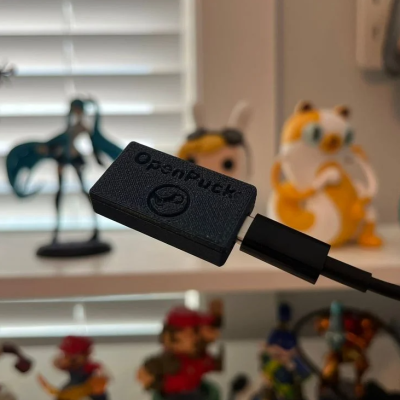
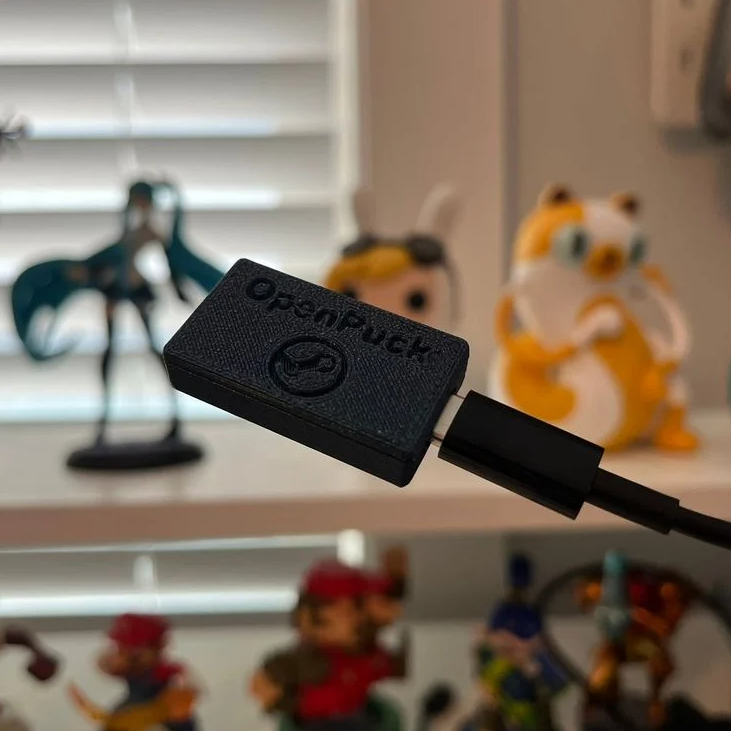
Valve recently released a new version of the Steam Controller, which features a wired USB puck that serves both as charger and dedicated, low-latency wireless receiver. The downside is they aren’t currently available for purchase separately, but that’s not a worry because you can now make your own thanks to [safijari]’s OpenPuck project.

OpenPuck uses the highly affordable Pro Micro NRF52840 board, programmed to emulate the wireless receiver portion of the puck, meaning one can pair their Steam Controller to it just like they would with the factory puck. A major part of the project was naturally documenting the wireless protocol, but there’s also an array of extra features offered by OpenPuck.

OpenPuck offers features over and above the factory offering. [image: 3d printed case by jaki-gh]

Hitting button combos lets one conveniently emulate Xbox, Nintendo Switch, or Sony PlayStation controllers. Meaning OpenPuck can for example be plugged into a Nintendo Switch and it will see OpenPuck as an official wired controller, complete with motion sensor and haptic feedback.

Why is it necessary for this emulation to be done from OpenPuck? Because while the Steam Controller has tight integration with Steam Input — a sort of highly useful translation layer for controller inputs — that integration also means the controller’s best features only work while Steam is running. OpenPuck’s ability to emulate other console controllers makes it flexible in a way the factory puck isn’t, and a user can make the most of a single controller this way.

It’s worth noting that while the real puck has the ability to charge the controller (whether or not the user makes it walk itself), the OpenPuck doesn’t have this ability. Does that mean one must still use the factory puck for charging? Not at all, as the Steam Controller charges just fine over a USB-C connection.

Advertisement

There’s a short video below that demonstrates the flashing and setup, so check it out if you think it might be useful to you.

Thanks for the tip, [Jaki]!

Advertisement

Source link

Continue Reading

Tech

The Rolling Stones Launch a Roblox Game Celebrating 60 Years of Rock History

Published

on

The Rolling Stones are heading to Roblox with a brand-new interactive experience that celebrates the band’s six-decade career. Launching on July 10, the experience arrives alongside the release of the band’s 25th studio album, Foreign Tongues, and lets players relive different eras of The Rolling Stones through gameplay, music, and collectible rewards. Beyond the game itself, the legendary band has partnered with Roblox creators to launch exclusive avatar items and real-world merchandise that players can buy directly in-game.

A Roblox Game That Takes You Through 60 Years of The Rolling Stones

Developed by Roblox Innovation Studio in collaboration with creative agency Sawhorse and members of Roblox’s creator community, the experience transforms The Rolling Stones’ musical legacy into a cooperative adventure. Players travel across different decades of the band’s career, where colorful crystals inspired by the group’s 2023 album Hackney Diamonds have trapped pieces of its history. Working together, players must locate and shatter these crystals while iconic songs from the corresponding era play in the background.

Each completed challenge powers up the band’s famous tongue-and-lips logo, which unleashes a burst of rock energy to unlock the next decade. The experience gradually evolves into a shared community event in which everyone’s progress contributes to unlocking the final performance. The game will be hosted inside The Block, Roblox’s always-available entertainment hub where artists can create interactive experiences for players.

Finale Event Brings Live Performances and Rotating Eras

The experience won’t end after launch. Between July 17 and July 19, Roblox will host a special finale event that changes every hour. Each rotation will focus on a different era of The Rolling Stones, complete with classic songs, themed visuals, interactive artwork, dynamic lighting, and visual effects inspired by the band’s history. Players will also be able to unlock in-game rewards and abilities inspired by The Rolling Stones throughout the event.

Alongside the game, Roblox invited more than a dozen creators from its global community to redesign The Rolling Stones’ iconic tongue-and-lips logo. The result is a collection of exclusive avatar accessories that players can wear inside Roblox. Interestingly, some of these virtual designs will also be available as limited-edition physical merchandise through an in-game Shopify integration, allowing fans to purchase them directly from The Rolling Stones’ online store without leaving Roblox.

Advertisement

Participating creators include Jazzyx3, CASKA’s HAUS, Touzled, Blizzei, DIONESS, morphist4u, WhoseTrade, Empyro, Bad_B0y, raekaro, Spiraxy, Valkenheim, DuckXander, Clockset, and dvdko.

Source link

Continue Reading

Tech

6 Best Bidets of 2026: Toto, Brondell, More, All Tested in My Bathroom

Published

on

Moments of significance can separate our lives into a “before” and “after.” For me, one such example is life before I introduced a bidet into my home, and then every moment that’s come since. Now I cannot imagine life without a bidet toilet seat, and I mourn the absence of the innovation on every business trip I take or any other reason that keeps me from my personal bathroom. (When it gets to the point where you’re installing a bidet in the guest bathroom at your in-laws’ house, you know something existential has shifted.) These devices have changed my life, and for the better.

Though bidets date back to 18th-century France, and bidet seat attachments have been popular for decades in Japan, the fixture may still be new to many Americans. However, bidets are finally growing in popularity stateside as an increasing number of folks realize that our standard-issue bathroom habits are sort of, well, gross. A bidet’s pressurized water is highly preferable to simply smearing oneself over and over again with wadded clumps of paper.

It was my honor—seriously—to test the latest bidet-industry innovations, including a simple toilet seat add-on and an all-new modern masterpiece of all-in-one toilet technology. Call it a modern marvel, call it “buttmaxxing”—whatever you call it, count me in (especially if the bidet in question includes advanced features like a heated seat and precision oscillation).

Looking for more ideas to boost your bathroom performance? Check out our guides to the best shower water filters, best electric toothbrushes, and best eco-friendly cleaning products.

Advertisement

Updated July 2026: We’ve added the Kohler Veil One-Piece and PureWash E930 Set and ensured up-to-date links and prices.

Featured in this article

A Bidet No One Will Ever Notice

Kohler Veil One-Piece and PureWash E930 Set

Jump to review

Best High-End (for Water-Pressure Enthusiasts)

Bio Bidet BB-2000

Jump to review

Jump to

Advertisement

Best Bidet for Most People

Image may contain: Indoors, Electronics, Remote Control, Bathroom, Room, and Toilet

For functionality, simplicity, and effectiveness, the Brondell Swash 1400 is best-in-class, offering everything a novice bidet enthusiast could possibly desire, and at an attractive price point, no less.

I found the Swash to perform its functions perfectly: a warmed seat, an adjustable nozzle, a persistent but not invasive flow rate, and an effective deodorizing option. The simple design is approachable, and the included remote control is intuitive to use from the very first go. You can program two users, which is nice for those who have particular preferences. The Swash’s drying capability is also prompt and effective.

Put plainly, the Swash is so comfortable and inviting that after I finished testing bidets for this feature, it’s the one I reinstalled for personal use.

Best High-End Bidet Seat

Advertisement
Toto Washlet S7A bidet on a toilet, surrounded by water

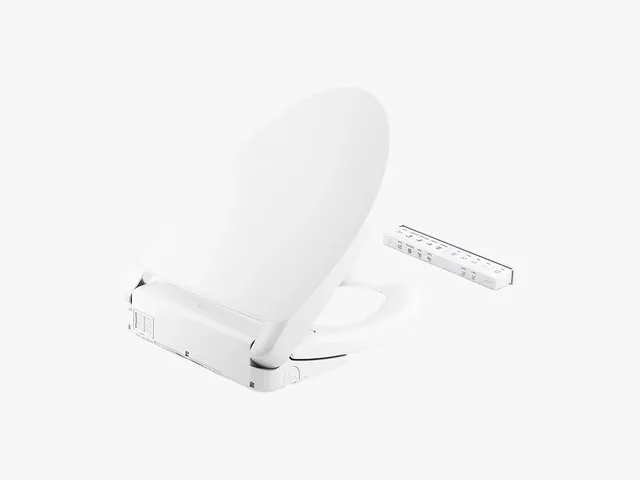
The S7A is the flagship model from Toto, the Japanese bidet maker that invented the bidet seat attachment. You could easily mistake the S7A for a regular toilet seat—at least until the lid lifts and the night-light clicks on, when the device senses your presence in the bathroom.

The controls work in the same intuitive way as other Toto washlets, with buttons to adjust the position, intensity, and angle of the sprayer. There is also a button to make the spray oscillate. The slim, 4-inch remote allows preprogramming for four people. If there’s any weak point on the S7A—and this bidet is nearly perfect—it’s that the drying fan seems a little weaker than on the previous model (the S550e), perhaps due to design compromises made when shaving down the height.

Source link

Continue Reading

Tech

Top Sony sets from LCD to OLED

Published

on

From LG to TCL and even Amazon, there is no shortage of manufacturers putting out great TVs in 2026, but there’s one brand that’s been in the game for what feels like an age, and that’s Sony. Time and time again, Sony has proven itself to be a formidable force in the world of audiovisual tech, and the culmination of that talent and expertise can be seen in the best Sony Bravia TVs that money can buy.

Although Sony is probably best known in the TV space for putting out the type of sets that really push the bar with high-end OLED panels, luscious colours and incredible attention to sound, the brand still produces a good amount of budget-friendly TVs each year so if you aren’t looking to spend too much then there are options available to you.

Still, if you are looking to shop exclusively at the cheaper end of the market then you may find that your money goes a bit further with the likes of TCL and Toshiba. We have a separate guide to the best cheap TVs for those shopping on a budget. Sony on the other hand is best appreciated at the higher-end, where you can really see what all the fuss is about.

Not only are Sony TVs incredible for experiencing the feeling of true cinema at home, but because of the company’s gaming chops via its PlayStation division, it also has an acute understanding of what makes for a great gaming experience. All of this goes into a range of TVs that tick pretty much every box you could possibly want.

Advertisement

For anyone who’s still on the fence or pondering what type of TV they should get, you can dive into our helpful explainers on OLED vs LED, and what Mini-LED is all about. Once you’ve gotten all the details out of the way, you can shop with confidence that all of the Sony TVs here have passed our rigorous testing process with flying colours.

Best Sony Bravia TV at a glance

Advertisement

SQUIRREL_ANCHOR_LIST

How we test TVs

Every TV we review is put through the same set of tests to gauge its picture performance, usability, and smart features.

Advertisement

Tests are carried out over several days and are done by eye but supported with technical measurements. Testing by eye involves an expert watching a wide range of material to understand and determine a TV’s performance in fields such as brightness, contrast, motion processing, colour handling and screen uniformity.

We’ll consider the design of the TV in terms of build quality, study the spec sheets and see if the TV’s connections are up to spec, as well as playing video and audio content to ensure that the set handles playback as it claims. We also take note whether a product’s compatible formats and features are in line with industry trends or not to gauge whether it’s relevant for you.

Comparison to other related and similarly priced products is also important, to see if it’s missing any vital features and whether it impresses as a whole. After all this, we’ll come to a judgement on how the TV performs as a whole.

If you want to learn more, please visit our detailed page about how we test televisions.

Advertisement
  • Film-like, colourful, dazzling image

  • Energetic and dynamic sound

  • Google TV is easy to like

  • Slick motion processing

  • The feet design aggravates

  • Black levels look grey in a dark room

  • Limited game features compared to rivals

  • A tad more expensive and not quite as much value as rivals

With the Bravia 8 II, Sony has delivered a TV that lives up to the hype. It arguably offers the finest picture quality of any TV current on the market.

Colours look impressively pure to our eyes, as well as excellent levels of sharpness and detail.

Advertisement

It’s brighter than the A95L but not as bright as other OLED models on the market. Regardless Sony uses the extra brightness the QD-OLED panel offers to deliver a range of colours that’s wider than any we’ve seen on other OLEDs. The accuracy of this set is impressive compared to other premium OLED TVs.

Sony’s Acoustic Surface Audio+ system delivers a big performance and places effects and dialogue accurately on screen. It’s an energetic, dynamic performance that makes the Bravia 8 II one of the best sounding flatscreen TVs.

In terms of its bass response, it gives the low frequencies more oomph that rival TVs are capable of. While a sound system can improve on it, we’re not in a rush to add one.

It comes with two HDMI 2.1 inputs that support eARC, VRR, ALLM, and 4K/120Hz high frame rates.

Advertisement

For gamers, PS5 fans get the most attention with the Auto Tone Mapping feature that optimises the HDR performance. Input lag is solid at 16.4ms but there are Sony TVs on this list that offer a quicker performance. For PC gamers, there’s no certified support for AMD FreeSync or Nvidia G-Sync.

This isn’t as much of a gaming TV. In fact, all of the Sony TVs on this list don’t offer a wide range of features for gamers, which is a surprise given Sony’s PlayStation pedigree.

Smarts are provided by Google TV, and along with the major streaming apps such as Disney+ and Netflix, all the UK catch up services are available as separate apps.

Google TV is easy to use and offers plenty of entertainment apps. It’s content recommendations aren’t the best.

Advertisement

If you want to spare no expense and want the best picture and sound of any Sony TV, the Bravia 8 II is the TV to pour your savings into.

SQUIRREL_PLAYLIST_10207577

Advertisement
  • Spectacularly bright, colourful pictures

  • Groundbreaking backlight controls

  • Powerful multi-channel sound

  • Blooming becomes more noticeable when viewing off axis

  • No HDR10+ playback

  • Only two fully features HDMI 2.1 ports

Sony’s Bravia 9 means business in the Mini LED TV market, and it offers  sensational picture quality.

The impact of the Bravia 9’s brightness is noticeable from the off. Our reviewer found the colours to be spectacularly punchy, delivering bright and intense highlights along with deep black levels that rival that of the best OLED TVs.

Advertisement

The Mini LED backlight also helps reveal subtle colour shades, unlocking a high level of detail and sharpness

It upscales HD content to 4K resolution brilliantly, and converts SDR into HDR very impressively as well. There is still some noticeable backlight blooming but the Bravia 9’s backlight is one of the best we’ve tested.

Google TV provides all the main streaming apps, while the TV ships with two remotes, which includes a smart one that offers a more simpler means of control.

Input lag is nippy at 10.1ms, while there’s support for ALLM and VRR through Sony’s Perfect for PS5 features. There’s not much for PC gamers though, and like the rest of the TVs on this list, there are only two HDMI inputs that support HDMI 2.1 features such as VRR and eARC (for high quality audio).

Advertisement

The sound is impressively wide with a well-balanced sound with sharp but not harsh treble and bass that’s punchy and controlled for most of the time.

SQUIRREL_PLAYLIST_10207335

Advertisement
  • Natural, immersive picture quality

  • Good value for what’s on offer

  • Clean, detailed sound

  • One or two colour quirks

  • No HDR10+ support

  • rt Only two game-friendly HDMI inputs

The Bravia 5 is (for Sony at least) one of its more affordable Mini LED TVs at £1399. That does sound more expensive when compared against the likes of Hisense and TCL, but what you get with the Bravia 5 is a quality picture from top to bottom.

It’s a brilliantly watchable image with black levels that are consistently deep for an LCD backlight, with blooming reduced (halos around objects). For an LCD TV, it offers strong contrast, even though it’s not as bright as others, Sony’s processing works wonders.

Advertisement

The colour performance is superlative, vivid and expressive, though we find that using the TV’s Vivid mode causes some colours to ‘glow’ a little too much.

Its upscaling skills are good, avoiding any smearing and suppressing noise well. For gaming, it’s similar to other Sony TVs in its support for PlayStation 5 and 4K/120Hz, and respectable input lag of 13.3ms.

The Bravia 5 is positioned as more of a home cinema TV, collecting movie modes in IMAX Enhanced, Netflix Calibrated, Prime Video Calibrated and of course, Dolby Vision. On the audio side it supports Dolby Atmos and DTS:X.

While the Bravia 9 is Sony’s most spectactular Mini LED TV to date, the Bravia 5 is best suited for most people. At a more affordable price while still offering a fantastic image quality, movie nights on this TV will look fantastic.

Advertisement

SQUIRREL_PLAYLIST_10208386

  • Expressive and natural picture quality

  • Engaging Google TV smarts

  • Convenient design

  • Dolby and DTS support

Advertisement
  • Less bright than the competition

  • Sounds tamer than previous models

The Sony Bravia 8 replaced the Sony A80L, but you could more or less say it’s the same TV.

There are a few differences in terms of picture quality, with the Bravia 8 OLED reaching higher levels of peak brightness in some modes (Professional, Vivid) but less so in others (Cinema Standard).

There are slight improvements over the A80L with the Bravia 8 offering a richer, bolder HDR performance that looks lovely when paired with colourful films and TV series.

Advertisement

Motion processing is again excellent with very few issues noted, while contrast is strong for an OLED TV although we did notice some crushing (loss) of detail in its black levels.

We’d love for Sony to push the brightness out more for this OLED, but for those who want a brighter HDR performance, the Bravia 8 II offers a better picture.

If, however, the premium price the Bravia 8 II goes for isn’t within your budget, the Bravia 8 is a fine mid-range TV, and it offers up the same level of gaming performance too.

It includes Auto Genre Picture mode that automatically switches the TV in and out of its game-ready state, along with Auto HDR Tone Mapping enhances the HDR performance for best brightness and contrast.

Advertisement

Dolby Vision Gaming is supported and the TV does includes 4K/120Hz and variable refresh rates (VRR) across two HDMI 2.1 inputs (one of which is shared with the eARC port). We measured input lag at 12.7ms, which is just behind the Bravia 9 in terms of speediness.

The sound quality is fine though not as dynamic or as loud as we’ve heard on previous OLED TVs, such as the A80L.

We’d recommend you consider adding a soundbar or sound system, and Sony has plenty including its Bravia Theatre Bar 8 and the Theatre Sound System 6 to choose from.

SQUIRREL_PLAYLIST_10208387

Advertisement
  • Colourful, expressive picture

  • Excellent processing

  • Competitive smarts and features for the money

  • Dolby and DTS audio

  • Suffers with dark scenes

  • Tepid bass performance

  • Some clipping with HDR content

Advertisement

The Sony X85L first launched in 2023 but it has stuck around in 2026, and can still be bought for around £999.

That’s not exactly cheap, especially for three year-old tech, but this is Sony (who charge a bit more than others), and this is a TV that for budding home cinema fans, we rate very highly.

It has a Full Array Local Dimming backlight that offers more precise black levels and brightness than a standard LCD TV, although like many a Sony TV, we noticed it’s not the brightest out of the box.

Our measurements clocked it at 738 nits in Standard HDR mode but for a TV that’s less than £1000, it is bright for a HDR TV.

Advertisement

What really appeals is its colour performance. It describes colours with terrific variety, producing a vibrant but still natural-looking image.

Upscaling with HD and SD content is solid, and although there is some noise the X85L manages it well. Its motion processing is very good to the point where we didn’t even notice that it was on.

Sound quality is ok. It produces a crisp tone with voices but lacks bass. We’d suggest getting a soundbar to go with the X85L.

Gamers looking for a premium experience can count on ALLM, VRR, and HFR, while input lag is a solid 14.5ms. This TV plays nicely with a PS5 with its custom features that includes optimising the HDR performance for the best image quality.

Advertisement

For smarts, Google TV delivers all the streaming apps you’ll need, and we found the interface to be quick and responsive to use. The design is customisable, as the stand can be put together in two ways to allow for a soundbar or if you want to place it on a small surface.

Test Data

  Sony Bravia 8 II Sony Bravia 9 Sony Bravia 5 Sony Bravia 8 Sony KD-55X85L
Input lag (ms) 16.4 ms 10.1 ms 13.2 ms 12.7 ms 14.5 ms
Peak brightness (nits) 5% 962 nits 463 nits 742 nits
Peak brightness (nits) 2% 977 nits 2500 nits 710 nits 462 nits 738 nits
Peak brightness (nits) 10% 868 nits 2700 nits 800 nits 430 nits 743 nits
Peak brightness (nits) 100% 263 nits 880 nits 592 nits 121 nits 614 nits
Set up TV (timed) 98 Seconds 350 Seconds 720 Seconds 69 Seconds

Full Specs

  Sony Bravia 8 II Review Sony Bravia 9 Review Sony Bravia 5 Review Sony Bravia 8 Review Sony KD-55X85L Review
Manufacturer Sony Sony Sony Sony Sony
Screen Size 64.5 inches 64.5 inches 64.5 inches 54.6 inches 54.6 inches
Size (Dimensions) 1443 x 339 x 905 MM 1443 x 349 x 908 MM 1447 x 345 x 862 MM 1223 x 248 x 786 MM 1228 x 56 x 709 MM
Size (Dimensions without stand) 830 x 1443 x 34 MM 835 x 1443 x 48 MM 832 x 1447 x 58 MM 706 x 1223 x 37 MM 784 x 1228 x 336 MM
Weight 24.2 KG 34.8 KG 24.9 KG 18 KG 17.4 KG
ASIN B0DYK7Y2YB B0DJDDR25R B0F29KYPN4 B0CZTZTQXJ B0BX6N4BYP
Operating System Google TV Google TV Google TV Google TV Google TV
Release Date 2025 2024 2025 2024 2023
Model Number K-65XR90 K55XR80 KD-55X95L
Model Variants Bravia 7, Bravia 8
Resolution 3840 x 2160 3840 x 2160 3840 x 2160 3840 x 2160 3840 x 2160
HDR Yes Yes Yes Yes Yes
Types of HDR Dolby Vision, HDR10, HLG HDR10, HLG, Dolby Vision HDR10, HLG, Dolby Vision HDR10, HLG, Dolby Vision HDR10, HLG, Dolby Vision
Refresh Rate TVs 48 – 120 Hz 40 – 120 Hz 48 – 120 Hz 40 – 120 Hz 40 – 120 Hz
Ports Four HDMI, Ethernet, two USB, digital audio out, RF terrestrial, two RF satellite Four HDMI, digital audio out, two USB ports, Ethernet, two satellite, RF terrestrial Four HDMI (two with full HDMI 2.1 features), 2 x USB, Ethernet, RF input, optical digital audio output Four HDMI, digital audio out, two USB ports, Ethernet, two satellite, RF terrestrial Two HDMI 2.0, two HDMI 2.1, Ethernet, two USB, composite video input, digital audio output, terrestrial/satellite inputs
HDMI (2.1) 4K/120, eARC, ALLM, VRR eARC, ALLM, VRR, HFR, SBTM eARC, VRR, ALLM, 4K/120Hz eARC, ALLM, VRR, HFR, SBTM ALLM, eARC, VRR, 4K/120Hz
Audio (Power output) 50 W 70 W 40 W 50 W 20 W
Connectivity Wi-Fi, Bluetooth 5.3, Google Cast, AirPlay 2 Wi-Fi, Bluetooth 5.3, AirPlay 2, Google Cast Wi-Fi, Bluetooth 5.3, Apple Airplay 2, Google Cast Wi-Fi, AirPlay 2, Google Cast, Bluetooth 5.3 Bluetooth 4.2, Wi-Fi, AirPlay 2, Chromecast
Colours Black
Display Technology OLED, QLED LCD, Mini LED, QLED Mini LED, VA OLED LCD, Direct-LED (Full Array Local Dimming)
UK RRP £2499 £2999 £1399 £2199 £1399
USA RRP $3000 $1499
CA RRP CA$2099
AUD RRP AU$1999

Advertisement

Advertisement

Source link

Continue Reading

Tech

US and allies warn of Russian critical infrastructure attacks

Published

on

Russian hacker

Cybersecurity agencies from the United States and eight other countries have issued a joint warning that Russian state hackers are targeting vulnerable and poorly configured routers to infiltrate critical infrastructure networks.

The joint advisory, co-authored by the NSA, FBI, and CISA, along with 15 other agencies from Australia, the United Kingdom, Canada, New Zealand, Estonia, Finland, France, and Italy, attributes the attacks to hackers from the Russian Federal Security Service (FSB) Center 16.

This hacking group (tracked as Berserk Bear, Energetic Bear, Crouching Yeti, Dragonfly, Ghost Blizzard, and Static Tundra) scans internet-connected IP address ranges for routers accepting default or common SNMP authentication strings, then issues commands using spoofed IP addresses to copy device configuration files and exfiltrate them via the Trivial File Transfer Protocol to actor-controlled servers.

image

In August 2025, the FBI also warned that the same group has been targeting critical infrastructure using a critical vulnerability in the Smart Install feature of Cisco IOS and Cisco IOS XE software (tracked as CVE-2018-0171) since November 2021.

The sectors most at risk from these attacks include energy, communications, defense industrial base, healthcare, financial services, defense, and state and local government services.

Advertisement

“Centre 16 [..] has been seen hunting for vulnerable routers by scanning the internet for devices that still use default or weak Simple Network Management Protocol (SNMP) passwords and community strings,” the UK National Cyber Security Centre warned on Monday.

“Whilst the actor primarily uses SNMP scans to locate and compromise vulnerable routers, they have also exploited well-known vulnerabilities relating to Cisco devices, Cisco’s Smart Install (SMI) feature and web-portal flaws to gain control of network devices.”

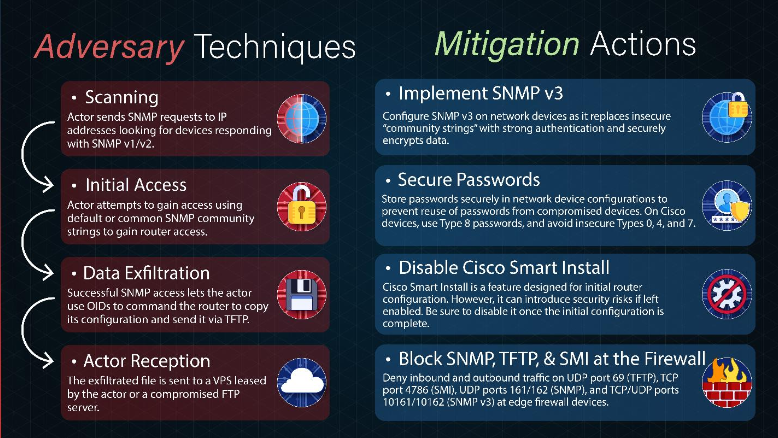
The authoring cybersecurity also provided mitigation measures to help network defenders harden their networks against these attacks, urging them to upgrade to SNMPv3, disable Cisco Smart Install, enforce strong unique passwords, block TFTP and SNMP traffic at edge firewalls, update software and firmware, and replace end-of-life devices.

Mitigation actions
Mitigation actions (FBI)

​This advisory follows an international law enforcement operation that disrupted FrostArmada, a separate campaign attributed to APT28 (a Russian military intelligence group linked to GRU unit 26165, also tracked as Fancy Bear and Forest Blizzard) that had infected 18,000 routers across 120 countries by December 2025.

Hackers altered DNS settings on compromised MikroTik and TP-Link small office/home office (SOHO) routers to redirect authentication traffic to attacker-controlled servers and steal Microsoft 365 logins and OAuth tokens.

Advertisement

As part of a court-authorized operation, with support from the U.S. Department of Justice, the Polish government, and multiple cybersecurity companies, the FBI remotely removed malicious DNS settings to secure the compromised routers and forced them to connect to legitimate DNS resolvers.


article image

Security teams log 54% of successful attacks and alert on just 14%. The rest move through your environment unseen.

The Picus whitepaper shows how breach and attack simulation tests your SIEM and EDR rules so threats stop slipping by detection.

Get the whitepaper

Source link

Advertisement
Continue Reading

Tech

Why Companies Making High-Tech Weapons Are Turning To 3D Printing

Published

on


For decades, high-tech weapons have been designed around maximizing sophistication. Increasing the capability itself through longer ranges, increased maneuverability, and more sophisticated guidance systems mattered far more than how quickly the weapon could be manufactured. That approach is now changing. As conflicts in Ukraine and the Middle East have highlighted the enormous rate at which modern munitions are consumed, defense manufacturers are encountering a critical challenge. We know how to build capable missiles, but how can we build enough of them?

That shift has pushed additive manufacturing, better known as 3D printing, into the spotlight. Once viewed as a useful prototyping tool, industrial-scale metal printing is increasingly being adopted by major defense contractors to accelerate production, simplify supply chains, and reduce dependence on specialized suppliers.

There are limitations though, and the reality is less dramatic than headlines describing 3D-printed missiles might imply. Manufacturers are not printing complete precision weapons. Instead, they are focusing effort on streamlining sectors of the production process where additive manufacturing offers genuine advantages. 3D printing today is not yet replacing traditional manufacturing, it’s simply delivering the greatest possible benefit as weapons development adapts to suit a new era of warfare.

Advertisement

Why missile manufacturing remains so difficult

If building missiles were simply a matter of printing metal components, defense companies would have embraced 3D printing years ago. The real obstacle isn’t just producing parts; it’s proving those parts can survive some of the harshest operating environments imaginable.

Advertisement

A modern cruise missile may spend years inside a storage container, aboard a ship, or in a military depot prior to being launched. From that moment, every structural component must withstand violent acceleration, sustained vibration, aerodynamic loading, rapid pressure changes, and significant temperature variation without the slightest loss of integrity. Even microscopic flaws can become catastrophic failures when encountering the extreme limits of high speed flight.

This demand for consistent dependability is why aerospace manufacturing remains one of the world’s most tightly controlled industries. Components typically incorporate a vast array of rare earth minerals, extremely tight-tolerance machining, heat treatment, precision finishing, and rigorous inspection before they are ever approved for service. The result is that component qualification, not manufacturing, is often the greatest bottleneck in ensuring trust in a munition that may be employed above or near civilians, or friendly forces.

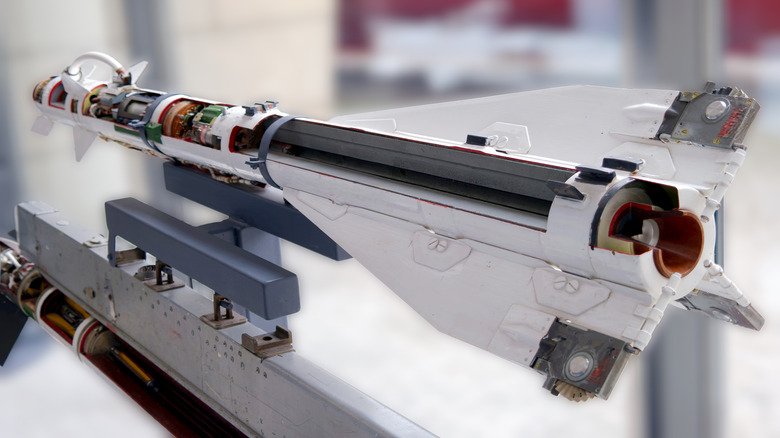
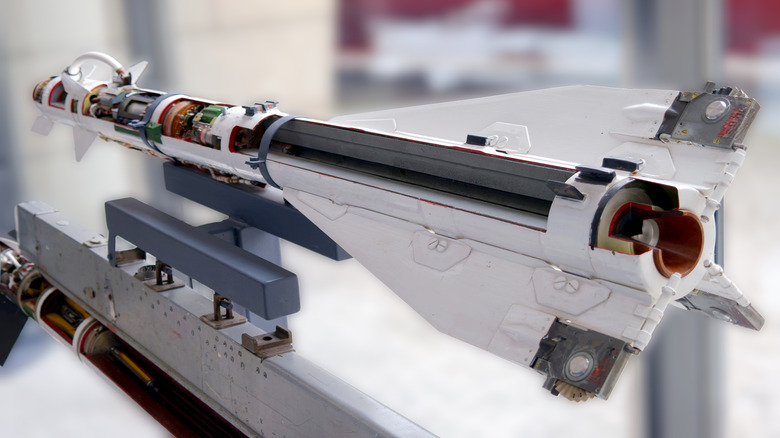
From next year, additive manufacturing will produce select structural parts of the Tomahawk’s mid-body airframe and warhead casing, with rumors this may expand into printing avionics and guidance computer parts with Silicon-photonics-enabled 3D printers. However, 3D printing has not advanced enough to produce the rare-earth-element-intensive critical components that make the Tomahawk a truly state-of-the-art smart munition. Although additive manufacturing of samarium-cobalt and neodymium-iron-boron magnets, dysprosium and terbium-doped materials, and guidance and electronic components containing gallium, germanium, and tantalum is technically achievable, these technologies have yet to see implementation across live production lines. We can’t 3D print a Tomahawk, and we probably never will.

Advertisement

The future belongs to affordable mass

Ultimately, the greatest impact of 3D printing may not be simply increasing the production of today’s missiles, but enabling an entirely new generation of weapons designed from the outset for rapid, high-volume production.

Military planners are recognizing that advantage in future conflicts may be based on quantity, more so even than technological sophistication. Precision-guided weapons remain essential, but expensive missiles built slowly from limited supplies of rare-earth minerals are difficult to replace once wartime demand begins to outpace production. The answer to this problem is affordable mass, larger numbers of less sophisticated weapons built at a fraction of the cost, but at a much greater scale.

This is precisely where additive manufacturing excels. Engineers can consolidate dozens of conventionally machined parts into a single printed structure, reduce material waste, shorten production timelines, and simplify supply chains. Meanwhile, the U.S. Department of Defense is encouraging industrial expansion through multi-year procurement programs that give manufacturers confidence to invest in higher production capacity.

Advertisement

The result is unlikely to be a warehouse stocked with 3D-printed Tomahawks as we know them. Instead, tomorrow’s missiles will increasingly be designed around the realities of modern manufacturing and supply. A combination of additive manufacturing, commercial production techniques and modular components to deliver weapons that are easier to build at scale and less dependent on foreign-controlled raw materials. In an era where raw production capacity is returning to its Second World War level of value as a strategic asset, additive manufacturing is likely to be critical in attaining strategic advantage.


Advertisement

Source link

Continue Reading

Tech

EU sanctions Russian GRU military hackers over cyberattacks

Published

on

European Union

The European Union and the United Kingdom jointly sanctioned dozens of Russian individuals and entities and accused Russia of coordinating a network of hacking groups responsible for attacks across Europe.

Today, the Council of the European Union announced sanctions on nine individuals and four entities, including Russian military intelligence (GRU) officers and cybercriminals, while the UK separately sanctioned 24 individuals and entities, including senior GRU figures Vyacheslav Stafeyev, Ivan Senin, and Ivan Kasyanenko, whom officials say directed cyber and hybrid operations.

Britain also sanctioned members of the IMPULS company, accused of recruiting hackers from Russian universities, as well as individuals tied to the Lumma Stealer malware operation, which UK authorities linked to at least 2,100 domestic victims over six months. Ten people connected to media outlet Rybar LLC were also designated for spreading anti-Ukraine narratives and alleged election interference in Moldova and Armenia.

image

The Council of the EU also publicly identified the 16th Centre of Russia’s Federal Security Service (FSB) as controlling several cyber threat groups, including the notorious Turla hacking group.

Officials said the unit has spent years targeting government networks and critical infrastructure in France, Germany, Poland, Cyprus, the Netherlands, Austria, Slovakia, Romania, and Finland, running cyberespionage campaigns against government and defense targets since 2010.

Advertisement

Turla hackers were also linked to a recent failed strike targeting Poland’s critical infrastructure, including energy grid organizations such as heat and power plants, which could have cut power to roughly 500,000 people during winter.

“Cybercriminals, self-proclaimed hacktivists and private companies linked to Russia, including actors operating under its instructions, direction or control, have also carried out, enabled and facilitated a wide range of malicious activities. We strongly condemn Russia’s behaviour and misuse of this cyber ecosystem, targeting public services and critical infrastructure, causing disruptions and financial losses,” the Council of the EU said.

“In response to malicious activities, the EU is also imposing restrictive measures on nine individuals and four entities. These EU sanctions include GRU intelligence officers, as well as cybercriminals, self-proclaimed hacktivists and private companies that contribute to Russia’s efforts to destabilise the EU, its member states and international partners.”

As BleepingComputer previously reported, a cyberattack in late December that hit dozens of entities in Poland’s power grid damaged key operational technology (OT) equipment beyond repair but failed to disrupt power. The incident was later attributed to the Russian state-backed hacking group Sandworm, which attempted to deploy the destructive DynoWiper data-wiping malware and disable compromised devices.

Advertisement

More recently, Poland also blocked a cyberattack targeting the IT infrastructure of the National Centre for Nuclear Research (NCBJ), the country’s main government nuclear research institute specializing in nuclear physics, reactor technology, and particle physics.

Today’s sanctions come on the heels of the European Commission’s January proposal for new cybersecurity legislation designed to strengthen defenses against cybercrime and state-backed threat groups targeting European critical infrastructure.

In March, the Council of the European Union also sanctioned three Chinese and Iranian companies for coordinating cyberattacks targeting EU member states’ critical infrastructure.


article image

Security teams log 54% of successful attacks and alert on just 14%. The rest move through your environment unseen.

The Picus whitepaper shows how breach and attack simulation tests your SIEM and EDR rules so threats stop slipping by detection.

Advertisement

Get the whitepaper

Source link

Continue Reading

Tech

How to Recover Permanently Deleted Files for Free?

Published

on

Losing an important file by mistake can be frustrating, especially if you’ve already emptied the Recycle Bin or deleted it using Shift + Delete. While it may seem like the file is gone forever, that’s not always the case. Deleted files often remain on the drive until new data overwrites them, giving you a chance to recover them. That’s why it’s important to stop using the affected drive as soon as possible. In this article, we’ll cover the best free ways to permanently recover deleted files and share important tips to avoid making the situation worse.

What Happens When a File Is Permanently Deleted?

Normal deletion and permanent deletion operate differently. A normal deletion means the file goes to the Recycle Bin, where it can be recovered later. Permanent deletion means the file will be deleted immediately or after the Recycle Bin is cleared. This can occur when deleting files on the USB drive or the SD card, or when deleting large files that cannot fit in the Recycle Bin. Until new files overwrite that space, the deleted file may still be recoverable.

Before proceeding with recovering your deleted files, ensure you stop using the drive containing them. Avoid copying, saving, installing, or downloading any data to this drive, as additional data could overwrite your deleted files. It is also a good idea to verify whether your file exists within your backup system or in your online storage. If your files have been deleted from a USB drive, an SD card, or an external hard drive, then do not use the drive anymore. Remember that SSDs use the TRIM feature, which can make file recovery more difficult if you wait too long.

Different Free Ways to Recover Permanently Deleted Files

1. Check the Recycle Bin

If you have deleted the files using the Recycle Bin or Shift + Delete, you can proceed directly to the next recovery steps. This approach will only work if the file is still in the Recycle Bin.

Advertisement
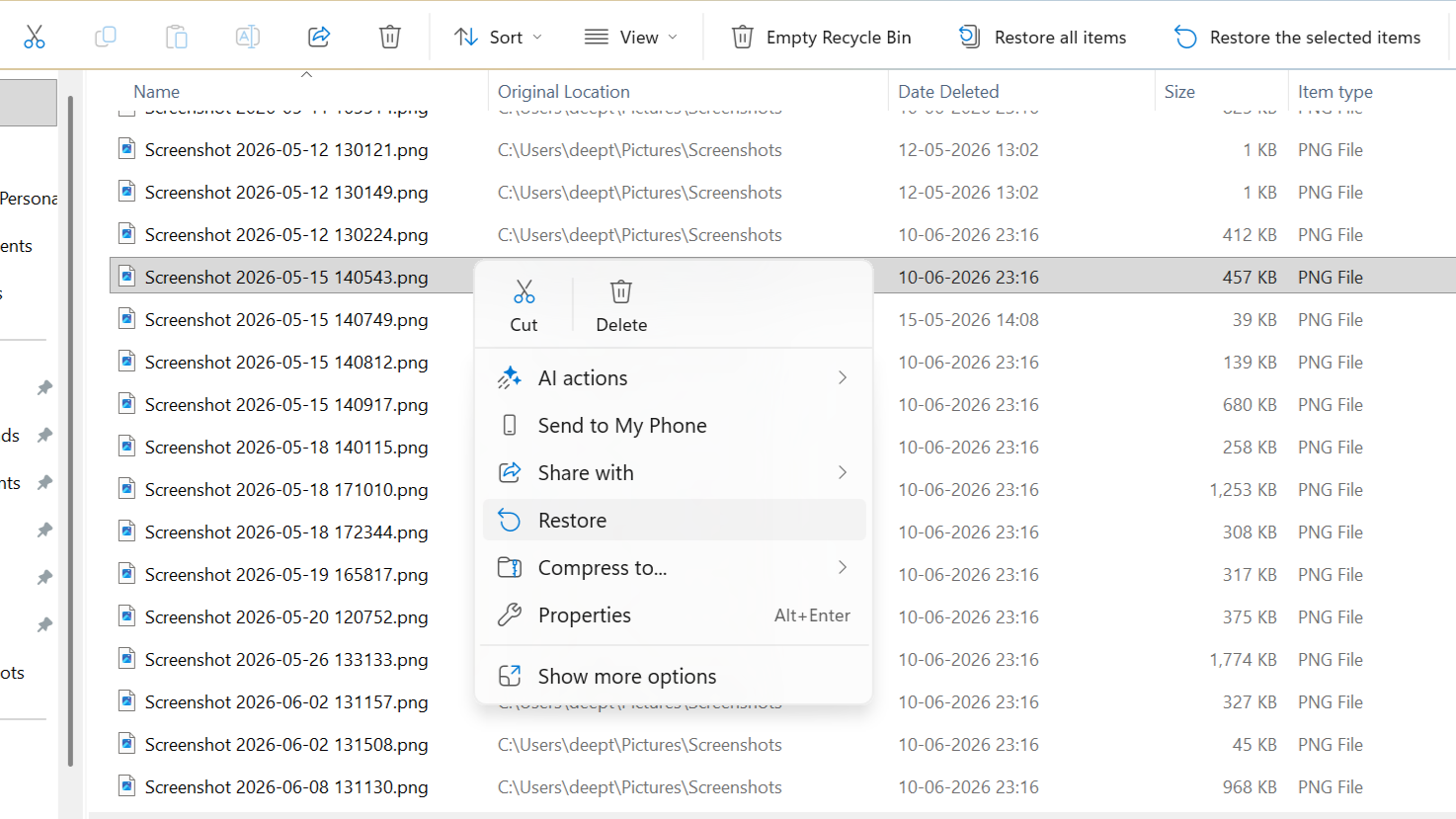
  • Open the Recycle Bin.
  • Search for the deleted file by name or file type.
  • Right-click on the file and choose ‘Restore.’Check the Recycle Bin Recover Permanently Deleted Files
  • The file will be restored to its original place.

2. Restore from File History

Another way to recover deleted files is File History. It is a Windows feature that provides backup copies of your files. If it was enabled, you may be able to recover a previous version of your deleted file.

  • Search for “Restore your files with File History” on Windows.
  • Open the recovery window.
  • Browse the available file versions.
    Restore from File History to Recover Permanently Deleted Files
  • Select the file or folder you want to recover.
  • Click Restore to save it back to its original location.

3. Check Cloud Storage

Deleted files may remain in cloud storage for some time before being permanently deleted. If you previously uploaded the file to a cloud storage service, you may be able to restore it.

  • Log in to your OneDrive, Google Drive, Dropbox, or another cloud account.
  • Browse to the folder where the file was saved.
  • Open the Trash or Deleted Files folder.
  • Restore the file to its original location or download a copy.
    image for Check Cloud Storage to recover Permanently Deleted Files

4. Restore from a Backup

If you have a backup of your files, recovering them is usually quick and easy. Check your external hard drive, USB backup, or any manually created backup folders for the missing file.

Recover Permanently Deleted Files for Free Using Stellar Data Recovery Free Edition

When manual recovery methods fail, you can try Stellar Data Recovery Free Edition. This software will help retrieve deleted files from a Windows PC, a USB drive, an SD card, or other external media. The program allows scanning the disk, browsing, and restoring the retrieved files. In the Free Edition, there is up to 2GB of free data retrieval, including 1GB by default and an additional 1 GB through social networking.

Follow these steps to recover permanently deleted files using Stellar Data Recovery Free Edition.

  1. Download and install Stellar Data Recovery Free Edition.
  2. Launch the software.
  3. Choose the type of files to recover or select Recover Everything.
    Choose the type of files to recover
  4. Select the drive where the files were deleted.
  5. Run a scan and use Deep Scan if needed.
    Run a scan and use Deep Scan
  6. Preview recoverable files.
  7. Recover the selected files.
  8. Save recovered files to a different drive.
  9. If you need more recovery space, you can unlock an extra 1GB for free.

Steps to Get Your 2 GB Free Data Recovery

You can increase the free recovery limit by following these steps.

  1. Click Get it Now in the activation window.
  2. Select Upgrade Later to continue with the 1GB free version.
  3. When you reach the limit, click the option to unlock an additional 1GB.
  4. Share your experience on social media.
  5. Enter the review link, your name, and your email address.
  6. Submit the form to activate the 1GB bonus using the key sent to your email.

When Should You Use Deep Scan?

Most recovery tools start with a Quick Scan because it is faster. However, it may not find every deleted file. If the Quick Scan doesn’t show your file, try Deep Scan instead. It is also useful if the drive was formatted, the storage device became inaccessible, or the file was deleted a long time ago. Deep Scan takes longer to complete but may find additional recoverable files.

You can recover many different files that were deleted, depending on the storage device’s status. It can be documents, pictures, videos, emails, and ZIP files. The types of document files that can be recovered include Word, Excel, PDF, and PowerPoint files. At the same time, among the types of picture files that can be recovered are JPG, PNG, HEIC, and RAW. File recovery software is also compatible with Windows PCs/Laptops, SSDs, hard disks, USB drives/ SD cards.

Things to Keep in Mind

File recovery is not always successful, so it’s important to keep your expectations realistic. Once your files have been overwritten with new data, there is no way to recover them successfully. Another problem that might affect the success of file recovery is the TRIM functionality in SSDs. With the Stellar Data Recovery Free Edition, one can restore up to 2GB of data free of charge. If one needs to recover data larger than 2GB, they will have to purchase the software.

Advertisement

Tips to Improve Your Recovery Chances

The actions you perform after deletion could affect the ability to recover your files. It is important not to use the drive containing the deleted files, as you may overwrite them with fresh data. If possible, try installing the software on another drive. This helps avoid writing new data to the same storage location.

Always make sure to transfer the recovered files to another drive, not back to the original one. If your files are not found during a Quick Scan, a Deep Scan is available. Preview your recoverable files before recovery to ensure they are the right ones. Complete the file recovery process immediately and keep regular backups to reduce the risk of future data loss.

Final Verdict

Recovering permanently deleted files depends on how the files were deleted and whether the data has been overwritten. For instance, restoring files from the Recycle Bin or a backup is the preferred method when they are available. Whereas, when the files are deleted by pressing “Shift” and “Delete”, deleted from the Recycle Bin, or deleted from an external hard drive, then the use of Stellar Data Recovery Free Edition will be useful. It lets you scan your storage device, preview recoverable files, and recover up to 2 GB of data for free, with the option to upgrade to a paid edition if needed. For users who need to recover more than the free limit, Stellar offers paid plans starting at around $49. The paid plans are worth considering if you need to recover more than the free limit. However, the Stellar Data Recovery Free Edition is one of the best options to recover files.

Source link

Advertisement
Continue Reading

Tech

Apple sues OpenAI over alleged trade secret theft

Published

on

Apple filed a lawsuit Friday against OpenAI over allegations of trade secret theft and breach of contract.

The iPhone maker alleges that this misconduct, which it says reveals a pattern of theft from OpenAI employees who previously worked at Apple, was directed by OpenAI’s senior leadership, including Chief Hardware Officer Tang Tan.

The lawsuit, which was filed in the U.S. District Court for the Northern District of California, accuses Tan of using Apple’s confidential project code names during OpenAI’s recruiting process, asking job candidates to bring in Apple hardware components to their interviews, coaching departing Apple employees on how to evade the company’s security procedures, and asking for details about the company’s unannounced products.

Before joining OpenAI, Tan had spent 24 years at Apple, most recently as VP of product design for the iPhone and Apple Watch.

Advertisement

The accusations come at a time when OpenAI is rumored to be developing its first hardware product, which would likely compete with the iPhone. In April, industry analyst Ming-Chi Kuo suggested this device could be a smartphone that would rely on AI agents instead of apps. If true, it would be one of the largest threats to Apple’s core hardware business to date.

Apple’s former lead designer Jony Ive’s device startup io was acquired by OpenAI last year in a $6.5 billion deal to aid the AI company with its hardware ambitions. While io was named in the filing, Ive was not.

Tan is not the only OpenAI employee referenced in the new complaint. Apple also alleges that Chang Liu, who spent eight years at Apple as a senior systems electrical engineer, failed to return an Apple-issued laptop after leaving the company for OpenAI in 2026 and had used the computer to download confidential Apple technical documents.

Apple says in the complaint that the stolen documents included information about unannounced technologies, features, and products, including technical specifications, engineering presentations, and proprietary project data.

Advertisement

Liu is also accused in the lawsuit of sharing Apple’s confidential information with other Apple employees applying for jobs at OpenAI, advising at least one of them on what to study before their interview.

Apple sent a letter to OpenAI in February to raise its concerns and received no response, the company said in the complaint.

It alleges that the behavior of these former employees is part of OpenAI’s strategy to extract Apple’s confidential information, which included asking Apple employees to bring designs and prototypes to their interviews, and answer questions about things like component and vendor selection processes.

Apple says its ongoing investigation revealed that OpenAI and its partners have even used Apple’s confidential information while the AI model maker develops its own hardware product. For instance, the filing references a proprietary metal finishing technique that OpenAI used after it allegedly misled a partner into believing it had Apple’s permission to do so.

Advertisement

Like many tech companies, Apple typically investigates potential trade secret theft or other improper activity by analyzing communications that took place on company-owned devices and reading through its server logs. By taking the case to court, Apple will have an opportunity to learn more about the extent of the alleged operation through the legal discovery process.

Apple is asking the court to bar OpenAI from using or disclosing its trade secrets, require the company to return any confidential Apple materials, and preserve evidence related to the case.

“This is the tip of the iceberg. Apple lacks visibility into what’s been happening behind closed doors at OpenAI, where such misconduct is normalized and exemplified by leadership,” the filing states. “As a natural result, OpenAI’s nascent hardware business now rests on the shakiest of foundations, rotten to its core by its illegal reliance on misappropriated trade secrets.”

In a prepared statement, Apple also said the following:

Advertisement

At Apple, our teams are constantly developing breakthrough technologies to create the best products and services in the world, and protecting their work and intellectual property is something we take very seriously. Recently, significant evidence has emerged suggesting individuals employed by OpenAI wrongfully took Apple’s secret and confidential information regarding our unreleased technologies, processes, and products. We will always defend our teams’ hard work and innovations, and we are taking all appropriate steps to do so.

OpenAI was asked for comment. The company responded after publication, pointing to its public statement shared on X, which reads: “We have no interest in other companies’ trade secrets. We remain focused on building innovative technology that empowers people everywhere.”

The filing is available here, or you can read it below.

This story is developing and will be updated. It was originally published at 1:32 p.m. PT.

Advertisement

When you purchase through links in our articles, we may earn a small commission. This doesn’t affect our editorial independence.

Source link

Continue Reading

Trending

Copyright © 2025