Connect with us
DAPA Banner
DAPA Coin
DAPA
COIN PAYMENT ASSET
PRIVACY · BLOCKDAG · HOMOMORPHIC ENCRYPTION · RUST
ElGamal Encrypted MINE DAPA
🚫 GENESIS SOLD OUT
DAPAPAY COMING

Tech

DeepSeek cut prices 75%. The 100x problem remains

Published

on

Image 1

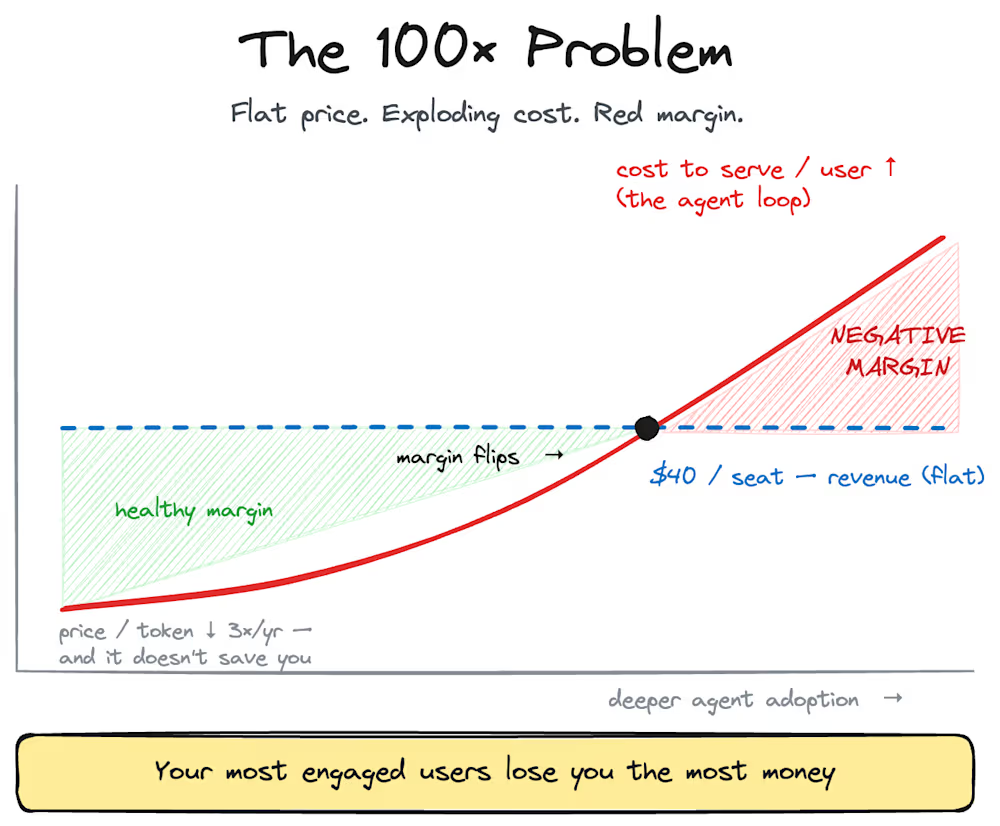
DeepSeek’s recent decision to drastically cut pricing on its V4-Pro model by 75% should have been unequivocally good news for enterprise AI vendors and developers. Instead, many are discovering that cheaper models don’t automatically translate into healthier margins.

The reason is simple: While inference costs plummet, agent systems are voraciously consuming tokens faster than prices are declining. For the last 2 decades, software economics was dictated by the same rule. Infra became cheaper every year whereas applications became more capable. AI was initially hypothesized to follow the same pattern. As frontier models improved and token prices dropped, many assumed inference would become a negligible operating expense.That assumption has begun crumbling exponentially. 

A chatbot usually turns one user question into one model call. An agent turns it into a chain of planning, retrieval, tool use, verification, summarization, and follow-up decisions. The user sees one answer. The vendor pays for the loop. That is the 100x problem: The same user-visible request can cost a lot  more to serve as an agentic workflow than as a chatbot or retrieval-augmented generation (RAG) response. In longer-running workflows, the multiplier is higher. Falling model prices help, but they do not fix a product architecture that turns one prompt into dozens of billable operations.

The scale of what is now at stake is clear in how model providers themselves are pricing developer relationships. OpenAI’s proposed program to give every Y Combinator startup $2 million in API credits — a number that would have funded an entire seed round in any prior tech cycle, and when the same cohort got by on a few thousand dollars of AWS credits — is less a recruiting perk than an admission of what it now costs to run an AI-native company through its first year of product. For established enterprises retrofitting agents into existing product lines, the absolute numbers are larger still.

What token amplification is

In a single-turn chatbot, one user message produces roughly one model call. Input-to-billed ratio is about 1:5.

Advertisement

In a multi-step agent rolled out across customer support, sales operations, finance, legal review, and engineering, that ratio routinely lands at 1:700 or higher. Every loop iteration carries forward the cumulative conversation, tool outputs, and reasoning traces. Each step appends; nothing is dropped.

A “simple” agent query like “What did our top customer ask about last week?” typically touches seven priced operations before returning an answer:

  1. User prompt (~50 tokens)

  2. System prompt and tool definitions (~3,000 tokens, repeated on every call)

  3. Retrieval (~5,000 tokens of context)

  4. Model call #1 — tool selection (8,000 in / 200 out)

  5. Tool execution (~4,000 tokens returned)

  6. Model call #2 — summarization (12,000 in / 400 out)

  7. Model call #3 — follow-up decision (12,400 in / 100 out)

One sentence in, roughly 35,000 input tokens billed. Somewhere between $0.10 and $0.40 per query on a frontier model. Multiply that by a million queries a month — the table-stakes volume for any enterprise B2B feature — and the line item is six figures.

Image 2

Why this breaks the existing AI business model

The dominant pricing story for enterprise AI has been seat-based SaaS: Pay per-user per-month, deliver agent capability, capture margin. That model assumes a reasonably bounded cost-per-user.

Token amplification breaks the assumption. A power user running 50 agent invocations a day on a $40/seat plan can cost more in inference than the plan charges. Token amplification shatters the traditional SaaS pricing model. When a power user’s daily agent activity costs more in inference than their monthly subscription fee, vendor gross margins turn negative, a paradox that compounds as customers deepen their agent adoption, the very usage curve vendors are selling to their boards. Several vendors are now privately reporting negative gross margins on heavy users, mirroring recent cloud expenditure reports from the Bessemer ‘Supernova’ cohort, where the correlation between AI-agent adoption and gross margin contraction has moved from a theoretical risk to a primary P&L headwind.

Advertisement

The visible symptoms have started leaking into public coverage. Bloomberg this week documented a widening gap between Salesforce’s Agentforce marketing demos and the capabilities actually shipping to customers. This is the kind of gap that opens predictably when promised functionality is technically possible but uneconomical to serve at the price the seat plan implies. Salesforce is the most-watched case, not a unique one.

“For my team, the cost of compute is far beyond the costs of the employees.” — Bryan Catanzaro, VP of Applied Deep Learning, Nvidia

The strategic implication is not “AI is expensive.” It is that the dominant business model assumed by most AI-native company plans does not survive contact with agentic workloads.

A simple example

Consider an enterprise software vendor charging $40 per-user per-month for an AI-enabled support assistant. A traditional chatbot might cost only a few cents per user per day in inference, leaving healthy gross margins.

Advertisement

Now replace that chatbot with a fully agentic workflow capable of investigating tickets, querying internal systems, drafting responses, validating outputs, and escalating exceptions. If a heavy user executes 50 to 100 agent requests per day, inference consumption can increase by an order of magnitude. What was once a negligible infrastructure cost becomes a material operating expense.

This creates an unusual dynamic: The customers receiving the most value from the product are often the customers generating the highest inference costs. In extreme cases, vendors can find themselves with their most engaged users contributing the least profit. The result is a growing realization across enterprise software that agent adoption and margin expansion are no longer automatically aligned.

Agent orchestration is the new moat

The technical responses are known and converging. They are not novel, but they are critical for survival

  • Cost-aware routing: This technique involves a small classifier model that decides which tier (Haiku, Sonnet, Opus equivalents) handles each query. Well-tuned routers cut inference bills by around 60% without any degradation in quality

  • Prompt caching: Anthropic, OpenAI, and Google now offer 75 to 90% discounts on cached prefixes. 

  • Context discipline: You can truncate tool outputs, prune reasoning traces, and cap tool depth to prevent your agent from going down a rabbit hole

  • Speculative decoding: for self-hosted deployments, this technique guarantees 2 to 3X effective throughput on the same GPUs.

“Organizations using orchestration-led governance report stronger productivity gains — a holistic orchestration layer is associated with six times greater productivity impact than compliance‑only approaches” — IBM

Advertisement

The companies building this layer well are starting to look less like microservice operators and more like financial trading systems: Every routing decision priced, every path with its own P&L, every tenant on a metered budget.

Image 3

What enterprise leaders should actually do

Four moves separate the companies that will still have margin in 24 months from the ones that won’t:

  1. Make inference cost a first-class metric. Track it per-feature, per-tenant, per-query class the same way cloud cost was tracked starting in the mid-2010s.

  2. Budget like a media buyer. Set cost-per-thousand-queries ceilings per feature. Cap them. Alert on overruns. Engineering will not enforce this on its own.

  3. Treat the router as core infrastructure, not an optimization. It is the new load balancer.

  4. Audit prompts quarterly. A 4,000-token system prompt that grew organically over six months is a six-figure bill in slow motion. Most teams have never read their own production prompts end to end.

  5. Negotiate volume commits early. Frontier-model vendors now offer reserved-instance-style prepaid commits at substantial discounts. List price is the worst price any enterprise will ever pay.

The next 24 months

The structural shift underneath agentic AI is not that it is expensive. As DeepSeek’s price cut today underscores, frontier inference unit costs are dropping roughly 3X per year, and the curve is not slowing.

The shift is that amplification is outrunning the price cuts. Cutting per-token costs 75% does not help a company whose agents are doing 700X more tokens per user query than its pricing model assumed. For the first time since the cloud era began, architecture decisions are again financial decisions in real time. A prompt redesign is a margin event. A poorly bound agent loop is an outage with a credit card attached.

The companies that survive the next 24 months of AI infrastructure pricing will not be the ones running the cheapest model. They will be the ones whose agents are smart and know what they cost to think.

Advertisement

That is the 100X problem. And it is arriving faster than the price cuts can hide it.

Maitreyi Chatterjee is a senior software engineer at a big tech company.

Devansh Agarwal works as an ML engineer at a leading tech company.

Welcome to the VentureBeat community!

Advertisement

Our guest posting program is where technical experts share insights and provide neutral, non-vested deep dives on AI, data infrastructure, cybersecurity and other cutting-edge technologies shaping the future of enterprise.

Read more from our guest post program — and check out our guidelines if you’re interested in contributing an article of your own!

Source link

Advertisement
Continue Reading
Click to comment

You must be logged in to post a comment Login

Leave a Reply

Tech

Tencent to become Manus’s largest shareholder amid deal discussions

Published

on

Meta’s acquisition of Manus drew widespread criticism in China for what was perceived as the handing over of critical technology to a geopolitical rival.

Chinese multinational technology company Tencent is in talks to become the largest external shareholder at AI start-up Manus in a deal that would further unwind Meta from a similar deal made previously, according to a report from Reuters, which cited two sources close to the matter. 

It was previously reported that US tech giant Meta would acquire Manus for roughly $2bn as the organisation aimed to further advance its work in the AI space. However, in April of this year, it was announced that Manus – which is based in Singapore, but originated in China – and Meta had begun dismantling the deal as a result of the Chinese government blocking it on the grounds of national security. 

When the deal was initially announced, it drew widespread criticism in China for what was perceived as the handing over of critical technology to a geopolitical rival.

Advertisement

An investigation commenced soon after, leading to the eventual dissolution of the agreement after the Chinese government blocked the deal.

Other investors reported to be involved in the new deal – which was first reported by the Financial Times – alongside Tencent are ZhenFund and HSG, both of whom were original investors in Manus. 

Investing in Manus is, for Tencent, an opportunity to further develop a reputation in the booming global artificial intelligence sector. In June, the organisation began testing a new AI assistant on its own app, WeChat, in an attempt to keep pace with its competitors in the space. 

WeChat users can interact with Xiaowei, Tencent’s AI agent, via text or voice prompts and the AI uses WeChat’s own large language model WeLM, while also tapping into DeepSeek to process additional queries.

Advertisement

Tencent has recently backed other innovators working in the AI space, such as DeepSeek, according to reports. In mid-June it was reported that Tencent was involved in a round in which the DeepSeek raised more than $7.4bn at a $50bn-plus post-money valuation. Tencent was also reported to have proposed taking a 20pc stake in DeepSeek. 

Updated, 2.43pm, 13 July 2026: This article was amended to clarify facts related to China’s investigation of the Meta-Manus acquisition, to clarify that ZhenFund and HSG were original investors in Manus before the Meta acquisition, and to clarify that Reuters and the Financial Times published the original reports.

Don’t miss out on the knowledge you need to succeed. Sign up for the Daily Brief, Silicon Republic’s digest of need-to-know sci-tech news.

Advertisement

Source link

Continue Reading

Tech

Irish-founded AI platform Inconvo acquired by UK-based Attio

Published

on

Inconvo had offered configurable AI assistants connected to user-facing data, with the aim of allowing customers to analyse their data through a ChatGPT-like interface.

Attio, a London-based developer of AI-powered customer relationship management (CRM) software, has acquired Irish-founded AI analytics platform Inconvo for an undisclosed sum.

In a blogpost, Attio said that Inconvo’s founders, Eoghan and Liam Mulcahy, would be joining its engineering team in order to “expand Attio’s ecosystem of agents and integrations” and help to “make natural language interfaces ubiquitous in all of the tools” offered by Attio.

Inconvo’s independent platform has been shut down following the acquisition, according to a blogpost from Eoghan Mulcahy, who wrote that the founders’ goal in creating the platform two years ago was to get answers from data “by just asking, in plain language”.

Advertisement

He added: “Natural language access to data isn’t a nice add-on. It’s infrastructure, and it belongs right at the centre of the tools teams use every day.”

Inconvo had offered configurable AI assistants connected to user-facing data, with the aim of allowing customers to analyse their data through a ChatGPT-like interface.

“Eoghan and Liam are builders at heart and perfectly encapsulate the philosophy of our team and product,” said Nicolas Sharp, CEO and co-founder of Attio.

Inconvo was part of Y Combinator‘s summer 2023 batch and launched in 2024. Attio, founded in 2019, said that integrating Inconvo’s founding team would help it to build architecture that “lets teams move at a speed, scale and quality previously out of reach, with first-class agentic access wherever they operate”.

Advertisement

“Their vision to make natural language interfaces ubiquitous in all of the tools we use is one piece of the larger shift we’re driving at Attio – a CRM that transforms how revenue work gets done,” the UK company said.

Attio lists companies such as Modal, Snackpass and Union Square Ventures as users of its CRM platform.

Don’t miss out on the knowledge you need to succeed. Sign up for the Daily Brief, Silicon Republic’s digest of need-to-know sci-tech news.

Advertisement

Source link

Continue Reading

Tech

This UCD researcher is probing father-son attachment in the online age

Published

on

Wilson is researching the role fathers could play in encouraging healthy mental development in adolescent boys.

Annie Wilson had a flourishing career in finance before she decided to pivot to psychology. Following the 2008 financial crisis, which marked a “significant turning point” in her life, Wilson returned to academia for her third degree – a bachelor’s in psychology. She previously held a bachelor’s degree in economics and master’s in business studies.

Wilson has committed fully to a career in psychology in recent years, and is currently working on her doctoral research into adolescent boys’ mental development with backing from the Craig Dobbin Doctoral Scholarship in Mental Health supported by the University College Dublin (UCD) Foundation.

What inspired you to become a researcher?

For me, research is the foundation upon which all credible psychological practice is built. Without it, clinical decisions would rest on intuition, tradition, or anecdote rather than evidence.

Advertisement

In child and adolescent psychology particularly, research has been transformative. It has established early interventions which in turn produces better long-term outcomes, identifying risk and protective factors for mental health difficulties.

I have always wanted to work with children and adolescents. The recent movement in the online world has made me think about how this will play out in society as children grow into adulthood.

Can you tell us about the research you’re currently working on?

I came interested in the online world, and how what children and adolescents are consuming online is changing how they fundamentally engage with their peers.

As I started to look into this area, I was drawn to boys specifically. The literature is starting to provide evidence around the stark disconnect between boys’ online world and their emotional wellbeing.

Advertisement

I became curious about what the landscape would like in 10 years’ time for adolescent boys now and how what they view now will change their fundamental behaviours and beliefs. It started to raise urgent questions about identity formation, mental health, and help-seeking behaviour.

Given boys already underutilise mental health services, and manosphere narratives that frame vulnerability as weakness, I wondered about long term interventions and could relational relationships move the needle?

After many conversations with my supervisors and my RSP (Research Studies Panel) panel, Gordon Harold, Brian O’Donohue and Marina Everri, it led me to think about where are the fathers in this equation. Could they be part of the solution?

This developed my research question for my scoping review which is, what is known in the existing literature about the relationship between father-son attachment and sons’ digital behaviour, the mediating effect of emotional regulation and what gaps exist in understanding this relationship as a basis for developing a targeted relational intervention?

Advertisement
In your opinion, why is your research important?

I believe it is fundamental to how relationships will develop in the coming years. We could be moving away from a more equitable experience for both men and women in western society.

As per the CyberSafeKids research conducted in 2024, 99pc of 12-14 have their own smart device. 38pc have experienced cyber bulling. 61pc have unrestricted access.

There are many facets to this, social comparison. Exposure to idealised images [has been] linked to body dissatisfaction and depressive symptoms. Teachers are concerned about the harmful/toxic content in student feeds.

We need to start to look at long term solutions to problematic social media use. As we wait to see how countries like Australia get on with the social media ban, we need to look for other solutions.

Advertisement

It will not reset with one intervention, we need a myriad of approaches to tackle the change that we are experience in adolescent boys content consume and their norms. I wonder does the relational relationship, hold the key to this need?

What commercial applications do you foresee for your research?

At present, I cannot see if there is a commercial application to the current research. However, that doesn’t mean it won’t have real-world value.

I can see it playing a meaningful role in shaping how we design digital literacy programmes, the kind that help young people, and particularly boys, develop a healthier relationship with technology.

Rather than a one-size-fits-all approach, the research points toward something more thoughtful – building skills gradually, layer by layer, in a way that actually sticks.

Advertisement

That kind of evidence-based framework could be genuinely useful to schools, parenting organisations, or anyone developing resources in this space.

What are some of the biggest challenges you face as a researcher in your field?

There are many challenges in this area, gaining a true reflection around how much adolescent boys behaviour has changed.

How understanding in real time, how the consumption of TikToks, reels, pornographic images and videos and how that will shape their future relationships and how they present in the world as an adult.

It is nuances and we are researching children and their parental attachment with their fathers. It will be difficult to gain quantitative research, I will be leaning more on qualitative findings through interviews and focus groups. We need to ensure we safe guard everyone who participates in the research so that they feel heard and understood.

Advertisement
Are there any common misconceptions about this area of research? How would you address them?

There are many common misconceptions in the father-son attachment research. The two main ones are that fathers play a peripheral role in the adolescent development. This is a myth.

Research consistently contradicts this, paternal involvement is independently associated with better mental health outcomes, stronger emotional regulation, and reduced risk-taking behaviour in adolescent boys, over and above maternal influence.

Another misconception, is that boys do not need emotional connection with their fathers.  Cultural narratives around masculinity suggest boys need discipline and challenge from fathers rather than emotional closeness.

In reality, adolescent boys with emotionally available fathers demonstrate greater psychological resilience, better peer relationships, and are significantly more likely to seek help when struggling.

Advertisement

We hope by looking at fathers and sons attachment, and investigating if modelling around rupture and repair can aid in emotion regulation, and could possibly safe guard boys from problematic social media use.

We want to develop an intervention that puts father and sons at the heart of the process. That we can develop a relational intervention, that is a sustained and a grounded framework for fathers to utilise.

What are some of the areas of research you’d like to see tackled in the years ahead?

Looking ahead, we’d love to see research that really reaches people, in the places where families actually live their lives: schools, community groups, and youth services.

One area we’re particularly passionate about is finding better ways to support boys and their fathers in navigating the digital world. Screen time and online culture are shaping how young men think, behave, and relate to others and we don’t yet have enough practical, real-world tools to address that.

Advertisement

We’d like to explore how father-son programmes could be woven into existing settings, whether that’s a school, a local sports club, or mental health services like CAMHS (Child and Adolescent Mental Health Services) and so that support is available to families who need it most, without requiring a whole new system to be built from scratch. That kind of joined-up, scalable approach feels especially important in a country like Ireland, where mental health resources are already stretched thin

Don’t miss out on the knowledge you need to succeed. Sign up for the Daily Brief, Silicon Republic’s digest of need-to-know sci-tech news.

Source link

Advertisement
Continue Reading

Tech

Over 200 Economists Say ‘We Must Act Now’ On AI’s Economic Impact

Published

on

An anonymous reader quotes a report from the Associated Press: Hundreds of economists say in an open letter that institutions “must act now” to address how artificial intelligence could transform the economy and could put many people out of work. The statement released Monday was signed by top economists, along with computer scientists and some executives at tech companies including Anthropic, Google and OpenAI.

“AI may become radically more powerful over the next 10 years,” says the letter organized by Stanford University’s digital economy lab. “This could drive an unprecedented transformation of our economy, larger than the Industrial Revolution, but unfolding over a vastly shorter time frame. It could bring risks, including large-scale job displacement, as well as opportunities such as major gains in living standards.”

The letter, which has only four sentences, says leaders must “build the incentives, guardrails, and institutions needed to steer AI in a direction that complements humans and benefits society.” The Stanford lab says the letter has so far been signed by more than 200 economists and AI researchers, including 16 winners of a Nobel Prize. “We must be intentional and make collective, democratic choices, rather than letting market forces play out and risking leaving most citizens behind,” wrote computer scientist and AI pioneer Yoshua Bengio, who was also among the signatories. He said it “it is highly plausible that AI will drastically transform our economies.”

Other signatories include Google CEO Eric Schmidt, LinkedIn cofounder Reid Hoffman, and Nobel laureates Joseph Stiglitz, Daron Acemonglu, and Simon Johnson.

Advertisement

Source link

Continue Reading

Tech

The US government warns that Russia state hackers are coming after your router

Published

on

The federal government is warning users of home and small office routers to secure their devices as Russia state hackers continue to mass-compromise them for use in obscuring nefarious actions against sensitive organizations in the public and private sectors.

Both the Russian and Chinese governments have been compromising routers for years, sometimes in prolonged tugs-of-war to wrest control of devices the other has already commandeered. The US government has occasionally issued covert commands and taken other steps to disinfect routers. Google and other companies have also worked to disrupt the massive botnets that control compromised routers in lockstep. The actions to date are little more than whack-a-mole exercises as the operators simply replace their botnets with new ones.

Proxy networks: The go-to tool

“Russian Federal Security Service (FSB) Center 16 cyber actors continue to exploit poorly configured and vulnerable networking devices worldwide, opportunistically compromising multiple critical infrastructure sector networks,” the Cybersecurity and Infrastructure Security Agency said Monday. The hacking groups are tracked under various names, including Berserk Bear, Energetic Bear, Crouching Yeti, Dragonfly, Ghost Blizzard, and Static Tundra. The advisory was co-issued by governments from around the world, including Australia, Denmark, New Zealand, and the UK.

The primary means of compromise the agency warned about was hackers scanning IP ranges with active Simple Network Management Protocol (SNMP) agents that accept common or default authentication credentials. These scans are run by the very sorts of router botnets the actors are trying to enroll the targeted device in. By sending malicious traffic from spoofed addresses, the hackers can use the SNMP agent on poorly configured routers to run malware. SNMP allows users to collect and organize information about managed networking devices or to modify that information to change device behavior.

Advertisement

Source link

Continue Reading

Tech

Big Blue thinks small, again, with 2U POWER tower

Published

on

systems

The last proprietary minicomputer, now in ‘deskside’ form if you fancy that

IBM has again teased small hardware, this time in the form of an update for its smallest POWER server.

The model S1112, teased Tuesday in a customer announcement, is a 2U, single-socket POWER11 server IBM offers in rack-mountable and what the company calls “Tower/deskside configuration.”

Advertisement

The rackable model can handle a ten-core POWER processor. The Tower/deskside form factor machine must make do with a four-core engine

IBM seems to have two roles in mind for the new machines: edge deployments and standalone use by those who are taking their first strides into using the last remaining proprietary minicomputer ecosystem.

One is edge deployments. The other is as an entry-level box, with the description of the tower unit suggesting its very existence means “even the smallest customers” can use it as an on-ramp to more POWER implementations.

News of the S1112 marks the second time in a week that IBM has gone low with modest hardware. Last week Big Blue teased the z17 ME2, a rackable mainframe that it said completed its range by offering a smaller and cheaper piece of hardware.

Advertisement

The twin launches continue IBM’s policy of creating smaller versions of its enterprise hardware, albeit well after launch of big iron: the first POWER 11 boxes landed in July 2025 and the first z17 series mainframes debuted in April of the same year.

The S1112 includes a quartet of DIMM slots and can handle up to 512GB of DDR5 memory. The box runs IBM i, AIX, and Linux – or all three because it supports IBM’s PowerVM virtualization tools.

In an almost certain non-coincidence, Big Blue on Tuesday also announced upgrades for PowerVM including improved automation and support for the S1112.

Big Blue has also looked after users of bigger POWER fleets, by expanding the number of Spyre accelerators – IBM’s neural processing units – that POWER servers can support from eight to twelve. IBM pitches POWER as a capable AI platform, so allowing it to use more accelerators can’t hurt.

Advertisement

IBM plans to start selling most of the kit described above on July 24, although customers who crave the S1112 to deploy in Taiwan will have to wait until September. 15. Would-be buyers in South Africa, India, and China must wait longer still, until December 11. ®

Source link

Continue Reading

Tech

Tesla’s Cybercab car park lap isn’t the real story

Published

on

Tesla has said Cybercab employee rides are starting soon at its Texas factory. The announcement came with a clip of a gold Cybercab, butterfly doors up and no steering wheel or pedals, driving itself across the outbound lot, Mashable reports.

Note the tense. Tesla said the rides are “starting soon”, not that they have started, and several outlets have already reported it the other way round.

That is the whole announcement. No route, no fleet size, and no word on whether the rides happen on public roads or entirely on Tesla’s own property.

What we are actually looking at

Strip away the framing and a car drove itself around a car park. Autonomous vehicles have managed that on private land for well over a decade.

Advertisement

Giga Texas is an enormous site with real internal roads, so a genuine campus shuttle would mean something. A loop across the outbound lot would not.

Advertisement

Tesla has not said which it is. Electrek, which broke down the announcement, concluded it could not tell either.

What it is definitively not is the thing people are waiting for. The Cybercab has not joined Tesla’s paying robotaxi fleet in Austin, which still runs on Model Y vehicles.

The hardware is not the problem

It is worth being fair to Tesla here, because the manufacturing is genuinely impressive. Its unboxed assembly process works, and the Cybercab is the most efficient vehicle the company has built.

More than a hundred finished Cybercabs are reportedly stacked in the Giga Texas lot. Tesla can make these things.

Advertisement

The bottleneck is software, and it is a brutal one. With no steering wheel and no pedals, there is no fallback, so if the self-driving system fails the vehicle simply cannot be driven.

That is survivable at walking pace in a car park. It is a different proposition on a public street.

The record so far

Tesla’s autonomy numbers remain difficult. TNW has reported that its Austin robotaxis crash roughly every 57,000 miles, about four times worse than the human average.

The scale gap is starker still. Tesla has 42 vehicles authorised for driverless ridehailing in Texas against Waymo’s 577, which is a matter of public record rather than opinion.

Advertisement

Progress is real, though, and worth saying plainly. Tesla began on-road engineering tests of the production Cybercab in Austin at the end of June, with a safety monitor riding in the passenger seat, and it now runs robotaxis in Miami with no safety monitor at all.

The story that matters

Here is what got buried under the video. On 9 July, two days before the clip appeared, the NHTSA administrator said the agency would “absolutely” consider scrapping the rule requiring driverless vehicles to have steering wheels and manual controls.

That is the constraint that has kept the Cybercab in a legal grey zone. A car with no controls is difficult to square with federal standards written on the assumption that a human might need to take over.

The dismantling is already under way. Washington has proposed dropping the brake pedal requirement for autonomous vehicles, and is now weighing the steering wheel rule too.

Advertisement

Tesla’s strategy suddenly makes sense in that light. It has pointedly refused to apply for individual exemptions, which are capped at 2,500 vehicles a year, betting instead that the rules themselves would move.

So far, that bet is paying off. Musk has been explicit that broad regulatory approval, not exemptions, is how the Cybercab reaches scale.

Why the car park video exists

A company mass-producing a vehicle it cannot yet legally or reliably deploy needs to show motion. A gold Cybercab gliding past the factory doing something, anything, is motion.

It is not dishonest, exactly. It is just a much smaller milestone than the reaction suggests, and Tesla left the framing conveniently vague.

Advertisement

The serious test is unchanged. Get a Cybercab carrying paying passengers on public roads in Austin, with nobody in the front seat.

Until then, the most consequential thing happening to this vehicle is not being filmed in a car park. It is being written into the Federal Register.

Source link

Advertisement
Continue Reading

Tech

Siri AI Finally Feels Like the Assistant Apple Always Promised in iOS 27

Published

on

Apple iOS 27 Beta Siri AI Assistant
iOS 27 public beta rolled out this afternoon and the rebuilt Siri is the reason most people will install it on day one. After years of half-steps and delays, Apple has delivered a version that actually reaches into your email, messages, calendar, and the stuff on your screen to get things done without forcing you to open half a dozen apps first.


Early testers who have been using developer builds for a month have detected a very small but significant shift. You don’t find yourself reaching for the browser or, for that matter, Spotlight as frequently as you formerly did. Now, a simple swipe down from the top of the screen feels quite intuitive and is frequently the quickest method to go where you need to go. When you ask Siri about the order of bands at a free concert you found online, she will search through the page, double-check the primary sites, and tell you who is closing out. Or, better yet, ask it to grab all of your WWDC briefings from your email and convert them into individual calendar events, which it does, complete with all of the appropriate times.

Sale


Apple 2025 MacBook Pro Laptop with Apple M5 chip with 10‑core CPU and 10‑core GPU: Built for AI…
  • SUPERCHARGED BY M5 — The 14-inch MacBook Pro with M5 brings next-generation speed and powerful on-device AI to personal, professional, and creative…
  • HAPPILY EVER FASTER — Along with its faster CPU and unified memory, M5 features a more powerful GPU with a Neural Accelerator built into each core…
  • BUILT FOR APPLE INTELLIGENCE — Apple Intelligence is the personal intelligence system that helps you write, express yourself, and get things done…

The real magic happens with personal context, but you must allow the phone some time to get a hold on all of your data, which can take several days depending on how much you have stored. Once everything has been indexed, Siri will be able to be extremely intelligent about what is hidden in Mail, Messages, Notes, Reminders, and Calendar. Want to know what’s happening this week? Just ask, and it’ll surface that TikTok Shop order that’s coming in the mail, the tickets your friends were talking about in that group chat, a birthday party, and a live show, all without you having to recall all the specifics, and it’ll even remember your partner’s food preferences based on notes and past messages, then remind you they don’t do salad.

Advertisement


Onscreen awareness turns the whole phone into a smarter surface. Look at a concert page and say “remind me to buy tickets to this when they go on sale” and Siri understands you mean the event in front of you. Scroll past a post about a singer’s comments and ask “where did she say this?” and it pulls the festival name and source links. Point the new Siri mode in the Camera app at a membership barcode and it offers to turn the photo into a Wallet pass. Visual Intelligence also works for quick identification: snap a clip from an old show and it names the actor, then answers follow-ups about recent roles.


Responses now appear directly inside Siri on Messages and Notes, so you can try it out by specifying the tone you desire and watching an entire paragraph appear, ready to send. Answers are now available within the Dynamic Island. Pull down on any of them, and the entire discussion will open up, allowing you to continue where you left off without having to start over. There is also a specific Siri app that allows you to save all of your history and sync it privately via iCloud. You can pick how long all of these chats stay on your phone, 30 days, a year, or forever, and those with the correct hardware receive added speech options like changeable pace and expressiveness sliders, allowing your assistant to sound even more natural.

Source link

Advertisement
Continue Reading

Tech

Panasonic’s PV-460 Camcorder Stabilized Shaky Videos

Published

on

If you grew up in the 1980s or ’90s, you likely remember shaky home video footage, taken with a handheld camcorder, of family gatherings, vacations, and other events.

Camcorders combined a camera with a video recorder. They included a rechargeable battery, a slot for a videotape, and a shoulder strap. Most were outfitted with an optical zoom lens and a small, articulating screen—a display mounted on a hinge that could tilt and rotate. The operator could check the screen to view what was being recorded.

The user’s natural hand and body movements when filming led to jittery footage. The best way to get a steady shot was to place the camcorder on a tripod or a gimbal: a motorized stabilizer.

There were fewer poor-quality recordings after Panasonic introduced its PV-460 VHS camcorder in 1988. It was the first video camera to include an optical image stabilizer, which compensated for movements. Stabilization features are now standard in today’s cameras including ones found in smartphones and drones.

Advertisement

The PV-460 camcorder was honored as an IEEE Milestone on 9 July. The dedication ceremony was held in Kadoma, Japan, at the Panasonic Museum, which displays the company’s past products.

The IEEE Kansai Section in Japan sponsored the Milestone.

“The release of the PV-460 fundamentally transformed personal videography, enriching the way people captured travel, events, and family memories,” section members wrote in support of the Milestone nomination. Their proposal is available here.

“Its image stabilization features democratized video creation by dramatically lowering technical barriers, allowing ordinary people to express themselves with newfound creative freedom,” they wrote. “Beyond the home, image stabilization technology found critical applications in specialized fields, contributing to advancements in areas such as educational media and telemedicine.”

Advertisement

The history of camcorders

Before the camcorder was invented in 1982, people filming events in the 1970s and early 1980s used two pieces of equipment: a video camera and a separate video cassette recorder (VCR), which were connected by a multipin cable. The camera was about the size of a toaster, and the VCR could be as large as a suitcase. To record, the person operated the camera with one hand and carried the VCR in the other or rested it on a shoulder. The cable transmitted the images from the camera to the cassette.

The PV-460 was made possible by several groundbreaking innovations, according to the Milestone proposal, one of which dates back to the 1950s.

In 1956 Italian manufacturer Durst released its Automatica, considered one of the first cameras to use automatic exposure technology. By combining a light meter with the camera’s internal mechanical systems, the technology removed the necessity of calculating exposure settings by hand when the lighting shifted or other conditions changed. The innovation enabled amateur photographers to take decent pictures.

The next breakthrough technology—autofocus—was invented in 1973 by Norman Stauffer, a manager of research for Honeywell in Littleton, Colo. It uses a sensor, a control system, and a motor to focus on a selected area. The invention led to the development of early electronic autofocus cameras, which eliminated the need for photographers to manually adjust the lens. Stauffer received the 1990 IEEE Masaru Ibuka Consumer Technology Award for his invention.

Advertisement

“The release of the PV-460 fundamentally transformed personal videography, enriching the way people captured travel, events, and family memories.” —Milestone sponsors

U.S. inventor Jerome Lemelson is credited with developing technologies that underpinned the camcorder, according to MIT. In the 1950s and ’60s, Lemelson filed several patent applications related to video and audio recording devices. In 1980 he was granted patents related to a portable video camera system. In 1982 JVC and Sony used the technologies to develop what they called the camera/recorder, which became known as a camcorder.

Sony released the first handheld camcorder in 1983: the Betamovie BMC-100P. It used the Betamax videocassette format and could record up to 3.5 hours of footage on 1.27-centimeter cassette tape. The operator rested the 2.5-kilogram camcorder on top of a shoulder to shoot footage. It sold for around US $2,000 at the time (roughly $33,400 today). The machine couldn’t rewind or play back tapes; it could only record.

Other electronics companies including JVC soon introduced their own models using the VCR format, which eventually replaced Betamax.

Advertisement

Over time, camcorders became more compact.

But none of the companies could fix the shaky-footage problem.

Solving a shaky problem

A team at Panasonic led by researcher Mitsuaki Oshima took on the task of image stabilization: detecting and correcting small camera movements, referred to as camera shake, according to the proposal. Oshima, an IEEE life senior member, is now an honorary Fellow at Panasonic.

“The movements that needed to be detected and corrected included horizontal, vertical, and rotational motions—specifically pitch, yaw, and roll,” the Milestone sponsors wrote. “Rotational motion, in particular, becomes the dominant factor affecting image stability during high-magnification shooting. Therefore, the development team focused on detecting rotational motion and began developing an angular velocity sensor.”

Advertisement

An AVS, essentially a gyroscope, detects how quickly an object is changing its orientation in space.

Sensors capable of detecting angular velocity were large and expensive at the time, making them unsuitable for consumer video cameras, the sponsors wrote. What was needed, they said, was a compact and inexpensive version.

Oshima and his team built a high-performance, small, low-cost vibration-type gyroscope. The stabilization mechanism included a miniaturized sensor paired with an optical-axis correction mechanism.

The mechanism adjusts the lens or image sensor to counteract physical shifting and vibrations, ensuring that the light path remains centered on the sensor—which is crucial for maximizing sharpness and quality, the Milestone sponsors wrote.

Advertisement

“The system detects lens displacement caused by camera shake and immediately compensates for it, ensuring stable video footage,” they wrote. “As a result, the effects of camera shake are minimized, allowing users to capture smooth and steady videos with ease.”

Without Oshima’s image stabilization technology, the PV-460 wouldn’t have been developed and released in 1988.

The technology was patented and broadly licensed by other companies. It has become a standard feature in a variety of imaging applications.

Awards and accolades

The PV-460 gained instant popularity when it debuted in June 1988. It received rave reviews at that year’s Consumer Electronics Show.

Advertisement

Panasonic received a 100 Award in 1989 from R&D World magazine for “the development of a VHS camcorder with an antishake mechanism.”

Oshima’s research paper, “VHS Camcorder With Electronic Image Stabilizer,” and others are available in the IEEE Xplore Digital Library.

To learn more about historical figures in engineering, IEEE Milestones, and IEEE History Center programs and events, check out The Institute’s IEEE Tech History collection. IEEE Spectrum also covers aspects of tech history.

Milestone plaque display

The Milestone plaque is to be displayed on the ground floor of the Panasonic Museum, which is open to the public. The museum is located near the now-shuttered Panasonic research lab where the technology was developed. The plaque reads:

Advertisement

“In 1988 the pioneering PV-460 camcorder equipped with image stabilization for enabling smooth and steady video capture was introduced by Panasonic. By pairing a miniaturized vibrating-structure gyroscope sensor with an optical-axis correction mechanism, the PV-460 eliminated the jitter caused by hand motion. Broad international licensing of this patented scheme made it a standard feature in film and digital cameras, smartphones, and related imaging devices.”

Selected by the IEEE History Committee and endorsed by the IEEE Board of Directors, IEEE Milestones recognize outstanding technical developments around the world that are at least 25 years old. The Milestone program is administered by the IEEE history and heritage group.

From Your Site Articles

Related Articles Around the Web

Advertisement

Source link

Continue Reading

Tech

I’m a Big E Ink Fan, So This New Detachable-Screen Phone From Hisense Intrigues Me

Published

on

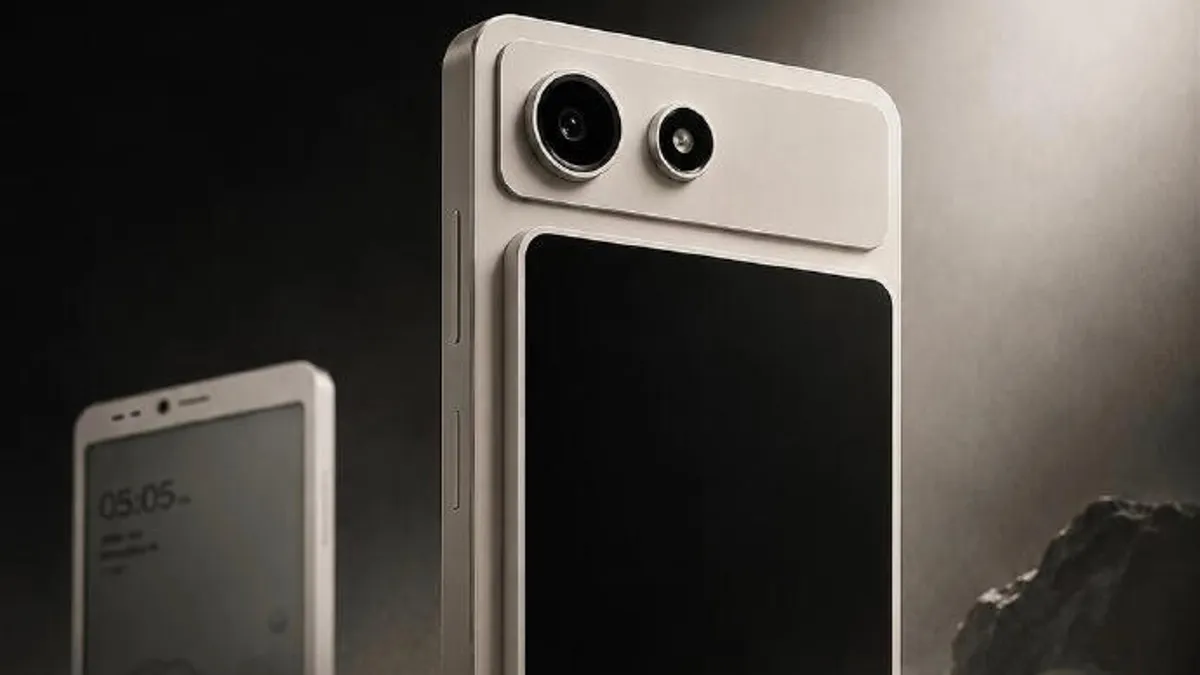
E Ink is cool. It’s easy to read, doesn’t drain the battery and looks like real paper (kind of). Having more than just one phone screen is also cool. The new Hisense A10 fits both those bills, and that’s why it’s piqued my interest.

Hisense — a Chinese company known for consumer electronics, primarily televisions and appliances — officially announced the A10 on Monday. As posted by reputable insider Experience More on Weibo, the phone’s main screen uses E Ink, and it also has a detachable color LCD screen on the back. Hisense had teased the A10 last month. 

Available initially in China at around $600, it’s unclear when it might reach US markets. Gagadget said it’s possible that US buyers will have to go through AliExpress, eBay or other specialist traders.

Advertisement

The insider said the detachable magnetic screen might not be included with the phone and will be sold separately. It could be similar to the Vamvo screen that can be attached to iPhones and Android phones.

A10 could offer customers a lot of flexibility. They could take just their main E Ink phone with them for simple calling and texting, keeping their battery life strong, or they could attach the second screen for videos, gaming or other apps that need color and graphics. Hisense didn’t specify how the two screens would communicate data.

In terms of specs, Experience More said the A10’s main screen measures 6.13 inches and is a black-and-white E Ink display. With Android 16, the phone runs on 5G and uses a 4nm Qualcomm octa-core chip, which is not quite as powerful as the Snapdragon 8 Elite.

A Hisense representative didn’t immediately respond to a request for comment. 

Advertisement

Drawn toward E Ink

I’m fascinated by Hisense’s unique twist on the trend of “the more screen, the better,” as foldables take center stage and the Apple Ultra or Fold potentially debuts this fall. But I’m even more interested in a second screen being paired with an E Ink main screen.

E Ink phones are a small market gaining big traction. By replacing harsh, glowing screens with paper-like displays, they eliminate glare, reduce eye strain and significantly boost battery life. The major trade-off is that they aren’t built for fast scrolling or watching videos. But for fans, that distraction-free simplicity is the main attraction.

I’ve used Amazon’s Kindle and a Kobo e-reader — two of CNET’s most highly reviewed brands — and it’s amazing how easy it is to read books on them. With glare-free screens and matte finishes, they even look and feel like real paper. I’m liking the combo of E Ink phone simplicity with video and app versatility.

Tech tester Austin Evans, who has nearly 6 million subscribers to his YouTube channel, said the Hisense A10 offers a nice return to a more minimalist phone experience without sacrificing useful apps.

Advertisement

Though most of us know we spend too much time on our devices, going back to a flip phone means losing access to convenience and social connection, Evans told CNET. 

“An E Ink phone is generally compatible with the apps you rely on, but the screen quality and refresh rate are too limited for extended doom scrolling.” In other words, an E Ink phone could give us the functionality of a smartphone without the addictive nature of a smartphone.

Source link

Advertisement
Continue Reading

Trending

Copyright © 2025