Few fixtures in world football carry the emotional weight, historical baggage and unforgettable moments of Argentina vs England.
When the two nations meet in the FIFA World Cup 2026 semi-final, it will not simply be a battle for a place in the final. It will be another chapter in a rivalry that has stretched across generations, shaped by footballing brilliance, controversial decisions, political tensions and some of the most iconic moments in World Cup history.
From Diego Maradona’s infamous “Hand of God” and his magical “Goal of the Century” in 1986 to David Beckham’s red card heartbreak in 1998, this fixture has repeatedly delivered drama whenever the two sides have crossed paths.
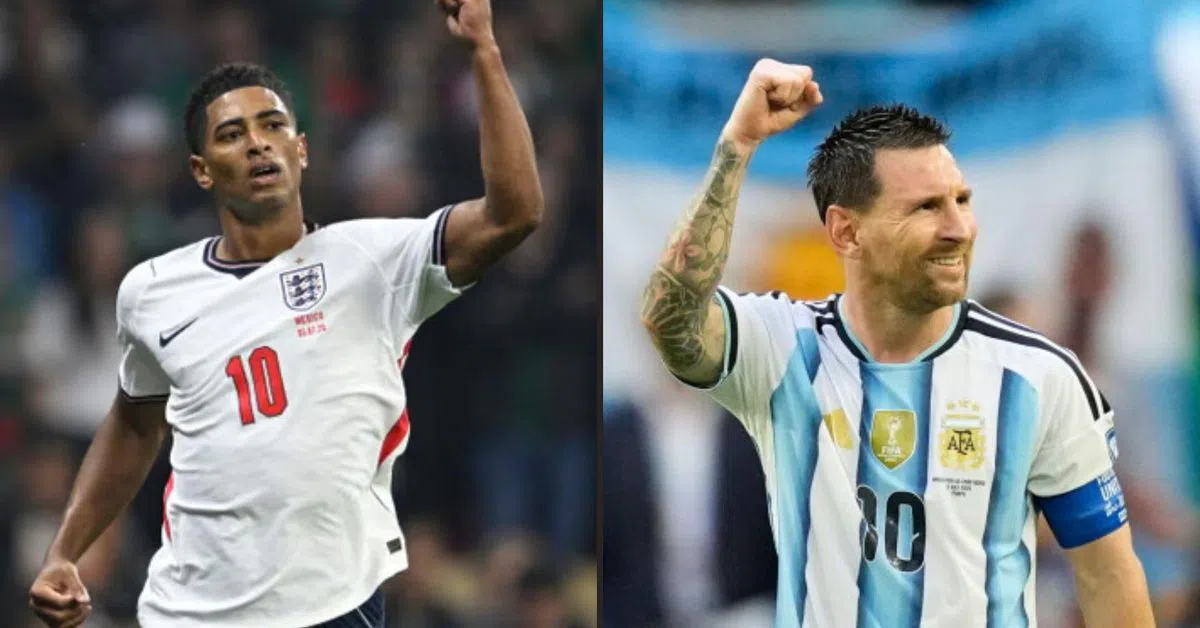
Now, with Lionel Messi leading the defending champions and England searching for their first World Cup final appearance since 1966, another historic encounter awaits.
A rivalry that goes beyond football
The footballing relationship between Argentina and England dates back more than a century.
Argentina hosted British railway workers in the late 19th century, helping introduce football to the country. Many of Argentina’s famous clubs, including River Plate and Boca Juniors, have links to British influence during the early growth of the sport.
The two nations first met internationally at Wembley in 1951, with England winning 2-1. However, the friendly relationship soon transformed into one of football’s fiercest rivalries.
Historical tensions, particularly the Falklands/Malvinas conflict in 1982, added another layer of emotion whenever the teams met. For supporters on both sides, Argentina vs England became more than just 90 minutes of football.
1966: The controversy that started the World Cup rivalry
The first World Cup meeting between Argentina and England came in 1962, when England won 3-1 in Chile.
But their 1966 quarter-final clash at Wembley became the match that truly defined the rivalry. England won 1-0 thanks to Geoff Hurst’s header, but the game was remembered more for the chaos surrounding Argentina captain Antonio Rattín’s dismissal.
Rattín was sent off after a confrontation with German referee Rudolf Kreitlein, but confusion over communication and language led to an eight-minute delay before he eventually left the pitch.
Argentina felt they had been treated unfairly and later referred to the match as “El Robo del Siglo”, The Robbery of the Century. England manager Alf Ramsey also added fuel to the fire by famously describing Argentina’s players as “animals” after the match.
The controversy created a rivalry that would continue for decades.
1986: Maradona’s revenge and football’s most iconic World Cup moment
Twenty years later, Argentina and England met again in a World Cup quarter-final.
This time, the stage was Mexico City’s legendary Azteca Stadium, and Diego Maradona produced one of the greatest individual performances in football history. The match came just four years after the Falklands conflict, making the encounter emotionally charged even before kick-off.
Six minutes into the second half, Maradona challenged England goalkeeper Peter Shilton for a high ball and punched it into the net. Despite England’s protests, the goal stood.
Maradona later described it as being scored “a little by the hand of God”, creating one of football’s most famous phrases.
But just four minutes later, he produced something completely different. Receiving the ball inside his own half, Maradona dribbled past five England players, ran almost half the pitch and finished brilliantly past Shilton.
The moment became known as the “Goal of the Century” and remains one of the greatest goals ever scored at a World Cup. Gary Lineker pulled one back for England, but Argentina held on to win 2-1 before lifting their second World Cup title.
1998: Beckham’s heartbreak and Argentina’s penalty triumph
The rivalry produced another classic in the 1998 World Cup Round of 16. England started brilliantly in France, with Michael Owen announcing himself on the global stage with a stunning solo goal.
The teenager picked up the ball from midfield, raced past defenders and finished calmly to give England a 2-1 lead. But Javier Zanetti equalised before half-time with a clever free-kick routine. The biggest talking point came after the break.
Argentina midfielder Diego Simeone brought down David Beckham in midfield and, while Beckham was lying on the ground, Simeone tapped him on the head.
Beckham reacted by kicking out at the Argentine midfielder, resulting in a straight red card. England played the remainder of the match with 10 men, but managed to survive until penalties. Argentina won the shootout 4-3 after Paul Ince and David Batty missed from the spot.
For Beckham, the red card turned him into a national villain back home, with newspapers heavily criticising the Manchester United midfielder.
2002: Beckham gets revenge in Japan
Four years later, England and Beckham had the perfect opportunity for redemption. The teams met in the group stage of the 2002 World Cup in Japan, with both sides desperate for victory. The match was decided by one moment.
Michael Owen was brought down inside the penalty area by Mauricio Pochettino, giving England a penalty. Beckham stepped up and calmly converted from the spot, scoring against Argentina four years after his infamous dismissal.
England’s defence held firm despite late Argentine pressure, securing a memorable 1-0 victory. The defeat proved costly for Argentina, who were eliminated in the group stage, their earliest World Cup exit since 1962.
A rivalry waiting for its next iconic moment
Despite their history, Argentina and England have not faced each other in a competitive match since 2002. Now, 24 years later, the rivalry returns on the biggest stage.
Argentina arrive as defending champions, powered by Lionel Messi’s final World Cup journey and a team built on resilience under Lionel Scaloni.
England enter with renewed belief under Thomas Tuchel, led by stars such as Harry Kane and Jude Bellingham, hoping to end decades of waiting for another World Cup triumph.
The stories of Maradona, Beckham, Simeone and Messi have already shaped this rivalry. Now a new generation has the chance to create its own chapter. Because when Argentina and England meet, history is never just remembered. It is rewritten.















































You must be logged in to post a comment Login