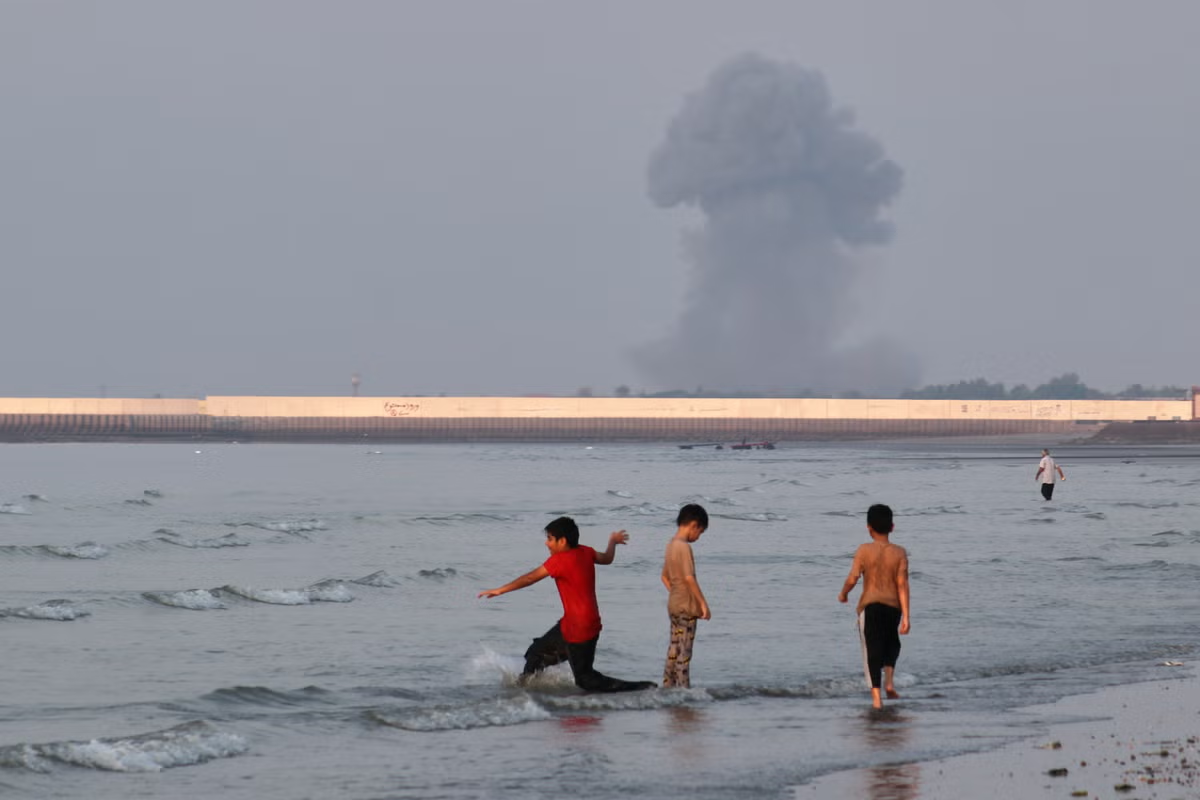


Connect with us
DAPA Banner
DAPA Coin
DAPA
COIN PAYMENT ASSET
PRIVACY · BLOCKDAG · HOMOMORPHIC ENCRYPTION · RUST
ElGamal Encrypted MINE DAPA
🚫 GENESIS SOLD OUT
DAPAPAY COMING

NewsBeat

Iran-US war latest: Trump launches new wave of strikes as UAE condemns Iran’s ‘brazen’ attacks on tankers

Published

on

Iran-US war latest: Trump launches new wave of strikes as UAE condemns Iran’s ‘brazen’ attacks on tankers
US releases video of forces carrying out another wave of strikes on Iran

US president Donald Trump has launched a new wave of missile strikes on Iranian cities, prompting Tehran to launch attacks on Bahrain.

The US military said it has completed a five-hour mission, targeting ‌military bases ‌across Iran, including ⁠Bushehr, Chah Bahar, Jask, Konarak, Abu Musa, and Bandar Abbas. It said the troops “employed precision munitions against Iranian coastal defense systems, missile and drone sites, and maritime capabilities”.

The attack comes as the United Arab Emirates condemned Iran for its “blatant attack” on two Emirati oil tankers in the Strait of Hormuz, which resulted in the death of one Indian crew member.

The Islamic Revolutionary Guard Corps said on Tuesday that two “offending” supertankers had been ​hit and ⁠disabled in the strait after ignoring ‌repeated warnings, turning off navigation systems and attempting to pass through what the Guard described as a mined route.

Advertisement

Meanwhile, Bahrain sounded air raid sirens at least three times on Tuesday morning as Iran claimed it struck “several weapons storage depots, a satellite communications centre, and a building housing US forces” at the AlJuffair base.

The renewed strikes come as Trump vowed to charge a 20 percent toll on vessels moving through the strait, a plan which Iran’s foreign minister has mocked.

Indian crew dead as Iran strikes UAE oil tankers

One Indian crew member was killed and eight others were wounded when two Emirati oil tankers were struck by Iranian cruise missiles in the Strait of ⁠Hormuz, the UAE said this morning.

Advertisement

The UAE’s defence ministry said the tankers, the Mombasa and Al Bahiyah, were targeted in the southern lane of the strait while in Omani territorial waters. The dead crew member was aboard the Mombasa, it said.

Of the eight wounded, four were seriously injured. Six of the wounded were ⁠Indian nationals and two were Ukrainian nationals, the ministry said.

The attacks ​caused ⁠material damage to both tankers after fires broke out on board. The ministry said the fires had been brought under control. It condemned what it called a “blatant attack” and said the UAE retained “its full ⁠right to respond to this escalation”.

The Islamic Revolutionary Guard Corps said this morning that two “offending” supertankers had been ​hit and ⁠disabled in the Strait of Hormuz after ignoring ‌repeated warnings, turning off navigation systems and attempting to pass through what the Guard described as a mined route.

Advertisement

Alisha Rahaman Sarkar14 July 2026 04:20

Iran claims attacks on Bahrain

Iran’s Revolutionary Guards said it targeted “several weapons storage depots, a satellite communications centre, and a building housing US forces” at the AlJuffair base in Bahrain.

Air raid sirens were sounded in Bahrain at least three times this morning, urging people to take immediate shelter.

Advertisement

Iran said the missile and drone attacks were part of the second phase of its “retaliation operation”.

Alisha Rahaman Sarkar14 July 2026 04:15

US says it has completed latest wave of strikes on Iran

The US military said late ⁠last night that its forces have completed ⁠their ​latest ⁠wave of ⁠strikes on ​Iran.

Advertisement

“During ⁠the five-hour ‌mission, US forces successfully struck ‌military targets ‌across Iran, including ⁠Bushehr, Chah Bahar, Jask, Konarak, Abu Musa, and Bandar Abbas,” ‌the US Central ​Command ‌said ⁠in a ⁠statement on ‌X.

It said the US troops “employed precision munitions against Iranian coastal defense systems, missile and drone sites, and maritime capabilities”.

Alisha Rahaman Sarkar14 July 2026 04:05

Advertisement

Oil climbs to one-month high of $85 a barrel

Oil prices rose 2 per cent this morning to their highest in four weeks, as the US reimposed its naval blockade of Iran while the two countries stepped ​up attacks in the Strait of Hormuz, heightening uncertainty about energy flows.

Brent ‌crude futures climbed $1.68, or 2 per cent, to $84.98 per barrel, while US West Texas Intermediate crude rose $1.65, or 2.1 per cent, to $79.79 a barrel. Brent crude surged 9.6 per cent in the previous session, its biggest ​daily gain since May 2020.

Oil prices are now at their highest since the ​two countries signed a memorandum of understanding to end the war on 17 June.

Alisha Rahaman Sarkar14 July 2026 03:57

Advertisement

US uses sea drones against Iran for first time

The US military has said that it used one-way attack sea drones in Iran for the first time.

In an update on Monday morning, US Central Command said it had struck “dozens of targets at multiple locations with precision munitions” as they sought to degrade Tehran’s ability to attack shipping in the Strait of Hormuz.

“CENTCOM forces struck Iranian military air-defense systems, coastal radar sites, missile and drone capabilities, and small boats using US fighter aircraft, naval vessels, one-way attack aerial drones, and one-way attack sea drones for the first time,” it added.

Advertisement

Alex Croft14 July 2026 03:00

Oil prices jump after US and Iran escalate strikes in the Middle East

Share markets slipped in Asia on Monday as fighting intensified in the Gulf and Iran claimed to have closed the vital Strait of Hormuz, sending oil prices surging and rekindling ⁠inflation risks globally.

Brent crude climbed 3.3 per cent in early trade to reach $78.50 a barrel, up from the recent trough of $70.14, while US crude added 3.4 per cent to $73.83 a barrel. US officials said around 20 vessels had been escorted through the strait in the previous 24 hours, though ship tracking sites showed ⁠little traffic moving.

Advertisement

Over the weekend, Tehran extended strikes on Qatar ​and the United Arab Emirates while the US launched further strikes ​on Iran, the latest in a cycle of attacks and ⁠counter-attacks over shipping through the strait.

Alex Croft14 July 2026 02:01

Iranian attacks kill oil tanker crew member and trigger missile sirens in Bahrain

Early information is trickling out about alleged Iranian retaliation to recent U.S. strikes.

Advertisement

In Bahrain, missile alerts sounded because of strikes from Tehran, the Associated Press reported early Tuesday local time.

An adviser to Bahrain’s king said on social media that the kingdom’s air defenses intercepted and destroyed multiple inbound Iranian attacks.

Separate Iranian strikes killed one crew member and wounded eight others on a pair of Emirati oil tankers in the Strait of Hormuz, the defense ministry of the United Arab Emirates said early Tuesday.

The U.A.E. condemned what it called the “blatant attack” and insisted the country retained its “full right ​to respond to this escalation.”

Advertisement

The strike itself occurred in waters off Oman, Reuters reports.

Josh Marcus14 July 2026 02:00

Pictured: US military releases image of strike on Iran

A projectile approaches a target at an unknown location, during what U.S. Central Command (CENTCOM) says are strikes on Iran, in this screen grab taken from a handout video released on July 12, 2026
A projectile approaches a target at an unknown location, during what U.S. Central Command (CENTCOM) says are strikes on Iran, in this screen grab taken from a handout video released on July 12, 2026 (Reuters)

Alex Croft14 July 2026 01:01

Advertisement

Recap: Iran says it will not allow US to intervene Strait of Hormuz

Iran will not allow the US to intervene in the management of the Strait of Hormuz, the country’s top joint military command, Khatam al-Anbiya Central Headquarters, has said.

Any attempt by the US army to arrange transit through the strait outside the paths designated by Tehran and without coordination with Iran’s armed forces will be strongly resisted, it added in a statement on social media.

Alex Croft14 July 2026 00:00

Advertisement

Trump hints at attack plans and claims a new Iran deal was nearly reached in press conference

President Trump made a number of notable claims today about the Iran war while speaking with reporters at the White House.

He briefly claimed that the U.S. and Iran had a renewed deal of some kind “two days ago,” which he said failed because Tehran sought to “negotiate it further.” Iran has not disclosed any such deal was near.

Trump also said renewed U.S. strikes will eventually take out what’s known as Pickaxe Mountain, a buried Iranian nuclear facility.

“Tell the Iranians we’re coming,” the Republican said.

Advertisement

The president has previously claimed U.S. strikes had all but destroyed Iran’s nuclear capacity.

Elsewhere, the president defended the timeline of the war.

“Well, we were in Vietnam for 19 years,” he said. “We’re here for four months.”

Josh Marcus13 July 2026 23:34

Advertisement

Source link

Continue Reading
Click to comment

You must be logged in to post a comment Login

Leave a Reply

NewsBeat

Foreign Office issues alcohol warning for Brits heading on holiday to Greece

Published

on

Daily Mirror

The Foreign, Commonwealth & Development Office (FCDO) has issued an alcohol warning to Brits travelling to Greece, and it’s particularly important ahead of the summer holidays

The Foreign Office has issued a warning to British holidaymakers travelling to Greece about the consumption of alcohol.

Advertisement

On Tuesday, 14 July, the Foreign, Commonwealth & Development Office (FCDO) updated its travel advice for Greece to include new information on alcohol laws and underage drinking. The guidance was outlined on its ‘safety and security’ page, which is crucial advice for any Brits planning to visit Greece, particularly ahead of the summer holidays.

The FCDO stated in the update: “It is illegal to sell or provide alcohol to anyone under 18, any businesses found doing so can face large fines and possible closure. Bars and nightclubs are not allowed to admit or serve anyone under 18, even if accompanied by an adult. Expect age verification checks at points of sale.”

In a stark warning to British travellers, the Foreign Office added: “If a minor is harmed through excessive drinking, or underage intoxication is brought to the attention of local authorities, parents or other accompanying adults, as well as those who supplied the alcohol, could face legal consequences under general child protection laws.”

Advertisement

The new information on alcohol in Greece comes as thousands of families are expected to jet off abroad during the summer holidays. The FCDO also warned Brits to “always carry your passport, to show to the police if they request identification”, as they may not accept a copy or other forms of identification documents.

Ahead of the busy summer period, the FCDO has also updated its safety advice on swimming. For anyone travelling to Greece, they warned: “Every year, people drown in the sea and in swimming pools in Greece.”

In advice when using a swimming pool, they said: “Always supervise children. Keep small children within arm’s reach in and around swimming pools, even if they can swim or there is a lifeguard present.”

For anyone planning a trip to the beach in Greece, the Foreign Office further advised: “Take care when swimming in the sea. Always supervise children and keep small children within arm’s reach.

Advertisement

“Hidden rocks or shallow depths can cause serious injury or death. Do not dive into unknown water.

“Many organised beaches have a flag system. Make sure you understand the system and follow any warnings. A red flag means you must not enter the water.

“Take extra care and get local knowledge if there are no lifeguards, flags or signs.”

Advertisement

Water sports are another popular activity during a trip abroad, particularly in the azure waters of Greece. The FCDO cautioned: “Only book activities at a licensed water sports centre and before you start:

  • Make sure the paperwork is completed
  • Ask for a safety demonstration
  • Make sure you know how to call for help

“For more advice, see the website for Safe Water Sports, a non-profit organisation in Greece that aims to prevent accidents.”

For more information, visit the Foreign Office travel advice website.

Do you have a travel story to share? Email webtravel@reachplc.com
Source link

Advertisement
Continue Reading

NewsBeat

British passenger is found dead on cruise ship near Crete

Published

on

A British tourist has been found dead on a cruise ship off the coast of Crete. (File image)

Advertisement

A British tourist has been found dead on a cruise ship off the coast of Crete.

The 79-year-old man was found unresponsive on the deck of the ship and was given first aid, but was eventually rushed to the hospital, where he died on Tuesday morning. 

The incident unfolded as the cruise was sailing near Crete, forcing the vessel to dock on the Greek island,  according to the local coast guard. 

The Chania Port Authority is conducting the preliminary investigation into the Briton’s death and has ordered an autopsy to determine his cause of death. 

Advertisement

It is currently unclear whether the man was on the cruise alone or with family. 

A FCDO Spokesperson told the Daily Mail: ‘We are supporting the family of a British man who died in Greece and are in contact with the local authorities.’

The tragedy comes after a British man died on a cruise ship travelling through Corfu earlier this month. 

The 67-year-old passed away while on board the vessel, which was ‘flying the Maltese flag’ in the port of the Greek Island. 

Advertisement

A British tourist has been found dead on a cruise ship off the coast of Crete. (File image)

The Port Authority said in a statement: ‘In the morning hours today, the Corfu Port Authority was informed of the death of a 67-year-old foreign passenger (British citizen) on a cruise ship (C/Z) flying the Maltese flag in the port of Corfu.

‘The body was transferred to the Corfu General Hospital for an autopsy.

Advertisement

‘A preliminary investigation is being conducted by the Corfu Central Port Authority.’ 

Both incidents in Greece also come just two months after cruise ship passengers were stunned to learn their captain had tragically died in the middle of their 19-day voyage in Asia.

Devastation ensued upon Princess Cruises’ Diamond Princess ship in May when guests received a letter breaking the news of Captain Michele Bartolomei’s sudden death.

The 52-year-old, who lived in Canada, died from a medical emergency and was discovered while the ship was docked in Keelung, Taiwan.

Advertisement

Before passengers were officially notified, an announcement blared over the boat’s loud speaker, urging the medical team to respond to an emergency, according to Crew Center.

Holidaymakers were unnerved by the message, but the real shock came when they learned it was about the man leading the voyage.

‘We are deeply saddened by the passing of Captain Michele Bartolomei, a beloved member of the Princess Cruises family whose career at sea spanned more than 30 years,’ Princess Cruises shared in a heartfelt message.

In an attempt to ease concerns, the cruise company said in its letter to passengers ‘that our commitment to your safety and the smooth operation of this voyage remains our utmost priority.’

Advertisement

Cruise ships have onboard morgues for dead bodied to be stored if someone dies at sea, The New York Times reported.

The area is typically a stainless steel chilled room on a cruise ship’s lowest deck. They generally are designed to fit two to 10 corpses.

This is a breaking news story, more to follow.  

Advertisement

Advertisement

Source link

Continue Reading

NewsBeat

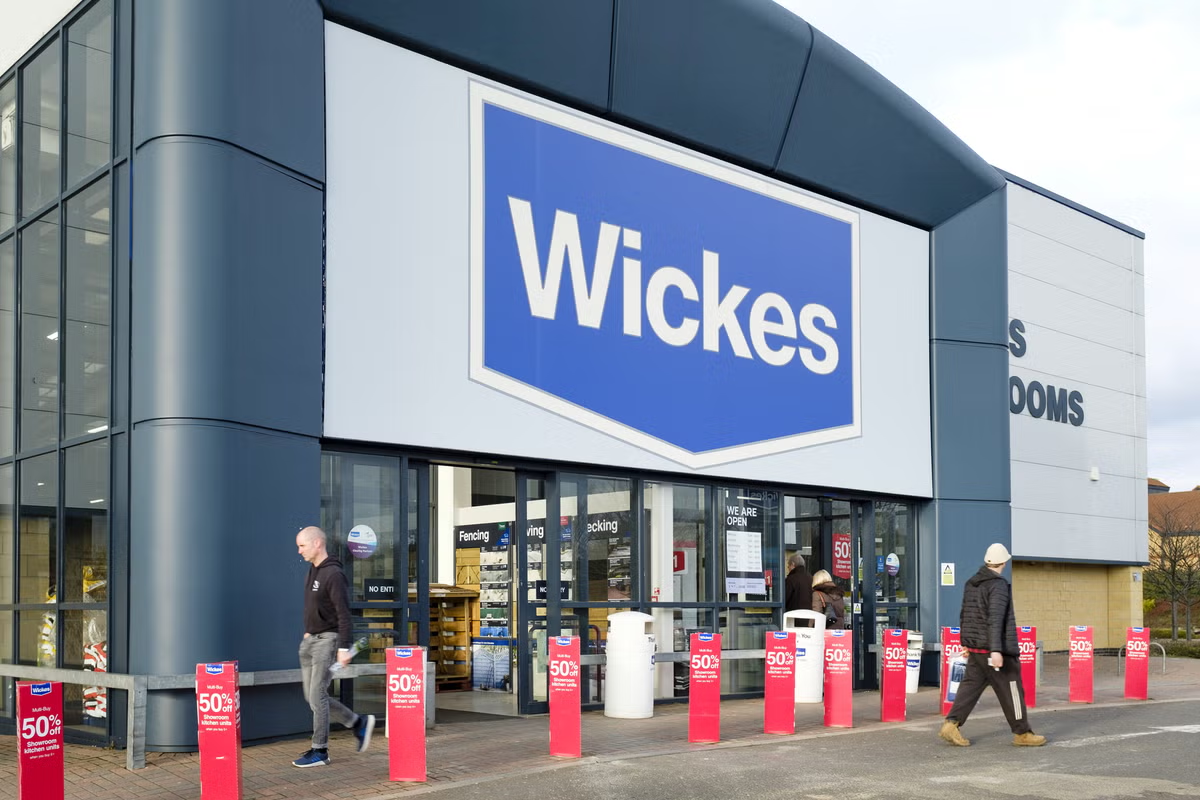
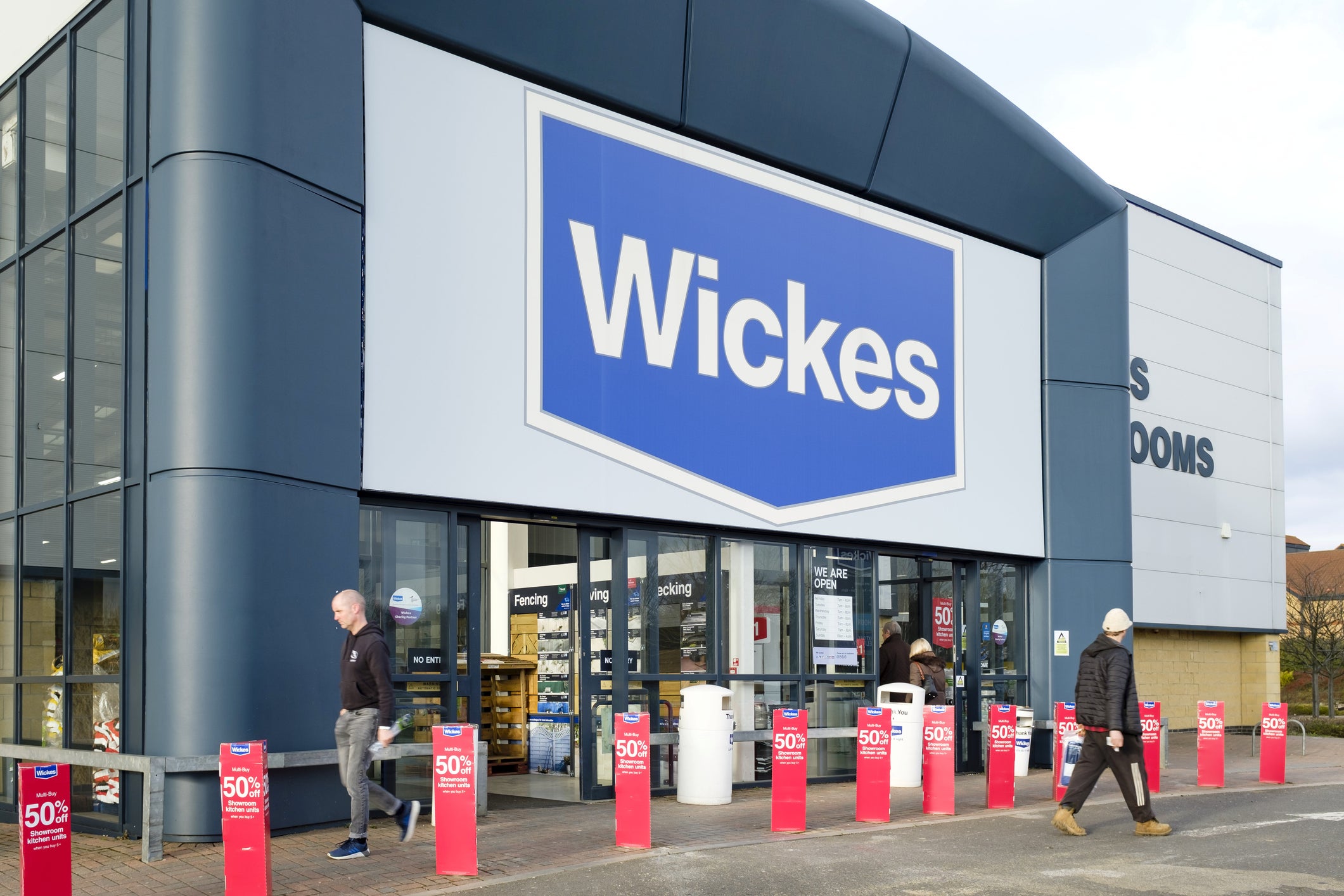
Wickes manager Jasmin Unsted launches discrimination case after being fired for snorting cocaine at work

Published

on

Wickes manager Jasmin Unsted launches discrimination case after being fired for snorting cocaine at work

A Wickes manager has been ordered to pay the DIY retailer £3,500 after an employment tribunal ruled her discrimination case was “unreasonable” and had no “objective” chance of success.

Jasmin Unsted was sacked for snorting cocaine at work – a claim she denied, although she did admit to taking the drug the night before her shift.

Ms Unsted then pursued claims of unfair dismissal and disability discrimination, relating to her ADHD.

The tribunal heard that Ms Unsted, a mother of three, was observed to be unusually “quiet” at work following a late night of drinking.

Advertisement

However, after several trips to the toilet, she became her “loud and chatty self” again.

A colleague subsequently discovered white powder on the windowsill of a cubicle that Ms Unsted had used.

Jasmin Unsted was employed as a Wickes duty manager from March 2021 (file photo)
Jasmin Unsted was employed as a Wickes duty manager from March 2021 (file photo) (Getty/iStock)

Ms Unsted refused a drug test, saying that she had consumed cocaine the previous night but not on company premises. She was subsequently fired by Wickes.

Her claims for unfair dismissal and disability discrimination were ultimately rejected by the employment tribunal.

Ms Unsted must now pay Wickes £3,408 towards their costs in fighting her claim, which totalled £15,173.

Advertisement

The tribunal, held in London, heard that Ms Unsted was employed as a duty manager at Wickes from March 2021.

She was given a final written warning in August 2023 because of unrelated incidents.

In February 2024, operations manager Rebecca Carter noticed that Ms Unsted was behaving differently.

She told the tribunal: “On 10 February 2024, I noticed [Ms Unsted] displaying unusual behaviour.

Advertisement

“Normally loud, bubbly, and highly focused, constantly working and keeping up a fast pace, she was quiet, unfocused, and less interactive with the team.

“She was pacing around the store and made frequent trips to the toilet, more than once an hour.

“These trips were unusual because, although she worked on the ground floor, she repeatedly went upstairs to use the toilet, which drew my attention.”

She asked Ms Unsted if she was ok, and in response she “kind of just shrugged it off and said she would be okay after some caffeine”.

Advertisement

Ms Unsted told the tribunal she had sat against the outside wall of a toilet cubicle and leaned against the wall, closing her eyes in an attempt to “compose and prepare herself for the rest of the shift”.

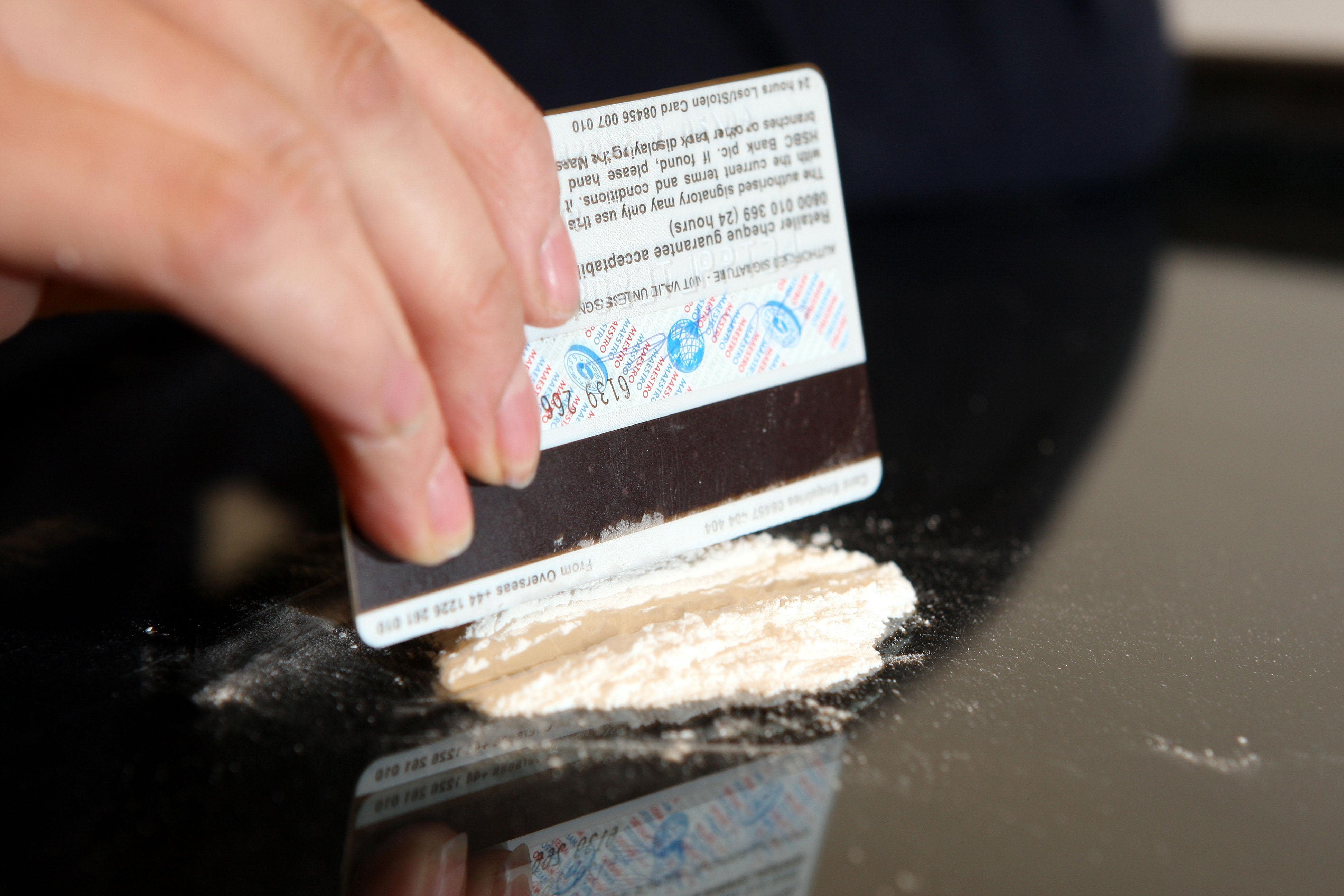
Ms Unsted admitted to using cocaine the night before her shift (file photo)
Ms Unsted admitted to using cocaine the night before her shift (file photo) (PA Archive)

Ms Carter said: “At around 2pm, I entered the female toilets and saw [Ms Unsted] leaving the far cubicle with a windowsill.

“I said hello and walked past her to use the far cubicle myself.

“[Ms Unsted] then went into the cubicle next to me.

“She was loud and chatty, the opposite of her behaviour in the morning.

Advertisement

“I cannot recall exactly what she was saying, but we both came out of the toilets at the same time.

“[Ms Unsted] didn’t flush, but I didn’t think much of it.

“As I went to wash my hands, she returned to the cubicle I had used, carrying a tissue, and we continued to have a conversation.”

Ms Carter said she found “what appeared to be remnants from a line of cocaine” on the windowsill of the toilet that Ms Unsted had been in, and she reported this to the Wickes employee relations team.

Advertisement

Ms Unsted claimed that these photos had been doctored but the tribunal accepted them as genuine.

A drug testing technician was called in, and she asked them if her drinking and drug taking the night before would result in a positive test. She was told it probably would.

She was also informed that if she refused to take the test it would be seen as a positive result and she would likely be sacked as Wickes has a zero-tolerance approach to alcohol and drugs.

Ms Unsted refused to take the test as her partner told her over the phone that he did not believe they had reasonable grounds for making her do it.

Advertisement

In an investigation meeting a few days later, Ms Unsted said that the night before her shift, she took “one line of cocaine at 21.00 and a bottle of Malibu. Drinking until 3am 70cl bottle. Felt tired and ropey, not hungover. But I didn’t feel like I was 18 anymore”.

Ms Unsted denied taking drugs while on shift, and claimed she was being discriminated against because of her ADHD.

She said “the description given to me of my unusual behaviour was just a list of my ADHD symptoms and what is my normal behaviour”.

Ms Unsted was fired for gross misconduct in May 2024.

Advertisement

Employment Judge Lise Burge said: “Even if the Tribunal had decided that the dismissal was unfair, which we did not, the Tribunal’s view is that [Ms Unsted]’s conduct was culpable and blameworthy.

“She took cocaine the night before her shift.

“Cocaine is illegal and the safety implications of taking drugs and mixing drugs and alcohol is clear in [Wickes]’s Alcohol & Drugs policy.

“Even if the white powder in the toilet was not cocaine belonging to her, and we make no findings on whether it was or was not, it was reasonable for [Wickes] to request a drug test.

Advertisement

“[Ms Unsted] refused to take it as she believed she would have cocaine in her system. She caused the dismissal.”

Her claims for discrimination arising from disability and a failure to make reasonable adjustments were dismissed.

The tribunal concluded that the claims ‘had no reasonable prospects of success’, but Ms Unsted had ADHD and ‘lacked the emotional separation to be able to stand back and view her claim objectively’.

Despite this, she should have realised it was ‘unreasonable’ to continue to pursue her claims after Wickes urged her to take legal advice.

Advertisement

“[Ms Unsted]’s unfair dismissal and disability discrimination complaint objectively had no reasonable prospects of success and she acted unreasonably in continuing to pursue it,” EJ Burge said.

Source link

Continue Reading

NewsBeat

Who is England vs Argentina referee? Lionel Messi reunited with familiar face in semi-final

Published

on

Who is England vs Argentina referee? Lionel Messi reunited with familiar face in semi-final

Source link

Advertisement
Continue Reading

NewsBeat

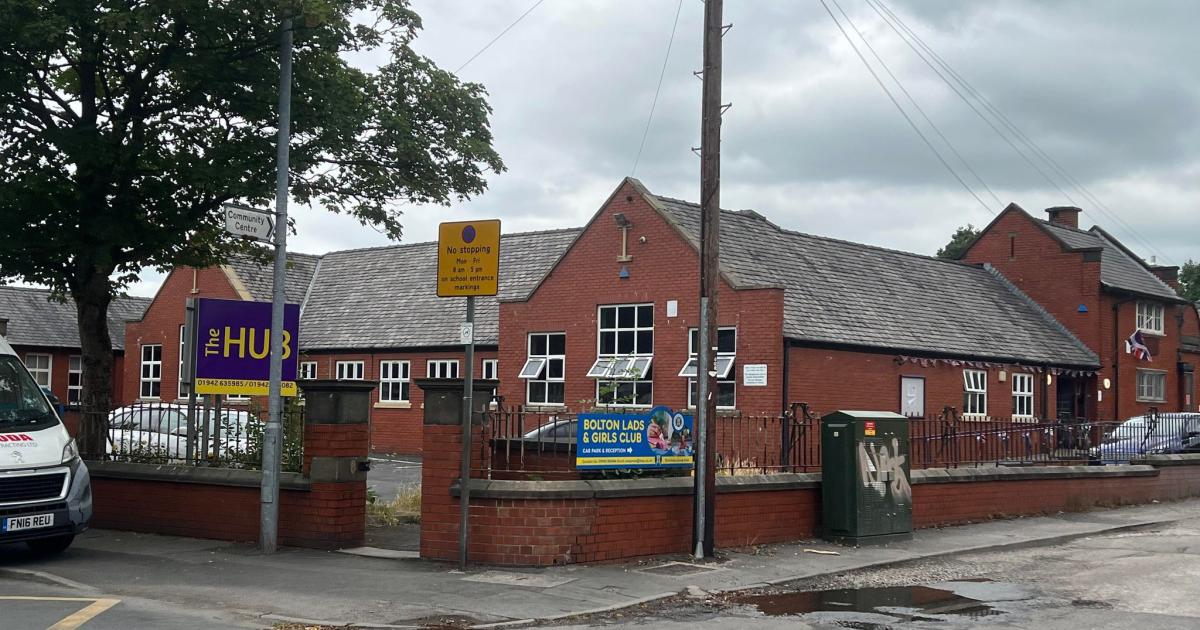
The Hub Westhoughton to stage art classes for children

Published

on

The Hub Westhoughton to stage art classes for children

Youngsters are invited to dive into a morning of creativity and imagination at a special “Under The Sea” arts and crafts class taking place in Westhoughton this summer.

The fun-filled session will give children the chance to create their own colourful underwater-themed artwork, inspired by magical ocean creatures, vibrant coral reefs, shimmering bubbles, and fascinating sea life.

Designed to encourage creativity and self-expression, the class is suitable for all abilities, with no previous art experience needed.

Advertisement

Children can enjoy exploring different materials and techniques while creating a unique masterpiece to take home.

The Under The Sea workshop will be held at The Hub, Westhoughton, on Wednesday, 22 July, from 10am to 11.30am.

Organisers say the session will provide a relaxed and enjoyable environment where children can make new friends, have fun, and let their imaginations run wild beneath the waves.

Places are limited and early booking is encouraged, with ticket prices at just £10 per person.

Advertisement

Source link

Continue Reading

NewsBeat

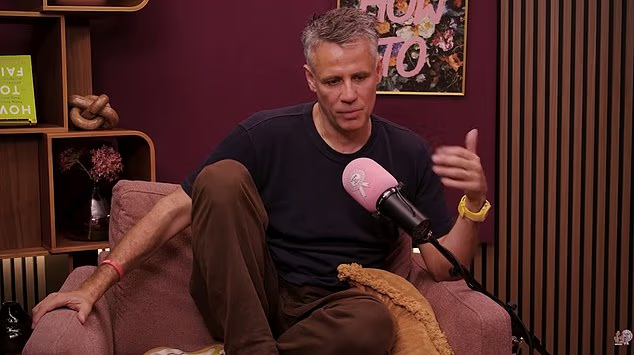
Richard Bacon lays bare ‘deep sense of shame’ over Blue Peter cocaine scandal as he recalls being ‘betrayed’ by his best friend who sold the story that led to his sacking

Published

on

Richard Bacon has laid bare his 'deep sense of shame' over his 1998 Blue Peter cocaine scandal to Elizabeth Day on her How To Fail podcast as he recalled being 'betrayed' by his best friend who sold the story that led to his sacking

Richard Bacon has laid bare the ‘deep sense of shame’ over his Blue Peter cocaine scandal which saw him sacked from the iconic presenting job back in 1998. 

In an interview on podcast How To Fail, Richard, 50, recalled being ‘betrayed’ by his best friend who he claims sold the story that led to his sacking. 

Richard told Elizabeth Day: ‘Well, the biggest shame about it is, some time later, I don’t know how much time later, my mum told me it was the only time that she’d heard my dad cry, ever.

‘He’s just from that generation that doesn’t. His own dad came out of World War 2 and didn’t show emotion. 

Advertisement

‘The News Of The World comes out on a Sunday and this is now the Monday morning. [Dad’s] got to go to court where he works, [as a criminal defence lawyer] and he went into the shower to cry. 

Richard Bacon has laid bare his ‘deep sense of shame’ over his 1998 Blue Peter cocaine scandal to Elizabeth Day on her How To Fail podcast as he recalled being ‘betrayed’ by his best friend who sold the story that led to his sacking

The drug scandal made Richard the first presenter to be fired from Blue Peter in the show's then 40-year history - Pictured L-R Konnie Huq, Richard Bacon, Katy Hill and Stuart Miles in 1998

The drug scandal made Richard the first presenter to be fired from Blue Peter in the show’s then 40-year history – Pictured L-R Konnie Huq, Richard Bacon, Katy Hill and Stuart Miles in 1998 

Advertisement
Richard said: 'The biggest shame about it is, some time later, I don't know how much time later, my mum told me it was the only time that she'd heard my dad cry, ever.

Richard said: ‘The biggest shame about it is, some time later, I don’t know how much time later, my mum told me it was the only time that she’d heard my dad cry, ever.

‘He turned on the shower, so that [mum] wouldn’t hear him cry. He didn’t want her to know. She didn’t tell me at the time. She left it quite a while to be honest. 

‘Even to this day, she said It’s the only time I’ve ever heard him cry. So when she told me that story, I felt a deep sense of shame.’

The drug scandal made Richard the first presenter to be fired from Blue Peter in the show’s then 40-year history. 

Advertisement

He knew it was his best friend who had sold the story.  

‘I’d worked with him at Radio Nottingham,’ he said. And what happened was, well, what happened was I took some cocaine.’

Richard said that while he didn’t take the drug regularly, he had taken it before. 

He added: ‘You would see other people get caught up in that and they would always say, “I didn’t do that… it was my first time” and I would be like really, the first time you did it happened to be the time you got caught?

Advertisement

‘The first time I took it was in a nightclub called Browns in Covent Garden with that guy that you alluded to whose name I am not going to use.

‘We were best mates and he got a wrap of it and I took the whole wrap at once. I didn’t really understand it and I threw up, but I had taken it a handful of times before that. 

‘I think he was jealous of me. So I did 20 months on Blue Peter, pretty much the same amount of time that Keir Starmer was Prime Minister.

Richard famously fell seriously ill with a mystery lung infection in July 2018 and was put into a medically-induced coma, with doctors telling Bacon and his family they 'expected him to die'

Richard famously fell seriously ill with a mystery lung infection in July 2018 and was put into a medically-induced coma, with doctors telling Bacon and his family they ‘expected him to die’

Advertisement
Richard has been married to wife Rebecca for more than a decade - they tied the knot back in 2008 and have two children together

Richard has been married to wife Rebecca for more than a decade – they tied the knot back in 2008 and have two children together 

‘We went out and obviously I shouldn’t have done that. Blue Peter was such a big opportunity and I loved the job and I still really respect it as a programme… It was an incredible job to have at age 21, 22.’

Richard revealed his agent called him when he was out with his dad and he just said, ‘It’s News Of The World, cocaine and lots of it. Those were the exact words.’

He recalled going round to the home of Oliver McFarlane, the then editor of Blue Peter and explained what had happened. 

Advertisement

Then Lorraine Heggessey, the Head of Children’s BBC said she would have to let Richard go.  

He said: ‘Then I had to hand in my badge. It’s like leaving the LAPD. You have to hand in your badge, your Blue Peter badge. I could no longer get in free to the Motor Museum at Bewley.’

Richard confirmed that he did in fact get his Blue Peter badge back 20 years later when he was invited to the show’s 60th anniversary. 

He said: ‘Peter Purvis, in front of all the other Blue Peter presenters, off camera,  pinned one on me in front of them. And he said, all is forgiven. And all the other Blue Peter presenters applauded.’

Advertisement

In 2018, Richard was left ‘quite close to death’ for two days after suffering a mystery lung infection after he was taken ill on a transatlantic flight on July 5. 

He told Elizabeth about the harrowing ordeal of being placed in a medically-induced coma after a sudden respiratory collapse and being told by doctors he was not expected to survive. 

When he arrived at the hospital, the consultant Vic, who saved his life, looked at his chest X-ray and explained that they would need to put him into a coma in 20 minutes time. 

So he emailed Nick Jones, the founder of Soho House Festival, where he wa due to attend and asked if he might be able to give his ticket to someone else so it wouldn’t go to waste. 

Advertisement

He also told his friend Ewan he would not be able to make their dinner arrangement. 

Two or three months later, Richard ran into his consultant when he was back at the hospital making a documentary and he simply said: ‘We expected you to die.’

Richard explained: ‘I went to blood oxygen 58. If you go below 60, you die or get brain damage. And I’m not dead.

’40 people worked on me and I hallucinated and became convinced the nurses were trying to murder me. So when I made my complaint, I f***ing meant it.’ 

Advertisement

Richard admitted to an ongoing problem with alcohol addiction, saying he has ‘been to AA many times. 

He said: ‘I still daydream a lot about stopping drinking. It’s a very hard one because I like it so much, but it’s caused me a lot of problems in my life.” 

‘I’m certainly saying I’m an addict. And what I learned about ADHD is a lot of people with it will use alcohol or stimulants to sort of make up for the fact, even though you don’t know it at the time, that the blood flow is moving too slowly here. So there’s a correlation between all of that, I think.’

Richard went on to become the founder of the production company Yes Yes Media, hosted BBC Radio 5 Live and also hosts the podcast Why Are You More Successful Than Me? 

Advertisement

He is happily married to Capital Radio’s marketing manager Rebecca since 2008 and they have two children, Arthur and Ivy.

Source link

Continue Reading

NewsBeat

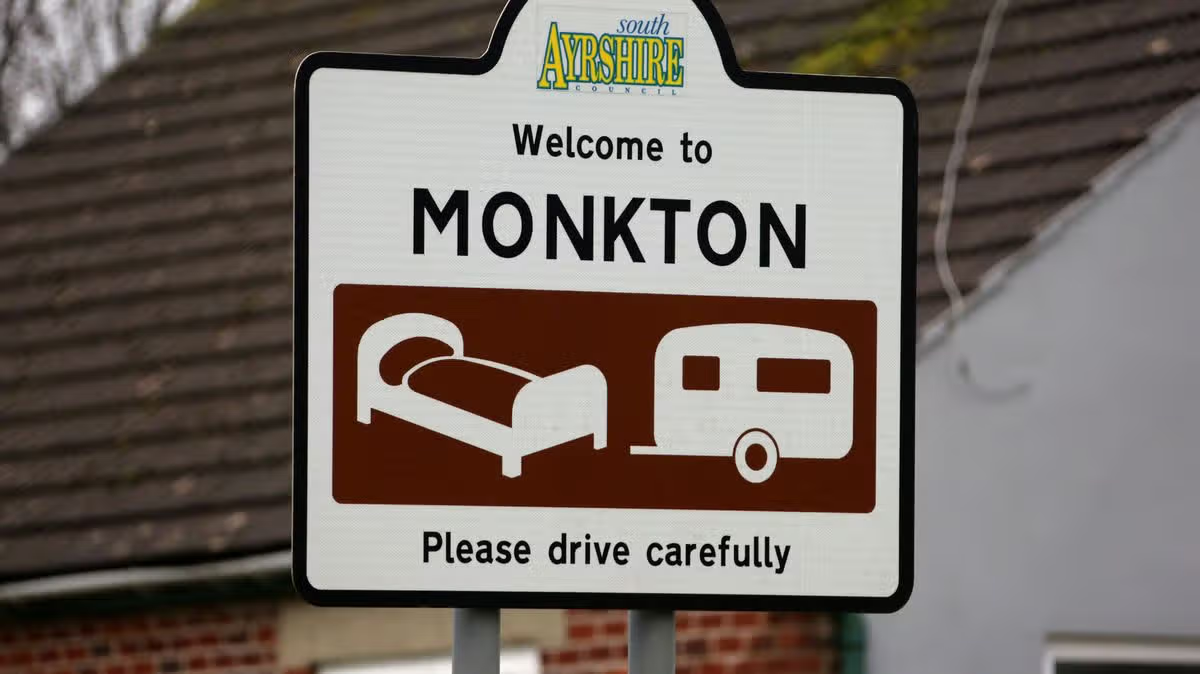
Ayrshire village’s re-designation to town status branded “a piece of nonsense”

Published

on

Daily Record

Monkton’s village status has been re-designated and changed to a ‘town’ following a population growth that’s taken it above the 1000-resident threshold.

The reclassification of the village of Monkton to town status has been branded “a piece of nonsense.”

Advertisement

Monkton’s village status has been re-designated and changed to a ‘town’ following a population growth that’s taken it above the 1000-resident threshold.

The announcement by the Scotland’s Towns Partnership (STP) follows research involving the latest version of Understanding Scottish Places (USP) – a unique platform which offers insight into the social and economic dynamics of towns across Scotland.

Scotland’s Towns Partnership (STP) is the national body for Scotland’s town centres and provides policy expertise, advice and best practice guidance to support a wide range of projects across Scotland.

And USP provides data on population, housing, employment, business activity and public services, while also enabling towns to benchmark themselves against similar places.

Advertisement

Scotland’s Towns Partnership worked in collaboration with the University of Stirling, supported by the Scottish Government, to significantly expand the USP dataset.

And, according to the data, Monkton has “evolved significantly” from its historical roots in spinning and corn milling, while its proximity to Prestwick Airport has “shaped its modern identity” with development “centred around industries supporting aircraft maintenance.”

However, one Monkton resident, Harry Middleditch, says the reclassification of the village to a town is a joke.

He said: “Monkton hasn’t changed in 40 years that I’ve been here. We don’t have a doctors, we don’t have a dentist, we’ve not got a pub, we’ve got nothing!

Advertisement

“And it’s taken us seven years just to get a chemist and it’s only been open for a year and a bit. Monkton is a simple dormitory for other places like Glasgow. South Ayrshire Council have done nothing for us.”

Mr Middleditch argues that infrastructure – such as he previously mentioned – would come as ‘standard’ if Monkton really were a town.

He said: “If we were a town, why do we not have the amenities of a town? We don’t even have a pub because the Brewers Fayre is shut.

Advertisement

“Apart from four shops we don’t have anything.”

Joining Monkton in reclassified town status is Lamlash, on the Isle of Arran.

Lamlash serves as a summer ferry link to Argyll. Now situated within a marine protected area and with a population size larger than Brodick, it continues to support both residents and visitors alike.

Kimberley Guthrie, STP’s Chief Officer, said: “The comparison tool is one of the most exciting elements of USP, allowing towns to immediately compare themselves with similar places. That means these places can learn from each other – potentially demonstrating the art of the possible when it comes to regeneration.

Advertisement

“USP supports organisations of all kinds to understand how places across Scotland are similar, emphasising shared characteristics and opportunities to build knowledge on their local context.

“The data often highlights unseen or unrecognised challenges and opportunities which can inform planning, management and policy decisions.”

Across Scotland, there has been a net gain of 29 towns since the first iteration of USP was compiled- 508 places with a population of more than 1,000, compared to 479 in 2014.

Advertisement

The data for USP has the most recent census results as its foundation, but pulls in facts from a variety of other sources to broaden the analysis available.

Statistics are compared with those based on the 2011 census and other research which created the previous version of the website.

Anne Findlay, a Research Fellow at the University of Stirling, led analysis of the data.

She said: “The statistics show that towns are developing in new and interesting ways, but USP also helps people understand how towns relate to each other. That’s important.”

Advertisement

But Harry Middleditch hit back at the news, saying: “To call Monkton a town is a piece of nonsense and you can quote me on that. South Ayrshire Council has taken a village and destroyed the village. If they want to build houses here then what’s happening with the infrastructure? We need more shops and facilities for the people.”

South Ayrshire Council has been approached for a response.

To view all of the data, go to www.usp.scot and follow the search functions.

Source link

Advertisement
Continue Reading

NewsBeat

What Do The New ‘Buy Now, Pay Later’ Rules Mean For You?

Published

on

What Do The New 'Buy Now, Pay Later' Rules Mean For You?

New “buy now, pay later” (BNPL) regulations have come into effect, changing how deferred payment credit (DFC) companies, like Klarna and Clearpay, can operate in the UK.

The new regulations are set by the Financial Conduct Authority (FCA) and are designed to “reduce the risks of harm to consumers”.

They’re not meant to outright ban BNPL loans.

Instead, the FCA said that these deferred payment credit (DFC) systems will be able to “continue to innovate and grow sustainably, and that consumers can still access DPC where appropriate”.

Advertisement

So why are these changes happening, and what does that actually mean for consumers?

What is a BNPL company, and why does it need regulation?

If you’ve ever shopped online, you’ll probably have had an option to spread your payments across a set period (like six months) rather than paying the full amount in one go.

Those who pay these installments in full effectively get an interest-free loan for their purchase.

Advertisement

But people who can’t or don’t cough up can face late payment fees and even, sometimes, have their credit score affected.

And this type of lending has grown from “£0.06bn in 2017 to over £13bn in 2024”, the FCA said. Until very recently, it was unregulated, despite having a multi-billion-pound consumer credit market.

The new rules have come in place “following concerns that borrowers were not getting sufficient information about DPC agreements and some lending being unaffordable,” the FCA added.

Regulators also think unchecked BNPL contracts mean customers might end up taking on more debt than they’re able to repay, thereby ending up with lots of late fees.

Advertisement

What do the new buy now, pay later rules mean for me?

  • BNPL companies will have to give you consistent and clear information about what you’ll need to pay and when, as well as what’ll happen if you can’t make payments.
  • They need to tell you right away if you miss a repayment, so a late fee can’t sneak up on you.
  • They must carry out affordability checks before lending someone money (though many companies say they already do this, now they will all have to). This is designed to make it harder to charge what a person doesn’t seem likely to afford. These “proportional” checks will apply to loans under £50 too, but there’s some flexibility with how companies run these.
  • The BNPL company will now be jointly responsible with the retailer if something goes wrong on a purchase that costs from £100-£30,000, including if something you buy is faulty. These are section 75 protections, which apply to credit cards too.
  • If you have an issue with your BNPL service, you’ll be able to take it up with the Financial Ombudsman.
  • Consumers will have to be redirected to debt support services rather than debt collection agencies if they fall into financial difficulties.

Some, like Kate Pender, the chief executive of not-for-profit Fair4All Finance, have shared concerns about the new rules, though.

“While regulation is clearly needed and welcomed, our recent research found that nearly half of those likely to be rejected have not missed a BNPL payment,” she said.

“The need for credit doesn’t just disappear when you can’t access it,” the expert shared, adding that people are often pushed towards more expensive or unregulated alternatives like high-interest “loan sharks”.

Advertisement

Source link

Continue Reading

NewsBeat

How fatigue shapes World Cup interceptions

Published

on

How fatigue shapes World Cup interceptions

An interception can last less than a second. A defender reads a pass, steps into its path and reaches the ball before its intended recipient. Yet that brief movement requires the brain to judge speed, distance and direction while the body accelerates, changes course and maintains balance.

Interceptions show how closely thought and movement are connected, and how mental and physical fatigue can disrupt that connection. As players tire, they must still decide whether to move and continually adjust their speed. A fraction too late, and both the player and their defence can be left exposed.

At the start of the 2026 World Cup semi-final week, France defender Dayot Upamecano led the tournament with 12 interceptions. His tally shows how often an elite defender must make these rapid judgments during a major tournament.

Interceptions also featured prominently in Cape Verde’s first World Cup campaign. The tournament debutants recorded 15 in their Group H opener as they held Euro 2024 winners Spain to a 0-0 draw. They averaged roughly 13 interceptions per match across four games, advancing from their group before losing 3-2 after extra time to defending champions Argentina in the round of 32.

Advertisement

Those figures do not prove that interceptions caused Cape Verde’s success. A high total can also show that a team spent long periods defending. But cutting out passes helped them disrupt opponents who had more of the ball and create chances to counterattack before those opponents could reorganise.

Player fatigue

To understand how fatigue can affect this work, it helps to examine what an interception demands from the brain and body.

A player must predict where the ball will travel and whether they can reach it first. Research on anticipation in sport suggests that skilled athletes combine their knowledge of the situation with visual information from an opponent’s movement. A defender may use the passer’s posture and approach to the ball to anticipate the direction of the pass.

Advertisement

Once the ball is played, its speed becomes critical. In an experimental study of well-trained amateur footballers, players were less likely to attempt an interception as passes became faster, and their chances of success also fell.

Distance influences the decision too. A study of senior male futsal players found that the defender’s initial distance from the ball helped determine whether an interception was possible. Yet players kept changing their speed in relation to the ball’s path until the action ended. An interception is therefore an unfolding process rather than a single decision.

Experience improves these judgments without making them infallible. A football-specific study comparing expert and less-expert athletes found that participants initially overestimated their ability to complete an interception task. Their estimates became more accurate with practice, suggesting that players can recalibrate their judgments when given direct information about what their bodies can do.

That calibration may become harder as fatigue develops. Mental fatigue is the tiredness and reduced alertness that can follow sustained concentration. In a study of 20 professional male footballers, completing a demanding 30-minute mental task impaired passing decisions during a subsequent training match.

Advertisement

Another study of well-trained male players found that mental fatigue reduced the speed and accuracy of football-specific decisions.

These studies examined passing and general football decisions rather than interceptions, so they cannot show that mental fatigue directly causes missed interceptions. But interceptions draw on many of the same processes: selecting visual information, judging speed and distance, predicting what will happen and choosing an action under time pressure.

Physical fatigue adds another difficulty because a pass that was reachable earlier in a match may no longer be reachable at the same speed. Research involving 24 trained male players found that acute physical fatigue reduced how far and how intensely they moved. It also changed some aspects of their positioning and team play.

Advertisement

A related study found that players with stronger decision-making skills maintained their positioning and effectiveness under acute physical fatigue, partly by moving at a slower pace. Those with weaker decision-making skills maintained more of their physical output but became less effective in their positioning and defensive play.

This suggests that better decision-makers may adapt their movement as their physical capacity changes. A tired defender must estimate where the ball is going while responding to what their body can still do without abandoning a useful position.

Deception and disguise

Opponents can make that judgment harder by manipulating the information available. Research on deception in competitive sport describes how athletes disguise their intentions. A passer might shape towards one teammate before sending the ball elsewhere. By the time the true direction becomes clear, the defender may already have shifted their weight towards the wrong passing lane.

Waiting can provide better information, but it gives the ball more time to travel. Moving early increases the chance of arriving first, but also makes the defender more vulnerable to disguise.

Advertisement

The findings have implications for training, workload management and recovery. Research on designing realistic practice argues that training should preserve the important information and actions found in competition. Interception drills should therefore include moving opponents, varied pass speeds, realistic starting distances and deception.

Coaches must also consider the condition in which players make these decisions. Fatigue can reduce their physical capacity and, in some circumstances, affect the decision itself. Monitoring how far and how intensely players run may therefore overlook changes in their ability to make rapid judgments.

The aim is not simply to produce more interceptions. Effective defenders learn which opportunities are reachable and continue adjusting as the pass unfolds. They must also adapt their decisions as fatigue changes what their bodies can achieve. By the time Upamecano reaches the ball, the visible action is only the final part of a demanding calculation made under pressure.

Advertisement

Source link

Continue Reading

NewsBeat

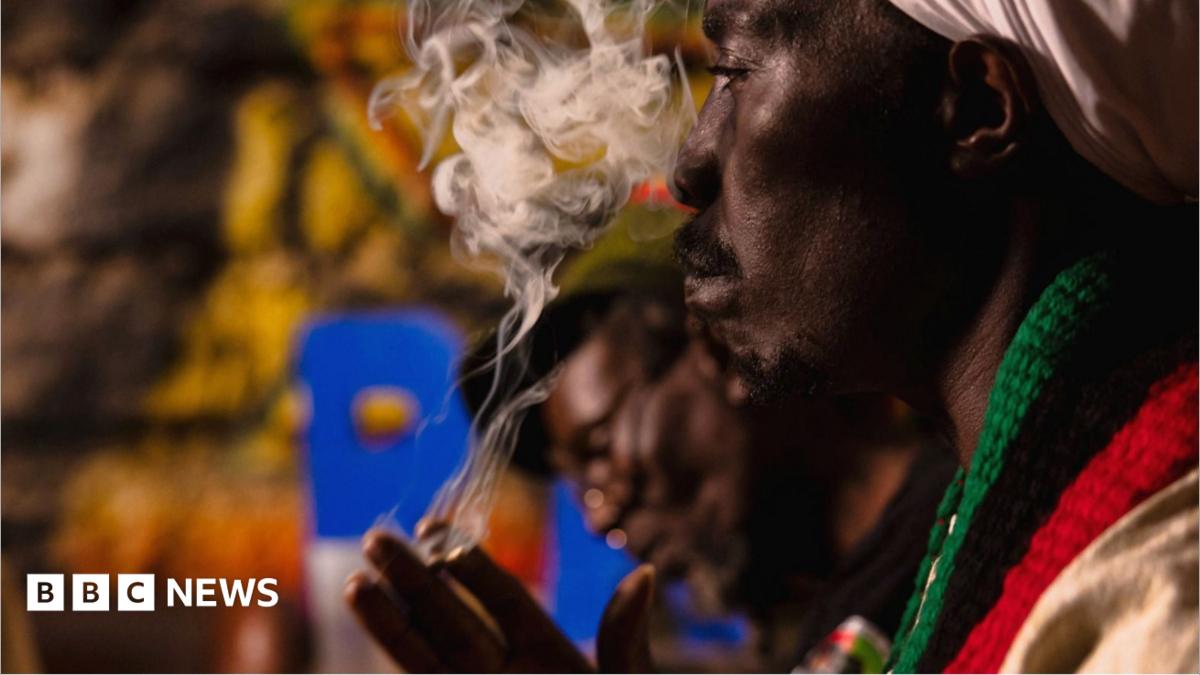
Kenyan court dismisses Rastafarians’ bid to legalise cannabis

Published

on

Artwork depicting an armour-suited character patrolling through a post-apocalyptic desert scene, with a German shepherd trotting alongside them. A dramatic sunset fills the landscape behind them, which is dotted with the ruins of buildings.

Kenya’s High Court has dismissed a bid by a Rastafarian group seeking to legalise the use of cannabis for religious purposes.

The Rastafarian community had argued that the ban on smoking cannabis infringed on their rights to freedom of religion and belief guaranteed under the constitution.

In a landmark judgement, Justice Bahati Mwamuye said the community had failed to prove drug laws violated their constitutional rights, but acknowledged the need for a broader national debate on cannabis.

There has been a continued push to legalise cannabis in Kenya, with advocates arguing that its regulated cultivation and trade could create jobs, boost tax revenue and support industrial and medicinal uses.

Advertisement

Under Kenya’s Narcotic Drugs and Psychotropic Substances (Control) Act, possession of cannabis remains a criminal offence.

A person convicted of possessing cannabis solely for personal use is liable to up to five years’ imprisonment or a fine of up to $800 (£600).

Cultivating cannabis carries a penalty of a fine of $1,900 or three times the market value of the plants, whichever is greater, and/or up to 20 years in jail.

More severe penalties apply to trafficking and other drug-related offences.

Advertisement

In their petition, the Rastafari Society of Kenya had argued that cannabis was a sacred sacrament in their faith and sought permission for followers to grow, possess and use it privately during worship without fear of arrest.

It maintained it was not asking for the wholesale legalisation of cannabis, but a limited exemption for religious purposes in private homes and designated places of worship.

In their submission, the Rastafarians argued that smoking cannabis was part of their religious doctrine which must be respected and upheld.

But the state opposed their plea, arguing that creating a religious exemption would undermine the enforcement of Kenya’s anti-drug laws and could create loopholes for illegal cannabis trafficking.

Advertisement

Justice Mwamuye also found that the evidence presented on the centrality of cannabis to the Rastafari faith was inconsistent and insufficient to establish that its use was an essential element of the religion.

He upheld the constitutionality of the drug laws prohibiting the cultivation, possession and use of cannabis, dealing a major blow to the Rastafarians’ six-year legal battle.

The judge noted that any exemption permitting the use of cannabis for religious purposes would require a sound constitutional and legal foundation.

“We ought to have frank conversations on cannabis and which directions we should take,” Justice Mwamuye said.

Advertisement

“This is not a question for the Rastafarian community only. It is a national question that cuts across the entire spectrum of our society,” he added.

The judgment comes seven years after another High Court ruling recognised Rastafarianism as a protected religion in Kenya, finding that a school’s decision to expel a student over her dreadlocks violated her constitutional rights.

Source link

Advertisement
Continue Reading

Trending

Copyright © 2025