

Politics
Meta used AI to lay off disabled workers


Tech giant and genocide enabler Meta is accused of using AI software to target disabled people for layoffs in a new court case.
In May, Meta announced they would be sacking around 8,000 people. But a new lawsuit claims the company used a combination of AI tools which gathered data on employees’ performance. These include productivity and activity monitoring. Crucially, the scores of those who took more medical leave were reduced because they were at work less.
Meta uses AI to target disabled employees
Twenty-six employees filed the complaint anonymously on Monday, 13 July, in Oakland, California. The complaint explained:
Those tools draw on inputs… that, by design, cannot be accumulated by an employee who is on protected medical or family leave, or whose output is reduced by a disability.
Whilst Meta could’ve excluded those who took more leave on medical grounds from this, they chose not to:
Meta did not neutralize those inputs for protected leave; did not exclude protected-leave-takers or accommodation-seekers from the selection cohort; and did not pause the system for the individualized, leave- and accommodation-neutral review that the law requires.
This means that not only did Meta fail to protect those on protected leave from an AI that doesn’t understand, but they used that system to disproportionately target disabled people.
As the complaint explains:
The result was that employees who took protected leaves were disproportionately selected for layoff, based on scoring that not only failed to account for their protected leaves, but in effect penalized the employees for exercising their legal rights to these leaves.
The plaintiffs are understandably accusing Meta of violating federal and state laws that ban discrimination or retaliation against workers who have disabilities, take medical leave, or are pregnant. They also say Meta’s AI systems weren’t tested for bias, which would be in violation of recently adopted California and New York City laws.
Employees spied on
The lawsuit explains that Meta quietly launched the monitoring program, and naturally, employees had no option to consent:
The program was announced through a low-visibility internal post—made by an engineer rather than a senior leader, in a secondary group rather than Meta’s official employee-notice channel—with little notice and no consent or click-through acknowledgment; on at least some teams, employees received no consent or acknowledgment prompt at all, and, at least initially, there was no way to opt out.
As the Guardian reports, the twenty-six plaintiffs include a scientist who was on pregnancy leave and then parental leave. She found out she’d lost her job two days before she gave birth. Others include a manager who was let go 16 days into medical leave and an engineer who was given a lower score because of time off due to a work-related injury.
The complaint states:
Meta did not assemble the termination list through the considered judgment of managers who knew the work. Instead, Meta used a constellation of internal artificial-intelligence systems …. to score, rank, and select employees for inclusion on the list.
The thousands of layoffs are supposed to start happening on 22 July, but the plaintiffs are seeking a preliminary ruling from the court, which would block Meta from sacking them all while the case is active. They are also applying for relief that could include back pay and reinstatement of their jobs.
Featured image via the Canary


Spain are into the World Cup final after a controlled, clinical 2-0 win over France in Dallas.
The semi-final was billed as a meeting of the tournament’s two standout sides, but one which never caught fire for Didier Deschamps’ team. Goals in each half from Mikel Oyarzabal and Pedro Porro settled it, sending the European champions through to Sunday’s showpiece against either England or Argentina.
France arrived with the joint-top scorer Kylian Mbappé and the World Cup’s top assist-maker Michael Olise, but neither could influence a game Spain managed from the opening whistle.
Luis de la Fuente’s side, unbeaten in 37 matches across all competitions, were simply sharper, cleaner and more cohesive. France, by contrast, produced one of their poorest displays of the tournament at the worst possible moment.
Spain took control
The semi-final had been hyped as a heavyweight clash, but Spain settled quicker and imposed their rhythm. Their first breakthrough came at 22 minutes. Lucas Digne, attempting to clear inside his own box, caught Lamine Yamal. The contact was clear, the penalty awarded, and Oyarzabal stepped up to slam his finish past Mike Maignan.
It was a moment that underlined Spain’s composure. Even with France’s frontline on the pitch, Mbappé, Ousmane Dembele, Olise could not trouble Spain. Their midfield combinations were crisp, their press well-timed, and their wide players constantly stretching the game.
France’s response was minimal. William Saliba’s injury on the half-hour, forcing Maxence Lacroix into action, added to their problems.
Spain continued to create the cleaner chances. A slick move on 38 minutes saw Dani Olmo backheel into Yamal, whose cross found Fabian Ruiz. His effort was blocked just wide – another warning for France.
Porro doubles the lead
Spain’s second goal arrived at 58 minutes and reflected the fluency they carried throughout. Porro exchanged passes with Olmo, broke into space, and finished low for 2-0. It was a simple, well-executed move, and it effectively ended the contest.
Three minutes later, Yamal thought he had added a third, bursting through and finishing, but he was narrowly offside. It didn’t matter. Spain were in complete control, and France had still not registered a shot on target.
Olise, who came into the match with five assists in the tournament, was substituted at 72 minutes. His output summed up France’s night. Just two chances created, no completed dribbles, and little influence.
Ferran Torres then headed wide for Spain as they hunted a third, while Unai Simon’s misjudged header gifted Désiré Doué a chance, but the France substitute shot straight at the scrambling keeper.
France’s first meaningful efforts on target didn’t arrive until stoppage time. By then, Spain were already cruising into the final.
Biggest test ends in defeat
Across this World Cup, France had looked complete. Their four-man frontline had been slick and decisive. Their defence had been solid, with clean sheets in all three knockout games before this one. Their depth was the envy of most nations.
Yet in Dallas, they were a shadow of that side. The first half was blunt, lacking tempo and invention.
Usually, France finds a second-half surge, but it never came. The air-conditioned stadium offered no lift, and Spain’s organisation denied them any rhythm.
The performance left France fans dejected. Bastille Day celebrations back home will have felt flat as supporters watched a team unable to produce their usual intensity. Spain were excellent, but this semi-final was defined just as much by France’s failure to fire.
France falls short
Didier Deschamps admitted his side were below their usual level. He pointed to technical errors, misplaced passes, and a lack of danger in attack. For a squad with such talent, it was a disappointing end and a subdued conclusion to his 14-year tenure.
France now head to Saturday’s third-place play-off, a fixture that will feel like a comedown after their ambitions of lifting the trophy.
Spain’s run continues
Spain’s consistency is remarkable. They beat France in the semi-finals of Euro 2024, and again in the Nations League semi-finals in 2025. This win makes it three straight knockout victories over Les Bleus. More importantly, it extends their unbeaten run to 37 matches – a joint-record for a European nation.
Huge praise must be given to Luis de la Fuente and his players, for their commitment, solidarity, talent, and how they make difficult tasks look simple.
This Spain side began this cycle with a clear idea and have stuck to it. The result is a team primed to repeat the Euros–World Cup double they achieved in 2010.
They will take some stopping in New York.
Key moments
- 22 mins – goal: Oyarzabal converts from the spot after Digne kicks Yamal.
- 30 mins – injury: Saliba forced off; Lacroix replaces him.
- 38 mins – close: Olmo’s backheel releases Yamal; Ruiz’s shot blocked wide.
- 58 mins – goal: Porro finishes after linking with Olmo.
- 61 mins – no goal: Yamal scores but is offside.
- 72 mins – sub: Olise withdrawn after ineffective display.
- 79 mins – miss: Torres heads wide.
- 81 mins – error: Simon’s poor header gives Doue a chance; he shoots at the keeper.
Spain sharper, France subdued
Spain’s control was total. Their midfield dictated, their wide players stretched France, and their defensive structure kept Mbappé quiet. Dembélé, Olise and the rest of France’s attack were blunted, unable to find space or combine with any fluency.
France’s technical errors were costly. Passes went astray, transitions broke down, and their usual second-half lift never materialised. Spain didn’t need to be spectacular either; they simply needed to maintain their level. They did exactly that.
What’s next
Spain move on to Sunday’s final, where they will face either England or Argentina. Both opponents present different challenges, but Spain’s form, cohesion and unbeaten run make them formidable.
France, meanwhile, must regroup for the third-place play-off. It is not the stage they expected to be on, and the performance in Dallas will linger.
Featured image via NBC News
By Faz Ali

Maine Democrats want to hold onto Graham Platner’s progressive base — but they can’t agree on who is best positioned to carry the torch.
That indecision is creating a fractured field heading into an unpredictable late July nominating convention for one of the most important Senate races on the 2026 map. Now, various candidates are rushing to prove they are the most aligned with Platner’s policies, without tying themselves too closely to the disgraced oysterman.
Labor organizations and the national progressive organizing group Our Revolution are backing former Maine Senate President Troy Jackson, who campaigned with Platner during the primary and got the endorsement of Sen. Bernie Sanders (I-Vt.) for his unsuccessful gubernatorial campaign earlier this year. Rep. Ro Khanna (D-Calif.), a former Platner surrogate, is also behind Jackson, as are dozens of current and former state lawmakers.
But some state legislators and local activists who had backed Platner are flocking to Maine Secretary of State Shenna Bellows, who similarly ran as a progressive in the gubernatorial primary. And former public health official Nirav Shah is touting more progressive policy positions than he did when he ran for governor in an attempt to break off some Platner supporters. Behind the scenes, he is also working to recruit former organizers from Platner’s campaign, according to two people familiar with the strategy and granted anonymity to discuss it.
The trio of former gubernatorial candidates are the leading figures in a crowded field aiming to win over a yet-to-be-selected group of 600 Democratic delegates. Part of that task is convincing Platner’s former supporters that they will carry on the progressive advocacy and fighting spirit that made his candidacy so popular — before he was forced to resign after POLITICO reported a woman said he had sexually assaulted her. Platner has denied the allegation.
Many of the candidates will make that pitch directly during a debate scheduled for Thursday night. And the stakes couldn’t be higher for national Democrats watching anxiously: Unseating Sen. Susan Collins (R-Maine) is an essential part of the party’s plan to take back control of the Senate this fall.
Platner convincingly won the Democratic Senate primary last month with nearly three quarters of the vote, and had a zealous base of support during the primary. But where his voters and core volunteers go next is unclear.
“People who were vocal supporters of Platner’s have moved to other candidates, and it doesn’t look to me like they moved in a block, that everyone agrees who’s the best next candidate from that movement,” said David Farmer, a Maine Democratic political strategist not involved with the Senate campaign. “And I think that in a truncated process like this, that’s to be expected.”
In just 11 days, Democrats will replace their nominee at a convention in Bangor. This weekend, they will select the delegates who will pick that candidate — a process playing out across all of the state’s 16 counties, with campaigns seeking to recruit and organize delegates who will vote in their favor.
Unions, who were a key Platner booster in his primary against Gov. Janet Mills, have largely gone to Jackson, a logger and longtime union member. The Maine AFL-CIO endorsed Jackson over the weekend, citing his support of workers’ issues in the Maine legislature, along with his track record of winning over rural and working-class voters.

Some of Platner’s biggest supporters in the state House are beginning to coalesce around Bellows, however. That includes state Rep. Valli Geiger, who had been floated by Platner as a potential replacement before she passed on a run. In a Facebook post, Geiger cited Bellows’ track record of standing up to President Donald Trump as secretary of state, along with the fact that she “did not declare as a candidate until after Graham Platner announced he was withdrawing from the race unlike the unseemly rush of so many ambitious men.”
Reached via text, Geiger declined to be interviewed about her support for Bellows.
State Rep. Gary Friedmann, who also previously endorsed Platner, said he is all-in for Bellows. While he agrees with Jackson’s stances and called his association with Sanders and Our Revolution “very compelling,” Friedmann hinted at something Democrats have voiced worry about behind the scenes: That Jackson struggles as a compelling public speaker.
“When it comes to standing up, if there’s a debate with Susan Collins, or the messaging that comes from both candidates, I think Shenna is extremely articulate and compelling,” Friedmann said.
He added: “I think that having a woman to voice that platform is gonna be very important.”
All of the candidates are still figuring out exactly how to capture Platner’s support without tying themselves too closely to him as an individual. A letter circulated by former Platner campaign volunteers that racked up hundreds of signatures as of Tuesday called for the candidate replacing him to adopt a string of progressive commitments on issues including health care, housing and ending “forever wars.” Both Jackson and Bellows signed onto the letter.
During a virtual rally hosted by Our Revolution on Monday, Jackson took time to “acknowledge what everyone on this call has been through” while asking Platner’s supporters to rally behind him, though he never mentioned the oysterman by name.
“I know that there’s real pain, anger, disappointment, and I’m not going to try and to minimize that,” Jackson said. “But look, this movement has always been bigger than one person. It’s about taking on a system rigged against working people.”
Joseph Geevarghese, who runs Our Revolution, called on the movement Platner emboldened to get involved in the delegate process outlined by the Maine Democratic Party.
“This is the perfect opportunity for us to show the establishment that we can organize and win within the system that they created, the Democratic Party process,” he said on the call.
A person close to Bellows, granted anonymity to discuss internal strategy, also acknowledged this dilemma for candidates, calling it “a really delicate dance to walk.”
“It’s not like she’s trying to be Graham Platner or be someone she’s not,” the person said. “She is able to be herself, and I think she, ideologically, is a great bridge for people who were very disheartened by what happened with Platner, but still extremely pissed off about Susan Collins and the Senate majority, and what’s happening in Washington, D.C.”

While Shah’s campaign is recruiting former Platner supporters behind the scenes, the former public health official is also making the pitch explicit in public comments.
“I want all former Platner supporters to know: you have a place in this campaign,” Shah wrote on social media shortly after he launched his candidacy last week.
Maine politics was rocked on Monday by ICE agents’ shooting of a 26-year-old man in Biddeford, with potential Senate candidates rallying around getting the federal agency out of Maine. For many Democrats, it was also a reminder of the importance of supporting the party’s eventual nominee, regardless of who it is.
Democratic State Rep. Morgan Rielly, a former supporter of Platner’s, said he told Jackson that he would support him in the primary. But more important, he said, was the goal of defeating Collins this fall.
“[The Democratic nominee] will have my full support and I will be working hard to get them elected,” Rielly said in a text message. “It’s absolutely crucial we are united and Senator Collins loses on election day.”
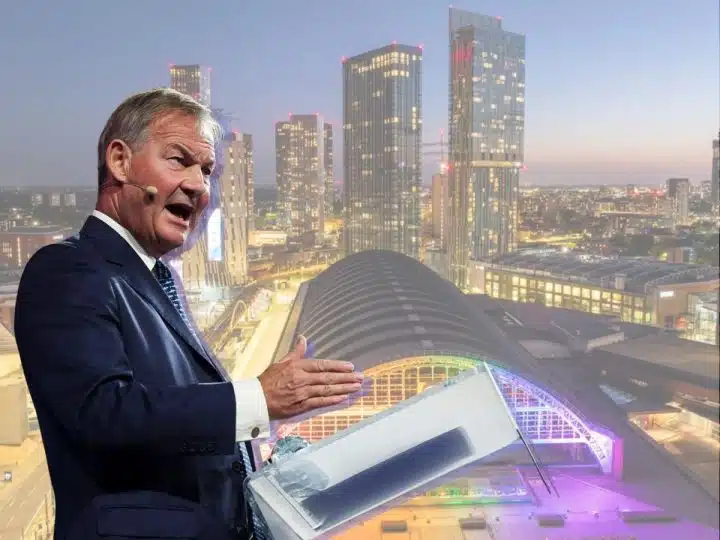
Rupert Lowe has branded Manchester city centre and diverse cities across the UK, “third world shithole[s]”.
While this sort of talk is common from Restore, you’d think the party would have the sense to tone it down a bit while running for the Greater Manchester mayor position.
Go and look at that video of Restore Britain’s Greater Manchester mayoral candidate, Marlon West, walking around Piccadilly Gardens late at night. It’s just disgusting, honestly. What a vile place.
Let’s call it what it is. A shithole.
A third world shithole.
And it’s not…
— Rupert Lowe MP (@RupertLowe10) July 14, 2026
Rupert Lowe: Who is he?
If you’re unfamiliar with Lowe, he’s the leader of Restore Britain. This breakaway party exists because Reform wasn’t far right enough and it’s had some success in taking voters away from Nigel Farage.
Lowe recently attracted controversy for lying about the victims of the Dunblane massacre, seemingly to curry favour with the Yanks.
16 children and a teacher died in Dunblane. But daddy's gun being taken away is more serious. Fuck rupert lowe https://t.co/WboflCqtHX
— BatesyBhoy

 (@BatesyBhoy1967) July 9, 2026
As the commenter alluded to, Lowe’s dad had his gun taken away, which must have been harrowing for him. Lowe still has some firearms, though, including the shotgun he had his groundskeeper execute his pet dog with.
Lowe didn’t just attack Manchester; he also said:
And it’s not just in the middle of Manchester.
It’s everywhere, absolutely everywhere.
London, Birmingham, Glasgow. Even places like Norwich, Exeter, Cardiff, Nottingham, Rochdale, Bristol, Reading, Newcastle. It is everywhere.
It’s become a common refrain for far-right politicians to say “Britain is broken”. We don’t disagree with this statement; we just differ on what the cause is.
In our opinion, Britain is in a sorry state of affairs because 40 years of neoliberalism stripped everything to the bone. This is the political ideology of flogging everything that isn’t nailed down and then renting it back from the greedy, no-good c*nts who fund Reform UK, the Tories, and yes, even Labour.
If you leave everything to the whims of the market, towns and cities will deteriorate because there’s no profit in maintaining them. When you’ve got worn down towns filled with worn down people, of course, the vibes won’t be uniformly pleasant.
Lowe then added, with casual xenophobia:
Nowhere is safe from the third worldification of Britain – absolutely nowhere.
It’s the same feel, the same scene. Young foreign men just loitering around. Deliveroo bikes skimming about, it stinks of weed, foreign languages fill the air.
Gig work
On top of neoliberalism, we’ve had the slow death of organised labour. With that comes the gig economy and the Deliveroo bikes Lowe complained about.
In Lowe’s mind, these foreign men brought the poverty, destitution and Deliveroo bikes with them. He thinks this because it’s politically beneficial for him to do so.
The reality is the private sector hollowed Britain out, and the people Lowe complains about are plugging the gaps. If we deported every gig economy worker who wasn’t born in the UK, Britain wouldn’t become a workers’ utopia; the poorest white people would just take their place.
Now, we’re not saying we need to encourage migration for the sake of Deliver-f*cking-roo. We think all work should be well paid and rewarding. What we are saying is Lowe and others like him are selling their voters a fairytale and they’re doing it for the benefit of the people who profit from Britain breaking.
Lowest of the Lowe
Lowe ended his hate screed as follows:
A Restore Britain Government will deport millions. We will make Britain safe again.
We will not allow our country to remain a third world shithole.
That I promise you.
Migration increased under the Tories despite the constant fear mongering against migrants. This happened because it was beneficial for everyone at the top. The migrants plugged employment gaps and protected the pension pot against our ageing population while also serving as a political target for constant scapegoating.
This situation couldn’t last, of course, because eventually voters started to ask: ‘If they’re so bad, why are the Tories letting them in?‘ This is why we now have politicians like Nigel Farage and Rupert Lowe.
Potentially, these men will pull the same trick as the Tories if they take power. Regardless, if we continue down this path, we will eventually end up with someone who’s deadly serious about following through on this violent ideology. And it never ends with deportations.
Featured image via the Canary
By Willem Moore


German police have violently arrested Greta Thunberg and more than 30 other activists for blocking the road to a German arms factory.
The Rheinmetall works produces ammunition for Israel’s military. Thunberg was also arrested in the UK for protesting against the Starmer regime’s proscription of anti-genocide group, Palestine Action.
The German state and police have been among the most brutal collaborators in Israel’s genocide in Gaza. Peaceful anti-genocide activists have been beaten, imprisoned and in some cases subjected to ‘civil death’, depriving them of employment, banking and official existence.
The Peacefully Against Genocide group is holding a series of demonstrations in Berlin in early July against “Germany’s complicity” in Israel’s genocide. The group will call for Rheinmetall to stop all deliveries to Israel and close the Berlin factory.
Greta Thunberg unbowed
In October 2025, Thunberg was among a group of humanitarian flotilla volunteers beaten and abused by Israeli guards. Clearly she is unbowed and unafraid of the genocide-enabling state thugs.
Featured image via the Canary
By Skwawkbox
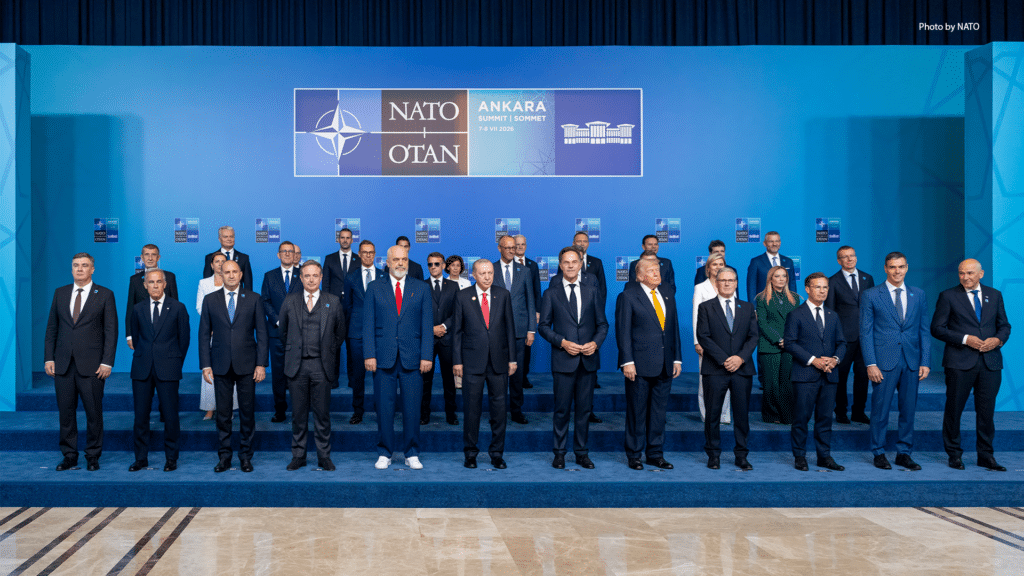
Mark Webber reflects on the key outcomes of last week’s NATO summit in Ankara.
Task proliferation is not a criticism one can any longer level at NATO. The alliance has spent the last two years stripping itself of responsibilities and political missions it once regarded as essential. The issues of climate change or Women, Peace and Security (WPS) still have their adherents within the NATO bureaucracy, but neither figured in the business of last week’s Ankara summit (or, indeed, at last year’s Hague summit). A shared interest among allies in out-of-area missions, meanwhile, evaporated with the frantic withdrawal from Afghanistan in the summer of 2021. NATO’s training mission in Iraq decamped from Baghdad to Naples in March. KFOR still helps keep the peace in Kosovo –but rumours abound that its American contingent will soon be pulled and the mission transferred to EU oversight (much like EUFOR in Bosnia). Even China, a NATO agenda item introduced by the first Trump administration and sustained under Joe Biden, is currently missing in action. It is absent from (the admittedly short) Ankara summit declaration and was mentioned only fleetingly by Secretary General Mark Rutte in his many summit remarks. A concern with ‘the persistent threat of terrorism’ remains, but only out of deference to Turkey, the summit host.
As the summit declaration makes clear, NATO is concentrating on the basics of collective defence – ‘counter[ing] the long-term threat [of] Russia’ and, by extension, offering ‘unwavering support for Ukraine.’ By demonstrating the Europeans (and Canada) can discharge those two tasks, NATO fulfils a third – keeping a sceptical United States constructively engaged in a complex process of NATO ‘Europeanisation.’ The leitmotif here is ‘a stronger Europe in a stronger NATO’ – a process whereby European allies assume more responsibility in the traditionally US-dominated NATO command structure while also shouldering a greater material burden of common defence.
Getting this right is a matter, first, of political art. At Ankara, President Donald Trump was mollified and indulged in equal measure. Allied leaders and the Secretary General took on the chin Trump’s opening press conference salvoes – that the NATO allies had not backed the United States over the war with Iran, that they were still deficient on defence spending and that Greenland should come under American control. On these matters, there was little public pushback, hence little argument. Trump, in the words of John Bew, was held in check by a ‘controlled explosion.’ Further, the American president was the subject of a collective encomium performed by allied prime ministers and presidents. Trump departed Ankara praising the love and unity he had witnessed.
As for the practicalities, here the hard work was carried out well before the summit. America’s preferred model of European security – a ‘NATO 3.0’ in which America’s ‘allies […] step up and assume primary responsibility for the conventional defence of Europe’ – had been flagged by Under Secretary of War for Policy, Elbridge Colby in February. This ‘rightsizing’ of America’s commitment was, on paper at least, completed in short order. NATO’s Supreme Allied Commander Europe (SACEUR), General Alexis Grynkewich, declared in early July that the ‘European allies [had] largely filled the gaps left by U.S. reductions to the NATO Force Model.’
This process of substitution still has a long way to run. The gaps filled, currently sit in a force-generation spreadsheet – and some of these commitments represent pledges of future effort not an ability to deliver in the present. Even with ramped up defence spending, industry on both sides of the Atlantic is struggling to keep up with demand. The summit’s Defence Industry Forum – a carefully-staged PR event of announcements and contract-signings – provided, nonetheless, evidence of the scale of ambition. The development of deep-strike capabilities, integrated air and missile defences, air-to-air refuelling, satellite and aerial surveillance, and the safeguarding of critical materials are all intended, in the words of the summit’s Strategy for Industry-NATO Cooperation, ‘to ensure that the capabilities required for NATOʼs deterrence and defence can be effectively generated, scaled and sustained.’
The timelines for these projects run years into the future. Delivery depends on maintaining high defence budgets (still a test for fiscally challenged governments in France, Italy and the UK). And integrating these new capabilities within NATO’s force and command structures and defence planning process – already complex enough – will have to be done in accordance with an unprecedented premise: the replacement of ‘the US “backbone’” in European deterrence.’
Out of necessity, NATO is gravitating toward a ‘high minimum’ – garnering the forces necessary to achieve its most basic of tasks and ignoring those which are secondary. For all its seeming simplicity, this will entail something other than moving NATO back, in Colby’s imagining, to version 1.0 of the Cold War. That NATO was sustained by persistent American leadership (now in doubt), British fortitude and reliability (also in doubt) and German quiescence (a thing of the past). The NATO of the near future will accommodate Germany as the coming European power, partner with Ukraine as Europe’s most formidable fighting force and defence innovator, and cooperate with the European Union as an agent of defence procurement and defence industry integration.
Following the Cold War, it was often argued that NATO required new tasks and new responsibilities to keep it relevant. That argument is rarely heard today. NATO has been forced back to basics by Russian belligerence and fear of American abandonment. That course is now set for the foreseeable future. It seems unlikely there will be a NATO summit in 2027. With no new political deliverables, one may not be needed.
By Mark Webber, Professor of International Politics, University of Birmingham.
Politics
The House | Improving outcomes for white working class children should not be a partisan cause


(David Crausby / Alamy)

4 min read
When the Inquiry into White Working Class Educational Outcomes started its work, few challenged the need to address the issue. Those working in education knew what the data told us, but years of effort and a myriad of initiatives had failed to solve the problem.
What marks out this research is that, alongside analysing the data, we listened to children and young people describe their experience of growing up in today’s education system. We heard parents talk about the hopes they have for their children, and listened to teachers, school leaders, employers and community organisations trying to make a difference in exceptionally challenging circumstances.
For much of the past three decades, education policy has rightly focused on narrowing gaps in attainment and expanding opportunity. We should recognise how much progress has been made. Outcomes have improved for many groups of children. More young people now leave education with opportunities that simply did not exist a generation ago.
But one uncomfortable truth remains. White working class children continue to experience some of the weakest educational outcomes in England. This isn’t a new problem, nor one that has been ignored. Schools, governments and charities have all tried to improve outcomes for disadvantaged children. Yet despite these efforts, progress for this particular group has remained frustratingly limited.
The temptation is to search for a single explanation. Some argue aspirations are too low, others point to poverty, while others blame schools or families. Our Inquiry suggests the reality is considerably more complicated. We found parents who cared deeply about their children’s education and wanted them to succeed. We found teachers working tirelessly on behalf of their pupils. We found children who wanted successful futures.
What we also found, though, was a growing disconnect between many white working class communities and the education system. Again and again, we heard families questioning whether education still offered the certainty of opportunity it once had. Many parents spoke about struggling to see how success at school connected to the lives their children were likely to lead. Many young people told us they found it difficult to understand why what they were learning mattered to their future.
This should concern us all. Not because any one political party or government is responsible, but because confidence in education is essential if families are to believe it can still improve their children’s lives.
That is why I hope our report is read as an invitation to think differently. This isn’t about ranking disadvantage or suggesting one group matters more than another. Poverty remains the greatest predictor of poor educational outcomes across every ethnic group. But good policymaking means paying attention to where disadvantage persists, understanding why, and responding accordingly.
Neither is this simply about exam results. Throughout the Inquiry we heard about belonging, confidence, relationships, transitions, careers guidance, local opportunity and helping young people see a future worth striving for. Educational success is about much more than qualifications alone.
Nor is this a criticism of schools. One of the most hopeful aspects of our work was visiting schools and colleges already achieving strong outcomes for white working class pupils. Their success reminds us that poor outcomes are not inevitable.
The recommendations we have published deliberately form a long-term agenda rather than a short-term programme. Some could be implemented relatively quickly, while others will require investment, structural reform and sustained commitment over many years. That is inevitable. Problems that have developed over generations cannot be solved overnight.
But if there is one lesson I hope politicians of every party take from this Inquiry, it is that improving outcomes for white working class children should not be a partisan cause. It should be a national one. Every child deserves to believe that education is for them, that their efforts matter, and that success is achievable regardless of where they grow up. That is an ambition surely worth uniting around.
Baroness Morris is a Labour peer and co-chair of the Independent Inquiry into White Working Class Educational Outcomes
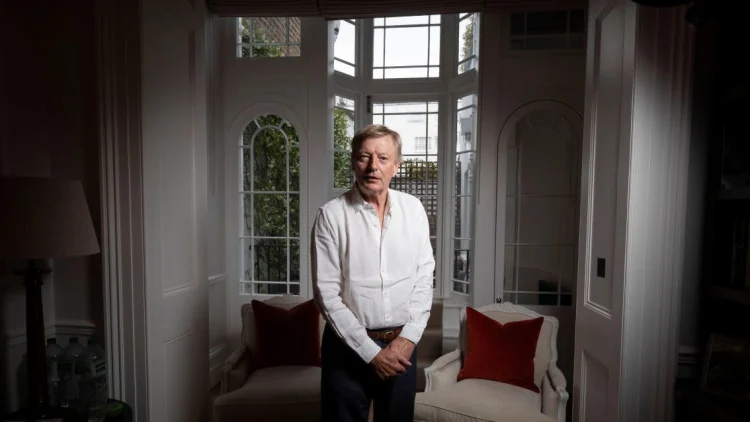

10 min read
Conservative peer Lord Nash speaks to Matilda Martin about his successful bid to persuade the government to ban social media for children, plus why he thinks the Tories should not rule out an arrangement with Reform before the next general election
Every night at 7pm on the dot, Lord Nash follows his own self-imposed technology ban. The Conservative peer switches off his phone, puts it in a different room “and that’s it”.
Some may see this as an impressive display of self-control but the former education minister thinks it’s a no-brainer: “Well, it’s obvious, isn’t it? It’s just distracting. All the evidence is quite clear if you’re looking at the blue light late, you won’t sleep as well as you would. The best thing you can do in an evening is go out with some friends, have a few drinks.”
“I don’t advertise that,” he adds, quickly offering alternative pastimes for youngsters now denied TikTok, “or read a book, watch some telly, wind down rather than get hyped up looking at the flashing screen.”
Nash not only limits his screen time; he does not have social media and does not use WhatsApp. The peer is credited by many for forcing the government’s hand on banning social media access for under-16s.
Outgoing Prime Minister Keir Starmer may claim the ban as part of his legacy but the 77-year-old Tory was pivotal in forcing the change. It was his cross-party amendment to the Children’s Wellbeing and Schools Bill in January that showed the depth of parliamentary support for a ban. In the face of growing support from Labour MPs, Starmer – initially resistant – announced a consultation, before later fully backing the measure.
Its genesis might be a textbook example of an effective Lords, but the peer presents his success as the culmination of a collaborative effort just at the moment the time had finally come for the cause.
“One of the big triggers was my amendment, yes, but one of them,” he stresses, “and I’ve arrived on this scene later than a lot of other people that had been working away at this for many years. But it came together.”
He adds: “As one of my hereditary colleagues said, ‘John, you seem to have caught the wind’, and it went from there.”
But Nash thinks the tide was already moving in that direction. After co-founding the charity Future with his wife Caroline Nash, in 2008 it was appointed by the Labour government to sponsor Future Academies, a multi-academy trust with 11 schools across London and Hertfordshire.
Like many in Parliament, Nash engaged with Jonathan Haidt’s work on the subject, first attending a talk by the social psychologist. “I bought his book, and then I bought another thousand copies of his book, and gave them to all the staff in my multi-academy trust.”
Thanks to his involvement with schools, Nash says it was obvious to him just how distracting devices can be.
“They’re arriving at school tired, some of them not even turning up, and there’s been a lot of cyberbullying on social media.”
The government’s proposals for a social media ban include restrictions on specific platforms for under-16s, including Snapchat, TikTok, YouTube, Instagram, Facebook and X, but also restrictions on gaming services, live-streaming platforms and stranger communication.
Nash is also confident that likely PM-in-waiting Andy Burnham – one of the first prominent Labour politicians to voice support for a ban – will take this seriously.
Is there anywhere Nash would like to see Burnham go further? The peer is keen that the government ensures any approach is a “level-playing field”, so that tech companies “don’t try and run rings around Ofcom”. Ultimately, Nash would like to see a curfew on the ability of older teenagers to ‘infinite scroll’ at night.
Does the peer see tech companies attempting to ‘run rings’ around government? He thinks these giants can see the direction of travel, pointing to a new Ofcom chair who has indicated a bolder approach, and the hypothetical possibility of advertisers pulling out of the platforms.
What about government’s presence on these platforms? Would he like to see departments taking a stronger line on this?
“People generally, and politicians, spend far too much time in the immediate world of being on Twitter or X. Politics has become too immediate and too playing to the audience, minute by minute, and getting ahead of the story.”
Nash believes this reality has been exacerbated by social media. But does he think politics can function without it?
“Well, there’s politics, and there’s running the country,” Nash observes, “and they’re two totally different things.”
“You can’t run the country if you’re spending your time ‘Twittering’,” he adds.
While Nash’s social media campaign is a good example of the role of the Lords in policymaking, Burnham has radical reform of the Chamber in his sights. The former Manchester mayor told PoliticsHome last month that he would support early change to the House of Lords, including downsizing it.
“Maybe it could be smaller,” Nash says, before reminiscing on the views of his younger self. “I wrote my university entrance paper on reform of the House of Lords, more than 50 years ago.”
He cannot remember his exact argument but thinks it was along the lines of: “It’s absolutely scandalous we have an appointed second Chamber and we should have an elected second Chamber.”
But now Nash thinks that would be a “big mistake”.
“I took five Acts of Parliament through the Lords as a minister, and I saw at close range how forensically they analyse legislation line by line to check that it will actually work, which the Commons don’t do anymore, because they’re all busy sort of Twittering, and it works. It really does.”
Nash also has thoughts on Burnham’s recently announced No 10 North.
The peer believes “bringing more industry and jobs to the regions” is long overdue, but argues that the model of government needs to be redesigned “very fundamentally”. Ultimately, he feels a No 10 North cannot merely be moving civil servants up North or hiring a load of new civil servants in the region.
Whatever proposals Burnham brings to the table, he will be inheriting a Labour government that is floundering in the polls less than three years out from a general election and just two years after winning a massive majority.
“If we get a situation where the Tories and Reform have a majority between them, then we’d be daft not to work together”
The last two years have not been kind to the Conservatives either. The party faced an angry electorate in July 2024, and has struggled to regain popularity since.
However, a renewed optimism in recent months – despite a bruising at the local elections in May – has spoken of a Tory revival.
Nash is one of those more optimistic individuals: “There is a revival happening and Kemi is doing a great job. She’s thoughtful, she has a guiding star, clearly she’s principled, and that’s very important in politics.”
He adds: “You’ve had far too many prime ministers who want to be prime minister because they want to be prime minister, not because they have a great policy agenda they want to deliver for the country.”
The House asks if there is anyone in particular Nash has in mind with that latter statement. “Quite a few,” the peer laughs, “but I won’t name any.”
While Badenoch initially had a tough gig, Nash says, she has managed to “completely change the party and she’s taken time to develop policies thoroughly”.
The peer also has his own ideas about how the running of the state can be transformed. Earlier this year, he announced the Centre for Government Reform alongside Lord Agnew. The organisation will aim to recruit experience from outside politics and prepare them “to reform and run the British state properly”.
Nash describes the work Reform UK has done in reforming the machinery of the state as “good stuff”, noting this is something the Tories are also working on. Does Nash think the Tories are becoming more confident as Reform fails to build on the momentum it enjoyed last year?
“I think so,” Nash begins, before adding: “I mean, I like Farage, and I like a lot of what he’s achieved.” He claims that Tory and Reform policies are “pretty similar”, differing only on a few aspects.
“But whoever’s going to run the country in three years’ time has got to have a good, in my view, bench of people from outside the Whitehall bubble, to help them deliver the change.”
Nash did not take the traditional route to becoming a minister. He has never been an MP and was brought into his ministerial role in 2013 through the House of Lords. He started his working life as a barrister before moving into finance and co-founding a private equity firm.
As schools minister, Nash says he dealt with a lot of MPs, but he was surprised by their experience, or as he sees it, lack thereof.
It is something he also experienced first-hand: “When I became a minister, you’re just chucked in the deep end. It’s like first day at school – sink or swim, see how he does – which is terribly amateur.” He adds that the Centre for Government Reform would be willing to work with any party that wants help.
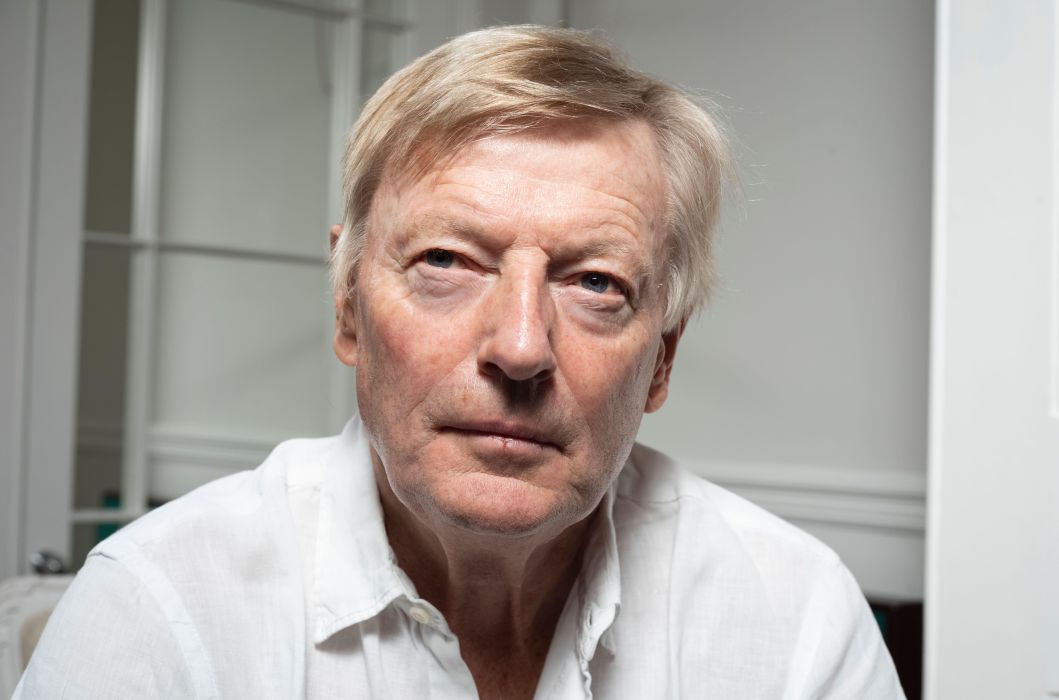
Nash is clearly not averse to Reform UK. Was he ever tempted to defect?
“N-,” he pauses. “Umm, no. I mean, I’m not saying it would never happen, but at the moment I’m…”
He changes tack: “My politics are slightly sort of eclectic. On education, I’d say I was a bit of a socialist, actually, but I’m very happy to help Reform.
“I’m not on any dark agenda, as a sort of Tory Trojan horse. I like a lot of their policies, and I like the fact that they are clearly prepared to be very radical, which is what we need, and I believe the Tories are too, so – as I did with social media – I’m happy to work with all parties to get stuff done.
“I’m not really a politician. I’m a businessman who got asked, because I was involved in academies, to be a schools minister.”
That’s not a firm ‘no’ to ever joining Reform then. What does Nash think about the idea of a Tory-Reform coalition?
“I can understand why at this stage, three years out, they’re going to say no. But when the dog sees the rabbit, let’s see,” he says.
“Certainly, if we get a situation where the Tories and Reform have a majority between them, then we’d be daft not to work together.
“If we have a situation where it becomes crashingly obvious from the voting a while out that some kind of arrangement a year out from the election or whatever… is going to make sure that we have a government, what people call right-wing, what I would call in many cases just common sense, then it’s definitely something that should be considered.”
Nash does not believe this is something that can be done “last minute” as that would see numerous prospective candidates being shafted.
“In certain circumstances, it would be daft to not come together if the alternative is to let in the opposition.”
Nash is speaking to The House the week after an unprecedented heatwave, and a week before another bout of hot weather, when conversations about maximum temperatures in workplaces – including schools – are bound to occur once again.
Does he think schools should have maximum temperatures? “Not really, no… We’ve become a little too risk-averse and protective. A bit of hardship is not a bad thing, and toughens people up a bit.”
Politics
Politics Home Article | Bring Back The Minister For London, Labour MPs In Capital Urge Burnham


6 min read
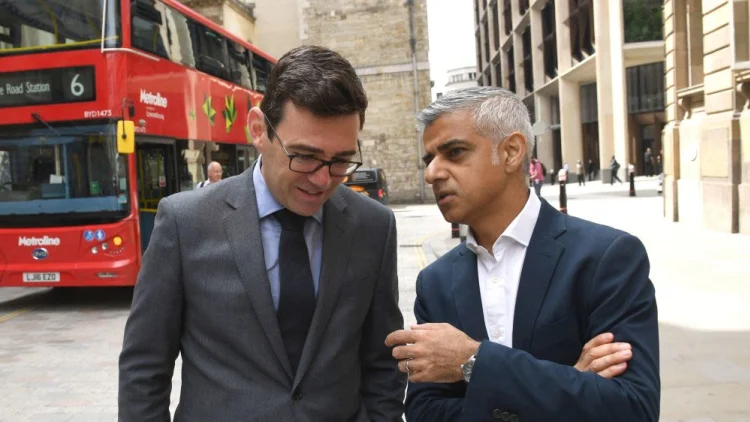
Labour MPs in the capital have called on incoming prime minister Andy Burnham to restore the role of minister for London.
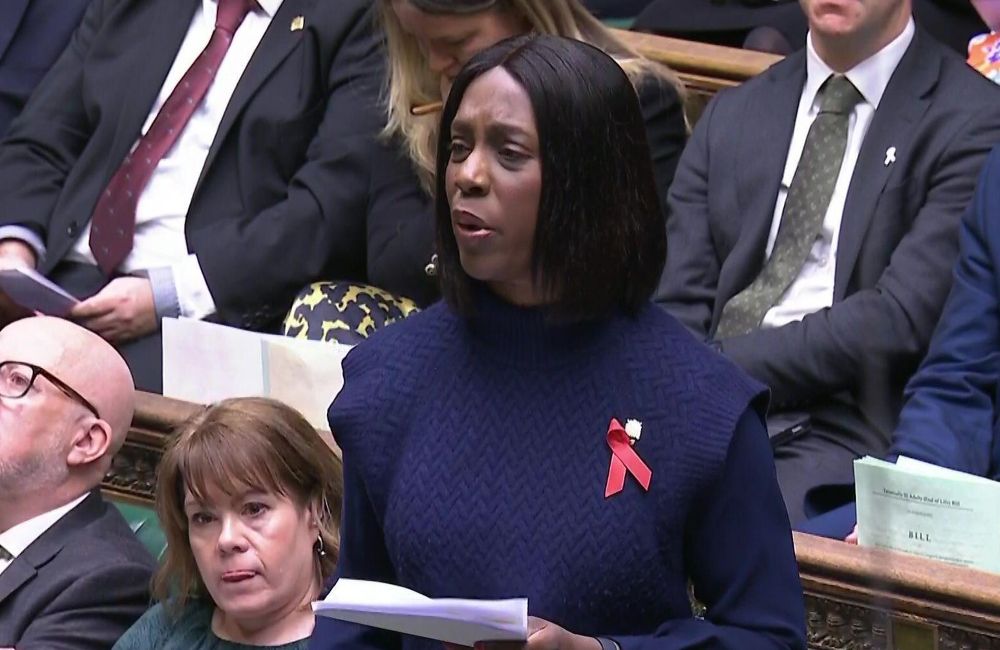
Florence Eshalomi, who was a London Assembly Member before entering the House of Commons, said doing so would help London “work with all the regions to support economic growth”.
Burnham will officially replace Keir Starmer in Downing Street next week after a large majority of Labour MPs nominated the former Greater Manchester mayor to take over. Starmer will answer his final PMQs today (Wednesday) before a formal handover on Monday.
Burnham, who will be the UK’s seventh prime minister in a decade, has pledged to accelerate the devolution of power away from Westminster and Whitehall, “putting it in the hands of the people and places who can use it best, and in so doing creating a new sense of agency, possibility and hope flowing around the country”.
Central to his “Manchesterism” agenda is expanding the Downing Street operation and locating part of it in Manchester. ‘No 10 in the North’ will be the “nerve centre of a rewired Britain”, Burnham, who was elected the MP for Makerfield last month, has said.
The Parliamentary Labour Party broadly supports Burnham’s mission to shift power away from London as it seeks to combat the electoral threats posed by Reform UK and the Greens.
However, there is unease among some Labour MPs that the heavy focus on Manchester risks overlooking other parts of the country facing serious economic and social challenges.
At the same time, Labour MPs in the capital have urged the incoming PM to ensure that a greater focus on the city where he served as mayor does not come at the expense of London and the South East. As well as being crucial to the national economy, the capital has poverty of its own that should not be ignored, they argue.
As part of that push, two Labour MPs in London have told PoliticsHome that Burnham should appoint a minister for London when he assembles his first cabinet.
The role was last held by former Conservative MP Greg Hands in 2024, with Starmer deciding not to carry it forward when he entered power two years ago. The role is traditionally used when the London mayor is of a different political party to the party in government. The former is currently Labour’s Sadiq Khan.
Margaret Mullane, Labour MP for Dagenham and Rainham, said: “London often gets overlooked as it’s the economic hub of the country. But in seats like Dagenham and Rainham there are high levels of deprivation, and there are many other areas in the capital like it.
“When we had a shadow London minister, there was a central voice in Parliament speaking for areas like mine. Bringing this position back can only be a benefit.”
Eshalomi, the Labour MP for Vauxhall and Camberwell Green, added: “Andy is committed to ensuring that London and the rest of the country successfully support the challenge of the new government.
“This will work if we revitalise the important role of the minister for London to work with all the regions to support economic growth.”
Hands, previously a Tory MP in London, was positive about the idea of bringing back the position, arguing that it can “help the communication” between the London mayor and the PM. However, he added: “It would have to be done in a way that Sadiq Khan and the PM thought was helpful; if either are opposed, then they will just ignore that role.”
TheCityUK, which represents the financial services sector, said the incoming Labour government’s wider devolution agenda must include “a lens” focused “on powering up London’s economic strength and reflecting its role in nationwide growth”.
“As the hub for the UK’s world-class international financial centre, London plays a central role in creating jobs, investment and tax revenue. It also connects businesses, talent and capital with regional and national hubs across the UK,” said CEO Miles Celic OBE.
Burnham described London as “the world’s greatest capital city” in a speech late last month.
On Monday night, a week before becoming prime minister, Burnham met virtually with Labour MPs to take questions about his plans for power.
According to those present, he sought to reassure Labour backbenchers that his devolution agenda would focus on all parts of the country and hinted at creating a minister for coastal communities.
The Labour Rural Research Group has this week published a report arguing that rural communities have an important role in delivering economic growth, and cautioned Burnham against urban bias in his devolution plans.
Labour MP for Rushcliffe and vice-chair of the group, James Naish, said: “Rural communities shouldn’t be seen as peripheral to national renewal; rather, they are places where growth can be generated, productivity unlocked and national priorities delivered.
“The next phase of Labour in government should, therefore, recognise rural economies not simply as areas requiring support, but as strategic assets capable of driving growth.”
Perran Moon, the Labour MP for the coastal seat of Camborne and Redruth in Cornwall, has issued one of the strongest public warnings to the incoming Burnham administration about the risk of overlooking parts of the country like his.
“We’re at a really delicate moment,” he told PoliticsHome.
“Either we can reignite the north-south debate, or we can have a more sophisticated, nuanced approach to the challenges faced in inner cities vs suburban vs rural vs remote coastal communities.”
He continued: “There are significant challenges and opportunities in each, but they are different. They require separate approaches and in some cases, separate devolution arrangements.
“The concern has to be that the incoming administration has not quite got its collective head around the fact that Labour isn’t an exclusively urban party anymore. In fact, Labour doesn’t get re-elected without our rural and coastal MPs.
“So we need to dial down the regional division and significantly dial up engagement with areas where there may be a preconceived stereotype of what life is really like for those communities.
A Labour MP in a different coastal constituency was more positive about ‘Manchesterism’. They suggested that some of their colleagues were taking the term too literally, telling PoliticsHome it is “just a word for a politics which recognises that growth has to be driven locally, with local and national government making the right interventions to enable it.
“That can apply in areas like mine every bit as much (if not more) as in Manchester.”



The growing gambling black market is a threat policymakers can’t afford to ignore, writes Gareth Snell, Labour and Co-operative MP for Stoke-on-Trent Central
In politics, there is often an assumption that if we see a problem, more regulation is the answer. Sometimes it is.
But good policymaking is not just about intentions. It is about consequences.
As Parliament continues to debate gambling reform, we should ask a simple question: are we making consumers safer, or are we creating conditions that make it easier for illegal operators to thrive?
That question matters even more during a major sporting event like the World Cup.
Millions of people are following the tournament and many will place a bet as part of enjoying the football. The overwhelming majority will do so safely and responsibly. The challenge for policymakers is ensuring they do so in a regulated market, with protections and safeguards in place, rather than drifting towards illegal operators who offer none.
As the MP for Stoke-on-Trent Central, I have spent more time than most thinking about these issues. The largest private employer in my constituency is bet365, which supports around 5,500 jobs. But I am not writing this to plead the industry’s case.
As it happens, I do not gamble much myself, other than perhaps a flutter on the Grand National because it is something I used to do with my grandad and remains a fond memory.
What concerns me is whether we are paying enough attention to the unintended consequences of regulation and taxation, particularly when it comes to the growing black market.
The regulated betting sector in Britain operates under some of the strictest standards in the world. Licensed operators are required to carry out age verification checks, anti-money laundering controls and safer gambling interventions. They contribute to the economy, support jobs and sport, and fund the new industry statutory levy, which is delivering over £100 million each year for research, prevention and treatment services.
Illegal operators do none of those things.
They do not carry out meaningful checks. They do not contribute to sport. They do not pay tax in Britain. Most importantly, they do not care whether a customer is vulnerable, underage or experiencing gambling harm.
Yet many consumers simply do not know the difference.
We all carry smartphones in our pockets. Within a few clicks, anyone can find themselves on an offshore gambling site. It may look legitimate. The odds may look attractive. But the protections that exist in the regulated market often disappear entirely.
That should concern all of us.
And the evidence suggests this is not a marginal problem. Independent analysis by global market intelligence firm WARC found unregulated operators now account for almost half of all gambling advertising spend in Britain. Separate forecasts from H2 Gambling Capital estimate that the amount staked with illegal operators could rise from £17 billion this year to more than £33 billion by 2028.
The direction of travel should worry policymakers. A growing black market means more consumers exposed to unregulated operators, less money flowing into British sport and public services, and fewer opportunities to intervene when people need support.
The challenge for policymakers is not whether gambling should be regulated. It absolutely should.
The real question is whether we are regulating in a way that keeps consumers in the safer, regulated market, or whether we are unintentionally pushing some towards the black market.
That is not a theoretical concern. The Office for Budget Responsibility has already warned about the potential for movement towards unregulated operators. We have seen similar challenges emerge overseas, including in the Netherlands. We should learn from those lessons rather than repeat them.
This is not just a challenge for DCMS. It should be a priority for the Treasury too.
Every pound staked with an illegal operator is a pound beyond UK consumer protections. It is a pound that contributes nothing to British sport and nothing to the public finances.
At a time when Ministers are rightly focused on economic growth, consumer protection and supporting public services, that should matter. The World Cup is a reminder of what is at stake.
The challenge for Government is not simply to regulate more. It is to regulate better.
That means continuing to improve protections, while ensuring consumers remain in the regulated market rather than being pushed towards illegal operators who operate beyond the reach of British law.
If well-intentioned policies end up driving more consumers towards the black market, everybody loses.
Consumers lose. Sport loses. The Treasury loses.
And the criminal operators win.
Gareth Snell is the Labour and Co-operative MP for Stoke-on-Trent Central.
Politics
Sam Collins: Badenoch has taken a brave and important step, lets hope the law doesn’t meddle
Sam Collins is Head of Public Affairs for Popular Conservatism.
Can you build a broad church without solid foundations?
That is one of the questions that the Conservative Party has refused to face for over a decade and that Kemi, with steely resolve, is finally forcing us to answer. As it now stands, only those who are willing to support and defend key planks of party policy – leaving the ECHR and unpicking the most harmful aspects of the Net Zero agenda – will be allowed to stand as Conservative candidates.
This is unquestionably brave from Kemi, and (as cogently argued by Oliver Dean in these pages yesterday) a key step to proving to voters, particularly deeply suspicious Reform switchers, that we as a Party have changed.
This has naturally provoked conniptions among those who disagree with the policy shift. Fortunately, so far at least, open opposition seems to be concentrated among former MPs like David Gauke, Peers like Gavin Barwell and small internal party groups like Prosper UK rather than sitting MPs. It is difficult to know exactly what to say to those opposed to Kemi’s article, as it is hard to discern what their specific opposition is beyond ‘I don’t like this shift in policy’. To cover this lack of meaningful objections, they coat their opposition in the idea that the Party needs to remain a ‘broad church’.
I don’t want to rule out the broad church approach entirely. Differences of opinion are not automatically bad.
Allowing some deviation prevents our MPs becoming brainless automatons doing nothing but repeating central office talking point (like some other parties we could mention). And, after all, almost no one could truthfully say that they have agreed with every single policy in every single area that our party has stood on since the 2010 election. Not least (as per Sir Humphrey) in order to have passionately believed in all the many U-turns and reversals over that period one would have to have been a “stark, staring, raving schizophrenic”! So we must accept some different opinions if we want to gather together the necessary amount of support to form a government.
But unfortunately many in the Party have reached the point where ecumenicalism ceases being a means to the end of building a large enough coalition to bring about robust Conservative change, and becomes an end in and of itself. A political party cannot (or should not) be merely a vehicle for those seeking power, but instead is a way to bring together people of a similar ideological viewpoint in order to maximise the chances of enacting policies that advance those ideological goals.
This cannot stand in an era where the road to a Conservative recovery lies as much in creating the belief that we will actually do what we promise as it does in choosing the right policies to champion. To enact our agenda, we will need a parliamentary party who can – and more importantly will – deliver on the promises being made. Leaving the ECHR, unpicking the most harmful elements of Net Zero and scrapping public sector equality duties would go a long way to achieving key tenets of the PopCon agenda. In the spirit of a broad church and open debate, however, I would say we could yet go further!
It is therefore grimly ironic that one of the areas we have not yet agreed to seriously tackle – the rest of the Equality Act – is one that could stymie Kemi’s whole plan to reshape the Conservative Parliamentary Party.
One hesitates to give Lord Barwell and potentially others ideas (although I have little doubt that enterprising members of the legal profession have already reached out) but recent legal cases make for deeply concerning reading for anyone truly interested in forcing specific policy views on to candidates.
But first, a little history. The Equality Act 2010 was introduced to consolidate previous legislation and case law to protect people with specific characteristics from being discriminated against for those characteristics. These include gender, race and sexual identity. One additional characteristic was “belief” so long as the belief was genuine, beyond mere opinion, weighty, cogent and respectable. This, incidentally, was a holdover from the previous Employment Equality (Religion or Belief) Regulation 2003, showing once again that those claiming that it is easy to unpick these issues are generally failing to see how deeply they are embedded in British legal and political life.
The employment tribunals then got their hands on this protected characteristic and have, perhaps unsurprisingly, taken it well beyond the confines of the original intentions of the authors. A 2010 case (Grainger PLC v Nicholson) ruled that a belief in climate change could be a protected characteristic, meaning that discrimination for views on the topic could lead to significant payouts from employers.
We might be tempted to just roll our eyes and tut at judicial overreach were it not for a much more recent and concerning case. Natalie Bird, former Liberal Democrat parliamentary candidate, won a case in 2024 against the Party after she was unceremoniously deselected due to her gender critical views. We might applaud this as a victory for free speech, one vanishingly rare inside a party that long ceased to be particularly liberal or democratic.
But we should also see the risk of these two cases combined. A belief in climate change is a protected characteristic. The judiciary effectively have told a political party that they have no right to discriminate against candidates due to their opposition to established party policy if it goes against their deeply held philosophical beliefs. It does not take a genius to see the potential for these two decisions to be weaponised against any attempt to ensure ideological selection of candidates.
Kemi has taken a brave and prudent step by dragging the Parliamentary Party onto serious intellectual and ideological foundations. But she and her team must ensure that the unelected judiciary does not have an opportunity to stymie it.
And maybe the Conservatives should widen our planned reappraisal of the Equality Act.

Vikings Get Same Old Verdict in New Power Rankings

What Is A Green Light Flashlight Used For?

Gua Dari MISKIN, All In Semua Tabungan ke CRYPTO #DariNol ft Andy Crypstocks


-

 Fashion6 days ago
Loro Piana Fall 2026 Enters Houston’s Art Scene
-

 Fashion4 days ago
Weekend Open Thread: Nutriplenish Leave-In Conditioner
-
 Sports6 days ago
2026 Genesis Scottish Open Thursday TV coverage: Round 1
-

 Sports5 days ago
Super Eagles star Moses Simon opens up on Liverpool transfer regret
-

 Tech6 days ago
Character.AI enters the microdrama arena with its own productions, but there’s a twist
-

 News Videos15 hours ago
XRP BOMBSHELL… XRP OMBOARDED FOR TRANSACTIONS!!!
-

 Tech1 day ago
Get Your ESP32 Sunny Side Up With This Solar Dev Board
-

 Tech14 hours ago
Dark Secrets Emerge When Jailbreaking LLMs
-

 News Videos6 days ago
Crypto Just Entered Its Most Important 6-Month Candle (Could Decide Everything!)
-
 NewsBeat6 days ago
Major update after Huntingdon train attack as man enters plea
-

 News Videos2 days ago
how to make coin bank box with cardboard #scienceproject #money #diy #shorts
-
 Sports7 days ago
39-year-old Djokovic wins five-hour thriller to enter Wimbledon semis | Other Sports News
-

 Tech6 days ago
Level Infinite Launches Gangstar Mirage City in India with Pre-Registrations
-
 Tech2 days ago
Cloudflare Precursor Watches Your Mouse and Keyboard To Decide If You Are Human
-

 Tech6 days ago
Entra passkey enrollment vishing targets Microsoft 365 users
-

 Crypto World6 days ago
DeFi Dashboard Zapper to Shut Down After 7 Years
-

 Crypto World6 days ago
Mark Cuban-Backed DeFi Dashboard Zapper Shuts Down After 7 Years
-
 Tech6 days ago
Claude’s New Reflect Dashboard Wants To Help You Log Off Of Claude
-

 Crypto World7 days ago
Fed minutes June 2026: officials split on rates
-
 Tech6 days ago
Hackers can use 9 of the most popular AI tools to assemble massive botnets
You must be logged in to post a comment Login