At the current rate of robotics development, you might assume that we’re close to Skynet taking over. However, while we likely wouldn’t do well in a physical fight against a robot, we can at least keep the bragging rights of having the cooler actuators. Or at least, that was the case before a new actuator came into town — introducing “Electrofluidic Fiber Muscles”.
Traditional robotic actuators use motors of some kind with a variety of gearboxes or linkages to turn rotational movement into usable movement. This isn’t always the most effective way to run some robotics movements, especially when modeling humans. This is why many have turned to pressurized modes of actuation. Though most don’t show quite the promise of the new player.
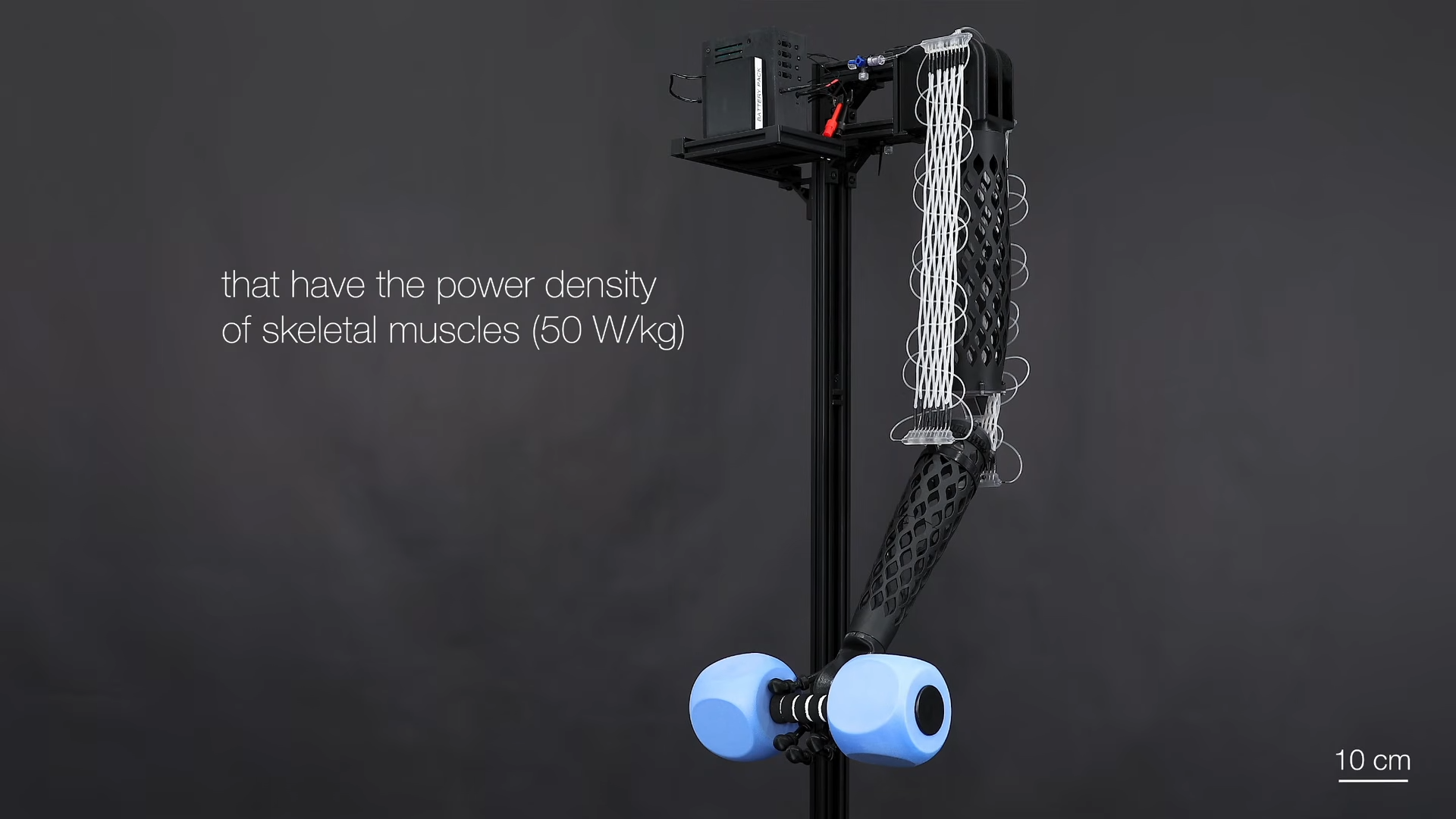
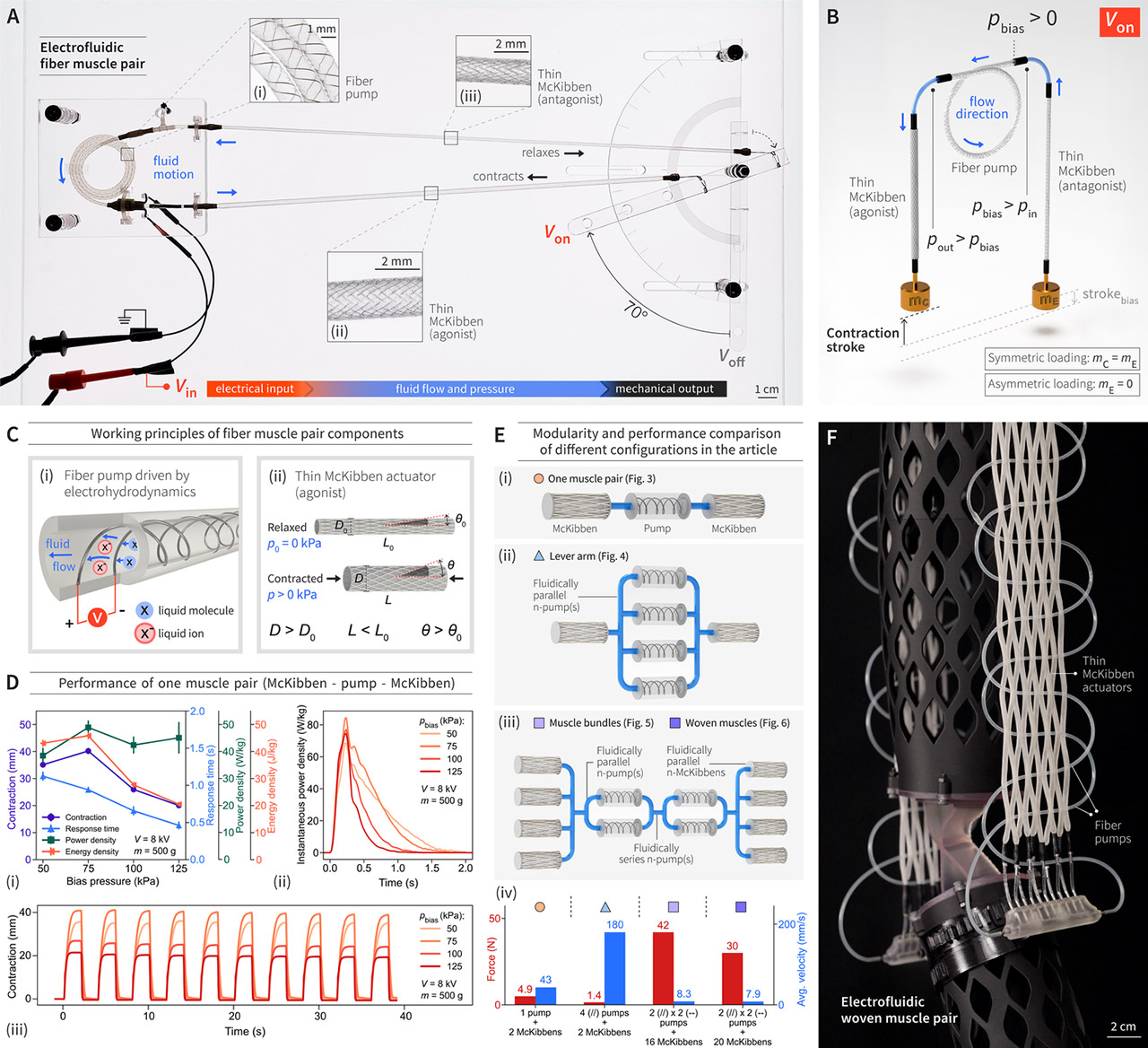
Electrofluidic Fiber Muscles use pressure to shorten muscle strands, similar to past actuators. However, these are a tad different, taking advantage of electrofluidic pressure. A small current under high voltage is able to drive a pressure gradient in a long tube. This tube can then be connected to both an extensor and flexor portion of an actuating circuit, similar to a biological mechanical system. Better yet, this driving pressure pump can be spun around the fibers themselves, making a tight package.
Advertisement
Unfortunately, it will probably be a bit till we see this inside a hobbyist robot. Until then, make sure to check out some other actuator feats!
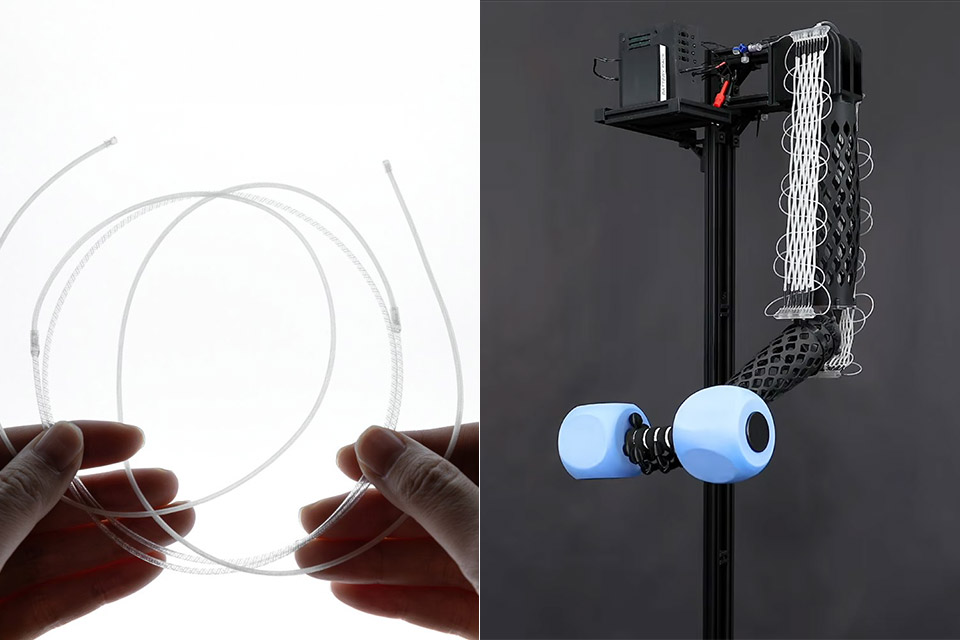
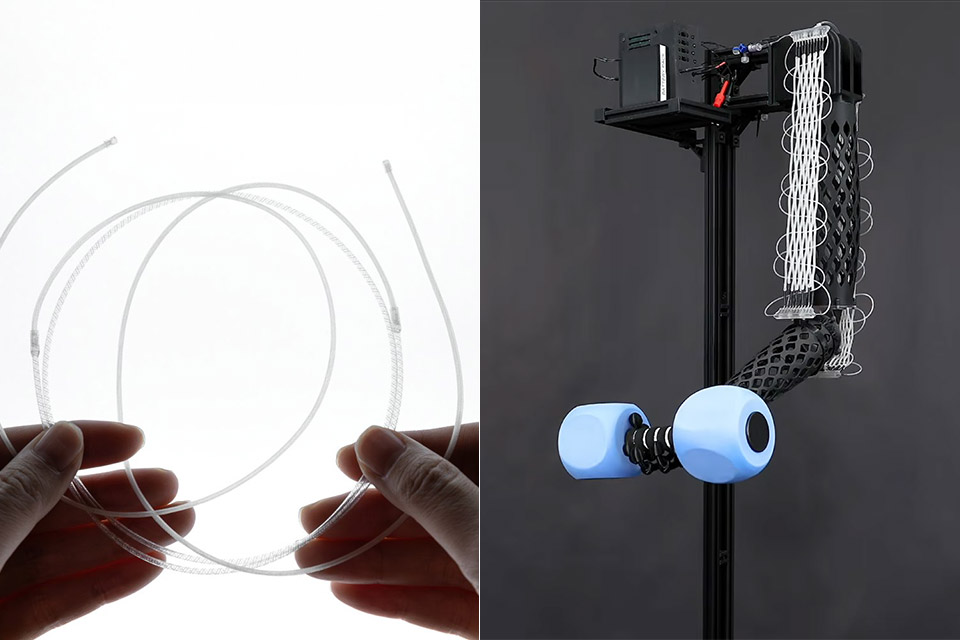
A pair of soft white tubes no thicker than a couple of strands of spaghetti rest in a researcher’s hands. They look almost fragile, yet these fibers can pull with the strength of real muscle, stay completely silent while they work, and run for hours on nothing more than a small battery pack. Researchers at the MIT Media Lab and Politecnico di Bari just published the full details of this system in Science Robotics, and the results feel like a genuine step change for anyone building humanoid robots or wearable machines.
Most robots are still powered by electric motors and gearboxes that simply spin a shaft and then convert that rotation into linear motion in the old-fashioned way, which works fine but has some significant drawbacks: it makes a racket, weighs a ton near the joints, and interferes with how our own limbs function. For years, soft fluidic actuators have been touted as a superior solution: long, flexible tubes that contract when pressed, similar to the muscles in your arm. The issue is with the massive pumps, compressors, and hoses that keep those actuators operating. They simply stop any possibility of a clean, portable design in its tracks.
Three models, one lightweight platform R1 Air (20 DOF, monocular camera), R1 (26 DOF, binocular camera, head+waist joints), and R1 Edu (26 DOF…
Easy setup – no coding required for basic use Unbox, power on, and start. Manual teaching feature: physically pose the robot, and it replays the…
More DOF = more expressive movement 26‑DOF models (R1 / R1 Edu) add head and waist articulation for smoother dance and running. For safety reasons…
The new electrofluidic fiber muscles solve that problem by actually inserting the pump inside the muscle. Each pump is a tiny tube that is less than 2 millimeters wide. Inside, two thin helical electrodes weave their way along the length, and when exposed to high voltage, they begin to inject charge into a unique insulating liquid known as a dielectric fluid. The charged particles just drag the entire fluid along with them, generating pressure and flow with no moving parts. The entire system is absolutely silent and converts electricity directly into hydraulic power.
These tiny pumps form a closed loop with some thin McKibben-style actuators, which are essentially soft tubes wrapped in a braided sleeve that contract when the fluid inside them expands. You may simply stack one pump between two opposing actuators, exactly like your biceps and triceps operate together. When the pump pushes fluid into one actuator, that side shortens while the other side lengthens. There is no need for an external reservoir, therefore the entire system remains sealed, lightweight, and self-contained.
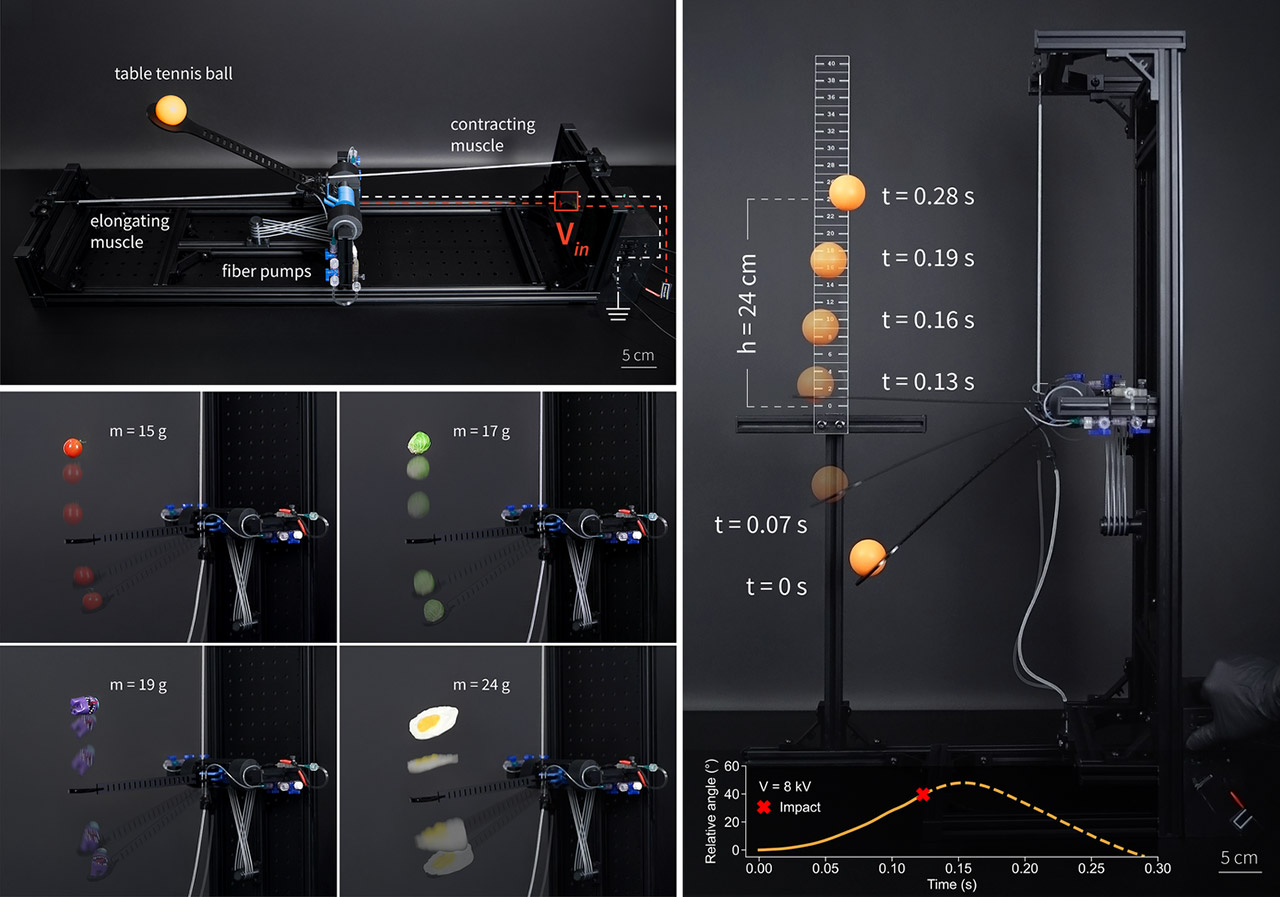
The performance stats are impressive, with roughly 50 watts per kilogram of power density and fibers that can contract by 20% of their length. When multiple pumps are operated in simultaneously, response times drop to less than 0.3 seconds. They also have a pre-pressure system that keeps everything stable and doubles the stroke three times for the same pump effort, and with the bias pressure, they can exchange a little maximal force for even faster snaps when speed is more critical than sheer power.
Advertisement
To demonstrate how adaptable the design is, the team demonstrated no fewer than three different setups. One of them launches table tennis balls in less than 2 tenths of a second, which is very quick. Another bundles a bunch of fibers together so that a small package weighing only a few dozen grams can lift four kilograms, or 200 times its own weight, with a beautiful clean 30-millimeter stroke. The most friendly-looking demonstration incorporated the fibers into a flat biceps-triceps pair that bends a 3D-printed robot arm in a full 40-degree arc. That same knitted muscle is supple enough to shake someone’s hand without squishing their fingers or feeling stiff. [Source]
We spend hours testing every product or service we review, so you can be sure you’re buying the best. Find out more about how we test.
RayNeo X3 Pro: 30-second review
RayNeo, the AR glasses arm of TCL, launched the X3 Pro globally in December 2025, following a well-received debut in the Chinese market. It represents the company’s most ambitious product to date: a standalone pair of AI-powered augmented reality smart glasses that aims to put a useful, persistent digital layer over your view of the world, without requiring you to carry a tethered compute unit.
The headline hardware is the dual-eye full-colour MicroLED display, powered by RayNeo’s own ‘Firefly Optical Engine’ and delivered through waveguides co-developed with Applied Materials. With 6,000 nits of peak brightness and 16.77 million colours, it is probably the best display currently available in any smart glass product, eclipsing even the Meta Ray-Ban Display’s 5,000-nit panel. The simulated image is equivalent to a 43-inch screen viewed from two metres, within a 30-degree field of view.
Advertisement
Under the frame sits a Qualcomm Snapdragon AR1 Gen 1 processor — the purpose-built platform for this class of device — paired with 4GB of RAM and 32GB of onboard storage. The X3 Pro runs RayNeo’s AIOS, an Android-based operating system, and is integrated with Google Gemini 2.5 (Beta) for multimodal AI assistance. A 12MP Sony IMX681 sensor handles photography and 4K video, accompanied by a secondary monochrome camera for spatial positioning and depth tracking with 6DoF + SLAM support.
At 76 grams, the X3 Pro is lighter than the Inmo Air 3 (119g), and only a few grams heavier than the Meta Ray-Ban Display (69g). The frame is built from an aerospace-grade magnesium-aluminium alloy, and control is handled via a five-way touch panel on the right temple, with support for Apple Watch gesture control promised in a future OTA update.
The device’s single greatest limitation is its 245mAh battery. Under light use, you may approach three to five hours. Under active use that might be navigation, AI queries, camera recording, or app usage, the running time plummets to as little as one or two hours, and it can be as little as 45 minutes. The only saving grace is a recharge of around 45 minutes via USB-C.
Advertisement
At $1,169, the X3 Pro is a premium early-adopter product with genuine technological credibility, but a hefty price tag. The display alone makes a compelling case for the future of AR glasses. Whether that future is worth over a thousand pounds to experience today is a question each buyer must answer for themselves.
RayNeo X3 Pro: Price & availability
(Image credit: Mark Pickavance)
The RayNeo X3 Pro launched globally in December 2025, initially priced at $1,099 on an early-bird basis, rising to $1,299 at standard retail.
Advertisement
Sign up to the TechRadar Pro newsletter to get all the top news, opinion, features and guidance your business needs to succeed!
At the time of writing, RayNeo sells direct from its website here, with delivery to the United States, the United Kingdom, France, Italy, Germany, and other markets.
In the UK, the full retail price is £1,169, and in the USA it’s $1,169. Considering that the exchange rate on the day of writing is $1.34 to the pound, UK customers pay roughly 25% more for the same products for no obvious good reason.
Prescription lens inserts are available separately from around $49 / £49, supplied through RayNeo’s partner Lensology.
Advertisement
What’s a little odd is that these glasses aren’t available on Amazon.com, when almost everything else RayNeo makes is.
By way of comparison, the Meta Ray-Ban Display starts at $799, the Even Realities G2 at $599, and the Halliday Smart Glasses at $500. Traditional smart glasses without a display, such as the Ray-Ban Meta, are available for considerably less.
The X3 Pro commands a significant premium, but the technical specification that includes the dual-eye MicroLED display and the Snapdragon AR1 platform is a major step up from those alternatives.
RayNeo also offers existing X-series customers a ‘RayNeo Explorer’ lifetime benefit, providing a $200 discount towards future X Series purchases.
Advertisement
What colours my perspective on the price is that these aren’t dual-purpose glasses that can also be used to watch movies. They’re only for AR, which makes the high price even harder to justify.
Supported (lens inserts via Lensology, from ~$49/£49)
Advertisement
Colours
Black (single style)
RayNeo X3 Pro: Design & build
Divisive aesthetics
Wearability issues
(Image credit: Mark Pickavance)
There is an obvious problem with products like the X3 Pro, which is that the design telegraphs that these aren’t just glasses, drawing attention to the wearer.
Advertisement
This tension between engineering achievement and social wearability is perhaps the defining characteristic of this first generation of capable AR glasses, and the X3 Pro didn’t dodge that bullet.
The frame takes broadly Wayfarer-style cues, i.e. being thick, squarish and dark. In short, these look like John-Paul Belmondo wore them at the end of the 1960s, before Michael Cain borrowed them to play the classic British spy, Harry Palmer.
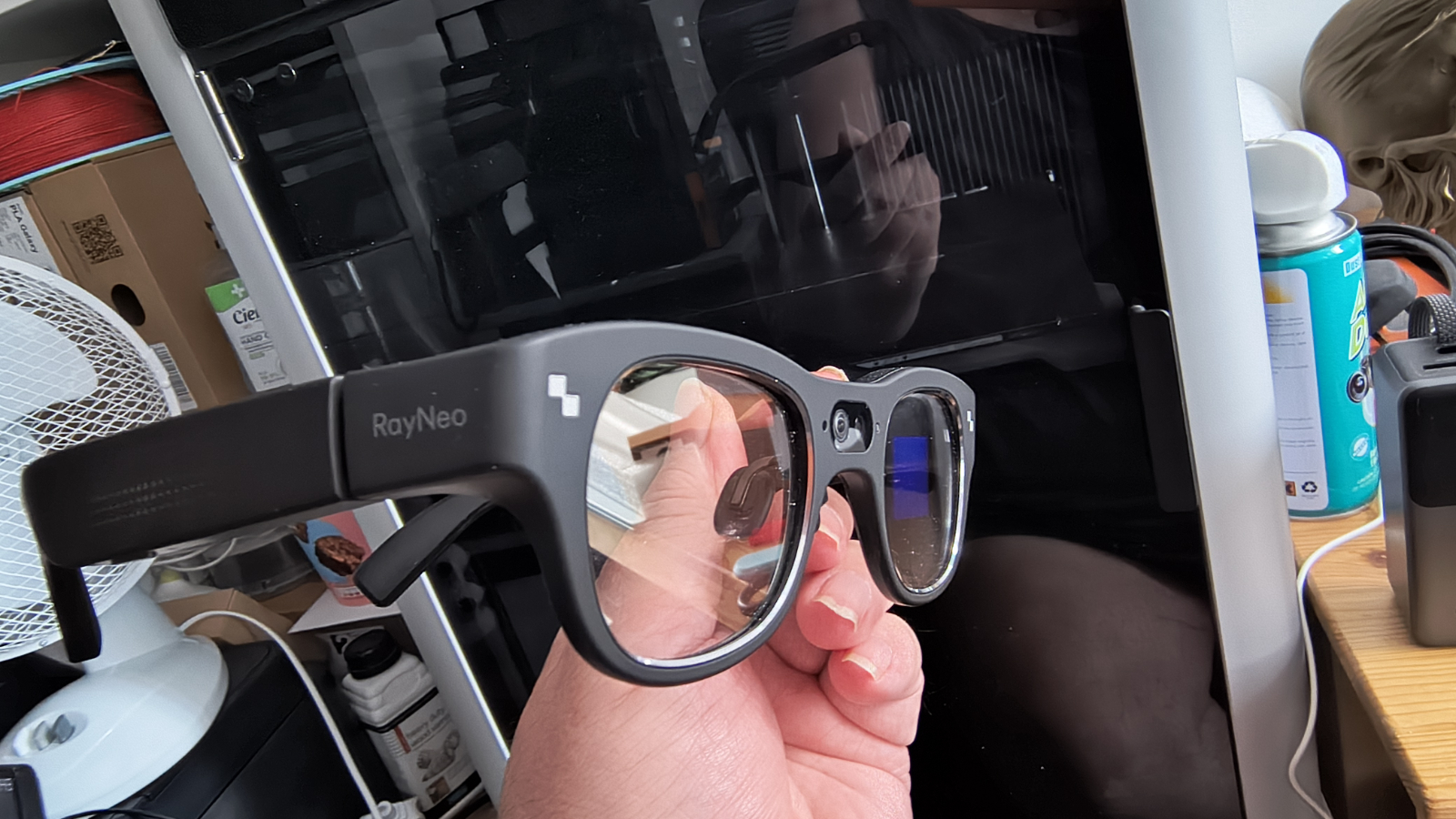
That might be delightfully retro, but two cameras sit in the bridge between the lenses, a small indicator light sits on the front frame (active when recording), and distinctive protrusions near the temple hinges house the MicroLED projectors, giving the game away.
The temples are noticeably thicker than conventional eyewear, accommodating the speakers, electronics, and battery. The USB-C charging port sits at the tip of the right temple.
Advertisement
Structurally, the X3 Pro is more refined than its predecessor, the X2 Pro. RayNeo cites eleven structural optimisations and the use of aerospace-grade magnesium-aluminium alloy to achieve a 36% weight reduction over that earlier model. The result is a frame that, at 76g, sits comfortably on most faces without the ear pressure or nose strain that plagued heavier competitors. Multiple reviewers noted that they occasionally forgot they were wearing them during prolonged use.
The lenses themselves have good optical transparency when the display is off, meaning the world doesn’t take on the tinted quality of sunglasses during non-display use. Interchangeable nose pads in different sizes are included, and prescription lens inserts are available through Lensology.
For older people, me included, these lens inserts are a necessity, since the glasses require abnormal eye-muscle acrobatics that those without perfect vision are unlikely to achieve without some help.
Fit adjustment is largely limited to nose pad selection, which does tend to put more pressure on the bridge of the nose. Previously, with the Air 3s Pro, RayNeo offered adjustable temple angles, but these aren’t available on the X3 Pro.
Advertisement
And, because of this, depending on your face shape, you can find that the display is dramatically offset from the ideal line of sight. As I’ll talk about later, I had big issues with this, and it made using them extremely difficult.
In short, if social discretion is a priority, this is not the device for you. If you are the sort of person who wears technology proudly, or who has a professional or specialist use case, the design is functional as long as your face and eye geometry fall within a specific envelope.
RayNeo X3 Pro: Features
Impressive display technology
Sony IMX681 camera sensor
Tiny battery
(Image credit: Mark Pickavance)
The X3 Pro’s MicroLED dual-eye display is, by wide consensus, the standout feature of this device. Unlike single-eye displays used by some competitors, the X3 Pro projects identical imagery to both eyes, producing a more natural and immersive AR experience that doesn’t assume binocular compensation on the viewer’s part. The 640 × 480 resolution per eye is modest by smartphone standards, but it is appropriate for a heads-up overlay and is rendered with genuine clarity at the 30-degree field of view.
Advertisement
Peak brightness of 6,000 nits is a notch above the Meta Ray-Ban’s 5,000 nits, making the display legible in direct sunlight and suitable for navigation or outdoor use. These aren’t meant for media consumption, and therefore don’t include shields to reduce external views, so the graphics need to be bright.
The display sits centrally in the wearer’s field of view, rather than in the lower-right corner (as on the Meta Ray-Ban Display). This means AR content is more prominent and easier to read, but also more obtrusive. You cannot easily consume AR content passively while doing something else. It is a deliberate design choice that suits dedicated, task-focused use over an ambient, always-on overlay.
The primary camera uses a Sony IMX681 sensor capable of 12MP stills and 4K/3K video. A secondary monochrome camera assists with spatial positioning, depth tracking, and dual recording. In daylight conditions, camera output is described as decent, with the wide-angle field of view well-suited to point-of-view recording.
But in low light, there is a tendency to visible noise and graininess, and the lack of digital zoom or manual camera controls reduces flexibility. A recording indicator light on the front frame activates when the camera is in use, serving both as a privacy indicator and a practical reminder.
Advertisement
These don’t take pictures that would worry any mid-tier phone, and most entry-level Android phones have better sensors.
The X3 Pro’s battery life is probably its greatest limitation, since a 245mAh cell is simply not large enough to support extended active use of the device’s headline features.
RayNeo’s claim of up to five hours applies to very light use, and by that, they probably mean music playback and limited screen time. In practice, active use scenarios significantly reduce this figure. In a few of my sessions, the time was a fraction of that amount, and the worst offenders for eating battery capacity were translation, video capture and navigation.
In theory, you could have a hip-mounted power pack attached to the USB port of the X3 Pro, but when I tried this, it pulled them out of square and made reading the display even harder.
Advertisement
Thankfully, the glasses do feature wear detection, automatically powering down when removed. This helps conserve battery during breaks, but carrying a power pack around is practically a necessity if you intend to use them for any extended time.
Contextually, the limited battery is an inevitable consequence of the 76g weight target. A larger cell would mean a heavier device. RayNeo engineers have made a considered trade-off here, and future hardware iterations will presumably seek to improve energy density. It may be that the makers can engineer better power management through firmware adjustments, but with only 245mAh of battery to work with, there is only so much that can be done.
Without a doubt, the primary reason to hesitate before purchase is battery life.
Advertisement
RayNeo X3 Pro: Software
(Image credit: RayNeo)
Google Gemini 2.5 (Beta)
Live translation
Side-loading apps
RayNeo AIOS, the operating system built on Android and structured around four primary screens: a home screen showing time and status indicators, a quick-actions panel, an app launcher, and a notifications screen. Navigation is via the five-way touch panel on the right temple, with voice commands available via ‘Hey RayNeo’. The interface is responsive and, for the constrained form factor, relatively intuitive.
According to RayNeo, it’s Google Gemini that’s the flavour of AI baked into AIOS, and I suspect it’s Google Gemini 2.5 (Beta), which is a long way behind the current models that Google is promoting.
Compared to some other talking AI’s I’ve used, this one is pretty average. For starters, even though I’m in the UK, it insisted on using a chirpy American accent. And, if I asked what the temperature was, the answer arrived in Fahrenheit, times in a 12-hour clock and distances in feet and inches. Yes, Gemini, the world is America.
But aside from being fixated on a region that’s more than 3,000 miles away, the other issue was that it got simple questions wrong from the outset. As it loves America, I asked it to name the last ten U.S. leaders. It got the name and the order correct and then fumbled the answer by saying that all these people had been President in the past ten years.
I tried to subtly nudge it in the right direction by asking which ones were the President in the past ten years, but it failed to notice the discrepancy between what it was saying now and what it said previously.
Advertisement
Thankfully, it didn’t fall for the classic “walk or drive” question for the car wash, but I think all AI platforms are hardwired to answer that way, since it’s an obvious pitfall.
Compared to the latest versions of the major AI providers, the AI on this platform isn’t going to write Skynet anytime soon.
Real-time translation is a more advanced feature, supporting 14 languages and delivering approximately 2.1-second response times. Translation can be delivered as on-screen text or synchronised audio. In testing by other reviewers, accuracy was broadly good, though the system waits for the speaker to finish before translating. That’s necessary in some languages, like German, but it does come across as a less-than-natural conversation and can feel stilted.
Navigation is powered by HERE WeGo Maps (used by BMW and Audi), projecting turn-by-turn directions and nearby landmarks directly into your field of view. This is one of the most practically compelling use cases for the device, eliminating the need to look down at a phone while on foot. Unfortunately, the app never loaded on my glasses. Every time I tried to download and install it, it failed. Other apps were installed, so I’m unsure why this one refused to.
Advertisement
I know that some software for this device requires side-loading, which isn’t something many users will be happy to perform.
RayNeo X3 Pro: Performance
(Image credit: Mark Pickavance)
The Snapdragon AR1 Gen 1 is purpose-designed for augmented reality applications, and the X3 Pro benefits accordingly. Day-to-day navigation, AI queries, notification handling, and app use are smooth under normal conditions. The combination of 4GB LPDDR5 RAM and 32GB storage is appropriate for the use cases the device targets.
That said, compared with a modern smartphone, this isn’t the most powerful platform, and with some more resource-intensive tasks, the cracks start to show.
Advertisement
The glasses do support 6DoF + SLAM with Falcon Image spatial positioning, and the AR overlay alignment is typically accurate and stable under testing. But the issue here is more about how close this platform is to being overrun, and there are hints it’s not ever too far from the edge.
But this reviewer had many more issues with this device, which is partly why I waited more than six months before completing my review.
When I first got these in 2025, they did almost nothing. Since then, the firmware updates and enhancements that come via the mobile app have transformed the functionality provided, but they haven’t addressed some of the issues I’ve had from the outset.
The first big problem I had was seeing the projected images, not because the glasses didn’t work, but because they were almost out of my field of view. Some of this was my long-sightedness that made the images seem soft, but I couldn’t see the entirety of the display without balancing the glasses on the very tip of my nose. If I didn’t do that, the image would have been presented as below me and barely in sight. Lifting the glasses to make the image central causes it to disappear.
Advertisement
I’m not confident that spending another £50 on the proper lenses would fix that issue.
That made just seeing things a challenge, but the other issue I had was using the touch panels on the sides of the glasses for directing the interface, because half the time they just ignored my instructions or did something I didn’t ask for. In one instance, I deleted the To-do application from the glasses, not because I wanted to, but because the glasses took one swipe as my instruction to do that, and then refused to cancel that erroneous request.
I did consider getting a small hand controller to make it easier to use or even using the phone as a touchpad, but frankly, at this price, it should be easier than it was.
My final complaint about this device is how some aspects aren’t thought through. One of the apps is a translation app, and you can stand in front of a person from another country and get real-time translation of what they are saying. And, it works. You can even run a YouTube video of someone speaking another language and see it translated.
Advertisement
However, my problem is how you might use this in the context of being a tourist in a foreign country. Let’s imagine I’m in Japan, where they speak a language I don’t, and I walk into a shop where a sales assistant asks, ‘What are you looking for?’ I understand this, because the glasses translate for me, but it can’t reply in Japanese.
At which point, phone translation, where you can show the person your reply in their language, or it speaks for you, works much better. Obviously, if you like to sit on a train and listen to people gossiping about you in their language, thinking you can’t understand them, it’s great, but it seems an expensive device to do just that.
Image 1 of 12
(Image credit: Mark Pickavance)
(Image credit: Mark Pickavance)
Examples of photos taken with the RayNeo X3 Pro
(Image credit: Mark Pickavance)
(Image credit: Mark Pickavance)
(Image credit: Mark Pickavance)
(Image credit: Mark Pickavance)
(Image credit: Mark Pickavance)
(Image credit: Mark Pickavance)
(Image credit: Mark Pickavance)
(Image credit: Mark Pickavance)
(Image credit: Mark Pickavance)
(Image credit: Mark Pickavance)
Should you buy the RayNeo X3 Pro?
The RayNeo X3 Pro is, technically, the most impressive pair of smart glasses currently available for purchase. The dual-eye MicroLED display is genuinely impressive, with bright enough images for outdoor use, colourful, and binocular in a way that no other glasses at this price point can match.
Advertisement
The integration of Gemini AI would make it genuinely useful beyond being a novelty if the model were newer and didn’t assume that all English speakers are Americans.
The camera produces capable results in good light, and the 76g weight is a remarkable achievement for the hardware it contains.
But the £1,000+ price tag demands honest scrutiny of what you’re buying, and the answer is: a first-generation product. The battery will frustrate most users who intend to use its headline features for more than an hour or two at a time. The app ecosystem requires technical workarounds.
The aesthetic is also overly conspicuous, and considering how people are quite rightly objecting to unwanted image capture and AI in general, expect some push-back from others if you wear these in public.
Advertisement
For early adopters, AR developers, and professionals with specific use cases, such as live translation, heads-up navigation, and meeting transcription, the X3 Pro is credible but far from perfect. For mainstream buyers hoping for an all-day, all-purpose wearable, the technology is not quite there yet, but this is the clearest indication yet of where it is heading.
Sony’s first-party fight stick was supposed to land in August.
PlayStation
PlayStation’s first-party FlexStrike wireless fight stick has been delayed indefinitely, though Sony is promising to share more information “soon,” according to an update on the PlayStation Blog. The FlexStrike was originally scheduled to land on August 6, 2026, alongside the release of MARVEL Tōkon: Fighting Souls, a 4v4 tag-team fighter developed by Guilty Gear and BlazBlue studio Arc System Works, and published by PlayStation.
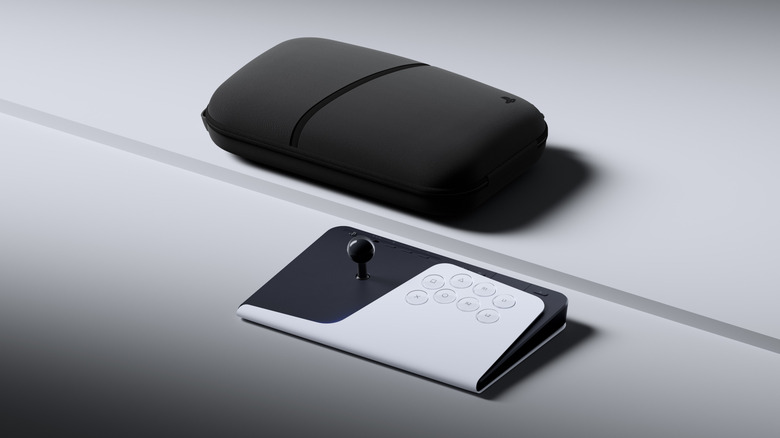
Sony blames the change on “unexpected production delays,” and says players with pre-orders for the FlexStrike should receive updates from their respective retailers soon. Anyone who purchased directly from PlayStation should be able to check their order status on the official website. The FlexStrike costs $199.99 and comes with a sling carrying case. Pre-orders for the whole bundle went live on June 12.
“We’re working to ensure we deliver the best possible experience to our players with FlexStrike, so we’re taking extra time to put the finishing touches on the product,” Sony’s update reads. “We apologize for this delay and look forward to bringing the FlexStrike experience to the community when it launches.”
Advertisement
Much like Marvel Tōkon, the FlexStrike works with PC and PS5 consoles. The fight stick was produced by PlayStation itself, built specifically for competitive players who regularly travel to tournaments or friends’ places. The action buttons are positioned on a slight incline while the stick is on a flat surface, and in true PlayStation controller fashion, there’s a touchpad just above the buttons. The stick is also customizable with swappable restrictor gates that change the shape of its impact zone. The FlexStrike communicates wirelessly via a PlayStation Link USB adapter, or with a low-latency wired USB-C connection.
Sony announced the FlexStrike, originally called Project Defiant, in June 2025, hailing it as the company’s first wireless fight stick. Almost exactly one year later, Sony revealed its release date and started accepting pre-orders. Today, it’s retracting that date and not making any firm promises.
The indefinite delay is sad news for the fighting game community and also for anyone who was looking forward to pushing those big transparent buttons purely for ASMR purposes.
Spotify is rolling out a new AI-powered conversational feature that lets Premium users talk directly to the app about what they want to hear. Users can type or speak a request and refine the results through follow-up questions instead of manually searching for a song, podcast, or audiobook.
The feature is available from Spotify’s Home and Now Playing screens and works much like a personal audio assistant. It can choose what plays, answer questions about the current track or album, recommend something new, and look through your listening history to provide more personalized responses.
Now you can talk to Spotify: 🎧 It plays what you want 🎧 It adds what you want 🎧 It even answers what you’re curious about
You can ask Spotify to play artists you have not heard before. Follow-up requests can add a particular artist, narrow the selection to recent releases, or make the music more upbeat. The assistant can also save a song, add it to your queue, or follow an artist. It can provide more information about whatever is currently playing. Users can ask when an album was released, what genre a song belongs to, or what inspired a particular record.
Spotify
The feature also works across podcasts and audiobooks. You can ask Spotify to find more books by an author or pull up other podcast episodes featuring the same guest. It can also look back through your listening history. Spotify says you will be able to ask when you first played a particular song or which genres you have been listening to most recently.
This is not Spotify’s first AI-powered feature
Spotify has been experimenting with AI for a while now, and each feature has brought the technology into a different part of the service. AI DJ is one such feature that creates a personalized stream of music and uses an AI-generated voice to introduce songs and explain recommendations. AI Playlist lets users build playlists from written prompts based on a mood, activity, or genre.
The new conversational feature is now rolling out in beta to Premium users aged 18 and older in the US, Ireland, and Sweden. It is available in English through Spotify’s iOS and Android apps. Spotify says responses may not always be perfect while testing continues.
The control room for General Fusion’s Lawson Machine 26. (General Fusion Photo)
General Fusion’s stock is trading up after it became the first fusion energy company to go public on a major exchange, debuting Monday on Nasdaq.
The launch of GFUZ stock coincided with the release of the Fusion Industry Association’s annual report, which reflected that same investor enthusiasm: private funding for fusion companies totaled $4.5 billion over the past 12 months. One of the biggest rounds went to Helion Energy, a Seattle-area company that raised $465 million last month, bringing its total investment to $1.5 billion.
Soaring energy demand from AI data centers has helped drive interest in the sector as an ambitious slate of companies is building devices that create and contain plasma — a super-hot, fourth state of matter required for atom-smashing fusion to occur.
For decades, researchers have chased this clean energy source, aiming to replicate the reactions that power the sun, a churning ball of plasma. While significant progress has been made, big technical hurdles remain, and it’s uncertain when the goal will be reached.
But the promise of fusion is so enticing that the risks appear worth it for many investors.
Advertisement
“A commercial fusion industry is a world-changing industry, and the returns on investment will be massive,” said Andrew Holland, CEO of the Fusion Industry Association, in the foreword to the report.
The sector has landed more than $13.3 billion from venture capitalists over the past five years, according to the annual survey. After decades of government support via national labs and R&D grants, the private sector is now picking up the majority of the tab for fusion’s progress.
One of the important milestones in the pursuit of fusion is “scientific breakeven” — the point at which the output of a fusion reaction matches the energy input to a device’s plasma, without including the rest of the system’s power needs. Scientific breakeven was first hit by Lawrence Livermore National Laboratory in 2022, but has not been reached by a private venture.
To be financially viable, the fusion companies need to go further, capturing more energy from fusion than required to operate their whole system.
Advertisement
The new report includes profiles of 56 companies worldwide that are pursuing fusion, including four based in the Pacific Northwest: General Fusion, Helion, Zap Energy and Avalanche Energy, as well as Kyoto Fusioneering, which has an office in Seattle.
Here’s a closer look at the four companies based in this region:
Avalanche Energy, Seattle
Notable fact: Avalanche is unusual for its small-scale approach to fusion, and its plan to launch a pilot plant by 2030 is among the earlier targets in the race.
Year founded: 2018
Target uses: Electricity, space propulsion, marine propulsion, off-grid energy
Publicly shared total funding: $104.2 million
Target for scientific break even: 2029
Target for first pilot plant: 2030
General Fusion, Vancouver, B.C.
Notable fact: General Fusion has made multiple pivots in recent years in its path to commercialization and was the first to go public.
Year founded: 2002
Target uses: Electricity generation
Publicly shared total funding: about $500 million
Target for scientific break even: Not disclosed; aiming to produce fusion conditions by 2028
Target for first pilot plant: Approximately 2035
Helion, Everett, Wash.
Notable fact: Helion was the first to sign up a fusion customer when it inked a deal with Microsoft in 2023, and aims to be the first to reach commercialization.
Year founded: 2013
Target uses: Electricity generation
Publicly shared total funding: $1.5 billion
Target for scientific break even: Not disclosed
Target for first pilot plant: 2028
Zap Energy, Everett, Wash.
Notable fact: Zap recently announced it will also pursue nuclear fission energy, building small-scale reactors alongside its fusion work.
When Bridgestone was first founded in the city of Kurume, Japan, in 1931, its sole purpose was to manufacture vehicle tires. Fast forward almost a century, and most people still know Bridgestone primarily as a tire maker today. It’s one of the best-known major car tire brands on the planet, and it also produces tires for motorcycles, semi-trucks, aircraft, and even mining equipment.
What many people don’t realize is that Bridgestone isn’t just a maker of vehicle tires. Over the decades, it has launched many other ventures, some of which are more unexpected than others. Most of these ventures center around its expertise in rubber manufacturing: for example, the company’s construction solutions division manufactures seismic isolation rubbers that help protect buildings in earthquake-prone areas. They’re designed for use in high-rises, public buildings, and apartment complexes, and can help reduce the damage caused by Japan’s frequent major earthquakes.
Not everything is related to rubber, though. The same division of the company also developed the Smart Siphon drainage system, which allows water to drain through residential plumbing using horizontal pipes, rather than the sloping pipes that are needed in a conventional system.
Advertisement
Agriculture is another key market for Bridgestone, and it has been ever since the company first developed rubber tracks for a rice-harvesting machine in 1968. It still makes tracks for harvesters today, as well as offering tracks for everything from asphalt pavers to excavators. The company’s range of hydraulic hoses is also used in various agricultural machines, as well as in mining and construction machines.
Advertisement
Bridgestone is also a golf brand
Atsushi Tomura/Getty Images
Most of the aforementioned Bridgestone products won’t be known to anyone outside of the specific industries they’re designed for, but there are a few other things that Bridgestone makes that you might be more familiar with. One of its most notable ventures outside of tire making is its golf division, which designs and manufactures a variety of equipment and apparel for the sport.
The brand makes several distinct ranges of golf balls, with its Tour B range in particular being highly regarded among players from the amateur to elite levels. Various players on the PGA Tour use Bridgestone equipment, including none other than Tiger Woods, who has his own signature Tour B golf ball model. Bridgestone isn’t the only tire brand that makes golf balls, either. Dunlop also produces them under its Srixon and XXIO brands.
In addition to making golf balls, Bridgestone also manufactures the clubs golfers use to hit them, and a range of caps and gloves they can wear while they’re doing so. In between holes, players can also carry their clubs and balls around in one of Bridgestone’s golf bags, while sheltering from the elements under a Bridgestone umbrella.
While its golf equipment division is its best-known sports-related division to players around the world, some cycling enthusiasts might also know the brand as a maker of bicycles. It still sells a range of commuter-friendly bikes in Japan today, including an e-bike, although its range hasn’t been available in America since 1994.
Advertisement
Bridgestone’s latest venture is robotics
Even though it already has a diverse array of existing side ventures outside its core tire-making business, Bridgestone continues to launch new divisions to broaden its ambitions. One of its latest ventures is into the world of robotics, with the company designing and manufacturing “softrobotics” that use its rubber manufacturing know-how to create products like artificial muscles. It’s still a new division for now, having only been formed in 2023. But, in the long run, it envisions its products being used in a variety of industries.
The development team’s artificial muscles are made from rubber tubes surrounded by high-strength fiber, and they can be grouped together to form the fingers of a flexible robot hand. They’re designed to be tough, with Bridgestone demonstrating their durability by running them over with a car. But they’re still soft enough to carefully grab fragile components in a factory. Among other things, the company says they could be used in electric vehicle manufacturing, handling breakable products in distribution centers, and assembling electrical components.
Advertisement
Of course, none of these additional ventures detracts from Bridgestone’s main tire-making operation, which continues to churn out vast quantities of tires at factories around the world. Whether they’re marketed under the Bridgestone branding or under one of the multiple other brands the company owns, you’re still more likely to encounter the Bridgestone logo on the side of a car tire than anywhere else.
The federal government dropped the ball on the transition to electric cars when it killed the EV tax rebate last year. However, Governor Gavin Newsom has come up with an alternate solution for those in California in the form of up to $3,500 in instant rebates for first-time EV buyers.
Dubbed the MyFirstEV program, Newsom’s bill — which will go into effect sometime later this summer — is part of a larger $600 million investment by California to improve the state’s clean transportation economy. As for the rebates specifically, half of the program’s $270 million fund comes directly from California’s 2026-2027 state budget, while the other half is sourced from participating automakers.
That said, for Californians hoping to take advantage of the new incentive, there are some important restrictions. First, eligible vehicles are all zero emission, which means full battery electric cars, no hybrids. Second, in order to get the full $3,500 rebate on a new vehicle, the car’s MSRP must be under $50,000. For those planning to buy a used EV, a $1,750 rebate only applies to cars that cost less than $25,000. Finally, as the name of the program implies, the rebate is only available to first-time EV buyers.
Even with these restrictions, there’s still plenty of room in people’s budgets for a range of popular makes and models including the Nissan Leaf, Tesla Model 3 and Model Y, Hyundai Ioniq 5, Ford Mustang Mach-E and more. California-based Rivian’s latest EVs are a bit too expensive, but pricing for the R2 starts at $45,000 when the base model goes on sale sometime next year. Furthermore, the rebate is available as an instant discount through dealerships, which means you can effectively knock off up to $3,500 at the time of purchase. There’s no need to jump through additional hoops later on.
Advertisement
Going forward, the rest of California’s $600 million investment into zero emission transportation includes $150 million for the state’s Community Air Protection Program, $135.5 million for the Clean Truck and Bus Voucher Incentive Project and $130 million earmarked to replace vehicles with polluting heavy-duty engines. And for those in more rural areas, the state has also pledged to install more charging stations to help make refueling EVs easier.
Satechi, which makes some fantastic charging and PC peripherals, has just launched a whole bunch of accessories targeted at the MacBook Neo. But instead of making them boring and drab, the company has actually color-matched them to the exact shade that you get on Apple’s budget-centric laptop. The offerings on the table include a multi-port adapter, a USB-C snap hub, and a wireless mouse, and all of them are now available to buy starting at $29.99 from Satechi’s website and Amazon. Color options that are up for grabs include Citrus, Blush, Indigo, and Silver
Satechi OntheGo 5-in-1 Multiport Adapter ($44.99)
Satechi
The round multi-port adapter by Satechi is arguably the most eye-catching device in the lineup. It’s a puck-shaped adapter that can also attach magnetically to the lid of your MacBook Neo. The Satechi OntheGo 5-in-1 Multiport Adapter comes with a color-matched nylon braided cable and features a USB-C as well as a USB-A port, both of which allow 5 Gbps data transfer.
The USB-C port also opens the door for 60-watt pass-through charging, and there is also an HDMI port that can handle monitors at up to 4K resolution and a 60 Hz refresh rate. It also features an SD card reader, which means you can also use it as an external storage and recording device, while attached magnetically to the back of your iPhone.
Satechi USB-C Snap Hub ($44.99)
Satechi
If you don’t want a device that dangles through a wire from your laptop, the Satechi USB-C Snap Hub is the ideal solution. It can link up with the USB-C ports on your MacBook Neo and sits flush with the chassis, as if it were a natural extension of the body. It just misses out on the active cooling perk that the brand is offering with its SSD enclosure.
It flaunts an anodized aluminum build that feels right at home with Apple’s laptop, and offers a decent selection of six ports. You get an HDMI port that can handle 4K 60Hz output to an external monitor, a USB-A port, a USB-C inlet, an SD card reader, as well as a micro SD card slot, and a 45-watt pass-through charging port.
Satechi
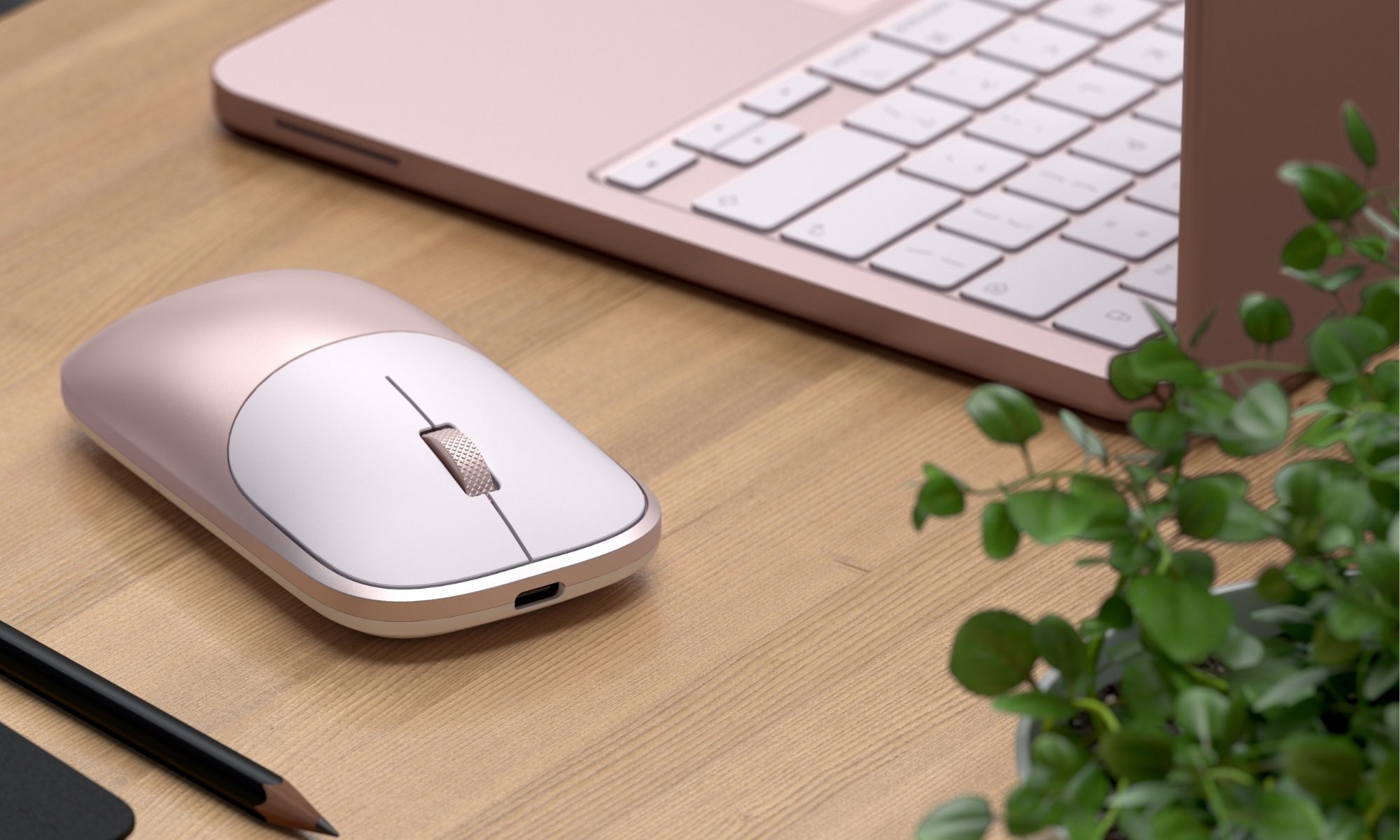
And finally, we have the Satechi Slim EX Wireless Mouse, which costs $29.99 and supports wireless connectivity over Bluetooth and the 2.4 GHz link. Rocking an aluminum build, Satechi says that its latest mouse offers “quiet click switches and a precision-machined scroll wheel.” It also features a user-replaceable battery and works just fine across macOS, Windows, Android, and iPadOS platforms.
Artificial intelligence giant Anthropic today upped the ante in its quest to win the increasingly competitive market for AI in education by debuting Claude for Teachers, a free large language model designed for U.S. K-12 educators.
Claude for Teachers includes a library of teaching skills and a “direct connection to evidence-based curricula, mapped to academic standards in all 50 states,” the company said in a statement.
“We built Claude for Teachers to close the distance between what the evidence recommends and what a teacher’s week allows,” the Anthropic statement continued.
Advertisement
Although some educators are skeptical of AI usage in the classroom, particularly in early childhood education, Anthropic citedStanford research suggesting that AI tools, when designed and used correctly, can aid teachers and improve student learning.
Privacy and Security Measures
Claude for Teachers has access to academic standards in all 50 states, so it can create lessons that are “scaffolded and aligned to teaching standards.” The tool’s library of skills, co-developed with Learning Commons, was piloted with teachers in Prospect Schools in Brooklyn, New York, and other sites. Anthropic said it plans to evaluate Claude for Teachers in the Detroit Public Schools Community District, “working closely with teachers to study the impact on educator well-being and practice.”
Claude for Teachers includes Claude Code and Cowork, allowing teachers to vibe-code and use the technology to securely analyze class data. “We never train our models on your conversations. Training is off for verified teacher accounts,” Anthropic said.
Advertisement
Anthropic is collaborating with the American Federation of Teachers to ensure student information is protected. “We’ve been working with Anthropic on a Gold Standard that sets out industry best practices for safety and privacy in K-12 education,” said Randi Weingarten, president of American Federation of Teachers, in the Anthropic statement.
Revolut, Stripe, UniCredit, Deutsche Bank and SumUp are just some of the companies selected for the pilot, which is set to commence in the second half of 2027.
The European Central Bank (ECB) has chosen 36 payment service providers (PSP) to participate in a 12-month digital euro pilot, according to an announcement released today (14 July).
The financial organisations, which include Revolut, UniCredit, Deutsche Bank, SumUp and Stripe Technology Europe, were selected from a pool of 50 PSP applicants, ranging from traditional banks to transaction platforms. The companies come from 16 euro member countries, including France, Germany, Italy, Ireland and Austria.
Interestingly, three of the selected companies – Deutsche, DZ Bank and BPCE – were among a group of 14 European lenders that previously voiced reservations about the digital euro, citing concerns such as cost and potentially undermining existing private-sector payments initiatives in the continent.
Advertisement
The digital euro is a proposed central bank digital currency (CBDC) – basically a digital version of an official currency – that was first suggested in 2023. To date, only three countries worldwide have officially launched a CBDC: Jamaica, the Bahamas and Nigeria.
The digital euro pilot is due to commence in the second half of 2027, and will be “crucial” for testing the digital euro’s technical functionality and operational processes, as well as for refining user experience, according to the ECB.
The pilot will take place at the ECB and 19 national central banks across the euro area, specifically in Belgium, Germany, Estonia, Ireland, Greece, Spain, France, Croatia, Italy, Cyprus, Latvia, Lithuania, Luxembourg, the Netherlands, Austria, Portugal, Slovenia, Slovakia and Finland.
The programme will use a beta version of the digital euro, which will be “functionally and technically close” to the digital euro as foreseen in the draft legislation – though it will not have legal tender status.
Advertisement
The pilot will involve staff at the ECB and the participating national central banks – as well as e-commerce merchants and vendors operating on their premises, such as cafeterias and restaurants – who will be able to make beta digital euro payments from person to person (both online and offline) and from person to business.
According to the ECB, some of the 36 selected financial organisations will act as ‘distributing PSPs’, which will provide Eurosystem staff with access to beta digital euro services such as account set-up and payments, while others will act as ‘acquiring PSPs’, which will serve selected merchants and enable them to receive beta digital euro payments.
Some PSPs will have a dual role providing both distributing and acquiring services.
“The strong market interest in the pilot shows the private sector’s readiness to engage actively and quickly advance with the digital euro project to strengthen the European payments landscape,” said ECB executive board member Piero Cipollone, who chairs the Digital Euro High-Level Task Force.
Advertisement
“We look forward to deeper engagement as we work with and learn alongside European payment service providers in developing a secure, efficient and inclusive digital euro.”
The digital euro pilot announcement comes after the European Parliament recently officially backed the digital euro. Meanwhile, talks began yesterday (13 July) between the European Parliament, European governments and the European Commission on establishing rules for the digital currency.
The negotiations intend to produce a final law by the end of the year, which would pave the way for formal approval of the digital euro at the start of 2027 – with an official launch intended for 2029.
One of the main arguments put forward by the ECB in support of the digital euro is its potential to reduce European reliance on non-European payment providers. The ECB has also stated that cash would not be replaced by the CBDC – a common concern associated with the project.
Advertisement
Meanwhile, other common doubts about the initiative include concerns about infrastructure reliability and fears of negative impacts on traditional banks.
























































You must be logged in to post a comment Login