

Crypto World
Anthropic turns to Meta for $10B in computing power before IPO



Anthropic has proposed leasing up to $10 billion of computing power from Meta Platforms over two years as the AI developer prepares for a possible October IPO.
Summary
- Anthropic has proposed leasing up to $10 billion of computing power from Meta over two years.
- Meta is reviewing the deal, which could create a new revenue stream from its AI infrastructure.
- Bloomberg reports Anthropic is preparing for a possible IPO as early as October.
According to Reuters, which cited The New York Times, Meta is reviewing the proposal after Anthropic presented the terms in June. The planned agreement would require Anthropic to make monthly payments for access to Meta’s computing capacity.
Both companies could end the contract before the two-year period expires, the report added. Meta and Anthropic have not finalized the arrangement, leaving its value and duration subject to the outcome of their talks.
For Anthropic, the lease would provide access to the processing capacity needed to train and operate advanced artificial intelligence models. AI developers depend on large numbers of specialized chips and data centers, making reliable computing access a central part of their expansion plans.
Meta, in turn, could earn revenue from infrastructure built primarily for its own AI products and services. According to the report, the proposed lease would give the social media company another way to generate returns from its computing investments beyond its advertising business.
Meta could enter the AI infrastructure market
A completed agreement would place Meta in competition with CoreWeave and Nebius, two companies that supply computing infrastructure for AI workloads. Reuters reported that the Anthropic proposal could turn Meta into a provider of capacity to an external AI developer while it continues building models and products of its own.
The talks have emerged as technology companies compete for chips, electricity and data center space. Under the reported structure, Anthropic would secure capacity from a company that has spent heavily on AI infrastructure, while Meta would add a potential customer for resources within its computing network.
Anthropic has also pursued separate long-term infrastructure arrangements. Earlier this month, the company signed a 20-year data center lease with Bitcoin miner TeraWulf. The agreement is expected to supply additional computing resources for Anthropic’s future AI development.
Taken together, the Meta discussions and TeraWulf lease show how Anthropic is assembling the infrastructure required to support its models. Any assessment of the scale or financial effect of those agreements, however, depends on their final terms and the amount of capacity Anthropic ultimately uses.
Anthropic could reach public markets in October
Bloomberg reported that Anthropic is moving forward with preparations for a possible stock market listing. Banks working on the offering have begun arranging meetings between company executives and prospective investors, according to the report.
Those meetings could support an IPO as early as October, although Bloomberg’s timeline remains subject to market conditions and the company’s final decision. An October debut would put Anthropic in the public market before OpenAI, which Bloomberg reported is considering a listing in 2027.
Chinese AI developer DeepSeek is also preparing for an eventual public offering, according to the original report. Anthropic could therefore become one of the first major companies from the latest generation of AI model developers to list its shares.
Before the IPO report emerged, Anthropic had received approval from the US government to restore access to its Mythos 5 model for selected companies and federal agencies last month. Combined with its infrastructure agreements and investor meetings, the decision adds another development for banks and potential shareholders to examine as preparations continue.

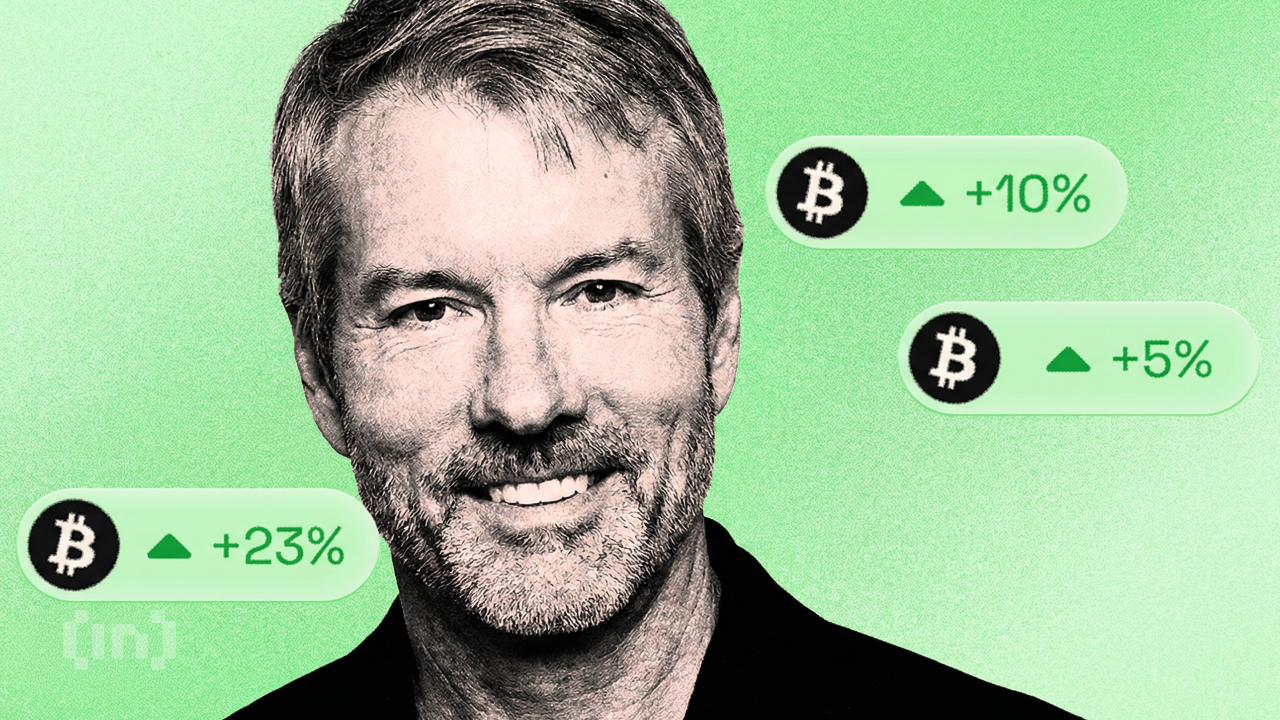
Michael Saylor argued that corporate ownership of Bitcoin (BTC) is inevitable, framing companies as the legal engines it needs to succeed.
He made the case in a July 18 post on X, saying that firms provide efficiency and creditworthiness that no individual can match on their own.
Saylor’s Case for Corporate Bitcoin Ownership
Bitcoin has moved from an individual store of value to an asset held increasingly on corporate books. Saylor, chairman of Strategy (MSTR), has pushed that shift harder than any other executive.
His firm built what is often described as part of Bitcoin’s long-term endgame, a strategy built on relentless institutional accumulation. Saylor has used his platform to promote that strategy for years, giving his posts outsized influence among crypto investors.
Saylor’s post framed companies as vehicles that let people organize under the law more efficiently than individuals acting on their own.
In the post above, he listed efficiency, transparency, creditworthiness, scale, resilience, and continuity as advantages only companies can provide.
Saylor closed by calling corporate adoption not just useful but structurally necessary for Bitcoin’s path toward becoming global money.
Institutions Keep Building Bitcoin Treasuries
Saylor’s thesis lines up with a broader trend across markets. BeInCrypto’s tracking shows an institutional Bitcoin adoption index climbing steadily this year, as banks and asset managers add exposure.
That index puts major bank Bitcoin adoption at 32%, with Fidelity well ahead of Japanese lenders. Meanwhile, firms outside the United States have followed a similar corporate Bitcoin treasury playbook.
Metaplanet, for instance, recently became the world’s third-largest holder, trailing only Strategy and Twenty One Capital.
Bitcoin traded near $63,900 on Saturday, up roughly 1.4% over 24 hours. That modest gain provides Saylor’s argument with a stable backdrop, though it says little about whether corporate demand alone can sustain the network’s long-term growth.
Critics Question Strategy’s Own Playbook
However, Strategy’s own approach has drawn scrutiny in recent months. Ripple CEO Brad Garlinghouse recently leveled pointed criticism at Strategy, even while remaining bullish on Bitcoin itself. He argued that leverage tied to a single volatile asset carries risks a simple ownership thesis does not address.
Strategy’s preferred shares have also traded well below par this year, a detail Saylor’s post did not mention.
Saylor treats corporate adoption as a foregone conclusion. Whether balance sheets can absorb Bitcoin’s volatility as smoothly as he predicts remains an open question.
Investors watching Strategy’s stock in the coming weeks may get an early read on how convincing that pitch really is.
The post Michael Saylor Calls Corporate Bitcoin Adoption Necessary and Inevitable appeared first on BeInCrypto.
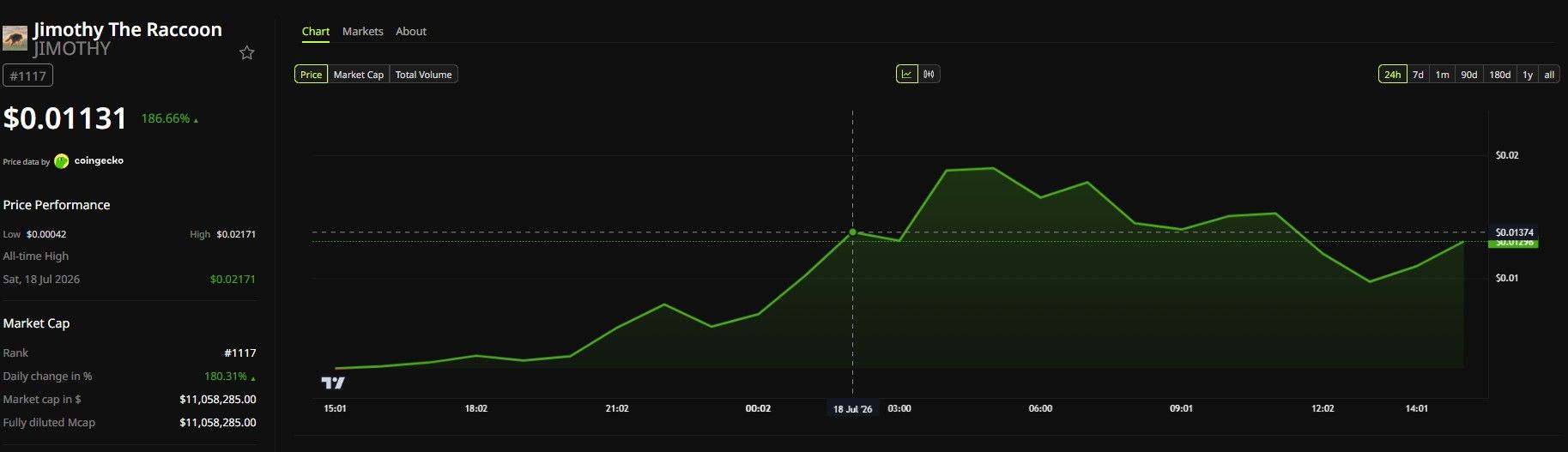
Jimothy The Raccoon (JIMOTHY), a Solana meme coin named after a viral Seattle raccoon, jumped 186% in 24 hours. Live BeInCrypto market data puts its market cap near $11 million.
Anonymous developers launched the token this week. Clips of the animal’s odd shape had already spread across social media, and traders piled in within hours of its Solana debut.
A Raccoon Named Jimothy Became an Overnight Icon
Seattle resident Kiana Hall filmed the raccoon near a Ballard neighborhood Goodwill earlier this week.
Marcie Logsdon, an associate professor at Washington State University’s Veterinary Teaching Hospital, said the raccoon likely has short spine syndrome, a rare congenital condition that shortens the spine and limits mobility.
“I was surprised and honestly a little bit inspired that he is that resilient”
The moment echoes a recent meme coin frenzy triggered by a hoax about Binance founder Changpeng Zhao. In that case too, a viral clip preceded a same-day token launch.

Pump.fun Trending Page Turned Attention Into Trading Volume
Anonymous creators listed JIMOTHY on Pump.fun. The platform’s trending page then exposed the token to a wide pool of Solana traders within hours.
Pump.fun’s official account then reposted the token on X, pushing it in front of an even larger trading audience. A dedicated subreddit and a wave of fan merchandise followed. Tattoo artists even offered discounts for raccoon-inspired ink.
The launch also arrived during a broader Pump.fun trading rebound. The platform’s share of profitable traders has climbed for four straight months.
Meanwhile, Solana network activity has jumped even as the SOL token itself struggles. Meme coin launches keep pulling in fresh volume.
Analysts Warn the Rally May Not Hold
JIMOTHY’s trading volume topped $36 million in the past day. Its price has climbed more than 50-fold from its low to an all-time high of $0.0217, according to live rankings data.
The token still ranks 1,117th by market capitalization, tiny next to Solana’s blue-chip names, and its supply sits near one billion coins.
However, tokens built on viral animal moments rarely hold their gains once the news cycle fades.
The pattern already played out this year in a World Cup meme coin rally tied to footballer Erling Haaland. A similar narrative-driven token rally followed Pentagon UFO files, and both cooled within weeks.
The post Jimothy The Raccoon Solana Token Climbs 186% After Viral Meme Fame appeared first on BeInCrypto.
Berkshire’s Equity Portfolio Is Rallying, but the Apple Sales Still Sting
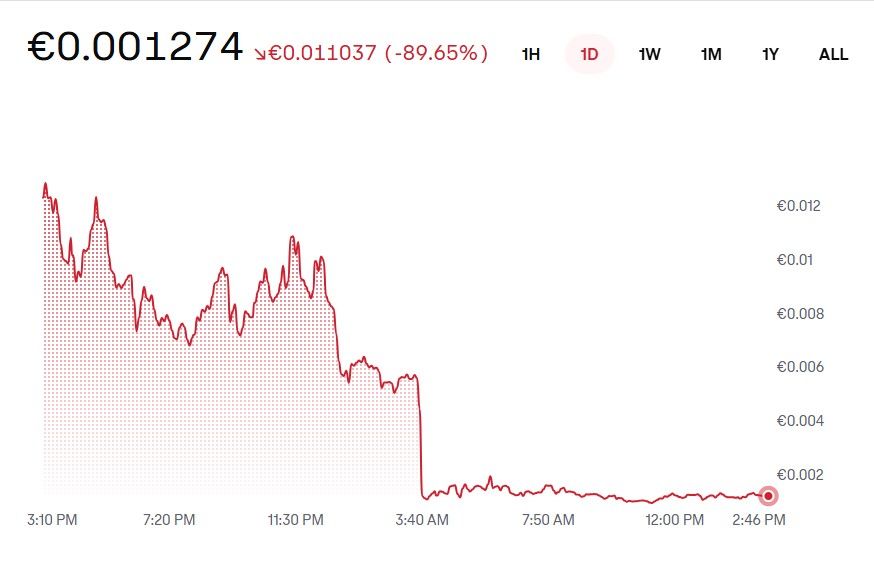
Coinbase CEO Brian Armstrong briefly swapped his X profile picture for a cartoon mascot. The move sent BRIAN, a meme coin on Coinbase’s Base network, surging. Its market cap jumped from under $1 million to $37 million in hours.
The token is officially named Coinbase Man. Developers sent roughly 80% of its 1 billion supply to Armstrong’s wallet at launch. The rally collapsed once Armstrong reverted to his original profile picture, a CryptoPunk NFT.
The Rally Behind BRIAN’s Surge
BRIAN’s climb followed a familiar pattern. A single social signal from a recognizable figure can move markets faster than any product update. Traders read Armstrong’s profile swap as tacit approval.
The reaction echoed how celebrity-driven meme coin rallies have played out elsewhere this year. It also followed a rockier stretch for Base, whose earlier content coin experiments had already left users burned.
Historically, executive gestures have moved token prices well before fundamentals catch up. Volume on decentralized exchanges spiked within minutes, and the token’s price climbed roughly thirty-sevenfold from its starting point.
However, neither Coinbase nor Armstrong endorsed BRIAN directly at any point.
BRIAN’s Reversal
Momentum reversed within hours. Armstrong swapped his picture back to his usual CryptoPunk, and liquidity for BRIAN thinned almost immediately. The token’s market cap fell by more than 90%, to near $1.3 million, according to Coinbase’s price page.
Meanwhile, trading volume remained elevated at around $12 million over 24 hours. That gap suggested traders were exiting rather than holding through the drop.
The reversal also arrived during a stretch of Coinbase controversies, including its recent AI prediction market dispute. Therefore, the episode resembled a narrative that overheated rather than a coordinated rug pull.

What the Crash Signals for Base
The swing raises questions about which network retail traders trust next, especially as rival chains’ meme coin volumes draw growing attention. Armstrong has separately criticized restrictive investor rules, arguing that regulation should protect rather than exclude smaller traders.
The contrast is notable. His comments favor retail access, yet BRIAN’s collapse shows how quickly that access can turn costly. The episode suggests that when executives even casually gesture toward a token, retail money follows quickly, regardless of the token’s backing.
The post Coinbase CEO Changed His Profile Picture and This Meme Coin Soared 37x appeared first on BeInCrypto.
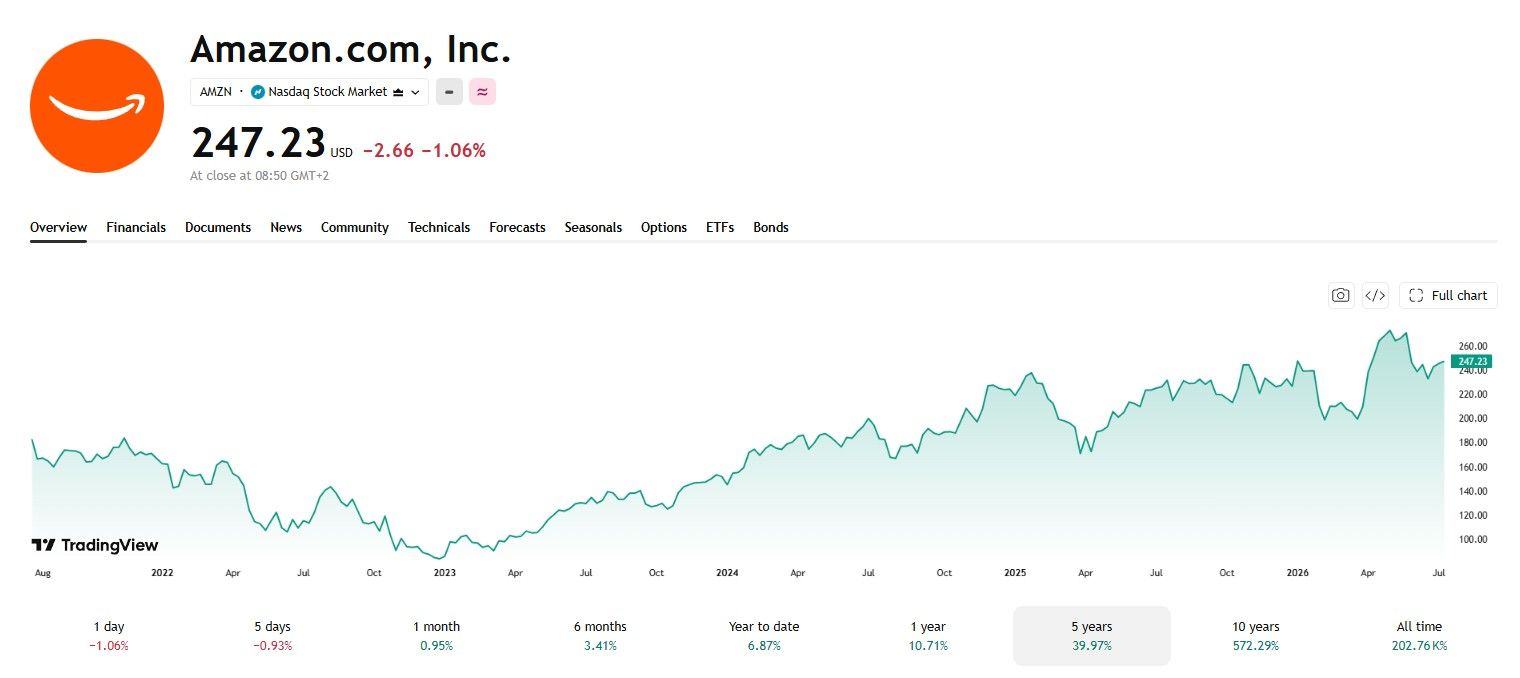
Amazon Web Services (AWS) confirmed that a display bug caused some customer bills to be displayed in the trillions. In a few cases, estimates reached the quadrillions of dollars.
AWS Support said an initial rollback attempt failed to fix the error right away. The bug hit the Billing Console’s estimate tools, not actual invoices.
How Amazon’s Billing Console Broke
A faulty calculation entered AWS’s estimated billing subsystem and multiplied normal usage by absurd totals. Customers whose monthly bills typically run in the hundreds suddenly saw projections with 15 zeros.
This is not AWS’s first reliability scare this year. In May, an AWS data center outage disrupted trading at Coinbase, a major crypto exchange.
A Bitcoin price display glitch hit Revolut the same month. Both cases show how a single backend fault can ripple through products that millions of people use daily.
AWS also signed a $6 billion Snowflake AI infrastructure deal in May, a sign of its scale in enterprise computing. Therefore, a pricing bug at this scale draws attention well beyond AWS’s regular customer base.

Amazon’s “Very Slight Miscalculation”
Amazon’s technical teams continued working on the reporting issue after the rollback proved insufficient. The company said it expects corrected figures to appear soon.
Rather than stick to a dry apology, the official AWS account on X leaned into the absurdity of the numbers. It called the error a typo and a “slight miscalculation,” then added “very slight” for effect.
The post closed with a wink, asking customers what they planned to do with their imaginary trillions.
Amazon reiterated that no manual steps are required and that the bug affects estimates only, not billed amounts.
A Pattern of Automated Errors
The incident lands amid a broader run of automation mishaps at major platforms. Coinbase faced criticism this month over an AI prediction market error that surfaced a false World Cup result.
Meanwhile, AI mega-cap earnings season volatility has trading desks watching cloud providers closely for stability.
As AWS backfills accurate data across its dashboards, the episode raises a question about automated systems. How much scrutiny should these systems face before reaching customers?
The post Amazon AWS Apologizes After Quadrillion-Dollar Glitch Terrifies Cloud Users appeared first on BeInCrypto.

TradFi institutions are adopting blockchain to improve their existing operations, not because they have embraced decentralization, venture capital firm a16z said in its latest report.
The technology helps lower operating costs, speed up settlement, expand distribution, and “tighten its grip” on customer relationships, which makes it a practical business tool rather than an ideological shift.
TradFi’s Blockchain Push
Institutions are not blending into DeFi as it exists today. Instead, a16z stated that they are adopting only the elements of DeFi that fit their regulatory, operational, and risk requirements while leaving behind features that do not. This selective approach is reshaping blockchain-based finance into something different from both traditional finance and current DeFi.
The result is an emerging form of programmable financial infrastructure designed to meet institutional needs while using the technology as its foundation.
According to a16z, initiatives such as JPMorgan’s permissioned blockchain for institutional deposits and tokenized money market funds from BlackRock and Franklin Templeton are not examples of institutions embracing DeFi. Instead, they are using blockchain to improve existing financial services like interbank settlements, fund subscriptions, and yield-bearing products.
They benefit from blockchain features such as programmability, transparency, and atomic settlement while intentionally avoiding core DeFi principles like open access, pseudonymity, and trustless execution. The focus is on making traditional financial infrastructure more efficient rather than adopting decentralized finance in its original form.
Crypto Must Look Beyond Wall Street
The blockchain capabilities now being adopted by institutions were first developed in open, permissionless ecosystems rather than inside banks or traditional financial firms. Those environments allowed developers to test new financial models and infrastructure. As a result, institutional adoption is largely built on innovations that originated in the open crypto ecosystem.
The report argued that the industry should not focus too heavily on banks and asset managers simply because they are major customers. While traditional financial institutions represent an important source of demand, they do not define the industry’s full potential, and opportunities beyond TradFi should not be overlooked.
“Designing for institutional requirements is a legitimate and valuable pursuit, but it is only one lane, not the whole road.”
The post a16z Reveals What TradFi Really Wants From Blockchain appeared first on CryptoPotato.
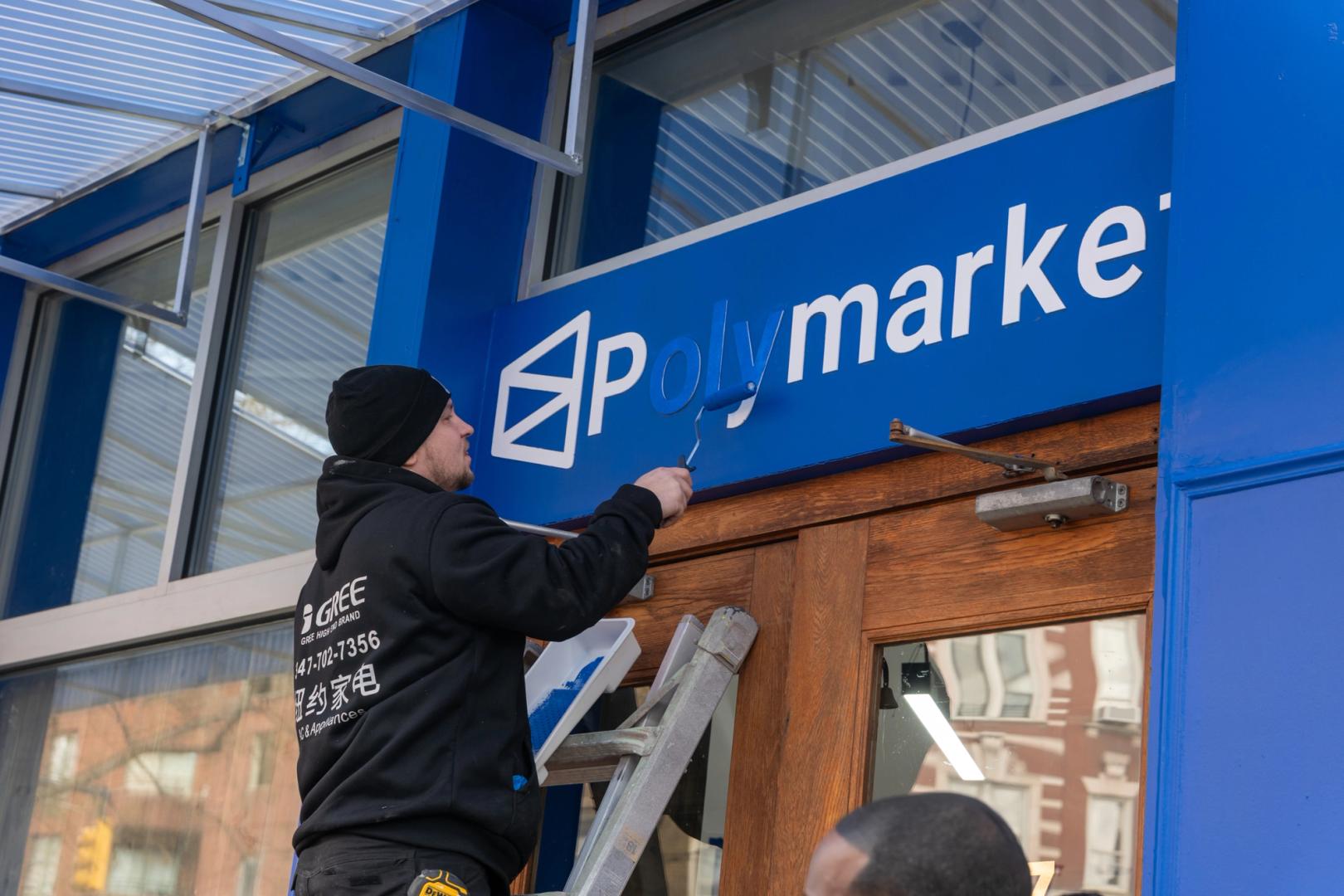
France’s gambling regulator, the Autorité Nationale des Jeux (ANJ), ordered internet service providers to block Polymarket on July 16, treating the prediction market as an illegal gambling site rather than a financial trading venue.
The ANJ said earlier restrictions had failed to keep French users off the platform. Polymarket drew 578,751 visits from 205,057 unique visitors in France in June, according to Similarweb data cited by the regulator, despite a ban on financial transactions in place since November 2024. A VPN was enough to bypass it.
The homepage remained accessible, allowing users to view live markets and odds. The ANJ said the real-time odds display promoted an unauthorized gambling service.
“The site’s homepage, which dynamically displays real-time odds for various events open to betting, thus serves as a major channel for disseminating and promoting Polymarket’s offerings, even though the site’s operations are not authorized in France,” the regulator wrote. Fines can reach 100,000 euros ($114,380).
Polymarket didn’t immediately respond to a comment from CoinDesk.
The ANJ also cited a complaint from France’s weather service, Météo-France, over a tampered temperature sensor tied to weather-based bets, prompting the Paris prosecutor’s cybercrime unit to open an investigation on May 4.


Zerodha co-founder Nikhil Kamath and Coinbase CEO Brian Armstrong warned that the sky-high valuations of premium AI companies like OpenAI and Anthropic face a massive structural threat.
The alarm arrives amid growing investor skepticism, as both leaders compared today’s AI frenzy to the dot-com crash and past crypto bubbles.
Why Kamath Would Short Every AI Company Today
Speaking on the “People by WTF” podcast, both leaders drew direct parallels between the current AI boom, the 2000s dot-com collapse, and standard crypto market bubbles.
Their shared concern centers on expensive proprietary models losing ground to cheaper alternatives.
Kamath framed the risk in personal, investor terms. He said shorting every private AI company today could, in five years, make him money, comparing the moment to the Internet bubble.
“Like me, the stock trader investor, I’m starting to feel at this point that if I were to take every private company in AI and short their stock today, in five years, I might make money… It feels a bit like… the ‘Internet bubble’,” Kamath said.
Follow us on X to get the latest news as it happens.
The Zerodha co-founder also expects the industry to fragment. A market dominated by a few American giants would give way to a regional, self-reliant economy built through reverse-engineering and rapid local development.
Under that view, individual nations stop importing expensive models and build their own. India would run its own domestic copy, with the tokens and energy sitting locally, functional enough for everyday use even if not cutting-edge.
“If the world goes in that direction, I don’t see the reason to pay the multiples that these private companies have today,” Zerodha co-founder argued.
What is the 99% Cheaper Threat Armstrong Describes
Armstrong, notably, agreed with that market assessment. He pointed to a stark cost gap between elite frontier labs and the open-source models trailing right behind them.
Top-tier labs spend billions building the next breakthrough. Open-source alternatives, roughly six months behind, reach the market at a tiny fraction of that price.
The Coinbase CEO put a figure on it. Open-source models run about six months behind and cost up to 99% less for inference, so a larger share of workloads could shift toward them.
He drew a clear line between two futures. Elite frontier models stay valuable for highly specialized tasks like discovering new physics, but average consumers and businesses turn intensely price-sensitive.
“It makes me a little nervous when I see these valuations growing this fast as well. Like I’ve seen things like this happen before in crypto. They correct, and then there’s real value under it, so then they grow later,” Armstrong noted.
Once standard models run cheaply on everyday commodity hardware, the corporate defenses protecting high-value AI companies could dissolve entirely. That erosion sits at the heart of the warning.
Armstrong closed on a cautious note. Fast-growing valuations make him nervous, echoing patterns he witnessed in crypto, where prices corrected before real value emerged and growth resumed later.
Subscribe to our YouTube channel to watch leaders and journalists provide expert insights.
The post Billionaire Investor Just Revealed the AI Bet That Could Pay Off Big in 5 Years appeared first on BeInCrypto.


Ethereum’s best marketing line was that using it destroyed it, that every transaction burned ETH and shrank the supply. Then the network solved its scaling problem, activity fled to layer 2s, and the burn collapsed. The scaling worked. The scarcity did not survive it.
Summary
- Ethereum’s “ultrasound money” thesis held that EIP-1559 fee burning would outpace new issuance, making ETH deflationary and a superior store of value to Bitcoin.
- It worked briefly after the 2022 Merge. Then the March 2024 Dencun upgrade moved activity to layer-2 rollups paying near-zero fees, and the daily burn collapsed from thousands of ETH to as low as 50 to 70.
- ETH has since been mildly inflationary, with net supply growth around 0.2% to 0.8% annually depending on the period, reversing the deflation the thesis promised.
- The December 2025 Fusaka upgrade added EIP-7918, a blob fee floor designed to restore a minimum burn. Fidelity modeled it would have added roughly $78.6 million in burn across 93% of days since 2024.
- The deeper tension is unresolved: a cheap, scaled Ethereum burns less than a congested, expensive one, so the network’s success as infrastructure works against its scarcity as an asset.
For about eighteen months, Ethereum had the best story in crypto, and the story was a paradox: the more people used the network, the rarer its token became. Every transaction burned a little ETH, and when the network was busy enough, it burned more than it created. Supply went down. The community called it ultrasound money, a deliberate jab at Bitcoin’s “sound money,” complete with a bat emoji and a movement.
For a while, the data backed it up. Then Ethereum did the thing it had promised to do for years, which was to scale, and scaling broke the story. Activity moved to layer-2 networks that pay almost nothing to the base chain, the burn collapsed, and ETH quietly went inflationary again. This is the story of how Ethereum’s greatest technical success dismantled its best economic narrative, and whether a December upgrade can put the pieces back.
What ultrasound money actually meant
The mechanism is worth getting exactly right, because the whole debate turns on it.
In August 2021, Ethereum activated EIP-1559, which changed how transaction fees work. Instead of paying miners directly, every transaction now pays a base fee that is burned, permanently removed from circulation. The busier the network, the higher the base fee, and the more ETH destroyed. On its own, that is just a fee-burning mechanism. It became a monetary thesis when Ethereum switched from proof-of-work to proof-of-stake in the September 2022 Merge, which cut new ETH issuance by roughly 90%, because the network no longer had to pay energy-intensive miners.
Put the two together, and you get the ultrasound thesis. Issuance dropped to a trickle after the Merge. Burning continued with every transaction. If burning exceeded issuance, total ETH supply would shrink over time, making the asset deflationary. And a deflationary asset with growing demand should, in theory, appreciate. Ethereum would become harder money than Bitcoin, whose supply still grows, hence “ultrasound.” The tracking site ultrasound.money existed to display exactly this: supply ticking down, day by day.
For a stretch after the Merge, it happened. Supply fell back toward and below the level it sat at during the Merge itself. Burns outpaced issuance. The narrative was not hype; it was, for that window, an accurate description of the data. That is what made it powerful, and what made its reversal so awkward.
How scaling broke it
The break came from Ethereum solving its most famous problem, and the irony is total.
Ethereum’s scaling strategy is to push transactions off the expensive base layer and onto layer-2 rollups, networks like Arbitrum, Optimism, and Base that process transactions cheaply and then post compressed data back to Ethereum for security. The base layer becomes a settlement and data-availability layer; the rollups handle the actual activity. This is the roadmap Ethereum has pursued for years, and it works.
The March 2024 Dencun upgrade was the pivotal moment. It introduced EIP-4844, “blob” transactions, a separate and far cheaper data channel for rollups to post their data. Costs for layer 2s dropped by a factor of 10 to 100. Activity that used to happen on mainnet, paying mainnet fees and burning mainnet ETH, moved to rollups paying blob fees that were, in practice, close to zero because blob space was massively oversupplied relative to demand.
The effect on the burn was immediate and severe. Before Dencun, Ethereum burned thousands of ETH per day during busy periods. After Dencun, daily burn dropped to as low as 50 to 70 ETH. The base layer had lost its primary fee source. With issuance running around 1,700 ETH per day and burn collapsing well below that, the equation flipped: Ethereum began creating more ETH than it destroyed. By various measures across 2025 and into 2026, net annual inflation ran somewhere between roughly 0.2% and 0.8%, depending on the window. ETH supply crossed back above its Merge-era level. The deflation was over.
The mechanism that made ultrasound money true, EIP-1559 burning at scale, had not been removed. It had been bypassed. The activity simply moved to a layer where the burn does not happen in any meaningful amount. Ethereum scaled successfully and, in doing so, severed the link between usage and scarcity that the entire thesis depended on.
The bull case: it still works, just differently
The response from Ethereum’s defenders is not denial. It is reframing, and parts of it are genuinely strong.
The first point is that elastic scarcity is the actual feature, not permanent deflation. Ethereum was never designed to deflate forever at a fixed rate. It was designed to burn in proportion to demand, which means it becomes deflationary when the network is busy and mildly inflationary when it is quiet. During periods of high mainnet activity, above roughly 16 gwei average gas, burn still exceeds issuance, and ETH still goes net deflationary, temporarily. The mechanism works exactly as designed; it is just that a scaled network spends more time in the quiet regime. In this reading, ultrasound money was always conditional, and the condition is demand, not a promise.
The second point is that issuance is still radically lower than before. Even mildly inflationary, Ethereum issues roughly 90% less ETH than it did under proof-of-work. Compared to Bitcoin, which currently inflates at around 0.8% annually on a fixed schedule, Ethereum’s roughly 0.2% net inflation in calmer periods is actually lower. Both assets inflate in 2026; Ethereum, by some measures, inflates less. The “harder than Bitcoin” claim survives in a narrow, technical form even without net deflation.
The third point is that the supply figure overstates the sell pressure. Roughly 28% to 30% of all ETH is locked in staking, earning yield and not circulating. The tradeable float, ETH actually available on exchanges, is meaningfully smaller than the headline supply number, and it shrinks as more ETH is staked. A modestly inflating total supply with a large and growing staked portion is a very different pressure than the raw inflation number suggests. Demand from ETFs, treasury companies, and staking can absorb 0.2% inflation without difficulty.
And the fourth point is simply that the store-of-value case never rested on deflation alone. As long as demand for Ethereum’s blockspace, its role as settlement for stablecoins, tokenization, and DeFi, grows faster than supply, price can rise regardless of whether supply ticks up 0.2% a year. Scarcity was a nice story. Utility is the real thesis.
The bear case: the narrative was load-bearing
The skeptical reading is that the ultrasound story was not just marketing, that it was doing real work in the investment case, and that losing it matters more than the reframing admits.
The blunt version comes from the on-chain data and the people watching it leave. Daily network fee revenue on Ethereum fell from near $40 million in early 2025 to a local low around $10 million in 2026. That is not just a burn problem; it is a value-accrual problem. If the base layer captures little fee revenue because activity happens on rollups that pay it almost nothing, then holding ETH is a bet on an asset whose own network is monetizing its users poorly. Some analyses have tied this directly to developer attrition and reduced whale support, framing the end of ultrasound money as the end of a period when ETH had a clean, quantifiable reason to appreciate.
The deeper problem is structural and hard to argue away: a scaled, efficient Ethereum is less deflationary than a congested, expensive one. This is the tension at the center of the whole debate. The very thing that makes Ethereum better as infrastructure, cheap transactions, more capacity, activity on fast rollups, is the thing that reduces the burn. Ethereum cannot simultaneously be the cheap, high-throughput settlement layer it wants to be and the fee-burning deflationary asset the ultrasound thesis needed. Those are in direct conflict, and the roadmap chose scaling. The asset thesis was, in a real sense, sacrificed to the technology roadmap.
Then there is the value-capture question that rollups sharpen. Layer 2s use Ethereum for security and pay it a pittance for the privilege. Robinhood’s own chain is an example: analyses of corporate L2s show the base layer capturing a rounding error of the economics while providing the security that makes the whole arrangement credible. If Ethereum’s future is thousands of rollups settling to it cheaply, then Ethereum is providing enormous value and capturing little of it, and no amount of narrative reframing fixes a value-capture problem that lives in the fee structure.
The fix nobody is talking about
Which brings us to December 2025, and the upgrade that was designed, in part, to address exactly this, and that most of the market ignored.
The Fusaka upgrade activated on December 3, 2025. Its headline features were about scaling further, PeerDAS and expanded blob capacity. But buried in it was EIP-7918, the “blob base fee bound,” which is the most direct attempt yet to repair the burn. The problem Dencun created was that blob fees could collapse to near-zero, one wei, when execution costs dominated and blob demand was soft, which meant rollups consumed Ethereum’s capacity almost for free and burned almost nothing. EIP-7918 sets a floor: it ties the minimum blob fee to the execution base fee, roughly the execution base fee divided by 16, so that even in quiet periods rollups pay a meaningful minimum, and a minimum stream of ETH gets burned.
The modeling is striking. Fidelity Digital Assets analyzed what would have happened if EIP-7918 had been active since blobs launched, and found that on 93% of days since the 2024 Dencun upgrade, the adjusted fee would have exceeded the actual fee, generating an estimated additional $78.6 million, roughly 24,641 ETH, in cumulative blob-fee revenue. Blockworks noted that had the mechanism been introduced in June 2025, burnt blob fees would have been nearly 8x higher. The intent is explicit: restore a floor under the burn so that as stablecoins, DeFi, and tokenization migrate to rollups, ETH still captures value from that activity instead of subsidizing it.
The honest caveat is that this is a floor, not a restoration. EIP-7918 prevents the burn from collapsing to zero; it does not recreate the thousands-of-ETH-per-day burn of the congested mainnet era. Whether it produces measurable, sustained deflation depends on how much activity flows through blobs and how high execution base fees run, and the market is still watching. It is a serious, well-designed attempt to reconnect usage and scarcity. It is not a return to 2022.
Sound money versus ultrasound money, honestly compared
Because the entire thesis was built as a shot at Bitcoin, it is worth putting the two monetary models side by side without the tribalism, since the comparison is more interesting than either camp admits.
Bitcoin offers fixed scarcity. The supply schedule is written into the protocol, capped at 21 million coins, and halves on a predictable timetable roughly every four years. A holder knows today, with certainty, what Bitcoin’s issuance will be in 2030 and 2040. That certainty is the entire product. Bitcoin does not react to demand, does not burn, does not adjust; it simply issues on schedule toward a hard cap, and its current inflation runs around 0.8% annually, trending toward zero over decades. The trade-off Bitcoin holders accept is that the base layer offers little native utility and no yield. You hold it for the certainty, and you give up productivity in exchange.
Ethereum offered, and to a degree still offers, elastic scarcity. Supply responds to network demand: high usage burns more and can push ETH net deflationary; low usage burns less and lets mild inflation through. The appeal was a token that becomes scarcer precisely when it is most used, tying the asset’s scarcity to the network’s success. The trade-off, which the L2 era exposed, is that elasticity cuts both ways.
A demand-responsive supply is only deflationary when demand is high on the layer that burns, and Ethereum deliberately moved demand to layers that do not burn. Bitcoin’s rigidity, often criticized as inflexible, turned out to be the thing that made its monetary promise keepable. Ethereum’s flexibility, often praised as sophisticated, turned out to be the thing that made its monetary promise conditional.
The honest scorecard is that these are different products for different buyers, not better and worse versions of the same thing. Bitcoin sells certainty and asks you to forgo utility. Ethereum sells utility and asks you to accept that its scarcity depends on how that utility is used. The ultrasound-money era was the brief window when Ethereum appeared to offer both, certainty of deflation and utility of a working network, and that window closed not because Ethereum failed but because it succeeded at scaling.
A holder choosing between them in 2026 is really choosing between guaranteed scarcity with no yield and demand-driven scarcity with staking yield and network utility. Framed that way, the loss of ultrasound money is less a defeat than a clarification: Ethereum was never going to be Bitcoin, and the burn was hiding how different the two bets actually are.
What this means for holding ETH
Strip away the narrative fight and the practical question is whether the ultrasound story mattered to the price, and the uncomfortable answer is that it is hard to tell, because ETH has underperformed through the entire period regardless.
The clean way to see it: the ultrasound thesis was strongest right after the Merge, and it has been dismantled steadily since Dencun in March 2024. Over that same window, ETH has been a persistent underperformer against both Bitcoin and its own former highs. Either the market was pricing the loss of the deflation narrative, or the market never cared about the narrative and ETH’s problems lie elsewhere, in L2 value leakage, in competition from Solana, in the sheer difficulty of the modular roadmap. Both readings are defensible, and they point to different conclusions about whether fixing the burn fixes the price.
The most honest framing is that ultrasound money was a proxy for a real question that has not gone away: does Ethereum capture value from its own success? When the network was congested and expensive, the answer was visibly yes; the burn made it legible. When the network scaled and cheapened, the answer became murky, and the burn stopped telling the story. EIP-7918 is an attempt to make the answer legible again by putting a floor under value capture.
Whether it works will show up not in the marketing but in two numbers over the next year: net ETH supply, and base-layer fee revenue. If both turn up meaningfully, the thesis has a second life. If they do not, then ultrasound money was a phase, not a property, and Ethereum’s investment case has to stand on utility alone, which is a harder, slower, less tweetable argument than the one that shrank the supply.
Frequently Asked Questions
What is Ethereum ultrasound money?
It is the thesis that Ethereum’s ETH token would become deflationary and a superior store of value to Bitcoin. It rests on two mechanisms: EIP-1559, activated in 2021, which burns a portion of every transaction fee, and the 2022 Merge, which cut new ETH issuance by roughly 90%. When burning exceeds issuance, total supply shrinks. The term was a play on Bitcoin’s “sound money” branding.
Is Ethereum still deflationary in 2026?
Not on a net basis, in normal conditions. After the March 2024 Dencun upgrade shifted activity to cheap layer-2 rollups, the burn collapsed, and ETH became mildly inflationary, with net supply growth around 0.2% to 0.8% annually depending on the period. During bursts of high mainnet activity, it can still turn temporarily deflationary, but the sustained deflation of the immediate post-Merge period ended.
Why did layer 2s break the burn?
Because they moved activity off the base layer, where transactions burned meaningful ETH, onto rollups that pay near-zero fees. The Dencun upgrade introduced cheap “blob” transactions for rollups, cutting their costs 10 to 100 times. Blob space was oversupplied, so blob fees fell close to zero, and the daily burn dropped from thousands of ETH to as low as 50 to 70. The activity continued; the burn did not follow it.
Does this mean ETH is a worse investment?
Not necessarily, and defenders make several counterpoints: issuance is still about 90% lower than under proof-of-work, roughly 0.2% net inflation in calm periods is actually below Bitcoin’s, nearly a third of ETH is locked in staking and off the market, and the real case rests on demand for blockspace rather than deflation. Critics counter that base-layer fee revenue collapsed too, raising a genuine value-capture problem.
What is EIP-7918?
A change introduced in Ethereum’s December 2025 Fusaka upgrade that sets a minimum price for blob transactions, tied to the execution base fee, roughly that fee divided by 16. It prevents blob fees from collapsing to near-zero during quiet periods, ensuring a minimum stream of ETH is burned. Fidelity modeled that it would have added roughly $78.6 million in cumulative burn across 93% of days since 2024 had it existed earlier.
Did Fusaka restore ultrasound money?
No, it put a floor under the burn rather than restoring the deflation of the post-Merge era. EIP-7918 stops the burn from collapsing to zero and improves value capture as activity migrates to rollups, but it does not recreate the thousands-of-ETH-per-day burn of the congested mainnet period. Whether it produces sustained net deflation depends on blob activity and execution fees, and remains to be seen.
Is Ethereum still harder money than Bitcoin?
In a narrow technical sense, sometimes. In calm periods, Ethereum’s roughly 0.2% net inflation can run below Bitcoin’s roughly 0.8% fixed-schedule inflation. But Bitcoin offers predictable, protocol-guaranteed scarcity indefinitely, while Ethereum’s supply is elastic and responds to demand, so it can inflate more during quiet, scaled periods. They offer different kinds of scarcity: fixed and certain versus elastic and demand-driven.
What should I watch to know if the thesis recovers?
Two numbers over the next year: net ETH supply growth, and Ethereum base-layer fee revenue. If EIP-7918 and rising rollup activity push net supply back toward flat or negative while base-layer revenue climbs from its roughly $10 million lows, the value-capture story recovers. If supply keeps growing and fee revenue stays depressed, ultrasound money was a temporary phase, and ETH’s case rests on utility and demand alone.
Disclaimer: This article is for information and educational purposes only and does not constitute financial or investment advice. It describes monetary mechanics and network upgrades whose effects are uncertain and still developing. Nothing here is a recommendation to buy or sell any asset. Always do your own research. Figures on supply, burn, and inflation move continuously and are accurate as of July 17, 2026.


Robinhood Chain launched, filled with memecoins, briefly ranked third among DEXs, and the “Solana killer” talk started immediately. Then you look at the actual numbers. Solana has 27 times the value locked and 2 million more users. This is not a flippening. It is a fair fight over the wrong metric.
Summary
- Robinhood Chain launched July 1 and drew roughly $185 million in value locked and over $3 billion in first-week DEX volume, briefly ranking among the top DEXs by volume and prompting Solana comparisons.
- Solana dwarfs it on every durable metric: around $4.93 billion in value locked, $1.91 billion in daily DEX volume, more than 2 million active addresses, and roughly $3 million in daily app revenue.
- The gap on value locked is about 27 to 1. On active users, it is larger. Volume alone, the one metric where Robinhood looked competitive, is the least durable measure and is inflated by a memecoin frenzy and a gas subsidy.
- The real bull case for Robinhood is not flipping Solana on-chain. It is distribution: roughly 28 million existing customers and a decade of retail brand equity that no crypto-native chain can match.
- The honest verdict is that Robinhood will not flip Solana on DeFi metrics any time soon, but the two are not actually competing for the same thing, which makes the flippening question the wrong one.
Within days of Robinhood Chain going live, the comparison wrote itself. A memecoin frenzy sent the chain’s DEX volume past $3 billion in a week; it briefly cracked the top three networks by daily DEX volume, and crypto Twitter did what crypto Twitter does: it declared a Solana killer.
The parallel was tidy. Solana also grew through a memecoin boom, so surely Robinhood was running the same playbook toward the same destination. Then you pull the actual data, and the tidy story falls apart. Solana has roughly 27 times Robinhood Chain’s value locked and millions more users.
The one metric where Robinhood looked competitive, raw volume, is the flimsiest number on the board. This piece is about whether Robinhood Chain can flip Solana, and the short answer is no, not close, and the more interesting answer is that flipping Solana was never the right frame.
The scoreboard
Start with the numbers, because the numbers settle most of the argument before it starts.
Solana, as of mid-July 2026, carries around $4.93 billion in total value locked, does roughly $1.91 billion in daily DEX volume, has more than 2 million active addresses, and generates about $3 million in daily application revenue. These are the metrics of a mature, heavily used layer-1 with a deep DeFi ecosystem, years of accumulated liquidity, and a large, sticky user base.
Robinhood Chain, roughly 2 weeks after launch, sits at around $185 million in value locked, having posted more than $3 billion in DEX volume across its first week. Depending on the day and the source, its TVL has been quoted between $185 million and $312 million, with the higher figure heavy on stablecoin deposits. Active addresses are counted in the hundreds of thousands cumulatively, not the millions active.
Line the durable metrics up, and the gap is stark. On value locked, Solana leads by a factor of roughly 27 to one against the lower Robinhood figure, and still around 16 to 1 against the higher one. On active users, the gap is larger still. On application revenue, Solana’s ecosystem earns real fees across a diverse set of protocols; Robinhood Chain’s revenue is concentrated in memecoin trading and inflated by incentives. There is exactly one metric where Robinhood looked competitive in its first fortnight, and that is raw DEX volume, where a memecoin frenzy briefly pushed it into the same conversation as networks many times its size.
That single metric is doing all the work in the flippening narrative, and it is the metric that deserves the least trust.
Why volume is the wrong number
Volume is seductive because it is large and it moves fast, and it is misleading for the same reasons.
Robinhood Chain’s $3 billion first week was overwhelmingly memecoin trading. CASHCAT alone generated roughly $98 million in a single day, about 17% of the chain’s entire DEX volume, and the broader wave of Robinhood-themed tokens, Cash Dog in Hood, Little John, Hoodrat, drove most of the rest.
Memecoin volume is the most transient category of on-chain activity there is. It arrives with attention and leaves with it, and it leaves no infrastructure behind. A chain doing $3 billion in memecoin volume this week can do a fraction of that next month, as the 33% single-day CASHCAT drop after its launchpad exited already showed.
Then there is the subsidy. Robinhood Chain ran a 90-day gas fee subsidy from launch, which makes transactions artificially cheap and inflates transaction counts and, indirectly, trading activity. Any volume comparison during the subsidy window is measuring a promotion as much as organic demand. The honest read of that number will only be available once the subsidy expires and users start paying real costs.
Value locked, by contrast, is sticky. It represents capital that has chosen to reside on the chain, in lending protocols, liquidity pools, and asset-management strategies, and it does not evaporate with a memecoin’s attention cycle. Solana’s ~$4.93 billion in TVL is the accumulated result of years of protocols, integrations, and users committing capital. Robinhood’s ~$185 million is a 2-week-old figure heavily weighted toward stablecoin deposits and speculative liquidity. TVL is the metric that predicts whether a chain is durable. Volume is the metric that predicts whether it is currently trending. They are not the same, and the flippening narrative relies entirely on the second.
The bull case for Robinhood
The strong case for Robinhood Chain does not run through on-chain metrics at all, and the people making the flippening argument are looking in the wrong place because the actual advantage is off-chain.
Robinhood has roughly 28 million customers across 38 countries and more than a decade as one of the largest retail investment platforms in the United States. That is a distribution asset no crypto-native chain possesses. Solana had to acquire its users one at a time through the slow, expensive work of crypto adoption.
Robinhood already has tens of millions of funded accounts belonging to people comfortable trading both stocks and crypto, and it can put its chain in front of them inside an app they already use. If even a modest fraction of that base becomes active on-chain, the user numbers change quickly. Brand equity and distribution are exactly what earlier tokenization projects lacked, and Robinhood has both in abundance.
The memecoin-as-ignition argument also has real historical support. Solana itself grew through a memecoin cycle: BONK, WIF, and the Pump.fun era, before it produced serious infrastructure and institutional adoption. Base followed a similar arc. Speculative trading bootstraps the liquidity, the market makers, the tooling, and the attention that serious applications later need. In this reading, Robinhood Chain’s memecoin phase is not a failure to attract real activity; it is the normal first stage, and judging a 2-week-old chain by its TVL is like judging Solana by its 2021 numbers.
And Robinhood is playing a different game entirely. Its chain is built for tokenized stocks and real-world assets, a category Solana is also chasing but where Robinhood brings brokerage licenses, custody relationships, and regulatory infrastructure that a crypto-native chain has to build from scratch. If the RWA thesis plays out, Robinhood competes on ground where its traditional-finance credentials are an advantage, not on the DeFi metrics where Solana is years ahead. The flippening question assumes the two chains want to be the same thing. They may not.
The bear case for Robinhood
The skeptical case is that Robinhood Chain has attracted exactly the kind of activity that does not convert, and that the gap to Solana is not a head start Robinhood can close but a structural difference it may never close.
The mercenary-liquidity problem is the core of it. Memecoin traders are loyal to activity, not to chains. They arrived on Robinhood Chain because that is where the new-launch action was, and they will leave for the next chain offering quicker profits without a second thought. The Noxa launchpad that powered the entire boom generated roughly $12 million in fees and then stopped accepting launches and went dark within 11 days of the chain’s launch. That is not the behavior of infrastructure settling in; it is the behavior of an extraction cycle moving through. When the memecoin attention leaves, the question is what remains, and right now what remains is roughly $12.8 million in actual tokenized real-world assets, the thing the chain was built for.
The convert-the-traffic problem compounds it. Robinhood’s 28 million customers are a distribution asset only if they can be moved on-chain, and there is no evidence yet that memecoin degens and Robinhood’s retail stock traders are the same people or that 1 becomes the other. The chain’s current users may have almost no overlap with the tokenized-asset investors Robinhood hopes to serve. Distribution is potential, not conversion, and the conversion has not been proven.
Then there is the structural point that on-chain metrics are not a race Robinhood is quietly winning. Solana continues to outperform Robinhood Chain across essentially every DeFi metric despite the new chain’s loud debut, and Solana is not standing still. It has its own institutional momentum, its own tokenized-asset push, its own SBI partnership for on-chain financial markets in Japan. Robinhood is not catching a stationary target. It is entering, 2 weeks old, a competition against a network with a multi-year head start that is itself accelerating. Closing a 27-to-1 TVL gap against a moving, growing competitor is a different proposition than the volume charts suggest.
The Base comparison nobody makes
The flippening debate fixates on Solana, but the more instructive comparison is Coinbase’s Base, because Base is the closest thing to a control group for exactly what Robinhood is attempting, and it complicates both the bull and bear cases.
Base launched in 2023 as a corporate-backed Ethereum layer 2, built by a licensed, publicly traded American financial company with a large existing user base, aimed at bringing mainstream users on-chain. That is Robinhood Chain’s template almost exactly. And Base’s early growth, like Robinhood’s, ran heavily through memecoins before it developed into a more diversified ecosystem. So Base is the case study for whether a corporate chain can convert a speculative launch into durable activity, and the answer it offers is genuinely mixed.
On the bull side, Base did convert. It built real DeFi, real stablecoin activity, and real applications on top of the initial speculation, and it became one of the larger L2s by several measures. Coinbase’s distribution, tens of millions of users, mattered, and the memecoin phase did function as ignition rather than as the whole story. That is the precedent Robinhood is betting on, and it is a real one: a corporate chain did turn a speculative launch into something lasting.
On the bear side, Base did not flip Solana either, and it had a 2-year head start on Robinhood plus a parent company that was crypto-native from birth. If Base, with Coinbase’s crypto-specific expertise and a longer runway, sits alongside Solana instead of above it, the idea that Robinhood Chain will vault past Solana looks even less plausible. And Base has its own value-capture questions as an Ethereum L2, the same ones that apply to Robinhood Chain, where the base layer captures little of the economics. Base shows the corporate-chain model can work; it also shows that working means becoming a significant chain, not dethroning the incumbent. That is the realistic ceiling for Robinhood Chain too: not flipping Solana, but earning a durable place alongside it, and only if it converts the way Base did rather than fading the way most launch-frenzies do.
What a flippening would actually require
The word “flippening” gets thrown around loosely, so it is worth being precise about what would have to happen for Robinhood Chain to actually surpass Solana, because the specifics show why the headline math is not close.
Flipping Solana is not one event; it is a set of them across separate metrics, and they do not move together. On total value locked, Solana holds roughly $4.93 billion against Robinhood Chain’s ~$185 million, a gap of about 27 times. Closing that does not mean matching Solana’s memecoin volume for a week. It means persuading serious capital, lending markets, stablecoin issuers, restaking protocols, and asset managers to park billions on a corporate L2, which is a trust-and-time problem that speculative volume does nothing to solve. TVL is sticky precisely because it represents commitment, and commitment is the thing a memecoin wave cannot manufacture.
On active addresses, Solana runs above 2 million against a far smaller base on Robinhood Chain, and the composition matters more than the count. Solana’s addresses span DeFi users, NFT traders, payment apps, and memecoin degens across a mature ecosystem. Robinhood Chain’s early activity is concentrated in memecoin speculation and a gas subsidy that inflates the raw transaction figure. An address trading CASHCAT once is not equivalent to an address running a lending position, a payment flow, and a staking allocation. The headline number can converge while the underlying engagement stays a chasm apart.
On application revenue, Solana generates around $3 million daily from a diversified base of protocols. Robinhood Chain’s revenue is thin and skewed toward the launchpad-and-memecoin complex that already showed it can evaporate in days when Noxa went dark. Sustainable app revenue requires applications people use for reasons other than speculation, and building that catalog is measured in years of developer adoption, not weeks of viral trading.
Then there is the structural ceiling nobody in the flippening conversation mentions: Robinhood Chain excludes US persons from its flagship products. Stock Tokens are barred to Americans, wallet perpetuals are barred to Americans, and the chain’s entire regulated-RWA thesis is aimed at a user base that cannot legally touch its marquee offerings from Robinhood’s home market. Solana has no such wall. A chain competing for global L1 dominance with its largest potential market fenced off from its best products is running the race with a weight the incumbent does not carry.
Put those together, and the flippening is not a single line for Robinhood Chain to cross. It is four separate lines, on four metrics that move at different speeds for different reasons, at least one of which is capped by regulation. Memecoin volume, the one number Robinhood Chain can actually post, is the least sticky and least predictive of the set. That is why the honest answer to the headline is not “not yet.” It is “not close, and the gap is wider than the volume charts make it look.”
The verdict
So will Robinhood Chain flip Solana? On the metrics that matter, no, and not close, and not soon.
The value-locked gap is roughly 27 to 1. The user gap is larger. The revenue gap is structural. The only metric where Robinhood was competitive is raw volume, which is the least durable measure available, is dominated by transient memecoin trading, and is inflated by a temporary gas subsidy. A chain does not flip a mature layer-1 by winning the one number that evaporates when attention moves on. Every durable indicator points to Solana remaining well ahead for the foreseeable future.
But the question contains a flawed assumption, and that is the more useful thing to say. “Flip Solana” treats the two chains as competitors for the same prize, and they may not be. Solana is a general-purpose, crypto-native layer-1 with a deep DeFi ecosystem built by and for crypto users. Robinhood Chain is a corporate settlement layer built by a licensed brokerage to bring tokenized stocks and real-world assets to a retail base that already trades on Robinhood. Their overlap right now is memecoins, which is precisely the activity neither of them was built for and which will belong to whichever chain is currently paying attention. The lasting competition, if there is one, is over tokenized real-world assets, and that race has barely started.
The honest framing is this. Robinhood will not out-DeFi Solana; that is not a contest it is positioned to win and probably not one it is trying to win. What Robinhood can do is convert a slice of 28 million existing customers into on-chain users of tokenized-asset products, on rails where its brokerage credentials matter more than its DEX volume. If it does that, it does not need to flip Solana, because it will be winning a different game. If it does not, the memecoin volume fades, the chain settles back to its $12.8 million of real assets, and the flippening talk looks like what it probably is: a volume chart mistaken for a verdict. The number to watch is not DEX volume and not the gap to Solana. It is whether tokenized real-world assets on Robinhood Chain grow, and Robinhood’s July 29 earnings are the first real look.
Frequently Asked Questions
Is Robinhood Chain bigger than Solana?
No, and the gap is large. As of mid-July 2026, Solana holds around $4.93 billion in total value locked against Robinhood Chain’s roughly $185 million, a gap of about 27 to 1. Solana also has more than 2 million active addresses and around $1.91 billion in daily DEX volume from a mature ecosystem. Robinhood Chain briefly matched Solana on raw DEX volume during a memecoin frenzy, but trails badly on every durable metric.
Why do people compare Robinhood Chain to Solana?
Because Robinhood Chain’s DEX volume surged past $3 billion in its first week, briefly ranking among the top networks, and because Solana famously grew through a memecoin cycle of its own before maturing. The parallel is that both bootstrapped with speculation. The comparison relies heavily on volume, which is the least durable metric and, for Robinhood, is inflated by memecoin trading and a temporary gas subsidy.
Could Robinhood Chain flip Solana eventually?
On DeFi metrics, it is unlikely any time soon, given a 27-to-1 value-locked gap against a competitor that is itself growing. Robinhood’s real advantage is off-chain: roughly 28 million existing customers and strong retail brand equity. If it converts a meaningful share of that base into on-chain users of tokenized-asset products, it could become large without ever matching Solana on DeFi, because it would be competing on different ground.
Why is DEX volume a misleading metric?
Because it is transient and easily inflated, Robinhood Chain’s volume was overwhelmingly memecoin trading, which arrives and leaves with attention and builds no lasting infrastructure. A 90-day gas subsidy also made transactions artificially cheap during the launch window. Value locked, which represents capital committed to the chain’s protocols, is a far better predictor of durability, and on that measure Solana leads decisively.
What is Robinhood Chain actually built for?
Tokenized stocks and real-world assets. It launched as an Ethereum layer 2 with Stock Tokens as the flagship product, targeting a retail base that already trades equities on Robinhood. Its competitive advantage is brokerage licenses, custody relationships, and regulatory infrastructure. The memecoin activity that drove its early volume is not the use case it was designed for, and only about $12.8 million in real-world assets currently sit on it.
What happened with CASHCAT and the memecoins?
CASHCAT, a token named after Robinhood’s original working name, surged to a roughly $156 million market cap and at one point generated about 17% of the chain’s daily DEX volume. It spawned a wave of Robinhood-themed tokens. The launchpad driving the boom, Noxa, earned around $12 million in fees, then went dark within 11 days, and CASHCAT fell more than 33% in a day, illustrating how quickly memecoin activity can leave.
Does Robinhood’s user base guarantee success?
No. Roughly 28 million customers is a distribution advantage, but distribution is potential, not conversion. There is no evidence yet that Robinhood’s retail stock traders will become active on-chain users, or that the memecoin traders currently driving activity overlap with the tokenized-asset investors the chain targets. Converting existing customers into on-chain users is the unproven step the entire strategy depends on.
When will we know if the strategy is working?
Watch the tokenized real-world asset figure on the chain, currently around $12.8 million, rather than DEX volume or the gap to Solana. If real assets grow substantially while memecoin activity fades, the traffic is converting, and the strategy is working. Robinhood’s second-quarter earnings on July 29 should offer the first real look at Stock Token adoption, and liquidity behavior after the gas subsidy expires will be the next test.
Disclaimer: This article is for information and educational purposes only and does not constitute financial or investment advice. It compares blockchain networks and company strategies, not the merits of any token. Memecoins are highly speculative, and most participants lose money. Nothing here is a recommendation to buy any asset or use any platform. Always do your own research. On-chain figures move quickly and are accurate as of July 17, 2026.

Govinda goes to financial problems for perform dancing wife Sunita expenses #shorts #youtubeshorts

Sunderland’s National Glass Centre to close with final exhibition

Stocks to Watch Recap: Intel, Netflix, SpaceX, Burberry


-
 NewsBeat3 days ago
London Mayor Sadiq Khan handed a peerage by Keir Starmer alongside 15 other Labour figures… just days before the PM leaves No10
-

 Fashion1 day ago
Weekend Open Thread – Corporette.com
-

 Politics17 hours ago
The House | The City of London can help the new chancellor deliver growth in every postcode
-

 Crypto World3 days ago
CFTC blocks Kalshi from unwinding Michigan trades after court order
-

 Politics4 days ago
Young campaigners urge incoming PM to act on outdoor junk food ads
-

 Business3 days ago
Nvidia Stock Slips After Big Tuesday Rally as Huang Confirms Vera Rubin Chip Is Now in Production Today
-

 Crypto World17 hours ago
Ripple Payments Joins MiCA With 14 Firms, Does It Mean Anything For XRP?
-
 Entertainment3 days ago
Disney’s Most Ambitious Failed Star Wars Attraction Is Coming to SDCC
-

 Crypto World1 day ago
Ripple wins EU-wide access as ESMA adds it to MiCA register
-

 Business3 days ago
Palantir Shares Rise After Expanded Nvidia Partnership and Fresh Analyst Upgrades Ahead of Earnings Day
-

 Crypto World2 days ago
Injective Submits SEC Transfer-Agent Registration to Onchain Ownership Records
-

 Tech5 days ago
Get Your ESP32 Sunny Side Up With This Solar Dev Board
-

 News Videos4 days ago
XRP BOMBSHELL… XRP OMBOARDED FOR TRANSACTIONS!!!
-

 Tech4 days ago
Dark Secrets Emerge When Jailbreaking LLMs
-

 NewsBeat2 days ago
Registration is now open for March for Men with Kev 2026
-
 Sports3 days ago
New Cornerback Enters Vikings Trade Rumor Mill
-

 News Videos2 days ago
Money | Class 12 Economics | CBSE Board Exam 2026-27
-

 Business2 days ago
Banco Bilbao Vizcaya Argentaria, S.A. (BBVA) Discusses Global Macro Environment and Economic Outlook for Core Markets Transcript
-
 Crypto World2 days ago
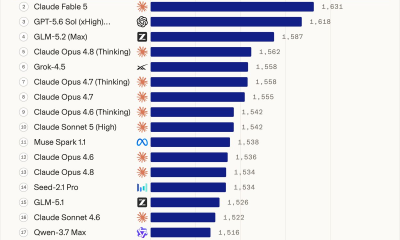
Claude Fable 5 Slips to Second in AI Coding Leaderboard
-
 Tech5 days ago
Cloudflare Precursor Watches Your Mouse and Keyboard To Decide If You Are Human
You must be logged in to post a comment Login