Connect with us
DAPA Banner
DAPA Coin
DAPA
COIN PAYMENT ASSET
PRIVACY · BLOCKDAG · HOMOMORPHIC ENCRYPTION · RUST
ElGamal Encrypted MINE DAPA
🚫 GENESIS SOLD OUT
DAPAPAY COMING

NewsBeat

Difference between fruit sugar and added sugar explained

Published

on

Wales Online

Is the sugar in fruit the same as added sugar?

You will no doubt have heard that fruit is “full of sugar” and that it’s the same sugar that you find in cakes, chocolate and soft drinks. You may also have seen so-called health influencers claiming you should stay away from fruit, or at least limit your intake, for this reason.

Advertisement

But what is the reality? Is fruit sugar the same as added sugar and do they have the same impact on your body and your weight? A well-known heart surgeon is among those to have addressed the issue recently. Dr Jeremy London was asked if the two sugars are the same.

Dr London, who holds board certification in general surgery, vascular surgery and thoracic surgery, and frequently shares advice through social media and interviews, said: “Chemically, the sugar is identical. An apple has sugar, a glazed doughnut has sugar, but the way we metabolise those two things is completely different. An apple has fibre, it has water, polyphenols, antioxidants. These things slow the digestive process and affect how your body is processing the sugar.

“Now, when I say whole fruits, I do mean whole fruits, because with fruit juices and dried fruits you lose these components. Whole fruit is more satiating, calorie for calorie, than sugary drinks or processed sugar. In the end, sugar is sugar but what it comes with makes a tremendous difference.”

What is sugar?

Sugar is a type of carbohydrate that provides energy (as calories) from foods and drinks we consume. Without getting too technical, there are two subtypes of sugar: monosaccharides and disaccharides. The former include glucose, fructose and galactose, which are found naturally in fruit. The latter include lactose, which is found in dairy.

Advertisement

What’s the difference between fruit sugar and added sugar?

Harvard Medical School agrees with Dr London that “an increasingly important distinction among sugars as they pertain to health is whether they occur naturally in foods such as fruit, vegetables, and dairy, or whether they are added sugars (added to foods and beverages during manufacturing, processing, or preparation)”.

The biggest sources of added sugars in our diet are sugary (or soft) drinks (which have previously been labelled “liquid death” because of their impact on health), sweets and breakfast cereals. Many of these foods will fall into the category of ultra-processed foods, many of which come with little nutritional benefit alongside the added sugar. However, fruit comes with many different nutrients which have multiple positive health impacts and help guard against your risk of serious illnesses including heart disease and cancer.

Harvard Medical School explains: “Natural and added sugars are metabolised the same way in our bodies. But for most people, consuming natural sugars in foods such as fruit is not linked to negative health effects, since the amount of sugar tends to be modest and is ‘packaged’ with fibre and other healthful nutrients. On the other hand, our bodies do not need, or benefit from, eating added sugar.”

Why is added sugar bad for you?

Intake of added sugar has been associated with weight gain, which in turn is associated with higher risk of type 2 diabetes, cancer and cardiovascular disease. It also causes tooth decay. This does not mean you should avoid added sugar at all costs. It is fine in moderation. The NHS says added sugars “should not make up more than 5% of the energy (calories) you get from food and drink each day.” This means, for example, that adults should have no more than 30g of free sugars a day (roughly equivalent to seven sugar cubes).

Advertisement

What counts as added sugar?

The NHS does not count sugar found naturally in milk, fruit and vegetables as added sugars (which it calls “free” sugars). Added sugar includes the obvious, like white and brown sugar granules; sugar added during the processing of foods; honey and syrups; and fruit juices and smoothies. While people have long consumed fruit juice and smoothies believing them to be healthy, experts say the act of juicing reduces the fruit’s nutritional value and means the sugars are released into the blood quicker, causing blood spikes and inflammation. Some say drinking lots of fruit juice can harm the liver.

Does sugar cause cancer?

Another common health myth is that sugar causes cancer. But nutritionist Nichole Andrews explains that is not the case: “As a cancer dietician, let me clarify: sugar all on its own will not cause cancer [or] have your cancer grow quicker. If you have a diet high in sugar, you’re probably going to have excess calories… and then you’re going to gain weight, gain fat tissue and it’s the fat tissue that increases cancer risk.”

Only two foods are known to directly cause cancer and they are very common — you can read what they are here.


Advertisement

Source link

Continue Reading
Click to comment

You must be logged in to post a comment Login

Leave a Reply

NewsBeat

Melatonin may help ease chronic muscle and joint pain, new study suggests

Published

on

Melatonin may help ease chronic muscle and joint pain, new study suggests

Melatonin is best known for helping us sleep. But a new study suggests it might have another surprising use: easing muscle and joint pain.

Produced naturally by the pineal gland in the brain at night, melatonin helps regulate the body’s sleep-wake cycle. That’s why this hormone is widely used as a treatment for insomnia and jet lag.

Sleep and pain are closely linked (poor sleep can make pain feel worse, and pain can make sleep harder). But melatonin may also reduce pain directly. Researchers believe it dampens pain signals in the brain and spinal cord, reduces inflammation, calms overactive nerves and protects cells from oxidative stress – the cellular wear and tear caused when harmful molecules build up.

In the new study, researchers combined the results of 23 clinical trials involving over 2,000 participants to identify overall patterns. These trials looked at melatonin for long-term muscle and joint pain as well as pain after surgery.

Advertisement

Overall, melatonin reduced both pain and sleep problems in people with chronic muscle and joint pain. But the improvements were modest. On average, pain scores fell by about nine points on a 100-point scale. That’s within the range reported for some anti-inflammatory drugs in similar studies, although the two treatments haven’t been directly compared.

Melatonin did modestly reduce chronic joint and muscle pain.
Krakenimages.com/Shutterstock.com

Melatonin’s effects may also depend on whether people already have sleep problems or other long-term health conditions. Most of the chronic pain studies included people who already had poor sleep to begin with, but none of the trials looked at results separately for people with and without sleep issues. Because of this, it’s unclear whether melatonin works better for people who struggle with sleep or whether the effects are similar for everyone.

The findings were much less convincing for pain after surgery. Melatonin did not make a noticeable difference to pain or sleep. One analysis found a tiny improvement (about 2.5 points on a 100-point pain scale), but this is far below what would matter to patients recovering from surgery.

The benefits in chronic muscle and joint pain are modest. Based on the current evidence, melatonin should be seen as a possible add-on treatment rather than a replacement for established therapies. The evidence suggests melatonin could complement treatments such as physiotherapy, exercise and anti-inflammatory medicines rather than replace them.

Advertisement

What we still don’t know

There is also still a lot we don’t know. The trials in this study used a wide range of doses, from 1mg to 10mg, and the researchers couldn’t determine which dose worked best.

There were hints that longer treatment helped more in chronic pain, but this was based on only a few studies. There is also very little evidence on the effectiveness of higher doses, even though they appear safe in other studies.

Melatonin is widely used and generally considered safe for short-term use, but it can cause side-effects, such as daytime sleepiness, dizziness, headaches and nausea.

People with liver or kidney conditions, or those with autoimmune conditions like rheumatoid arthritis, should speak with a doctor or pharmacist before taking it.

Advertisement

It is also worth noting that melatonin is regulated very differently around the world. In the US, melatonin is sold as a dietary supplement, meaning people can buy it easily in supermarkets and online without medical advice. But in the UK, melatonin is a prescription-only medicine and is only licensed for short-term sleep problems and jet lag.

For now, the findings suggest melatonin may offer modest relief for some people with chronic muscle and joint pain, particularly if poor sleep is part of the problem. It’s unlikely to replace established treatments, but it could eventually earn a place alongside them. Larger, well-designed trials will be needed before doctors can say with confidence who is most likely to benefit.

Source link

Advertisement
Continue Reading

NewsBeat

Facebook down live: Users hit with ‘account unavailable’ warning in major outage

Published

on

Belfast Live

Instagram users have taken to X to complain about problems with the app as reports of an outage continue to mount.

One user posted: “is instagram down again what is it so slow. It won’t load any posts.”

Another wrote: “is instagram down or something because no posts are coming up on my feed and when i refresh it, it says ‘welcome to instagram’.”

Advertisement

A third user said: “Is anyone else’s Instagram acting super weird today? Literally nothing is loading on any of my accounts.

“It logged me out of my account and it took me like five minutes to get back in. I got so scared.”

Source link

Advertisement
Continue Reading

NewsBeat

Harrogate defence firm Armexis to scale up production

Published

on

Harrogate defence firm Armexis to scale up production

Harrogate-based Armexis has confirmed 90 letters of intent and pre-orders for its armoured vehicles, following recent orders for four armoured vehicles destined for Ukraine worth £17.5 million.

First deliveries are expected next year and include tracked armoured personnel carriers and infantry fighting vehicles.

Richard Matthews, group CEO of Armexis, said: “The response to Armexis has been extraordinary.

RECOMMENDED READING:

Advertisement

The UGV (T) 23 Pathfinder Fleet (Image: Pic supplied)

“Receiving letters of intent and pre-orders for 90 platforms is a major validation of the capability we are developing and the urgent requirement that exists for modern armoured vehicles that can be designed, manufactured and supported from the United Kingdom.

“This is not simply about building vehicles.

“It is about restoring and strengthening sovereign land capability, creating skilled British jobs, supporting allies and ensuring that the UK has the industrial capacity to respond when it matters most.”

Armexis manufactures both manned and unmanned defence platforms.

Advertisement

The UGV (T)23 Pioneer (Image: Pic supplied)

Mr Matthews said: “The unmanned market is one of the most exciting and important areas of modern capability, and Armexis has the ambition and technical foundation to play a meaningful role in that space.”

He emphasised the company’s need for further support to achieve its goals.

The ARMEXIS team (Image: Pic supplied)

Mr Matthews said: “We now need the right strategic investment, partners and people around us to help complete this mission.

“We are looking for individuals and organisations who understand the importance of national resilience, who believe in British engineering, and who want to play a meaningful role in strengthening the safety and security of the nation.”

Advertisement

To support its expansion, Armexis aims to build a highly skilled workforce of more than 4,000 direct employees by 2030.

The UGV (T) 23 Pathfinder (Image: The UGV (T) 23 Pathfinder)

The company is actively seeking investment and talent to grow engineering, supply chain, and manufacturing operations—including senior roles such as a finance director and design engineers.

Mr Matthews said: “The strength of Armexis will be built by the people who join us.

“We need hard-working, dedicated and highly capable individuals who believe in what we are doing and understand the seriousness of the mission.

Advertisement

The UGV (T) 23 Apocalypse (Image: Pic supplied)

“This is an opportunity to be part of something nationally important from an early stage.

“We are building a British defence manufacturer with the ambition, urgency and technical capability to support the UK, our allies and those on the front line who depend on reliable, protected mobility.”

The company is also exploring options for a larger manufacturing facility to support expanded production and employment, with discussions already underway involving local authorities.

Advertisement

Source link

Continue Reading

NewsBeat

‘Irish gem’ crime drama hailed ‘best thriller ever’ on Netflix

Published

on

Belfast Live

This “perfect” Belfast-set serial killer thriller has fans “on the edge of our seats”.

A “very binge-worthy” thriller featuring a stellar cast deserves to be crime drama fans’ next binge-watch.

Advertisement

UTV has started airing The Dark in its prime 9pm Sunday and Monday evening slots, exploring the chilling realm of a detective pursuing a serial killer across the Scottish Highlands.

Author GR Halliday’s From the Shadows television adaptation continues this evening, Sunday, July 19, yet there’s another serial killer drama that’s been lauded as the “best thriller ever”.

Situated in the centre of Belfast, this psychological drama explores the intertwining existences of two predators: a detective hunting a serial killer and the family man who covertly preys upon professional women.

Initially broadcast on BBC Two over a decade ago, The Fall is now accessible to stream on Netflix and features two Hollywood legends.

Advertisement

Assuming the role of Detective Superintendent Stella Gibson is The X-Files and Sex Education star Gillian Anderson.

Meanwhile, serial killer Paul Spector is portrayed by none other than Jamie Dornan, renowned for headlining the Fifty Shades of Grey franchise, reports the Express.

And judging by viewers’ responses on IMDb, The Fall represents “TV at its best”.

Advertisement

Describing it as “incredible”, one user commented: “A fantastic thriller. Not seen anything as good as this ever. Addictive and a must-watch!”, a second echoed.

A second agreed: “We were drawn so far into the story line – sat on the edge of our seats – this is the most perfectly executed programme I have seen – EVER!

“The Fall is superb, and is a highly gripping and intense thriller”, a third penned: “The Fall will be rated one of the best crime dramas ever in years to come.”

Advertisement

While another observer noted: “This is the best police drama I’ve seen in years.

“Acting is terrific, characters are complex, and the deliberate pacing is nerve-wracking.”

The Fall is available to watch on Netflix.

Source link

Advertisement
Continue Reading

NewsBeat

Facebook and Instagram down in mass outage for thousands of users

Published

on

United Airlines Boeing plane forced into emergency landing at LAX by ‘engine fire’

Facebook and Instagram are down this morning as thousands of users report issues.

Users are experiencing an error message when trying to log in on the desktop version of Facebook.

The error reads: “Account Temporarily Unavailable. Your account is currently unavailable due to a site issue. We expect this to be resolved shortly. Please try again in a few minutes.”

The website DownDetector also shows a huge spike in reports for Instagram on Sunday morning.

Advertisement

Both platforms are owned by social media giant Meta.

Instagram users are reporting issues with accessing their feed and the platform’s app, whereas Facebook users are reporting problems with the desktop version of the platform.

This is a breaking story. More to follow…

Source link

Advertisement
Continue Reading

NewsBeat

Wales breaking news plus weather and traffic updates (Sunday, July 19)

Published

on

Wales Online

Hello, and welcome to WalesOnline’s live blog for Sunday, July 19. We’ll be bringing you all of the latest news from across Wales – whether you’re on the move, at home or at work – as well as the latest traffic and travel.

We’ll also be keeping you informed of major news stories from the UK and overseas.

Contribute to the live blog by posting your comments below, or tweet us @WalesOnline to share the news that’s breaking in your area. Read the biggest stories in Wales first by signing up to our daily newsletter here.

Advertisement

Source link

Continue Reading

NewsBeat

Step inside Bolton’s Thai Buddhist temple in Kearsley

Published

on

Step inside Bolton's Thai Buddhist temple in Kearsley

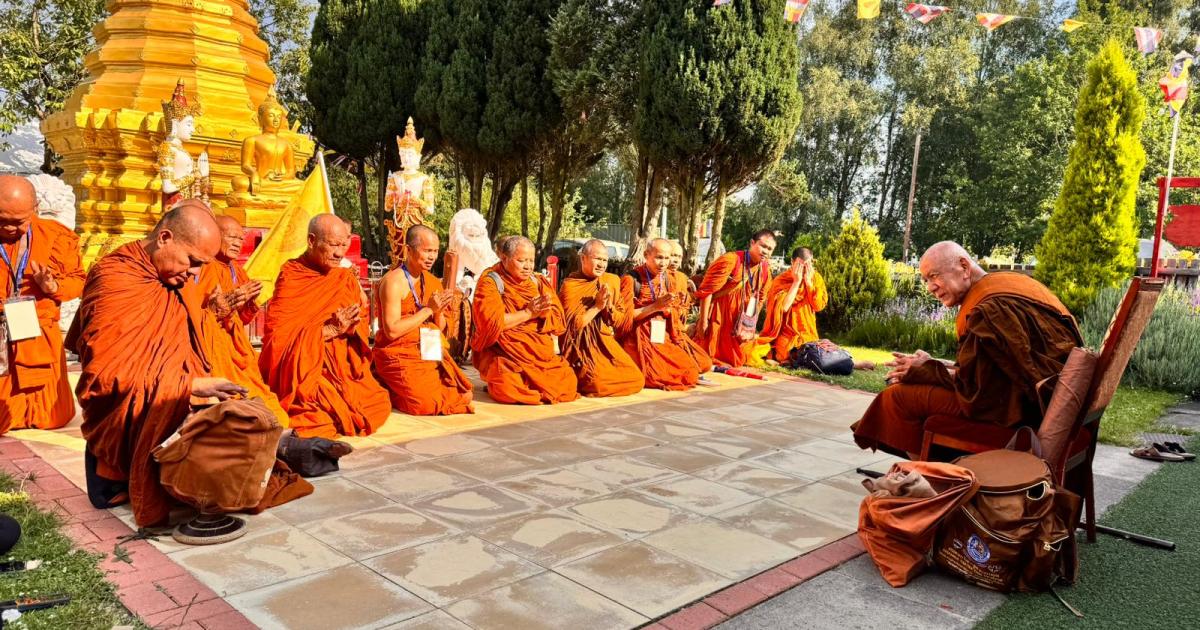
Tucked away down a quiet lane, Wat Sriratanaram feels wonderfully secluded.

Although it sits just a short distance from the M61, the noise of the outside world barely reaches the monastery.

Instead, visitors are greeted by birdsong, the gentle ripple of water or the soft sound of Buddhist chanting.

Colourful lanterns hang above the pathways, apple and pear trees frame the gardens and small wooden bridges cross a tranquil pond.

Advertisement

Beyond them all, remarkably friendly sheep graze in neighbouring fields while a resident cat quietly wanders between the statues as though it has been welcoming visitors for years.

It is an unexpected pocket of peace – and one that many people know is there but few have ever had the chance to explore.

Head monk Ajahn PK welcomed The Bolton News for a tour of the monastery, sharing its history, traditions and the community that has helped it flourish over the past two decades.

Wat Sriratanaram Wat Sriratanaram (Image: Wat)

Established in 2006, Wat Sriratanaram was created after members of the Thai community wanted a permanent Buddhist centre in the North West.

Advertisement

This year marks its 20th anniversary, with the monastery now one of around a dozen Thai Buddhist temples in the UK.

Walking through the grounds with Ajahn PK, it quickly becomes clear that every corner has its own story.

The heart of the monastery is the main prayer hall, where a magnificent 700kg golden Buddha sits above worshippers on an ornately decorated platform.

Wat Sriratanaram The inside Buddha (Image: Wat)

Fresh flowers, candles and offerings surround the statue, while monks gather each day for prayer, meditation and chanting, continuing traditions that have been passed down through generations.

Advertisement

Outside, another striking Buddha forms the centrepiece of an open-air prayer area where worshippers pause to reflect.

Wat Sriratanaram The outdoor prayer area (Image: Wat)

The statue has its own journey, having originally stood outside an Indian restaurant before being donated to the monastery in 2001.

It is now surrounded by seven smaller Buddha figures, each representing a different day of the week.

In Thai Buddhist tradition, people pay their respects to the Buddha linked to the day they were born, giving every visitor a personal connection to the peaceful space.

Advertisement

Beyond the prayer areas, the monastery’s grounds invite visitors to slow down.

A peaceful pond sits at the heart of the gardens, crossed by small wooden bridges and surrounded by carefully tended planting.

Paths wind through the site before opening onto green spaces where sheep graze quietly, adding to the sense of calm that seems to define the monastery.

Wat Sriratanaram The friendly sheep grazing in the gardens (Image: Wat)

It is difficult to imagine that this tranquil setting was once home to a golf club.

Advertisement

Today, the monastery is home to around six resident monks who have made Kearsley their permanent base, dedicating their lives to Buddhist practice while welcoming visitors from across Greater Manchester and beyond.

During the tour, Ajahn PK explained that while the monastery is an important place of worship for the Thai Buddhist community, it has always aimed to be somewhere everyone can enjoy.

“Anyone can join and visit. We are looking for volunteers to help maintain the land.

“Everyone is welcome.”

Advertisement

That welcoming spirit is reflected in the activities held throughout the week.

Wat Sriratanaram (Image: Wat)

Free meditation sessions take place every Saturday from 1pm to 3pm and are open to people of all faiths and none.

The monastery also runs a Sunday school for Thai and British children, alongside English language classes for members of both the Thai and wider local community.

The monastery has continued to evolve thanks to the dedication of its congregation.

Advertisement

Wat Sriratanaram Inside Wat Sriratanaram (Image: Wat)

Last summer, worshippers raised £40,000 through donations to build a new road through the site, improving access for visitors.

Every improvement, from the landscaped gardens to the meditation spaces, has been made possible through the generosity of volunteers and supporters who have invested both their time and resources into creating somewhere special.

Earlier this summer, the monastery also attracted attention beyond Bolton when 15 monks embarked on a 49-kilometre Walk for Peace from Kearsley to Runcorn, believed to be the first event of its kind in the UK.

Wat Sriratanaram The Peace Walk (Image: Wat)

The walk reflected the monastery’s wider mission of promoting peace, mindfulness and community beyond its own grounds.

Advertisement

The next opportunity for visitors to experience the monastery comes on Sunday, July 26, when Wat Sriratanaram will host its annual Buddhist Lent candle procession from 10am.

The event is one of the most important dates in the Buddhist calendar and welcomes visitors wishing to learn more about Buddhist traditions and Thai culture.

Wat Sriratanaram Wat Sriratanaram gardens (Image: Wat)

Standing in the gardens as the tour draws to a close, it is the atmosphere that lingers more than anything else.

There is a quiet confidence about the monastery, found in the carefully tended gardens, the peaceful prayer spaces and the sense of community that has grown here over the last 20 years.

Advertisement

Before the tour came to an end, Ajahn PK presented The Bolton News with a number of gifts that reflected the monastery’s message of kindness and mindfulness.

Among them was a bracelet, given with wishes of happiness, good health and good fortune, along with books exploring clarity, calm and Buddhist teachings.

He also shared a copy of his own book, One Day Meditation, a practical guide for people interested in learning more about Dhamma and developing mindfulness in their everyday lives.

The thoughtful gesture summed up the spirit of the monastery itself – one that places as much emphasis on generosity and community as it does on faith.

Advertisement

For many Bolton residents, Wat Sriratanaram is simply a place they have driven past or heard about.

Stepping through its gates, however, reveals something entirely different: a place where faith, culture and community have quietly flourished for two decades, creating one of the borough’s most unique and peaceful spaces.

Source link

Advertisement
Continue Reading

NewsBeat

Facebook down as users hit with site unavailable message

Published

on

Manchester Evening News

The issue appears to be affecting the desktop version of the social media network

Facebook is down for users this morning amid a ‘site issue’.

The desktop version of the Meta social media network appears to be unavailable.

Users are being faced with the message: “Account Temporarily Unavailable. Your account is currently unavailable due to a site issue. We expect this to be resolved shortly. Please try again in a few minutes.”

Advertisement

Click here to get the biggest stories straight to your inbox in our Daily Newsletter

The DownDetector website has shown a spike in searches for ‘Facebook down’ just before 9am this morning.

This article will be updated.

Source link

Advertisement
Continue Reading

NewsBeat

maybe football’s never ‘coming home’

Published

on

maybe football’s never ‘coming home’

Another tournament, another agonising chapter in English football’s long catalogue of glorious disappointments.

England were dumped out of the World Cup by Argentina following a capitulation that will echo through the annals of English footballing folklore. Having taken the lead just shy of the hour mark, this one really stung.

But the irony is that this late collapse has stitched another thread of continuity into the long tapestry of England’s footballing heritage.

As a researcher of cultural heritage, I’ve always thought of football as so much more than the results on the pitch. Indeed, what makes the beautiful game such a powerful cultural phenomenon are the stories supporters inherit and pass on. The things that connect fans to team.

Advertisement

Long before most people fully understand the tactics or even the rules of the game, they begin learning its narratives. They hear about legendary players, miraculous victories, controversial refereeing decisions and – especially in the case of England – devastating defeats. Over time, these a form a shared cultural inheritance.

This is why football can be understood as a form of living heritage. Heritage is not confined to castles, monuments or museum collections. It also exists in intangible things too like traditions that communities continually recreate and transmit from one generation to the next.

Football support works in precisely this way. Every generation inherits a repertoire of stories before adding new chapters of its own and passing them on again. Football culture is thus sustained by an ongoing conversation between past, present and future.

These stories have a vital cultural function. They create identities by giving supporters – and players – a shared understanding of who they are. They bind strangers into communities through common memories and references. And they provide continuity, allowing football cultures to evolve without losing their sense of themselves.

Advertisement

Football matches come and go. The stories endure. It is those stories, continually retold and reinterpreted, that transform football from entertainment into one of Britain’s most powerful forms of living heritage.

Nowhere is this clearer than in England’s relationship with its men’s national team and in the never ending quest for football to finally “come home”. England’s defining story is not simply one of repeated failure, but of a peculiar cycle in which hope and disappointment continually reproduce one another.

Each generation inherits the emotional landmarks of previous tournaments. Of course there is the totemic memory of 1966 when England won the World Cup at Wembley Stadium. But the country’s subsequent experiences of heartbreak loom even larger in the collective imagination.

Advertisement

They are painfully memorable. Gazza’s tears in Turin in 1990 when a yellow card in a semi meant Paul Gascoigne wouldn’t be able to play in the final. The various penalty shoot-out defeats, and the unfulfilled promise of the “golden generation” of England’s 2006 World Cup team. And of course, the recent near misses under Gareth Southgate, as England have contrived to find ever more creative ways to miss out on a second major trophy.

Crucially, this tragic inheritance has not produced a culture of resignation or cynicism. Instead, every tournament begins with the same familiar ritual. Supporters convince themselves that the draw has opened up, that this squad is different, that this manager has found the answer. They do so partly in earnest and partly with a knowing smile, fully aware there is likely heartbreak to come.

For all the criticism it attracts – particularly abroad as an expression of arrogance in England’s self-perception as founder and home of modern football – the idea of football coming home is actually couched in a deep self-awareness. It is an expression of belief against the evidence, of an ability to hope despite knowing how the story will end.

Advertisement

In this way, England’s Sisyphean quest to finally bring football home is the narrative engine that animates the country’s footballing culture. England’s footballing living heritage is the repeated performance of hoping against hope – the willingness, however irrationally, to believe that this might finally be the year.

Each near miss, each cruel twist, becomes another story to be woven into a shared mythology that gives England fandom its remarkable continuity. The national footballing identity has never been forged by glory, but by a collective experience of its doomed pursuit of a second major trophy. The 60 years of hurt has become home.

So, as I try to emotionally recover from England’s latest heartbreak, I can take some comfort in the idea that this defeat has at least sustained a crucial continuity at the heart of this nation’s footballing heritage.

Perhaps football never will come home. But perhaps we don’t need it to. Because the quest has already given generations of England supporters something every bit as valuable: a shared story through which to understand who we are.

Advertisement

Source link

Continue Reading

NewsBeat

SARAH VINE: Starmer, the Trojan horse who’s paved the way for a socialist coup

Published

on

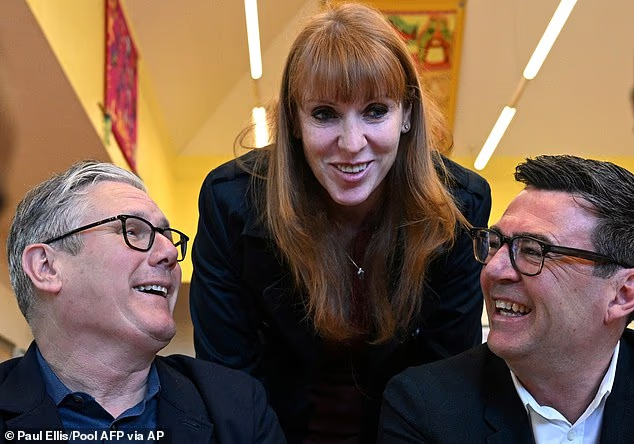
Sir Keir Starmer will be remembered not for his oratory, his political acumen or his charisma, but for acting as a political Trojan horse for Burnham¿s stealth army of Seventies socialists

Christopher Nolan’s new film, The Odyssey, has been wowing critics, sparking renewed interest in the epic tale of sex, gods and sorcery. That it still resonates millennia after Homer invoked the Muse is a reminder that the characters may change, but human nature stays the same.

As proof, you need only look at the epic saga unfolding on our own political stage. As Britain’s self-appointed new saviour, Andy Burnham, prepares to take up residence in No 10, it seems to me that his predecessor Sir Keir Starmer’s place in history has finally been assured.

He will be remembered not for his oratory, his political acumen or his charisma, but for acting as a political Trojan horse for Burnham’s stealth army of Seventies socialists.

Just as Odysseus and his soldiers duped the men of Troy into allowing a seemingly innocuous gift to the goddess Athena to breach their defences, so the Labour Party duped voters into electing a similarly hollow vessel who appeared, on the outside, to be the answer to all our prayers – but has instead paved the way for a socialist coup.

Advertisement

With his lawyerly demeanour, Starmer succeeded in persuading even those who might not normally vote Labour that he’d be a safe pair of hands, a welcome relief from the so-called years of Tory chaos. He appealed to metropolitan Lefties and disillusioned Conservatives, and it won him a huge majority, albeit on an historically low turnout.

Key to his success was the notion that he had the hard Left of the party firmly under control. He suspended and barred Jeremy Corbyn following the 2020 Equality and Human Rights Commission report on anti-Semitism within the party. He also placed moderate candidates in safe seats, marginalising more Left-wing activists. In short, he gave the impression that, as one friend of mine who voted for him put it, he was a ‘decent guy’ who would get Britain back on course.

He may well be a ‘decent guy’ (all his allies tell me so), but he lacked the one attribute that every leader or prime minister needs in order to be able to do the job properly: the ability to control his parliamentary party, and in particular the equivalent of those Tory ‘swivel-eyed loons’ that David Cameron had to contend with.

It quickly became apparent that, far from him having locked the hard Left in a dark cupboard, they had him over a barrel. Attacks on pensioners, massive resistance to welfare reforms, huge tax rises, assaults on business, VAT on private schools – his much-vaunted commitment to growth was strangled at every turn and he had neither the authority nor the strength to resist.

Advertisement

Sir Keir Starmer will be remembered not for his oratory, his political acumen or his charisma, but for acting as a political Trojan horse for Burnham’s stealth army of Seventies socialists

He was elected on false pretences. And now he has been usurped by a man whose politics are completely out of kilter with what most of the British electorate wants – and who, had he been required to win an election himself, would have been rejected as Corbyn was in 2017 and 2019.

Because the truth is that Britain is not a hard-Left country – it is a land of political moderates, of small-business strivers, savers, home-owners and entrepreneurs who want to enjoy the fruits of their labours without being sucked dry or lectured on wokery and political dogma.

Advertisement

People are fed up with chancers being rewarded for nothing. They are tired of being told to go to the back of the queue for services they have paid for. And they are sick of being squeezed until the pips squeak.

They need Burnham’s socialist utopia like a hole in the head. They don’t want more welfare, more immigration, a bigger tax burden. That is why Reform has gained such popularity, and that is why, despite her party’s woes, Kemi Badenoch’s clear-sighted Conservatism has made her the only party leader with a positive poll rating.

Burnham has so far refused to account for himself either in Parliament or to the Press, save to declare himself the saviour of British politics and airily tell taxpayers that they are going to have to do ‘a little bit more’.

So the only way a man like him can get his hands on the levers of power is by stealth – and cunning. The coup that Burnham has pulled off does at least tell us one thing: he is a player. Where Starmer showed himself to be unsuited to the cloak-and-dagger style of parliamentary politics (one thing that stands in his favour) and always played a straight bat, Burnham clearly has a Machiavellian streak.

Advertisement

How else could he have plotted such a power grab? Even Starmer’s greatest detractors don’t quite know why he had to go. Despite a series of mistakes, including the Peter Mandelson affair, there is no massive scandal, no £5million of undeclared donations or evidence of misconduct in public office.

He has gone because he has finally served his purpose: to usher in the armies of hard-Left ideologues in Labour who have been hiding in the darkness and who are now preparing to unleash political hell on the unsuspecting – and trusting – voters of Britain.

Claudia’s so candid

Claudia Winkleman hosting an episode of The Claudia Winkleman Show

Claudia Winkleman hosting an episode of The Claudia Winkleman Show

All credit to Claudia Winkleman for admitting that she wasn’t really enjoying hosting her own chat show, saying it made her ‘too nervous’. Most people would have made up some waffle about wanting to spend more time with their family, or similar. By being honest about her decision, she only reminds us why we love her.

Advertisement

They say Labour has a women problem, but surely releasing thousands of convicted rapists from prison early is taking it a bit far, even by their poor standards?

That’s no way to treat a widow

Readers may remember that my father died just over a month ago. As part of the inevitable ‘deathmin’, my mother needed to inform his various state pension providers. First, she rang the Italian pensions people. She explained the situation, and the lady was incredibly kind and helpful. She expressed her condolences, asked how my mother was coping, and detailed the process by which she could submit the information. Next, my mother rang the pensions people here. She explained that her husband had recently died, and she was in the process of sorting his things out. There was a long pause. Then, ‘Well, you’re not getting any money from us.’ Not, ‘I’m so sorry, here’s what you need to do,’ or even just, ‘Let me take his details.’ Just a nasty, unkind and frankly unnecessary dismissal of a grieving widow who has just lost her husband of 60 years. What the hell has become of us?

The easiest way to resolve the row over whether grooming gang ringleader Shabir Ahmed should be deported to his native Pakistan is to put him back in jail and make him serve his full sentence. This revolting excuse for a human being was released last month after serving just 14 years, having been jailed in 2012 for 22 years for 30 child rape offences and 19 years for child sex offences and trafficking. He’s 73: if he just serves out his term, with any luck what to do with him when he gets out will no longer be an issue.

The plight of Piddingtonians 

Of course, not all asylum seekers are dangerous ¿ but with reports of cases such as this on the rise, can you really blame the Piddingtonians for taking matters into their own hands?

Of course, not all asylum seekers are dangerous – but with reports of cases such as this on the rise, can you really blame the Piddingtonians for taking matters into their own hands?

Advertisement

The 350 residents of Piddington in Oxfordshire have reacted to Home Office plans to house 1,250 single male asylum seekers, a move that would overwhelm the village and totally change the nature of the area, by voting for independence.

No doubt they will be denounced as Nimbys but having lived in the same road as a hotel full of these young men and seen how their behaviour impacts their environment, I understand their concerns.

Truth is, many of them come from cultures that have very different attitudes, especially towards young girls and women – and sadly there are too many instances where those attitudes have led to violence.

A case in point is the three men – Iranian Abdulla Ahmadi and Egyptians Ibrahim Alshafe and Karin Al-Danasurt – sentenced last week for brutally raping a woman on Brighton beach.

Advertisement

Of course, not all asylum seekers are dangerous – but with reports of cases such as this on the rise, can you really blame the Piddingtonians for taking matters into their own hands?

Isn’t it interesting how the Duchess of Sussex and her two children managed to come to the UK without being spotted? Just goes to show that if someone truly wants privacy, it’s perfectly possible to have it.

Source link

Advertisement
Continue Reading

Trending

Copyright © 2025