

Business
Strong Earnings And A Goldilocks Economy Backstop Markets




In his classic book, “Why You Win or Lose: The Psychology of Speculation”, Kelly argued that successful investing isn’t about predicting the future better than everyone else—it’s about understanding crowd psychology and resisting the emotional impulses that lead to poor decisions.
Why contrarian investing works
Kelly believed markets are driven as much by human behaviour as by business fundamentals. Investors who simply follow popular opinion often end up buying near market tops and selling close to bottoms.
“If everybody tried to buy when prices are low, then bargains would never exist,” Kelly observed, explaining that opportunities arise only because most people fail to recognise them. According to him, the majority loses because it behaves in the most natural—and emotionally driven—way.
Human psychology matters more than economics
One of Kelly’s central ideas was that investors lose money less because of economic conditions and more because of psychological biases.
He believed investors often sell their best-performing stocks too early while stubbornly holding on to losing investments, hoping they’ll recover. Pride, fear and wishful thinking frequently overpower rational analysis, leading to costly mistakes.
The typical investor’s cycle
Kelly described a familiar pattern of investor behaviour:

- Investors buy cautiously at the beginning of a rally.
- As prices keep rising, confidence turns into overconfidence.
- Greed encourages them to hold on even as valuations become excessive.
- Every decline is dismissed as a buying opportunity.
- Only after widespread pessimism sets in do they finally sell—often near the market bottom.
The four enemies of investment success
Kelly identified four psychological traits that repeatedly derail investors.
Vanity: Investors hate admitting mistakes. Rather than booking losses, they continue holding losing stocks while quickly selling profitable ones to protect their ego.Greed: Greed destroys patience. Investors chase expensive stocks during euphoric markets instead of waiting for attractive valuations.
The will to believe: Hope often pushes investors into speculative bets, convincing them that risky stocks will somehow deliver extraordinary returns despite weak fundamentals.
Blind logic: Kelly argued that what feels logical in markets is often wrong. Buying after strong rallies and selling after prolonged declines may appear sensible because recent trends seem likely to continue, but history shows that such behaviour frequently results in buying high and selling low.
Why patience beats excitement
Kelly advised investors to avoid buying stocks simply because they’ve fallen sharply. Instead, he recommended waiting until a stock demonstrates that selling pressure has truly exhausted itself.
He also warned against assuming that a stock is cheap merely because it trades below its previous highs. A lower price alone doesn’t necessarily make a stock a bargain.
Not everyone is suited for the stock market
Kelly believed successful investing requires emotional flexibility and discipline. Investors who become emotionally attached to their opinions or refuse to adapt to changing market conditions often struggle.
He also cautioned against expecting quick riches without preparation, arguing that the stock market rewards patience, study and temperament far more than luck.
The bottom line
Fred Kelly’s investing philosophy remains remarkably relevant even decades later. In an era dominated by social media trends, momentum investing and fear of missing out, his advice serves as a reminder that the biggest edge in investing often comes not from superior information, but from superior behaviour.
His message was to understand the crowd, learn from its mistakes and avoid following it blindly. Long-term investment success belongs not to those who react emotionally, but to those who remain patient, disciplined and willing to think independently.
(Disclaimer: Recommendations, suggestions, views and opinions given by the experts are their own. These do not represent the views of The Economic Times)


My interest in financial markets was born out of a love for companys, productive companies, and free market capitalism. The first book i read that shaped my investment perspective was Benjamin Grahams The Intelligent Investor. I enjoyed Prof. Grahams aproach to valuations grounded in strong fundamentals and assets. After finishing The Intelligent Investor i was able to read Security Analysis the 2nd 1940 edition by Benjamin Graham, which completely changed my analysis style and shifted me to the Heavy Industrial Sector, the steelmaking sector in particular. I also read Austrian Economic theory from Murray Rothbard: MNan Economy and State with Power and Market, Americas Great Depression, Ethics of Liberty’s, The Panic of 1819, A history of Money and Banking in the United States and Conceived in Liberty volumes I-V. Understanding Austrian theory, especially the Austrian Theory of the Business cycle helped me be aware in my investment analysis about the effects of credit expansion and contraction in industrial firms. Also i have read The Making Shaping and Treating of Steel, the Carnagie Steel 1920 edition, to be able to understand the operational and tehnical aspects of Blast Furnace steelmaking. I want to write for Seeking Alpha to be able to share with as many people sound investment theory and Austrian Economics principle to help them make informed decisions.
Analyst’s Disclosure: I/we have no stock, option or similar derivative position in any of the companies mentioned, and no plans to initiate any such positions within the next 72 hours. I wrote this article myself, and it expresses my own opinions. I am not receiving compensation for it (other than from Seeking Alpha). I have no business relationship with any company whose stock is mentioned in this article.
Seeking Alpha’s Disclosure: Past performance is no guarantee of future results. No recommendation or advice is being given as to whether any investment is suitable for a particular investor. Any views or opinions expressed above may not reflect those of Seeking Alpha as a whole. Seeking Alpha is not a licensed securities dealer, broker or US investment adviser or investment bank. Our analysts are third party authors that include both professional investors and individual investors who may not be licensed or certified by any institute or regulatory body.

FOX Business’ Lydia Hu reports on the surprising resurgence of the 200-year-old tile-based game, Mahjong, finding Gen Z embracing the classic activity.
Mahjong, a centuries-old tile game with deep roots in Chinese culture, is finding a new audience as younger Americans swap nights out and endless scrolling for face-to-face competition. Across the country, clubs, social groups and tournaments are drawing newcomers who see the game as more than just a hobby. It has become a way to build friendships and disconnect from screens.

Mahjong, a centuries-old tile game, is seeing a surge in popularity among Gen Z players looking for screen-free social activities. (RAWFILE REDUX 2 / Getty Images)
FOX Business’ Lydia Hu joined FOX Business’ Cheryl Casone on “Mornings with Maria” to explore why the game’s popularity is surging, speaking with players at a mahjong tournament about what is driving the growing interest among Gen Z.
While colorful modern mahjong sets have helped attract attention on social media, many players said the game’s biggest appeal is the community that forms around the table. One player described the atmosphere by saying, “One of the things I love about this community is we are celebratorily competitive… When someone wins a big hand, everyone will kind of cheer.”
MikeRoweWorks Foundation CEO Mike Rowe joins ‘Varney & Co.’ to discuss the growing trend of Gen Z pursuing trade-based careers and why the U.S. urgently needs more skilled labor to support the economy.
Others said the combination of strategy, luck and genuine human interaction keeps them coming back.
GEN Z BREAKS ULTIMATE TABOO BY POSTING SALARIES ONLINE
“People are really looking for in-person connections and just activities that also don’t involve drinking or eating or being on your phone,” another player said.
The Wall Street Journal Free Expression associate editor Mary Julia Koch joins ‘Varney & Co.’ to discuss the rise of Gen Z’s ‘loud budgeting’ trend, why young Americans are drinking less and how AI fears are shaping financial habits.
The game’s welcoming nature is also helping fuel its rapid growth. New players are joining experienced competitors, with one tournament participant saying, “I just won my first hand after learning the rules yesterday, so I’m feeling pretty good.”
GEN Z SHOPPERS HELPING REVIVE AMERICA’S MALLS WITH PUSH FOR IN-PERSON EXPERIENCES
Hu also shared the story behind her father’s vintage mahjong set, which he brought with him when he immigrated from Taiwan decades ago. The family heirloom became a conversation starter at the tournament, highlighting how a traditional game continues to connect generations while creating new friendships.
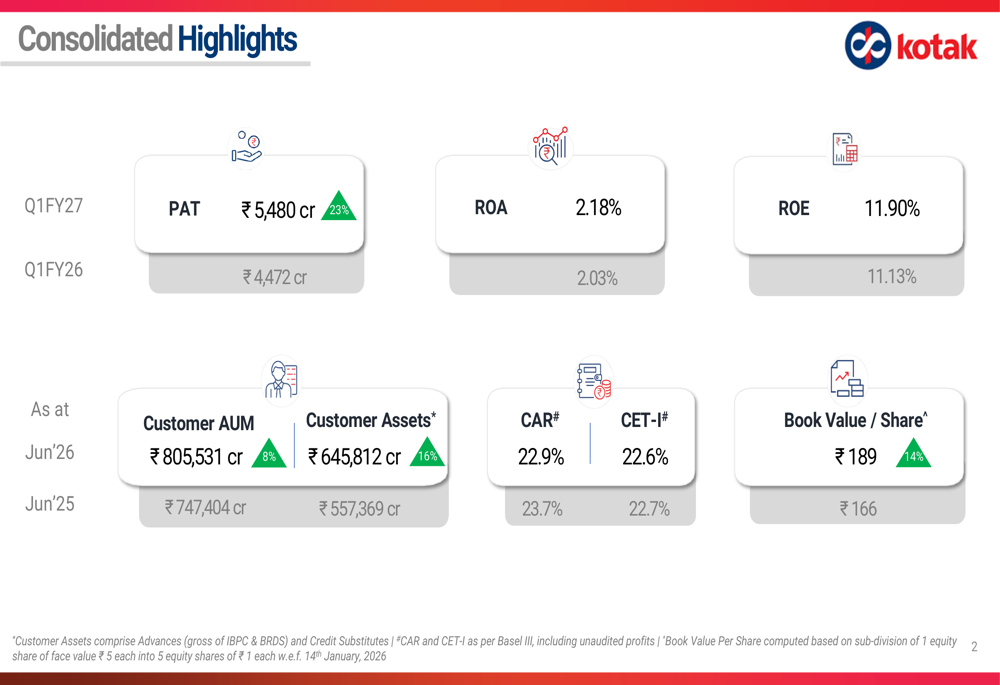
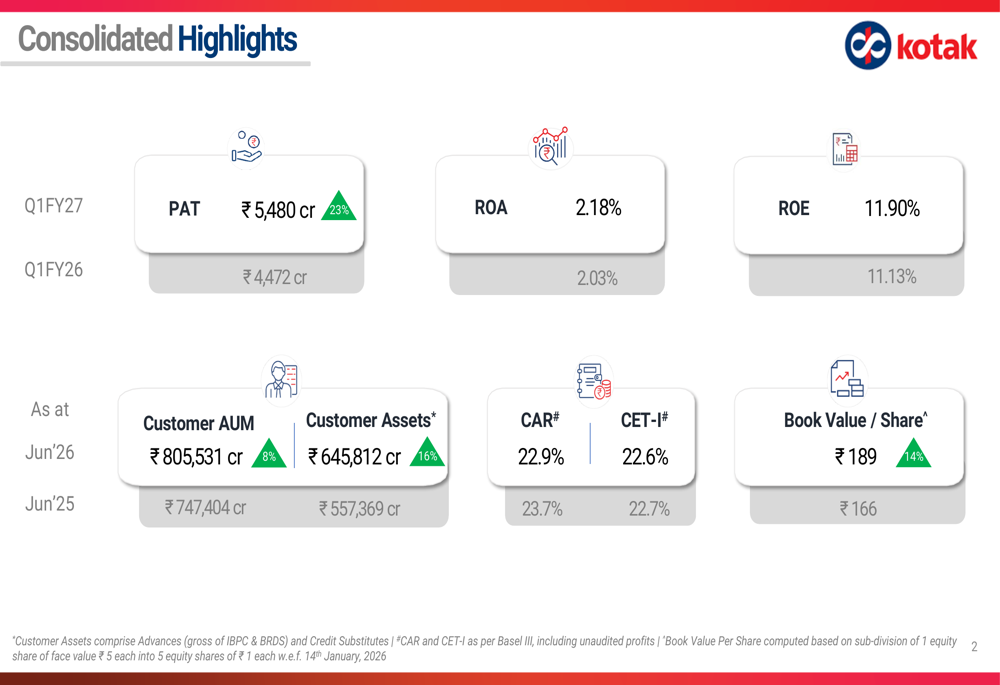
Kotak Q1FY27 presentation: 23% profit growth, asset quality improves
The bank’s net interest income, the difference between interest earned and interest expenses, rose more than 10% YoY to Rs 3,486 crore in Q1 FY27 from Rs 3,166 crore in Q1 FY26.
IDBI Bank’s asset quality slightly worsened since the March quarter, although it improved on a YoY basis. The lender’s net NPA ratio stood at 0.16%, as against 0.15% in Q4 FY26 and 0.21% in Q1 FY26.
Provisions and contingencies stood at a negative Rs 637 crore, as against a negative Rs 179 crore in the year-ago period. Capital adequacy ratio, meanwhile, increased to 26.92% during the quarter under review, while return on assets stood at 1.89%.
Also read | HDFC Bank Q1 Results: Net profit rises 5% YoY to Rs 19,060 crore, NII up 7%
IDBI Bank’s total deposits grew 10% YoY to Rs 3.26 lakh crore, while net advances rose 22% YoY to Rs 2.59 lakh crore. Credit deposit ratio stood at 79.5%, marking an improvement by 810 bps YoY and 644 bps QoQ. Net interest margin (NIM) stood at 3.61%. The lender’s total balance sheet increased 10% YoY to Rs 4.44 lakh crore.
The company’s current account savings account ratio stood at 43.64%, marking a 99 bps fall since June last year. CASA, meanwhile, grew 7% YoY to Rs 1.42 lakh crore in Q1 FY27.
IDBI Bank share price
IDBI Bank shares gained around 2% to close at Rs 87 apiece on Friday. The shares of the company gained around 5% in one week, but have fallen around 4% in one month. Overall, the stock is down more than 16% in 2026 so far.
Also read | Yes Bank Q1 Results: Net profit surges 34% YoY to Rs 1,071 crore; NII advances 18%
Over a longer term, IDBI Bank shares have delivered a negative return of 13% over one year, but positive returns of 50% in three years and 130% in five years. The company has a market capitalisation of nearly Rs 93,546 crore.
(Disclaimer: Recommendations, suggestions, views and opinions given by the experts are their own. These do not represent the views of The Economic Times)

Bangkok Bar Fire Tragedy Dominates Headlines
A devastating fire at a Bangkok bar that killed at least 30 people (with some reports citing 33 deaths) has emerged as the week’s most significant story, drawing coverage from multiple international outlets. The tragedy has exposed critical safety loopholes in Thailand’s nightlife venue regulations, prompting the government to launch investigations into possible negligence. According to AP News coverage of the fire’s aftermath, the band that was performing when the fire broke out is now mourning the loss of members among the victims. The incident has raised broader questions about enforcement of building codes and emergency safety standards across Thailand’s entertainment district, with outlets including the BBC, Toronto Star, and ABC News all highlighting systemic regulatory gaps that allowed such a catastrophic event to occur.
Diplomatic Pressures Over Chinese Nationals
Thailand faces mounting international scrutiny regarding its treatment of Chinese dissidents and journalists. Human Rights Watch has explicitly warned Thailand against forcibly returning Chinese dissidents, while China has simultaneously requested that Thailand deport a Chinese journalist, identified as Bai Zhaodong. This request has triggered alarm among press freedom organizations, with Reporters Without Borders (RSF) and Safeguard Defenders jointly urging Thai authorities to halt any forcible return that could result in persecution. Beijing has also formally asked Thailand to extradite the journalist, according to Bangkok Post reporting, creating a diplomatic tension between Thailand’s relationship with China and its human rights obligations under international law.
Visa Policy Reversals and Tourism Strategy
Thailand’s approach to tourism policy has shown notable flexibility in recent days. The government scrapped plans to end visa-free entry for Indian tourists, reversing an earlier proposal amid industry concerns about declining demand. This decision aligns with broader efforts to boost tourism revenue, as Thailand simultaneously works to attract higher-spending visitors rather than simply maximizing tourist volume. However, the visa landscape remains complex, with reports indicating tightened policies affecting other traveler categories, including Swiss seasonal retirees who have expressed dismay over stricter requirements. Foreign arrivals have declined 3.09% year-to-date, suggesting the balance between visa accessibility and quality tourism remains a delicate policy challenge.
Border Tensions with Cambodia
Diplomatic complexities extend to Thailand’s border relationship with Cambodia, particularly regarding Chinese military hardware. China has assured Thailand that tanks being delivered to Cambodia will not be used against Thai forces, addressing concerns raised by Thai officials about regional military balance. This assurance comes amid broader speculation that China could potentially mediate ongoing border disputes between the two Southeast Asian neighbors. Additionally, discussions continue regarding potential oil and gas reserves that could be jointly developed in disputed border areas, representing a possible economic incentive for resolving territorial tensions.
Economic and Investment Developments
Thailand’s economic indicators present a mixed but generally positive picture for 2026. The country attracted THB188 billion in foreign direct investment during the first half of the year, with China leading in terms of number of firms while Japan contributed the highest investment value. This robust FDI performance occurs alongside Thailand’s emergence as one of the world’s top four AI hardware exporters, according to IMF classifications. The nation is also strengthening its digital infrastructure, with airports undergoing biometric modernization through partnerships with Amadeus and Edgewater, and Bangkok preparing to host a major cybersecurity summit. Additionally, welfare card eligibility has been reduced by 28% under new, tougher qualification rules, reflecting fiscal adjustments in social spending.
Tourism Recognition and Sector Growth
Despite overall arrival numbers softening, Thailand continues receiving significant tourism accolades. Koh Samui has been named the world’s best island for 2026, surpassing competitors including the Maldives, Ecuador, and Indonesia. This recognition supports Thailand’s broader strategy to position itself as a premium travel destination. The wellness tourism sector shows particular momentum, with Thailand Health Excellence announcing partnerships with Airbnb and Huawei to enhance medical and wellness travel infrastructure. New cruise tourism initiatives are also decentralizing away from congested ports toward islands like Phuket and Krabi, while electric vehicle tourism campaigns launched with ZEEKR aim to promote sustainable road trips across the kingdom.
Regional Security and Military Cooperation
Thailand’s military partnerships remain active, exemplified by the successful conclusion of CARAT Thailand’s 32nd iteration, which reportedly strengthened maritime partnerships in the region. Meanwhile, Myanmar’s Min Aung Hlaing is scheduled to visit Thailand in early August, according to Thai Prime Minister statements, continuing diplomatic engagement with Thailand’s western neighbor despite ongoing regional concerns about Myanmar’s political situation. Thailand has also been pushing for ASEAN envoy access to Aung San Suu Kyi ahead of an upcoming summit, signaling continued involvement in Myanmar’s political crisis resolution efforts.
Infrastructure and Climate Resilience
Thailand is actively seeking international partnerships to address climate vulnerabilities, particularly flood control. The country is seeking Japan’s backing for flood-control projects as climate risks intensify, reflecting growing concerns about extreme weather impacts on infrastructure and communities. Water resource management also faces challenges, with reports indicating the Pasak reservoir has dropped to just 13% capacity, creating an uneven water security picture across different regions. These climate adaptation efforts are complemented by academic initiatives, including Chulalongkorn University’s efforts to bring together researchers and policymakers focused on climate adaptation strategies for the kingdom’s future resilience planning.
Source : Google News – Search
Other People are Reading
Business
RBL Bank Q1 Results: Net profit rises 27% YoY to Rs 254 crore; Emirates NBD ownership boosts growth outlook
The company’s net interest income, which is the difference between interest earned and interest expenses, jumped 12% YoY to Rs 1,654 crore in Q1 FY27 from Rs 1,481 crore in Q1 FY26. Provisions and contingencies, however, sharply surged 35% YoY to Rs 599 crore during the quarter under review.
What RBL Bank’s management said
Last month, Emirates NBD Bank completed its acquisition of a 60% stake in the lender, marking one of the largest cross-border deals in India’s financial sector. Managing Director & CEO R. Subramaniakumar said ENBD’s global presence has widened the bank’s addressable market, both domestically and internationally.
“Post the ENBD acquisition, our opportunities have multiplied. Our geographical presence has increased, our ability to reach larger corporates has improved and we can leverage ENBD’s products, processes and global network. That opens up significant opportunities for us,” Subramaniakumar said during the bank’s Q1 FY27 earnings call.
According to the management, corporate banking, transaction banking and trade finance will be among the key businesses where the bank expects to benefit from ENBD’s global relationships and operating footprint. It also sees opportunities to service multinational companies and Indian corporates with overseas operations through the promoter’s international network.
Also read | RBL Bank says Emirates NBD ownership opening doors to large corporates
RBL Bank share price
RBL Bank shares have fallen more than 3% in one week to close at Rs 368.10 apiece on NSE on Friday. The stock is up around 17% in 2026 so far.
In the longer term, the shares of the company have delivered 37% in one year, 62% in three years and more than 71% in five years. The company has a market capitalisation of nearly Rs 56,910 crore.
Also read | HDFC Bank Q1 Results: Net profit rises 5% YoY to Rs 19,060 crore, NII up 7%(Disclaimer: Recommendations, suggestions, views and opinions given by the experts are their own. These do not represent the views of The Economic Times)
Business
In 1928, a German architect proposed draining the Mediterranean Sea to create a Eurafrican supercontinent Atlantropa. Here’s why

The Man Behind the 1928 Atlantropa Supercontinent Plan
Herman Sörgel was born in Regensburg, Bavaria, in 1885 and trained as an architect in Munich. He lived through the devastation of the First World War, watched Europe stagger through economic collapse and mass unemployment in the 1920s, and saw fascism gaining ground in his own country. Like many of his generation, he became convinced that Europe’s problems — poverty, joblessness, and the constant threat of another war — could only be solved by something radical.
Around 1927, after reading a geographer’s description of the Mediterranean as an “evaporation sea,” Sörgel had his big idea. Because the Mediterranean loses far more water to evaporation than it receives from rivers, its level is effectively propped up by a constant inflow from the Atlantic through the Strait of Gibraltar. Block that inflow, Sörgel reasoned, and the sea would start draining itself.
By the spring of 1928, he had turned this insight into a full-blown continental blueprint, which he first called Panropa before renaming it Atlantropa.
What Atlantropa Actually Proposed
The centrepiece of the plan was a massive dam across the Strait of Gibraltar, in some versions more than 20 kilometres long, that would cut the Mediterranean off from the Atlantic Ocean. Sörgel calculated that once sealed off, evaporation alone would lower the sea’s level by roughly a metre a year, eventually dropping it by 100 to 200 metres.
He didn’t stop at one dam. His plan included a second barrier between Sicily and Tunisia, splitting the Mediterranean into two separately controlled basins, and a third across the Dardanelles to hold back the Black Sea. Locks would be needed at the Suez Canal to cope with the enormous drop in water level.
The payoff, in Sörgel’s telling, would be staggering. Newly exposed seabed running into the hundreds of thousands of square kilometres would become farmland and living space. Italy would grow larger, Sicily would fuse with the mainland, and the Greek islands would merge into it too. The Gibraltar dam alone was projected to generate tens of thousands of megawatts of hydroelectric power — enough, by some estimates, to supply roughly half of Europe’s electricity needs at the time. A unified authority overseeing this shared energy grid, Sörgel argued, would bind European nations together so tightly that war between them would become economically unthinkable.His ultimate vision was even bigger than the dams themselves: a new merged landmass of Europe and Africa — “Atlantropa” — bound by shared infrastructure, shared energy, and, in his utopian framing, shared peace.
A “Crazy Idea” Taken Seriously
What makes Atlantropa remarkable isn’t just its scale, it’s that nobody laughed it off. Sörgel spent the rest of his life, until his death in 1952, promoting the project relentlessly through books, models, exhibitions and lectures. He founded an Atlantropa Institute to keep the idea alive. The project drew genuine interest from architects, engineers, and political figures through the late 1920s and early 1930s, and again after the Second World War, when it was even discussed in international forums looking for ways to rebuild a shattered Europe.
It never got built, for reasons that are fairly obvious in hindsight. The engineering demands were far beyond what the technology of the era could deliver. The plan required unprecedented cooperation between rival Mediterranean and African nations who were never consulted about having their coastlines redrawn or their cities left stranded miles from a retreating sea. Nazi Germany showed little interest in a project built on international cooperation rather than territorial conquest. And by the 1950s, the world’s appetite for “limitless energy” had shifted decisively toward nuclear power, making Sörgel’s hydroelectric dream feel outdated even to his supporters.
Sörgel himself never saw the project abandoned. On 25 December 1952, he was cycling to a lecture in Munich when he was struck and killed by a car whose driver was never identified. He was 67. Atlantropa largely faded from public memory soon after.
Why It’s Being Talked About Again
There are a couple of reasons Atlantropa keeps coming up in modern conversation. Increasingly, historians see it as an early, though deeply flawed, blueprint for European unification, a continent scarred by war imagining itself bound by shared infrastructure decades before the concept became the European Union.
As for the environment , we now know that it would have been a disaster . Draining part of the Mediterranean would have caused a rise in sea levels elsewhere on the planet , disruption of ocean currents linked to the Gulf Stream , and destruction of coastal ecosystems . And the very audacity of the idea, one architect attempting to redraw two continents with a single dam, continues to attract people rediscovering it online, in documentaries, and even in the alternate-history novel and TV series The Man in the High Castle, which depicts a version of the plan.
A century on, the Mediterranean is exactly where it has always been. But Atlantropa survives as one of history’s most extraordinary “what ifs” — a reminder of how far one person’s obsession can travel when it promises to solve the biggest problems of its time.


I focus on long-term investments while incorporating short-term shorts to uncover alpha opportunities. My investment approach revolves around bottom-up analysis, delving into the fundamental strengths and weaknesses of individual companies. My investment duration is the medium to long-term. Ultimately, I aim to identify companies with solid fundamentals, sustainable competitive advantages, and growth potential.
Analyst’s Disclosure: I/we have no stock, option or similar derivative position in any of the companies mentioned, and no plans to initiate any such positions within the next 72 hours. I wrote this article myself, and it expresses my own opinions. I am not receiving compensation for it (other than from Seeking Alpha). I have no business relationship with any company whose stock is mentioned in this article.
Seeking Alpha’s Disclosure: Past performance is no guarantee of future results. No recommendation or advice is being given as to whether any investment is suitable for a particular investor. Any views or opinions expressed above may not reflect those of Seeking Alpha as a whole. Seeking Alpha is not a licensed securities dealer, broker or US investment adviser or investment bank. Our analysts are third party authors that include both professional investors and individual investors who may not be licensed or certified by any institute or regulatory body.

Astrada Advisors delivers actionable recommendations that enhance portfolio performance and uncover alpha opportunities, supported by a strong track record in investment research at leading global investment banks. With expertise spanning technology, media, internet, and consumer sectors in North America and Asia, Astrada Advisors excels in identifying high-potential investments and navigating complex industries.Leveraging extensive local and global experience, Astrada Advisors offers a unique perspective on market developments, regulatory changes, and emerging risks. The research integrates rigorous fundamental analysis with data-driven insights, providing a nuanced understanding of key trends, growth drivers, and competitive landscapes.The focus is empowering investors with timely research and a comprehensive view of industry dynamics. Whether navigating volatile markets or exploring new trends, Astrada Advisors remains committed to delivering superior insights to drive informed investment decisions.
Analyst’s Disclosure: I/we have no stock, option or similar derivative position in any of the companies mentioned, and no plans to initiate any such positions within the next 72 hours. I wrote this article myself, and it expresses my own opinions. I am not receiving compensation for it (other than from Seeking Alpha). I have no business relationship with any company whose stock is mentioned in this article.
Seeking Alpha’s Disclosure: Past performance is no guarantee of future results. No recommendation or advice is being given as to whether any investment is suitable for a particular investor. Any views or opinions expressed above may not reflect those of Seeking Alpha as a whole. Seeking Alpha is not a licensed securities dealer, broker or US investment adviser or investment bank. Our analysts are third party authors that include both professional investors and individual investors who may not be licensed or certified by any institute or regulatory body.

5 great finds to stuff in your bag

Google-Backed Satellites For Wildfire Detection Launch As Smoke Chokes US, Canada

INSANE CLARITY ACT DRAMA! AI BOOM STILL EARLY Bitcoin and Tech Stocks BLEEDING #bitcoin #ai #crypto

Renter of Home in Anne Heche Crash Denies Settlement With Son

No Jackpot Winner as $257 Million Prize Rolls Over to $269 Million Monday Draw

Weekend Open Thread: Staud – Corporette.com
INSANE CLARITY ACT DRAMA! AI BOOM STILL EARLY Bitcoin and Tech Stocks BLEEDING #bitcoin #ai #crypto

Meet the Men who started the Financial Crisis of 2008 | Lehman Brother | Fraud | FD Finance

SCARY XRP UPDATE Are Solana & Ondo Taking Over Crypto in 2026? #xrp #solana #ondo
-
 NewsBeat2 days ago
London Mayor Sadiq Khan handed a peerage by Keir Starmer alongside 15 other Labour figures… just days before the PM leaves No10
-

 Fashion18 hours ago
Weekend Open Thread – Corporette.com
-

 Crypto World2 days ago
CFTC blocks Kalshi from unwinding Michigan trades after court order
-

 Politics3 days ago
Young campaigners urge incoming PM to act on outdoor junk food ads
-

 Business2 days ago
Nvidia Stock Slips After Big Tuesday Rally as Huang Confirms Vera Rubin Chip Is Now in Production Today
-
 Entertainment3 days ago
Disney’s Most Ambitious Failed Star Wars Attraction Is Coming to SDCC
-

 Crypto World14 hours ago
Ripple wins EU-wide access as ESMA adds it to MiCA register
-

 Politics1 hour ago
The House | The City of London can help the new chancellor deliver growth in every postcode
-

 Tech4 days ago
Get Your ESP32 Sunny Side Up With This Solar Dev Board
-

 Crypto World2 days ago
Injective Submits SEC Transfer-Agent Registration to Onchain Ownership Records
-

 News Videos4 days ago
XRP BOMBSHELL… XRP OMBOARDED FOR TRANSACTIONS!!!
-

 Business2 days ago
Palantir Shares Rise After Expanded Nvidia Partnership and Fresh Analyst Upgrades Ahead of Earnings Day
-

 NewsBeat24 hours ago
Registration is now open for March for Men with Kev 2026
-

 Tech4 days ago
Dark Secrets Emerge When Jailbreaking LLMs
-
 Sports3 days ago
New Cornerback Enters Vikings Trade Rumor Mill
-

 News Videos1 day ago
Money | Class 12 Economics | CBSE Board Exam 2026-27
-

 Business1 day ago
Banco Bilbao Vizcaya Argentaria, S.A. (BBVA) Discusses Global Macro Environment and Economic Outlook for Core Markets Transcript
-

 NewsBeat7 hours ago
Durham County Council to send out electoral registration emails
-
 Tech5 days ago
Cloudflare Precursor Watches Your Mouse and Keyboard To Decide If You Are Human
-

 Crypto World2 days ago
Claude Fable 5 Slips to Second in AI Coding Leaderboard
You must be logged in to post a comment Login