Connect with us
DAPA Banner
DAPA Coin
DAPA
COIN PAYMENT ASSET
PRIVACY · BLOCKDAG · HOMOMORPHIC ENCRYPTION · RUST
ElGamal Encrypted MINE DAPA
🚫 GENESIS SOLD OUT
DAPAPAY COMING

Tech

Open-Source Mid-Drive E-Bike Motor Has Lots Of Promise, And Hyphens

Published

on

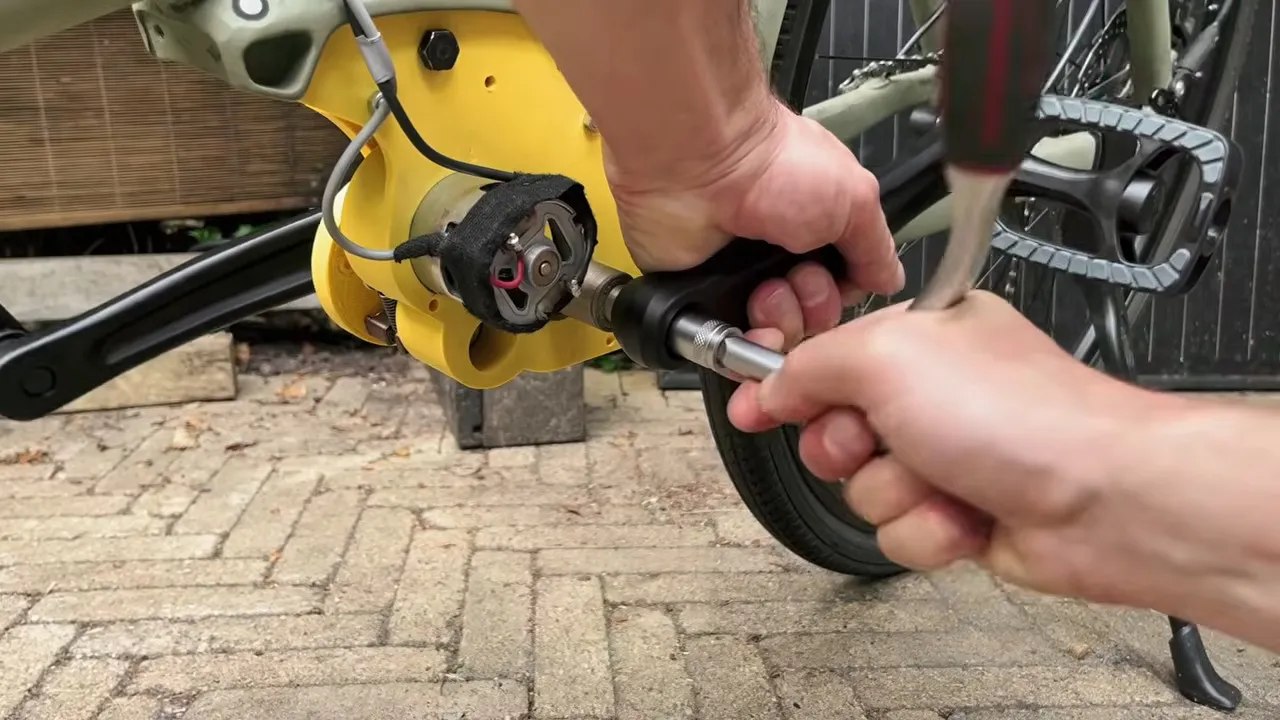
[Pedro Neves] has a mid-drive e-bike, but he doesn’t own it — not truly, since he can’t repair the motor unit. For a hacker to be in that position, there are only two options: crack the old one and make it your own, or build your own from scratch. [Pedro] built his own and is open-sourcing it on his website for everyone to play with. Right now, that’s .step files and a BOM, so you’ll need to watch the design/build video on YouTube below to get the full picture.

His choice of a motor from an old battery-powered angle grinder is both thrifty and environmentally friendly, so we approve. His goal of 25 km/h seems like a reasonable speed limit, but may still be too fast for some countries’ regulations— so do check the local rules if you’re going to build this. Making the most of 3D-printed components is also a choice that makes the project more accessible, but don’t worry — the bearing surfaces are all metal. That includes the clutch bearing that will let you pedal home if the battery dies or the motor craps out. Well, unless the printed plastic axle gives up the ghost, but that got replaced with a CNC version, so it’s all good. Unless you’ve got legs like Hercules, it ought to hold.

If that’s not DIY enough, you could always build the motor yourself. This mid-drive is also part of a larger project [Pedro] is working on for a whole cargo bike, as he details in his video, which is a worthy project we’ve seen other examples of before.

Advertisement

Source link

Advertisement
Continue Reading
Click to comment

You must be logged in to post a comment Login

Leave a Reply

Tech

As AI Transforms Silicon Valley, Some Tech Workers Face Evaporating Financial Security

Published

on

The Washington Post describes a mid-tier executive at Meta as one of Silicon Valley’s “winners” whose financial security suddenly “evaporated” as their workforce “pushed headlong into AI and heavy job cuts,” creating a transformed job market. “Her ex-husband, a designer at Meta who was laid off in 2020, eventually gave up looking for jobs in his profession. He now lifts boxes at a warehouse.”


Layoffs.fyi, which tracks announced job cuts, counts more than 800,000 tech workers laid off since 2022, including large staff reductions in recent months at Meta, Microsoft, Oracle and Amazon… “There’s this whole tranche of people who’ve been quite used to being among the most upwardly mobile in society who are all of a sudden saying, ‘Now I’m the guy on the streetâs’” said Oliver Raskin, who founded Silicon Valley market research consultancy Signalcraft Insights and has surveyed attitudes in the tech labor force… “The rise of AI, especially, is bound to change the workplace radically,” [said Georgetown University historian Joseph McCartin]. “But the way it’s going to happen is similar to how technology transformed the auto industry.” Ruth Milkman, a labor sociologist at the City University of New York, said that technology workers are getting a dose of what workers in other industries have long complained about: jobs that feel unsteady or rob them of autonomy. “Low-wage workers are used to it,” she said…

Many layoffs at technology companies are probably a hangover effect from over-hiring in prior years, experts say. And they don’t account for a spotty recent increase in hiring in the information industry, which includes employment of software developers and jobs in media and entertainment. Digging deeper, though, some economists say there are signs that Silicon Valley and other technology-reliant parts of the American economy have reached a turning point where they are growing without needing as many people. The notion was encapsulated in a recent talk that ricocheted through group chats across the tech industry: In it, a partner at the start-up incubator Y Combinator heralded a new generation of AI-first companies that will only need human labor for “novel situations,” “ethical considerations” and “high-stakes moments.”

Gad Levanon, chief economist at the labor research nonprofit Burning Glass Institute, said that the number of hours worked in the information sector has dipped since 2022, while the sector’s economic output has increased by about 8 percent a year — more than three times the overall growth rate of the U.S. economy. He says the data reveals a sea change in industries, including technology and finance, toward doing more work with the same or fewer people — one that is spreading to other professional classes. “That’s the new reality for white-collar and tech-exposed work: output up, headcount flat or down,” Levanon said…

Advertisement

Raskin, who has worked in the tech world since the late ’90s, said that even though the current moment feels unsettling to many, he’s hopeful that it’s an early chapter in an evolving story. “It’s happened many times before,” he said, “that something implodes and all these people lose jobs, but then that talent gets cycled into whatever the next thing is — into a new wave of prosperity.”
In the article tech entrepreneur Anil Dash quips that Silicon Valley techies are “are guinea pigs for what tech dudes want to do to everyone.”

Source link

Continue Reading

Tech

FIFA’s World Cup Halftime Show Puts American-Style Spectacle on the World Stage

Published

on

It was all Chris Martin’s idea.

During the 2022 World Cup in Qatar, the Coldplay frontman called Hugh Evans, the CEO of Global Citizen, for whom he curates the Global Citizen Festival, with something new to pitch. “Wouldn’t it be incredible,” Evans recalls Martin saying, “if we could do the first-ever halftime show for the World Cup?” Evans agreed, and connected with FIFA president Gianni Infantino at the organization’s headquarters in Switzerland to sell him on Martin’s plan. He didn’t need to.

Infantino had already had a similar idea—and was a Coldplay fan. “So he actually had already independently decided that he wanted to work with Coldplay and that he wanted to achieve this dream,” Evans says.

The result of those conversations, set to take the pitch during Sunday’s World Cup final between Spain and Argentina at New York New Jersey Stadium, is a massive but just 11-minute-long show featuring Justin Bieber, Madonna, BTS, and Shakira. They’ll be joined by Coldplay and a chorus from Staten Island’s PS22 school, and watched by millions of people in homes, bars, and street corners around the world.

Advertisement

The show is also part of an effort to raise $100 million for Global Citizen’s youth education efforts worldwide. FIFA is donating one dollar from each ticket sold during the tournament to the fund, and Shakira is donating royalties from her World Cup anthem with Burna Boy—”Dai Dai”—to the effort as well.

Not that all World Cup fans are necessarily excited to see the show. Soccer fans have been skeptical of the final having a halftime show for months. The World Cup has never done such a thing, the argument goes, and doesn’t need one now. Given that halftime shows are practically synonymous with the Super Bowl, some fans think having a halftime show is part of an effort to “Americanize” the World Cup, or make it more appealing to viewers in countries where soccer is less popular. Others have, for example, chafed at things like “hydration breaks” which are seen as just another way to get eyeballs on ads.

“The World Cup has traditionally centered its musical identity on a single iconic anthem and an opening ceremony rooted in the host nation,” says Tiffany Naiman, director of the Berry Gordy Music Industry Center at UCLA. “So when FIFA unveils an 11-minute halftime spectacle, featuring Madonna and Justin Bieber, and Tom Cruise attached to the closing ceremony, it reads to some as importing an American made-for-TV sensibility.”

Oh yeah, Tom Cruise. Much like he did with the closing ceremony for the 2024 Olympics in Paris, Cruise is scheduled to appear during the World Cup’s closing ceremony ahead of the final match.

Advertisement

Naiman stresses that while some may fear the inclusion of a halftime ceremony Americanizes the event, it’s being done with a global roster of artists. Bieber is Canadian, after all, and his home country is a host to the Cup. The majority of the acts aren’t from the US. “Ultimately, what’s being globalized isn’t American culture so much as the production model,” she says. “FIFA is borrowing the language of the Super Bowl while filling it with artists who reflect the geography of its audience.”

This focus on worldwide appeal was important for Evans, and it has already attracted at least one hugely influential international fan base: the BTS Army. Members of the Army have been in his mentions in recent weeks, dropping their signature purple hearts. They’ve also helped Global Citizen get closer to its fundraising goal: They raised some $40,000 for the Global Citizen fund in the first week “without even being asked,” Evans says.

Interest in the halftime show is also showing up on Kalshi and Polymarket, which have both seen tens of billions of dollars in World Cup prediction market trading, according to a CNBC report. One Kalshi market had Shakira’s “Hips Don’t Lie” marked as a potential highlight of the show. A Polymarket market opted for “Dai Dai.” The latter seems more likely as it is the official song of the World Cup, and features Burna Boy, who is also slated to perform.

Source link

Advertisement
Continue Reading

Tech

The cleanup trap: Stop asking RAG to fix bad data

Published

on

The enterprise technology ecosystem is caught in a costly cycle. Over the past two years, millions of dollars have been funneled into generative AI pilots, yet many of these initiatives stall out before ever reaching a live production environment.

When a project fails, the immediate instinct of technical leadership is often to blame the model: The context window was too restrictive, the latency was too high, or the reasoning capabilities simply were not there.

But as data engineers building the scaffolding for these systems, we often see a different reality: The model receives the blame, but the pipeline usually contains the root cause. Production gen AI rarely fails because of model limitations alone. More often, it fails because the enterprise data foundation underneath it is fundamentally unready.

This is what I call the ‘Cleanup Trap’: The false belief that an organization can pipe fragmented, inconsistent, and ungoverned legacy data into a large language model (LLM) orchestrator and simply “clean it up” or patch it at the retrieval layer.

Advertisement

The mirage of the retrieval layer

In a standard retrieval-augmented generation (RAG) architecture, the retrieval layer is tasked with pulling relevant business context to ground the model’s responses. Because modern frameworks make it simple to stand up a vector database and a basic embedding pipeline, leadership often assumes that the data engineering problem is solved.

It is not.

When an embedding model receives raw, unvalidated data directly from operational silos, the resulting vector space inherits the structural noise, duplicate records, and conflicting states present in the source systems.

If the core data pipeline suffers from silent degradation — schema drift, missing fields, delayed change-data-capture (CDC) synchronization — that degradation cascades directly into the vector store. An AI model cannot accurately synthesize customer intelligence if the data pipeline behind it is serving stale, contradictory profiles across disparate storage layers.

Advertisement

No amount of prompt engineering, semantic reranking, or vector hyperparameter tuning can compensate for a broken ingestion pipeline. If the foundation is compromised, the downstream application will hallucinate, expose unauthorized context, or fail to deliver deterministic value.

Shifting from ad-hoc patching to programmatic guardrails

To break out of the ‘Cleanup Trap,’ enterprise data teams must stop treating data quality as a post-processing step. They need to treat data readiness for AI with the same rigor they bring to traditional transaction processing.

This requires a deliberate architectural shift toward zero-trust data ingestion, structured validation frameworks, and automated anomaly detection before data ever reaches an AI orchestration layer.

1. Harden the ingestion pipeline

Data quality checks cannot exist as a nightly batch afterthought. If an enterprise AI application relies on real-time data to assist users, validation must happen inline.

Advertisement

Teams should implement explicit schema validation checks at the earliest ingestion point, such as the streaming ingress layer or the bronze landing layer of a medallion architecture. If an upstream operational database mutates a schema without warning, the pipeline should quarantine anomalous payloads rather than allowing corrupted metadata to pollute downstream AI contexts.

2. Use multi-tiered algorithmic validation

Static row-count validation rules are insufficient for AI readiness. True data health requires a multi-tiered approach.

This means pairing structural verification — null checks, type conformance, and schema validation — with statistical profiling to monitor for data drift. Tracking metric deviations across feature distributions helps ensure that historical context remains stable over time.

If a pipeline suddenly processes an unexpected spike in empty string variables or structurally deviant fields, automated alerts should trigger an immediate pause before vector database updates continue.

Advertisement

3. Decouple security and compliancemfrom the model

An LLM should never be the arbiter of data access control. Trying to enforce row-level security or personal data filtering through system prompts is a compliance risk.

Security must be managed within the data infrastructure tier. Enterprise data foundations should enforce strict access controls, tokenization of sensitive identifiers, and rigorous lineage tracing before information is indexed into vector stores or passed into an agent’s context window.

Technical alignment: A pragmatic blueprint

For technology leaders mapping their infrastructure roadmaps, AI readiness requires evaluating data pipelines against a strict operational checklist.

  • Can you trace a flawed AI response back to the exact pipeline execution, source record, and transformation step that produced it?

  • Does your data lake architecture have a programmatic mechanism to segment and quarantine corrupted or non-compliant data before it reaches production feature stores?

  • Are your operational systems and AI-facing vector databases tightly synchronized, or are your agents making automated decisions based on outdated snapshots?

These questions matter because production AI is not just a model deployment problem. It is a data reliability problem.

Advertisement

Building for the production era

The honeymoon phase of gen AI experimentation is ending. Enterprise leaders are demanding measurable, predictable, and secure business outcomes from their AI investments.

If an organization wants to transition from isolated, impressive-looking demos to resilient, production-grade AI systems, it must redirect its focus. Stop looking exclusively at the model tier.

The real competitive differentiator is not only the LLM an organization chooses. It is the engineering discipline, data governance, and pipeline resilience of the infrastructure built to feed it.

In the production era of AI, data engineering is no longer a backend function. It is the control plane for enterprise intelligence.

Advertisement

Naveen Ayalla is a senior data engineer.

Welcome to the VentureBeat community!

Our guest posting program is where technical experts share insights and provide neutral, non-vested deep dives on AI, data infrastructure, cybersecurity and other cutting-edge technologies shaping the future of enterprise.

Read more from our guest post program — and check out our guidelines if you’re interested in contributing an article of your own!

Advertisement

Source link

Continue Reading

Tech

Can an Apple lawsuit derail OpenAI’s hardware plans?

Published

on

Apple recently filed a trade secrets lawsuit against OpenAI, accusing the AI company of a pattern of misconduct aimed at getting current and former Apple employees to share confidential information. (In response, OpenAI said it is “not aware of any evidence that this complaint has merit.”)

On the latest episode of TechCrunch’s Equity podcast, Kirsten Korosec, Sean O’Kane, and I debated whether this lawsuit will cast a shadow over OpenAI’s much-discussed plans to get into the hardware business (starting with a mobile smart speaker) and go public.

“Even setting aside whether or not the court grants any kind of injunctive relief or any kind of restraining order over what OpenAI is doing, it just naturally can lead to that sort of situation where it’s going to cause some delays in what OpenAI is working on,” Sean suggested. “Which I’m sure was probably part of the reasoning behind Apple doing this. They don’t do this stuff willy nilly.”

With all those plans on the line, will OpenAI try to settle this as quickly as possible, or did it learn from its recent courtroom victory against Elon Musk that it can endure the cost and embarrassment of a trial? Kirsten, at least, predicts the latter.

Advertisement

Keep reading for a preview of our conversation, edited for length and clarity.

Kirsten Korosec: Sean, how do you feel about Sam Altman listening to you with a little device maybe in your pocket?

Sean O’Kane: I’m good. Maybe that’s predictable, but I’m good. No thanks.

We’ll get into it, I’m sure, but this is allegedly the first product that OpenAI has been working on in its hardware division with Jony Ive and company. They’ve been really coy ever since that weird video they put out last year of them sitting at that coffee shop or bar in San Francisco and sort of talking very vaguely about hardware and legacy devices, meaning laptops and phones. And so if this is the direction they’re headed in, all power to people who want to have somebody like that always listening to them. This is not going to be for me.

Advertisement

Anthony Ha: Part of what we have to remember about those kinds of devices is also that, depending on how mobile it is, it’s not just listening to you, it’s listening to the people around you. I might be fine with it — I’m not fine with it, but let’s say I was — but then if we met up in-person at Disrupt, then suddenly it might be listening to all of us. 

There’s all kinds of social norms that are going to have to be renegotiated if these things become widespread. I think we should make fun of and criticize people who record other people without consent.

Kirsten: Well, I bring up the device that has been speculated about for a really long time, and we’ll see what it really ends up being once it’s officially introduced, but it’s important in the context of this lawsuit that Apple filed last Friday. 

It was the biggest news of the week, certainly, and this is a trade secret lawsuit. It has some pretty wild allegations and we should very much emphasize these are allegations that have been filed in a complaint by Apple. But what it is accusing OpenAI of is a pattern of misconduct at the highest levels, specifically directed towards OpenAI employees who used to work at Apple. And in fact they’ve named the chief hardware officer Tang Tan in this lawsuit.

Advertisement

This is all important because Apple is accusing OpenAI of essentially stealing their trade secrets, but in the context of that, this could be then used for a competing hardware product. I’m wondering if maybe we don’t get into whether this lawsuit has merits, because we haven’t gone through full discovery, but what are your initial impressions of the lawsuit aside from the fact that wow, this is going to be entertaining?

Sean: Two things. One, this is a pretty big risk potentially to whatever it is OpenAI is working on. Even setting aside whether or not the court grants any kind of injunctive relief or any kind of restraining order over what OpenAI is doing, it just naturally can lead to that sort of situation where it’s going to cause some delays in what OpenAI is working on, which I’m sure was probably part of the reasoning behind Apple doing this. They don’t do this stuff willy nilly.

The other is that we think that OpenAI is — we know that they’ve filed confidentially for an IPO. We think it might happen as early as the end of this year, or early next year, if you believe Sam Altman’s cautious language around the IPO. And this just raises a whole bunch of questions around that because, on the one hand, we think their business right now is probably overwhelmingly the software; they’re not really factoring in any hardware business into that picture at the moment.

They’re about to go to the markets and they’re going to be pitching bankers and investors on where they think their addressable market should be, and if they have a big amount of that pegged to a potential hardware division and hardware products, this could be a huge risk to that and changes a lot of the calculus of sort of how the IPO gets priced. So that’s where my head’s at.

Advertisement

Anthony: One [allegation] that I assume that Apple must have pretty solid like numbers on is, they said more than 400 Apple employees now work at OpenAI. Granted, both of them are very large companies with many thousands or tens of thousands of employees. So as a percentage, it’s not necessarily huge. But that seems like a lot of people and a pretty serious talent drain. 

And the other thing I’m wondering is related to Sean’s point. With the context of the potential IPO, how much damage did OpenAI ultimately take from a marketing and brand perspective from the trial it already went through? That it seemed to basically win, but there was a lot of not-terrible-but-kind-of-embarrassing dirty laundry that came out in the testimony. To what extent are they just like, “We do not want to go through that again”? Or did they take the lesson of, “Hey, we went through it and we survived and we’ll be okay if we have to do another trial with Apple”?

Kirsten: I fully predict the latter, by the way.

When you purchase through links in our articles, we may earn a small commission. This doesn’t affect our editorial independence.

Advertisement

Source link

Continue Reading

Tech

NYT Connections hints and answers for Monday, July 20 (game #1135)

Published

on

Looking for a different day?

A new NYT Connections puzzle appears at midnight each day for your time zone – which means that some people are always playing ‘today’s game’ while others are playing ‘yesterday’s’. If you’re looking for Sunday’s puzzle instead then click here: NYT Connections hints and answers for Sunday, July 19 (game #1134).

Good morning! Let’s play Connections, the NYT’s clever word game that challenges you to group answers in various categories. It can be tough, so read on if you need Connections hints.

What should you do once you’ve finished? Why, play some more word games of course. I’ve also got daily Strands hints and answers and Quordle hints and answers articles if you need help for those too, while Marc’s Wordle today page covers the original viral word game.

Advertisement

Source link

Advertisement
Continue Reading

Tech

What to watch for after Jensen Huang’s Japan visit

Published

on

Nvidia’s chief Jensen Huang spent two days — July 15 and 16 — in Tokyo, courting Japan’s industrial and chip-supply elite, weeks after a keynote in Taiwan, and months after a visit to South Korea. He left with deals spanning Japan’s entire tech ecosystem: a national AI factory, partnerships with the country’s leading robotics companies, and agreements with the chip-material suppliers powering Nvidia’s next generation of AI chips. His message was clear. Nvidia is targeting Japan’s factory floor, and many of the country’s biggest manufacturers are joining in. AI’s next chapter, Huang said, belongs to factory floors, robots, and machines, and he wants Japan to build it.

Thirty years ago, a $5 million Sega investment helped keep a near-bankrupt Nvidia afloat; today, Nvidia and Japan’s industrial giants need each other again — this time to build the physical-AI era, starting with these three projects:

NoetraJapan’s sovereign-AI play. The country doesn’t want to run its factories and robots on American or Chinese AI. So, the government pulled together roughly 44 domestic firms, with SoftBank, Sony,  NEC and Honda at the core, to build its own AI for robots, vehicles and factory floors. Tokyo is committing up to 1 trillion yen ($6.2 billion) over five years, a bet on homegrown “physical AI”,  foundation models built to run machines. Japan wants to own the software brain. The hardware to build it, though, still comes from Nvidia. The U.S chip giant is building “a Vera Rubin AI factory”, a massive data center packed with its next-generation chips, expected to launch in 2028, with 13,750 Vera CPUs and 27,500 Rubin GPUs, delivering 140 megawatts. Noetra will oversee the effort, with plans to build the data center. Noetra’s plan runs in three stages: a reasoning model heavy on Japanese-language skills starting in fiscal 2026; an omni-modal version handling text, images, video, and audio by 2028; and “Real-world Native AI” built to run robots by 2030, released to outside Noetra developers in phases.

The robotics coalition  — Japan’s industrial giants line up behind Cosmos. Nvidia is targeting Japan’s factory floor, and many of the country’s top robotics and manufacturing players are signing on. Fanuc, Yaskawa, Kawasaki Heavy, Fujitsu, Hitachi, NEC, Sony, SoftBank, Kubota and robotics group AIRoA say they  plan to build on Nvidia’s Cosmos models, an open-model effort Nvidia started in May with a handful of global AI labs. In Tokyo, Nvidia gave them a reason to commit, unveiling Cosmos 3 Edge, a version of the model that runs on its Jetson Thor chips inside the machines themselves. Some are already testing a shared control system; others, like Honda R&D and Omron, are building on the tools now. “The next frontier of AI is in the physical world, and this is a once-in-a-generation opportunity for Japan,” Huang said in the company’s statement. “Japan invented modern manufacturing. Now, it has the opportunity to reinvent it for the age of intelligent industries.”

Advertisement

Toyota — cars and physical AI. Toyota uses Nvidia chips across much of its stack. It committed its next-generation vehicles to Nvidia’s Drive platform at CES in January 2025; the newer work extends Nvidia into its manufacturing, where simulations are used to design production lines, into the software that runs its vehicles, and into systems that read road traffic. Toyota’s cars will run advanced driver assistance, which steers and brakes but still requires a driver, a more conservative approach than Waymo and Tesla, which are developing systems that rely less on a human driver.

Huang’s visit put physical AI at the center of Japan’s industrial strategy, and Tokyo is spending to back it. Facing a shrinking workforce, Japan wants 10 million AI-equipped robots across 18 sectors by 2040, backed by $65 billion in public and private physical-AI investment.  

The longer game is bigger. Japan’s AI Robotics Strategy, released in March, aims to capture more than 30% of the global AI robotics market by 2040, a market Tokyo values at roughly ¥20 trillion, or about $133 billion.  METI is funding a domestic foundation model to run the machines, and Noetra’s Nvidia-powered factory is where models of that scale, into the trillions of parameters, would be trained. The wager is that Japan’s factory-floor data and manufacturing base can do for physical AI

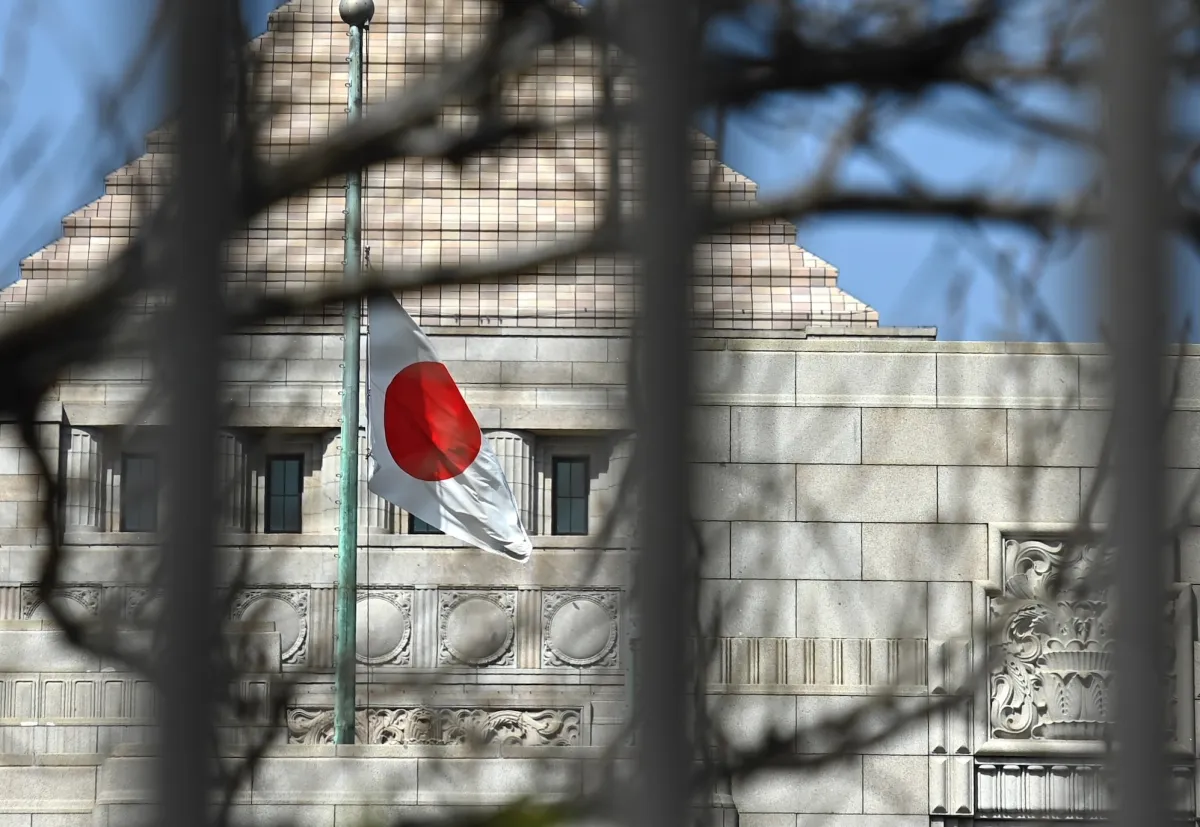
Underneath the industrial case is a sovereign one. As the U.S. and China pull ahead in large-scale AI, Tokyo wants its own data, its own compute, and less dependence on infrastructure it doesn’t control. Huang appeared on July 16 alongside trade minister Ryosei Akazawa at the government’s physical-AI launch, with Prime Minister Sanae Takaichi joining by video. The Takaichi administration has made AI and semiconductors the centerpiece of a growth plan chasing ¥370 trillion ($2.3 trillion) in public and private investment by 2040. Noetra’s factory — which Nvidia bills as “the world’s first national AI infrastructure” — is the clearest bet yet. Japan’s push for independence, at least for now, rests on American chips.ndence runs on American silicon.

Advertisement

In two days, Huang sat across from nearly every name that matters in Japanese tech — the CEOs of Toyota, Fanuc, Yaskawa, Fujitsu and Kawasaki over lunch, and dozens of supply-chain chiefs over skewers and whisky in a Kanda izakaya.

It’s the same playbook he ran weeks earlier — a homecoming keynote in Taiwan, fried chicken, and a 50,000-GPU deal in Seoul last fall. This time, it was Tokyo’s turn, with the robots, the supply chain, and the chips underneath.

When you purchase through links in our articles, we may earn a small commission. This doesn’t affect our editorial independence.

Source link

Advertisement
Continue Reading

Tech

NYT Strands hints and answers for Monday, July 20 (game #869)

Published

on

Looking for a different day?

A new NYT Strands puzzle appears at midnight each day for your time zone – which means that some people are always playing ‘today’s game’ while others are playing ‘yesterday’s’. If you’re looking for Sunday’s puzzle instead then click here: NYT Strands hints and answers for Sunday, July 19 (game #868).

Strands is the NYT’s latest word game after the likes of Wordle, Spelling Bee and Connections – and it’s great fun. It can be difficult, though, so read on for my Strands hints.

Want more word-based fun? Then check out my NYT Connections today and Quordle today pages for hints and answers for those games, and Marc’s Wordle today page for the original viral word game.

Advertisement

Source link

Continue Reading

Tech

The Search for Another Earth-Like Planet Just Took a Big Step Forward

Published

on

Astronomers have confirmed for the first time the existence of a rocky planet with an atmosphere that also happens to be in what’s known as the habitable zone.

Located 48 light-years away, the exoplanet—that is, a planet outside our solar system—may be the most similar thing to Earth that researchers have come across. If not a twin then certainly a family member.

Researchers at the Harvard-Smithsonian Center for Astrophysics were able to detect signatures of helium around LHS 1140 b, an exoplanet circling a cool red dwarf. The previously identified body has a rocky composition and is far enough from its host star to be able to retain liquid water on its surface. The team documented their findings in the journal Science this week.

The presence of an atmosphere is essential for a planet to support life as we know it. On Earth, for example, the atmosphere allows water to remain in a liquid state, rather than boiling or sublimating easily. It also helps maintain a stable climate by regulating the planet’s temperature and reduces the impact of harmful space radiation.

Advertisement

Astronomers searching for habitable planets typically look for Goldilocks-type conditions that could be just right for life. LHS 1140 b is the first exoplanet to provide solid evidence that it meets all three requirements of being a rocky body located in a star’s habitable zone that also retains an atmosphere.

The planet was discovered in 2017, and the new findings are based on observations taken in 2024 and 2025. To detect an atmosphere from 48 light-years away, researchers identified helium leaks emanating from the planet. They provide strong evidence that the planet has an atmosphere and, furthermore, that this atmosphere has existed for at least 3 billion years. The researchers first detected the spectral signature of helium and then used physical models to reconstruct how that gas escapes from the atmosphere.

While the planet is in a habitable zone, that isn’t proof of life or that its environment resembles that of Earth. In fact, based on the amount of helium escaping, the researchers suggest that the atmosphere is very different from ours. The upper layer, from which the helium is expelled, is only the most obvious one. In the lower layers, there could be heavy gases such as nitrogen, carbon dioxide, or carbon monoxide.

Importantly, the study confirms the viability of the technique the team used for detecting an atmosphere. Moving forward, scientists will need to observe the planet with more powerful instruments to fully characterize its atmosphere and investigate whether it has surface oceans or other features compatible with habitability.

Advertisement

“Twenty years ago we wondered whether other terrestrial-type planets even existed,” Robin Wordsworth, a Harvard professor and one of the study’s authors, says in a press release. “Then we learned they’re common, and found some in the habitable zone. The next question was whether any of them had managed to keep an atmosphere. Now, we know at least one has.”

This story originally appeared on WIRED en Español and has been translated from Spanish.

Source link

Advertisement
Continue Reading

Tech

Apple planned two more Mac Pro models before discontinuing the line

Published

on

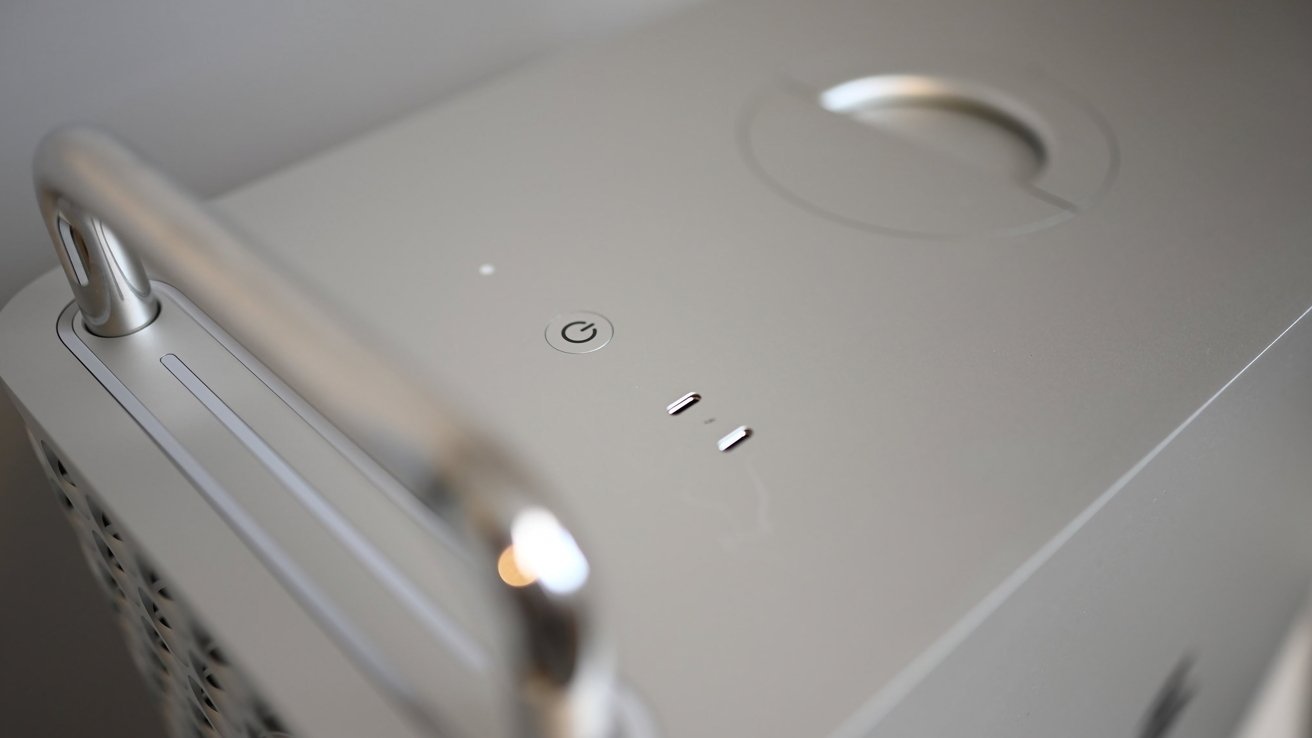
Apple has dropped the Mac Pro entirely, but for a time it was planning to keep it at the top of the range, giving it twice the processing power of the company’s Ultra chips — and maybe even one last Intel model.

The once beloved Mac Pro went out with a whimper in March 2026 as Apple discontinued it. But according to Bloomberg, there had originally been big plans for its future.

What eventually caused the end of the Mac Pro was how powerful the much more cost-effective Mac Studio was. From early on in the development of Apple Silicon, though, the plan was reportedly that the Mac Studio could get Apple’s Ultra processors, but the Mac Pro would get more.

It’s not known what Apple would have called these processors, but in 2022 there were reports of an M2 Extreme being planned for a Mac Pro. The new report says that the intention was that this processor would offer twice as many processing cores and graphics cores as the Ultra from the same period.

Advertisement

Reportedly both M2 and M3 versions of this processor were developed. Apple ultimately cancelled the processors, though, because of their cost and concerns over whether there would be demand for them.

Mac Pro hardware

As well as the processors, the new report says that there were intended to be two new models of Mac Pro. Significantly, one of them was going to be an Intel-based Mac, even though Apple was already making Apple Silicon ones.

It’s said that this Intel Mac was intended to address specific use cases. While there is no further detail, that would probably be because Apple Silicon does not support PCI-E graphics cards, which could have added more power for users needing that particular expansion.

That Intel model was codenamed J170, but there was also a J190 that was to be Apple Silicon based. This wasn’t going to have the extreme processor, but it would have been an M3 Ultra Mac Pro that was intended to launch alongside the M3 Ultra Mac Studio in 2025.

Advertisement

Separately, recent reports have claimed that an M5 Ultra version of the Mac Studio will launch before the end of 2026. An M7 Ultra Mac Studio is said to be planned for 2028.

Source link

Advertisement
Continue Reading

Tech

‘The world of work is changing fast’: Barely any workers think their job is safe as worries about AI refuse to go away

Published

on


  • New data reveals that most workers fear AI’s potential impact on their jobs
  • Employees who feel secure in their roles are more productive and engaged
  • Employers must prioritize communication and invest in training and upskilling

New data from ADP’s People at Work 2026 report, which covers more than 39,000 working adults from 36 markets, confirms that most workers are still highly concerned about AI’s impact on their jobs, even though today’s tangible impacts are relatively minimal.

Only one in four UK workers strongly agree their job is safe from being replaced, and this drops to around one in five (21%) in Europe as a whole and 22% globally.

Source link

Continue Reading

Trending

Copyright © 2025