B2B revenue teams average 23 vendors yet pipelines remain flat. The problem is not the AI models but the fragmented storage architecture underneath them. A Company Brain, a centralized intelligence layer that feeds shared memory and judgement to a network of specialized agents, turns isolated tools into a compounding revenue engine. Founders who build the brain first will outpace those still bolting agents onto legacy CRMs.
Founders eagerly bought into the promise of autonomous agents over the past year, and software usage skyrocketed across the industry as teams rushed to adopt the latest tools.
Despite this massive investment in new technology, sales pipelines remained completely flat. This is the ultimate paradox facing modern revenue teams today. The average business-to-business go-to-market team currently runs software from 23 separate vendors.
Teams deployed artificial intelligence across their workflows expecting a massive leap in efficiency and conversion rates. They received a surge of noise and inboxes full of generic outreach instead.
The gap between the promise of artificial intelligence and the reality of sales performance is widening rapidly. We are generating more activity than ever before, but not more revenue.
Advertisement
The problem does not lie with the artificial intelligence models themselves. The core issue is the fundamental architecture we are forcing these models to operate within.
Building a Centralized Go-to-Market Engine
The entire go-to-market industry has been running on storage rather than true intelligence. For decades, revenue teams relied heavily on systems of record to manage their daily operations. These platforms serve a single distinct purpose, which is storing information until a human being decides to act on it.
Every single customer interaction essentially starts from zero. Artificial intelligence did not fix broken sales playbooks. It scaled those broken playbooks to an unprecedented degree. Solving this requires a new approach entirely. Platforms like Alta understand that the fix is not retrofitting intelligence onto legacy databases. The solution requires starting from scratch with a completely different framework.
Teams need a system where every tool talks to a single source of truth. You can learn more about how to stop holding AI agents back by moving away from fragmented storage solutions and embracing unified systems.
Advertisement
The technology sector made a massive miscalculation when it dropped intelligent agents onto legacy storage architecture as isolated point solutions. Each tool operates entirely in the dark within this flawed framework. There is no shared memory across the tech stack and no shared judgement guiding the overarching strategy.
Customer relationship management platforms and sales engagement databases operate exactly this way. That foundational architecture worked perfectly when people did all of the actual work and made all the strategic decisions. It breaks down entirely when companies want software that acts autonomously.
A System of Actions represents a completely different software category rather than a simple feature bolted onto an existing database. A true System of Actions decides what to do next and then executes the task without human intervention.
The Architecture of the Company Brain
The transformation begins with establishing a Company Brain. This concept refers to a centralized intelligence layer that actively maps how your specific revenue engine operates from top to bottom.
Advertisement
A coordinated network of specialized agents shares this single brain to execute their daily tasks. This central hub holds all the institutional memory and operational skills required to close deals. It makes the complex judgment calls about what the system should do next based on historical data. The connected agents then execute the actual work in the field. They handle prospecting, outbound messaging, inbound lead qualification, calling, and continuous campaign optimization simultaneously.
Intelligence compounds massively when it is shared across a unified network rather than isolated in silos. Every single action taken by an agent feeds directly back into the central brain in real time. This constant feedback loop ensures that the learning curve never plateaus. Agents built for completely different jobs evolve together as a single cohesive unit with every customer interaction.
When one agent learns that a specific messaging angle works, the entire network instantly adapts to leverage that new insight. Conversely, the lessons learned by a standalone tool stay trapped forever inside that specific software silo.
The transition toward an agentic web weaving the next web with AI agents highlights why interconnected intelligence will always outperform disconnected software. The Company Brain turns isolated tasks into a highly synchronized and constantly improving revenue operation.
Advertisement
Implementing Intelligence Across the Stack
Building this architecture requires a deliberate sequence of events to ensure long-term success.
You must build the central brain first before deploying any autonomous agents into the field. The central intelligence layer must be fueled by over fifty distinct data sources and hundreds of unique buying signals to be truly effective. Once the brain is fully established, specialized agents are built for distinct jobs and powered by that single source of truth. These agents then run seamlessly on top of the technology stack that your sales and marketing teams already use every single day.
This connected setup allows the software to execute complex playbooks that adapt dynamically. If a prospect shows high intent on a pricing page, the brain processes that signal and instantly directs the outbound agent to draft a highly contextual message.
Every replied email and every closed deal makes the whole system tangibly smarter for the next interaction. For those looking to understand the technical mechanics behind this shift, exploring a beginner’s guide to building AI agents provides great insight into how these autonomous networks function at a basic level.
Advertisement
The key differentiator for modern enterprise teams is that the central intelligence layer dictates the overarching strategy while the specialized agents simply handle the daily execution.
The Litmus Test for Founders
Founders and revenue leaders must critically evaluate their current technology stack today. You need to run a simple test on your own organization to see where you stand.
Do your artificial intelligence tools actually share memory, judgement, and feedback loops? Or does each tool learn entirely alone in a vacuum?
If your team is drowning in disconnected software and buyers are actively ignoring your automated outreach, adding more effort will never fix the problem.
Advertisement
You need a centralized system that actually learns from every single interaction. The gap between companies that built the brain first and companies still bolting agents onto legacy storage widens every single day.
Operating without a shared intelligence layer is a massive strategic disadvantage you can no longer afford in a competitive market.
Global consumer spending on recorded music increased 8.6% to $47.1 billion in 2025, with streaming accounting for 86% of the total, according to Futuresource Consulting’s latest industry outlook.
The number of paid music subscriptions worldwide reached 865 million, an increase of 71.5 million from the previous year. Those figures make the direction of the business difficult to misunderstand: streaming is no longer merely the largest part of the recorded music market. It has become the market’s central economic engine, with physical sales and downloads operating around it.
Futuresource expects global music spending to surpass $50 billion in 2026 and reach $60.2 billion by 2030, when subscription streaming could account for almost nine out of every ten dollars spent on recorded music.
That does not mean physical music is disappearing. Consumer spending on physical formats increased 7% during 2025, while global vinyl retail value rose 10% to $3.77 billion. Streaming may have taken over the largest bedroom and changed the Wi-Fi password, but records and CDs have not moved into the garage quite yet.
Advertisement
Subscriber Growth Is Moving Beyond Mature Markets
Source: Futuresource Consulting
The addition of 71.5 million paid subscriptions during 2025 reflects continued growth in regions where streaming adoption still has considerable room to expand.
Latin American recorded music revenue increased 15%, while the Asia-Pacific region surpassed 400 million paid music subscriptions. China, India, Brazil and Mexico are expected to play increasingly important roles as subscription growth slows across North America and Western Europe.
That slowdown is one reason streaming services are focusing more heavily on higher-priced plans, bundled content, premium features and regular price increases. Most consumers in mature markets who are willing to pay for music streaming already subscribe to at least one service, which means future growth depends increasingly on charging existing users more rather than simply finding new ones.
Spotify, Apple Music, TIDAL, Qobuz, Amazon Music and other platforms have responded with higher monthly prices, additional subscription tiers, audiobooks, music videos, artificial-intelligence features and other additions designed to make the increases appear less like increases.
Some of those changes have created real value. Others have mostly improved the number printed on the credit-card statement.
Advertisement
Vinyl Remains the Physical Market’s Economic Engine
Source: Futuresource Consulting
Vinyl continues to generate the largest share of physical music revenue, with global retail spending reaching $3.77 billion in 2025.
That figure is consistent with the broader trend eCoustics has followed throughout 2026. The RIAA reported that U.S. vinyl generated $1.043 billion in wholesale revenue during 2025, with 46.8 million records sold. Revenue increased 9.3%, while unit sales grew 7.9%.
Advertisement. Scroll to continue reading.
It was the format’s 19th consecutive year of growth in the United States, which makes it increasingly difficult to dismiss vinyl as a short-lived revival driven entirely by aging collectors and Record Store Day releases. Fads generally do not survive four presidential administrations, multiple economic downturns, a pandemic and the arrival of $50 single-LP reissues bought by people who already own five other copies.
Vinyl now supports a substantial network of independent retailers, pressing plants, equipment manufacturers, distributors, labels and reissue companies. It has also evolved into something broader than an audio format, combining music ownership with collectibility, artwork, limited editions and physical merchandise.
Advertisement
That explains why buyers continue to spend money on colored vinyl, numbered editions, alternate covers and deluxe box sets, even when the same music is available instantly through a streaming subscription.
CDs Are Showing More Life Than Expected
Source: Luminate
Compact discs remain considerably smaller than vinyl in both revenue and cultural visibility, but the format has shown unexpected momentum during 2026.
Luminate reported that U.S. CD sales increased 16% to 16.3 million units during the first half of the year, while vinyl unit sales grew by only 2.4%. That gave CDs a growth rate almost seven times higher during the period.
K-pop releases contributed significantly through elaborate packaging, photo cards, alternate editions and fans purchasing multiple versions of the same album. However, Luminate found that CD sales would still have increased 6.7% after K-pop titles were removed from the data, suggesting that the improvement was not dependent on one unusually committed group of collectors.
Target, Walmart and other mass-market retailers now account for almost 30% of U.S. physical music sales, another indication that records and CDs are no longer confined to independent stores and specialist websites.
Advertisement
The figures do require some context. Futuresource measures global consumer spending, while the RIAA reports U.S. wholesale revenue net of returns and Luminate tracks retail consumption and unit activity. The numbers describe related trends, but they are not directly interchangeable.
The RIAA still reported that U.S. CD sales declined to 29.5 million units in 2025, with wholesale revenue falling to $312.4 million. Luminate’s stronger first-half results therefore suggest a possible change in direction rather than proof that compact discs have suddenly returned to their late-1990s commercial peak.
Nobody should start rebuilding Tower Records just yet.
Physical formats will remain much smaller than streaming, but the evidence does not support the idea that they are disappearing. Vinyl is a multibillion-dollar global business with nearly two decades of sustained U.S. growth, CD sales are showing renewed momentum in 2026, and manufacturers at both ends of the market continue introducing new players and transports.
Advertisement
Esoteric and Luxman still serve buyers who want disc playback treated as a precision instrument, while Denon, Yamaha, NAD, Audiolab, Mission, Quad, Topping and FiiO continue to develop products at more accessible prices. This is not an industry maintaining a format on life support; it is one still investing in it.
Advertisement. Scroll to continue reading.
The turntable market is even more remarkable. There have not been this many new models available in at least 30 years, with hundreds of options from Rega, Pro-Ject, Thorens, Kuzma, VPI, Vertere, Linn, Luxman and far too many others to list without turning this article into a dealer catalog. Entry-level decks, premium belt-drive designs, direct-drive models, automatic turntables and statement products all continue to arrive because demand remains real.
Interest in physical music has not been this strong in a very long time. Listeners understand that well-mastered records and CDs can sound better than compressed or compromised streams, but sound quality is only part of the appeal. Physical media provides ownership, permanence and a sense of community among listeners, collectors, retailers and artists that no monthly subscription can reproduce.
Advertisement
There will never be a Streaming Store Day. Nobody is lining up outside at 6 a.m. to celebrate a licensing agreement that can disappear before lunch.
The music business often treats streaming and physical media as opposing formats, but consumers increasingly use them for different reasons.
Streaming provides access, convenience and discovery. It allows listeners to explore enormous catalogs, move between devices and hear new releases immediately without committing to a purchase.
Physical media provides ownership and permanence. A record or CD cannot disappear because a licensing agreement expired, an artist changed distributors or a streaming platform removed a specific version from a regional catalog.
Advertisement
CDs also provide an inexpensive route to creating lossless local files, while vinyl offers artwork, presentation and a physical connection to an album that streaming cannot reproduce. For many listeners, the most practical approach is to stream broadly and purchase selectively.
That is not a contradiction. It may be the most rational way to consume music in 2026: use streaming to discover, buy the albums that matter, rip the CDs and retain a library that does not depend on a monthly subscription or somebody else’s licensing agreement.
The cloud is convenient. It is not ownership.
AI Will Influence Where the Next Billions Go
Source: Futuresource Consulting
Futuresource also identifies artificial intelligence as one of the major forces shaping the music business.
Streaming platforms are using AI for recommendations, playlists, search and engagement, while labels and rights holders explore licensing and content-management agreements. Services are also being forced to address the rapid growth of fully synthetic music and determine whether AI-generated recordings should compete directly with human artists for recommendations and royalty payments.
Advertisement
Deezer has taken one of the clearest positions by identifying fully AI-generated tracks and removing them from algorithmic recommendations. Other services are still developing their policies, even as synthetic content continues to increase.
Advertisement. Scroll to continue reading.
The issue will become more significant as streaming controls a larger share of global music spending. Platforms do not merely deliver music; they influence what listeners discover, which artists receive exposure and how revenue is distributed.
There is a great deal of money attached to those decisions, which usually means the ethical discussion will continue immediately after the commercial agreements have been signed.
Advertisement
The Bottom Line
Global paid music subscriptions reached 865 million in 2025, while streaming captured 86% of recorded music spending and pushed the market to $47.1 billion. By 2030, that share could approach 90%, driven by higher prices, premium tiers, expansion in developing markets and the increasingly unavoidable arrival of AI inside every service.
Those numbers confirm that streaming has won the battle for access. It is fast, convenient and almost impossible to avoid. What it does not provide is ownership, permanence or any guarantee that the version of an album you love will still be available next year, in the same country, under the same licensing agreement.
Physical media remains much smaller, but it offers something streaming cannot: control. A record or CD belongs to the buyer, can be played without permission from a platform and often sounds better when the mastering is superior.
That combination of sound quality, ownership and community is why records and CDs continue to matter, even as streaming absorbs most of the money. The industry may prefer recurring monthly payments, but listeners still understand the difference between having access to music and actually owning it.
Advertisement
The industry appears perfectly willing to charge people for both, and a growing number of listeners appear willing to pay.
IC3 says any account claiming to represent it is fake
Real FBI agents won’t slide into your DMs and offer to help you recover stolen funds. The bureau’s Internet Crime Complaint Center (IC3) updated an earlier warning on Monday about scammers impersonating the agency online, saying fraudsters continue to use the scheme “to deceive and revictimize individuals.”
According to IC3, there are two different schemes being used to target cybercrime victims, both directly and by soliciting them to report incidents.
Advertisement
In the first scheme, IC3 said scammers create fraudulent social media profiles and pages impersonating FBI personnel or IC3. They may also infiltrate online groups for fraud victims or contact victims directly while claiming to represent the FBI or the complaint center.
In other cases, victims are being contacted by someone claiming to be an FBI agent after realizing they were approached by someone trying to scam them and saying they intended to report the incident to the FBI or file an IC3 complaint. The FBI said the impersonator then directs victims to a fake IC3 update page or continues communicating through messaging apps.
In the other instance, scammers are creating AI-generated videos on social media depicting senior FBI officials and directing users to a spoofed IC3 website to report cybercrimes they may have fallen victim to, with the scammers then collecting the information and using it to contact victims for further fraud. AI-generated depictions of public figures are similarly being used to make such scams appear legitimate.
“Some individuals received an email or a phone call, while others were approached, or observed an advertisement via social media or forums,” the IC3 said. “Almost all complainants indicated the scammers claimed to have recovered the victim’s lost funds or offered to assist in recovering funds.”
Advertisement
Regardless of how legitimate social media profiles look, or how realistic those AI-generated videos may be, the IC3 is warning that none of them should be believed for a simple reason: The IC3 doesn’t have a social media presence of any kind, and it doesn’t investigate crimes or offer to recover lost funds through social media.
“Any social media profiles or pages claiming to represent IC3 or offering to recover lost money are fraudulent and are actively attempting to steal your personal or financial information,” the IC3 warned. “IC3 will never directly communicate with individuals via phone, email, social media, phone apps, online chat, or public forums.”
The IC3 said that any contact made with a cybercrime victim who reports an incident via its actual website will be made by an FBI employee from a local field office or other law enforcement official.
Here’s another hot tip: If you fall victim to a cybercrime or online scam, don’t post about it on social media – that’s only going to invite someone with bad intentions to seek you out. ®
A new NYT Strands puzzle appears at midnight each day for your time zone – which means that some people are always playing ‘today’s game’ while others are playing ‘yesterday’s’. If you’re looking for Monday’s puzzle instead then click here: NYT Strands hints and answers for Monday, July 20 (game #869).
Strands is the NYT’s latest word game after the likes of Wordle, Spelling Bee and Connections – and it’s great fun. It can be difficult, though, so read on for my Strands hints.
Want more word-based fun? Then check out my NYT Connections today and Quordle today pages for hints and answers for those games, and Marc’s Wordle today page for the original viral word game.
Advertisement
SPOILER WARNING: Information about NYT Strands today is below, so don’t read on if you don’t want to know the answers.
Latest Videos From
NYT Strands today (game #870) – hint #1 – today’s theme
What is the theme of today’s NYT Strands?
• Today’s NYT Strands theme is… Write there
Advertisement
NYT Strands today (game #870) – hint #2 – clue words
Play any of these words to unlock the in-game hints system.
SLAY
HEEL
TRADE
LIFT
SHARD
CASHED
NYT Strands today (game #870) – hint #3 – spangram letters
How many letters are in today’s spangram?
• Spangram has 10 letters
NYT Strands today (game #870) – hint #4 – spangram position
What are two sides of the board that today’s spangram touches?
• First side: left, 4th row
Advertisement
• Last side: right, 5th row
Right, the answers are below, so DO NOT SCROLL ANY FURTHER IF YOU DON’T WANT TO SEE THEM.
Advertisement
NYT Strands today (game #870) – the answers
(Image credit: New York Times)
The answers to today’s Strands, game #870, are…
ENVELOPE
LETTERHEAD
SHEET
CARD
FILE
NOTEPAD
SPANGRAM: STATIONERY
My rating: Easy
My score: Perfect
The act of writing a letter and sending it to someone in the post has become not just a form of communication from a former time, but also an expensive one.
Sign up for breaking news, reviews, opinion, top tech deals, and more.
Advertisement
Organized postal networks date back to Ancient Egypt, while in the UK King Henry VIII founded the Royal Mail in 1516. Today, though, they are not so interested in delivering simple letters and have rebranded their business to compete with parcel delivery companies.
It was with nostalgia, then, that I collected ENVELOPE and LETTERHEAD as I pondered the last time I had used some actual STATIONERY.
Advertisement
Yesterday’s NYT Strands answers (Monday, July 20, game #869)
TINY
LITTLE
MICROSCOPIC
MINIATURE
MINUSCULE
SPANGRAM: ITSYBITSY
What is NYT Strands?
Strands is the NYT’s not-so-new-any-more word game, following Wordle and Connections. It’s now a fully fledged member of the NYT’s games stable that has been running for a year and which can be played on the NYT Games site on desktop or mobile.
I’ve got a full guide to how to play NYT Strands, complete with tips for solving it, so check that out if you’re struggling to beat it each day.
If you use WordPress, patch now. Just hours after fixes came out, attackers have begun exploiting two bugs that, when chained together, allow pre-authentication remote code execution (RCE). And security researchers tell us there’s a very good chance the miscreants had an AI assist.
“Once the vulnerabilities were publicly disclosed, reproducing them with the help of frontier AI models was only a matter of time and tokens,” Jake Knott, watchTowr principal security researcher, told The Register. “WatchTowr was able to trivially reproduce CVE-2026-63030 within minutes of disclosure, and the second CVE-2026-60137 with some additional effort.”
Advertisement
WordPress released patches for both CVEs late Friday, but by Saturday it was game over.
“By the early hours of Saturday morning, successful exploitation was already well underway, initially using public exploit code to exfiltrate hashed credentials, with remote code execution following once additional details were made public,” Knott said. “From our vantage point across a global client base, we are seeing widespread impact of this vulnerability across organizations of every size and every vertical.”
Here are the details about both security holes, and what went down since WordPress revealed and fixed them on Friday.
CVE-2026-60137 is a moderate-severity SQL injection issue, and CVE-2026-63030 is a critical REST API batch-route confusion bug.
Advertisement
“A route confusion flaw causes the arrays containing the sub-requests, validation results, and matched handlers to become misaligned,” Hacktron researchers explained. This causes WordPress to become confused about which requests have been properly validated and thus treat all requests as trusted, including those that it should block.
Individually, the bugs are difficult to exploit. But when chained together, they can wreak havoc on any organization using a vulnerable WordPress version because they allow unauthenticated RCE.
WordPress 6.9 is affected by both vulnerabilities, and version 6.9.5 contains fixes for both, while WordPress 6.8 is only affected by the SQL injection flaw, and version 6.8.6 fixes it.
Additionally, WordPress 7.1 Beta 1 is also vulnerable. Version 7.1 Beta 2 fixes both CVEs.
Advertisement
Versions of WordPress prior to 6.8 are not affected.
John Blackbourn, one of the WordPress core developers, recommended affected users “update your sites immediately.” Because of the flaws’ severity, the WordPress security team “enabled forced updates via the auto-update system for sites running affected versions,” he added.
The content management system credited Searchlight Cyber researcher Adam Kues with finding and reporting CVE-2026-63030, and in a subsequent Friday advisory, Kues dubbed the bug wp2shell.
“The attack has no preconditions and can be exploited by an anonymous user in a stock install of WordPress with no plugins,” Kues said, adding that his security shop released a free wp2shell checker to determine if your instance is vulnerable.
Advertisement
Security firm PatchStack reported exploitation of both CVEs as of Friday night, but didn’t provide details about the attacks.
“After public exploit code was released, attackers began spraying the internet indiscriminately, hitting anything reachable and trying to get lucky,” Knott told us. “Our honeypots recorded tens of thousands of exploitation attempts, and more than 100 backdoor accounts created by different threat actors using variations of public tooling.”
After creating these backdoor admin accounts, watchTowr observed attackers deploying fake WordPress plugins to achieve RCE, exfiltrate credentials or secrets, or download additional tooling to further compromise the system, he added. “In one case, we watched a threat actor repeatedly attempt to pull down Overlord RAT, a Golang-based remote access trojan.”
Advertisement
Any orgs that waited until Monday to patch are likely already compromised, Knott warned. “Defenders need to inspect their WordPress instances for new administrator accounts, malicious plugins, or other suspicious files, regardless of whether they’ve patched,” he said.®
Apple users are becoming even less likely to switch away from the iPhone. According to new research, the company’s customer loyalty has reached its highest level in years.
This is up from 84% during the same period last year. At the same time, the number of Android users moving to Apple’s platform has continued to shrink.
According to CIRP’s survey, just 12% of new iPhone buyers switched from Android during the March quarter. This is down from 14% a year earlier. The remaining 1% came from feature phones, other smartphone platforms or were buying their first smartphone.
Advertisement
The figures suggest that the battle between iPhone and Android is more about keeping existing ones. CIRP notes that Android switchers have consistently accounted for between 11% and 15% of new iPhone buyers in recent years. This is a much narrower range than during the iPhone’s early growth. At that time, Apple was expanding to more carriers and attracting first-time converts in larger numbers.
Advertisement
That trend also reflects a maturing smartphone market. Most buyers have already settled into one ecosystem and are less inclined to change platforms when upgrading.
One product that could help is the long-rumoured foldable iPhone. Apple is widely expected to enter the foldable market in the near future. This could potentially appeal to buyers who have already embraced foldable devices from Samsung, Google and other Android manufacturers.
Advertisement
Smartphone owners appear increasingly loyal to the platform they’ve already chosen, with relatively few switching sides each year. As new AI features and fresh hardware arrive, the competition may become less about converting users and more about giving them fewer reasons to leave.
“Cards are basically a commodity at the end of the day; how you differentiate them is really what makes the difference,” Riley says. “That’s really the big deal here—how you use your card.” Riley has a card for grocery shopping and one for Amazon transactions; all of these steps help him earn the most points.
“One of the big challenges here on rewards is that quite often, you go in well-intentioned and you don’t get the full benefit of the rewards because you start revolving on the product,” Riley says, meaning cardmembers start accumulating interest on the unpaid balance, with interest charges wiping out the value earned by the rewards.
Riley points to one of the failings of the Apple Card: Apple oversold it. It’s slick, yes, but it never became a mainstream challenger to the credit card industry because the average consumer typically has three or four cards per household: one for all of their purchases, one for emergencies, and one that might focus on travel.
Sara Rathner, a credit card expert at NerdWallet, echoed that sentiment. “The Apple Card is far from the iPhone in terms of changing the world,” Rathner says. “It’s fine; it’s a cash-back card.” All of these cards exist to create brand loyalty, she says. If you have a lot of points with Hyatt, you’re more likely to book a stay at a Hyatt property on your next trip. If you make many purchases with Samsung Wallet, that might incentivize you to get the Galaxy Card.
Advertisement
Rathner says the 3 percent cash reward for purchases using the Samsung Wallet app is a really good rate. If you tap-to-pay at New York City’s subway turnstile with Samsung Wallet on your phone, for example, that’s 3 percent on every commute, and “that would be compelling.”
While Rathner finds the Apple Card underwhelming, she does credit Apple with innovating on certain features. For example, Apple allows you to see the interest rate and credit rate you would qualify for before a credit pull, something other credit cards are increasingly offering. The app (and card) have a beautiful design, the physical card is easy to activate with just a tap on the iPhone, and cash rewards are posted daily rather than waiting for a billing cycle.
“I think if other cards want to compete in that way and also follow suit with those features, I think that just makes credit cards in general better products for consumers,” Rathner says. “We’ll see how this resonates with people who have Samsung phones.”
In brief: It’s hard to miss a drone. With their spinning propellers and often bulky bodies, they’re usually very easy to spot. But Northwestern University engineers have created one that’s much more difficult to see coming: Phantom Twist, a prototype that rotates so quickly it becomes little more than a blurry haze.
Rather than using camouflage, transparent panels, or Predator-style light-bending materials, Phantom Twist exploits motion blur and the limits of human vision.
Its body spins between 15 and 25 times per second, causing the eye to average the moving parts with whatever lies behind them. At maximum speed, the aircraft is nearly invisible, appearing as a faint smudge.
Unlike a conventional quadcopter, which has four rotors surrounding a mostly stationary body, Phantom Twist uses a single motor and propeller.
Advertisement
The propeller rotates in one direction while the rest of the aircraft spins the other way, leaving almost no stationary components for the eye to lock onto.
Creating something that could remain stable while also being difficult to see required more than attaching components to a rotating frame. The researchers began with a computational model that generated around 20,000 viable configurations. AI and optimization algorithms then rearranged the motor, batteries, circuit board, counterweight, and other parts to find designs that balanced flight performance with low visibility.
The most promising candidates were simulated while spinning and overlaid across 100 real-world backgrounds. A perception model designed to approximate human vision scored how noticeable each one appeared. The team retained the 500 least visible designs and continued adjusting their layouts until it arrived at the final version.
Advertisement
Its widely separated components sit at different heights and angles, with plenty of empty space between them. This prevents the solid pieces from overlapping during rotation and forming a dark, recognizable shape. According to the researchers’ visibility metric, Phantom Twist is around 10 times less perceptible than a similarly sized quadcopter.
There are a few caveats. The current prototype relies on an external optical tracking system, limiting it to controlled environments, while its exposed wires and carbon-fiber support rods remain partially visible. More importantly, it still sounds like a drone, so anyone who fails to spot the hovering blur will probably hear it. Future versions could use quieter propulsion and more transparent materials.
The drone’s potential applications include observing wildlife without altering animal behavior, surveying wetlands, and inspecting infrastructure with less visual disruption. A camera mounted on the spinning body might also capture a 360-degree view for navigation.
Similar aircraft designed to be difficult to detect include China’s mosquito-sized surveillance drone and Harvard’s solar-powered RoboBee. Phantom Twist takes a different approach to the same goal: rather than shrinking out of sight, it moves too fast to see clearly.
Last year’s trip to CanJam London was something of a nightmare, with lengthy train delays and torrential rain pouring over the London Eye and Westminster Bridge.
This time, the journey into the heart of the city could not have been easier. There were no travel hiccups, and the sun managed to find its way through every available gap between the buildings, buses and cars.
Inside the Park Plaza Hotel, the air conditioning was working overtime, which was just as well. Attendance was clearly up compared with 2025, and there were noticeably more brands and exhibitors. So many, in fact, that I simply could not see everything on offer over the two days.
Following our recent coverage of CanJam NYC 2026, and with the eCoustics team heading to CanJam SoCal at the end of the summer, London offered another useful snapshot of where personal audio is heading. With my trusty Sendy Audio Egret in tow, I focused on the products that stood out most. We begin with my personal highlights among the DACs, headphone amplifiers and DAPs at CanJam London 2026.
Advertisement
Related Reading:
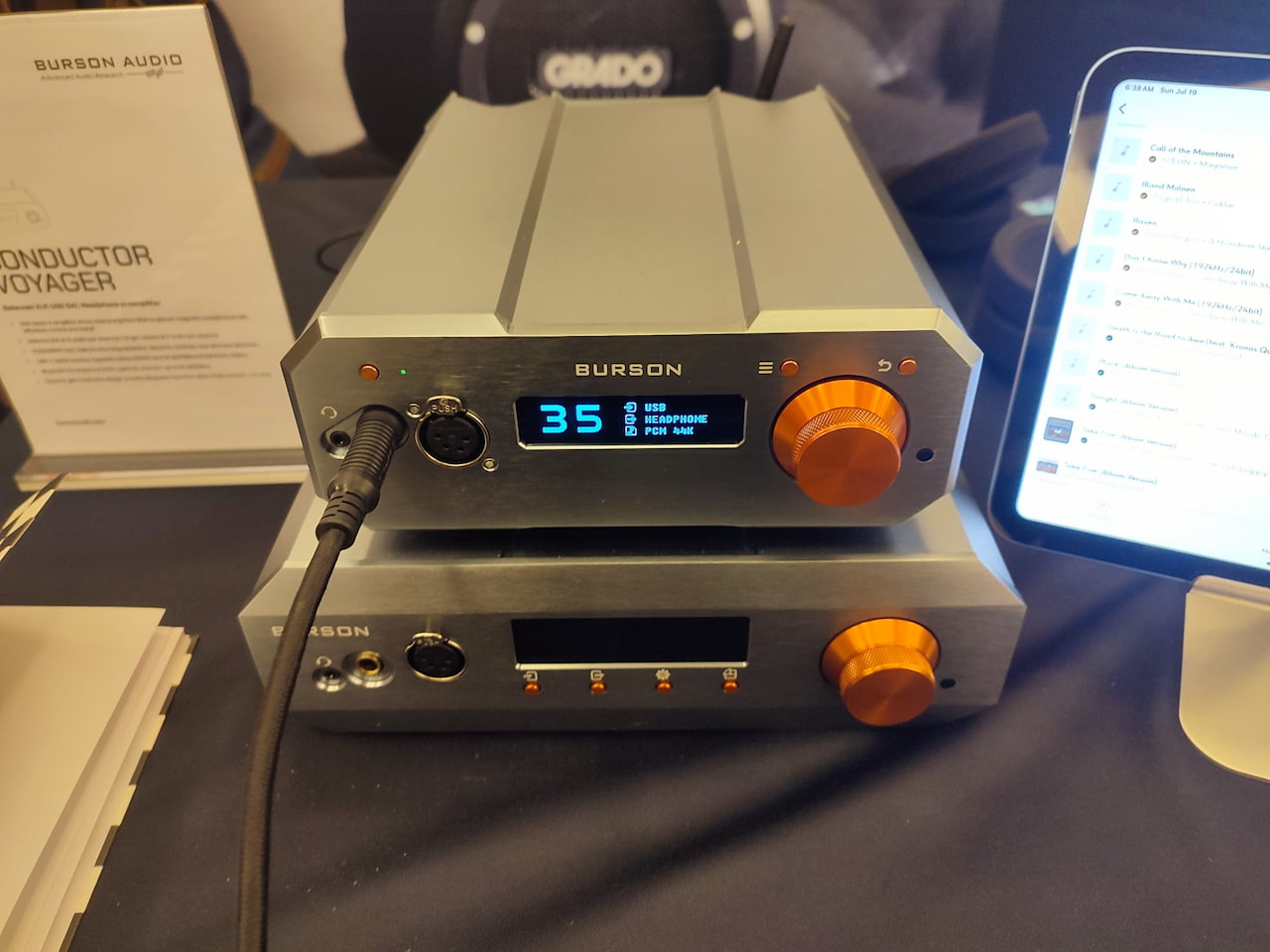
Burson Audio Conductor Stellar
Australian audio brand Burson has seemingly come out with a smaller, more compact Conductor Voyager that costs less and offers almost the same level of performance.
You get two watts less of Class A amplification, at eight watts rather than ten, but you won’t notice that unless you’re using a particularly difficult-to-drive pair of cans. What’s more, the Stellar has a dedicated IEM amplifier stage, so you can drive your sensitive in-ears with ease.
Despite being Class A, I found the Stellar to be wholly neutral, albeit with excellent dynamics and an impactful bass line. As a pure headphone listener, I’d go for this instead of the Voyager unless you need the extra I/O that the latter offers at the back.
Fosi Audio ZH1
I’ve always been a fan of Fosi Audio’s budget-conscious approach to personal audio, and its upcoming ZH1 certainly sticks to that philosophy.
Expected to arrive around September for approximately £130, the ZH1 is a compact desktop DAC and headphone amplifier built around a pair of Cirrus Logic CS43131 DAC chips and Fosi Audio’s own headphone amplifier circuit. Its unusual hexagonal chassis also helps it stand out from the endless procession of small black boxes competing for space on your desk.
That oversized volume knob definitely takes centre stage. It makes quick adjustments easy, while the lighting underneath can be changed to suit your setup. Some audiophiles will undoubtedly switch it off immediately, but I imagine the colourful presentation will make the ZH1 particularly popular with gamers and younger listeners.
Advertisement
This is not merely a piece of affordable desktop decoration, either. With more than one watt of output power available, the ZH1 should have enough muscle for a broad range of headphones rather than being limited to sensitive IEMs and easy-to-drive models. It certainly had no difficulty with my Sendy Audio Egret at the show.
Advertisement. Scroll to continue reading.
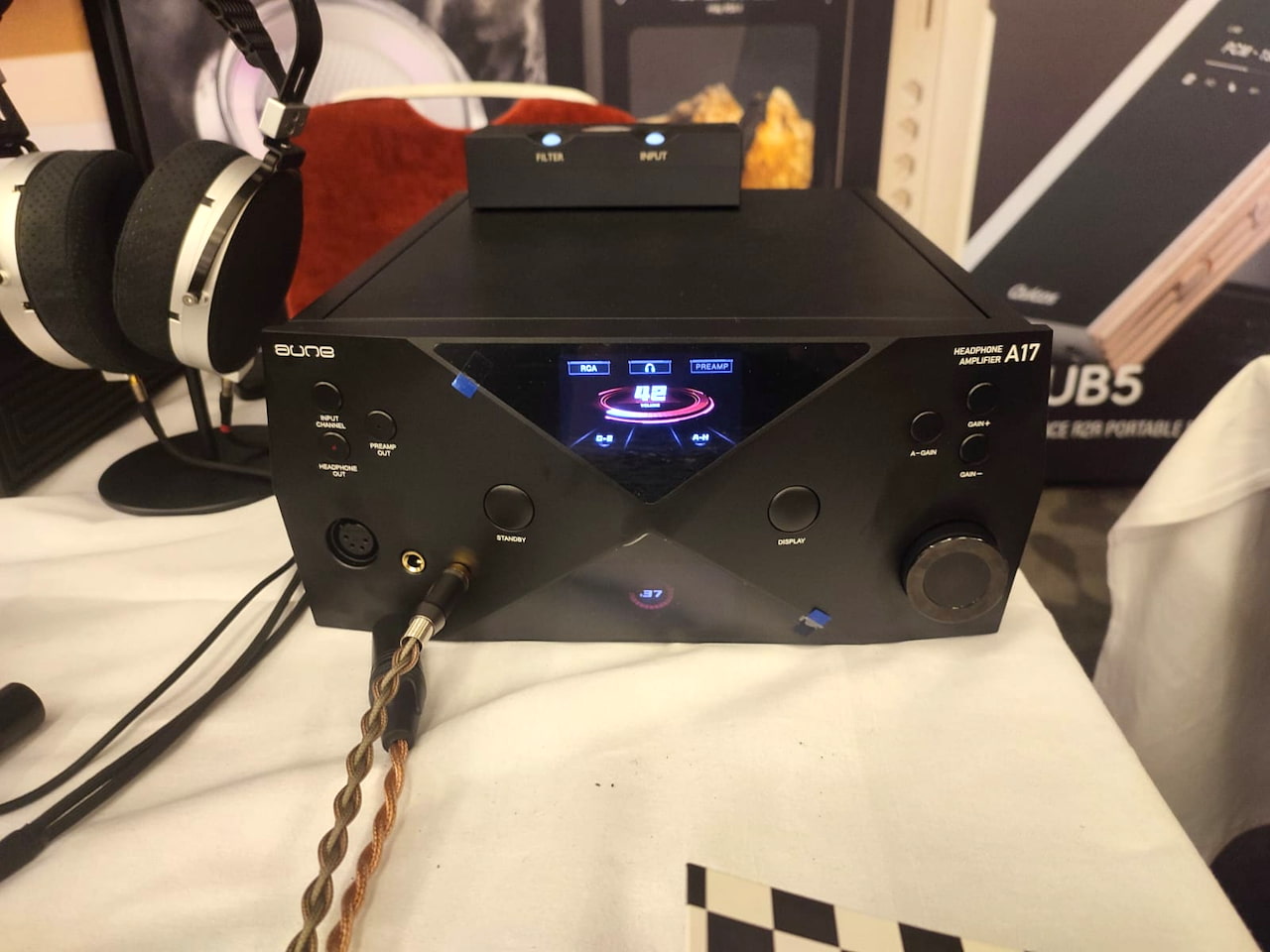
Aune A17
Next up is this absolute behemoth of an amplifier. I’ve reviewed a few of Aune’s products in the past, but nothing has come close to the sheer heft of this beast, which weighs an astonishing 18 kg.
It has the power to back up its size, too, delivering almost 12 watts from its balanced output. That translates rather directly into its sonic performance, as my main takeaway was the exceptionally high level of control it maintained across the entire audible spectrum.
It also costs upwards of £2,000 ($2,399 at Amazon), and while you certainly get a lot of material and componentry for the money, I found the design rather uninspiring and, dare I say it, slightly cheap-looking.
Advertisement
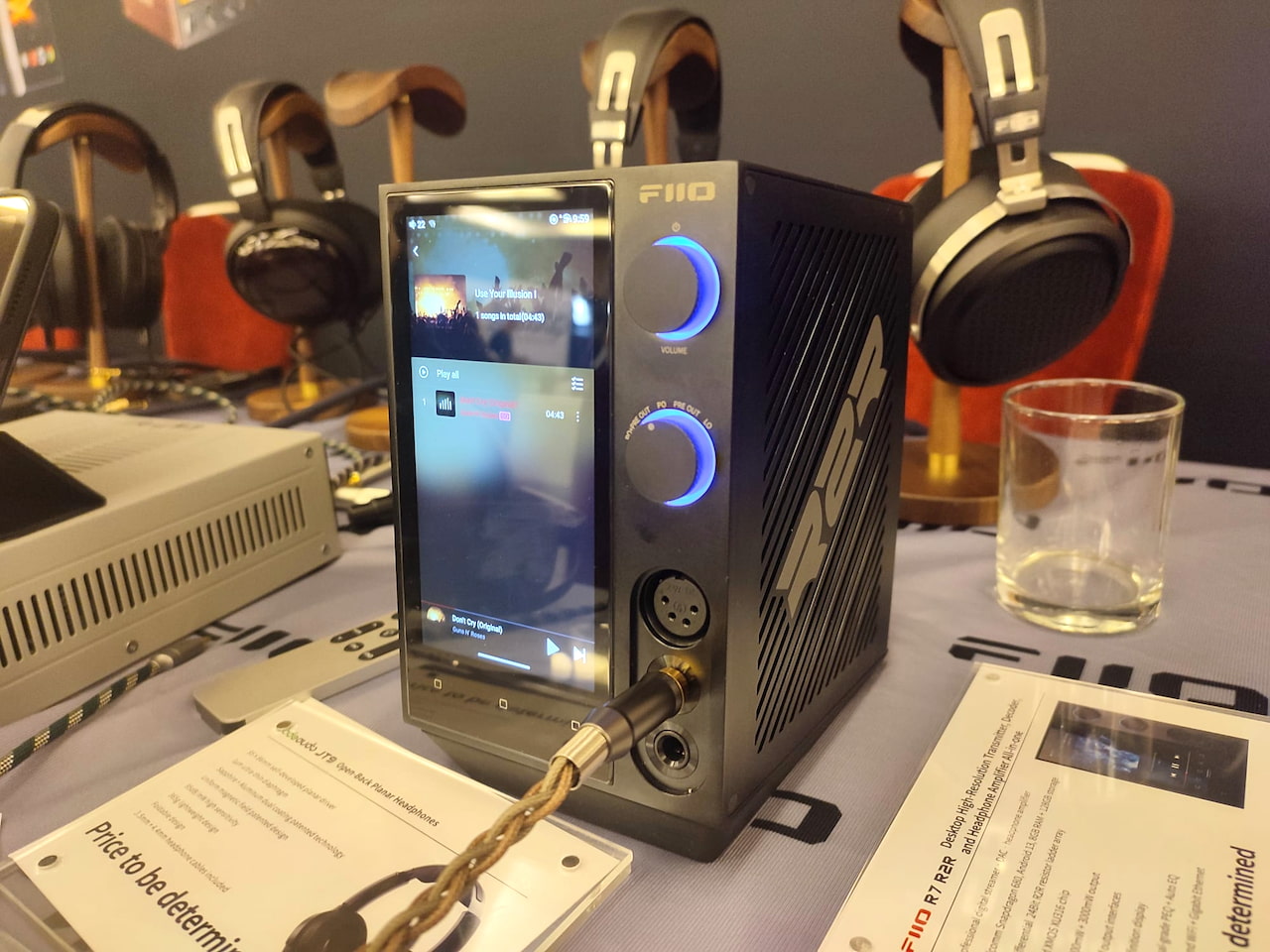
FiiO R7 R2R
The FiiO R7 R2R is expected to cost the same as its original sibling at around $700, but replaces the standard R7’s ESS ES9068AS delta-sigma DAC architecture with an R2R resistor-ladder conversion stage.
The rest of the formula remains familiar. It is still a compact, all-in-one desktop streamer, DAC, preamplifier and headphone amplifier, with a vertical touchscreen, Android-based access to streaming services and support for local playback. The standard R7 also offers Wi-Fi, Bluetooth, AirPlay and Roon Ready connectivity, alongside balanced 4.4 mm and four-pin XLR headphone outputs and a 6.35 mm single-ended connection.
To me, the move to R2R represents a clear upgrade. I noticed the difference immediately, with greater bass impact, more warmth and a fuller overall presentation than I heard from the standard R7.
I love that FiiO continues to refine and expand its range of all-in-one streamers, DACs and headphone amplifiers rather than abandoning successful products after a single generation. The R7 R2R does not reinvent the original, but it sounds like another worthwhile incremental improvement to one of FiiO’s most versatile desktop components.
FiiO Class A
Shuffling further down the FiiO booth, I spotted another as-yet-unreleased product: a dedicated headphone amplifier called the CLASS A. The name rather gives the game away.
This is a fully discrete, pure Class A design that delivers one watt per channel. That might not sound particularly dramatic on paper, but it sounded considerably more powerful than the figures suggested, driving my headphones with plenty of authority and control.
Advertisement
Inside is a custom 60-watt toroidal transformer and a discrete regulated power supply, while five selectable gain levels should make it suitable for a wide range of headphones. Outputs include 3.5 mm, balanced 4.4 mm and four-pin XLR connections, with both RCA and balanced XLR line-level connectivity also provided.
More importantly, it delivered the warmth and sweetness I tend to associate with Class A amplification without sounding overly soft or sluggish. I was also a fan of the physical bass and treble controls, which make it easy to fine-tune the sound without opening an app or disappearing into a menu. You do not see enough of those nowadays.
FiiO has yet to confirm the final international release date or pricing. I was quoted a provisional Chinese price of approximately 3,000 RMB, which converts to around $450, although taxes, distribution costs and regional pricing will inevitably have their say.
Advertisement. Scroll to continue reading.
Advertisement
Even allowing for that, the CLASS A looks like excellent value for money.
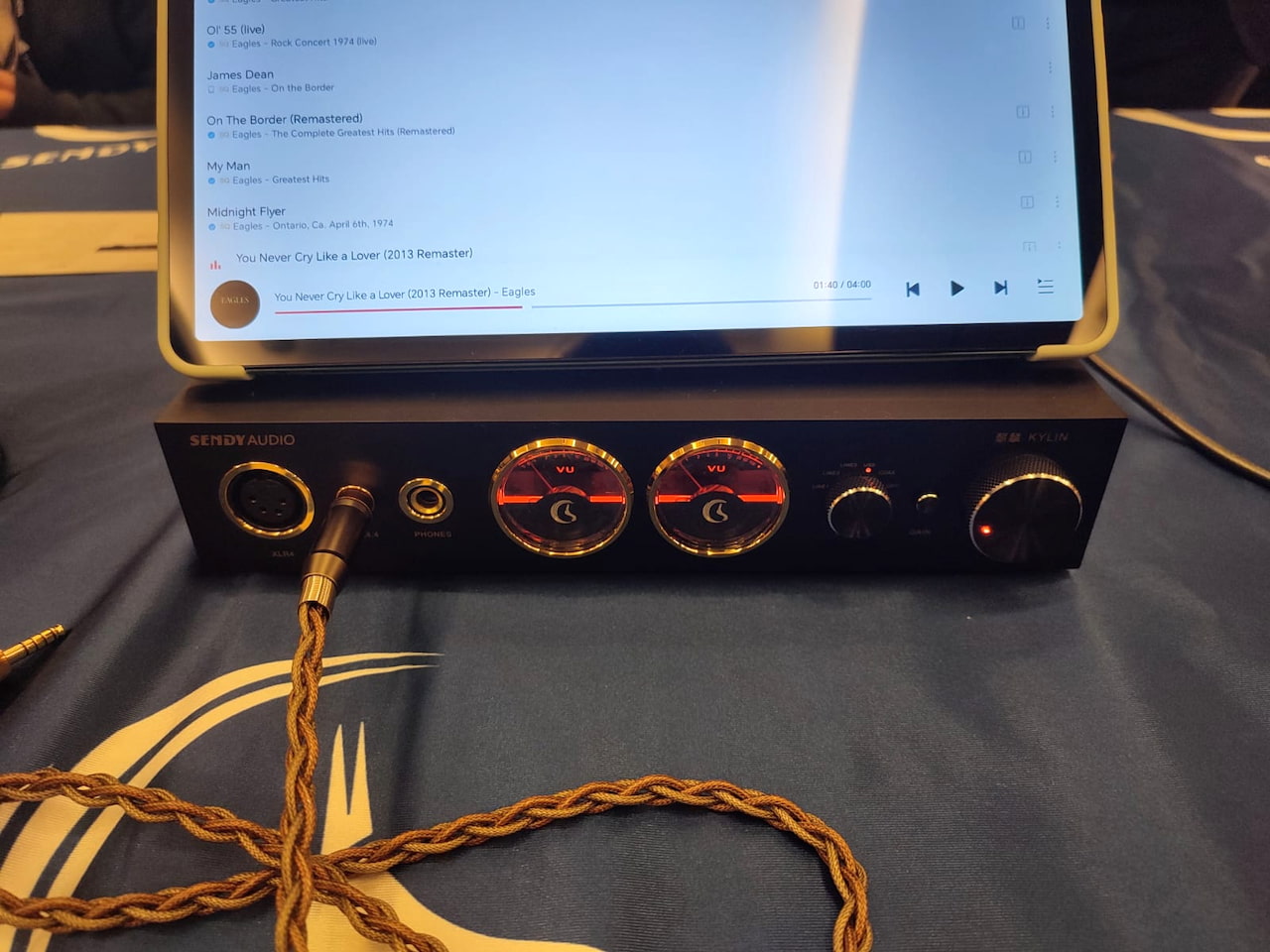
Sendy Audio Kylin
I listened to the Sendy Audio Kylin at last year’s show and was so impressed that I named it Best in Show in the midrange price category.
One year later, my impressions have not changed one jot. Some of its specifications might not look especially impressive on paper, particularly beside amplifiers boasting increasingly ridiculous power figures, but the Kylin sounds absolutely gorgeous.
Vocals and guitars were rich, full-bodied and wonderfully expressive, while the presentation remained spacious, punchy and highly dynamic. There was enough warmth to make everything sound inviting, but not so much that the music became soft or overly relaxed.
Under the bonnet, the Kylin combines an XMOS USB stage with an ESS ES9038Q2M DAC, native DSD512 decoding and a pure Class A headphone amplifier using matched Hitachi transistors. It also offers balanced 4.4 mm and four-pin XLR headphone outputs, alongside a 6.35 mm single-ended connection.
Advertisement
None of that fully explains why I enjoyed listening to it so much, which rather proves the point. Numbers are useful, but they are not everything in the world of audio.
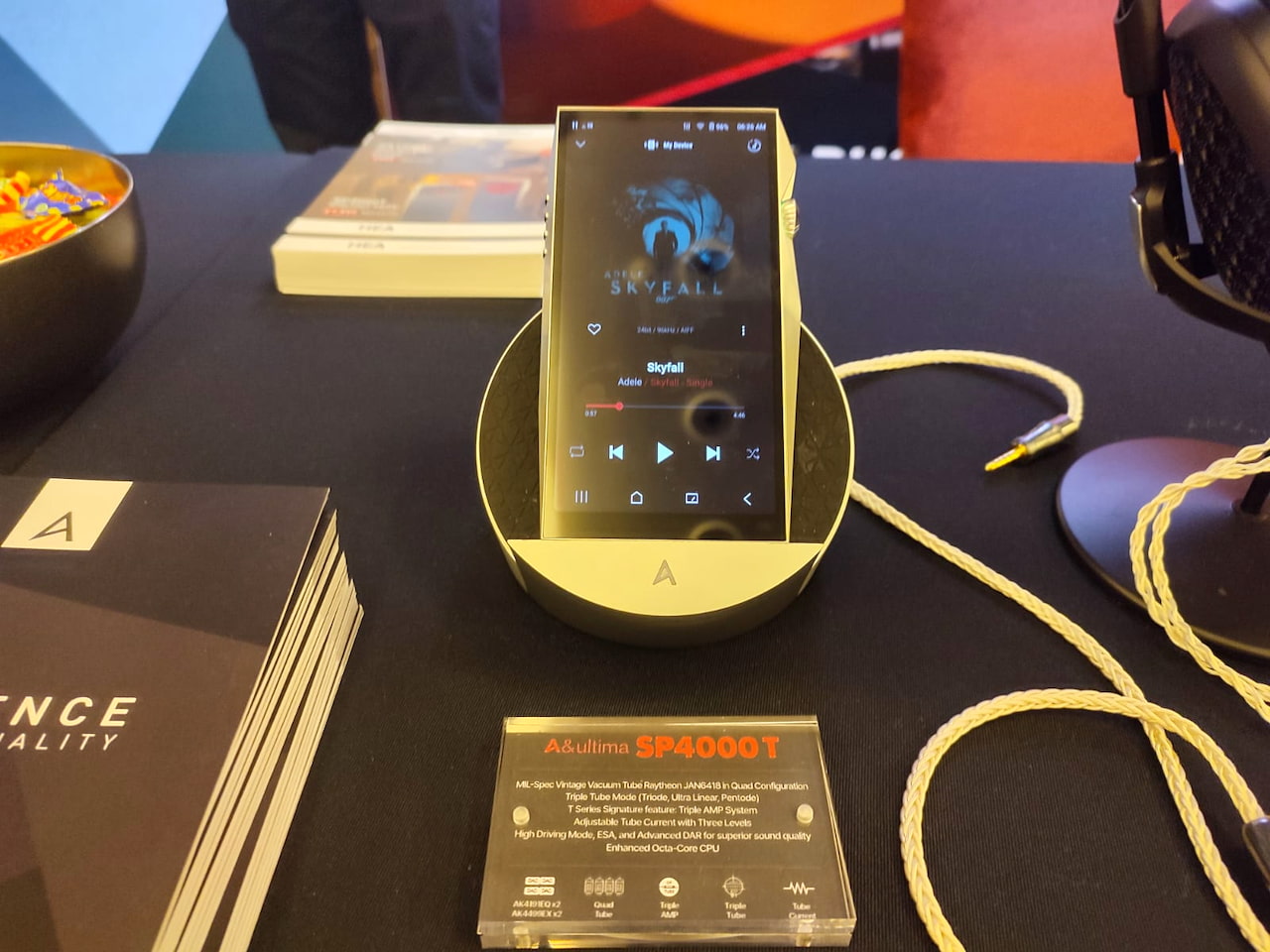
Astell&Kern A&Ultima SP4000T
The Astell&Kern SP4000T is, very loosely speaking, an SP4000 with four Raytheon JAN6418 vacuum tubes bolted on. There is rather more going on beneath the surface, but the description gets the general point across.
Those four military-specification tubes are arranged in a differential configuration, with two dedicated to each channel. The SP4000T also lets you choose between Triode, Ultra Linear and Pentode tube modes, along with OP AMP, Tube AMP and adjustable Hybrid amplification. Factor in three selectable tube-current settings, and there are plenty of ways to tailor its presentation.
It costs an eye-watering £3,200 and weighs an equally shocking 565 grams, making the word “portable” feel rather generous. You are not slipping this into the pocket of your jeans unless you would also like to explain the resulting wardrobe malfunction.
You do, however, get your money’s worth sonically. The SP4000T delivered a bombastic, commanding presentation that, to my ears, holds its own against many desktop DAC and headphone amplifier stacks costing similar money. There was plenty of scale and low-end authority, but it never sounded uncontrolled or clumsy.
Advertisement
The rest of the package feels suitably premium, with a smooth interface, responsive touchscreen and full Android support for direct access to streaming apps. Anyone seeking the best of the best in portable DAPs will undoubtedly consider it, although at 565 grams, they may also want to consider a stronger bag.
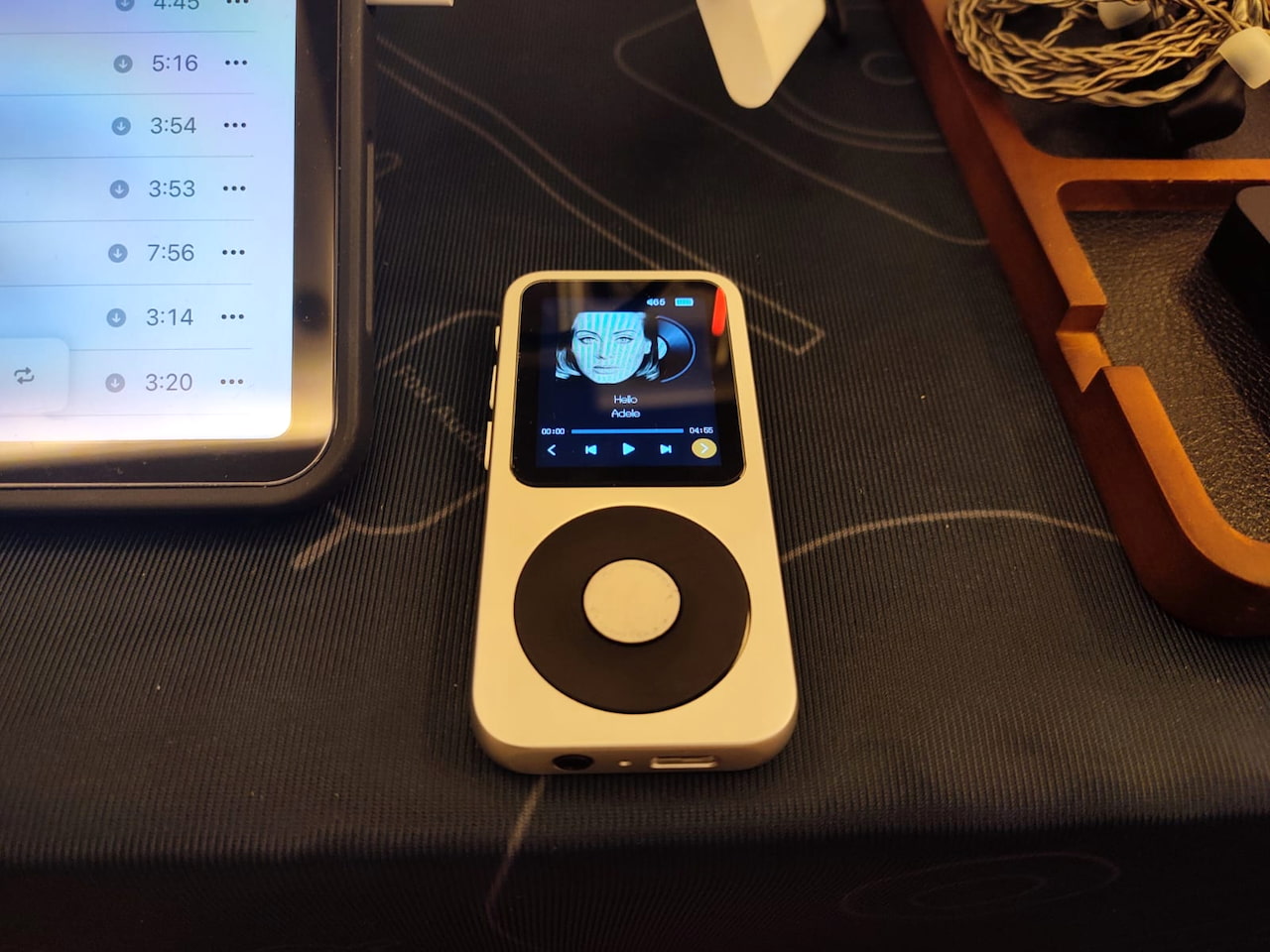
Fosi Audio DAP Neo
Back at the Fosi Audio booth, I was introduced to another prototype on display: the DAP Neo.
Advertisement. Scroll to continue reading.
This is a deliberately simple, offline digital audio player. It does not connect to the internet, which means no Spotify, Apple Music, TIDAL or other streaming services. You load your music onto the player and listen to it. That may sound rather old-fashioned in 2026, but sometimes removing notifications, apps and endless choices is exactly the point. It allows you to focus on the music and nothing else.
The compact design looks more than a little like one of Apple’s classic iPods, which is hardly the worst place to draw inspiration from. It felt straightforward to operate and refreshingly uncomplicated beside the increasingly large and expensive Android players found elsewhere at the show.
Advertisement
Fosi expects the DAP Neo to cost less than $100, although the final price and specifications have yet to be confirmed. It sounded solid during my brief demonstration and powered my Sendy Audio Egret comfortably, with enough weight and clarity to make listening enjoyable.
At this price, I am not asking for a desktop-class powerhouse or a miniature smartphone. Give me reliable local playback, a usable interface and enough power for a sensible pair of headphones, and there is not much more I could ask for.
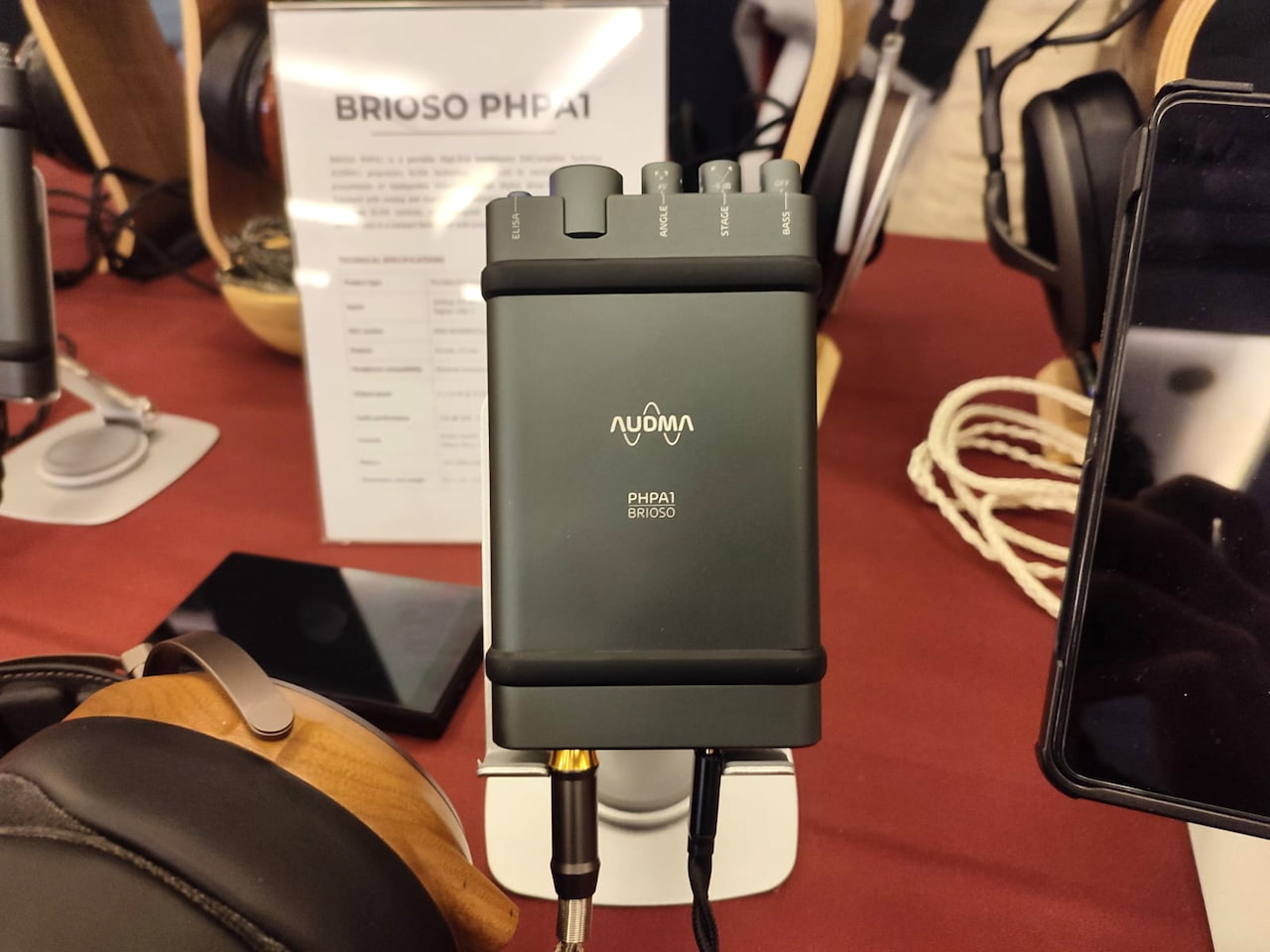
Best Portable DAC/Amp: Audma Brioso PHPA1
Admittedly, the Audma Brioso PHPA1 was the only portable DAC and headphone amplifier I listened to at CanJam London this year, but that does not make it any less deserving of our Best in Show award.
Audma is based in the same region of Italy that my father comes from, and the company is responsible for developing its patented ELISA circuitry. The technology is designed to recreate some of the spatial characteristics of listening to a pair of loudspeakers, including the small timing differences between the sound reaching each ear.
The Brioso lets you adjust the perceived distance and width of the presentation using its Stage and Angle controls. It is also a serious portable DAC and amplifier in its own right, using AKM’s flagship AK4499EXEQ DAC alongside the AK4191EQ digital filter and modulator. It supports USB-C digital playback, balanced and unbalanced analog inputs and up to five hours of battery-powered listening.
Advertisement
I tried the Brioso with ELISA switched both on and off, and the difference was immediately noticeable. With it engaged, the soundstage appeared to move in front of me rather than extending mainly to either side of my head. The effect was not subtle, and I still find it rather extraordinary that carefully controlled differences in timing and spatial information can change the presentation so convincingly.
The fact that Audma has managed to achieve this inside a genuinely portable device makes the Brioso even more impressive.
Mind you, it costs almost £4,400, so it probably should be.
Best DAP: FiiO M25 R2R
As we recently reported, FiiO brought two forthcoming DAPs to CanJam London: the M25 and M25 R2R. Positioned below the flagship M27 and above the more affordable M33 R2R and M21, the new models should help bridge what has become a rather substantial gap in FiiO’s portable player lineup.
The standard M25 uses AKM’s flagship separated-DAC architecture, combining an AK4191 digital filter with two AK4499EX DACs. The M25 R2R takes a very different approach, replacing those chips with the second generation of FiiO’s proprietary R2R PRO resistor-ladder technology.
Advertisement
Advertisement. Scroll to continue reading.
Both versions use Qualcomm’s Dragonwing QCS6490 processor, supported by 8GB of RAM and 128GB of internal storage. They also include a 31-band parametric equalizer, Auto EQ and FiiO’s Desktop Mode, which allows the player to draw power from an external supply rather than continually cycling the internal battery.
I listened to the resistor-ladder version, and it struck a fine balance between naturalness and sweetness without sacrificing clarity. Vocals and instruments had a fuller, more organic quality, but the presentation never became overly soft or syrupy.
My only minor gripe was the absence of a physical volume wheel. FiiO has opted for a conventional rocker instead, which works perfectly well, but perhaps I am simply one of those people who still prefers turning a proper dial.
Advertisement
Both M25 models remain unreleased, with final international pricing and availability yet to be confirmed.
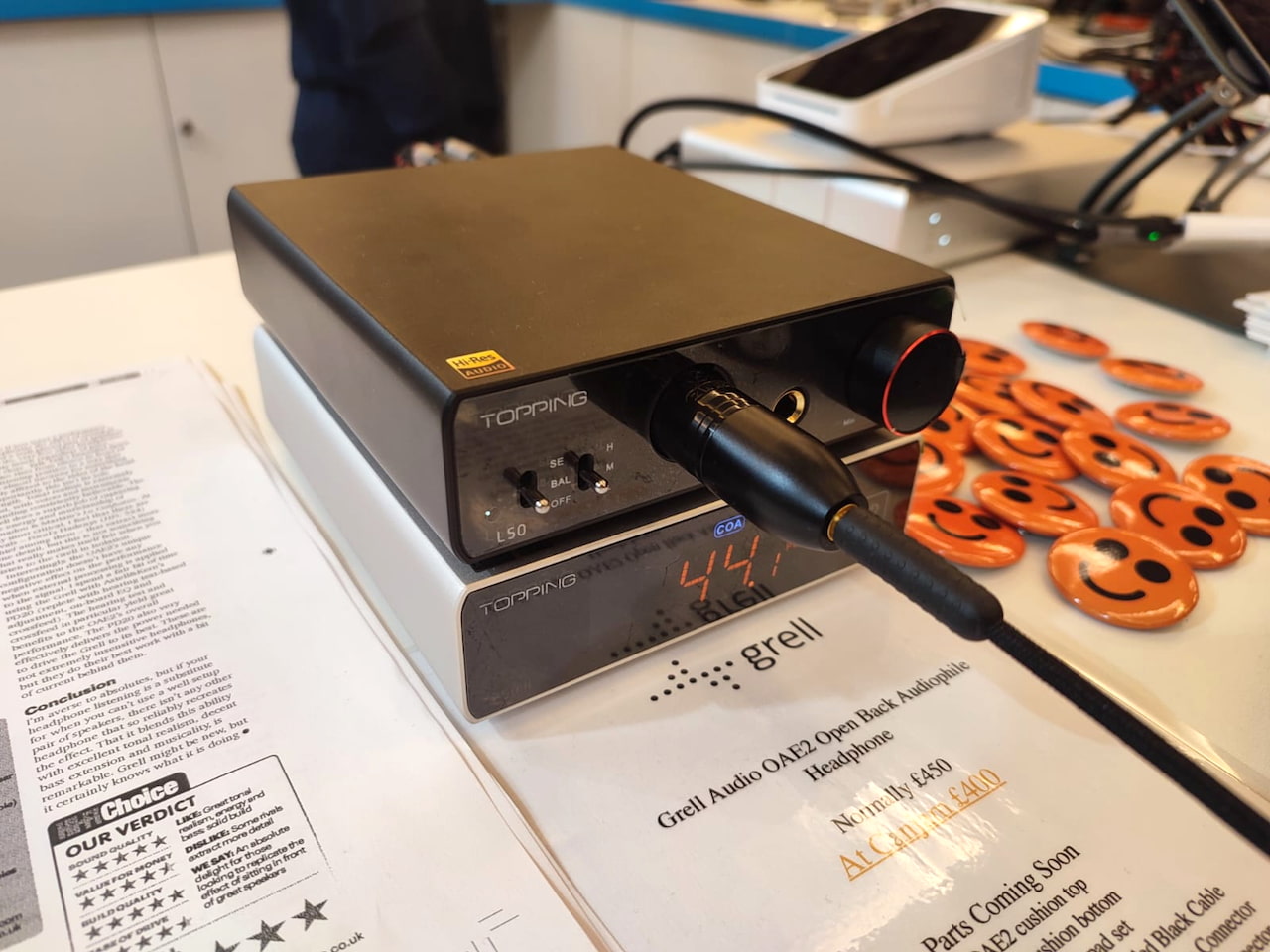
Best Budget DAC: Topping E50 II
At the Electromod booth was the Topping E50 II, the Chinese manufacturer’s revision of its well-regarded E50 DAC. Priced at $199 at Apos Audio and Amazon ( £199 or €199), depending on the market, I am astounded by how much functionality Topping has squeezed into such a small and affordable unit.
The E50 II uses AKM’s AK4497S DAC chip alongside an XMOS XU316 USB interface, with support for PCM playback up to 32-bit/768kHz and native DSD512. Inputs include USB-C, coaxial, optical and Bluetooth, with LDAC, aptX HD and aptX Adaptive support. It also offers RCA and balanced 6.35 mm TRS outputs, which can operate simultaneously, and can be used as either a fixed-output DAC or a digital preamplifier.
The star of the show is its parametric EQ, which can be configured through the Topping Home app and stored on the unit for offline use. That is a considerable amount of flexibility for a $199 DAC, particularly for listeners who want to correct a headphone’s tonal balance or make smaller adjustments to suit their system and personal preferences.
In terms of listening, the E50 II has a no-nonsense, neutral sound signature, but with just enough musicality to prevent it from sounding flat, sterile or boring. It does not attempt to impose much of its own personality, which is exactly what many listeners will want from an affordable desktop DAC.
Advertisement
For $199, what’s not to like?
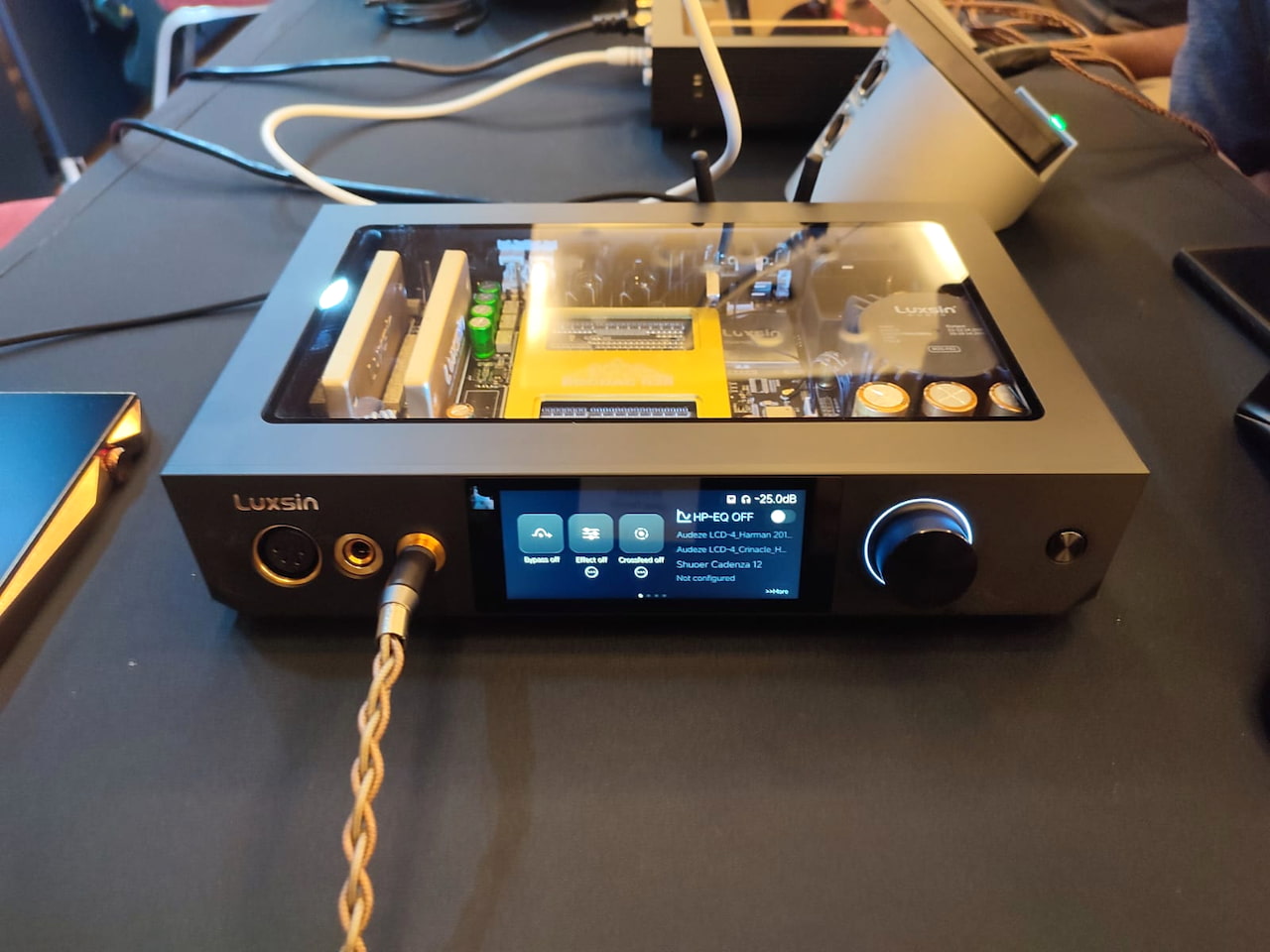
Best Midrange DAC/Amp: Luxsin B9
This was one product I was not expecting to see in London. For all intents and purposes, the Luxsin B9 is an R2R interpretation of the X9, although this was my first experience with any of the company’s products.
The engineering sample combines Luxsin’s proprietary discrete R2R DAC architecture with a headphone amplifier and preamplifier in a single desktop unit. Luxsin has not published the complete production specifications yet, but the B9 is expected to deliver up to six watts of headphone output power and cost around $1,500 when it is released.
The prototype also included some genuinely clever features. Luxsin’s HP-EQ system lets you select a correction profile for your headphones, adjust it to suit your own preferences and save the results. There is also a hearing compensation function that tests the sensitivity of each ear across different frequencies before creating separate correction curves for the left and right channels.
Advertisement. Scroll to continue reading.
Advertisement
I was not able to test either feature properly at the show, but the concept is far more useful than adding another digital filter that most owners will try once and never touch again.
The B9 is also beautifully designed, with sharply angled casework and a bright, vibrant touchscreen that makes most competing desktop DACs look rather ordinary. More importantly, its R2R presentation was exciting and expressive without becoming aggressive or fatiguing. It made a considerable impression on me during a relatively brief listen.
For a product I was not expecting to see, the Luxsin B9 became one of the more memorable electronics demonstrations of the weekend.
Best High-end Amp: MASS-Kobo Model 491
And finally, we come to MASS-Kobo, a Japanese audio brand whose amplifiers are hand-built and assembled to order in Shizuoka under the direction of Masuda-san. I was glad to spend a few minutes brushing up on my Japanese with him and the rest of the team at their booth.
The Model 491 ($20,000 USD) is the successor to the flagship Model 465 ($19,000 USD) and looks very similar at first glance, with the most obvious external change being the addition of a 4.4 mm balanced headphone output. It sits alongside four-pin XLR, separate three-pin XLR outputs for the left and right channels, and a 6.35 mm single-ended connection.
Advertisement
Inside, the 491 uses a twin-balanced monoblock design with four amplifier stages, two for each channel, and fully independent left and right power supplies. It delivers at least 3.5 watts per channel into 32 ohms through its balanced outputs, which should be enough for even the most stubborn planar magnetic headphones.
Being the flagship amplifier from a boutique high-end brand, it costs a barely believable £16,599 through Elise Audio. Most of that money is going into the circuit design, component selection and the highly trained ears of Mr. Masuda, rather than a touchscreen, app support or an unnecessarily complicated menu system. The amplifier itself is sturdily built, but it does not offer much in the way of bells and whistles.
And my goodness, does the 491 sound stunning.
I tend to prefer more neutral-sounding equipment, and the latest MASS-Kobo certainly falls into that category. However, it walks the line between analytical precision and musicality more successfully than almost any headphone amplifier I have heard. Sounds appeared to drift in and out of thin air, as though there were nothing standing between the music and my ears.
Advertisement
It came remarkably close to creating the impression of listening to a live performance rather than a pair of headphones. I arrived with very high expectations, yet the Model 491 managed to exceed them anyway.
The Bottom Line
CanJam London 2026 made one thing very clear: personal audio has never offered more choice. From sub-$100 offline DAPs and $200 DACs to £16,599 hand-built amplifiers, the show covered almost every conceivable use case and price point.
I could not hear everything, but the products above were the ones that made me stop, listen and return for another track. Roll on CanJam London 2027.
Apple is expanding its presence in Sunnyvale once again by leasing a 125,800-square-foot building. If history repeats itself, Apple will buy it within a year.
Companies with a massive workforce are always on the lookout for more office space. In the case of Apple, it will be adding one more location to its roster in Sunnyvale.
According to sources of the Mercury News, Apple has agreed to lease a building located at 580 North Mary Avenue in Sunnyvale. The property, which weighs in at 125,800 square foot of office space, is being leased from the Bay Area real estate firm Peery Arrillaga.
The terms of the lease have not been leaked yet, but it will certainly cost Apple millions per year to occupy.
Advertisement
A building buying spree
While the property is being leased for the moment, Apple has the potential to buy it at a later time. This has become a habit of the company, choosing to lease before acquiring it fully.
Apple’s June purchase of office space in June demonstrates this perfectly.
After leasing the office building at 684 W. Maude Avenue in Peery Park, Sunnyvale in 2025, Apple waited until later in the year to close the deal to purchase it. That 194,624 square foot property cost Apple $162.2 million, which was a considerable discount from its $222 million sale price in 2022.
Its Silicon Valley real estate moves in the area has also included a 2025 acquisition of a two-building campus in North Mathilda for $350 million. That was closely followed by another four-building Mathilda campus just next door for $365 million.
Advertisement
The same year, Apple paid $160 million for a 220,700-square-foot building in the Tantau office complex, close to Apple Park.
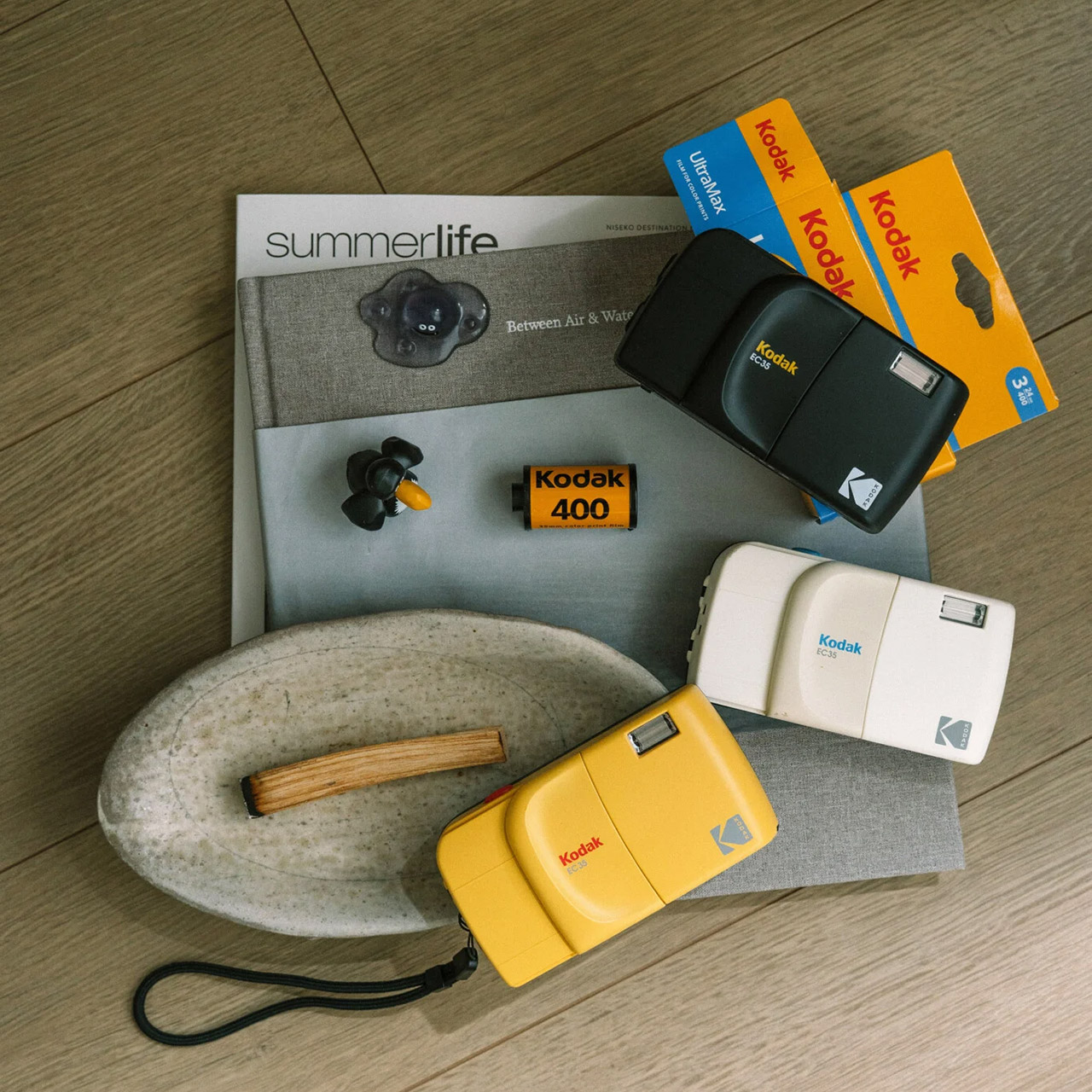
Kodak just handed film beginners a camera they can actually stick in a jeans pocket without second thoughts. This little plastic box called the EC35 costs thirty-five dollars and works with any standard roll of 35mm film. Reto Project builds it under the Kodak name, and the whole point is simple: give people who have never touched film something that feels as easy as the disposable cameras they grew up seeing at drugstores, only this one lasts longer than a single roll.
A sliding cover lies on top of the lens and viewfinder, ready to be pushed open to prepare the camera for action. Sliding it shut closes the shutter, allowing you to put the camera in a bag or pocket without fear of scratching the glass or accidently taking a frame. This haptic little detail is evocative of the good old Olympus Stylus days, and it’s ideal for flinging this little number around without fear of harm. The body is a compact device that measures about four and a half inches across and weighs only 3.5 ounces. It comes in seven various colors: midnight black, vanilla white, butter yellow, lavender, powder blue, blush pink, and avocado green.
The camera itself is about as simple as it gets; there’s no fumbling around with settings for new users, as the lens is fixed at 25mm and f/10 with no ability to modify it, and the shutter fires at a constant 1/100 of second. There is an automated flash tucked down near to the lens, powered by a single AA battery, that turns on when the light goes out. A simple manual film advance and rewind, similar to the old reliable point and shoots, allows you to insert a 24 or 36 frame roll of film (which must be manually wound by the way) and shoot your way through it with a little of twiddling on a convenient small window above the lens and pushing a button.
If you want to get started with the camera, a starter kit that includes a neck strap and a roll of Kodak Ultramax 400 film costs $45 dollars. Alternatively, you can buy the camera body separately for $35. In any case, the pricing is a deal, significantly lower than any of the other film cameras on the market today with all the bells and whistles. There is no complex zone focusing, double exposure lever, or aperture dial, since the camera simply compels you to work with what the fixed lens and shutter provide, much like in the disposable days.
Because the body is reusable, the only ongoing cost is having extra film developed, which is much less expensive than purchasing a new plastic camera every time you wish to take a few dozen photos. You can acquire one of these small devices right now from the Kodak store, although early shipments of the more vibrant hues have already sold out. For $35 and a single AA battery, it’s a wholly unique alternative to a cameraphone.






































































You must be logged in to post a comment Login