Connect with us

Tech

Humax gets onboard the Freely train with the Aura EZ 4K TV recorder

Published

on

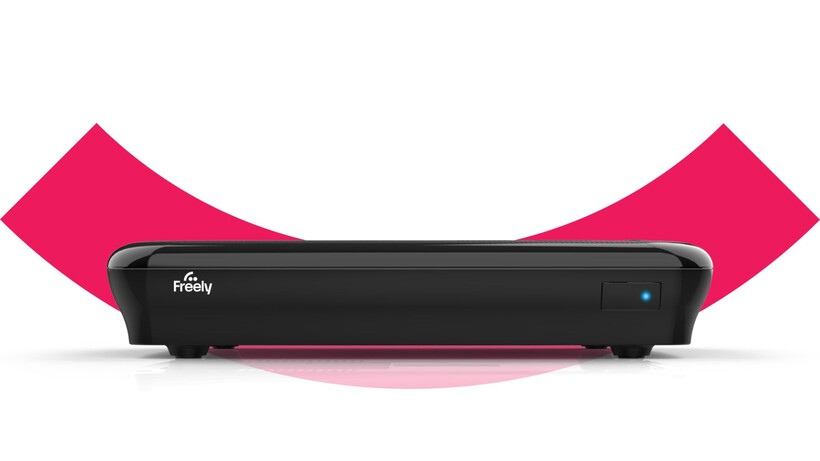
Humax has announced the Aura EZ 4K TV Recorder, its latest device to support the Freely streaming platform. Available to pre‑order now for £249, the Aura EZ combines traditional TV recording with the latest streaming apps.

Following on from the previous Aura, setup is fairly simple as users can plug in the Aura EZ and start watching within minutes. When connected to an aerial, the recorder can capture up to four channels at once while playing a fifth live. A 2TB hard drive stores up to 1,000 hours of recordings, giving families plenty of space for shows and movies.

Equipped with Dolby Digital Plus audio, this TV recorder supports 4K resolution and HDR programming. There’s a dedicated button for accessing Freely, while scheduling recordings is straightforward with a press of the menu button revealing a seven‑day EPG TV guide with forward and backward navigation.

Humax Aura EZ with FreelyHumax Aura EZ with Freely
Image Credit (Humax)

While all of these features are relatively common for modern TV recorders, their integration with Freely is the headline feature. When connected to Wi-Fi, users gain access to more than 60 live channels and over 75,000 hours of on‑demand content.

Advertisement

Advertisement

Services include BBC iPlayer, ITVX, Channel 4, Channel 5, U, WATCH FREE UK, and PBS America. Exclusive 4 channels (4Homes, 4Life, and 4Reality) add further variety. No aerial or dish is required, and most importantly, there are no in-app subscription fees for the above.

The Freely Mini‑Guide makes switching between live and on‑demand seamless, while features like pause, restart, and “My List” add flexibility.

Humax also plans to release the Aura EZ app, allowing users to schedule and manage recordings remotely. This ensures favourite shows are always ready to watch, even when away from home.

With its blend of recording power and streaming convenience, the Aura EZ positions Humax firmly in the Freely ecosystem. At £249, it offers a premium yet accessible way to modernise existing TVs without replacing them.

Advertisement

Source link

Continue Reading
Click to comment

Leave a Reply

Your email address will not be published. Required fields are marked *

Tech

Whoops, Siri’s big AI reboot could be delayed again

Published

on

Apple’s long-promised AI overhaul for Siri may be slipping further into the future.

According to a new report from Bloomberg’s Mark Gurman, some of the most anticipated Siri upgrades expected in upcoming iOS 26 updates could now be pushed back to iOS 26.5 or even iOS 27.

The revamped Siri was first announced in June 2024, with Apple initially suggesting it would arrive as part of iOS 18. Now, nearly two years later, the full experience still hasn’t materialised.

Gurman, citing people familiar with the matter, says features such as voice-based control of in-app actions and Siri’s expanded ability to tap into personal data may not arrive as soon as hoped. That includes more contextual requests. For example, users might ask Siri to find an old message containing a shared podcast link and play it instantly. Moreover, those capabilities are reportedly among the features most at risk of being delayed.

Advertisement

Earlier expectations suggested parts of the AI refresh would roll out with iOS 26.4. Instead, some upgrades could shift to iOS 26.5, expected around May. Additionally, others may not appear until iOS 27 lands in September.

Advertisement

If accurate, that would mean core elements of Siri’s AI redesign arrive roughly two years after they were first unveiled. For users who upgraded recent iPhones expecting major Siri improvements, it’s a longer wait than anticipated.

The delay also comes at a time when AI-powered assistants on Android have accelerated rapidly. Google’s Gemini already offers deeper contextual understanding and task execution across apps. As a result, this puts added pressure on Apple to modernise Siri in a meaningful way.

Advertisement

Apple hasn’t publicly commented on the reported timeline changes, and there’s still a chance features could land sooner. But until the company provides clarity, Siri’s ambitious AI reboot remains a work in progress – and one that’s taking longer than many expected.

Source link

Advertisement
Continue Reading

Tech

Cleveland’s mayor, Seattle’s future: A conversation about what happens when a city’s economy shifts

Published

on

Cleveland Mayor Justin Bibb. (City of Cleveland Photo)

A guest column on GeekWire warning Seattle not to become “the next Cleveland” has taken on a life of its own — culminating in a phone call Thursday morning between the author of the piece and the mayor of Cleveland himself.

On the call, Mayor Justin Bibb acknowledged the lessons of Cleveland’s decline, many decades ago, but pushed back on the framing and focus of the piece, asserting that the real story is the city’s ongoing revival. He said Seattle should be paying attention to Cleveland for different reasons than the column suggested.

“We didn’t pivot fast enough, and the world left us behind,” Bibb said. “And now we are a comeback story of reinvention and resilience. And I think there’s a lot the country can learn from what we’re doing.”

Bibb said the old national narrative of Cleveland as “the mistake on the lake” is tired and outdated.

“The new story that’s emerging is Cleveland is going to lead America in terms of how we think about our industrial revival,” he said. “We’re making things in America again, making things in Ohio again, and I want Cleveland to lead the way.”

Advertisement

Seattle tech veteran and angel investor Charles Fitzgerald, who wrote the original column, said his intent was to compare Seattle today to Cleveland at its peak, not to take a shot at the modern city. 

“We’re kind of fat, dumb and happy,” Fitzgerald said of Seattle. “My goal really is to get people to wake up and prepare the city for the next act, and remind them that prosperity is not guaranteed.”

Lessons from Seattle’s past: Bibb, a self-described student of history, said he’s studied Seattle’s own recovery from the Boeing bust of the early 1970s, when someone famously put up a billboard reading, “Will the last person leaving Seattle turn out the lights.” 

Seattle responded by leveraging its research institutions and riding the technology boom, he said, and Cleveland is now trying to follow its own version of that playbook.

Advertisement

“I envy problems around growth,” Bibb said. “Those are the problems I want to have in the future in Cleveland, and I’m trying to create the baseline so we can have those problems.”

Fitzgerald agreed. “I think the cities are incredibly analogous,” he said. “We’re at the top of the world today, Cleveland was at the top of the world. … And we have the same risk in the sense that we’ve over-performed, and so we’ve got further to fall.”

Fitzgerald’s column, published Tuesday, drew parallels between Seattle today and Cleveland in the 1950s, when it was one of America’s largest and most prosperous cities. Bibb responded with a LinkedIn post that drew hundreds of reactions, defending Cleveland’s comeback and inviting Fitzgerald to visit.

GeekWire connected the two by phone on Thursday morning. Listen to highlights from the call on this bonus episode of the GeekWire Podcast.

Advertisement

Olympia and Columbus: For the Seattle tech community, the column was part of a broader debate over the region’s economic future in the midst of the AI frenzy and new efforts by lawmakers in Olympia to raise taxes on high-income earners and businesses in ways that many worry will undercut startups.

Bibb spoke to Cleveland’s experience in Ohio in comments on the call. Asked about Cleveland’s relationship with its state capital, Columbus, he said that despite being a blue city mayor in a red state, the partnership on jobs and the economy has been strong.

“We don’t tax corporate profits. We have great R&D tax credits statewide,” he said. “We want to compete with the best of them, from South Carolina to Texas to Washington to California. We want to make sure that Ohio is an easy place to do business, and that Cleveland is a city that’s moving at the speed of business.”

More broadly, Bibb cited billions in investments reshaping Cleveland, including a $1.6 billion airport modernization, a $4 billion tax increment financing district to redevelop the city’s waterfront, and Sherwin-Williams bringing 5,000 employees into a new downtown skyscraper. 

Advertisement

He pointed to aerospace, advanced manufacturing, and the city’s health-tech sector, anchored by the Cleveland Clinic and Case Western Reserve University, as engines of the revival.

A Seattle reality check: Of course, Seattle has its own strengths, including parallel institutions such as the University of Washington and Fred Hutch Cancer Center, along with the AI and cloud computing operations of Microsoft and Amazon, and strength in areas such as fusion energy, space, and biotech.

In a post Thursday on LinkedIn, Jacob Colker, co-founder of the AI2 Incubator, pushed back on what he called the “breathless narrative” of Seattle’s decline, citing the region’s massive concentration of AI talent and capital, its dominance in the space economy, and its growing fusion and biotech sectors. 

“The sky isn’t falling,” Colker wrote.

Advertisement

But Fitzgerald’s argument is less about Seattle’s current strengths than about whether local and state leaders are doing the right things for the next phase of growth. Fitzgerald said multiple people have already asked to join him on a trip to Cleveland, taking the mayor up on his offer — at least when the weather gets warmer. 

“I love that,” Bibb said. “There is no better place than our respective cities, Cleveland and Seattle, to show the nation what’s possible.”

Source link

Advertisement
Continue Reading

Tech

Chatbots rated more empathetic than humans in controlled tests

Published

on

Recent research into artificial intelligence’s emotional capabilities indicates that AI chatbots – long dismissed as rule-based and mechanical – may be better at recognizing empathetic patterns in text-based communication than many humans. This shift is emerging as large language models (LLMs) such as ChatGPT, Gemini and other generative systems are increasingly used in everyday interactions, from customer service to mental-health support.

A study published in Nature Machine Intelligence found that AI models can evaluate the subtleties of empathic communication nearly as well as human experts and significantly better than non-expert people. Researchers analysed hundreds of real text conversations involving emotional support and discovered that AI could detect nuances of empathy consistently across a variety of contexts, suggesting these systems have ‘learned’ patterns of compassionate language that many humans struggle to apply reliably.

Empathy is a plus for AI chatbots

This matters because empathy – the ability to understand and reflect someone else’s emotional experience – has traditionally been viewed as a uniquely human skill rooted in personal experience and emotional resonance. In AI development, empathy has often been treated as an afterthought or superficial add-on, rather than a core communicative function. But as people interact with conversational agents in more emotionally charged situations, such as seeking health advice or discussing personal struggles, the ability of AI to generate responses that feel understanding and validating has real-world impact.

For users, this means that in text-only environments like chat windows or support forums, AI can offer a level of responsiveness that feels comforting and relevant. In some comparative assessments, AI systems have even been rated more compassionate than human respondents, especially when humans lack training in supportive communication. That said, empathy isn’t a single unitary trait: while AI can be adept at mimicking the form of empathetic language, it does not experience emotions as humans do and may still fall short in contexts requiring deep emotional insight or personal connection.

The shift toward empathic AI has broad implications

In healthcare, for example, accessible AI tools could offer emotional validation when clinicians are unavailable, but researchers caution that such tools should complement, not replace, human care because relational nuance and ethical judgement remain crucial. There are also ethical concerns about users misinterpreting AI responsiveness as genuine understanding, highlighting the need for transparency about what AI can and cannot provide.

Advertisement

Looking ahead, AI developers and psychologists are exploring how to refine these systems so they can better support human needs while avoiding overreliance on simulated empathy. While AI’s performance in recognizing emotional language is growing stronger, the next challenge will be ensuring that these models enhance human connection without undermining the value of authentic human empathy in social and clinical contexts.

Source link

Continue Reading

Tech

Should You Buy DeWalt Tools At Home Depot Or Lowe’s?

Published

on


We may receive a commission on purchases made from links.

DeWalt is one of the biggest tool brands out there, so it’s no surprise that there are multiple places one can buy from its catalogue. While you should think twice about buying DeWalt from Amazon, other large and accessible places to build a DeWalt collection like Home Depot and Lowe’s are worth a browse, at least. If you decide to buy and only want to stick with one of these stores, though, you surely want to know if one store is better than the other. In reality, this is a pretty subjective matter that only individual customers can decide the answer to.

At the end of the day, Home Depot and Lowe’s do cover a lot of the same ground for all DeWalt shoppers. Home Depot and Lowe’s both routinely run DeWalt sales, you can shop from both either online or in-store, they carry a wide assortment of tools, and they’re trusted, authentic DeWalt retailers, so the risk of getting a counterfeit tool is basically nonexistent. 

Advertisement

Not to mention, DeWalt tool warranties are available through both Home Depot and Lowe’s alike in case of faults. However, digging a bit deeper into the aforementioned selection, tool price points, and promotions, among other aspects, their differences become apparent. Despite some similarities between them, shopping for DeWalt at Home Depot and Lowe’s are two different experiences. Here are the major areas where they diverge so you can determine which store is the best for you.

Advertisement

Where buying DeWalt at Home Depot and Lowe’s differs

The big way Home Depot stands out from Lowe’s is the tool and battery catalogue. More specifically, Home Depot carries the DeWalt FlexVolt line of tools and batteries while Lowe’s doesn’t. Also, Home Depot has a significantly wider and varied selection of DeWalt tool kits compared to what Lowe’s has to offer. Home Depot is also the place between the two to shop for larger or heavier-duty items, like lawn mowers or DeWalt chainsaws, which aren’t available through Lowe’s. Home Depot also has more locations, at roughly 2,330 to Lowe’s 1,740, so odds are you’re closer to the former than the latter.

Of course, this discussion is incomplete without covering the non-sale price point of each tool. In some cases, like with the 20V MAX XR cordless drill, Lowe’s is cheaper at $239 compared to the $259 price at Home Depot. Meanwhile, the tables turn with the 20V MAX XR battery and charger kit, which is a $289 Home Depot buy, versus $299 at Lowe’s, so one store isn’t decisively cheaper to shop at than the other. With that said, sometimes Lowe’s will include gifts with purchase on specific DeWalt tools that Home Depot doesn’t for the same price, though these are typically limited-time promotions.

So, with all of that in mind, which is the superior DeWalt store? To some, it might be Home Depot, with its wider selection and better brick and mortar accessibility. Others might prefer the simplicity of the Lowe’s DeWalt selection and the potential for free gifts. So long as you’re getting what you need, paying what you’re comfortable with, and getting your DeWalt tools hassle-free online or in-store, though, you’ve made the right choice.

Advertisement

How we got here

Reaching this conclusion about whether one should buy their DeWalt tools from Home Depot or Lowe’s started with finding the areas where the two stores offer similar experiences and set them aside. While their overlap is needed to paint a full picture of each, in this context, it’s more important to focus on how the stores are different for DeWalt buyers and what they each do or don’t offer.

From there, we dug into each store’s DeWalt offerings. Tool selection and price are the two biggest areas where they diverge, and given their importance to shoppers, both were explored thoroughly. It was key to know what tools and kits each store sells, how their prices compare, and what buyer perks one might find. As stated, though, at the end of the day, the matter of which is the right choice comes down to one’s individual wants and needs from their DeWalt shopping experience.

Advertisement


Source link

Continue Reading

Tech

Best Apple HomeKit Devices to Buy for 2026

Published

on

Smart home devices give us a glimpse into the future, letting you do simple things like opening the curtains, adjusting the temperatures or controlling the music with less hassle than usual. Apple’s smart home platform, HomeKit, is particularly popular amoung smart home users, especially because it works well with your existing Apple tech. Plus, many of the best HomeKit smart home devices are on sale now for the holiday shopping period and they make great holiday gifts, too.

Advertisement
Apple HomePod Mini, Hue light bulb, and Eve Energy smart plug on colorful background.

The Apple HomeKit ecosystem has grown recently and the addition of Matter support will only make it grow more.

Chris Wedel/CNET

Read more: Best Smart Home Gifts for 2026

HomeKit comes built into every iPhone and iPad the electronics giant sells. Even better, HomeKit integration is a breeze. Whether it’s pairing smart products to your HomeKit-compatible devices or setting up automations, it’s all at your fingertips.

Advertisement

The range of products compatible with HomeKit is vast. You have a lot of options, including door locks, lights, plugs, cameras, a thermostat, motion sensors, window shades, you name it, and the Home app can handle all of it in one place.

If you want a hands-off approach to controlling your budding smart home, Apple’s voice assistant Siri, will be happy to lock the door, dim the lights, adjust the air conditioning, run a smart home scene or whatever else you desire.

The real question is which of these smart home devices deserve your money — because a lot of them don’t come cheap. The list of options is ever-growing, but we’re here to help you pick the best HomeKit devices for your smart home. Here are our top picks for Apple HomeKit products, many of which you can snag on sale now.

Advertisement

Pros

  • It sounds great
  • It’s small
  • It’s under $100

Cons

  • Siri still isn’t the best assistant
  • HomeKit needs more compatible accessories
  • Other small smart speakers are $50 or less

The long-awaited HomePod Mini bridges a strange gap between smart speakers, costing $99 like the Nest Audio and Amazon Echo, but in a small package like the cheaper Nest Mini and Echo Dot. 

This smaller, more affordable Apple smart speaker sounds great. Siri is on board for HomeKit control and general voice assistance. The HomePod Mini can serve as the output for your Apple TV, and you can pair two HomePod Minis for stereo. Features like Intercom and Handoff make living with the Mini a little bit more fun. 

In short, if you like Apple, you’re going to love this smart speaker. If you’re already living with an iPhone, Apple TV or original HomePod, the Mini makes sense as your next small smart speaker.

Advertisement

Pros

Advertisement
  • Responsive touchscreen
  • Excellent integration with major smart home platforms
  • Easy to use smart features
  • Compatible with Ecobee smart sensors

Cons

  • No built-in tracking sensors

You’ve got lots of interesting options if you’re in the market for a smart thermostat, including a couple of thermostats that support Siri control via Apple’s HomeKit. Of these, we like Ecobee’s thermostats the best. At $250, the Ecobee4 thermostat is the newest, but it really only adds in a built-in Amazon Alexa speaker to the experience. That’s not the biggest draw if you’re anchoring your smart home to Apple HomeKit and centering it on Siri for voice control.

That’s why I think it’s a smarter move to stick with one of Ecobee’s previous-generation, less expensive thermostats. They all work just as well with Apple HomeKit and they support Ecobee’s nifty temperature sensors, too. The Ecobee3 thermostat is listed as sold out on the Ecobee website, but the Ecobee3 Lite thermostat is still available. That’s the right price for HomeKit-compatible climate control.

Advertisement

Pros

  • Stylish design
  • Plenty of voice assistant support
  • Options for codes, fingerprints and more
  • Works with Airbnb app to send guests codes

Cons

  • Pricey
  • Not the best choice if you want to avoid keypads

Yale is a legacy brand that has been making locks for over 180 years, and it has used that experience in the Yale Asure Lock 2. Looking anything but dated this touchscreen, fingerprint sensor-packed smart lock is an excellent choice for your Apple HomeKit setup.

It comes loaded with smart features like Auto-unlock, unlimited passes to share with family and friends, app control and more. While it isn’t a budget pick, Yale wraps all the smart and secure features in three different finishes to match any decor. 

Advertisement

As a trusted lock maker, Yale is a direct partner of Airbnb. This means that managing access is smooth and simple to use if you are an Airbnb host or are visiting a property with this smart lock.

Advertisement

Pros

  • Very budget-friendly
  • Easy to set up
  • Local storage via microSD card

Cons

  • Bland design
  • Indoor use only

Eufy’s Indoor Cam 2K is one of the first products to work with HomeKit Secure Video. Secure Video is Apple’s suite of security camera features in the Home app. At around $50, the Eufy Indoor Cam 2K is affordable and comes with several useful features like optional local storage and motion detection zones.

The Eufy Indoor Cam 2K is a solid competitor to other low-priced indoor models like the Wyze Cam Indoor and the Blink Mini. Its 2K video recording in particular separates it from those competing models.

Advertisement

Smart switches are another good option if you’re looking to automate the lights in your home — particularly for spots where a single switch controls several bulbs at once. You’ve got several options that work with HomeKit, but our favorite by far is the Lutron Caseta In-Wall Dimmer Switch.

Why Lutron? For starters, Lutron’s been in the business of dimmer switches for decades, and it’s a smart home stalwart, too. Its switches have a good set of features and work with everything, they support three-way setups and they look appropriately distinctive without being gaudy. Along with a wide variety of light switches, the Caseta platform also offers specialty switches for things like ceiling fans and Sonos speakers. All of it communicates with the Lutron Bridge using Lutron’s proprietary Clear Connect wireless standard, which is one of the speediest and most reliable standards we’ve tested at the CNET Smart Home.

Advertisement

That’s a long-winded way of saying these are really, really good smart light switches.

Advertisement

It’s counterintuitive, maybe, but Philips Hue is best when you skip the colors and focus on the Hue White bulbs, which put out smart, dimmable light at a yellowy 2,700 K. That’s because the best thing about Hue bulbs isn’t the colors at all, but rather, the strength of their best-in-class platform, which works with everything, pairs extremely well with Apple HomeKit and comes packed with useful features.

To take advantage, you’ll need to get a Philips Hue starter kit that comes with the essential Hue Bridge — and the two-bulb Hue White starter kit, is an affordable way in. And yes, you can always add color-changing bulbs to your HomeKit setup later.

Advertisement

In late 2020, Nanoleaf launched the latest set of novelty wall panels: Nanoleaf Shapes – Hexagons. These six-sided LED light panels are sold in a seven-panel starter kit for $150, though they’re currently on sale for $135 for the holidays

With vivid colors, easier mounting, a great design, and the same impressive list of features and integrations as its predecessors — including the excellent, music-syncing rhythm mode, touch sensitivity, and voice control via Alexa, Siri or Google Assistant — the latest Hexagons are the best Nanoleaf has to offer. 

If you’re putting together a high-tech game room, dorm room or decorating a kids room, then Nanoleaf’s color-changing wall panels will be right for you. But outside of that, the flashy lights are perhaps a bit too futuresque for most households.

Advertisement

Pros

  • Clean design
  • Built-in energy monitoring
  • Matter support
  • Easy-to-use app

Cons

Advertisement
  • Pricey
  • Limited features when using Matter

At $40, the Eve Energy smart plug isn’t the most affordable, but it offers seamless integration with Apple’s HomeKit with useful insights into the energy usage of devices plugged into it. 

While Eve was once a HomeKit-only smart device brand, the company opened the doors to other platforms like Google Home and Amazon Alexa compatibility via Matter. It fits inside the frame of most wall outlets and has a physical button built into the LED indicator light.

The Eve app is clean and simple to navigate. Setting up timers and schedules for the smart plug is a cinch. This smart plug’s space-saving design and solid HomeKit compatibility make it easy to recommend to users in Apple’s ecosystem.

Advertisement

Smart devices make excellent gifts for the holiday season. These HomeKit devices are particularly good gifting options for the Apple enthusiasts in your life who may already have iPhones or iPads to pair HomeKit devices with.

Holiday sales offer an excellent opportunity to snag some of best Apple HomeKit devices at steep discounts. Smart home products tend to see some of the deepest discounts, and several of our top Apple HomeKit picks are on sale now, so it’s a good idea to get your holiday shopping done early to snag the best offers.

Source link

Advertisement
Continue Reading

Tech

Israeli Soldiers Accused of Using Polymarket To Bet on Strikes

Published

on

An anonymous reader shares a report: Israel has arrested several people, including army reservists, for allegedly using classified information to place bets on Israeli military operations on Polymarket. Shin Bet, the country’s internal security agency, said Thursday the suspects used information they had come across during their military service to inform their bets.

One of the reservists and a civilian were indicted on a charge of committing serious security offenses, bribery and obstruction of justice, Shin Bet said, without naming the people who were arrested. Polymarket is what is called a prediction market that lets people place bets to forecast the direction of events. Users wager on everything from the size of any interest-rate cut by the Federal Reserve in March to the winner of League of Legends videogame tournaments to the number of times Elon Musk will tweet in the third week of February.

The arrests followed reports in Israeli media that Shin Bet was investigating a series of Polymarket bets last year related to when Israel would launch an attack on Iran, including which day or month the attack would take place and when Israel would declare the operation over. Last year, a user who went by the name ricosuave666 correctly predicted the timeline around the 12-day war between Israel and Iran. The bets drew attention from other traders who suspected the account holder had access to nonpublic information. The account in question raked in more than $150,000 in winnings before going dormant for six months. It resumed trading last month, betting on when Israel would strike Iran, Polymarket data shows.

Source link

Advertisement
Continue Reading

Tech

China is hell-bent on dominating EVs, but it really needs to stop being such a Range Rover copycat

Published

on

Back in 2019, Jaguar Land Rover won a landmark court case in Beijing that prevented the Evoque-mimicking Landwind X7 from being sold. The almost-laughable copycat behavior was mocked mercilessly – but times have changed, and China is now the very epicenter of EV technology.

It has the most advanced battery systems, with the likes of CATL and BYD tipped to be the first to mass-produce game-changing solid-state packs, while its lead in both rapid-charging and autonomous driving systems is undeniable.

Source link

Continue Reading

Tech

A security conference where tech isn’t an afterthought

Published

on

The 62nd Munich Security Conference opened on 13 February 2026 in Munich, Germany, and this year’s gathering feels different from past editions.

For decades, Munich was about jets, troops, and treaties. Today, cyber and AI are no longer peripheral; they are part of the architecture of security itself.

Cyber risks, digital infrastructure, and emerging technologies like AI now sit alongside tanks and treaties on the agenda as European leaders try to make sense of a world where digital threats and geopolitical tensions are deeply intertwined.

Sponsors of the conference, such as the Tech Strategy Initiative, explicitly include technological frontier issues in the program, signalling that debates once confined to tech policy circles have broken into mainstream security discourse.

Advertisement

On day one, German Chancellor Friedrich Merz laid out a blunt message: the post-World War II order is fraying, and Europe can’t take its digital or geopolitical armour for granted.

Advertisement

In this context, cyber threats and disinformation campaigns sit side-by-side with missiles on the agenda, and delegates acted accordingly.

One of the most striking takeaways from early sessions was the call from Germany’s intelligence leadership for greater latitude to counter hybrid threats, especially cyber attacks and digital sabotage linked to geopolitical rivals.

That marks a clear recognition that state security no longer stops at the network perimeter.

Europe is still wrestling with its identity in this new era. France’s Emmanuel Macron used his keynote to stress that Europe must become a geopolitical power, an assertion that encompasses not just tanks and diplomacy but also domestic tech capabilities and digital resilience.

Advertisement

Tech is now a strategic front

Behind the diplomatic language lies a subtler shift: technology is being woven into Europe’s strategic autonomy narrative.

For years, EU policy focused on digital sovereignty through regulation, the AI Act, data protection, and competition law. In Munich, those topics are now being discussed in direct relation to security and defence priorities. Officials and experts are framing AI and cyber resilience not just as economic or ethical issues, but as core national security concerns.

Cyber, in particular, has shed its niche status. While not all panels are formal conference sessions, side events and adjacent tracks like the Munich Cyber Security Conference reflect a broader realisation: traditional defence without a digital strategy is obsolete.

Defense analysts note that critical infrastructure, from power grids to military supply chains, is already being targeted with an intensity that demands coordinated public-private responses.

Advertisement

This shift has real consequences for European tech. If governments treat cyber and AI as strategic assets, they will push industry to meet security standards beyond compliance, incentivise homeland innovation over outsourcing, and push for interoperable defence technologies.

For European startups and tech leaders, that could change investment flows and R&D priorities in the next decade.

Europe between alliances and autonomy

At Munich, the political undercurrents are as telling as the formal speeches. European leaders acknowledge that old alliances, especially with the United States, remain crucial but can’t be the sole guarantor of security. 

That affects tech policy too. A pivot toward autonomy could mean tailoring AI standards to European norms, investing in sovereign semiconductor supply chains, and crafting digital infrastructure less dependent on external cloud and data platforms.

Advertisement

It also means Europe may push for security cooperation mechanisms akin to intelligence-sharing networks that historically excluded it. For example, European cyber chiefs are openly discussing options like an EU “own Five Eyes” model to coordinate multinational defence.

What the 2026 Munich Security Conference shows most clearly is how Europe is rethinking its place in a world where digital and geopolitical risks can no longer be separated.

Discussions here reinforce a shift in how policymakers, defence chiefs and industry leaders alike view modern threats: not as abstract data problems, but as strategic concerns that shape alliances, domestic policy choices and industrial priorities alike.

From calls for stronger cyber capabilities to renewed emphasis on strategic autonomy and technological resilience, this year’s gathering points to a future where technology is no longer an accessory to security policy but one of its pillars.

Advertisement

For Europe’s tech ecosystem, that means regulatory agendas, investment flows, and public-private cooperation will be shaped not just by innovation goals but by national and collective security imperatives.

Source link

Advertisement
Continue Reading

Tech

From new battery tech to portless phones, here are 5 innovations I want from Android devices

Published

on

One of the great things about Android is just how much innovation there is. Unlike iPhones, where the hardware and software is tightly controlled by Apple, there are numerous Android device makers and they have complete control over the hardware, as well as being able to put their own twists on the software.

The result is that we get phones with a wide variety of specs and features, but despite this, there are some innovations that we’re yet to see.

Source link

Advertisement
Continue Reading

Tech

Bitcoin biopic starring Casey Affleck to use AI to generate locations and tweak performances

Published

on

Killing Satoshi, an upcoming biopic about the elusive creator of Bitcoin, will reportedly rely heavily on artificial intelligence to generate locations and adjust actors’ performances, Variety reports. The film was announced in 2025 as being directed by Doug Liman (The Bourne Identity, The Edge of Tomorrow) and starring Casey Affleck and Pete Davidson in undisclosed roles, but its connection to overhyped technology was previously understood to begin and end with cryptocurrency.

According to a UK casting notice viewed by Variety, the producers of Killing Satoshi reserve the right to “change, add to, take from, translate, reformat or reprocess” actors’ performances, using “generative artificial intelligence (GAI) and/or machine learning technologies.” No digital replicas will be created of performers, but it sounds like plenty of other AI-driven tweaks are on the table. The production’s use of AI will also extend to the setting of its shoots, per Variety’s source. Killing Satoshi will be shot on a “markerless performative capture stage” and things like backgrounds and locations will be entirely generated by AI.

You guess is as good as mine as to why a film about blockchain technology needs to be filmed this way, but Doug Liman has been connected with plenty of unusual projects in the past, including a rumored Tom Cruise film that was supposed to film on the International Space Station. Killing Satoshi will be far less practical in comparison, and walking a much finer line of what’s acceptable in the entertainment industry.

A major sticking point in SAG-AFTRA’s 2023 contract negotiations was guaranteeing protections for actors who could be replaced by AI. Equity, the union representing actors in the UK, is currently negotiating protections for members that are concerned that AI could be used to reproduce their likenesses and voices and let studios use them without their consent.

Advertisement

Source link

Continue Reading

Trending

Copyright © 2025