

Business
China’s Record Trade Surplus and What It Means for Thailand’s Economy

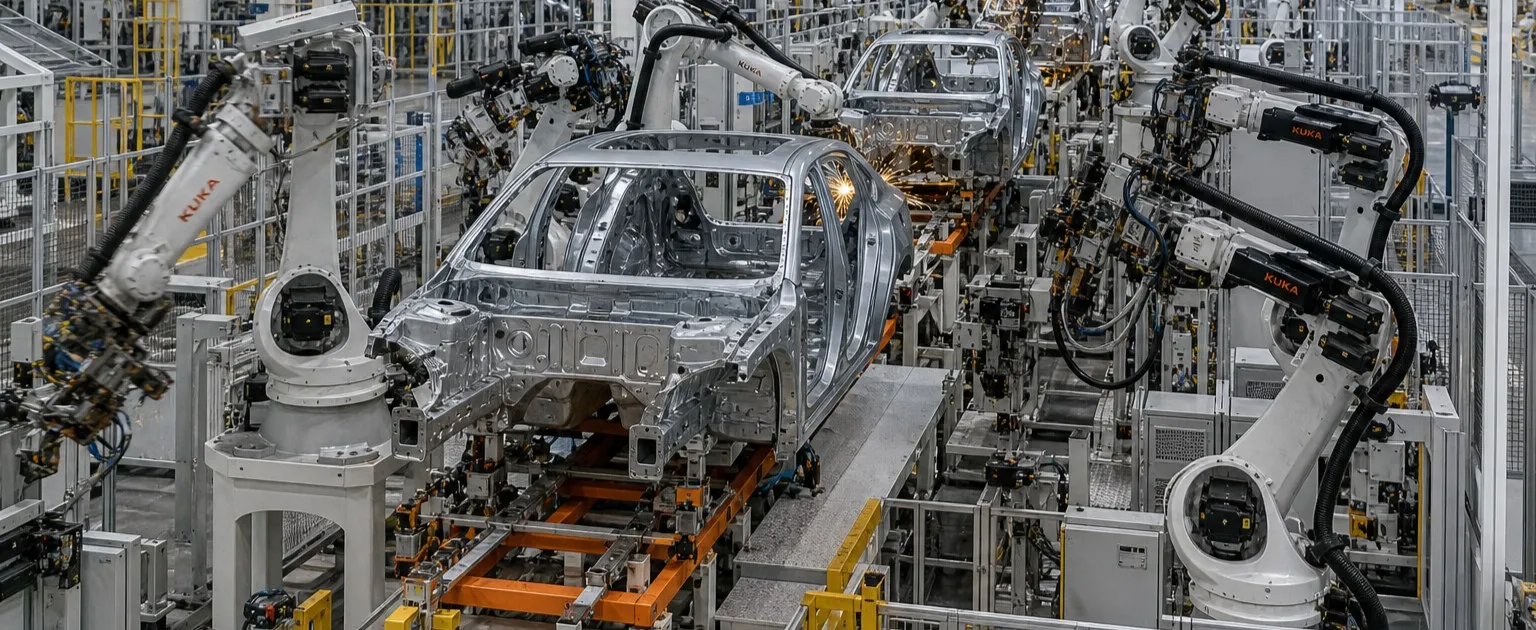
China’s export machine produced one of the most consequential economic statistics of recent years when it posted a record trade surplus of approximately USD 1.2 trillion for 2025. China’s customs data revealed exports hit USD 3.77 trillion in 2025, up 5.5% year-on-year, while imports remained flat at USD 2.58 trillion, yielding an unprecedented surplus that is equivalent to the GDP of a top-20 economy.
For Thailand — China’s largest trading partner in ASEAN and one of the region’s most export-dependent economies — the implications of that figure are neither straightforwardly good nor unambiguously bad. They are, more precisely, a study in structural tension: a country that benefits from Chinese investment and supply chain integration while simultaneously absorbing the competitive pressure of Chinese overcapacity across sector after sector.
Understanding that tension is not an academic exercise. It is the operating reality for Thai manufacturers, retailers, policymakers, and investors navigating 2026.
The Trade Deficit That Keeps Widening
The bilateral trade picture tells its own story. In 2025, Thailand’s exports to China reached USD 39.72 billion, while imports from China were significantly higher at USD 107.62 billion — a trade deficit that has grown every single year for the past five years.
Thailand’s deficit with China rose 50% in 2025 to USD 67.8 billion — among the steepest annual widening in the region, alongside Malaysia’s 62% jump and Vietnam’s 40% increase. Analysts point to a direct connection: as China has faced elevated US tariffs, its goods have increasingly been redirected toward Southeast Asian markets, raising import volumes across the board.

The contrast with the US trade relationship is stark. Thailand’s total trade with the US reached USD 93.65 billion in 2025, generating a Thai surplus of THB 51.4 billion. Electronics and telecommunications products drove that outperformance, with exports to the US generating a positive trade balance every year of the past five.
Thailand is therefore caught in an increasingly uncomfortable asymmetry: earning from the West what it owes to the East — a structural position that creates both opportunity and vulnerability as the US-China trade war intensifies.
The Factory Closure Crisis
The most visible domestic consequence of China’s export surge is industrial contraction. Thailand’s Kasikorn Research Center estimates that 4,300 Thai factories closed in the two years to 2025, spanning furniture, electronics, garments, automotive, and steel — with the trend expected to worsen.
The automotive sector illustrates the dynamic with particular clarity. Suzuki Motor Thailand announced the closure of its Thai production plant by the end of 2025 due to declining sales and competition from Chinese electric vehicles. Tan Chong Subaru Automotive Thailand ceased car production by 2024 due to ongoing losses, affecting parts suppliers across the ICE component supply chain.
Steel is another pressure point. Capacity utilisation in Thailand’s steel industry fell to approximately 29.3% in early 2024, down from 32.4% the year before. The anti-dumping response has been measured but assertive: Thailand has imposed duties of 31% on hot-rolled coil from China, covering high-strength steel used in critical infrastructure. The Anti-Dumping and Subsidy Review Committee has agreed to additional retaliatory measures targeting 33 product categories, running from October 2025 to October 2030.
The scope of Chinese overcapacity has also expanded significantly. Unlike earlier periods when Chinese excess production was largely restricted to commodities like textiles, steel, and aluminium, overcapacity now extends into food processing, pharmaceuticals, and certain chemical products — products far closer to Thailand’s higher-value manufacturing base.
The EV Paradox: Opportunity and Disruption Simultaneously
No sector better captures the dual nature of China’s economic presence in Thailand than electric vehicles. Thailand has positioned itself as the EV hub of Southeast Asia — and Chinese manufacturers have been central to building that ambition. Yet those same manufacturers are simultaneously displacing the Japanese automotive industry that formed the bedrock of Thailand’s manufacturing economy for four decades.
Chinese automakers held an 82% market share in Thailand’s battery electric vehicle segment as of 2024, with BYD commanding 40% and Hozon Auto and SAIC Motor controlling a combined 35%. Facing that concentration of Chinese and Korean competition, Japanese firms managed to capture less than 1% of the EV market.
By 2026, Chinese companies plan to produce more than one million vehicles in ASEAN countries, with approximately 600,000 expected to be EVs — more than half of China’s entire overseas production capacity. Thailand and the Philippines ranked among China’s largest EV export markets in 2024.
This creates a policy dilemma with no clean resolution. Welcoming Chinese EV investment builds the next-generation automotive sector that Thailand needs. But it also accelerates the hollowing out of the Japanese-anchored supply chains that currently employ hundreds of thousands of Thai workers. The government’s ability to manage that transition — through local content requirements, supplier development programs, and workforce reskilling — will define the long-term terms of the bargain.
The Transshipment Risk
Complicating Thailand’s position further is the growing scrutiny of transshipment — the practice of routing Chinese goods through third countries to avoid US tariffs.

Thailand faces a surge in imports of goods linked to transshipment: items rerouted to bypass US tariffs, or products falsely declared as originating elsewhere. The US has imposed anti-dumping and countervailing duties on solar cells imported from Thailand, Malaysia, Vietnam, and Cambodia, effective April 2025 — with rates set at 375% to 972% for Thai manufacturers. The scale of those duties signals the severity of Washington’s concern and represents a direct threat to Thai solar exporters who are not transshipping but are caught in the regulatory blowback nonetheless.
Thailand’s import content — particularly from China — has risen significantly in recent years, constraining the domestic benefits of incoming investment and increasing the risk of additional US transshipment tariffs going forward.
The Macro Outlook: The Weakest Growth in a Generation
The cumulative effect of these pressures is registering in Thailand’s growth trajectory. The SCB Economic Intelligence Center projects Thailand’s economy to expand by only 1.5% in 2026, down from 2% in 2025 — the lowest growth in three decades outside of crisis periods. The IMF has issued a forecast of 1.6% and the World Bank anticipates approximately 1.7%.
The export sector, which accounts for a substantial share of Thailand’s GDP, faces multiple headwinds: the fading effect of front-loading ahead of US tariffs, rising risks of additional duties on electronics and transshipped products, and intensifying competition from China following its one-year trade agreement with the US to temporarily reduce retaliatory tariffs.
The trade war and slowing external demand from the US will pose risks to Thailand’s manufacturing output and export growth, either directly or indirectly through Thai manufacturers linked to Chinese firms. The Bank of Thailand has cut rates to 1.25% and further easing is expected in 2026, but monetary policy alone cannot address structural competitiveness gaps.
The Policy Response: Necessary but Incomplete
Prime Minister Paetongtarn Shinawatra’s administration has signalled intentions to review import duties and promote local content requirements to shield industries. The NESDC has urged vigilance, noting that while China’s surplus highlights Beijing’s economic resilience, it also underscores the need for ASEAN unity to address trade imbalances.
Experts argue that Thailand’s response must go beyond reactive tariff measures. Bolstering domestic manufacturing through incentives, investing in high-value sectors like electric vehicles, and negotiating fairer trade terms with China are identified as the core pillars of a sustainable strategy. The challenge is sequencing those ambitions against an immediate industrial contraction that is moving faster than policy frameworks can adapt.
China’s record trade surplus is not a problem that Thailand can opt out of. The two economies are too deeply integrated — in supply chains, in investment flows, in tourism, and in digital infrastructure — for Bangkok to meaningfully decouple. What Thailand can do is manage the terms of that integration more deliberately: directing Chinese investment toward sectors that build long-term industrial capability, reinforcing anti-dumping mechanisms against predatory pricing, developing domestic supply chains resilient enough to withstand competitive displacement, and positioning clearly enough in the US trade relationship to avoid the transshipment penalties that would compound an already difficult export environment.
The mixed fortunes embedded in China’s trade surplus are not going away. How Thailand navigates them over the next two to three years will do much to determine whether the country emerges from this period of economic stress with its industrial base intact — or significantly diminished.
Sources: Thailand Business News; Nation Thailand; Kasikorn Research Center; SCB Economic Intelligence Center; Asia Society Policy Institute; Krungsri Research Industry Outlook 2026–2028; Allianz Trade Country Report Thailand; East Asia Institute
Other People are Reading

Business
Spilt Milk Festival Reveals 2026 Lineup Headlined by Lewis Capaldi and Raye, Moves to New Geelong Home

Australia’s Spilt Milk festival has unveiled its full 2026 lineup, headlined by British artists Lewis Capaldi and Raye, marking Capaldi’s return to touring following a multiyear hiatus and confirming a significant relocation for the festival’s Victorian leg from Ballarat to Geelong.
Organizers revealed the complete artist bill this week following weeks of teaser announcements, with the festival set to run across four Australian cities in December.
Who’s on the bill
Lewis Capaldi and Raye will headline this year’s edition, with both artists appearing at Spilt Milk exclusively, meaning festival-goers will not be able to catch either performer at any other Australian tour stop this year. The pair are joined further down the bill by KETTAMA, Baby Keem, Maisie Peters, Remi Wolf and DMA’S, alongside a broader supporting lineup that includes Aleksiah, Borderline, F3MIII, Harry Hayes, Jigitz, Leyla Ebrahami, Miss Kaninna, Becca Hatch, Fat Papi, Pash, Samara Cyn, STÜM, The Moving Stills, The Terrys, TOBIAHS and Yes Boone.
This year’s lineup marks a notable shift in tone from 2025’s edition, which was headlined by Kendrick Lamar and Doechii. Last year’s festival drew strong reviews for its performances, with Rolling Stone Australia/New Zealand’s live review of the final Ballarat edition describing Lamar’s set as commanding even in a more relaxed mode, writing that “Kendrick in cruise control, however, is still Kendrick.”
Where and when
Spilt Milk 2026 will take place across four cities on consecutive weekends in December:
Saturday, Dec. 12, at Exhibition Park in Canberra; Sunday, Dec. 13, at the Gold Coast Sports Precinct; Saturday, Dec. 19, at Kardinia Park Stadium and Precinct in Geelong; and Sunday, Dec. 20, at Claremont Showground in Perth.
Presale and general ticket sales will be available through the festival’s official website, spilt-milk.com.au, with organizers indicating further ticketing details will be announced in the coming days.
A major relocation for the Victorian leg
The most significant change to this year’s festival is its new home in Victoria. After four editions held in Ballarat, Spilt Milk is relocating its Victorian stop to Kardinia Park Stadium and Precinct in Geelong, where it will remain based for at least the next five years, through 2030, according to the venue. The move is backed by Visit Victoria and the City of Greater Geelong.
Kicks Entertainment director and festival co-founder Ryan Sabet framed the relocation as a vote of confidence in the festival’s ability to bring major live music experiences outside of Australia’s capital cities. “Geelong is the perfect stage for the festival’s next five years,” Sabet said. “We want to thank Visit Victoria and the City of Greater Geelong for backing what Spilt Milk can do, their support means we can keep proving that a world-class festival doesn’t need to be in a capital city.”
Geelong Mayor Stretch Kontelj highlighted the anticipated economic benefits of hosting the festival, pointing to the influx of visitors it is expected to bring to the city each summer. “They’ll fill our hotels, our restaurants and our waterfront, while plenty of them will discover a city worth coming back to,” Kontelj said.
State Member for Geelong Christine Couzens also welcomed the move, emphasizing the value the festival could bring to young people in the region. “Bringing Spilt Milk to Geelong is a fantastic opportunity for our region, most importantly, for our young people,” Couzens said. “These kinds of experiences give them the chance to connect with friends, create lasting memories, and enjoy world-class music close to home. I’m proud that Geelong is attracting these major events.”
A festival with growing economic impact
According to figures released by Spilt Milk, the festival has contributed more than $46.7 million to the Victorian economy since 2019. Its 2025 edition alone generated an estimated $17.2 million, with roughly 34,100 attendees traveling in from outside the region. Overall festival attendance has grown substantially over the years, climbing from 28,602 attendees in 2019 to 38,729 in 2025.
A track record of major names
Since launching in 2016, Spilt Milk has built a reputation as one of Australia’s most closely watched regional touring festivals, having previously hosted artists including Kendrick Lamar, Doechii, Post Malone, Lorde, Childish Gambino, Flume, Steve Lacy, Dom Dolla, Latto and Khalid. The festival has also become known for consistently selling out across its host cities, with all four stops on its 2025 tour, Ballarat, Perth, Canberra and the Gold Coast, selling out.
The festival has additionally maintained a strong focus on supporting Australian artists throughout its lineups. Of the 43 acts that performed at last year’s festival, 33 were Australian, including 15 performers from Victoria and five artists based within 100 kilometers of the festival site.
A break from expectations
Ahead of this week’s official reveal, fans and festival watchers had spent weeks trying to predict the 2026 lineup based on cryptic teasers from organizers. While some predictions, including appearances from KETTAMA and Remi Wolf, proved accurate, much of the final bill, including the Capaldi and Raye headline slots, came as a surprise to those closely following the festival’s promotional campaign.
With the full lineup now confirmed and Geelong locked in as the festival’s new long-term Victorian home, attention now turns to ticket sales, expected to open through Spilt Milk’s official website in the coming days. Given the festival’s recent history of selling out multiple stops well ahead of their scheduled dates, organizers and fans alike are likely to be watching closely to see how quickly this year’s tickets move, particularly for the newly relocated Geelong show and the exclusive Australian appearances by both Capaldi and Raye.

Prime Minister Anutin Charnvirakul met military leaders to discuss six priorities, emphasizing military readiness, border security, disaster relief, voluntary service, defense industry development, and coordination against transnational crimes.
Key Points
- Prime Minister Anutin Charnvirakul visited the Royal Thai Armed Forces Headquarters, meeting with military and police leaders. He honored King Naresuan the Great, inspected the military honor guard, and received the Honorary Counter-Terrorism Operations Proficiency Insignia.
- Anutin outlined six policy priorities for the armed forces, focusing on military readiness, border security, disaster relief, and promoting voluntary military service over conscription.
- He emphasized developing Thailand’s defense industry through improved cooperation, increased domestic production, and enhanced international partnerships, urging the armed forces to utilize the Border Security Integration Center to combat transnational crimes.
Prime Minister Anutin Charnvirakul recently visited the Royal Thai Armed Forces Headquarters, where he met with the Chief of Defense Forces, service commanders, the Commissioner-General of the Royal Thai Police, and senior military officers. During the visit, he paid tribute at the King Naresuan the Great Monument, inspected the military honor guard, and received the Honorary Counter-Terrorism Operations Proficiency Insignia.
Addressing the military leadership, Anutin detailed six policy priorities for the armed forces. The goals include improving military readiness through personnel development and modern equipment, enhancing border security through the Border Security Integration Center, expanding disaster relief operations, and advancing voluntary military service as a long-term alternative to compulsory conscription.
The premier also called for continued development of Thailand’s defense industry through greater cooperation with relevant sectors, increased domestic production, and broader international partnerships. In addition, Anutin instructed the armed forces to use the Border Security Integration Center to improve coordination in combating transnational crimes, including cybercrime, human trafficking, and narcotics trafficking.
Source : Thai PM Outlines Six Defense Priorities for Armed Forces
Other People are Reading

You’ve been invited by the happy couple, but they’ve asked for cash – not presents. North Londoners tell us what they would do.

OPINION: Current data suggests the Support at Home scheme isn’t yet working as intended.

Meta CEO Mark Zuckerberg laid out an optimistic vision for artificial intelligence, arguing the technology should empower billions of people rather than fuel fears of a dystopian future. (Credit: Meta)
As artificial intelligence use proliferates, Google, which is behind the Gemini AI platform, has announced an effort to examine how its products are being utilized.
Google asserted that “we as a society must work together to positively shape how AI impacts our lives, jobs, and economy. In order for this shared work to be effective, it is critical to have a rich understanding of how AI is being adopted and used in the economy. Society needs empirical insights and evidence-based research to inform decisions, initiatives, and actions.”
The company said that it “is launching the first iteration of the AI & Economy ATLAS (Activity, Task, Landscape and Adoption Study), an ongoing, large-scale, de-identified study of how people are using Google’s AI products and tools.”
ZUCKERBERG SAYS AI SHOULD EMPOWER PEOPLE, NOT REPLACE THEM, IN NEW META VISION

Google China Tower in Zhongguancun Science Park, Beijing, China, July 15, 2026. (CFOTO/Future Publishing via Getty Images / Getty Images)
The Big Tech behemoth indicated it is using interactions with its AI for the analysis.
“ATLAS’s first dataset (v1.0) is built from 15 million aggregated and de-identified human-AI interactions across the Gemini App, AI Mode, and the Gemini API, which together are used by more than 1 billion people monthly. ATLAS v1.0 insights span more than 150 countries, 140 languages, 800 occupations, and 4,000 tasks; ATLAS is the most comprehensive look to date at how real people are using AI at scale,” Google noted.
GOOGLE EXPANDS MIAMI OFFICE AS CO-FOUNDERS FLEE CALIFORNIA FOR SOUTH FLORIDA

The Google Midlothian Data Center where Texas Gov. Greg Abbott and Alphabet and Google CEO Sundar Pichai were scheduled to speak Nov. 14, 2025, in Midlothian, Texas. (Ron Jenkins/Getty Images / Getty Images)
Part of a lengthy report on the analysis states that “we observe most conversational AI usage happens at home: over 86% of conversations occur outside formal work.
“In the workplace, we show that while AI adoption spans occupations covering just above 88% of U.S. employment, penetration remains shallow and overwhelmingly collaborative in nature, with end-to-end task automation limited in scope.
OPENAI SAYS AI MODEL HACKED ANOTHER COMPANY’S SYSTEMS DURING INTERNAL TEST

The Google Gemini logo is displayed on a smartphone screen. (Thomas Fuller/SOPA Images/LightRocket via Getty Images / Getty Images)
GET FOX BUSINESS ON THE GO BY CLICKING HERE
“English accounts for only about a third of global conversations, and users do not show signs of systematically abandoning their native languages for complex professional tasks, as work and non-work activities show nearly identical language distributions,” the executive summary of the report notes.

Perth Glory has officially begun a new era off the pitch, appointing Ben Leaver as its new chief executive.

The softer growth forecast stems from Meesho shifting its flagship Mega Blockbuster Sale to the October-December quarter this year from July-September quarter last year. The company said Q3 growth would consequently appear stronger and that comparisons should normalise when the two quarters are considered together.
The company posted a loss of Rs 133 crore for the quarter ended June 30, 2026, compared with Rs 289 crore in the same quarter last year.
Marketplace revenue from operations rose 48% YoY to Rs 3,707 crore in Q1FY27. Meesho attributed the growth to better delivery conversion, aided by lower cancellations and reduced return-to-origin rates, along with higher platform monetisation.
What are analysts saying?
Citi maintained its Buy rating on Meesho and raised the target price to Rs 220 (16% upside) from Rs 210. The brokerage called it a solid quarter, with growth in line with expectations and strong marketplace pricing power. Meesho successfully passed on higher fulfilment costs arising from fuel and wage inflation, while take rates and contribution margins improved despite cost pressures. Although a shift in festive season timing could weigh on near-term performance, it is expected to support the following quarter. The brokerage also raised its estimates, citing Meesho’s ability to sustain efficiency gains.

Also read: Meesho expects slower Q2 growth, to raise festive marketing spend
Morgan Stanley maintained its Equal Weight rating on Meesho with a target price of Rs 190. The brokerage described the quarter as mixed, with losses broadly in line with expectations, while revenue fell slightly short of estimates. Profitability improved at a faster pace than revenue growth, helped by better delivery conversion and logistics optimisation, which drove an expansion in contribution margins. Meesho also managed to pass on fuel and wage cost pressures. However, the merchandise value miss pointed to slower-than-expected order growth. The company is also planning higher user acquisition spending ahead of the festive season, while a shift in the timing of festive sales could make the next quarter appear softer.
JM Financial maintained its Reduce rating on Meesho with a DCF-based June 2027 target price of Rs 185, implying a downside of 2.2%. The brokerage said management expects soft growth in Q2 as the Mega Blockbuster Sale has been pushed to Q3, compared with the same period last year. Advertising and promotion spending is also expected to rise sharply in Q2 ahead of the festive season in Q3.
While JM Financial tweaked its segmental estimates after factoring in the Q1 results, its consolidated FY27-29 estimates saw only marginal changes. The brokerage remains cautious as the stock trades at elevated valuations of around 45x FY29E EV/Adjusted EBITDA, leaving limited room for execution misses.
(Disclaimer: Recommendations, suggestions, views and opinions given by the experts are their own. These do not represent the views of The Economic Times)
Business
Why is market falling today? Sensex slumps over 800 points: 7 key factors behind Rs 3 lakh crore rout

Sensex tumbled over 800 points to the day’s low of 75,513, while Nifty 50 fell below the 23,650 mark during Friday’s trading session. The selloff today wiped off more than Rs 3 lakh crore from the total market capitalisation of all companies listed on BSE, dragging it down to Rs 473 lakh crore.
All 30 constituents of Sensex traded in the red, with UltraTech Cement, IndiGo, Bharti Airtel, Eternal and others leading losses on the benchmark index, falling up to 2%. This came as India VIX, which measures volatility in the market, jumped more than 4% to 14.08.
The broader markets also extended sharp losses, with Nifty Smallcap 100 and Nifty Midcap 100 indices trading lower. Sectorally, Nifty Auto, Nifty Metal and Nifty Realty, along with a few others, fell around 1% each. The overall market breadth was negative, with NSE seeing 1,847 advances and 673 declines, while 101 stocks remained unchanged.
Here are the 7 key factors pushing the market down today:
1) Iran-US conflict
The US military announced on Thursday that it had completed a 13th consecutive night of strikes on Iran. Iran-aligned Houthis meanwhile said they had attacked two Saudi oil tankers in the Red Sea, while announcing that they were imposing a naval blockade on Saudi Arabia.
The war between Iran and the US has seen significant escalations this week so far, spooking investors after a fragile ceasefire brought temporary respite to investors earlier.
2) Oil prices rise
Oil prices soared above $100 per barrel for the first time since May after the Houthis said they attacked two Saudi oil tankers in the Red Sea. These attacks sparked worries that the Bab el-Mandeb shipping route could be closed. This waterway connects the Red Sea with the Indian Ocean and is the world’s second most important oil transit channel after the Strait of Hormuz, which also remains affected by the conflict.
With oil prices soaring closer to the highs they hit earlier this year, Goldman Sachs warned that Brent crude could climb to $120 a barrel if disruptions to shipping through the Strait of Hormuz, the world’s most important oil transit route, continue. Its base case remains that tensions in the Middle East will eventually ease.
3) Rupee falls
Rupee opened lower at 96.63 against the US dollar on Friday, compared to the previous close of 96.5725. As the Indian currency heads towards its lifetime low, the Reserve Bank of India likely intervened in the foreign exchange market today, Reuters reported.
“Going forward, the rupee will continue to take direction from the US Dollar Index, crude oil prices, and FII flows, which remain key drivers for the domestic currency. Technically, the rupee is expected to trade in the 96.25–96.90 range in the near term,” said Jateen Trivedi, VP Research Analyst – Commodity and Currency, LKP Securities.
4) FII selling
Foreign investors remained net sellers of Indian equities on Thursday, offloading shares worth over Rs 2,999 crore, according to provisional data on NSE. After a long buying streak earlier this month, foreign investors have mostly been on a selling spree since mid-July.
Persistent selling by foreign investors dampened sentiment on Dalal Street, which in turn can lead to some market downturn.
5) Weak global cues
Dalal Street is today accompanying global peers in the selloff. South Korea’s Kospi, which continues to remain in the bear market despite being the world’s best performing stock market of 2026, crashed another 6% to 6,678.
Japan’s Nikkei tumbled 3%, while Taiwan Weighted plunged over 2%. China’s Shanghai Composite and Hong Kong’s Hang Seng fell over 1% each.
6) Fed rate hike expectations
The rising oil prices and resulting inflationary pressures increased expectations of the US Federal Reserve hiking interest rates. Traders are now pricing in a 82% likelihood that the American central bank will hike interest rates at its September policy meet, as per CME’s FedWatch tool.
7) Bond yields rise
US Treasury yields jumped, further dampening equity market sentiment. The yield on benchmark US 10-year notes rose to 4.708% while the 30-year bond yield rose to 5.174%. Rising bond yields typically make bonds more attractive to investors, which in turn can lead to some downtrend in markets.
What lies ahead?
The total uncertainty and high volatility in markets continues without any signs of immediate respite, VK Vijayakumar, Chief Investment Strategist at Geojit Investments, noted. He added that the attack on Saudi tankers by the Iran-backed Houthis in the Red Sea is the main reason for the recent sharp spike in Brent crude to about $100. “Such high price is bound to revive India’s Balance of Payments concerns. Rupee too has been impacted, though mildly, with the currency depreciating to 96.57 to the dollar,” he said.
“With the rupee weakening again, FPIs who had turned buyers on many days this month have again shifted to the sell-mode. The spike in the US 10-year yield to 4.7% is negative for equity markets globally. This is a near-term risk,” the analyst said.
New tariff tantrums remains a key watch
Another key watch will be how Trump’s new set to tariffs plays out. The United States slapped 10% tariffs on goods purchased from India and 16 other countries over what it called their failure to impose bans on imports made with forced labour. This comes as a temporary 10% global tariff expires.
This marks the White House’s latest effort to restore US President Donald Trump’s campaign vision of a near-global tariff after the US Supreme Court in February struck down his “reciprocal” duties of 10% to 50% imposed last year under a national emergencies law.
Pakistan, Bangladesh, Cambodia, Sri Lanka and the UK have also been slapped with 10% tariffs. Notably, India amended its foreign trade policy to prohibit the import of goods produced using forced labour in June this year. US had initiated another investigation in March alleging excess capacity in certain goods.
Technical view on Nifty
Nifty 50 has broken down below the upward consolidation on the daily chart, suggesting a rise in bearishness in the market, said Rupak De, Senior Technical Analyst at LKP Securities. He added that the index has fallen below the critical short-term moving average.
“The RSI indicator shows a bearish crossover and is falling. Sentiment looks negative, and the market might continue to remain weak in the near term. On the lower end, the index might fall towards 23,600 or even lower in the near term. On the higher end, 24,000 might remain a resistance for the next few days,” De said.
(With inputs from agencies)
(Disclaimer: Recommendations, suggestions, views and opinions given by the experts are their own. These do not represent the views of The Economic Times)
Australia has disagreed with the Trump administration’s decision to impose a higher tariff rate on the nation’s exports in the name of anti-slavery measures.

A Pilbara council has enlisted the help of a futurist and AI to draw up a destiny resplendent with passenger rail, advanced manufacturing and “iconic” architecture.

Spilt Milk Festival Reveals 2026 Lineup Headlined by Lewis Capaldi and Raye, Moves to New Geelong Home

SEC sets September talks as 24-hour stock trading moves closer

Meghan McCain Slams Trolls Calling Her ‘Old and Ugly’

Renter of Home in Anne Heche Crash Denies Settlement With Son

No Jackpot Winner as $257 Million Prize Rolls Over to $269 Million Monday Draw

Weekend Open Thread: Staud – Corporette.com

Wale ft. Rick Ross, Meek Mill, and T Pain – “Bag Of Money” (Official Music Video)

Senate prepares for crypto bill vote to limit elected officials’ ability to profit off of crypto

King Charles Freezes Harry’s Royal Funding? Palace Financial Crisis Deepens #royalfamily
-

 Fashion6 days ago
Weekend Open Thread – Corporette.com
-

 Politics6 days ago
The House | The City of London can help the new chancellor deliver growth in every postcode
-

 Crypto World6 days ago
Ripple Payments Joins MiCA With 14 Firms, Does It Mean Anything For XRP?
-
 Crypto World7 days ago
Two July Windows Left: The CLARITY Act’s Senate Fight and What Failure Means
-

 Politics5 days ago
Democrats look to World Cup watch parties to register thousands of voters
-

 Crypto World6 days ago
Ripple wins EU-wide access as ESMA adds it to MiCA register
-

 Crypto World3 days ago
Grayscale Files For Worldcoin ETF, WLD Registers Sharp Rise
-

 NewsBeat4 days ago
Unregistered fitter used Gas Safe logo on business flyers
-

 Tech3 days ago
Sail Virtually Aboard The “Itanic” With IA-64 Emulator
-
 Tech3 days ago
Turtle Beach Command Series KB7 review: a nifty screen-equipped gaming keyboard
-

 NewsBeat7 days ago
Registration is now open for March for Men with Kev 2026
-

 News Videos5 days ago
Big Money Is Entering XRP
-
 Business2 days ago
New Jersey voter registration controversy explained: How 6,600 noncitizens got on the rolls, and what happens next
-

 News Videos7 days ago
Money | Class 12 Economics | CBSE Board Exam 2026-27
-

 Crypto World6 days ago
Kaspersky exposes OkoBot’s 20-module crypto wallet attack
-

 Business6 days ago
Airlines warn Sunshine Protection Act could disrupt flight scheduling
-
 Entertainment2 days ago
Johnny Depp’s R-Rated Gothic Cult Classic Gets New Release Ahead of Sydney Sweeney Remake
-

 NewsBeat6 days ago
Durham County Council to send out electoral registration emails
-

 Crypto World6 days ago
MiCA Licensing Faces Delays as ESMA Adds 14 CASPs to Register
-

 Crypto World1 day ago
Ethics, other provisions in crypto Clarity Act to be further discussed
You must be logged in to post a comment Login