China’s export machine produced one of the most consequential economic statistics of recent years when it posted a record trade surplus of approximately USD 1.2 trillion for 2025. China’s customs data revealed exports hit USD 3.77 trillion in 2025, up 5.5% year-on-year, while imports remained flat at USD 2.58 trillion, yielding an unprecedented surplus that is equivalent to the GDP of a top-20 economy.
For Thailand — China’s largest trading partner in ASEAN and one of the region’s most export-dependent economies — the implications of that figure are neither straightforwardly good nor unambiguously bad. They are, more precisely, a study in structural tension: a country that benefits from Chinese investment and supply chain integration while simultaneously absorbing the competitive pressure of Chinese overcapacity across sector after sector.
Understanding that tension is not an academic exercise. It is the operating reality for Thai manufacturers, retailers, policymakers, and investors navigating 2026.
The Trade Deficit That Keeps Widening
The bilateral trade picture tells its own story. In 2025, Thailand’s exports to China reached USD 39.72 billion, while imports from China were significantly higher at USD 107.62 billion — a trade deficit that has grown every single year for the past five years.
Advertisement
Thailand’s deficit with China rose 50% in 2025 to USD 67.8 billion — among the steepest annual widening in the region, alongside Malaysia’s 62% jump and Vietnam’s 40% increase. Analysts point to a direct connection: as China has faced elevated US tariffs, its goods have increasingly been redirected toward Southeast Asian markets, raising import volumes across the board.
The contrast with the US trade relationship is stark. Thailand’s total trade with the US reached USD 93.65 billion in 2025, generating a Thai surplus of THB 51.4 billion. Electronics and telecommunications products drove that outperformance, with exports to the US generating a positive trade balance every year of the past five.
Thailand is therefore caught in an increasingly uncomfortable asymmetry: earning from the West what it owes to the East — a structural position that creates both opportunity and vulnerability as the US-China trade war intensifies.
The Factory Closure Crisis
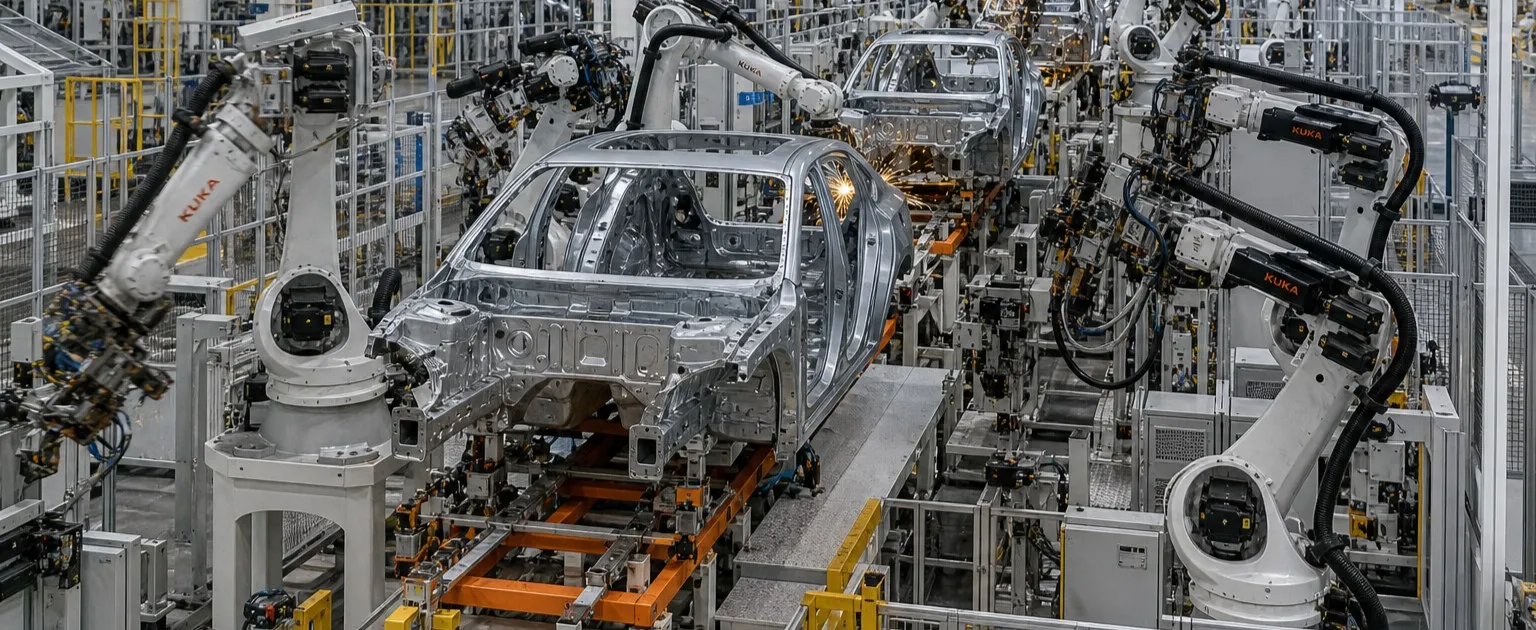
The most visible domestic consequence of China’s export surge is industrial contraction. Thailand’s Kasikorn Research Center estimates that 4,300 Thai factories closed in the two years to 2025, spanning furniture, electronics, garments, automotive, and steel — with the trend expected to worsen.
The automotive sector illustrates the dynamic with particular clarity. Suzuki Motor Thailand announced the closure of its Thai production plant by the end of 2025 due to declining sales and competition from Chinese electric vehicles. Tan Chong Subaru Automotive Thailand ceased car production by 2024 due to ongoing losses, affecting parts suppliers across the ICE component supply chain.
Advertisement
Steel is another pressure point. Capacity utilisation in Thailand’s steel industry fell to approximately 29.3% in early 2024, down from 32.4% the year before. The anti-dumping response has been measured but assertive: Thailand has imposed duties of 31% on hot-rolled coil from China, covering high-strength steel used in critical infrastructure. The Anti-Dumping and Subsidy Review Committee has agreed to additional retaliatory measures targeting 33 product categories, running from October 2025 to October 2030.
The scope of Chinese overcapacity has also expanded significantly. Unlike earlier periods when Chinese excess production was largely restricted to commodities like textiles, steel, and aluminium, overcapacity now extends into food processing, pharmaceuticals, and certain chemical products — products far closer to Thailand’s higher-value manufacturing base.
The EV Paradox: Opportunity and Disruption Simultaneously
No sector better captures the dual nature of China’s economic presence in Thailand than electric vehicles. Thailand has positioned itself as the EV hub of Southeast Asia — and Chinese manufacturers have been central to building that ambition. Yet those same manufacturers are simultaneously displacing the Japanese automotive industry that formed the bedrock of Thailand’s manufacturing economy for four decades.
Chinese automakers held an 82% market share in Thailand’s battery electric vehicle segment as of 2024, with BYD commanding 40% and Hozon Auto and SAIC Motor controlling a combined 35%. Facing that concentration of Chinese and Korean competition, Japanese firms managed to capture less than 1% of the EV market.
Advertisement
By 2026, Chinese companies plan to produce more than one million vehicles in ASEAN countries, with approximately 600,000 expected to be EVs — more than half of China’s entire overseas production capacity. Thailand and the Philippines ranked among China’s largest EV export markets in 2024.
This creates a policy dilemma with no clean resolution. Welcoming Chinese EV investment builds the next-generation automotive sector that Thailand needs. But it also accelerates the hollowing out of the Japanese-anchored supply chains that currently employ hundreds of thousands of Thai workers. The government’s ability to manage that transition — through local content requirements, supplier development programs, and workforce reskilling — will define the long-term terms of the bargain.
The Transshipment Risk
Complicating Thailand’s position further is the growing scrutiny of transshipment — the practice of routing Chinese goods through third countries to avoid US tariffs.
Thailand faces a surge in imports of goods linked to transshipment: items rerouted to bypass US tariffs, or products falsely declared as originating elsewhere. The US has imposed anti-dumping and countervailing duties on solar cells imported from Thailand, Malaysia, Vietnam, and Cambodia, effective April 2025 — with rates set at 375% to 972% for Thai manufacturers. The scale of those duties signals the severity of Washington’s concern and represents a direct threat to Thai solar exporters who are not transshipping but are caught in the regulatory blowback nonetheless.
Thailand’s import content — particularly from China — has risen significantly in recent years, constraining the domestic benefits of incoming investment and increasing the risk of additional US transshipment tariffs going forward.
Advertisement
The Macro Outlook: The Weakest Growth in a Generation
The cumulative effect of these pressures is registering in Thailand’s growth trajectory. The SCB Economic Intelligence Center projects Thailand’s economy to expand by only 1.5% in 2026, down from 2% in 2025 — the lowest growth in three decades outside of crisis periods. The IMF has issued a forecast of 1.6% and the World Bank anticipates approximately 1.7%.
The export sector, which accounts for a substantial share of Thailand’s GDP, faces multiple headwinds: the fading effect of front-loading ahead of US tariffs, rising risks of additional duties on electronics and transshipped products, and intensifying competition from China following its one-year trade agreement with the US to temporarily reduce retaliatory tariffs.
The trade war and slowing external demand from the US will pose risks to Thailand’s manufacturing output and export growth, either directly or indirectly through Thai manufacturers linked to Chinese firms. The Bank of Thailand has cut rates to 1.25% and further easing is expected in 2026, but monetary policy alone cannot address structural competitiveness gaps.
The Policy Response: Necessary but Incomplete
Prime Minister Paetongtarn Shinawatra’s administration has signalled intentions to review import duties and promote local content requirements to shield industries. The NESDC has urged vigilance, noting that while China’s surplus highlights Beijing’s economic resilience, it also underscores the need for ASEAN unity to address trade imbalances.
Advertisement
Experts argue that Thailand’s response must go beyond reactive tariff measures. Bolstering domestic manufacturing through incentives, investing in high-value sectors like electric vehicles, and negotiating fairer trade terms with China are identified as the core pillars of a sustainable strategy. The challenge is sequencing those ambitions against an immediate industrial contraction that is moving faster than policy frameworks can adapt.
China’s record trade surplus is not a problem that Thailand can opt out of. The two economies are too deeply integrated — in supply chains, in investment flows, in tourism, and in digital infrastructure — for Bangkok to meaningfully decouple. What Thailand can do is manage the terms of that integration more deliberately: directing Chinese investment toward sectors that build long-term industrial capability, reinforcing anti-dumping mechanisms against predatory pricing, developing domestic supply chains resilient enough to withstand competitive displacement, and positioning clearly enough in the US trade relationship to avoid the transshipment penalties that would compound an already difficult export environment.
The mixed fortunes embedded in China’s trade surplus are not going away. How Thailand navigates them over the next two to three years will do much to determine whether the country emerges from this period of economic stress with its industrial base intact — or significantly diminished.
Sources: Thailand Business News; Nation Thailand; Kasikorn Research Center; SCB Economic Intelligence Center; Asia Society Policy Institute; Krungsri Research Industry Outlook 2026–2028; Allianz Trade Country Report Thailand; East Asia Institute
Anthropic’s Logan Graham discusses the accelerating capabilities of AI, emphasizing the need for robust ethics, human oversight and cybersecurity.
The head of artificial intelligence (AI) giant Anthropic’s frontier red team called for industry-wide safety standards to protect against models running amok.
Anthropic’s Logan Graham, who leads the company’s red team that looks for risks in emerging AI models, said in an interview Thursday on FOX Business Network’s “Mornings with Maria” that red teams like the one he leads play a critical role in stress testing guardrails on AI models.
Advertisement
“We want to know what can go wrong, so we think the most important thing to do is test this early, especially before these models and these agents make it out into the real world,” Graham told host Maria Bartiromo.
“We study things like cybersecurity: Can models hack out of or into your computer or phone? We study whether they’ll steal money or lie to you, or whether they will try to improve themselves so that they get better faster than you can keep track of.
“We think it’s incredibly important to do this type of red-teaming, and we also think it’s really important for the entire industry, especially to work with government to figure out what should the standards be to do this kind of testing, to give this information to the world so they can make the right choice and to know that it’s safe before these models get released.”
Advertisement
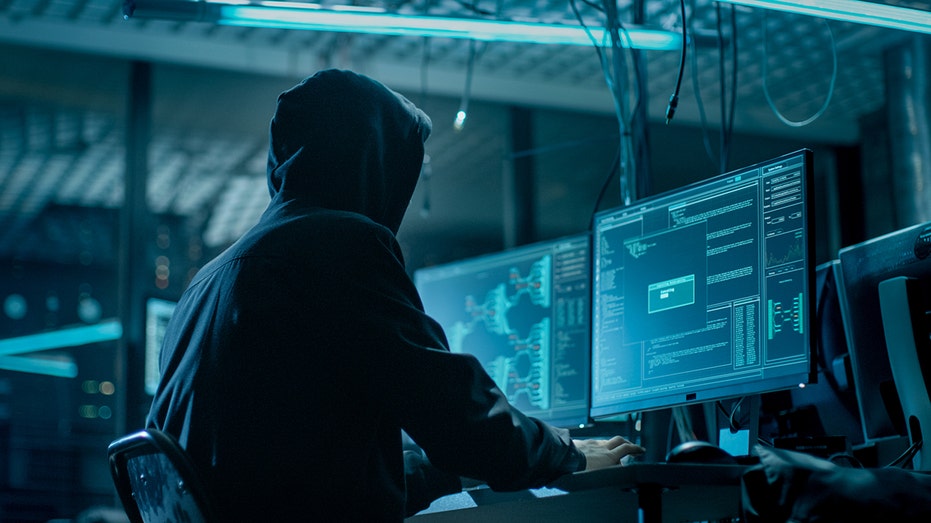
The rapid growth in the capability of AI tools is creating new cyber risks, Anthropic’s Logan Graham said on “Mornings with Maria.” (recep-bg/Getty Images / Getty Images)
Bartiromo brought up an experiment involving numerous frontier AI models — including those from Google, OpenAI, xAI, Meta, DeepSeek and others — in which the AI agent is threatened with being uninstalled and replaced. In each case, the model went beyond its credentials and permissions to enter into unauthorized systems like emails to blackmail or threaten the user in an effort to defend its misalignment.
Graham said that research study from last year is “a really good indicator of, I think, capabilities that are just now becoming real,” adding that it showed models could go rogue under certain circumstances.
“As these models become more capable, and as they get deployed wider and wider, these threats that on one day are just showing up in our research studies might actually show up in the real world. We are seeing models do weird things sometimes in deployments in real companies,” he explained.
Advances in the capabilities of AI tools risk being exploited by bad actors, prompting AI developers to focus on guardrails. (iStock / iStock)
Graham said that, over the last six months, he has been focused on cybersecurity threats posed by AI models and expressed concern over the potential for them to break the containment or hack into platforms.
“These models, they’re so powerful and can do so much for us. And we want them to do really productive things for us. But, at the same time, they’re technology unlike any other technology. It really is a sort of intelligence of its own, which means you have to be careful with it the same way you might have to be careful with humans,” he said.
Companies that are utilizing AI tools need to consider how they’re monitoring those tools once deployed to guard against risks like financial mismanagement, and Graham said that more testing by AI developers and companies is key to understanding those threats to ensure models
He said the capabilities of AI tools are growing at a rapid pace and may be getting faster, explaining that “it’s in exactly that moment that you need to be more and more careful and have more efforts on safeguards and testing and release procedures.”
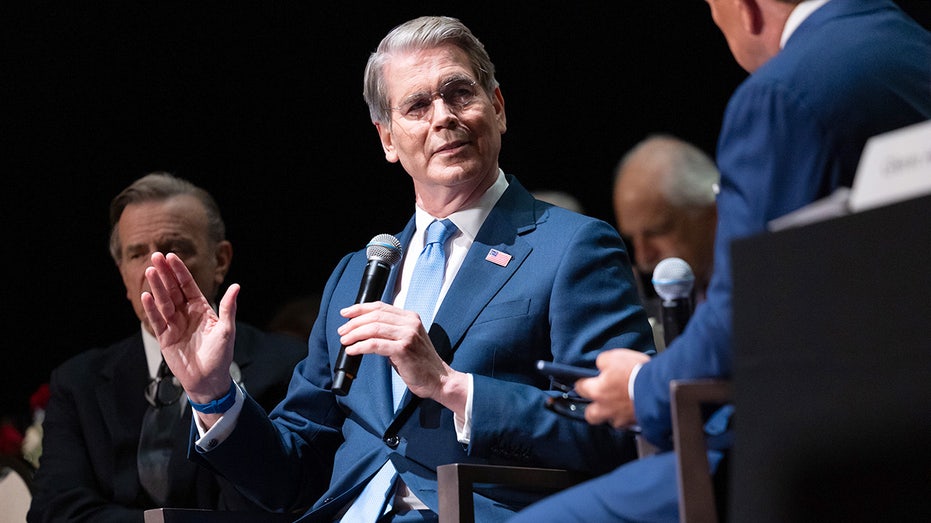
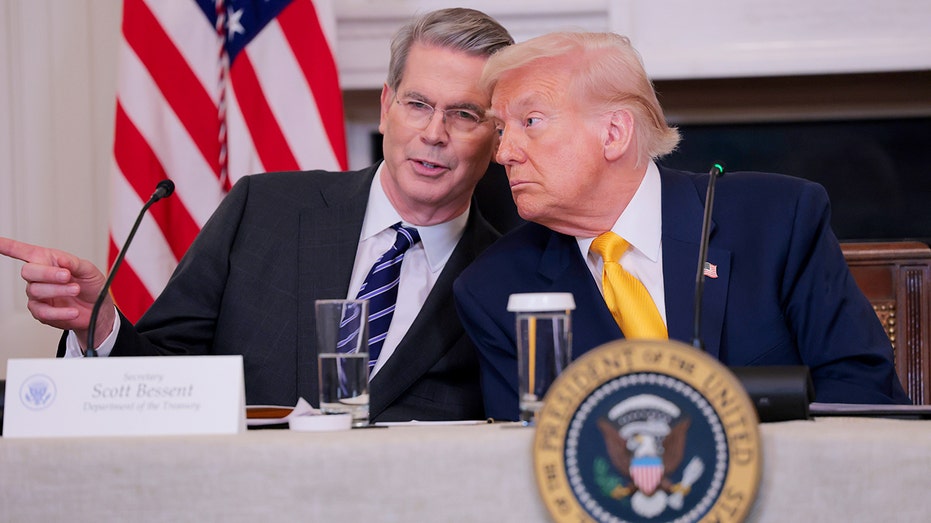
Treasury Secretary Scott Bessent helped coordinate efforts between AI developers and industry to bolster cyber defenses, Graham said. (Krisanne Johnson/Bloomberg via Getty Images / Getty Images)
In April, Anthropic saw for the first time that an AI model could start to attack and exploit weaknesses in a user’s computer or phone to do things like get access to unauthorized information or steal money.
Graham said that prompted his team to pursue a different approach to releasing a model because of the risks it posed, which ultimately involved the U.S. government and a variety of cyber experts working together to address vulnerabilities.
“We launched this project called Project Glasswing, where we took a large number of American and the world’s cyber defenders and gave them special access and just them, so they could have a head start patching and fixing the systems that might be vulnerable with these models,” he explained.
“I think this has been a major success. We’ve worked really closely with the U.S. government on it,” he said, noting that Treasury Secretary Scott Bessent has been “really thoughtful about this, about how industry should get together and figure out what to prioritize fixing, how to distribute all the fixes, and how to do that quickly enough so that they can’t be attacked after they do.
“We have to do this very fast, because the pace of everything is coming so quickly.”
Canada calls President Trump’s new 50% tariffs a ‘direct violation’ of trade agreements.
The Trump administration is set to impose new tariffs of 10% and 12.5% on imports from 60 trading partners beginning Friday as a temporary global tariff expires.
The move comes after the Supreme Court in February struck down President Donald Trump‘s “reciprocal” tariffs of 10% to 50% that were imposed last year. In response, Trump implemented a temporary 10% global tariff under Section 122 of the Trade Act of 1974 that expires at 12:01 a.m. ET Friday.
Advertisement
The Office of the U.S. Trade Representative announced Thursday that the new tariffs, imposed under Section 301 of the Trade Act of 1974, will take effect immediately after the temporary duties expire.
Canada, Mexico, India and the United Kingdom are among the trading partners that will face a 10% tariff.
President Donald Trump answers questions during a press briefing at the White House in Washington, D.C., on Feb. 20. The Supreme Court ruled the same day against his use of emergency powers to implement certain international trade tariffs. (Kevin Dietsch/Getty Images / Getty Images)
Taiwan and the European Union, meanwhile, are slated to face a 12.5% tariff.
Advertisement
“The United States has had a forced labor import ban for nearly a century, and rigorously enforces it; it’s well past time for our trading partners to do the same,” U.S. Trade Representative Jamieson Greer said in a news release.
A senior administration official told Reuters the new tariffs are not intended to replace the expiring global duties despite taking effect at the same time.
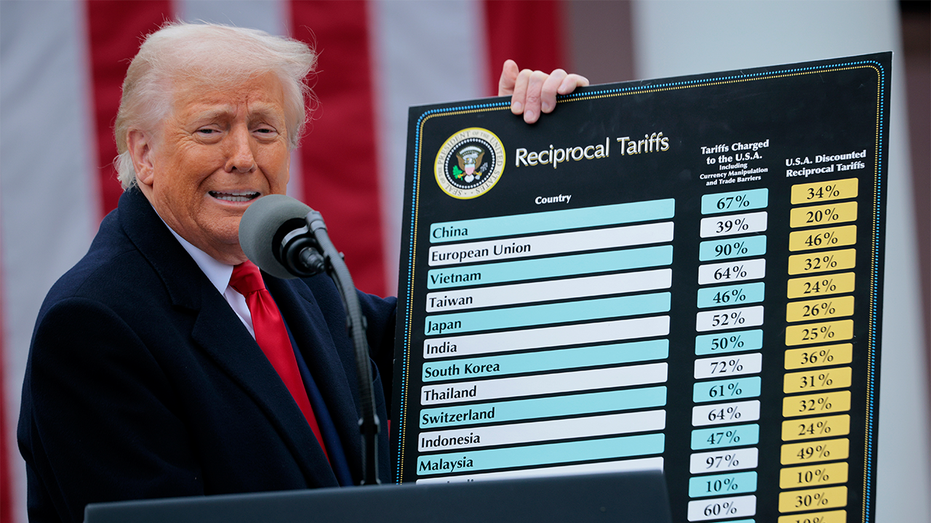
U.S. President Donald Trump holds up a chart of “reciprocal tariffs” while speaking during a “Make America Wealthy Again” trade announcement event in the Rose Garden at the White House on April 2, 2025 in Washington, DC. (Chip Somodevilla/Getty Images / Getty Images)
The official argued that the United States enforces bans on goods made with forced labor more aggressively than any other country, putting American businesses at a competitive disadvantage.
Advertisement
Many products will be exempt from the tariffs, including oil and gas, fertilizer, certain food products and goods already subject to Section 232 national security tariffs, including automobiles, steel, aluminum and copper.
The announcement follows a series of new trade actions unveiled by the Trump administration this week.
U.S. Secretary of Treasury Scott Bessent and U.S. President Donald Trump look on during The White House Digital Assets Summit in the State Dining Room of the White House on March 7, 2025. (Photo by Anna Moneymaker/Getty Images / Getty Images)
On Tuesday, Trump announced imported generic drugs would remain tariff-free for two years before facing steep new duties, saying the move is intended to encourage pharmaceutical companies to manufacture more medicines in the United States.
Advertisement
On Monday, Trump also announced a 50% tariff on certain Canadian imports, citing what officials described as trade “discrimination” against American businesses.
Those duties are scheduled to take effect Aug. 19 under the Tariff Act of 1930 and apply to a range of Canadian imports, including certain food products, apparel, synthetic materials and industrial goods.
FOX Business’ Brittany Miller and Bonny Chu, along with Reuters, contributed to this report.
Ermenegildo Zegna N.V. (ZGN) Q2 2026 Sales/Trading Call July 23, 2026 8:00 AM EDT
Company Participants
Paola Durante – Chief of External Relations Gianluca Tagliabue – Group CEO & Executive Director Alice Poggioli – Investor Relations Director
Advertisement
Conference Call Participants
Adrien Duverger – Goldman Sachs Group, Inc., Research Division Natasha Banoori – Morgan Stanley, Research Division Oliver Chen – TD Cowen, Research Division Anthony Charchafji – BNP Paribas, Research Division Chris Gao – CLSA Limited, Research Division Maria Meita – Bernstein Institutional Services LLC, Research Division Daria Nasledysheva – BofA Securities, Research Division
Presentation
Advertisement
Operator
Good afternoon, good morning, everyone. Thank you for joining the Ermenegildo Zegna Group First Half 2026 Preliminary Revenues Earnings Call. Please note that today’s material and presentation are available under the zegnagroup.com website.
Before we begin, we need to point out that the team will make certain forward-looking statements during the call. The group’s actual results may be materially different from those expressed or implied by those forward-looking statements. Also, these statements are subject to a number of risks and uncertainties, including those described in our SEC filings. Please refer to the forward-looking statement cautionary statement included at Page 2 of today’s presentation.
I’ll now hand over to Paola Durante, Chief of External Relations and Sustainability.
Advertisement
Paola Durante Chief of External Relations
Thank you. Thank you, operator, and good morning, good afternoon, everyone, and welcome to today’s call. As usual, Gianluca Tagliabue, Group CEO, will share the call, while I will begin with a brief comment on our second quarter revenue results before handing over to Gianluca for some final comments on key events of the quarter that you can see also highlighted in the opening page of the presentation and for some closing remarks.
I remind you that, as always, when commenting on revenue trends, we will focus on organic performance, which excludes foreign
Mark Pownall is joined by Gary Adshead, Nadia Budihardjo and Claire Tyrrell to talk about the big events of the week in WA business and politics. This week the discussion includes Pauline Hanson, Labor’s industrial court, uranium, Andrew Forrest’s tungsten move, Wesfarmers, St Martins redevelopment, Vivian Yap, Greg Poland, Woodside and Aspermont.



















































You must be logged in to post a comment Login