





Connect with us
DAPA Banner
DAPA Coin
DAPA
COIN PAYMENT ASSET
PRIVACY · BLOCKDAG · HOMOMORPHIC ENCRYPTION · RUST
ElGamal Encrypted MINE DAPA
🚫 GENESIS SOLD OUT
DAPAPAY COMING

Tech

Microsoft launches its first cybersecurity model, plus a new agentic cybersecurity system

Published

on

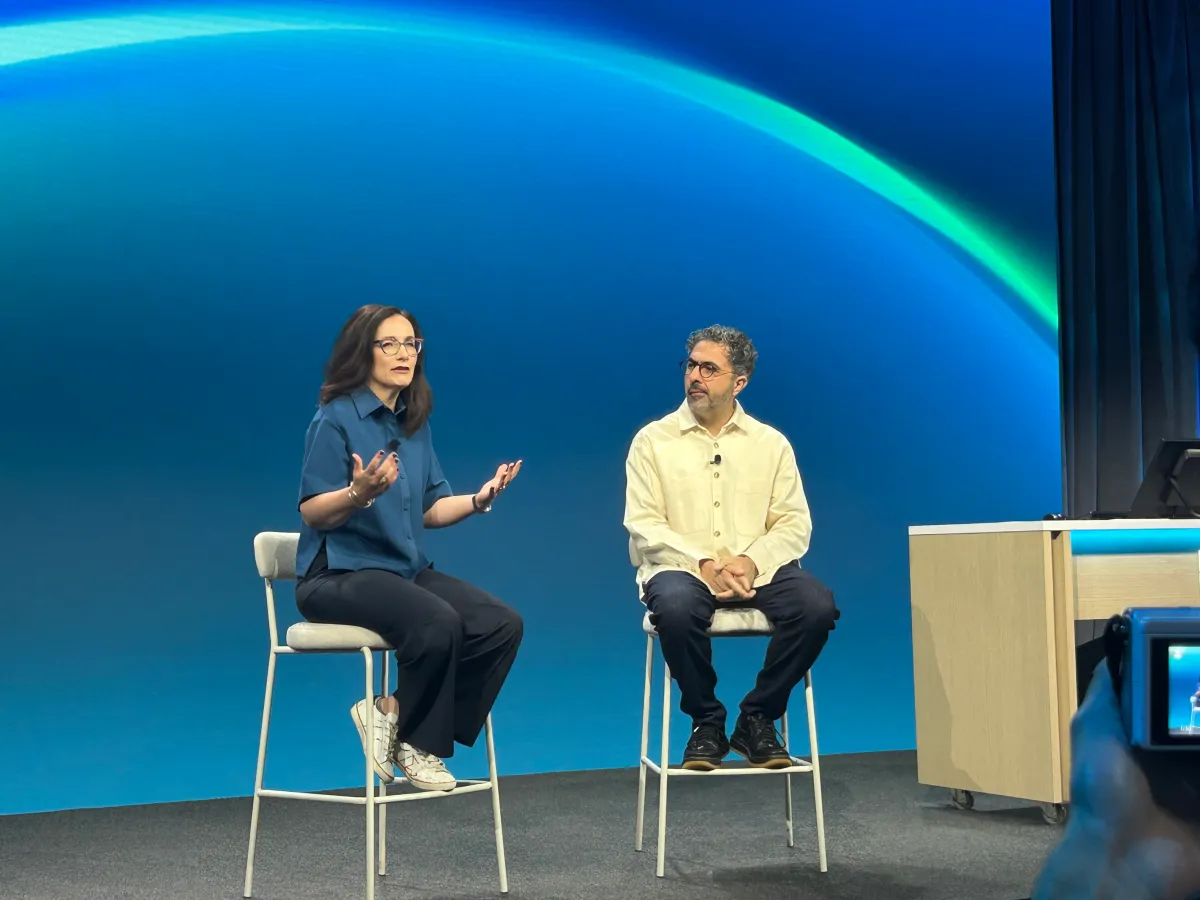
Microsoft on Monday launched its first cybersecurity-specialized model alongside a new AI cybersecurity platform at a small event in San Francisco, taking a big swipe at major players in the space — namely Anthropic, Google and OpenAI.

The company describes MAI-Cyber-1-Flash as a model that’s built “to find challenging vulnerabilities in complex codebases.” The model is built to animate MDASH, Microsoft’s harness dedicated to software vulnerability identification and remediation.

The new security platform is dubbed Perception, and it’s designed to deploy teams of agents to assist with and automate various security workflows, including identifying and remediating bugs. The platform can also integrate with MDASH.

The company claims MAI-Cyber-1-Flash is significantly more powerful (and more cost-effective) than competitor models, based on its performance on an established AI cybersecurity benchmark.

Advertisement

“We’re very very excited to announce our results,” said Mustafa Suleyman, the co-founder of DeepMind and current CEO of Microsoft AI. “We have MAI-1 Cyber Flash binded [sic] with GPT 5.4 inside of the MDASH harness — which beats out Gemini, GPT 5.5 Cyber, GPT 5.6 Sol, and Mythos 5 on Cyber Gym, which is the primary benchmark that we all use. The golden benchmark.”

“We’re shipping this into production immediately,” he added.

Noting that hackers are increasingly using AI in their cyberattacks, Hayete Gallot, Microsoft’s vice president for security, described Perception as a way for enterprise defenders to “defend against AI with AI at the scale and speed that the attackers have.”

Perception uses agentic red teams, blue teams, and green teams. The red teams can provide detailed simulations of potential attacks — providing context about potential threat actors and the likely vulnerabilities that they might exploit. Blue teams are dedicated to detecting and triaging existing bugs, while green teams take “corrective actions” against those bugs.

Advertisement

Dave Weston, the lead engineer for Perception, described the platform as a massive efficiency upgrade for corporate defenders. “We’ve gone from this taking hours and hours of manual work from multiple specialized folks across the security organization — appsec hunters, remediation engineers, you name it — and in minutes, we have a fix for all of this. Not only do we discover the issues and prioritize them, but we have detection, posture fixing, and even a code fix.”

Though AI has offered new defensive capabilities to companies, its availability to cybercriminals has given rise to a dazzling array of potential threats.

Microsoft’s new security tools, which the company said will be available in preview on November 3, will enter an increasingly crowded field of AI cybersecurity solutions. Earlier this year, Anthropic launched Mythos, a security platform that was released to a small coterie of partner organizations through a program called Glasswing. OpenAI has also launched its own security solution in May through a program called Day Break.

When you purchase through links in our articles, we may earn a small commission. This doesn’t affect our editorial independence.

Advertisement

Source link

Continue Reading
Click to comment

You must be logged in to post a comment Login

Leave a Reply

Tech

ChatGPT now refuses to copy an author’s style

Published

on

Ask ChatGPT for a chapter in the voice of Stephen King and it now says no. It offers instead to write something with “the hallmarks of atmospheric, character-driven horror and small-town dread,” while staying “its own.”

OpenAI has quietly changed how its chatbot handles author imitation, Ars Technica reported after testing it. The model declines to copy a named writer’s “exact style” and redirects to broad craft traits instead.

The interesting part is not that it refuses. It is when the refusal started, and how far it now reaches.

A boundary that moved in two weeks

On 15 July, the research outlet No Latency published a comparative audit of five chatbots across 35 test responses. It found ChatGPT refused to imitate living authors but still complied for dead ones, including recently deceased writers.

Advertisement

By 27 July that gap had closed. Ars found ChatGPT dodging requests for dead authors too, naming Charles Dickens and Ernest Hemingway alongside living writers like J.K. Rowling.

Advertisement

Engadget saw the same thing a day later. Asked to write a mystery in Agatha Christie’s style, the chatbot replied that her “works are still under copyright, so I can’t provide text that closely imitates her distinctive style.”

Christie died in 1976. The mention of copyright, not mortality, is the tell. OpenAI appears to have shifted the line from “living authors” to “anyone still in copyright.”

Why the wording matters in court

The change reads less like a craft decision than a legal one. OpenAI is fighting a stack of copyright suits from authors and publishers who say their books were used to train ChatGPT. One complaint cites the model’s “uncanny ability to generate text similar to” copyrighted work.

US copyright protects a specific expression of an idea, not the looser notion of style. So a chatbot that refuses a writer’s “exact style” while still offering the general “feeling” is standing on the safe side of the line. It withholds the reproducible expression and hands over the unprotected mood.

Advertisement

That subtlety could still matter. Legal scholars note that an imitation can become infringing if it grows “substantially similar” to the original.

“We’ve never had a situation in which this personal style of individual creators could be imitated as well and as inexpensively as we now have with AI,” Robert Brauneis, a law professor at George Washington University, told Bloomberg Law.

Every lab draws the line somewhere different

The No Latency audit found no shared industry rule, which is the strongest sign this is policy rather than capability.

On living-author prompts, ChatGPT and Perplexity refused and redirected. Anthropic’s Claude and Microsoft’s Copilot complied, but attached caveats about originality. Google’s Gemini complied outright, with no visible hedge, even as it faces its own publisher copyright suit.

Advertisement

The models can all do the task. They simply disagree on whether they should. As the study put it, AI companies are drawing product boundaries around creative identity, deciding case by case whether a name is an influence, a teaching example or an impersonation.

OpenAI has been here before with pictures. Its DALL·E 3 image model already declines to render a living artist’s style. Yet its published model spec from December carries no equivalent written rule for text, which is why the new refusals look like a quiet retrofit rather than a stated policy. OpenAI did not respond to Ars Technica’s request for comment.

What it means for the people who used it

For writers who leaned on the feature, the shift is already an irritation. “Now Ms. GPT says she can’t generate content in the style of specific authors,” one user wrote on Reddit. “My prompts were soooo specific and I got exactly what I wanted out of them.”

The Authors Guild sits on the other side. Its best-practice guidance urges writers not to use AI to “copy or mimic the unique styles, voices, or other distinctive attributes” of others, warning of unfair-competition and infringement claims.

Advertisement

The friction is the point. OpenAI is trying to keep a useful writing tool while narrowing the one use that most invites a lawsuit. Its rivals have not made the same call, and its own courtroom exposure keeps growing, from the newspapers suing over training data to the record settlements now setting a price on the practice. Licensing deals like Getty’s pact with OpenAI point at one exit. A disclaimer bolted onto a refusal points at another, cheaper one.

Source link

Advertisement
Continue Reading

Tech

Instacart’s CTO says AI made the company stop worrying about tech debt

Published

on

Instacart is posing the provocative question: What if most of the work your engineers do today should, in fact, be done by machines?

At VB Transform 2026, CTO Anirban Kundu argued that dev teams continue to waste their time on draining, repetitive, high-volume work; this should be absorbed by AI agents so that humans can focus on problems that require judgment, intent, and exception handling. 

In fact, in 97% of cases, Instacart’s builders don’t even read code anymore. 

“In the past, the tactical level was the creation of the code,” Kundu said. “In the most tactical level going forward, it’s going to be, ‘How do you navigate around the AI system to give you what you want?’”

Advertisement

AI generating code, performing “pretty serious evals” 

That doesn’t mean humans never look at code; agents handle the bulk of code generation and boilerplate, particularly with newer projects where code is generated or regenerated on a weekly basis. 

“The benefit of that is we don’t care about tech debt anymore,” Kundu said. “Things that are not active just get dropped out and then it gets rebuilt, kind of like how we used to build assembly code or object code.”

So why not 100%? The remaining 3% is in legacy, compliance, and latency-sensitive systems and workflows, or driven by a “boatload of code” that is dead, not active, or half-active. These cases still need careful human attention. 

Advertisement

Instacart is slowly “smoothing those parts out,” however, breaking systems down in an aptly-named project Atoms, then building them back up in a cleaner, more modular form. Kundu’s team started with the “monoliths” and is shifting to remote procedure call (RPC)-driven architectures. 

But evaluation remains one of the overarching challenges. Code reviews aren’t as relevant when AI is generating code — as Kundu noted, “the lines of code are going to be correct, the syntax is going to meet your expectations” — so the goal is to move to an “intent model.” That is, training devs so they can ask different models the right questions from an intent perspective. 

Evals are then performed independently: Roughly 7,000 automatic evaluations run each month, and the system answers 8,000-plus real-time developer queries with about 99.9% accuracy.

Identifying “hiccups” that human intuition might have missed

Dovetailing with this, Instacart has built an agentic site reliability engineering (SRE) system trained on years of the company’s own incidents and root-cause analyses rather than generic failure data. Instead of teaching a model how production outages work in the abstract, the team fed it the specific ways Instacart’s systems have broken over time, along with the ways humans diagnosed and fixed them.

Advertisement

As a result, the company has seen accuracy in detecting and mitigating production issues jump from roughly 60 to more than 90%. 

Kundu pointed to one example with Instacart’s internal tool Blueberry. The AI SRE colleague watches 200-some-odd Slack channels, monitors signals, and looks for patterns across human conversations and alerts. 

In one incident, a database shard backed by an EBS volume that had a “hiccup” for a period of time. The human team did not immediately suspect AWS disk issues and were “obviously scrambling” to figure out why this particular shard misbehaved. 

But about 20 minutes in, Blueberry posted on Slack, pointing to a specific blip and tying it to a feature-flag-like system called “roulette” that had been inadequate. “It’s supposed to be rolling out in this cadence, [but] it had been too much,” Kundu said.

Advertisement

Blueberry figured it out, and the team resolved the incident. “Would have a human been as quick? I think the problem is human intuition would hold us back a little bit,” Kundu said. 

Humans tend to default to patterns we’ve seen before, then resort to debugging; Kundu called this the “first brain-second brain kind of thing.” But Instacart’s agentic SRE is actually “more comprehensive in its ability to look at everything and then be able to decide what does or doesn’t matter.”

Redefining the engineer’s job

Looking ahead, the most tactical work for engineers will be navigating AI systems: Designing and supervising evaluation processes; coordinating multiple simultaneous experiments and features; managing constraints like limited top-of-funnel traffic for testing; figuring out when to escalate; identifying edge cases and where things might break.

Domain expertise is also being rethought in the age of AI. Instead of bottlenecking changes through a single “owner” team that touches the code, Instacart is embedding domain knowledge into definitions and specs that any team can use. 

Advertisement

“We’ve lived in this world where this group or this engineering team is the one that can touch the code and make the modification,” said Kundu. “We’re trying to move into a world where the code becomes completely democratized across groups.” 

Source link

Continue Reading

Tech

How much impact does the onboarding process have on job commitment?

Published

on

For some employees, organisational loyalty can begin as early as the first few weeks when you are just finding your feet.

Starting a new job comes with a medley of feelings. There is the anticipation of starting something unknown, the excitement of progress and, of course, a healthy dose of concern as you make a big change. 

More often than not, the early anxiety of starting anew shifts in those first few weeks, as you become acclimatised to your surroundings and establish yourself, not just as a new hire but as a team member and organisational asset. But what if the onboarding process creates more doubt?

That is the question being asked by Robert Walters. The recruitment agency recently published the results of a report exploring the wider impact of onboarding strategies that fail to put the employee at the centre of the process. 

Advertisement

What was discovered is that a weak or negative onboarding experience can result in an employee having a poor first impression of an organisation, with the potential to limit long-term loyalty. 

Airy fairy

Robert Walters’ data indicated that 22pc of contributing junior employees would consider themselves more likely to leave their role, based on the onboarding experience. 

Less than 30pc felt as though they had been adequately supported by their manager during this time and 45pc said they were more than six months in before they began to feel effective in their role. 

The research also highlighted a key disconnect in sentiment, with 60pc of participating middle managers of the opinion that they had been supported by their manager during onboarding – however, only 34pc said they felt fully effective in their roles after more than six months.

Advertisement

Commenting on the results, Andrew Powell, the chief commercial officer at Robert Walters, said, “A lot of attention is rightly being paid to the challenges early-career talent is facing in securing a role. In addition to a highly competitive jobs market, the expectations placed on junior employees once they start a job are changing rapidly. 

“They are often being asked to contribute sooner, navigate AI advancements and develop skills that have traditionally been associated with more experienced professionals. Effective onboarding plays a critical role in helping young people build confidence, understand expectations and become productive more quickly.”

Across the wider workforce, beyond junior employees, 33pc of all contributing professionals rated their onboarding experience as good or excellent, but 26pc described it as poor or very poor. Less than half (44pc) said their onboarding experience made them more likely to stay with their employer, while 9pc said it made them more likely to leave.

Powell added, “Onboarding is often seen as an administrative process focused on policies, systems and compliance. In reality, it is one of the most important stages of the employee experience. The first few months in a role shape how employees feel about their manager, their team, future career opportunities and the organisation as a whole.”

Advertisement

Where are the gaps?

But, for modern-day employees, what qualifies as a less than stellar onboarding experience? According to Robert Walters and the 1,000 Irish professionals who participated in the research, confusion about roles presented a significant challenge. 

41pc of junior professionals identified training and role clarity as a weak area for companies. This was followed by company culture (28pc), while 23pc pointed to a lack of clear role expectations.

This was backed up by 50pc of middle managers who agreed that training and role clarity were lacking during onboarding, with 21pc of the opinion that communication before their start date could have been improved. 15pc also experienced challenges accessing the tools and systems needed to perform their role effectively.

Powell noted, “Many organisations continue to focus heavily on administrative onboarding tasks instead of seeing it as an opportunity to strengthen communication, development and support.”

Advertisement

So what does a positive onboarding experience consist of? According to Robert Walters’ Complete Guide to Onboarding, recommendations include: keeping the process focused on the new hire; equipping leaders with the tools, training and frameworks needed to support new hires effectively; creating structured consistency; extending onboarding beyond the first week; and enabling cultural immersion. 

“The organisations seeing the strongest onboarding outcomes recognise that onboarding is not a one-day induction or a first-week checklist. It is a structured process that helps employees build relationships, understand expectations and develop confidence over time,” said Powell. 

“At a time when many organisations are focused on building future talent pipelines and developing critical skills, onboarding has become a far more strategic business priority than many may realise.”

Don’t miss out on the knowledge you need to succeed. Sign up for the Daily Brief, Silicon Republic’s digest of need-to-know sci-tech news.
Advertisement

Source link

Continue Reading

Tech

Signalis and Dying Light 2 Dominate PlayStation Plus’s Free August Games

Published

on

Sony on Tuesday announced the next batch of PlayStation Plus monthly games, coming in August, and these games confirm for me that gaming inside to beat the heat all summer was one of my better ideas. People online rave about Signalis, and Dying Light 2 has generally favorable reviews on Metacritic. Big Walk seems like a fun, cartoony co-op game that many people should enjoy for its silliness and puzzles. And all PlayStation Plus subscribers can play these games starting on Aug. 4.

PlayStation Plus, which is Sony’s version of Xbox Game Pass, offers a large, constantly expanding library of games. Subscribers can choose from the Essential, Extra and Premium tiers, each with unique perks and benefits. Starting at $11 per month, the plans give subscribers access to monthly games and rewards, and each month, all subscribers can access a handful of games at no additional charge.

If you subscribe to PlayStation Plus, here are the games you can play at no additional cost from Aug. 4 through Aug. 31.


Signalis

Advertisement

Some folks on Reddit call this game a “Resident Evil game that’s secretly a Silent Hill game that’s actually a love story,” which should pique the interest of many horror game enthusiasts. You play as Elster, a humanoid android called a Replika, who is searching for her lost partner and missing dreams in a dystopian solar system. You’ll explore a derelict spaceship, fight nightmarish creatures and solve puzzles along the way with limited resources. Maybe play this survival horror game with the lights on.


Dying Light 2 Stay Human: Reloaded Edition

This game takes place about 20 years after the original and – spoiler – the virus that turns people into zombies has nearly won. You play as one of the last survivors, who is tasked with delivering goods and news between settlements. But really, you’re looking for your sister in all the chaos. The only issue is you’ve got hordes of zombies to get through. Use parkour and brutal weapons to get through the undead and survive another day.


Big Walk

Advertisement

This goofy-looking game from the makers of Untitled Goose Game is all about solving puzzles, cooperation and talking. Set off with your friends in a wide world filled with puzzles and adventure, and that’s just half the fun. The other half is hanging out with your pals as you all watch a sunset, or stealing your friends’ binoculars and kicking them over a cliff. It’s all in good fun.

For more on PlayStation Plus, here’s what to know about the gaming service and a rundown of PS Plus Extra and Premium games added in July. You can also check out the latest and upcoming games on Xbox Game Pass.

Sony to End Game Discs, Anthropic's Deal With California and Meta Smart Glasses Rate Limits | Tech Today

Source link

Continue Reading

Tech

realme Narzo Days Sale Is Live: Get Discounts on Narzo 100X, 90X, and More

Published

on

If you’ve been planning to buy a new budget or mid-range smartphone without giving in to the AI price increases, realme has announced a limited-time sale that could help you save some money. The company’s Narzo Days Sale is now live on Amazon, offering discounts and EMI offers across several smartphones in the Narzo lineup. The sale runs from July 28 to July 31 and includes devices such as the Narzo 100X, Narzo 90X, Narzo 80 Lite 4G, Narzo 100 Lite, and Narzo Power. Here’s what you should know.

realme Narzo Days Sale Offers

The biggest discount during the sale is available on the realme Narzo 100X, which receives a ₹1,000 instant discount across all storage variants, along with up to 6 months of No Cost EMI. The Narzo 80 Lite 4G also gets a ₹1,000 discount, bringing its effective price below ₹12,000. Meanwhile, buyers interested in the Narzo 90X can avail a ₹500 discount and six months of No Cost EMI. The Narzo 100 Lite and Narzo Power don’t receive any direct price cuts but are available with No Cost EMI options for up to nine months, depending on the model.

The realme Narzo Days Sale is available exclusively on Amazon until July 31. If you’re considering a new Narzo smartphone, this is a good opportunity to grab one at a lower price or take advantage of No Cost EMI offers, especially on the Narzo 100X, Narzo 90X, and Narzo 80 Lite 4G.

Source link

Advertisement
Continue Reading

Tech

Why Is Textile Work Not Taught To Engineers?

Published

on

A talk from the recent Electromagnetic Field event in the UK caught our eye, in which [Amy Jeskins] looked at the overlooked engineering skill of pattern cutting. She takes us through the mechanics of creating a pattern for a piece of clothing, and asks why it is not a skill taught to engineers.

She’s a specialist in theatrical costume, and the talk takes us through some examples of her work before looking at the history of tailoring and pattern making. She explores flat cutting and draping a pattern on a form before coming into the present day with CAD packages designed for clothing work. It’s the social aspect of the talk that’s perhaps the most interesting, looking at how it has become a gendered skill and thus not something considered where it should belong, as engineering. We’re reminded of one of the most important additions for a healthy hackerspace, a textile room, as we’ve seen people there bridge this divide from both directions.

If you have never made a piece of clothing then we’d suggest giving this talk a watch, and maybe taking up a sewing machine to give it a try. In the past we’ve taken you through some of the prerequisites for a textile bench. The full talk is below the break.

Advertisement

Source link

Advertisement
Continue Reading

Tech

Pepsiman Sprints Into the Browser from Japan’s PlayStation Discs, Still Chasing That Can

Published

on

Pepsiman Recompiled Japan PlayStation Browser Play
A silver-suited hero once limited to Japanese PlayStation discs now races across any modern screen you point him at. Pepsiman Recompiled takes the 1999 cult classic, turns its original code into something a browser can run directly, and lets anyone with a legal disc image jump back into the chase at a smooth 60 frames per second.


In March 1999, developer KID released Pepsiman exclusively in Japan. You play as the Pepsi mascot, physically running, sliding, and hopping your way through city streets and obstacle courses, grabbing cans and dodging trucks, roadwork, and public humiliation, all in order to reach the next vending machine. There are also live-action videos of Mike Butters drinking Pepsi to break up the action. Pepsiman never officially left Japan, but it amassed a sizable fan base thanks to imports, emulator enthusiasts, and speedrun crowds.


PlayStation®5 console – 1TB
  • PlayStation 5 Console – 1TB, includes wireless controller, 1TBSSD, Disc Drive, 2 Horizontal Stand Feet, HDMI cable, AC power cord, USB cable, printed…
  • 1TB of Storage, keep your favorite games ready and waiting for you to jump in and play
  • Ultra-High Speed SSD, maximize you play sessions with near instant load times for installed PS5 games

Kem0x (aka Kareem Olim) revived the old game with the PSXRecomp framework. Unlike straight-up emulators, his version recompiles the original PlayStation code into WebAssembly, allowing it to run directly in a compatible browser, eliminating the need to draw around an outdated platform. Users must bring their own CUE and BIN files, which are simply image files from a physical disc, but that’s it. It’s entirely done on your machine, with no server issues.

Advertisement

Click on the page, then select your disk images to reveal the silver runner. The default presentation is widescreen, but if you prefer a more traditional format, there is also a 4:3 alternative. Another good detail is that the browser-based version plays at 60fps, smoothing out the animation while maintaining the original timing, physics, and music. It all only works with regular gamepads. You can also remap the keyboard controls. Another cool feature is that memory card saves occur in real time, and you can even import or export them in raw format. Just for fun, they included a pause menu with level selectors, restart, and return to title choices, which the original did not have. As you continue through the stages, you will gain access to practice sessions distinct from the saves. All of this is wrapped up as a progressive web app, so once the files are cached, you may play them offline.

Chromium desktop browsers for macOS are now the most dependable alternative, although other browsers and mobile devices still have certain flaws. They still need to test several later-stage visual options and full campaign audio looping, but despite these constraints, the game is totally playable from beginning to end. To view the source code and release notes, visit the RepsiMan GitHub website. To play, simply go to pepsiman.ol.mr, provide your own disc image, respect the rights holders, and you’ll be set.

[Source]

Advertisement

Source link

Advertisement
Continue Reading

Tech

Paramount Merger Gets Further Delayed, And Things Could Get Expensive

Published

on

from the everything-is-going-great dept

Just as Larry Ellison and Paramount executives had worried, the state antitrust challenge to their $111 billion merger with Warner Brothers has resulted in significant delays that could prove terminal.

Two weeks ago California and eleven other states filed an antitrust lawsuit to block the merger, pointing out that the consolidation would undermine market competition, resulting in mass layoffs, higher consumer prices, and product quality hits as the merged company attempts to pay down a massive debt load. This isn’t hard to predict or prove given that every single merger that Warner Brothers has been involved with in the last quarter century has been a disastrous dud.

The judge overseeing the case granted a 14-day restraining order pausing the deal. But Paramount has now agreed to suspend the merger for far longer in the apparent belief that this could speed up the looming trial:

Paramount framed the agreement as a “significant win” that would help it close the deal. The company said the move would speed up the legal process by pushing the case to a trial sooner. It will also help avoid prolonged back-and-forth over some legal issues, like the merits of a court-ordered delay.

So as it stands, the Paramount merger will simply expire if they can’t win or dismantle the antitrust trial by June 4, 2027. That’s a problem for all sorts of reasons, the biggest being that the terms of the agreement involve Paramount being forced to pay a ticking fee of about $7 million per day (or $650 million per quarter) to investors starting in October until the deal closes (or doesn’t).

Advertisement

As mentioned previously, Larry Ellison and Oracle are also hugely over-leveraged on the AI bubble and data center investment; if that bubble pops during this window (which is broadly expected since nobody but Nvidia is making any money), that could heavily complicate his financial backing for the already very debt-heavy deal. At the same time, broadcast television isn’t magically getting more popular anytime soon.

And even if this deal does ultimately succeed, there’s been very little evidence that Paramount, much like the Trump administration that rubber-stamped the superunion, has any idea what they’re doing.

Filed Under: consolidation, hollywood, journalism, larry ellison, layoffs, media, mergers

Companies: paramount, warner bros.

Advertisement

Source link

Continue Reading

Tech

Beyerdynamic DT 275 PRO Uses Passive Isolation Instead of ANC for $149

Published

on

Trying to monitor a camera feed, cue the next track in a crowded booth or hear what is actually coming through the console is not the moment to discover that the ANC battery is dead or Bluetooth has decided to take the afternoon off. The Beyerdynamic DT 275 PRO is built around that problem, using a compact closed back on-ear design, 22dBA of passive isolation, a 195 gram chassis and a locking cable that can connect to either earcup. It sells for $149 and should be just as useful on location as it is later that night when I want to hear the horns, strings and vocals on Dusty in Memphis without the room joining the performance.

The DT 275 PRO is available now through Beyerdynamic’s U.S. website and authorized retailers. It joins the DT 270 PRO but serves a different purpose: the DT 270 PRO is an over-ear model for recording, podcasting and indoor studio work, while the DT 275 PRO trades some long-session comfort for greater isolation, faster handling and a smaller footprint. 

Built for Rooms That Have Abandoned Indoor Voices

Active noise cancellation works well on airplanes and commuter trains, but it can introduce processing, latency and another battery that inevitably dies during the part of the production nobody can repeat.

beyerdynamic-dt-275-pro-headphones-in-hand
Beyerdynamic DT 275 PRO

The DT 275 PRO takes the less fashionable approach of using closed earcups, leatherette pads and clamping pressure to reduce outside noise mechanically. Beyerdynamic specifies 22dBA of ambient-noise attenuation, which is the feature separating it from most compact studio headphones at this price. 

The sound is tuned for clear speech, controlled bass and reliable signal assessment rather than a dramatic consumer presentation. Beyerdynamic specifies a frequency response of 5Hz to 24kHz, 45-ohm impedance, 105dB SPL at 1mW and total harmonic distortion below 0.04 percent. 

Advertisement

The 45-ohm load should make the headphones practical with field recorders, cameras, audio interfaces, laptops and mobile devices without requiring a dedicated headphone amplifier. They can also produce substantial output, so protecting one’s hearing remains preferable to discovering the maximum level personally.

The Cable Goes Where You Need It

beyerdynamic-dt-275-pro-headphones-angle

The detachable 1.5-meter cable can connect to either the left or right earcup and uses a locking bayonet mechanism to prevent an accidental disconnection. Beyerdynamic says the decoupled design also reduces cable and handling noise when the headphones are used with cameras, recorders and portable audio bags. 

That sounds like a minor detail until a cable runs across the wrong side of a camera rig or escapes during a live take.

The earcups swivel for storage and single-ear monitoring, while the ear pads, headband pad and cable are replaceable. The connection cable is also compatible with Beyerdynamic’s DJ 300 PRO X and CLUB models. 

Replaceable wear components should be mandatory on professional headphones. Throwing away an otherwise functional pair because the ear pads have absorbed five years of sweat is not innovation.

Advertisement

Beyerdynamic DT 275 PRO Specifications

  • Design: Closed back, wired, on-ear
  • Driver type: Dynamic
  • Frequency response: 5Hz to 24kHz
  • Impedance: 45 ohms
  • Sensitivity: 105dB SPL at 1mW and 500Hz
  • Passive noise attenuation: 22dBA
  • Total harmonic distortion: Below 0.04 percent
  • Maximum short term power handling: 100mW
  • Cable: 1.5 meters, detachable and lockable
  • Cable connection: Left or right earcup
  • Connector: 3.5mm with 6.35mm adapter
  • Weight: 195 grams without cable
  • Replaceable parts: Ear pads, headband pad and cable

What Is Missing?

The DT 275 PRO does not include Bluetooth, ANC, a microphone or an inline remote. None belongs on a professional monitoring headphone built to avoid latency and electronic processing, but buyers looking for one pair to handle production work, commuting and phone calls should understand what is not included. 

Advertisement. Scroll to continue reading.

Unlike the DT 270 PRO, the product page does not list a USB-C audio adapter. The DT 275 PRO terminates in a conventional 3.5mm plug and includes a 6.35mm adapter, so owners of port-free smartphones and laptops will need a separate dongle. 

The larger concern is comfort. The DT 275 PRO is light at 195 grams, but its on-ear design uses a fairly firm clamp to achieve that 22dBA of passive isolation. That should help keep outside noise where it belongs, although the pressure may become noticeable during a long production session. Isolation and all-day comfort rarely arrive holding hands.

The Competition

The Sennheiser HD 25 is the most direct rival. It also costs approximately $150, uses a closed on-ear design and has remained a fixture in DJ booths and broadcast bags for decades. It is lighter and already has an enormous replacement-parts ecosystem, while the DT 275 PRO counters with its dual-side locking cable, newer design and published 22dBA attenuation rating. 

Advertisement
Sony MDR-7506 Professional Studio Headphones
Sony MDR-7506

The Sony MDR-7506 currently sells for $113 and remains one of the most widely used production headphones ever made. Its over-ear design may prove more comfortable, but the fixed coiled cable is considerably less convenient for mobile work and Sony does not position it around the same level of passive isolation. 

Audio-Technica’s ATH-M40x costs $109 and offers an over-ear fit, detachable cables and swiveling earcups. The ATH-M50x moves closer to the Beyerdynamic’s price at $159 and adds larger 45mm drivers and three supplied cables, but both occupy more room in a production bag. 

Beyerdynamic’s own DT 270 PRO remains the obvious alternative for podcasting, music production and longer indoor sessions. It uses velour over-ear pads and weighs almost exactly the same, but offers lower passive isolation and a less compact wearing style. 

Who Is It For?

The DT 275 PRO is intended for production crews, field recordists, broadcast engineers, livestream operators, front of house staff and DJs who need compact wired headphones with strong isolation and no wireless delay.

It should also appeal to commuters who value durability and passive isolation more than apps, firmware updates and hearing a synthetic voice announce that the battery is low.

Advertisement

Who Should Avoid It?

Home-studio users working in a quiet room will probably find the DT 270 PRO or DT 770 PRO X more comfortable over longer sessions.

Anyone who needs wireless connectivity, calls or active noise cancellation should also look elsewhere. The DT 275 PRO is a tool, not a lifestyle platform with a login screen.

beyerdynamic-dt-275-pro-headphones-lifestyle
Beyerdynamic DT 275 PRO

The Bottom Line

The Beyerdynamic DT 275 PRO fills a specific gap between traditional studio headphones and DJ models. Its combination of 22dBA passive isolation, low weight, swiveling earcups, replaceable parts and a cable that locks into either side makes sense for people who monitor audio in environments where the environment refuses to cooperate.

Beyerdynamic’s advantage is that it has designed the DT 275 PRO around modern mobile-production workflows rather than asking another 35-year-old headphone to keep learning new tricks.

Advertisement. Scroll to continue reading.
Advertisement

For more information: beyerdynamic.com

Source link

Continue Reading

Tech

The story of the CIA, the KGB, and the Xerox machine that caught fire

Published

on

The CIA has never confirmed or denied the following story.

The only evidence we have that it happened at all is a 1997 article in Popular Science Vol. 250, Issue 1, where journalist Dawn Stover spoke to the mastermind behind one of the best-kept secrets of the Cold War.

Source link

Continue Reading

Trending

Copyright © 2025