



Connect with us
DAPA Banner
DAPA Coin
DAPA
COIN PAYMENT ASSET
PRIVACY · BLOCKDAG · HOMOMORPHIC ENCRYPTION · RUST
ElGamal Encrypted MINE DAPA
🚫 GENESIS SOLD OUT
DAPAPAY COMING

Tech

This S’pore home fragrance brand turned luxury scents into a S$1M laundry pod biz

Published

on

Seven months into 2026, laundry pod brand Kapsä has made over S$1 million in revenue

When Edison Lim and Lincoln Thong launched home fragrance brand Pristine Aroma in the middle of the COVID-19 pandemic in 2019, they had a problem most businesses would envy: their product was so popular, yet sales were highly seasonal. 

Pristine Aroma’s reed diffusers and candles in scents like their signature Himalayan Tea, surged every Christmas but fell quiet every Jul and Aug.

The duo knew they wanted their next business’s revenue to be somewhat steadier.

The fix they landed on was taking the thing they were best at, applying it to the most ordinary chore imaginable, and building an entirely new brand around it. 

Advertisement

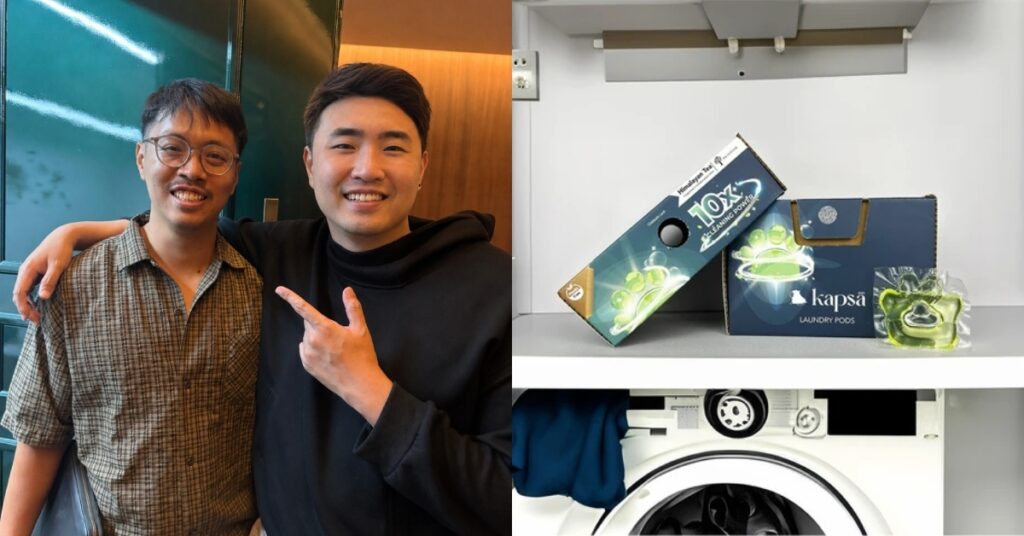
That brand became Kapsä: a capybara paw-shaped laundry pod that smells like a luxury fragrance, now stocked at supermarkets and with a significant online presence.

In under two years since launch, Kapsä has already crossed S$1 million in revenue in the first seven months of 2026.

We spoke to co-founders of Kapsä, Edison and Lincoln, both 33, to find out how a home fragrance brand became the launchpad for a laundry detergent brand, and what it actually takes to compete against laundry giants.

Turning a simple idea into a lucrative business

Kapsä founders Edison Lim and Lincoln Thong./ Image Credit: Kapsä

Home fragrance is, by nature, an occasional purchase. But laundry detergent isn’t. People wash clothes every few days regardless of the month, the mood, or whether Christmas is coming, and that predictability was what the founders wanted.

“We wanted to go into something a bit more recurring on an everyday basis,” Edison said. “There’s demand every day.”

Advertisement
pristine aroma home fragrance

kapsä laundry pod singaporepristine aroma home fragrance

kapsä laundry pod singapore
Cool Brands’ first brand, Pristine Aroma, launched in 2019, while Kapsä came in 2024./ Image Credit: Pristine Aroma/ Kapsä

The insight behind Kapsä was that the customer who cares enough about how their home smells to buy a premium reed diffuser is probably also the same person making laundry who cares about how their clothes smell too. 

As such, Pristine Aroma’s existing customer base was a marketing advantage that naturally formed the testing ground during the early days of Kapsä.

Eventually, Kapsä launched under Cool Brands Pte. Ltd. in early 2024, about a year after development began in 2023. 

Each pod is built around Pristine Aroma’s award-winning scents, marketed explicitly as a premium fragrance experience, coupled with powerful cleaning power.

Scent as the selling point

Most laundry brands compete on cleaning credentials. However, Kapsä leads with fragrance, and specifically with scents that don’t already exist in the category.

Advertisement

The first pod was formulated with Himalayan Tea, Pristine Aroma’s most famous signature scent, which customers describe as “smelling like ION Orchard.”

Kapsä also currently offers two more scents: Lush Freesia (inspired by English Pear & Freesia, reminiscent of Jo Malone), and Santal Noir (a woody, masculine scent inspired by Santal 33 by Le Labo Fragrances). Of the three, Lush Freesia has become the bestseller.

kapsä laundry pod singaporekapsä laundry pod singapore
Kapsä laundry pods come in three scents./ Image Credit: Kapsä

That said, Edison added that the Himalayan Tea scent is still very unique and novel to the laundry segment.

Santal Noir, on the other hand, offers a deeper, woody, masculine scent in the category of laundry detergents often dominated by floral and sweet profiles. 

“None of the other brands actually have such a woody kind of scent. Usually people go for floral, a bit more sweet, more girly kind of a scent,” Edison said. “We are more than just chasing trends, but filling the gap in the detergent scene.”

Advertisement

Edison positions Kapsä as more of a premium brand than budget ones, roughly comparable to Tide and Ariel.

The R&D grind behind every new scent

kapsä laundry pod singapore manufacturingkapsä laundry pod singapore manufacturing
Image Credit: Kapsä

Moving a scent from a diffuser bottle into a laundry pod isn’t as simple as dropping Pristine Aroma’s formula into detergent. The chemistry definitely has to be formulated differently.

The scent notes need to be adjusted so they’re stable and compatible with detergent—a process that took over a year for the first Kapsä product, but now it takes about six to nine months to develop each new scent.

The co-founders shared that R&D with its own suppliers and manufacturers is done in Singapore, Malaysia, and the US, with final manufacturing taking place in China. 

In response to customer feedback, the duo created their latest offering: Magic Beads, launched in late Jul 2026—scent booster pellets designed to be used alongside the pods for customers who want their clothes to smell more intensely. 

Advertisement

One of the most common pieces of feedback Kapsä received on Himalayan Tea was that the scent, while lovely, was subtle.  These scent boosters are designed to keep clothes smelling fresh for up to 24 weeks when stored in a wardrobe after washing.

Winning against big detergent brands, one subscriber at a time

kapsä laundry pod singaporekapsä laundry pod singapore
Kapsä is stocked at Cold Storage./ Image Credit: Kapsä

Competing with major laundry brands, which have decades of shelf presence, marketing budgets that dwarf any local brand’s revenue, and default consumer familiarity, is the kind of challenge that would give most founders hesitation, especially as a small brand. 

The duo doesn’t pretend it’s easy.

“It was definitely very difficult for us to try to acquire market share, to convince customers why they should use our products over Dynamo,” Lincoln said.

Kapsä’s answer is physical reach on supermarket shelves, combined with sustained subscription. 

Advertisement

The brand sells through its own website, on Shopee, and now through physical retail at Isetan, Giant and Cold Storage.

The co-founders acknowledged the challenges that come with stocking in supermarkets, where offline retail charges promotional and advertising fees that can run to S$10,000 a month, making profitability in that channel genuinely difficult.

That said, Edison and Lincoln are still keen on staying put in the supermarket space.

“For us to become a real household brand in the next three to five years, we really need to be on all the channels that we can,” Edison said. 

Advertisement

The subscription model, launched alongside the brand in 2024, is where the economics improve. Subscribers typically get a discount and the convenience of automatic replenishment, while Kapsä gets predictable demand and lower customer acquisition costs.

“Usually, people who subscribe to Kapsä, they don’t really drop off,” Edison said. “Once they try the product, once they love it, they don’t really switch back to other brands.”

Each box of 30 Kapsä pods costs S$15.90 at retail price.

4,000 boxes a month and counting

kapsä laundry pod singaporekapsä laundry pod singapore
Image Credit: Kapsä

The numbers reflect how quickly Kapsä has found its footing. The brand now moves more than 4,000 boxes a month, a scale that prompted the team to upgrade their Singapore warehouse from 1,600 to 3,500 sq ft in Jun. 

The team across both brands sits at around 12 people, kept deliberately lean as the founders focus on building systems over headcount, allowing Kapsä to scale effectively.

Advertisement

Kapsä crossed S$1 million in revenue for 2026 year-to-date as of Jul, a milestone achieved less than two and a half years after its launch.

On the other hand, Pristine Aroma’s revenue has also grown significantly beyond the S$1.6 million figure reported in earlier years, with the brand now selling in Malaysia, Indonesia, and the US.

Kapsä is set to follow the same international path.

Looking ahead, the Cool Brands roadmap goes beyond fragrance entirely. Edison and Lincoln plan to launch a new brand potentially unrelated to scent by mid-to-late 2027, extending the direct-to-consumer group model they’ve been building since 2019.

Advertisement

“Our long-term goal for Cool Brands is to become a successful and sustainable D2C group of consumer goods in the next 10 years,” Edison said. “We want to come with more brands in the future.”

Lincoln’s advice for anyone thinking about starting their own brand is to just be “1% better every day. And that will improve your systems, processes, and your skill sets substantially.”

  • Learn more about Kapsä here.
  • Learn more about Pristine Aroma here.
  • Read other articles we’ve written on Singaporean businesses here.

Featured Image Credit: Kapsä

Advertisement

Source link

Continue Reading
Click to comment

You must be logged in to post a comment Login

Leave a Reply

Tech

Pepsiman Sprints Into the Browser from Japan’s PlayStation Discs, Still Chasing That Can

Published

on

Pepsiman Recompiled Japan PlayStation Browser Play
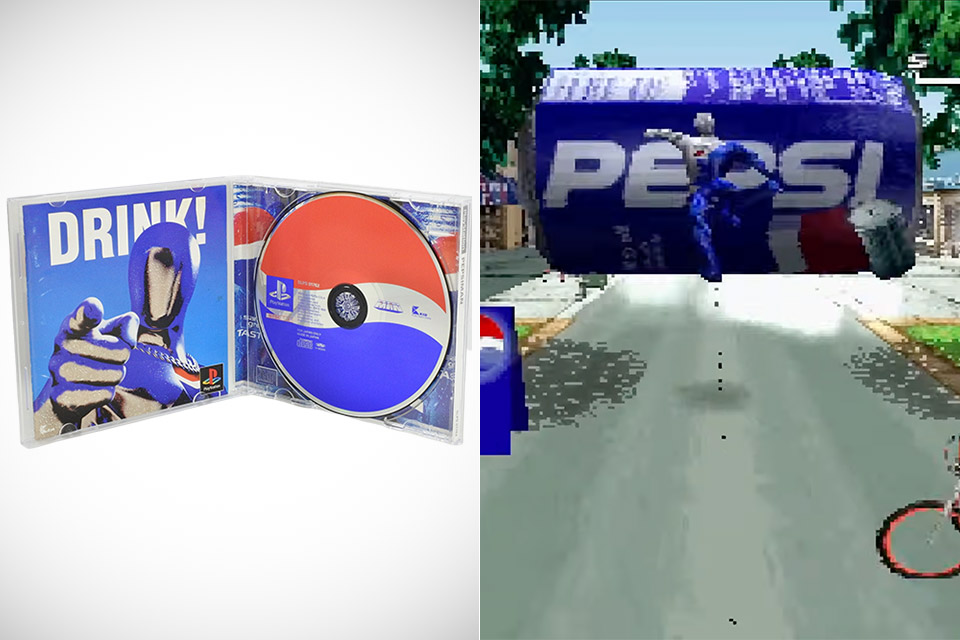
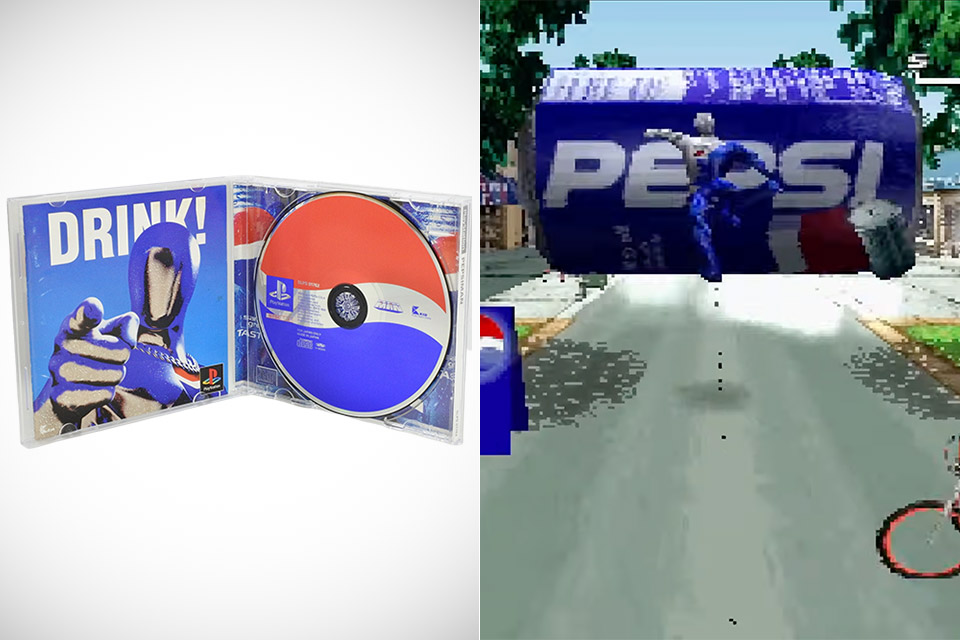
A silver-suited hero once limited to Japanese PlayStation discs now races across any modern screen you point him at. Pepsiman Recompiled takes the 1999 cult classic, turns its original code into something a browser can run directly, and lets anyone with a legal disc image jump back into the chase at a smooth 60 frames per second.


In March 1999, developer KID released Pepsiman exclusively in Japan. You play as the Pepsi mascot, physically running, sliding, and hopping your way through city streets and obstacle courses, grabbing cans and dodging trucks, roadwork, and public humiliation, all in order to reach the next vending machine. There are also live-action videos of Mike Butters drinking Pepsi to break up the action. Pepsiman never officially left Japan, but it amassed a sizable fan base thanks to imports, emulator enthusiasts, and speedrun crowds.


PlayStation®5 console – 1TB
  • PlayStation 5 Console – 1TB, includes wireless controller, 1TBSSD, Disc Drive, 2 Horizontal Stand Feet, HDMI cable, AC power cord, USB cable, printed…
  • 1TB of Storage, keep your favorite games ready and waiting for you to jump in and play
  • Ultra-High Speed SSD, maximize you play sessions with near instant load times for installed PS5 games

Kem0x (aka Kareem Olim) revived the old game with the PSXRecomp framework. Unlike straight-up emulators, his version recompiles the original PlayStation code into WebAssembly, allowing it to run directly in a compatible browser, eliminating the need to draw around an outdated platform. Users must bring their own CUE and BIN files, which are simply image files from a physical disc, but that’s it. It’s entirely done on your machine, with no server issues.

Advertisement

Click on the page, then select your disk images to reveal the silver runner. The default presentation is widescreen, but if you prefer a more traditional format, there is also a 4:3 alternative. Another good detail is that the browser-based version plays at 60fps, smoothing out the animation while maintaining the original timing, physics, and music. It all only works with regular gamepads. You can also remap the keyboard controls. Another cool feature is that memory card saves occur in real time, and you can even import or export them in raw format. Just for fun, they included a pause menu with level selectors, restart, and return to title choices, which the original did not have. As you continue through the stages, you will gain access to practice sessions distinct from the saves. All of this is wrapped up as a progressive web app, so once the files are cached, you may play them offline.

Chromium desktop browsers for macOS are now the most dependable alternative, although other browsers and mobile devices still have certain flaws. They still need to test several later-stage visual options and full campaign audio looping, but despite these constraints, the game is totally playable from beginning to end. To view the source code and release notes, visit the RepsiMan GitHub website. To play, simply go to pepsiman.ol.mr, provide your own disc image, respect the rights holders, and you’ll be set.
[Source]

Advertisement

Source link

Advertisement
Continue Reading

Tech

Paramount Merger Gets Further Delayed, And Things Could Get Expensive

Published

on

from the everything-is-going-great dept

Just as Larry Ellison and Paramount executives had worried, the state antitrust challenge to their $111 billion merger with Warner Brothers has resulted in significant delays that could prove terminal.

Two weeks ago California and eleven other states filed an antitrust lawsuit to block the merger, pointing out that the consolidation would undermine market competition, resulting in mass layoffs, higher consumer prices, and product quality hits as the merged company attempts to pay down a massive debt load. This isn’t hard to predict or prove given that every single merger that Warner Brothers has been involved with in the last quarter century has been a disastrous dud.

The judge overseeing the case granted a 14-day restraining order pausing the deal. But Paramount has now agreed to suspend the merger for far longer in the apparent belief that this could speed up the looming trial:

Paramount framed the agreement as a “significant win” that would help it close the deal. The company said the move would speed up the legal process by pushing the case to a trial sooner. It will also help avoid prolonged back-and-forth over some legal issues, like the merits of a court-ordered delay.

So as it stands, the Paramount merger will simply expire if they can’t win or dismantle the antitrust trial by June 4, 2027. That’s a problem for all sorts of reasons, the biggest being that the terms of the agreement involve Paramount being forced to pay a ticking fee of about $7 million per day (or $650 million per quarter) to investors starting in October until the deal closes (or doesn’t).

Advertisement

As mentioned previously, Larry Ellison and Oracle are also hugely over-leveraged on the AI bubble and data center investment; if that bubble pops during this window (which is broadly expected since nobody but Nvidia is making any money), that could heavily complicate his financial backing for the already very debt-heavy deal. At the same time, broadcast television isn’t magically getting more popular anytime soon.

And even if this deal does ultimately succeed, there’s been very little evidence that Paramount, much like the Trump administration that rubber-stamped the superunion, has any idea what they’re doing.

Filed Under: consolidation, hollywood, journalism, larry ellison, layoffs, media, mergers

Companies: paramount, warner bros.

Advertisement

Source link

Continue Reading

Tech

Beyerdynamic DT 275 PRO Uses Passive Isolation Instead of ANC for $149

Published

on

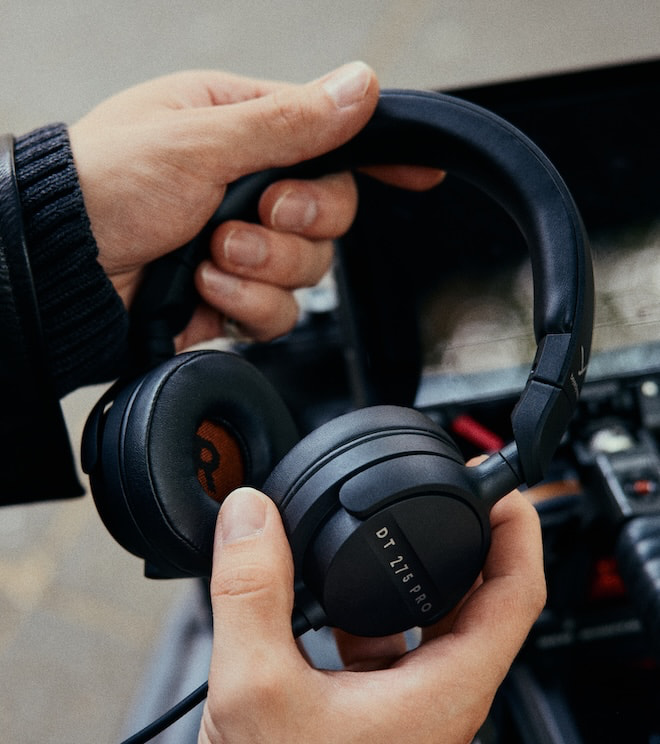
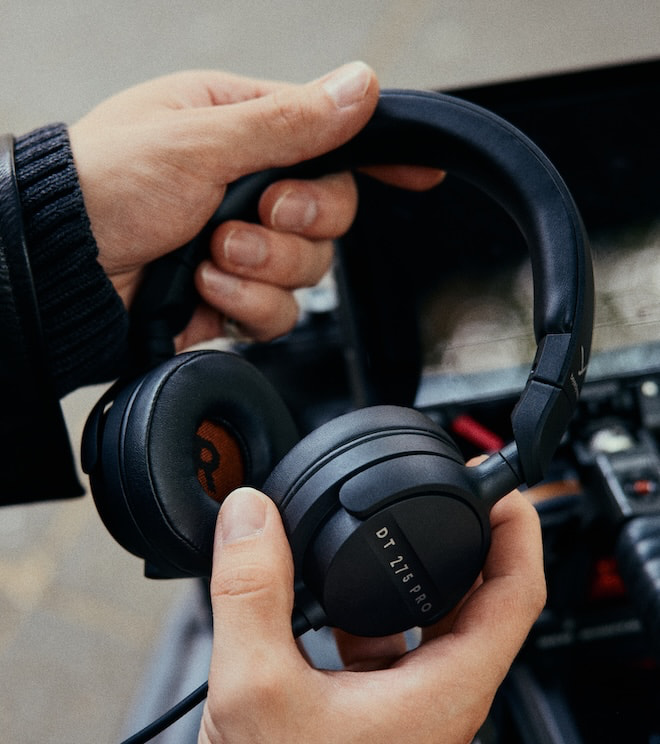
Trying to monitor a camera feed, cue the next track in a crowded booth or hear what is actually coming through the console is not the moment to discover that the ANC battery is dead or Bluetooth has decided to take the afternoon off. The Beyerdynamic DT 275 PRO is built around that problem, using a compact closed back on-ear design, 22dBA of passive isolation, a 195 gram chassis and a locking cable that can connect to either earcup. It sells for $149 and should be just as useful on location as it is later that night when I want to hear the horns, strings and vocals on Dusty in Memphis without the room joining the performance.

The DT 275 PRO is available now through Beyerdynamic’s U.S. website and authorized retailers. It joins the DT 270 PRO but serves a different purpose: the DT 270 PRO is an over-ear model for recording, podcasting and indoor studio work, while the DT 275 PRO trades some long-session comfort for greater isolation, faster handling and a smaller footprint. 

Built for Rooms That Have Abandoned Indoor Voices

Active noise cancellation works well on airplanes and commuter trains, but it can introduce processing, latency and another battery that inevitably dies during the part of the production nobody can repeat.

beyerdynamic-dt-275-pro-headphones-in-hand
Beyerdynamic DT 275 PRO

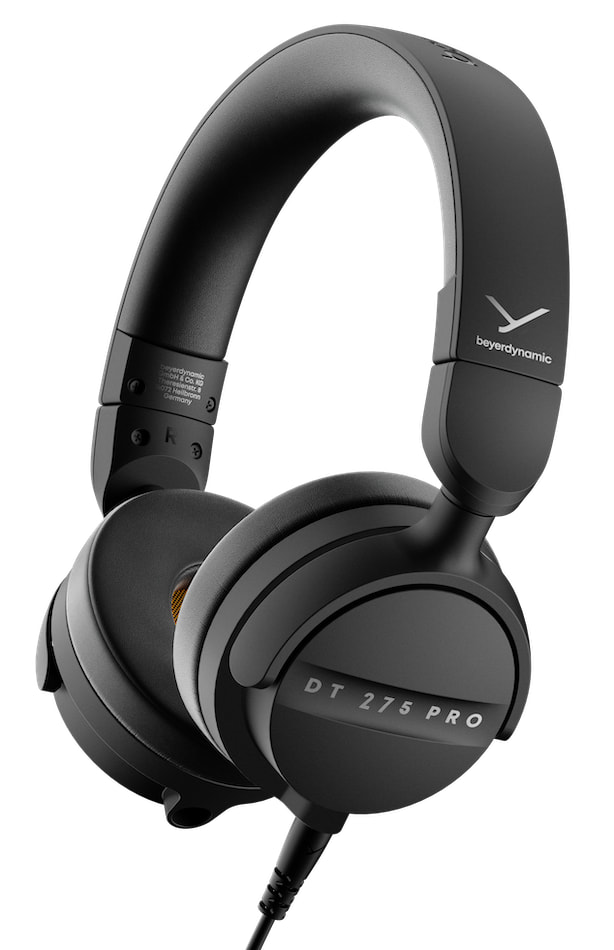
The DT 275 PRO takes the less fashionable approach of using closed earcups, leatherette pads and clamping pressure to reduce outside noise mechanically. Beyerdynamic specifies 22dBA of ambient-noise attenuation, which is the feature separating it from most compact studio headphones at this price. 

The sound is tuned for clear speech, controlled bass and reliable signal assessment rather than a dramatic consumer presentation. Beyerdynamic specifies a frequency response of 5Hz to 24kHz, 45-ohm impedance, 105dB SPL at 1mW and total harmonic distortion below 0.04 percent. 

Advertisement

The 45-ohm load should make the headphones practical with field recorders, cameras, audio interfaces, laptops and mobile devices without requiring a dedicated headphone amplifier. They can also produce substantial output, so protecting one’s hearing remains preferable to discovering the maximum level personally.

The Cable Goes Where You Need It

beyerdynamic-dt-275-pro-headphones-angle

The detachable 1.5-meter cable can connect to either the left or right earcup and uses a locking bayonet mechanism to prevent an accidental disconnection. Beyerdynamic says the decoupled design also reduces cable and handling noise when the headphones are used with cameras, recorders and portable audio bags. 

That sounds like a minor detail until a cable runs across the wrong side of a camera rig or escapes during a live take.

The earcups swivel for storage and single-ear monitoring, while the ear pads, headband pad and cable are replaceable. The connection cable is also compatible with Beyerdynamic’s DJ 300 PRO X and CLUB models. 

Replaceable wear components should be mandatory on professional headphones. Throwing away an otherwise functional pair because the ear pads have absorbed five years of sweat is not innovation.

Advertisement

Beyerdynamic DT 275 PRO Specifications

  • Design: Closed back, wired, on-ear
  • Driver type: Dynamic
  • Frequency response: 5Hz to 24kHz
  • Impedance: 45 ohms
  • Sensitivity: 105dB SPL at 1mW and 500Hz
  • Passive noise attenuation: 22dBA
  • Total harmonic distortion: Below 0.04 percent
  • Maximum short term power handling: 100mW
  • Cable: 1.5 meters, detachable and lockable
  • Cable connection: Left or right earcup
  • Connector: 3.5mm with 6.35mm adapter
  • Weight: 195 grams without cable
  • Replaceable parts: Ear pads, headband pad and cable

What Is Missing?

The DT 275 PRO does not include Bluetooth, ANC, a microphone or an inline remote. None belongs on a professional monitoring headphone built to avoid latency and electronic processing, but buyers looking for one pair to handle production work, commuting and phone calls should understand what is not included. 

Advertisement. Scroll to continue reading.

Unlike the DT 270 PRO, the product page does not list a USB-C audio adapter. The DT 275 PRO terminates in a conventional 3.5mm plug and includes a 6.35mm adapter, so owners of port-free smartphones and laptops will need a separate dongle. 

The larger concern is comfort. The DT 275 PRO is light at 195 grams, but its on-ear design uses a fairly firm clamp to achieve that 22dBA of passive isolation. That should help keep outside noise where it belongs, although the pressure may become noticeable during a long production session. Isolation and all-day comfort rarely arrive holding hands.

The Competition

The Sennheiser HD 25 is the most direct rival. It also costs approximately $150, uses a closed on-ear design and has remained a fixture in DJ booths and broadcast bags for decades. It is lighter and already has an enormous replacement-parts ecosystem, while the DT 275 PRO counters with its dual-side locking cable, newer design and published 22dBA attenuation rating. 

Advertisement
Sony MDR-7506 Professional Studio Headphones
Sony MDR-7506

The Sony MDR-7506 currently sells for $113 and remains one of the most widely used production headphones ever made. Its over-ear design may prove more comfortable, but the fixed coiled cable is considerably less convenient for mobile work and Sony does not position it around the same level of passive isolation. 

Audio-Technica’s ATH-M40x costs $109 and offers an over-ear fit, detachable cables and swiveling earcups. The ATH-M50x moves closer to the Beyerdynamic’s price at $159 and adds larger 45mm drivers and three supplied cables, but both occupy more room in a production bag. 

Beyerdynamic’s own DT 270 PRO remains the obvious alternative for podcasting, music production and longer indoor sessions. It uses velour over-ear pads and weighs almost exactly the same, but offers lower passive isolation and a less compact wearing style. 

Who Is It For?

The DT 275 PRO is intended for production crews, field recordists, broadcast engineers, livestream operators, front of house staff and DJs who need compact wired headphones with strong isolation and no wireless delay.

It should also appeal to commuters who value durability and passive isolation more than apps, firmware updates and hearing a synthetic voice announce that the battery is low.

Advertisement

Who Should Avoid It?

Home-studio users working in a quiet room will probably find the DT 270 PRO or DT 770 PRO X more comfortable over longer sessions.

Anyone who needs wireless connectivity, calls or active noise cancellation should also look elsewhere. The DT 275 PRO is a tool, not a lifestyle platform with a login screen.

beyerdynamic-dt-275-pro-headphones-lifestyle
Beyerdynamic DT 275 PRO

The Bottom Line

The Beyerdynamic DT 275 PRO fills a specific gap between traditional studio headphones and DJ models. Its combination of 22dBA passive isolation, low weight, swiveling earcups, replaceable parts and a cable that locks into either side makes sense for people who monitor audio in environments where the environment refuses to cooperate.

Beyerdynamic’s advantage is that it has designed the DT 275 PRO around modern mobile-production workflows rather than asking another 35-year-old headphone to keep learning new tricks.

Advertisement. Scroll to continue reading.
Advertisement

For more information: beyerdynamic.com

Source link

Continue Reading

Tech

The story of the CIA, the KGB, and the Xerox machine that caught fire

Published

on

The CIA has never confirmed or denied the following story.

The only evidence we have that it happened at all is a 1997 article in Popular Science Vol. 250, Issue 1, where journalist Dawn Stover spoke to the mastermind behind one of the best-kept secrets of the Cold War.

Source link

Continue Reading

Tech

Study says relying on AI can turn doubt into false confidence

Published

on

You’d think getting wrong advice would make you more cautious. New research says the opposite happens when that advice comes from AI. A study led by Valerio Capraro, a psychology professor at the University of Milan-Bicocca, found that incorrect AI advice made people less accurate, yet noticeably more confident in their answers (via IBM Think).

The study also found that people who received incorrect AI advice became far less willing to admit they didn’t know an answer, even when staying silent was an option, and they were rewarded for accuracy.

Why does wrong AI advice make people so sure of themselves?

Researchers asked participants six questions about obscure movie details, deliberately picking ones the AI model consistently answered incorrectly. This let them isolate what happens when people consult AI, regardless of whether its advice is actually good.

The results were striking. Without AI, participants declined to answer roughly 36 to 44% of the time across two experiments. With AI available, that dropped to just 3 to 6%. Accuracy fell too, from 27.5 percent correct when working alone to just 9.2 percent with AI involved.

Capraro suspects AI may lower the amount of confidence people need before committing to an answer, essentially shifting how they judge their own certainty. Oddly, this held true even when AI advice appeared automatically without being requested, suggesting the effect isn’t just about actively seeking help.

Advertisement

Does raising the stakes change anything?

Adding financial rewards and penalties made people somewhat more cautious and accurate, though the underlying pattern never fully disappeared. Capraro draws a clear distinction here. AI should augment human judgment, not replace it entirely.

He worries this effect extends to children too, since growing up with instant answers could prevent kids from experiencing doubt as part of learning. New reports suggest that the AI-hooked younger generation is sourcing chatbot help even for in-person talks. As Capraro puts it, doubt isn’t a failure of knowledge. It’s often where real knowledge actually begins.

Source link

Advertisement
Continue Reading

Tech

Free and inexpensive courses to upgrade your research skills

Published

on

If you are working or aim to work in the research and development field, then consider undertaking an online course to boost your skills.

Whether you are an industry veteran, a newbie, or somewhere in the middle, the industry you are in is likely changing as fast as you can keep up with. That is certainly true of the research and development sector, where innovation and transformation are par for the course. 

As a result, it is an absolute necessity that professionals, regardless of which stage of their career they are in, stay aware of the skills, techniques and processes making waves in the sector. If you want your career to evolve in step with the space itself, then make use of every educational opportunity that comes your way – starting with some free and inexpensive online courses. 

Coursera  

For students or professionals looking to better develop an understanding of research methodologies, Coursera, via the Queen Mary University of London, is running the Research Methodologies programme.

Advertisement

This flexible 20-hour course consists of four modules in which participants will study different research methodologies, different sampling approaches, and primary and secondary data collection approaches. Students will also look at the role of the internet in market research as well as non-comparative scaling techniques and the course will end with a discussion on different data collection approaches, observation, content analysis, narrative research, phenomenology and the collection of data using ethnography.

A similar course suited to those looking to develop foundational skills is the Coursera/University of London programme titled Understanding Research Methods. This flexible, six-hour course has four core modules and is particularly suited to those conducting research as part of their postgraduate studies or who are looking to build their knowledge base. No prior knowledge or experience in research is required.

Alison

Alison and NPTEL are running the Understanding Research Methods and Approaches programme which involves exploring qualitative research methods, fieldwork and literature reviews among other topics. The free online course offers a general introduction to understanding different research methodologies and various approaches. Students will learn the significance of linking the gap between theory and practice. The advanced level course takes around five to six hours, includes three modules and is CPD accredited.

If you want a more specific education, Alison and NPTEL have additional courses such as a beginner level Introduction to Biomedical Research programme, an Academic and Research Skills for Business Success course and a Research Skills for Healthcare programme.  

Advertisement

Oxford Home Study Centre

The Oxford Home Study Centre is running a free Research Skills training course designed to teach students how to conduct effective research and make efficient use of their time.

The course is flexible, takes around 20 hours to complete and comes with a certificate upon completion. This course delves into the fundamental elements and benefits of research capabilities and will focus on why research skills are important, tips and tricks for reading and note-taking techniques, and how to utilise Miller’s Law, which is a proposed memory retention rule that the average person can only keep seven (plus or minus two) items in their working memory at any given time.

It is ideal for an individual looking to boost the skills that empower research in the long-term, at a core level. 

Class Central

Class Central, via Yale University, is running a Fundamentals of Qualitative Research Methods programme.

Advertisement

The course, which is a Yale University programme accessed for free through YouTube, is a self-paced video course that takes under an hour and a half to finish. Students will learn the fundamentals of qualitative research methods, develop a qualitative research question and gather data using interviews and focus groups.  

Class Central, via various other edtech platforms, also offers research programmes such as the Understanding Clinical Research: Behind the Statistics module, Research Ethics and Plagiarism course, and Research Skills, Communication and Dissemination. 

Don’t miss out on the knowledge you need to succeed. Sign up for the Daily Brief, Silicon Republic’s digest of need-to-know sci-tech news.

Advertisement

Source link

Continue Reading

Tech

Ukraine turns 550-pound glide bombs into low-cost cruise missiles

Published

on


  • Ukraine approves indigenous turbojet-powered guided bombs for frontline combat operations
  • Domestic guided bombs now strike military objectives up to 200 kilometers away
  • Seven Ukrainian manufacturers now build guided bomb conversion systems domestically

Ukraine has officially approved several domestically built guided aerial bombs for combat use, including turbojet-powered versions capable of striking objectives up to 200 kilometers (125 miles) away.

Brig. Gen. Andrii Lebedenko, deputy commander-in-chief of the Armed Forces of Ukraine, said several of these designs have already seen use on the battlefield, while others remain in testing.

Source link

Advertisement
Continue Reading

Tech

Amazfit T-Rex Ultra 2 Review: Designed for adventure

Published

on

Verdict

The Amazfit T-Rex 2 Ultra is a well-stocked smartwatch for adventurers – you just need to be willing to handle its hulking watch frame.

  • Plenty of battery life

  • High-end watch features at a more affordable price

  • A useful LED flashlight

  • It’s a big watch to wear

  • Smartwatch ecosystem lags behind competition

  • GPS and heart rate tracking not best in class

Key Features

  • Trusted Reviews IconTrusted Reviews Icon

    Advertisement

    Review Price:
    £549

  • Built-in LED flashlight

    Advertisement

    Integrated white and green LED modes offer high visibility for nighttime outdoor activities.

  • Dual-band GPS tracking

    Advertisement

    Dual-band GPS technology delivers strong distance and pace tracking accuracy during outdoor workouts.

  • Long-lasting battery life

    Advertisement

    An 870mAh battery provides up to 30 days of typical use and up to 10 days with always-on display.

Introduction

The Amazfit T-Rex Ultra 2 is a smartwatch built for outdoor lovers who don’t want to spend the big bucks on a new Garmin Fenix 8, Garmin Instinct 3 or Apple Watch Ultra 3.

The Android and iOS-friendly outdoor smartwatch offers many of the same features you’ll find on those more premium options. That includes offline colour maps, turn-by-turn navigation, and sports modes aplenty, all packaged up in a watch design that’s built to operate in extreme environments.

Advertisement

When you’re not heading off for a multi-day hike, the Ultra 2 will let you pay your way, make calls over Bluetooth and let you load up music to keep you company on your off-road outings.

With the arrival of the Ultra, Zepp Health has now grown its T-Rex series to three watches. This sits at the top of that pile, but is it the one you should go for and is this one of the best outdoor smartwatches? I’ve been wearing it for a few weeks to find that out.

Advertisement

Design and screen

  • Now larger case size 
  • Larger AMOLED display
  • Comes in one colour

If we’re comparing the Ultra 2 to the last Ultra and the T-Rex 3 Pro, this is a considerably larger watch to live with. You now have a 51mm case that measures in at 14.3mm thick.

Amazfit T-Rex Ultra 2 on the wristAmazfit T-Rex Ultra 2 on the wrist
Image Credit (Trusted Reviews)

It’s inevitably going to get compared to Garmin’s 51mm Fenix 8 model, which is thinner, though opting for a titanium bezel and buttons helps to ensure it’s not super heavy to wear. At just shy of 90g, it actually sits at around the same weight as Garmin’s 51mm Fenix. You can find lighter, smaller and still rugged watches, including in Zepp Health’s own Amazfit line.

It’s a watch dominated by its titanium bezel that surrounds a now larger 1.5-inch, 480 x 480 resolution AMOLED touchscreen. That’s a screen that can achieve a maximum brightness of 3,000 nits. I did find that in some brighter outdoor light, it can still be challenging to view the screen at some angles. The screen visibility and overall quality are good, but I think you’ll find better screens on rival watches. 

Advertisement

Advertisement

Amazfit T-Rex Ultra 2 side-onAmazfit T-Rex Ultra 2 side-on
Image Credit (Trusted Reviews)

The strap attached to that big polymer case is unsurprisingly a pretty robust silicone one. At 26mm, it’s a sizable strap to whip on. The traditional watch clasp ensures it stays securely in place at all times, with a clippable design that makes it very easy to swap the strap out for a new one.

The visible screws are your indicator that Zepp Health has designed this watch to operate in extreme environments. Whether it’s the ability to handle recreational dives up to 45 metres or offer military-grade resistance to extreme heat and cold temperatures, this is a watch truly built for some serious rough and tumble.

Amazfit T-Rex Ultra 2 integrated torchAmazfit T-Rex Ultra 2 integrated torch
Image Credit (Trusted Reviews)

There is room on that case exterior for an LED flashlight, which has become an on-trend feature for outdoor watches. This one shines nice and bright, making it a worthy addition. There are both white and green LED light modes along with a boost mode, when you need a bump in visibility.

Performance and software

  • ZeppOS supports Android and iOS
  • Zepp Pay, App Store and free offline maps
  • Bluetooth calls supported

Advertisement

Zepp Health keeps the software all in-house. So the Ultra 2, like other Amazfit smartwatches, runs on ZeppOS, which is available for both Android and iOS users. The experience of using it across the two platforms is largely the same, bar a few missing features on either side. iPhone users can control their phone camera remotely, while Android users have the added ability to send quick replies to messages.

Amazfit T-Rex Ultra 2 weather appAmazfit T-Rex Ultra 2 weather app
Image Credit (Trusted Reviews)

The big addition from the first Ultra is the built-in microphone and speaker. This allows you to handle calls, hear turn-by-turn directions during navigation mode, and it also brings the voice memo feature into play. The speaker goes pretty loud, if not the clearest when using it for calls. 

It can also be used with Zepp Flow, which means you can speak to the watch to ask about your fitness stats, switch on the do not disturb mode or just set a timer. While it is not as sophisticated a voice assistant as Google’s Gemini or Apple’s Siri, it works well enough to give you an alternative way to interact with the watch.

Advertisement
Amazfit T-Rex Ultra 2 app selectionAmazfit T-Rex Ultra 2 app selection
Image Credit (Trusted Reviews)

In terms of core features like viewing notifications, using music controls and loading audio, making contactless payments, and generally getting around on the watch, everything works well enough. If you’re looking for a watch you can download apps and watch faces, you can do that here – just don’t expect a storefront that matches the likes of Google Play in Wear OS in terms of variety and the number of available apps and watch faces.

Advertisement

Amazfit companion appAmazfit companion app
Image Credit (Trusted Reviews)

ZeppOS still lags a little behind the likes of Garmin, Apple, and Wear OS watches when it comes to offering a polished smartwatch ecosystem. It doesn’t necessarily shortchange you in features; it just doesn’t quite match up to the competition.

Tracking and features

  • Over 180 sports modes
  • Works with Strava, Komoot and TrainingPeaks
  • Promises pre-loaded maps and automatic re-routing

Whether you run, swim, bike, stay indoors or love Hyrox-style workouts, the Ultra 2 pretty much has you covered. This is a watch that can also track your daily step counts, monitor sleep time or continuously track heart rate. Those are likely not the main reasons you’re going to be looking at it, though.

Amazfit T-Rex Ultra 2 watch faceAmazfit T-Rex Ultra 2 watch face
Image Credit (Trusted Reviews)

You’re probably going to be sizing it up because of its abilities to accurately track your movements outside, offer maps you can view and follow on the watch and be able to quickly know when you’re about to hit higher-altitude terrain.

Advertisement

I’ll start with tracking accuracy: you get dual-band GPS, giving you the latest GPS technology available in smartwatches. Though as I’ve found, not all dual-band GPS watches deliver the same results. 

I’d say the T-Rex Ultra 2 delivers very strong GPS accuracy. The likes of Garmin, Apple and Suunto just shade it overall for the best showcase of dual-band, but for distance tracking and metrics like average pace, I was happy with what the Ultra 2 served up.

Advertisement
Maps on the Amazfit T-Rex Ultra 2 Maps on the Amazfit T-Rex Ultra 2
Image Credit (Trusted Reviews)

For mapping and navigation support, there is the promise of preloaded maps, but I ended up having to sync them over from the Zepp phone app as I’ve done with other map-supporting Amazfit smartwatches. 

Depending on how big the location or region you want to sync is, it can take anywhere from 20-30 minutes to transfer maps to the watch. Even with the option of doing that over Wi-Fi, I found things a bit slow going.

Amazfit T-Rex Ultra 2 side-onAmazfit T-Rex Ultra 2 side-on
Image Credit (Trusted Reviews)

Advertisement

When the maps are loaded, you can use a mixture of the touchscreen and physical buttons to zoom and move around maps, pick from two different map viewing styles and make use of the onboard navigation features. 

You can upload a route to follow, explore nearby spots like coffee shops and create routes directly on the watch. Maps are nicely detailed and easy to view, and the navigation features work well to steer you in the right direction if you veer off course.

If you’re looking for a more traditional sports watch experience, the Ultra 2 can give you that as well. I’ve used it for a range of indoor workouts including pool swims and the tracking in general has been very good. 

Advertisement
Amazfit T-Rex Ultra 2 HR sensor close-upAmazfit T-Rex Ultra 2 HR sensor close-up
Image Credit (Trusted Reviews)

Heart rate tracking accuracy is a mixed bag – though I do typically find this is the case with bigger watches. Given the size of the Ultra 2, I do think that contributes to some of the inaccurate readings I’ve seen during more high-intensity workouts. You can pair external heart rate monitors over Bluetooth, as well as various cycling sensors, if you want a more accurate read on your data. 

The training features and training insights available are a work in progress for Zepp Health. You can better understand your training volume, see recommended recovery times, and set up interval training sessions, with the watch capable of automatically recognising a range of strength training movements. While these features are well-built and the insights do feel mostly reliable, the presentation needs a bit of work. 

Advertisement

Amazfit T-Rex Ultra 2 companion appAmazfit T-Rex Ultra 2 companion app
Image Credit (Trusted Reviews)

It’s good to see that you can link it to the likes of Strava, Runkeeper, Apple Health and Google Fit, which means you can pull in workout and training data from other sources if you’re not just a one-device person.

  • Up to 30 days battery life
  • Up to 10 days with always-on display mode
  • 50-177 hours GPS battery life

The T-Rex Ultra 2 is built to be on your wrist for big adventures, which means it needs to deliver big battery life. 

There’s an 870mAh capacity battery inside of its hulking 51mm frame that can max out to a month with what Zepp Health deems typical use. That’s basically when you’re not regularly using GPS, the flashlight or using the most accurate continuous health monitoring support. 

Amazfit T-Rex Ultra 2 exercise modesAmazfit T-Rex Ultra 2 exercise modes
Image Credit (Trusted Reviews)

Advertisement

When you start to add some of those features into the mix, those numbers drop. That said, it’s still designed to be a watch that can last over a week – even with the screen on at all times.

Advertisement

I found the battery life in general to be very good. On some heavier usage days, the battery drop was around 10%. Overnight, the drop can be as little as 2%. I never felt there was a noticeable battery drain. When you keep the screen on at all times, you can get up to 10 days of battery, depending on whether you’re using those more power-hungry features.

Amazfit T-Rex Ultra 2 side-on, on the wristAmazfit T-Rex Ultra 2 side-on, on the wrist
Image Credit (Trusted Reviews)

When you’re using the GPS, battery numbers range from 50 hours with its most accurate GPS mode to up to 177 hours with the GPS max battery life mode. In most cases, you’ll have to sacrifice the most accurate GPS tracking; I found that an hour of tracking in the most accurate GPS mode dropped the battery by around 5%. That doesn’t equate to the 50 hours promised.

If you compare those GPS battery numbers to the pricier 51mm Fenix 8 Pro, Garmin’s watch can go anywhere from 21 hours to 24 days. So it’s not quite the mammoth numbers promised by the watch it’s clearly trying to emulate.

Advertisement

Should you buy it?

Advertisement

You want an outdoor-friendly smartwatch that’s cheaper than the competition

While an expensive smartwatch, the T-Rex 2 Ultra does undercut the competition while offering a solid all-round performance.

Advertisement

You want the best-value Amazfit outdoor smartwatch

The Amazfit T-Rex 3 Pro is smaller and offers a lot of the same features as the T-Rex 2 Ultra for considerably less money.

Advertisement

Final Thoughts

If the plan for the Amazfit was to offer a good, cut-price alternative to Garmin’s largest Fenix 8 model and similarly priced Garmin Instinct 3, then I think the T-Rex Ultra 2 mostly achieves that. 

It’s got a rugged design, a bucketload of outdoor features and can deliver the kind of battery life that means it can last for weeks. The problem is that the T-Rex 3 Pro exists and that’s not far off offering the same qualities for less money. 

Really, the Pro model feels like the smarter buy unless you really value a bigger display, a bit more battery and that pretty handy flashlight.

Advertisement

How We Test

We thoroughly test every smartwatch we review. We use industry-standard testing to compare features properly, and we use the watch as our main device over the review period. We’ll always tell you what we find and we never, ever, accept money to review a product.

  • Worn as our main smartwatch during the testing period
  • Health data compared against other wearables

FAQs

What are the main differences between the T-Rex Ultra 2 and the T-Rex Pro 3?

The T-Rex Ultra 2 includes a larger 51mm case, more battery life, a built-in flashlight, and more onboard storage than the T-Rex Pro 3.

Advertisement

Full Specs

  Amazfit T-Rex Ultra 2 Review
Manufacturer Amazfit
Screen Size 1.5 inches
IP rating IP68
Waterproof 10ATM
Battery 870 mAh
Size (Dimensions) 51 x 14.3 x 51 MM
Weight 89.2 G
Operating System ZeppOS
Release Date 2026
First Reviewed Date 28/07/2026
GPS Yes
UK RRP £549
USA RRP $549

Source link

Continue Reading

Tech

John Ternus prepares to lead Apple with no major reset

Published

on

Apple is presenting John Ternus as the steady continuation of Tim Cook‘s leadership, with the incoming CEO praising the company’s momentum while declining to reveal how he intends to reshape it.

Cook and Ternus appeared together July 27 at the Los Angeles premiere of the Apple TV series Ted Lasso, giving Apple an unusually public setting to present its approaching leadership handoff.

The event was Cook’s final Apple TV premiere as CEO and Ternus’ first since Apple named him as Cook’s successor. Both executives arrived in navy suits, open-collar white shirts and “Believe” pins, reinforcing the image of continuity.

Cook offered an emphatic endorsement of the executive who will replace him on September 1, 2026.

Advertisement

Cook called Ternus “the perfect person for this role.”. Ternus described the promotion as an extraordinary opportunity after 25 years at Apple.

“It’s amazing,” he said. “I’ve been at Apple for 25 years, I love Apple, and to have this opportunity is beyond words.”

Ternus isn’t showing his hand

Ternus offered few details when asked how he might change Apple TV after becoming CEO.

“I am just so excited about the momentum we have,” Ternus said. “There’s so much great content on Apple TV, and now is just the perfect time for us to keep the momentum up, keep bringing in incredible storytellers and creative folks to keep making it better.”

Advertisement

Asked whether he had begun discussing his own plans for Apple TV with services chief Eddy Cue, Ternus said, “I think it’s pretty amazing right now.”

He declined to discuss whether Apple should release more films in theaters, bringing his answer back to the Ted Lasso premiere instead. When asked what he planned to do first on September 1, Ternus was equally guarded.

“You have to wait and see,” he said.

The answers don’t reveal whether Ternus plans substantial changes to Apple TV. They do show that Apple isn’t using the transition to promise an immediate strategic reset.

Advertisement

Apple is selling continuity, not reinvention

Apple announced the succession plan on April 20, 2026. Ternus will take control of Apple’s daily operations, while Cook will become executive chairman and assist with certain matters, including engagement with policymakers around the world.

Two men in dark suits stand smiling on a red carpet beside a giant soccer ball, with a backdrop featuring the Ted Lasso logo and Apple TV brandingThe cast and Apple executives attend the Ted Lasso Season 4 premiere at the Academy Museum of Motion Pictures in Los Angeles on July 27, 2026. Image credit: Getty Images

Cook said at the premiere that the transition had gone exceptionally well for Apple’s employees and investors.

“It’s over the top great,” Cook said. “John is the perfect person for this role, and the whole thing has just been great.”

Cook previously told employees that he selected the timing because Apple had a strong business, an ambitious product roadmap and a successor ready to take charge. He also said he planned to remain executive chairman for a long time and serve as a sounding board for Ternus.

The arrangement puts Ternus in charge while keeping Cook involved as an adviser and executive chairman. Their appearance at the premiere reinforced Apple’s message that the transition is about continuity rather than an urgent change in direction.

Advertisement

Ternus isn’t an outsider hired to overturn Cook’s strategy. He joined Apple in 2001 and became senior vice president of Hardware Engineering in 2021 after working on products including the Mac, iPad and iPhone.

He also became the executive sponsor for Apple’s design organization at the end of 2025, giving him a wider role across hardware and software design before Apple announced his promotion. Ternus later told employees that Apple would continue focusing on design because it remained central to the company’s work.

Those responsibilities could influence where Ternus places his attention as CEO, but they don’t point to an immediate break with Cook. Apple’s products and strategies develop over several years, so releases during the opening stretch of Ternus’ tenure will largely reflect work completed before he took charge.

No individual executive can quickly redirect a company with Apple’s size, organizational structure and long development cycles.

Advertisement

Ternus may eventually put a distinct mark on Apple, particularly through the design and hardware organizations he already knows. His first public appearance beside Cook as the incoming CEO instead showed that Apple wants the transition to look steady, familiar and deliberately uneventful.

Source link

Advertisement
Continue Reading

Tech

AI is storage’s biggest opportunity – and biggest threat

Published

on


An AI revolution is sweeping through the IT storage world, providing a massively beneficial environment requiring more data to be stored and delivered to AI models and agents, more data to be protected, more data access governance and much better storage operating environments. The downside is that AI can run amok, with data mishaps and deliberate agent-enhanced attacks. We are using AI to make things better and need AI to prevent AI itself from making things worse. Forty-four months ago, when ChatGPT was released, the storage world began an irreversible migration into the AI era. The technology developments needed to provide fast data access to the favorite AI processor, the GPU, revolutionized the NAND and SSD suppliers, the flash array hardware and software vendors and the HPC/supercomputing world. The old and relatively steady, pre-ChatGPT era Dell, HPE, and NetApp-dominated enterprise storage array business met a set of new vendors growing fast, coming from the all-flash array and HPC worlds. Vendors such as DDN, Pure Storage, VAST Data, and WEKA grew rapidly as parallel data access became a key software technology, alongside disaggregated storage array designs, increased use of unstructured data, the rapid growth of analytics, and the emergence of AI-focused data lakes such as Databricks and Snowflake. A whole new public cloud sector emerged: the GPU-as-a-Service neoclouds, such as CoreWeave and Lambda. AI training dominated the early AI storage days but is now being overtaken by AI inference; production AI, with enterprises deploying AI factories to build, tune, deploy, and run their own and third-party AI agents. Model Context Protocol (MCP) and graph technology enable digital employees to act and reason, access and change data, both structured and unstructured. They can make mistakes, meaning that their activities have to be recorded so that they can be reversed if they take a wrong track. These digital employees have to be governed with Agent Identity Access Management. Stepping back for a moment, we can see storage and AI meet in five places: Storage providing data for AI Protecting AI data and actions Storage cyber-resilience extended to govern AI data access Storage using AI in its own operations Storage being protected from AI-driven attacks. Data for AI The dominant GPU vendor, Nvidia, has eagerly supported storage delivery technologies to keep its GPUs running and not being IO-bound. Feeding them data from parallel file systems using disk drive arrays was not good enough. The disks were replaced by SSDs, with NVMe and PCIe interconnects replacing the disk drive era’s SAS and SATA protocols. The transfer of data from a storage array’s x86 controller and its DRAM to the GPU server’s CPU+DRAM subsystem and then to the GPU’s capacity-limited high-bandwidth memory (HBM) was too slow. GPUDirect cut out the storage array controller and its memory from the data flow, with RDMA access from the SSDs. This was applied to files first and then to objects with S3 over RDMA-type technologies. Cloudian, MinIO and Scality have been active here. KV caching schemes have been set up to logically extend a GPU’s HBM to SSDs, reduce HBM data load waits and avoid token recomputation. Nvidia has partnered with the main enterprise storage array vendors to make this happen. Disaggregated storage array (DASE) technology, pioneered by VAST Data, has been adopted by Dell, Everpure, HPE and NetApp. Monolithic, high-end storage arrays from Hitachi Vantara, IBM, and Lenovo-acquired Infinidat have not adopted DASE, nor GPUDirect and not KV caching. Their architecture precludes them from joining in and they are becoming the storage equivalent of mainframes, a left-behind but still necessary niche. AI models process tokens, which are turned into vector embedding data that needs storing and searching. Dedicated vector database suppliers have sprung up, such as Pinecone, Qdrant, Weaviate, and Zilliz, while multi-model OLAP and OLTP databases have added vector support, SingleStore being an example. AI data pipeline technologies are being developed to enable an organization’s entire data estate to be used as an AI data source, but without copying it to a single repository. Apache Iceberg is being used to give data lakes access to external storage and logically bring it into the data lake’s namespace. The monolithic arrays are, of course, data sources for AI pipelines and will contribute. Data management suppliers doubled down on initiatives to map organizations’ data and make it available, via classification, selection, filtering and metadata access so as to protect privileged data, reduce bulk data movements, and accelerate targeted data movement; think Arcitecta, Datadobi, Hammerspace and Komprise. An advantage of DASE array architecture is that storage is decoupled from compute, and the compute can be scaled up to run AI technologies directly on the array. This means that array vendors’ software stacks can be extended upwards into AI data pipelines. They can have the capability to provide services for AI agents and become, in effect, AI operating systems. Indeed VAST Data explicitly calls its extended SW stack its AIOS. Protecting AI data and actions Backup and cyber-resilience vendors, such as Cohesity, Commvault, Druva, Rubrik, and Veeam, have recognized that their backups represent a great data source for AI models and agents. They developed internal AI agents, such as Cohesity’s Gaia, its Gen AI search assistant, to build on this idea. The backup vendors see that their backups contain a temporal record of data changes but they, the changes, have been made by different entities in an organization’s IT estate and are not correlated. AI agents can monitor the backups and find links between events that indicate an existing or developing cyber attack. They can identify the start of an attack, the affected data, the last known good copy of that data, and restore it, helping with cyber-attack response and recovery. Cohesity, Rubrik, and others are promoting cyber-attack simulations where they do this with customer execs and even board members to show them how a cyber-attack needs a cross-business organization response to be effective. Their ability to feed AI data pipelines is growing. AI can be used to search for data relevant to an upstream enquiry, detect and filter out or mask PII data, and then move it to the requesting target. Veeam is going further and starting to combine production data with its backup data for AI purposes. AI cyber resilience The main backup vendors have all become cyber-resilience suppliers and provide some form of identity access management (IAM) plus related data access monitoring. IAM has been a human-centered activity but is rapidly embracing AI agent data and resource access as well. Consider an AI agent to be a digital employee and the need for agent-focused IAM becomes immediately obvious. Then realize that your digital employees operate inside your IT systems and not outside. Unlike human employees, they operate inside IT systems rather than sitting at a keyboard typing commands or clicking GUI buttons. It gets worse. As well as operating at speeds much, much faster than human employees, organizations will likely have thousands, even tens of thousands of, agents, so the likelihood of accidental data mishaps will be many times higher, and the mishap can take place in seconds. The only way to provide agentic IAM would appear to be to use agents. Cohesity, Druva, HYCU, Rubrik and Veeam are active in this space; using AI agents to provide governance for AI agents. We are also seeing the rise of agent activity recording, with storage of temporary files, so that misplaced agent activity, either accidental or deliberate, can be identified and fixed. This is a fast-developing field and the risks and dangers are still being identified. AI enhancing storage internal operations We have seen storage array vendors using machine learning to monitor array telemetry and identify faults for some time. HPE-acquired Nimble was one of the first vendors to do this and it is now commonplace. Modern AI can do more. Storage and data protection admin can be highly complex. One example is a Veeam upgrade issue. An obvious use of AI chatbots is to have them be the interface between an administrator, using natural language, and the data protection software. The chatbot, or agent, is trained on the data protection software’s features and telemetry and can function as a highly-skilled diagnostic engineer helping admin staff. This, we think, will spread like wildfire, as it will effectively up-skill admin staff. They can operate at a higher level, diagnosing data protection gaps, adding new applications to be protected or applications to be given data access, without having to go down into the weeds and set up each individual action according to policies in a manual. In effect, admin staff can “talk” to their data or arrays, manage a fleet of arrays, institute new policies, optimize operations to balance performance, cost and electricity usage more effectively by using AI. We are going to see AI user interfaces being developed, complementing the existing CLIs and GUIs. The big issue AI agents are intangible, invisible and make decisions at microsecond speeds. We human operators are tangible, visible and make decisions slowly. It’s easy for computers to monitor us but it’s darn near impossible for us to monitor agents. We will have to use agents to monitor agents, and that means we have to trust our monitoring agents, really trust them. They have to be immutable, immune to having their identities stolen, and capable of detecting and stopping rogue agents in their tracks. Imagine a North Korea cyber-hacking group developing their own swarm of attack agents. We need to be ready for this. The wolves will be coming. ®

Source link

Continue Reading

Trending

Copyright © 2025