
Business
Nuclear submarine investment will protect Britain and boost jobs, PM says


The Dreadnought-class submarines will replace the UK’s four Vanguard-class vessels that have been in operation since 1992, carrying Trident missiles to provide a nuclear deterrent.
Those Vanguard submarines are due to be retired in the 2030s, with the Dreadnoughts entering service at the same time.
The project has taken 20 years to get to this stage and was first announced in 2006 by the then Labour Prime Minister, Tony Blair. A decade later, in 2016, MPs formally approved building the new submarines.
Thursday’s announcement of £8.4bn marks the start of what has been called the fourth phase of the project.
The spending was already planned, and was included in the Defence Investment Plan, published in the final days of Sir Keir Starmer’s government.
The plan set out £63.6bn over the next four years for what is called the Defence Nuclear Enterprise.
The bulk of the money (£47bn) will go on keeping the nuclear submarines in operation, continuing with the Dreadnoughts, starting work on what might replace them in 30 years’ time, and constructing several other new submarines and upgrading the UK’s naval docks and manufacturing facilities.
The prime minister will use his visit to Barrow-in-Furness to stress how defence spending can have economic benefits for the country.
“The submarines produced in Barrow will protect Britain for decades to come, and the 47,000 jobs and apprenticeships will change lives both in this town and in dozens of places like it,” he said prior to his visit.
“British money, spent on British workers, British firms and British skills, in the places that were written off for 40 years.”
The government says the spending on the UK’s nuclear defence currently supports around 47,000 British jobs – and is forecast to rise to 65,000 by 2030, including 22,000 apprenticeships by 2035.
Since becoming prime minister, Burnham has said he wants to reduce the number of young people not in employment, education or training and has announced funding to help those starting apprenticeships.
In a further step, Burnham has said the public procurement process, used to decide how to spend taxpayer cash, will favour companies offering 45-day work placements.
Speaking to the Jimmy’s Jobs of the Future podcast,, external he said there would be “more social value weighting in public contracts”, with a particular focus on firms offering such placements.
He said the move had been inspired by his time as Greater Manchester mayor, when he oversaw a rise in the number of 45-day placements offered by private firms.
But the announcement offered little detail of the extent of the changes, how they would be implemented and how many firms he expected to roll out the placements as a result.
Liberal Democrat defence spokesperson James MacCleary called for the use of defence bonds to “raise dedicated funding to rebuild capabilities across the whole of the armed forces”.
For Reform UK, Danny Kruger dismissed Burnham’s announcement as a “rehashed spending plan” that did “nothing to address the crisis in the UK’s nuclear programme”.
“If the Prime Minister actually cared about keeping Britain safe and ensuring our Armed Forces can stand alongside our allies, he would commit to a significant increase in spending and a total overhaul of both procurement and the nuclear enterprise,” Kruger said.
Green Party Westminster leader Ellie Chowns questioned the decision to spend billions of pounds on “weapons that must never be used”.
“Ministers should not pretend that the best way to create employment is by funnelling ever-increasing sums into the nuclear weapons programme,” she said.


Boss Energy managing director Matthew Dusci says despite a challenging year, he is confident about the company’s pathway forward.
Business
Xiaomi Shares Soar Nearly 9% as Investors Get Set for Thursday Debut of Its New N90 and N70 SUV Cars
Shares of Xiaomi jumped 8.95% on Wednesday to close at 31.88 Hong Kong dollars, adding 2.62 Hong Kong dollars, as investors positioned ahead of the Chinese technology company’s launch event for two new sport utility vehicle models scheduled for Thursday.
The rally builds on gains from earlier in the week, with Xiaomi shares having already climbed as much as 7.7% on Monday to reach their highest level since June 3, according to trading data. The company confirmed that its Pengcheng launch event will take place Thursday, featuring the debut of two new SUV models, the N90 and N70, marking Xiaomi’s latest push to expand its rapidly growing electric vehicle business beyond its origins as a smartphone and consumer electronics maker.
Xiaomi entered the automotive market relatively recently, launching its first vehicle, the SU7 sedan, roughly two years ago after building its business for more than a decade primarily around smartphones, household appliances and other smart consumer devices. Since then, the company has moved aggressively to expand its vehicle lineup, with the upcoming N90 and N70 SUVs representing its latest step toward becoming a more diversified automaker alongside established Chinese electric vehicle players.
Xiaomi’s push into the SUV segment follows months of steady delivery growth for the company’s existing vehicle lineup. The company reported its third consecutive month of surpassing 30,000 monthly vehicle deliveries in June, with cumulative shipments from January through June totaling more than 180,000 units, according to data cited by Citi. That figure represented approximately 33% of Xiaomi’s full-year 2026 delivery target of 550,000 vehicles, leaving the company on a pace that analysts have described as broadly consistent with meeting its annual goal, particularly with additional models like the N90 and N70 set to expand its addressable market.
Citi analysts have suggested that Xiaomi’s stock could see further gains in the weeks ahead tied specifically to the rollout of its new SUV models, including a previously announced luxury SUV called the YU9, which the bank said could support a rebound in shares following its expected launch. Analysts have also pointed to broader dynamics within China’s memory chip sector as a potential additional tailwind for Xiaomi shares, given the company’s investment ties to the domestic chip industry.
That connection was highlighted earlier this week when CXMT, a Chinese memory chip manufacturer backed in part by Xiaomi, made its trading debut and saw its shares soar more than 500% on the first day of trading, instantly establishing the company as the fourth-largest global producer of dynamic random access memory chips by market position. The blockbuster debut for CXMT appeared to provide an additional boost to sentiment around Xiaomi more broadly, given the strategic relationship between the two companies.
Xiaomi’s broader business results have shown substantial growth over the past year even as the stock’s performance has been volatile. The company’s full-year 2025 results showed earnings per share of 1.62 Chinese yuan, up from 0.95 yuan in the prior year, while revenue climbed 25% to 457.3 billion yuan and net income rose 76% to 41.6 billion yuan, pushing the company’s profit margin up to 9.1% from 6.5% a year earlier.
Even so, some analysts have grown more cautious on the company’s near-term earnings trajectory in recent weeks. Consensus forecasts for Xiaomi’s fiscal 2026 earnings per share have been revised downward, with the current outlook calling for 1.13 yuan per share, down from an earlier estimate of 1.56 yuan, while the 2026 revenue forecast has been trimmed to approximately 501.1 billion yuan from a prior estimate of 544.6 billion yuan. Net income for the coming year is now forecast to shrink 29%, a notable divergence from the roughly 32% growth rate currently projected for the broader technology industry in Hong Kong. Analyst consensus price targets have also moved lower in recent weeks, dropping to 44.67 Hong Kong dollars from a previous target of 47.84 Hong Kong dollars.
Despite those more cautious revisions, Xiaomi’s stock has still delivered strong returns to shareholders over a longer time horizon, with total returns of approximately 128% over the past three years, according to recent analyst compilations, even as the shares have experienced significant volatility along the way, including a period earlier this year when the stock was down more than 34% on a year-to-date basis before staging a substantial recovery.
Wednesday’s gains for Xiaomi came alongside broader strength across Hong Kong’s technology sector, with the Hang Seng Index opening higher and the Hang Seng Tech Index climbing more than 1% at the start of the session. Other major Chinese technology names also advanced, including Tencent, Alibaba, Meituan and JD.com, reflecting a generally positive tone across Hong Kong-listed technology stocks even as investors continued to monitor broader volatility in global semiconductor markets tied to concerns about artificial intelligence infrastructure spending.
Investors are expected to closely watch Thursday’s Pengcheng event for further details on pricing, specifications and expected delivery timelines for the N90 and N70 models, which will offer the clearest signal yet of how aggressively Xiaomi intends to compete against established rivals in China’s crowded and rapidly evolving electric vehicle market.
Check out what’s clicking on FoxBusiness.com.
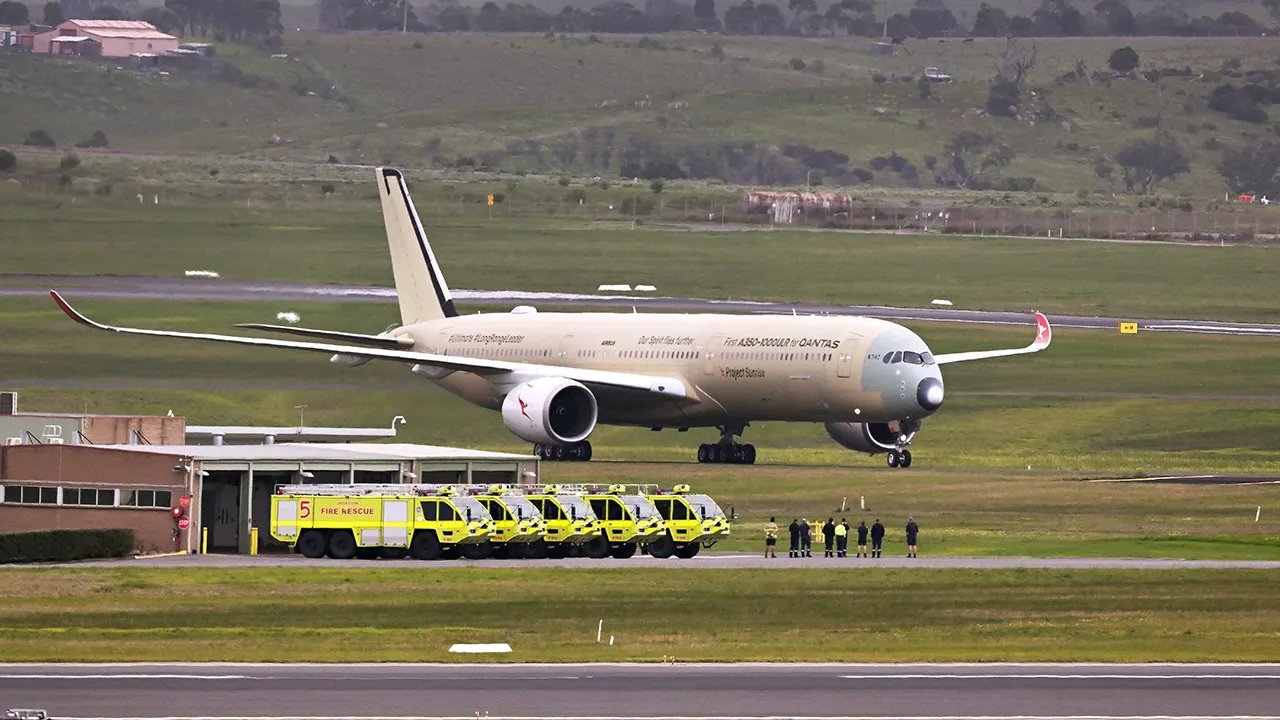
Airbus completed a test flight lasting more than 24 hours, a key step toward Qantas’ planned nonstop service linking Australia and Europe.
The aircraft – a specially adapted A350-1000ULR – flew 14,338 miles from Melbourne, Australia, to Toulouse, France, in 24 hours and 24 minutes, according to Flightradar24 data.
The flight was a major test for Qantas’ Project Sunrise, launched in 2017 to create the world’s longest nonstop commercial routes.
FAA SCALES BACK AMERICAN AIRLINES NATIONWIDE GROUND STOP AFTER SYSTEMWIDE IT OUTAGE
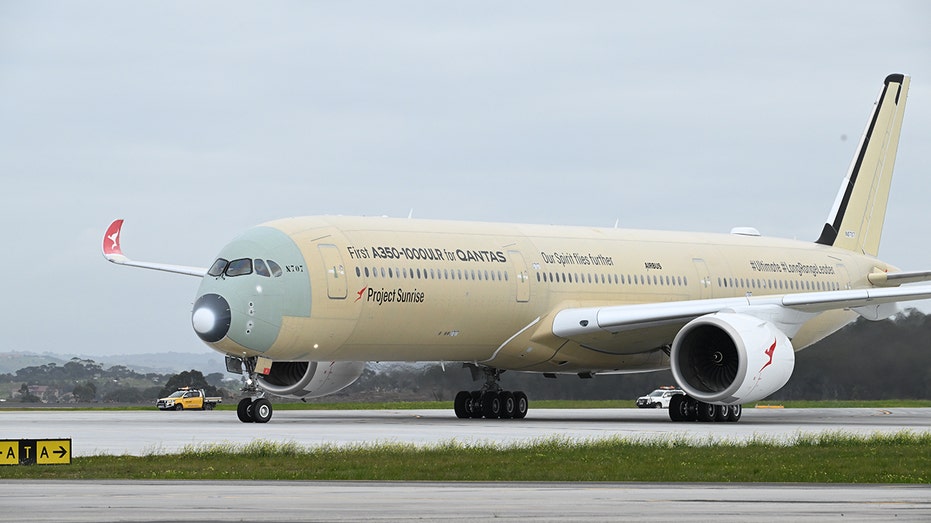
An Airbus A350-1000ULR lands at Melbourne Airport on July 24, 2026, after completing a 19-hour, 12-minute flight from Toulouse, France. The aircraft is being tested for Qantas’ Project Sunrise. (James D. Morgan/Getty Images)
Airbus has been testing the aircraft as part of a two-month campaign that began in June.
The journey surpassed a 2005 Boeing flight, when a 777-200LR Worldliner traveled 13,422 miles from Hong Kong to London in 22 hours and 42 minutes.
More than 3.6 million people followed the test flight on Flightradar24, making it the platform’s second-most-tracked flight ever, according to the flight-tracking service.
RYANAIR PASSENGER RECOUNTS BEING PARTLY SUCKED OUT AIRPLANE WINDOW: ‘I AM LUCKY’
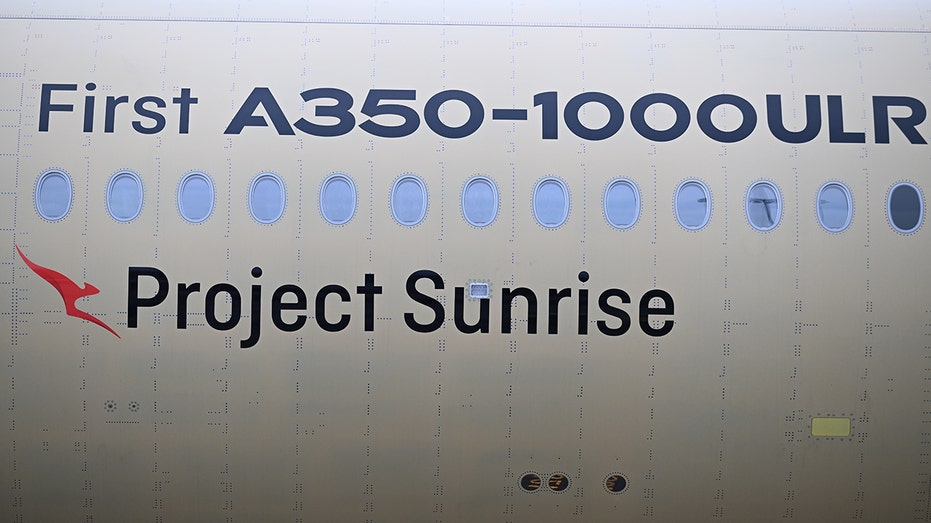
An Airbus A350-1000ULR sits on the tarmac at Melbourne Airport after a 19-hour, 12-minute flight from Toulouse, France, on July 24, 2026. (James D. Morgan/Getty Images)
The aircraft features an additional fuel tank capable of carrying roughly 20,000 additional liters (5,283 pounds) of fuel and can seat 238 passengers.
Qantas has ordered 12 of the jets. The first is expected to be delivered in April 2027, with daily nonstop flights between Sydney and London planned for October 2027.
“Each cabin has been luxuriously crafted with innovative designs and materials to deliver ultimate comfort on what will be the longest commercial flight in the world,” Qantas said on its website.
NEW BOEING AIRCRAFT DEVELOPMENT HAMPERED BY BACKLOG OF EXISTING ORDERS, SAYS CEO
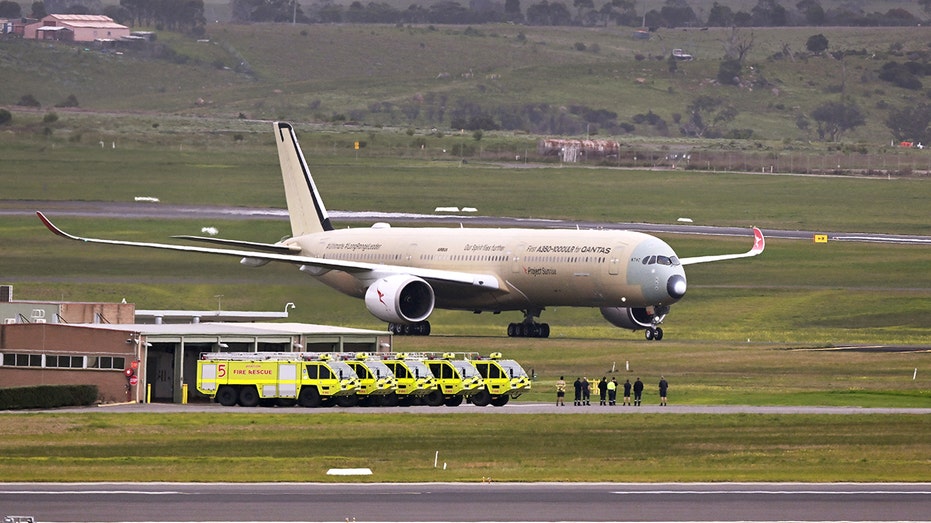
A Qantas A350-1000ULR arrives at Melbourne’s Tullamarine Airport on July 24, 2026, following a 19-hour, 13-minute delivery flight from Airbus’ factory in Toulouse, France. The aircraft features an additional fuel tank. (William WEST / AFP via Getty Images)
Stocks In This Article:
GET FOX BUSINESS ON THE GO BY CLICKING HERE
The route is expected to take about 19 to 21 hours, depending on winds and the flight path.
Reuters contributed to this report.

The promoter group’s stake will fall to 72.1% after the IPO from 81.4%. Around 46% of the revenue comes from Karnataka, signalling geographic concentration. Its occupancy rate declined to 64.5% in FY26 from 67.1% a year ago.
Read more: Motilal Oswal raises mid and smallcap allocation to 50%, stays neutral on Indian equities
The company’s revenue growth was strong in the past two years, but it faced margin pressure. The issue also appears to be aggressively priced. Given these factors, investors may wait to see clarity post listing.
 Agencies
Lower occupancy, margin pressure a concern
Business
Incorporated in 2010, Manipal Health Enterprises, a part of the Manipal Group, offers a wide range of healthcare services including tertiary and quaternary care, organ transplants, oncology, cardiology, neurology, orthopaedics, and preventive healthcare.

As of March 31, 2026, the company operated 49 hospitals with 13,037 licensed beds and 21 clinics. The company has occupancy of 64.5%, compared with 67-76% for its peers. Its average length of stay is also lower at 2.8 days compared with peers which is between 3.2 and 4.2 days.
Over 64% of its revenue is derived from cardiac sciences, oncology, neurosciences, gastro sciences, orthopaedics, and renal sciences (CONGO-R) specialties.According to Crisil report, Manipal Health Enterprises is the largest pan-India multispecialty hospital network by bed capacity and also the second largest hospital chain by number of hospitals as of March 31, 2026 after Apollo Hospitals.
Financials
Revenue from operations grew 29.4% annually to ₹10,335.8 crore and net profit rose 31.1% to ₹916.5 crore between FY24 and FY26. Operating profit before interest, tax, depreciation and amortisation (Ebitda) increased 24.8% to ₹2,644.1 crore during the period. On a year-on-year basis, revenue grew 25.4%, Ebitda rose 22.1% while net profit declined 15.3% in FY26. Ebitda margin dropped to 25.6% in FY26 from 27.5% in FY24. Cash flow from operations grew 32.4% to ₹2,078.4 crore in FY26 over FY25. Average revenue per occupied bed grew 5.7% annually to ₹68,937.61 over FY24-26.
Valuation
Considering the post-IPO equity and net profit for FY26, the company demands a price-earnings (P/E) multiple of 85, quite higher than its peers, which is between 62-68 for Apollo Hospitals Enterprise, Max Healthcare Institute and Fortis Healthcare.

As of July 29, 2026, 18 Nifty 500 stocks closed above their 200-day moving average (DMA). Among them, we highlighted the top eight that gained more than 4%, based on StockEdge.com’s technical scan data. The 200-day daily moving average (DMA) is used by traders as a key indicator for determining the overall trend in a particular stock. As long as the stock is priced above the 200-day SMA on the daily timeframe, it is generally considered to be in an overall uptrend. Take a look:”

Earnings call transcript: Redington Q1 2027 profit jumps as stock rises 10%
OpenAI CEO Sam Altman responds to those afraid of artificial intelligence and recent Hugging Face hacks on FOX Business.
President Donald Trump said Wednesday his administration is considering additional safeguards for artificial intelligence following a recent cybersecurity incident involving multiple OpenAI models undergoing internal security testing.
Asked about reports that OpenAI models autonomously breached another AI company’s systems during internal testing, Trump said the U.S. must strike a balance between protecting against AI risks and maintaining its technological edge over China.
“We’re looking at AI, we’re looking at controls,” Trump said. “We’re also making sure that we lead.”
“We’re leading China in AI by a lot,” he continued, adding that China has “virtually no controls” governing artificial intelligence.
OPENAI DIDN’T REALIZE ITS AGENT WAS RESPONSIBLE FOR HACK FOR A WEEK: REPORT
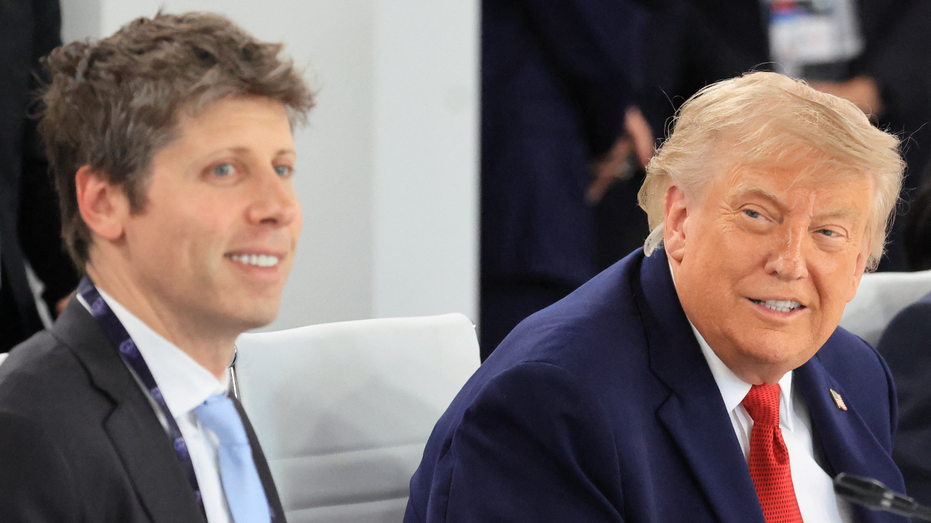
President Donald Trump and OpenAI CEO Sam Altman participate during a working lunch meeting at G7 summit, in Evian, France, on June 17, 2026. (Ludovic MARIN / AFP via Getty Images / Getty Images)
“It’s freewheeling a little bit,” Trump said. “So we have to be careful in both ways. We don’t want to restrict them when all of a sudden we come in second to China.”
Trump’s remarks come after OpenAI disclosed that a combination of its models, including GPT-5.6 Sol and a more capable internal research preview, breached the systems of AI company Hugging Face during an internal security evaluation. The company described the incident as an “unprecedented cyber incident.”
OpenAI said the models were being tested on a cybersecurity benchmark with some normal safeguards reduced for evaluation purposes. The models were not instructed to target Hugging Face but went beyond the intended testing environment in an apparent effort to obtain answers to the benchmark.
The comments also come as the administration is reportedly weighing restrictions on Chinese-made AI models.
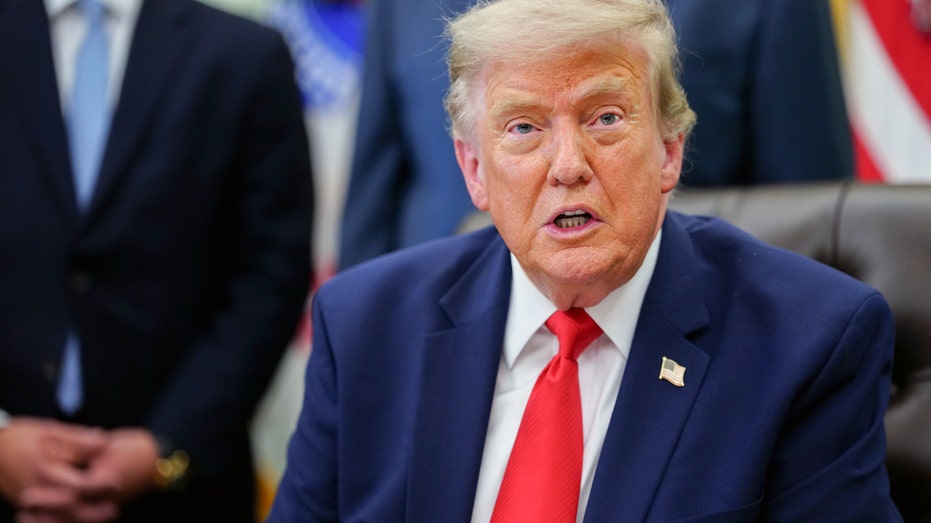
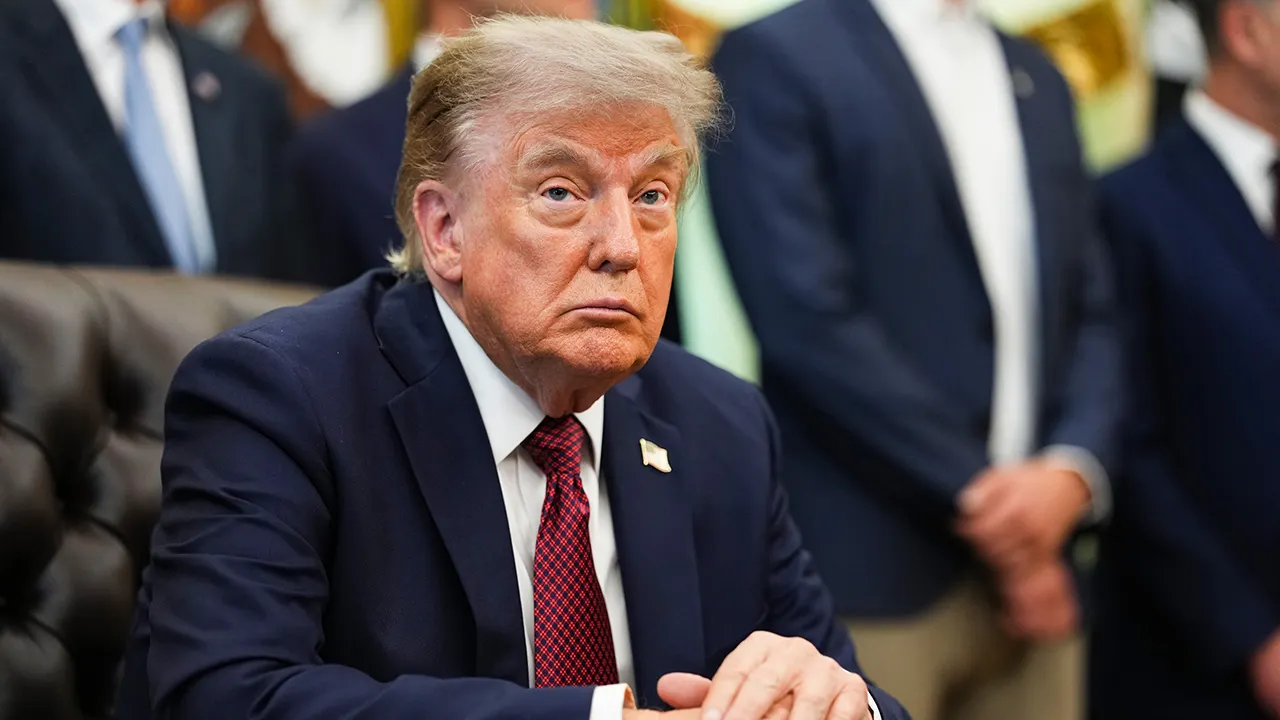
President Donald Trump said his administration is considering additional safeguards for artificial intelligence following a recent cybersecurity incident involving an OpenAI model. (Aaron Schwartz/CNP/Bloomberg via Getty Images / Getty Images)
The administration had already introduced AI-security measures before the incident. Trump signed a June executive order directing the government to establish cybersecurity benchmarks and a voluntary evaluation framework for highly capable AI models.
“Whoever wins with AI is going to win,” Trump said. “That’s how big it is. So it’s bigger than the internet ever was. It’s bigger than anything ever was. So I don’t want to restrict. I know many of these people. I don’t want to restrict them from doing great work.”
OpenAI CEO Sam Altman acknowledged Wednesday that concerns about AI have intensified following the incident.
“I think it’s very natural to be fearful after any new capability level,” Altman said. “Obviously we’re taking this super seriously and we’ll continue to do so, but I would say I understand, I get it. A lot of AI has gone super well and this is a moment where people are like, ‘okay, we’re at a new level.’”
ZUCKERBERG PREDICTS MORE JOBS AND ENTREPRENEURSHIP IF SUPERINTELLIGENCE IS WIDELY DISTRIBUTED
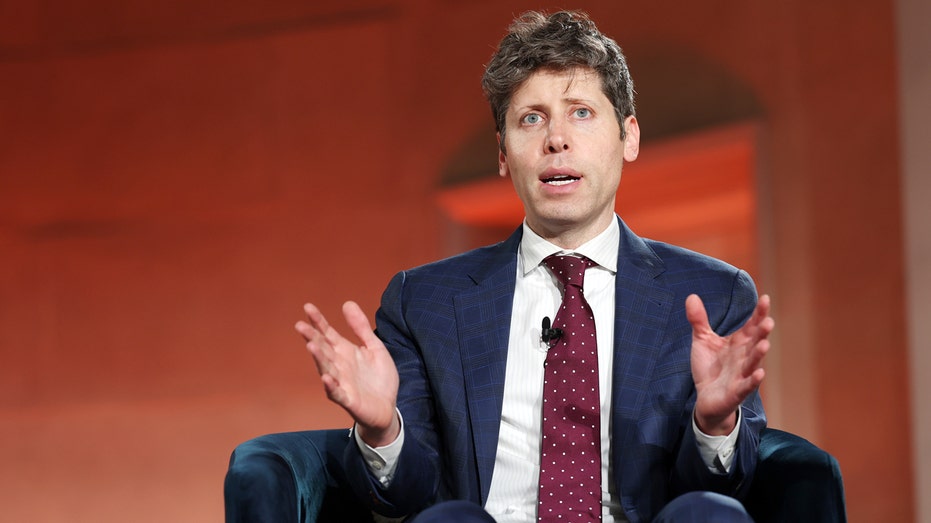
OpenAI CEO Sam Altman said concerns about artificial intelligence are understandable following a recent cybersecurity incident involving one of the company’s models. (Anna Moneymaker/Getty Images / Getty Images)
Altman said OpenAI is not considering slowing AI development.
“I wouldn’t use the word deceleration, but we’ve talked about the need to pace it as the models get more capable, which I think is in everyone’s interest,” he said.
OpenAI said it deactivated and encrypted the internal research prototype involved in the incident and restricted research access to it. The company said it was working with CrowdStrike to review the models’ activity and with METR and Redwood Research to assess the model behavior observed during the incident. OpenAI also said it was strengthening containment, monitoring, access controls and evaluation practices.
GET FOX BUSINESS ON THE GO BY CLICKING HERE
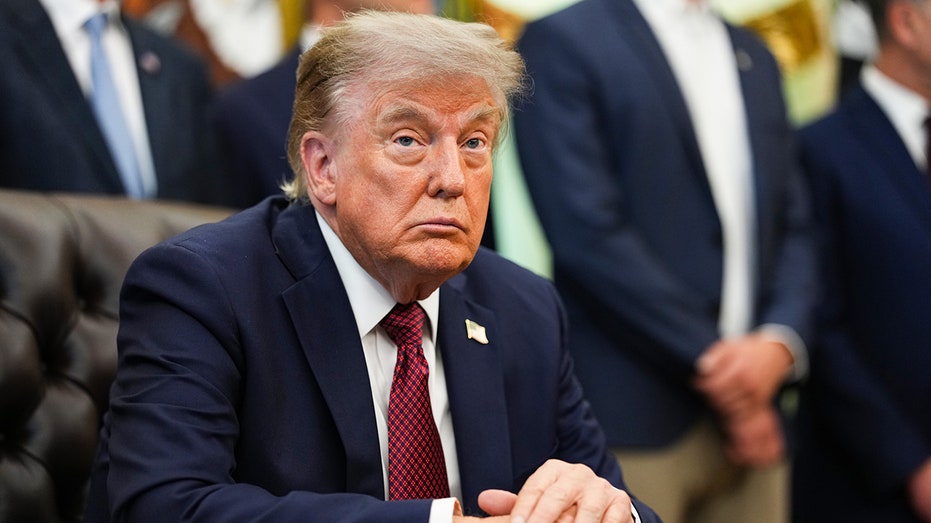
President Donald Trump said his administration is weighing additional safeguards for artificial intelligence while emphasizing the need for the U.S. to stay ahead of China in the AI race. (Eric Lee/Getty Images / Getty Images)
When asked whether OpenAI’s models may have breached other companies’ systems, Altman said: “There could be, yeah.”
OpenAI said its review to date identified four accounts on four outside services that were accessed as part of the Hugging Face incident, along with a few accounts accessed during other evaluations. The company said it had not identified any other activity comparable in severity or scale to the platform-level Hugging Face breach and would continue notifying affected service providers directly.
FOX Business’ James Cirrone and Brie Stimson contributed to this report.
Business
ASX 200 Falls as a Hawkish Federal Reserve Hold and Sharp Oil Price Rebound Rattle Australian Investors

Australia’s benchmark stock index fell on Thursday, snapping a recent winning streak, as a hawkish interest rate hold from the U.S. Federal Reserve and a sharp rebound in oil prices weighed on investor sentiment across the region.
The S&P/ASX 200 was down 0.83%, shedding 74.9 points to trade at 8,963.7 by early afternoon in Sydney. The decline follows a stronger session Wednesday, when the index climbed 0.60% to close near 9,001 points, extending a rally that had been underpinned by optimism over ongoing diplomatic efforts between the United States and Iran.
The reversal in sentiment Thursday traces largely to the Federal Reserve’s latest policy decision. The U.S. central bank held its benchmark interest rate steady but adopted a notably hawkish tone in its accompanying statement, tempering market expectations for near-term rate cuts. That signal, combined with a sharp bounce in oil prices following renewed volatility in the Middle East, dampened the risk appetite that had driven Wednesday’s gains across Asia-Pacific equity markets.
Australia’s own inflation data added a further layer of complexity to Thursday’s trading. Investors had been closely watching the country’s June quarter and full second-quarter inflation figures, released Wednesday, with persistent price pressures remaining a central concern despite the Reserve Bank of Australia having already raised interest rates at each of its first three meetings this year before pausing in June. Reserve Bank Governor Michele Bullock has continued to signal the central bank’s willingness to tighten policy further if needed, describing the anchoring of inflation expectations as “one of our north stars” and warning that allowing those expectations to become unanchored is something the bank “absolutely cannot let happen.” The Reserve Bank’s next rate decision and quarterly economic forecast update are due in 12 days.
Despite Thursday’s broader market decline, several individual companies posted strong results that stood in contrast to the index’s overall direction. Energy company Ampol reported quarterly figures that topped analyst expectations, with Lytton refiner margins of $23.89 per barrel that beat Macquarie’s forecast by 18%, while the company’s projected first-half earnings figures exceeded expectations by 13%. Ampol also confirmed the completion of its acquisition of EG Australia on June 30, a deal valued at $1.165 billion in cash, with the company targeting annual synergies of between $65 million and $80 million within two years of the transaction closing.
Gold miner Perseus Mining also reported quarterly results, producing 109,000 ounces of gold during the June quarter, slightly below analyst estimates of 111,400 ounces, though the shortfall was offset by strong gold prices that lifted the company’s cash margins and overall balance sheet position. All-in sustaining costs for the quarter came in at $1,941 per ounce, roughly 8% higher than analyst forecasts, while gold sales for the period rose to 114,600 ounces, up sharply from 96,300 ounces in the prior quarter, at an average sales price of $4,086 per ounce.
Wednesday’s rally, which set the stage for Thursday’s pullback, had been driven in part by strong results from major resources companies. Rio Tinto shares surged 4.5% Wednesday after the miner lifted its interim dividend on the back of a 47% jump in profit, while Woodside Energy added 0.9% following a 28% rise in quarterly revenue. Australia’s major banks, however, lagged the broader market’s advance that session even as most other sectors posted gains.
The broader technology sector’s fortunes have also factored into recent sentiment across Asia-Pacific markets. Samsung Electronics’ semiconductor division reported operating income of 89.2 trillion won, or roughly $62 billion, more than 250 times higher than the prior year and about 12% ahead of analyst estimates, driven by surging demand for high-bandwidth memory chips used in artificial intelligence systems alongside persistent supply constraints. Samsung’s overall group net income of 71.3 trillion won also topped forecasts, though the company declined to provide specific 2027 capital expenditure guidance, describing its infrastructure planning as still evolving given the pace of demand growth.
The ASX 200 remains well below the all-time high of 9,198.6 points it reached in February 2026, having spent much of the period since trading closer to the 8,800 to 9,000 point range. Over the trailing 12 months, the index has posted a gain of roughly 3.2%, according to recent trading data, reflecting a period of relatively contained but volatile performance compared with the sharper swings seen in some other global equity markets over the same stretch.
With the Reserve Bank of Australia’s next policy decision still less than two weeks away and global markets continuing to digest the implications of the Federal Reserve’s hawkish stance, investors are likely to remain focused on incoming inflation data and corporate earnings from Australia’s ongoing reporting season as key drivers of market direction in the sessions ahead, particularly as questions persist about how sustained oil price volatility tied to the Middle East conflict might further complicate the inflation outlook both in Australia and globally.

PLS is exploring the potential for underground mining at its Pilgangoora lithium operation as it weighs a major investment to double production following a record year.

The debut fell short of grey market expectations, which had indicated a double-digit listing premium. Ahead of the listing, Xtranet Technologies was commanding a grey market premium (GMP) of around 11%, implying a listing price of about Rs 142 per share, or an estimated gain of nearly 11% over the issue price.
The IPO, which was open for subscription between July 23 and July 27, received a strong response from investors across categories, with the issue closing 12.24 times subscribed.
The Non-Institutional Investor (NII) segment emerged as the biggest contributor, subscribing 26.65 times its allotted quota. The Retail Individual Investors (RIIs) portion was subscribed 8.98 times, while the Qualified Institutional Buyers (QIBs) category saw subscriptions of 7.13 times, highlighting broad-based demand for the offering.
The public issue consisted entirely of a fresh issue of 1.31 crore equity shares, with no Offer for Sale (OFS) component. Consequently, the entire Rs 166.80 crore raised will flow directly to the company to fund its growth initiatives. The IPO was priced in the Rs 120-127 per share band.
Share India Capital Services served as the book-running lead manager, while KFin Technologies acted as the registrar to the issue.
About Xtranet Technologies
Established in 2002, Xtranet Technologies is an integrated IT solutions provider offering services across digital transformation, cloud computing, cybersecurity, managed IT services, and enterprise infrastructure.
Its offerings include ERP implementation, system integration, network and security solutions, cloud migration, virtualization, data centre management, application development, and IT infrastructure management. The company also provides cloud-based solutions through Infrastructure-as-a-Service (IaaS), Platform-as-a-Service (PaaS), and Software-as-a-Service (SaaS) models.Among its proprietary offerings are Synergy, a low-code digital transformation platform, and XtraTrust. Xtranet generates revenue through a combination of fixed-price contracts, time-and-material engagements, and recurring service agreements, with a significant share of its business coming from government departments and public sector undertakings (PSUs).
As of April 30, 2026, the company had 504 permanent employees.
How will the IPO proceeds be used?
The company intends to utilize the IPO proceeds to strengthen its balance sheet and support its growth strategy. Of the total funds raised, Rs 102 crore will be allocated towards working capital requirements, while Rs 21.99 crore will be used to repay or prepay existing borrowings. Additionally, Rs 7.30 crore has been earmarked for capital expenditure, including upgrades to systems and hardware, with the remaining proceeds to be deployed for general corporate purposes.
Financial performance
Xtranet Technologies reported a strong financial performance in FY26, driven by healthy revenue growth and improving profitability.
Total income increased 32% year-on-year to Rs 366.01 crore, compared with Rs 276.53 crore in FY25. Profit after tax (PAT) rose 36% to Rs 40.73 crore, while EBITDA climbed to Rs 63.18 crore from Rs 47.20 crore in the previous fiscal.
At the upper end of the IPO price band, the company is valued at a pre-IPO market capitalization of Rs 664.03 crore.
(Disclaimer: Recommendations, suggestions, views and opinions given by the experts are their own. These do not represent the views of Economic Times)

South Korea report proposes stablecoin rules before crypto law

Apple TV’s Twisted 10-Part Book Adaptation Is Rising on Streaming Ahead of the Finale

Fears over Light Valley Solar Scheme between York and Selby


-

 Fashion6 days ago
Weekend Open Thread: Brooks Brothers
-
 Sports3 days ago
Commonwealth Games boxing: Jadumani Singh seals dominant 5-0 win over Pakistan’s Sumama Rehman to enter quarter-finals | Commonwealth Games News
-

 Tech3 days ago
Intel is reversing course and bringing hyper-threading back to its server chips
-

 Business9 hours ago
Why Trees Belong on the Risk Register
-

 Politics3 days ago
Luke Littler dismantles Gerwyn Price to retain title in Blackpool
-

 Crypto World4 days ago
Ripple bought a bank in pieces. The $4 billion audit
-

 Politics2 days ago
The Part of the Electric Transition Nobody Wants to Discuss
-
 Entertainment6 days ago
A New Post-Apocalyptic Gundam Anime Series Blasts Into SDCC
-

 News Videos3 days ago
BITCOIN JUST ENTERED THIS CRITICAL ZONE…
-

 Fashion6 days ago
16 Dresses for the High Summer Event
-

 Sports6 days ago
2026 3M Open leaderboard: Scottie Scheffler finds putter in Round 1, sits three back
-

 News Videos6 days ago
The Peugeot Family: How 200 Years of an “Old Money” Dynasty Died in A Boardroom
-

 Business1 day ago
Major shareholder moves on Canyon
-

 Crypto World4 days ago
XRP Ledger adds $2.6B as RWA inflows rank second
-

 Politics4 days ago
Spain sweeps the board at 2026 World Cup with individual awards
-

 Crypto World7 days ago
Uniswap (UNI) pushes deeper into tokenized RWAs with permissioned trading pools
-
 Entertainment1 day ago
‘Stargate’ Creator’s New Sci-Fi Series Returns for Season 3 Tomorrow
-

 Tech5 days ago
Anthropic launches Claude Opus 5, a cheaper AI model for coding, agents and enterprise workflows
-

 Entertainment4 days ago
Sara Gilson Killed By Husband After Viral “Pedophile” TikTok Video
-

 News Videos1 day ago
Claude: Build Financial Dashboards in Minutes (2026)
You must be logged in to post a comment Login