Connect with us

NewsBeat

Residents of the UK’s most unhealthy town blame the Government for their problems… while Britain’s healthiest claim they do it on their own

Published

on

Residents of the UK's most unhealthy town blame the Government for their problems... while Britain's healthiest claim they do it on their own

Reading books, walking and bike riding are among the secrets of a long and healthy life, say residents in the English neighbourhoods with the longest life expectancy.

But people in the worst place, Blackpool – where men die an average of 10 years earlier – bemoaned drug abuse, cheap booze and fast food, as well as poor housing.

In the areas where people lived longest, residents told the Daily Mail how there are more activities and facilities such as leisure centres and libraries to keep people active physically and mentally as they got older.

There were also better shops selling a good range of healthy food, as well as easy access to medical services and GP appointments.

Advertisement

Locals in the healthiest places praised green space, parks and countryside giving opportunities for exercise and spending time outdoors in pleasant environments.

Analysis by The King’s Fund published this week found the Lancashire seaside resort has the lowest life expectancy of anywhere in the country, at 73.7 years for men and 79.1 years for women.

The health and social care think tank’s study also found there was low life expectancy across the former industrial and urban areas of northern England – although life expectancy shot up in rural and more affluent parts of the North.

Meanwhile, in Hampshire’s prosperous Hart district – which has previously been voted the best place to live in a national survey – life expectancy averages 83.7 years for men and 86.2 years for women.

Advertisement

Blackpool: Analysis this week found the Lancashire seaside resort has the lowest life expectancy of anywhere in the country, at 73.7 years for men and 79.1 years for women

Kensington: In the London borough, women can expect to live even longer, averaging 87.1 years, while the figure is 82.2 for men

Kensington: In the London borough, women can expect to live even longer, averaging 87.1 years, while the figure is 82.2 for men

In Hart, life expectancy averages are 83.7 years for men and 86.2 years for women. Jane Nicholson, 60, said there were plenty of active spaces, a golf club, leisure centres - and great healthcare

In Hart, life expectancy averages are 83.7 years for men and 86.2 years for women. Jane Nicholson, 60, said there were plenty of active spaces, a golf club, leisure centres – and great healthcare

In the London borough of Kensington and Chelsea, women can expect to live even longer, averaging 87.1 years, while the figure is 82.2 for men.

Life expectancy is also very high in areas such as the Uttlesford district of rural Essex, where it averages 86.4 years for women.

Residents of Britain’s top borough for living a long life praised the area’s green spaces, places for walking and cycling – as well as good healthcare and opportunities for older people to keep active.

Advertisement

Hart, centred around the town of Fleet, has been ranked near the top of the Halifax Quality of Life Survey on several occasions, coming top in 2012 and third in 2020.

Much of the area remains rural – despite large-scale housebuilding – and facilities for sport and leisure have been rated ‘excellent’.

Residents of the district also reported higher than average levels of life satisfaction – 8.2 out of 10, compared to 7.8 for the UK in general. Employment levels were also significantly higher for Hart at 87.2 per cent, compared to 75 per cent for the rest of the country.

In data from the 2021 census, 54.8 per cent of people reported being in ‘very good health’, placing Hart in the top 20 per cent for local authority areas across the UK.

Advertisement

But the cost of buying a home in the district is 4.5 times that of Blackpool, with provisional Office for National Statistics data from May showing the average home in Hart cost £487,000, compared with £134,000 in Blackpool.

Adrian Mann, 79, moved to the Hart area from London 18 months ago. He said: ‘When we moved to Fleet, we really noticed the difference. 

‘There are always people in their 80s walking around the town centre. The cemetery is also full of people who have lived well into their 90s – a good age.

‘I think this is down to the clean air. There are also lots of walks, parks and also the pond. There are quite a lot of churches, the library as well – it has the facilities for older people.’

Advertisement

Mr Mann’s partner, who wished to remain anonymous, said: ‘I hadn’t been well before we moved here and then suddenly after living in the area, my symptoms completely went.

‘I put it down to the clean air. With the number of trees, it is basically the countryside. People are encouraged to get out and about in Fleet.

‘The medical care is good and there are a lot of organisations for older people which get them out of their houses.’

Retired solicitor Robert Cook, 79, and his wife Linda, 84, have lived in Fleet for 35 years during which they say it has undergone a huge population increase and independent retailers have closed – but it remains ‘very pleasant’.

Advertisement

Mr Cook said: ‘To stay healthy, we try to go out most days; we don’t stay at home watching the telly all day. We often go out to Waitrose, M&S and some of the other shops.

‘You see a lot of the older population around the town. People come to retire here. Hart in general is very pleasant.’

Mrs Cook added: ‘The healthcare in the area is excellent. There are a few practices in Fleet and you can get an appointment often on the same day or the following day.’

Charlotte Dando, 44, moved to Hart with her mother Christine Swain, 82.

Advertisement

She said: ‘I love living here. We’ve been here seven years, and we moved from Camberley. The schools are great. We are in walking distance from the town.

‘My mother moved here too and she lives in an annex in our garden. We are not surprised at all that people here live the longest in the UK. There’s lot going on – all the parks, there are also really good cycle paths. You can cycle down the canal. My husband cycles to work. There are just a lot of outdoorsy things on your doorstep.’

Blackpool: Analysis this week found the Lancashire seaside resort has the lowest life expectancy of anywhere in the country, at 73.7 years for men and 79.1 years for women

Blackpool: Analysis this week found the Lancashire seaside resort has the lowest life expectancy of anywhere in the country, at 73.7 years for men and 79.1 years for women

Retired solicitor Robert Cook, 79, and wife Linda, 84, have lived in Fleet for 35 years

Retired solicitor Robert Cook, 79, and wife Linda, 84, have lived in Fleet for 35 years

Advertisement
Residents in Blackpool bemoaned a 'shocking' string of social problems for contributing to low life expectancy

Residents in Blackpool bemoaned a ‘shocking’ string of social problems for contributing to low life expectancy

Hart, centred around the town of Fleet, has been ranked near the top of the Halifax Quality of Life Survey on several occasions, coming top in 2012 and third in 2020

Hart, centred around the town of Fleet, has been ranked near the top of the Halifax Quality of Life Survey on several occasions, coming top in 2012 and third in 2020

Kensington: Residents of Britain's top borough for living a long life praised the area's green spaces, places for walking and cycling ¿ as well as good healthcare and opportunities for older people to keep active

Kensington: Residents of Britain’s top borough for living a long life praised the area’s green spaces, places for walking and cycling – as well as good healthcare and opportunities for older people to keep active

Mrs Dando said she believes diet and exercise help keep people healthy, with walking ‘massively important’. She also praised the availability of health food shops and places selling fresh and organic foods.

Advertisement

Jane Nicholson, 60, said: ‘Hart is a lovely area to live in and it’s been known to be so for quite a long time.

‘In terms of active spaces, there is North Hants golf club just down the road. There are also leisure centres. The healthcare is also great. I have always had a good experience.’

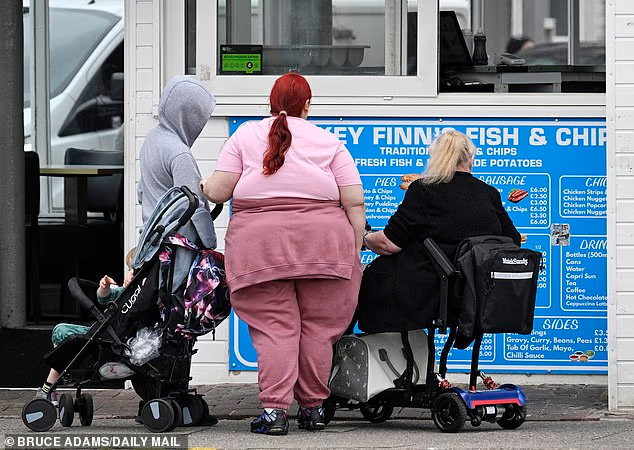
In contrast, residents in Blackpool bemoaned a ‘shocking’ string of social problems for contributing to low life expectancy.

Locals claimed to have seen drug addicts shooting up heroin in the street as well as drunk homeless people passed out.

Advertisement

The area also has a chronic shortage of NHS dentists – with one man admitting he had to pull out four of his own teeth.

Cheap fast food shops in the Lancashire tourist mecca sell burgers for £1, while pubs advertise pints of beer for as little as £1.69.

Expectant mother-of-one Tegan Milner, 23, said: ‘Some of the things you see are shocking.

‘There’s a lot of drunk people fighting in the street which has led to stabbings.

Advertisement

‘I don’t feel safe going out at night. I just go out in the day.’

The former hotel worker added: ‘You also see a lot of drug taking.

‘I saw one druggie take out a needle and inject himself with heroin right in the middle of the street in the middle of the day.

‘You don’t want to see that and I don’t want my kids around it.’

Advertisement

Plasterer Jamie Hornby, 54, who was out walking his dog Skye, said: ‘It doesn’t surprise me the life expectancy is so low here.

‘There’s a lot of drug taking and homeless people drunk in the street.

‘They have cleaned up the sea front but you see a lot of druggies around the public toilets.

‘And having lots of cheap fast food doesn’t help.

Advertisement

‘I keep fit taking the dog for a walk every day but a lot of people don’t look after themselves.’

Pensioner Colin Stead, 65, said: ‘You see a lot of poverty here but is pretty devastating.

‘A lot of people can’t afford to buy healthy food or they just buy cheap stuff.

‘Prices have gone up all the time and people have struggled to make ends meet.’

Advertisement

Retired John Ellis, 66, said: ‘Blackpool has a lot of problems.

‘There are a lot of cheap drugs and alcohol sold which doesn’t help. Some of the housing is very poor – it’s also very cheap.’

The health of the local population has not been helped by a dearth of NHS dentists.

Father-of-four Andrew Abernethy, 45, revealed he had been forced to pull out four of his own teeth.

Advertisement

He said: ‘I couldn’t get a dentist and so I just did it myself. I just got a pair of pliers and pulled them out.

‘Fortunately, I have a high threshold for pain but you don’t really want to have to do it yourself.

‘There’s a lot of problems in Blackpool – I blame the government for a lot of it.’

Some 250 miles south, people on the streets of Kensington espoused the benefits of exercise, keeping mentally active and a healthy diet.

Advertisement

Chrissie Fraser, 77, said: ‘I continue with my healthy outlook like going out walking, being careful with my diet, and I don’t really drink.

‘Probably the secret for everybody is if they go and read a few more books.

‘(For) every individual person, it’s nothing to do with access, it’s to do with what’s going on in your head.

‘You can now access the most fantastic information that I didn’t have as a girl. It was the library and my bicycle, I think the answer is a book and a bike.

Advertisement

‘It’s cheaper to eat well, isn’t it? I think it’s to do with who you think you are, I think it’s a bit more about the individual.’

She added: ‘I would be happier mentally [in the north] because it’s cheaper to live there. If I sold my flat in Kensington, I could buy something spectacular in Newcastle. So my mental well-being would probably be quite good, the only thing is I don’t want to go to Newcastle.’

Some people in Kensington were surprised northerners weren’t more healthy given their better access to outdoor space.

The health and social care think tank's study also found there was low life expectancy across the former industrial and urban areas of northern England ¿ although life expectancy shot up in rural and more affluent parts of the North. Pictured, Blackpool

The health and social care think tank’s study also found there was low life expectancy across the former industrial and urban areas of northern England – although life expectancy shot up in rural and more affluent parts of the North. Pictured, Blackpool

Advertisement

Marion Bennett, 70, said: ‘They should be healthier (in the North) shouldn’t they?’

She said she would have expected northerners to be healthier because of ‘better access’ to outdoor space.

Ms Bennett, who used to play netball, tennis and go skiing, added: ‘I do a tremendous amount of walking, I think it stands you in good stead for your later life.

‘Make sure you get your vegetables every day, I’m not so good at drinking water though.’

Advertisement

A healthy diet was important for Francis Ley, 79, who said: ‘I would recommend organic stuff, apples, pears, oranges, blueberries, potatoes, tomatoes, everything that’s organic.

‘Years ago, everything used to be organic before pesticides, and then that came but now they’re going back to organic.

‘But they’re having to pay more now because the earth now is saturated with the so-called chemicals. It’s fast living.

‘That’s why a lot of people are ill and sick because when you go into fast food restaurants, it’s all fried.’

Advertisement

But Lawrence Oji, 73, admitted he could improve his lifestyle as he ‘hardly exercises’ which he knows is ‘not good’.

He said: ‘Only my youngest daughter is particular about what she eats. She’s in a boarding school and she’s so concerned about it. She drinks up to two litres of water every day, I don’t.

‘I’m shocked to hear that people in London live longer because (in the North) you get less pollution, you get more greenery, you get more trees and all that so I would’ve thought it was the other way around.’

And Matthew Martin, 62, who lives in a housing association flat in Earl’s Court but was homeless at one time, said that even with a ‘very small amount of money’ a healthy diet is possible.

Advertisement

He said: ‘I’ve been homeless myself and I know with a very small amount of money you can buy eggs, pasta, tomatoes, you can make soup. It’s not a grand living but you can live reasonably well.’

Paul Edwards, 53, a father of two from Maidstone, Kent, who was visiting Kensington, said he paid attention to his health.

He said: ‘I take supplements, go to the gym and try to avoid saturated fats, salts and all that.

‘My mum’s family’s from Cumbria so I’m quite aware of the difference between housing and lifestyle between northern and southern communities.

Advertisement

‘When I visit there I know exactly the difference and I feel really fortunate to live in south-east, though it feels crowded and overpopulated at times, the standard of housing is better and the awareness of healthy lifestyles, in my opinion, is more prevalent in the southeast than it is up there.’

The King’s Fund said life expectancy in England in 2025 reached the highest levels ever recorded, but the gains in longevity were not shared equally.

It said geographical inequalities reflect socio-economic inequalities and greater levels of deprivation in northern regions – and called the problem a ‘mark of shame’.

People living in the most deprived 30 per cent of areas experienced a fall or no improvement in life expectancy in the decade to 2022-24. And geographical and socio-economic inequalities in life expectancy have been widening since 2010, and people in all regions spend fewer years in good health.

Advertisement

Veena Raleigh, Senior Fellow at The King’s Fund said: ‘That people in our northern and deprived communities have seen little or no improvement in longevity over a decade, in contrast to the health gains in their southern and more well-off counterparts, is a mark of shame for an affluent country. 

‘Addressing this inequity in the nation’s health is not just a matter of social justice, it would reduce pressures on the NHS and the high economic costs of ill health.’

Source link

Advertisement
Continue Reading
Click to comment

You must be logged in to post a comment Login

Leave a Reply

NewsBeat

Nigel Farage Falls To Lowest Approval Rating Since Election

Published

on

Nigel Farage Falls To Lowest Approval Rating Since Election

Nigel Farage’s approval rating has plummeted to its lowest level since the 2024 general election, according to a new poll.

More in Common put the Reform UK leader on -32, which is a drop of approximately 10 points in just a fortnight.

It follows a wider trend suggesting the right-wing party is declining in popularity despite having led in the opinion polls for more than a year.

The think tank also found new prime minister Andy Burnham is now at +19 after a two-week policy blitz.

Advertisement

That rating is higher than the +11 Keir Starmer achieved just after he was voted into office in July 2024 – though he dropped to -49 late last year.

Meanwhile, the Tory leader Kemi Badenoch is on 0 while her Lib Dem counterpart Ed Davey sits at -11.

Green leader Zack Polanski is on -24, having taken a sharp downward turn in recent weeks.

More in Common’s UK director Luke Tryl wrote on X: “We pointed out last week Burnham’s positives were in part because he had higher unknowns.

Advertisement

“That changed this week as the number of neither/don’t know declined and he also now has highest gross approval.

“For Reform what may worry Farage is less the rise in disapproval, he’s always been polarising and more the decline in raw approval, suggesting some previous fans wavering.”

The researchers also reported earlier this week that Reform had lost its 16-month lead in the polls.

Advertisement

It put Labour on 28%, up four percentage points from last week, while Farage’s party was put on 24%, having lost two points.

YouGov, meanwhile, put the two parties neck-and-neck on 22% on Monday, with Reform losing one percentage point and Labour gaining one.

More in Common is not the only organisation noticing a decline in support for Reform.

Survation found this week that Labour were now in the lead in the opinion polls on 26% – up one point from last week – while Reform lags slightly behind on 24%, having lost two points.

Advertisement

That is the first time the governing party has taken the lead in a Survation poll since May 2025, with their highest vote share in over a year.

Polling by YouGov from last week found that just 22% of British voters now have a favourable opinion of the Reform UK leader.

That is the lowest figure recorded by the pollsters’ approval rating tracker since 2020.

At the same time, more than two-thirds of the country (68%) now view Farage negatively, including 56% who see him very unfavourably.

Advertisement

His net approval rating of minus 46, which is the joint-lowest ever recorded for him by YouGov is even worse than the minus 41 recorded for Boris Johnson after partygate and Keir Starmer’s minus 45 when he resigned as PM.

Farage is facing intense scrutiny after failing to declare a £5 million gift from crypto-billionaire Christopher Harborne when he became an MP for Clacton.

The Reform leader has insisted he has not broken any rules and is the victim of a “witch-hunt”, but is being investigated by parliament’s standards watchdog.

In a dramatic move earlier this month, he resigned as the MP for Clacton to trigger a “people versus the establishment” by-election, which will be held on August 13.

Advertisement

However, none of the main parties are putting up candidates, meaning his main rival is Count Binface.

Listen to Commons People, the podcast that makes politics easy. Every week, Kevin Schofield and Kate Nicholson unpack the week’s biggest stories to keep you informed. Join us for straightforward analysis of what’s going on at Westminster.

Source link

Advertisement
Continue Reading

NewsBeat

Gemma Owen vows ‘I want to win now’ as Magnolia Cup charity race is won by super sub

Published

on

Daily Mirror

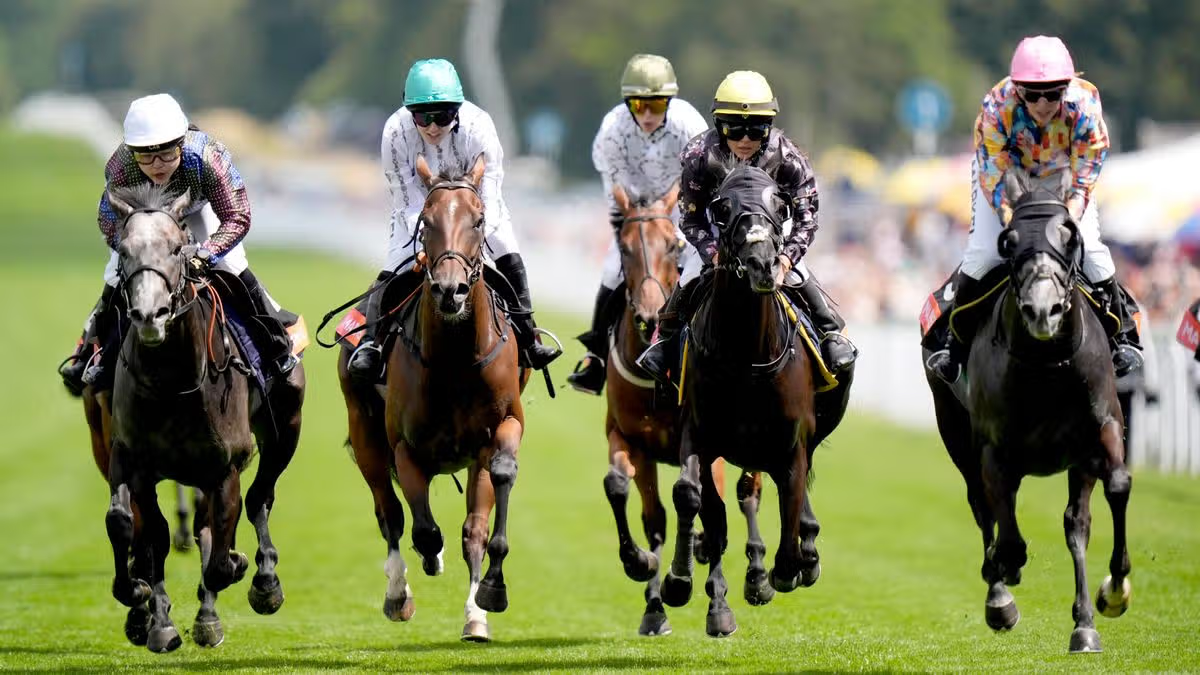
The ex-Love Islander, TV presenter, showjumper and daughter of footballer Michael Owen took part in the annual Goodwood event featuring 12 part-time riders

Gemma Owen finished fourth on her jockey debut when she took part in the Markel Magnolia Cup on Thursday, the annual charity race run at Goodwood.

Advertisement

The influencer, international dressage rider and daughter of former England and Liverpool striker Michael Owen was one of the star names among the dozen women chosen for the popular event.

Owen prepared for the race at her Dad’s Manor House racing stables in Cheshire, guided by the former top professional jockey Franny Norton. Manor House’s trainer Hugo Palmer supplied her mount who was named Turbo Trotter for the day. But when the race started Gemma was left behind and by the time she got going, she had too much ground to make up on the leaders as she finished fourth.

“It was an amazing experience from start to finish,” she said. “He was an angel and he really looked after me, but that flag start is different as everyone’s bunched together and cutting each other up.

“My start wasn’t great; I got boxed in, but he travelled well, made up some good ground and finished strong. If I’d have a better start, it’d have been a different result.”

Advertisement

She added: “I think I’ll go again. I want to win now, and I’ll probably end up doing another race so I can get that first place.

“Dressage is very concise and slow, and that was the complete opposite. Everything happened so quick, but I don’t know which one I prefer.

“I’ve loved the training and riding out, and seeing what goes on behind the scenes makes you appreciate the hard work that goes into it. I’ve a new found respect for jockeys, and I appreciate the sport a lot more since doing it. I’m never happy not winning, so you’ll see me back.”

Advertisement

Victory was claimed by Imaam Rasul-Healer on Khor Al Adaid, trained by Scott Dixon. The 26-year-old who works at Kia Joorabchian’s Amo Racing yard in Newmarket only got a place in the race six days earlier after Molly Hunter, a reporter for the Press Association, was ruled out by illness.

“I had not done too much prep, got on him for the first time last Friday,” she said. “I’ve been in the process the whole way but at every single fitness test I seemed to be ill, or something was wrong.

“Then I fell off a two-year-old filly, hit my head, got a concussion and wasn’t allowed to do my final fitness test. I got the call last week and thankfully was fit to step in.”

Advertisement

The race has raised more than £75,000 for Education Above All Foundation, a global education non-profit.

She added: “I’m only the second Muslim to win this and charity is a huge focal point of our religion.”

Source link

Advertisement
Continue Reading

NewsBeat

Funeral director ‘ripped off’ vulnerable pensioners with fake funeral plans

Published

on

Funeral director ‘ripped off’ vulnerable pensioners with fake funeral plans

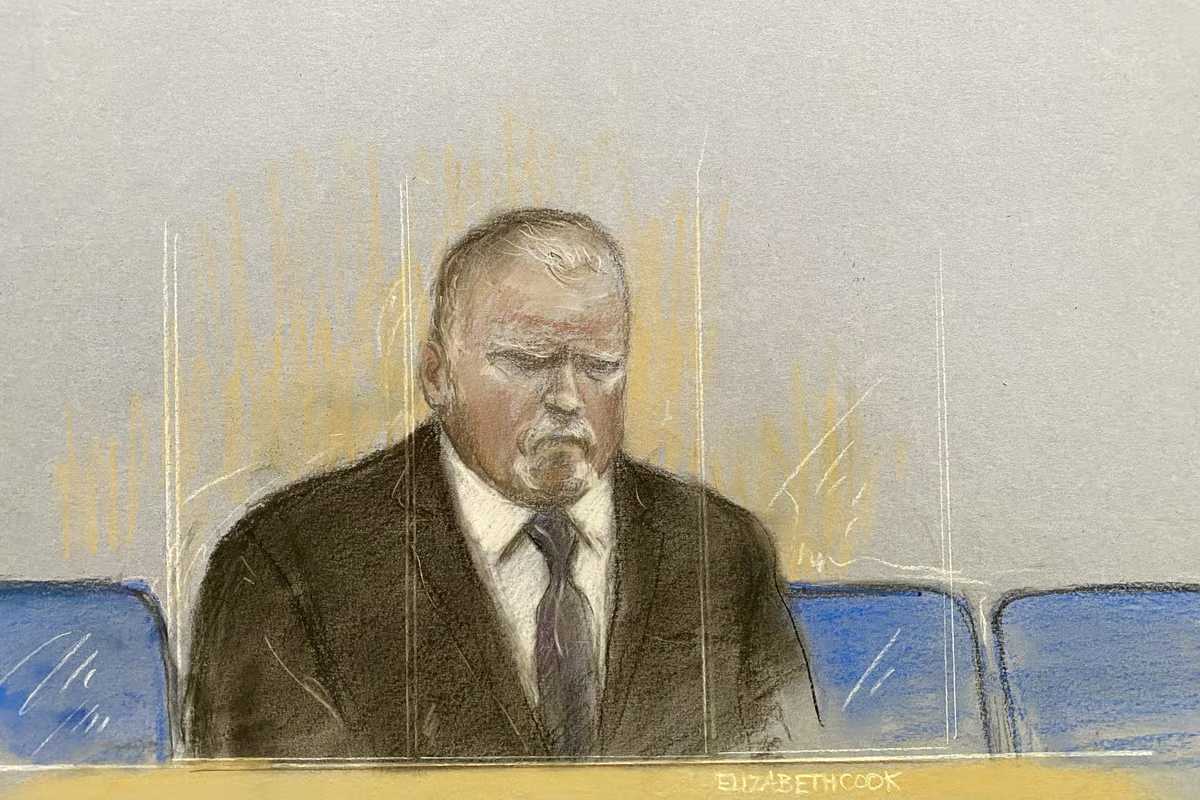
A court has heard Bush breached the trust placed in him by grieving families “on an almost industrial scale”, by keeping bodies for months after they should have been cremated, giving out the wrong ashes, taking money for funeral plans without making any of the arrangements, and stealing charity donations collected at services.

Source link

Continue Reading

NewsBeat

Victims of Legacy boss Robert Bush ‘unable to get funeral plan refunds’

Published

on

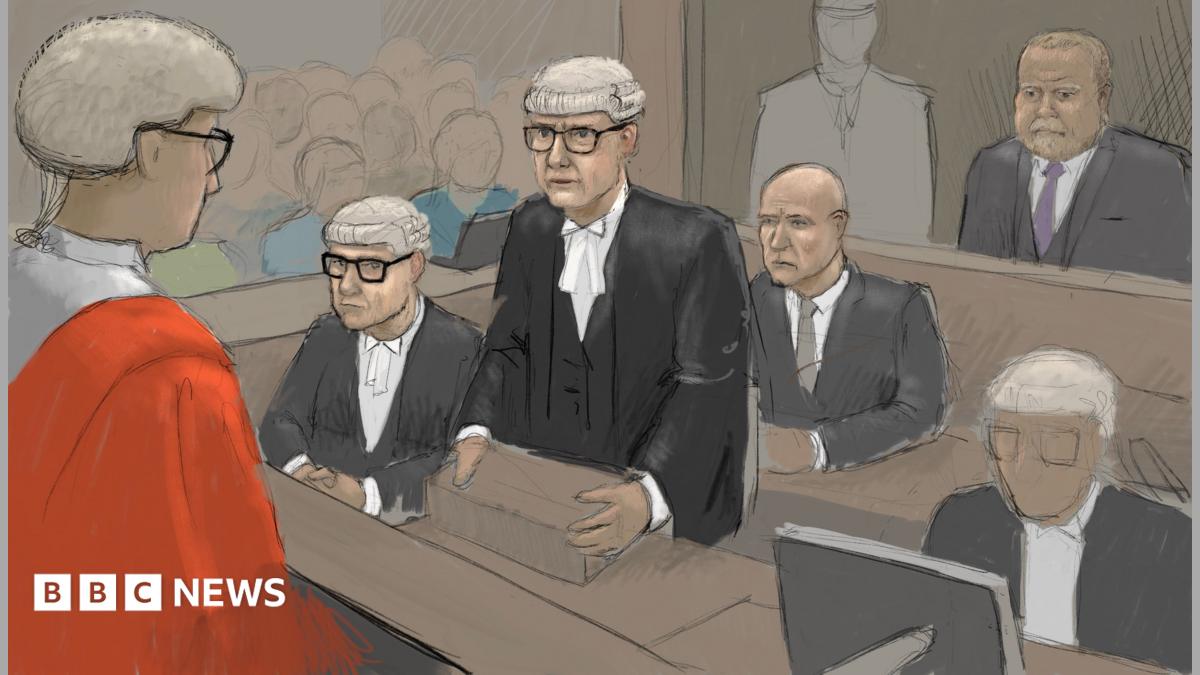
Courtroom sketch showing a legal hearing in progress. A judge in a red robe is seen from behind in the foreground, facing several barristers wearing traditional black robes, white neck bands, and white wigs. One barrister stands at a lectern addressing the court while others are seated nearby. Robert Bush is seated behind a glass partition and other figures are in the public gallery. The image is rendered in a muted palette of grey, brown, and black tones, with the judge’s bright red robe providing a strong visual focal point.

Some victims of disgraced undertaker Robert Bush have not been refunded for fake funeral plans he sold to them, a court has heard.

The 48-year-old defrauded 172 people over 11 years to the tune of £562,000, Hull Crown Court was told.

He previously admitted 67 offences in relation to his business, Legacy Independent Funeral Directors in Hull, including failing to bury and cremate people, theft from 12 charities, fraudulent trading in funeral plans, and fraud.

On the fourth day of his sentencing hearing, one woman said her parents, who paid £2,649 each for funeral plans, were not alive “to see the justice they deserved”. Another said she had not been refunded £5,000 for two policies.

Advertisement

This story contains details some might find distressing.

Wiping her eyes with a tissue, Maxine Hill told Mr Justice Hilliard the bank refused to refund the money fraudulently taken by Bush, whom she knew personally.

Bush visited both her parents, Margaret and John, in their own home and issued a handwritten receipt to her mother who paid him in cash.

The bank initially refunded the amount paid by Hill’s father but 90 days later, the bank took the money back saying “there was no evidence that he hadn’t received a product”, the court heard.

Advertisement

Both have since died – Margaret in May 2024 and John in June 2025.

Source link

Continue Reading

NewsBeat

Alison Hammond’s curve-friendly polka dot maxi dress ‘feels very luxurious’ and is ‘perfect’ for weddings

Published

on

Daily Mirror

If you’re looking for a curve-friendly wedding guest dress, Alison Hammond has answered with her latest This Morning outfit – a £65 polka dot maxi dress that ‘feels luxurious’

Advertisement

The search for a great wedding guest dress can be a tricky one, especially if you fall into the plus size category, but more high street brands are now expanding their sizing range to be inclusive. A perfect example is Next, which now offers most of its clothes in sizing ranging from six to 26.

But Alison Hammond has answered the question of what to wear for a wedding with her latest This Morning outfit. On Wednesday’s episode, Alison wore the Chocolate Brown Spot Satin Maxi Dress which is just £65 and works for multiple special occasions.

READ MORE: Vicky Pattison re-wears her on-sale floral mini dress that’s ‘nice and thin for hot weather’

READ MORE: Celeb-loved Havaianas flip flops that are ‘comfy and reliable’ are slashed to £24

Advertisement

The Next Satin Maxi Dress is available in sizes six to 26, as well as sizes 10-20 in the tall range – although some sizes are selling out quickly. As well as Alison’s chocolate brown polka dot print, it also comes in champagne, navy blue and dark green, and it’s just the right combination of luxurious and elegant without being too extravagant.

To make the dress more daytime TV-friendly, Alison paired her dress with a pair of chocolate brown and bronze Anais Pointed T-Bar Flats from Air & Grace, but for evening events and formal occasions, a pair of metallic heels and a statement clutch bag would instantly elevate it. You could even pack it for your next holiday, styling it with some gladiator sandals and a statement necklace for evenings out.

It comes in a lightweight satin material with a hammered finish, which gives it a luxe-look, and features a ruched knot detail around the waist which creates a flattering silhouette. The Next Satin Maxi Dress also has wide, flared sleeves for some added drama, and a rounded neckline.

Advertisement

There are some other beautiful occasion dresses to shop right now too, including this £129 Green Diamond Print Toria Dress from Never Fully Dressed which is available in sizes six to 28, with a gathered front and draped sleeves. Alternatively, ASOS’ Draped Long Sleeve Cross Front High Neck Satin Maxi Dress which comes in a beautiful green shade for £65, with cape-style sleeves and a draped column silhouette.

However Alison’s Chocolate Brown Spot Satin Maxi Dress is a hit with shoppers, with one person saying: “Gorgeous dress, feels very luxurious and will be perfect for the wedding I’m attending this autumn.”

Another agreed: “The style is very flattering to the “fuller figure”, whilst a third added: “I bought this dress to attend an awards dinner & ceremony and it was great. A lovely rich colour and very flattering and elegant.”

Advertisement

One Next shopper did say, however: “This is a beautiful dress, but really quite heavy weight. More suitable for a autumn/ winter party, not 30 degrees plus summer evening, so regretfully returned.”

And another complained: “Very disappointed for a dress of this price I would have expected better. The design was large polka dots but the were not matched properly and this was very noticeable at the front.”

However, others loved it, saying: “These dresses are beautiful, flattering, drape beautifully, lovely material, lovely colour (navy) and best of all a really good price, look far more expensive than they are.”

Source link

Advertisement
Continue Reading

NewsBeat

US-owned gas tanker catches fire after drone attack at Egypt port as Middle East tensions rise

Published

on

US-owned gas tanker catches fire after drone attack at Egypt port as Middle East tensions rise

A drone strike ignited a fire that engulfed two gas vessels at Egypt’s Mediterranean port of Damietta, the Egyptian cabinet confirmed on Thursday, stating the blaze was the result of an attack rather than an accident.

The incident, which occurred near the strategically vital Suez Canal – a crucial evacuation route for Saudi oil to global markets – has yet to be claimed by any party.

Authorities have launched an investigation and are implementing measures to safeguard Egypt’s national security. British maritime security firm Ambrey had initially assessed on Wednesday that a drone struck a US-owned gas storage tanker at the port, raising concerns about a potential escalation of conflict across the Middle East.

Trading sources familiar with the event identified the affected vessels as the floating storage tanker Energos Winter and the Gaslog Salem, with the fire reportedly starting on the starboard side of the Energos Winter before spreading.

Advertisement

The drone attack unfolded shortly after Iran launched a missile strike against US forces in Jordan, and following retaliatory actions by Washington and Saudi Arabia against Iran-backed paramilitary groups in Iraq.

President Donald Trump had threatened retaliation against Iran after they launched a missile strike against US forces
President Donald Trump had threatened retaliation against Iran after they launched a missile strike against US forces (AP)

US president Donald Trump had threatened retaliation against Iran, while Yemen’s Houthi group declared a naval blockade on Saudi Arabia, indicating a widening of the conflict since the US and Israel began bombing Iran in February.

Egypt’s petroleum ministry confirmed on Wednesday that the fires were swiftly brought under control by firefighting and security teams, with no injuries or fatalities reported. Petroleum Minister Karim Badawi visited the site to oversee the response efforts.

The Energos Winter, a floating storage and regasification unit, is owned by US-based Energos Infrastructure and managed by Wilhelmsen Ship Management, a Singapore-based subsidiary of Norway’s Wilhelmsen Group.

The incident arrives at a sensitive juncture for Egypt’s gas market. Having become an LNG exporter following the development of the giant Zohr offshore gas field, Egypt has recently reverted to being a significant LNG buyer due to declining domestic production and surging demand. Any prolonged disruption could significantly impact LNG traders, affecting demand and spot prices.

Advertisement

Sources indicate that the vessels are expected to remain out of service for an extended period, with one reporting a breach in a tank on the Energos Winter, potentially prolonging repair work.

The Energos Winter possesses a regasification capacity of approximately 450 million cubic feet per day, which accounts for roughly 7 per cent of Egypt’s daily gas consumption and 16 per cent of its total LNG receiving and regasification capacity, according to Egyptian consultancy ElAdl Studies.

While the outage is not anticipated to create an immediate supply gap, given Egypt’s alternative import facilities and fuel options, it will reduce spare capacity during a period of peak summer demand.

Potential mitigation strategies include maximising other regasification units, increasing the use of fuel oil as a backup, tapping into renewable energy capacity, and, as a last resort, temporarily reducing gas supplies to certain industrial sectors.

Advertisement

Source link

Continue Reading

NewsBeat

Malaysia screens refugees for planned return to Myanmar

Published

on

Malaysia screens refugees for planned return to Myanmar

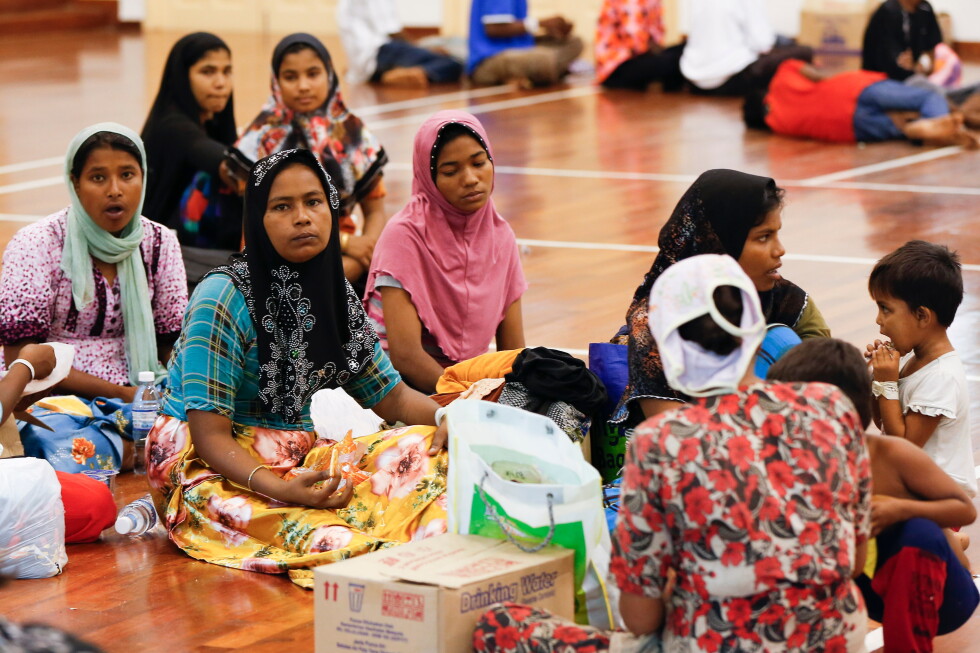
KUALA LUMPUR, Malaysia (AP) — Malaysia has started documenting and screening thousands of detained Myanmar nationals as part of a repatriation program agreed with Myanmar, Home Minister Saifuddin Nasution said Thursday.

Saifuddin said Myanmar had committed to accept up to 5,000 of its citizens currently living in Malaysia and an unspecified number currently in Cox’s Bazar, a town in south east Bangladesh.

Malaysia had identified up to 4,000 Myanmar nationals in its 19 detention depots, who will be moved to a single site for security screening and documentation purposes, he said.

“We will certainly meet the target of 5,000 individuals once this process is complete,” Saifuddin told to reporters, adding that the foreign ministry will handle the next stage of the repatriation process with Myanmar.

Advertisement

Prime Minister Anwar Ibrahim had said Wednesday that those being repatriated were Rohingya refugees.

“People ask why we do not simply send them back. Send them where? Myanmar had refused to accept them before. Now, because of our good relations with Myanmar, they have agreed to take back 5,000 from Malaysia,” Anwar was cited as saying by the New Straits Times.

However, Saifuddin, who did not explicitly identify the 5,000 individuals as Rohingya, said only Myanmar nationals with refugee status were being repatriated.

Foreign ministry officials could not be immediately reached for comment.

Advertisement

Mohammed Mizanur Rahman, a commissioner for refugee, relief and repatriation in Cox’s Bazar, told The Associated Press by phone that he was not aware of any repatriation of Rohingya from Bangladesh.

In Naypyitaw, the capital of Myanmar, officials also rejected reports that the government would accept Rohingyas.

Han Win Aung, director-general of the ASEAN department at Myanmar’s Foreign Affairs Ministry, said the repatriation program was focused solely on verified Myanmar nationals currently held in detention centers in Malaysia.

Myanmar, formerly known as Burma, does not recognize the Rohingya as one of the country’s 135 lawful ethnic minorities, instead referring to them as Bengalis to imply they are natives from Bangladesh and are illegally settled in Myanmar.

Advertisement

“This is not about bringing back Bengalis. There are Myanmar nationals who are being held in detention centers in Malaysia for various reasons,” Han Win Aung told the AP. “Both sides are still at the stage of coordinating to repatriate only those whose identity as genuine Myanmar citizens has been verified.”

He said the plan follows earlier repatriation operations in 2021 and 2022, when Myanmar received more than 1,100 of its nationals stranded in Malaysia.

Advertisement

Han Win Aung said the number of people to be repatriated and the timeline for transfer remain under discussion.

Malaysia is home to about 215,600 refugees and asylum seekers registered with the U.N. refugee agency, including about 126,000 Rohingya who make up one of Southeast Asia’s largest refugee community. Despite hosting them, Malaysia is not a party to the U.N. Refugee Convention and treats refugees as undocumented migrants.

______

Journalists Julhas Alam in Bangladesh and Grant Peck in Bangkok contributed to this report.

Advertisement

Source link

Advertisement
Continue Reading

NewsBeat

Money worries can leave a lasting mark on the brain, 80-year study shows

Published

on

Money worries can leave a lasting mark on the brain, 80-year study shows

Money worries can keep us up at night, but could decades of financial stress leave a lasting mark on the brain itself? That’s the question my colleagues and I set out to answer in a new study – and the answer, it turns out, is yes.

Most research on money and brain health looks at people’s financial circumstances at just one point in time. This makes it hard to know whether a few difficult years have the same effect as decades of enduring struggle. For our study, published in the journal Innovation in Aging, we tracked the same people throughout their adult lives to find out.

We used data from the MRC National Survey of Health and Development, also known as the 1946 British birth cohort study. A cohort study follows a group of people born in the same period throughout their lives. This is the world’s longest continuously running study of its kind, tracking thousands of people born in one week in March 1946 – participants who celebrated their 80th birthdays earlier this year.

The study’s origins go back to the economic anxieties of the 1930s, when the Great Depression left many families worrying about money and the cost of raising children – making it a fitting dataset to revisit those same questions decades later. Using this rich resource, we examined the financial circumstances of 2,759 participants at multiple points across adulthood.

Advertisement

Participants reported their household income at ages 26, 43 and 53. We classed those in the bottom 20% of the group on at least two of these occasions as having persistent low income – about one in six people. Separately, we measured financial hardship by asking whether people struggled to manage on their income or had trouble paying bills, at least twice between ages 36 and 53. This applied to about one in eight.

At age 53, participants took tests of verbal memory and processing speed. A smaller group also had brain scans between ages 69 and 71, which let us measure brain atrophy (shrinkage) and ventricular expansion – the widening of fluid-filled cavities within the brain, a recognised marker of poor brain health.

We found that people who had experienced more financial hardship and low income scored lower on the cognitive tests at age 53. These links held even after we accounted for their childhood thinking skills, education and childhood disadvantage. Among those who had brain scans, persistent low income was linked to greater brain shrinkage in later life.

People who had faced more financial hardship tended to perform worse on cognitive tests.
Microgen/Shutterstock.com

When we looked at how memory changed from age 53 to 69, those who had faced persistent hardship actually showed slower decline over that period. We believe this is because they had already lost more ground by age 53 – they started from a lower point, so there was less left to lose.

Advertisement

We also found that the link between financial adversity and brain shrinkage was stronger for men, for those who grew up in disadvantaged homes, and for carriers of a gene that raises the risk of developing Alzheimer’s disease.

For men of this generation – born in 1946, when the male breadwinner model was the norm – the pressure of being the main earner may have made financial stress more acute. Disadvantaged men also had higher rates of smoking and drinking than disadvantaged women.

The finding on genetic risk suggests that people who are already biologically vulnerable may be more susceptible to the effects of financial strain. These subgroup findings are based on smaller numbers within our sample, so we are treating them as suggestive rather than conclusive.

Why would money worries harm the brain?

How might financial hardship affect the brain over time? Chronic stress is known to increase inflammation, which accelerates brain ageing. There is also the simple fact that constantly worrying about money uses up mental energy, leaving less capacity for other thinking tasks – a cognitive load that competes with everything else the brain is trying to do.

Advertisement

We acknowledge that our study cannot prove cause and effect, and the results, drawn from a single generation of British adults, may not apply directly to other populations or countries. But following the same people over many years gives us a clearer picture than studies that only look at a single moment in time.

Financial hardship is increasingly recognised as one of several factors – alongside things such as hearing loss, smoking and physical inactivity – that may shape our risk of cognitive decline in later life. Our findings suggest that reducing chronic financial hardship among working-age adults, wherever they live, could help protect brain health and potentially reduce dementia cases in the future.

Source link

Advertisement
Continue Reading

NewsBeat

Prague zoo uses tons of ice to help animals beat the heat wave

Published

on

Prague zoo uses tons of ice to help animals beat the heat wave

PRAGUE (AP) — Keepers at Prague Zoo used tons of ice on Thursday to give its animals some much-needed relief as yet another heat wave hit Europe.

Polar bears Aleut and Gregor wasted no time and were rolling in the beds of ice cubes after entering their outside enclosure.

The twins looked to have fun with the ice treat that was meant to keep them cool amid the extreme temperatures forecast to soar to 38 degrees Celsius (100.4 degrees Fahrenheit) later in the day.

“The bears cool off with it and at the same time it’s an enrichment of their life in the zoo,” said zoo spokesperson Filip Mašek.

Advertisement

The zoo began providing ice to some of the animals two years ago in response to climate change and the increasing number of days with extreme temperatures.

The polar bears, who were born in Nuremberg, Germany, 16 years ago and have adapted to the European climate, were the ones who enjoyed it the most.

This year, the plan was to order ice for the animals in July and August, which are traditionally the hottest months. But the first heat wave struck early and the Czech Republic experienced its hottest day ever with 41.9 C (107.4 F) on June 28.

“The weather keeps surprising us,” Mašek said. He said the ice will be ready sooner next year. “We’ve been taught a lesson.”

Advertisement

Other animals that have benefited from the provision of ice to keep cool in previous years include otters, elephants and parrots.

Some animals in the zoo are used to heat, others could stay in the shade or inner enclosures and use various pools to keep cool. Gorillas were given pieces of ice with frozen fruits in the previous years.

Advertisement

Source link

Continue Reading

NewsBeat

Did a tourist tax save Magaluf?

Published

on

Did a tourist tax save Magaluf?

As Edinburgh introduces a visitor levy this week, we look at what a decade of tourist tax-funded investment has done for one of Europe’s most infamous resorts

It is a bright early summer evening in Mallorca and Jaime Mora Bosch is reclining in a waterfront restaurant in a cream suit. Behind him, Port Adriano is filled with multimillion-euro yachts as their passengers settle into restaurants overlooking the marina, where rosé and mineral water are being poured.

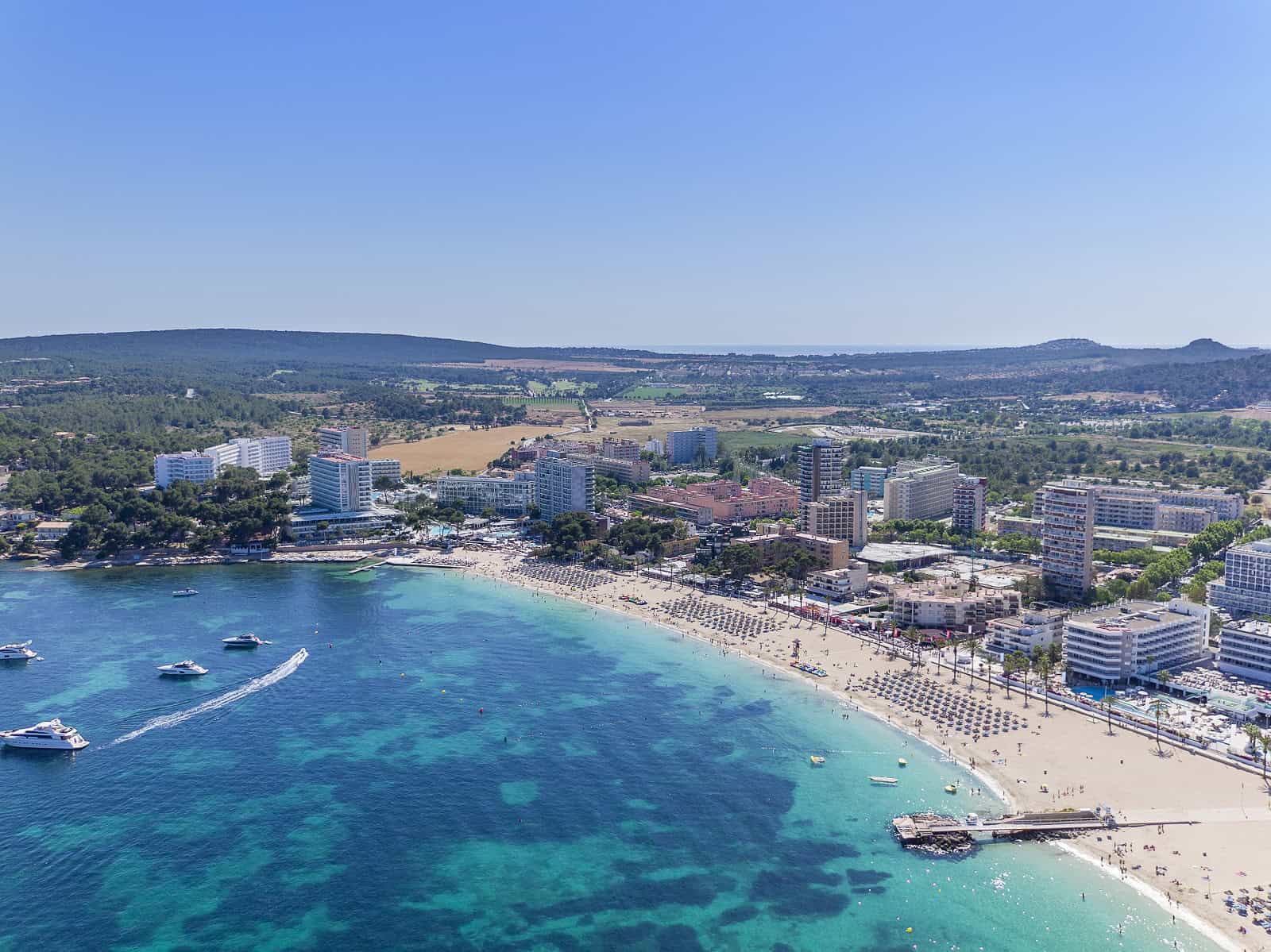
Mora Bosch is director of tourism for Calvià, a district of mountain trails, luxury resorts, exclusive harbours… and Magaluf, the resort with a reputation as the place where Britons go abroad to behave badly.

Advertisement

Cheap lager, sunburn, public nudity, stag dos and hen parties turned ‘Shagaluf’ into a tabloid genre of its own. Mora Bosch insists that picture is years out of date and argues that the tourist tax introduced a decade ago has helped drive that change.

Advertisement

“If you’re in Magaluf tonight, yes, you will find some people drunk, you will find some British people without a T-shirt, maybe swimming, maybe drinking in the streets,” he says. “But in general it has nothing to do with the past.”

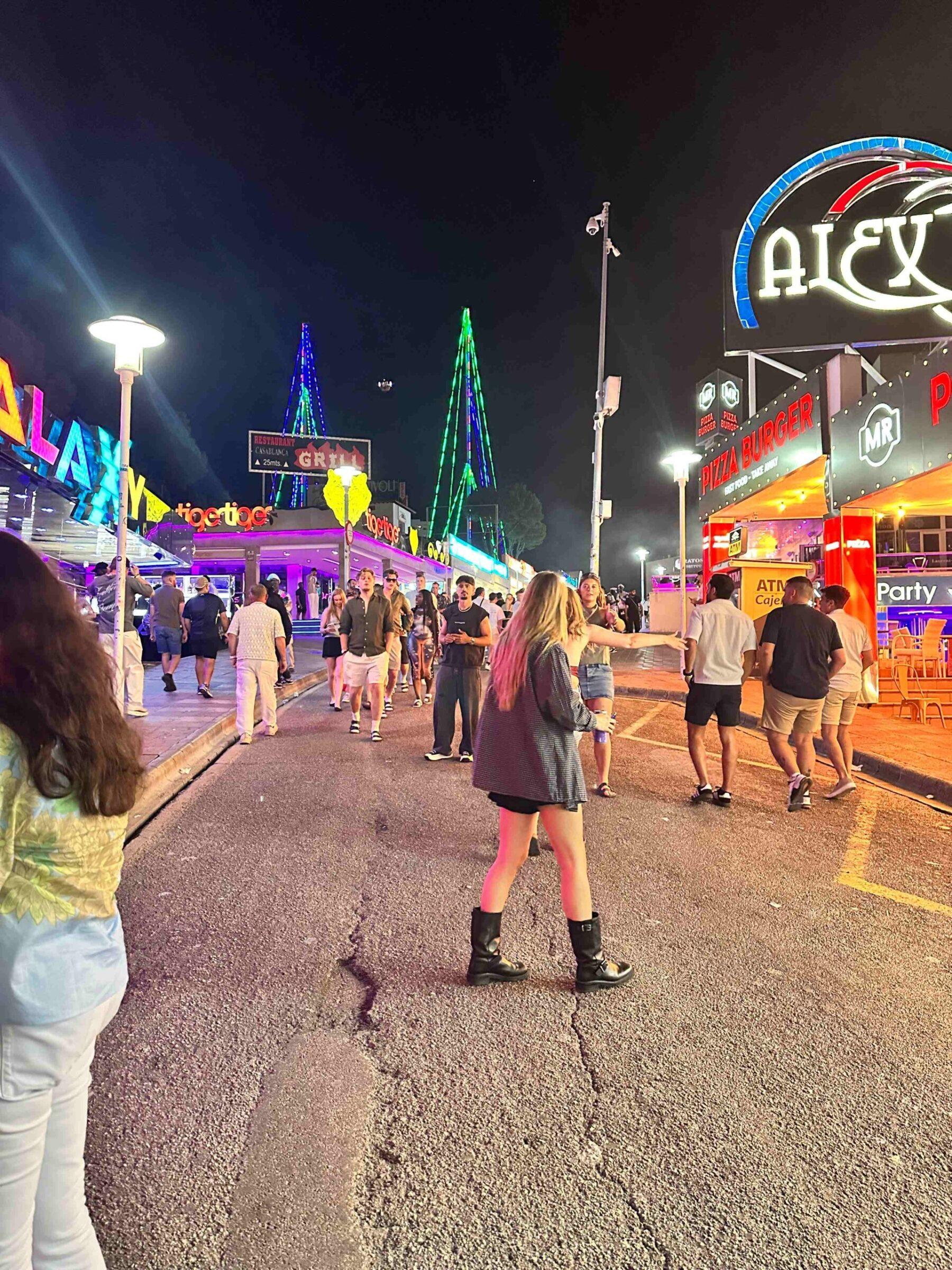
From Port Adriano, Magaluf is only a short drive away, but the contrast is immediate. On Punta Ballena, the street universally known as the strip, music pounds from open-fronted bars as scantily dressed women try to entice groups of men inside with promises of cheap booze.

A group of men in their early 20s, here for a stag weekend, offer grins and gestures when I ask why they chose Magaluf. A party of women from Sunderland celebrating a friend’s engagement give roughly the same answer. What is striking, though, is how dated the strip feels. There are plenty of groups of young adults, but also a surprising number of 40- and 50-somethings who seem to be trying to relive their youth, many of them accompanied by their bored-looking teenage children.

Advertisement

Several premises are boarded up, while others have the sticky, faded air of places waiting for one final summer. The soundtrack leans heavily towards ’90s dance anthems. At around midnight on Saturday, we walk into Joker’s, a karaoke bar just behind the main strip, and find ourselves its only customers. Sam, an English DJ in his 60s, is waiting beside a dancefloor on which nobody is dancing. “I came over in the 1980s and never left,” he says. “Why would I?”

A few families eventually arrive with children younger than you would expect to find in a bar at midnight, but the room remains fairly empty. The larger clubs still pull crowds and the strip is certainly bustling, but groups of revellers seem to be searching for ‘the place to be’ – a place that perhaps no longer exists.

On the waterfront promenade, just a block away from the strip, are well-presented hotels, fashionable beach clubs and fine-dining restaurants serving families, couples and older visitors. The two versions of Magaluf remain close enough to hear each other, but they are growing increasingly distant.

Advertisement

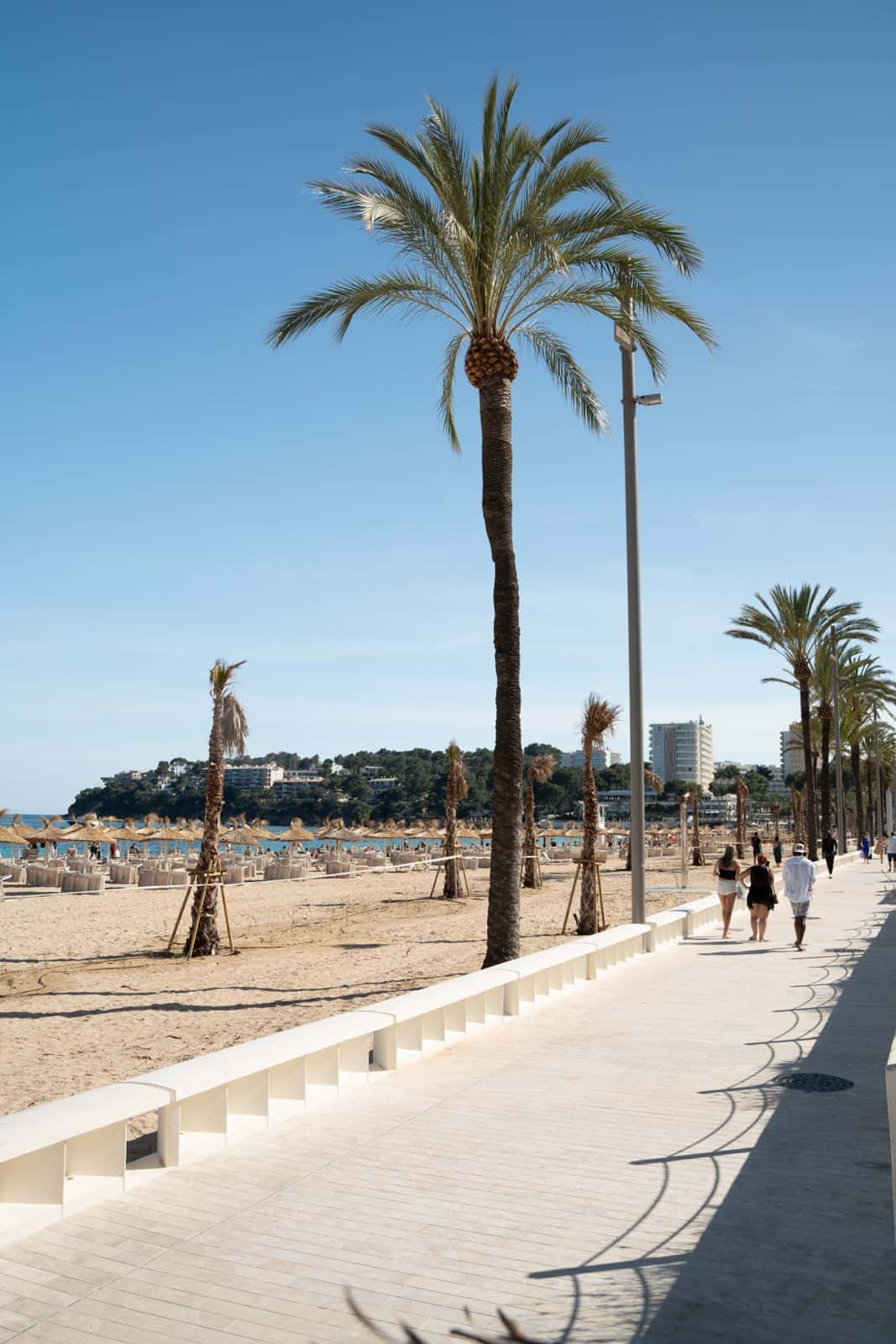
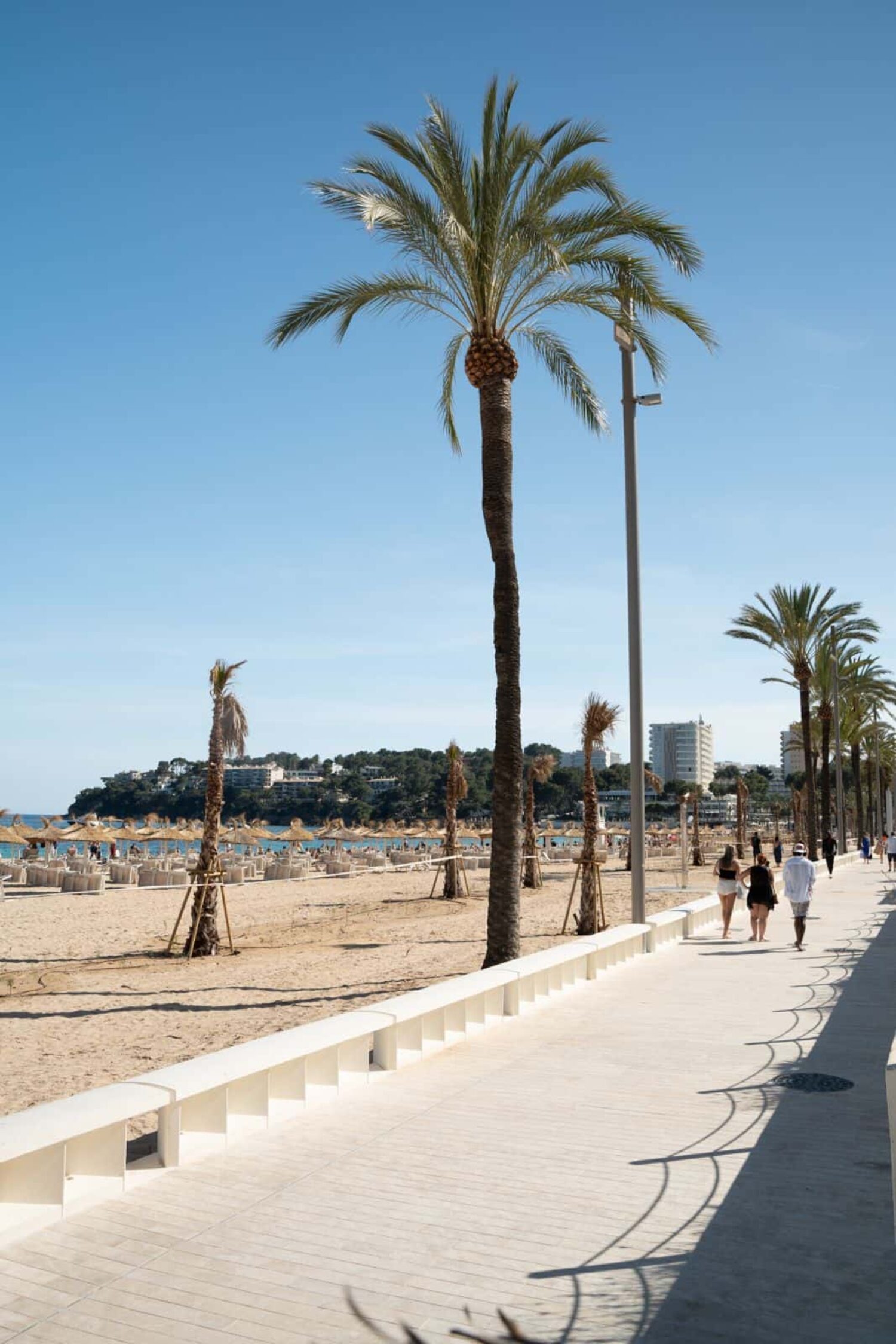
The promenade in Magaluf was built using tourist tax funding. Image: Calvia Tourism

Advertisement

The strip’s faded air reflects changing tastes, but its decline is also the result of a deliberate effort to diversify the tourism model that created it.

That model took shape in the 1960s, when Mallorca opened up to mass travel and hotels rose at extraordinary speed. Dennis Saro, a local guide, has watched Calvià wrestle with the consequences. “We made a lot of mistakes at this time in the 60s,” he says. “We started building, building, building… and we didn’t think about the future. This is what we are fixing now.”

By the 1990s, Magaluf had a reputation for cheap booze, cheap rooms and being a resort where rules did not apply, where almost anything went.

Advertisement

The moment that forced the authorities to confront its reputation arrived in 2014, when a video showed a young British woman performing sex acts on multiple men in a bar as part of a drinks promotion. It travelled around the world, becoming a brutal advertisement for Magaluf’s tourism economy. “It used to be a lawless city,” says Mora Bosch, who says it was at that point that the authorities knew something had to be done.

Calvià restricted pub crawls, street drinking and alcohol promotions. Shops in designated ‘excess tourism’ areas were banned from selling alcohol between 9.30pm and 8am. Noise rules were tightened and police inspections increased, while many venues began opening earlier as daytime clubs.

The Balearic Sustainable Tourism Tax followed in July 2016, charging visitors according to their accommodation and the time of year. By July 2025, close to 300 projects worth almost €850m (£730m) were being financed through the programme.

Advertisement

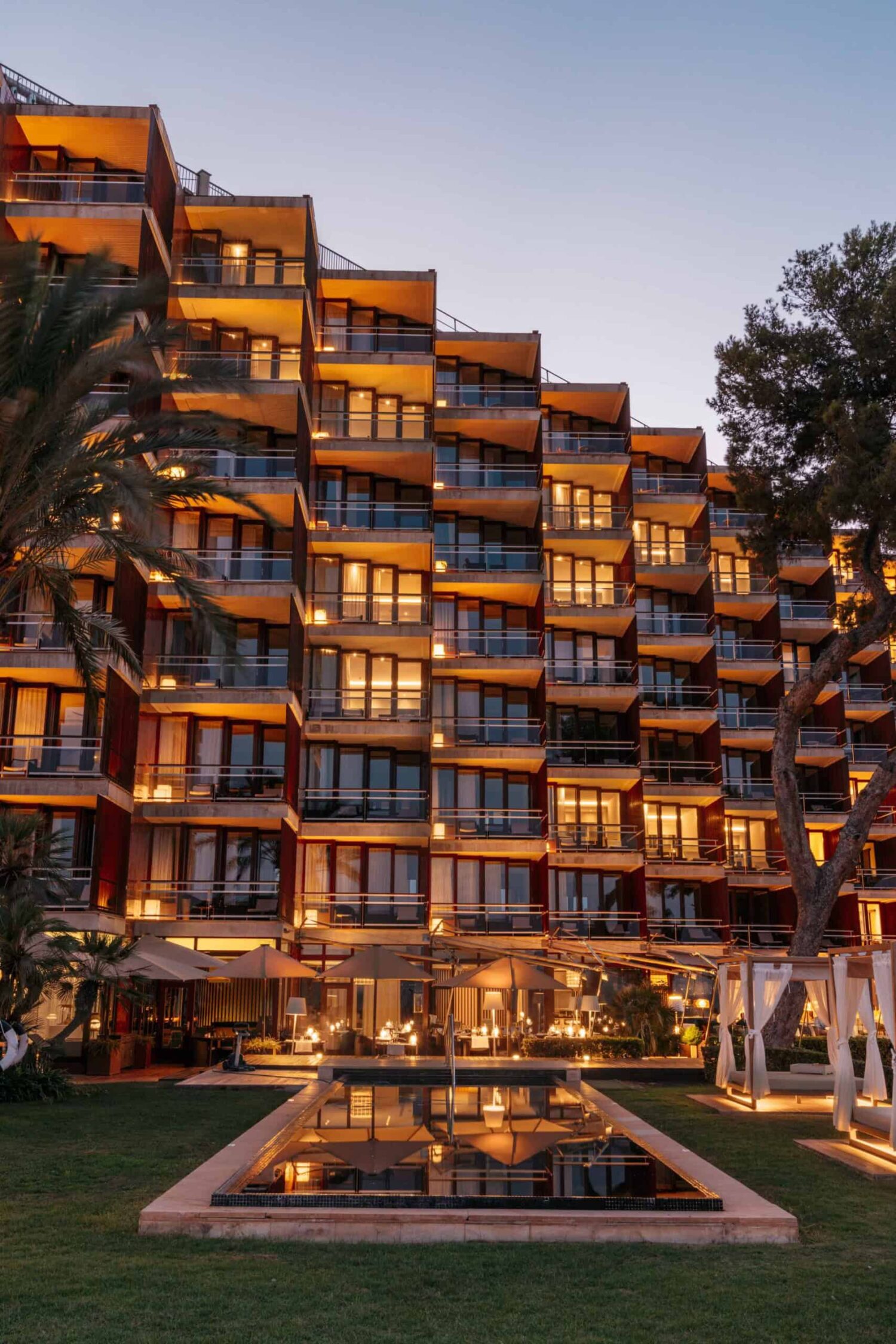
Newly developed hotels have sprung up across Magaluf. Image: Calvia Tourism

“The main aim of the tourism tax is to compensate for the impact generated by tourist activity,” says Miguel Rosselló Jiménez, tourism co-ordinator at the Balearic Islands’ ministry of tourism, culture and sport. “It helps fund projects to improve the destination, making it more sustainable in environmental, social and economic ways.”

The levy funded investment in public spaces, water infrastructure and cultural projects. Alongside private investment, EU funding and political support, it became part of a wider effort to rebuild and rebrand the region.

Advertisement

Magaluf’s beachfront now has a bright promenade linking the hotels, restaurants and waterfront. There is level paving, planting, seating and room for buggies and wheelchairs. Native plants and reclaimed water reduce pressure on local supplies, while beach showers use seawater. The €3m (£2.5m) second phase, completed in May 2026, was funded entirely through the tourism tax.

The space feels safe, open and easy to use, more in keeping with the waterfront at Port Adriano and other parts of the island. Nearly every venue I pass is serving couples and families. There are groups of men and women, but most are restrained rather than rowdy.

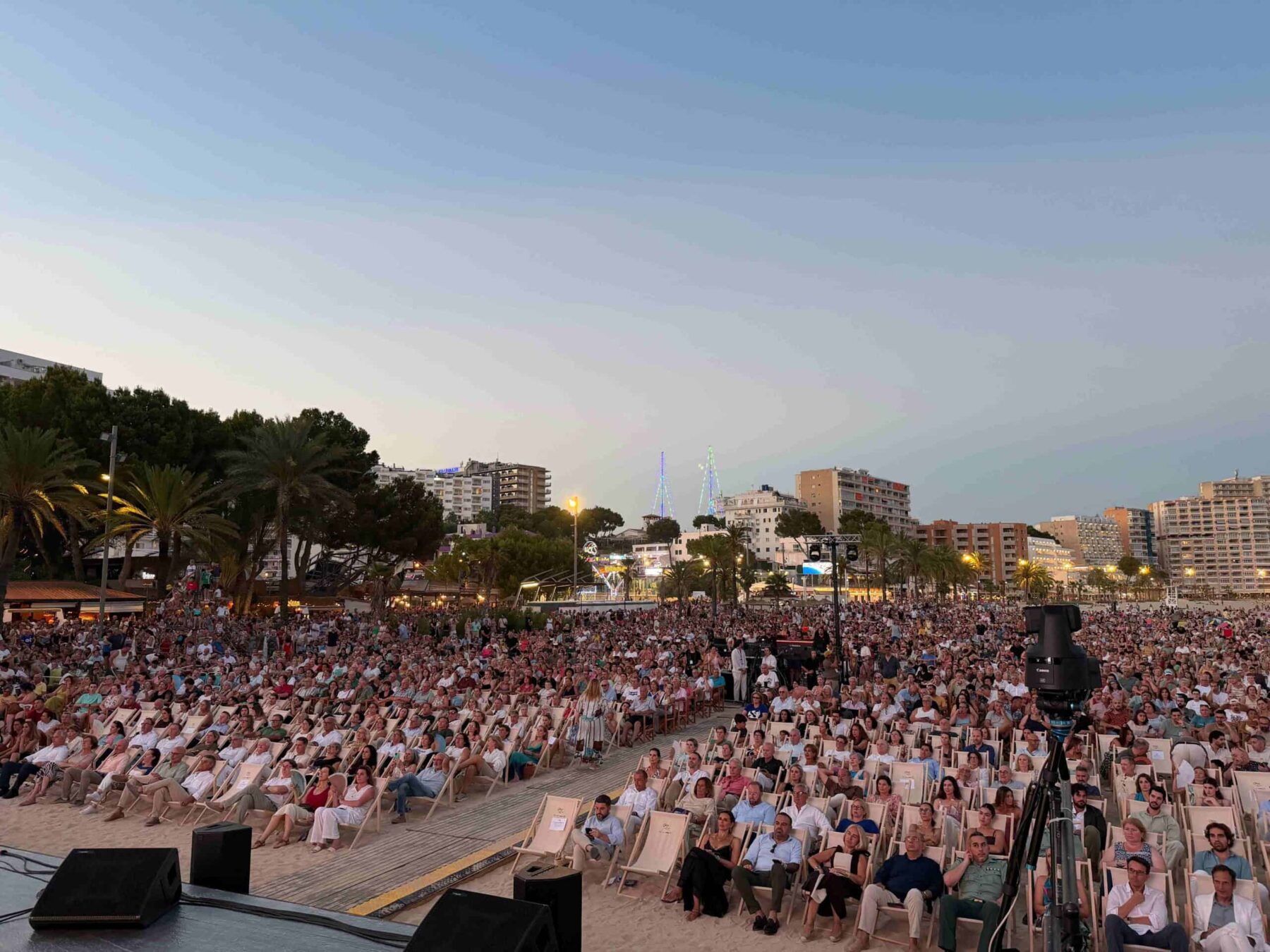
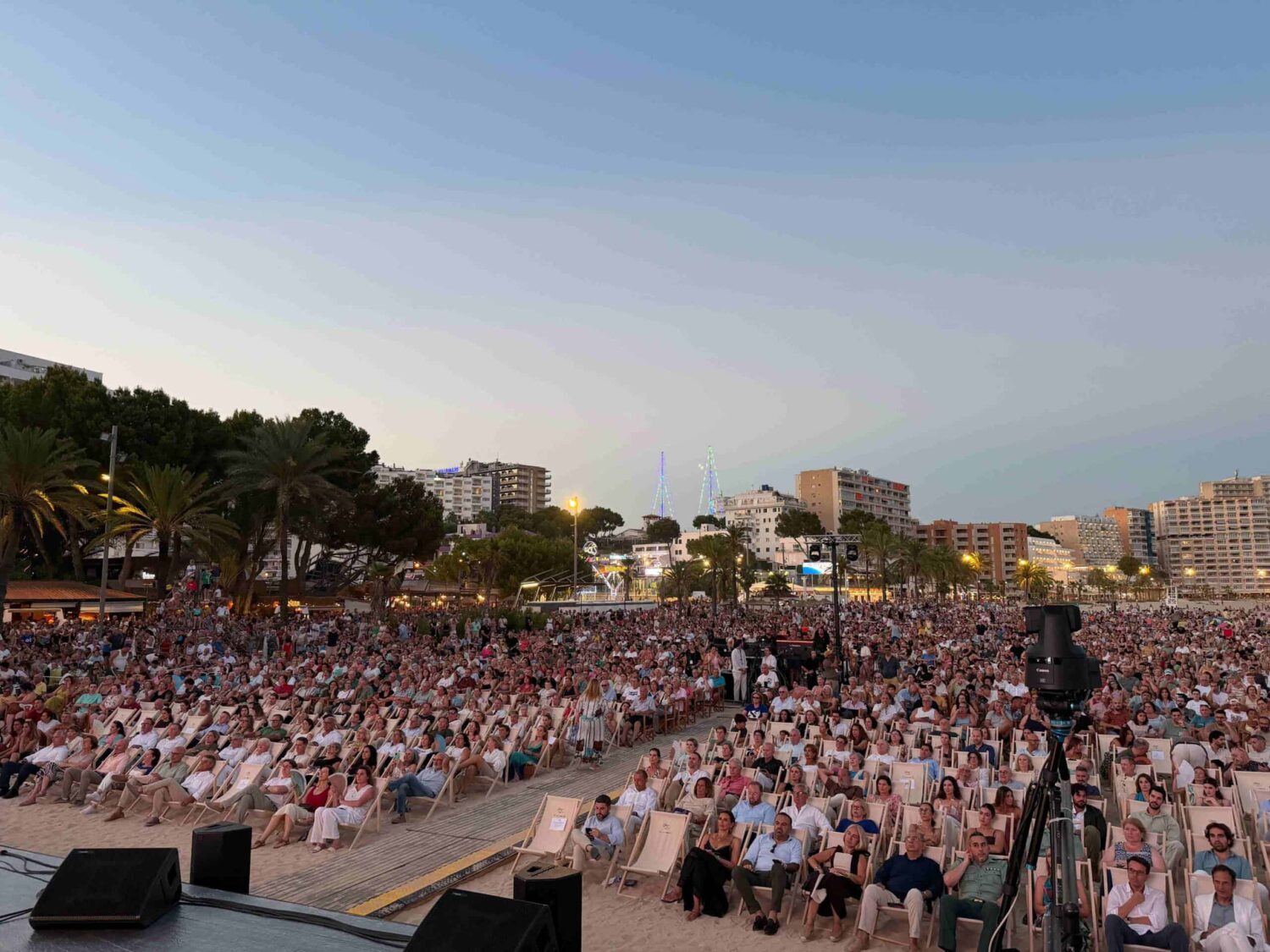
The official inauguration of Magaluf’s promenade in June 2026. Image: Calvia Tourism

Advertisement

By 11pm, most of the larger groups make their way towards the strip as almost all the venues on the waterfront close or prepare to shut. Staff know inspections will check whether alcohol service has stopped on time, whether music has crept above the permitted level and whether customers are smoking where they should not be.

For residents, better paving and calmer evenings only go so far if tourism still consumes the places where they live. Marta, a Calvià resident, supports the move away from sheer numbers, although she understands why some neighbours have lost patience altogether.

“We want more quality and less quantity,” she says, adding that many locals “just want to be able to go to a beach and find a spot”.

Advertisement

The campaign to diversify tourism has also involved broadening the range of hotels on offer. BH Mallorca, once one of the main engines of the resort’s 18-to-30 economy, was bought by the Mallorca-based Fergus group and its partners, with around €20m (£17m) committed to dividing the complex into three hotels aimed at families and higher-spending visitors.

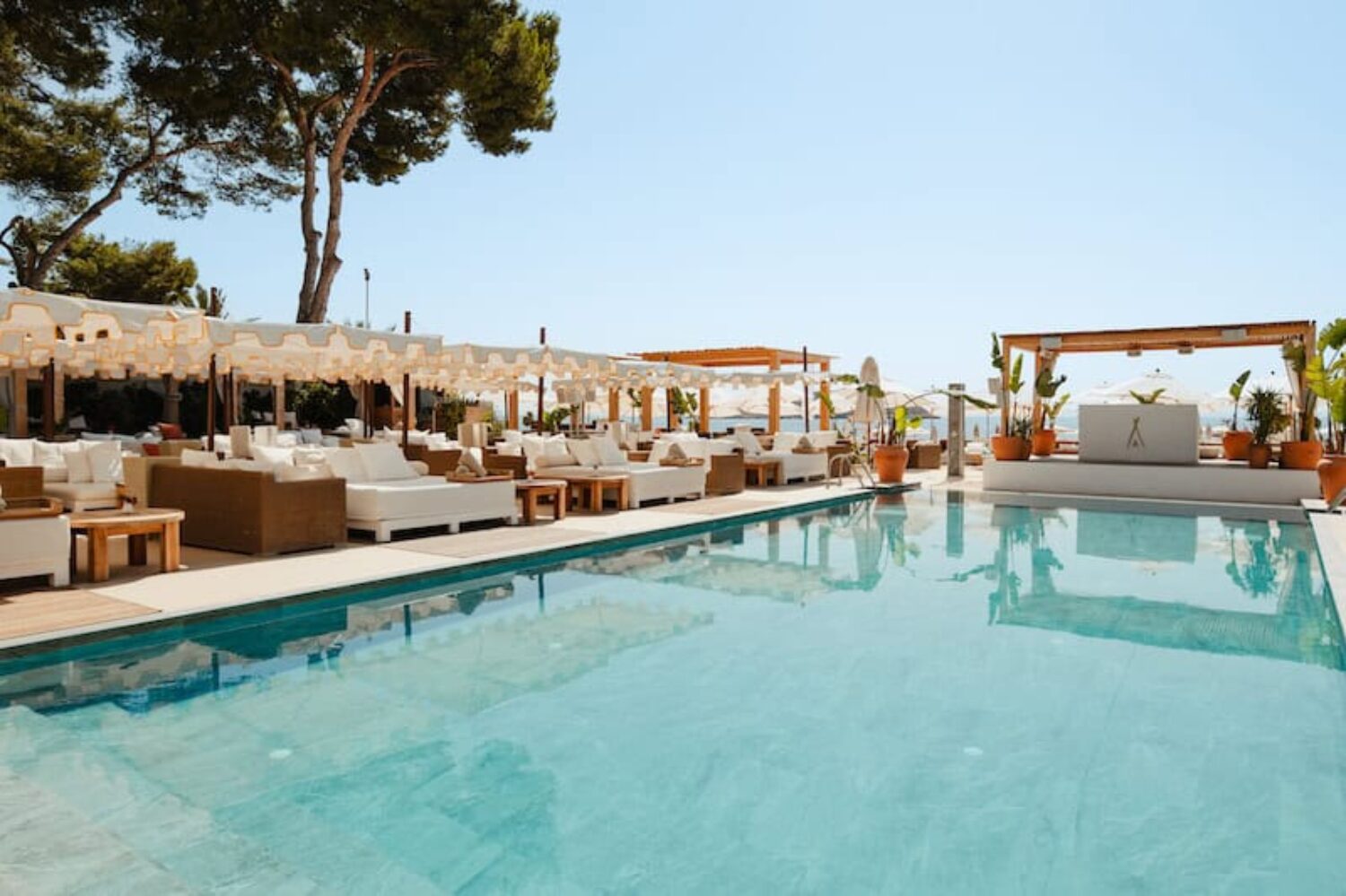
Nicky Beach on Magaluf waterfront has replaced many older bars. Image: Calvia Tourism

Advertisement

“They used to specialise in drunk-tourism – the 18-to-30 market,” says Mora Bosch. “They’d have 1,200 people in this hotel, and you might find 3 or 4 people in a room … But two years ago Fergus bought it, a local brand who specialise in family activities, and we’ve seen a huge difference. The change is everything.”

Richie Prior arrived as a holiday rep in 1990 and is now managing director of Pirates Adventure, one of Magaluf’s longest-established attractions. Writing recently about the changes, he said Mallorca had “changed dramatically” and added: “Personally, I think it’s a positive move,” pointing to improved hotels, restaurants and a more international crowd.

The authorities argue that fewer visitors spending more can create greater economic value with less pressure on streets and emergency services. “Fewer people but their per head spend is a lot more,” says Mora Bosch.

That strategy has been helped by broader changes in habits. Younger adults drink less, the cost of living makes indiscriminate spending harder, and many visitors now want a better room, a decent meal and somewhere attractive to share on social media. As Mora Bosch puts it, people increasingly want to show off, a shift reflected in the designated ‘selfie route’ created along the promenade.

Advertisement

We just want to be able to go to a beach and find a spot

That does not mean Magaluf wants to stop young people from coming and letting off steam as this is still a major part of the local tourism economy. Stag and hen parties still arrive and the major clubs continue to buzz, but it feels as though Punta Ballena’s heyday is behind it. Calvià council has bought 11 obsolete commercial premises in the area, using a €6m tourism tax grant to acquire, demolish and redevelop them. The scheme will remove unsafe buildings and return the land to public use, while the fading bars suggest the market may be retreating.

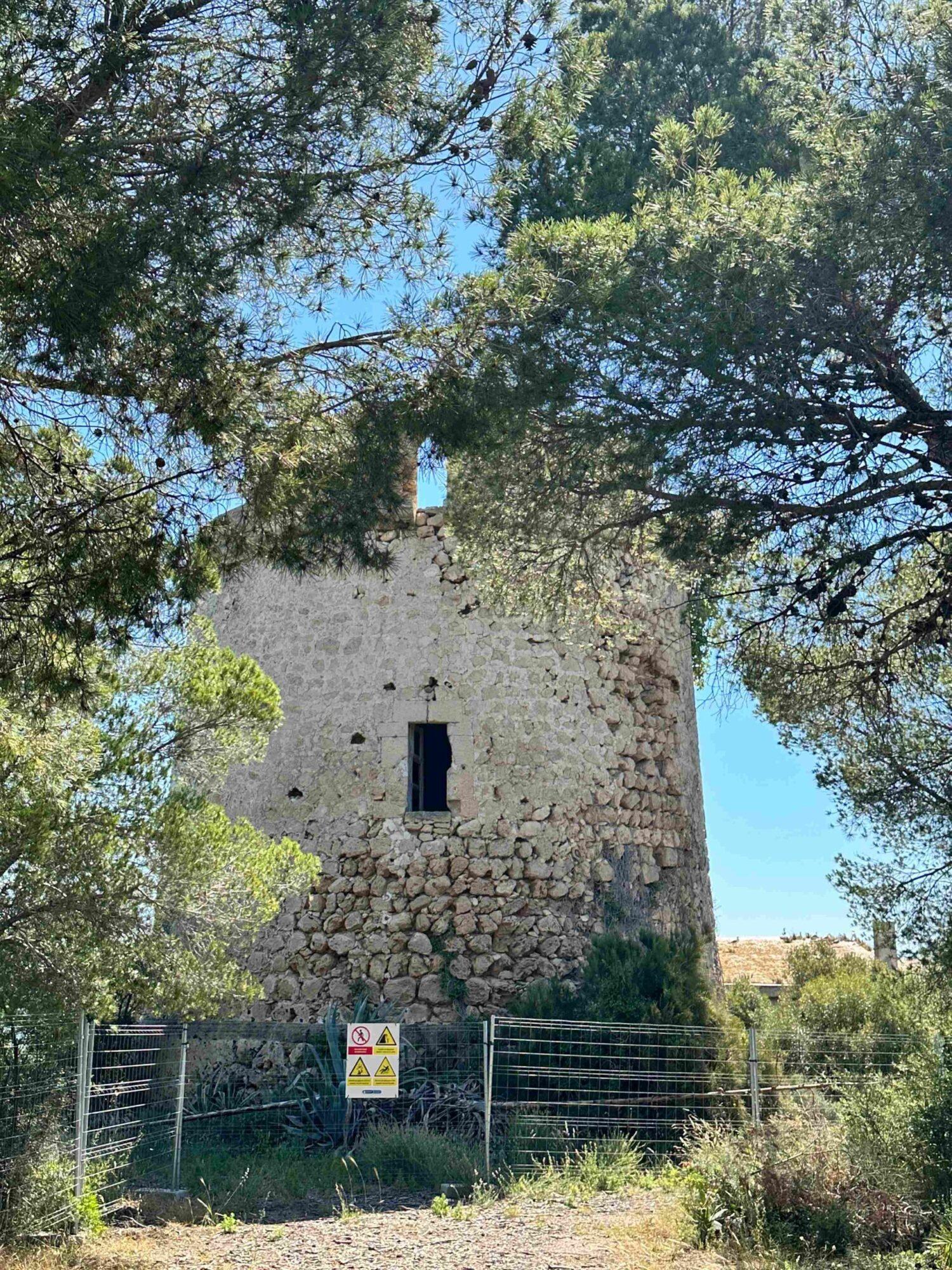
Calvià is also creating reasons to visit that do not depend on nightlife. The council plans to restore the 16th-century Torre de Torrenova and turn neighbouring buildings designed by local architect Josep Ferragut into an international artists’ residence. It is one of several physical and cultural projects under way, including the restoration of the Galatzó public estate, the development of Puig de sa Morisca archaeological park, a series of refuges for walkers, a film-location trail, a €10,000 literary prize and Conecta Magaluf, which recently brought together 400 film and television professionals from 29 countries.

Nearly 2,000 kilometres north, Edinburgh is beginning an experiment of its own. Since 24 July, the Scottish capital has charged visitors 5% of the pre-VAT accommodation cost for the first five nights, becoming the first UK city to introduce a mandatory city-wide visitor levy.

Advertisement

The 16th-century Torre de Torrenova will be turned into an international artists’ residence. Image: Tom Pattinson

The levy is expected to raise up to £50m a year by 2028-29. Of the available funds, 55% will go to city operations and infrastructure, 35% to culture, heritage and events, and 10% to destination management. The first three-year programme is worth more than £90m, including funding for Leith Theatre, public toilets, historic streets and an annual £5m housing and tourism mitigation fund.

An early consultation found that 85% of respondents strongly supported a levy, although the final 5% rate proved more divisive. Hospitality businesses argue that Edinburgh is already expensive and that visitors may spend less elsewhere.

Advertisement

Tony Lankester, chief executive of the Edinburgh Festival Fringe Society, supports the principle while warning that the festival needs to see a tangible return. “At its most basic level, I think the tourist tax is a good thing because for too long the impact of tourists… has been borne by the people who live here,” he told The Stage.

Magaluf’s challenges are very different from Edinburgh’s: visitors come to the Scottish capital for its heritage and world-famous literary and arts festivals, but in both places the costs of mass tourism are often left for residents to absorb. Calvià shows that a tourist tax, combined with private investment, regulation and political will, can help transform a destination. It did not save Magaluf by itself, but it has helped the resort build a future in which it may no longer need saving.

Main image: Calvià Tourism

Advertisement

Be part of the solution

At Positive News, we’re not chasing clicks or profits for media moguls – we’re here to serve you and have a positive social impact. We can’t do this unless enough people like you choose to support our journalism.

Give once from just £1, or join 1,800+ others who contribute an average of £3 or more per month. Together, we can build a healthier form of media – one that focuses on solutions, progress and possibilities, and empowers people to create positive change.

Support Positive News

Advertisement

Source link

Continue Reading

Trending

Copyright © 2025